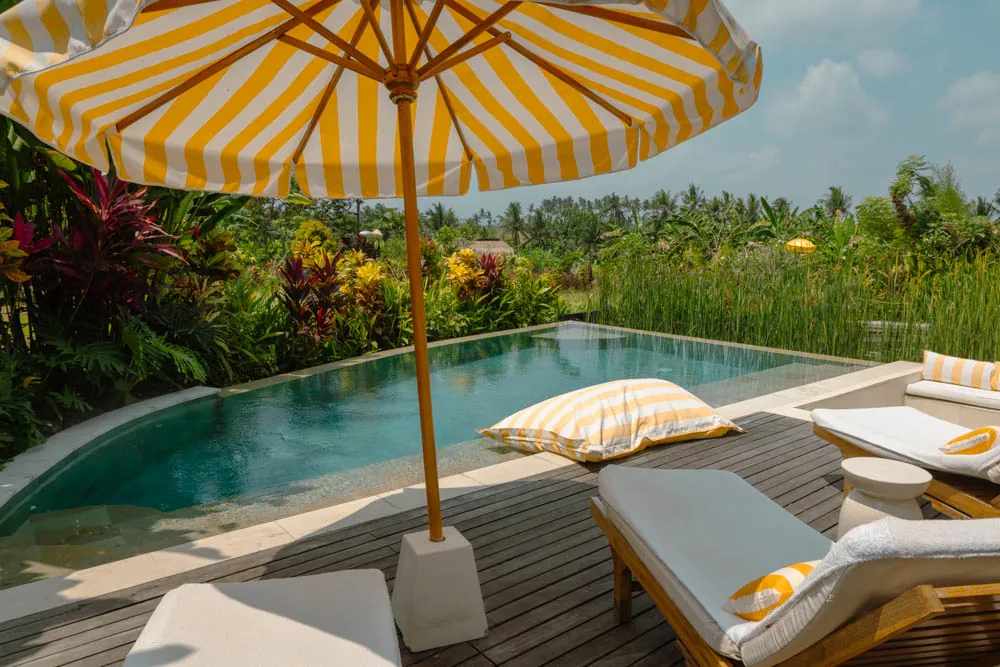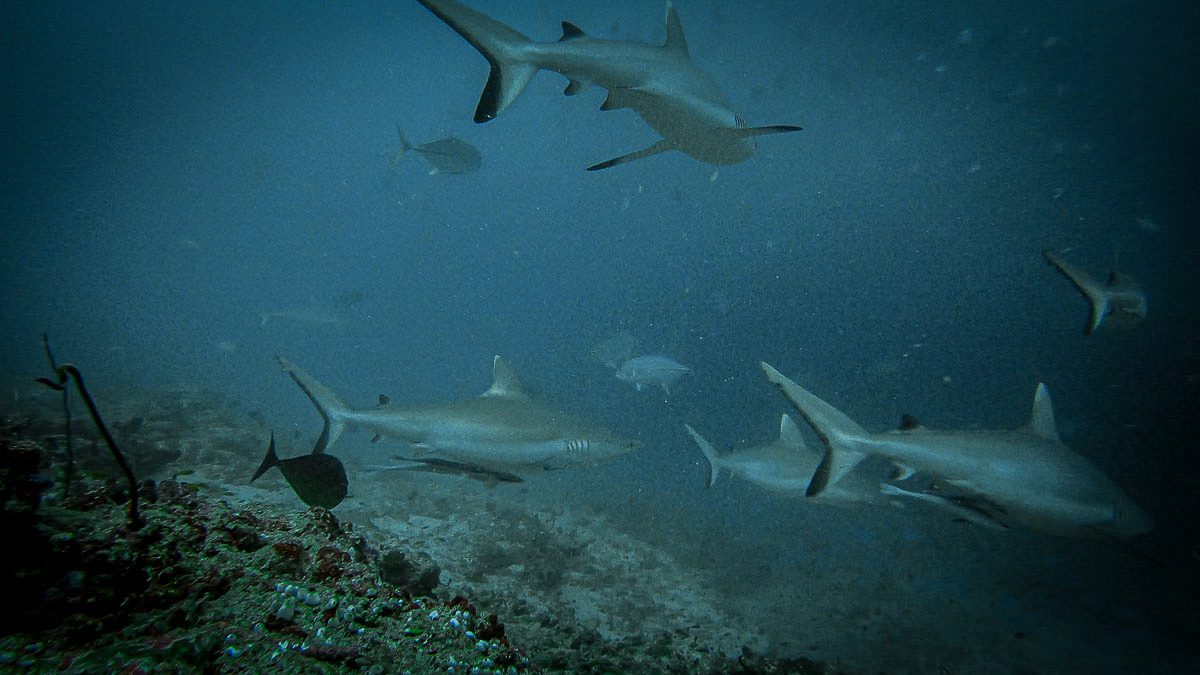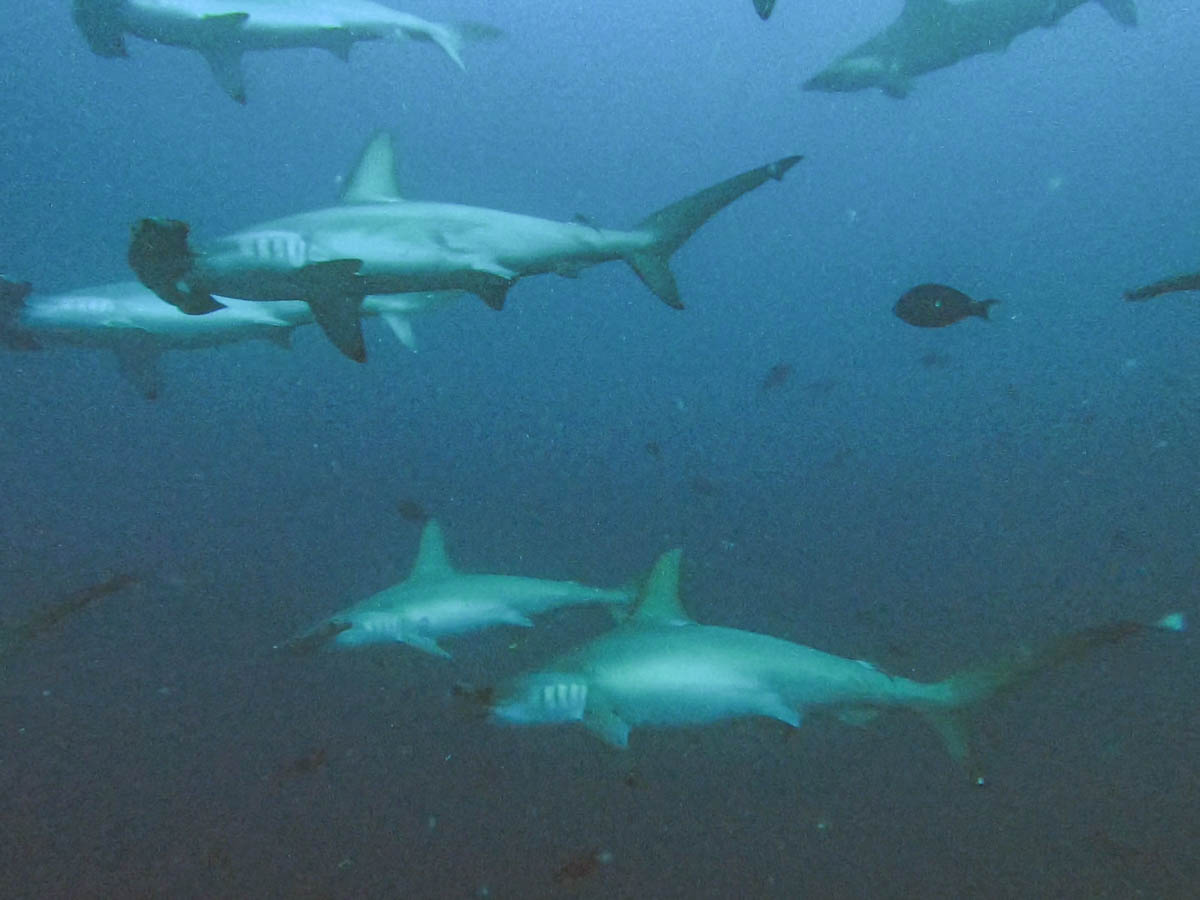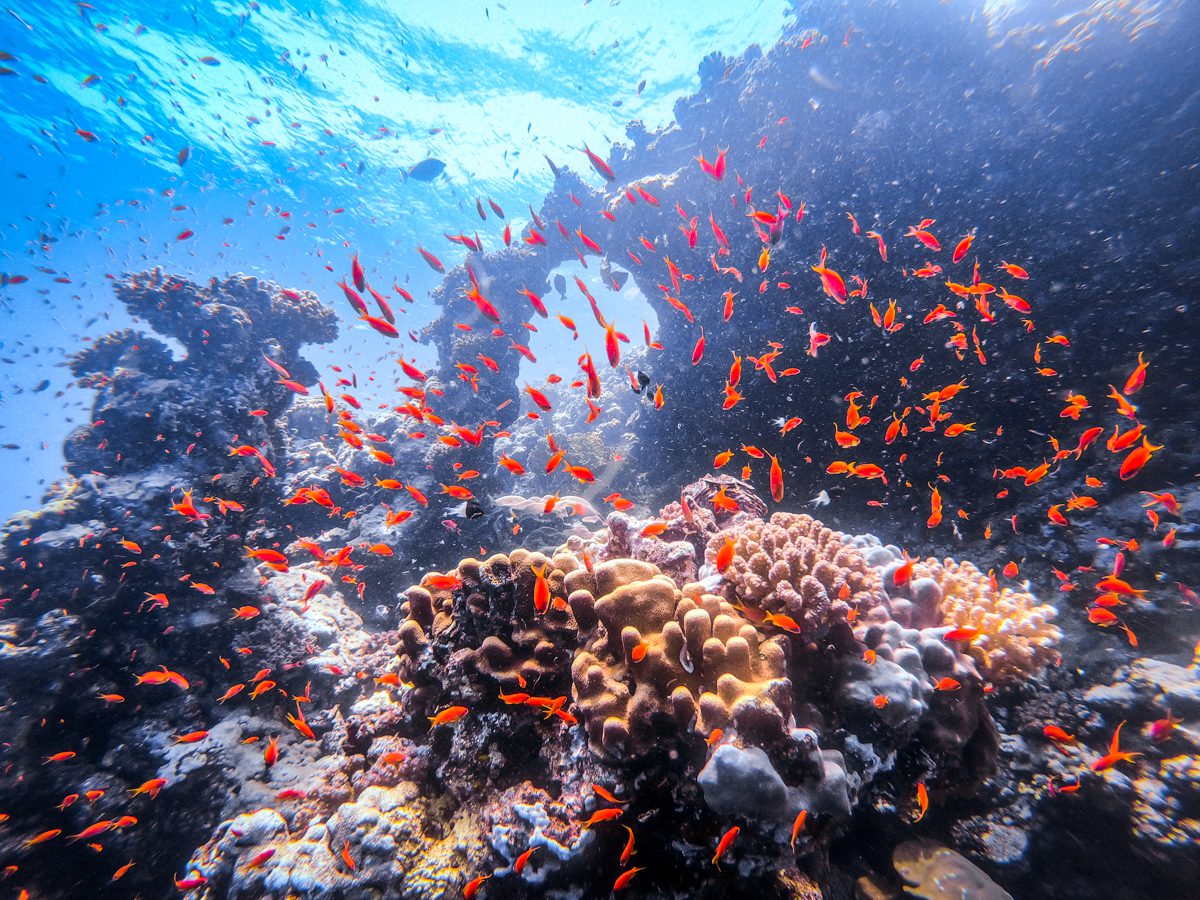
For my fifth diving trip to Raja Ampat, I cruised Misool and Raja Ampat with the Coralia liveaboard. Raja Ampat remains one of the best diving destinations in the world and a cruise on the Coralia is a splendid way to discover the area. Read on for my review of the Coralia boat, the best dive sites and places to visit in Raja Ampat, and plenty of practical tips to plan your trip to the Raja Ampat liveaboard.
Coralia is one of the ten boats in my guide to the best luxury liveaboards in Indonesia, which ranks every one of them on price, cabins and the kind of diver each suits.
Coralia Liveaboard at a Glance
| Vessel | Coralia liveaboard (luxury Raja Ampat diving cruise) |
| Destination | Misool and Raja Ampat, West Papua, Indonesia |
| Departure hub | Sorong (SOQ), with transfer to the boat |
| Reviewer experience | My fifth diving trip to Raja Ampat; 1,500+ dives and 30+ liveaboards worldwide |
| What the review covers | Cabins, common areas, food, dive operations and best dive sites |
| Best for | Divers wanting a luxury liveaboard to explore Raja Ampat and Misool |
| My verdict | Raja Ampat remains one of the best dive destinations in the world, and the Coralia is a splendid way to see it |
Why Trust This Coralia Review?
Check Availability and Book Your Cruise on Coralia Here
There are hundreds of liveaboard reviews online, but many are written by people who have only experienced one or two boats. A luxury liveaboard can seem exceptional when you have nothing to compare it to.
I have logged more than 1,500 dives around the world and have personally sailed on more than 30 liveaboards across Indonesia, the Maldives, the Red Sea, Mexico, Galapagos, and other diving destinations. Over the years, I have visited Raja Ampat and Komodo more than 20 times and continue to explore some of the most remote regions of Indonesia in search of exceptional diving experiences.
As the founder of This Is Luxury Travel, I have made liveaboard reviews one of the core focuses of the website. Today, This Is Luxury Travel has reviewed more diving liveaboards than any other luxury travel publication, allowing readers to compare boats based on real first-hand experience rather than marketing materials.
When reviewing a liveaboard, I pay attention not only to the diving itself but also to the details that can make or break a trip: cabin comfort, food quality, dive operations, guide quality, safety procedures, photography facilities, internet reliability, value for money, and how the experience compares with competing boats in the same destination.
My goal is not to tell you whether a boat is “good” or “bad.” Instead, I aim to help you understand who the boat is best suited for and whether it matches your diving style, budget, and expectations.
This review of Coralia is based entirely on my personal experience during an 11-night Misool and Raja Ampat cruise aboard the vessel — my fifth trip to Raja Ampat — including repeat manta encounters at Shadow Reef. Choosing the best Raja Ampat liveaboard comes down to finding a premium dive liveaboard Raja Ampat operation that delivers consistent quality across all these departments.
Updated for 2026 with current prices, the best time to go, and news about Coralia’s new sister ship, Coralia Dua.
Coralia liveaboard: my quick verdict
- My rating: 5 / 5
- The boat: 48-meter traditional Phinisi launched in 2019 — 16 guests in 8 cabins, including 4 master cabins with private balconies
- Price from: around US$4,400 per person for 7 nights (2026 rates) — Nitrox, transfers, and meals included
- Itineraries: 7 to 12 nights in Raja Ampat (Misool and the Dampier Strait), plus seasonal routes to the Banda Sea, Halmahera, and Cenderawasih Bay
- Best time to go: October to April, with manta season peaking November to April
- Best for: divers who want genuine luxury without giving up serious diving, underwater photographers, and couples — snorkelers and non-divers are welcome too
- My verdict: One of the very best luxury liveaboards in Raja Ampat. Superb cabins, delicious food, and the most attentive crew I have experienced on any liveaboard in Indonesia.
How to Get to Sorong for Your Raja Ampat Cruise
The flight to take is Garuda GA682, departing Jakarta at 00:10 and landing in Sorong at 06:20. Note that the direct Bali–Sorong flight is suspended as of July 2026 and is expected to resume in October.
Raja Ampat liveaboards board in Sorong, in West Papua, served by Domine Eduard Osok Airport (SOQ). It is a long way from anywhere, and flights do get delayed or canceled, so I always plan to arrive at least one day before the boat departs.
The classic way in is the Garuda Indonesia red-eye from Jakarta: it leaves around midnight and lands in Sorong just after 6 AM, perfectly timed for liveaboard boarding days. This is my preferred option — Garuda is the most reliable airline flying to Sorong and offers a free 23 kg sports equipment allowance on top of your standard checked baggage, which covers a full set of diving gear. Batik Air operates a similar overnight flight from Jakarta if the Garuda is full.
From Bali, Garuda has a direct flight to Sorong, but it does not operate every day, and in low season it often stops running entirely — at the time of writing it is suspended until later in the year. When the direct flight isn’t available, you will be routed through Makassar, usually with an overnight stop, as most Makassar–Sorong flights leave before dawn.
The Makassar stopover is not painless, but you can make something out of it. For a short overnight between flights, there is a Cordia Hotel located directly inside Makassar Airport, so you can get a proper bed for about 30 USD without ever leaving the terminal.
Better yet, consider making Makassar more than a layover. The city is the gateway to South Sulawesi, and it is worth stopping for a few days. Read my review of the Novotel Makassar Grand Shayla, the most polished hotel in town (check rates on Expedia), which also covers what to see in Makassar, from the Losari waterfront to Fort Rotterdam. From there, I used the city as a base for an unforgettable trip to the land of Toraja, with its funeral ceremonies, cliff graves, and spectacular highland scenery.
In Sorong itself, my recommended hotel is now the Aston Sorong Hotel & Conference Center. It is newer, more modern, and generally much nicer than the older Swiss-Belhotel that most dive operators still use as a meeting point, while often costing about the same — and it sits directly opposite the airport. If you have a day to kill before boarding, here is what to do in Sorong.
One practical warning: Indonesian airline websites often reject international credit cards. If your payment fails on the airline’s own site, book through a platform like Trip.com, which sells all the Indonesian domestic carriers and processes foreign cards without drama.
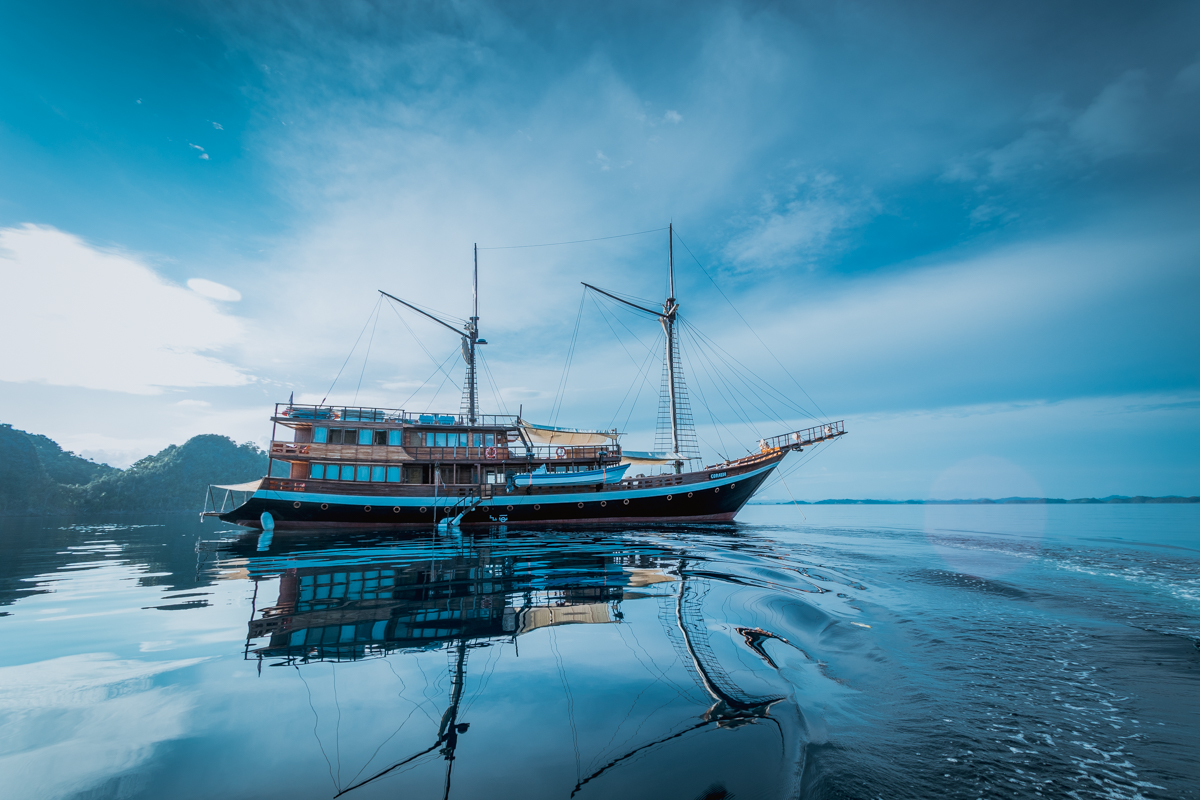
Getting to the Coralia liveaboard from Sorong
A cruise on the Coralia Raja Ampat liveaboard includes airport transfers both ways. So as soon as you land in Sorong, you can relax as you are being taken care of.
We were picked up from the Sorong airport. Our luggage was also taken and delivered straight to the cabin.
The Coralia liveaboard departs from Waisai near the Papua Explorer Resort.
We were taken to the SwissBell hotel for breakfast while we waited for the other passengers. They also have a small gym which I used to stretch a bit after the night flight.
After about 40 minutes, we were taken to the port and onto a small speedboat that belongs to Papua Explorer resort. The boat is super fast and in less than 2 hours we were in Waisai ready to board the Coralia: the Raja Ampat liveaboard.
The captain was great at driving through the waves and the journey was very smooth.
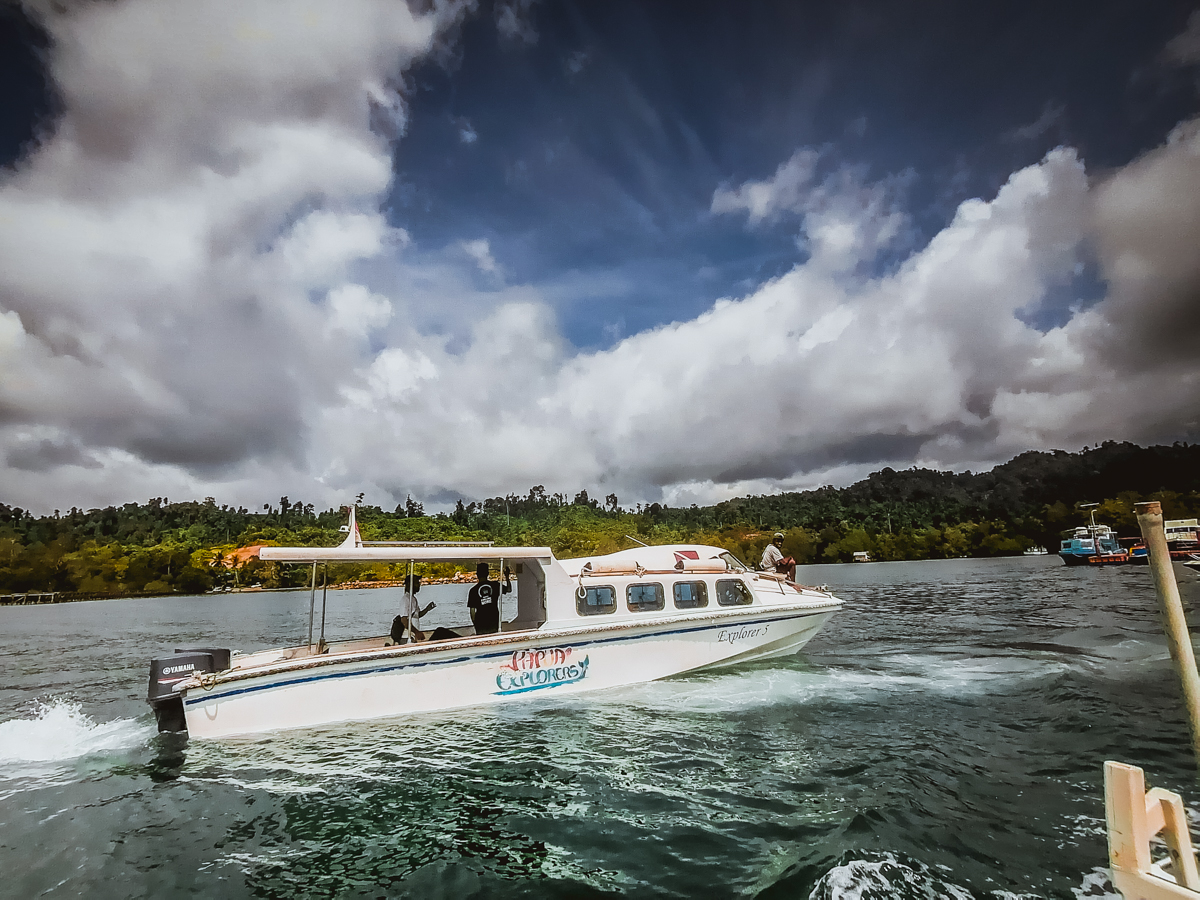
There is no toilet on the speedboat but there is a toilet in the restaurant near the harbor that you can use just before boarding.
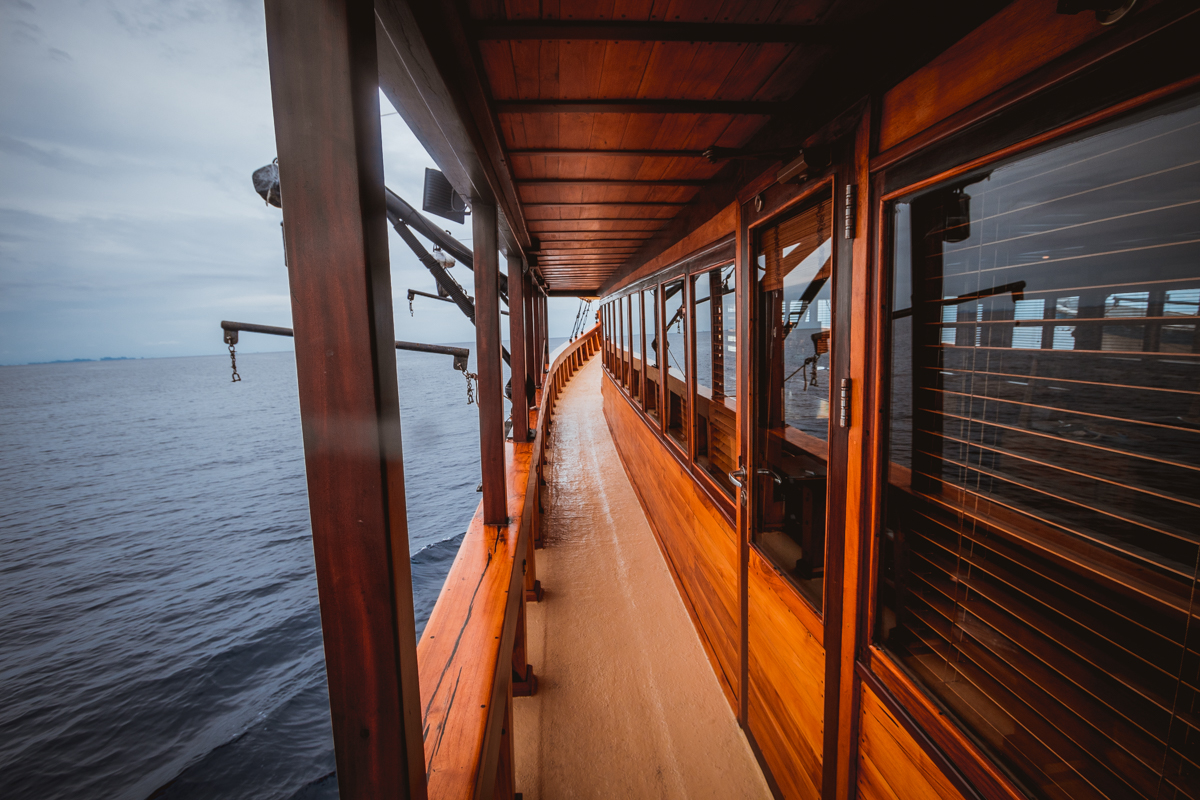
The first impression when getting near the Coralia Raja Ampat liveaboard is that it is huge and beautiful.
The Coralia liveaboard is one of the newest luxury diving liveaboards in Indonesia. It is huge with a length of 48 meters and a beam of 9 meters. Coralia is a traditional Indonesian Phinisi, hand-built by the master boat builders of Tanah Beru in Sulawesi, which gives her a character that modern steel yachts simply don’t have.
We were helped onto the boat and were greeted by Jerry and Debbie, the cruise directors.
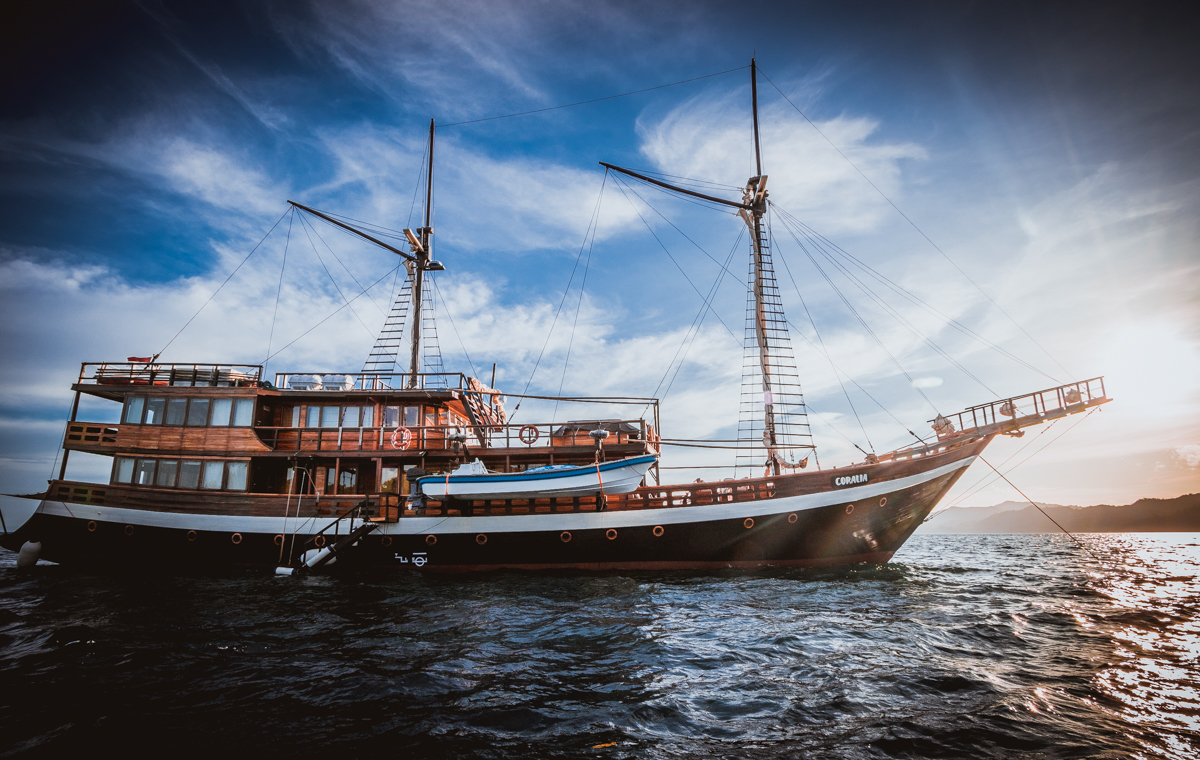
Cleanliness and comfort onboard the Coralia
The Coralia is immaculately kept. Housekeeping is constant, the boat is spotless, and there is so much space — four dining tables, several lounging areas over three decks — that 16 guests never feel crowded.
A detail I really appreciated: the air conditioning is individual to each cabin, drawing fresh air from outside rather than recirculating it through the whole boat. It keeps the cabins fresh, and you control your own temperature.
Review of the cabins on the Coralia liveaboard.
The Coralia Raja Ampat liveaboard has 4 master cabins with private balconies and 4 regular cabins on the lower deck.
All are spacious and comfortable.
I stayed in the Master cabin on the main deck called Xenia.
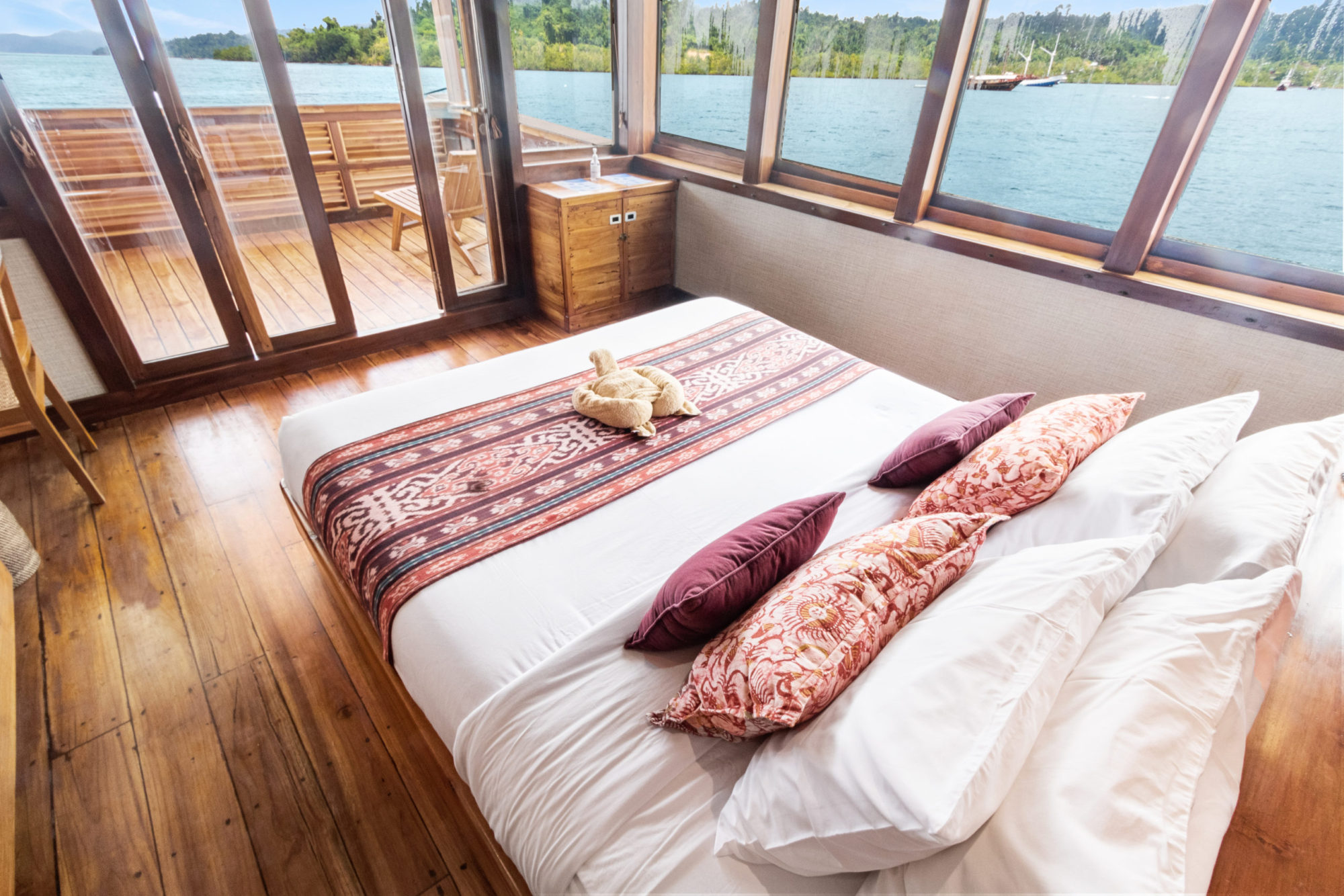
It has convenient access to the restaurant and the front shaded area. It is located behind the kitchen but I was never bothered by noise. I could sometimes smell the bread baking in the morning.
The Coralia master suite is one of the finest cabins you can find on any liveaboard in Indonesia.
It is quite spacious for a boat with 30 square meters.
The cabin is well decorated with natural colors of beige and pastels. The combination of ethnic fabric ( ikat is a traditional fabric from Indonesia) and wood gives a warm feeling to the room.
The high ceilings and large panoramic windows covering two of the walls provide lots of light and boundless views.
The room is well insulated. I never heard anyone from the other cabins nearby. Cabin Xenia is also located above the motor but the noise, even when navigating, was limited.
I expected that the cabins upstairs would be even quieter.
The bed was super comfortable and I slept so well. Even on the day when we navigated through rough weather.
The Coralia: Raja Ampat liveaboard cabins
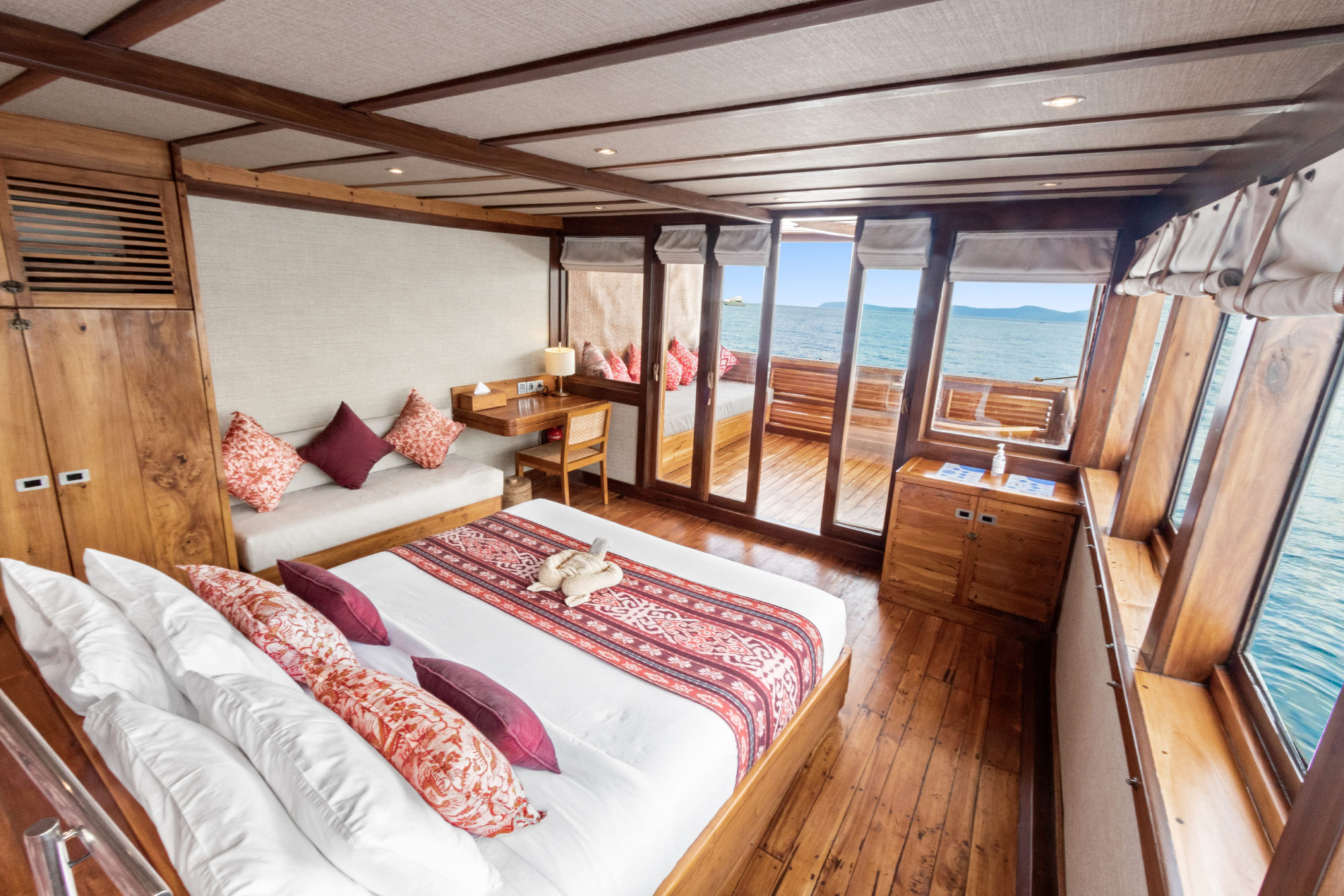
If navigating through a storm, make sure the cupboard doors are closed with the latch and that your personal belongings are stowed. It is not fun to wake up in the middle of the night to doors clapping and things flying through the cabin 😉
The Coralia liveaboard master suite is also functional with plenty of storage space and hooks.
There is a safety box, a hairdryer, and individual air conditioning.
There is no space to store a suitcase so you might be better off with a foldable bag that you can store in the drawer under the bed. However, if needed, the Coralia crew can store your hard cases elsewhere on the boat.
The bathroom is large with plenty of storage and convenient hooks.
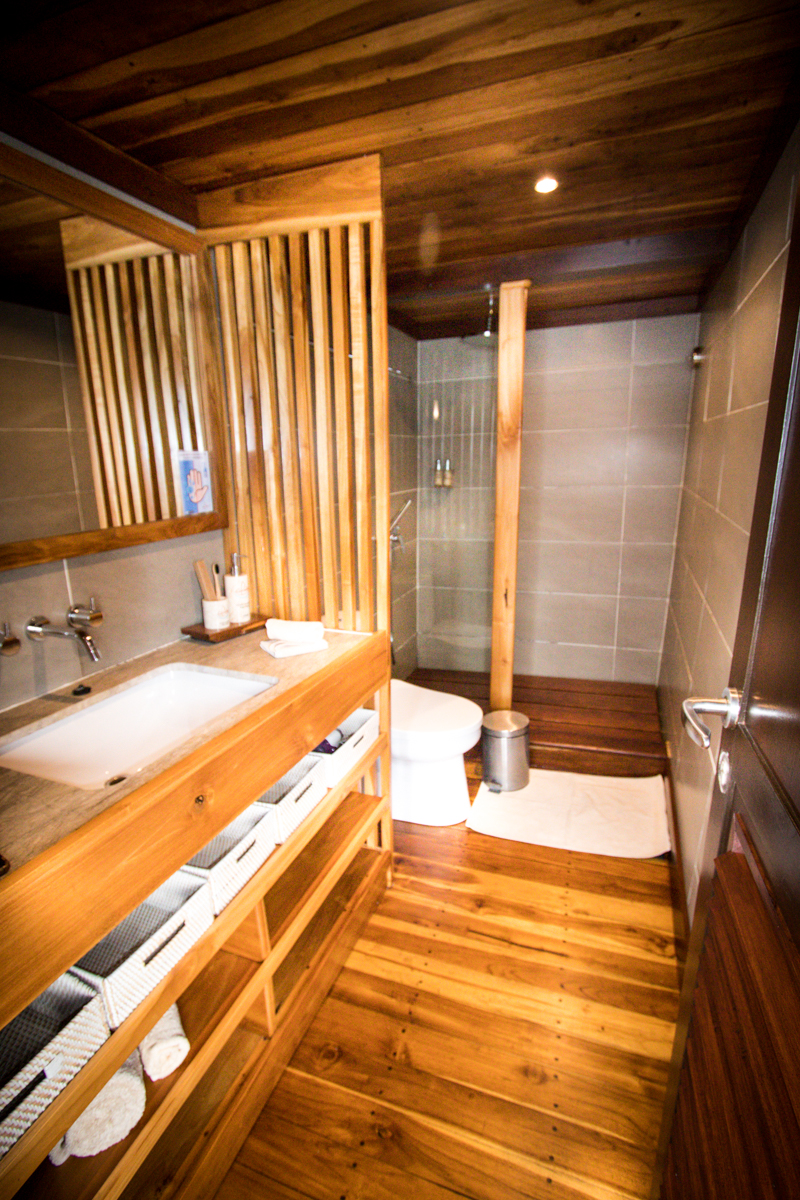
There is a clothing line to dry your swimming suits in the shower.
The shower has a rain shower head. It was a bit too low as I am tall.
The water was always warm and with great pressure.
The Coralia Liveaboard provides Reef safe soap, shampoo, and conditioner so you don’t need to bring those. The normal shampoo has chemicals that can be toxic to the reef.
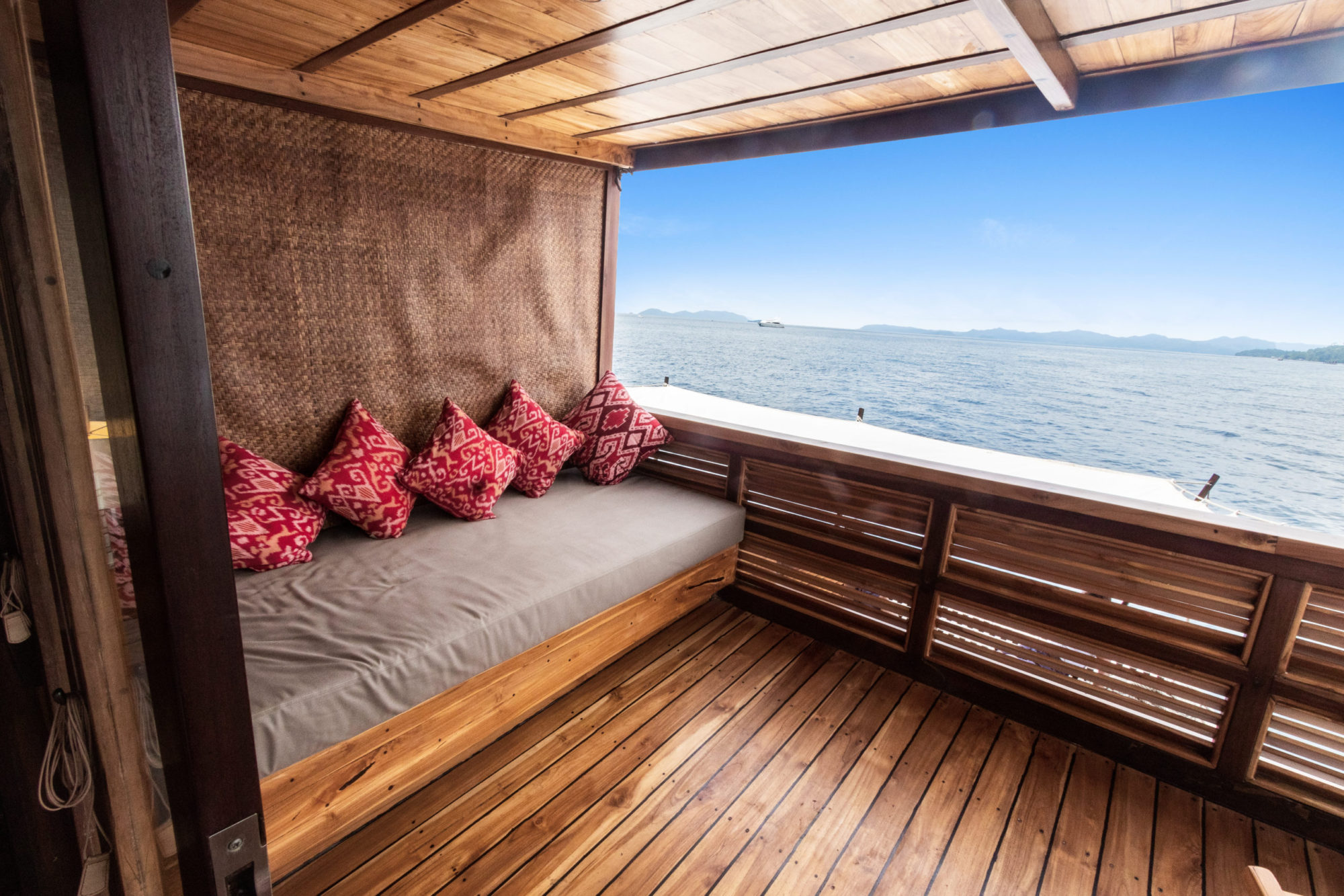
The private terrace is a great place to relax even if it was sometimes a little noisy with the people talking on the dive deck just below.
I spent hours lounging on the terrace, watching the spectacular scenery of Raja Ampat go by.
I had a peek at the regular cabin on the lower deck. They also looked spacious and welcoming. The main difference is that the master suite has a private balcony and large panoramic windows.
The price difference between the standard cabins and the master suite is relatively small so I would recommend booking a master suite if you like to spend time in your cabin and they are still available.
Review of the common space on the Coralia Raja Ampat liveaboard
The Coralia liveaboard is one of the newest luxury liveaboards, it is simply gorgeous.
There is a sense of space with panoramic windows and high ceilings.
On the main deck, you will find an indoor space with a large table and generous lounging area. This is where the dive briefings are held. That space is airconditioned for people who want to avoid the tropical climate of Raja Ampat.
The area manages to be elegant and simple at the same time with natural wood, soft colors, and rich fabrics from Indonesia. Ikat and batik have a place of choice on this boat with cushions peppered through the boat.
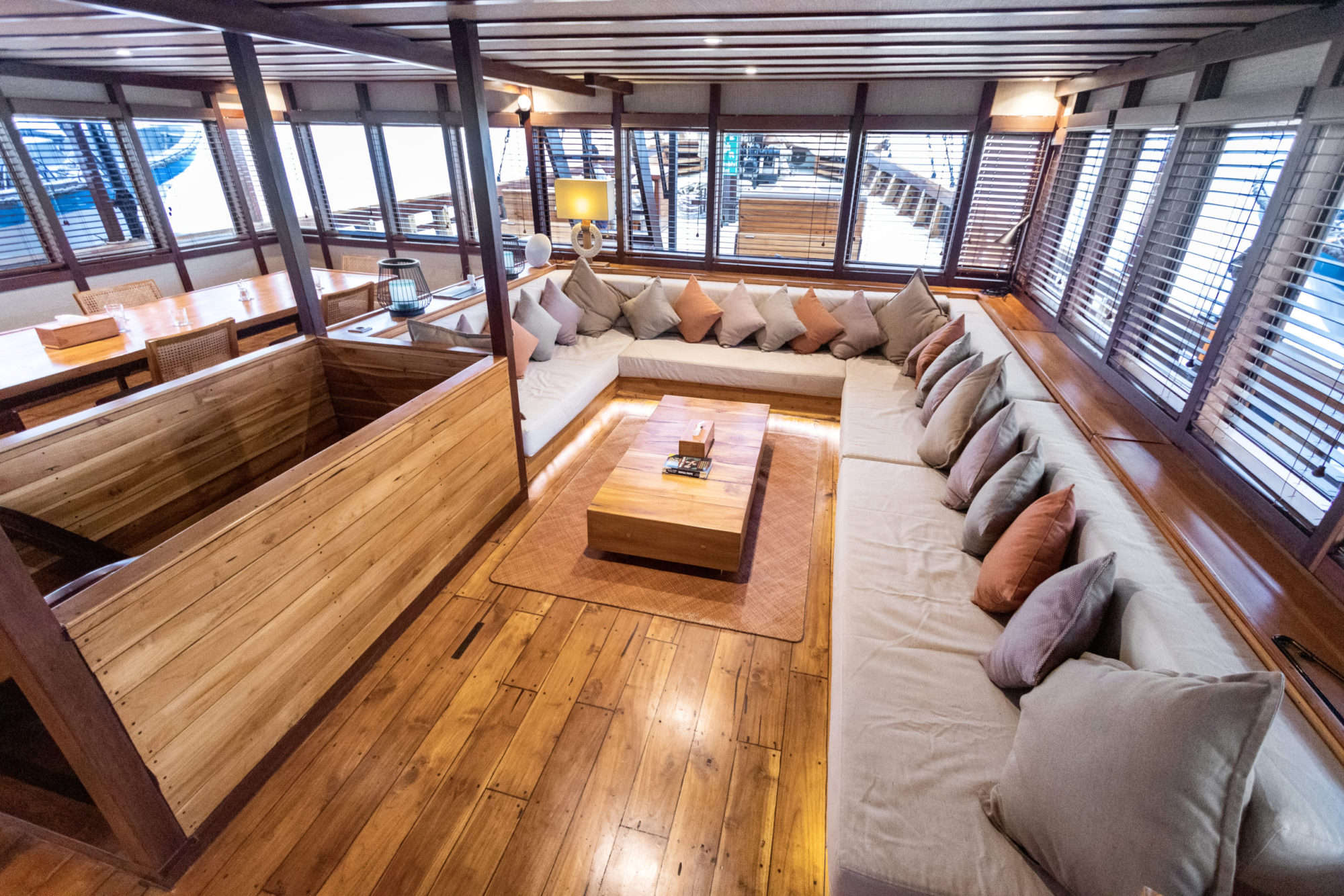
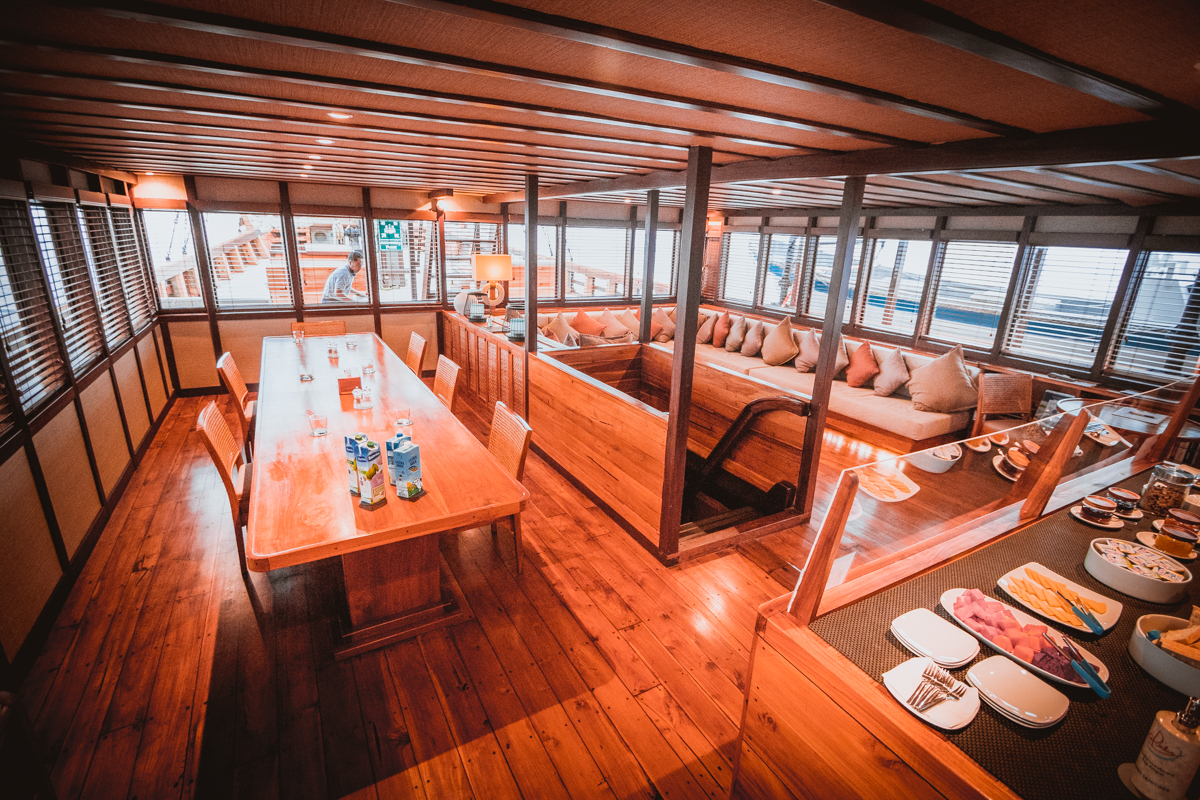
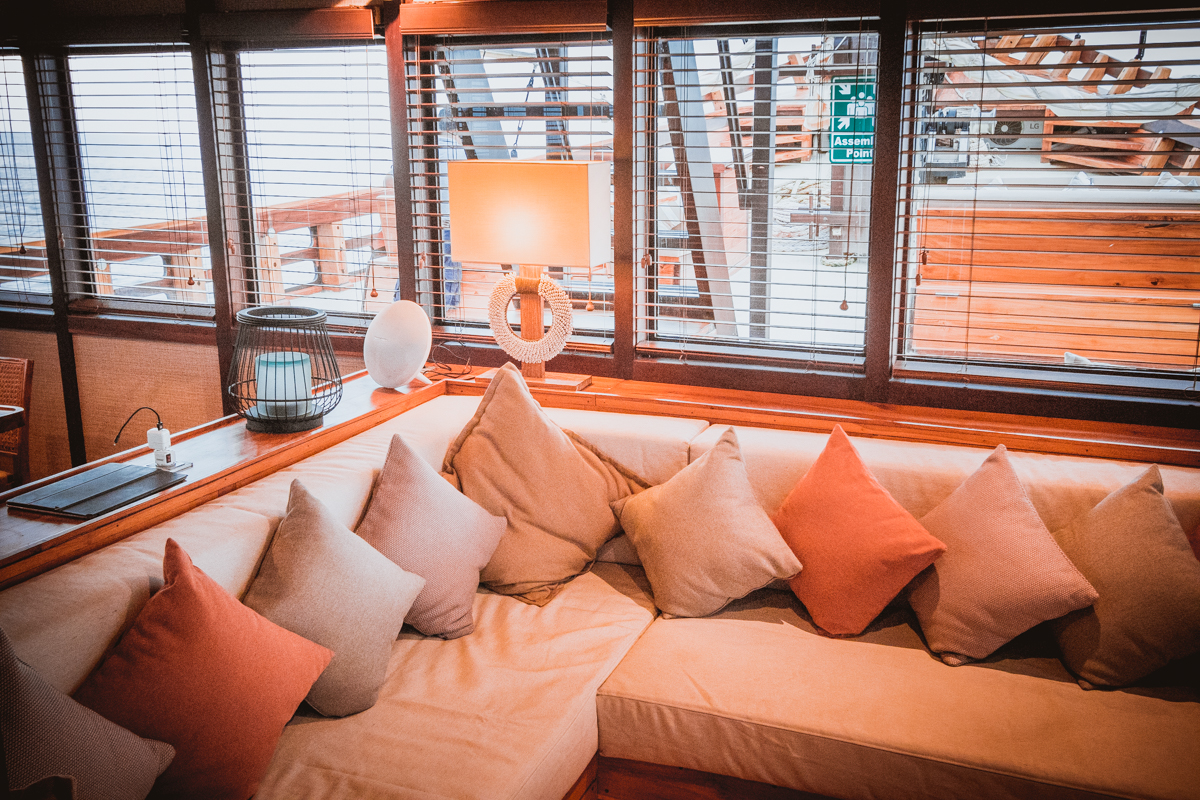
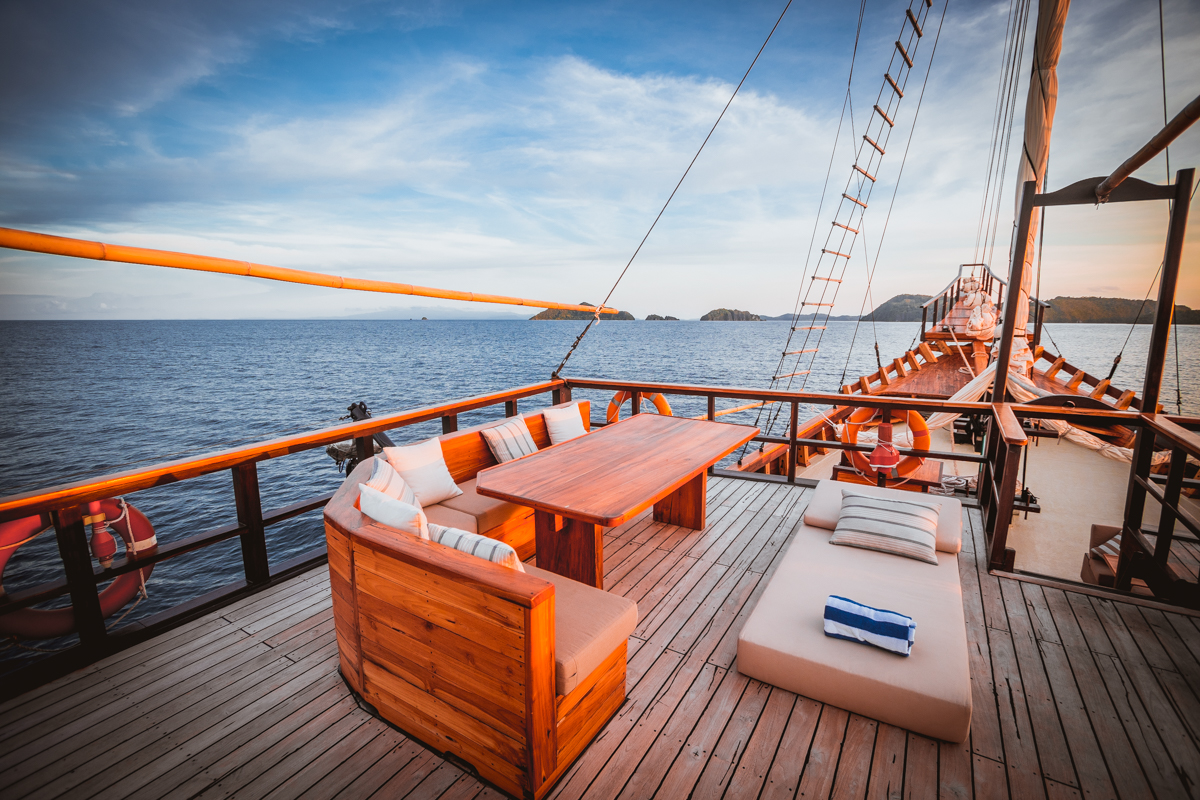
In the front is a shaded outdoor area with 2 more tables for al fresco dining and 2 huge shaded lounging sofas.
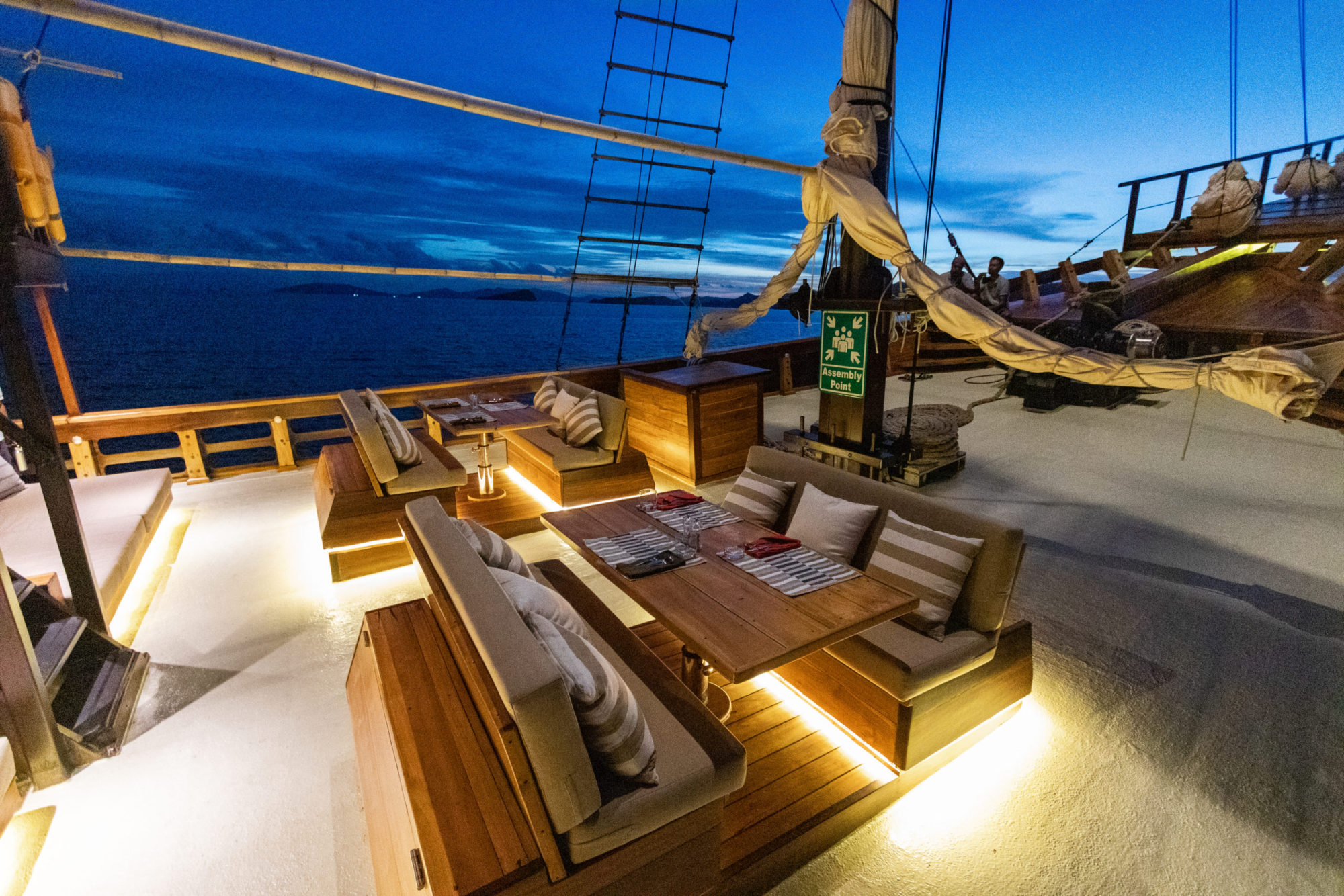
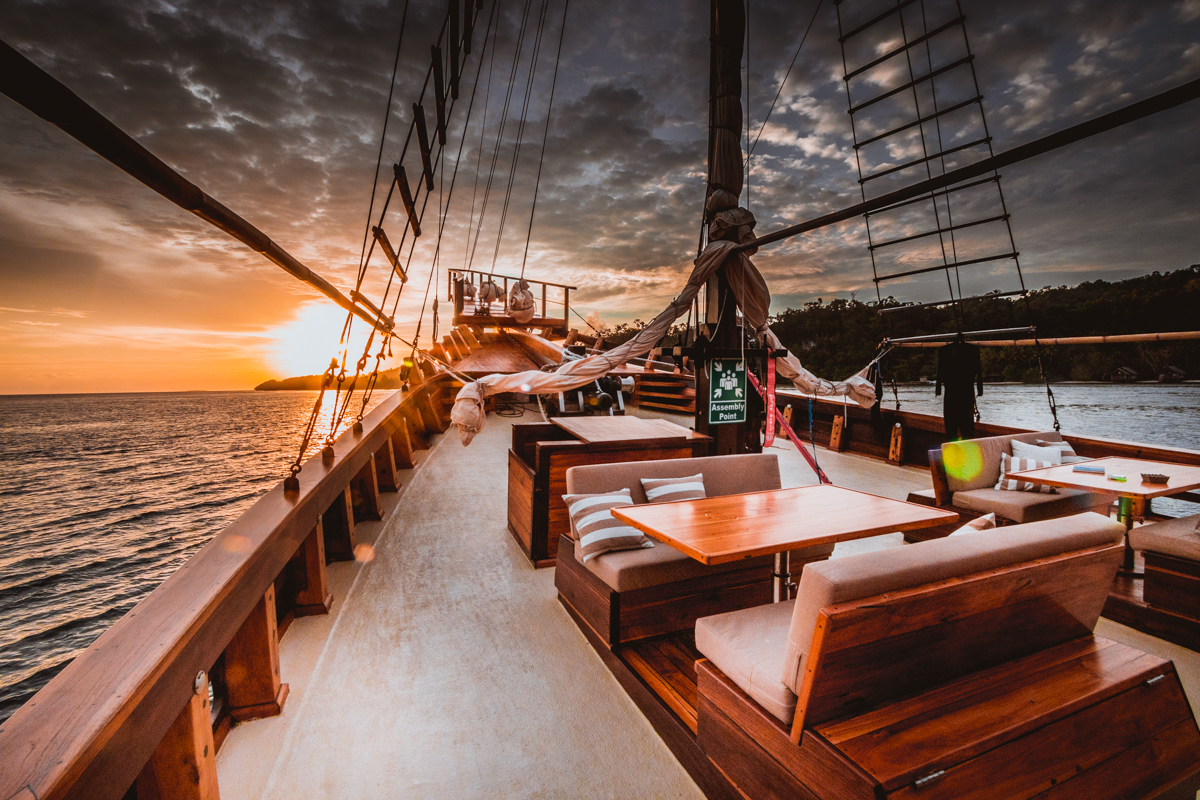
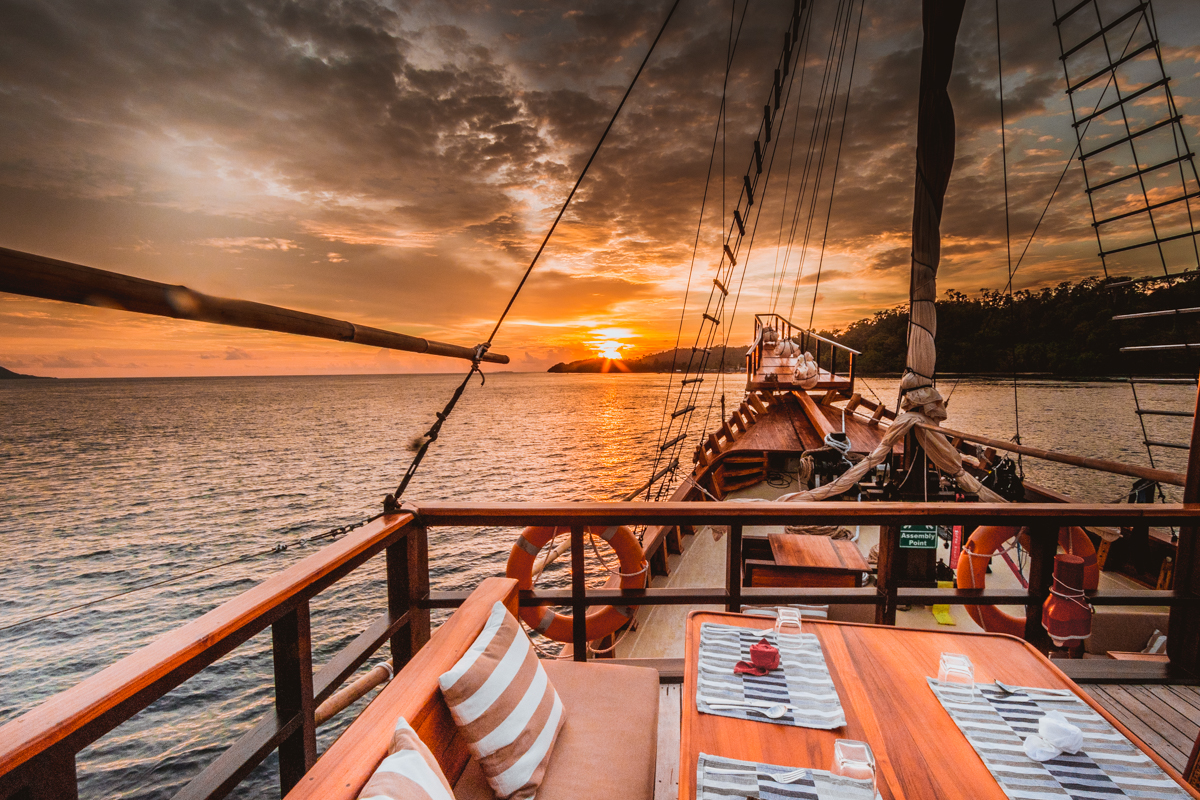
Upstairs is another covered area with 2 more tables and some lounge chairs. This quickly became my favorite area for sunset.
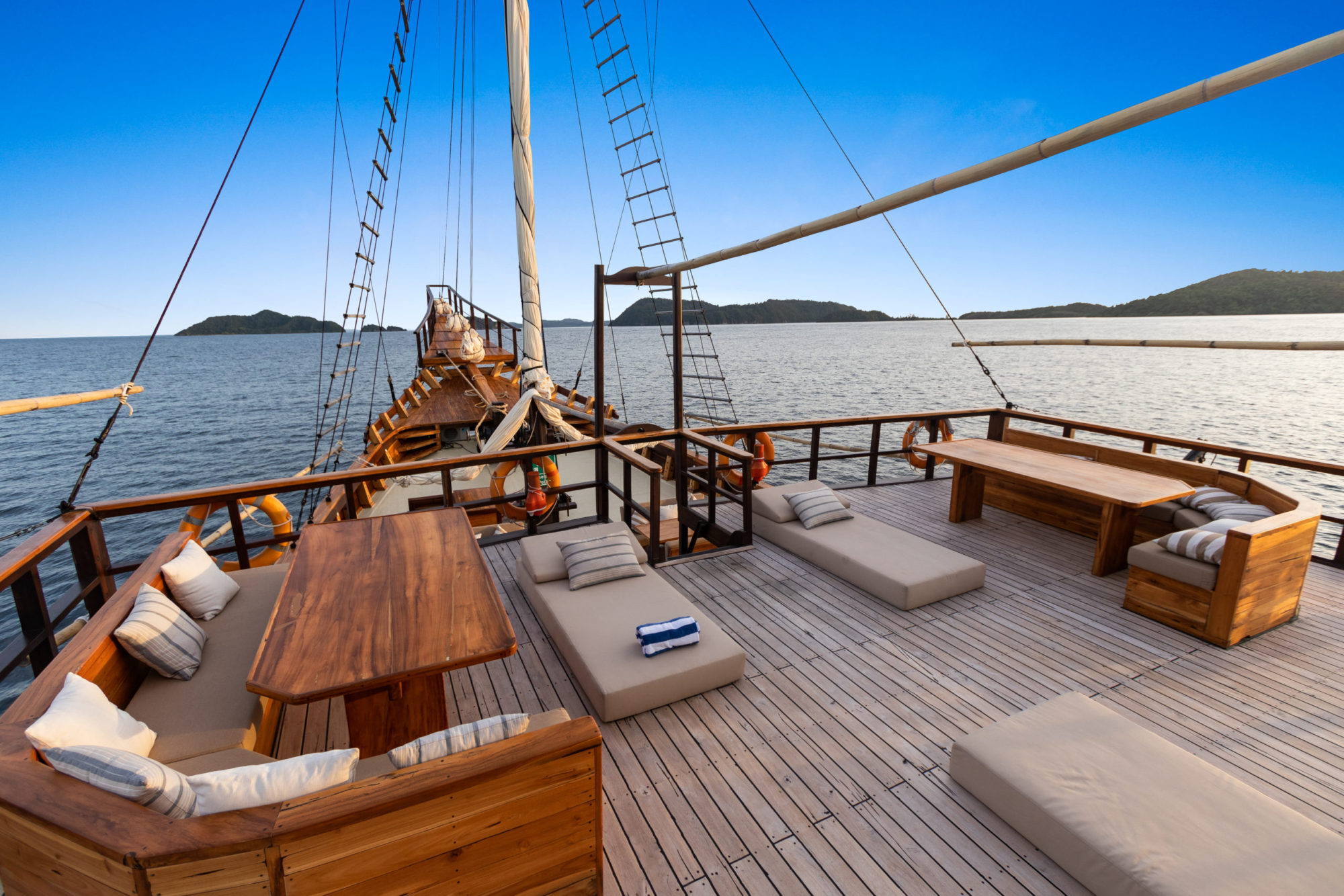
The top deck, offering a 360 degrees view, is reserved for the sun lovers with a few more lounge chairs.
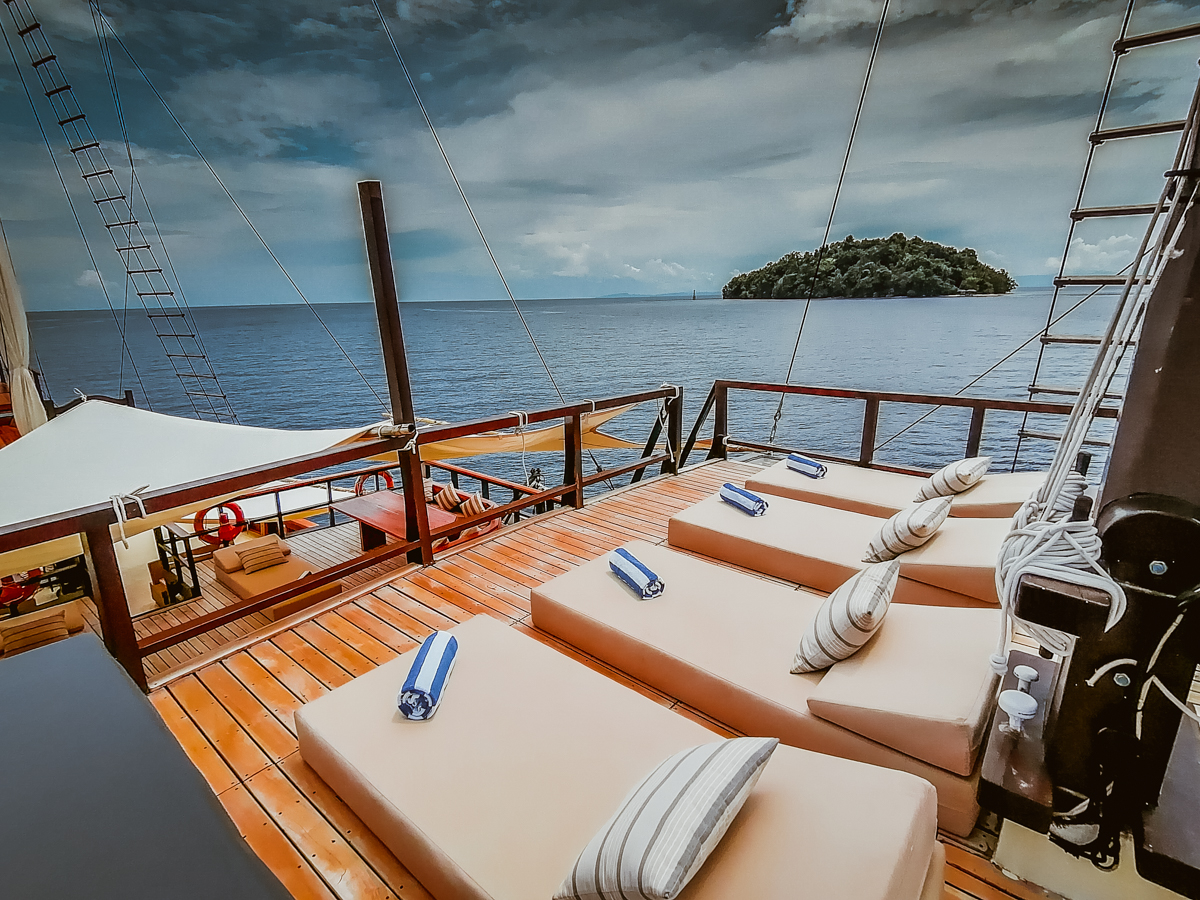
As you can see, there is plenty of lounging space through the boat.
Review of the food on the Coralia liveaboard
The food was simply delicious and was mostly European style.
We started with early breakfast before the first dive composed of bread, yogurts, fruits, and cheese.
We then enjoyed cooked breakfast. Eggs were on order but there was also a buffet with the most delicious pastries ever. They were made daily and were served still warm. The rolls with melted cheese inside were mouthwatering. The strudel had a caramelized bottom and just melted in your mouth.
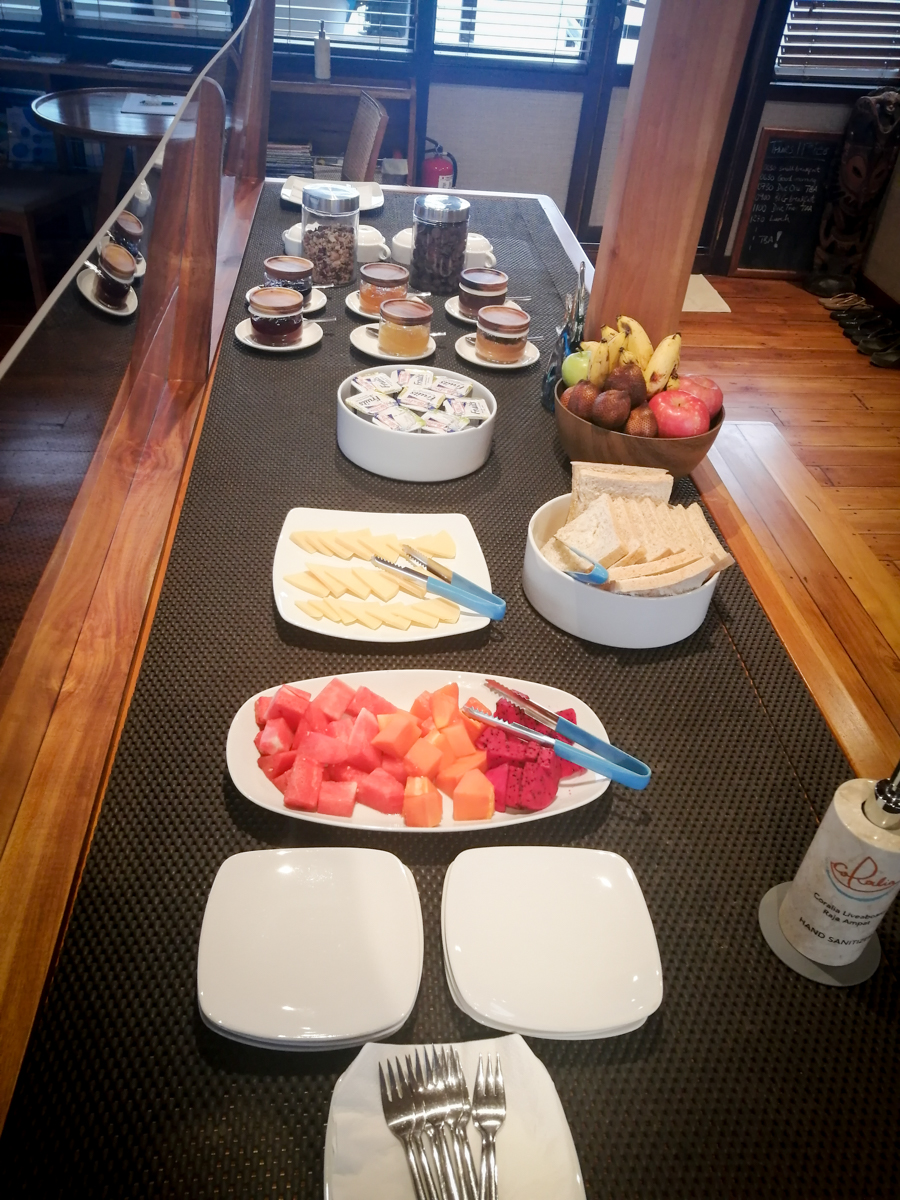
Lunch and dinner were served buffet style.
Hamdi, the waiter onboard, would often serve us at the buffet.
Every day, there were 4 or 5 vegetable dishes and 2 types of meat or fishes. Everything was fresh and tasty.
The food was more geared towards western travelers with pasta or french fries available most nights. Some of the pasta sauce was delightful and could have been found in fancy Italian restaurants.
The Coralia Raja Ampat liveaboard invests in buying quality ingredients and is blessed with an amazing chef! He could open a bakery in Bali.
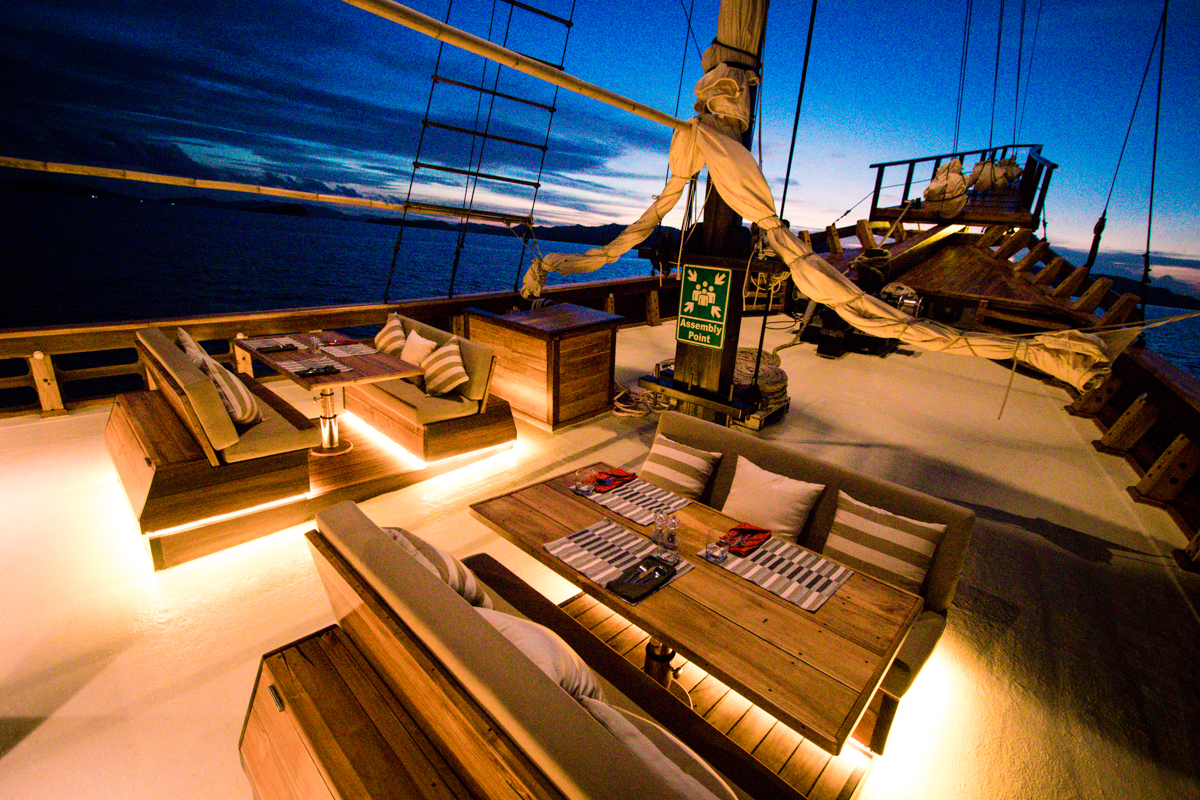
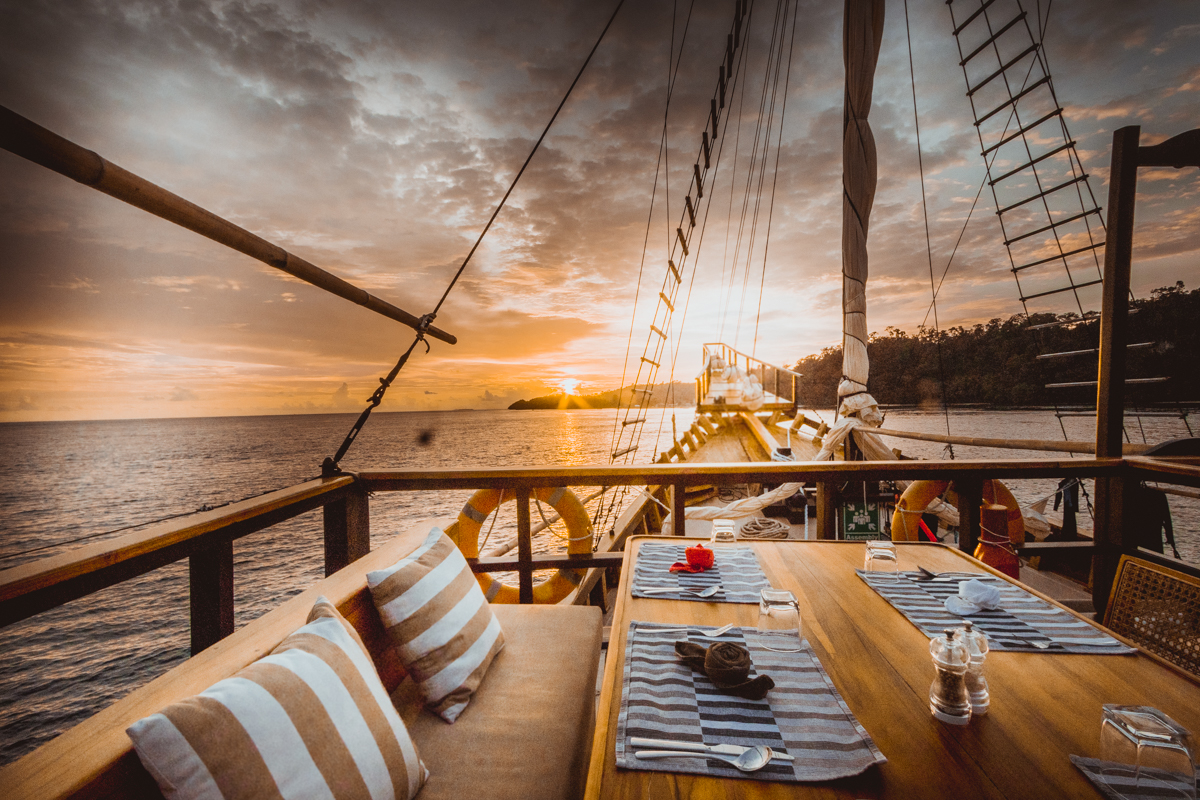
Soft drinks, tea, and coffee were provided free of charge.
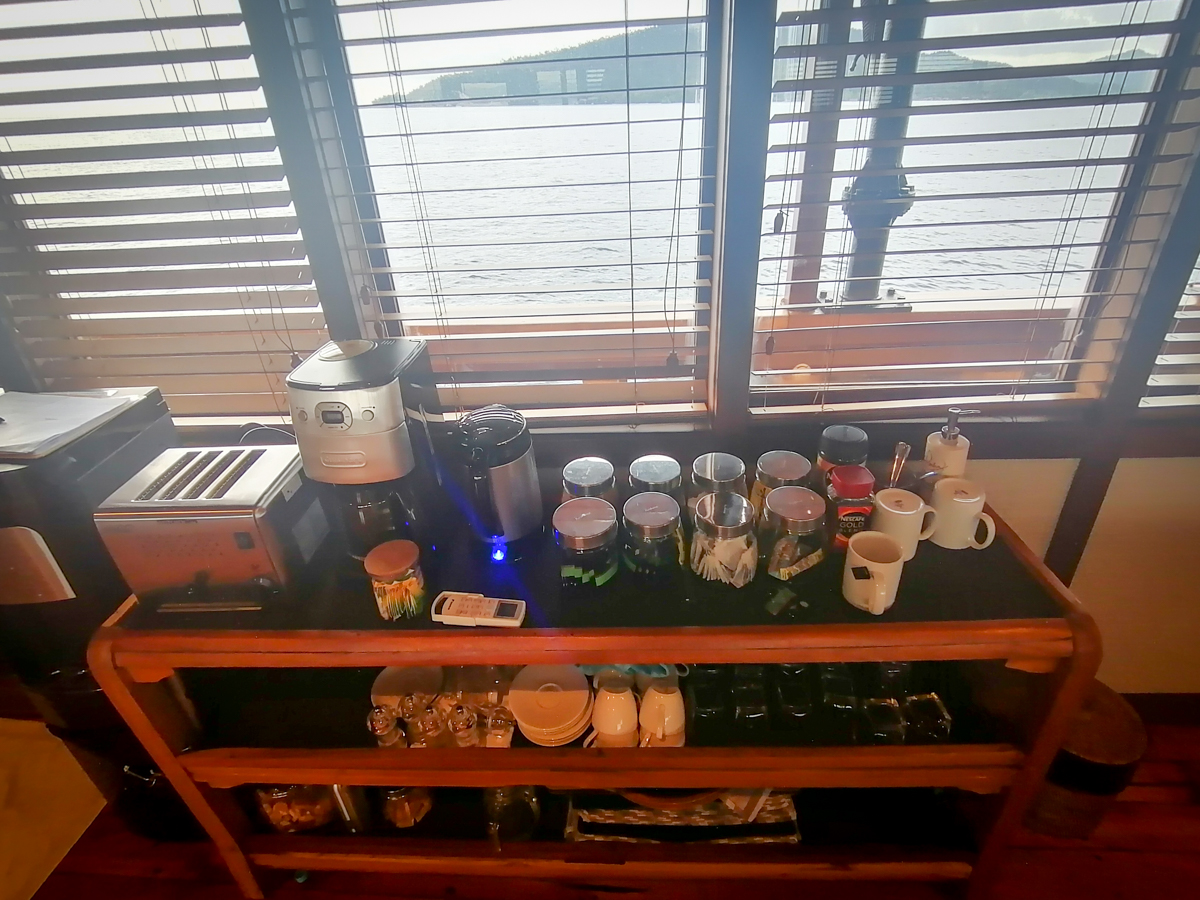
Alcohol drinks were available for an extra charge. (50000 Rp. for a beer ~ about 3 euros).
Review of the diving organization on the Coralia liveaboard
The boat and the food are fantastic but let’s be honest, what most divers who go on liveaboard care about most is the diving.
The diving service on Coralia is the best you can find. They simply do everything for you. The only thing you need to do is put your wetsuit on and jump into the tender boat.
The staff would prepare our tanks and load all our equipment into the tender boat (including fins, masks, camera,..)
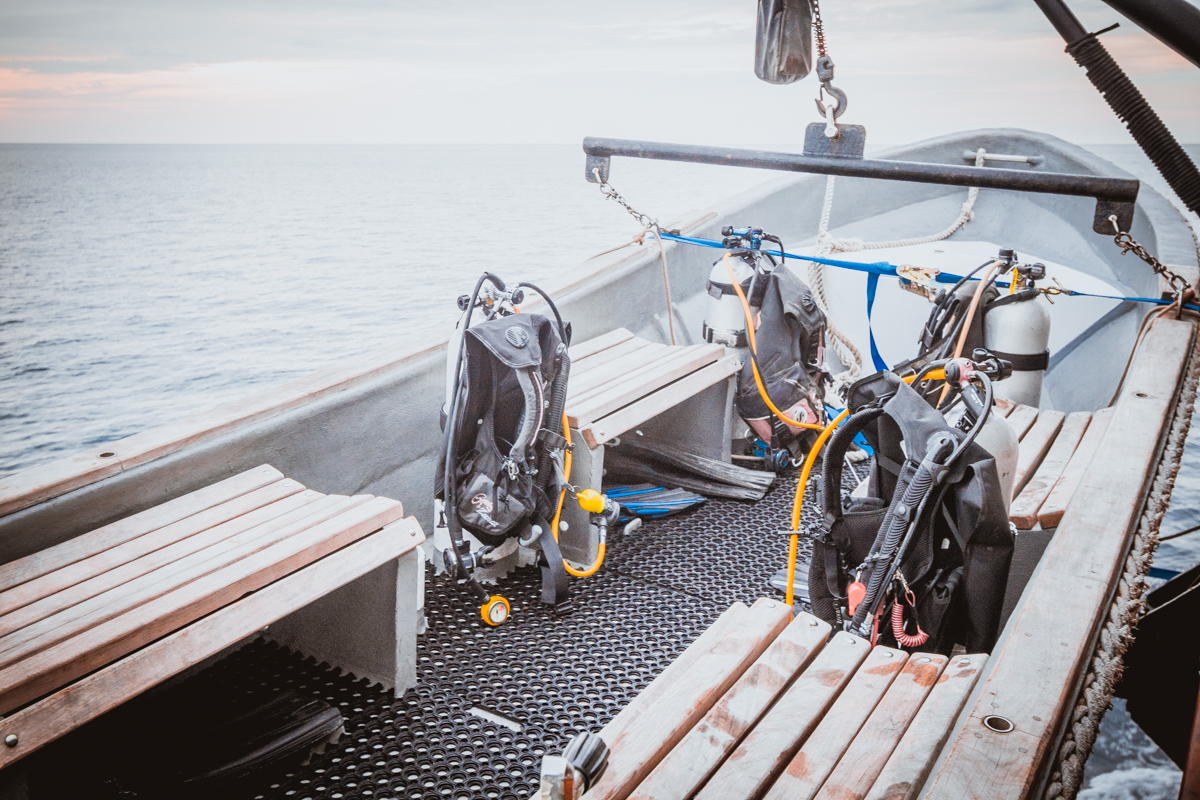
They took care of rinsing and changing the tanks. They would even rinse and towel dry my camera after each dive. Underwater photographers are particularly well looked after: the Coralia has a dedicated air-conditioned camera room on the main deck with charging stations and workspace for housings and lenses.
We encountered a storm during the cruise and despite this, Jerry and Debbie, the cruise directors were able to change the itinerary to find protected yet interesting dive sites. In a case like this, it really pays to have cruise directors with years of experience in the diving area.
Maximum dive time is 70 minutes and they ask you to surface with 20 bars ( so compared to boats that ask you to surface with 50 bars, you get an extra 10 or 15 minutes of diving time on every dive).
Nitrox is free of charge and everyone in our group was diving Nitrox. Tanks were always well filled and the nitrox level was very consistent at 32 percent.
If you are not yet Nitrox certified, it is worth getting your certification as it makes a real difference when you do 3 or 4 dives a day. You can do the certification in a few hours onboard Coralia for a small fee.
We were only 4 divers, yet they organized 2 dive masters for us.
Debbie and Tobie were our divemasters. They have years of experience diving in those sites and it showed. Both were undeniably amazing. Guiding the dive with confidence and showing us the most spectacular small critters. You could also see that they enjoyed every moment of the dive.
Review of the service on the Coralia Raja Ampat liveaboard.
The service was above and beyond. The attention to detail was everywhere.
A cruise director is a key person on board and the Coralia is lucky to have two.
Husband and wife Jerry and Debbie are leading the trip and are fantastic. They have years of experience working on liveaboards and it shows.
The boat is very well run. They strike a great balance between running activities on time and keeping the ambiance relaxed and flexible.
They were observant of guests’ needs and didn’t hesitate to adjust the schedule based on the guests’ wishes. Any request was met with a smile and fast action.
They also shared great stories during dinners and are truly splendid hosts.
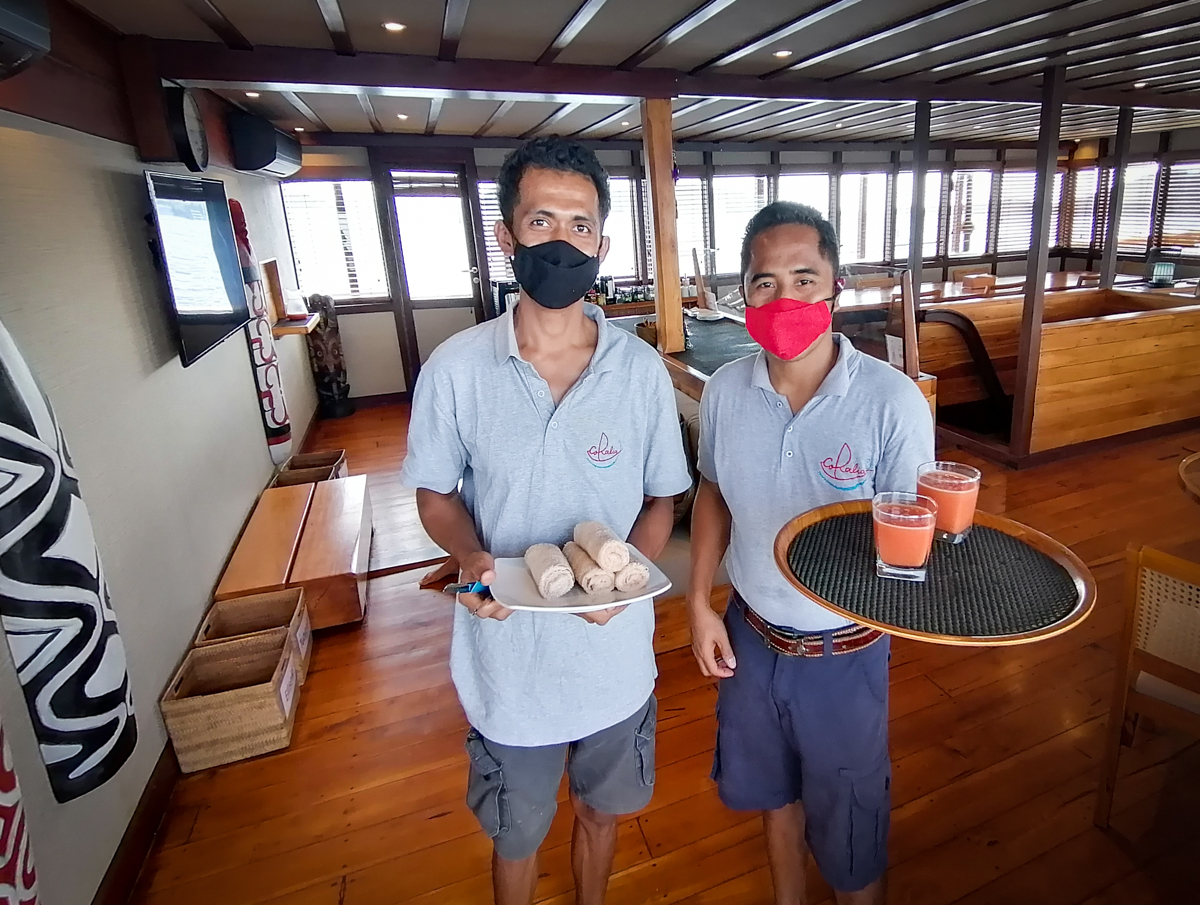
Hamdi, the restaurant’s waiter was ever attentive. Wherever we would be on the boat, he would ask us if we needed something. He would often even carry our plates from the buffet to the outdoor table.
The boat is immaculate. Maintenance and cleaning are very solid.
The room cleaner was also super attentive. There is a morning clean but also an evening turndown when he would redo the bed and close the curtain. He would notice if I liked to keep a curtain open and replicate it for the turndown service like in the very best hotels.
After every rainy or night dive, we would be met with a hot towel and a hot chocolate.
After every excursion, we would be met with a mocktail and a cold towel.
You could see that the crew was used to working together. There is a great vibe onboard.
It turns out I am far from the only one to be impressed: the Coralia crew was voted number one crew in the Pacific in Scuba Diving Magazine’s 2026 Reader’s Choice Awards.
Internet access and 4G on the Coralia liveaboard
Coralia has moved on from the 4G router I used. The boat now offers complimentary satellite WiFi throughout the cruise whenever coverage allows, which means you are no longer cut off in the parts of Raja Ampat with no phone signal. It is a remote-area connection, so treat it as messaging, email and light browsing rather than streaming or uploading dive footage.
When I sailed, the free connection came from a 4G-based router near the captain’s cabin, and it only worked where there was a phone signal — worth knowing if you compare older reviews.
If the internet is important for you, you might still want your own Telkomcel Simpati SIM card, or an eSIM set up before you fly, as the boat connection can get busy with 16 passengers. Local cards are available at most airports for less than 10 USD including a data plan. Note that other telecom providers will not work in Raja Ampat so make sure you get Telkomcel.
The higher you are on the boat, the better the phone signal so go to the sundeck to get a strong connection
Internet access and 4G in Raja Ampat.
You can essentially expect no or little internet in the Misool area and better internet in the central area of Raja Ampat ( Fam, Dampier,…)
Misool is one of the rare places in Indonesia with bad 4G coverage but it seems to be improving every year.
On this trip, we could get a very weak signal near the love lagoon and Neptune Fan Sea dive site and also near Yuliet island. It means we received a few emails and WhatsApp but I was unable to send messages.
There is also a weak connection near Daram and Farondi.
During our 11 night cruise, the longest we went without a 4G connection was 60 hours. So you should plan to stay without connection for 2 or 3 days at a time while in the Misool area
Things changed once we arrived in Central Raja Ampat. The connection in Penemu is good. Not enough for WhatsApp calls but good enough to receive and send emails or browse the internet.
The Dampier strait area has a great signal and I could even do calls on WhatsApp.
The cruise itinerary during our Raja Ampat trip with Coralia liveaboard.
We had booked a 7 nights cruise including Misool. However, by day 3, we were having such a good time that all the passengers asked if it was possible to extend the trip. So what started as a 7-night cruise ended up being an 11-night cruise.
It is worth noting that every cruise is weather dependent so each itinerary is somewhat unique as the Coralia team is dedicated to providing the best diving experience possible given the weather conditions but also the movement of the fishes ( For example, places with recent manta rays sighting would get prioritized as diving with them is always a highlight).
Day 1: Cruising to Misool
Our arrival day was very relaxed. Getting familiar with the boat, the diving procedures, and getting to know the passengers onboard.
We departed for Misool around 3 pm and navigated most of the night. It takes between 12 and 16 hours to reach Misool depending on the weather.
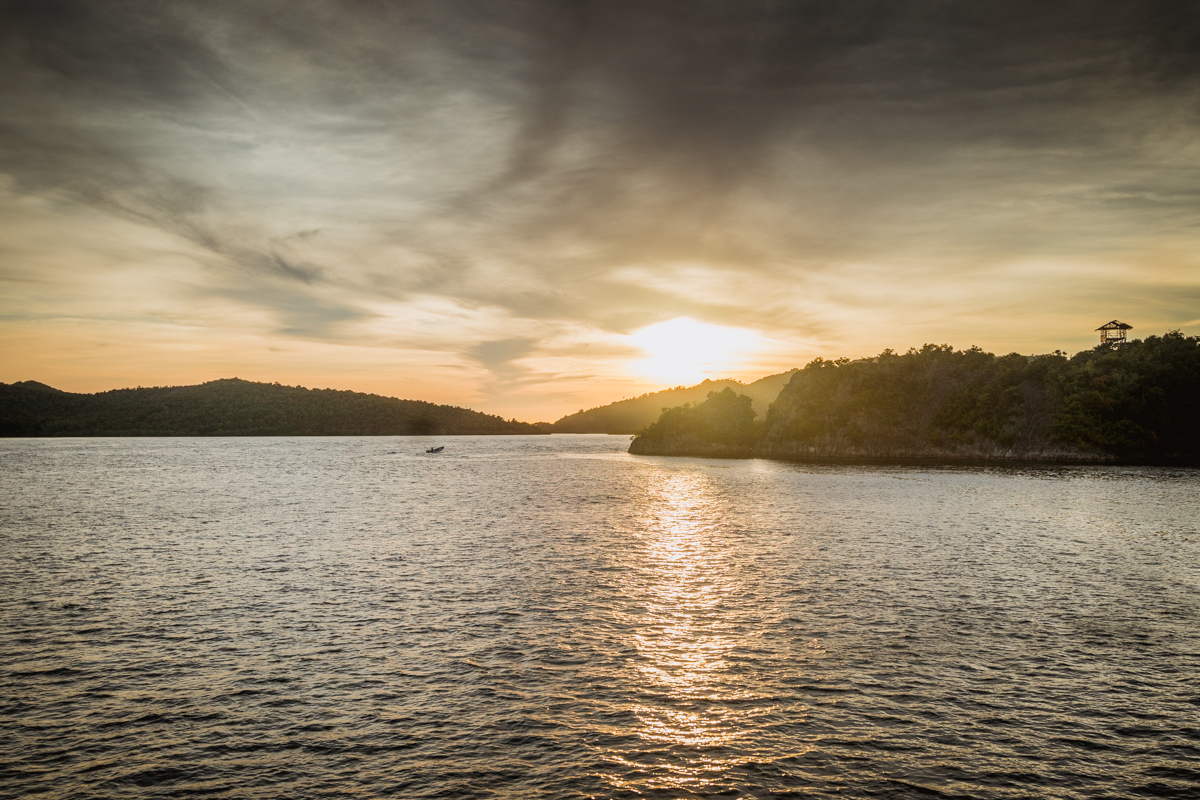
The sea was quiet. A highlight of the day was the sunset drinks on the upper deck by the sound of the waves.
Day 2: First day of Diving in Misool
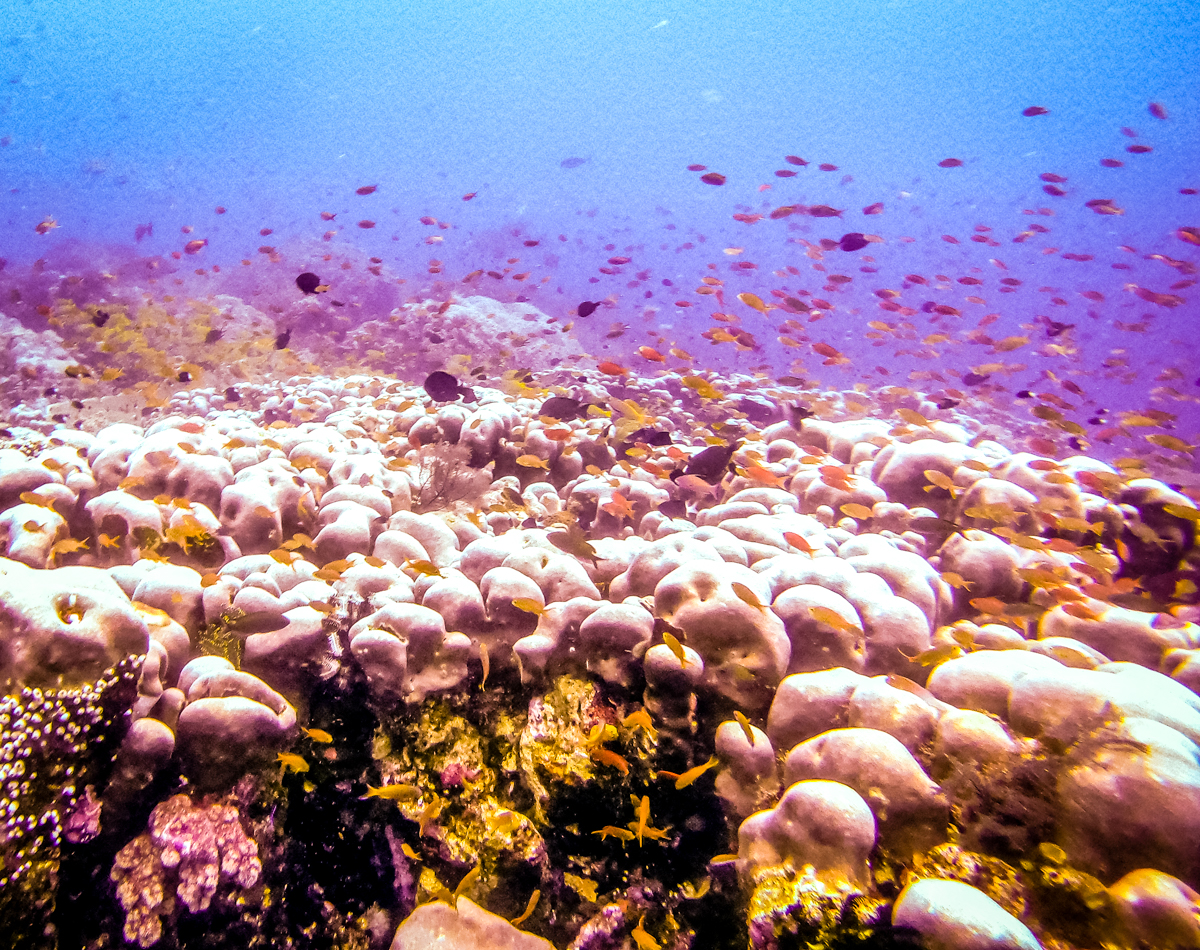
Misool is considered by many as the best diving area in Raja Ampat as it typically has massive schools of fishes and beautiful soft corals.
This was my 5th trip to Misool and it seemed a lot less “fishy” than the previous years. This is purely based on my subjective impressions as I am not a marine biologist. I was however worried to see many more fishing boats than the previous years. Many beaches that used to be deserted were now covered by fisherman camps. Which could explain the reduction in numbers of bigger fishes like tunas, groupers, or Napoleons.
I am sure the local NGOs preserving the area are paying close attention to this. Nevertheless, the diving in Misool is still spectacular and we dove there for the first four days.
Puri pinnacle dive site ( or Antichovy) is a pinnacle with a plateau at 5 meters sloping down to 40 meters. There are 3 smaller pinnacles on the Eastside.
The mount is covered with beautiful soft corals. This site is famous as if you are very lucky, it can be covered by millions of anchovies, creating fishballs and predator hunting action.
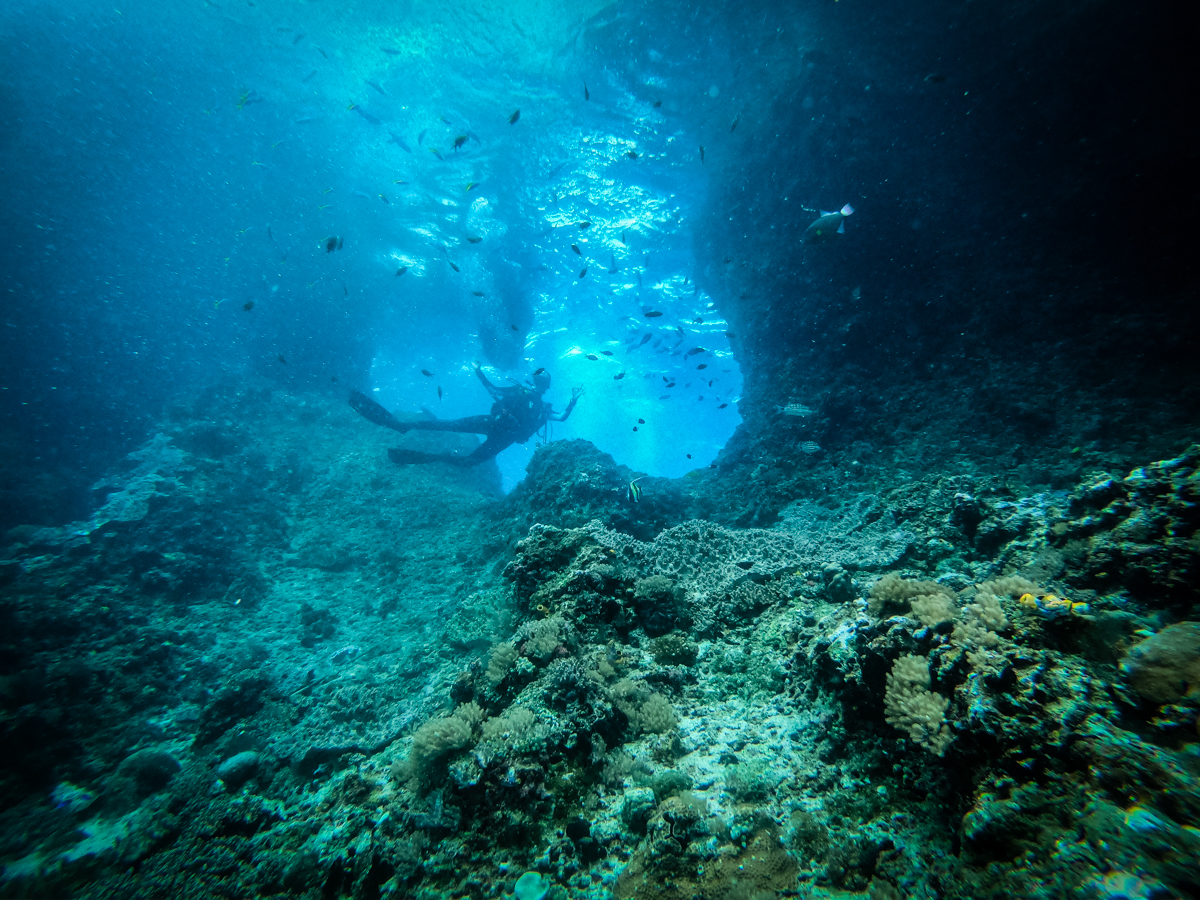
During our dive, visibility was amazing ( above 40 meters) and we could see far into the blue. We saw a school of barracudas, a big Napoleon and a potato grouper. Don’t forget to look at the walls too as there are plenty of weird creatures. Our 2 dives masters were amazing at spotting them and showed us a lot of cool shrimps and crabs.
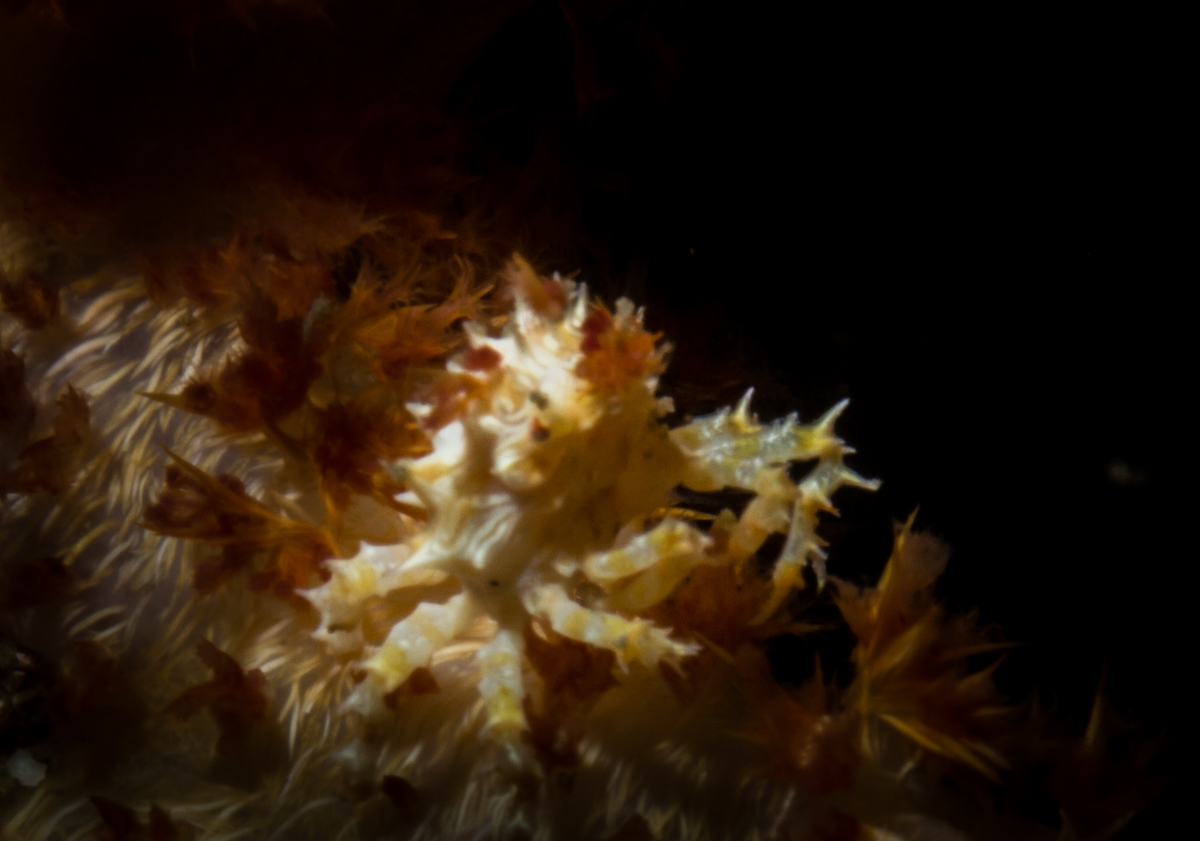
A candy crab had grown a soft coral on its back and used it to camouflage! On the shallow plateau, a baby shark was hiding underneath a table coral.
Overall it was an amazing check dive.
The diving experience from the Coralia Raja Ampat liveaboard was one of a kind.
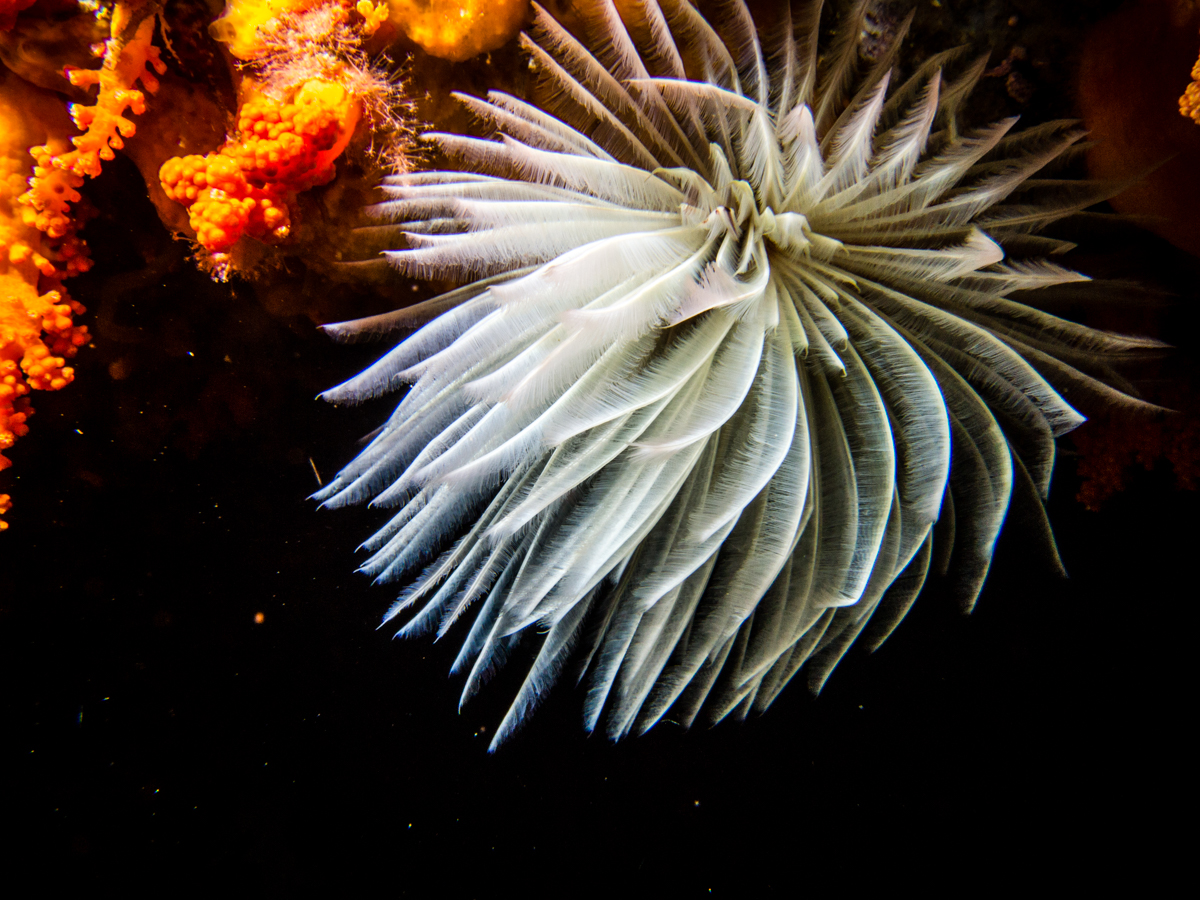
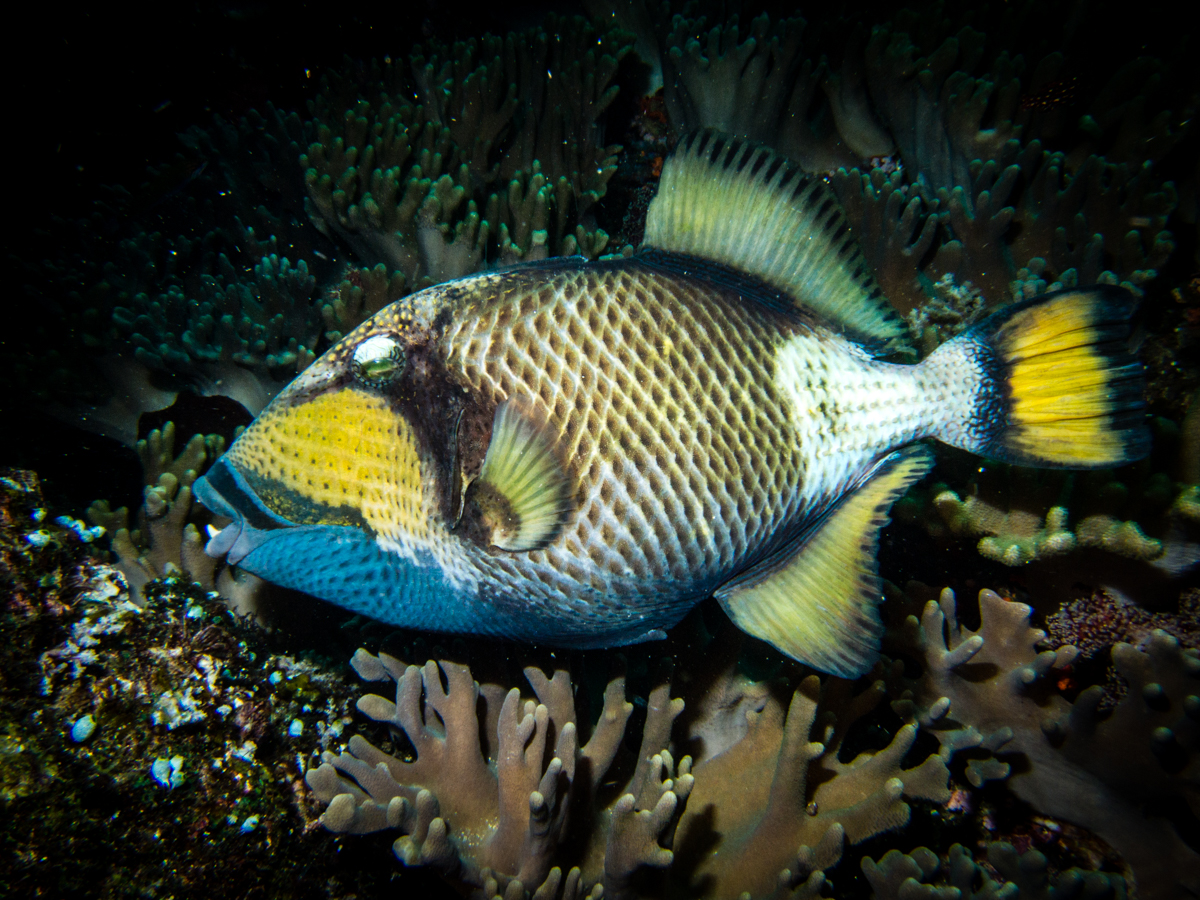
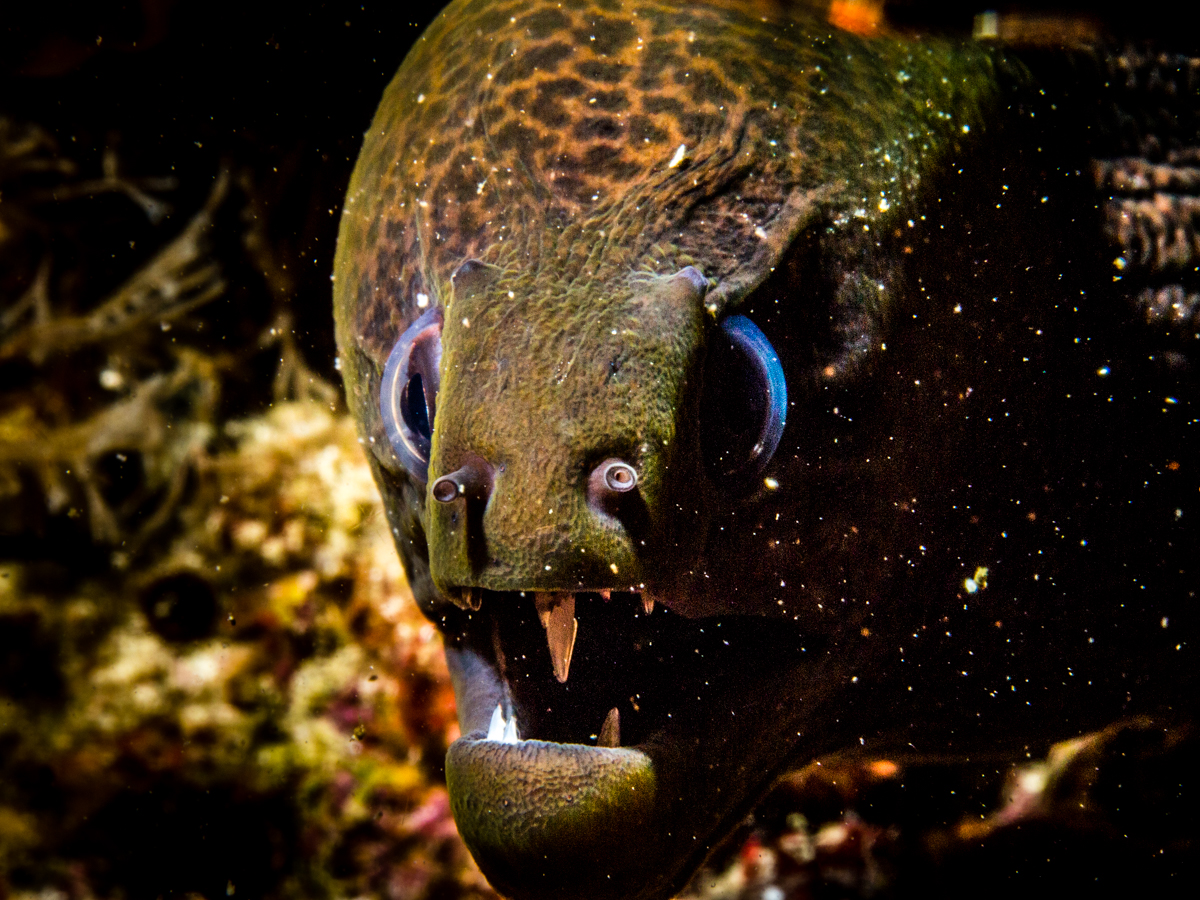
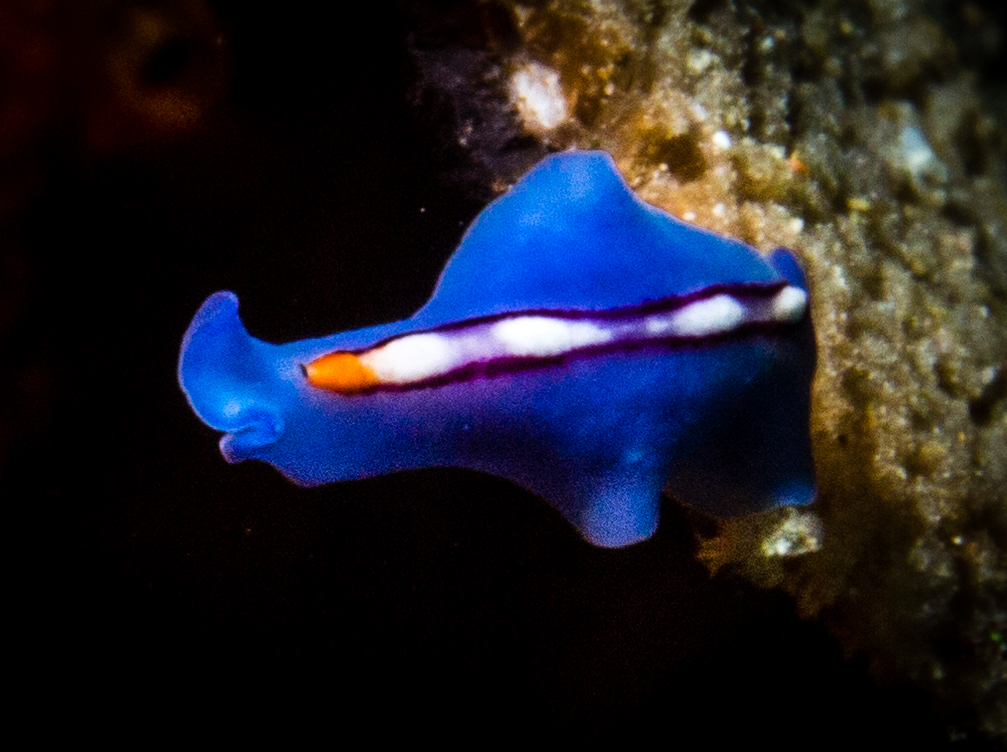
The second dive of the day is Neptune Fan Sea near Wayilbatan.
It is a channel between 2 islands. It is a short wall that goes down to 20 meters. It is usually done as a drift dive.
It is covered with huge sea fans creating an incredible panorama.
Purple, pinks, and oranges soft corals are everywhere.
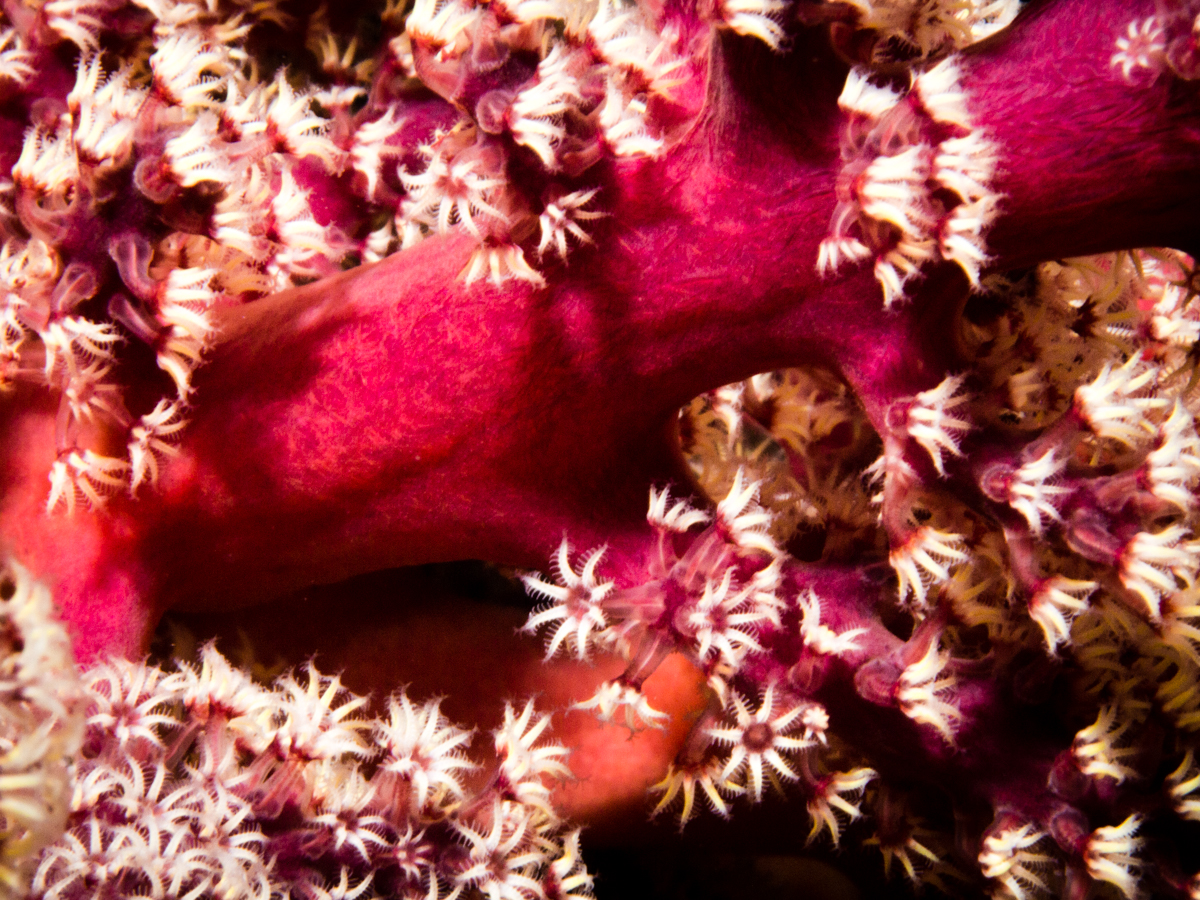
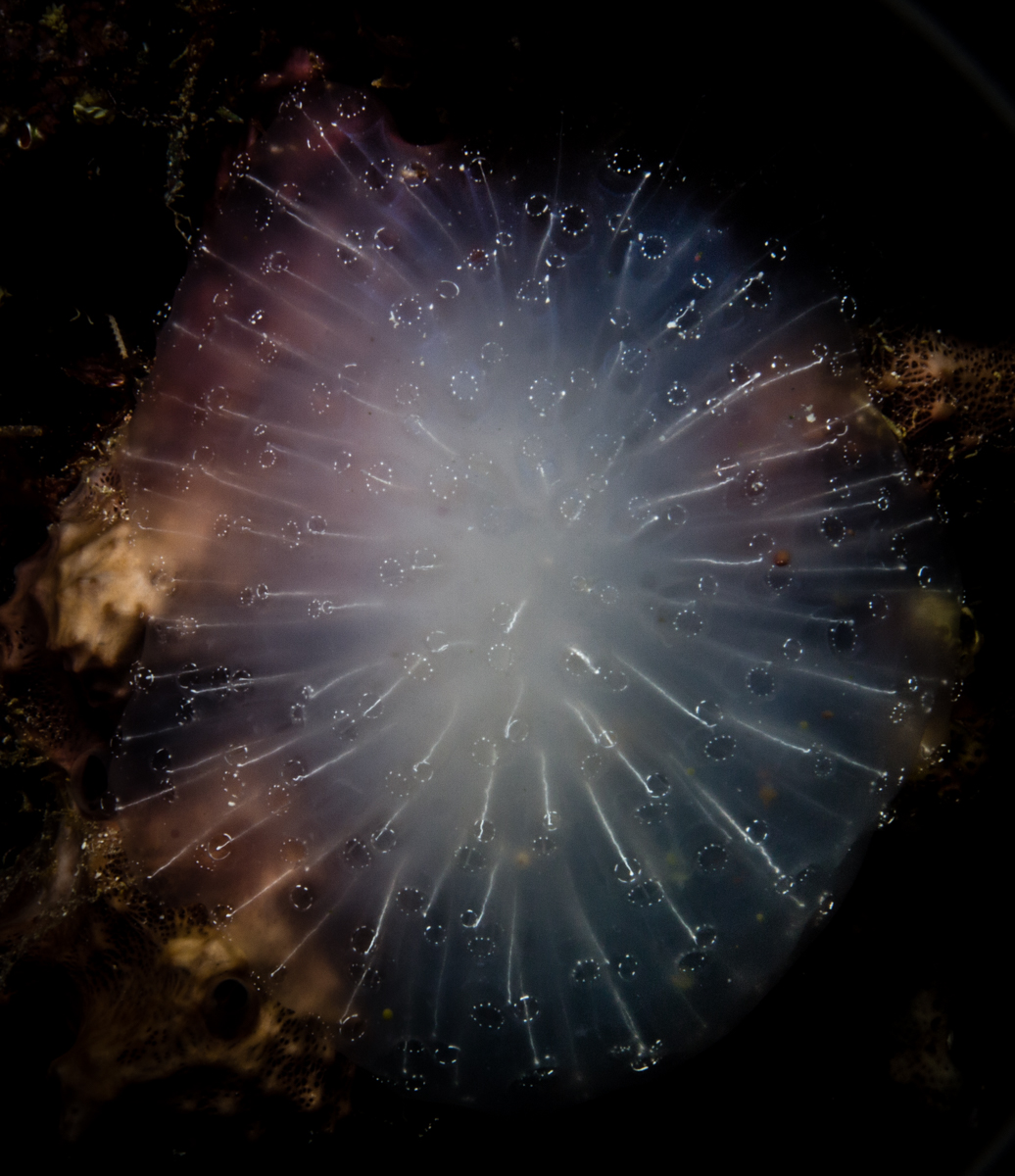
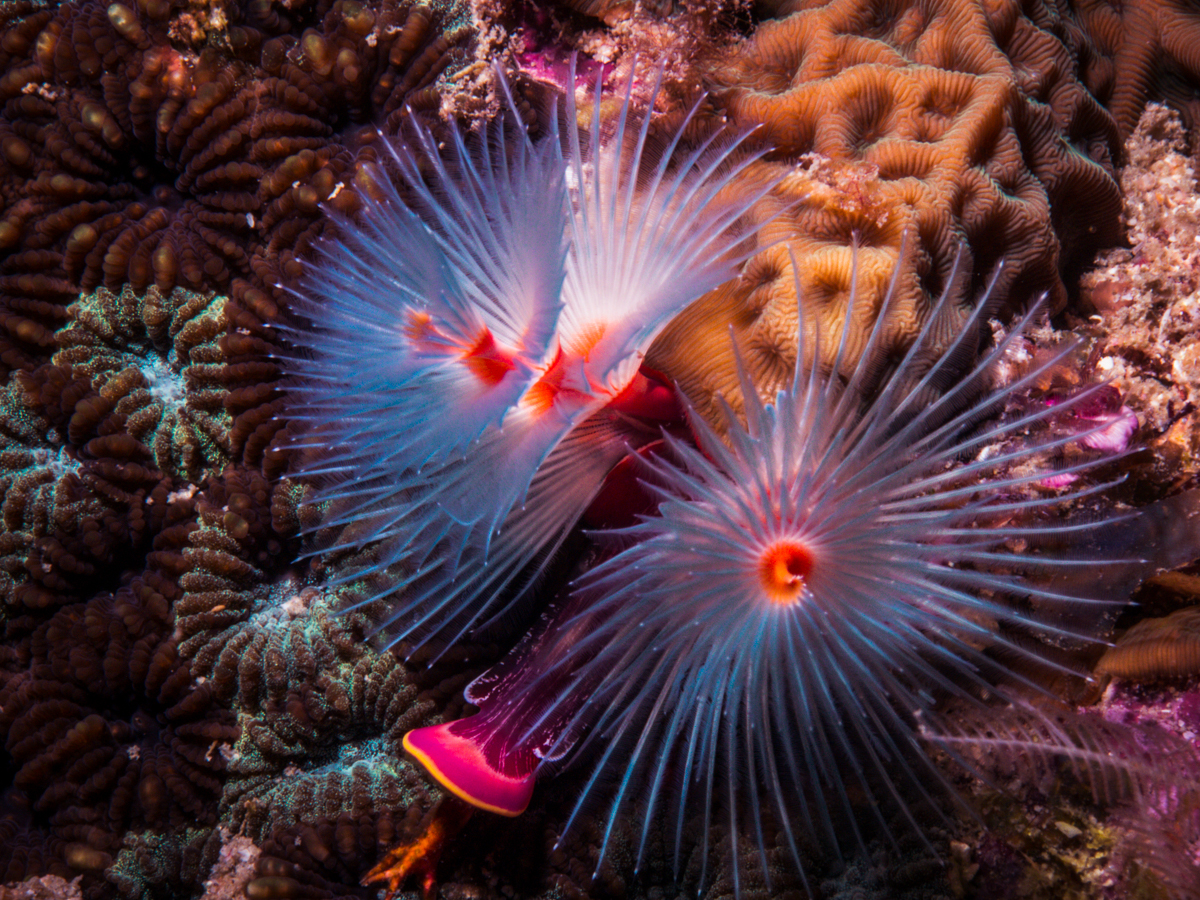
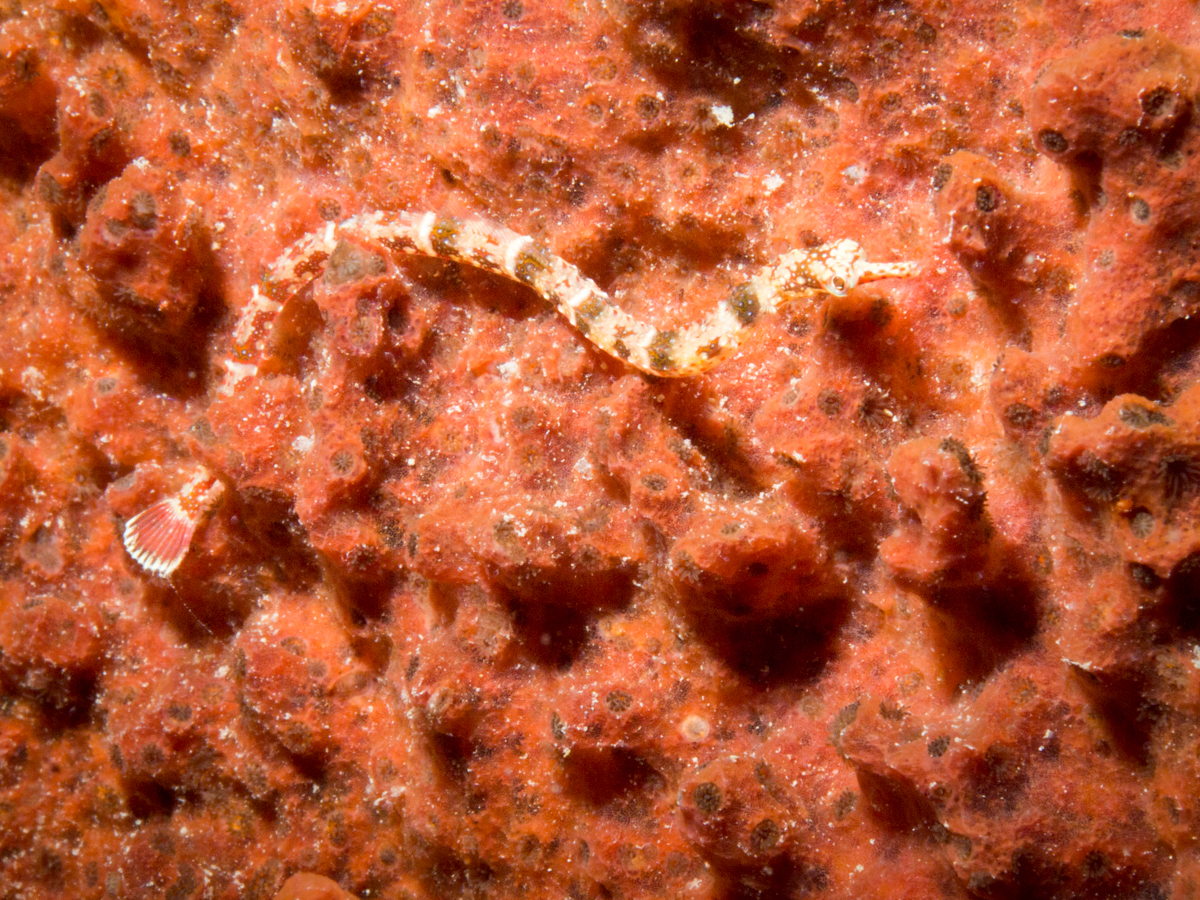
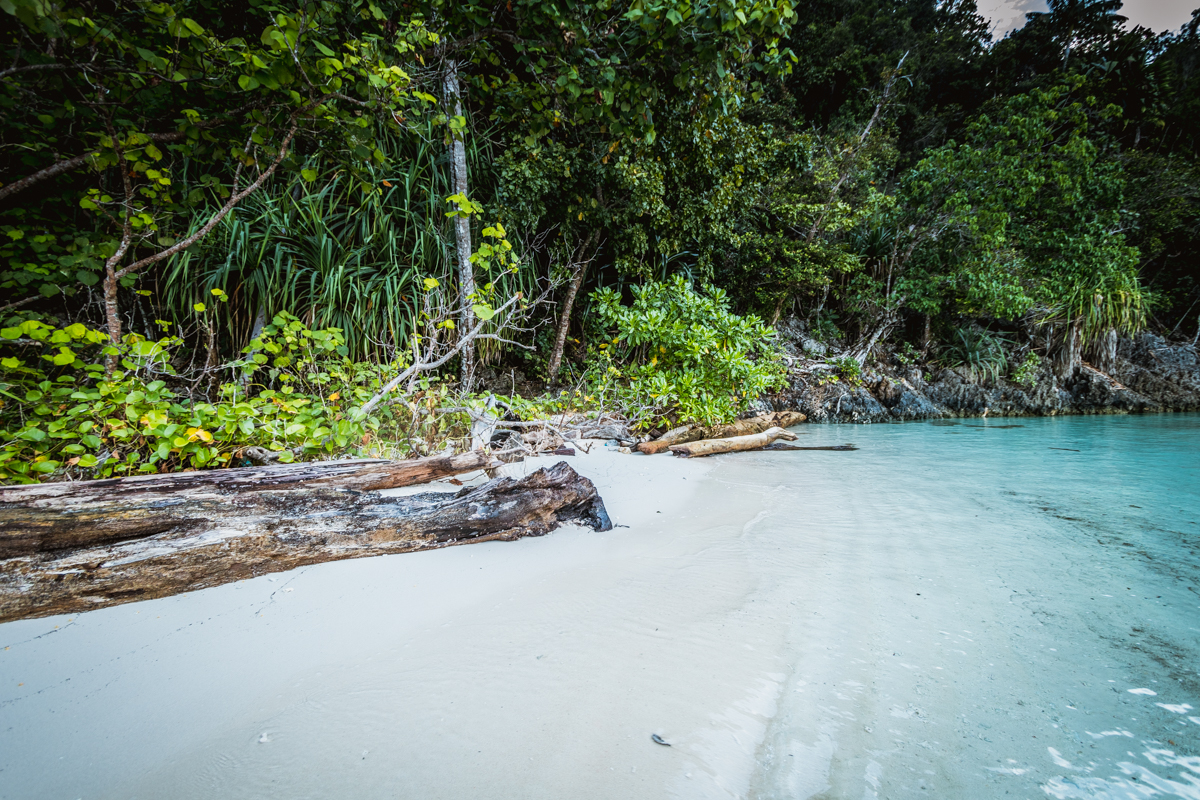
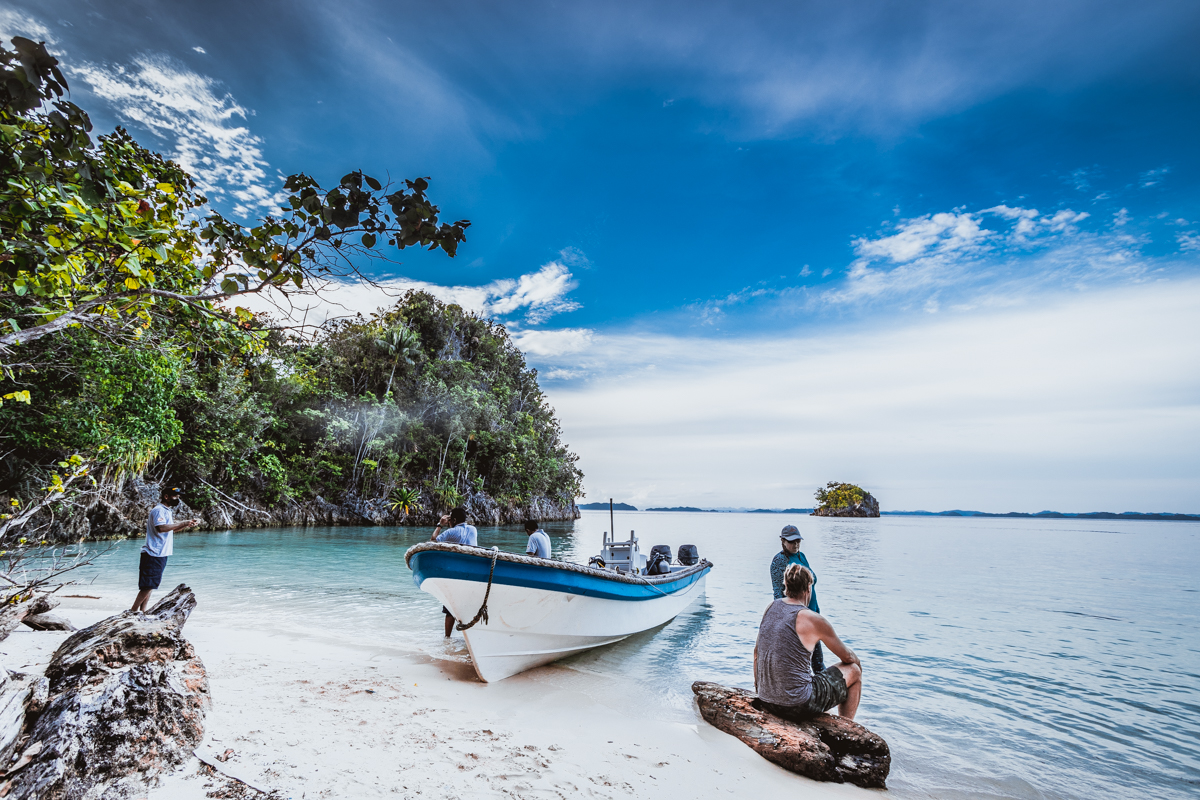
There was a third dive at the wedding cake dive site and then we took a boat ride through the lagoon and ended up on a perfect-looking beach for sunset. Amazing first day of diving!
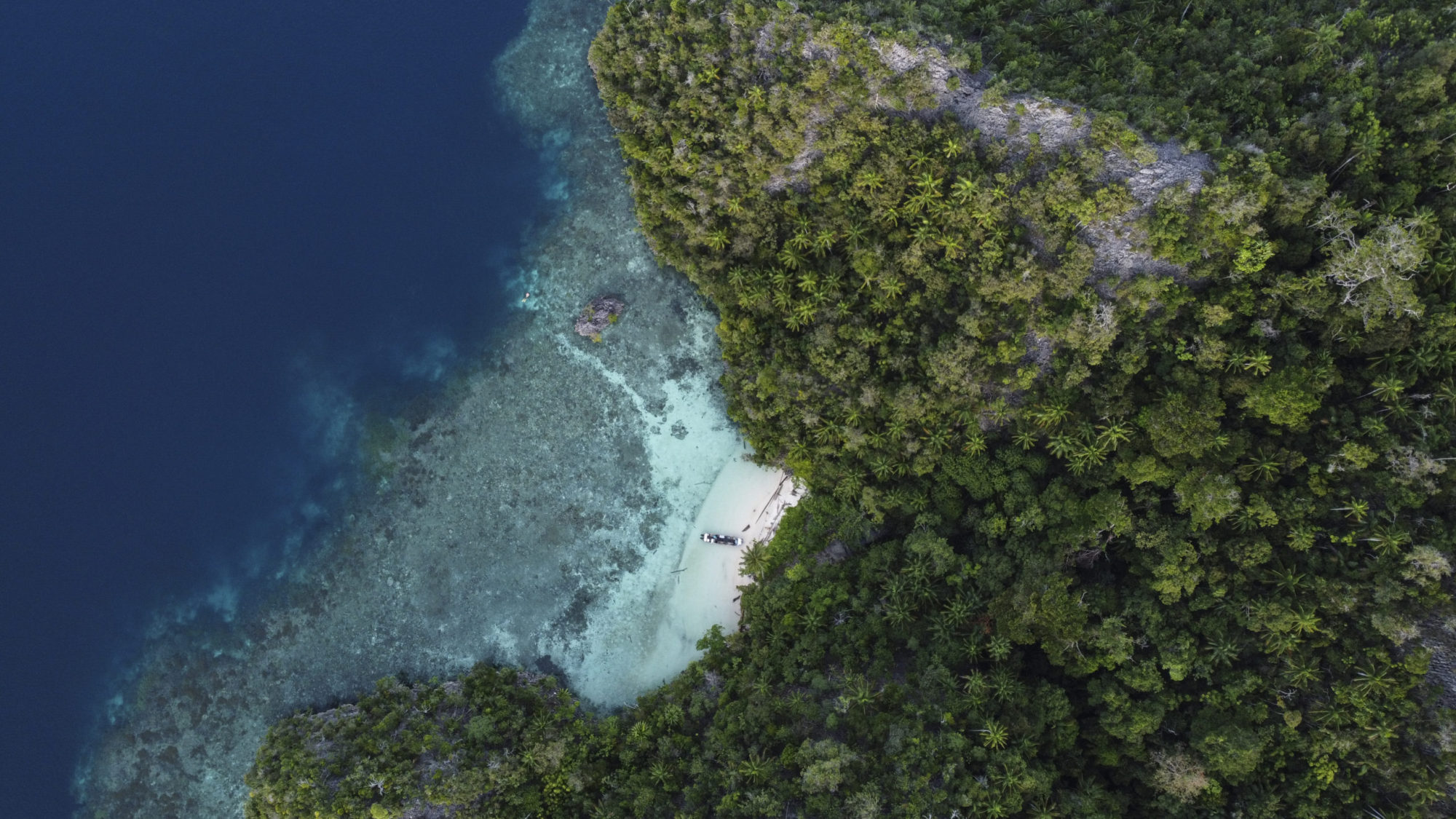
Aerial photo by Debbie Arriaga
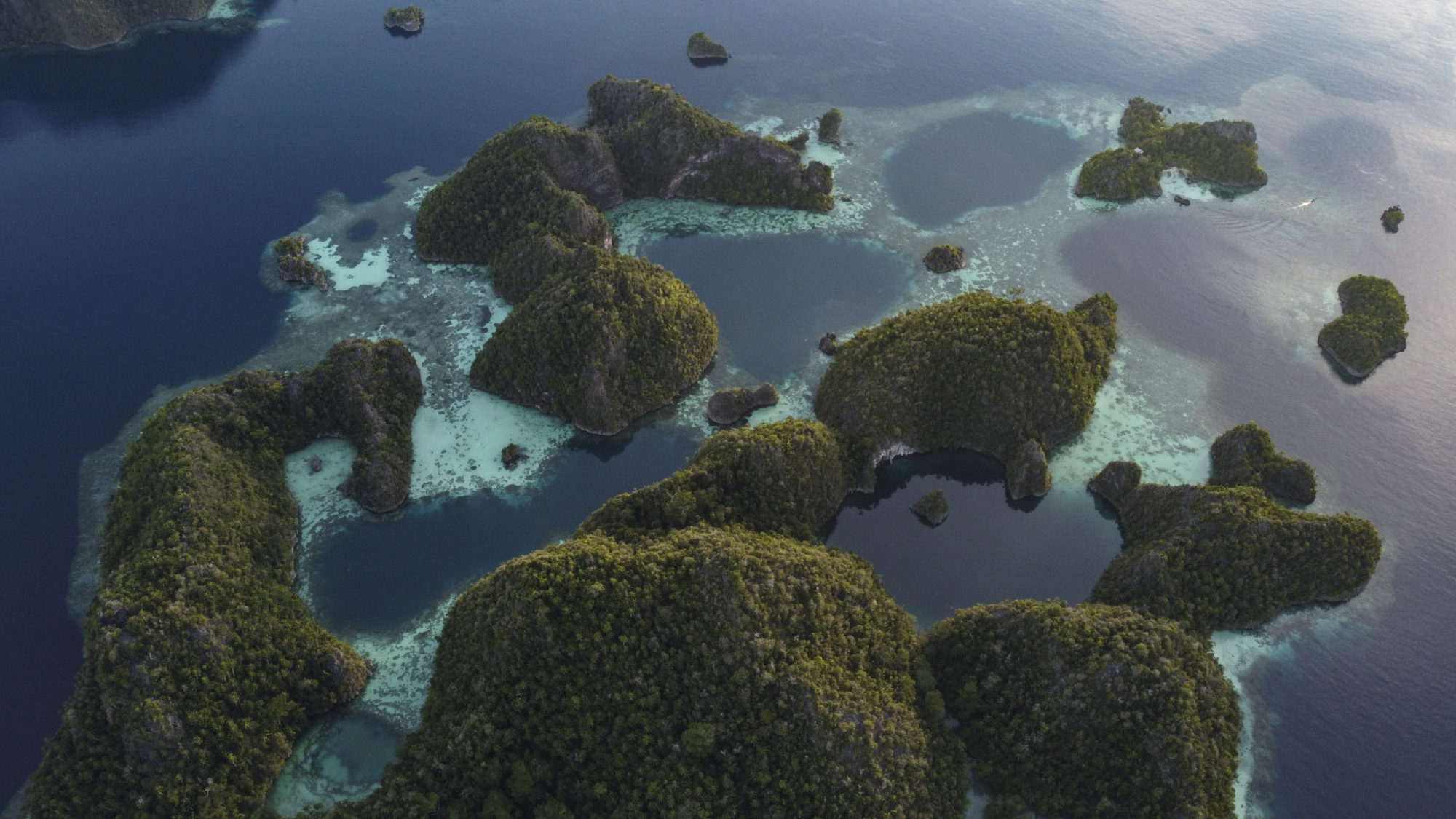
Aerial photo by Debbie Arriaga
Day 3: Soft corals paradise in Southern Misool
Today we started with the love lagoon. One of the most iconic ( and photogenic!) places in Raja Ampat.
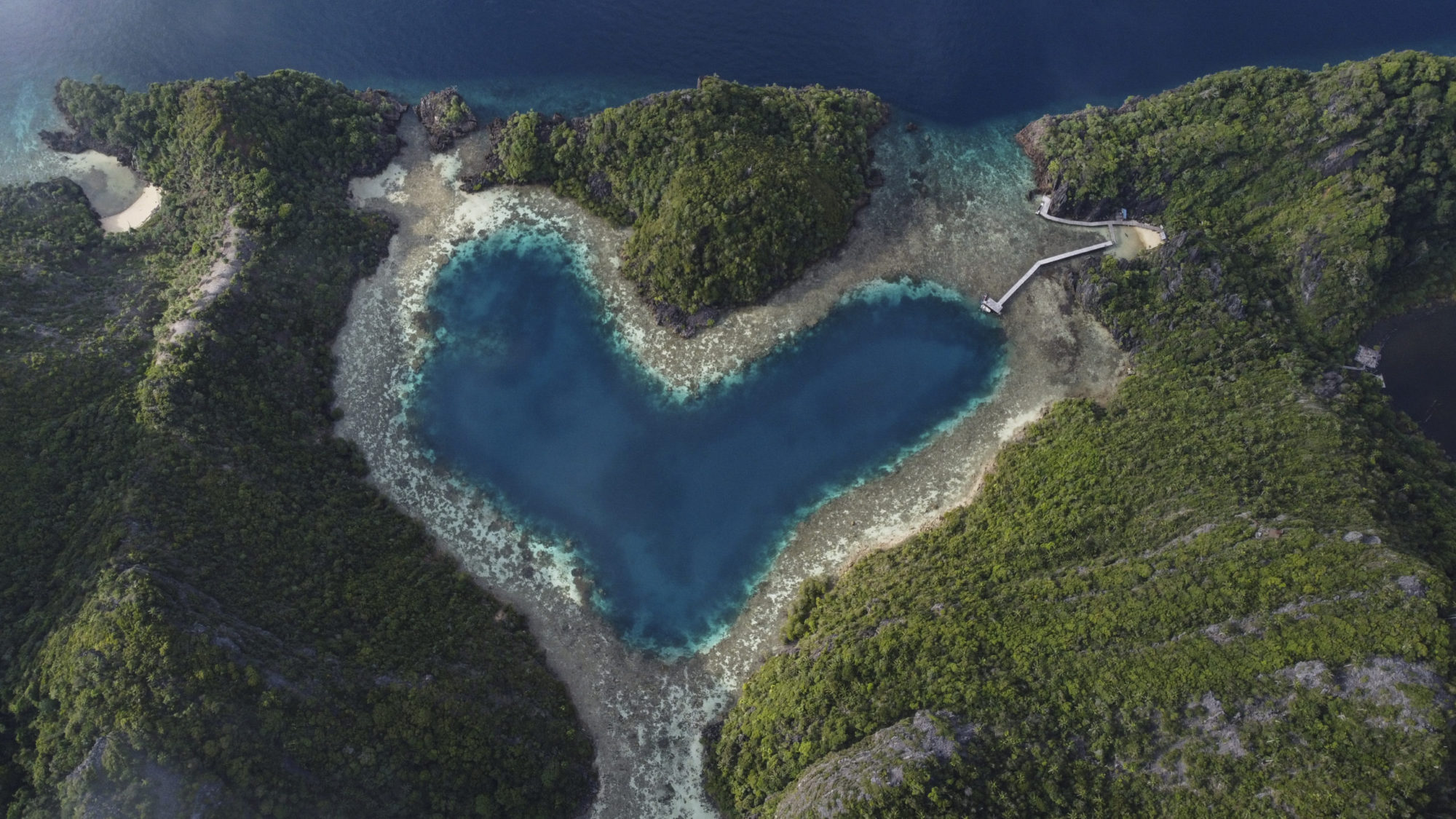
Aerial photo by Debbie Arriaga
Kayaking the lagoons of Raja Ampat
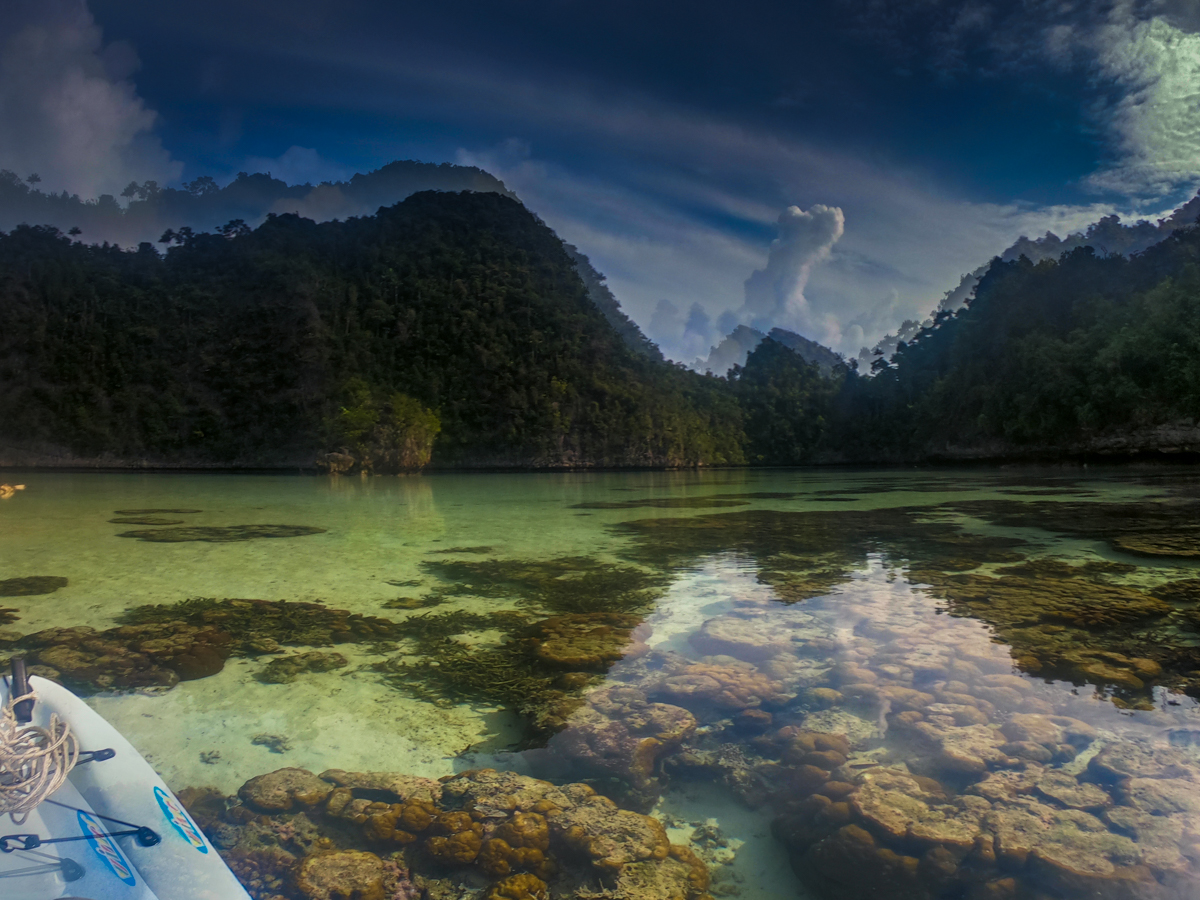
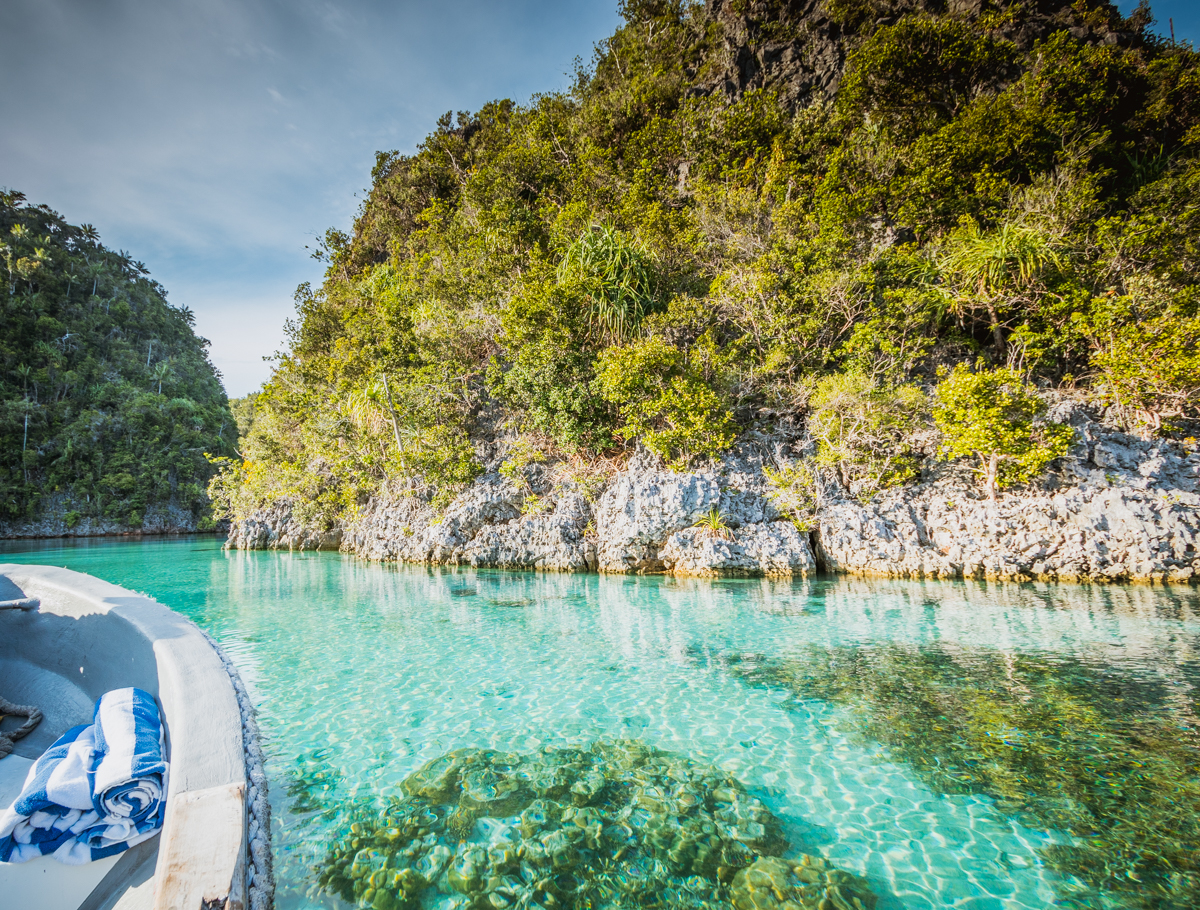
I already went up the viewpoint last month so this time I decided to kayak through it. The Coralia liveaboard has a few kayaks and paddleboards available for guests’ use.
What a special moment. I was alone in those splendid lagoons. There is a unique quietness in going with a Kayak. The water was crystal clear and I could see the fishes and corals. I saw a few stingrays, nemos, and some fishes hunting sardines. Birds were also hunting and would come down crashing into schools of sardines jumping as they were being hunted underwater. The sound of this spectacle was truly magical with no other humans in sight.
Even if you are here for diving, don’t miss a solo kayak tour of the lagoons. But bring a nautilus GPS tracker as it is easy to get lost through the lime karsts. I had to really concentrate to find my way back to the tender boat waiting for me.

We navigated back to the Fiabacet area near Misool resort and our first dive of the day was at Nudi Rock dive site
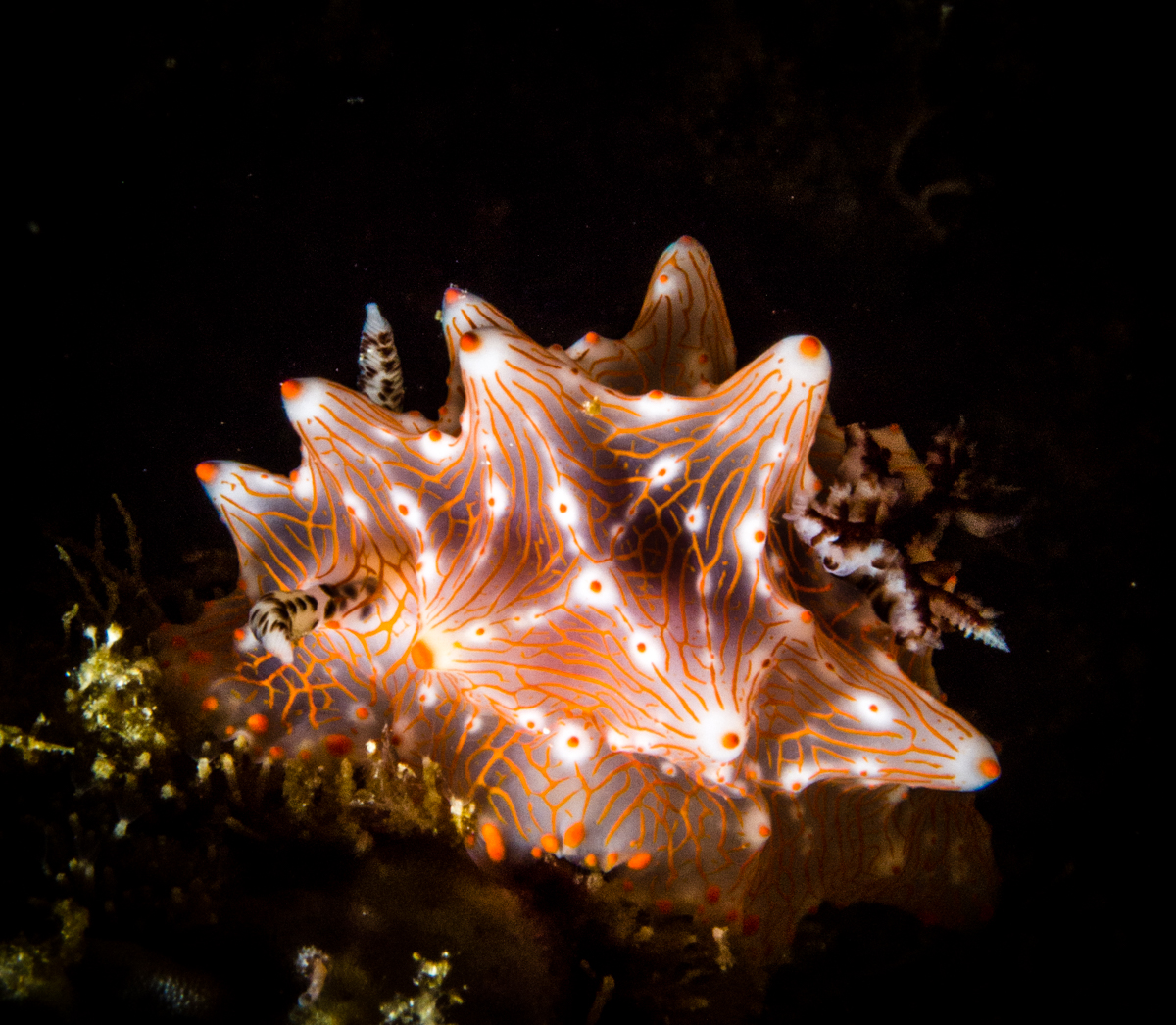
Nudi Rock is a small island that has the shape of a nudibranch, the tree on top creating the rhinophores and the gills of the nudibranch.
Underwater, there is a ridge surrounded by sandy bottom at about 40 meters, the plateau area is at 5 meters. At 10 meters, there is an amazing pink anemone garden.
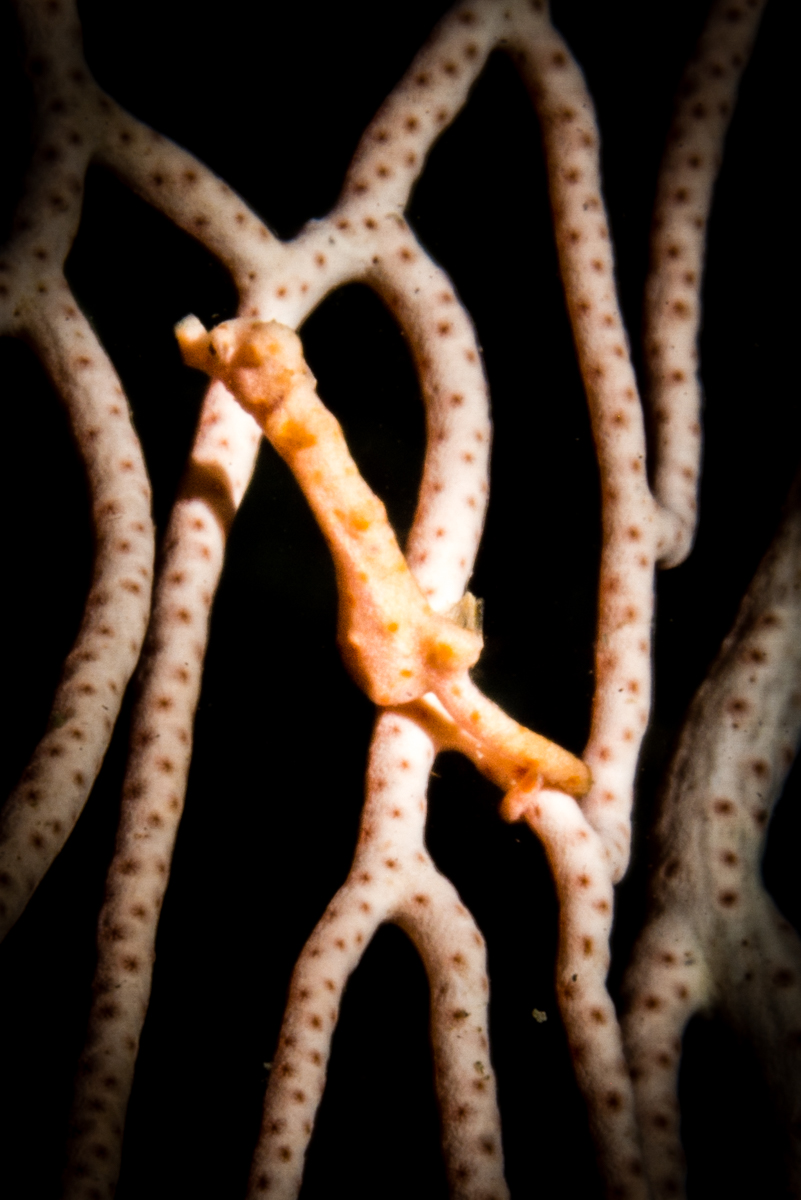
We saw pygmy seahorses, pipefishes, napoleon wrasses, and many fusiliers.
The second dive of the day is at the Batu Kecil dive site. It is a small rock sticking out of the water. Underwater is a ridge that goes all the way to nudibranch rock.
It is a sloping reef with lots of sea fans.
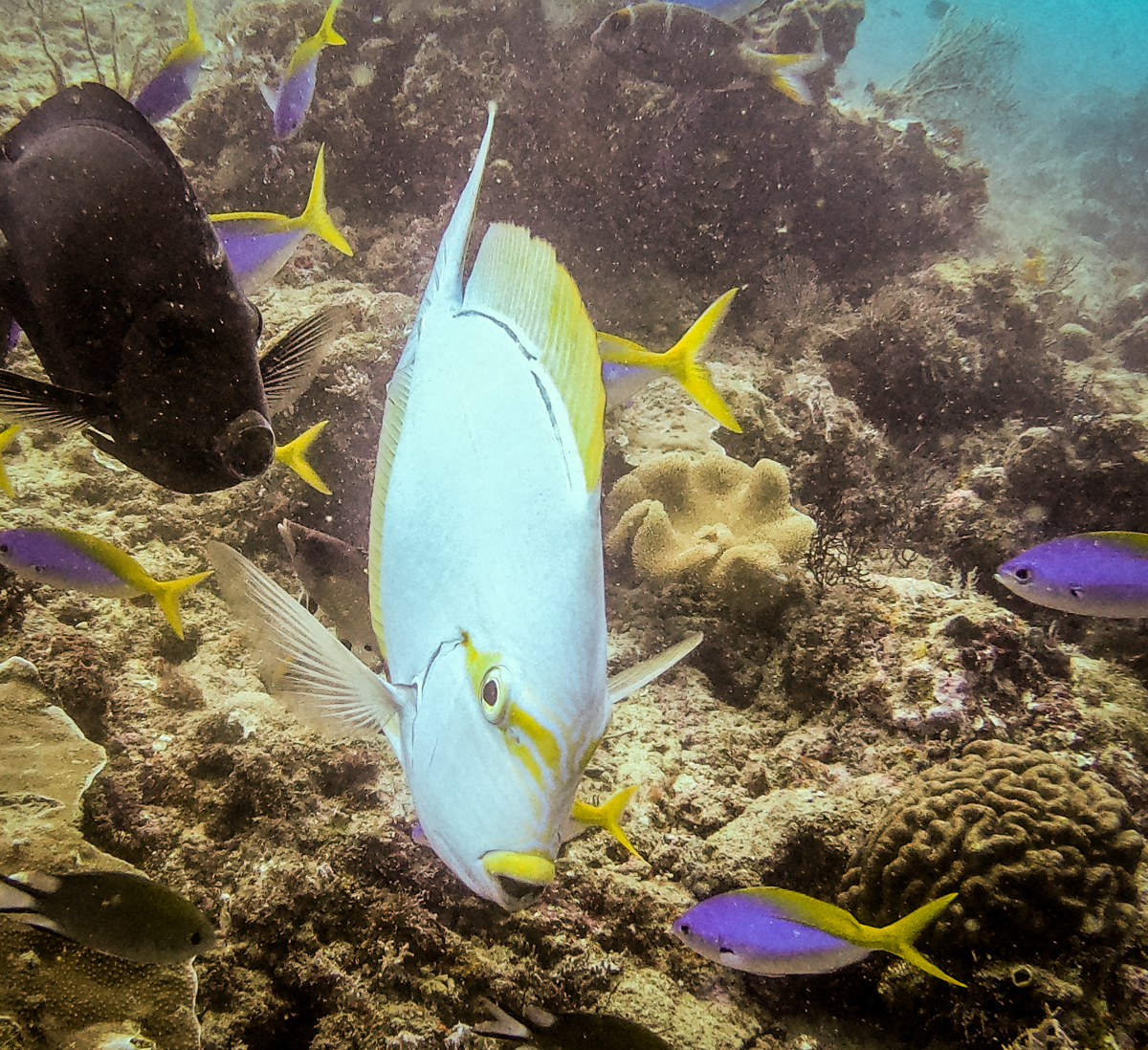
The place was teeming with fusiliers and we saw a few grey sharks and giant trevally hunting.
A white tip shark sneaked up very close to us from behind while we were hooked watching the grey sharks. The reef is gorgeous. The middle underwater pinnacle between Batu Kecil and Whale rock is truly stunning with colorful sea fans and soft corals of all types. A splendid dive site.
Each dive site from the Coralia Raja Ampat liveaboard was amazing.
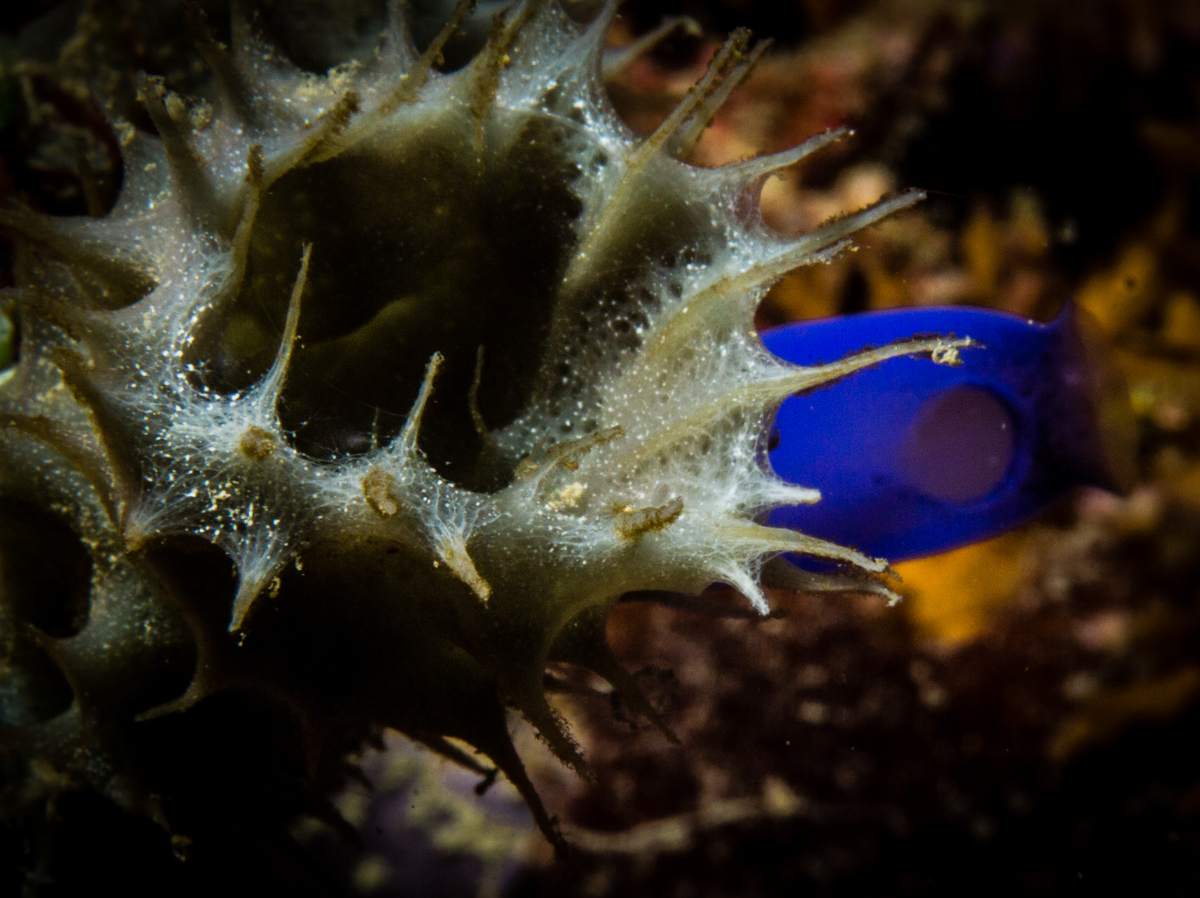
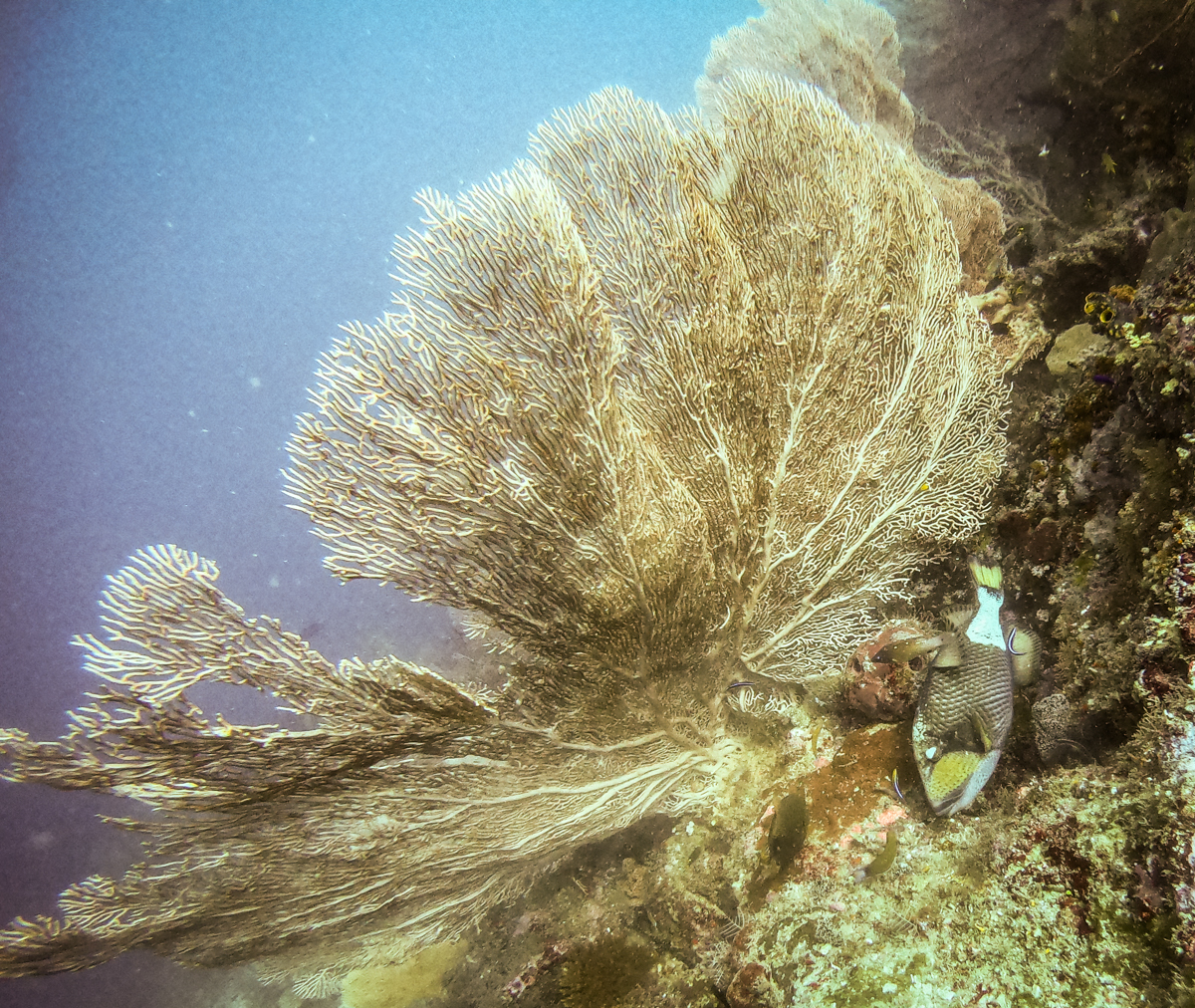
Whale Rock dive site is a group of 2 large islands connected by a reef located near Nudi Rock.
As people in our group are not really into night dive, we did a dusk dive instead of a night dive. We went down at 5:15 pm. The hard coral formations are spectacular but lacked a bit in color as the sun was coming down, providing less luminosity to the reef.
In between the 2 islands, in the middle of the ridge is a channel with a little rock that is completely covered with soft corals and sea fans.
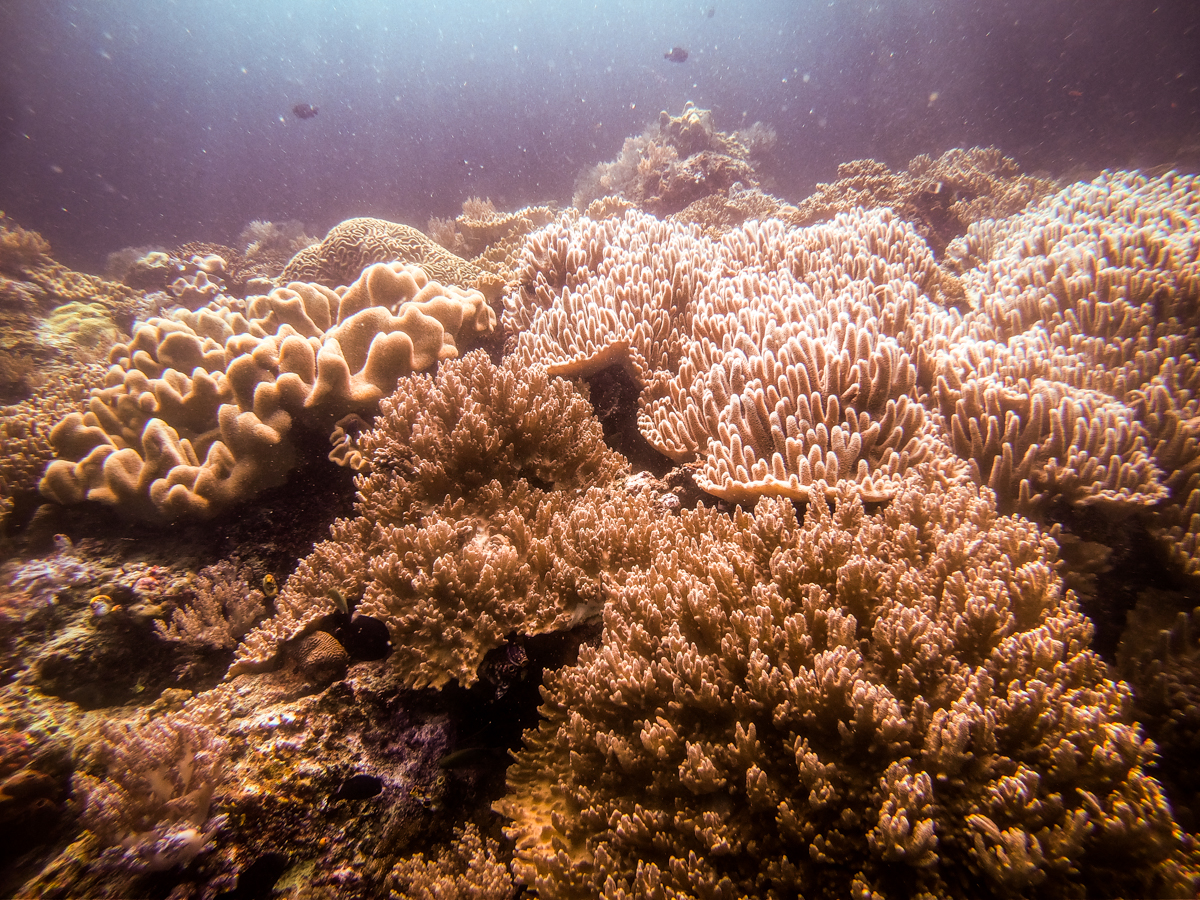
Day 3: Meeting Manta rays at shadow reef
Today is a big day as we start by diving Shadow reef ( also known as Magic mountain). It is Misool’s most famous dive site for a reason.
I woke up refreshed after a peaceful night of sleep. As I looked out of the panoramic windows of my cabin, millions of small fishes were passing under the boat and being chased by a shark! I can’t think of a better way to wake up. You don’t even need to put your head underwater in Misool to see action 🙂
Shadow reef dive site is composed of 2 underwater peninsulas linked by a ridge. The first peninsula starts at 5 meters. The second peninsula starts at 20 meters.
It is a fantastic dive site that has everything you could wish for.
Beautiful topography, amazing corals and soft corals, little critters but the key attraction here are the manta rays.
It is one of the few places in the world that attracts both reef mantas and oceanic mantas on the same dive site.
We saw 3 reef mantas. As everyone in our group was well behaved and stayed away from the cleaning stations, they stayed with us for the whole 70 minutes dive. They even came to check us out a few times and swam right on top of us. Very impressive!
We saw an octopus, a few big grey sharks, and millions of fusiliers. The predators were there en masse and stayed close to the reef as there was a bit of current. We got lucky to witness a few giant trevallies, blue trevallies, napoleons, and barracudas hunting as a pack. Visibility was amazing. Probably 50 meters and the whole show was grandiose.
There was a school with about 500 oceanic triggerfish.
We heard dolphins towards the end of the dive but only one person in our group saw them underwater.
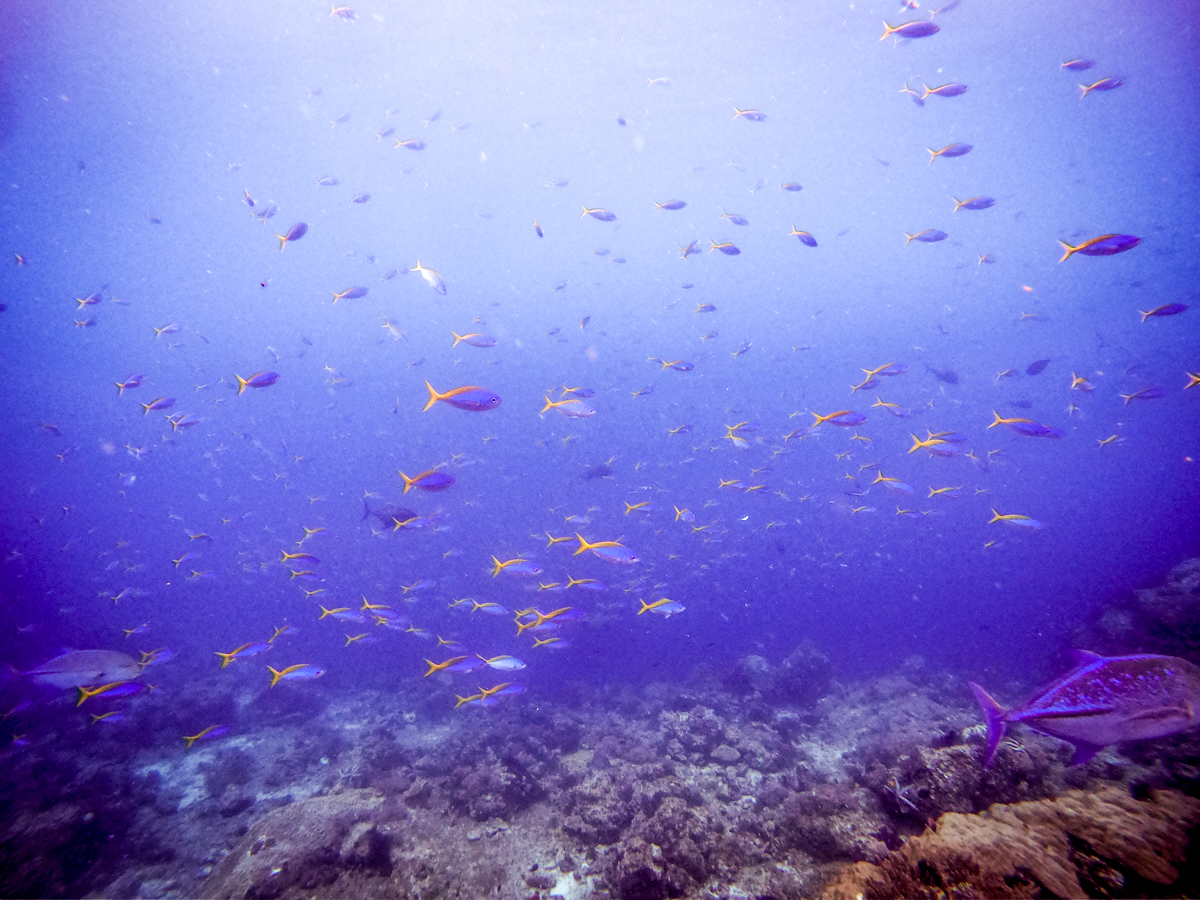
Boo windows is another iconic dive site in Raja Ampat.
It is a sloping reef with a ridge off a small island. The part below the tree is also a manta cleaning station but we didn’t see any mantas today.
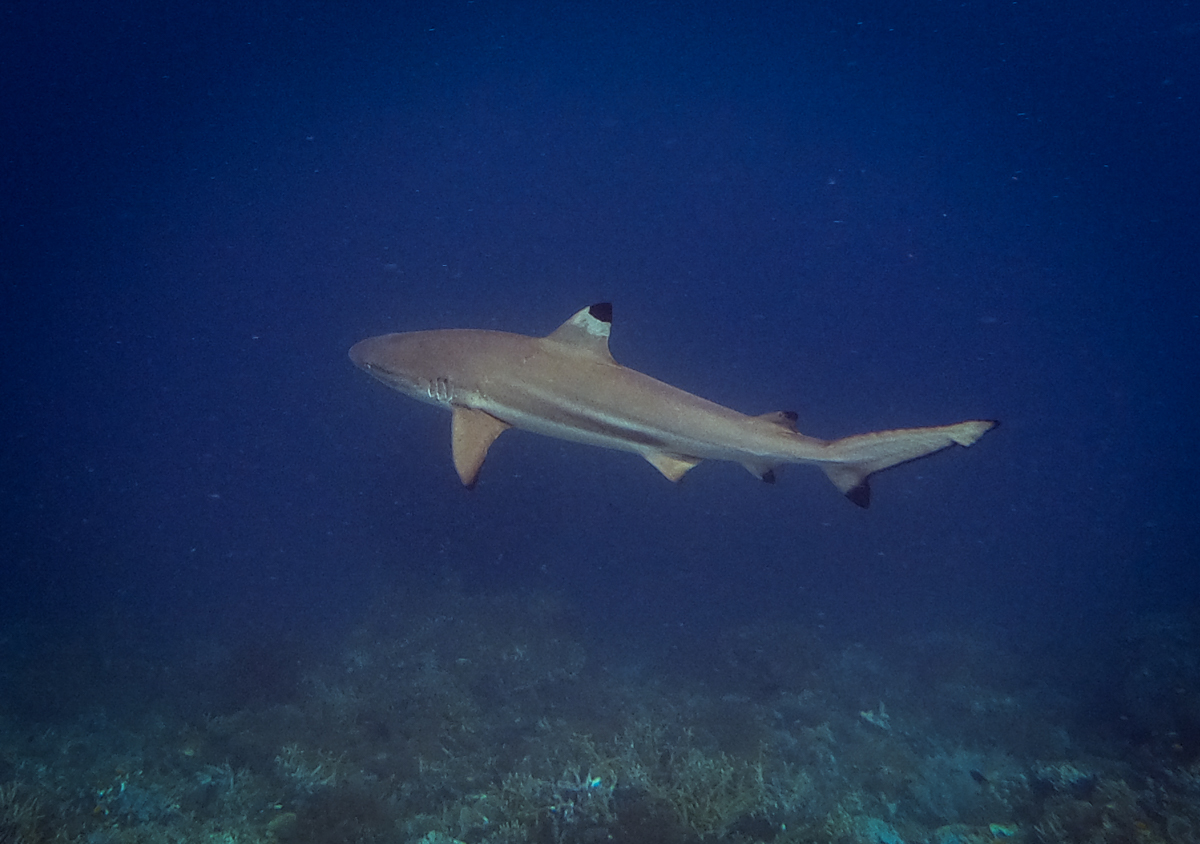
It is usually very fishy, black tips reef sharks patrol the area.
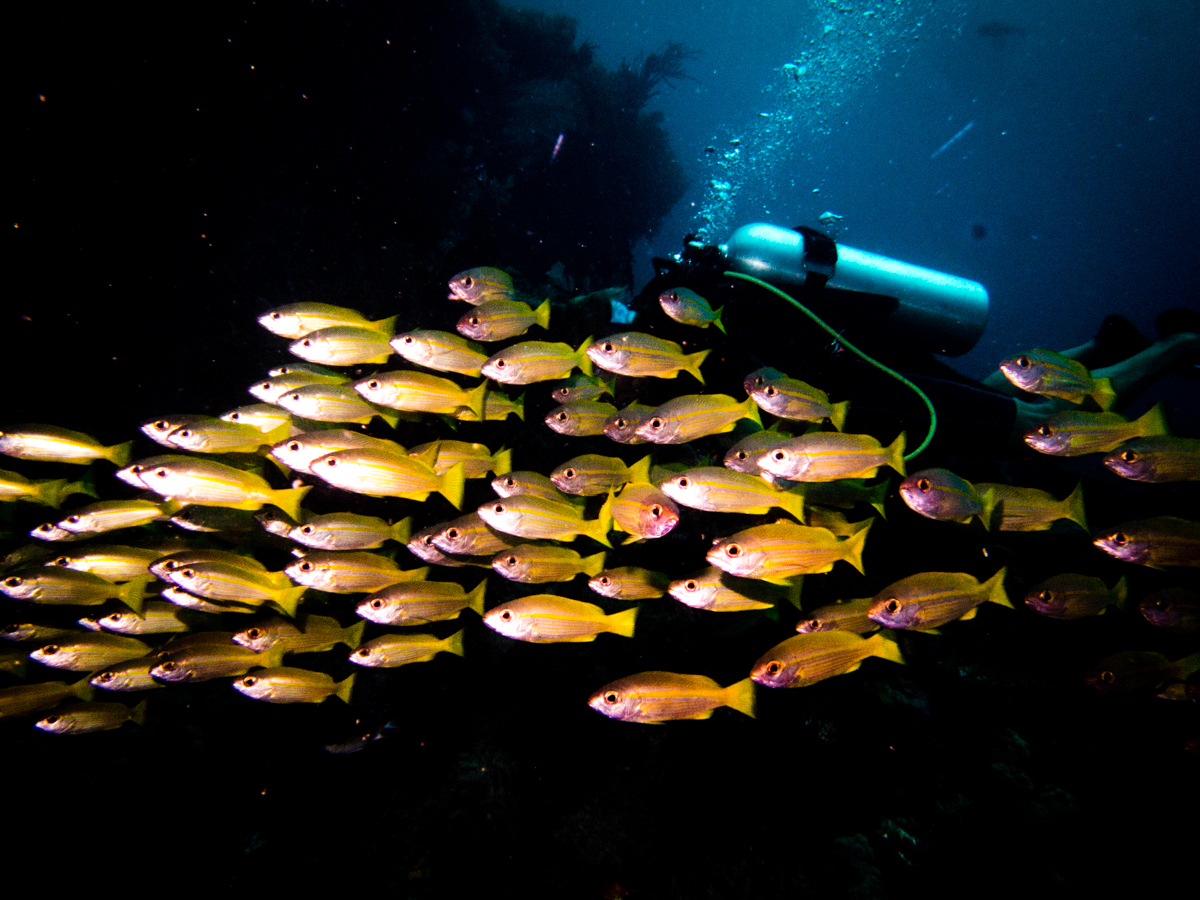
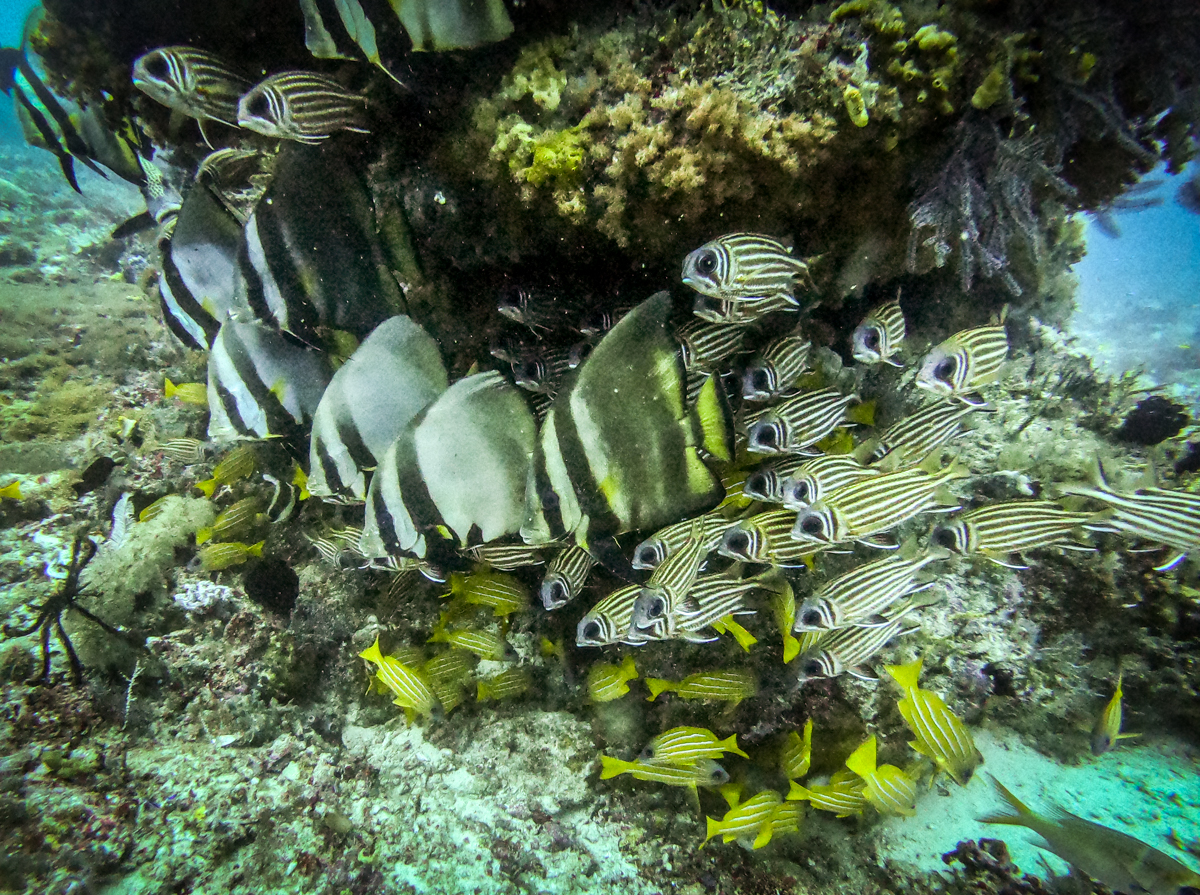
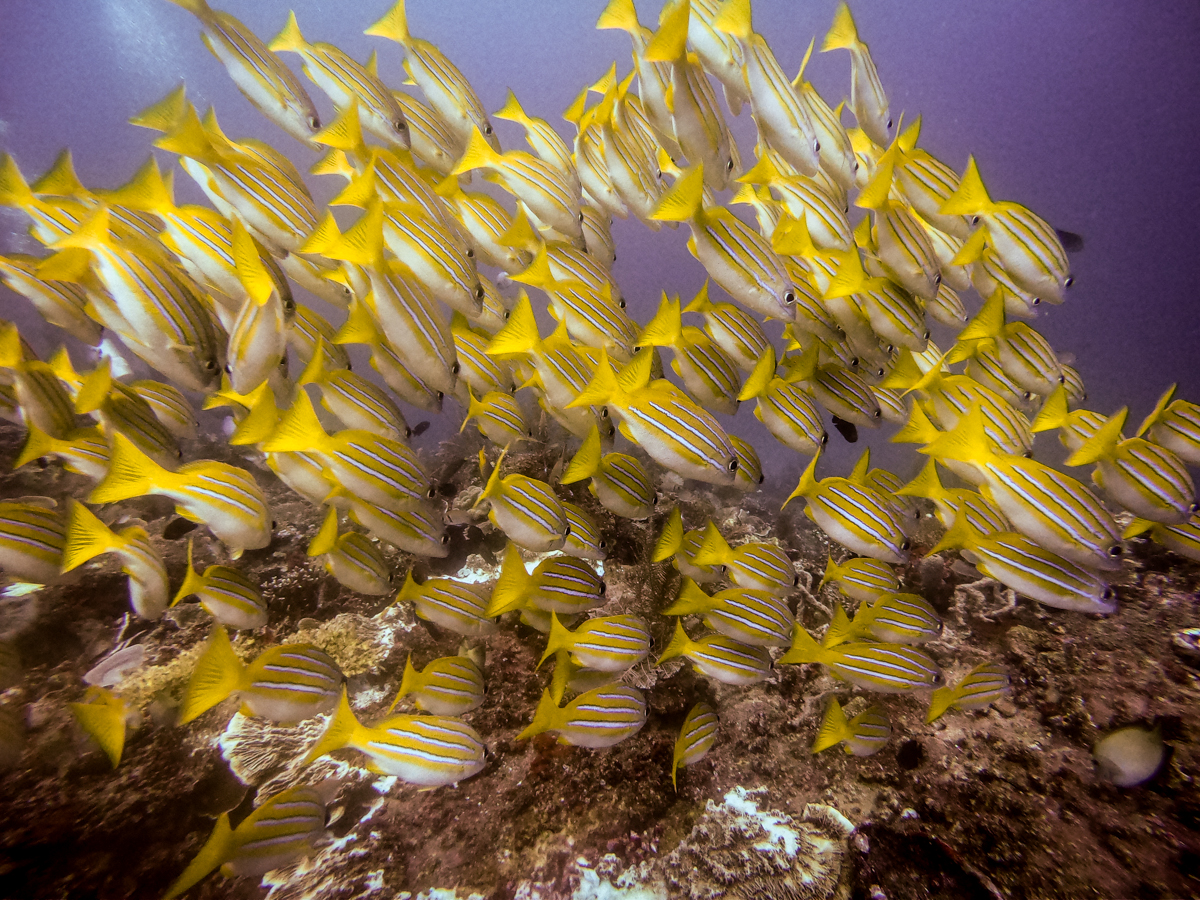
A beautiful school of yellow snappers lives here. As well as a school of bat fishes. The soft corals are spectacular and the number of colorful fishes stunning. An absolutely beautiful dive site!
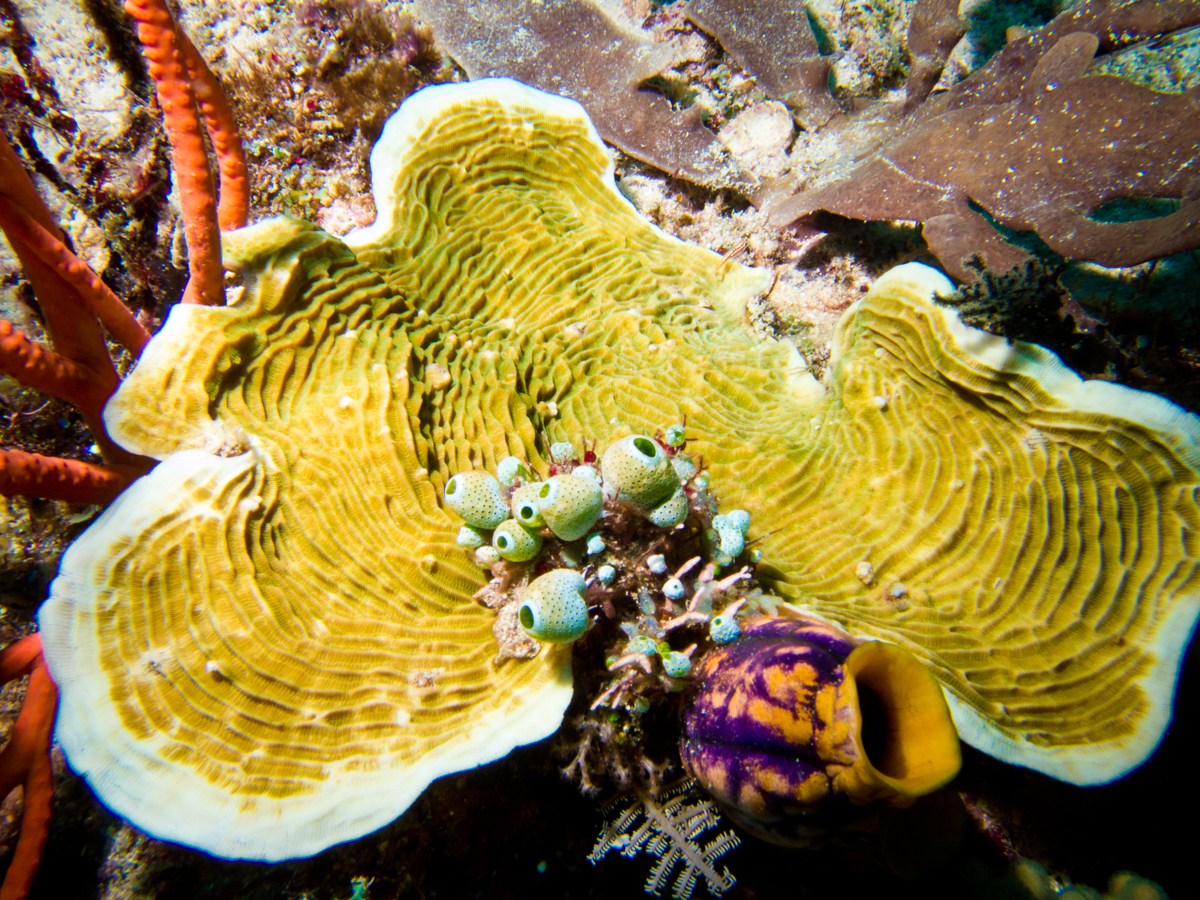
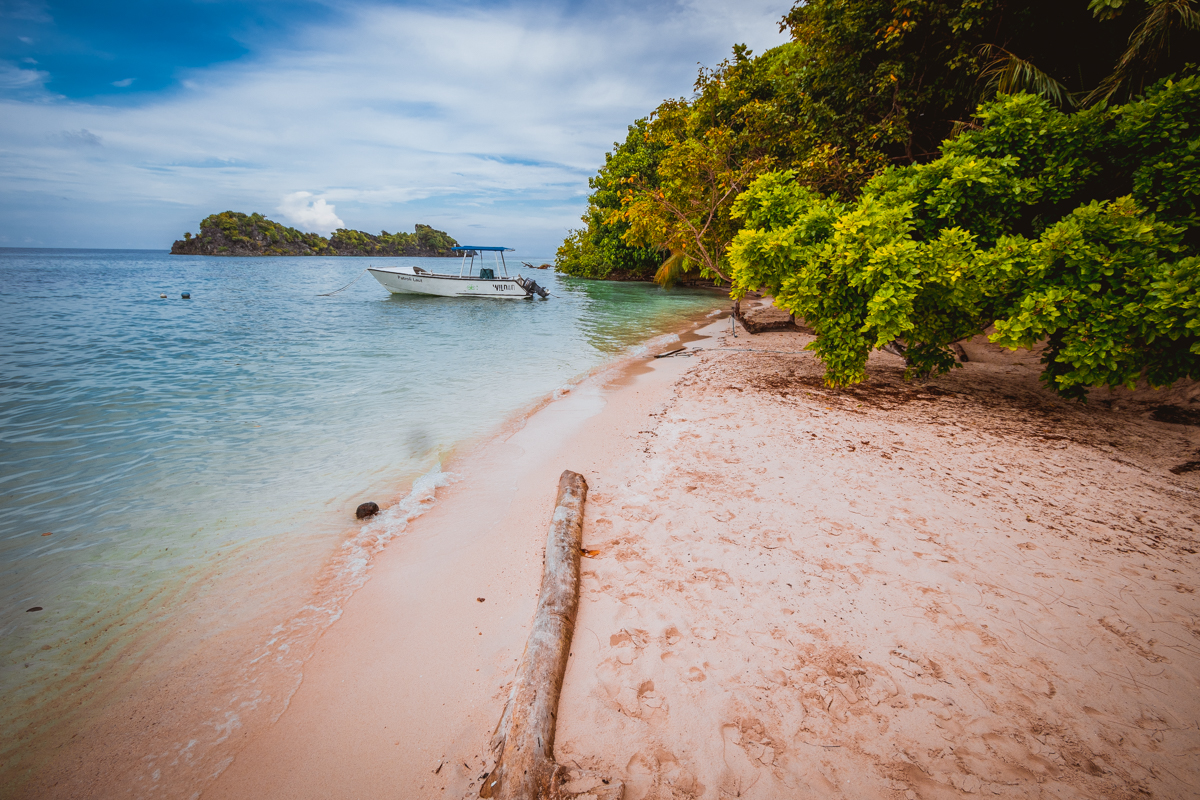
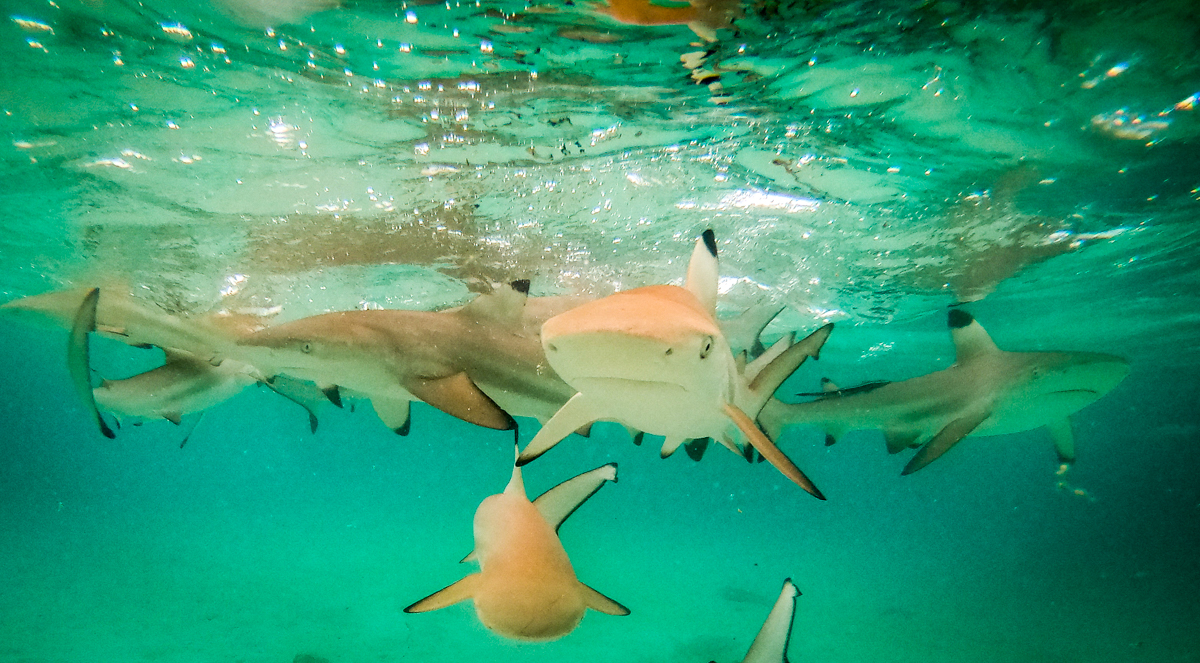
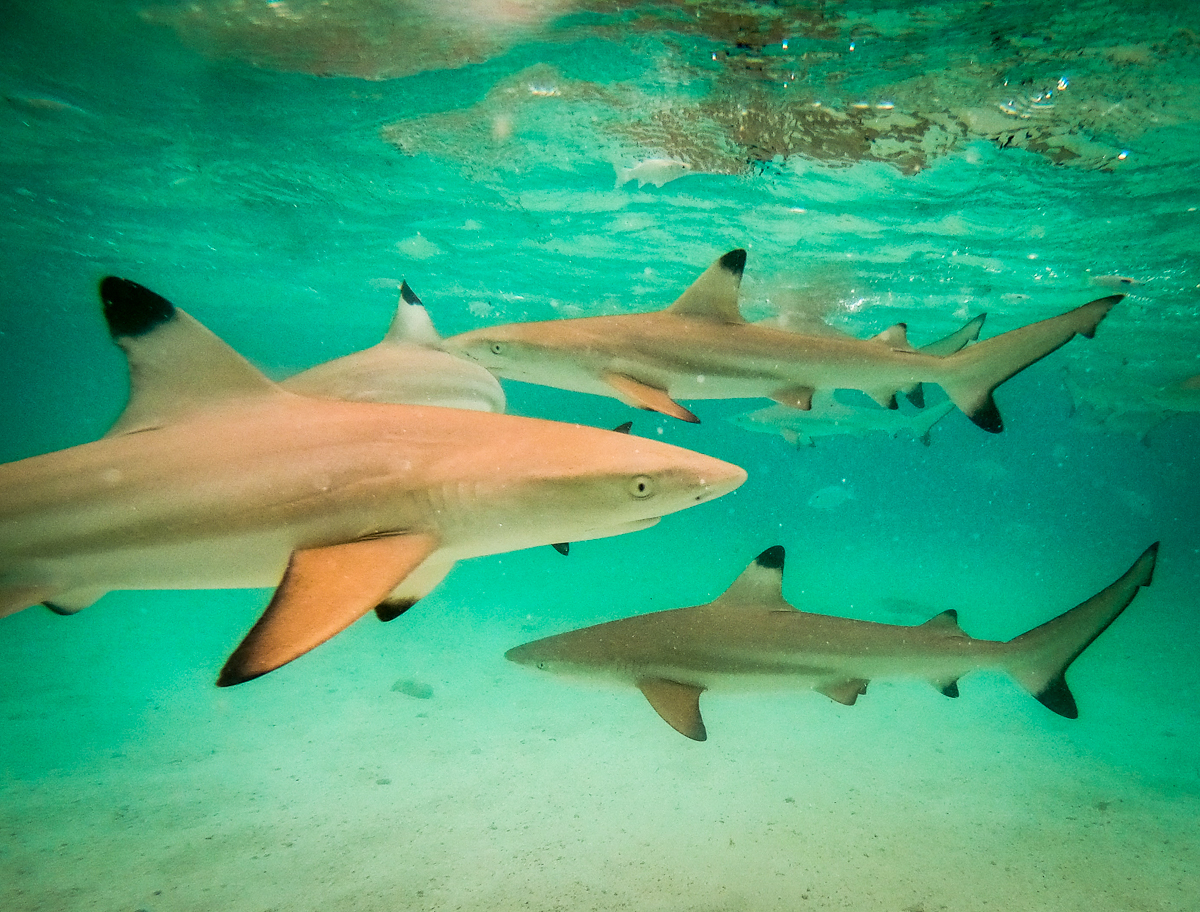
We finished the day snorkeling with baby sharks at the Misool ranger station near Yuliet. The beach is beautiful and is also the perfect place for a sunset drink and some relaxation.
What an amazing day!
Day 4: Massive storm and changed plans.
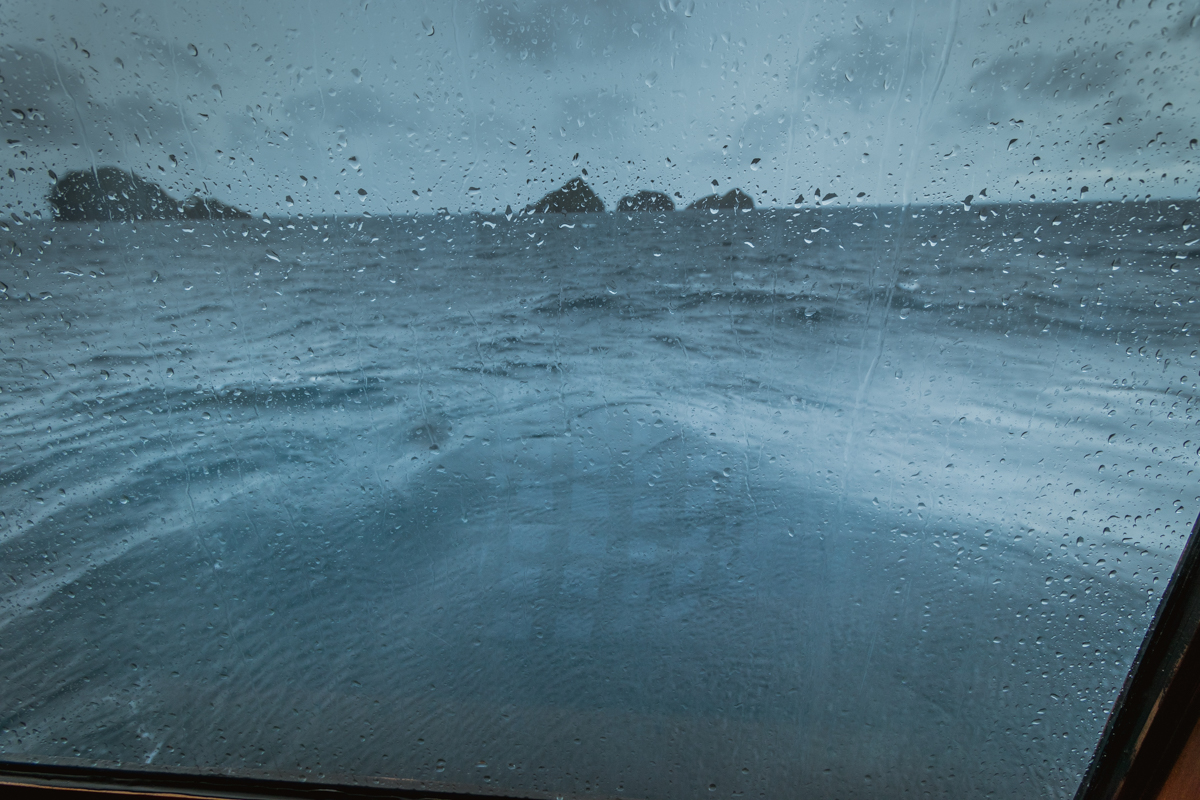
We experienced a huge storm overnight as there is a big typhoon in the Philippines sending bad weather to Raja Ampat. The boat is very stable so I slept right through it.
We were planning to dive into the Daram area but given the storm and high waves, we changed the plan and decided to stay in the Misool Resort area for one more day.
The first dive of the day was the Yuliet dive site.
Yuliet is a small island surrounded by a sloping reef that goes down to 40 meters.
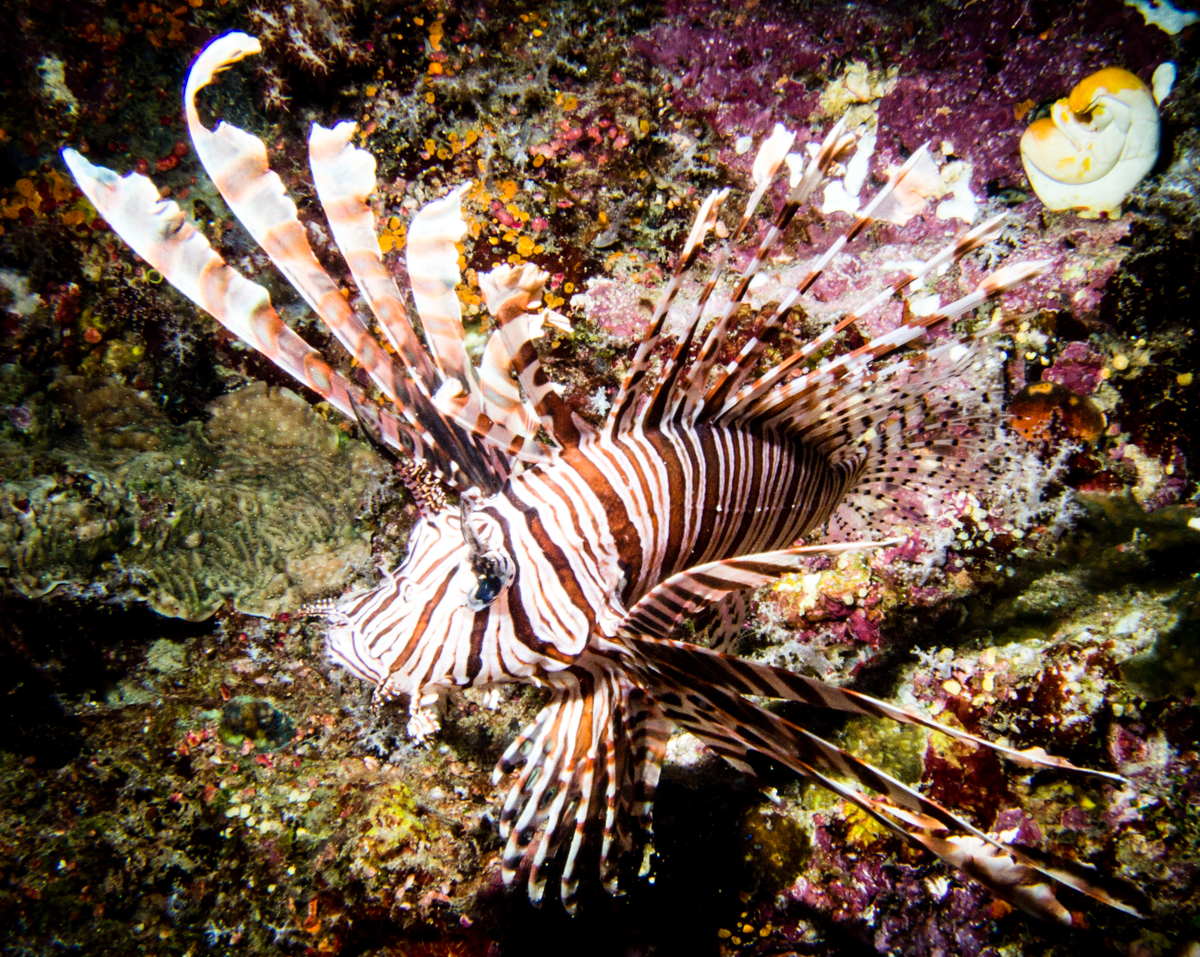
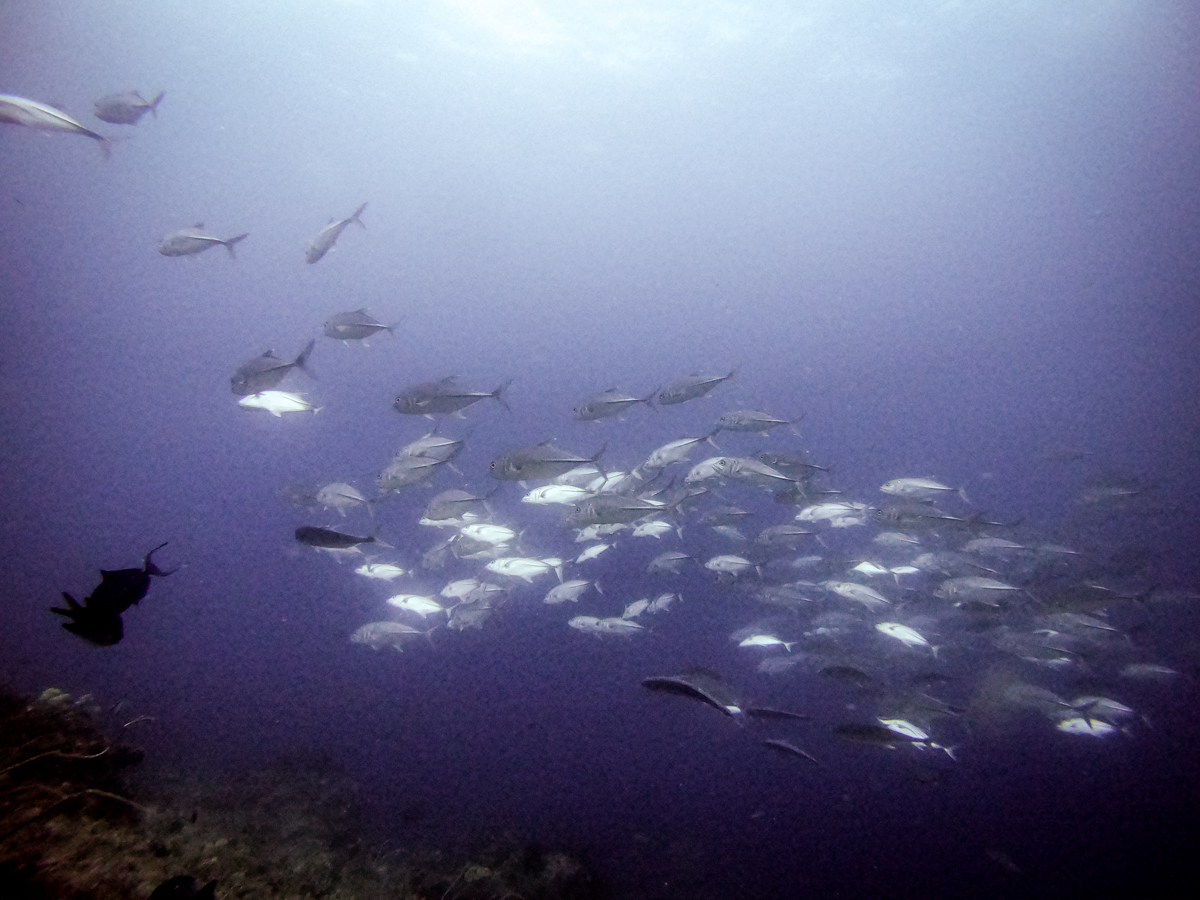
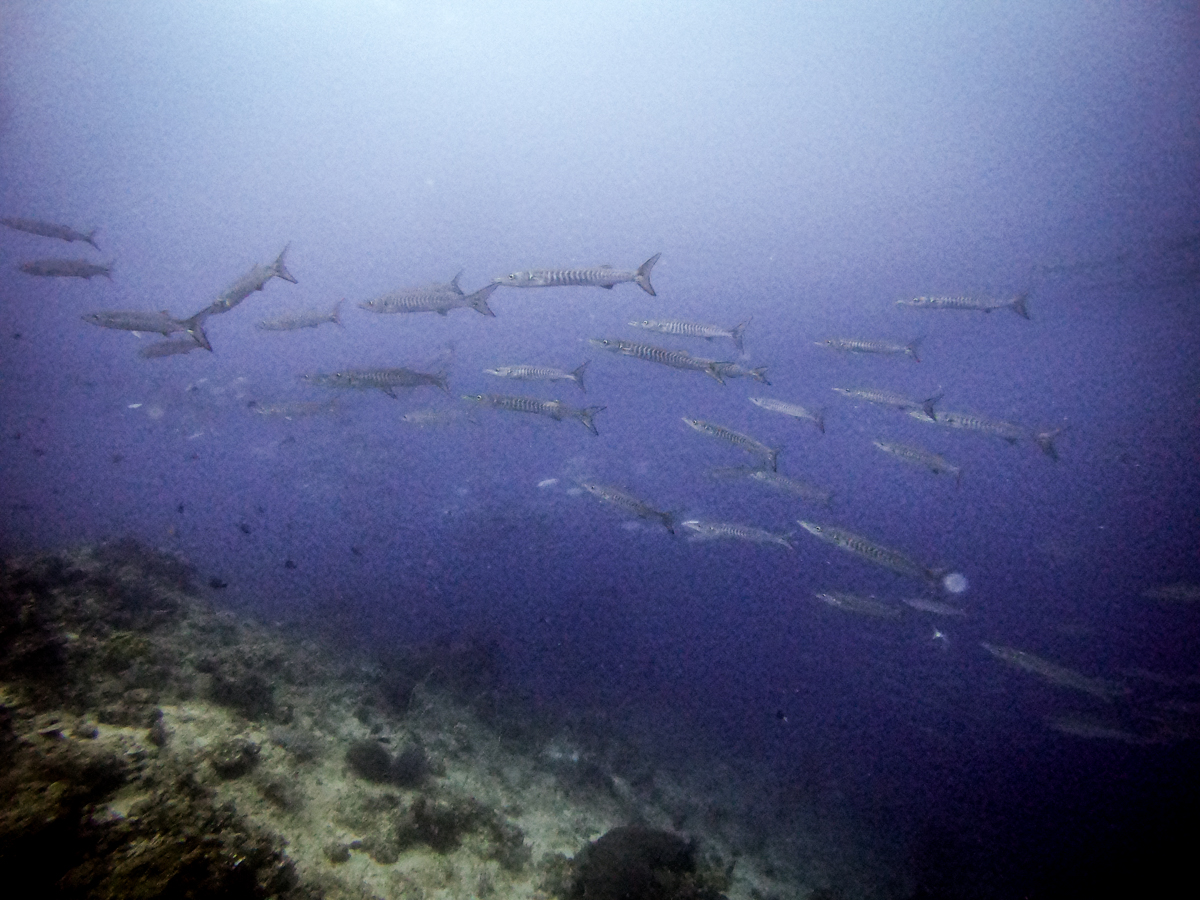
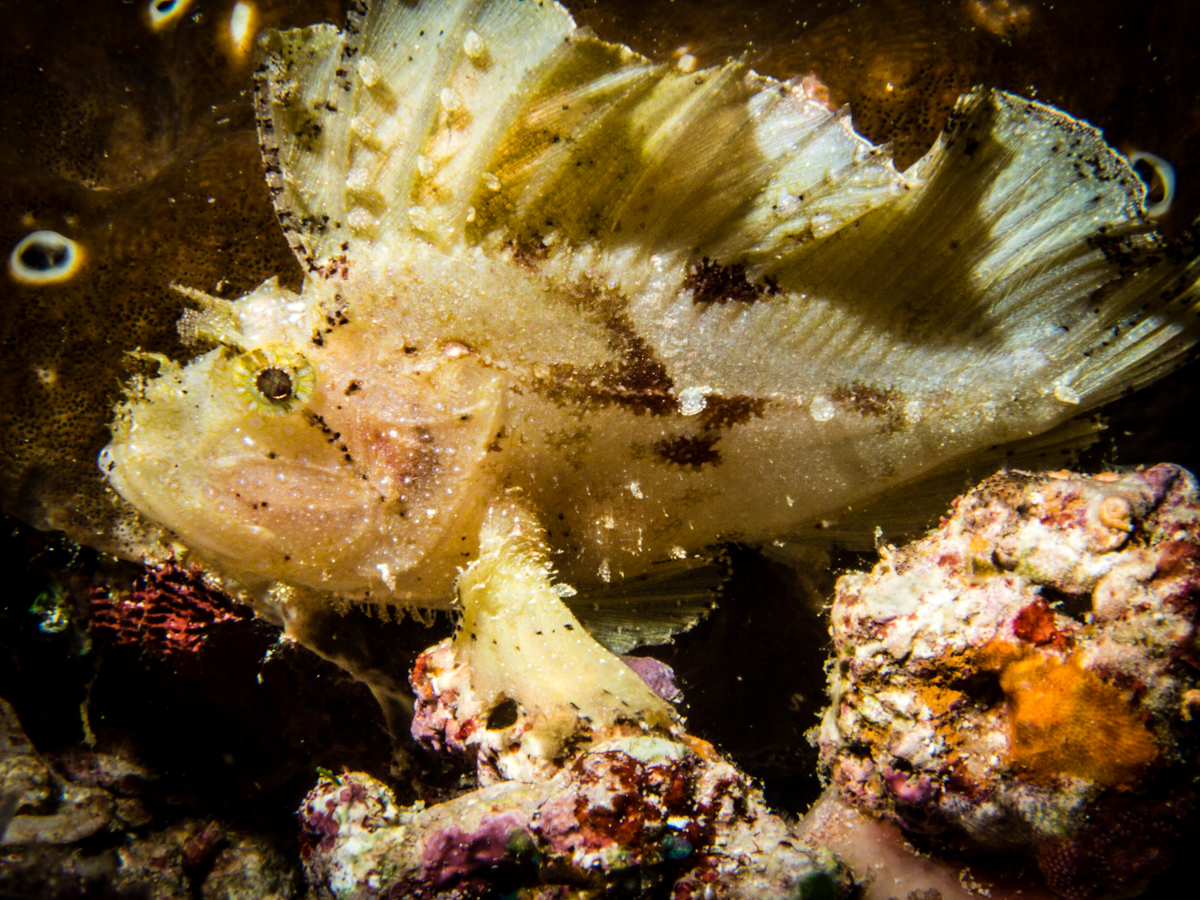
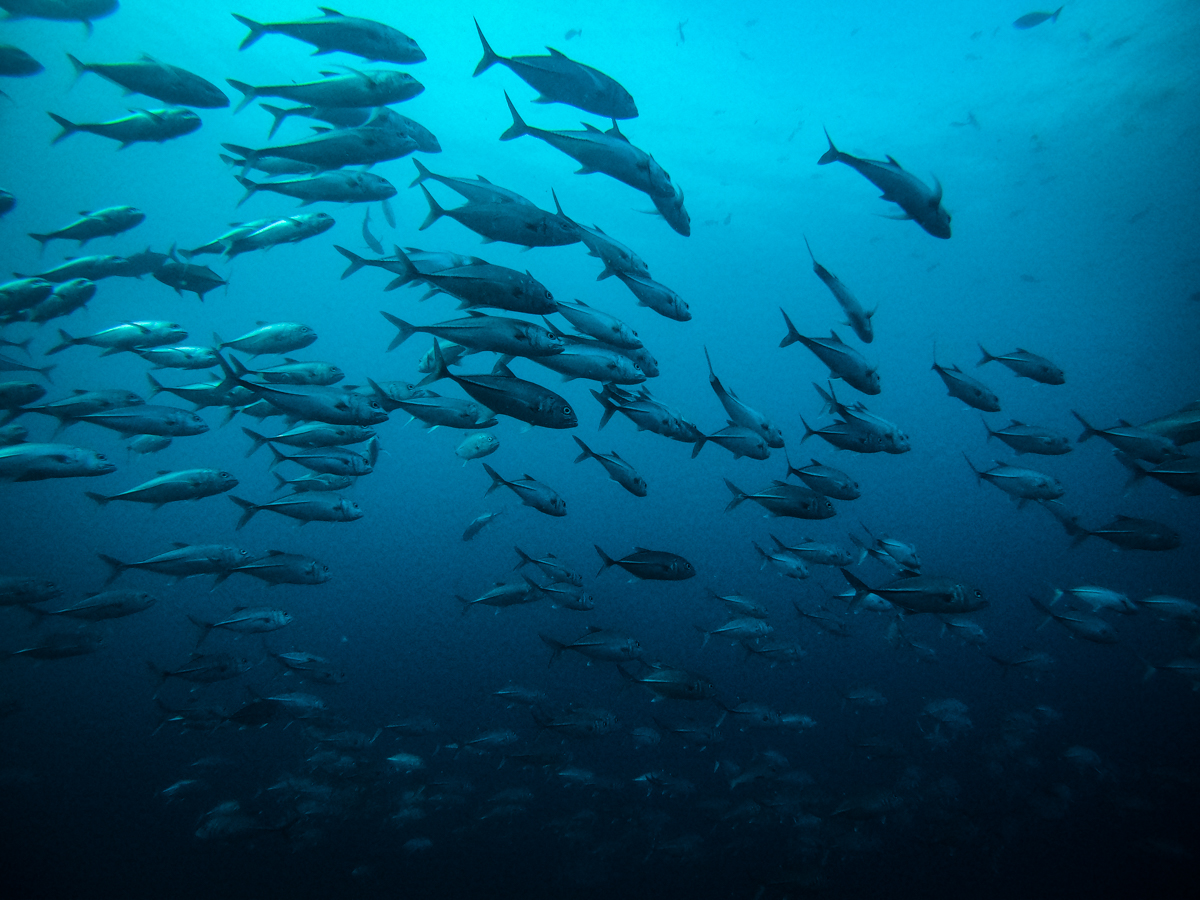
The main attraction here is the big schools of barracuda. We saw 2 schools of about 100 barracudas each. There was also a photogenic school of jacks. A big grey shark stayed with us hunting for about 15 minutes. But don’t forget to look at the reef too. Some sections are picturesque with enthralling soft corals, weird shrimps, and leaf fishes.
Boo ridge dive site is a large rock island surrounded by a wall reef. The wall is covered in soft corals and sea fans.
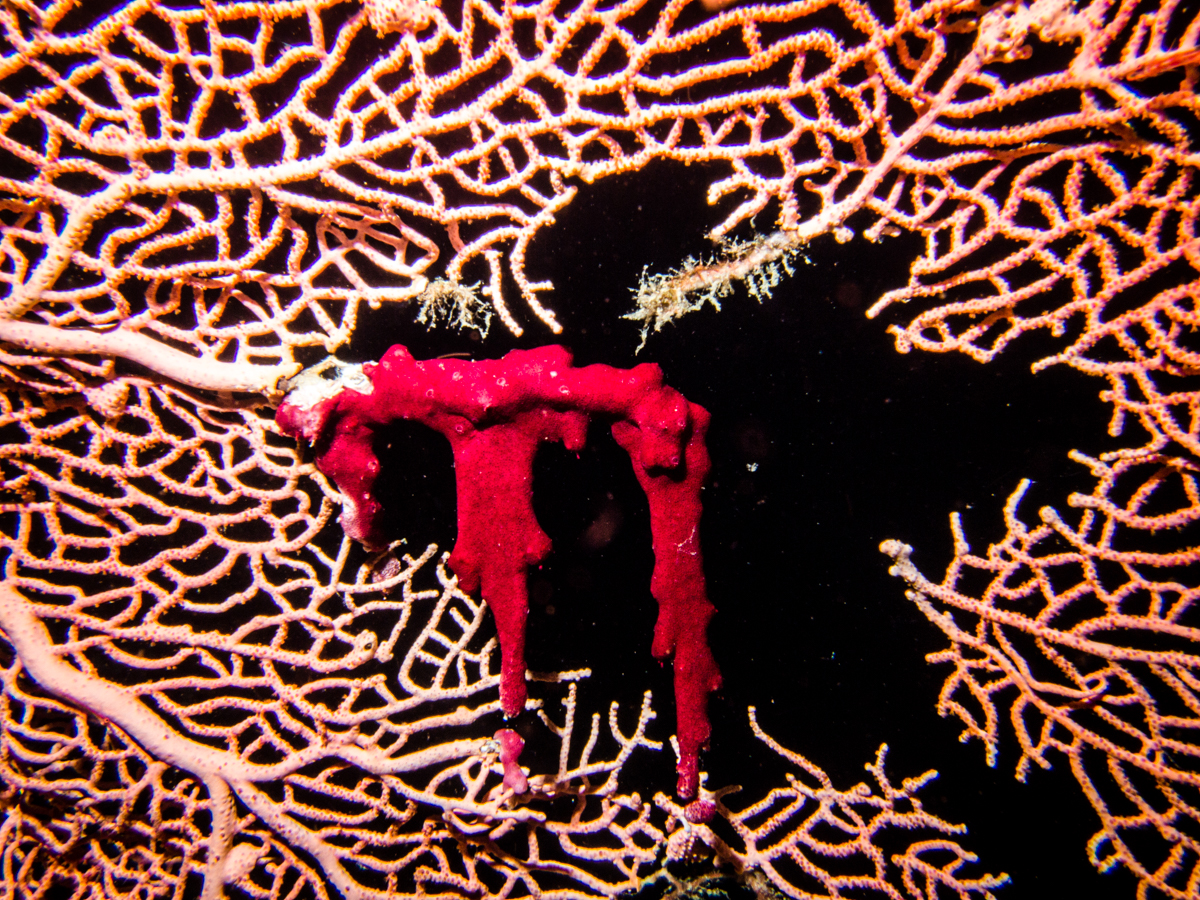
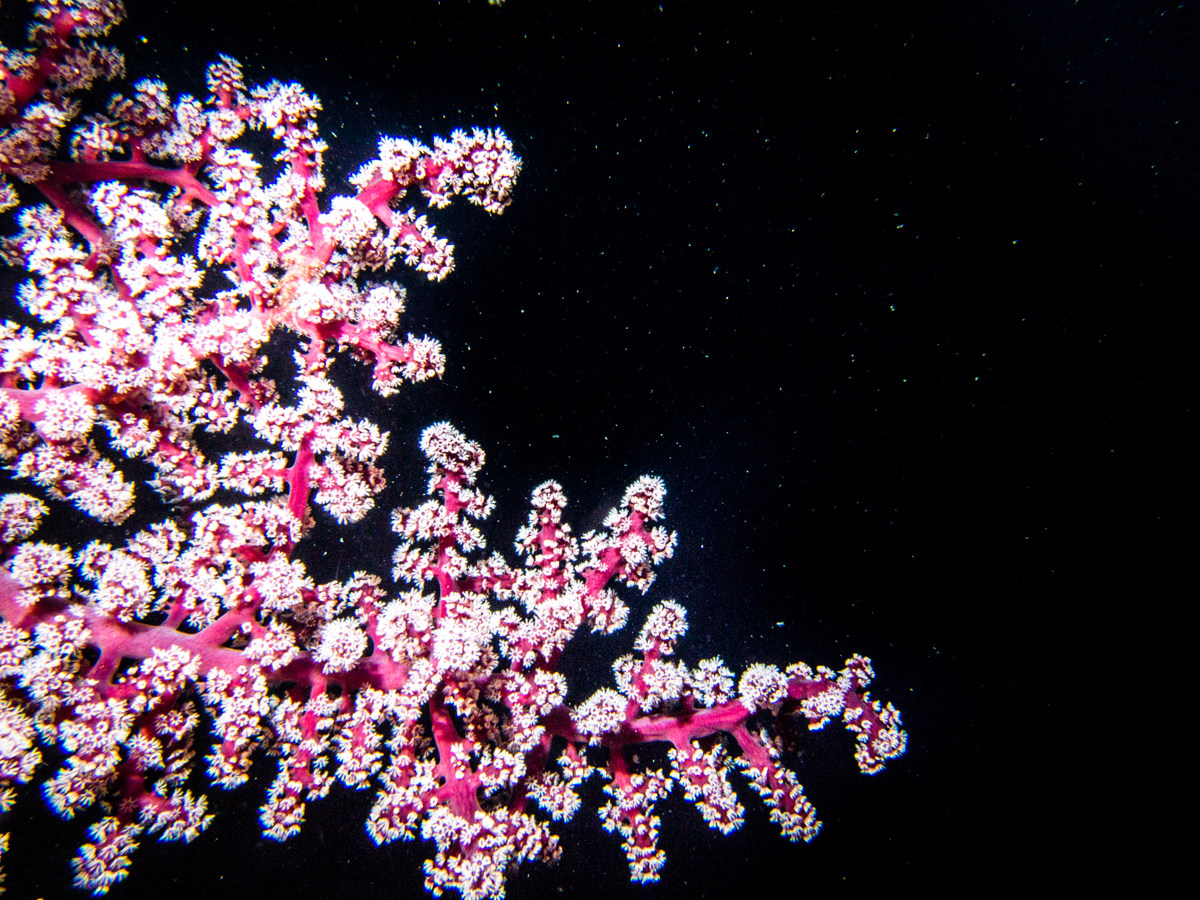
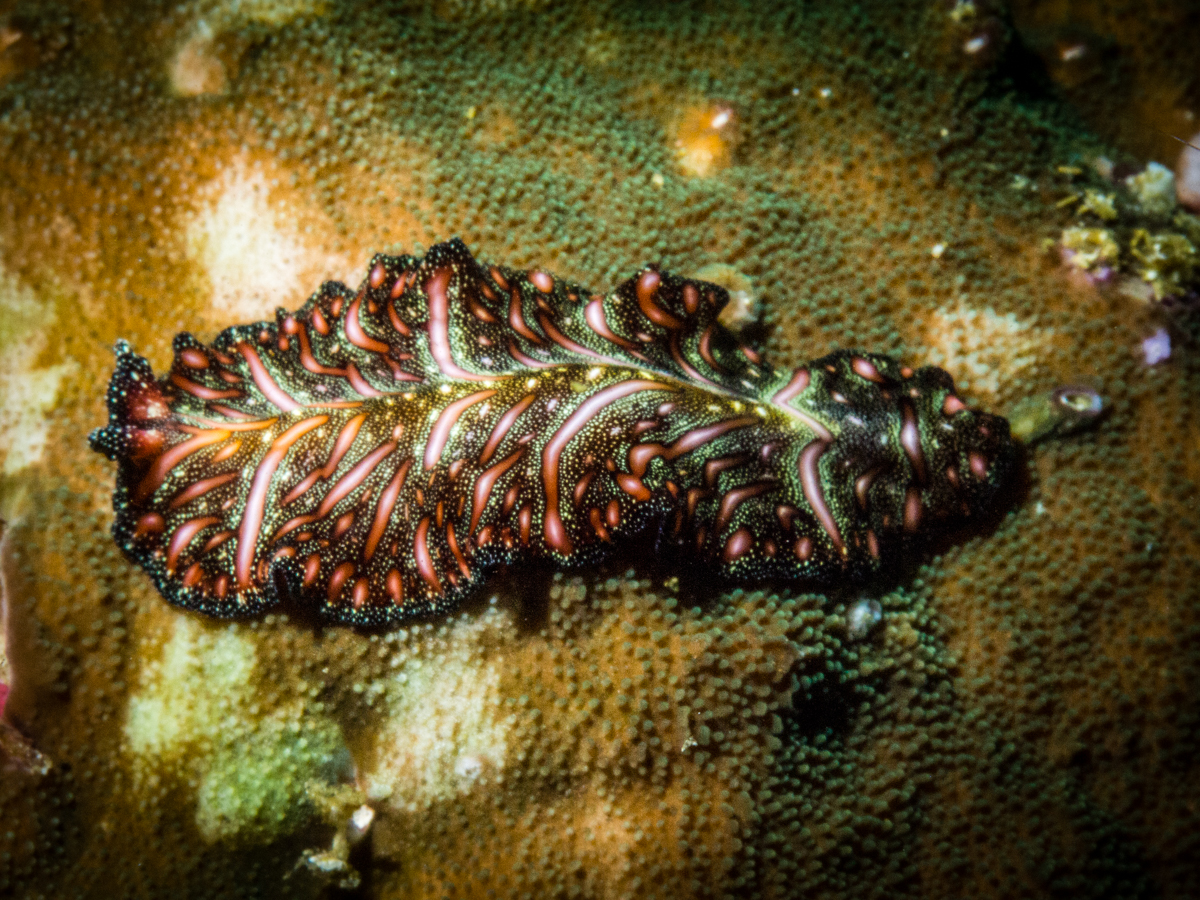
We saw a few sharks, the biggest nudibranch ever. It is not the fishiest dive site but it has nice colors.
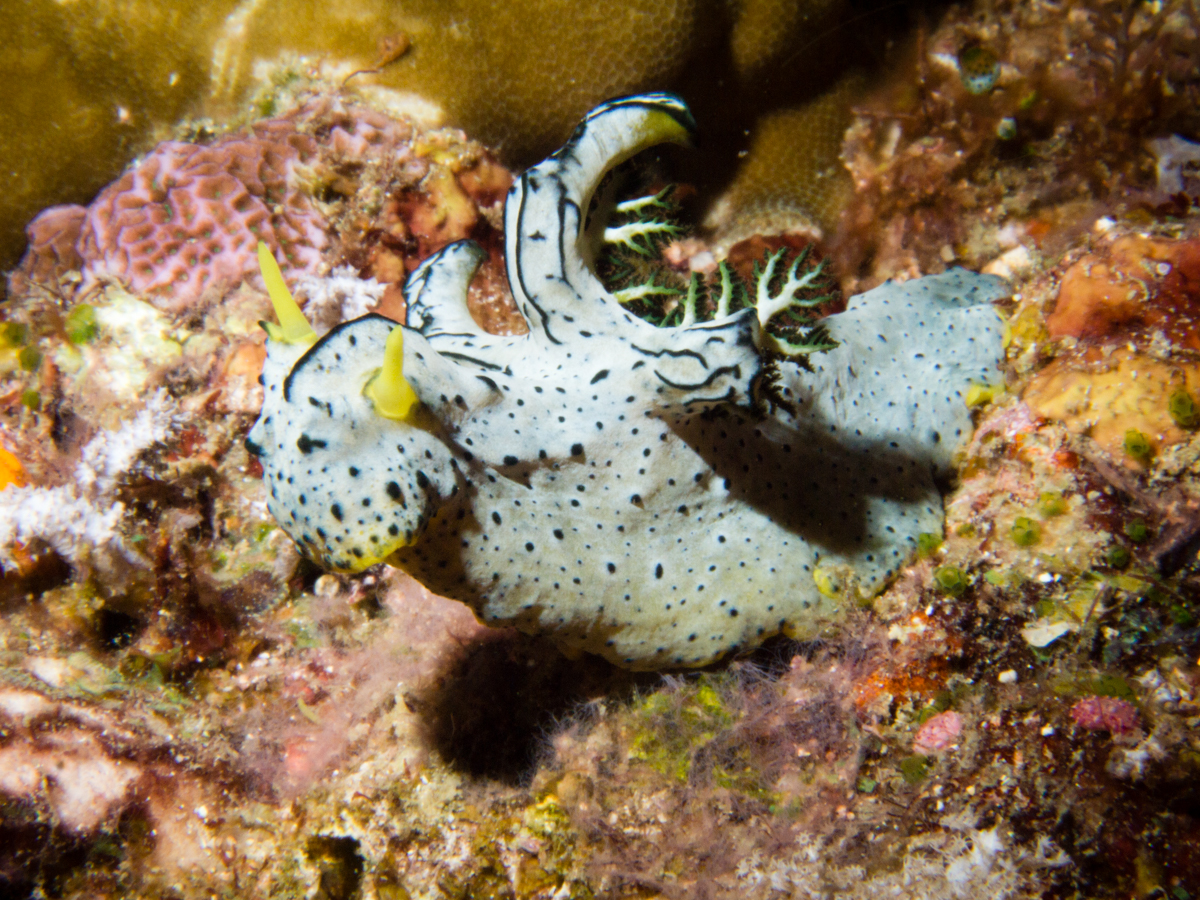
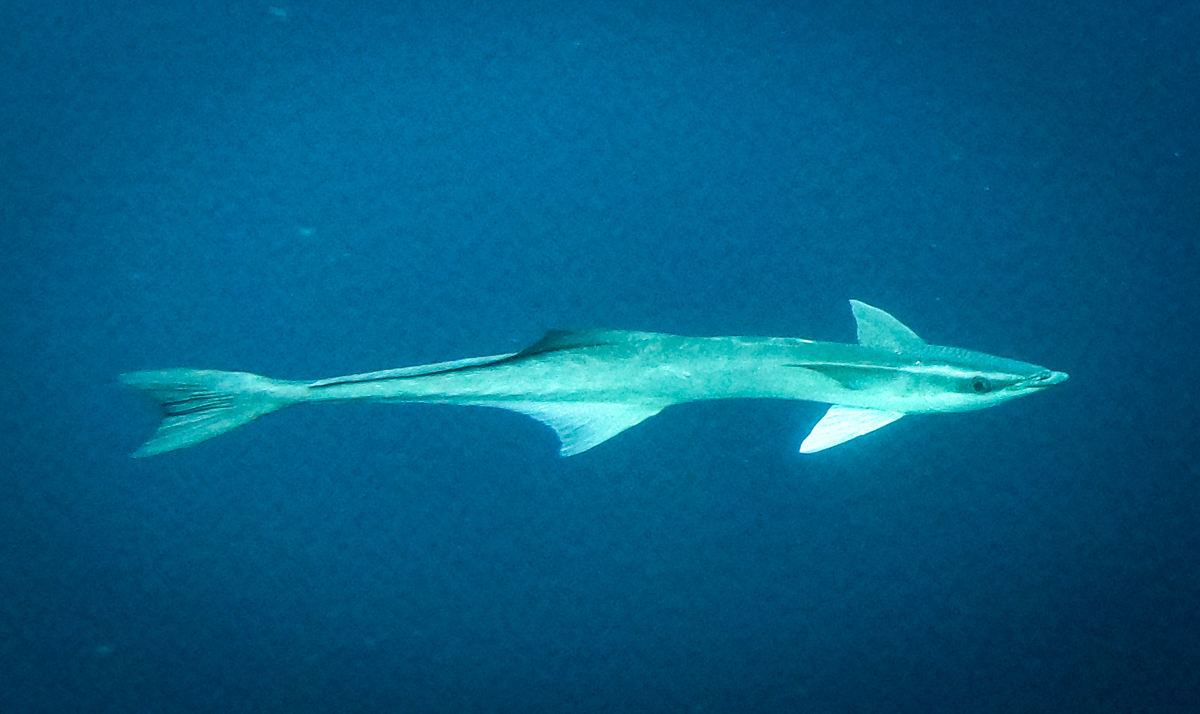
Dive exploration. Our third dive was a dive exploration on a new dive site. It looked very promising as there were dolphins on the surface and an oceanic Manta ray.
Unfortunately, they left as we got into the water.
The dive site was still a beautiful ridge with soft corals and sea fans.
Day 5: Cave diving in Farondi
We were finally able to cruise overnight towards the Daram islands.
The first dive of the day was the Andiamo dive site. The weather was very stormy and visibility poor but despite that, it was an enjoyable dive. The Andiamo dive site is composed of 2 rocks connected by an underwater plateau coming down to a wall up to 30 meters.
There is another pinnacle at 30 meters. This dive site has a few areas with colorful soft corals and tunicates. We found a few pygmy seahorses. Some sections are very fishy with giant trevallies and a school of barracudas patrolling the area. I wish the visibility was better as I am sure there was a lot out there that we couldn’t see.
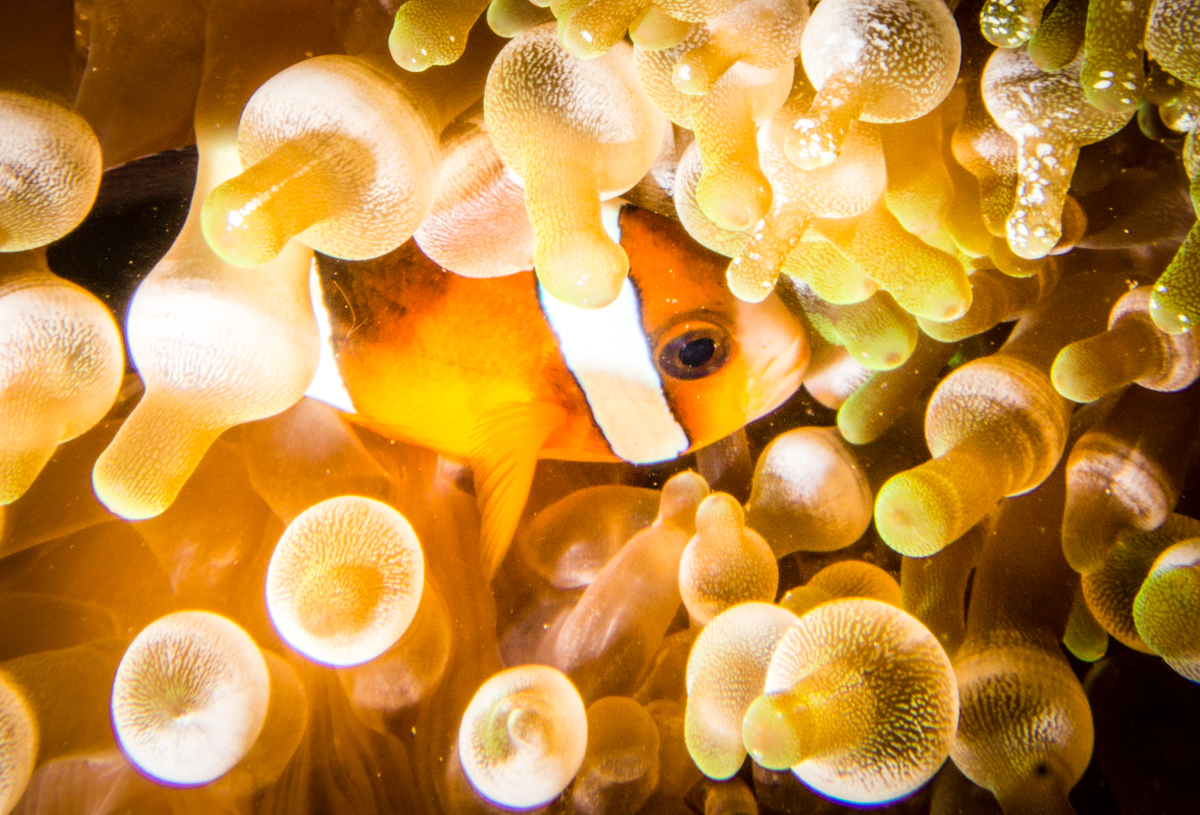
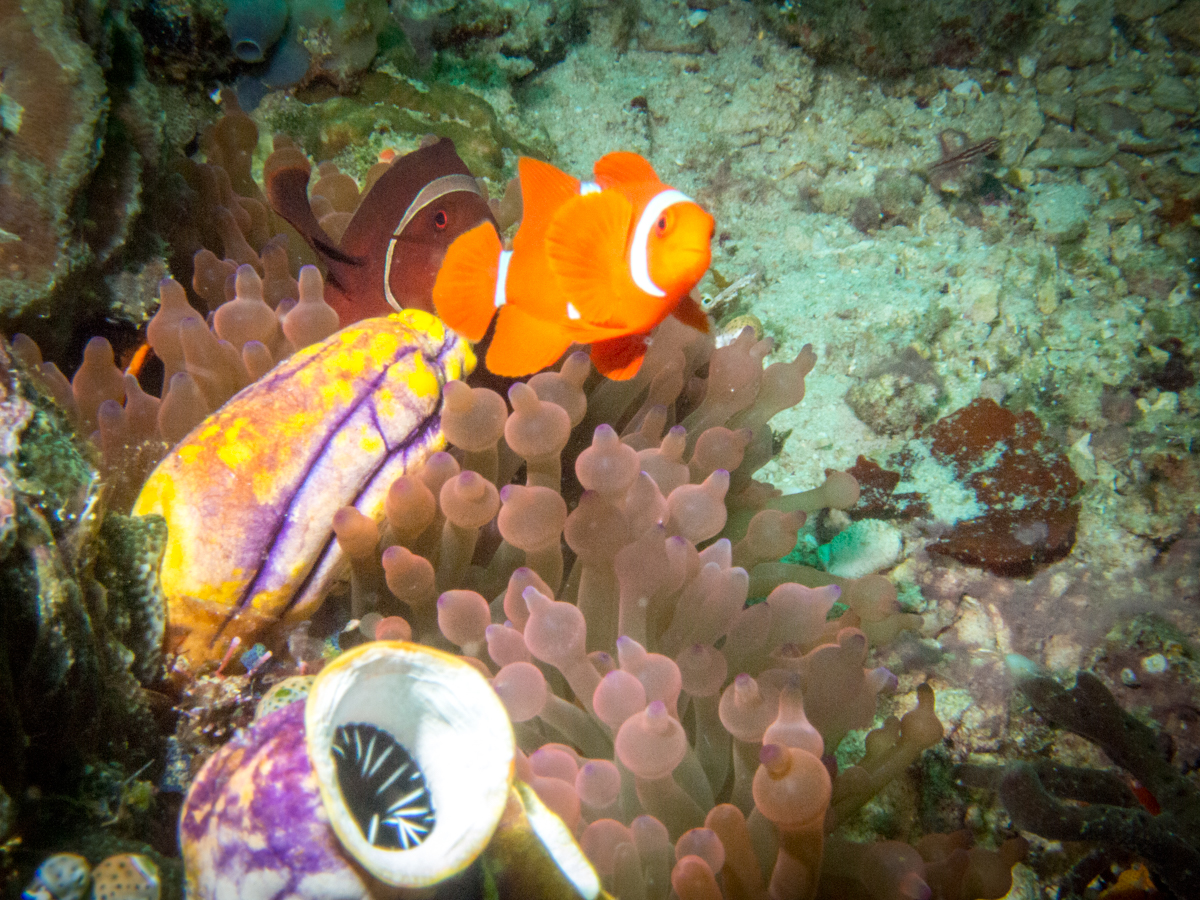
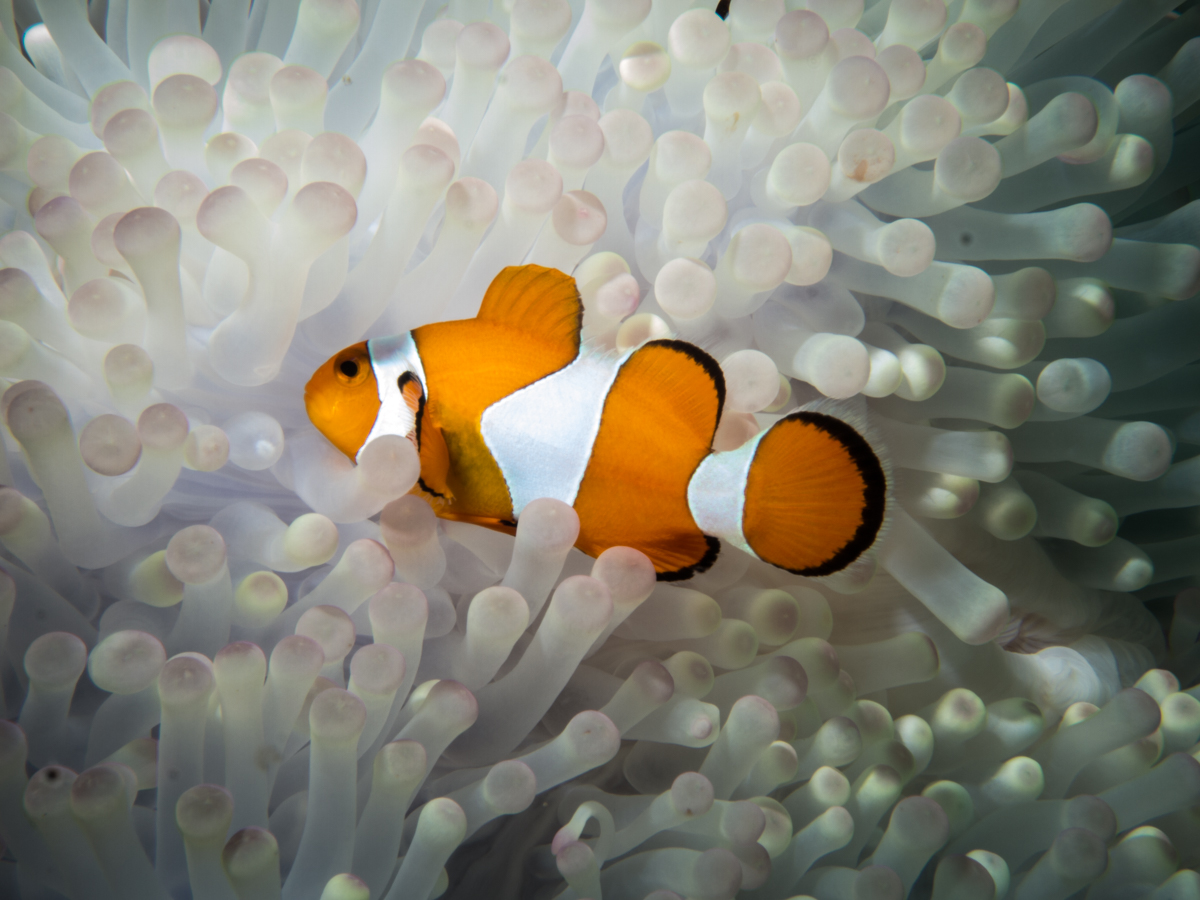
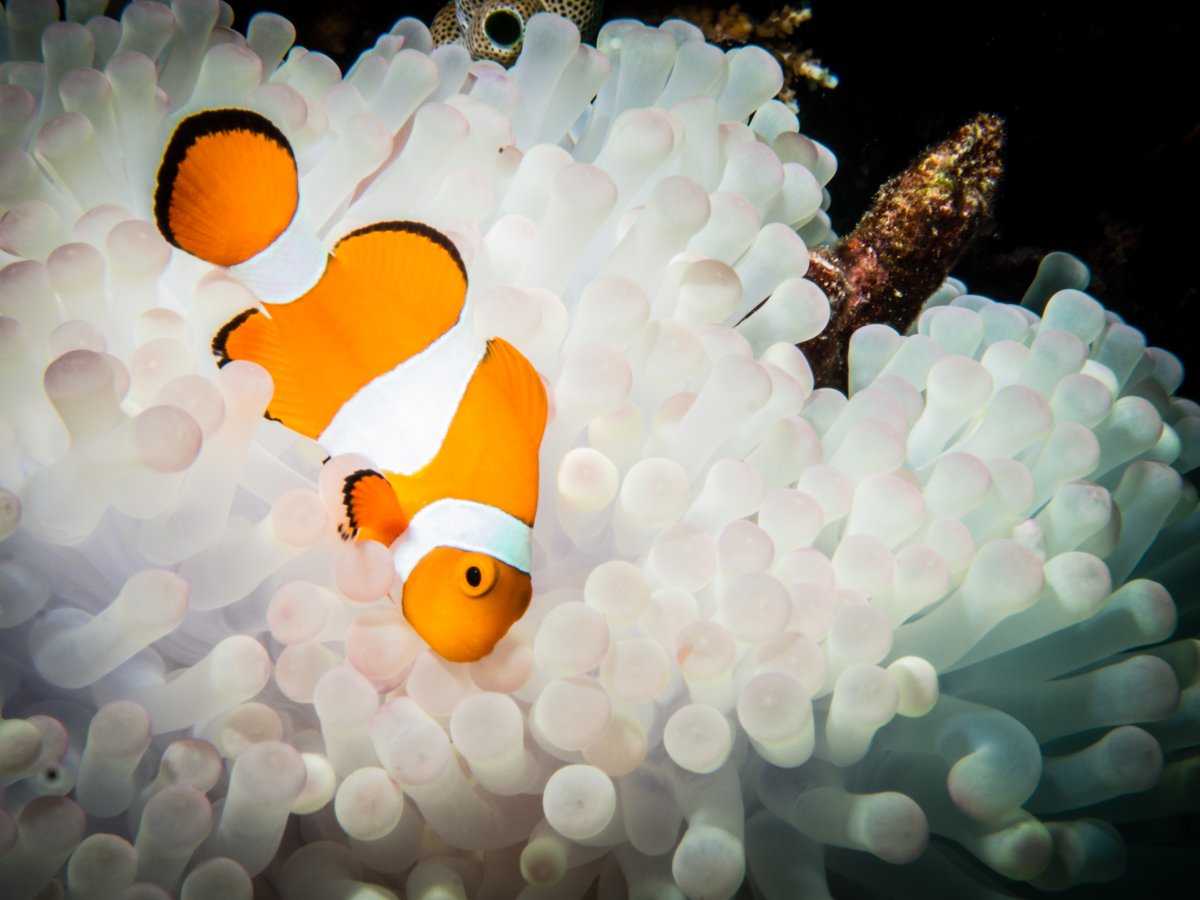
The shallow reef is full of nemos and anemones.
During the dive, the storm got worse to the point that it was hard getting back on the boat.
We had to leave Daram. The boat navigated towards Wagmab and Farondi island to seek shelter as the sea was very rough.
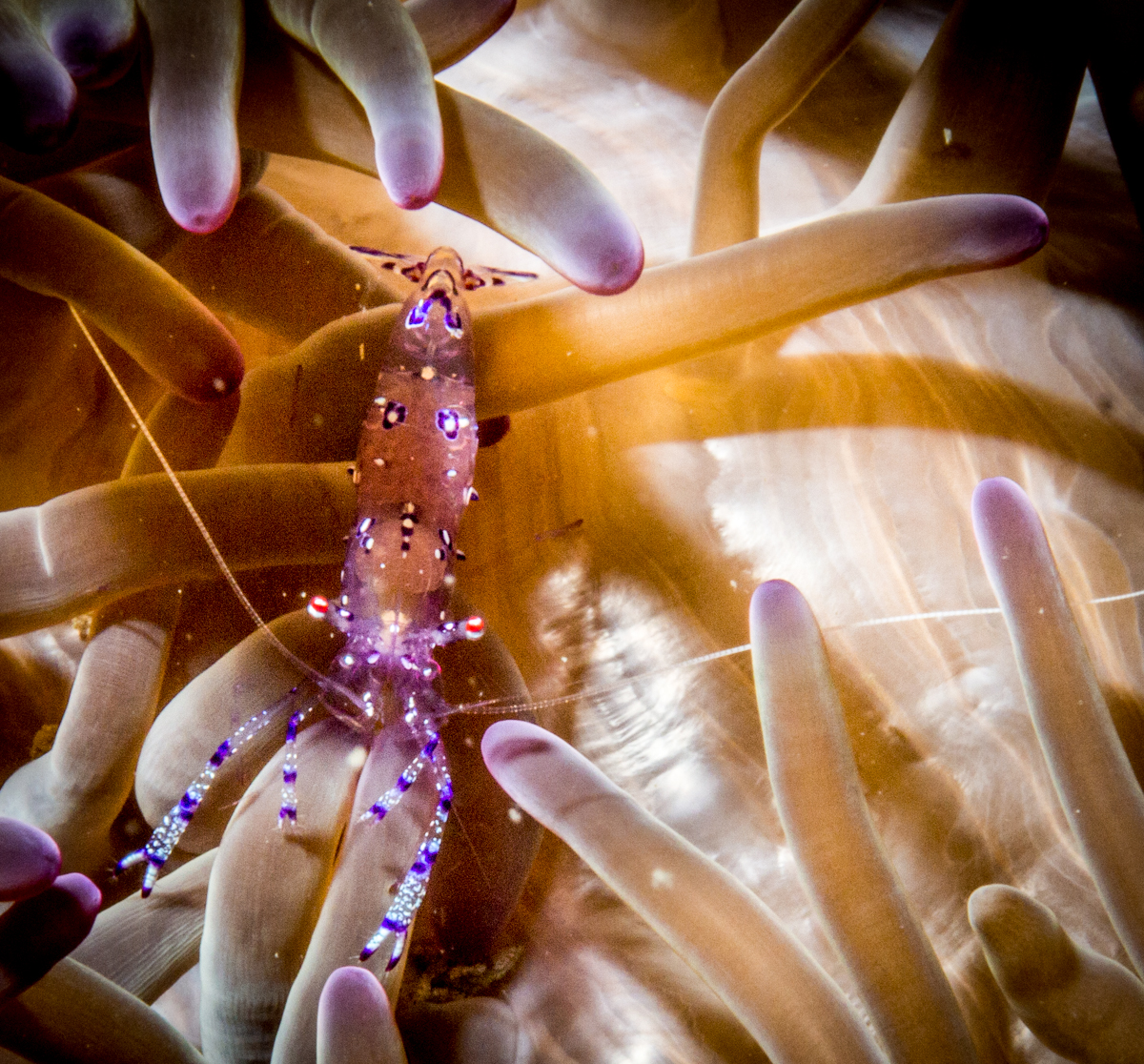
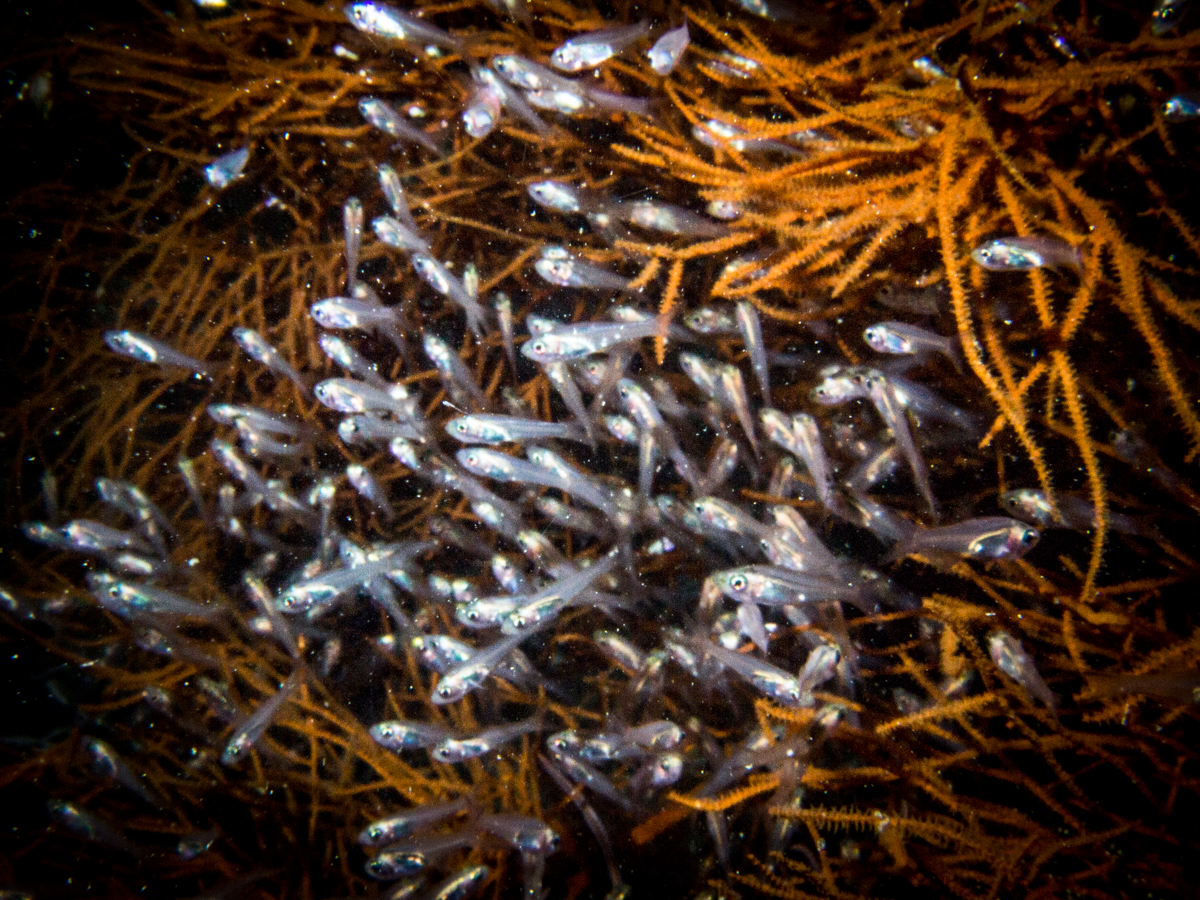
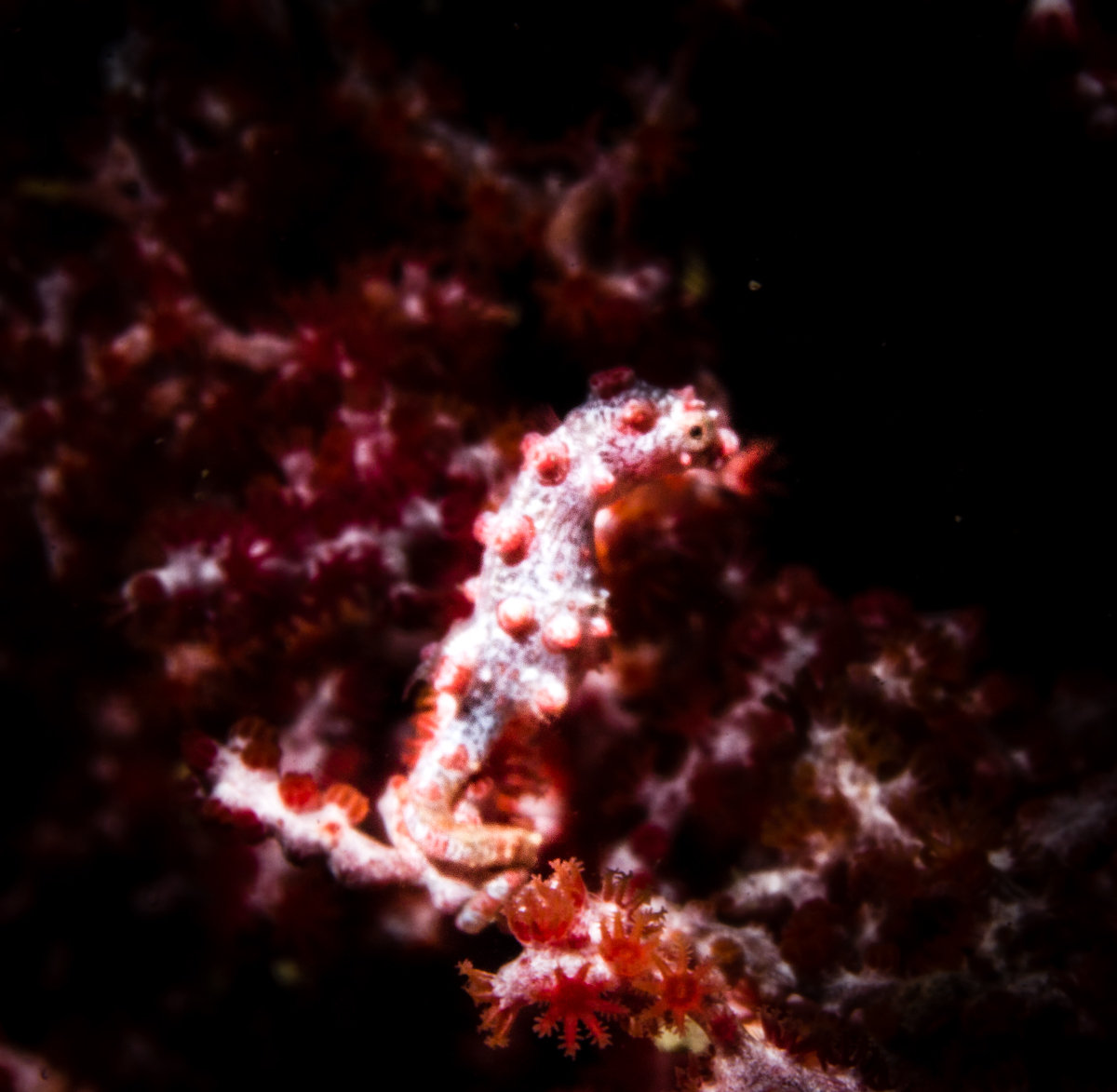
We arrived in Farondi mid-afternoon to a quieter sea.
The second dive of the day was the Eddy cave dive site.
Eddy means crazy current as this site can have a lot of up and down currents.
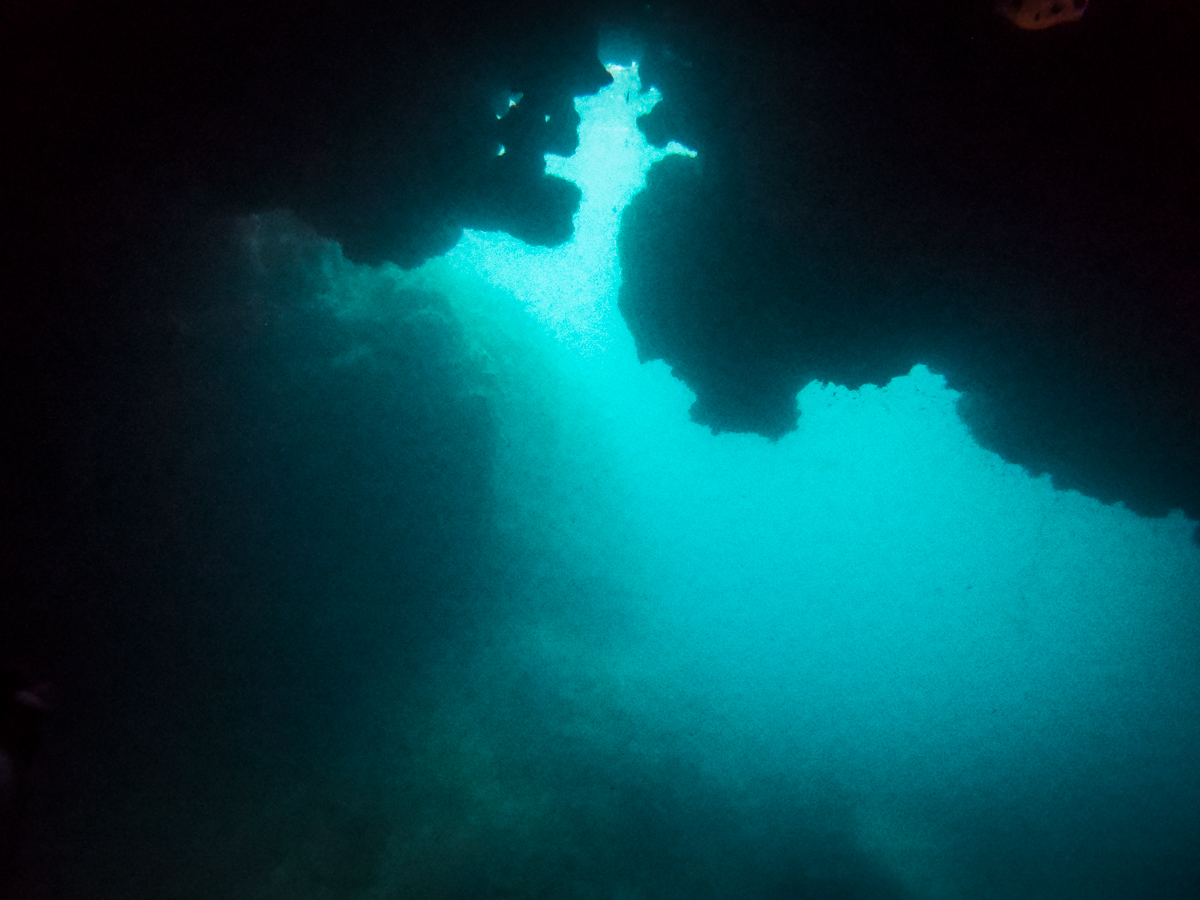
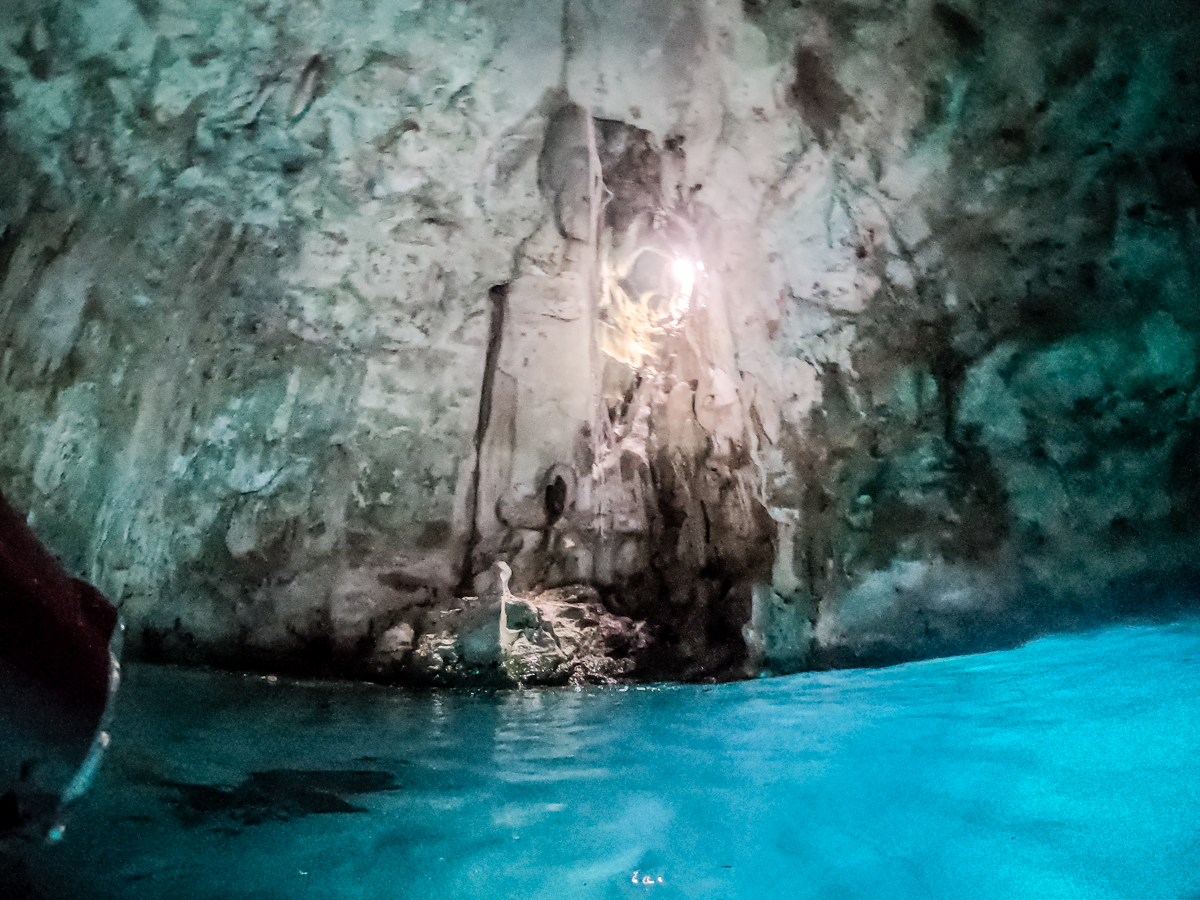
It is a wall starting at 5 meters going down to 40 meters. There is a huge cave 10 to 20 meters with fresh air inside the cave where you can surface for a break.
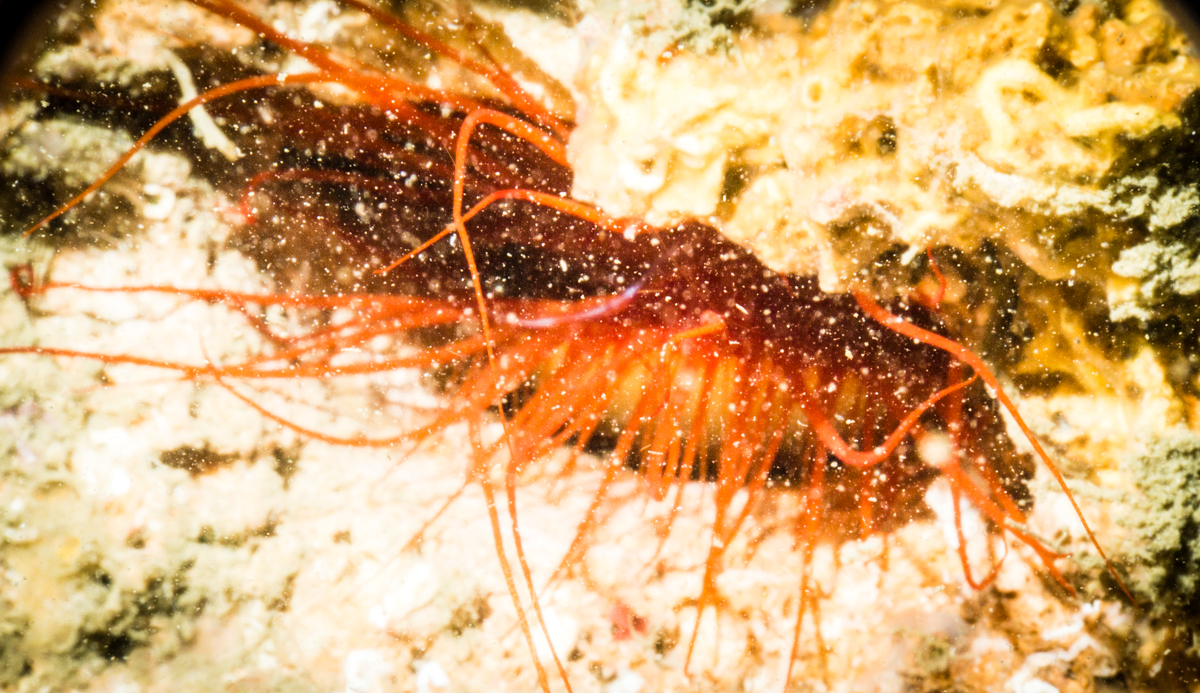
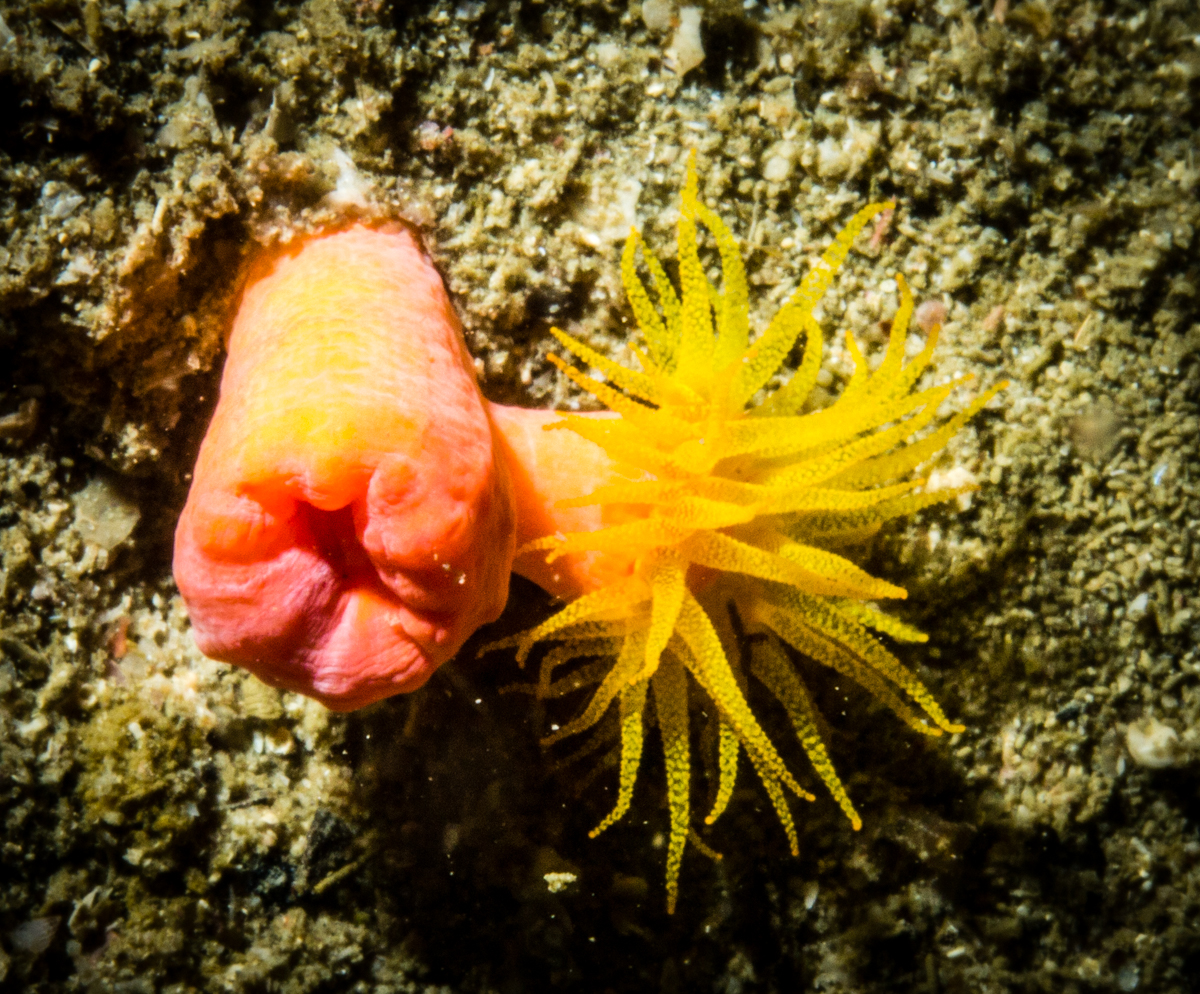
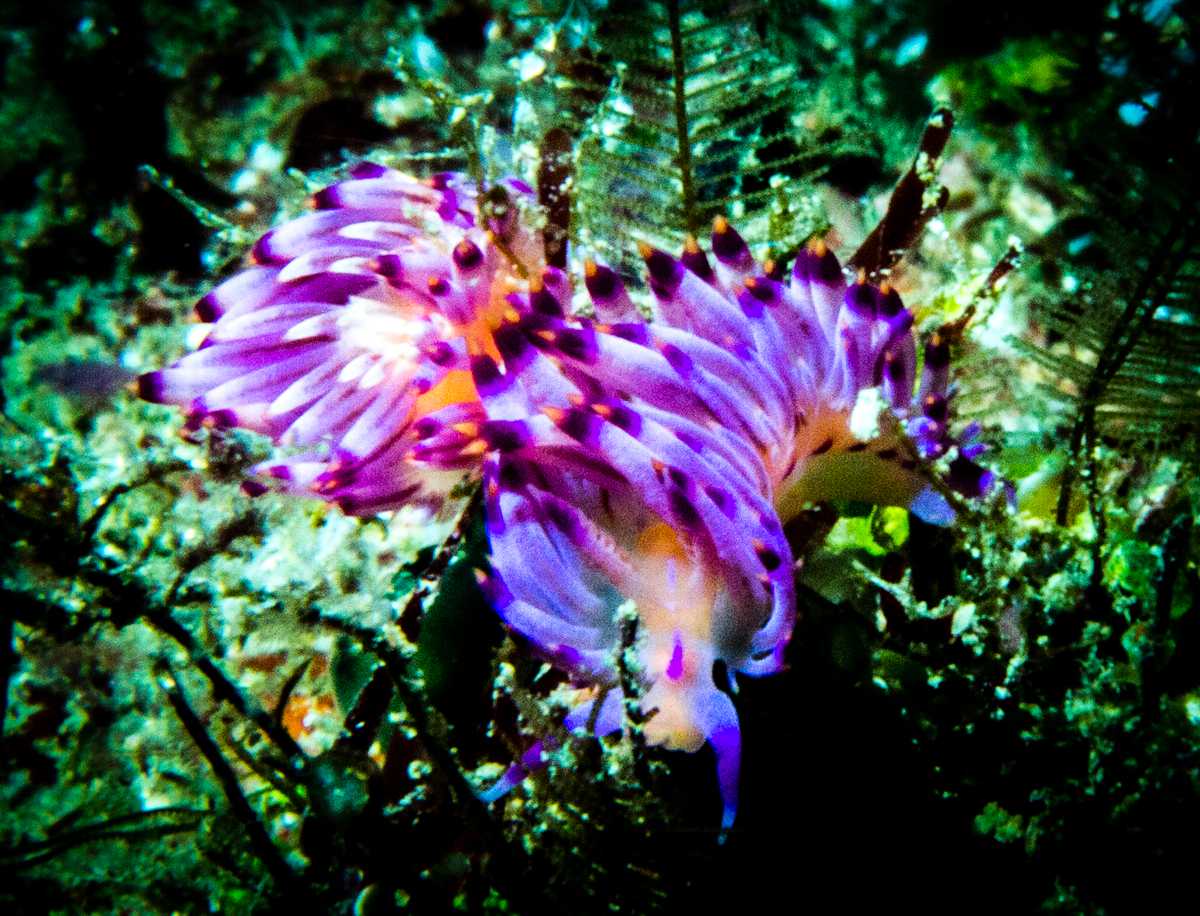
We found an electric clam and many nudibranchs by the entrance of the cave.
Day 6: A relaxing cruising day onboard escaping the storm
We woke up to a sunny sky and calm water :-). So the crew decided to take advantage of the calm weather to do the crossing to Penemu right after the first dive.
The first dive of the day was the Farondi cave dive site.
We started the dive entering a wide cave that went down to 28 meters. It was absolutely full of sardines and fusiliers. The topography was spectacular.
Watch your depth as you get out of the cave especially if you are on Nitrox. I reached my Nitrox depth limit.
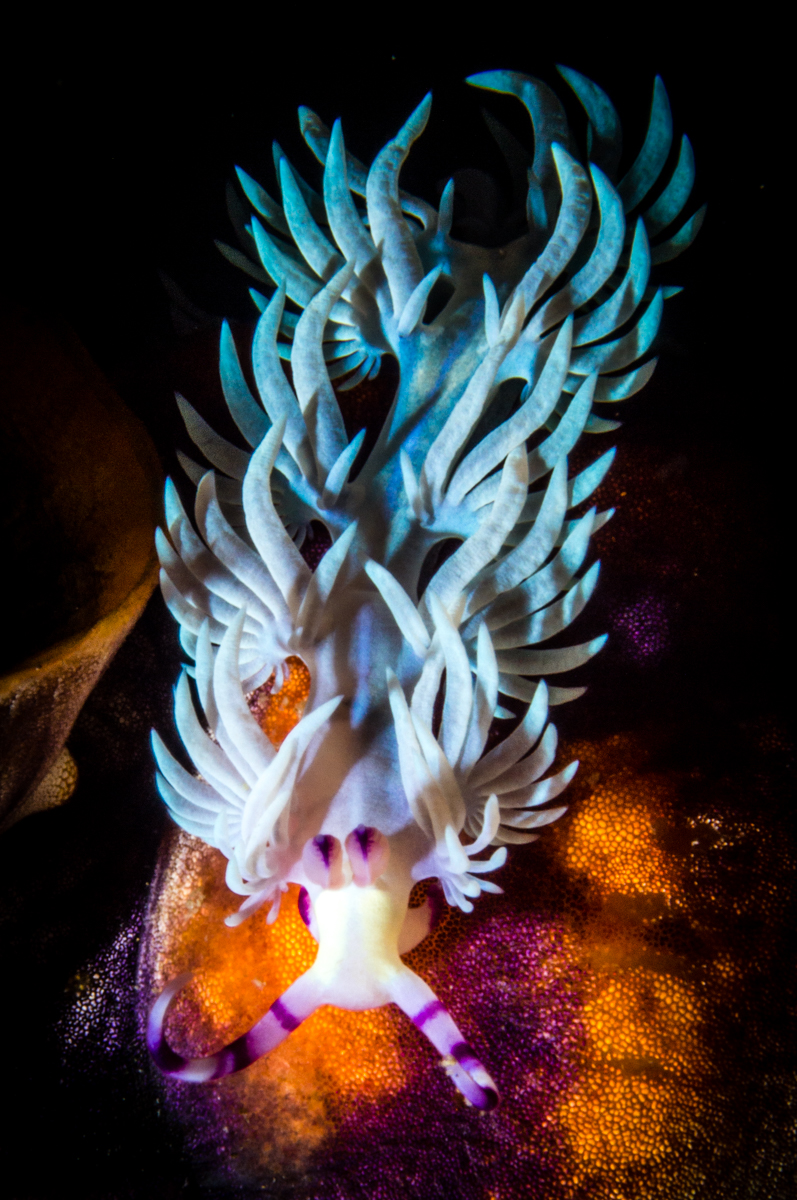
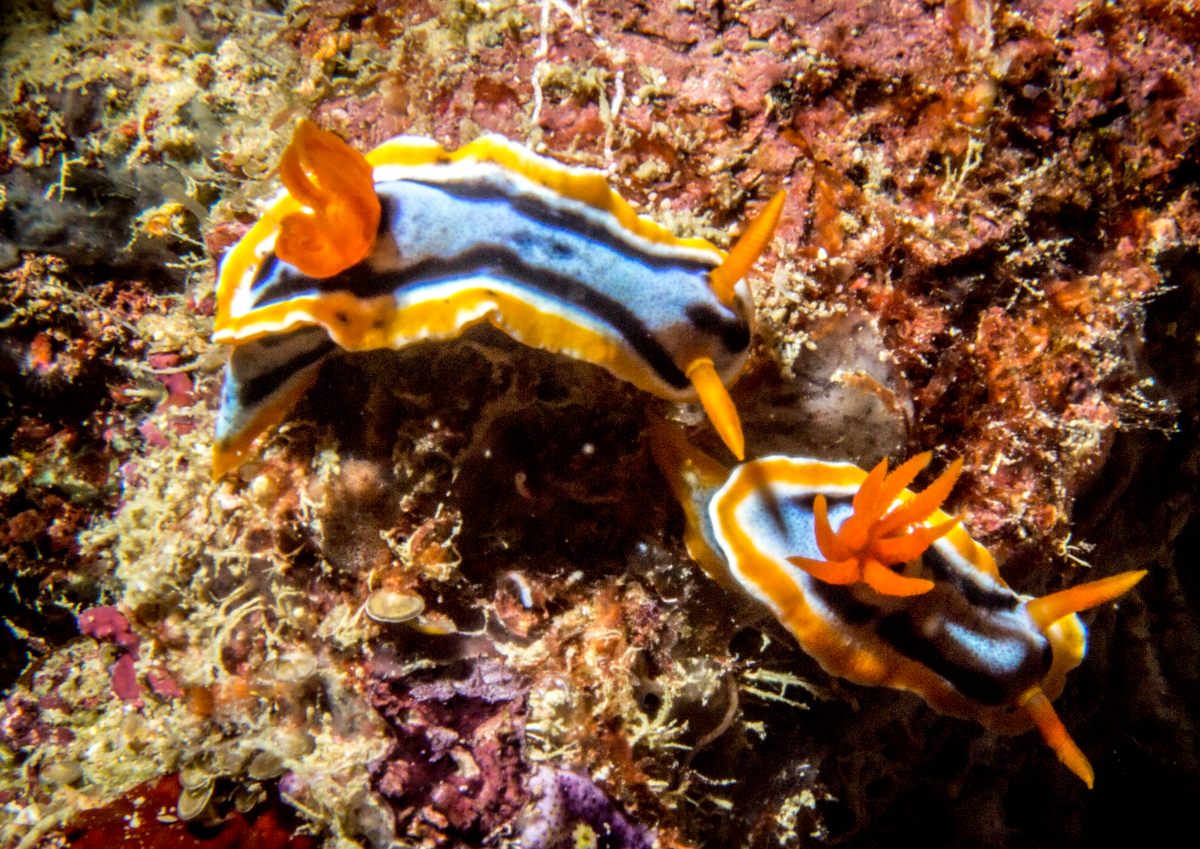
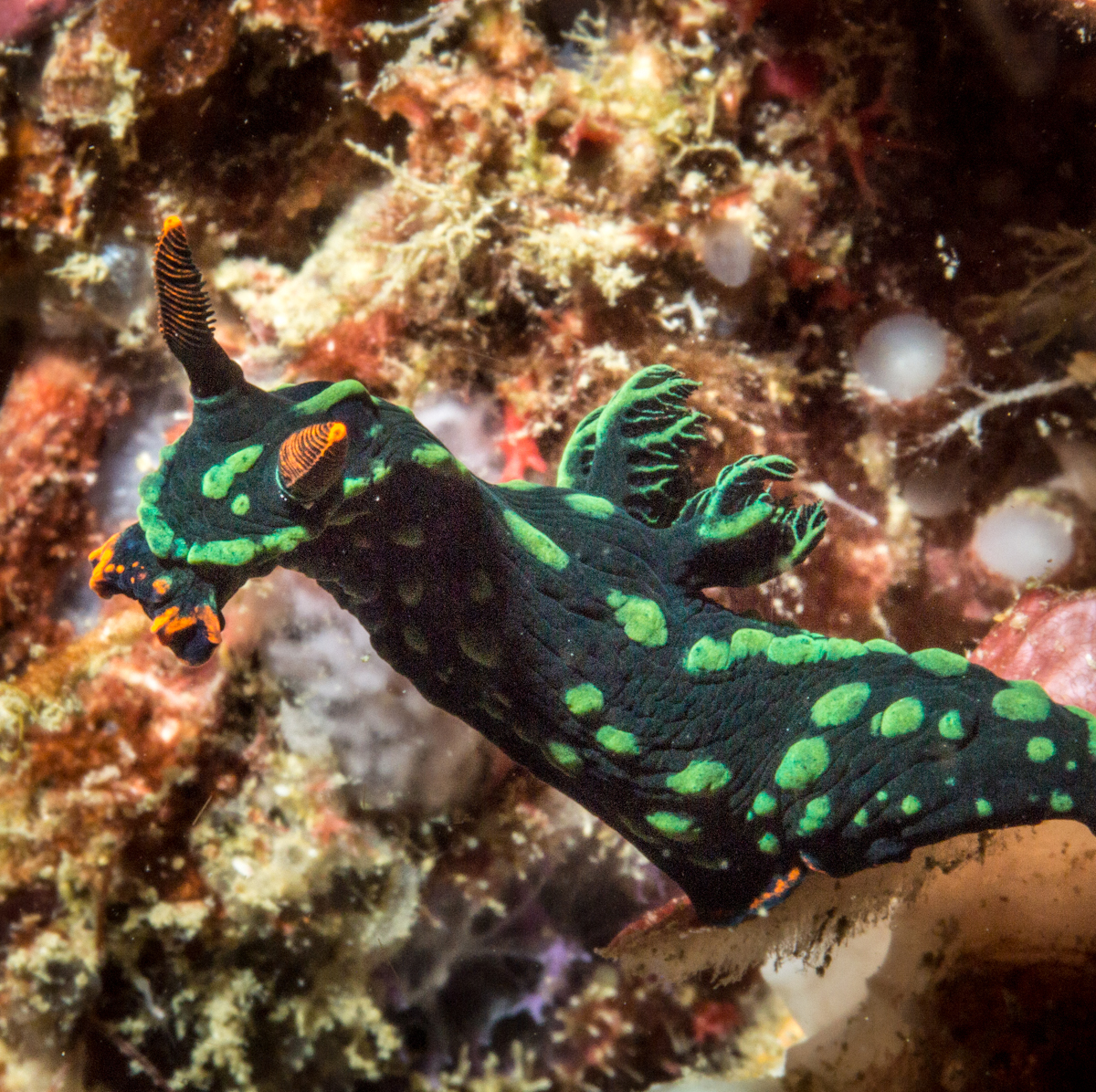
We then followed along the wall. It looked very different from the south Misool dive sites. The soft corals were much smaller but with beautiful pastel colors. The tunicates were everywhere and it was full of fishes. We found many nudibranchs on the wall.
A truly mesmerizing dive.
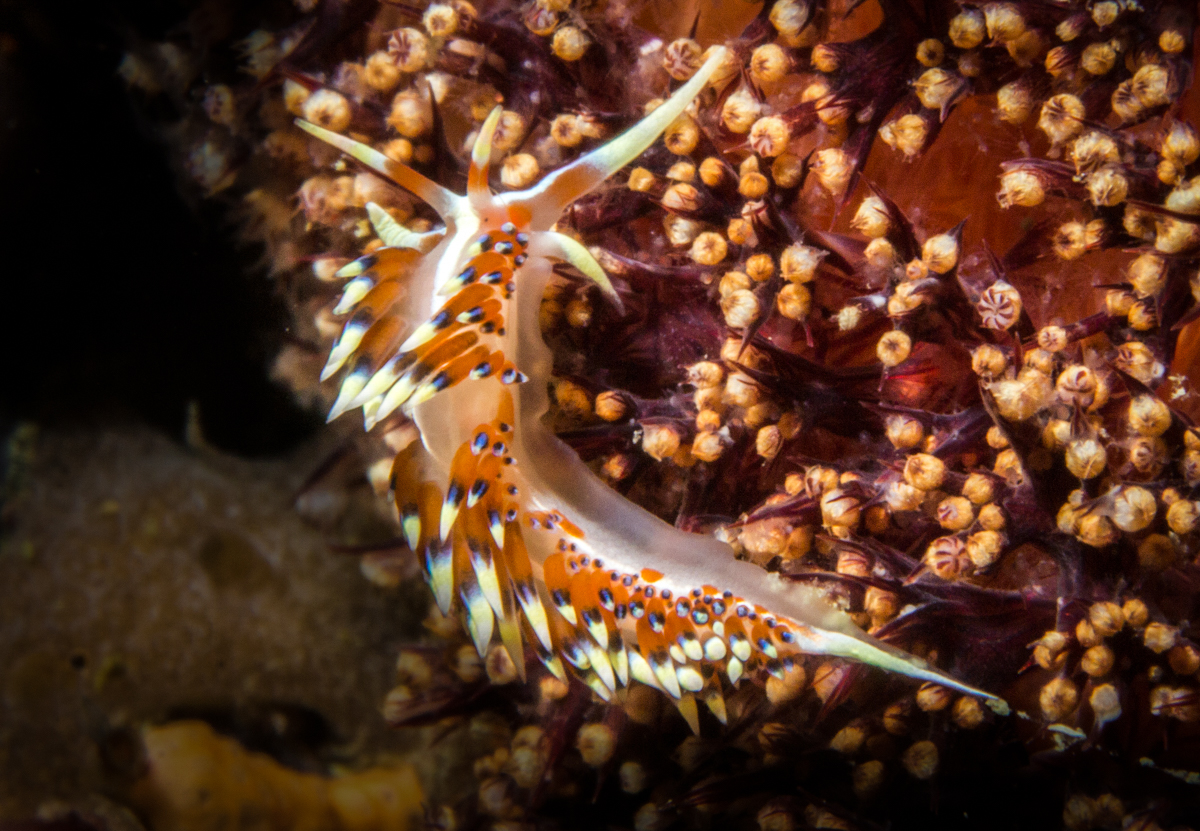
We navigated the whole afternoon, enjoying the sundeck and the nice landscape passing by.
One of the passengers gave us a presentation on coral conservation and Debbie, the cruise director gave us a presentation on manta rays, their behavior, and how to help their conservation.
Coralia Liveaboard supports the Marine Mega Fauna Foundation and you can help them by uploading your Manta pictures to their website.
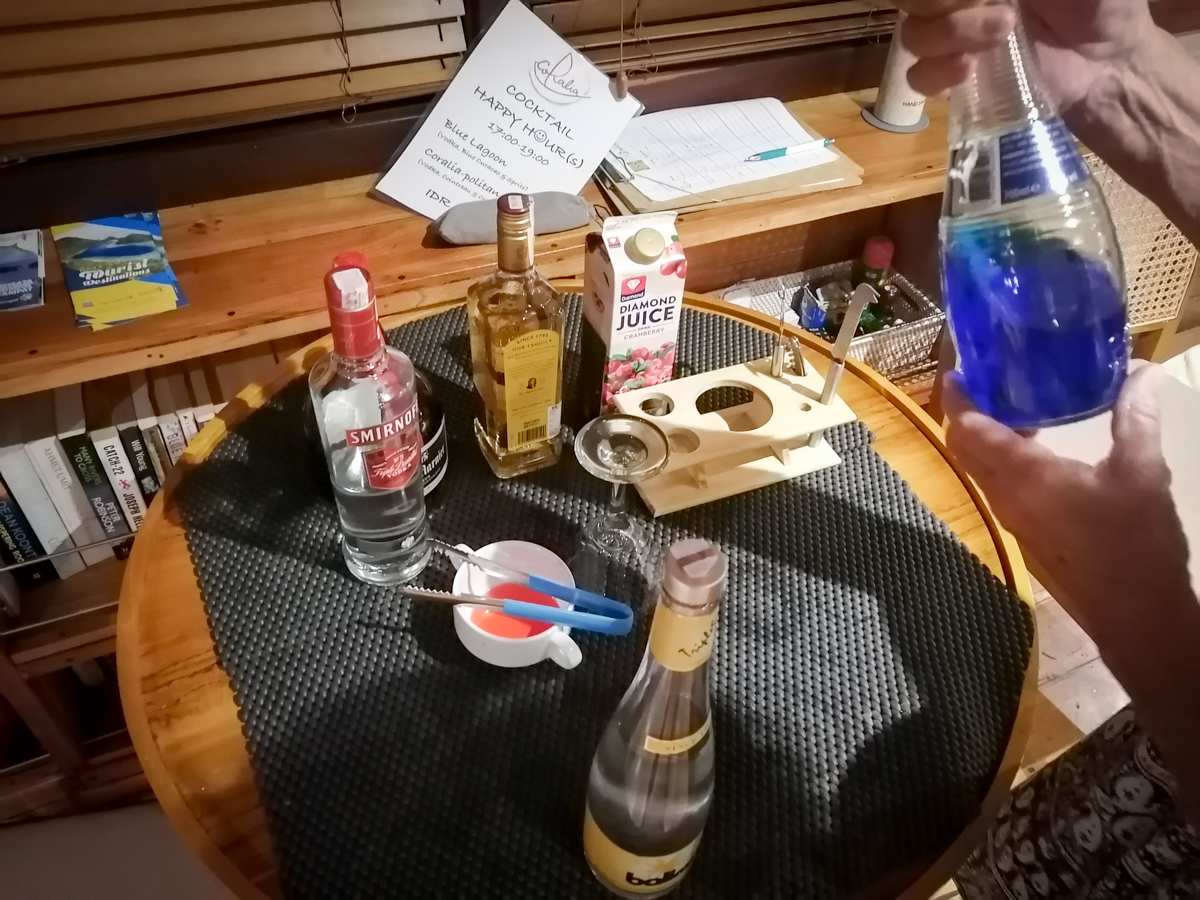
Today was also cocktail happy hour day. I sampled the Coraliapolitan and it was tasty.
Day 7: Hard Corals paradise in Central Raja Ampat
We arrived at Penemu Island in sunny weather which was a nice change after the last 2 days’ storm.
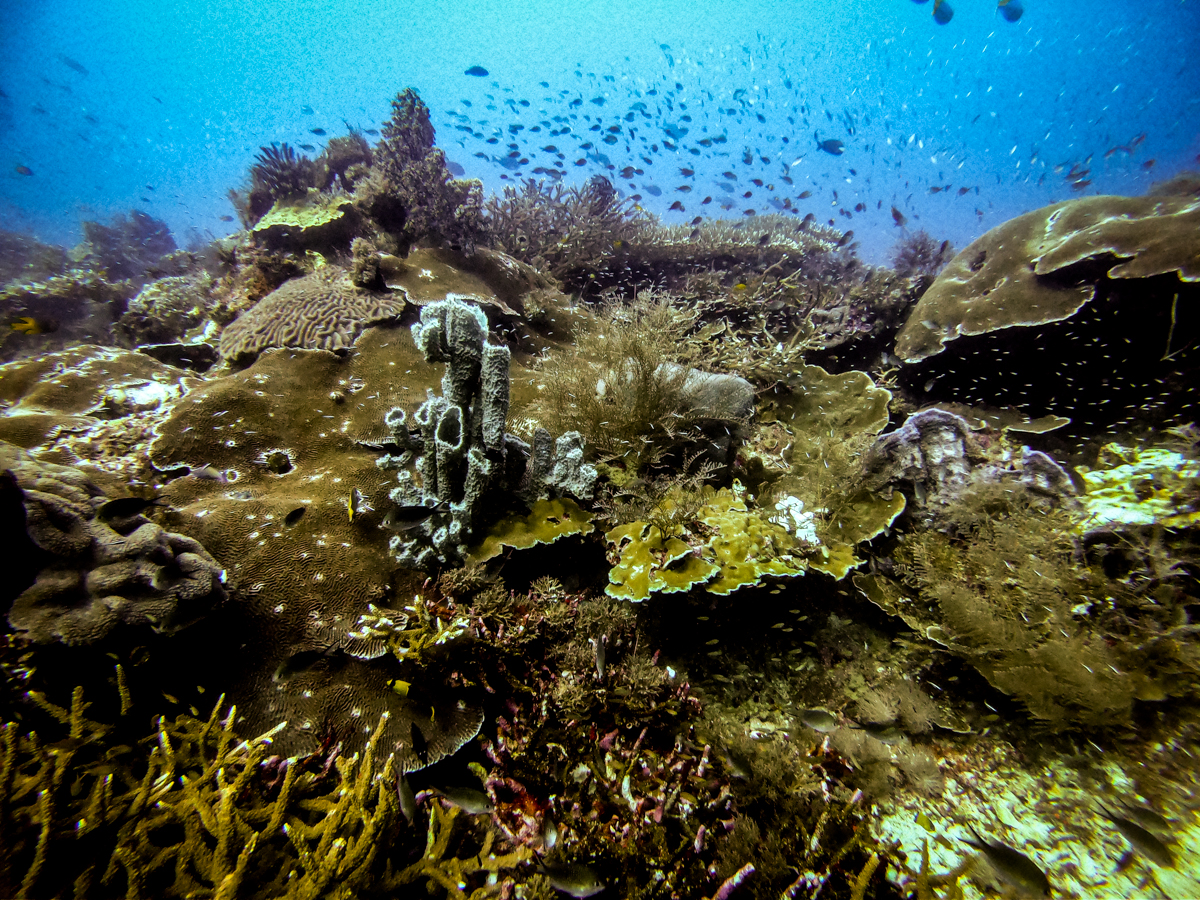
The first dive was Melissa’s garden dive site. It is a paradise for all corals lovers. The coral garden is huge and looks very healthy.
The side goes down to a sandy area at 20 to 30 meters and is surrounded by sand. It is a very large area and we could not cover all of it in a single dive.
There are wobbegong sharks in the sandy area and black tips sharks patrolling the area.
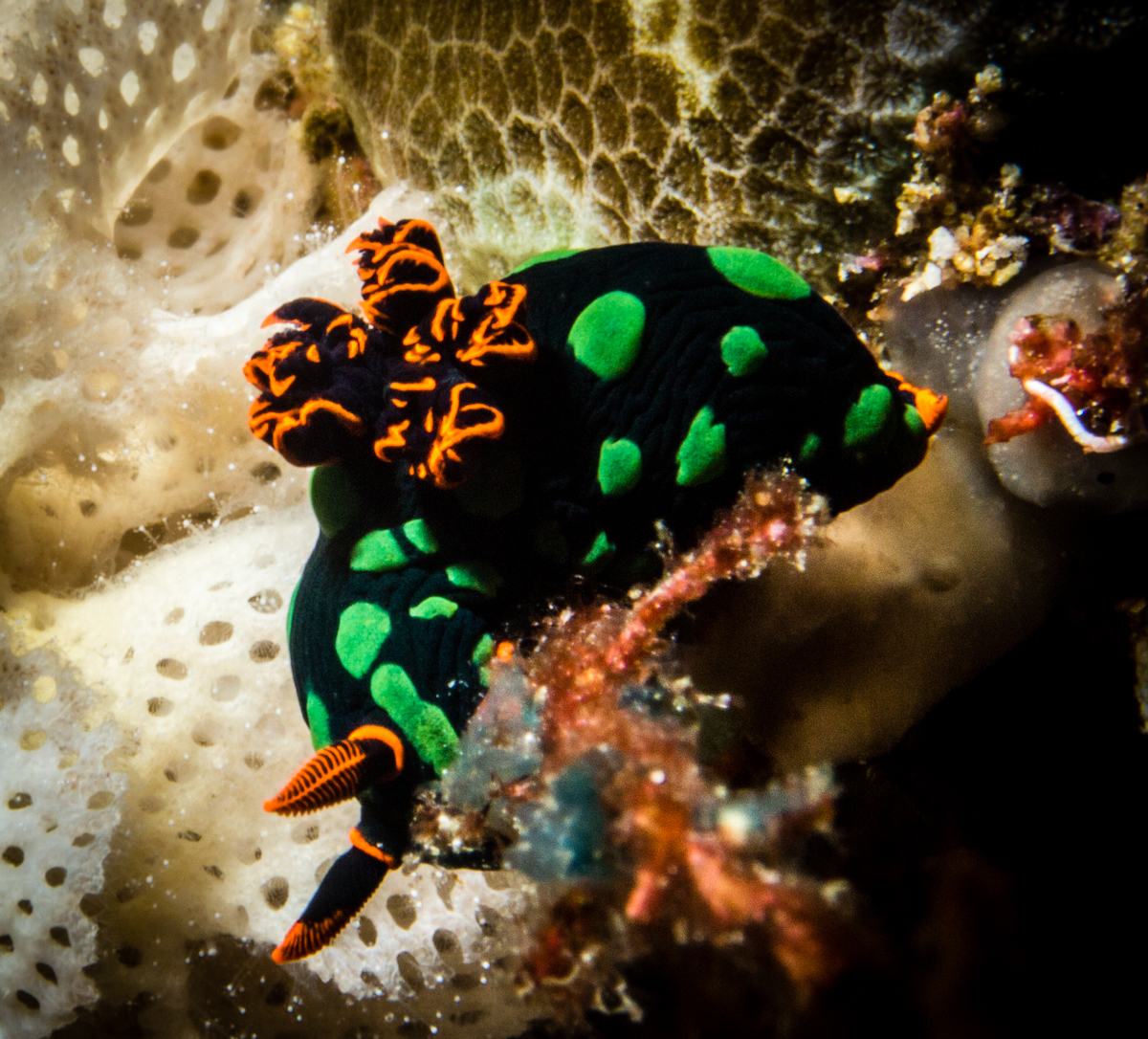
We saw a few nudibranchs and a crocodile fish but the real star of the shows are the hard corals and the millions of small colorful fishes swimming through it.
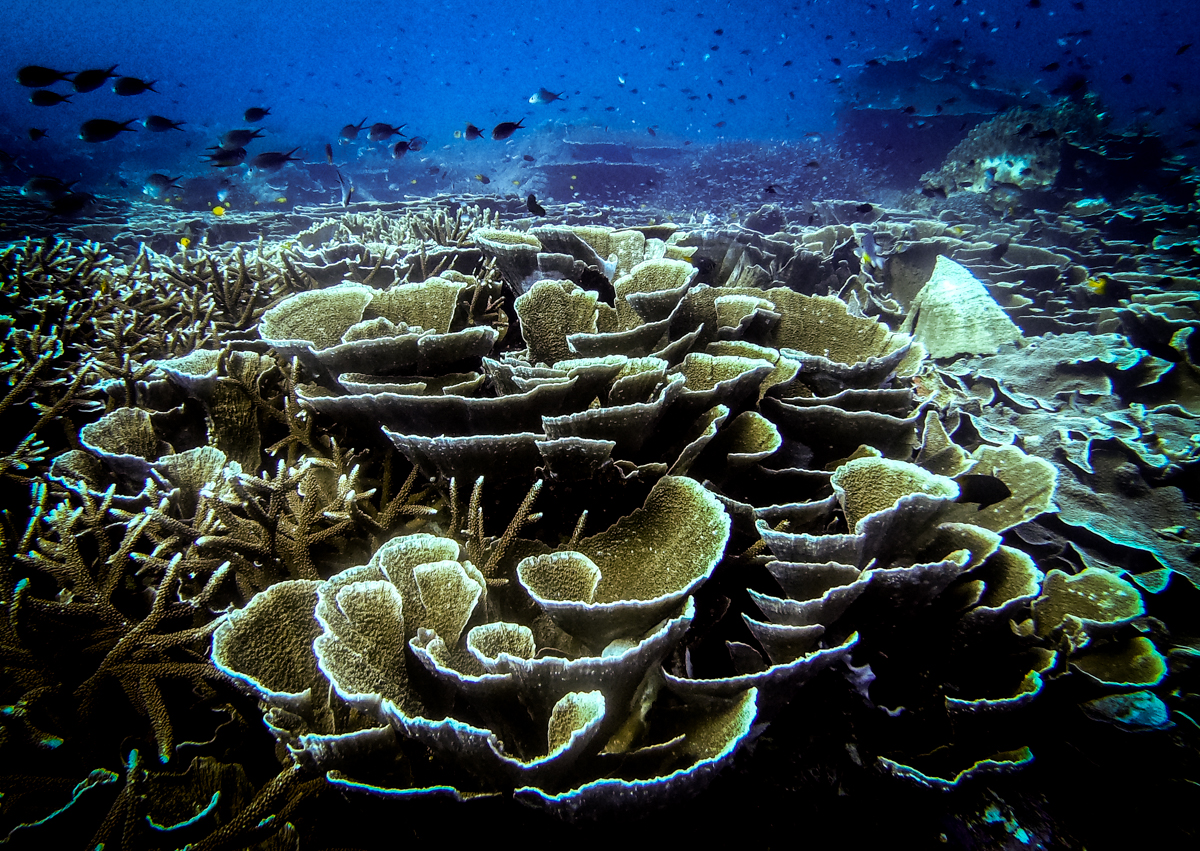
Keruo Wall was our second dive of the day.
It is a very steep slope of an island in Penemu and it is usually done as a drift dive. The coral starts at 2 or 3 meters.
There is a lot of beautiful hard corals on this site, especially around the plateau at 10 meters.
Blacktips and Napoleon swim by so don’t forget to look in the blue. We saw 3 sharks. The tip of the island was very fishy. Many fishes were hunting including 2 Mobula rays that passed by quickly. As soon as the sun shined, the colors of the reef came alive and the number of fishes was truly mind-blowing.
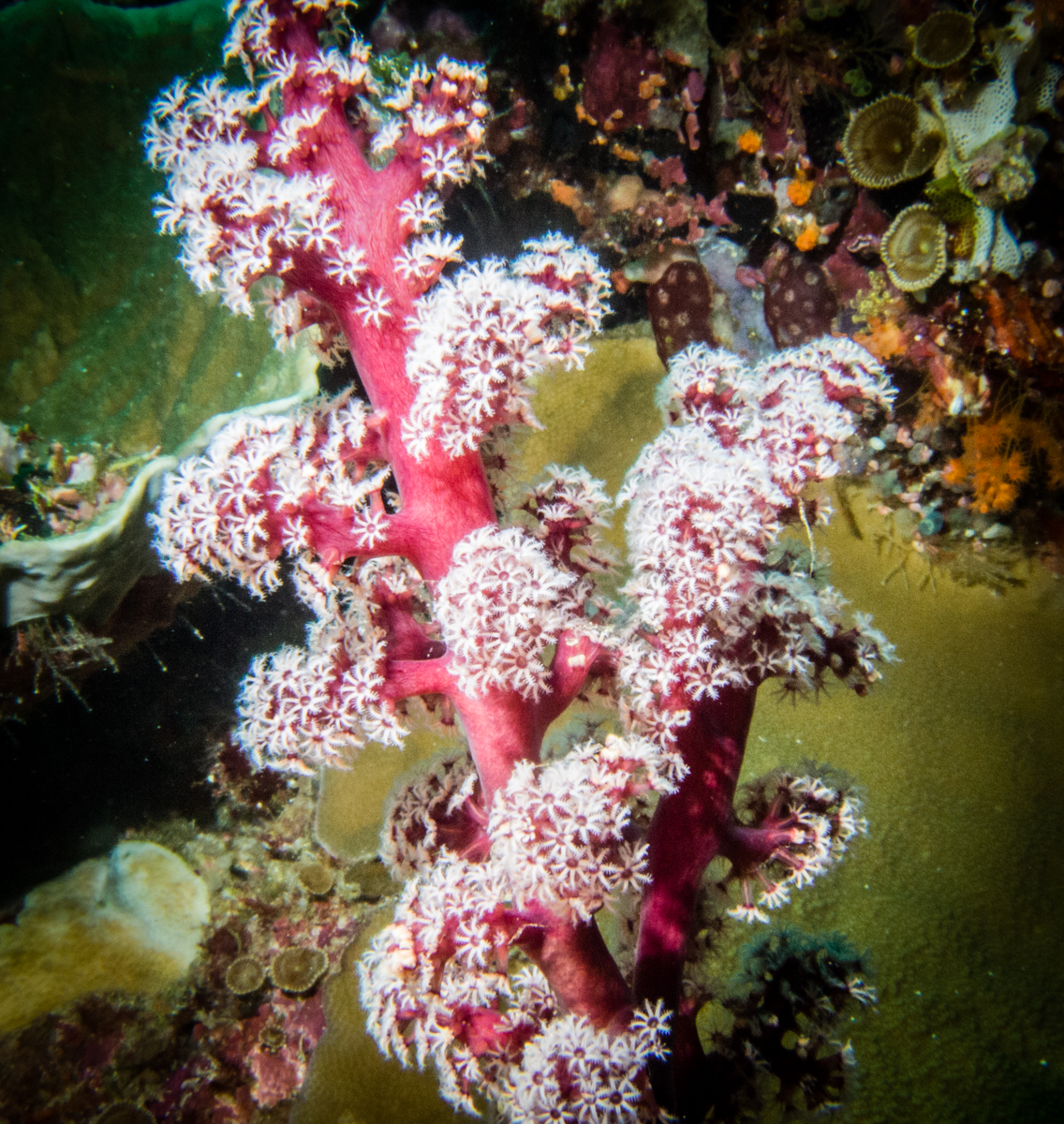
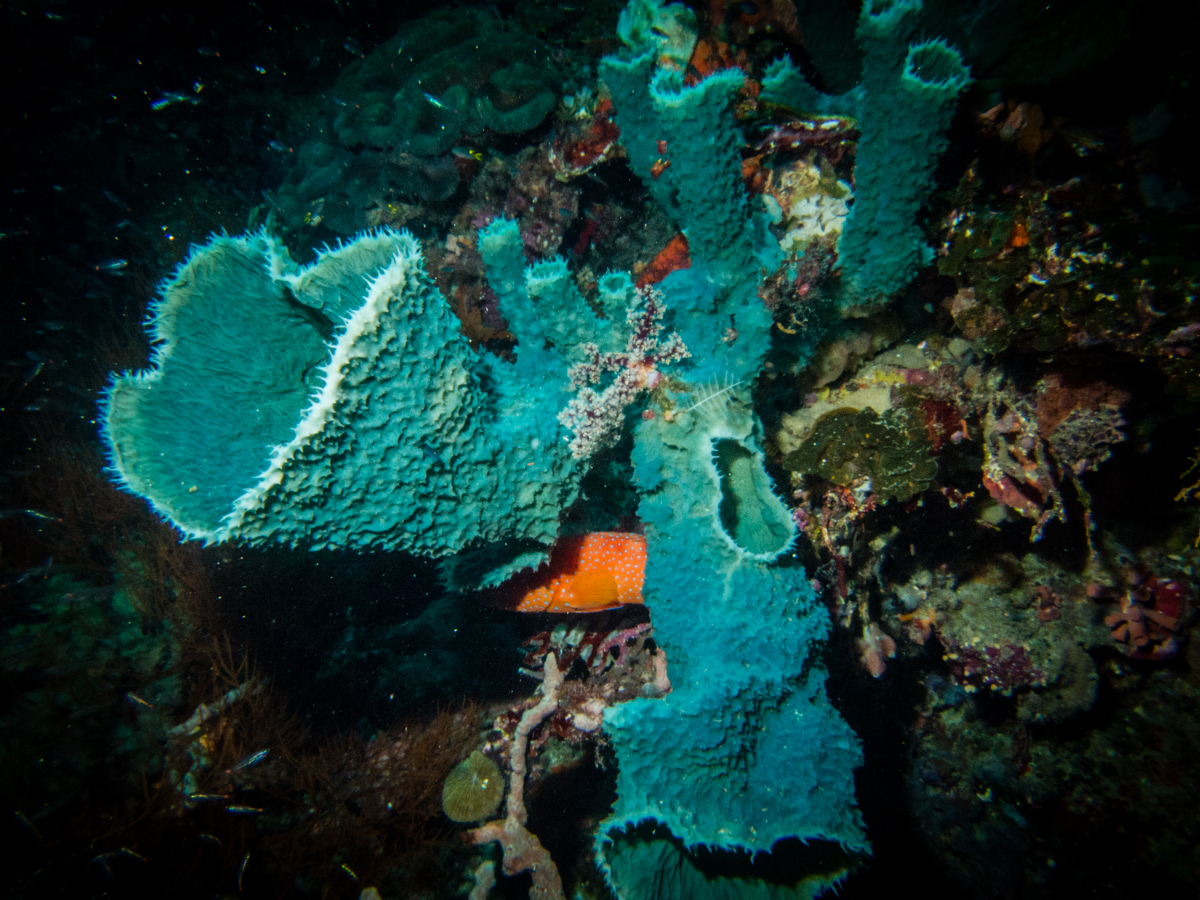
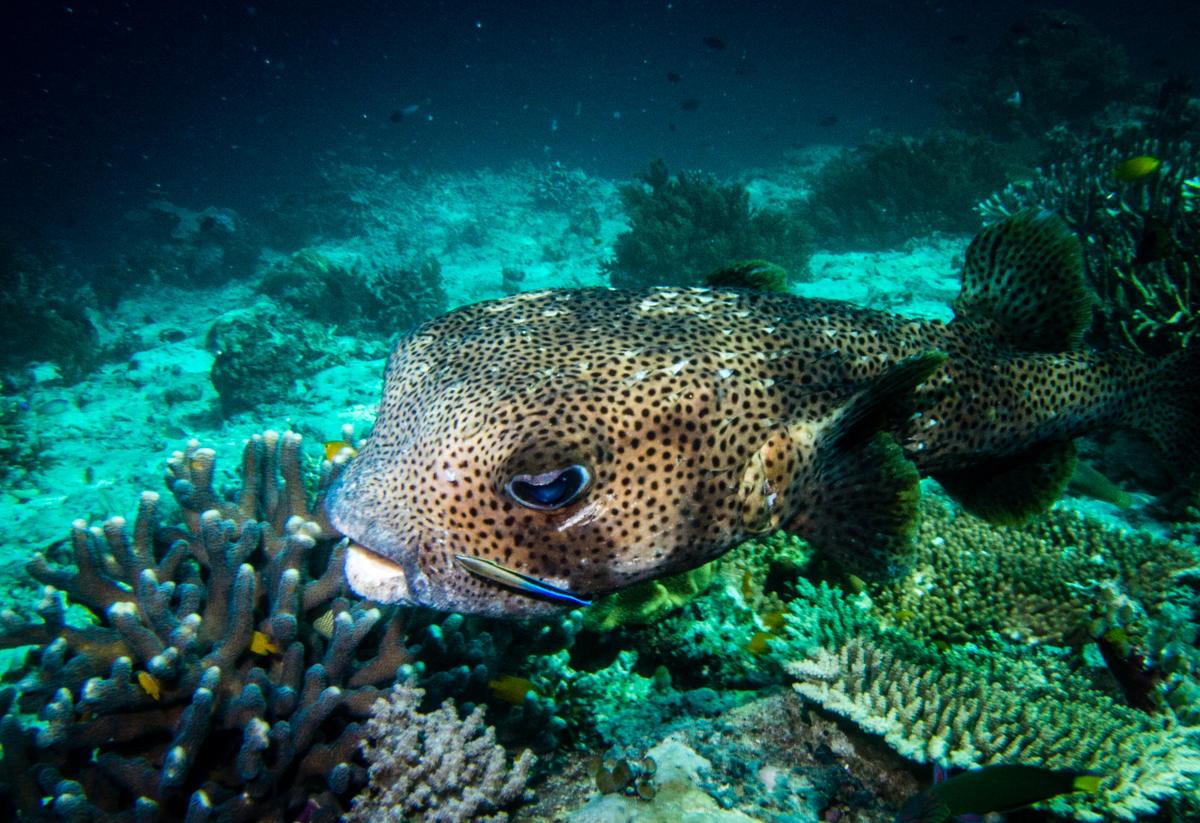
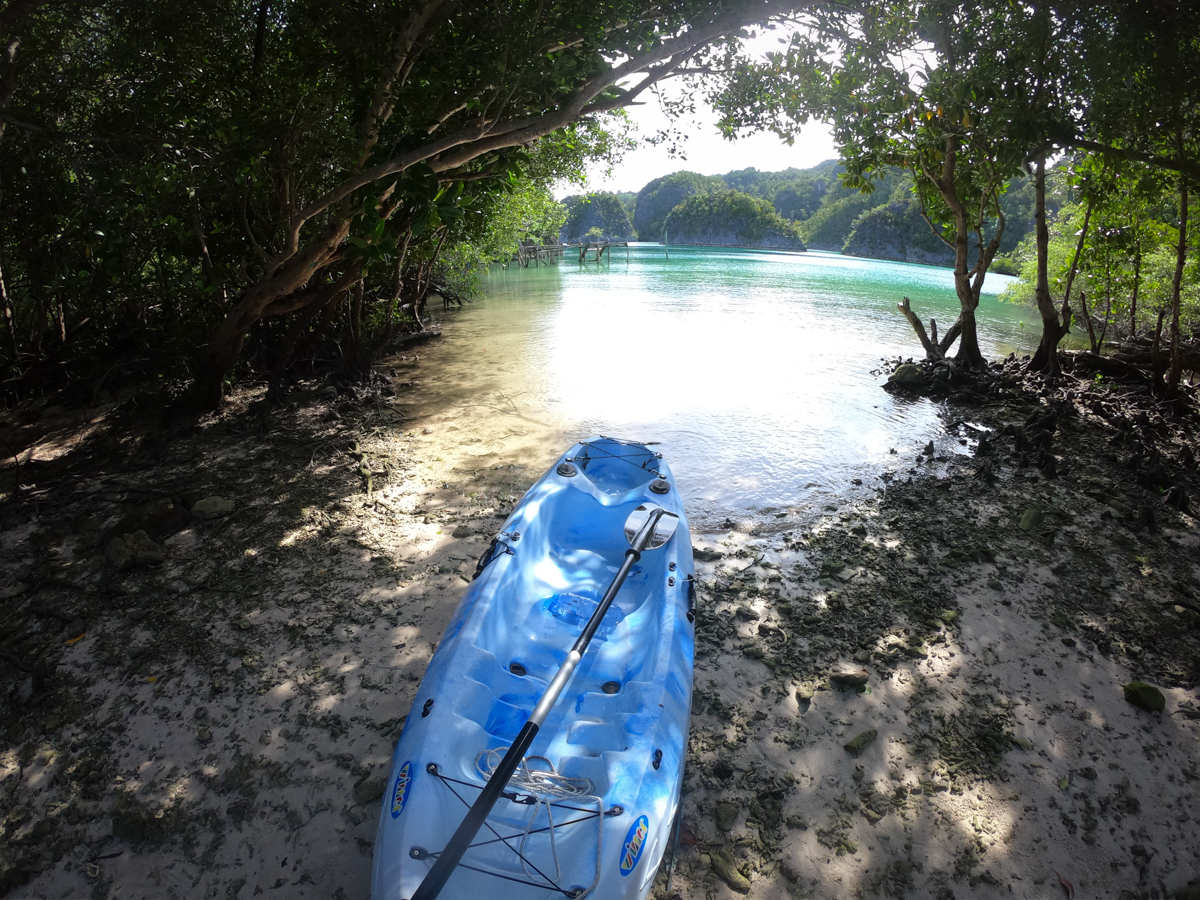
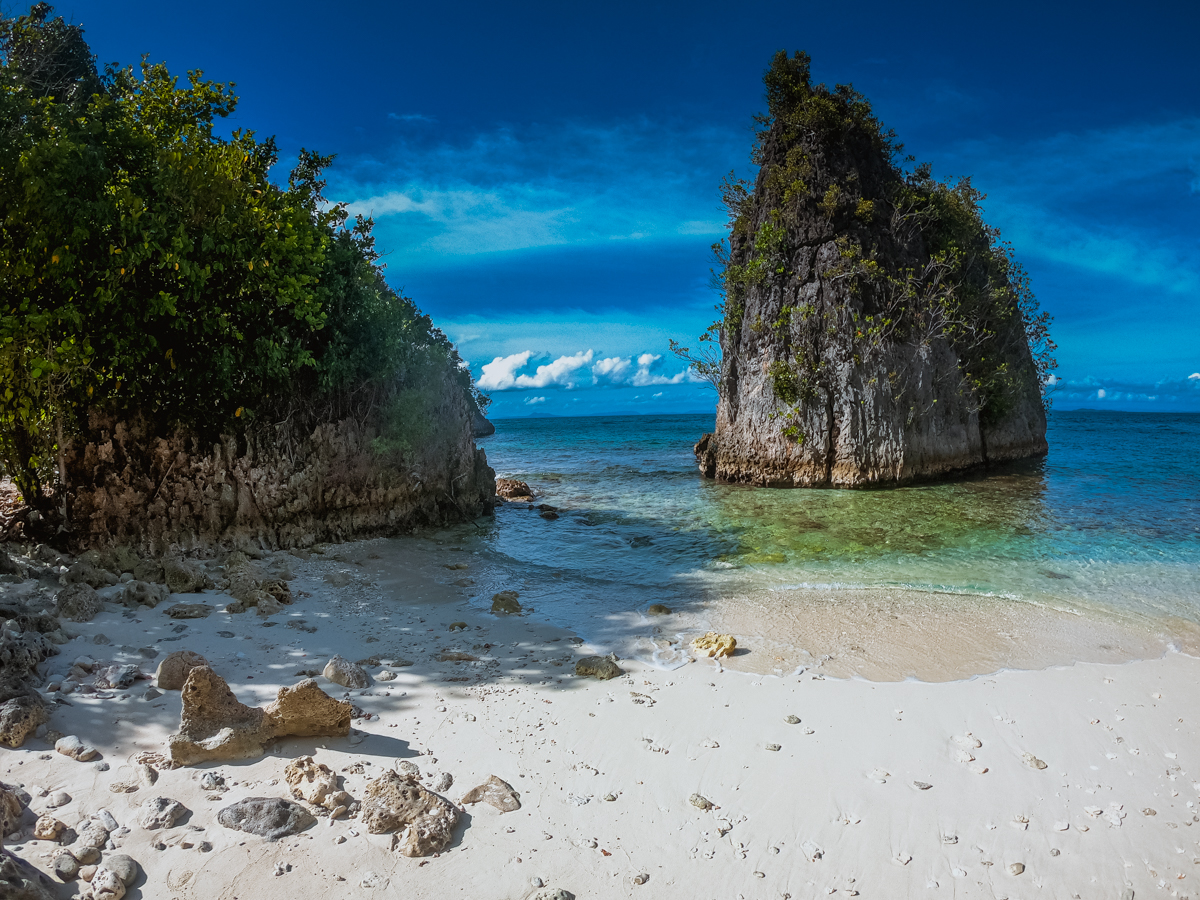
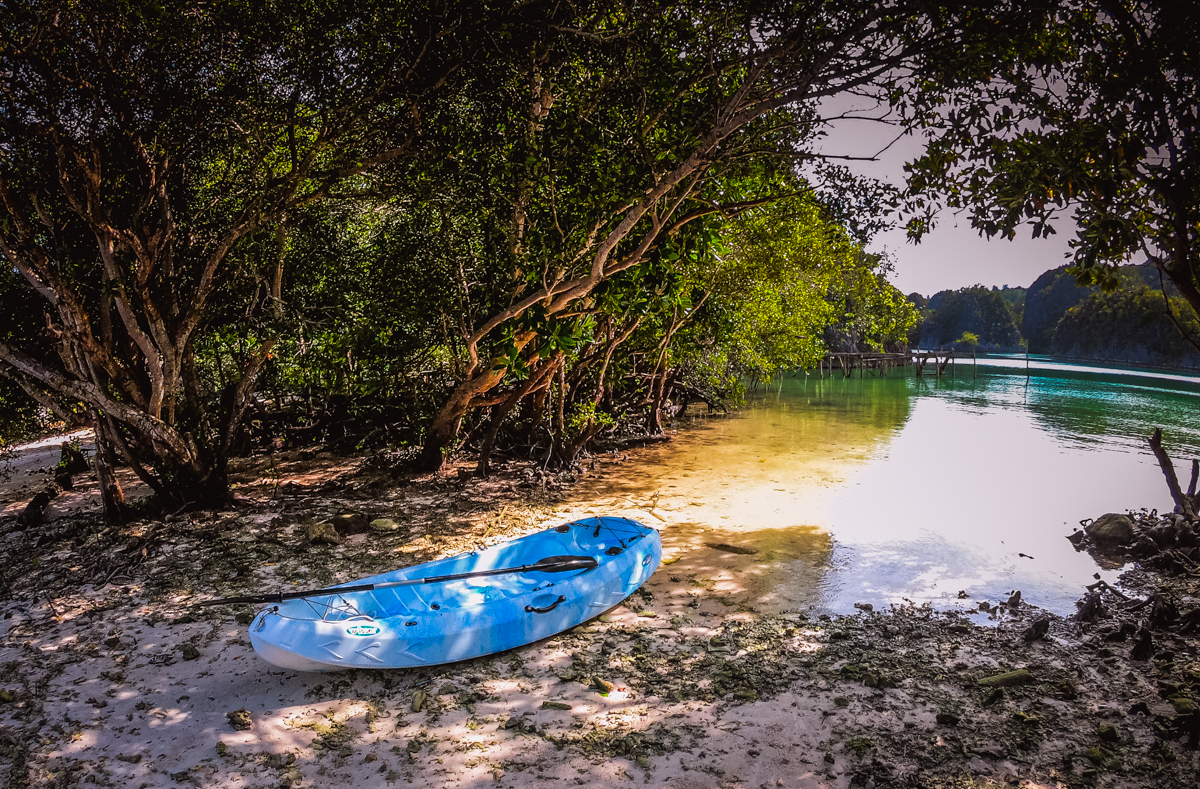
We then went to visit the Pyenemo lagoon. As I had already been to the viewpoint a few times, I decided to kayak the lagoon. It was splendid. The peacefulness and the gorgeousness of all the lime karst make it special. I found a small mangrove, landed on a small island, and discovered a beautiful hidden beach on the outside edge of the lagoon.
After, we went to the new viewpoint called Bintang lagoon. It is a short but steep way up. This lagoon is supposed to look like a 5 pointed star but you need a bit of imagination to see it.
Wear proper shoes for the Bintang lagoon viewpoint as the path is made of natural rocks.
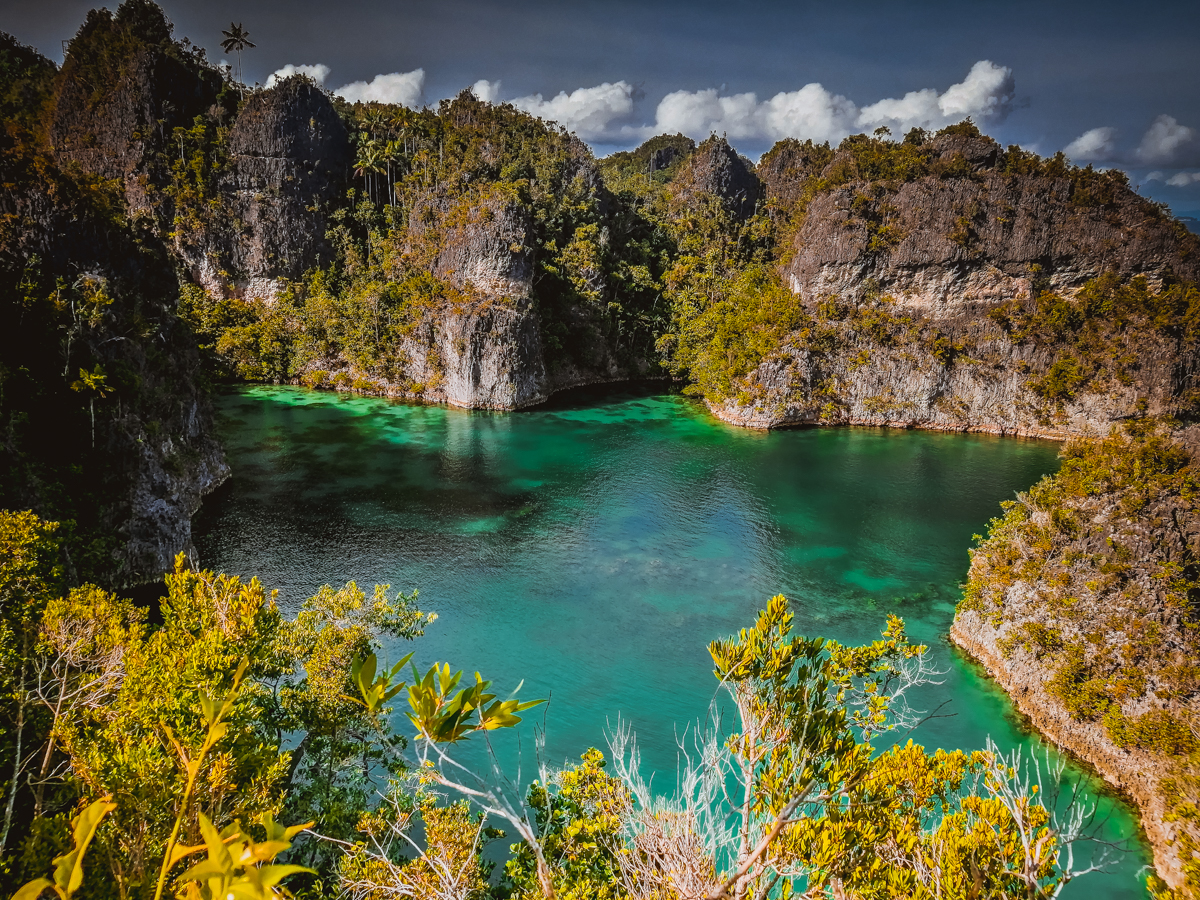
It was an intense day. We came back to the boat to another welcome drink and cold towels and it was already time to go diving again.
The third dive of the day was Batu Rufus, a dive site very close to the lagoon.
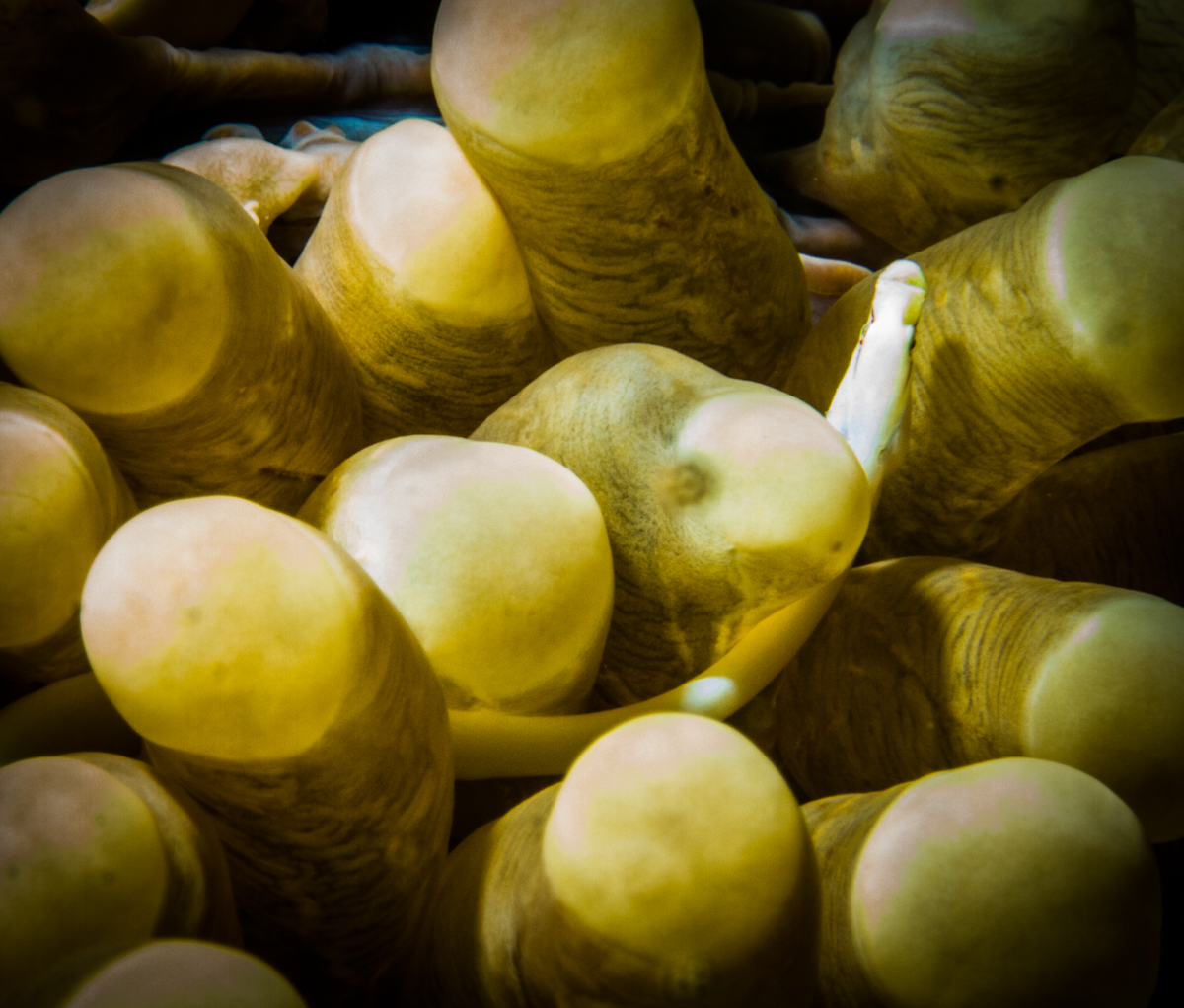
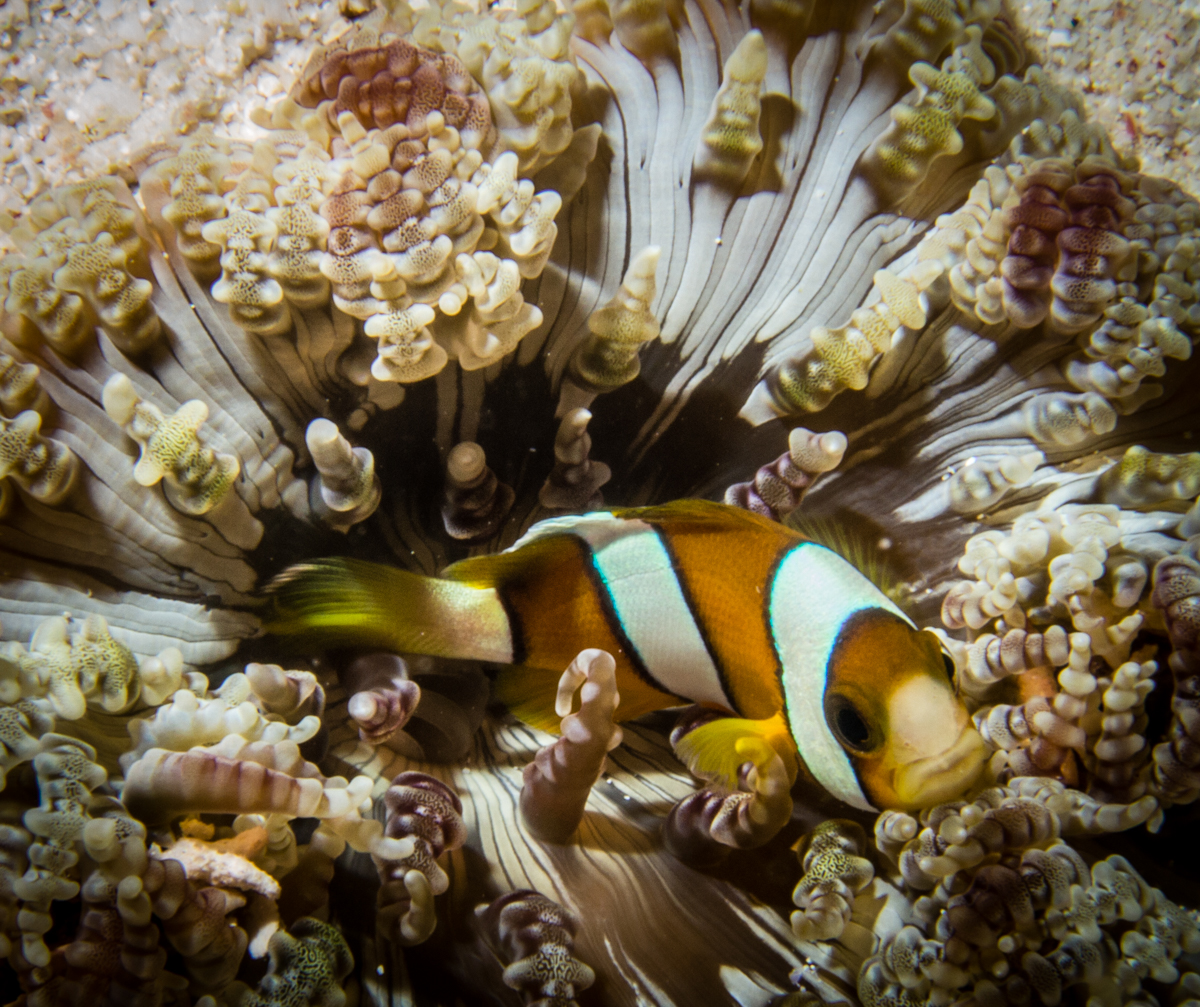
It is a sloping reef off a small island. There is a scenic swim through at around 5 meters. There are some mushroom corals pipefishes near the swim through in the mushroom corals that look like an anemone.
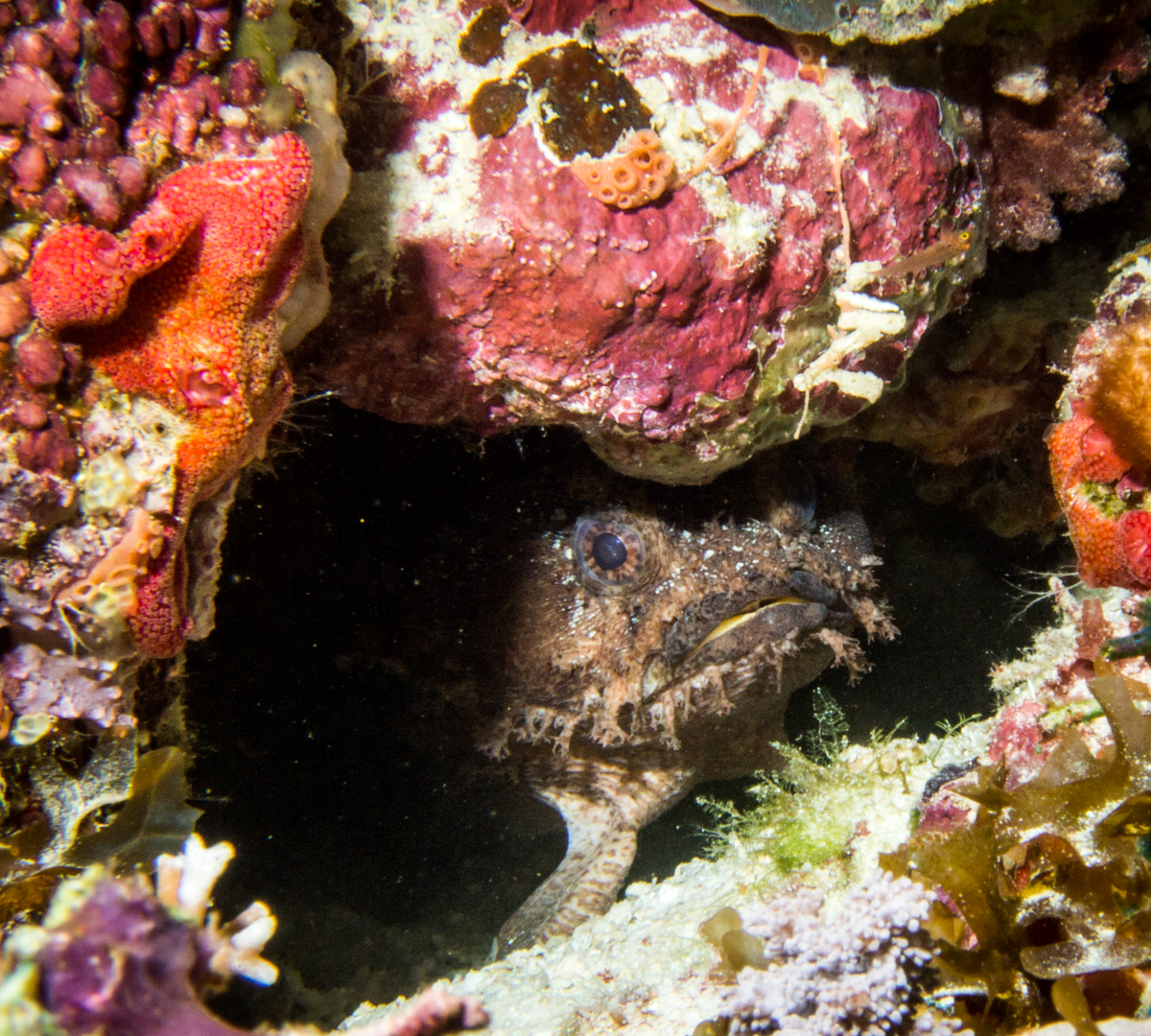
We saw a huge toadfish. The dive site was very fishy but the visibility was not so good so the colors of the reef didn’t shine through when we dove it.
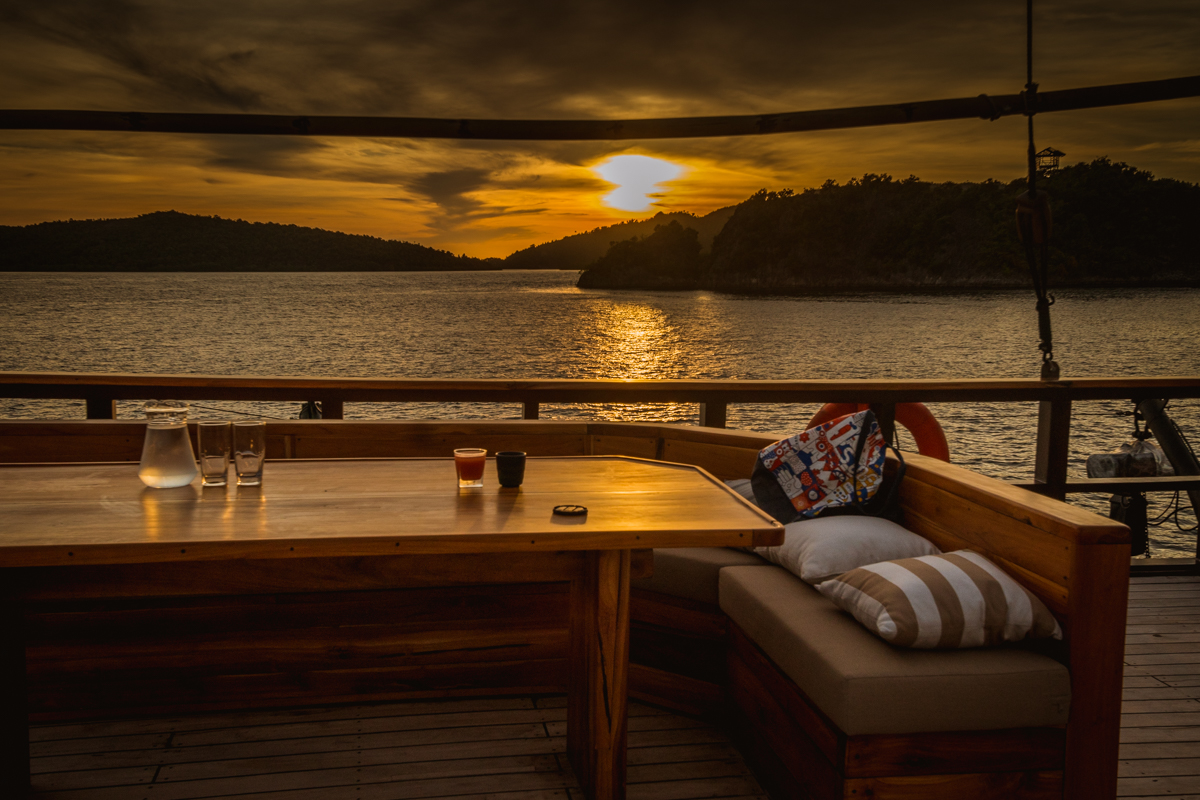
We surfaced on time for sunset. Everybody joined up for sunset drinks on the top deck and it was magnificent.
What a fulfilling and amazing day we just had!
Day 8: Looking for Mantas and sheltering in a mangrove
Bommie beach dive site is located by the gorgeous Yeben island with its picture-perfect beach.
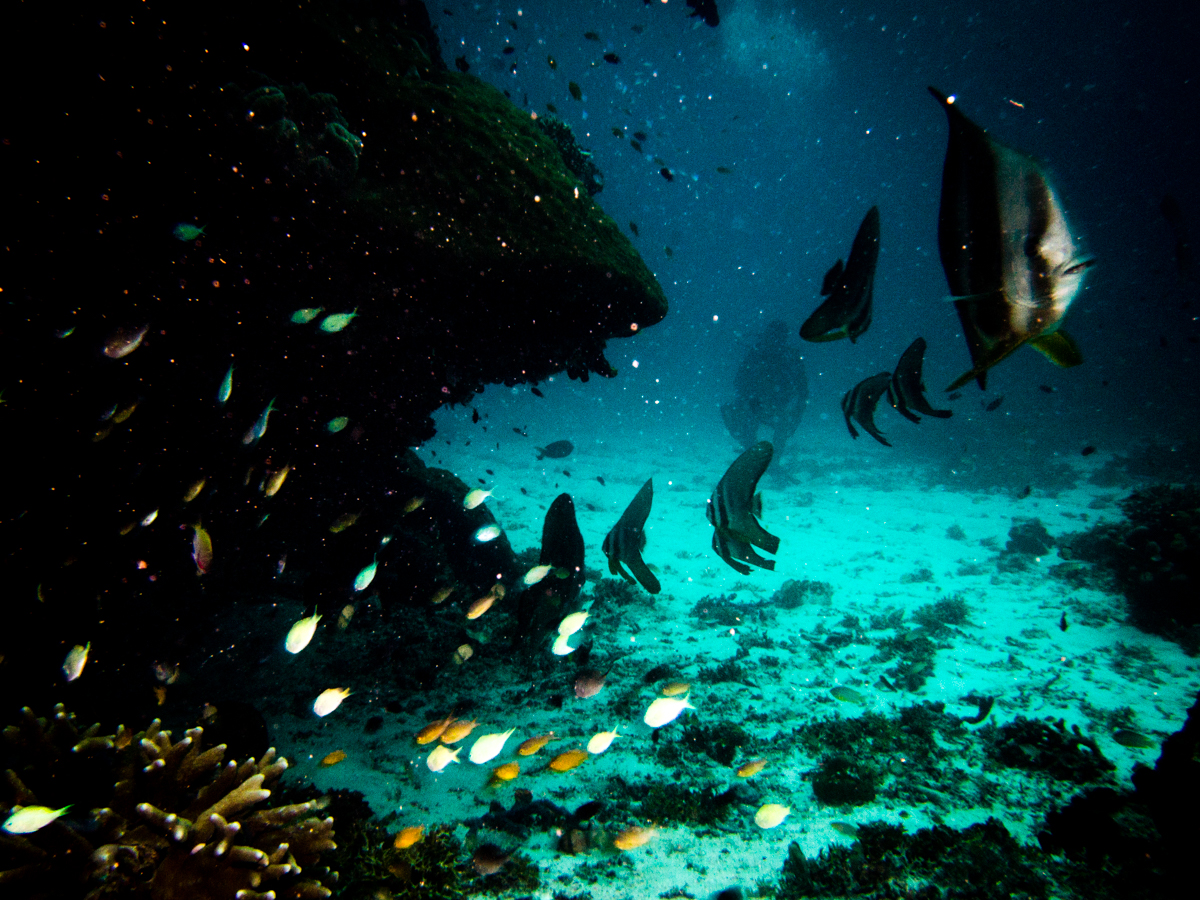
Bommie beach is a dive site in the middle of the ocean and is composed of large corals bommies surrounded by white sand. This is one of Coralia’s liveaboard “secret” dive. This site often has manta rays as they use the bommies as cleaning stations and when they are there, you will have them all to yourself as few people know about those cleaning stations. The depth of the cleaning stations ranges from 10 to 17 meters.
The corals around the bommies are gorgeous and colorful. Reef sharks patrol the area and a very friendly group of batfishes were on the shallowest bommie.
The plan of the day had to change as the sea was still very strong and the dive sites that had been planned were too exposed. The Coralia team decided to go and shelter in a Mangrove area.
We navigated for 2 hours to get to the Citrus Ridge dive site
This site is in a scenic mangrove bay near gam island. Given the storm up North, it was a great location to shelter as the bay is totally protected and the sea was very quiet there.
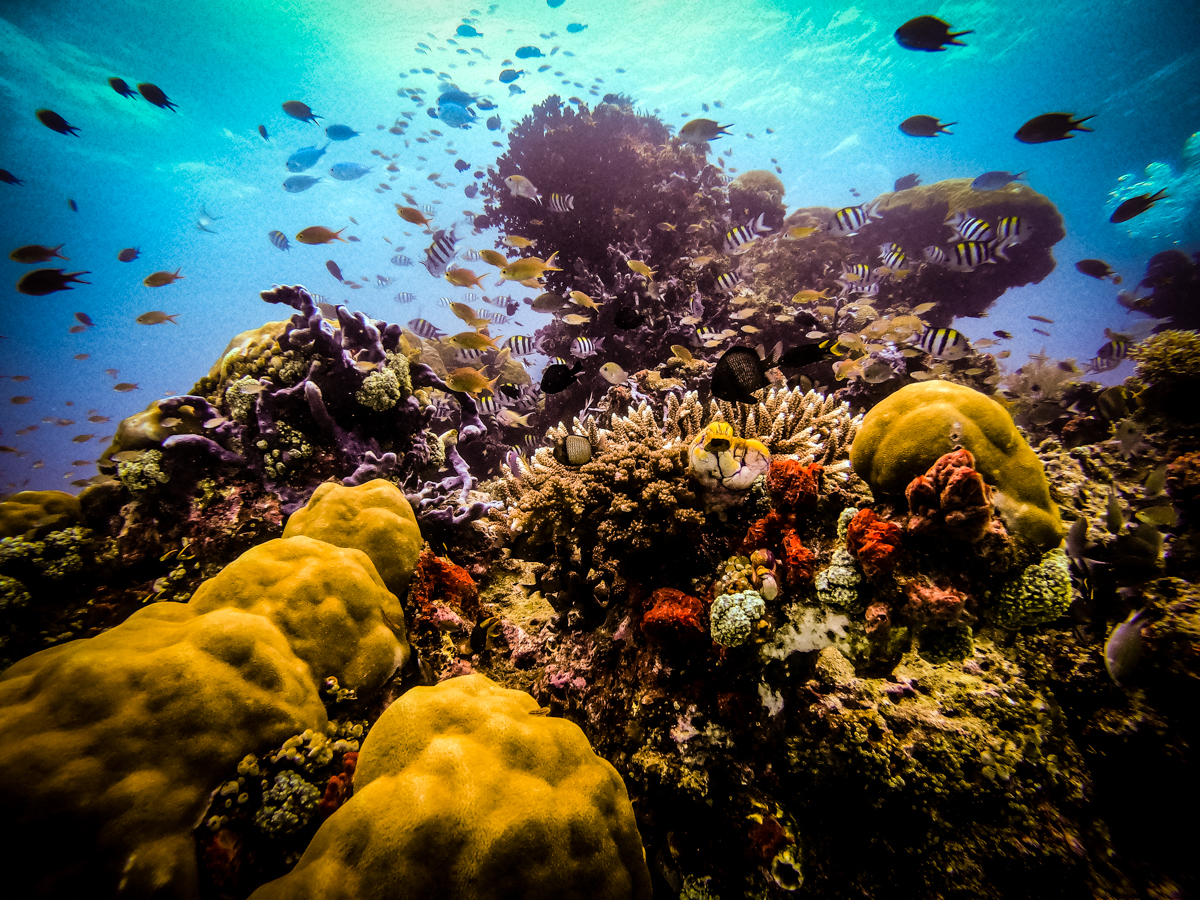
Citrus ridge is completely covered in orange soft corals that open up when there is current. There was so much plankton in the water that we had the Impression it was snowing!
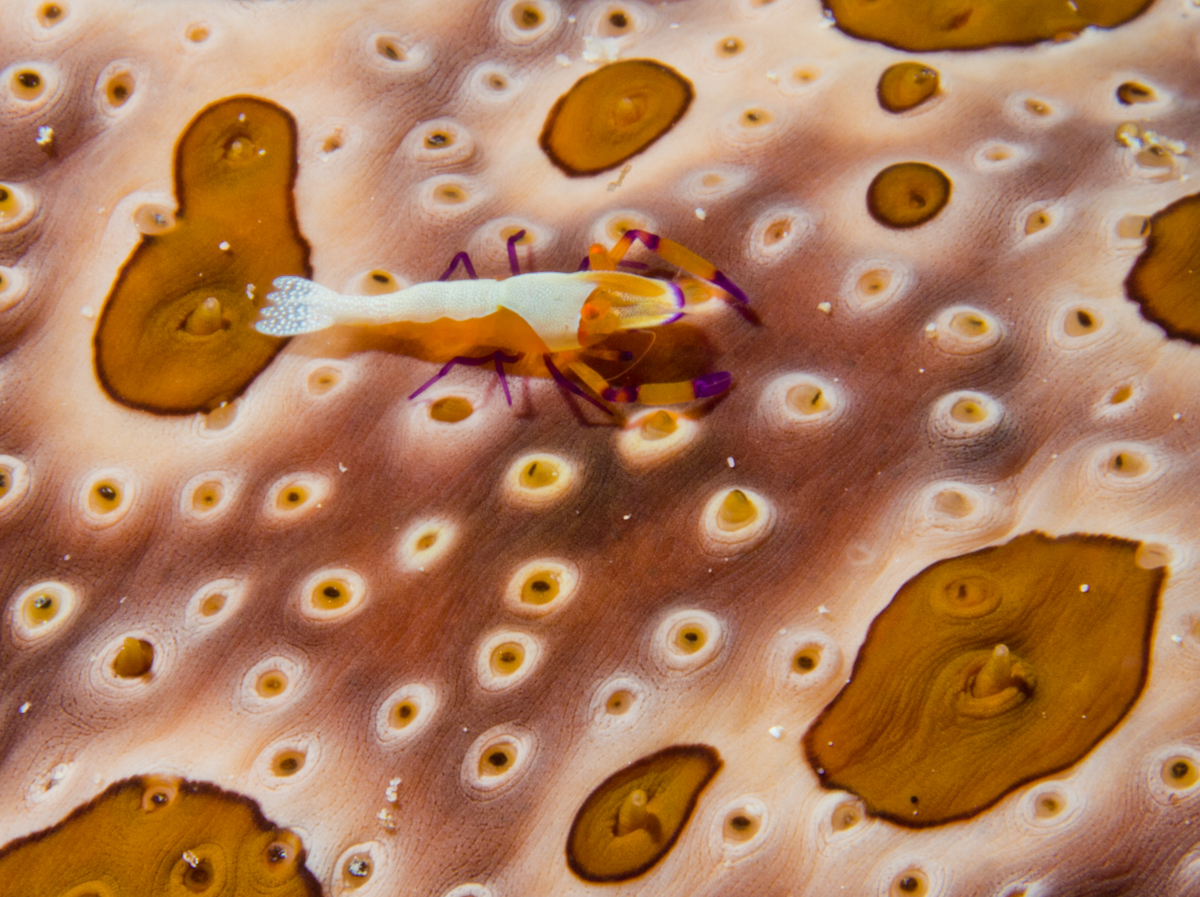
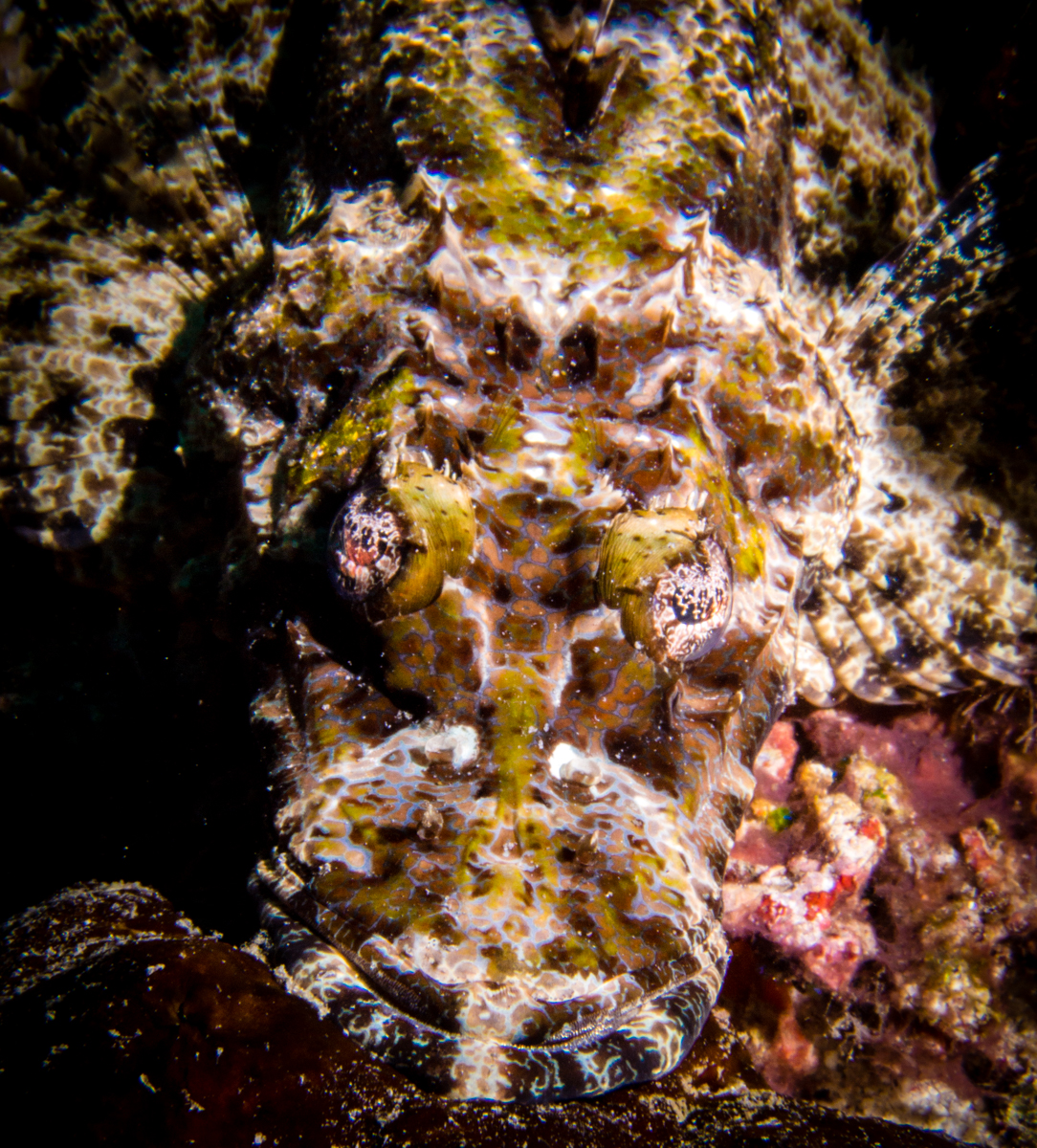
The ridge goes down to about 30 meters. There was a school of over 100 barracudas. We saw 2 wobbegongs sharks and a huge crocodile fish. The amount of fish was amazing with hundreds of fusiliers and a few black tips patrolling the area.
The corals are very picturesque with lots of corals mount creating fascinating shapes. A great dive!
Mangrove ridge, in the same bay, is our third dive site of the day.
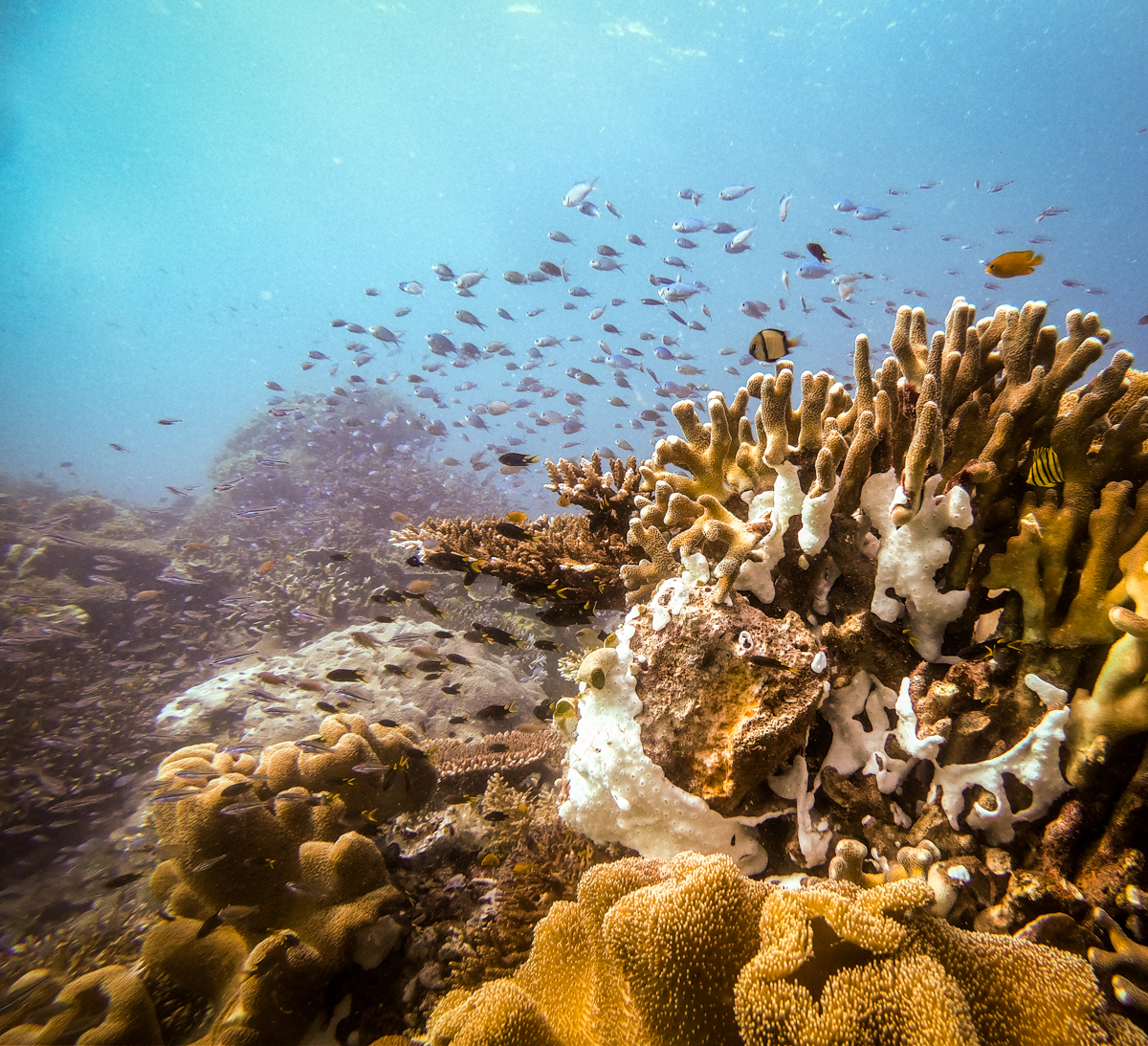
It is a ridge that comes out of the mangrove and starts at 5 meters and goes down to 30 meters.
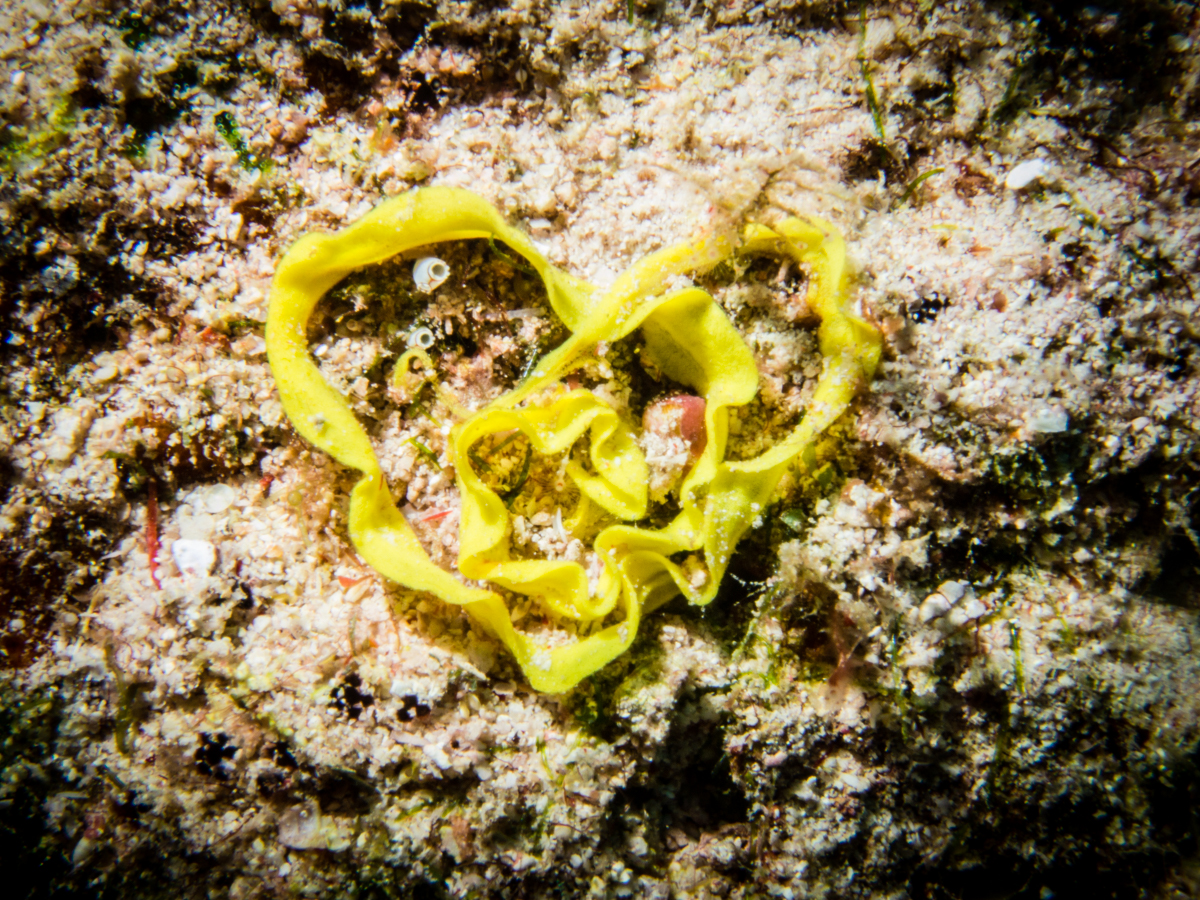
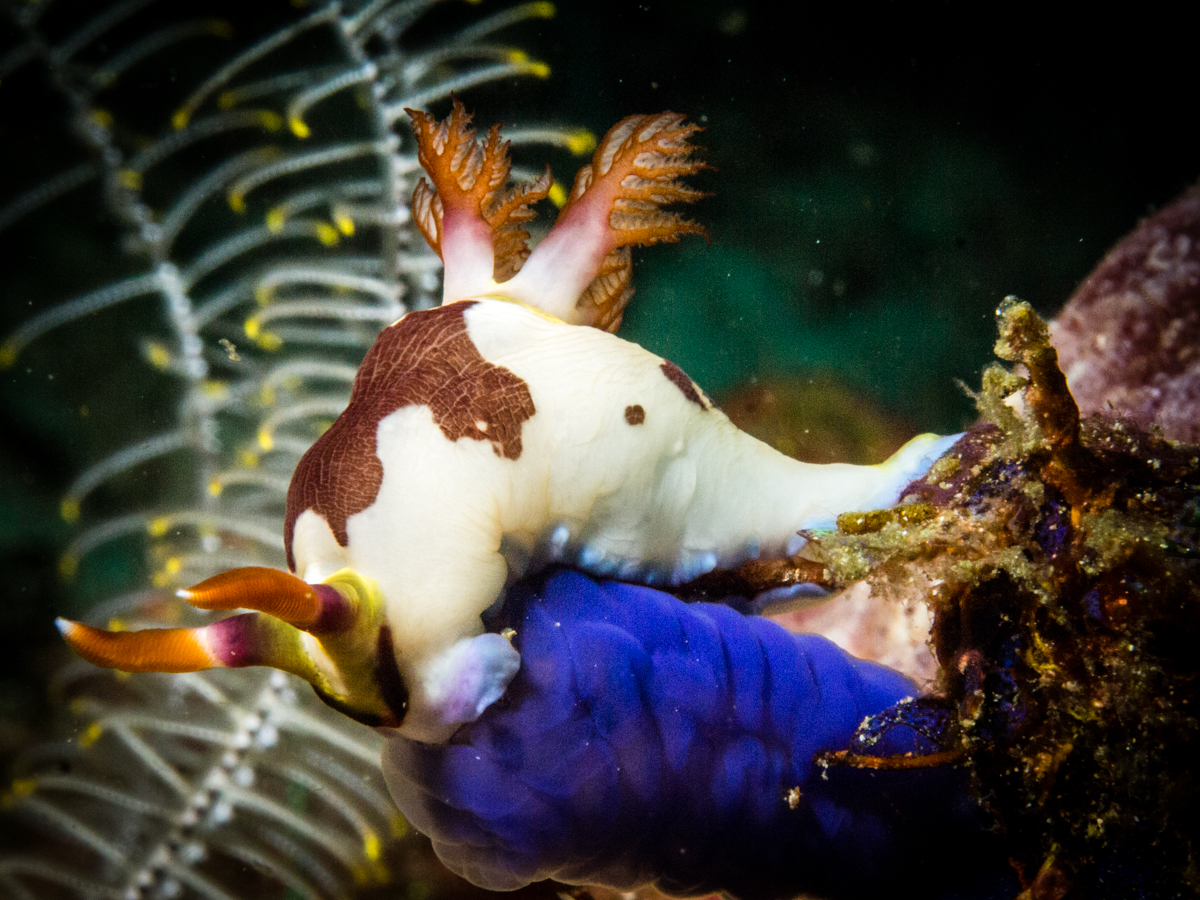
There are big bushes of black corals. It is a bit more inside the bay so there were less current and fewer fishes than on Citrus ridge but it was nevertheless a beautiful dive. We found a few nudibranchs and a decorator crab that looked like a tarantula!
Crocodiles have been sighted in that area so make sure you look up before surfacing and try to get on the boat quickly.
We then started to cruise towards Dampier Strait and enjoyed another one of those majestic Raja Ampat sunsets on the top deck.
Day 9: Schools of fishes galore in the Dampier Strait
The first dive of the day was Cape Kri. It is a wall at the tip of the Kri island.
It is a famous dive site as scientists counted almost 400 species of fishes in one 90 minutes dive. This is a world record.
The top of the reef is at 5 meters. The shallow end can have a lot of currents so it is better to go down quickly to 15 meters.
Currents can be ferocious on this dive site so bring your reef hook.
The site has many schools of fishes. Barracudas, jacks, blacktip, and grey reef sharks. The number of fishes was incredible. Schools of fishes were everywhere. Giant barracudas were not shy and came within centimeters of us.
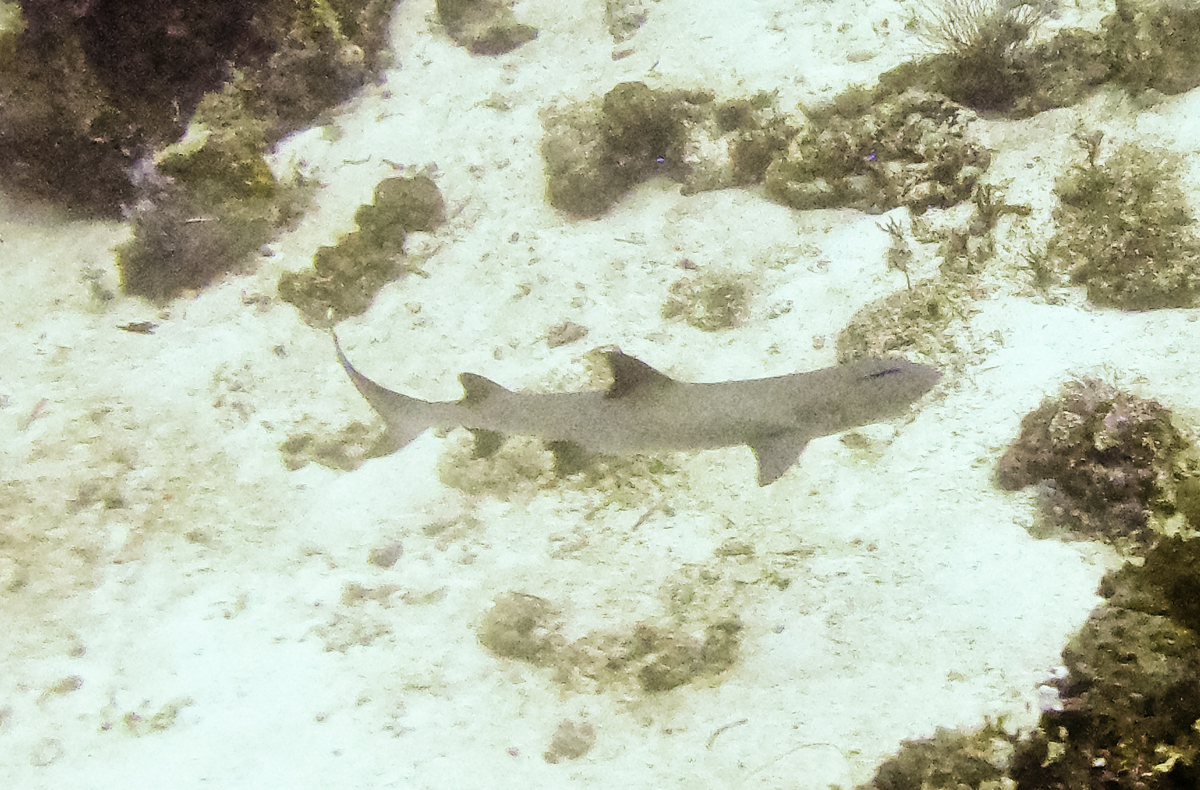
A school of Mobula rays passed by. A large eagle ray and a turtle came by. We saw a few sharks
there must have been 5000 fishes hanging around during our safety stop.
We dove it at the end of the slack so there was little current but tons of fishes.
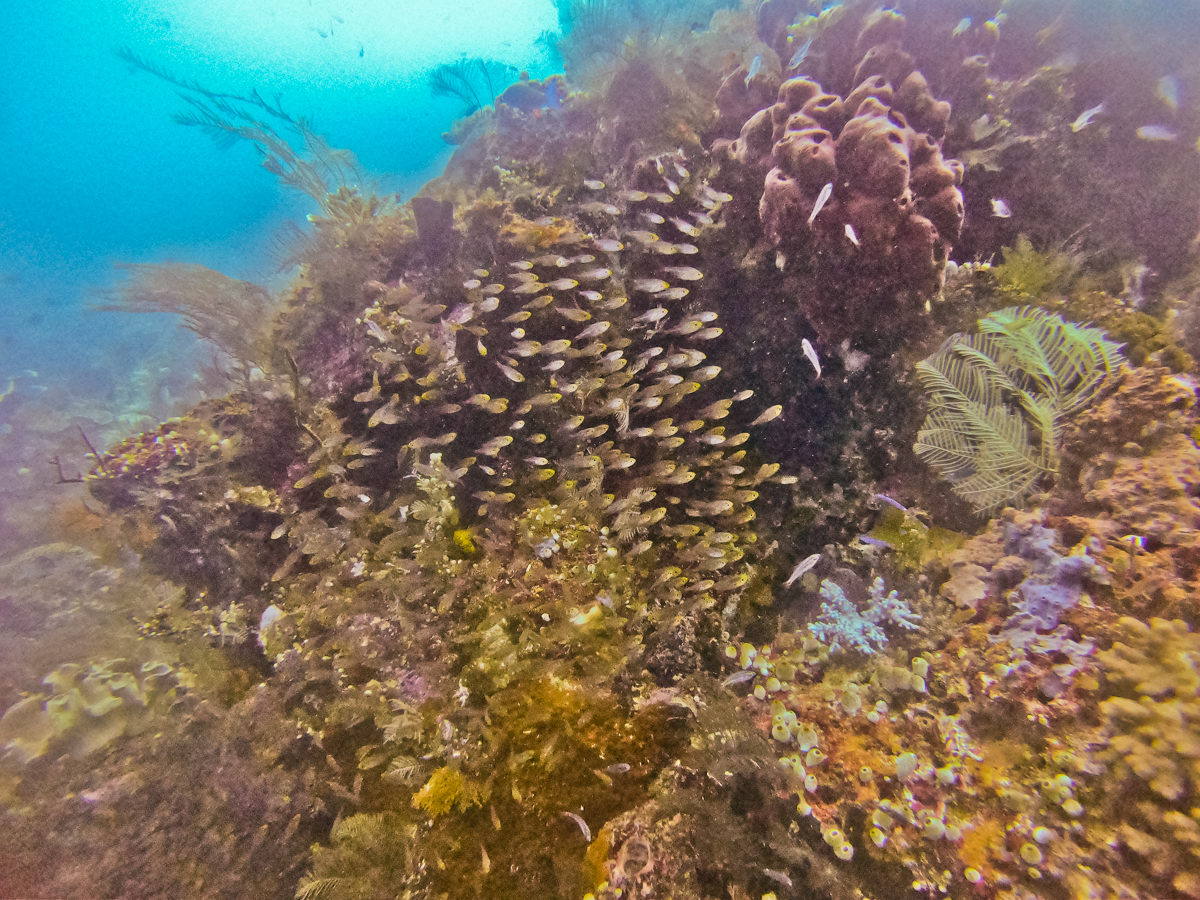
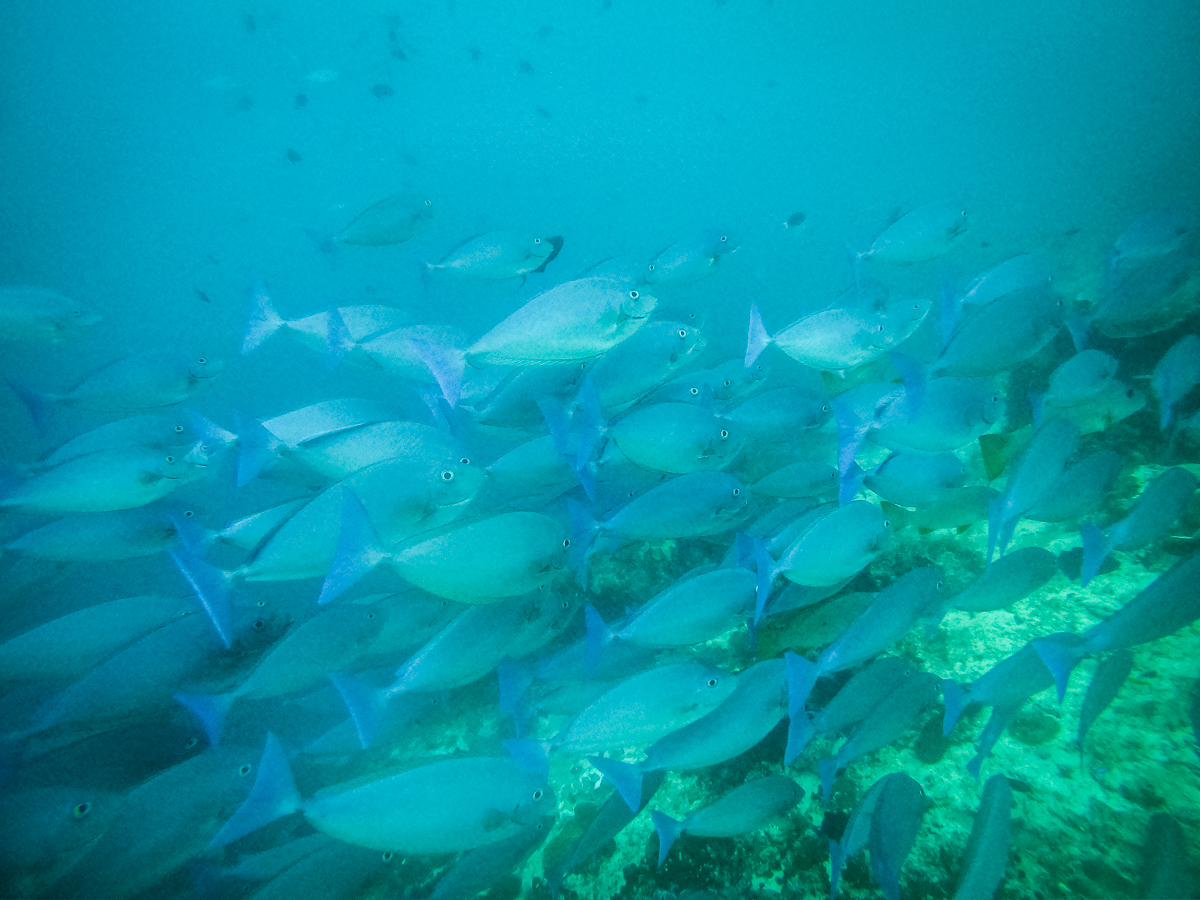
Sardine Reef dive site is a submerged reef that starts at around 5 meters. The top is mostly dead rocks.
it goes down to 20 meters where it becomes a sandy bottom.
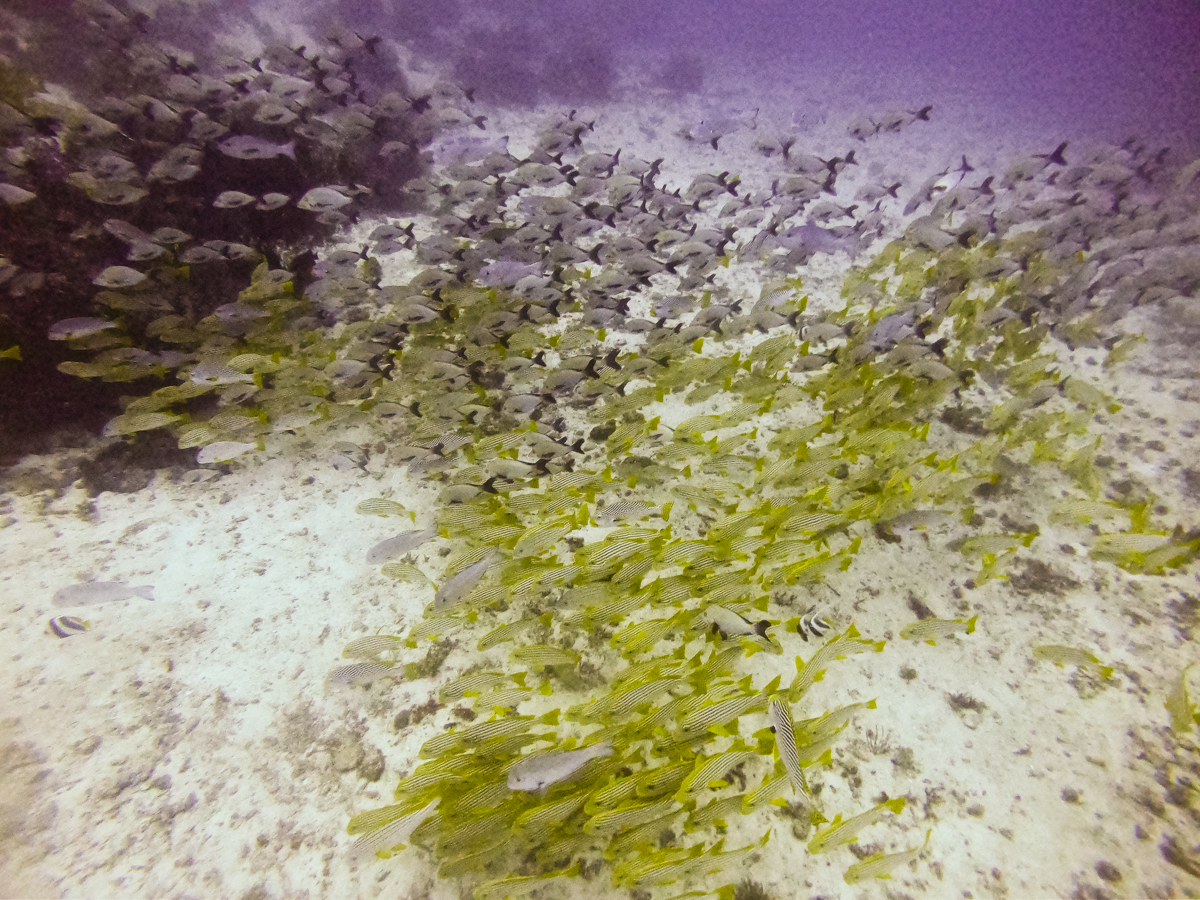
You would expect to see sardines but the site got its name because people thought fishes were packed like in a sardine can. It was indeed very fishy with a few sharks hunting in the shallow.
Sharks often hang out in the bottom rock away from the reef.
There are many fishes and oceanic mantas that often visit this site but we didn’t see them today.
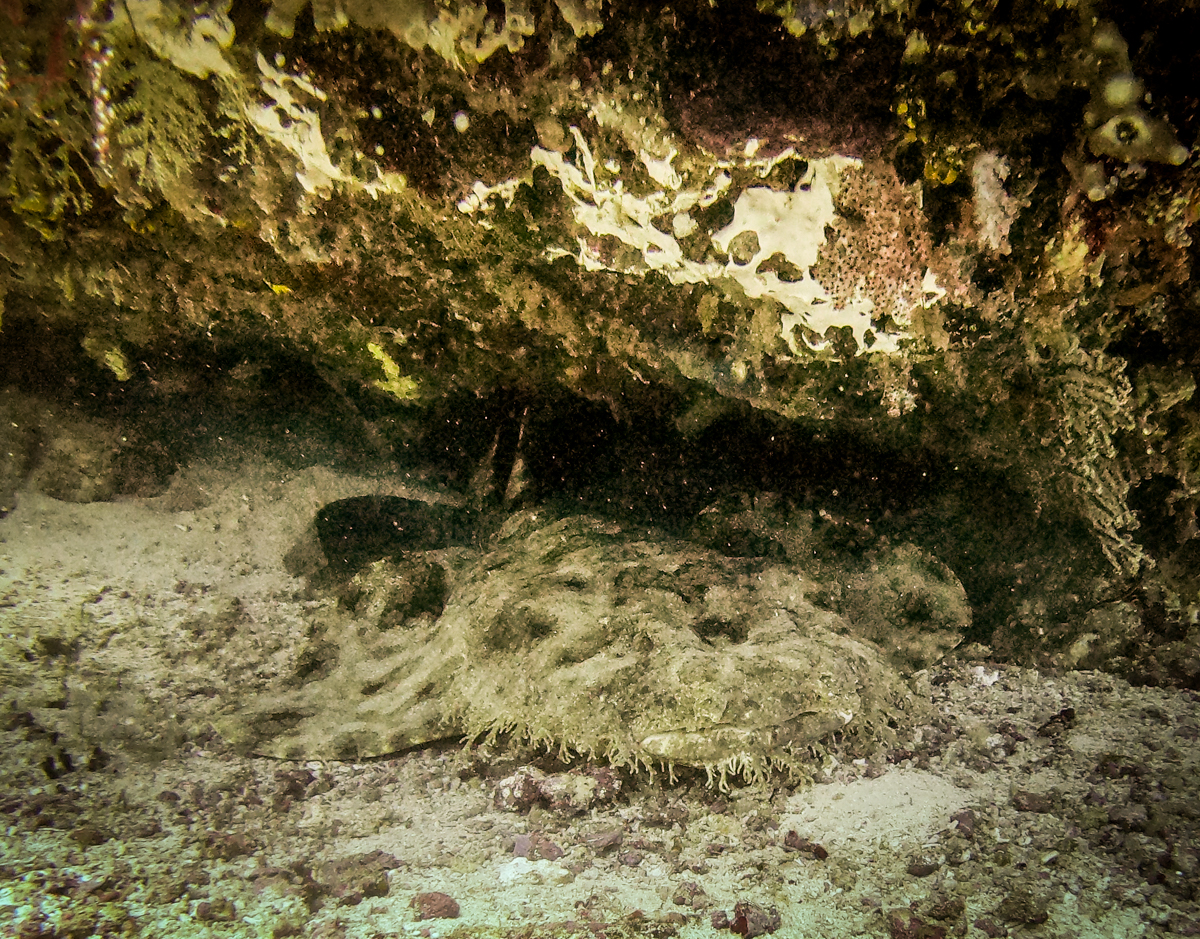
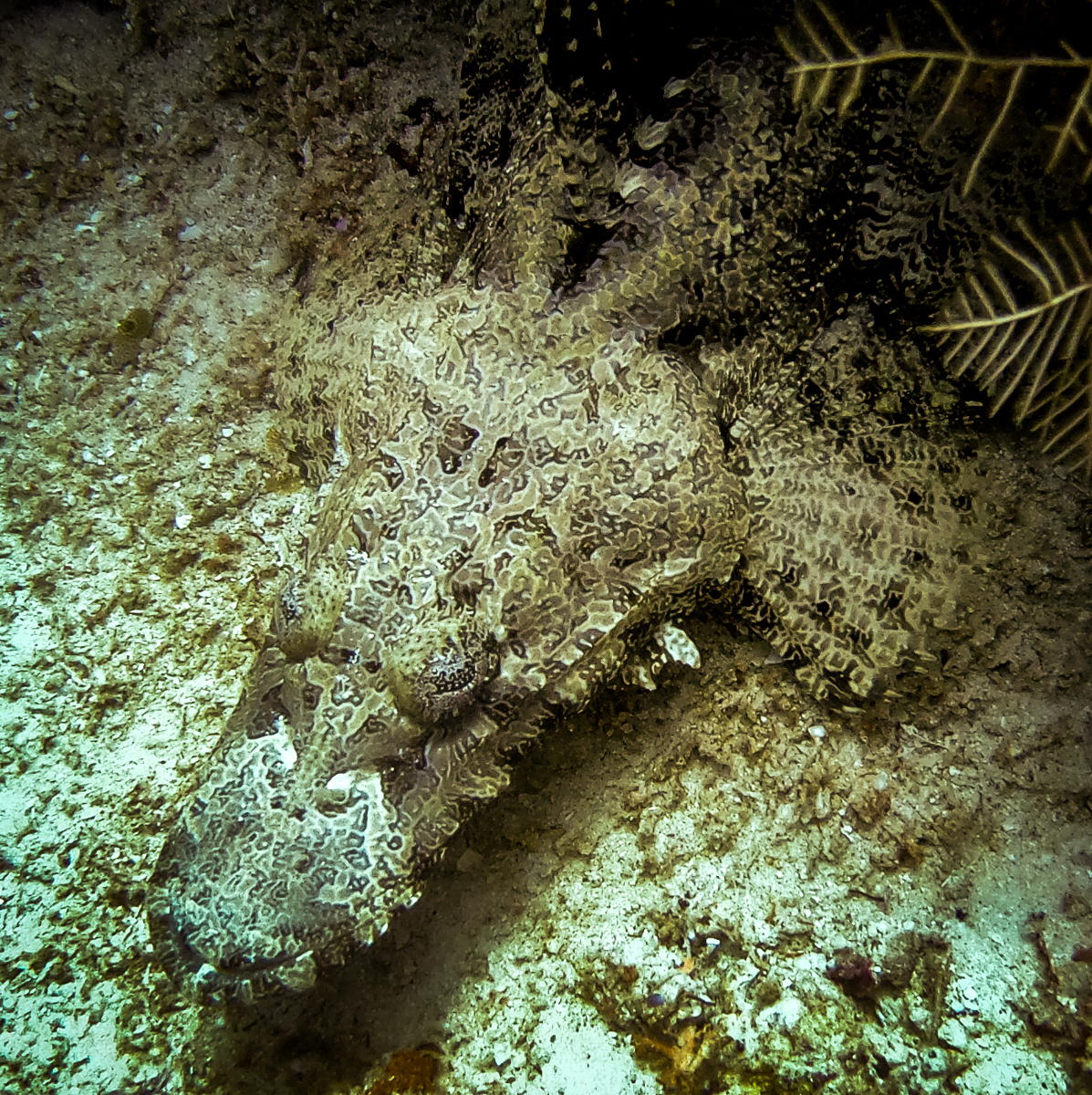
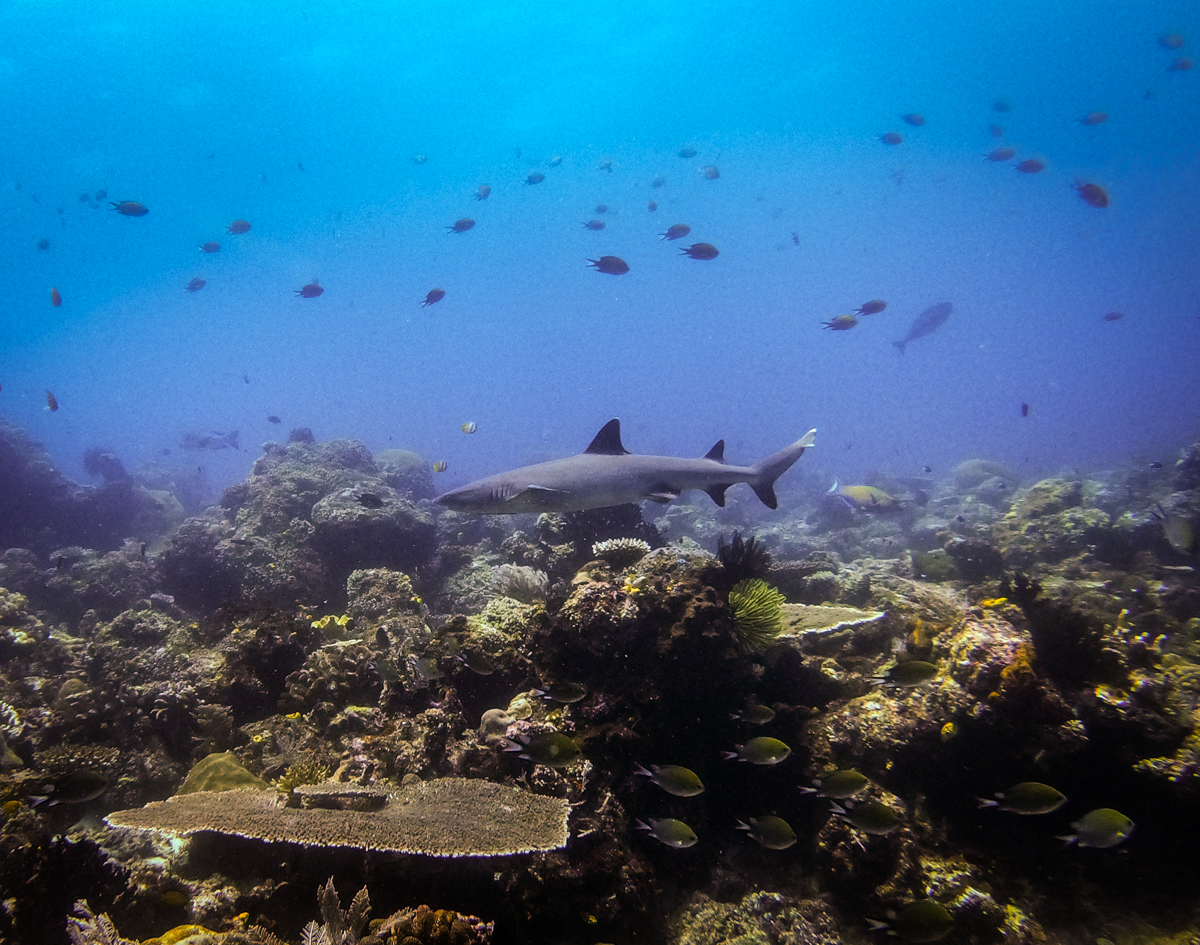
The third dive was at Friwin Bonda, a small island inside a bay surrounded by a reef.
We were supposed to dive Mioskon dive site but the waves were too big so we changed to the Friwin Bonda dive site.
There is a super cute beach at the beginning. The sloping sand goes down to 30 meters. There are pygmy seahorses on the sea fans so don’t forget to look. It then becomes a mini wall with lots of sea fans, sponges, and the most beautiful soft corals.
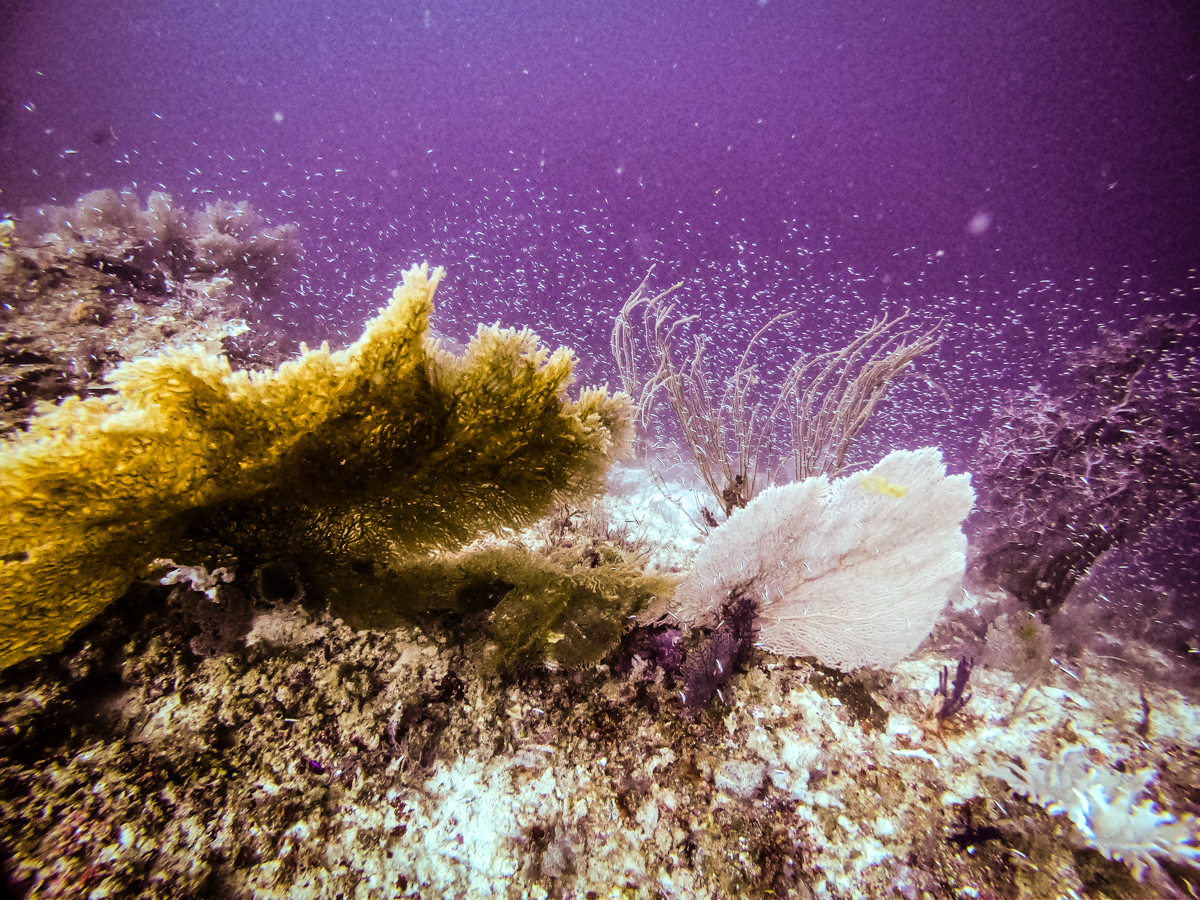
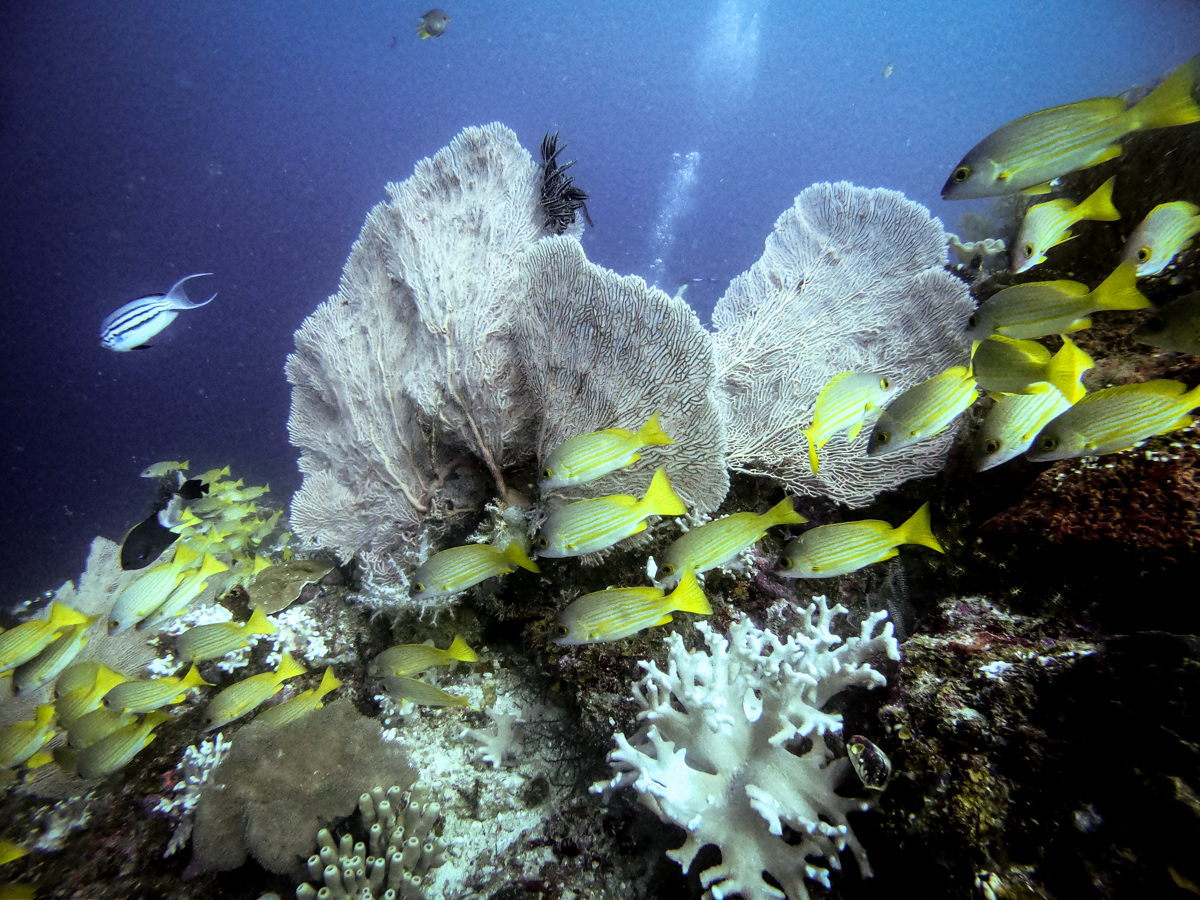
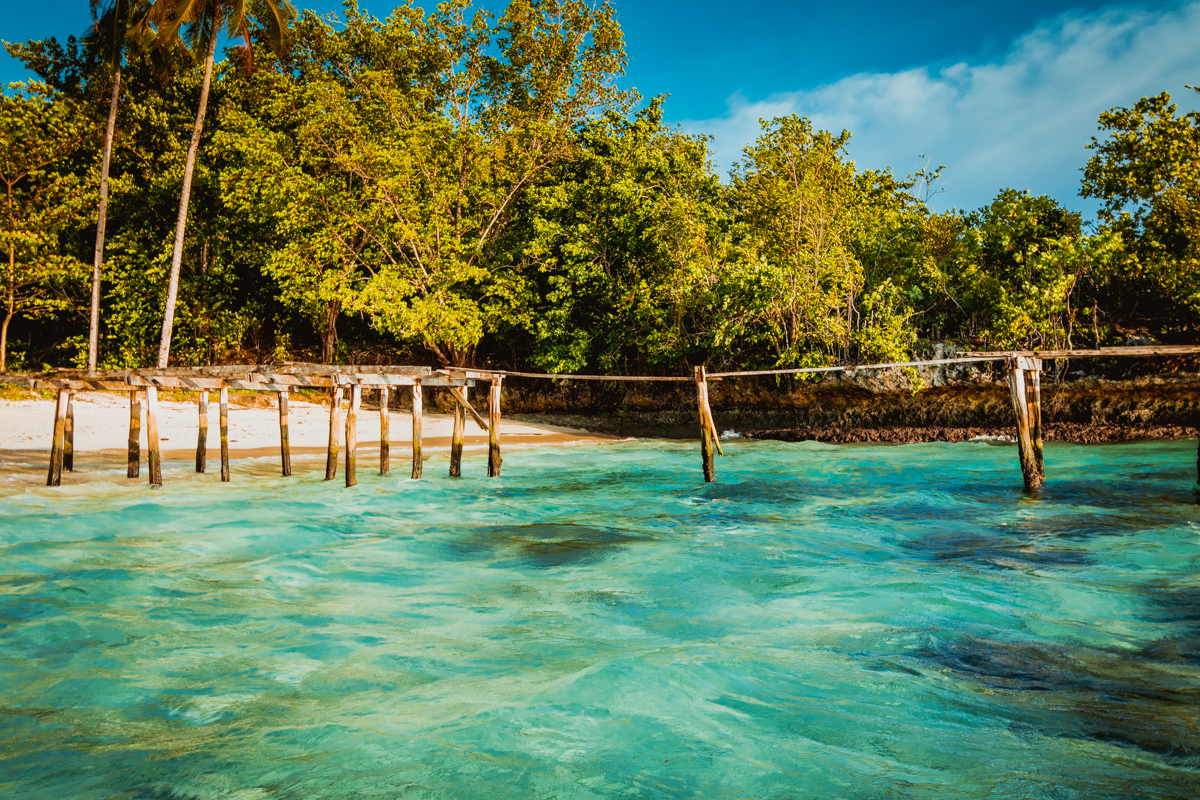
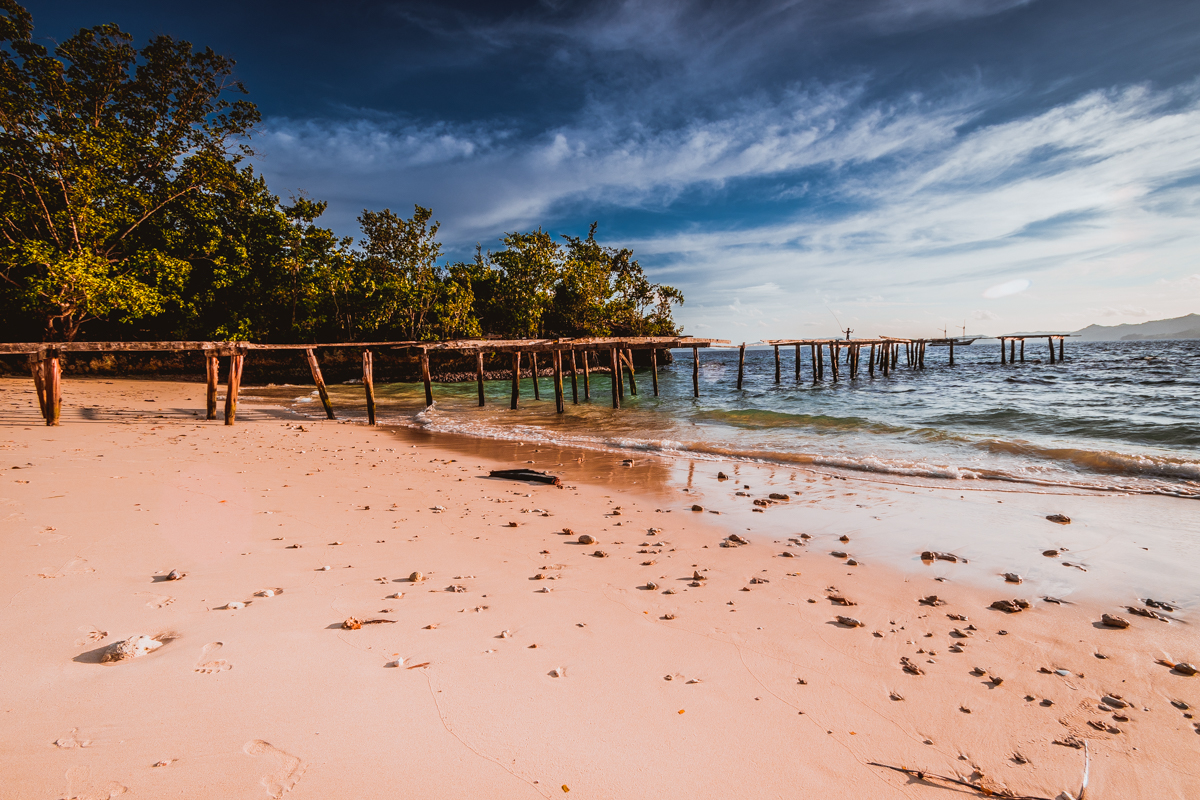
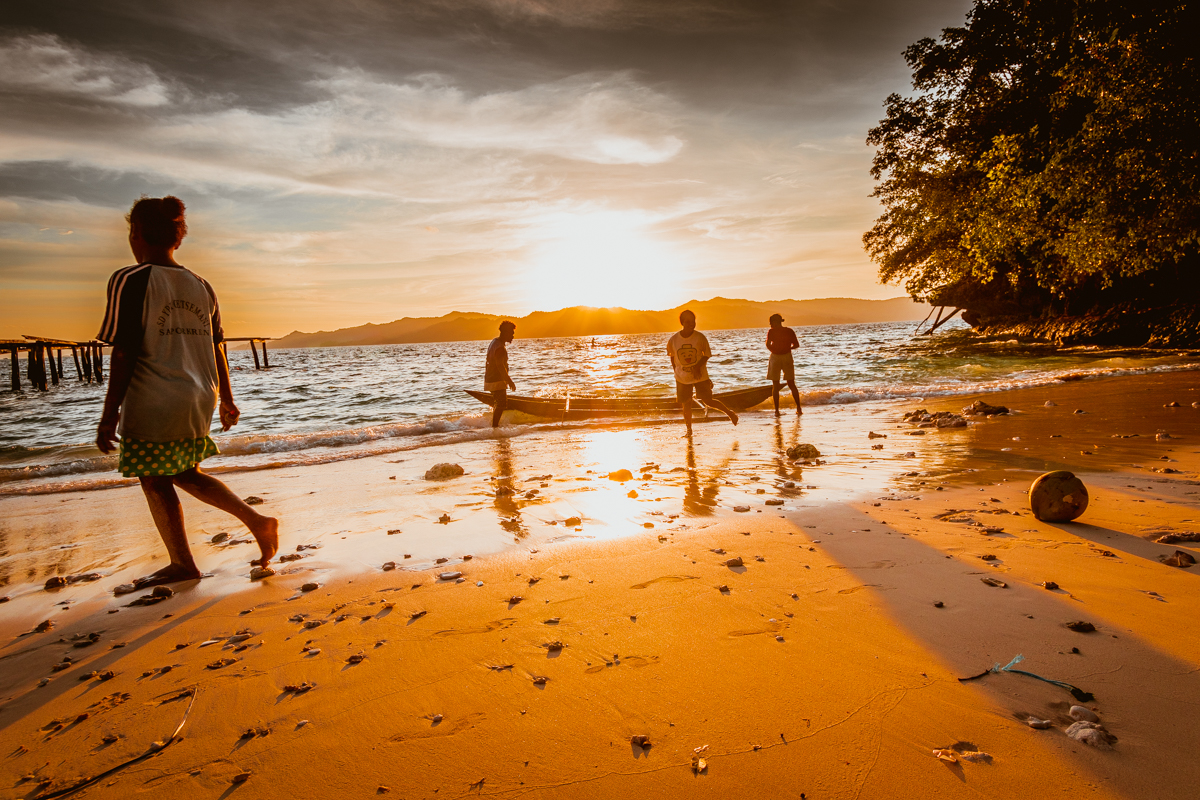
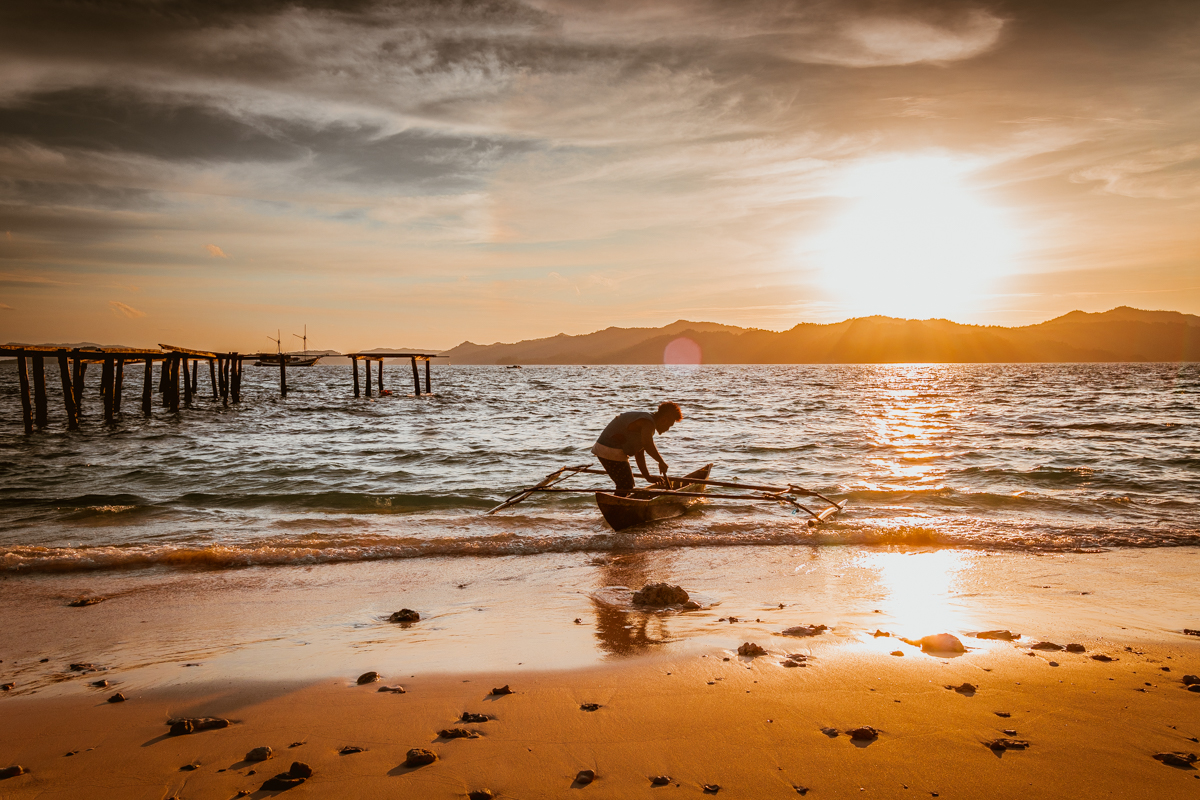
I then went to an unspoiled beach for sunset while the rest of the group did their night dive. I just sat on the beach, listening to the sound of the waves, the birds singing and the local fishing boat departing for night diving. So peaceful!
Day 10: Diving the Dampier Strait’s famous and secret submerged peninsulas
Blue Magic dive site is probably the most famous dive site in Raja Ampat. It is a submerged pinnacle by the island of Mioskon that is often visited by Oceanic mantas.
It starts at 7 meters. Along the edge is a sloping reef that goes down to 35 meters and is surrounded by sand.
The top of the pinnacle is a cleaning station for Oceanic Mantas. Unfortunately, they were not there and there were a lot of divers underwater. it was the first dive in 10 days that we saw other divers underwater.
Currents can be ferocious on this dive site so bring your reef hook.
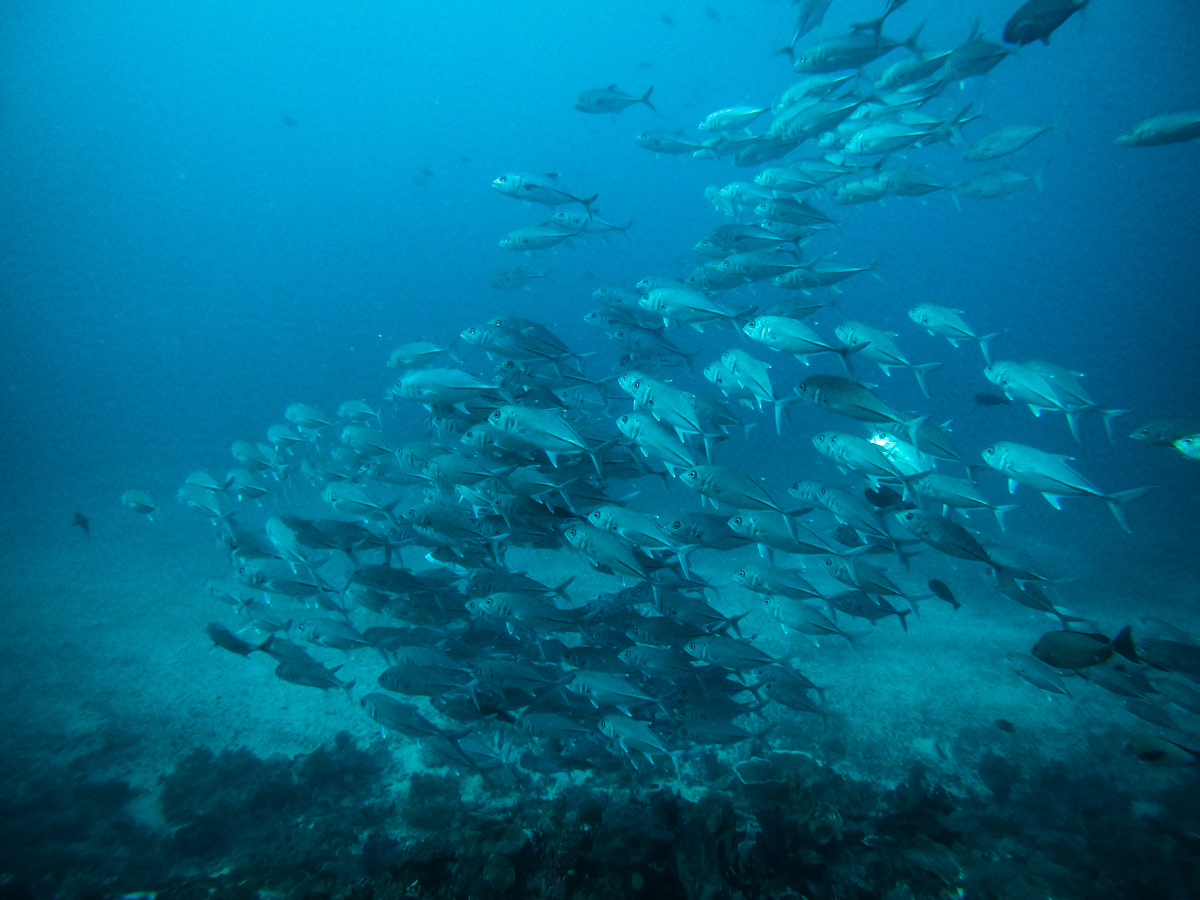
Grey reef sharks and black tips were patrolling the area. The schools of jacks were creating interesting patterns sometimes interrupted by barracudas.
We also found 2 wobbegong sharks in the shallow rocks.
Lao Lao dive site is a secret underwater Peninsula not far from Blue Magic.
The submerged plateau starts at 12 meters. It goes down in a slope to 30 meters where it becomes a sandy bottom. There are 2 other pinnacles nearby. The site was incredibly fishy with schools of fusiliers, jacks, macros, surgeonfishes, batfishes,…
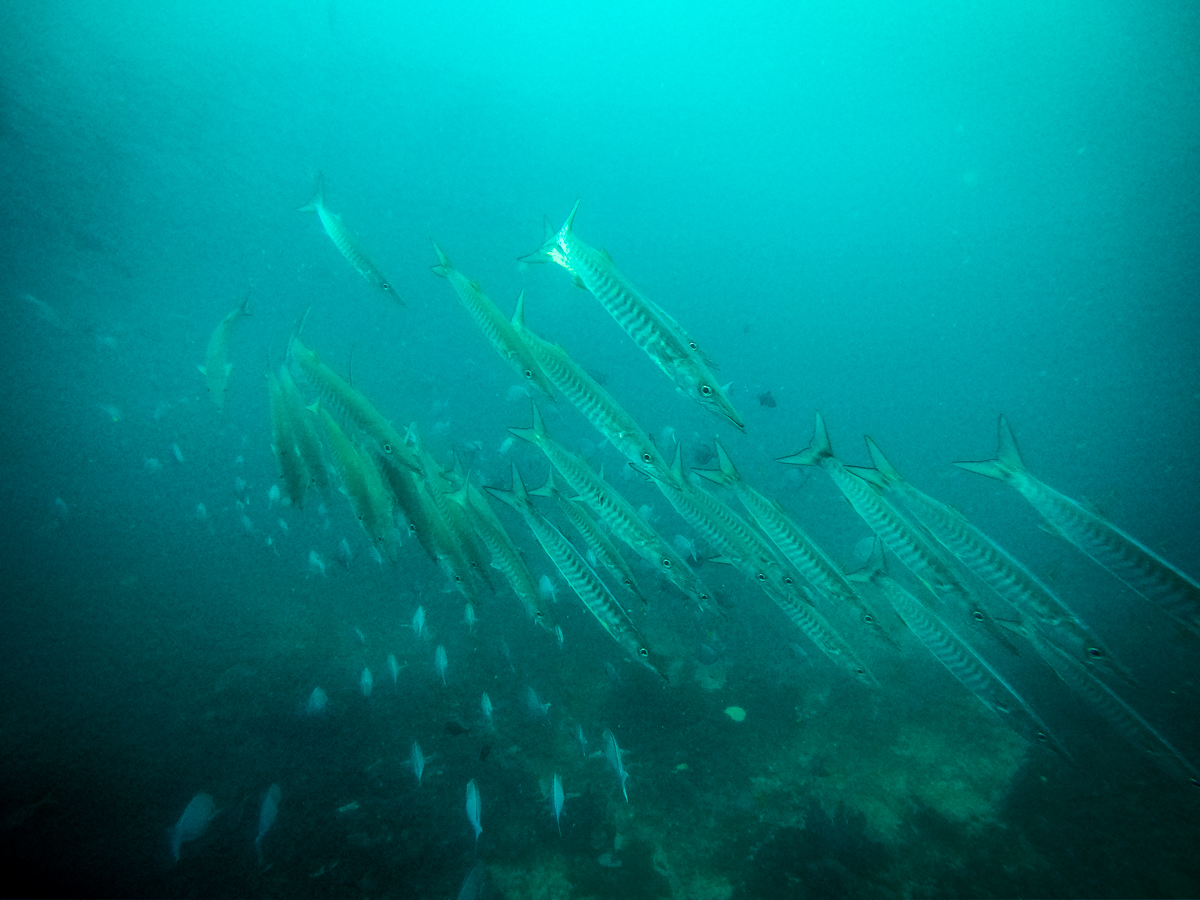
We found 2 wobbegongs and the biggest school in Barracudas we have seen in the last 2 weeks. There must have been over 200 of them and they started to do weird formations.
At some point, they came straight at us at full speed which was a bit scary…
As no one in the group had morning flights, we were able to do a third afternoon dive on the last day.
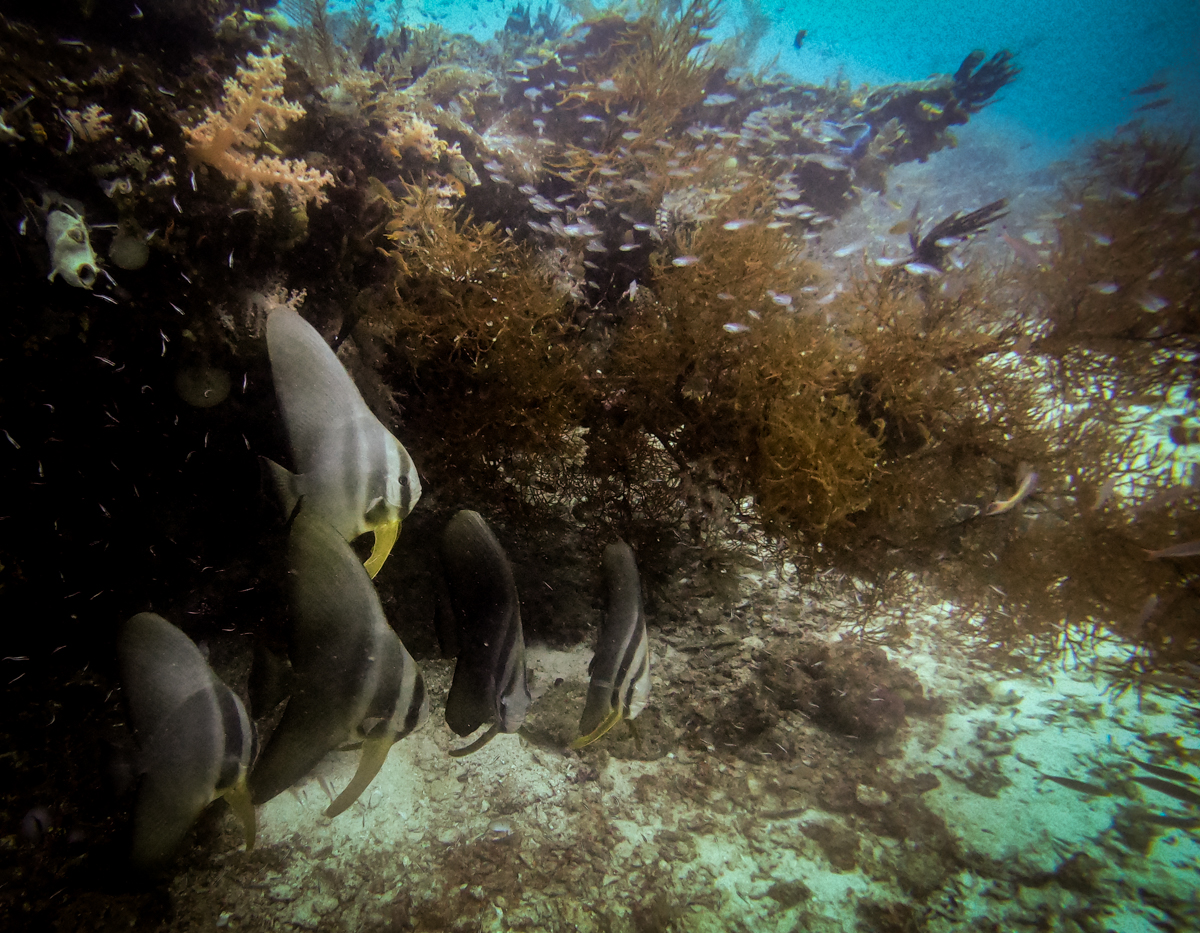
Otdima reef dive site is another submerged peninsula located near the Papua Explorer Resort.
Otdima is another peninsula in the channel that starts at 5 meters and goes down to 25 meters.
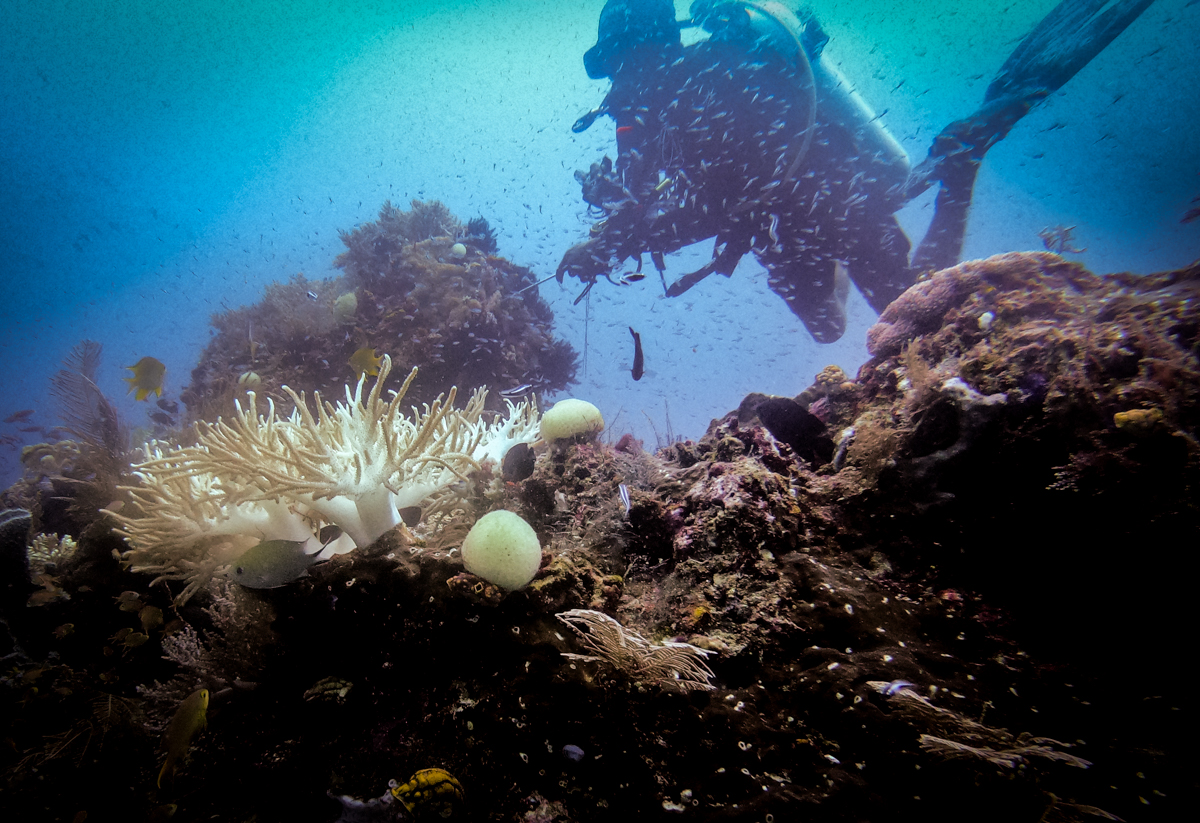
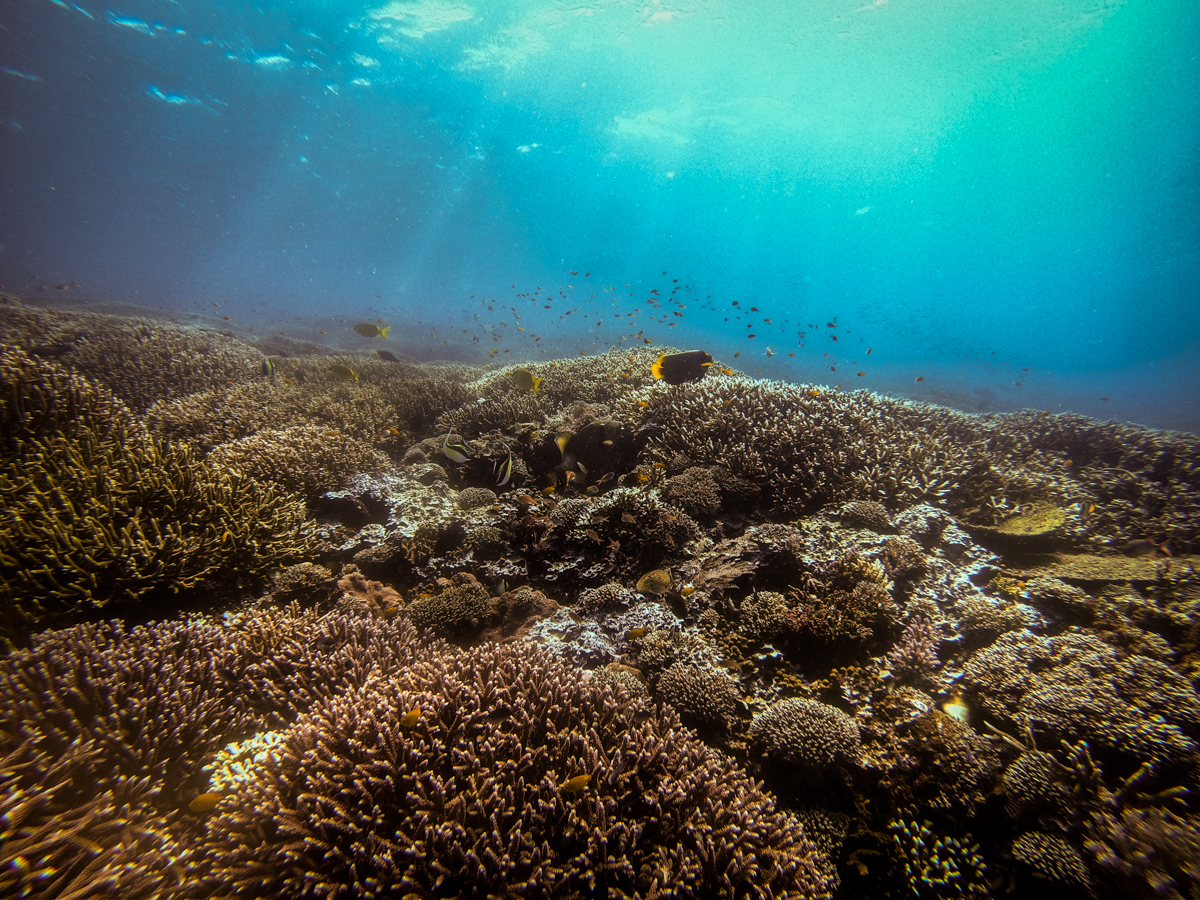
The top section has very healthy hard corals.
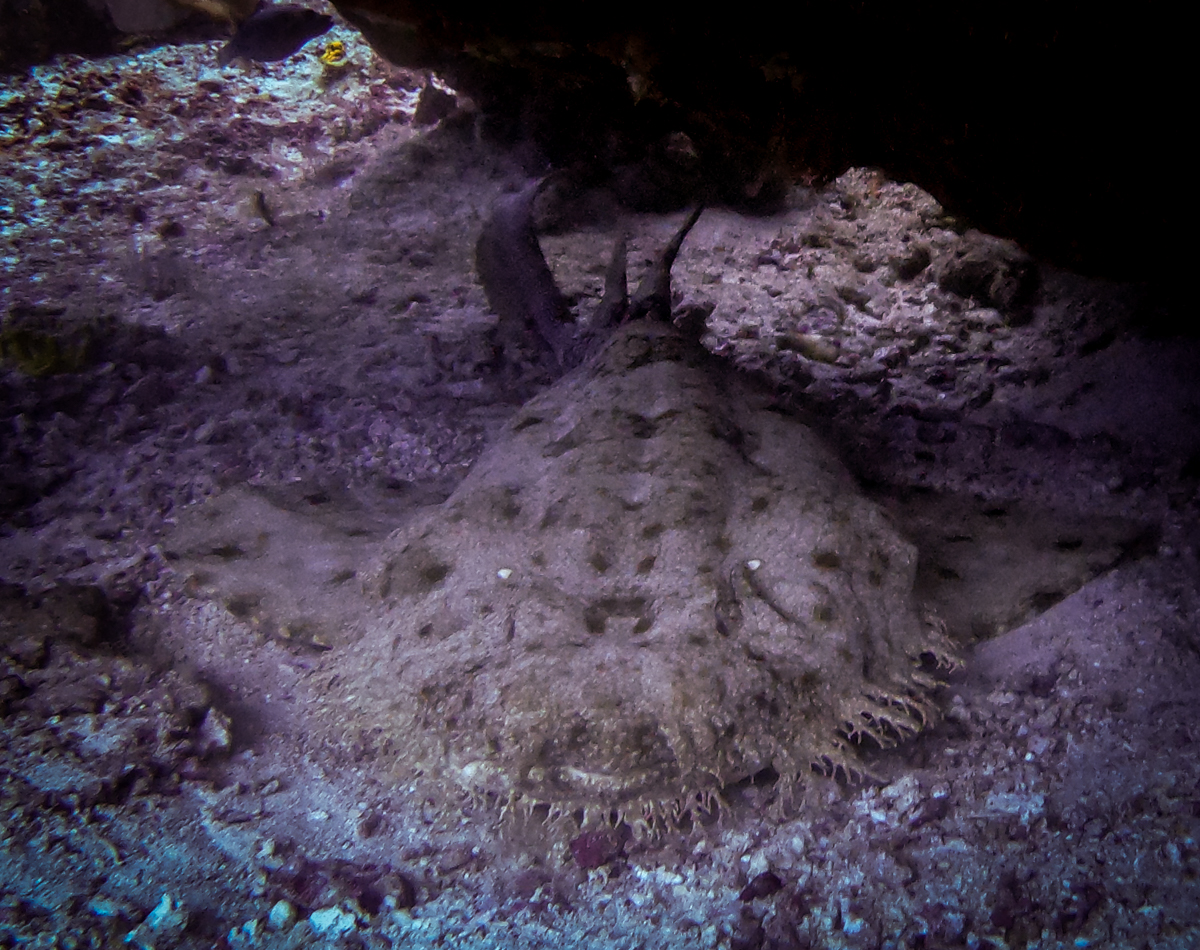
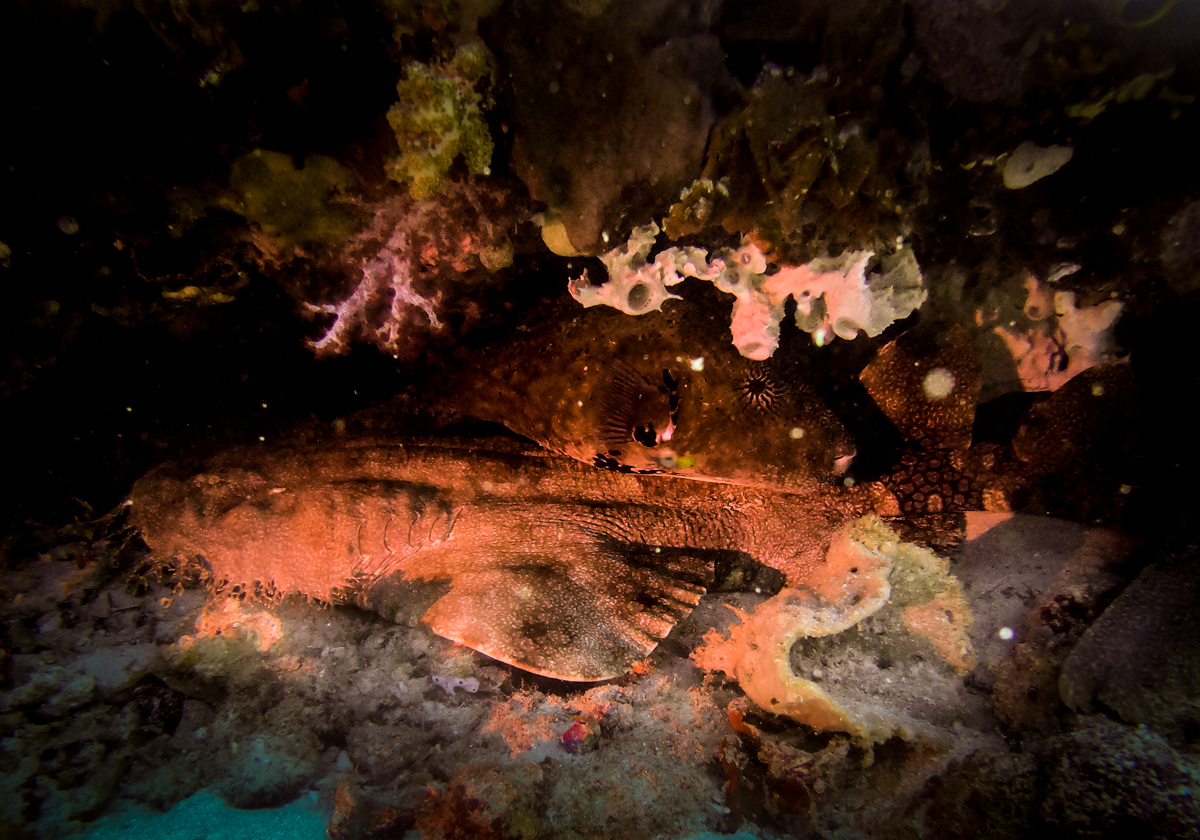
We saw lots of fusiliers fishes, turtles, and wobbegong. The most incredible moment was when we found a cave where a blowfish was sleeping on top of a wobbegong shark!
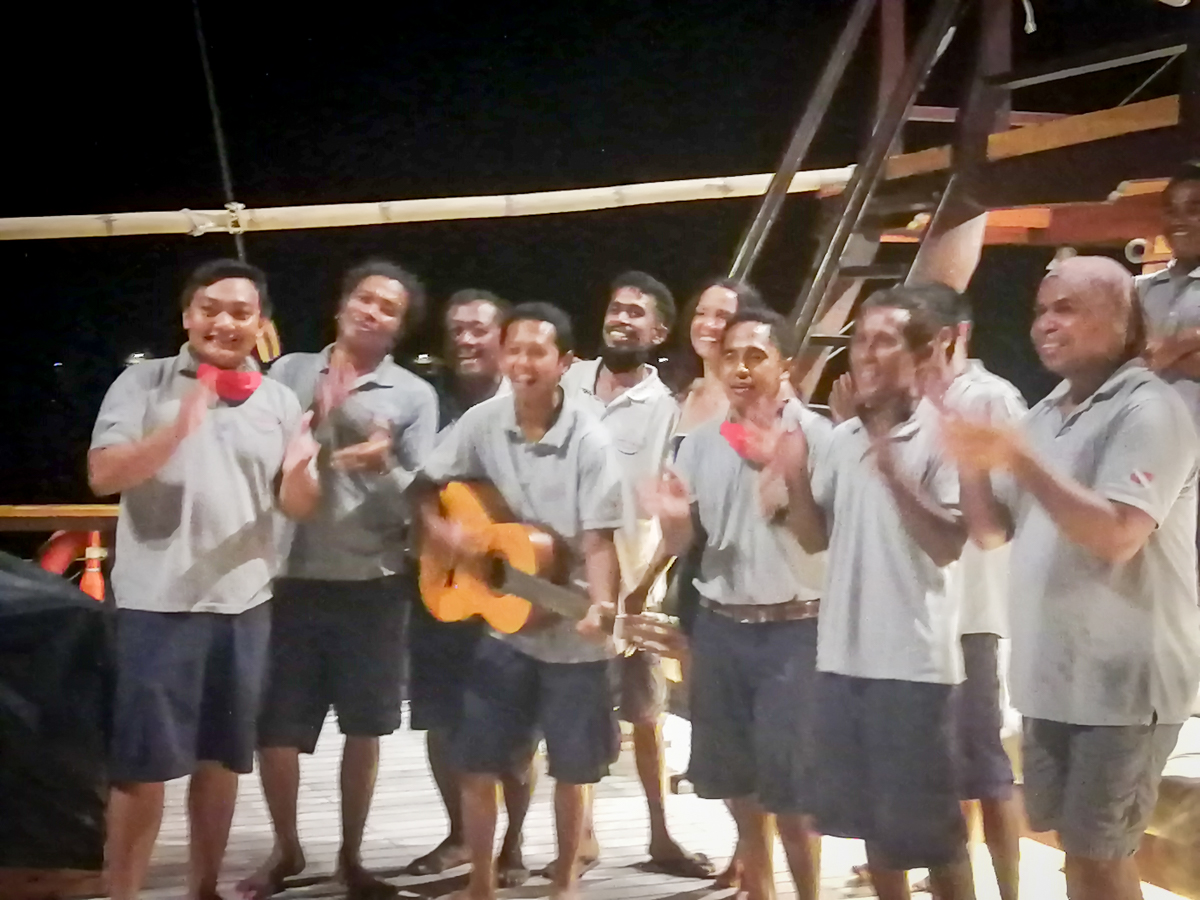
Today was our last diving day onboard the Coralia and it was a grand finale to what has been a superb trip. One of the guests was celebrating her birthday so the day ended at an extra festive feel. The crew sang a few songs after dinner and everyone started dancing on the top deck!
Is Coralia the best luxury liveaboard in Raja Ampat?
For me, Coralia is right at the top of the luxury liveaboards cruising Raja Ampat, and it is the boat I recommend most often when readers ask. The combination of only 16 guests on a 48-meter Phinisi, master cabins with private balconies, free Nitrox, and a crew that anticipates your needs like a five-star hotel is very hard to beat at its price point.
I have now dived Raja Ampat and the surrounding regions on several liveaboards, so I can compare from experience. The Neomi gave me a lovely Misool trip on a smaller, more intimate boat. The Ilike is the one I would pick for expedition-style crossings like Ambon to Sorong. The Emperor Harmoni is a bigger, newer ship carrying up to 24 guests, which changes the atmosphere onboard, and the Seahorse is my pick if you want to combine Raja Ampat with Triton Bay. If your priority is being pampered between world-class dives, Coralia is the one.
How much does the Coralia liveaboard cost?
A Raja Ampat cruise on the Coralia costs from around US$4,400 per person for a 7-night itinerary, based on 2026 published rates, with longer 10 to 12-night trips combining Misool and the Dampier Strait costing more. That works out to roughly US$550–600 per night — squarely in the luxury tier, but noticeably below the very top-priced boats in Raja Ampat, which can run US$6,000–8,000 and beyond for comparable itineraries.
The price includes airport transfers, all meals, soft drinks, and free Nitrox — inclusions that many boats charge extra for. On top of the cruise price, budget for the Raja Ampat marine park fee (the amount changes regularly, so confirm the current fee with Coralia when you book), alcoholic drinks, equipment rental if you need it, and crew tips. As I mentioned above, the price difference between the standard cabins and the master suites is relatively small, and the balcony alone makes the upgrade worth it.
One important thing to know: peak-season departures between November and March regularly sell out around a year in advance, and the four master cabins are always the first to go. If you have specific dates in mind, book early.
When is the best time to dive Raja Ampat?
The best time for a Raja Ampat liveaboard is October to April. This is the dry season, with calmer seas, less rain, and visibility of 20 to 30 meters — and it is also manta season, which peaks from November to April. Water temperature is a comfortable 27 to 30°C all year, so a 3mm wetsuit is plenty.
From roughly June to September, the southeast monsoon brings wind and swell, southern Misool becomes hard to reach, and most liveaboards — Coralia included — reposition to other regions of Indonesia such as Halmahera and Cenderawasih Bay. Even in season the weather can shift quickly: we caught the tail end of a Philippine typhoon on this trip, and it was exactly then that having cruise directors with years of local experience paid off, as you can read in the day-by-day diary above.
Who is the Coralia liveaboard for?
Coralia suits divers of every level who want serious diving with genuine comfort. Currents in Raja Ampat can be strong, so most operators recommend an Advanced Open Water certification or around 50 logged dives to enjoy every site — but Coralia offers courses onboard, including the Nitrox certification I mentioned earlier, and the guides are outstanding at adapting to each group. On our cruise we had two divemasters for just four divers.
It is also a genuinely good boat for snorkelers and non-divers. Between the kayaks and paddleboards, the lagoon excursions, the viewpoint hikes, and the deserted beaches, I had some of my most memorable moments of the trip above the water. And underwater photographers will appreciate the camera care and facilities — if you shoot underwater, my Triton Bay diving article shows what the wider region has to offer beyond Raja Ampat itself.
In conclusion of my review of the Coralia liveaboard
The Coralia liveaboard is a superb new ship that hit all the boxes. Great cabins, delicious food, friendly and attentive crew, and very experienced cruise directors. It is for sure one of the best luxury boats cruising the Indonesian waters. If you want the opposite end of the scale — a small, simple exploration boat rather than a polished luxury phinisi — my Jakaré liveaboard review covers a five-cabin boat running Misool into Halmahera.
Raja Ampat remains one of the best diving destinations in the world. You can trust the Coralia team to figure out the best dive sites and itinerary given the weather conditions and offer you the best diving conditions.
I highly recommend the Coralia Raja Ampat liveaboard and look forward to cruise and dive with them again.
2026 update: since my cruise, Coralia has announced a sister ship, Coralia Dua — a 52-meter Phinisi launching in 2026 with eight premium cabins, an even larger camera room, and an onboard masseuse. And after my experience with Jerry, Debbie, and the team, I was not at all surprised to see the Coralia crew voted number one in the Pacific in Scuba Diving Magazine’s 2026 Reader’s Choice Awards.
Make sure you book well ahead — peak-season departures between November and March often sell out around a year in advance.
You can find the availability and rates directly on the Coralia website.
FAQ
How much does the Coralia liveaboard cost?
Expect from around US$4,400 per person for a 7-night Raja Ampat itinerary at 2026 rates, and more for the 10 to 12-night trips that combine Misool and the Dampier Strait. Transfers, meals, and Nitrox are included; the marine park fee, alcohol, and crew tips are extra.
When is the best time to go on a Raja Ampat liveaboard?
October to April is the best window, with calm seas, 20 to 30-meter visibility, and manta season peaking from November to April. From June to September the monsoon makes southern Raja Ampat rough, and most liveaboards, including Coralia, reposition to other parts of Indonesia.
How do you get to the Coralia liveaboard?
Fly to Sorong in West Papua, usually connecting through Jakarta, Makassar, or Manado. Coralia includes airport transfers both ways, and a speedboat brings you to the boat near Waisai. Because Indonesian domestic flights are often delayed, I recommend arriving in Sorong a day early.
Do I need to be an advanced diver for Raja Ampat?
Currents can be strong, so an Advanced Open Water certification or roughly 50 logged dives is recommended to enjoy every site. That said, Coralia offers courses onboard, groups divers by experience, and the guides are excellent — our group of four had two divemasters.
Is the Coralia liveaboard suitable for snorkelers and non-divers?
Yes. Beyond world-class snorkeling, Coralia carries kayaks and paddleboards and organizes lagoon excursions, viewpoint hikes, and beach visits. Some of my favorite moments of the trip — kayaking the Love Lagoon completely alone — happened above the water rather than below it.
Is there internet on the Coralia liveaboard?
Yes, Coralia provides free 4G-based internet, which works whenever there is phone signal. Expect good connection in the Dampier Strait, weak signal around Penemu, and gaps of two to three days in the Misool area. A local Telkomsel SIM card is a worthwhile backup.
How long are Coralia’s Raja Ampat itineraries?
Coralia runs Raja Ampat itineraries of roughly 7 to 12 nights. Seven nights covers one region well; I would choose 10 nights or more if you want to properly combine Misool in the south with the Dampier Strait, as we did on this cruise.
For more info about diving in Raja Ampat, read my other articles about Papua Explorer Resort, Misool Resort, Neomi liveaboard trip to Misool, Ilike liveaboard trip from Ambon to Sorong ( with Banda islands and hammerheads sharks) and Ilike liveaboard trip from Sorong to Kaimana with Triton Bay and Whale Sharks) Since this trip I have also reviewed two more Raja Ampat liveaboards — the Emperor Harmoni and the Seahorse (Sorong to Kaimana via Triton Bay) — and tested smartphone underwater photography in Raja Ampat if you are deciding what camera to bring.
Disclosure: this article contains affiliate links. If you book through them, I earn a small commission at no extra cost to you. Read my full disclosure policy.