If you are planning a first safari in Kenya you will keep running into the same fork in the road. Almost every itinerary offers you the Masai Mara, and almost every itinerary then offers to add somewhere in Laikipia or northern Kenya — and it is rarely explained what the difference actually is.
The short version is that they are not competing versions of the same holiday. The Masai Mara gives you density — more animals in front of you, more often, and more people watching them with you. Laikipia gives you space, rare species, and a set of things you are simply not allowed to do in a national reserve.
I have been on safari in both. This is the difference as I found it, and how I would choose between them.
The short answer
| Choose the Masai Mara if | Choose Laikipia if |
|---|---|
| It is your first safari | It is not your first safari |
| You want big cats, reliably | You want rhino, and space |
| You want to see the migration | You want to walk, ride or go out after dark |
| You have a short trip | You want very few other cars |
| You want the classic image | You want to meet the people who live alongside the wildlife |
Most people who can afford the time do both, and there is a good reason for that which I come back to at the end.
What the Masai Mara actually is
The thing that confuses most first-time visitors is that “the Masai Mara” is really two different places with two different sets of rules.
The Masai Mara National Reserve is the government-run core. It is where the classic images come from and where the Mara River crossings happen. It is also open to anyone who pays the park fee, so at a big cat sighting or a river crossing in high season you will not be alone.
Around the Reserve sit the private conservancies, leased from Maasai landowners. Access is limited to guests of the few camps on each conservancy, the number of vehicles at a sighting is capped, and they permit things the Reserve does not: night drives, guided walks, and carefully managed off-road driving.
That distinction — Reserve versus conservancy — matters more than which camp you pick. It is the single most useful thing to understand before you book.
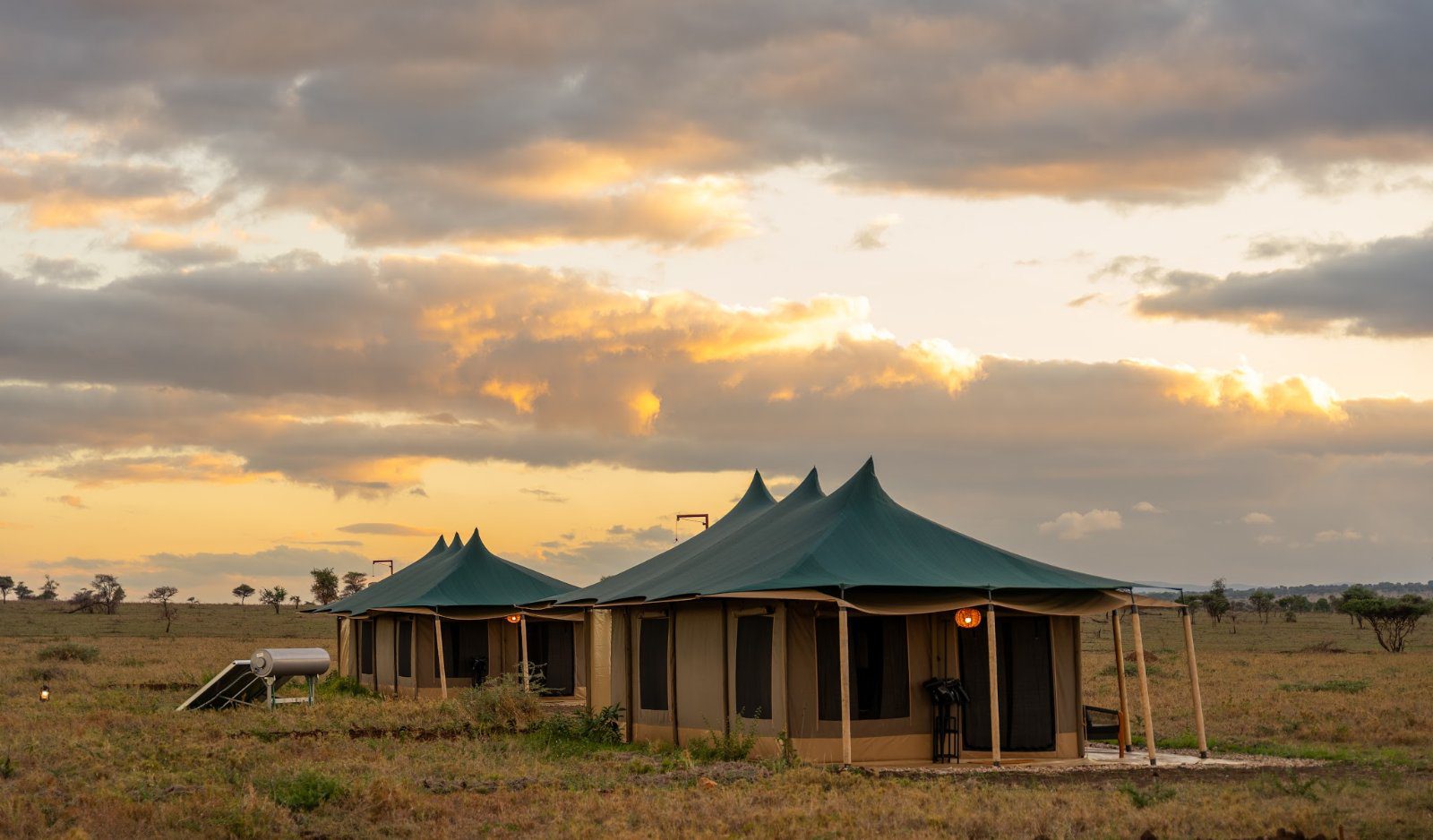
For what it is worth, I stayed on the conservancy side and drove into the Reserve. In my Tangulia Mara review I described the camp as sitting “between the Mara North Conservancy and the Masai Mara game reserve”, on “a conservancy of about 800 acres”. The difference between the two showed up inside a single day: at one lion sighting “we were still in the busy part of the park, so there were 5 or 6 other cars watching the lions as well”, and a few hours later, further out, “suddenly we were alone: no other cars in sight”.
What Laikipia actually is
Laikipia is a plateau of roughly 9,500 square kilometres north west of Mount Kenya, and it contains no national park at all. What it has instead is a patchwork of private conservancies and community ranches — the Laikipia Conservancies Association alone covers around 3,500 square kilometres across 24 members — where wildlife shares the land with cattle, camels, and Samburu and Maasai communities.
Because the land is privately or communally held rather than gazetted as a park, the rules are set locally. That is how you end up walking, riding, or driving after dark, and it is why a Laikipia safari feels less like visiting a park and more like being someone’s guest in a working landscape.
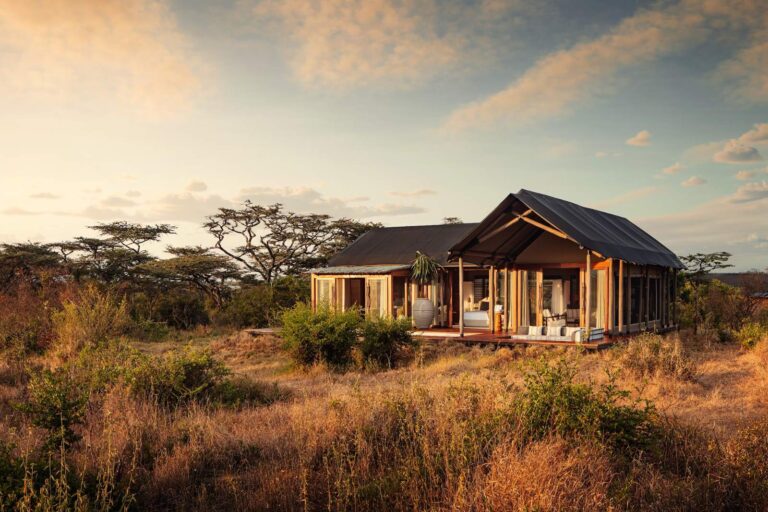
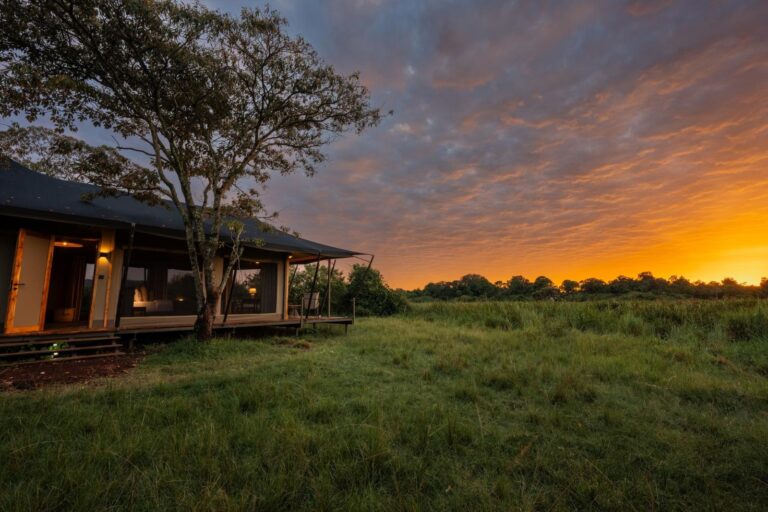
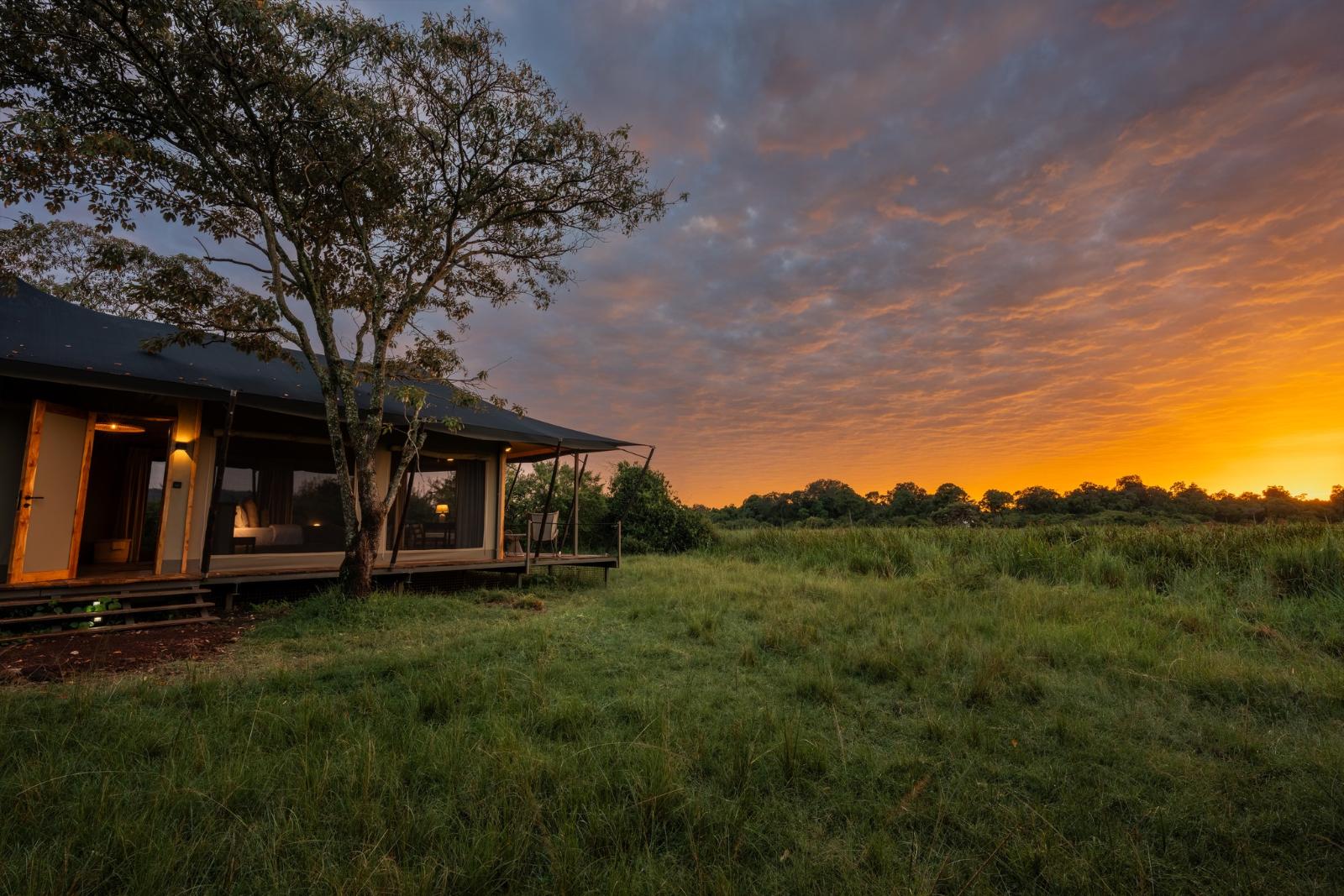
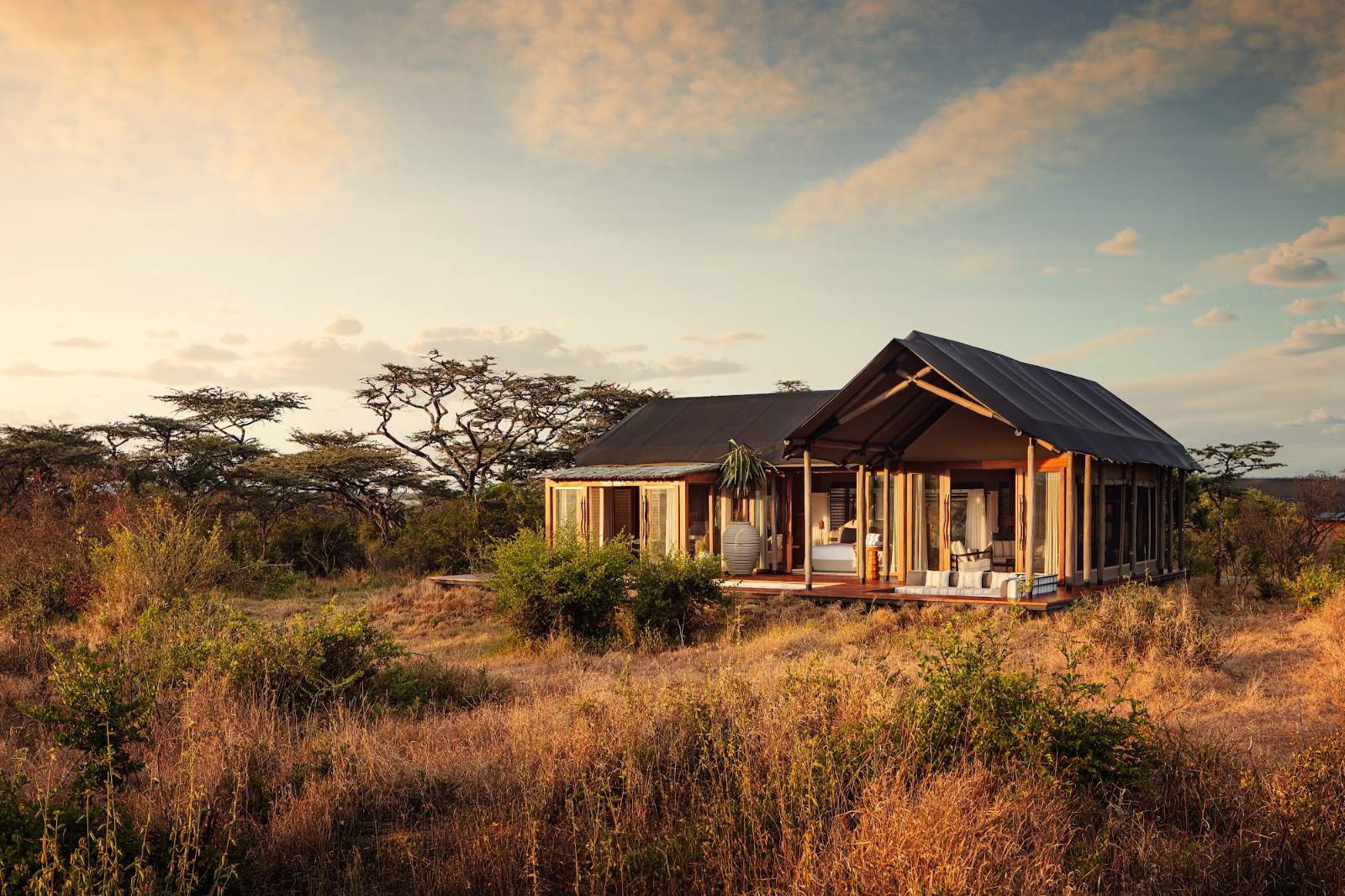
Ol Malo, where I stayed, is a good example of the model — and yes, Ol Malo is firmly inside Laikipia: a family-run lodge on the northern edge of the Laikipia plateau, overlooking the Ewaso Nyiro river towards Samburu country, with only four rooms on 5,000 acres of private conservancy.
One clarification, because itineraries constantly blur it: Lewa Wildlife Conservancy, where I also stayed, is not inside Laikipia itself. It lies just to the east, at the foot of Mount Kenya. But it runs on the same private-conservancy model, it is a short hop from the Laikipia airstrips, and it is almost always sold as part of the same northern Kenya circuit — so everything I say below about Laikipia applies equally to Lewa.
The wildlife is genuinely different
This is the part most comparisons get wrong by treating it as “more animals” versus “fewer animals”.
The Mara’s strength is density and predictability. Big cats, big herds, and — for a few months a year — the migration.
Laikipia’s strength is what is rare. Rhino sightings there are described as unsurpassed anywhere in Kenya, both black and white. Solio, Kenya’s first private rhino sanctuary, now has a big-brand option too: I look at the new JW Marriott Mount Kenya Rhino Reserve Safari Camp in a separate preview. It holds Grevy’s zebra and reticulated giraffe, and it has the only viable wild dog population in Kenya north of the equator. These are animals you can go to the Mara ten times and never see.
So the honest framing is not better or worse. It is: do you want the animals everybody comes to Africa for, or the ones most people never get to see?
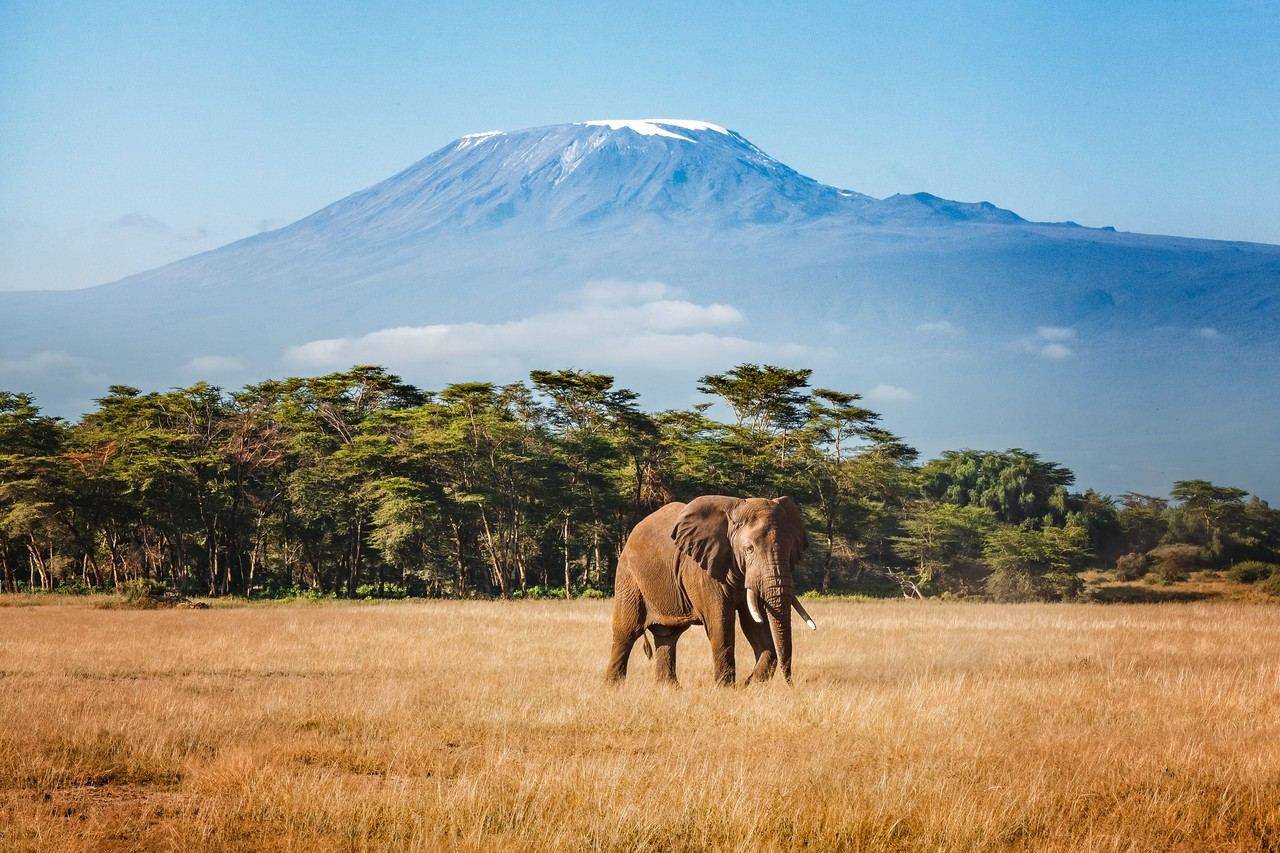
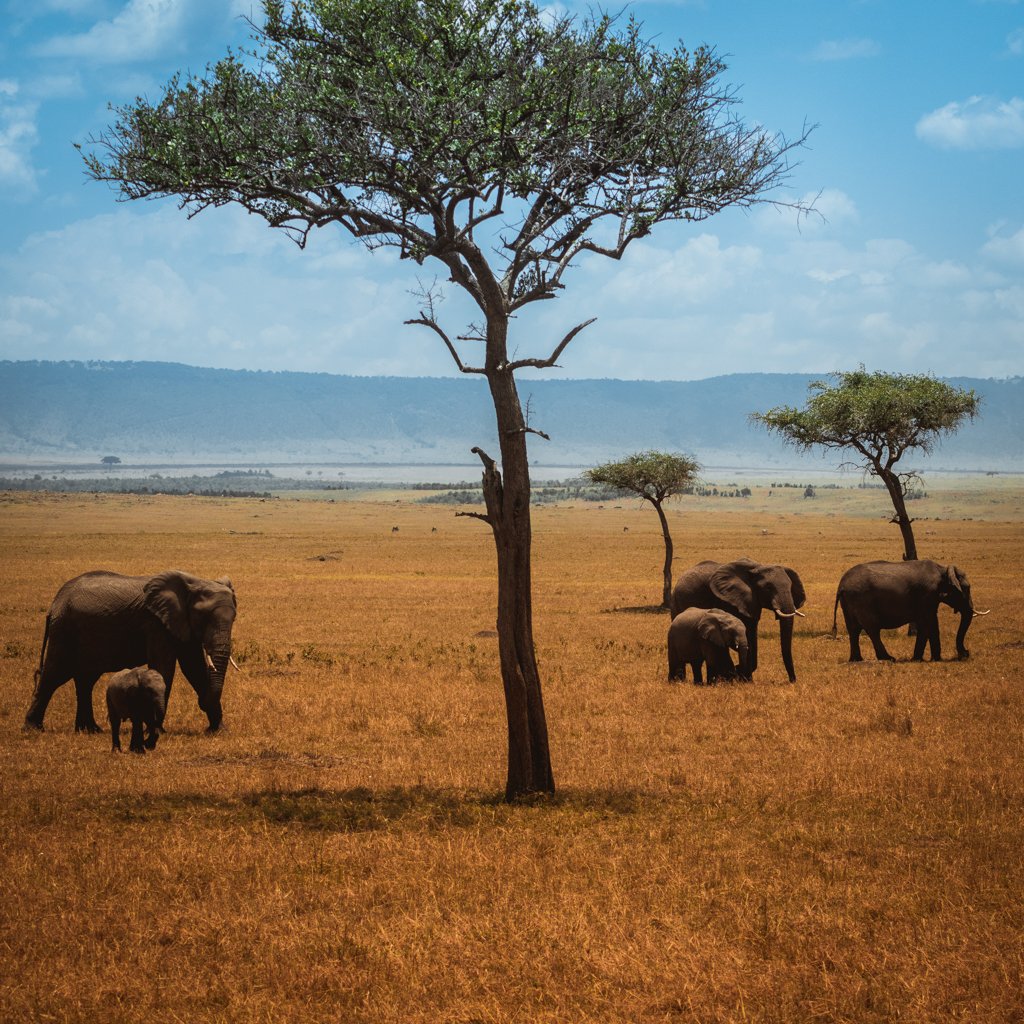
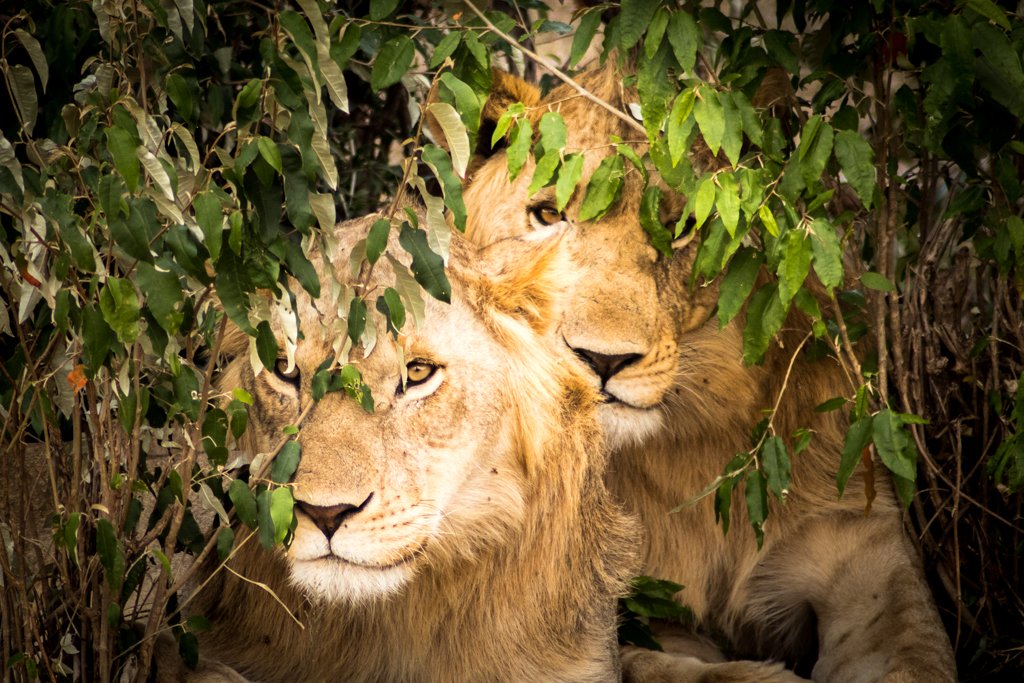
Here is what that looked like in practice for me. At Ol Malo, in Laikipia, the sightings that stayed with me were a leopard in a tree near the water hole eating an antelope, “a massive group of elephants” spotted from the veranda, elephants and zebra coming down to drink below the room, “two crowned cranes” on a morning walk, and coming “face-to-face with an elephant and some buffalo” on foot. At Lewa, within thirty minutes of landing we had “already spotted a wild herd of African elephants, endangered Grevy’s zebras, reticulated giraffes, and three black rhinoceroses”, and by the end of the stay the rhino density was such that “they quickly became a regular sight”. In the Mara it was a question of numbers rather than rarity: “millions of zebras and wildebeests”, a family of twelve lions, five male lions resting by a tree, more hippos and crocodiles in one place than I had ever seen, and the river crossing itself.
The migration, and the thing nobody tells you
The herds reach the Mara around late June and early July. August brings the most frequent Mara River crossings, often several a day at the known crossing points. September is nearly as good with thinner crowds. October is the last window, with crossings still happening but less often. In November the rains pull the grass south and the migration turns around.
The thing nobody tells you: river crossings are not guaranteed in any particular week. The timing shifts every year with the rain and the grass. If you book August specifically to see a crossing, you are buying a good chance, not a certainty.
If the migration is the reason you are going, go to the Mara, between July and October, and accept the crowds that come with it. If it is not, the whole argument for the Mara over Laikipia gets much weaker.
Crowds
My own experience of this was stark. Of Ol Malo I wrote that with “only four rooms sharing 5000 acres of private conservancy, you are unlikely to see another car while on a game drive”, and in the conclusion, that you “might not see as many animals as in the Masai Mara, but you won’t see another tourist either”. Of the Mara I wrote the opposite: it “offers unrivaled game viewing but can sometimes feel very crowded”. Both of those are true at the same time, and that tension is the whole decision.
What can be said factually: the Reserve is shared and vehicle numbers rise in peak season, particularly at crossings and big cat sightings. Conservancies, in both the Mara and Laikipia, cap the number of vehicles that can be at a sighting at once. That is the mechanism. Everything else is personal tolerance.
What you can actually do
In a national reserve you go on game drives, morning and afternoon. That is broadly it.
In a conservancy — Mara or Laikipia — the list opens up: night drives, guided walks, off-road driving where it is managed. In Laikipia specifically, add horse safaris and camel safaris.
If the idea of being out of the vehicle appeals to you, that alone may decide this for you.
At Ol Malo the choice on any given morning ran to “game rides in their comfortable land rovers, guided walks through the savannah, horseback riding, camel riding, mountain biking, visiting the nearby villages, and more”. We walked down to the water hole and then rode camels for about thirty minutes, and I found that “riding a camel offers a totally different perspective” — high, quiet, and less likely to push the animals away than a vehicle. At Lewa, because the lodge sits inside a private conservancy rather than a public national park, “off-road tracking and night game drives are fully permitted”.
Getting there
Both are short hops from Nairobi’s Wilson Airport. Flights to the private airstrips in and around the Laikipia conservancies typically take under an hour.
In practice, this is how I travelled it. Into Lewa from Wilson, where “regional carriers like SafariLink and Air Kenya operate daily scheduled flights directly into the Conservancy’s private airstrip”. On to Ol Malo by private charter, a hop that “took us about 20 minutes”, then “only a five-minute drive” from the strip. If you are not combining the two, Ol Malo can also be reached via Loisaba airstrip, which is “a 40-minute scenic drive from Ol Malo lodge”, on a flight of about an hour from Wilson. For the Mara, “Safarilink flies daily to the Musiara airstrip, and the flight is a short and scenic 50 minutes from Wilson Airport”, followed by a fifteen-minute drive to camp.
What it costs
These are published rates for 2026 at the time of writing. They change every season, so treat them as a guide to the scale of the thing rather than a quote.
The structure of the price is different in each place, and that is what trips people up. In the Mara, the camp rate usually excludes park fees: the Masai Mara National Reserve charges non-residents US$100 per person per day from January to June, and US$200 per day from July to December. In Laikipia and at Lewa, lodges tend to be closer to fully inclusive, with conservancy fees either built in or added as a fixed nightly amount — Lewa’s conservation fee, for example, is about US$126 per person per night for non-residents.
For the places I stayed: Tangulia Mara publishes rates of about US$730 per person per night in low season and US$900 in high season, full board with game drives included, with Reserve fees billed on top. Ol Malo publishes about US$1,095 per person per night in standard season, rising to US$1,600 in the July–August and festive peaks, inclusive of meals, select drinks and the full run of activities — the walks, horses and camels are part of the rate; note it closes in April, May and November. Lewa House publishes about US$1,278 per person per night in low season and US$1,783 in high season, full board with drinks, laundry and airstrip transfers.
Then add flights: the scheduled Safarilink service from Wilson to the Mara airstrips is published at around US$471 return per person, and the hops to the Laikipia and Lewa airstrips are of a similar length.
So Laikipia looks more expensive per night on paper — but the gap narrows once you add US$200 a day of peak-season park fees in the Mara, and remember what the Laikipia rate already includes. At this level you are not really choosing a price point. You are choosing a style.
None of these lodges are listed on the big booking sites, so you cannot price-shop them the way you would a city hotel. What you can do is read recent guest reviews and see current photos on Tripadvisor: Ol Malo, Lewa House, Tangulia Mara and The Emakoko.
When to go
For the Mara, July to October if you want the migration.
For Laikipia, July to September is the dry season and the peak for wildlife, with December to March a second dry window.
Doing both
This is what most well-built Kenya itineraries do, and having seen both I understand why. They are short flights apart, and they solve each other’s weaknesses. The Mara gives you the density and the spectacle. Laikipia gives you the space, the rare species and the chance to get out of the car.
If you have a week, the common shape is a few nights in each. On a first safari I would do the Mara first. But if you can stretch to it, I highly recommend doing all three — the Mara, Laikipia and Lewa. They are short flights apart, and each adds something the other two cannot.
Where I stayed
- Ol Malo Lodge, in northern Laikipia
- Lewa House, on the Lewa Wildlife Conservancy, just east of Laikipia
- Tangulia Mara, in the Masai Mara
- The Emakoko, on the edge of Nairobi National Park, for the first or last night
FAQ
Is Ol Malo in Laikipia?
Yes. Ol Malo is a private ranch and lodge on the northern edge of the Laikipia plateau, overlooking the Ewaso Nyiro river towards Samburu country. Lewa, by contrast, sits just east of Laikipia proper — but both are part of the same northern Kenya circuit.
Is Laikipia better than the Masai Mara?
Neither is better. The Mara has higher wildlife density, big cats and the migration between roughly July and October. Laikipia has far fewer vehicles, exceptional rhino sightings, and rare species like Grevy’s zebra and wild dog. If it is your first safari, the Mara. If you have been before, Laikipia.
Can you see the Big Five in Laikipia?
Laikipia is known for both black and white rhino, and holds elephant, buffalo and big cats across its conservancies. What it does not offer is the sheer density of sightings you get in the Mara.
When is the best time to see the migration in the Masai Mara?
The herds are usually in the Mara from late June or early July until October. August has the most frequent Mara River crossings, September is nearly as good with fewer people. Crossings are never guaranteed in a given week — the timing moves with the rains.
What is the difference between the Masai Mara National Reserve and the conservancies?
The Reserve is government-run, shared, and limited to day game drives. The surrounding private conservancies are leased from Maasai landowners, cap the number of vehicles at a sighting, and allow night drives, guided walks and managed off-road driving.
Can you walk on safari in Kenya?
Not in a national reserve. In the conservancies of both the Mara and Laikipia, guided walking is permitted, and in Laikipia you can also do horse and camel safaris.
How do you get to Laikipia from Nairobi?
Most visitors fly from Wilson Airport to a private airstrip in or next to the conservancies. The flight typically takes under an hour.
How much does a Kenya safari cost?
The camps in this article publish 2026 rates between roughly US$730 and US$1,800 per person per night depending on the property and the season. On top of that, budget for park or conservancy fees — US$100 to US$200 per person per day in the Masai Mara Reserve, about US$126 per night at Lewa — and around US$470 per person in return flights from Nairobi. There are cheaper ways to see both areas, but at this level a realistic all-in figure is US$1,000 to US$2,000 per person per day.
Disclosure: this article contains affiliate links. If you book through them, I earn a small commission at no extra cost to you. Read my full disclosure policy.