High-End Diving • West Papua, Indonesia
During three days of diving Triton Bay, we did not see a single other dive boat. Not one. In a country where Komodo can feel like a car park and even Raja Ampat has grown busy, that sentence alone explains why divers whisper about this corner of West Papua. This guide is everything I know about Triton Bay after two liveaboard trips here — the sites, the whale sharks, the seasons, the logistics, and the honest trade-offs.
This article contains affiliate links. If you book a liveaboard through one of my links, I earn a small commission at no extra cost to you. It keeps these reviews independent.
Triton Bay is one region of a very big country. If you are weighing it against the other Indonesian options, start with my guide to the best luxury liveaboards in Indonesia, which ranks the ten best boats nationwide and shows which region and which month each one is built for.
Triton Bay is number eight in my ranking of the best dive destinations in the world, and the only one where I have had the reefs entirely to myself.
Why Trust This Guide
I have been diving for more than 25 years, with over 1,500 logged dives and more than 40 liveaboard trips reviewed in depth on This Is Luxury Travel. I have dived Triton Bay twice, on two different boats: first on the Ilike liveaboard, and most recently on the Seahorse, on a February crossing from Sorong to Kaimana — my tenth trip to the Raja Ampat region (I have now been more than ten times). Everything below is first-hand unless flagged otherwise.
Where Is Triton Bay?
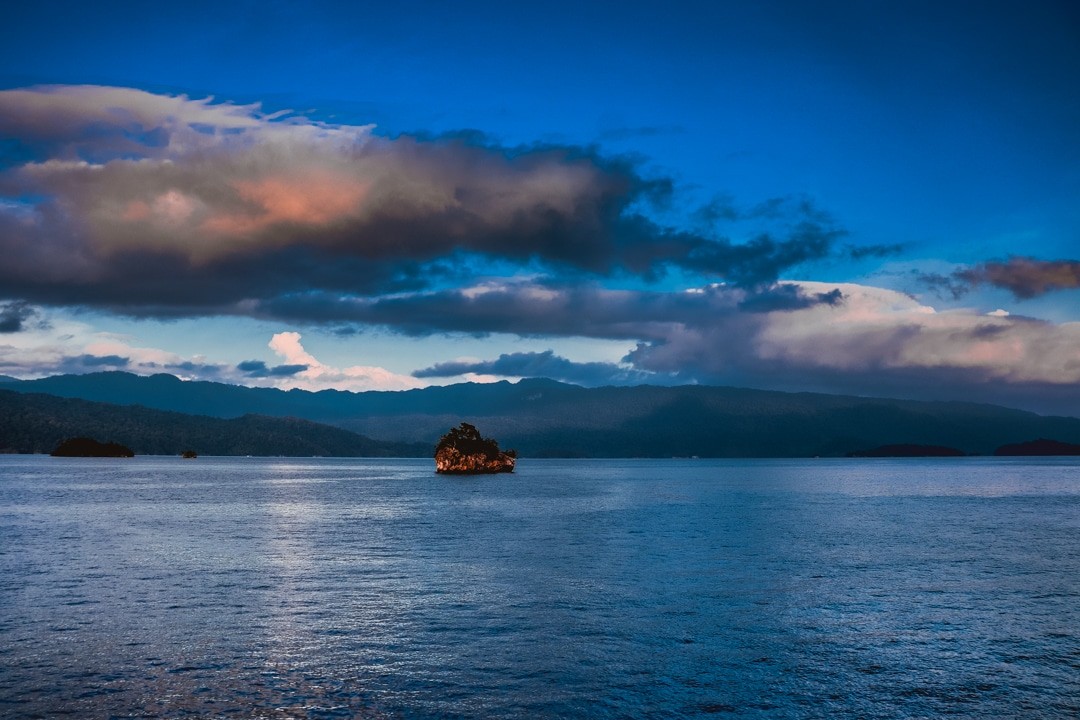
Triton Bay sits on the southern coast of West Papua, in the Kaimana regency, roughly 30 nautical miles from the small town of Kaimana. Together with Raja Ampat to the northwest and Cenderawasih Bay to the northeast, it completes the Bird’s Head Seascape — the epicenter of the Coral Triangle and the most biodiverse patch of ocean on the planet.
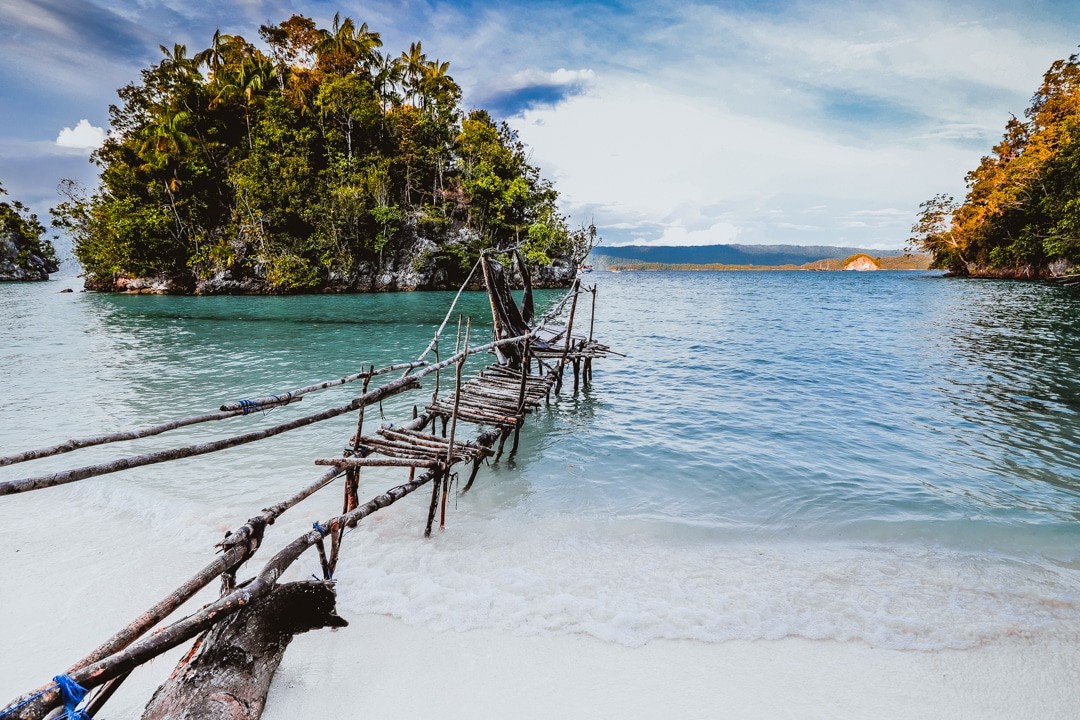
Scientists only properly surveyed the bay in 2006, and what they found — dense black coral forests, huge reef-fish populations, and species new to science — led to the creation of the Kaimana Marine Protected Area in 2008, covering some 6,000 square kilometers. Twenty years on, Triton Bay still feels like the survey just happened. New sites are still being found. The karst islands — Aiduma, Dramai, Namatota, Saruenus — drop jungle straight into the sea, and some cliff faces carry prehistoric rock paintings thousands of years old.
How to Get to Triton Bay
There are two ways in, and the flight is the easy part of neither.
Fly to Kaimana (KNG). Utarom Airport in Kaimana connects via Sorong, Ambon or Makassar on domestic carriers — book flexible tickets, because schedules on these routes change with little notice. From Kaimana harbor, your liveaboard crew collects you directly, or the resort boat runs you out to Triton Bay Divers.
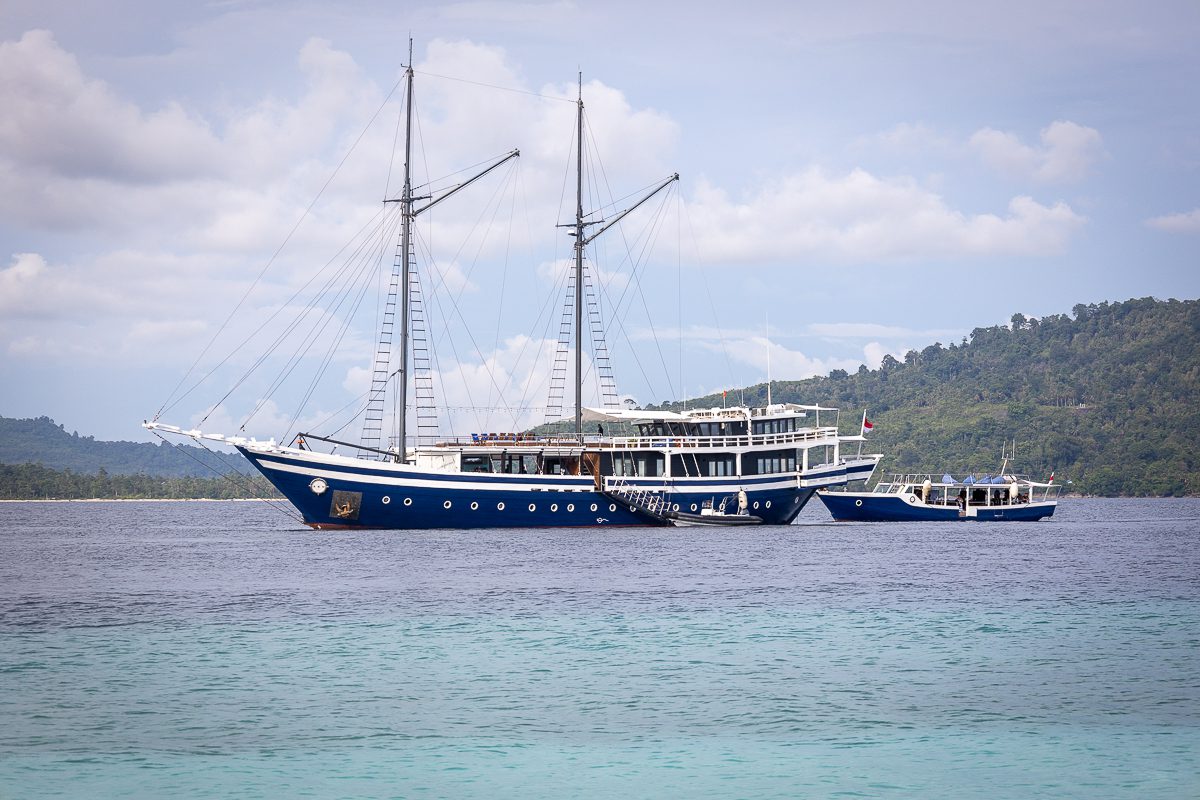
Cross by liveaboard from Sorong. This is how I did it most recently, and it is the route I recommend to any diver with the time: board in Sorong, dive south through Misool’s finest sites, work along the Bomberai Peninsula, and arrive in Triton Bay with the best of Raja Ampat already in your logbook. You disembark in Kaimana and fly out from there. My Seahorse liveaboard review covers this exact itinerary day by day.
Liveaboard or Resort: How to Dive Triton Bay
Triton Bay has exactly one land-based operation and a short seasonal parade of liveaboards. That is the entire industry.
Triton Bay liveaboards
A liveaboard is how most divers see the bay, and for good reason: the sites are scattered around several islands, the whale shark bagans move with the fishing, and a boat that sleeps on location puts you in the water at first light with nobody else around. Itineraries come in two shapes — Kaimana-to-Kaimana loops focused purely on the bay, and the grander Sorong-to-Kaimana (or reverse) crossings that combine Misool and Triton Bay in one trip. Expect roughly $400 per day for expedition-style phinisi up to $600+ per day for the luxury boats, before flights and park fees.
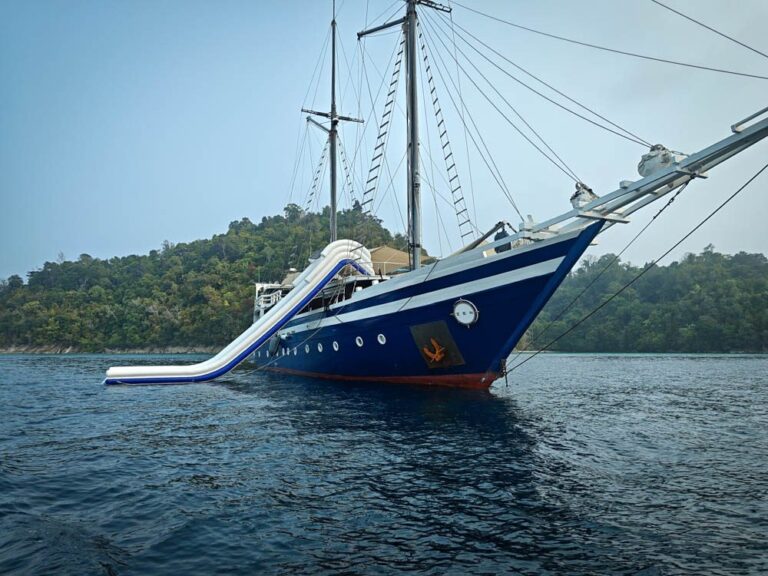
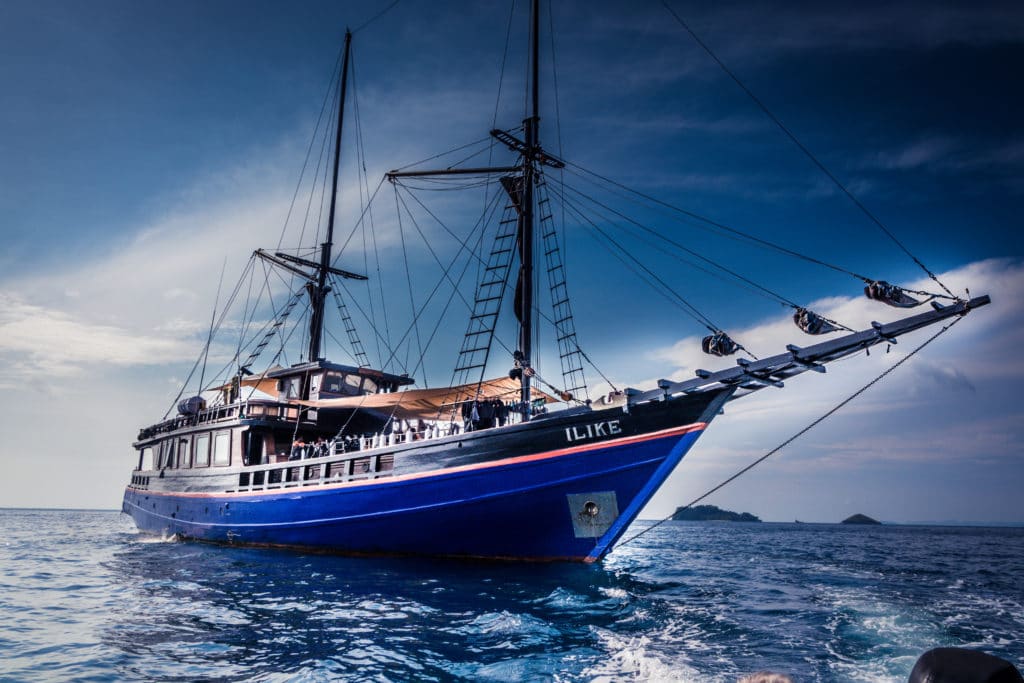
I have done Triton Bay on two boats and would recommend both: the Seahorse for the full Sorong crossing, and the Ilike, a boat built by divers for divers, with one of the biggest and most comfortable dive decks of any boat cruising this region and a maximum of 14 guests, so dives never feel crowded — my full Ilike review of the Kaimana expedition is here.
Triton Bay Divers resort
The only resort in the bay is Triton Bay Divers, a small eco-operation on Aiduma island. It is intimate, well run, and gives you something no liveaboard can: night dives on the house reef looking for the endemic Triton Bay walking shark. The catch is availability — the resort is small and books out far in advance, often close to a year ahead. If your liveaboard starts or ends in Kaimana, extending with a week at the resort is the connoisseur’s move; just plan it long before you plan anything else.
Dive Triton Bay on the Seahorse
The Sorong-to-Kaimana crossing I took in February: Misool’s reefs, then Triton Bay’s whale sharks and soft coral to finish. Check live availability and pricing.
What Makes the Diving Special (and What It Isn’t)
Triton Bay’s water is green. Let me say that plainly, because it is the honest heart of this destination. Nutrient-rich upwellings feed an explosion of life here — and they cap visibility at around 10 to 15 meters on most inner-bay sites, sometimes less, occasionally 25 meters on the outer reefs. If you measure a destination by gin-clear blue water, book the Maldives.
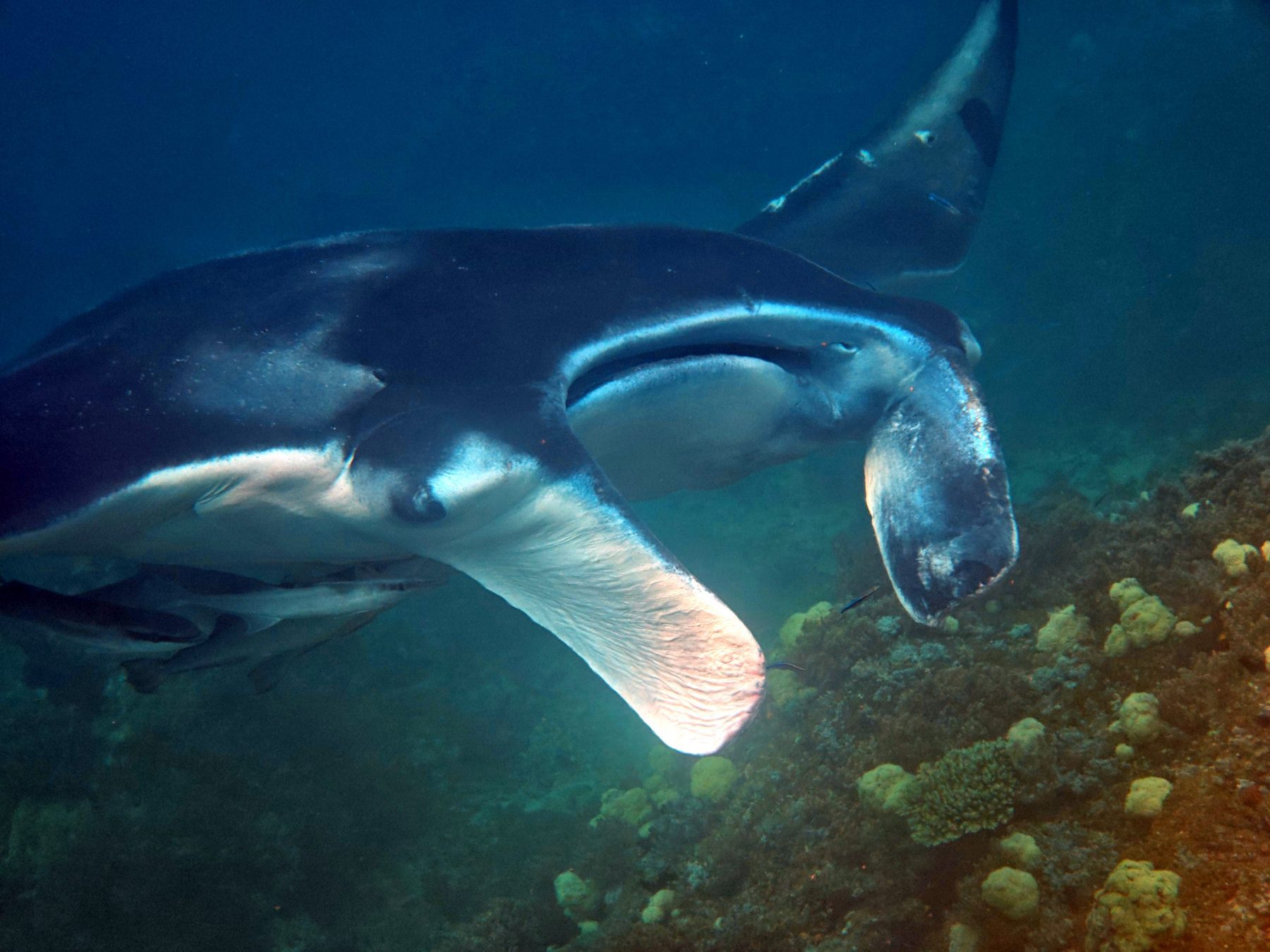
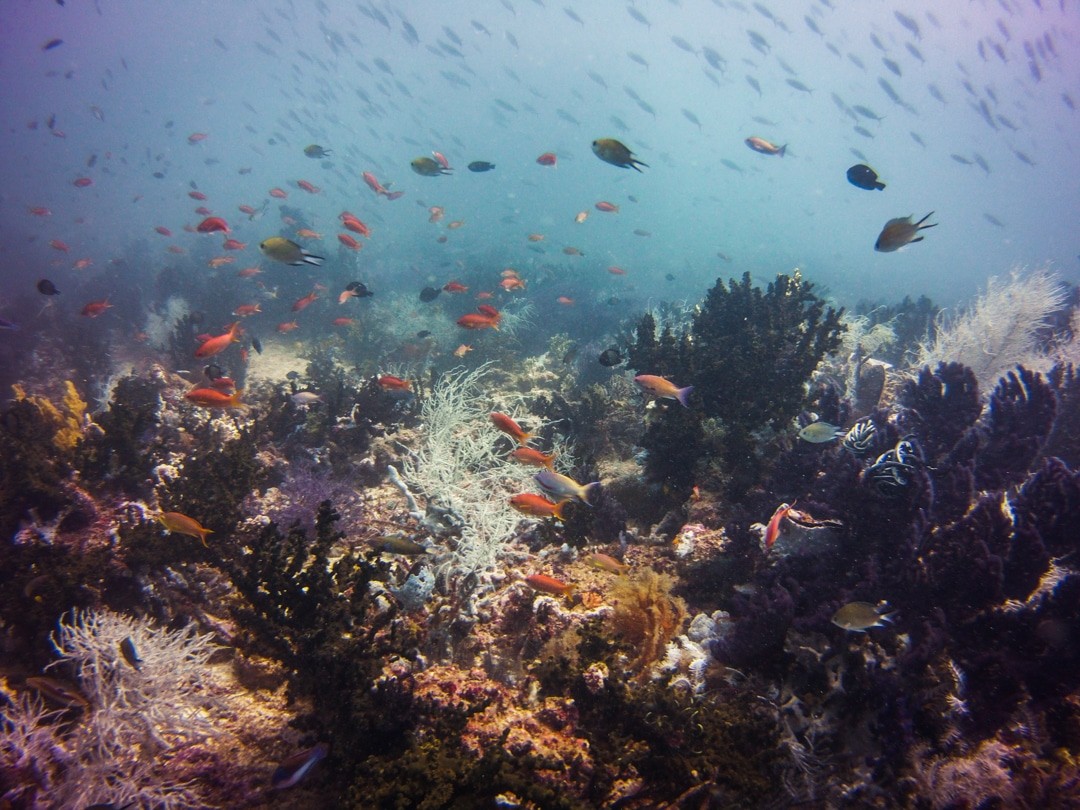
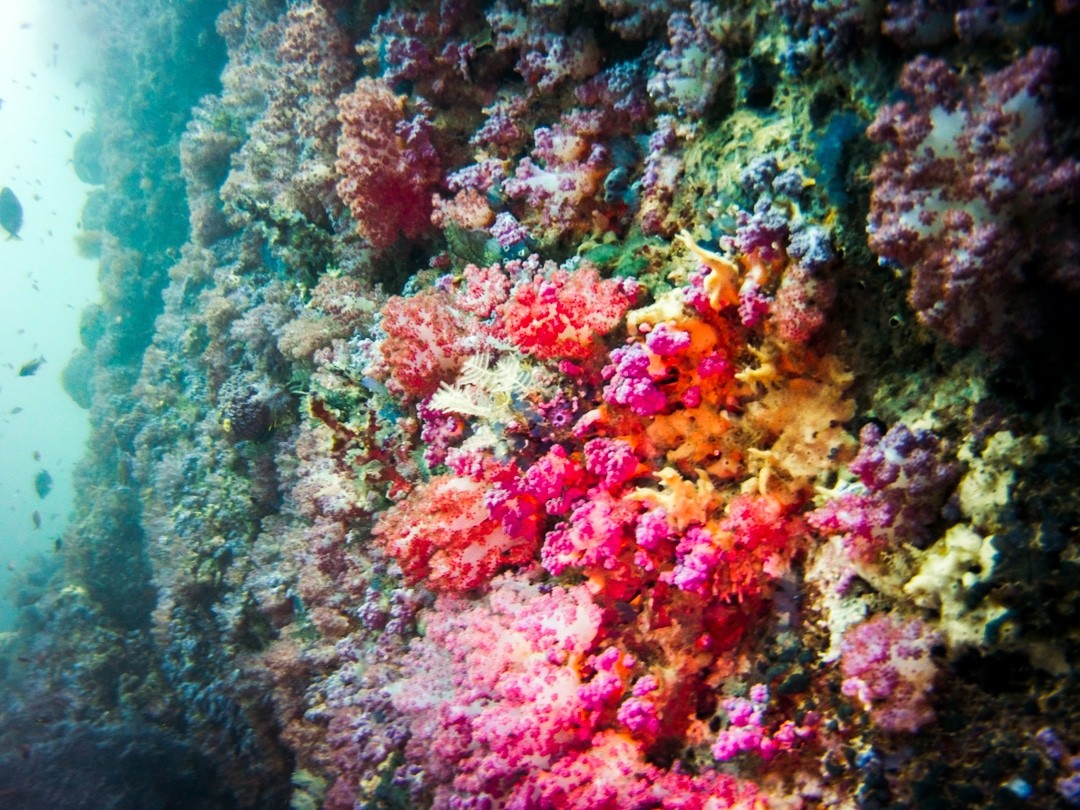
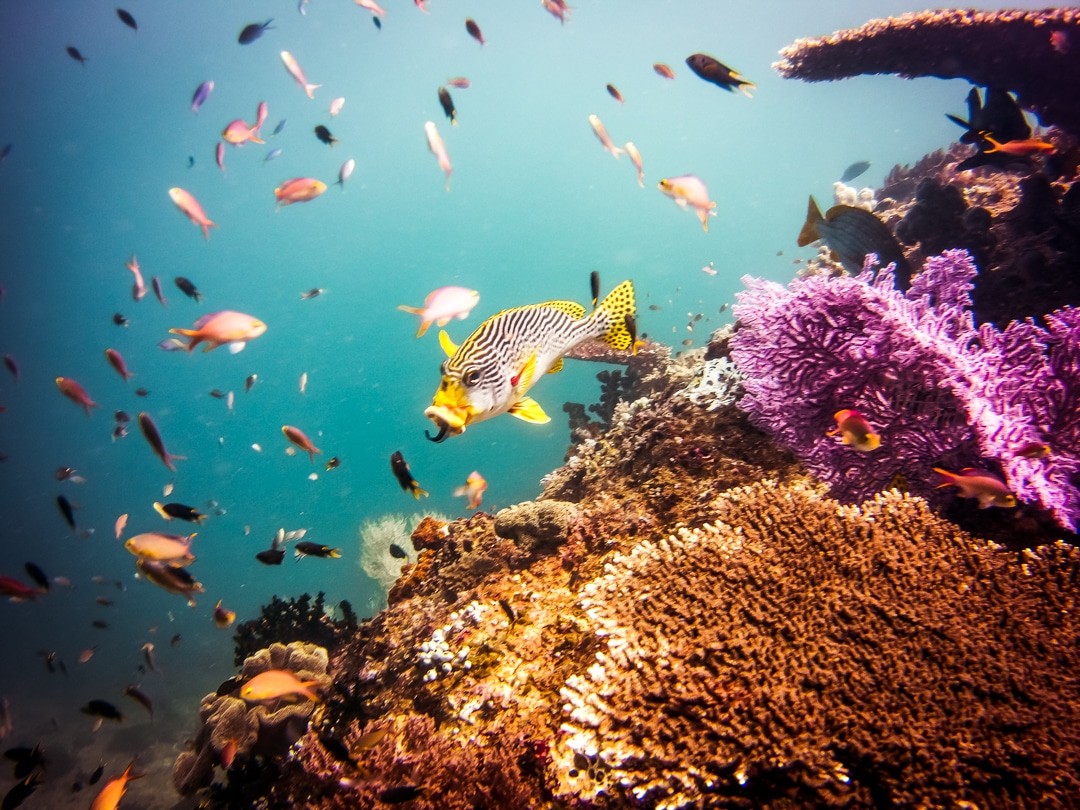
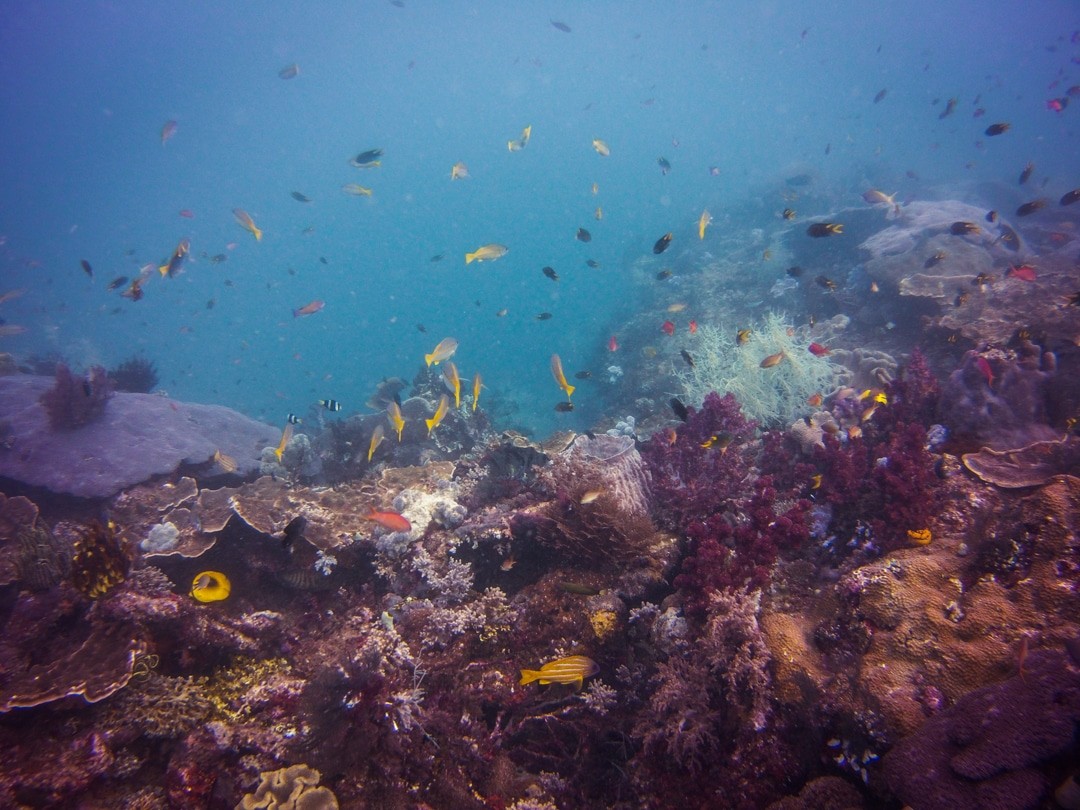
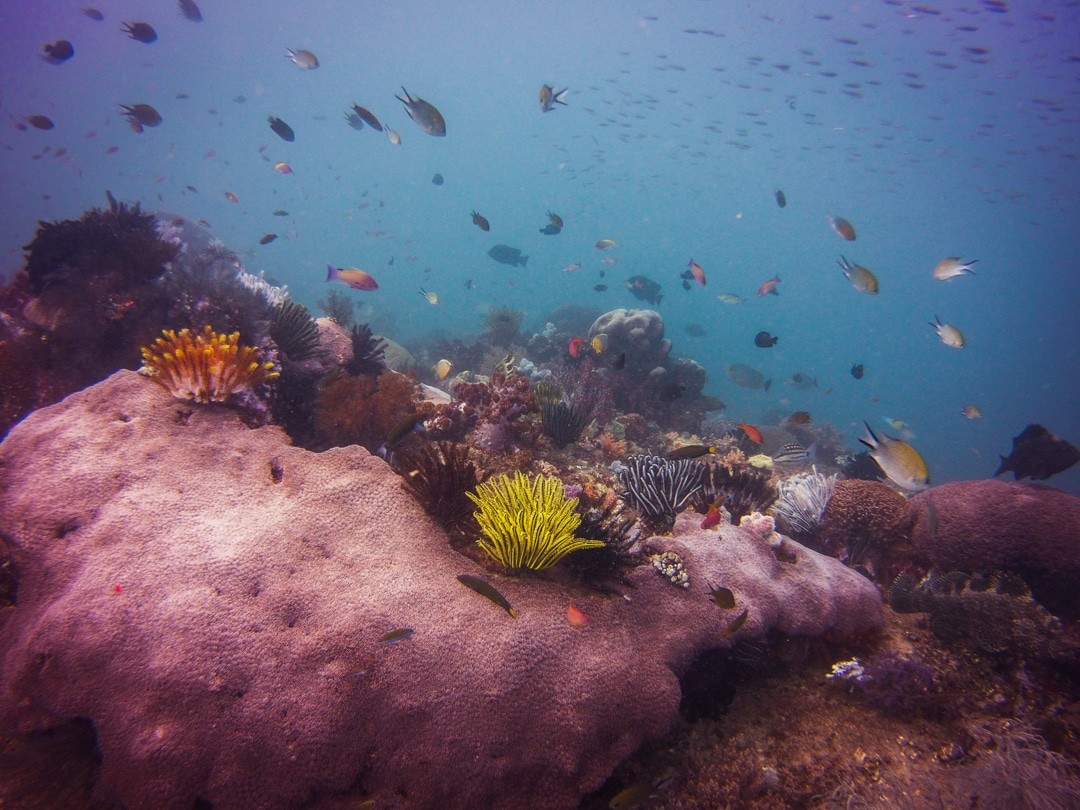
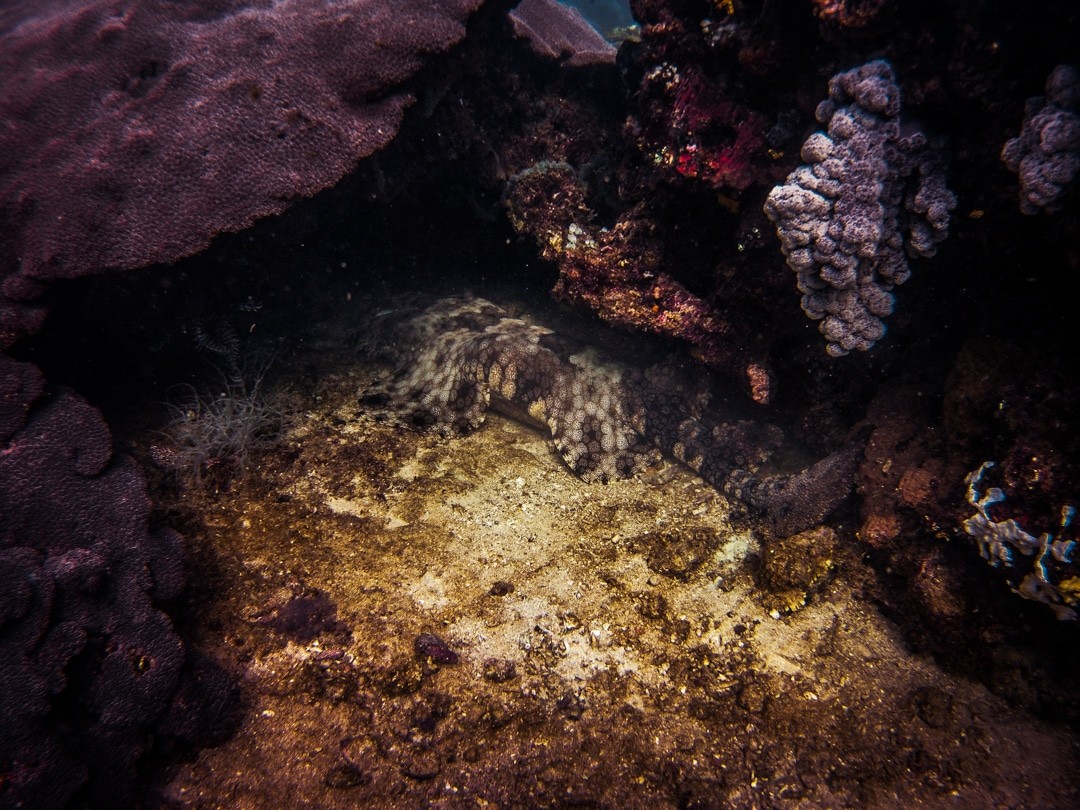
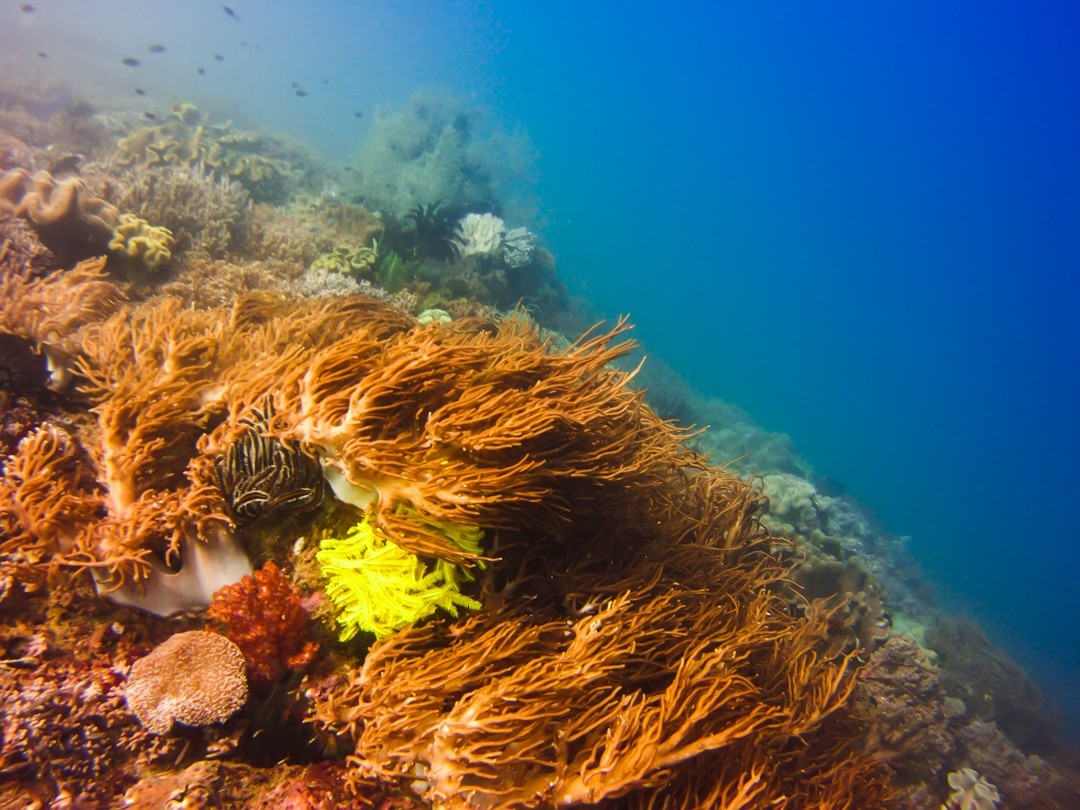
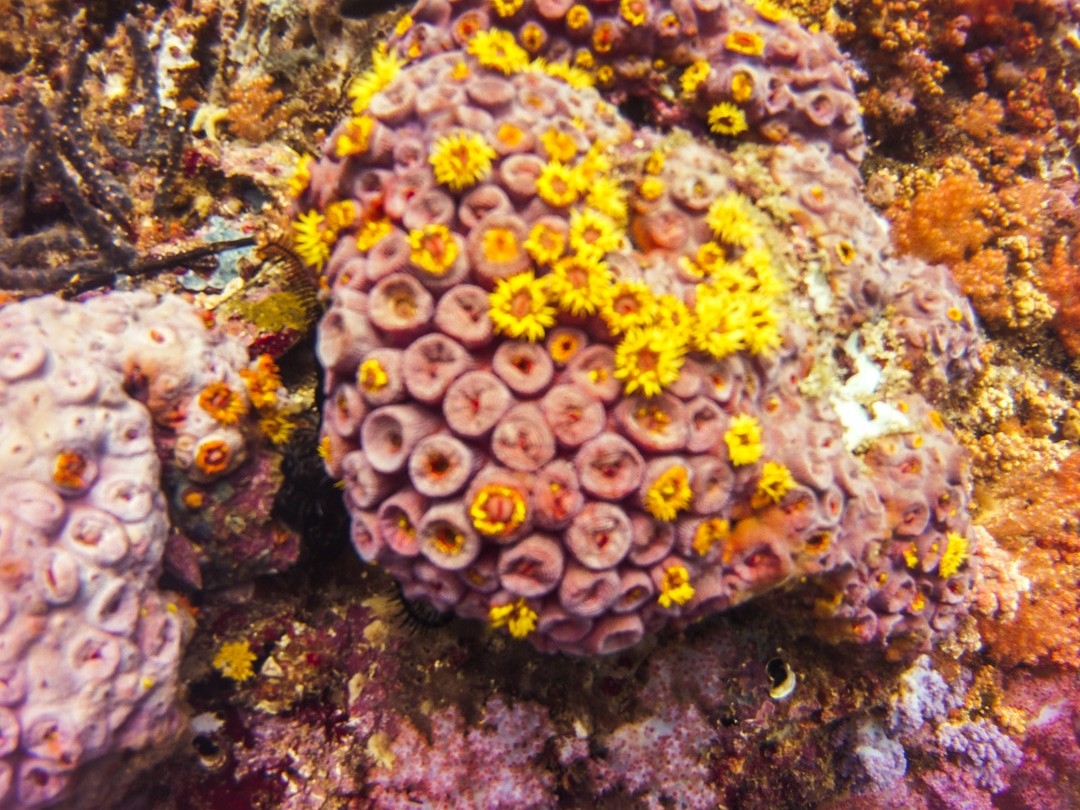
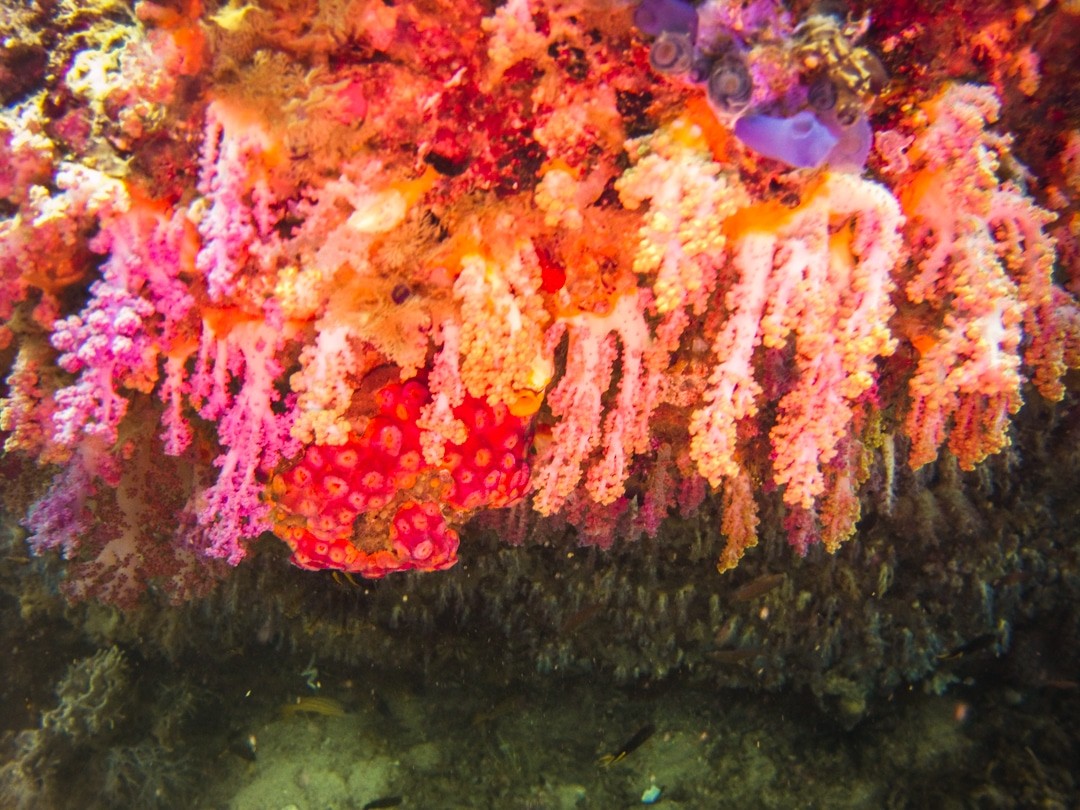
What you get in exchange is coral density I have not seen anywhere else in Indonesia — black coral bushes growing in forests, soft corals stacked on every surface — and fish life to match: yellowfin barracuda, bumphead parrotfish, walls of anchovies, wobbegong sharks on nearly every dive (including one heavily pregnant female on my first trip), devil rays, and macro treasure from solar-powered nudibranchs to four species of pygmy seahorse. The bay also holds a remarkable roster of endemics: the Triton Bay walking shark, Nursalim’s flasher wrasse, and a list of small fish found nowhere else on Earth.
What it lacks, compared with Raja Ampat, is numbers of big fish on every dive and the postcard visibility. Unless you are a marine biologist, the reefs are a notch below Misool’s finest — which is exactly why I recommend Triton Bay to divers who have already done Komodo, Raja Ampat, Alor and Maumere, and are looking for the next frontier rather than the first one.
The Best Dive Sites in Triton Bay
Little Komodo (Saruenus Island)
The most sought-after site in the bay, named for the currents that sweep its huge boulders and soft coral gardens. When the current runs, the fish action justifies the name; when it doesn’t, the coral alone carries the dive. Saruenus is often cited as the richest island in the bay, with four distinct sites around it.
The Aquarium / Larry’s Delight (Saruenus Island)
Named after Larry Smith, the pioneering American dive guide who first documented many of Indonesia’s sites from his own boat. Some of the most beautiful black corals I have ever seen, and relentlessly fishy — barracuda, bumpheads, anchovy clouds, devil rays, wobbegongs, plus pygmy seahorses and nudibranchs for the macro shooters. If I could dive one Triton Bay site again tomorrow, it would be this one.
Bo’s Rainbow
A shallow, gentle site — bommies at 12 to 18 meters draped in black coral bushes and soft coral, with a small swim-through cutting through part of the island. Perfect for long, unhurried photography dives and for the third dive of the day when you want color without current.
Batu Jeruk (Aiduma Island)
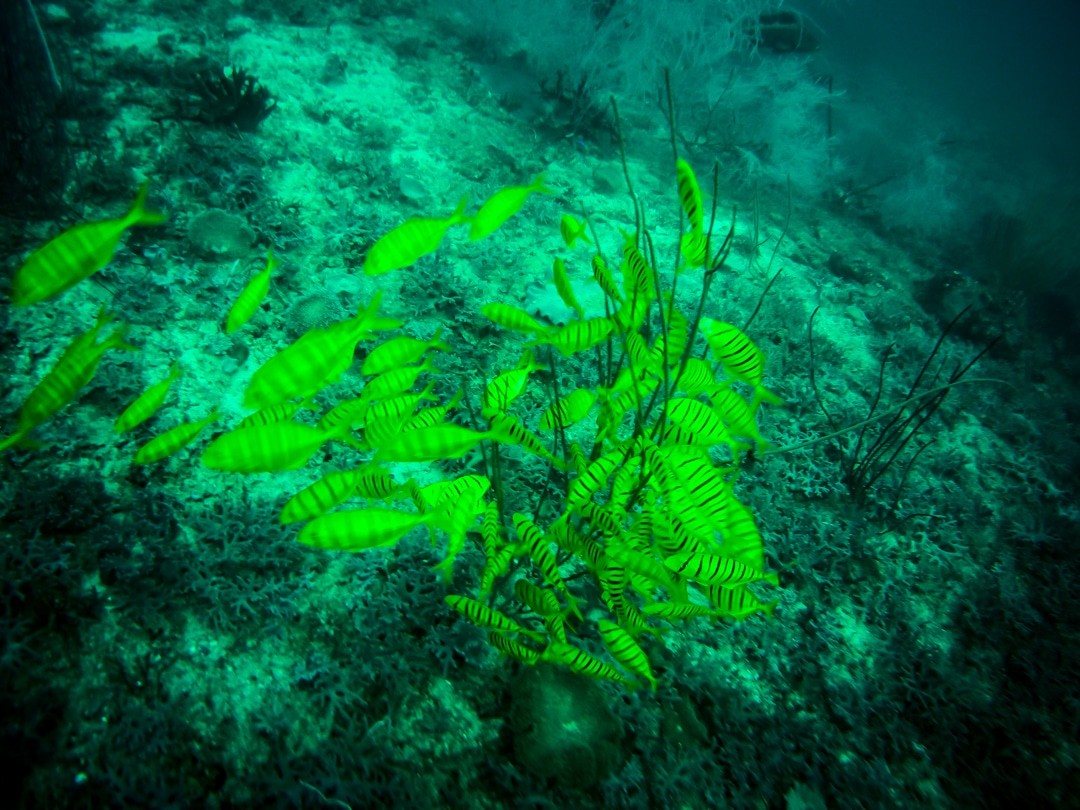
“The orange rock,” named for the soft orange corals that cover it. A gentle drift with the richest reef between 12 and 15 meters and a fish-packed channel at five to six meters. Spectacular coral, easy profile.
White Rock
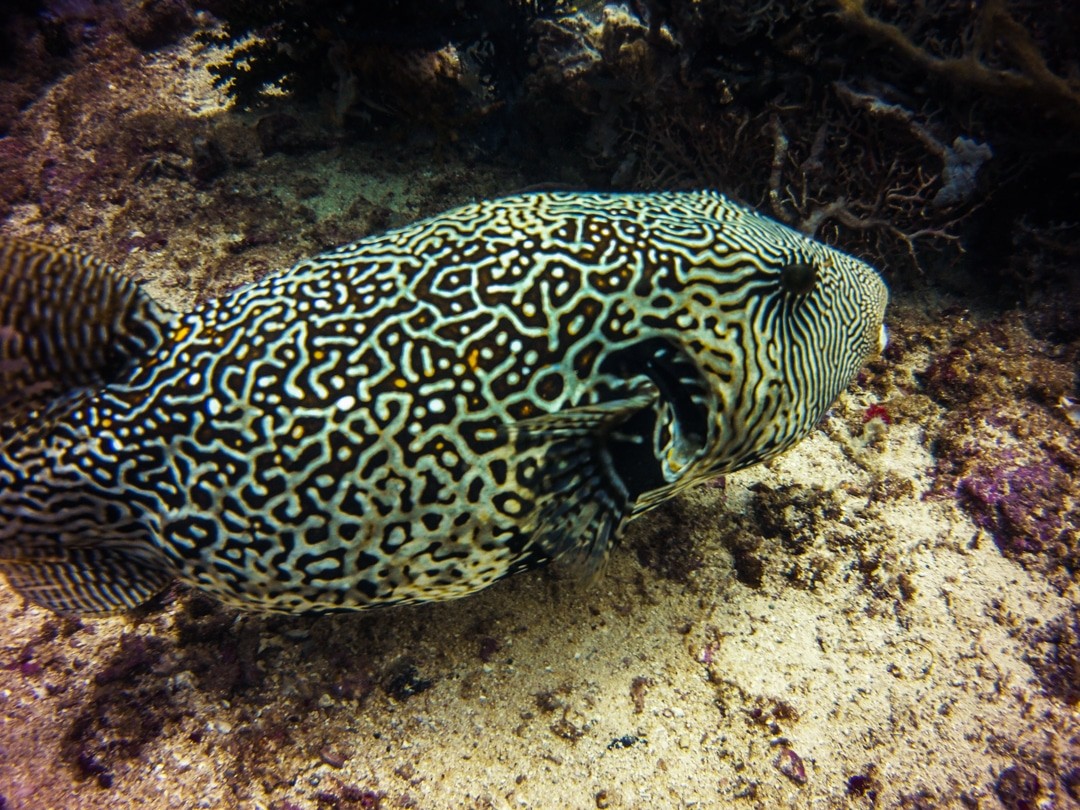
The smaller of two rocks standing out of the water, with sandy slopes holding frogfish and wobbegongs. Honestly, the least impressive site we dived in the bay — I include it so you can calibrate expectations if it appears on your schedule.
The Namatota bagans — whale sharks
Not a reef but the encounter that headlines every Triton Bay itinerary: the traditional lift-net fishing platforms off Namatota and the Kaimana coast, where whale sharks gather to feed on baitfish slipping through the nets. More on this below.
Whale Sharks in Triton Bay
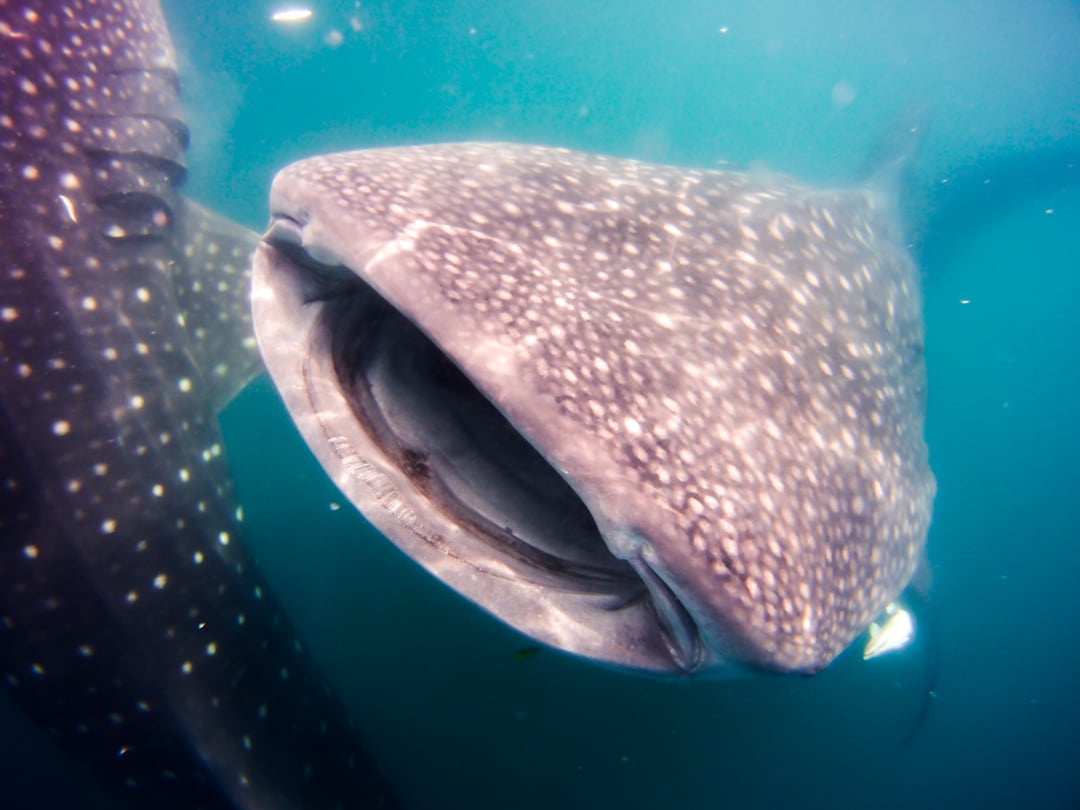
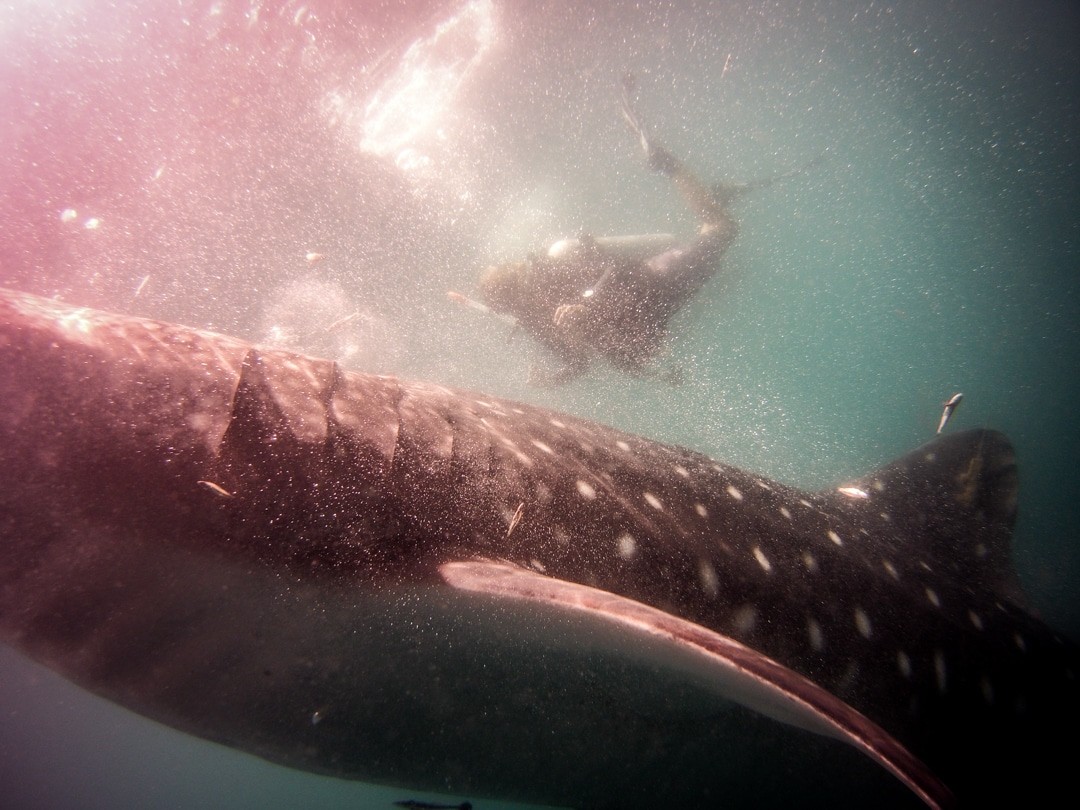
The whale shark encounter is the bay’s signature morning. The mechanics: bagan fishermen fish at night under lights, whale sharks have learned to visit the platforms to hoover up the small baitfish, and your cruise director negotiates access the evening before. Tenders leave before breakfast, and you slip into green, plankton-rich water beside the platform — usually snorkelling, since the action is in the top five meters.
On my Seahorse trip, the shark was already there when we arrived. Compared with the electric energy of the dolphins we had seen the day before, it felt ancient and unhurried. By the second session it had moved on — that is ocean life; you never control the timing. My Ilike trip ended even better: on our last diving day we were in the water with five whale sharks at once, each over five meters, along with a few dolphins, diving under the bagans in Bitsjara Bay, about an hour from Triton Bay. The sharks are not afraid of humans and came right up to us — I’ll admit I was anxious being that close to such large animals at first, until I realized they are far more agile than they look. We all came out of that water with enormous smiles.
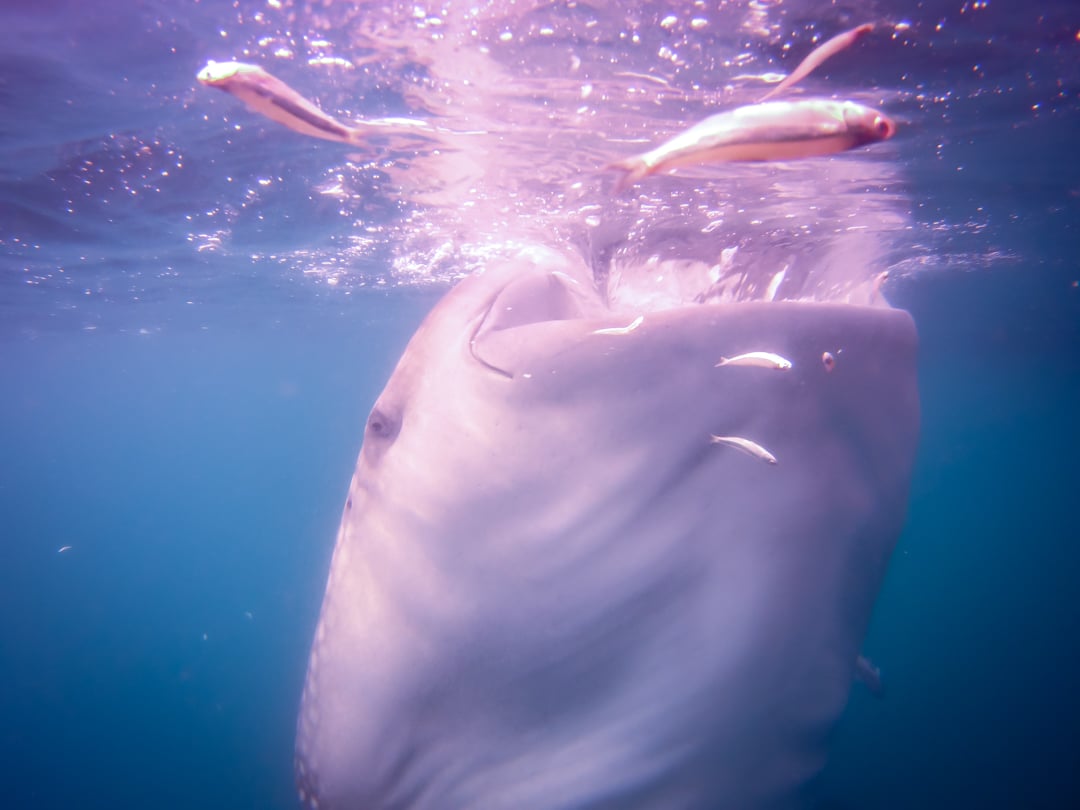
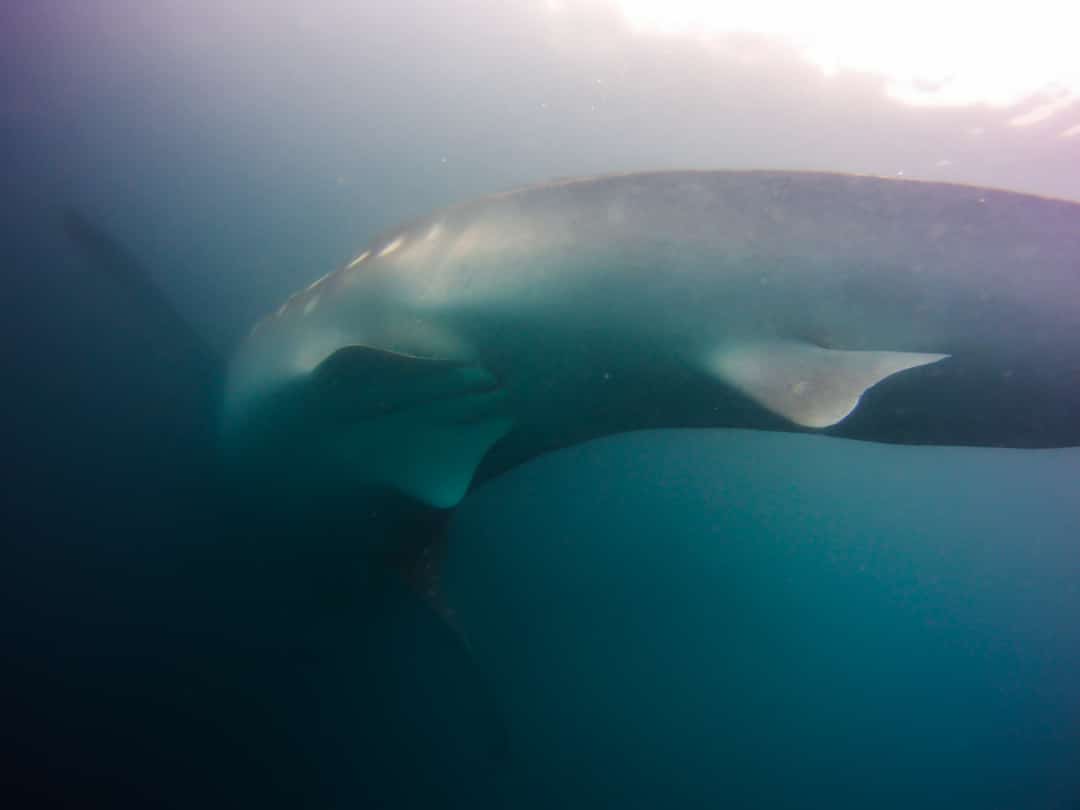
Two trips, two very different outcomes — one shark, then five — which is the honest picture. Encounters are most reliable in season around the dark of the moon, when night fishing at the bagans is at its best, and they are never guaranteed. Any operator who promises certainty is telling you about their marketing, not the ocean.
Triton Bay is one of four bagan-based whale shark destinations in Indonesia, alongside Cenderawasih Bay, Saleh Bay and Talisayan. I compare all of them — plus Mexico, the Maldives, Ningaloo and the Galapagos — in my guide to the best places to dive with whale sharks in the world.
Best Time to Dive Triton Bay
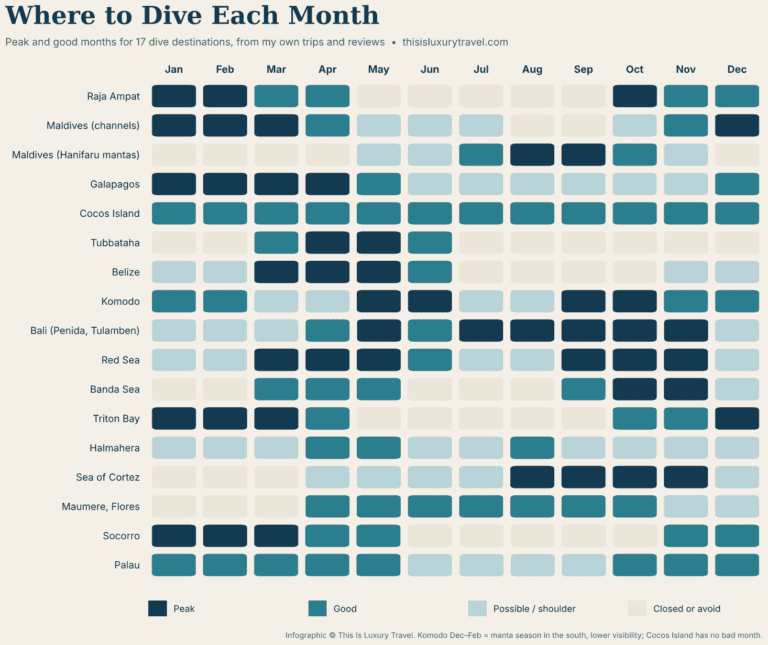
The season runs October to April, aligned with Raja Ampat’s, which is when the crossings operate and the seas are calm. Water sits at a comfortable 26 to 29°C, occasionally dipping cooler. From roughly May or June to September, the southeast monsoon makes the bay rough and most operators leave the area entirely — this is not a destination with an interesting off-season, it is a destination with a closed one.
| Months | Conditions | Verdict |
|---|---|---|
| October – December | Season opening; calm seas, boats crossing from Raja Ampat | Excellent |
| January – April | Peak season; warm water, full liveaboard schedules | Excellent — I dived in February |
| May – September | Southeast monsoon; rough seas, most operators gone | Avoid |
Triton Bay vs Raja Ampat: Which Should You Choose?
The question every diver asks, so here is my answer after ten trips to the region. Raja Ampat is the more complete destination: clearer water, bigger fish action, more infrastructure, more forgiving logistics. What makes it special is the coral — simply more colorful than anywhere else on Earth — and the astonishing diversity. Triton Bay is the wilder sibling: denser soft coral, stranger endemics, whale sharks, and total solitude, paid for with green water and harder access.
The good news is that you don’t actually have to choose. The Sorong-to-Kaimana crossing serves both on one trip, which is exactly why I keep recommending it. If it must be one or the other: first-timers to Papua should do Raja Ampat; returning divers should come here.
“During three days of diving in Triton Bay, we didn’t encounter a single other dive boat.”
The Insider’s Rolodex: Planning Triton Bay
- The full experience: Sorong-to-Kaimana crossing on the Seahorse, October–April — Misool plus Triton Bay in one itinerary.
- The focused trip: A Kaimana-to-Kaimana loop, flying in via Sorong or Ambon, for maximum time in the bay itself.
- The extension: A week at Triton Bay Divers on Aiduma island after disembarking in Kaimana — book close to a year ahead.
- The whale shark insurance policy: Time your trip near the dark of the moon, when the bagan fishing — and therefore the sharks — are most active.
- The budget reality: $400–600+ per day on the boat, plus domestic flights and marine park fees. Remote never comes cheap.
Frequently Asked Questions
Where is Triton Bay?
On the southern coast of West Papua, Indonesia, in the Kaimana regency — part of the Bird’s Head Seascape with Raja Ampat and Cenderawasih Bay, and protected within the Kaimana Marine Protected Area since 2008.
How do you get to Triton Bay?
Fly to Kaimana (KNG) via Sorong, Ambon or Makassar and join a boat there — or board a liveaboard in Sorong and cross through Misool, disembarking in Kaimana.
Is the visibility really that bad?
It is honestly variable: typically 10–15 meters, sometimes 5, occasionally 25 on the outer reefs. The same nutrients that cloud the water feed the coral and fish density that make the bay famous. Come for the life, not the blue.
Can beginners dive Triton Bay?
Many sites are calm and shallow — most reefs top out between 5 and 35 meters — but this is remote Indonesia, currents can run at sites like Little Komodo, and help is far away. I’d want an Advanced certification and comfortable buoyancy before booking, and I’d note that most guests on these itineraries are experienced liveaboard divers.
Can you snorkel in Triton Bay?
Yes — the whale shark encounter is snorkel-first, and the shallow coral gardens are superb from the surface. On my Seahorse trip an ear problem forced me out of the water for a stretch, and snorkelling above these reefs turned out to be a gift rather than a consolation prize.
When can you see whale sharks in Triton Bay?
Throughout the October–April season, with the best odds around the dark of the moon when bagan fishing peaks. Never guaranteed — this is the wild, working seascape that makes the encounter worth having.
Ready for Indonesia’s Last Frontier?
Both boats I have dived Triton Bay from are bookable online. Compare dates and prices for the crossing season.
Is Triton Bay Worth It?
For the right diver, emphatically yes. Triton Bay is not the place to learn to love Indonesia — it is the place you graduate to after Komodo, Raja Ampat, Alor and the rest have shown you what this country holds. The visibility is honest-to-goodness green, the logistics demand patience, and the costs reflect the remoteness. In exchange you get black coral forests, wobbegongs on every dive, whale sharks at working fishing platforms, endemic species that exist nowhere else, and — the rarest luxury in modern diving — an entire world-class destination with no one else in it.
Do it by liveaboard, ideally on the Sorong-to-Kaimana crossing so Misool and Triton Bay share one trip. Extend at Triton Bay Divers if you can plan a year out. And time the bagans for the dark of the moon.
For the wider region, read my Seahorse liveaboard review from this exact route, my guide to the best places to dive with whale sharks, and my full library of liveaboard reviews and Indonesia travel guides.
Disclosure: this article contains affiliate links. If you book through them, I earn a small commission at no extra cost to you. Read my full disclosure policy.