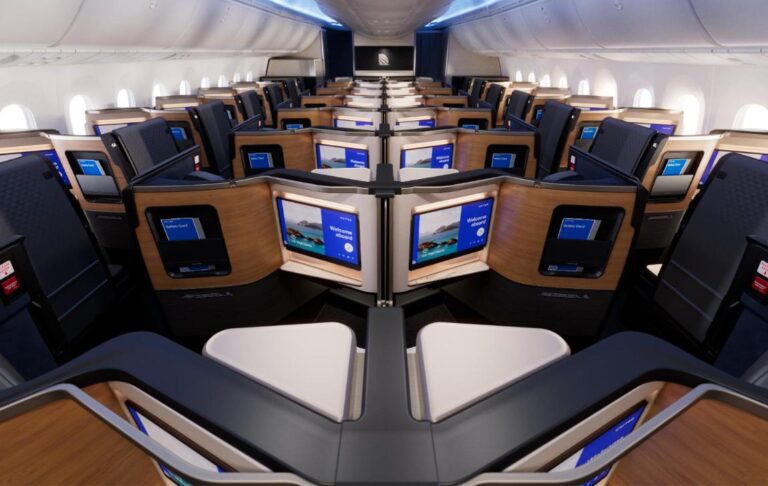
United’s answer to the “business class plus” trend arrived on 22 April 2026, when flight UA1 left San Francisco for Singapore with the first Boeing 787-9 fitted with the airline’s Elevated interior. At the front of the business cabin are eight United Polaris Studio suites — 25 per cent larger than a standard Polaris seat, with a door, an ottoman for a guest and a 27-inch 4K OLED screen that United says is the largest flown by any US carrier. London Heathrow followed on 30 April.
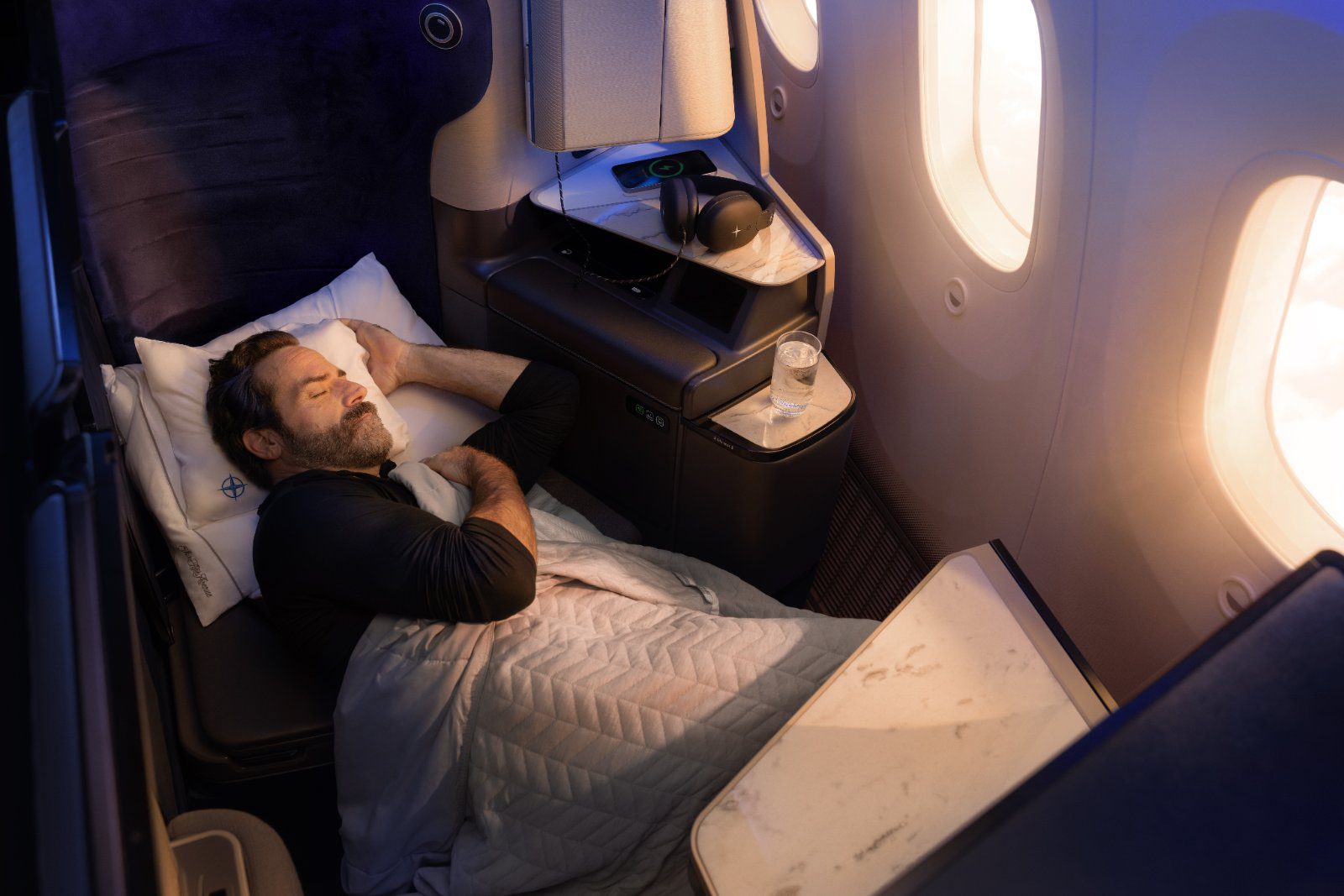
The aircraft carries 99 premium seats, the highest proportion of any US airline, and United plans at least 30 of them by the end of 2027. Here are the facts, what the Studio adds, and the caveats.
United Polaris Studio: Key Facts
- In service since: 22 April 2026 on UA1 San Francisco–Singapore; 30 April on UA901 San Francisco–London Heathrow (UA900 from Heathrow from 1 May)
- Aircraft: new-delivery Boeing 787-9 with the United Elevated interior (fleet code 78L); at least 30 by end-2027
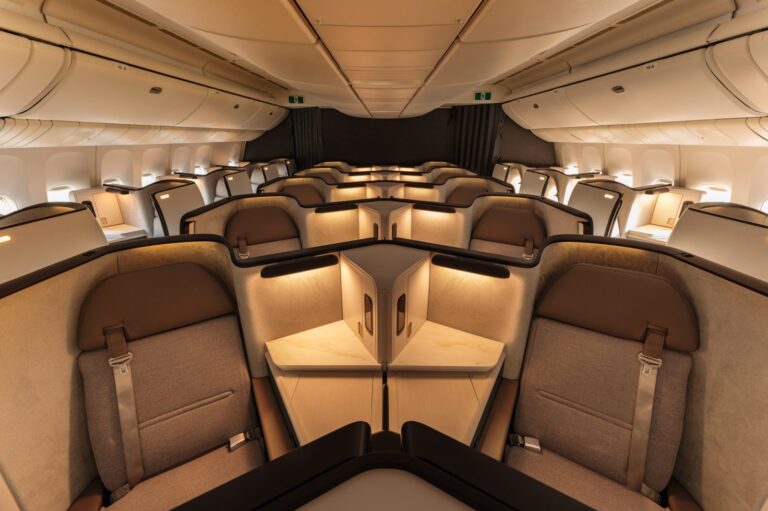
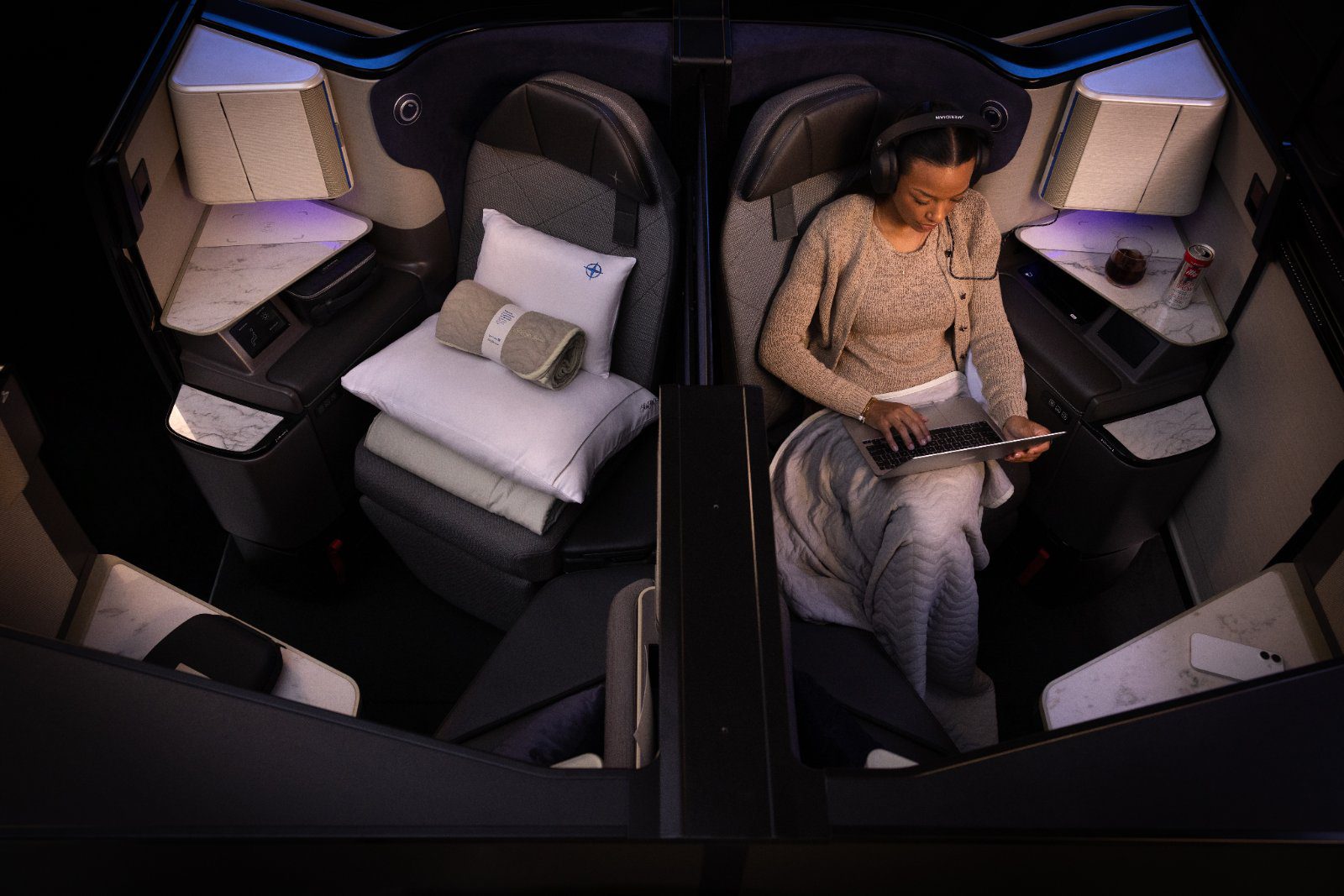
- Business cabin: 64 Polaris seats in 1-2-1 across two sections — 8 Polaris Studio in the first two rows plus 56 Polaris suites — with a snack bar between the sections
- Polaris Studio: 25% more space, privacy door, companion ottoman, 27-inch 4K OLED screen, wireless charging, Bluetooth, exclusive entrées, an Ossetra caviar amuse-bouche and Perricone MD amenity kits
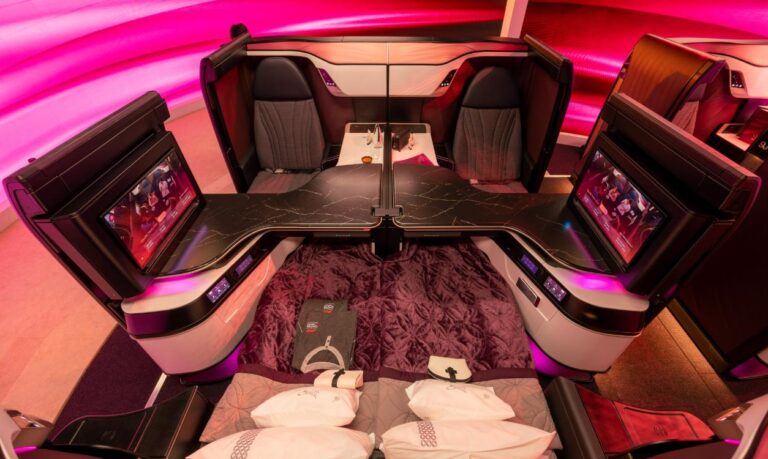
- Seat: customized Adient Ascent, the platform Qatar Airways introduced on its 787-9s
- Connectivity: Starlink Wi-Fi and Bluetooth at every seat in every cabin
- Schedule: UA1 departs SFO 22:40, arrives Singapore 06:45 two days later — around 17 hours nonstop
- Launch fares: US$6,258 in Polaris on the 22 April inaugural, against $2,718 in Premium Plus and $704 in economy
Eight Seats That Are Almost First Class
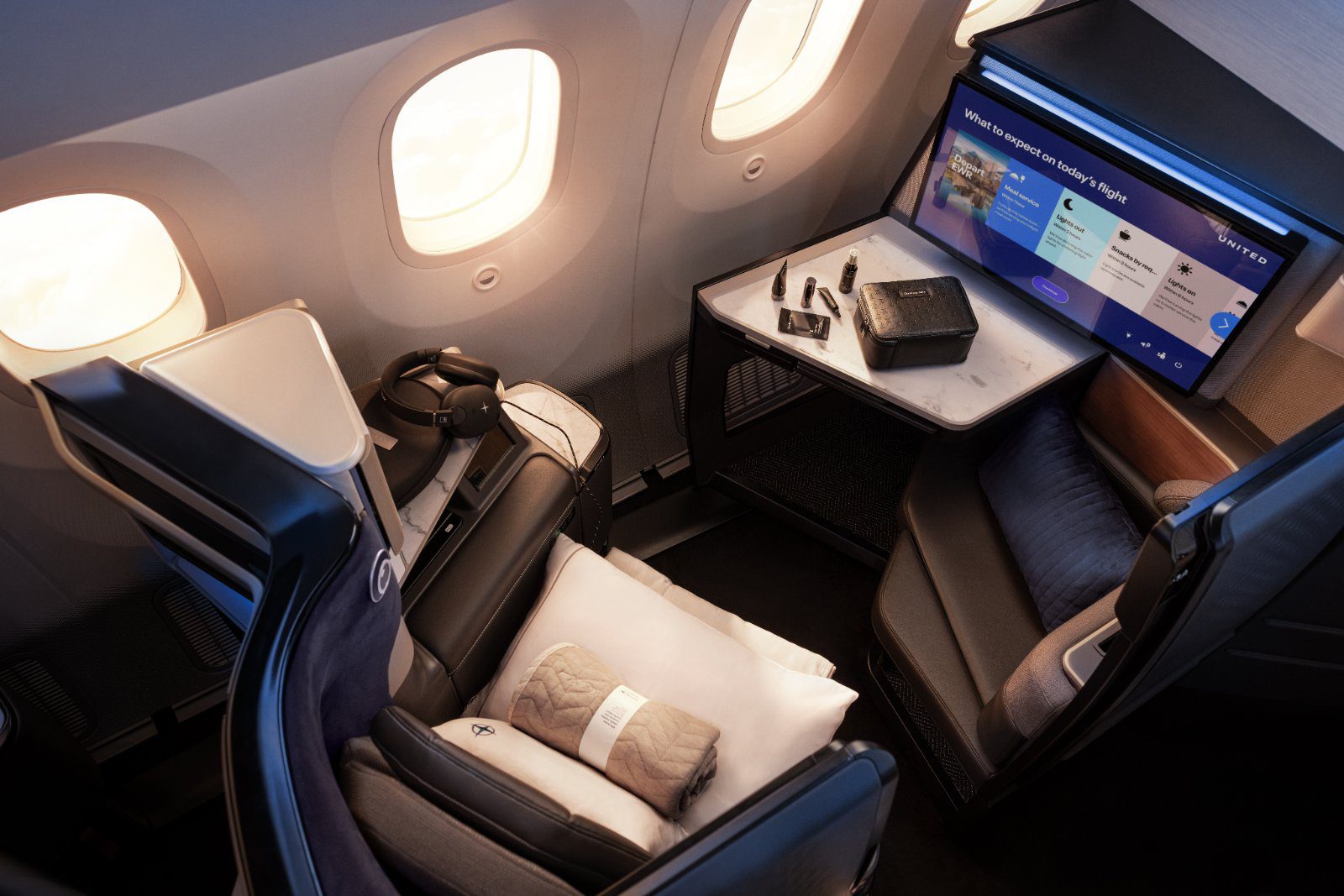
United has no first class and says it does not want one; the Polaris Studio is its way of selling a first-class-adjacent experience without a separate cabin. The eight seats sit in rows one and two, each with a closing door, a footrest that doubles as a seat for a companion at meal times, and that 27-inch screen. Dining is the differentiator: Studio passengers get their own entrée choices and a caviar amuse-bouche, and the skincare in the amenity kit is Perricone MD rather than the standard Polaris kit. ANA’s own new 787-9 suite, The Room FX, chases the same space with a wider seat that gives up recline altogether.
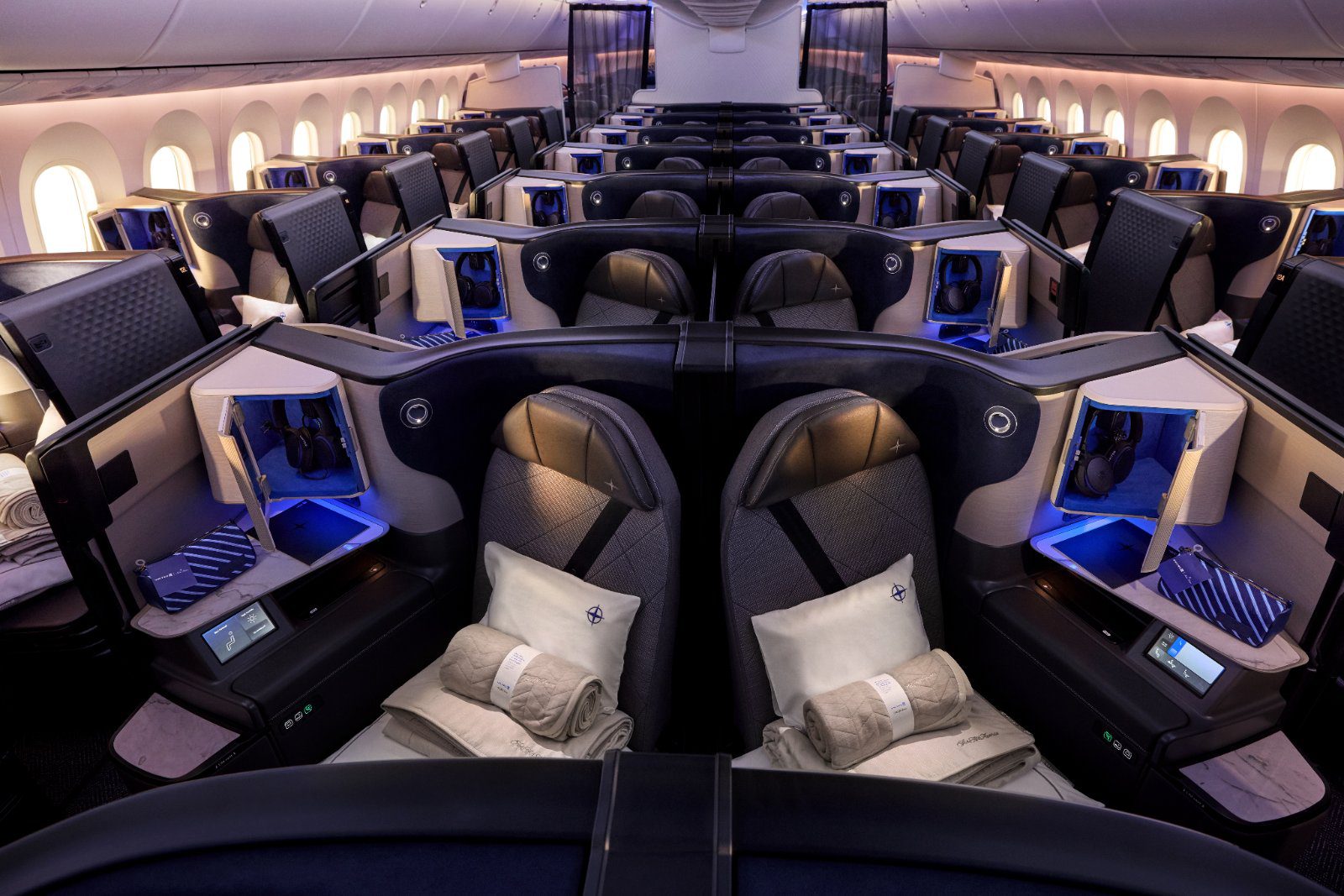
The 56 regular Polaris suites behind are new too — a doored version of the seat in a 1-2-1 that lets you choose between window-facing and center-facing positions — and the Adient Ascent platform underneath is the same one Qatar Airways picked for its 787-9s. One honest caveat from the launch: United said the privacy doors were temporarily unavailable on the first aircraft while certification caught up, so check current reports before you pay for the door.
San Francisco to Singapore, London and Beyond
United chose its two flagship long-hauls to launch: the 17-hour San Francisco–Singapore run as UA1, and San Francisco–Heathrow as UA901. The second daily Singapore flight, UA28/29, kept the older Polaris cabin at launch, so the flight number matters.
For Asia-based readers, the Singapore flight is the one to watch: a doored suite, Starlink and caviar on a 17-hour crossing, sold as business rather than first.
Tip: the Studio is a seat selection on top of a Polaris fare, and eight seats sell out fast — book the Polaris fare first, then secure rows one and two.
The Long-Haul Business Bar, First-Hand
I have not flown the Polaris Studio and this remains a preview. My comparison point for a 787 business seat is Etihad’s Abu Dhabi–Brussels Dreamliner: 1-2-1, all-aisle, a real mattress topper and a fully flat bed that earned 3.5 out of 5, marked down for underwhelming champagne and a lounge too crowded to enjoy. A 17-hour flight punishes exactly those weaknesses, which is why United’s decision to lead with dining — its own entrées, caviar, a snack bar between cabins — is the right instinct. Whether an American carrier can deliver Gulf-standard service for 17 hours is what I want to test.
How Much Does It Cost?
On the inaugural UA1, Polaris was priced at US$6,258 against $2,718 in Premium Plus, a noticeably higher premium than United’s other San Francisco–Singapore service. The Polaris Studio is sold as a seat selection on top of a Polaris fare and cannot be booked as a separate cabin.
Flight prices do move between platforms. The same business class seat on the same date is not always the same price on the airline’s own site, Aviasales, Kiwi.com, Trip.com and Expedia: point-of-sale currency, consolidator fares and what is bundled into the ticket can shift the fare by a few percent — and occasionally by much more on premium cabins booked out of Asia. So before I pay I run the same dates through Aviasales, which scans dozens of booking sites at once, then cross-check Kiwi.com, Trip.com (often the sharpest on Asian routes) and Expedia (strongest when you add a hotel to the same booking). One caveat: a ticket bought through a booking site is changed or refunded through that site, not the airline, so read the fare rules before you buy.
The most premium aircraft in any US fleet is flying the world’s most demanding business route — and it is bookable today.
Related: Air New Zealand’s rebuilt Dreamliner puts four Business Premier Luxe seats behind a door.
Photos © United Airlines
This preview is based on official announcements — I haven’t flown the Polaris Studio yet. Read more about how I review or visit my Work With Me page.
Disclosure: this article contains affiliate links. If you book through them, I earn a small commission at no extra cost to you. Read my full disclosure policy.