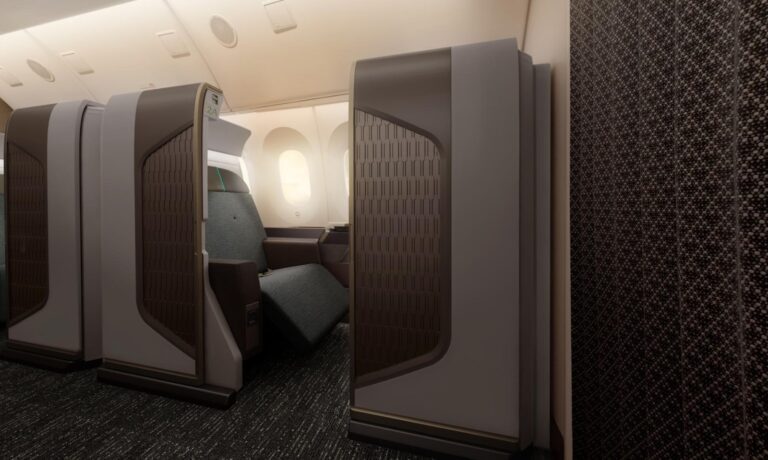
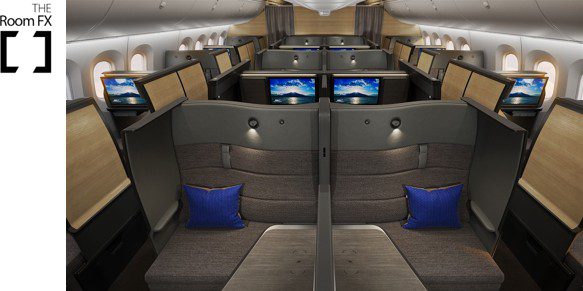
ANA’s The Room, launched on the Boeing 777-300ER in 2019, is one of the two or three widest business class seats in the world, and the airline spent six years working out how to fit something like it into the narrower 787. The answer, unveiled at the Paris Air Show in June 2025 with Safran Seats and Acumen, is ANA The Room FX — “Future Experience” — a doored, sofa-style suite that ANA calls the largest business class seat on any 787, up to 41.5 inches wide at its widest point, with a 24-inch screen, wireless charging and a full-height door. ANA now expects to take delivery of the first 787-9s with the cabin from November 2026, with routes and launch dates to be announced once they are finalised.
The design is also the most argued-about business seat of the year, because it does not recline. Here are the facts, why ANA made that choice, and how to find the aircraft.
ANA The Room FX: Key Facts
- Unveiled: 17 June 2025, Paris Air Show, on the Safran Seats stand; designed with Acumen, the studio behind The Room
- Aircraft: new-delivery Boeing 787-9s first, with deliveries scheduled from November 2026 and routes and launch dates still to be announced; retrofit of 16 existing international 787-9s from 2027
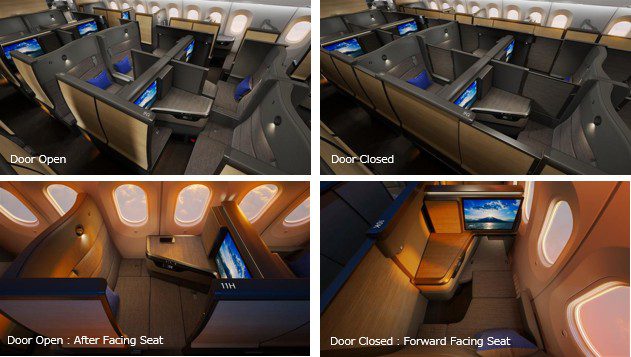
- Seat: alternating forward- and rear-facing 1-2-1, every seat with a full-height sliding door, pre-reclined sofa-style backrest with a manually raised legrest to make a flat bed of about 76.5 inches, width up to 41.5 inches at the widest point
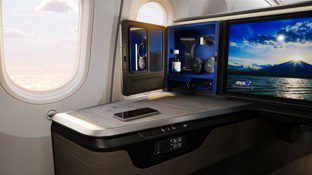
- Tech: 24-inch HD screen, Bluetooth audio, wireless charging, USB-A, USB-C and AC power
- Cabin: 48 business seats per aircraft, with 21 Premium Economy and 137 Economy seats — 206 in total, according to ANA’s seat map; premium economy and economy cabins are redesigned at the same time
- Routes: long-haul from Tokyo Haneda to North America and Europe first; Prince of Travel lists Brussels, Frankfurt, Houston, Los Angeles, Milan, Munich, Paris and Vienna as target routes, Vancouver not before 2027–28
- Fleet: 35 international 787-9s in service and 27 more on order
- Older product: the existing 787-9 business class is a staggered 1-2-1 without doors; The Room on the 777-300ER flies on nine aircraft
- Fares: not published; cash business fares typically quoted at US$5,000–8,000 return on Tokyo–US routes, awards from 75,000–100,000 miles one way
A Sofa, a Door, and No Recline

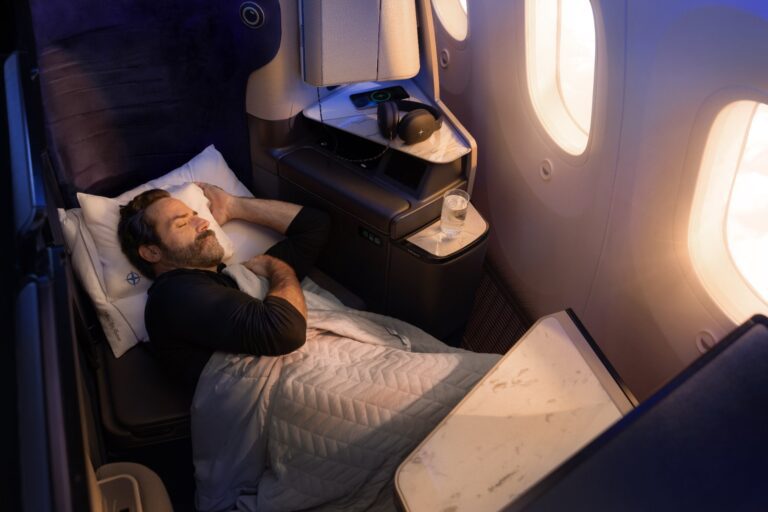
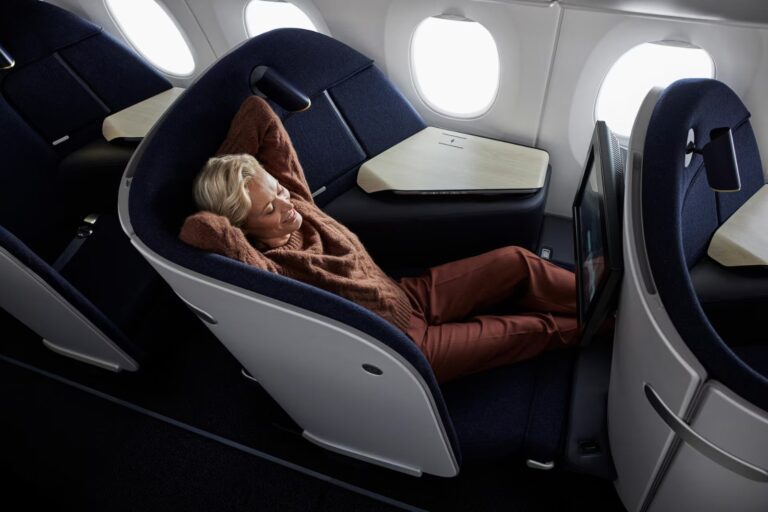
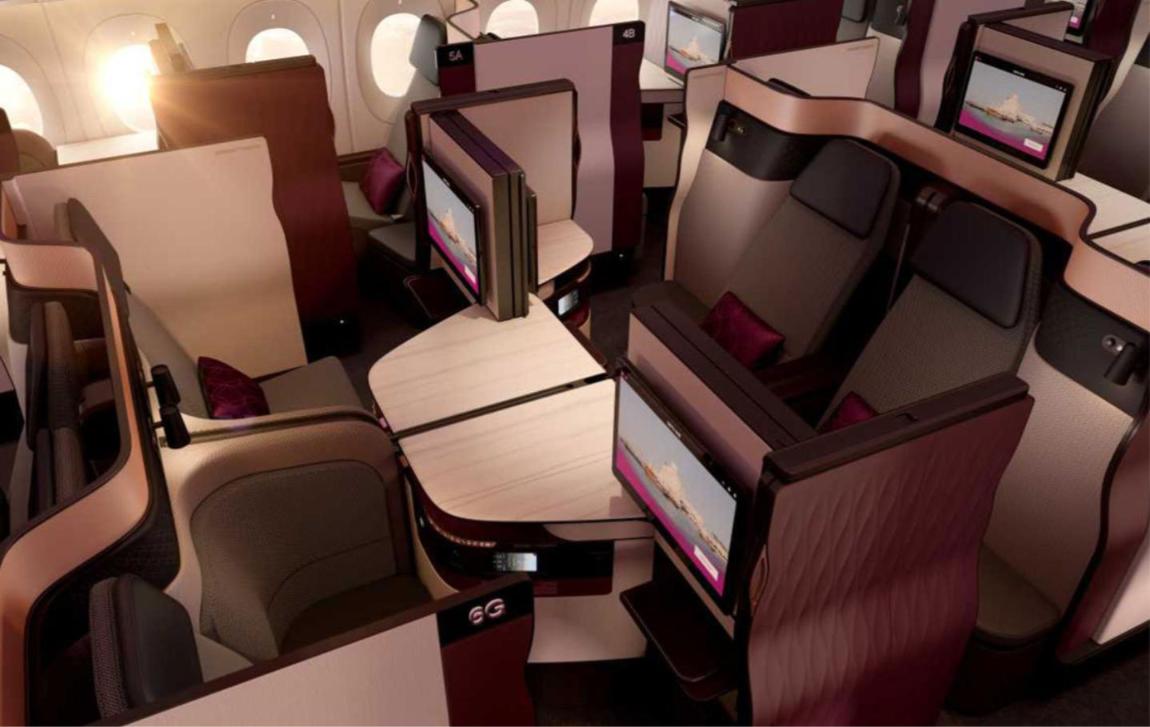
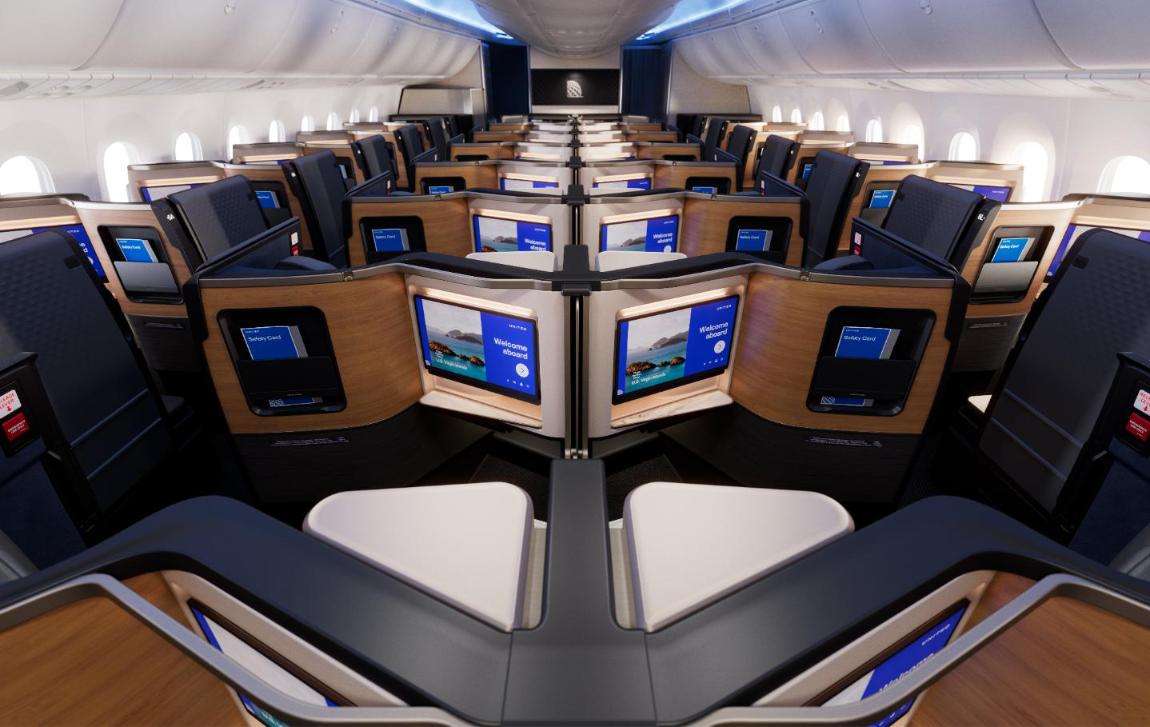
Every other airline builds a business seat that tilts back by degrees; ANA built one that does not move. ANA The Room FX has a fixed, pre-reclined backrest in a sofa position, with enough width that you sit sideways, curl up or stretch out rather than adjust an angle, and a legrest you lift by hand to close the bed. The point is width: up to 41.5 inches at the widest point, against 20 to 22 inches for a standard business seat, which is why ANA describes it as first class space on a business ticket. Every suite has a full-height door, a 24-inch screen and wireless charging, and the alternating forward/rear layout means half the cabin faces backwards on take-off. The other big 787 business launch this year, United’s Polaris Studio, took a different route to space: a larger suite with a door, a guest ottoman and a 27-inch screen.
The debate is whether losing recline loses comfort. Finnair took the same bet with the AirLounge in 2022 and its passengers are split roughly evenly; Fly First Class called ANA’s version either the most comfortable suite in the sky or an experiment that goes too far, and until the first flights are reviewed nobody knows which. What is settled is the pedigree behind ANA The Room FX: The Room on the 777 is the seat ANA is copying, and it is among the best-reviewed business cabins in Asia. In the region, the doored suite it will be measured against is Cathay Pacific’s Aria Suite.
Which Flights Get It
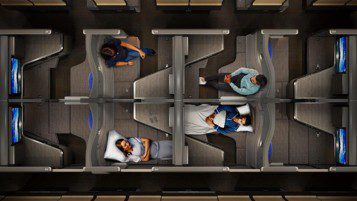
The first 787-9s with ANA The Room FX are new deliveries rather than retrofits, arriving from November 2026, and ANA has not published a route list — long-haul from Haneda to North America and Europe is the stated priority, with Brussels, Frankfurt, Houston, Los Angeles, Milan, Munich, Paris and Vienna the routes industry guides expect first. With 35 international 787-9s in the fleet and only the first new deliveries arriving this year, the chance of drawing the new cabin on any given Haneda departure is small until the 2027 retrofits begin. The seat-map tell is the alternating arrows: the Room FX cabin shows seats facing forwards and backwards in the same row, with a door drawn on each; the old 787-9 layout is a conventional staggered 1-2-1.
For a Bali or Singapore reader the practical route is a Haneda connection: ANA’s Southeast Asian flights use other aircraft, so the new seat is on the long leg, not the regional one.
Tip: look for the backwards-facing seats on the seat map — no other ANA 787 has them. If you are booked on a Haneda long-haul in the next few months and the map changes to that layout, keep the booking.
Width Versus Recline, First-Hand
I have not flown ANA The Room FX and this stays a preview. The point of comparison is what a conventional seat delivers: on Etihad’s 787-9 from Abu Dhabi to Brussels the reclining 1-2-1 seat with a mattress topper earned 3.5 out of 5 — the seat was the best part, the catering and lounge the weak ones. ANA is betting that once a seat is wide enough, recline stops mattering; Japanese carriers’ catering and crew are the strongest in the business, so if the seat works, the whole flight does. That is the review I want to write.
How Much Does It Cost?
ANA does not publish rack fares and does not price ANA The Room FX above its older 787 business seat; the aircraft on your flight number decides which you get. Cash business fares on Tokyo–US routes run roughly US$5,000–8,000 return; ANA Mileage Club awards open 330 days out, and partner awards through Virgin Atlantic Flying Club and United MileagePlus are the usual route in from 75,000–100,000 miles one way.
Flight prices do move between platforms. The same business class seat on the same date is not always the same price on the airline’s own site, Trip.com and Expedia: point-of-sale currency, consolidator fares and what is bundled into the ticket can shift the fare by a few percent — and occasionally by much more on premium cabins booked out of Asia. So before I pay I run the same dates through Aviasales, which scans dozens of booking sites at once, then check Trip.com (often the sharpest on Asian routes) and Expedia (strongest when you add a hotel to the same booking). One caveat: a ticket bought through a booking site is changed or refunded through that site, not the airline, so read the fare rules before you buy.
A door, a sofa and twice the width of anything else in the cabin — ANA’s 787 gamble is the most original business seat of 2026, and the first flights will decide whether recline was ever the point.
Renderings © ANA
This preview is based on official announcements — I haven’t flown The Room FX yet. Read more about how I review or visit my Work With Me page.
Disclosure: this article contains affiliate links. If you book through them, I earn a small commission at no extra cost to you. Read my full disclosure policy.