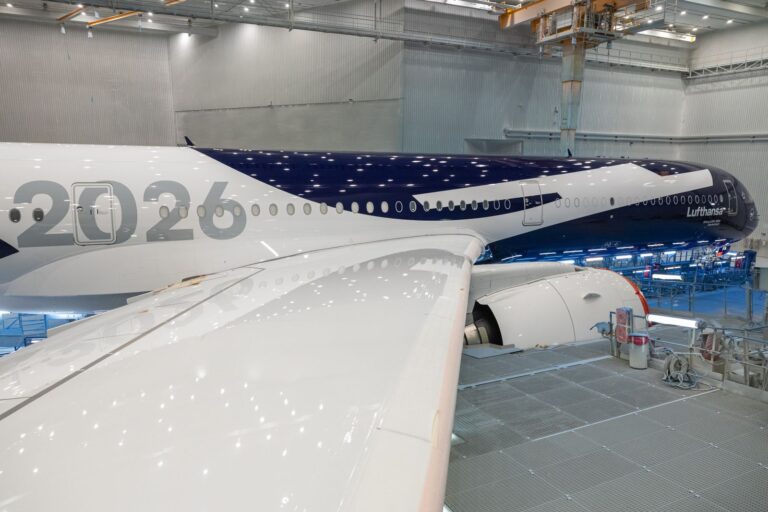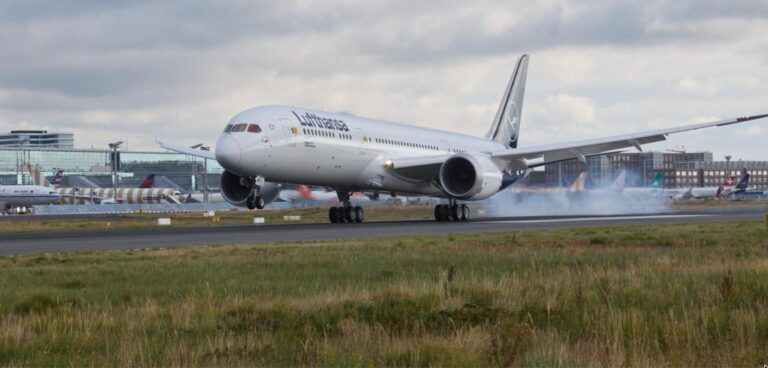
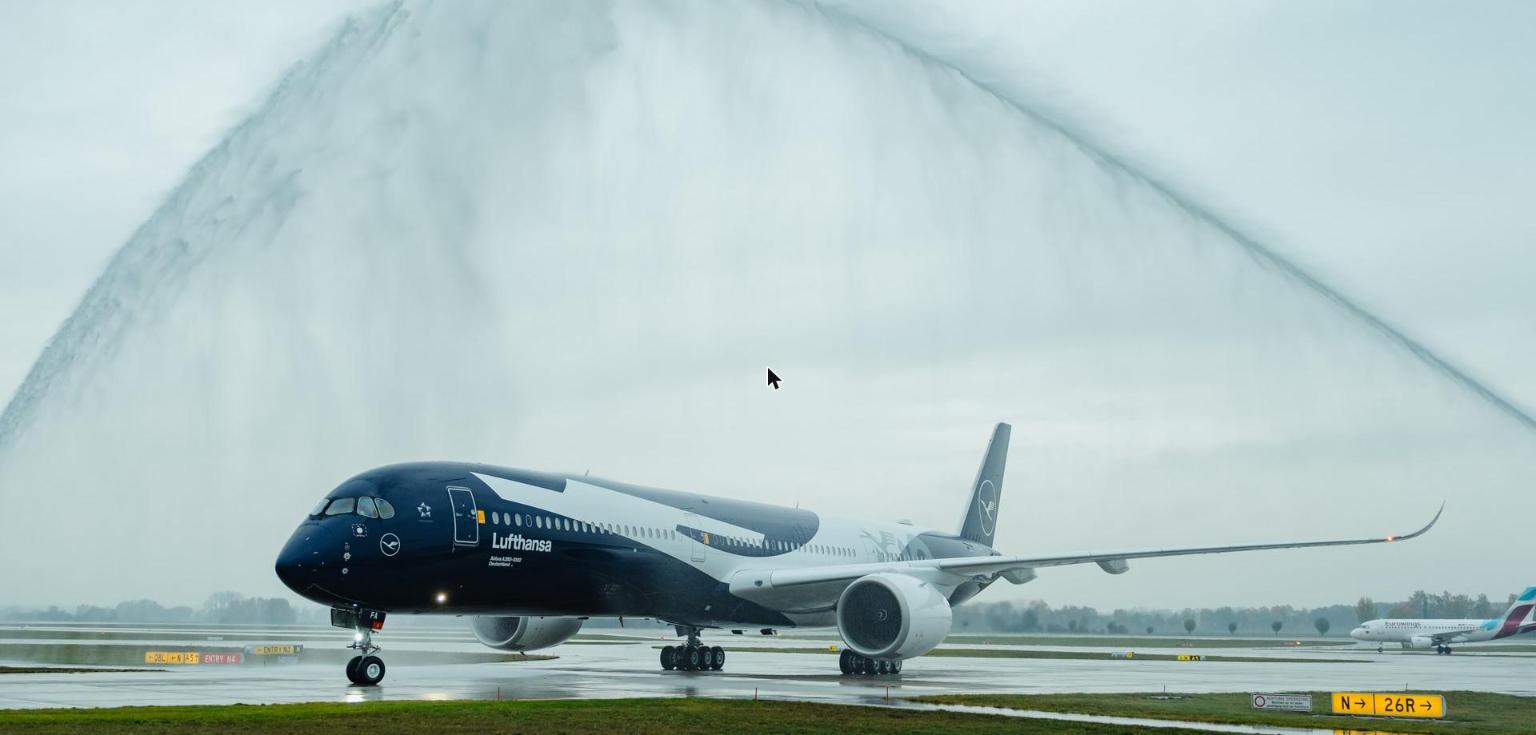
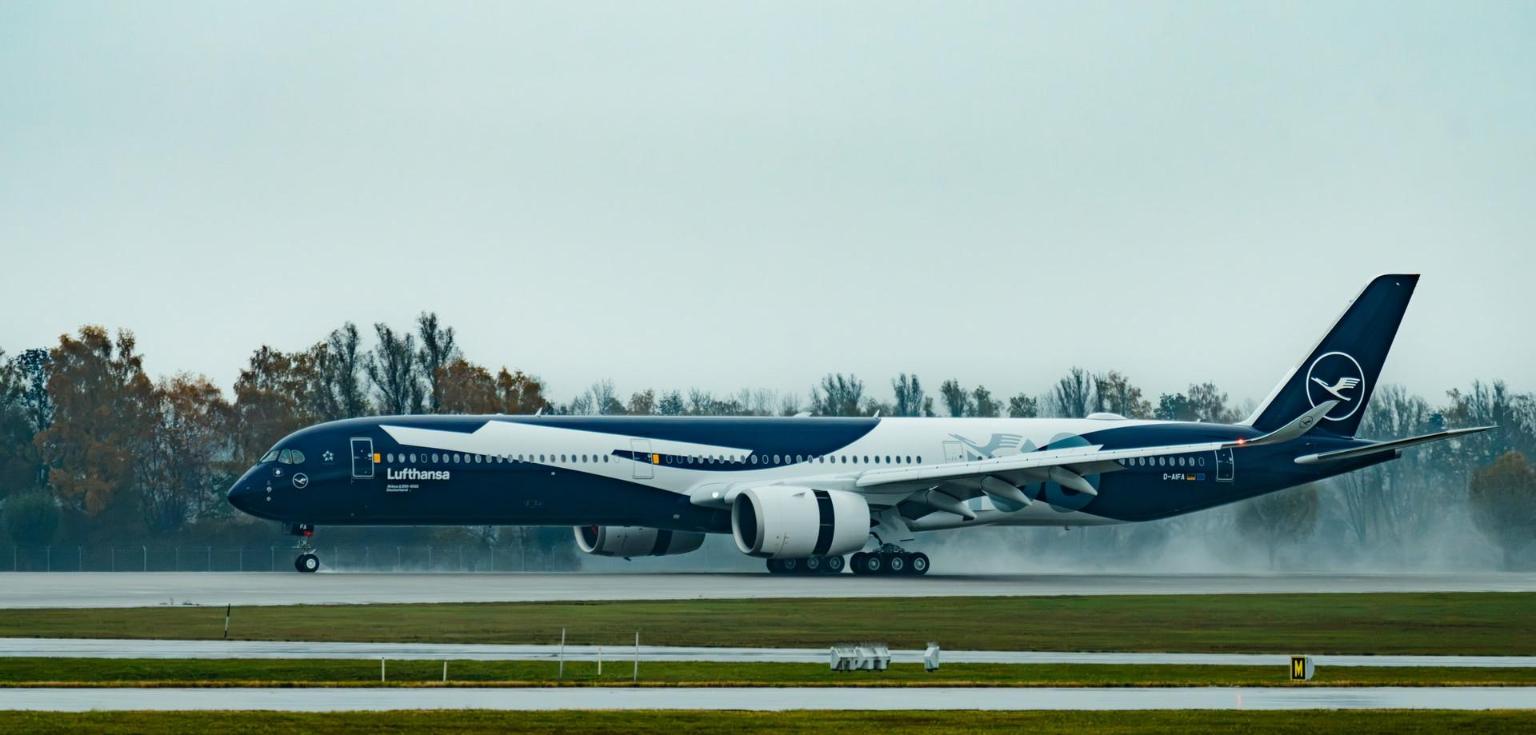
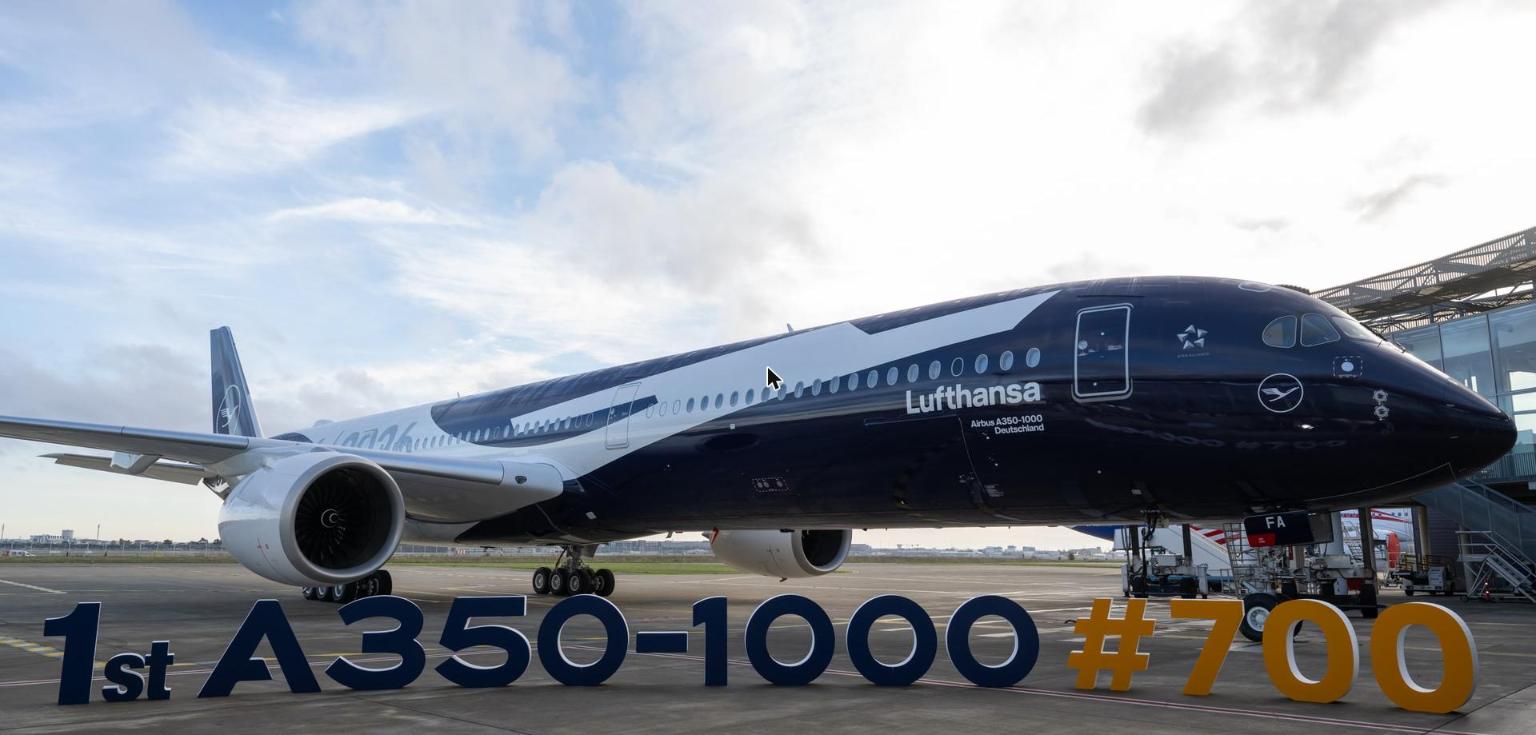
At 3:37 p.m. on 11 November 2026, a 73.80-meter Airbus wearing Lufthansa’s 100th-anniversary livery touched down on Munich’s northern runway as special flight LH9901, took a welcome lap along Terminal 2 in front of a crowd of aviation enthusiasts, and taxied to the Lufthansa Technik hangar. Its name is “Deutschland,” its registration is D-AIFA, and it is the first Lufthansa A350-1000. On 3 December 2026 it flies its first commercial service, from Munich to Tokyo Haneda, and it arrives as the airline’s new flagship: a four-class jet with a First cabin of two individual suites plus one “Suite Plus,” 49 Business seats (eight of them suites), 35 Premium Economy seats and 212 in Economy.
In October I wrote a preview of the Lufthansa A350-1000 and its first routes. This is the follow-up: the aircraft is here, it has a date, and it brings something no other Lufthansa Group long-haul jet has yet, Wi-Fi powered by Starlink, free for Miles & More members and Travel ID users in every class. Here is what it brings, and the one booking detail that matters most on Tokyo.
Lufthansa A350-1000: Key Facts
- Announced: 10 November 2026, Lufthansa Group newsroom (“Lufthansa Group, the world’s largest Airbus customer, receives its 700th Airbus aircraft”); arrival confirmed 11 November 2026 (“Lufthansa’s First Airbus A350-1000: Welcome to Munich!”)
- Aircraft: Airbus A350-1000, registration D-AIFA, named “Deutschland”; the 700th Airbus aircraft delivered to the Lufthansa Group, 50 years after the first; the seventh aircraft in the 100th-anniversary livery
- Arrival: landed in Munich from Airbus in Toulouse at 3:37 p.m. on 11 November 2026 as special flight LH9901
- First commercial flight: 3 December 2026, Munich–Tokyo Haneda; Lufthansa has not published a flight number, schedule or frequency in these releases
- Next routes: Shanghai and Singapore “in the weeks that follow”; Lufthansa says these flights will be “flown by the A350-1000 and the A350-900 alternately”
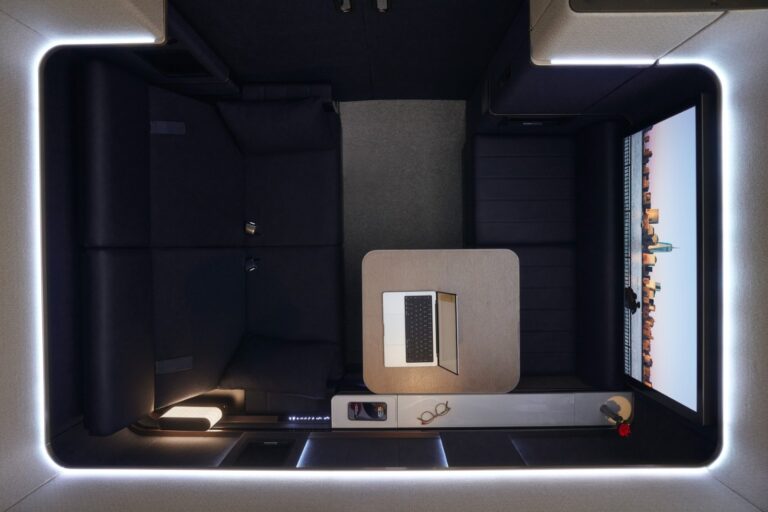
- Cabins: 300 passengers in four classes; three to four First Class seats (two individual suites and one “Suite Plus”), 49 Business (including eight seats in suites), 35 Premium Economy, 212 Economy
- Wi-Fi: the first Lufthansa Group long-haul aircraft with Lufthansa Group Wi-Fi powered by Starlink, from its first flight; free for all Miles & More members and Travel ID users in all travel classes
- Fleet: 15 A350-1000s ordered for delivery by 2030; the first ten fly for Lufthansa from Munich
- Size and engines: 73.80 meters long, seven meters longer than the A350-900; two Rolls-Royce Trent XWB-97 engines
- Efficiency: “up to 30 percent less fuel per passenger” (Carsten Spohr, 10 November release); “25% reduction in fuel consumption and CO2 emissions compared to previous-generation aircraft” (earlier Tokyo release)
- Quote: Carsten Spohr, CEO of the Lufthansa Group: “Our guests can look forward to the new Allegris premium cabin in all travel classes. The A350-1000 will become our new flagship at our five-star hub in Munich.”
- Fares: none published; see below
Why the Lufthansa A350-1000 Matters
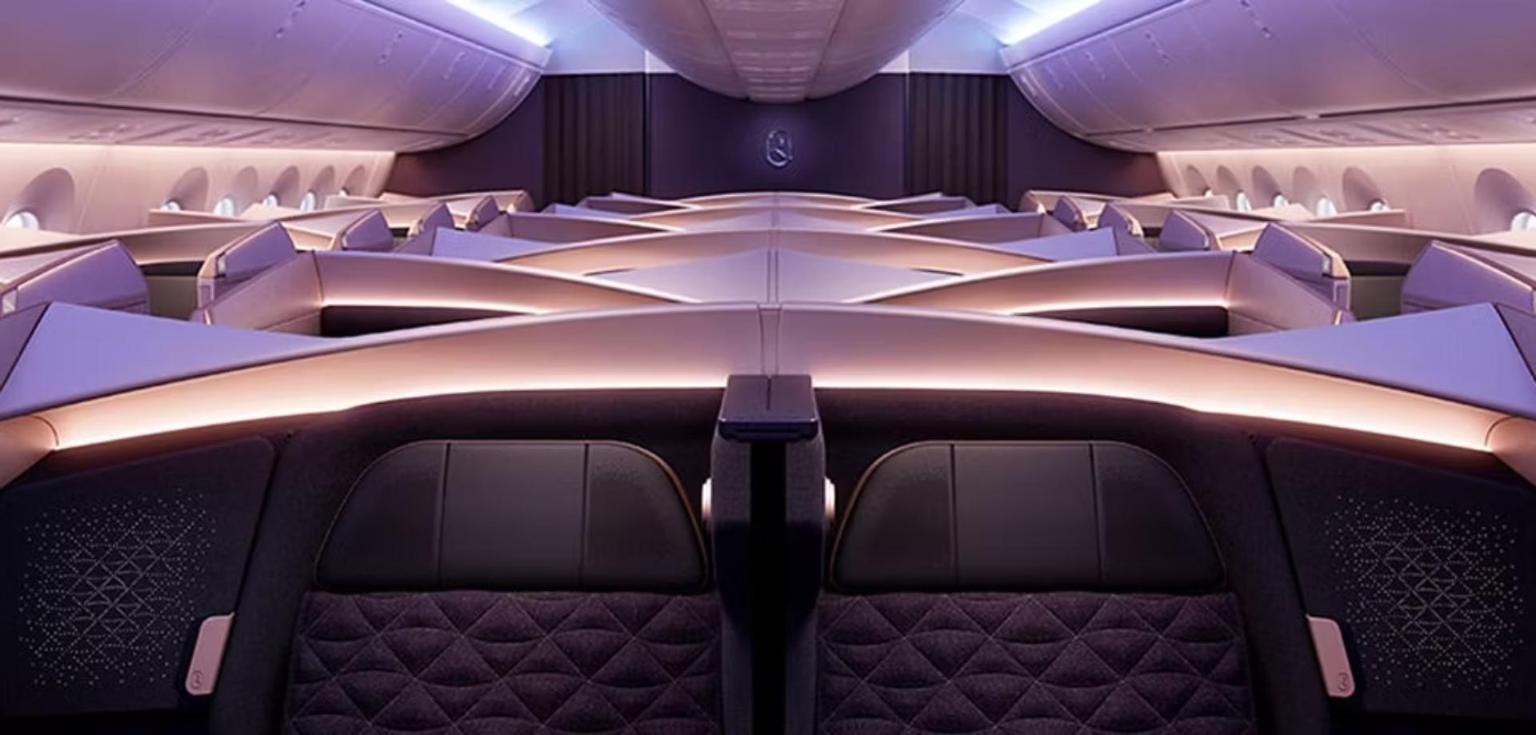
The headline number is not the 300 seats. It is the shape of the premium cabin. Heiko Reitz put it plainly in Lufthansa’s earlier Tokyo release: “Our new flagship features 40 percent more Business and Premium Economy seats.” Lufthansa doesn’t say which aircraft that figure is measured against, but the direction is clear. With 49 Business seats and 35 in Premium Economy, this is a jet built to sell the front half of the plane on long, high-yield routes out of Munich, and Tokyo, Shanghai and Singapore are exactly those routes.
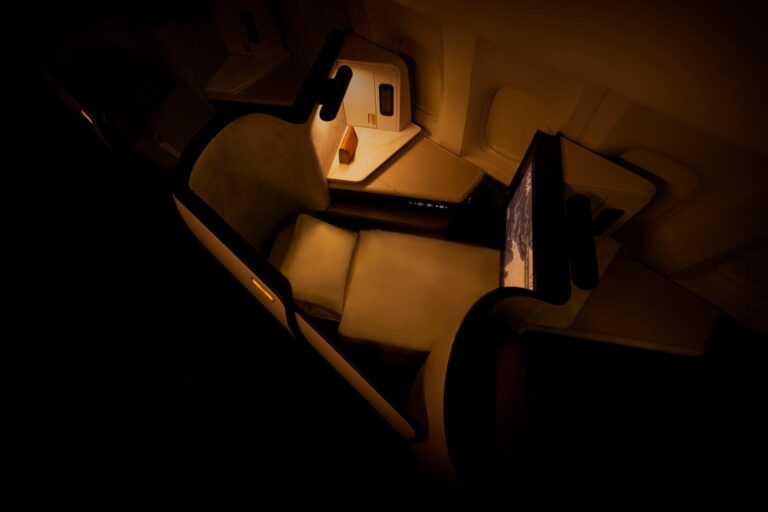
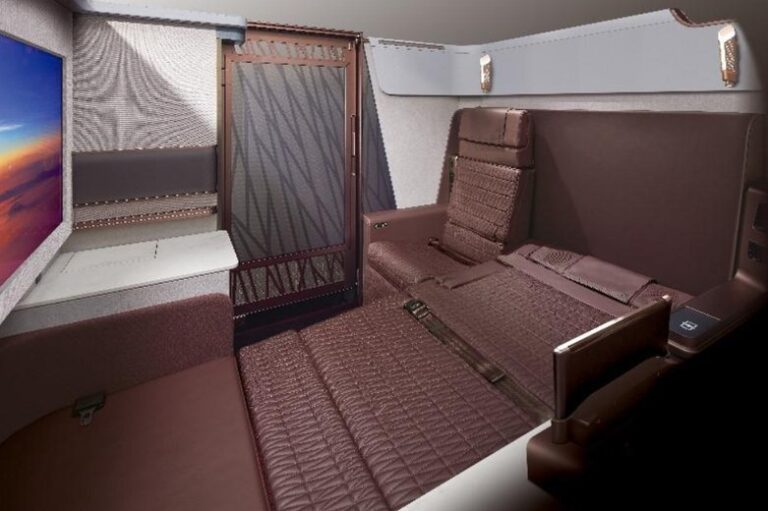
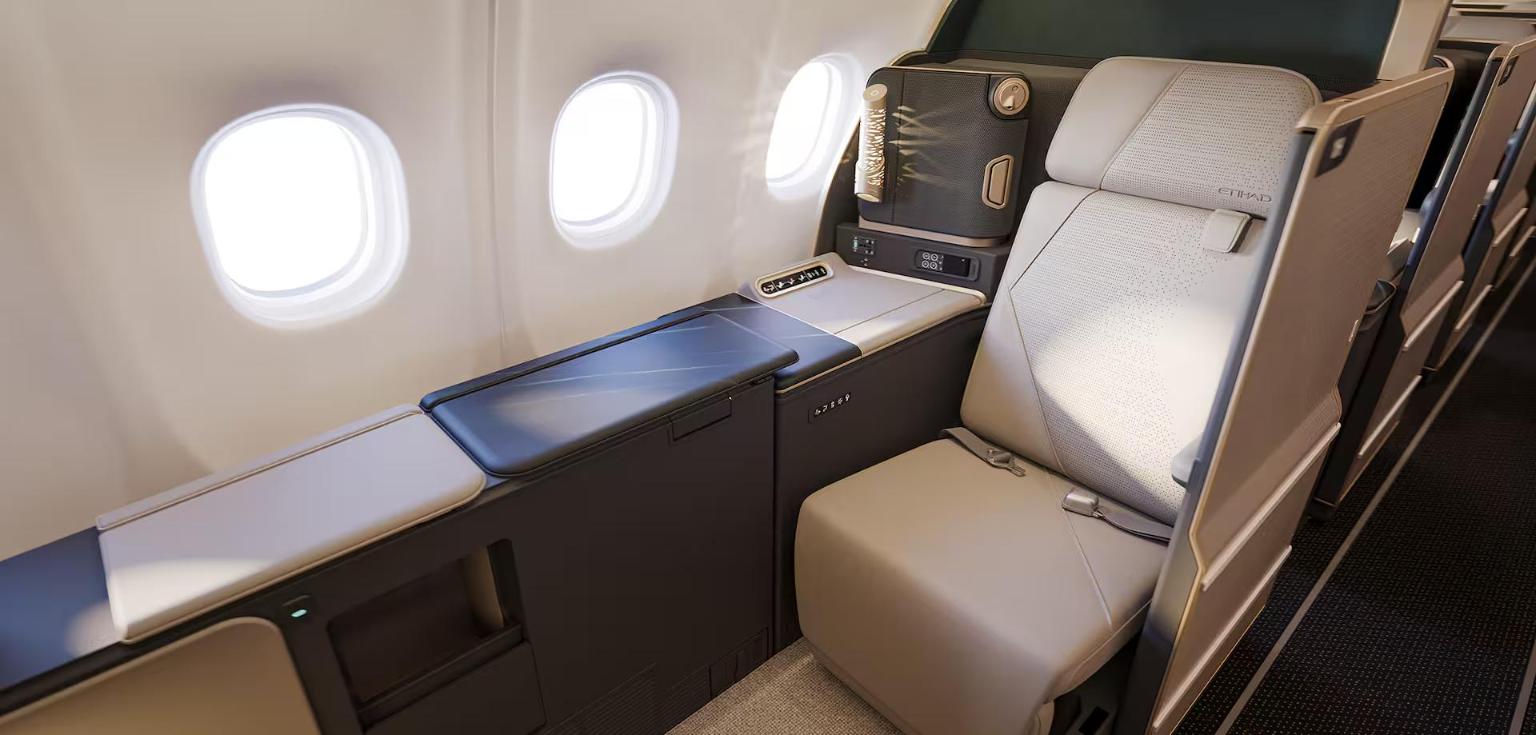
The First cabin is the curiosity. Lufthansa counts it as “three to four seats,” made up of two individual suites and one “Suite Plus.” The 300-passenger total only adds up if that Suite Plus takes two people, which makes it the obvious seat for couples and the most interesting product on the aircraft. Business has its own split: eight of the 49 seats are suites. Lufthansa’s releases don’t describe how a suite differs from a standard Business seat, so I won’t guess at doors or bed lengths, but a two-tier Business cabin is a reason to study the seat map rather than take whatever the system assigns.
Then there is Starlink. Spohr’s release promises speeds “in many cases, faster than the connection at home or in the office,” enough for video and cloud-based work, and it is free across every class for Miles & More members and Travel ID users. On a flight as long as Munich–Tokyo, that changes how the time passes, and for business travelers it may matter more than the seat.
The wider context is fleet renewal. Lufthansa calls the A350-1000’s arrival part of “the largest fleet modernization program in the history of the Lufthansa Group,” with 15 aircraft due by 2030. The two fuel figures in the key facts come from two different releases and measure different things, so I’m reporting each as stated rather than picking one.
The Caveat: A350-1000 or A350-900 to Tokyo?
This is the detail that will catch people out. Lufthansa’s Tokyo release says that on Tokyo, and on Shanghai and Singapore after it, “All flights will feature the Allegris cabin and be flown by the A350-1000 and the A350-900 alternately.” So booking Munich–Haneda does not guarantee you the new flagship. Some departures will be the A350-1000; others will be the smaller A350-900.
Both carry the Allegris cabin, according to Lufthansa, but the specific numbers in this article, the two First suites and the Suite Plus, the 49 Business seats with eight suites, belong to the A350-1000. The Starlink claim belongs to it too: “Deutschland” is the first Lufthansa Group long-haul aircraft with the new Wi-Fi, and the releases don’t say when it reaches the rest of the long-haul fleet. If free Starlink or the Suite Plus is the reason you are booking, you need the -1000 specifically.
The other gap is the timetable. No official Lufthansa page I read gives a flight number, times or weekly frequency for Tokyo, and I won’t repeat unofficial schedules. Treat 3 December as the first day the A350-1000 flies to Haneda, not a promise about any departure after it.
Munich–Tokyo Haneda alternates between the A350-1000 and the A350-900, so check the aircraft type on the exact flight in the booking path before you pay, and check it again a few days before departure, because airlines swap aircraft. If you want the Suite Plus or the free Starlink Wi-Fi, look for the A350-1000, and make sure your Miles & More account or Travel ID is set up before you board so the Wi-Fi is free.
How It Compares With the Competition
The closest comparison is Lufthansa itself. I’ve already covered Lufthansa’s Allegris First Class on the Singapore route, and the A350-1000 now joins that rollout on Munich’s long-haul network. The difference on this jet is the Suite Plus and the Starlink connection. Lufthansa hasn’t named the A350-1000’s cabin products beyond “Suite Plus” and Business “suites,” so a seat-by-seat comparison will have to wait.
On Tokyo specifically, Lufthansa is flying into a city whose home carrier has the same airframe. Japan Airlines’ A350-1000 carries its own First and Business Class cabins. A First cabin of three to four seats is small and exclusive, which can be a strength: fewer passengers, more attention from the crew.
The longer-range benchmark is Singapore Airlines, which is preparing its new First Class for the 777-9 and A350-900ULR in the second half of 2027. Lufthansa gets a year’s head start with a new First cabin in Asia before that arrives. On connectivity, free Starlink puts Lufthansa in the same camp as Korean Air, which has launched free Starlink Wi-Fi, and Singapore Airlines, which has announced Starlink too.
In Business, the question will be privacy. Qatar Airways’ Qsuite has set the standard with a door on every seat. Lufthansa’s A350-1000 has eight Business suites out of 49 seats. Until Lufthansa explains what those suites offer, I’d treat them as the seats to target and the other 41 as an unknown.
Lufthansa, First-Hand Context
I haven’t flown the Lufthansa A350-1000, and this is a preview based on Lufthansa’s announcements, not a review.
My Etihad 787-9 business class review scored 3.5 out of 5, and I marked it down for the wine. A good seat doesn’t make up for a poor glass on a long flight. On my Emirates 777 business class flight from Malé, the opposite happened: the food and the amenity kit carried a dated cabin. Lufthansa’s releases are all hardware: aircraft, suites, engines, Wi-Fi. They say nothing about dining, wine or service, and those decide whether a long flight to Tokyo feels premium.
When I fly it, I’ll be checking whether the Suite Plus works for two the way the seat count suggests, whether Starlink holds up across a full cabin, and whether the food and wine match the hardware. If I were booking Tokyo in December, I’d pick a confirmed A350-1000 departure and aim for one of the eight Business suites or the Suite Plus, rather than risk landing an A350-900 on the strength of the headlines.
How Much Does It Cost?
Lufthansa has not published fares for the A350-1000 or for its Munich–Tokyo Haneda flights. Business and First are sold on the airline’s own website and through booking sites, priced dynamically by date. With only three to four First seats and eight Business suites on the aircraft, the most sought-after seats will go first, so early December departures are worth watching now.
Flight prices do move between platforms. The same business class seat on the same date is not always the same price on the airline’s own site, Trip.com and Expedia: point-of-sale currency, consolidator fares and what is bundled into the ticket can shift the fare by a few percent — and occasionally by much more on premium cabins. So before I pay I run the same dates through Aviasales, which scans dozens of booking sites at once, then check Trip.com (often the sharpest on long-haul fares) and Expedia (strongest when you add a hotel to the same booking). One caveat: a ticket bought through a booking site is changed or refunded through that site, not the airline, so read the fare rules before you buy.
The Lufthansa A350-1000 looks like the best way to fly Lufthansa to Tokyo, as long as you confirm that your flight is operated by the A350-1000 and not the A350-900.
Photos © Lufthansa
This preview is based on official announcements — I haven’t flown the Lufthansa A350-1000 yet. Read more about how I review or visit my Work With Me page.
This article contains affiliate links. If you book through them, I may earn a small commission at no extra cost to you. Read my full disclosure policy.