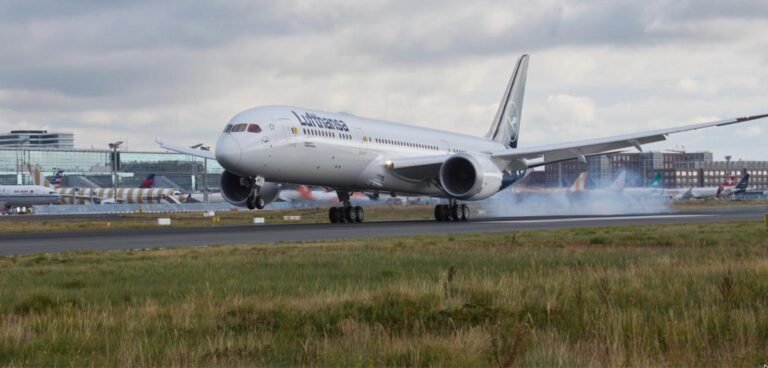
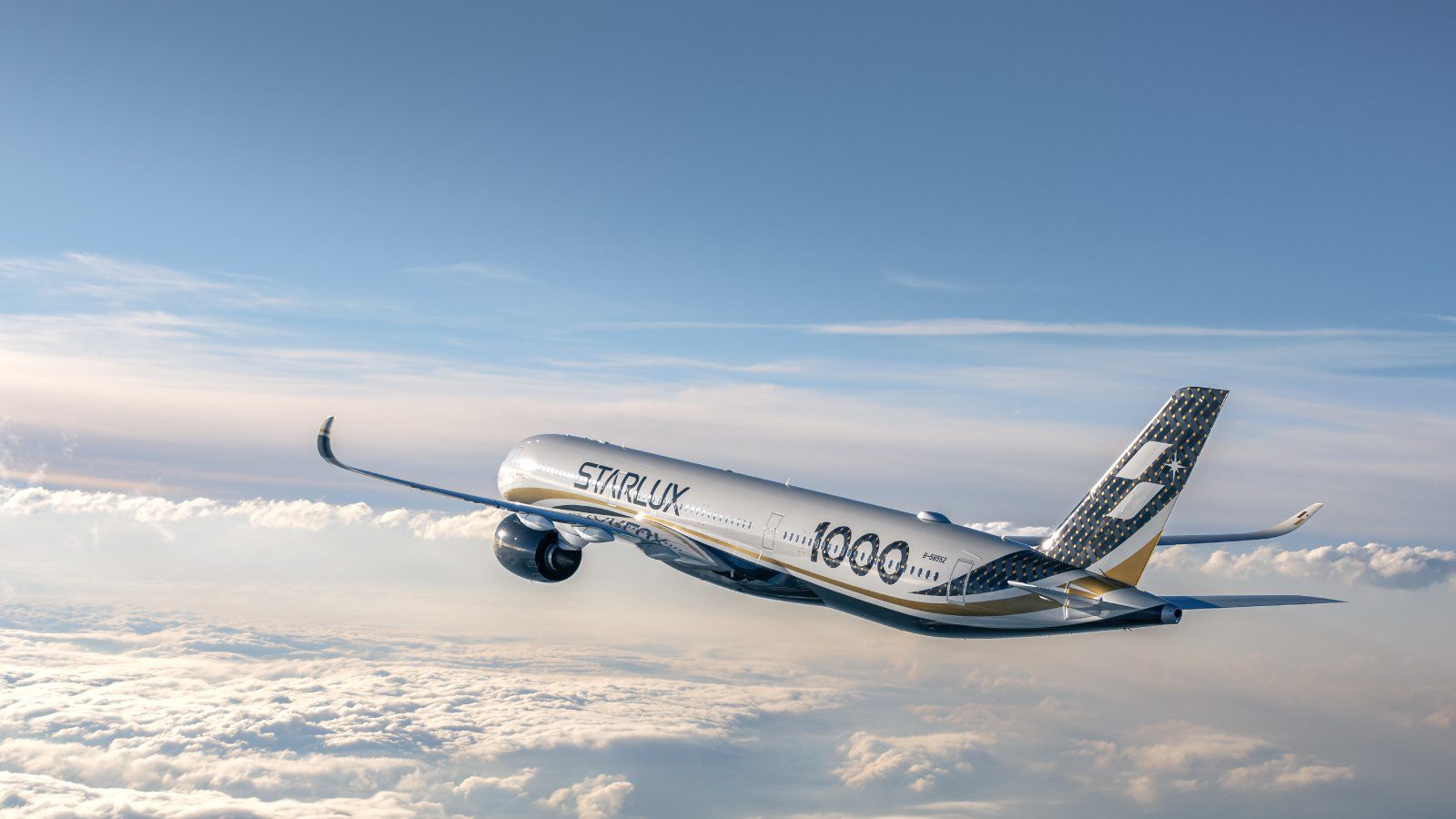
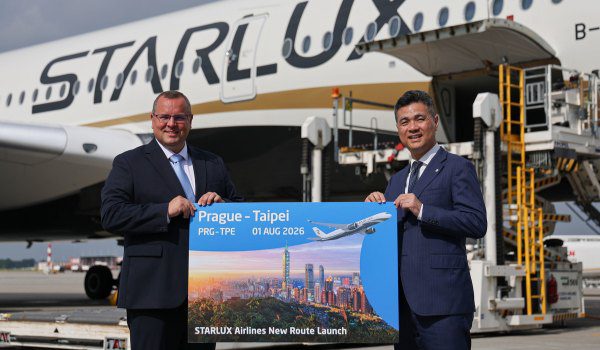
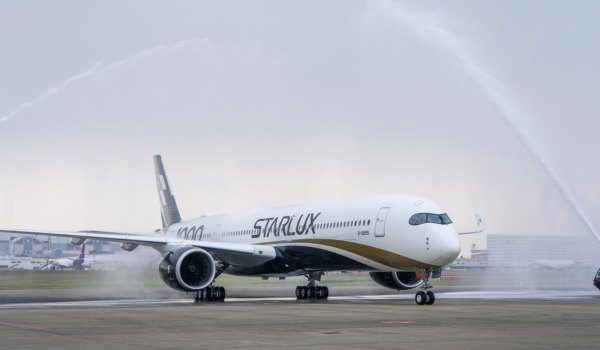
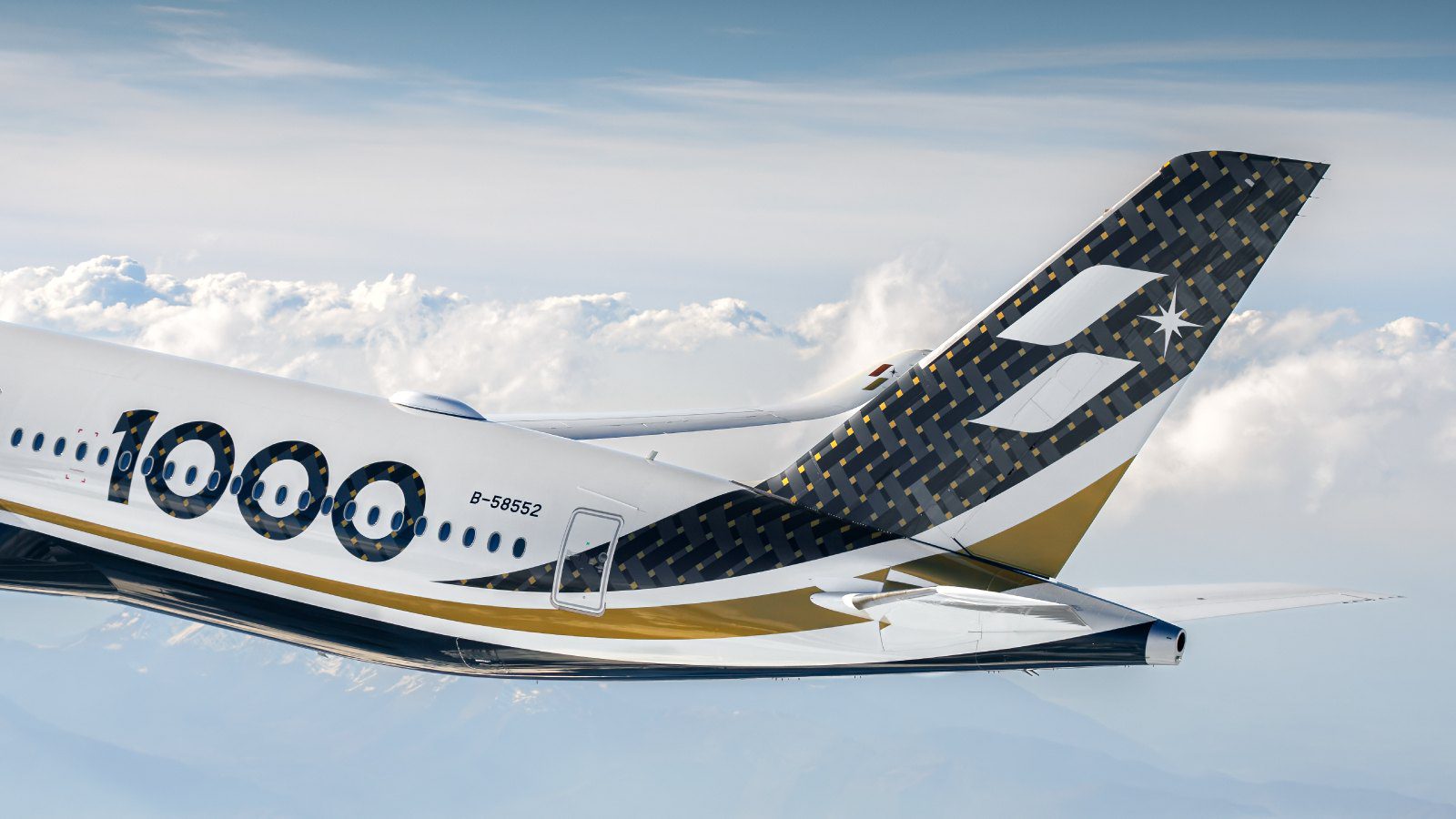
Starlux Airlines is eight years old, and it is the only airline in Taiwan with a First Class cabin. On 10 February 2026 it put its first Airbus A350-1000 — Taiwan’s first of the type — into service on Taipei–Tokyo after showing it at the Singapore Airshow, and from 25 October 2026 the aircraft takes over the daily JX1/2 Los Angeles flight, the airline’s flagship route to the United States. Phoenix has already had it; Prague, the airline’s first European destination, opened on 1 August 2026 and moved up to the A350-1000 on 1 September.
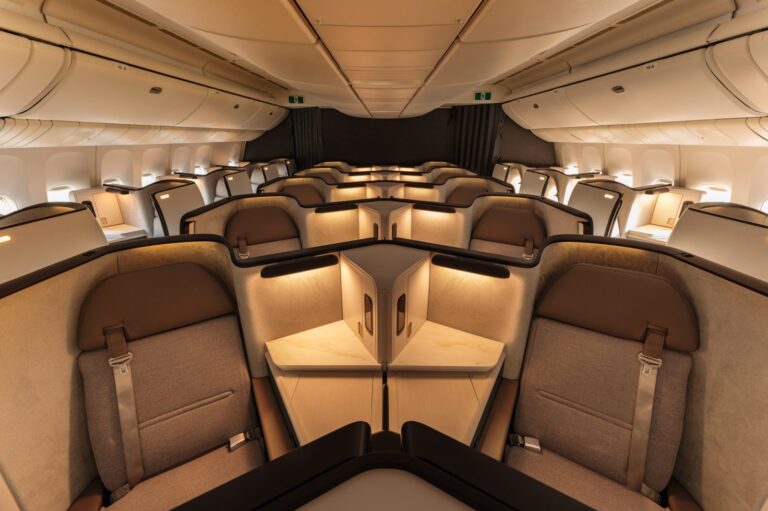
The -1000 carries 350 seats in four classes with 40 doored business suites, up from 26 on the A350-900, and Starlux is taking six of them in a year in which it receives 14 aircraft in total. Here are the facts, what the “Glisten” cabin looks like, and why Taipei has become a serious premium connection point for Southeast Asia.
Starlux A350-1000: Key Facts
- In service since: 10 February 2026, Taipei Taoyuan–Tokyo; displayed at the Singapore Airshow 3–5 February (registration B-58551)
- Layout: 350 seats — 4 First Class suites, 40 Business Class suites, 36 Premium Economy, 270 Economy
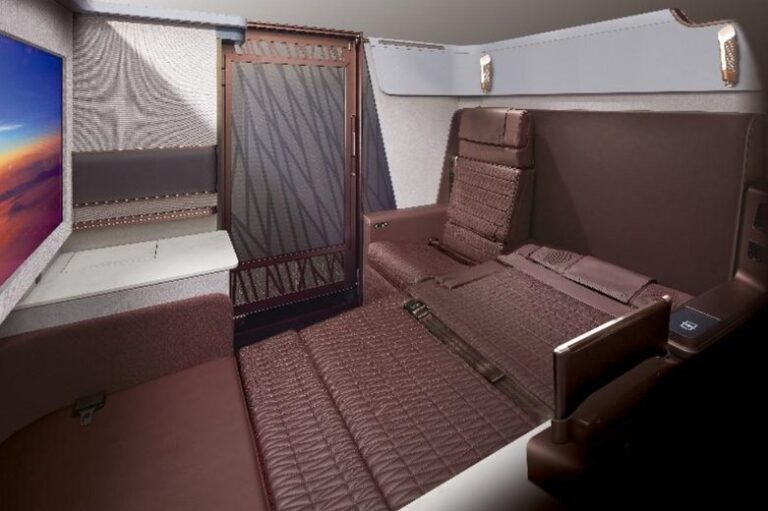
- First Class: enclosed suites with privacy doors behind a 60-inch partition; Starlux is Taiwan’s only First Class operator
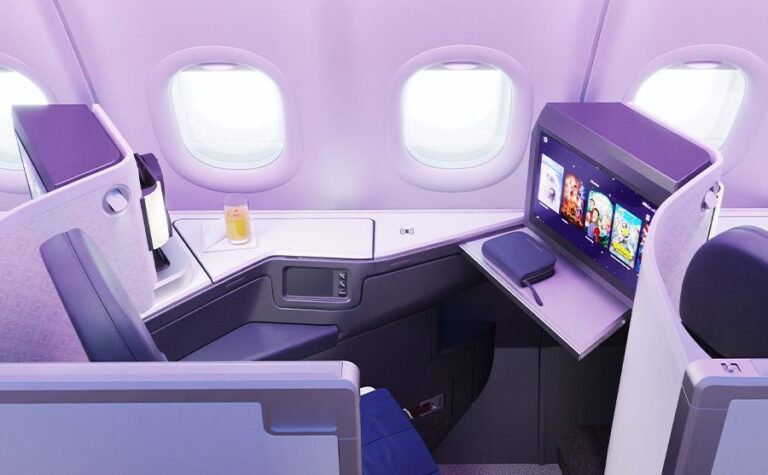
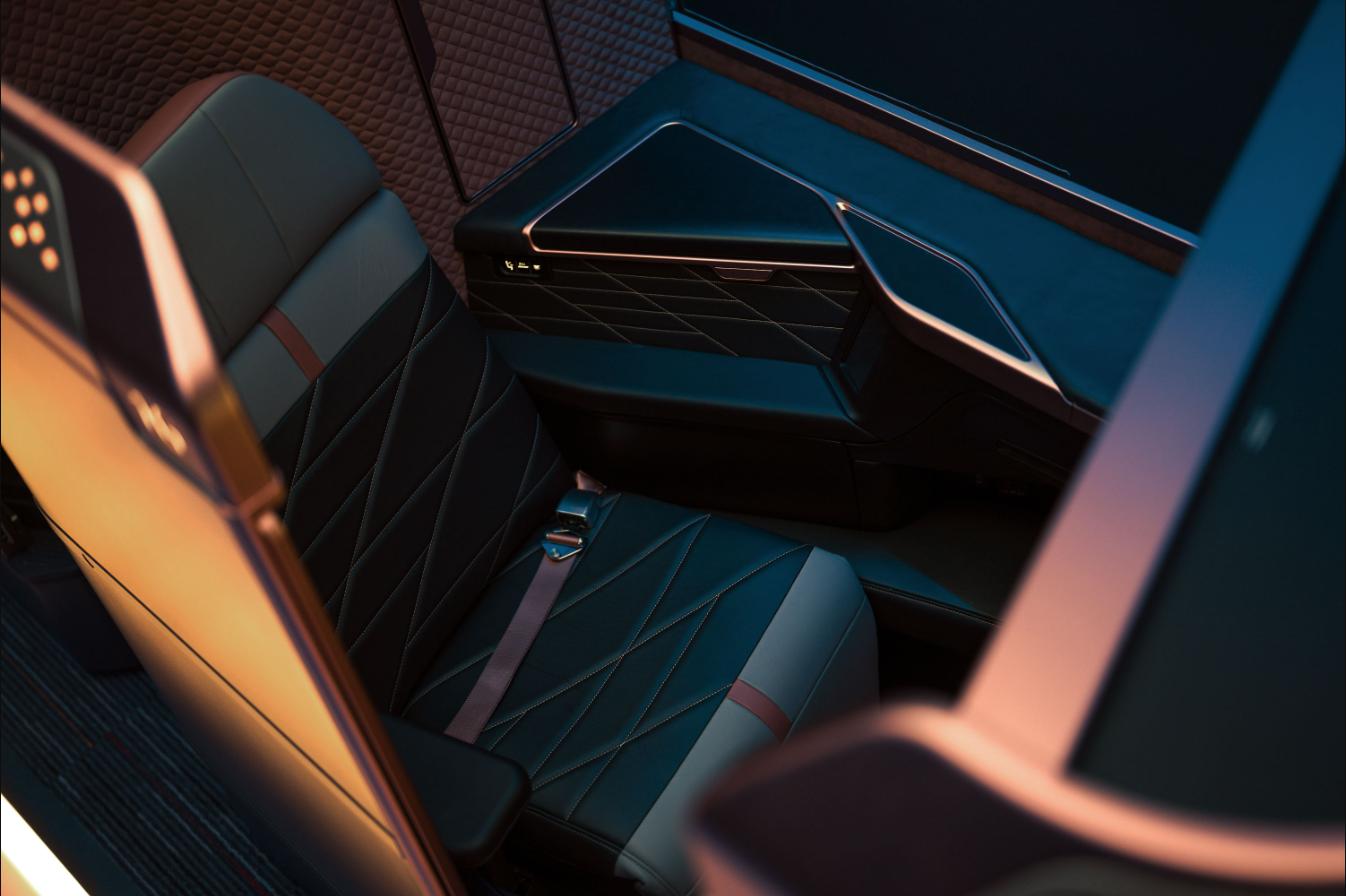
- Business: Collins Aerospace Elements suites with sliding doors, as on the A350-900, with 14 more seats than the -900’s 26
- Design: “Glisten” cabin aesthetic by BMW Designworks, shared with the A350-900
- Routes: Taipei–Los Angeles daily (JX1/2) from 25 October 2026; Taipei–Phoenix; other North American and Asian routes as deliveries scale; Taipei–Prague, the first European route, launched 1 August 2026 — three times weekly, rising to four from October — with the A350-1000 replacing the A350-900 there from 1 September 2026; a second European destination has been announced but not named
- Fleet: 14 deliveries in 2026 — 3 A321neo, 5 A330-900neo, 6 A350-1000 — for a fleet of 43 by year-end; A350-1000 deliveries run to 2030
- Fares: not published; see below

A First Class Built to Define the Brand
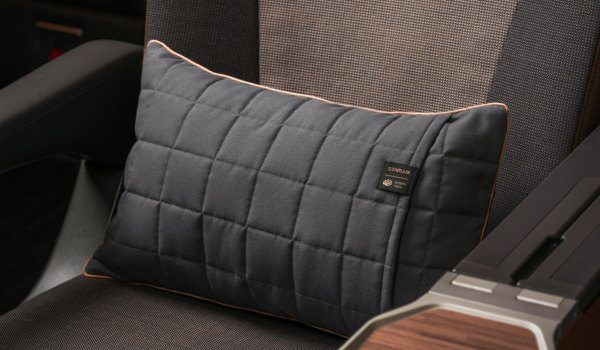
Starlux’s chief communications officer, Walter Liang, told Aviation Week at the Singapore Airshow that First Class plays a strategic role in the brand’s positioning — and the airline has kept it at four suites on both A350 variants rather than chasing a bigger cabin. The suites close behind sliding doors and a 60-inch partition, with the same Glisten palette BMW Designworks created for the fleet: warm tones, curved surfaces, indirect lighting. Behind them the 40 business suites use the Collins Elements platform with doors, the seat that made the A350-900 one of the best-reviewed business cabins in Asia when it launched on Los Angeles.
The point of the -1000 is capacity at the front. Starlux reports strong premium demand and is raising the proportion of business seats on incoming aircraft; 40 doored suites on a route like Los Angeles is a direct challenge to EVA Air and China Airlines, neither of which sells First.
Taipei as the Connection Point
Starlux’s network is built around Taipei Taoyuan: the A350s cross the Pacific to Los Angeles, San Francisco, Seattle, Phoenix and New York, and the A330neos fan out to Tokyo, Osaka, Bangkok, Singapore, Manila and the rest of Southeast Asia. Prince of Travel’s guide makes the practical point — a transpacific sector on the A350 with a regional hop to Bangkok or Singapore is a compelling itinerary — and the airline’s Bali service on the A330neo puts Denpasar on the same map. The A330neo business seat is a generation behind, a staggered layout without doors, so the premium leg is the A350.
Europe is already on the map: Prague opened on 1 August 2026, and a second European city is due.
Tip: from 25 October the daily Los Angeles flight is the A350-1000; before that date and on the second daily frequency, check the seat map for 40 business seats rather than 26 to confirm the aircraft.
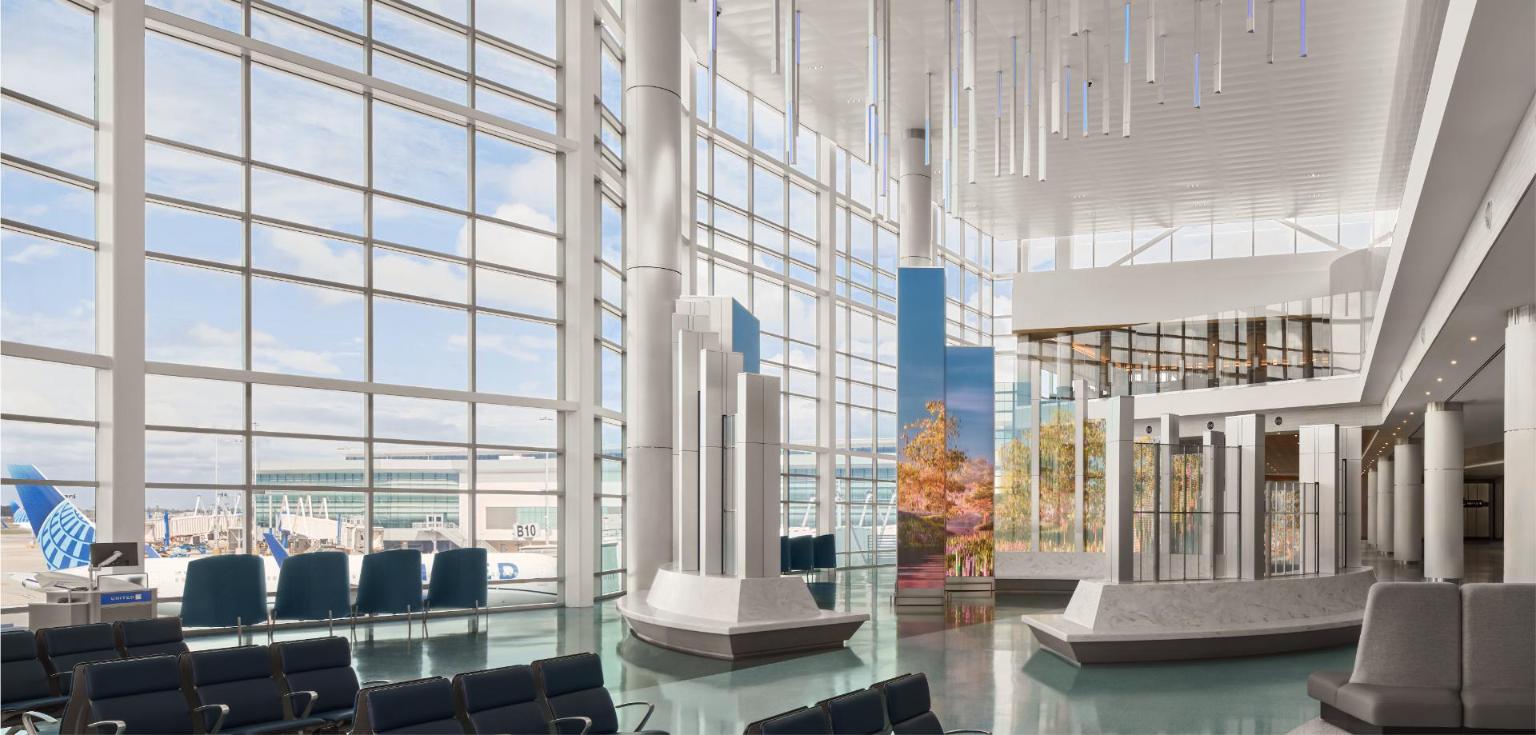
Starlux is not the only Asian carrier pushing a doored premium cabin across the Pacific: Cathay’s Aria Suite has reached Los Angeles, while United’s new Polaris Studio has raised the bar in transpacific business.
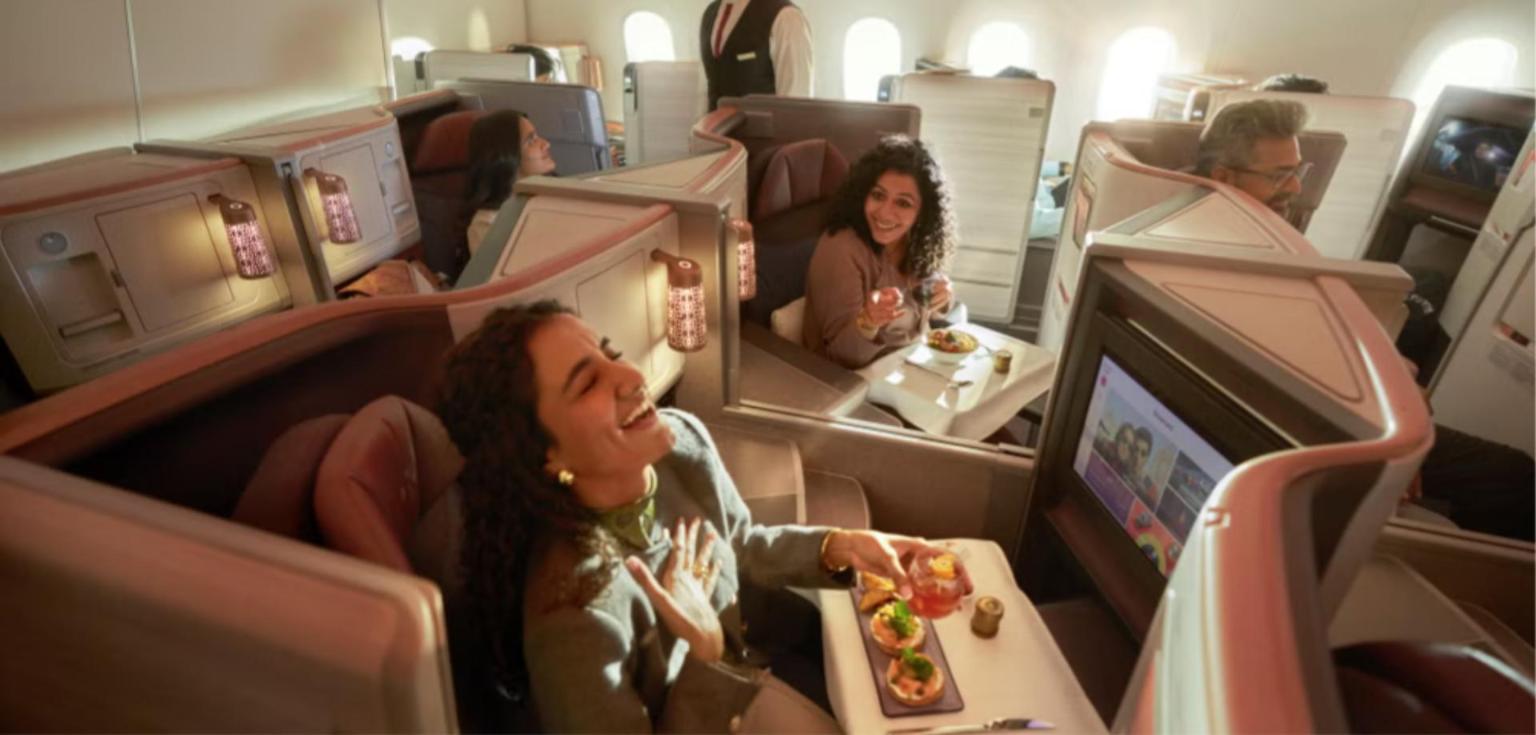
Starlux is not the only Asian airline with a new A350-1000: Philippine Airlines’ A350-1000 now flies 42 doored business suites from Manila to New York, Toronto and San Francisco.
Asian Premium Cabins, First-Hand
I have not flown Starlux and this preview is not a rating. The Asian business class I have reviewed most recently is beOnd from Malé to Milan, another young airline that built its brand on premium — and where priority handling at a chaotic airport saved me 60 to 90 minutes before the seat mattered at all. Emirates’ 777 business class showed me the opposite risk: a very comfortable seat with an entertainment system that had aged badly. Starlux has the hardware and the design language; the question for a Bali reader is whether the A330neo connection lives up to the A350 crossing.
How Much Does It Cost?
Starlux does not publish rack fares for the A350-1000 and its First Class is sold in cash only for now; industry guides note that First award availability through partner programs may open as the fleet grows. Business fares on Taipei–Los Angeles price below the Gulf carriers on comparable stage lengths thanks to Taipei-based costs. From 25 October 2026 the daily Los Angeles flight is the -1000; Prague has had the -1000 since 1 September 2026.
Flight prices do move between platforms. The same business class seat on the same date is not always the same price on the airline’s own site, Trip.com and Expedia: point-of-sale currency, consolidator fares and what is bundled into the ticket can shift the fare by a few percent — and occasionally by much more on premium cabins booked out of Asia. So before I pay I run the same dates through Aviasales, which scans dozens of agencies at once and will tell you if a nearby date is cheaper, then check Trip.com (often the sharpest on Asian routes) and Expedia (strongest when you add a hotel to the same booking). One caveat: a ticket bought through a booking site is changed or refunded through that site, not the airline, so read the fare rules before you buy. I keep the full comparison routine — which platform I check for what — on my travel resources page.
Four First suites and forty doored business seats, daily to Los Angeles from October — Starlux is the premium airline Asia’s legacy carriers now have to answer.
Photos © Starlux Airlines
This preview is based on official announcements — I haven’t flown Starlux yet. Read more about how I review or visit my Work With Me page.
Disclosure: this article contains affiliate links. If you book through them, I earn a small commission at no extra cost to you. Read my full disclosure policy.