The short answer: pack your own mask, computer, fins and dive socks, and a neutrally buoyant suit if you have one. Then pack light for everything else, but don’t skip the small comforts. A tote bag, a dive poncho, a headband over your ears, hair oil, reef-safe sunscreen and a plug adaptor with USB ports make three or four dives a day on a boat far more comfortable than extra clothes ever will.
Quick picks
What I actually pack, after 1,500+ dives.
- Neoprene dive socks — No blistersCheck price on Amazon
- Tote bag — Hands-free on deckCheck price on Amazon
- Hooded diving poncho — Warm between divesCheck price on Amazon
- Headband that covers your ears — Protects wet earsCheck price on Amazon
- Moroccanoil Treatment — Salt-proof hairCheck price on Amazon
- Moroccanoil Moisture Repair Conditioner — Evening hair repairCheck price on Amazon
- International plug adaptor with USB ports — One socket, every gadgetCheck price on Amazon
- Soft duffel bag — Fits dive-boat cabinsCheck price on Amazon
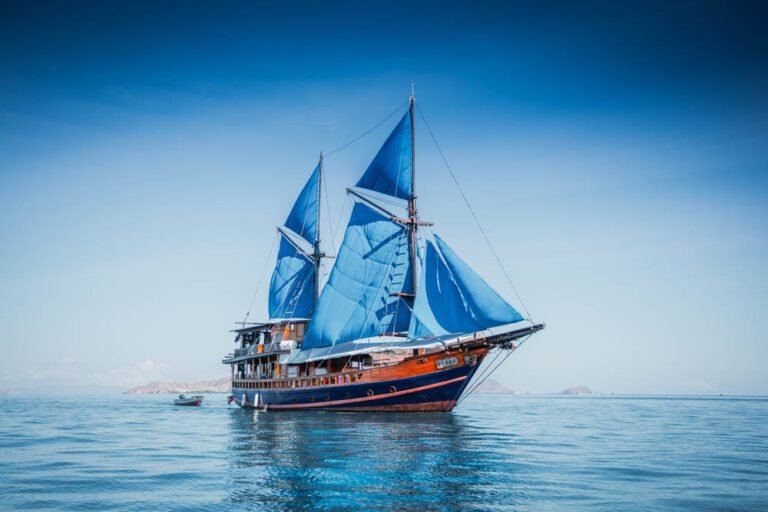
I’ve sailed on more than 30 luxury liveaboards across Indonesia, the Maldives, the Red Sea, Mexico and the Galapagos, often for two weeks at a time. This is the list I pack from, minus the dive gear itself, which has its own article.

Dive Gear: The Essentials
My full kit list and the reasons behind each choice are in what’s in my dive bag. The short version for a liveaboard:
- Your own mask, computer and fins. Rental gear on boats varies, and a mask that leaks will ruin your trip.
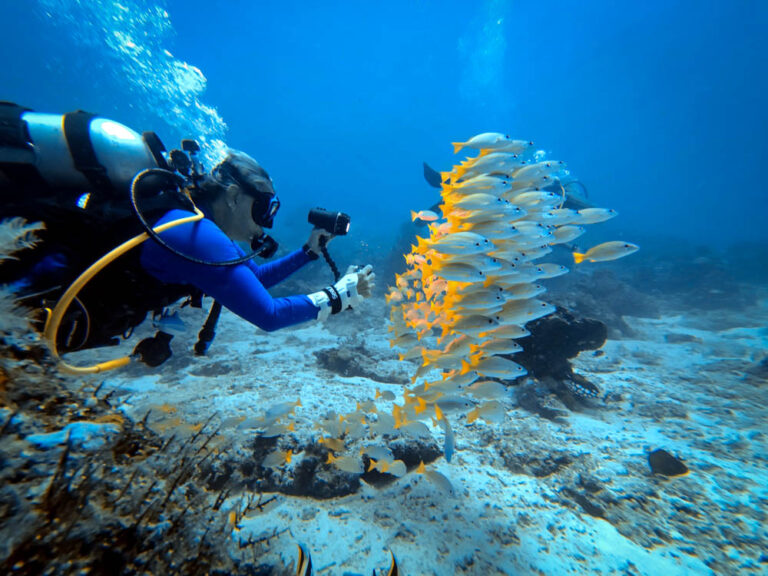
- Neoprene dive socks. Most people get blisters after diving three times a day. The socks are a lifesaver.
- A reef hook for current dives, and a marine rescue GPS if your itinerary goes somewhere remote.
Why I pack it
Most people get blisters diving three times a day. The socks are a lifesaver.
On the Boat

A tote bag
I always bring a tote bag. It holds my books, phone and water bottle while I walk around the boat, so both my hands are free to hold on as I climb the stairs between decks. Liveaboard stairs are steep, and they are often wet, sometimes while the boat is moving. Having both hands free matters.
Why I pack it
Holds books, phone and water bottle, so both hands are free to hold on around the boat.
A dive poncho
I wear a diving poncho between dives. You climb out of the water wet, the wind picks up on the tender ride back, and a hooded poncho lets you dry off and warm up without going back to your cabin in a dripping suit.
Why I pack it
Lets you dry off and stay warm on the windy tender ride back after a dive.
A headband that covers your ears
When it’s windy on the boat, I wear a headband over my ears. After several dives a day, your ears are wet and sensitive, and I’ve found that keeping the wind off them helps me avoid ear infections.
Why I pack it
Headband that covers your ears
Keeps wet, sensitive ears out of the wind after several dives a day.
Hair and Skin
Hair oil and hair conditioner are a must. Three dives a day of salt water, sun and wind really damage your hair, and by the end of a two-week trip you’ll notice. A good leave-in oil such as Moroccanoil Treatment after every rinse, plus a rich conditioner such as Moroccanoil Moisture Repair Conditioner in the evening, keeps it manageable.
Why I pack it
A leave-in oil after every rinse keeps salt-water hair manageable.
Why I pack it
Moroccanoil Moisture Repair Conditioner
A rich conditioner in the evening, for two weeks of salt and sun.
Bring reef-safe sunscreen, and plenty of it. Read my guide to reef-safe sunscreen for divers before you buy, because the label means less than you’d think, and some destinations now require it by law.
Power and Gadgets
I bring an international plug adaptor with USB ports so I can charge several gadgets at the same time. Cabins on older boats often have only one or two sockets, and between a phone, a camera, a dive computer and a torch, you run out fast.
Why I pack it
International plug adaptor with USB ports
Charges several gadgets at once from the one socket in your cabin.
If you shoot underwater, my setup is a phone in a DiveVolk housing with a DJI action camera on top. There’s more in my DiveVolk housing review, and my DiveVolk partner link gives 6% off.
Luggage
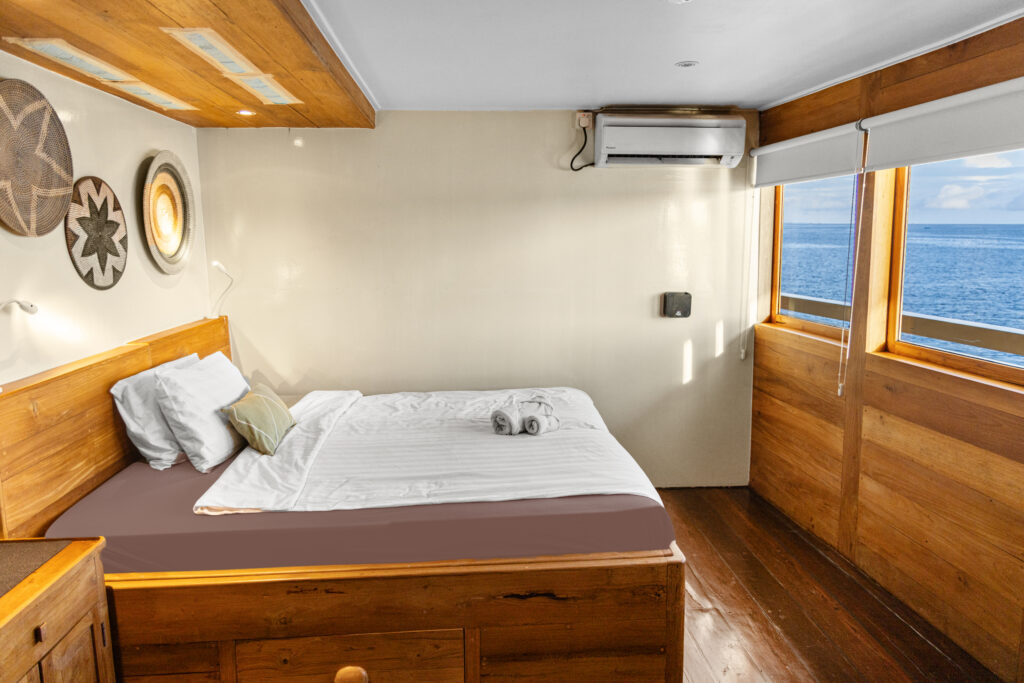
Pack in a soft duffel bag rather than a hard suitcase. Cabin storage on most dive boats is tight, and a soft bag can be squashed into a locker or under the bed, where a hard shell often won’t fit.
Why I pack it
Squashes into a tight cabin locker or under the bed, where a hard shell often will not fit.
What to Leave at Home
- Most of your clothes. You’ll live in a swimsuit, a rash guard and something comfortable for dinner.
- A hard-shell suitcase.
- Freediving fins. They’re so long that I often see divers kick and damage reefs with them.
Choosing the Boat

The right boat matters more than anything you pack. Compare my picks for the best luxury liveaboards in Indonesia, the best Raja Ampat liveaboards and the best Maldives liveaboards, or check availability for Raja Ampat liveaboards on Liveaboard.com.
Frequently Asked Questions
What should I pack for a liveaboard dive trip?
Your own mask, computer and fins, dive socks, reef-safe sunscreen, a dive poncho for between dives, a tote bag to keep your hands free on the stairs, hair oil and conditioner, and a plug adaptor with USB ports. Pack everything in a soft bag.
Should I bring a hard suitcase on a liveaboard?
No. Cabin storage on dive boats is limited, and a soft duffel fits into lockers and under beds where a hard suitcase often won’t.
How do I protect my hair on a liveaboard?
Three dives a day really damage your hair. Use a leave-in hair oil after every rinse and a rich conditioner in the evening.
Disclosure: this article contains affiliate links. If you book through them, I earn a small commission at no extra cost to you. As an Amazon Associate I earn from qualifying purchases. Read my full disclosure policy.