
I recently boarded the Moana liveaboard for a 6-day, 5-night cruise through the Komodo National Park. Moana is a boutique traditional phinisi taking just 10 guests, and it has built a reputation as one of the most personal boats in Komodo — as well as one of the best fed. After more than 20 trips to Komodo, I was curious to see how this intimate 30-meter schooner compares to the other liveaboards I have reviewed in the park. In this detailed Moana liveaboard review, I’ll share every aspect of the boat, the diving, the food, and the itinerary, so you can decide if it is the right Komodo liveaboard for YOU.
There is a moment from this trip I keep coming back to: floating alone at a Mawan cleaning station, every other snorkeler back on their boat, when a manta ray came close enough that I could have touched it. It stayed around for about 10 minutes, and after it left, another one came by. That kind of moment doesn’t happen by accident — it takes a crew that knows the park intimately and a boat small enough to seize the opportunity when it appears. That, in a nutshell, is what makes the Moana worth talking about.
My rating: 5/5 — Best for: small groups, beginners, great-vibe seekers, and anyone who wants a crew that knows Komodo inside out — at a price well below the luxury fleet. Trade-off: no hot water, no nitrox, no WiFi (yet).

Moana is one of the boats I have sailed that did not make my guide to the best luxury liveaboards in Indonesia — that guide ranks the ten that did, and says plainly why the rest fell short.
Why Trust This Moana Liveaboard Review?
I have been diving for more than 25 years and have logged over 1,500 dives across the world’s best destinations. I have completed more than 30 liveaboard trips, and I review each of them in depth here on This is Luxury Travel.
Komodo is a destination I know intimately. I have visited the national park more than 20 times since my first trip in 2005, and I have done well over 200 dives on its sites — from the shark-filled ridges of Castle Rock to the manta cleaning stations of Makassar Reef. I stayed in all the luxury resorts around Labuan Bajo and cruised Komodo on many of its best boats, including the Tiare, the Ilike, the Carpe Diem, and the Komodo Sea Dragon.
This experience allows me to compare the Moana directly against the other options in the park — not against a brochure (you can find my full comparison in my complete luxury guide to diving Komodo). I paid attention to the details that actually make or break a liveaboard holiday: how the dives are organized around Komodo’s famous currents, how the crew handles mixed groups of divers and snorkelers, the quality and freshness of the food, and how comfortable the boat really is over five nights at sea.


How to Get to the Moana Liveaboard in Komodo
The Moana departs from and returns to Labuan Bajo, on the western tip of Flores island — the gateway to the Komodo National Park. The boat leaves at 11:00 in the morning and returns at 11:00 on the last day, which makes the logistics pleasantly simple.
Getting to Komodo ( LBK airport ) has become easier with each passing year. There are plenty of daily flights to Labuan Bajo from Denpasar (Bali) and Jakarta, and the flight from Bali takes only about 60 minutes. There are now also some direct international flights from Singapore and Kuala Lumpur landing in Labuan Bajo, so you no longer always need to connect through Bali or Jakarta.
From Bali, I usually fly with Batik Air, AirAsia, or Lion Air, which between them offer several daily connections between Denpasar and Labuan Bajo.
One thing worth flagging: booking domestic Indonesian flights directly through the airline’s website can be genuinely frustrating if you’re using an international credit card — Garuda, Lion Air, and Citilink in particular are known for declining foreign cards or throwing up payment errors. My workaround is trip.com — they list all the Indonesian carriers, accept international cards without issue, and the booking flow is far less painful. Worth using even just to compare routes and times before deciding where to fly into.
The safest option is to arrive in Labuan Bajo the day before departure, as flights in Indonesia are regularly delayed or rescheduled. That said, with Moana’s 11:00 departure you can risk a same-day arrival if you take the first flight of the day from Bali — there are usually 2 or 3 different flights in the morning, so even if your flight is canceled, you still have backup options.
The Moana team picked me up from the airport, and from the airport to the pier is a mere 10-minute drive — within minutes of landing, you are on your way to the boat. Boarding was seamless. The taxi dropped us at the pier where the Moana team was waiting. They took our luggage and gave us QR codes to enter the new boat terminal. After a walk through the terminal, their tender was waiting to take us to the boats, and our luggage was already waiting for us on board. We were greeted with a cold fresh fruit juice.


Where to Stay Before or After Your Moana Cruise
Labuan Bajo has developed quickly, and there are now good hotels for every style.
If you want to stay in the center of town, the Meruorah Komodo is located right by the harbor, making it effortless to board your boat in the morning. It is a great option for a night before or after your liveaboard.
If you prefer a resort feeling, the Ayana Komodo is the most luxurious hotel in the area . For something more intimate, I highly recommend the family-owned Seraya Resort: rustic beachfront bungalows, a great vibe, and the best house-reef snorkeling straight off your room — my full Seraya review . The Komodo Resort, on its own private island on the edge of the park, is another favorite of mine.
Bali is also the natural place to bookend your trip. Most Moana guests spend a week or more in Indonesia around the cruise, and I have written many articles about the best luxury hotels and villas in Bali, as well as the best dive sites in Bali.
The Moana Liveaboard: A Boutique Phinisi Built for 10 Guests
The Moana is a classic 30-meter phinisi schooner, built in the traditional style in 2003–2004 and made entirely of teak and ironwood. Phinisis are the iconic two-masted wooden sailing vessels of Indonesia, still handcrafted in Sulawesi, and the warm wood gives the whole boat a cozy, homely atmosphere that modern yachts simply cannot replicate.
What makes the Moana stand out in the crowded Komodo fleet is its size philosophy. With only 5 cabins for a maximum of 10 guests, it is deliberately boutique. Many of the crew have been on board for over 10 years, a continuity you feel in how smoothly everything runs.
The Decks and Common Areas
The Moana is quite spacious for a boat with only 5 cabins. Its design is a bit different from newer liveaboards, where the luxury cabins sit on the top deck. Here, all 5 cabins are below deck, the main deck is the living area, and the top deck is the crew area.
At the back of the main deck is the diving deck.
 It is followed by an air-conditioned lounge that also serves as the camera room and library. There is a small selection of novels in many languages, along with a good collection of fish ID books. The lounge has a large table that could fit all 10 guests, and I suspect that in case of bad weather, this room could also serve as the dining room. This is also where you’ll find the charging station for all your gadgets.


Moving forward, you pass the kitchen, a shower, and a toilet before reaching the outdoor dining area. This is where people hang out most of the time. The area is shaded and very pleasant, and the table at its center is huge. The stairs down to the cabins are wide and easy to use — not a given on a traditional boat.


There is also a bar with drinks and tea and coffee available all day.


At the front of the boat is a lounging area with mattresses and plenty of pillows — so comfortable, with plush mattresses, that it’s a great spot to relax in between dives!


The boat is old — she dates back to 2003–2004 — but you can see it has been well cared for. Another advantage of an older boat is that everything has been optimized over the years: anti-slip mats, handles, electricity sockets — all the little details are exactly where you need them.
One charming detail: blankets are available if you want to sleep outside under the stars.

The Cabins on the Moana
The Moana has 5 air-conditioned cabins for 10 guests, all with ensuite bathrooms and storage space. There is 1 luxury cabin at the front of the boat, which is a bit bigger than the others, 2 double cabins, and 2 twin cabins. Each cabin has individual air conditioning and fans.
The luxury cabin isn’t much more expensive than the other cabins, but it is often booked — so be fast if you want it.
The boat’s philosophy is refreshingly honest: the cabins are designed for good rest, privacy, and practicality, while the real living happens on deck. They are cosy rather than palatial — this is not the boat for those seeking a suite with a private lounge, and Moana doesn’t pretend otherwise.
The two twin cabins are mirrored, sitting port and starboard, and are used for solo travelers sharing a cabin. All the cabins have porthole windows.

My Cabin: Cabin 4
I stayed in cabin 4, one of the twin cabins, where the beds nest above each other. The bed itself is small. The cabin was bigger than I expected from the pictures on their website. It is covered in wood, which makes it very homey.
The cabin has one small porthole window, and there is another one in the bathroom. The cabin has the usual boat and plumbing smell, so being able to open the portholes is a huge advantage — on many boats, you can’t open the porthole windows at all. The AC is individually adjustable, so you can set the temperature you like.
Don’t forget to close the porthole when the boat is moving, as water could enter your cabin.
The cabin is well designed and comfortable. The one thing that could be improved is the storage space. There are three storage areas under the bed. One is a huge empty space with no shelves or hangers — great if you want to store 3 or 4 suitcases, but not much use for anything else. I was alone in the cabin, so it was fine, but with two people sharing, it might be tricky to find a place for all your clothes.
There are no hangers in the cabin, so bring your own if you need them.
There are a few convenient hooks on the bedroom wall where you can put your hangers or dry your things.


The plugs are European style, and there are two electrical sockets in the bedroom. We were, however, advised not to use them unattended as it could create a fire hazard. Instead, there is a charging station in the lounge where you can recharge all your gadgets.

Bring a power adaptor if you don’t use European-style plugs.
Overall, the cabin is basic but functional.
The Bathroom on the Moana
The ensuite bathroom is small. The shower is between the sink and the toilet, so the whole area gets wet when it is in use. There is no hot water — it’s heated by the sun, so the water was tepid in the morning but would get warmer as the day progressed. As long as you don’t expect a proper hot shower, it was fine as it is never really cold in Komodo.
There is no shampoo or conditioner in the bathroom, so bring your own. Soap is provided.
We were given two towels per person: one for the bathroom and one for diving. The toilet is a normal toilet, but you can’t put toilet paper inside as it would block the pipes.


Which Cabin Should You Choose?
It really depends on which bed type you prefer and whether you get seasick. If you get seasick, avoid the luxury cabin at the front — it is the cabin that moves the most in case of bad weather.
My cabin, number 4, was the last one near the centre of the boat and the engine. On some boats, being near the engine can be uncomfortable, but that was not the case on the Moana. The Moana doesn’t navigate at night, so it is really not a problem.
If you are tall, the double bed cabin on the left side of the boat might be better because the bed follows the direction of the boat.
Diving From the Moana: Small Groups and Serious Guiding
Komodo has earned its status as one of the best diving destinations in the world. Sitting where the Pacific and Indian oceans meet, the park offers the perfect combination of healthy, vibrant reefs, excellent visibility, and big animals — manta rays, sharks, turtles, and dolphins — alongside world-class macro.
Is the Moana Good for Snorkelers and Non-Divers?
The Moana gives you real flexibility in how you experience each dive site. You can book as a diver and pay 300 euros more for all 14 dives on the trip, or come as a snorkeler and pay 55 euros per dive for only the dives you choose to join.
On this trip, I did half snorkeling and half diving, and I’d recommend more people consider that mix. Diving gives you a lot more freedom to move in three dimensions and get close to the corals, but snorkeling has its own advantages: you can do it alone, you don’t need to carry heavy gear, and you can go with the flow without having to think about your depth or dive profile. Komodo is a fantastic place for snorkeling, because visibility is usually very good and the shallow coral gardens are stunning. Mantas, turtles, and reef sharks often hang out in the shallows and will come close to you. Most people on my trip started as snorkellers but ended up doing all the dives! The diving in Komodo is that amazing!

Diving Procedures on the Moana Liveaboard
The dive briefings on the Moana were thorough. The maximum dive time is 60 minutes, and you are expected to be back on the surface with 35 bar. A dive computer is mandatory (you can rent one on board if needed), as is an SMB — which is provided for free. Reef hooks can also be borrowed for free, which is a nice touch in a park famous for its currents. The dive guides carry their own GPS on every dive, an extra safety layer I always like to see in Komodo.
There is no nitrox on the Moana liveaboard.
They would greet us after every dive with a warm towel.

Small Group Diving: One of the Best Komodo Liveaboards for Beginners
The Moana dives in genuinely small groups: 3 divemasters for a maximum of 10 divers. During our trip, we were only 7 divers, and they still split us into 3 groups. That is the sign of really good service — most boats would have consolidated into 2 groups and called it a day.
This small-group approach is also what makes the Moana one of the best boats in Komodo for beginners. The dive guides were very attentive: two divers on our trip had poor buoyancy control, and their guide held their hands for the entire dive. You can only do that with small groups. Open Water certification is enough to join, with no minimum logged dives.
The mix of guests changes with the calendar: during the holidays, the Moana gets more beginners and families, while in the off season, there are more charters of experienced divers. The boat runs only 6-day trips and stays in Komodo the whole year.

Diving Schedule on the Moana Liveaboard
The Moana is also great for people who want to pack in a lot of diving in a short time. Many boats skip diving on the first day to let guests relax after their flights — not the Moana. We were offered 2 dives on the first day, and after that, it was consistently 4 dives a day, including a night dive and 2 dives on the last day for a total of 16 dives. Another advantage of diving on a boat that stays in Komodo year-round is that the dive guides really know the dive sites well. The dive briefings were complete and always correct on the current. They have 2 or 3 different maps per dive site, and depending on the expected current, they use the one that will match the dive profile underwater.

Great Tender Boats to Get to the Dive Site in Comfort
All dives are conducted from two tender boats, and both are large — more comfortable, in fact, than the tenders on some super luxury liveaboards I have been on. The ladder to get back on the tender is great, which means it is not too hard to climb back up with your tank on. And because there are 2 tenders for a maximum of 10 guests, it is easy for them to cater to everyone — divers and snorkelers each get their own experience, with snorkelers following essentially the same itinerary.

Gloves are not allowed when diving in the Komodo National Park.
Tip: Currents and swells in Komodo can be strong, requiring heavy finning. I recommend diving socks to prevent blisters — and don’t worry about packing a reef hook, as the Moana lends them for free.
Tip: During the dry season, water temperatures in North and Central Komodo typically range from 25 to 28°C — comfortable in a 3mm wetsuit.
The Dive Deck on the Moana
The dive deck is at the back of the boat and is adequate for 10 people. You get assigned a small shelf where you can store your personal items. The one thing it lacked was a seating area. The crew takes care of the fins and weights and brings them on and off the tender — you put your tank on while still on the main boat and simply step onto the tender with it.
There are 2 rinsing tanks on the boat.
If you have an expensive camera, watch out which tank you rinse it in. The tanks were not labelled, and divers were rinsing everything everywhere.


Sustainability on the Moana Liveaboard in Komodo
The Moana is genuinely conservation-conscious, and it shows in the small details rather than just marketing language. The crew organizes beach cleanups and underwater cleanups, the boat recycles, and reusable water bottles are used on board instead of single-use plastic.
One detail I particularly liked: the Moana has placed 5 moorings in the park so that boats don’t need to drop anchor at these sites. This avoids damage to the seafloor and coral — a small investment with a real impact, given how many boats pass through Komodo’s most popular sites every day.
Pack reef-safe sunscreen (mineral-based, free of oxybenzone and octinoxate) for the trip. Regular sunscreen washes off during dives and snorkeling and contributes to coral damage over time — a real concern in a park as heavily visited as Komodo.
The Crew on the Moana Liveaboard
The crew on the Moana is absolutely fantastic, and genuinely one of the most experienced teams I’ve come across in Komodo.

Mario, the cruise director, has tons of experience diving in the park and has been guiding dives in Komodo for over 20 years. He is passionate about what he does and knows the dive sites and conditions perfectly, and he is able to craft the perfect itinerary for any group of divers. Many of the crew have been on the Moana for over 10 years, and what struck me most is that they are still genuinely passionate about what they do — there is nothing routine or phoned-in about how they run the boat. The vibe on board was informal, cheerful, and positive throughout the trip.
I want to stress this because it matters: I was there in July, peak season in Komodo. In parts of the park, we saw around 50 boats congregating at once. And yet the crew managed to get us diving on most sites completely alone. It sounds simple, but it takes real attention and flexibility to pull off during the busiest month of the year. Mario would constantly watch what the other boats were doing, looking for a window without people, and the moment he found one, he’d ring the bell and the dive was on. When a site was simply too busy, the crew would rework the schedule on the fly or find us an alternative rather than joining the crowd. That kind of flexibility is hard work for a crew, but it’s exactly what makes a trip so much more enjoyable — and it’s only possible on a small boat where that flexibility exists in the first place.
It also means that if you’re expecting the 2 pm briefing to happen at 2 pm sharp, you might be disappointed. Dives were often delayed, but always for a good reason. Despite that, meals and boat logistics were always ready exactly when they needed to be.
The dive guides are equally experienced. They dive only in Komodo, year-round, so they know the park extremely well.
The food, as you’ll read below, is a highlight of the trip, and a lot of that comes down to Yanti, the boat’s chef. Yanti used to work at Made in Italy, widely considered the best restaurant in Labuan Bajo, and it shows in how the meals are put together on board. Vian, the assistant chef, backs her up in the galley.
At the table, Alvin, the boat’s steward, was excellent — consistently attentive, always refilling water glasses and offering drinks without ever being intrusive about it.
The full Moana crew on our trip: Suryadin (“Dhani”) as captain, Rahman as first officer, Iskandar (“Andra”), Zhakir, and Irfan as mechanics, Alvin as steward, Yanti as chef, Vian as assistant chef, and Karim, Baharudin (“Rudy”), and Gunawan as dive masters, alongside Mario as cruise director.


The Food on the Moana Diving Liveaboard
If there is one thing every review of the Moana agrees on, it is the food. The boat has a reputation as one of the best-fed liveaboards in Komodo, with a focus on healthy, wholesome cuisine. Their chef, Yanti, trained at Made in Italy, the best restaurant in Labuan Bajo, and she is fantastic.

Food is served 5 times a day, as on most Indonesian liveaboards. The pre-breakfast at 6 am is light: cereal, tea, coffee, and fruit.

 Breakfast, served after the first dive, is a buffet with delicious bread, cheese and jam, eggs, bacon, and beans.


Lunch is plated and usually an Indonesian dish — chicken curry, fried tuna, and similar fare. Snacks come after the third dive: fried banana, cakes, and other treats, which are very welcome, since dinner is late after the night dive, usually around 8 or 8:15 pm.


Dinner is also plated and Indonesian in style, and always opens with a soup — a great way to warm up after a night dive. It went from beef rendang to fish or chicken sate.


Tea, coffee, drinking water, and soft drinks are available at all times, free of charge. Beer, wine, and cocktails are available for an extra fee, and the prices were quite reasonable for an Indonesian liveaboard — about €2.50 for a beer and €25 for a bottle of wine.
Dietary accommodation is very well taken care of. The cruise director asked everyone individually about preferences or restrictions on the first day, and the kitchen accommodated everything without issue.
Internet on the Moana Liveaboard
The Moana does not have WiFi on board. If you want to use the internet during your stay, you will need either a roaming plan, an eSIM, or an Indonesian SIM card. Whether you are on your international SIM or an eSIM, select Telekomcel as your network provider. it is the best internet operator in Komodo National Park.
I have been told that they will get Starlink internet by the end of August, so that might change soon.
The higher you are on the boat, the better the signal. I had very weak signal in my below-deck cabin, but it improved a bit when I stood by the window.

When Is the Best Time to Dive Komodo?
The main diving season in Komodo runs from April to October, during the dry season, when seas are calmest, and visibility is at its best. July and August offer the most reliable conditions but also the biggest crowds — Komodo is getting busier every year, and there can be over 100 dive boats in Labuan Bajo harbor in peak season. The northern side of the park is generally the one accessible during this season.
The rainy season (December to March) has its own secret weapon: plankton blooms attract large aggregations of manta rays, and the dive sites are far less crowded. Visibility can still reach 15–30 meters. The southern side of the park is generally the one accessible during the rainy season.
Interestingly, the Moana is one of the few operators that stays in Komodo year-round rather than migrating between regions to chase a “best season.” Their argument is that different months bring different rewards — quieter anchorages, nutrient-rich water, and incredible marine life — and after 20+ trips to the park in every season, I tend to agree.
Diving off season with the Moana has a real advantage: it is a lot less crowded. Most boats move on to Banda and Raja Ampat from October to April, which leaves the Komodo National Park comparatively quiet for those who stay behind — fewer boats at the popular sites, and a more intimate experience of a park that can otherwise feel busy in peak months.
When to Dive in Komodo if You Like Current
Beyond the calendar, the moon has a real influence on your dive day in Komodo, whichever month you visit. Currents in the park are driven by tides, and tides are driven by the moon: around the new moon and full moon, when the sun and moon align, tidal ranges are at their largest and currents run strongest. During the first and last quarter moons, tides are gentler and currents are more manageable. Experienced dive guides plan the day’s sites around this cycle, saving the most current-exposed dives (like Castle Rock or Shotgun) for the calmer days and choosing more sheltered sites when the current is expected to run hard.
The Moana Itinerary: North and Central Komodo
The Moana specializes in a 6-day, 5-night itinerary covering Komodo — exactly where they go depends on the season. The exact route is crafted trip by trip based on weather, water conditions, guest preferences, and boat traffic, often steering toward quieter sites to escape the crowds. The itinerary combines the dramatic underwater scenery and manta feeding stations of the north with the drift, wall, and muck dives of the central region, plus land excursions: a Komodo dragon trek with park rangers on Rinca, sunset hill hikes, and beach visits.
As my trip was at the beginning of July, conditions in the north were perfect and our trip focused on central Komodo and North Komodo.


Day 1 (04/07) — Sebayur Kecil and Sebayur Besar
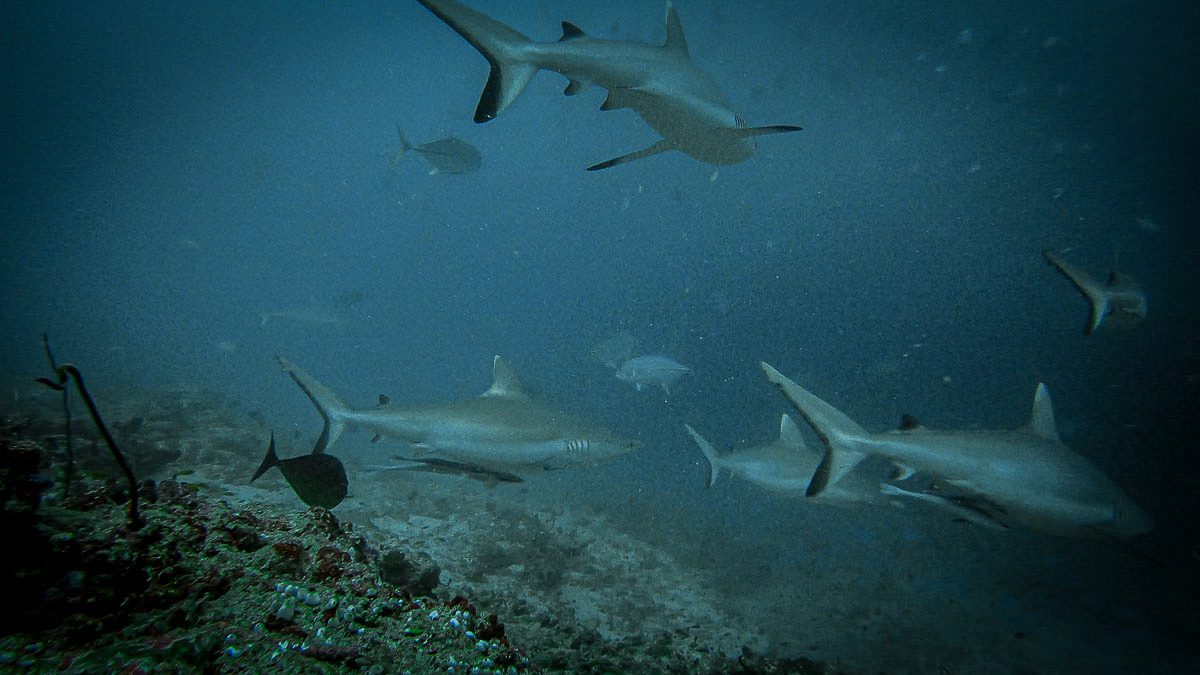
The trip started with a check dive at Sebayur Kecil, a relaxed, sandy-bottomed site with little current — the kind of easy bay dive that’s perfect for getting everyone’s weighting and buoyancy sorted before the real Komodo diving begins. Not a bad check dive at all: we saw a cuttlefish, a few blacktip sharks, and a turtle.
A night dive was offered, as it would be every evening of the trip, but I skipped this one.
The day ended with one of Komodo’s famous sunsets — and Komodo sunsets are often something special.

Day 2 (05/07) — Tatawa Besar, Siaba Kecil, Mawan, and a Night Dive at Siaba Besar
The weather was again perfect: blue sky, no wind, flat sea — ideal conditions for Central Komodo’s classic sites.
We started at Tatawa Besar, known for its sloping coral garden that begins around 5 meters and drops to about 20. It’s a light drift dive, and this time it carried a good current for most of the dive, with some down-current sections to manage. We drifted past two sharks and a few turtles, watched puffer fish getting worked over at a cleaning station, and I spotted a huge anemonefish — maybe 12 to 15 cm, easily the biggest I’ve seen.


Next was Siaba Kecil, just west of Siaba Besar and known as one of the drift dives in the park, threading past small caves and overhangs before finishing on a shallow coral plateau. Some people in the group even saw a manta passing by in the blue.
For the afternoon dive at Mawan, a small island known as one of Komodo’s manta cleaning stations, I decided to snorkel instead, as I had some ear issues — and what a snorkel it turned out to be.
Mawan was busy, with around 30 boats anchored nearby. Mario, our cruise director, wanted us to experience the site with as few people as possible, so he spent the previous hour watching the other boats to time our entry perfectly. Even so, there must have been 100 snorkelers in the water when I got in, mostly clustered around the cleaning stations — about half of them without fins on, which remains a mystery to me.
We had heard mantas hadn’t been spotted for a while, so I wasn’t optimistic. I swam away from the crowd toward a lovely hard coral garden at 2 to 4 meters, perfect for snorkeling, if a little quiet on fish. A shark approached me in the shallows — not aggressively, just curious, it seemed.
As time passed, the other boats packed up one by one, and by the time I made it back to the cleaning station, I was alone. That’s when the first manta appeared. It circled for about 10 minutes, coming close enough that I could have touched it — always incredible to look a manta in the eye. After it left, another one came by. Moments like that are exactly what make Komodo special.


The day closed with a night dive at Siaba Besar, often nicknamed “Turtle City” for its gentle slope and mix of coral and sand.


Day 3 (06/07) — Turtle City, Tatawa Kecil, and Batu Bolong
The first dive of the day took us back to Siaba Besar, better known as Turtle City for good reason.
Next was Tatawa Kecil, a small island just south of Tatawa Besar known for its varied topography — swim-throughs, valleys, and giant boulders quite different from the sloping coral gardens found elsewhere in Central Komodo. This dive was stunning: a coral garden filled with both soft and hard corals, three sharks sleeping on the bottom, and turtles everywhere. But the real highlight was two schools of jacks, thousands of them, and remarkably approachable.


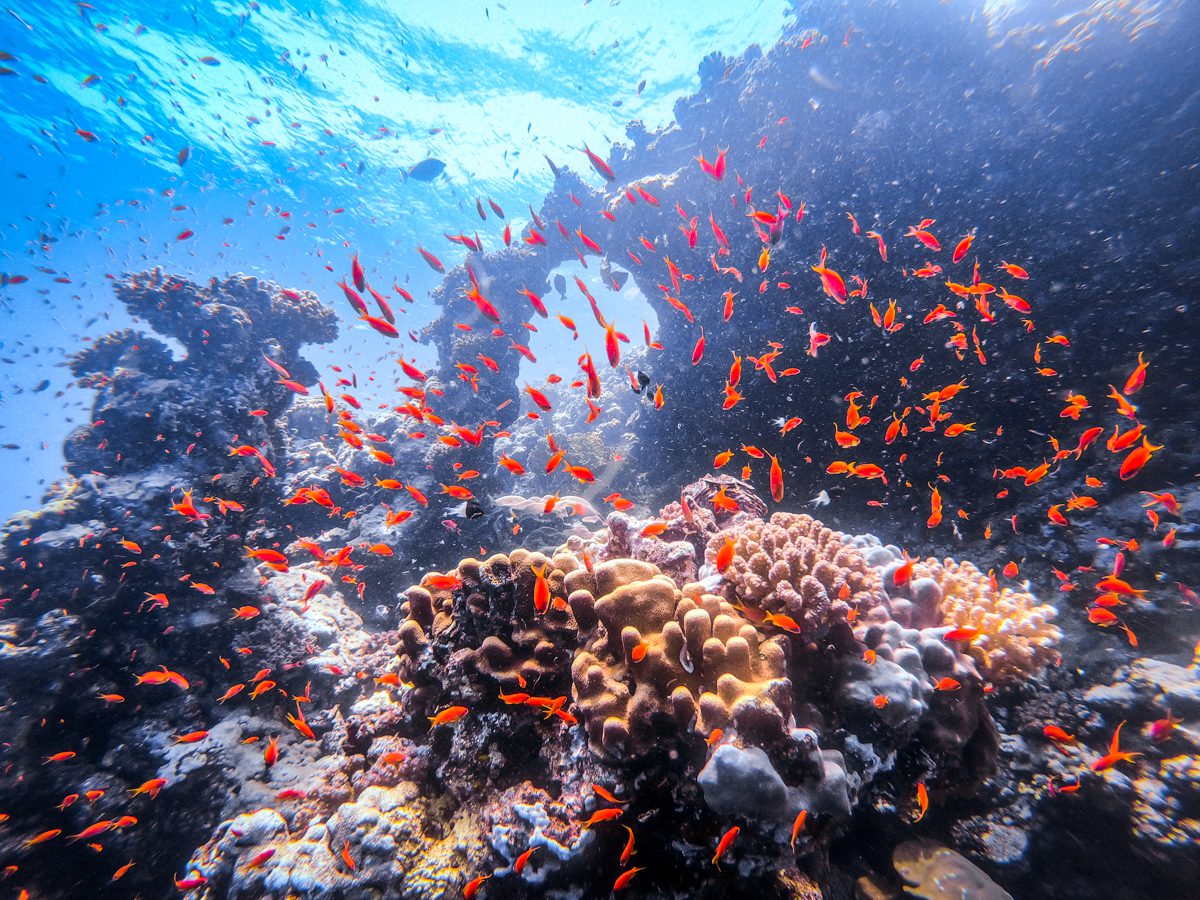
We closed the diving day at Batu Bolong, Komodo’s most famous dive site and consistently rated among the best in the world. It’s a pinnacle that plunges to around 90 meters in the middle of the Lintah Strait, with strong currents on either side that create an explosion of fish life — hundreds of red anthias blanket the reef, drawn in by the same currents that keep the site so healthy. Our dive was stunning: sun shining on the reef, plenty of fish, a few sharks passing by, and a few turtles sleeping on the reef.


In the late afternoon, we climbed up to the viewpoint on Gili Lawa Darat. There are two levels: the first is about a 10-minute walk up the hill and is quieter, since most people continue on to the top, which takes another 15 minutes or so. It’s not a hard walk, but it can be slippery, especially on the way down, so proper walking shoes are a good idea rather than flip-flops. There are no mosquitoes, so don’t worry about mosquito repellent.
The sunset from up there was stunning. A few deer live on the island, and they also seemed to watch the sunset!


Day 4 (07/07) — The Cauldron, Castle Rock, and Golden Passage
North Komodo’s signature sites were on the schedule today, and they lived up to their reputation.
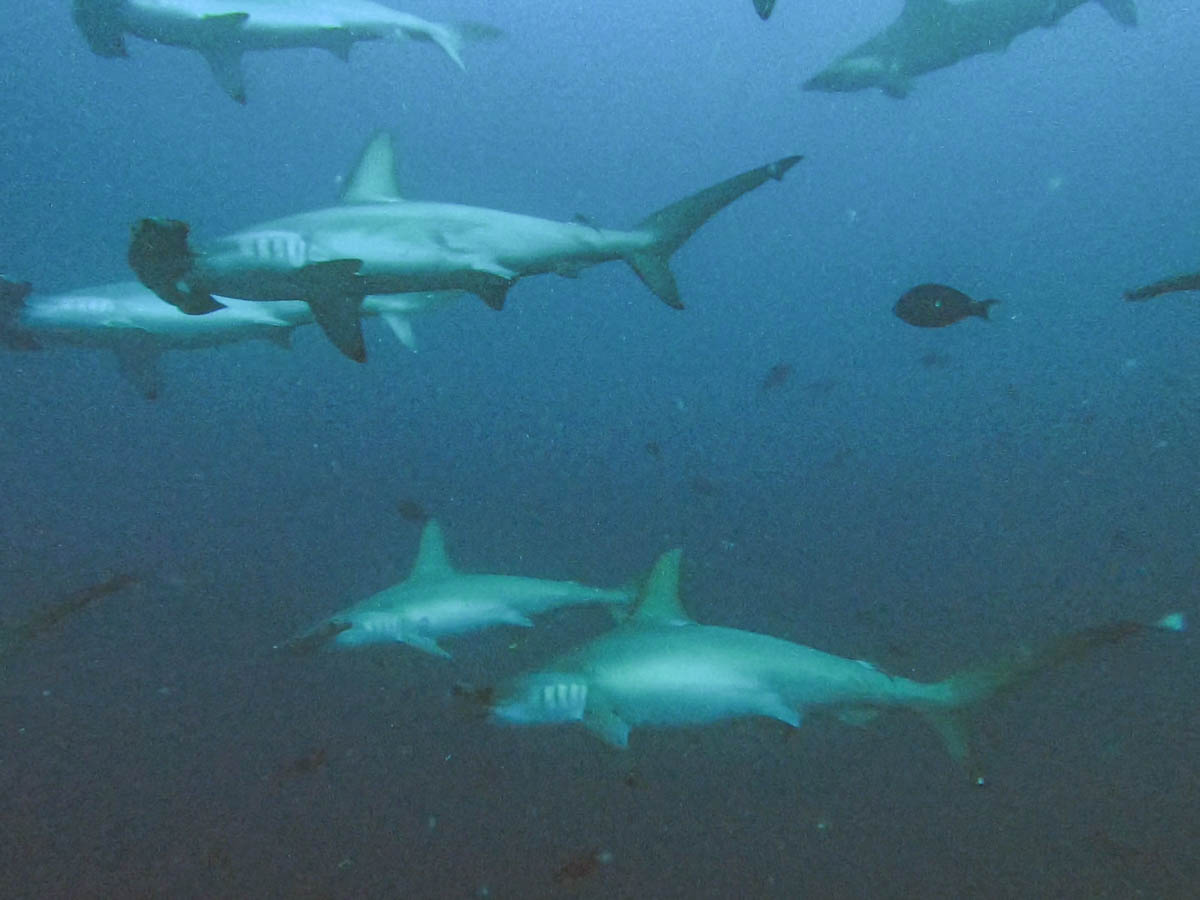
We started at The Cauldron, also known as Shotgun — a narrow, high-velocity channel between Gili Lawa Darat and Gili Lawa Laut that grabs you and spins you through in one adrenaline-filled ride. The team saw a few sharks along the way. Pure adrenaline.
Next was Castle Rock, a submerged seamount rising from the seafloor just northeast of Gili Lawa Laut, known for its strong currents and reliably excellent pelagic action. An amazing dive site.
For Golden Passage — the broader strait separating Gili Lawa Darat from the northeastern tip of Komodo Island, known for its drift dives and swaying soft corals — I snorkeled instead. Lots of staghorn corals, and I saw 2 sharks from the surface. Some divers in the other group were lucky enough to see 11 mobula rays.


In the evening, we went to a deserted beach for sunset — a very special moment. The sky turned red, everything felt peaceful, and all you could hear was the sound of the waves. Once again, away from the crowd.


Day 5 (08/07) — Crystal Rock, Rinca Dragons, Wainilu, and the Kalong Flying Foxes
We started the day at Crystal Rock, a submerged pinnacle near Castle Rock that breaks the surface at low tide, its slopes covered in a striking mix of hard and soft corals in clear water. Like its neighbor, it sits in an area known for strong currents, which is exactly what keeps the reef so alive.
I couldn’t dive that morning, so I snorkeled it instead, and it turned out to be a sportive one — there was current running the whole time, and nowhere to hide or hold on to catch a break. A genuinely good workout. There were lots of fusiliers packed by the split in front of the rock, a small school of jacks, and toward the end, a small school of barracuda passed by.
From the surface, I could see the divers below, and one group from another boat in particular was doing real damage to the coral — their guide kicking and crawling across it, using his pointer stick to prod and steady himself against the reef. There was a bit of instant karma: he lost a fin in the process. Undeterred, he then reached out and hooked onto a large living coral to reposition himself, before placing his divers on another coral head, where they repeatedly kicked the table coral behind them. It was exactly what you shouldn’t do if you want to dive responsibly.
It’s worth remembering that coral is not a rock — it’s a living animal. Each colony is made up of thousands of tiny polyps, and every one of them is fragile. A single kick, a hand placed for balance, or a pointer stick pressed against the surface can crush polyps outright or strip away the thin layer of tissue that protects the coral’s skeleton, opening the door to disease and algae that can kill the colony over months or years, even if the visible damage in the moment looks minor. Good buoyancy control isn’t just a skill for your own comfort underwater — in a place like Komodo, where reefs already contend with warming water and heavy dive traffic, it’s one of the most direct ways divers can either protect or quietly destroy the very thing they came to see.


The last dive of the trip was a dive at Wainilu, a muck-diving site near Rinca, often paired with the dragon trek, known for its sandy slope and rich macro life rather than big fish or hard coral. I snorkelled it and was amazed by the number of baby fish in that part of the reef. Snorkeling is not the best way to see a macro dive site. But the advantage is that I could also enjoy the incredible landscape and spend time on the beach.


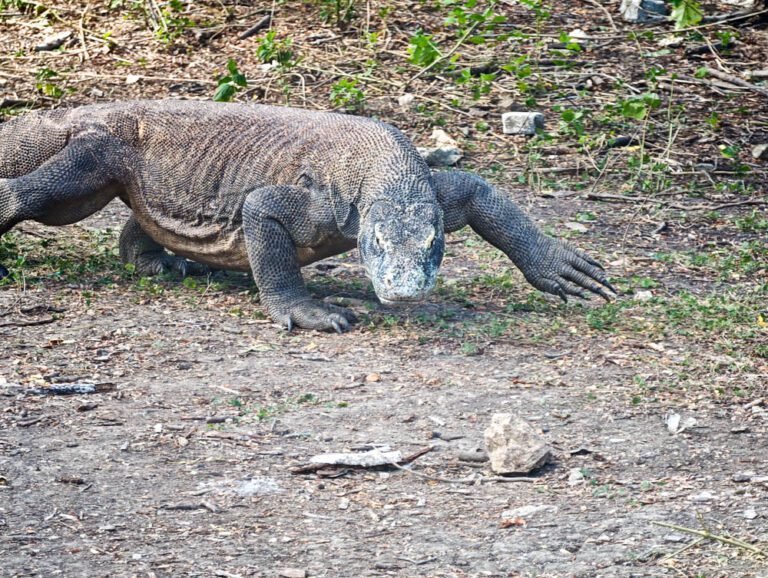
In the afternoon, just after lunch, we headed to Rinca Island for a Komodo dragon walk with the park rangers. It was hot, being the middle of the day, but we were lucky: we saw 12 dragons through the park, some of them up and walking rather than lying still in the shade, which is how you’ll find them most of the time. At one point, a dragon walking along the path came straight toward us, which made for a genuinely tense moment before the rangers calmly moved us out of its way.
Komodo dragons are the largest living lizards on Earth, growing up to 3 meters long and weighing over 70 kg, and Rinca and its larger neighbor Komodo Island are pretty much the only places on the planet where you can see them in the wild. They are ambush predators with a surprisingly sophisticated bite: their saliva carries a cocktail of bacteria and their bite includes a mild venom that prevents blood from clotting, so a bitten animal — usually a deer, wild boar, or water buffalo — will bleed out over hours or days while the dragon patiently tracks it down. Despite their bulk, they can move in a fast, startling burst over short distances, which is exactly why walking with an armed park ranger, rather than wandering off on your own, is non-negotiable here.
The walk itself is easy, suitable for most fitness levels, and there are no mosquitoes on the trail. Bring cash, though — you’ll want it to buy drinks or souvenirs at the park entrance, or to tip the rangers who guided you.


For sunset, we cruised past Kalong Island to watch the flying foxes. As the sky darkens, thousands of these giant fruit bats stream out from the mangroves in long, unbroken ribbons, heading out across the water to feed for the night — one of Komodo’s great, low-key spectacles, and a perfect way to end a big day.


Day 6 (09/07) — Disembarkation
It was already time to disembark, but the Moana stood out on this last day too. Most boats spend the final night in port and ask you to disembark by 8 or 9 am so they can prepare for the next incoming guests. Not the Moana — they leave 2 days between trips, which means you can relax on board until noon.
Our morning started with breakfast and a leisurely cruise toward Labuan Bajo harbor. Waking up at 7:30, instead of the 6 am start we’d had all week, felt like sleeping in. In the bay, the crew pulled out the sails, and we took the dinghies out for a spin around the boat to admire her under sail.
By the time we reached Labuan Bajo, it was time to say goodbye. On a boat this small, you really get to know your fellow passengers well over six days, and saying goodbye to the crew and to each other felt genuinely emotional. We all went for lunch together at Made in Italy, the restaurant where Yanti, our chef, used to work before joining the Moana — a nice full-circle way to close out the trip.
The restaurant drove us back to the pier afterward, where the Moana crew had already loaded our luggage into a taxi to take us to the airport — meaning we didn’t have to worry about our bags for a second and could simply enjoy that last lunch in town.
If you want to do the 2 dives on the last day, book an afternoon flight so that you have at least the 24 hours safety margin between your last dive and your flight time.
What’s Included in a Moana Cruise & Prices
Moana’s pricing is refreshingly transparent with one price for divers and a cheaper price for snorkelers.
Check current Moana prices on liveaboard.com →
The package is genuinely all-inclusive: cabin, full-board meals with non-alcoholic drinks, all guided activities (diving or snorkeling, dragon trekking, hikes, SUP), and transfers. Snorkeling equipment — mask, snorkel, boots, and fins — is included and free to use anytime; dive equipment rental is available on board for a small fee.
The main extra is the Komodo National Park contribution of €150 per guest, payable on site, which covers all local taxes, fees, and park contributions for the trip, the diving equipment rental if you don’t have your own, the tips and the alcoholic drinks. There is no nitrox available on board.
With only 10 guests total, the Moana is a genuinely good fit for privatizing the boat. A group of friends or two families traveling together can easily fill all 5 cabins and have the whole boat, crew, and itinerary to themselves — no need to share the experience with strangers, and no risk of ending up on a schedule built around other guests’ preferences.
Tipping on the Moana Liveaboard
The crew is amazing, and tipping is customary on Indonesian liveaboards. The amount recommended by the Moana is €25 to €30 per day.

Diving Photography on the Moana Liveaboard
All the pictures in this article were shot with a Xiaomi 17 Pro in a Divevolk housing — no strobes, no video lights, just the phone and the housing. It says a lot about how far phone-based underwater photography has come that a full liveaboard review can now be shot this way.
Use my link for 6% off a Divevolk housing
My usual Komodo advice applies: bring a wide-angle setup for the mantas and sharks of the north, but don’t neglect macro — Central Komodo’s sites like Makassar Reef are full of nudibranchs and critters when the current is slack. A drone is worth packing too; the contrast of turquoise water, pink sand, and savannah hills makes Komodo one of the most photogenic places in Indonesia from the air.
Conclusion: Is the Moana the Right Komodo Liveaboard for You?
The Moana occupies a distinct spot in the Komodo market. Cheaper boats often offer 2- or 3-day trips on basic vessels, while the most luxurious boats run longer cruises and can cost up to three times as much as the Moana. The Moana sits well between the two, offering a medium-length itinerary with many elements that stand out like a top liveaboard: an attentive crew, genuinely small dive groups, super-comfortable tenders, and a very spacious, comfortable outdoor lounge. The trade-off is a smaller cabin, no hot water, and no nitrox.
What really sets the Moana apart, though, isn’t on the spec sheet. It’s Mario reading the crowds at Mawan so precisely that I ended up alone at the cleaning station with two mantas passing through, one after the other. It’s three divemasters guiding seven divers because that’s what good service looks like, not because the brochure requires it. It’s a crew that has clearly done this together for years and treats guests, beginners and seasoned divers alike, with the same patience and attention. If you want a boutique, personal Komodo experience where the small details are handled with real care — and you don’t mind trading a hot shower and nitrox for it — the Moana is one of the best choices in the park. If you want a more formal experience or a suite-style cabin, look elsewhere; I cover all the options in my complete luxury guide to diving Komodo.
To book, you can check the Moana Liveaboard website here. Make sure you book early as some dates fill up months in advance.
My rating: 5/5
Disclosure: I was a guest of the Moana on this cruise. As always, this review reflects my honest, first-hand experience — the good and the bad.
Check current Moana prices on liveaboard.com →
Moana Liveaboard FAQ
Do I need to be an experienced diver to join the Moana?
No. Open Water certification is enough, with no minimum logged dives — making Moana one of the most beginner-friendly liveaboards in Komodo.
Can non-divers join the trip?
Absolutely. The cruising option is designed for snorkelers and non-divers, with a dedicated snorkel guide, and includes every other activity: dragon trekking, beaches, hikes, and SUP.
Where does the Moana depart from?
Labuan Bajo, Flores — a 60-minute flight from Bali. The boat departs and returns at 11:00.
Is there WiFi on board?
No, the Moana does not yet have WiFi on board. You’ll need a roaming plan, an eSIM, or a local Indonesian SIM card to stay connected — signal is generally better higher up on the boat.
How much does a Moana cruise cost?
Pricing varies by season and cabin type, so it’s best to check current rates directly: Check prices on liveaboard.com →. On top of the trip price, budget for a €150 national park contribution payable on site, and a tip of €25–30 per day for the crew.
Is nitrox available on the Moana?
No, the Moana does not offer nitrox.
To book, visit the Moana Liveaboard website directly, or check prices and availability on liveaboard.com.
Disclosure: this article contains affiliate links. If you book through them, I earn a small commission at no extra cost to you. Read my full disclosure policy.