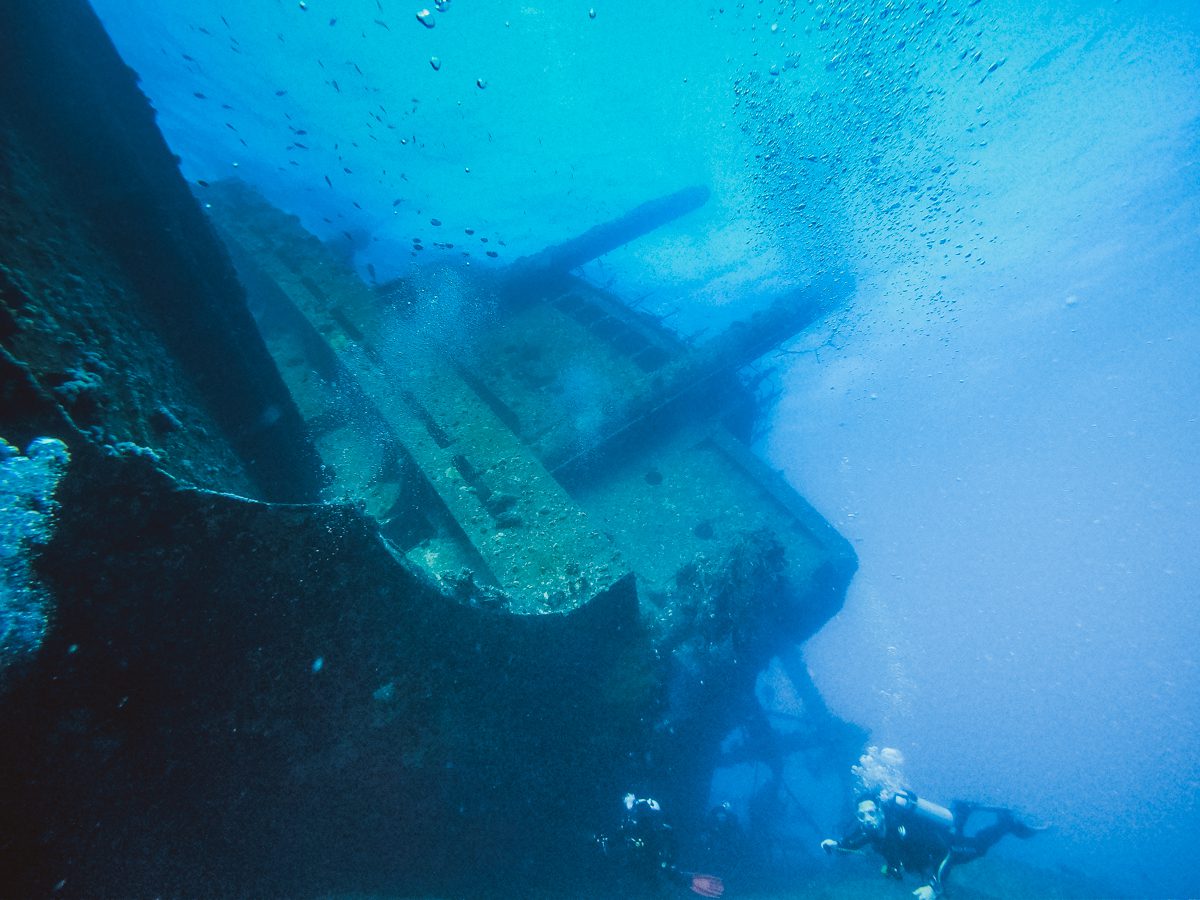
The SS Thistlegorm is a British cargo ship from the Second World War, bombed and sunk on October 6, 1941. Today the Thistlegorm wreck is the most famous dive in the Red Sea. She lies upright in the Strait of Gubal, in the northern Egyptian Red Sea, with her main deck at about 16 to 18 meters and the seabed at about 30 meters. Her forward holds are still packed with trucks, motorcycles and rifles. Most operators ask for Advanced Open Water. It is the most impressive wreck I have ever dived. I dived her four times from a liveaboard, including a night dive inside the holds, and that is still the way I would do it: a boat that sleeps at the wreck beats a day boat from Sharm el Sheikh or Hurghada.
SS Thistlegorm quick facts
Quick facts
- What it is: a British armed merchant ship carrying military supplies to Egypt, sunk by German bombers in 1941.
- What you see: Bedford and Morris trucks, BSA and Norton motorcycles, Lee-Enfield rifles, aircraft parts, Wellington boots, two steam locomotives on the sand and two guns on the stern.
- Typical plan: one dive around the outside, one inside the forward holds. Liveaboards often add a dawn or night dive.
- Conditions: visibility usually 15 to 25 meters; current often strong and able to reverse within hours.
- My verdict: the most impressive wreck I have ever dived. The night dive there is freaky, spooky even, but not to be missed.
- Reviewed based on: four dives on the Thistlegorm from the Blue Force 3 liveaboard in June 2021, including a night dive inside the holds. I have been to Egypt seven times, and this was on the most recent of my Red Sea dive trips. History, cargo and depth figures are checked against published sources and listed as such.
What Is the SS Thistlegorm?
She was an ordinary working ship with an extraordinary last cargo. The Thistlegorm was a steam freighter, 126.5 meters long and 4,898 gross tons, built by J.L. Thompson and Sons in Sunderland for the Albyn Line and launched on April 9, 1940. Because Britain was at war, she was fitted with two guns on the stern and carried Royal Navy gunners alongside her merchant crew.
She made three uneventful wartime voyages: to the United States for steel rails and aircraft parts, to Argentina for grain and to the West Indies for rum. The fourth made her famous. Today she is the dive that almost every northern Red Sea itinerary is built around, and she sits at number one in my own Red Sea diving guide.
I have logged more than 1,500 dives and been on over 40 liveaboard trips, and very few sites combine history and diving the way this one does. On most wrecks you look at a ship. On this one you look at what the ship was carrying, still stowed the way it was loaded in 1941.

SS Thistlegorm History: How She Sank
The Thistlegorm left Glasgow on June 2, 1941, bound for Alexandria with supplies for the British forces fighting in North Africa. The Mediterranean was too dangerous for a slow freighter, so her convoy went the long way: down the Atlantic, around the Cape of Good Hope with a stop at Cape Town, up the east coast of Africa and into the Red Sea.
She never reached the Suez Canal. A collision had blocked it, and ships waiting to pass were told to anchor at a spot the Royal Navy called Safe Anchorage F, at Sha’ab Ali in the Strait of Gubal. The Thistlegorm anchored there in September 1941 and was still waiting on the night of October 5.
In the early hours of October 6, 1941, two German Heinkel He 111 bombers flew from Crete to look for ships in the area. One of them found the anchorage. At about 1:30 am it dropped two bombs on the Thistlegorm, and both struck hold 4, near the stern, where ammunition was stored. The fire reached the ammunition, the explosion tore the ship open, and she sank within minutes.
Nine men were killed: four merchant sailors and five of the Royal Navy gunners. The survivors were picked up by HMS Carlisle, the convoy’s escort. Captain William Ellis was later awarded the OBE, and crewman Angus McLeay received the George Medal for saving a fellow crew member.
That is why the wreck is treated as a war grave, and why everything on it should stay where it is.

SS Thistlegorm Cargo: What Is Still Inside?
The manifest described her load simply as “motor transport”. The reality was a floating supply depot, and because the bombs hit the stern, the forward half of the cargo went down almost undisturbed. This is what the published surveys record:
- Motorcycles: BSA M20 and Norton 16H military bikes.
- Trucks: Bedford, Morris Commercial and Ford vehicles, on two levels in the forward holds.
- Universal Carriers: the small tracked vehicles often called Bren gun carriers. At least one lies upside down in the debris of the blast area.
- Rifles: crates of Lee-Enfield .303 rifles.
- Aircraft parts: including wings for Westland Lysanders and tailplanes for Bristol Blenheims.
- Wellington boots: piles of them. One researcher says they were for ground crews refueling aircraft, to cut the risk of static sparks.
- Two steam locomotives: Stanier 8F engines for Egypt’s railways, carried on deck with their coal and water tenders. The explosion threw both engines off the ship, and they now sit on the sand, one on each side of the wreck.
- Ammunition: shells and other munitions, scattered around the blast area. Some of it is still live, which is one more reason to keep your hands to yourself.

Two popular stories are wrong, according to a myth-busting article published by Divernet. She was not sunk on her maiden voyage, and there are two locomotives, not three.
Wreck layout of the SS Thistlegorm (schematic, not to scale)
The drawing reads from left to right, bow to stern: the upright bow with its anchor chains, holds 1 and 2 with the vehicles on two levels, the bridge, hold 3, the bomb-damaged section where hold 4 and its ammunition exploded, and the separate stern section with its guns and the propeller. The two locomotives lie on the sand, one off each side of the hull.
Reading the layout, bow to stern
- Bow: upright, with the anchor chains on the foredeck. The main deck is at 16 to 18 meters.
- Hold 1 (two levels): Albion lorries and Morris pick-up trucks on the upper level, Albion aircraft refuelers below, plus crates of Lee-Enfield rifles, motorcycles, spare tires and Wellington boots.
- Hold 2 (two levels): Morris trucks loaded with BSA M20 motorcycles and Bedford water tankers on the upper level; Fordson trucks carrying Norton 16H motorcycles and Crossley lorries below; rifles, boots and aircraft parts. The hold floors are at about 25 meters.
- Bridge, then hold 3: hold 3 is dark and awkward to enter and holds mostly coal.
- Bomb damage (hold 4): where the ammunition exploded. The hull is torn open, with shells and an upturned Universal Carrier in the debris.
- Stern section: separate from the rest of the ship and heeled over to port, with its guns still on their mounts. The propeller, at about 32 meters, is the deepest point.
- Locomotives: two Stanier 8F engines on the sand, one off the starboard side level with hold 2, the other off the port side level with the blast area.
Sources: the hold-by-hold surveys published by Divernet and The Thistlegorm Project, the Alert Diver wreck guide and Wikipedia. Schematic, not to scale.
How Was the Thistlegorm Wreck Found?
Jacques Cousteau found her in the early 1950s, working from what local fishermen told him; 1955 is the year most often given. He raised a motorcycle, the captain’s safe and the ship’s bell, and wrote about the wreck in National Geographic in February 1956 and later in his book The Living Sea. The position he published was well off the mark, and the ship slipped out of sight again for more than thirty years.
She came back in the early 1990s, when Sharm el Sheikh was growing into a dive resort and a dive boat relocated her. She has been one of the world’s best-known wreck dives ever since.
That popularity has a cost. In December 2007 the Egyptian conservation group HEPCA fitted 32 mooring buoys so that boats would stop tying onto the ship; by 2009 none were left, and boats tie directly to the wreck again. In July 2017 a team from the University of Nottingham, Ain Shams University and Alexandria University surveyed the whole ship in 3D so that future damage can be measured. You can explore their model on The Thistlegorm Project before you go, which is the best dive briefing I know of.

Diving the Thistlegorm: What Is the Dive Like?
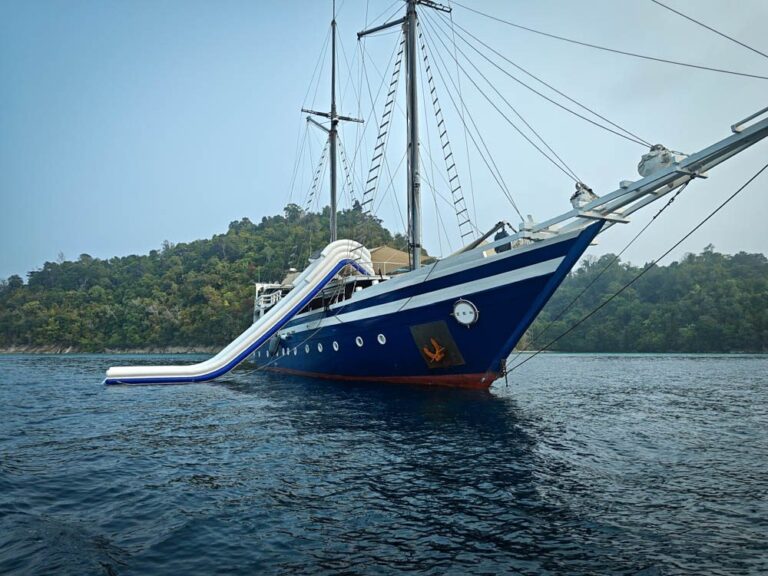
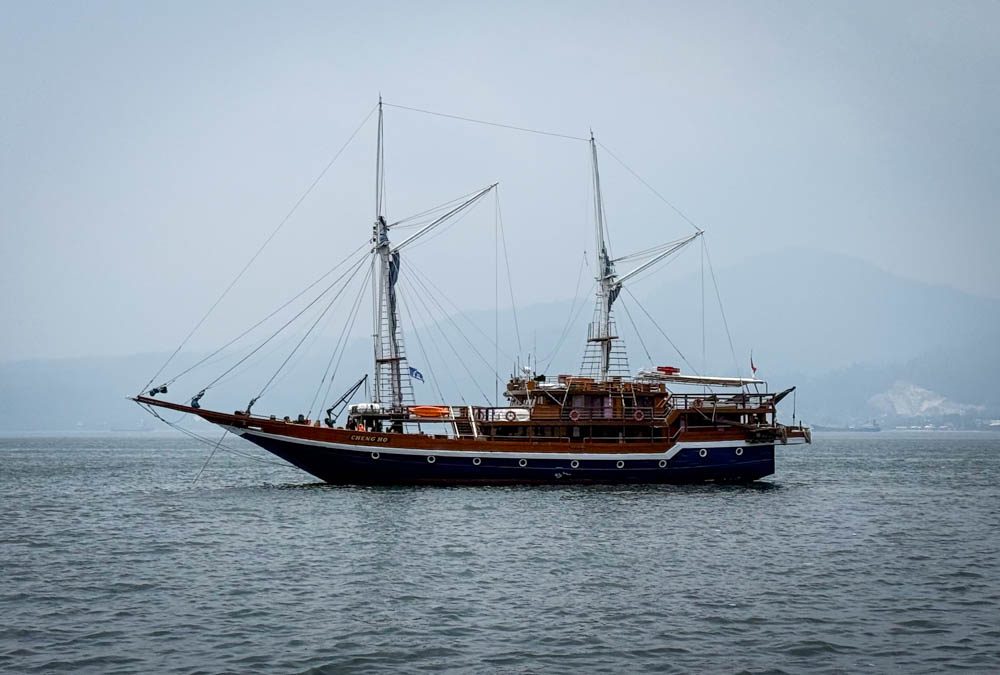
I dived the Thistlegorm four times in June 2021 from the Blue Force 3 liveaboard, on a one-week northern route out of Hurghada. It was the first week of a three-week, 35-dive trip through Egypt. I have been to Egypt seven times, and this was the most recent of my Red Sea dive trips.
The Thistlegorm is the most impressive wreck I have ever dived. The night dive there is freaky, spooky even, but not to be missed, which is another reason to dive it with a liveaboard. Scorpionfish, crocodilefish and batfish have moved in, so the ship is alive as well as historic. The water in the north was 25 to 26°C that June.

If you dive Egypt only once, do not miss it. The cargo positions and the depths in this guide come from published surveys and dive references, and the wreck layout schematic above shows where everything is.

How a Thistlegorm dive usually runs
Most boats plan two dives, and the standard advice is to do the outside first and the inside second.
Dive one, the outside. You go down a line to the main deck at around 16 to 18 meters. From the bow, with its anchor chains, you swim back over the open holds and past the bridge to the blast area, where the hull is peeled open and an upturned Universal Carrier lies among shells. Beyond a gap sits the stern section, heeled sharply over to port, with its two guns still on their mounts. The propeller, at about 32 meters, is the deepest point. One locomotive lies on the sand off each side.

Dive two, the holds. Holds 1 and 2 are open from above and have two levels, with the floor of the lower one at about 25 meters. This is where the motorcycles and trucks are. There is little or no current inside, so you use far less air than on the outside tour. The guide to the wreck in Alert Diver, the magazine of DAN Europe, describes hold 3 as dark, awkward to enter and holding only coal, and advises staying close to the central openings.

The extra dives. A liveaboard moors here overnight, which is how I got four dives. The dawn and night dives happen when the day boats are not there.

How deep is the Thistlegorm?
Thistlegorm depth figures vary a little between sources, because the seabed slopes and the tide moves. The consistent picture is this: shallowest structure at about 14 meters, main deck at 16 to 18, hold floors at 25 to 26, sand at about 30, and the propeller at 32. Everything is inside recreational limits, but almost nothing is shallow.

Current, visibility and crowds
The Strait of Gubal is a narrow, busy channel, and wind and tide both push water through it. Expect current on the outside of the wreck. It can be strong, and it can swing right around within a few hours, so the easy end of the ship on the first dive may be the hard end on the second. Visibility is usually 15 to 25 meters.
Then there are the boats. PADI has put the number of visitors at around 200 divers a day, and Alert Diver says the main risk on this site is not the wreck but the propellers of dive boats and tenders above it. Go down and come up on the line, and look up before you surface.

Who Can Dive the Thistlegorm?
Most operators require Advanced Open Water or an equivalent certification to 30 meters, and many ask for around 20 logged dives as well. An Open Water certification stops at 18 meters, which is the level of the deck. Everything that makes the dive special is below that.
Going beyond the wide-open parts of the holds needs wreck training and good buoyancy. In my Red Sea guide I grade the Thistlegorm as advanced, alongside Elphinstone: deep, with current, and easy to overshoot your depth while you are looking at something else.

If you are newly certified, do not force it. Spend the first days on the easy reefs around Sharm el Sheikh or Hurghada, do the Advanced course there, and come to the wreck at the end of the week.
Day Boat or Liveaboard? Sharm, and the Thistlegorm From Hurghada
You have three ways to reach the wreck, and they give very different dives.
A day boat from Sharm el Sheikh. This is the classic excursion. It is a long day: a pre-dawn start, about three hours each way by boat (some operators quote four), two dives, and back in the late afternoon. You arrive with every other day boat, and you dive at the busiest time.
The Thistlegorm from Hurghada. Hurghada is farther away, about 65 kilometers and roughly four and a half hours by boat. Day trips exist, but from here the wreck is usually done on a liveaboard or a two- to three-day mini safari, often combined with the wrecks of Abu Nuhas.
A northern Red Sea liveaboard. The boat moors at the wreck and stays, so you can dive it more than once, including at night and early in the morning, when the day boats are not there. The night dive there is freaky, spooky even, but not to be missed, which is another reason to dive it with a liveaboard.
Day boat vs liveaboard at a glance
| Day boat from Sharm el Sheikh | Northern liveaboard | |
|---|---|---|
| Dives on the wreck | Usually two | Two to four. I did four. |
| When you dive | Mid-morning, with the other day boats | Often at night and at dawn, when the day boats are away |
| Night dive | No | Yes, on many itineraries |
| Travel on the day | About three hours each way, pre-dawn start | None. You wake up on the site. |
| Winter reliability | Rough seas can cancel the crossing | Better, though routes still change with the weather |
| What else you see | Nothing that day | Abu Nuhas, Ras Mohammed and more in the same week |
| Best for | Resort guests with one spare day, or traveling with a non-diver | Anyone who came to Egypt mainly to dive |
The day boat still makes sense in one case: you are staying in a resort with someone who does not dive, and you can spare a single day. When I stayed at the Four Seasons, its dive center listed the Thistlegorm among the sites its speedboat could reach for advanced divers.

Tips for Diving the SS Thistlegorm
- Do the outside first. It gives you the layout, and it puts the deepest part of the day on the first dive.
- Use the lines. Descend and ascend on the mooring line, and hold on if the current is running. Secure your spare regulator so the current cannot make it free-flow.
- Take nitrox. A 32 percent mix, with a maximum operating depth of about 34 meters, covers the whole wreck on the outside tour. A 36 percent mix, limited to about 29 meters, suits the holds and buys you more time among the trucks. I recommend nitrox on any Red Sea liveaboard doing four or five dives a day.
- Watch your depth and your clock. The boats I dived from in Egypt set a maximum of 30 meters, 60 minutes or 50 bar, and no decompression. On this wreck, with current and other boats overhead, that last rule matters most.
- Stay near the openings inside. Keep your fins up off the silt, never squeeze through a gap you cannot see beyond, and bring a light even by day.
- Wear gloves if your operator allows them. The metal is sharp and the line is rough.
- Take nothing. Nine men died here. The wreck has been looted over the years, and its steel is weakening.
- Look before you put a hand down. Scorpionfish and crocodilefish lie flat on the decks and are easy to miss.

Photographing the wreck
Inside the holds it is dark, so a video light or strobe matters more than the camera behind it. Go wide: the subjects are trucks, not shrimp. Shoot upward from low on the hold floor to catch the blue of the hatch behind a vehicle, and wait your turn so that you are not finning silt over the diver behind you.

I now shoot on a phone in a DiveVolk housing, whose aluminum body is rated to 60 meters, deeper than anything on this wreck. My full comparison of phone housings, action cameras and compacts is in my guide to the best underwater cameras for diving, and the rest of my kit is in my scuba gear list.
When Is the Best Time to Dive the Thistlegorm?
The wreck is dived all year. My pick for the northern Red Sea is March to May and September to November: warm water, long days and calmer seas.
June to August brings the warmest water and very hot air. On land it reached 40°C during my June trip, though the breeze kept the boat comfortable. December to February is the coolest and windiest period in the north. Liveaboards still run, prices are lower and the wreck is quieter, but day boats are the first thing to be canceled when the sea gets up.
Water in the north ranges from about 22°C in February and March to 28°C in August and September. At 27 to 28°C a 3 mm full suit is usually enough. In winter most divers wear 5 mm, and a hood helps on the later dives.
What Else Is Near the Thistlegorm Wreck?
A northern itinerary strings several well-known sites together, and they are a large part of the reason to go by liveaboard. My week on Blue Force 3 also took in Poseidon Reef, Abu Nuhas, the Dunraven wreck, Ras Mohammed, Small Giftun, the Brothers and Panorama Reef.
Abu Nuhas, the ships’ graveyard
Abu Nuhas is a triangular reef beside the shipping lane, just north of Shadwan Island and about 40 kilometers north of Hurghada. Four wrecks lie along its northern side, all at recreational depths: the Giannis D, a Greek freighter that struck the reef in 1983; the Carnatic, a British steamship lost in 1869; the Chrisoula K, known as the tile wreck; and the Kimon M, the deepest at up to 32 meters. We did a night dive here, and I dived the Giannis D, whose stern section sits at 13 to 24 meters. The outside is easy; the inside needs training.
Ras Mohammed and Shark and Yolanda Reef
Ras Mohammed, at the tip of the Sinai, became Egypt’s first national park in 1983. Its signature dive is Shark and Yolanda Reef: one drift from a sheer wall across a coral saddle to the spot where the freighter Yolanda ran aground in 1980, leaving her cargo of toilets and bathtubs on the reef at 15 to 20 meters. I saw tuna, jacks, snapper and unicornfish there, found the toilets at about 17 meters, and asked to dive it a second time. It is rated intermediate, with current.
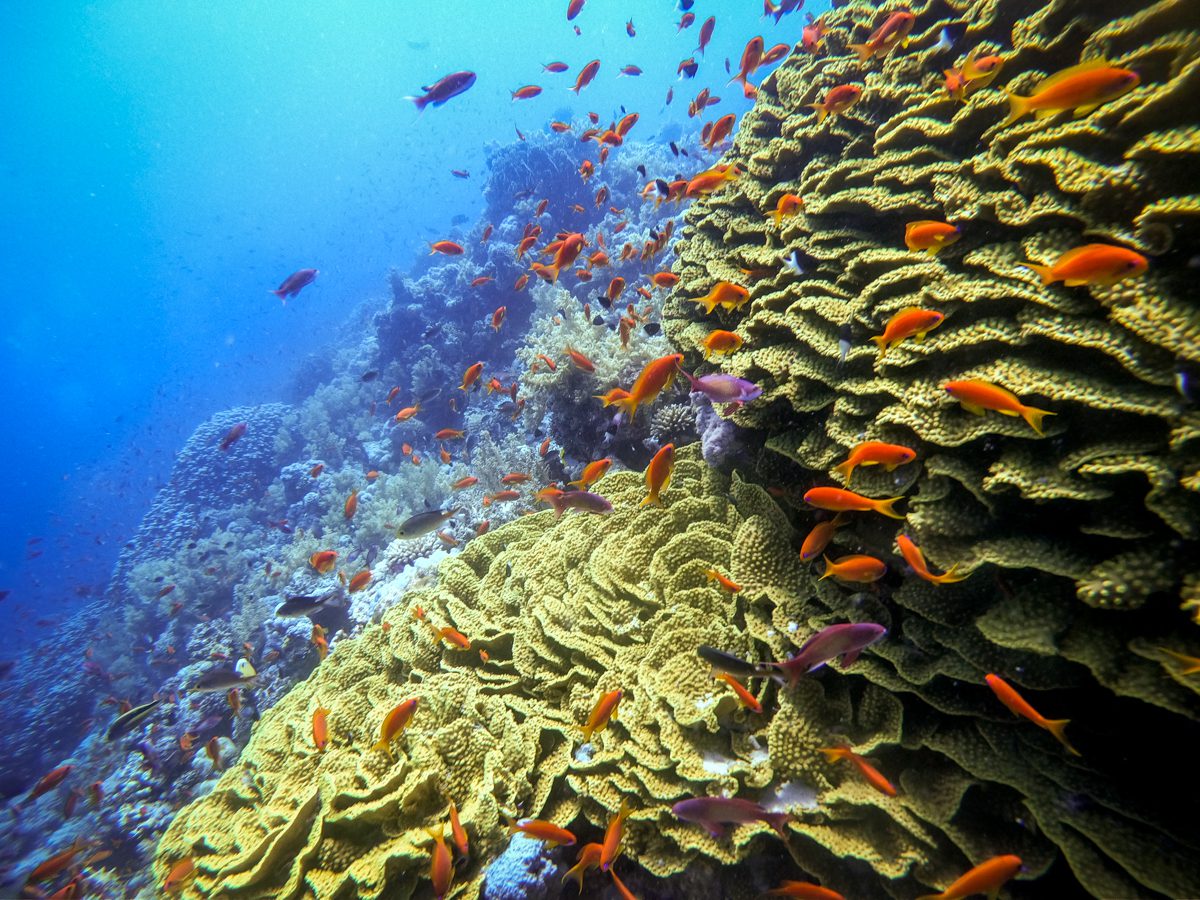
Two more wrecks are close by: the Dunraven near Ras Mohammed, and the Rosalie Moller, sunk two days after the Thistlegorm and considerably deeper. If big animals matter more to you than wrecks, the hammerheads of the offshore reefs are covered in my hammerhead diving guide, and the Red Sea’s place among the world’s great dive regions in my ranking of the best dive destinations.
How to Book a Thistlegorm Trip
Liveaboards
When I checked Liveaboard.com on November 15, 2026, it listed 67 liveaboards that visit the Thistlegorm, with popular boats from about USD 106 per person per day. Egypt remains the cheapest big-name liveaboard destination I know. Budget separately for nitrox, marine park and port fees, crew tips and transfers.
The boat I dived the wreck from, Blue Force 3 (my rating: 4.5/5), has since moved to the Maldives. The same operator’s Egyptian boat is now Blue Force 2, an 18-diver yacht sailing northern routes from Sharm el Sheikh, from USD 136 a day when I checked in October 2026. I have not sailed it myself, so confirm that your departure includes the Thistlegorm.
My other Egyptian liveaboard was the Red Sea Aggressor III, which has been replaced in the fleet by the Red Sea Aggressor IV (on Liveaboard.com | on Divebooker). It sails the southern routes from Port Ghalib, so it is the boat for hammerheads and dolphins, not for this wreck.
Not every boat in Egypt is run to the same standard, and the fleet has had serious accidents in recent years. Choose an established operator, expect a full safety briefing before you leave port, and find your life jacket and your cabin exit on the first evening.
Prices for the same trip can vary significantly between websites, and it pays to compare both Divebooker and Liveaboard.com before you book, because their promotions sometimes differ. Divebooker also includes free DAN dive insurance on request. I explain how I compare the two in my guide to luxury liveaboard deals.
👉 Check prices and availability for Red Sea liveaboards: on Liveaboard.com | on Divebooker

A hotel in Sharm el Sheikh
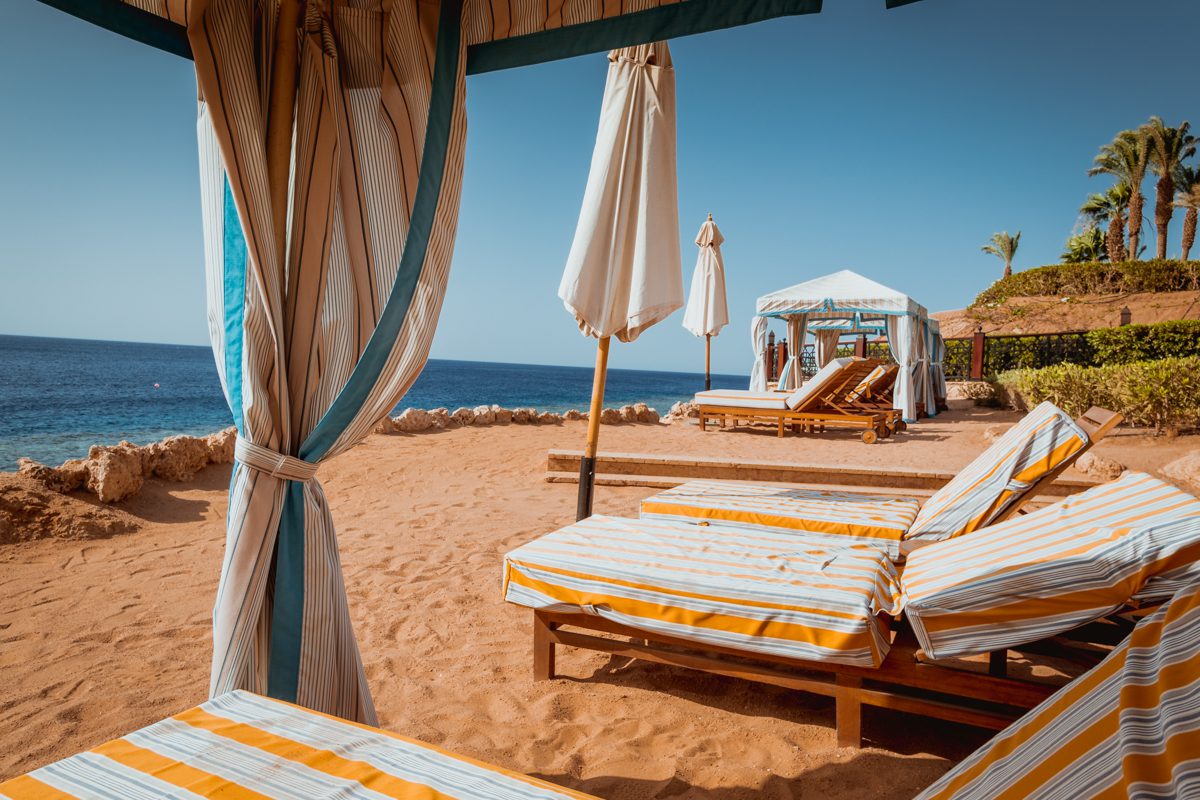
If you prefer a resort and a day boat, I stayed at the Four Seasons Resort Sharm el Sheikh and rated it 4.5/5. It is the most luxurious base I know for diving the northern Red Sea: under ten minutes from the airport, with a real house reef, a fast dive boat and a dive center that carries, rinses and dries your gear.
Rates started from about USD 383 a night for a Superior Palm View room in mid-July 2027, and from about USD 580 in November and January, for two adults with taxes included, as at October 24, 2026. Compare the same room on your dates: check the rate on Booking.com, compare on Trip.com or see it on Expedia.
Getting there
Sharm el Sheikh (SSH) and Hurghada (HRG) both have direct flights from across Europe, and the two are a 30-minute flight apart. I start my fare searches on Aviasales. Check Egypt’s current entry and visa rules before you travel, make sure your travel insurance covers diving to 30 meters, and run through my liveaboard packing list. With a few spare days, Luxor and the Sofitel Winter Palace make a good finish to the trip.
FAQ
How deep is the SS Thistlegorm?
The SS Thistlegorm lies between about 16 and 32 meters (52 to 105 feet). The main deck is at 16 to 18 meters, the floor of the forward holds at about 25 meters and the seabed at around 30 meters. The propeller, at the stern, is the deepest point at about 32 meters.
What certification do you need to dive the Thistlegorm?
Most operators ask for Advanced Open Water, or an equivalent certification to 30 meters, and many also want around 20 logged dives. The deck sits at the 18-meter limit of an Open Water certification and everything else is deeper. Going inside, beyond the wide-open holds, needs wreck training.
Can beginners dive the Thistlegorm?
Not comfortably. The wreck is deep, the current is often strong and can change direction, and several boats may be moored above it at once. Newly certified divers are better off starting on the easy reefs around Sharm el Sheikh or Hurghada, taking the Advanced course there, and returning with 20 or more dives.
When is the best time to dive the Thistlegorm?
You can dive the Thistlegorm all year. I prefer March to May and September to November, when the water is warm and the sea is calmer. The northern Red Sea ranges from about 22°C in February to 28°C in August, and winter wind can cancel day boats at short notice.
How long does a Thistlegorm dive take?
Plan on two dives, one outside and one inside the holds. Each lasts as long as your gas and no-decompression time allow at 16 to 30 meters; the boats I dived from in Egypt capped every dive at 60 minutes or 50 bar. A day trip from Sharm el Sheikh fills the whole day.
Can you go inside the Thistlegorm?
Yes, in part. The forward holds are open from above on two levels, and guides routinely lead qualified divers through them to see the trucks, motorcycles and rifles. Stay near the central openings, keep your fins off the silt and touch nothing. Tighter spaces need wreck training, and unexploded munitions remain on board.
Is a day trip or a liveaboard better for the Thistlegorm?
A liveaboard is better. It moors at the wreck, so you can dive at dawn and at night when the day boats are gone, and do three or four dives. The night dive there is freaky, spooky even, but not to be missed. A day boat from Sharm el Sheikh means a pre-dawn start, about three hours each way and two dives at the busiest time.
Disclosure: this article contains affiliate links. If you book through them, I earn a small commission at no extra cost to you. Read my full disclosure policy.