JW Marriott Mount Kenya Rhino Reserve Safari Camp opened in July 2026 inside Solio Game Reserve, a 45,000-acre private conservancy in Laikipia that became Kenya’s first private rhino sanctuary in 1970. It has 19 tented suites by LW Design, each with a private plunge pool, and introductory rates from US$2,200 per person per night, all-inclusive. On paper it suits travellers who want rhinos, walking and horseback safaris and a wellness programme in one place, and who are comfortable with a big-brand camp rather than a family-run lodge.
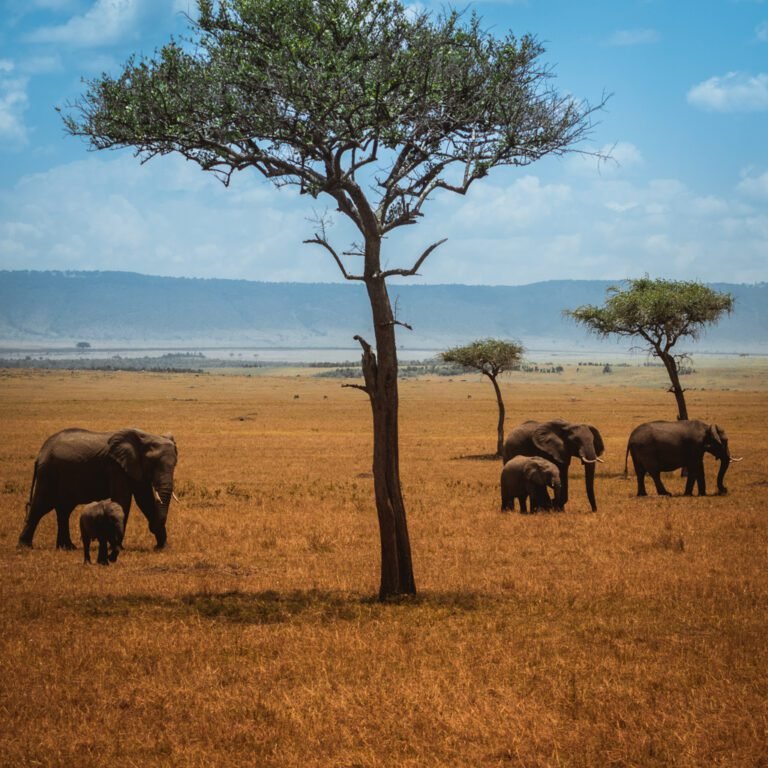
Half a century ago, when poaching was emptying Kenya of its rhinos, a ranch between Mount Kenya and the Aberdare Range fenced off part of its land and started breeding them. Solio became the country’s first private rhino sanctuary in 1970, and its animals have since been used to restock parks and conservancies across East Africa. Today the 45,000-acre reserve holds one of Africa’s largest populations of both black and white rhino, alongside lion, leopard, zebra, waterbuck, Thomson’s gazelle and more than 300 recorded bird species.
For most of that history, Solio was a place you visited quietly, through a single small lodge. In July 2026 JW Marriott opened its second Kenyan safari property here, after the JW Marriott Masai Mara Lodge: 19 tented suites, a spa, three dining venues and a photography studio. It is one of the most significant branded safari openings in East Africa this year, and it puts a global hotel group inside one of the continent’s most important rhino conservation stories.
The timing matters too. The camp took its first guests on 2 July 2026, at the start of Kenya’s long dry season, and it arrives as Laikipia’s private conservancies are drawing a growing share of the high-end safari market away from the national parks. For Solio, which for decades kept its visitor numbers deliberately low, a 19-suite camp from a global brand is a change of scale as much as of style. For travellers, it means one of Africa’s best rhino territories is now bookable with the predictability of a hotel group behind it: loyalty points, consistent service standards and the kind of inventory that shows up on the big booking sites.
JW Marriott Mount Kenya Rhino Reserve Safari Camp: Key Facts
- Opened: 2 July 2026
- Where: Solio Ranch, Solio Game Reserve, Laikipia, Kenya, between Mount Kenya and the Aberdare Range; about 190 km from Nairobi’s Jomo Kenyatta International Airport
- The reserve: a 45,000-acre private conservancy and Kenya’s first private rhino sanctuary (1970), with one of Africa’s largest populations of black and white rhino
- Suites: 19 tented suites, including one two-bedroom suite, each with a private deck, plunge pool, freestanding bath and roll-up canvas walls facing Mount Kenya, the Aberdares, a waterhole or open savannah
- Design: LW Design, with work by Kenyan artisans, including bronze rhino-head door handles by Safari Bronze, a life-size blown-glass rhino mother and calf by Kitengela Glass, and ceramics by Ceramiqa
- Dining: Mavuno restaurant on a seven-night menu rotation; Ember Bar and Lounge; a wine room for tastings and private dining; the JW Garden, which supplies produce and hosts a garden dinner
- Wellness: Spa by JW, built on four pillars (Ground, Heal, Restore and Breathe) with Kenyan botanical products built around highland moringa, wild aloe, Laikipia honey, cedar and clove; signature half-day Solio Passage ritual; pool and open-air gym
- Activities: two shared game drives a day, night drives, walking, cycling and horseback safaris, Solio Rhino Orphanage visits (maximum six guests), Canon Photo Studio with loan equipment; helicopter flights and trout fishing on Mount Kenya on request
- Getting there: a 30-minute flight from Nairobi’s Wilson Airport to Nanyuki, followed by a road transfer to the reserve, or about three hours by road from Nairobi; private charters fly direct to Solio Ranch Airstrip in 35 minutes, then a 10-minute drive
- Rates: introductory rates from US$2,200 per person per night, all-inclusive (full board, selected drinks, shared game drives and airstrip transfers); Solio conservation fees are extra. See the rate section below for live prices
Why Solio Is the Story
Kenya’s famous parks, the Masai Mara National Reserve and Amboseli among them, run on national-park rules: no walking, no night drives, vehicles on the tracks. Private conservancies like Solio set their own. That is why the activity list here reads differently. You can track rhino on foot with an armed guide, ride out on horseback, cycle the plains and go out after dark with a spotlight for leopard, serval and spotted hyena. If you are weighing the two styles of safari, I compare them in Laikipia vs the Masai Mara.
The rhino density is the other difference, and the main reason to choose JW Marriott Mount Kenya over a Mara camp. In much of Africa a rhino sighting is a lucky break; on Solio it is the expected part of a drive. The camp’s most distinctive outing is not a drive at all. Visits to the Solio Rhino Orphanage, capped at six guests, put you alongside the keepers raising calves that have lost their mothers, before they are released back into the conservancy.
It is worth being clear about what a day here actually looks like, because the activity list is longer than the rate inclusions suggest. The rhythm is a sunrise game drive and a late-afternoon one, with the middle of the day given over to the pool, the spa or simply the view of the mountain from your deck. Around that core you can add a walking safari with an armed guide, a cycling excursion across the plains, a night drive, or a morning with the resident photographers.
Birding is a serious option rather than an afterthought: more than 300 species have been recorded on the reserve, which sits on a highland corridor between two mountain ranges. On request, the camp arranges helicopter excursions, trout fishing in the streams of Mount Kenya, sunset painting sessions, bush dining, bread-making and Kenyan cooking classes. Few of those will be included in the headline rate, so decide which ones matter to you before you compare prices.
Inside the Tented Suites
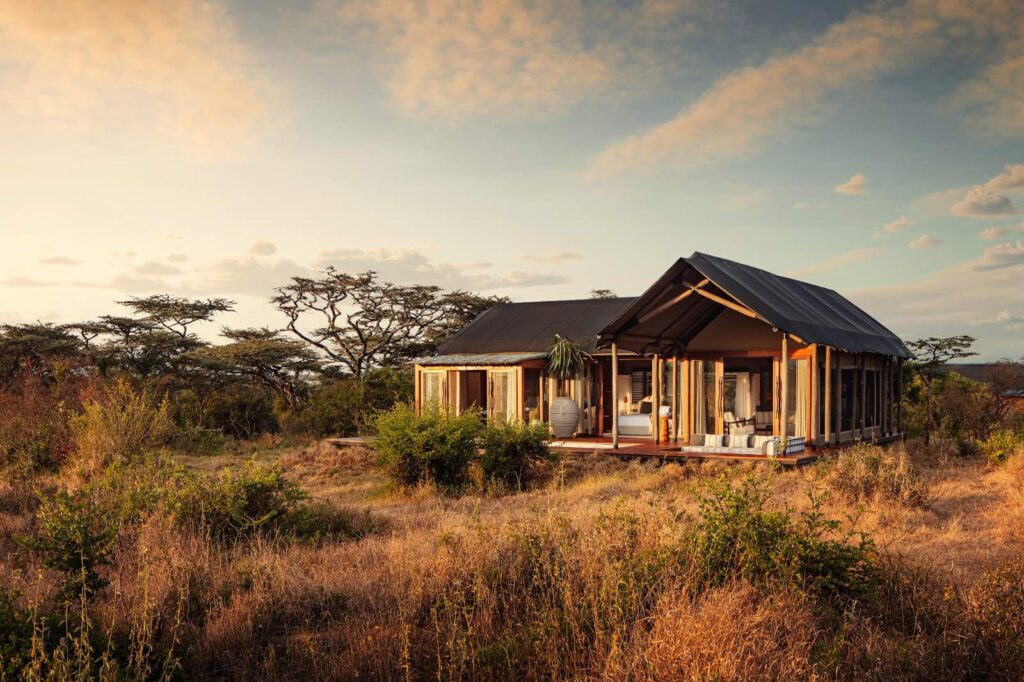
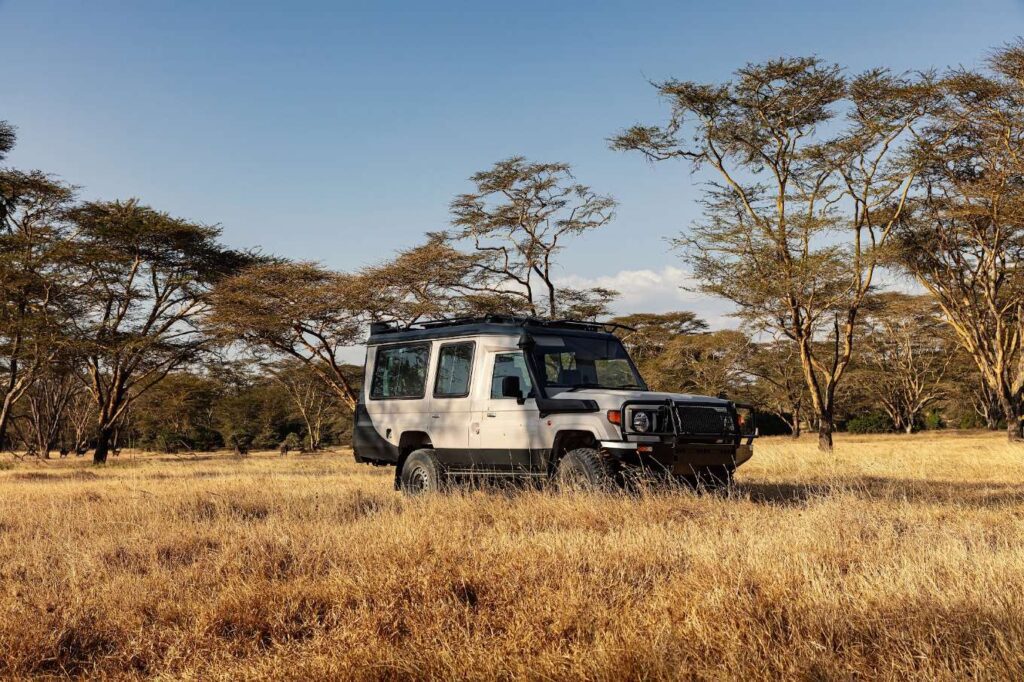
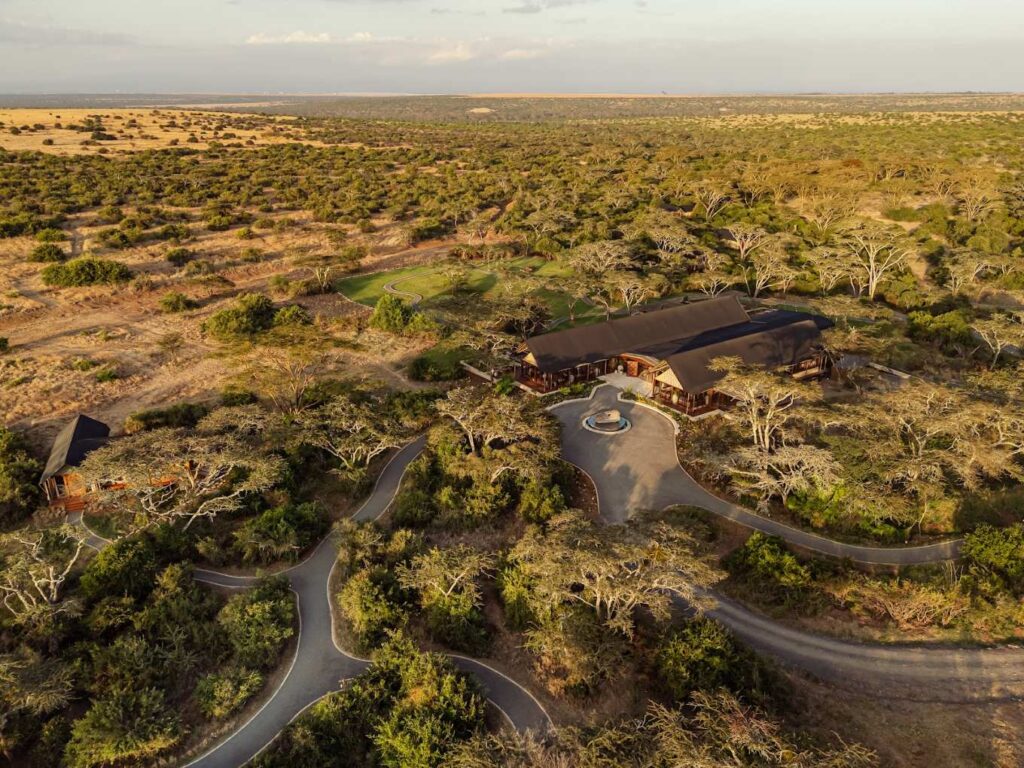
The 19 suites at JW Marriott Mount Kenya are spread out so each sits in its own clearing, oriented towards Mount Kenya, the Aberdares, a waterhole or the open savannah. Canvas walls roll up to bring the view inside, and every suite has its own deck, plunge pool and freestanding bath.
The design leans on Kenyan craft rather than imported décor. Guests arrive through timber doors fitted with bronze rhino heads cast by Safari Bronze, and are met by a life-size blown-glass rhino mother and calf from Kitengela Glass. A map room, library and games room fill the shared spaces, and the boutique sells beadwork and textiles from the Solio Women’s Empowerment Project, with proceeds returned to the project.
The one two-bedroom suite is the configuration to watch if you travel as a family or two couples: it is the only way to share a single plunge pool and deck at JW Marriott Mount Kenya, and with just one of them in the camp it will be the first to sell out in the dry-season months.
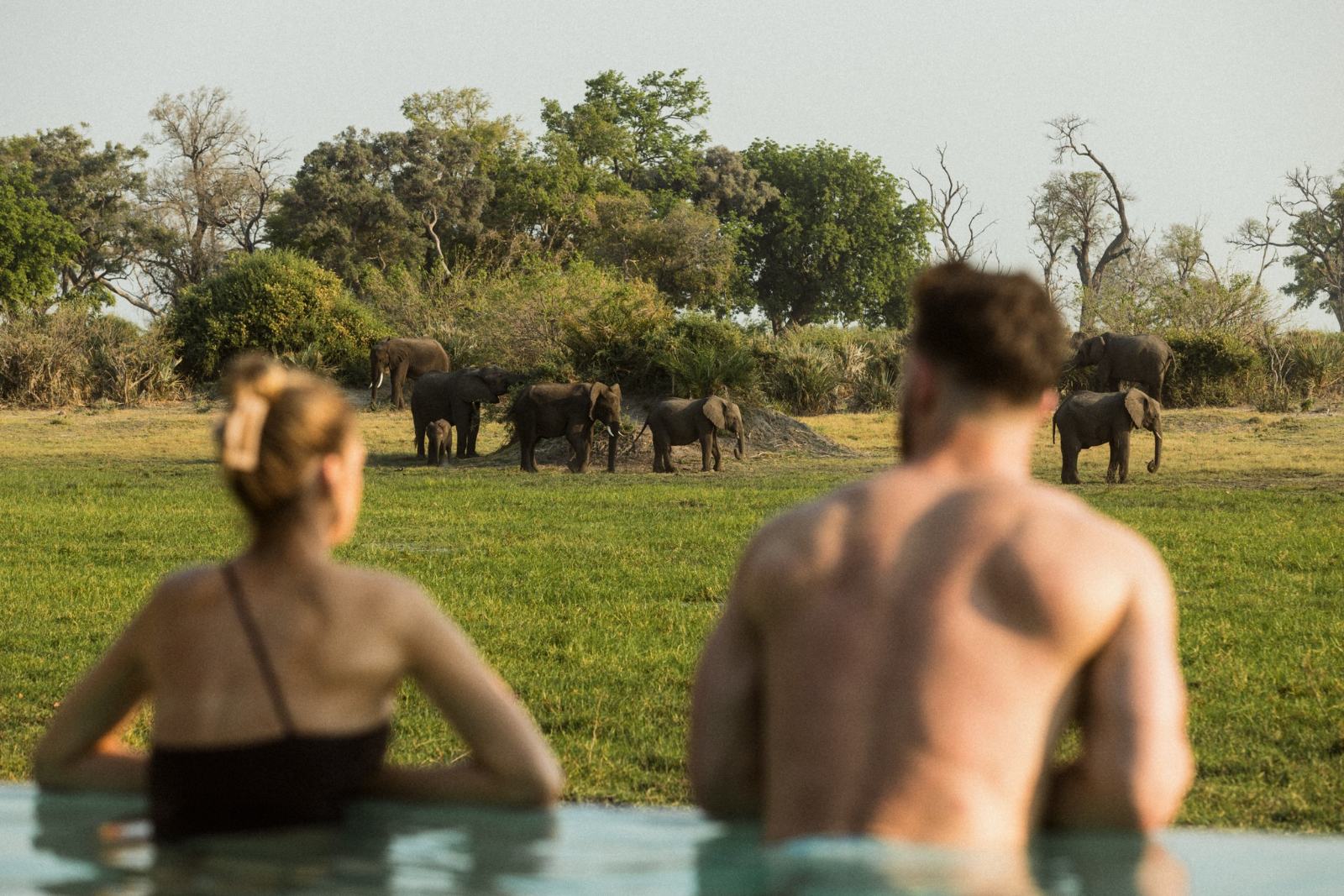
For everyone else the choice is about outlook. The suites facing Mount Kenya give you the peak at dawn, when it is most often clear; the waterhole-facing suites trade the mountain for the chance of rhino, zebra and waterbuck drinking within sight of your bath. Ask for your preference when you book, because the view is the main thing that separates one tent from the next.
A Safari Built Around Slowing Down
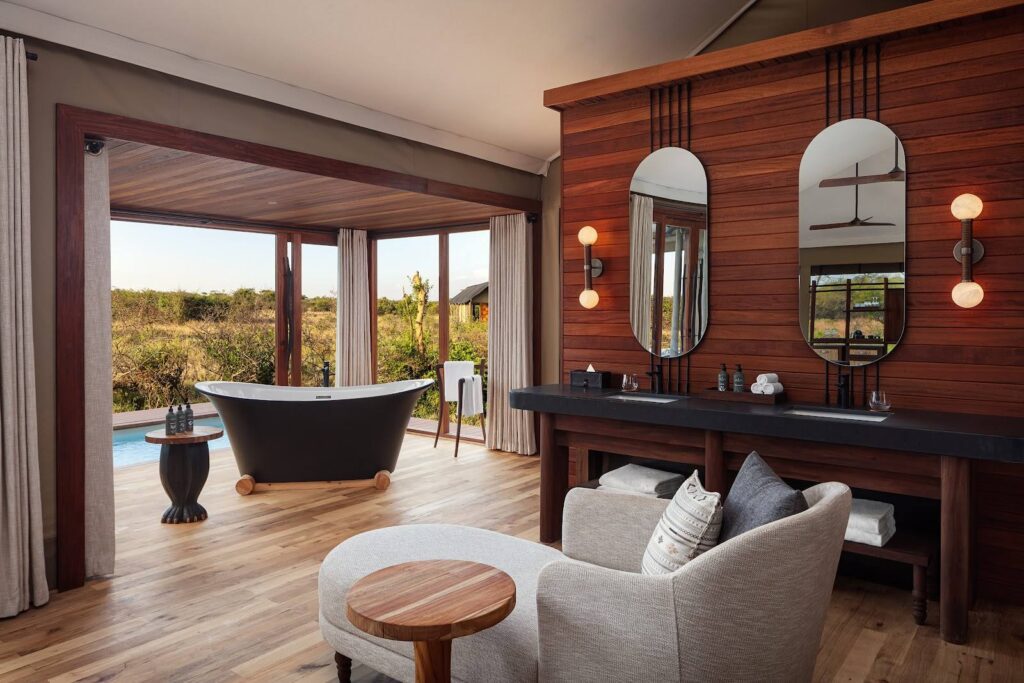
JW Marriott positions JW Marriott Mount Kenya as a wellness safari, and the programme is more specific than that label usually means. Each guest keeps the same guide for the whole stay. On morning drives the guide cuts the engine for what the camp calls The Pause, a few minutes of silence with phones away. Spa by JW is organised around four pillars (Ground, Heal, Restore and Breathe), and the half-day Solio Passage combines volcanic stone therapy, a botanical massage, a glacial hydrotherapy soak and cedar forest bathing.
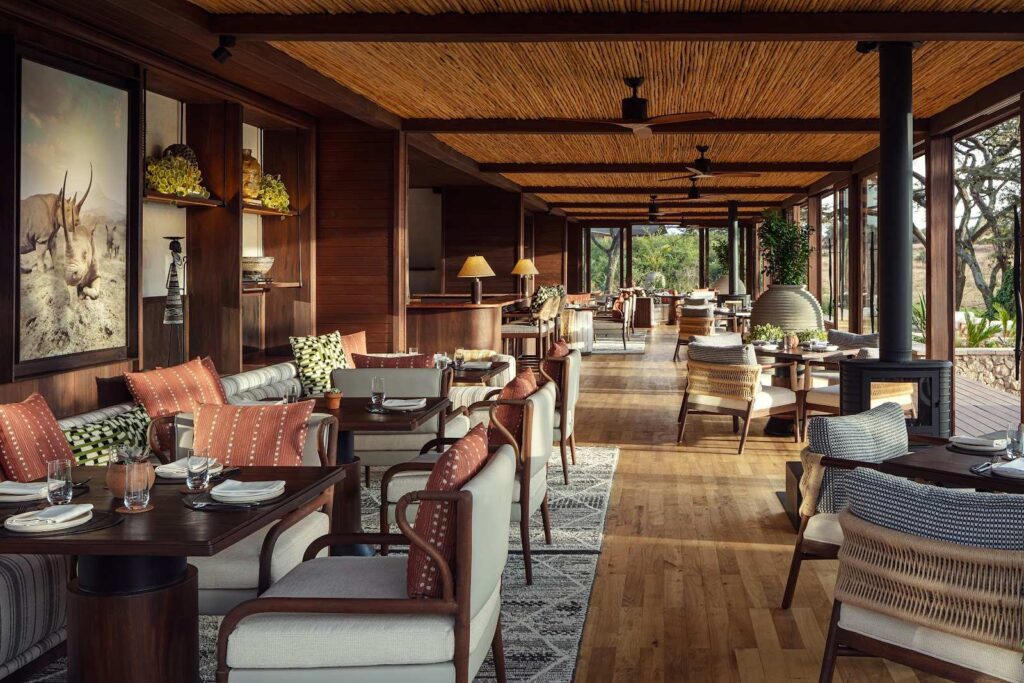
Dinner at Mavuno runs on a seven-night rotation, moving from Kenyan highland cooking to open-fire menus to a fully plant-led gardener’s menu, so a week-long stay never repeats an evening. Much of the produce is harvested daily from the terraced JW Garden next door. At Ember Bar, the Five Elements cocktail list is built on smoke, spice, earth, honey and fire.
The treatments lean on the same local botanicals, with skincare from the Kenyan brand Jani. Beyond Mavuno and Ember there is The Garden Table, an intimate multi-course dinner served among the beds that supplied it, which is the booking I would make on the first night to understand what the kitchen can do. The slow-safari idea is not new in Laikipia, where the best family-run lodges have always set the pace around the wildlife rather than a schedule, but it is unusual to see a brand of this size commit to it in writing, down to the guide switching off the engine.
At JW Marriott Mount Kenya, the Canon Photo Studio is the detail first-time safari-goers will appreciate most: it lends professional camera bodies and lenses, with guidance from resident photographers, so you don’t need to fly in with a long lens.
Conservation, Community and the Footprint
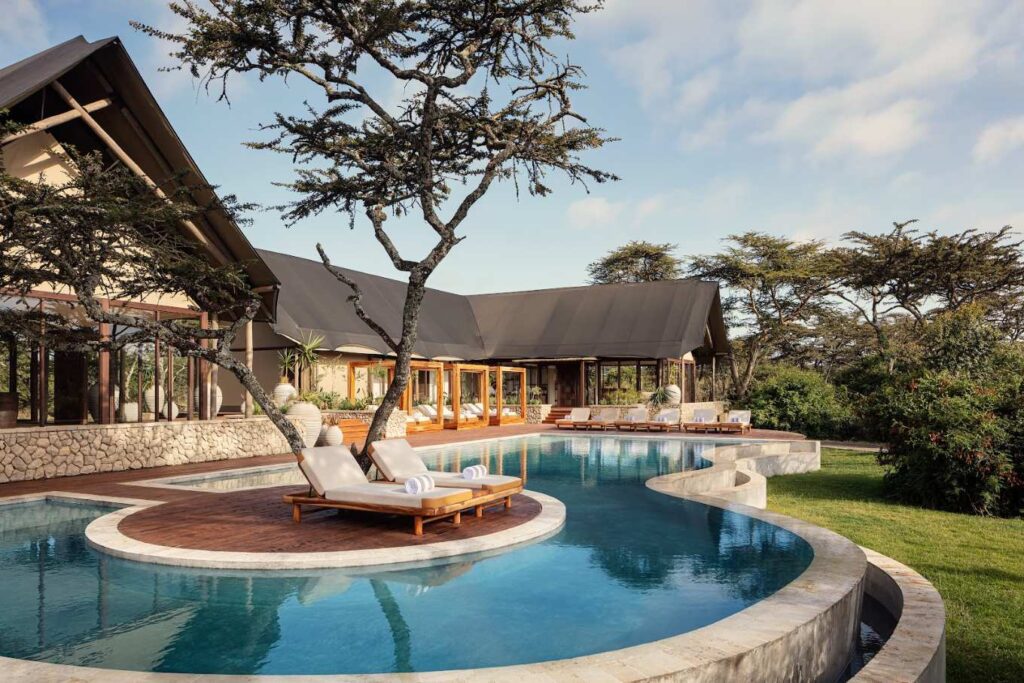
A camp inside a rhino sanctuary has to justify itself on more than comfort, and JW Marriott has set out how it intends to. The orphanage visits are the visible part. Less visible, but more telling over time, is the staffing: 95% of the team are Kenyan nationals, and that is the figure I would want to see hold as the camp matures and the opening team moves on. The camp supports the Lazizi Welfare Foundation’s daily meal programme at Riacho Comprehensive School nearby, and the boutique’s beadwork and crochet rhinos from the Solio Women’s Empowerment Project return their proceeds to the women who make them.
On the operational side, the camp runs on solar energy infrastructure, harvests rainwater, recycles its wastewater and composts and upcycles where it can. None of that is unusual for a new-build safari camp in 2026, and none of it should be mistaken for the conservation work itself, which on Solio is funded and run by the ranch and predates the hotel by more than fifty years. The fairer test is whether a 19-suite camp brings enough revenue through conservation fees and employment to make the sanctuary more secure than it was with one small lodge. That is a question for a year or two from now, not for an opening article.
The Lens I’m Reading This Through
I know this corner of Kenya. My most memorable safari stay is on the other side of Mount Kenya: Ol Malo, a family-run lodge of just four rooms on 5,000 private acres, with some 70 staff looking after those four rooms. Further east, Lewa House in the Lewa Conservancy earned a full five out of five from me, and it is also a rhino story: a private conservancy where conservation funding and the guest experience are the same thing. Both taught me that on a private conservancy, the people and the guiding matter more than the hardware.
That is the question I would bring to JW Marriott Mount Kenya. The camp has hardware neither of those lodges wanted: 19 suites, plunge pools, a spa with four pillars. What it has to prove is the part a brand cannot import. The honest caveat is in the inclusions: the rate covers two shared game drives a day, and on a private conservancy, how many people share your vehicle shapes the whole safari. The same-guide-all-stay promise and the six-guest cap on orphanage visits are encouraging signs; whether the guiding feels personal at full occupancy is what I would test first.
It also arrives in the middle of a broader refresh of East African and southern African safari hospitality, alongside openings such as Singita Elela in the Okavango and Silverback Lodge in Bwindi.
How Much Does JW Marriott Mount Kenya Rhino Reserve Safari Camp Cost?
JW Marriott quotes introductory rates from US$2,200 per person per night, all-inclusive by safari standards: full board, selected drinks, two shared game drives a day and transfers from the airstrip. Solio’s conservation fees are charged on top, as are spa treatments, helicopter flights and trout fishing. The two-bedroom suite sits at the top of the range.
When I checked prices for two adults on 17–19 February 2027, the entry one-bedroom tented suite was selling for US$2,395 a night on both Expedia and Trip.com, all-inclusive, before taxes. With taxes, that came to about US$5,650 for the two nights on Expedia’s non-refundable rate and about US$6,140 on Trip.com’s free-cancellation rate. That is well below the per-person figure in the opening announcement for two people sharing, so check exactly what each rate includes before you book.
Rates for the same suite on the same night often differ by 10–20% between booking sites, and safari camps frequently attach different inclusions and cancellation terms on each, so compare the total before you book: compare rates on Trip.com or see availability on Expedia.
The best months to visit are the long dry season, from late June to October, and the shorter dry spell from January to February, when the grass is lower and wildlife gathers at the waterholes. Mount Kenya is usually clearest early in the morning.
Two practical points before you commit. First, Solio’s conservation fees are charged on top of the room rate whichever site you book through, so build them into your comparison rather than treating them as a surprise at check-out.
Second, think about how you arrive. The scheduled flight to Nanyuki followed by a road transfer is the cheaper route; the private charter to Solio Ranch Airstrip cuts the drive to ten minutes and puts you in the reserve almost as soon as you land, which is worth considering on a short stay of two or three nights. If you are combining Solio with the Masai Mara, as many first-time visitors to Kenya will, both are served from Wilson Airport, so the two legs are easy to string together.
Who Is It For?
On the evidence so far, JW Marriott Mount Kenya is for travellers who want near-guaranteed rhino, the freedom of walking, cycling and horseback safaris on a private reserve, and the reassurance of a global brand, and who would happily trade the intimacy of a four-room family lodge for a spa and a seven-night menu.
It is less obviously right for safari purists who measure a camp by how few other vehicles they see, or for anyone whose idea of Laikipia is a four-room lodge where the owners join you for dinner. Those places still exist on the other side of Mount Kenya, and I would not talk anyone out of them.
But if this is your first safari, if you want rhino without luck playing a part, or if you are travelling with someone who needs a proper spa and a predictable brand to say yes to the bush at all, JW Marriott Mount Kenya has made the case to be on the shortlist. I will update this article once I have stayed.
Disclosure: this article contains affiliate links. If you book through them, I earn a small commission at no extra cost to you. Read my full disclosure policy.
Photos © JW Marriott.
This preview is based on official announcements — I haven’t stayed yet. Read more about how I review or visit my Work With Me page.