I did a six nights cruise to the Banda Islands on the Sea Safari 6 liveaboard. This is my review of the boat and the trip to the Banda islands. The Banda islands are famous in October for the chance to scubadive hammerheads. Read on for my review of the journey and plenty of practical tips. I have now done four liveaboard trips to the Banda Sea in hammerhead season, so this Sea Safari 6 liveaboard review also includes everything I have learned about when to go, what it costs, and who this trip suits.
Sea Safari 6 is one of the boats I have sailed that did not make my guide to the best luxury liveaboards in Indonesia — that guide ranks the ten that did, and says plainly why the rest fell short.
Why Trust This Sea Safari 6 Review?
Check Availability and Book Your Cruise on Sea Safari 6 Here
There are hundreds of liveaboard reviews online, but many are written by people who have only experienced one or two boats. A luxury liveaboard can seem exceptional when you have nothing to compare it to.
I have logged more than 1,500 dives around the world and have personally sailed on more than 30 liveaboards across Indonesia, the Maldives, the Red Sea, Mexico, Galapagos, and other diving destinations. Over the years, I have visited Raja Ampat and Komodo more than 20 times and continue to explore some of the most remote regions of Indonesia in search of exceptional diving experiences.
As the founder of This Is Luxury Travel, I have made liveaboard reviews one of the core focuses of the website. Today, This Is Luxury Travel has reviewed more diving liveaboards than any other luxury travel publication, allowing readers to compare boats based on real first-hand experience rather than marketing materials.
When reviewing a liveaboard, I pay attention not only to the diving itself but also to the details that can make or break a trip: cabin comfort, food quality, dive operations, guide quality, safety procedures, photography facilities, internet reliability, value for money, and how the experience compares with competing boats in the same destination.
My goal is not to tell you whether a boat is “good” or “bad.” Instead, I aim to help you understand who the boat is best suited for and whether it matches your diving style, budget, and expectations.
This review of Sea Safari 6 is based entirely on my personal experience during a six-night hammerhead cruise from Ambon to the Banda Islands aboard the vessel, with schooling hammerheads at Suanggi in groups of thirty to well over a hundred. Choosing the best Banda Sea liveaboard comes down to finding a premium dive liveaboard Indonesia operation that delivers consistent quality across all these departments.
Sea Safari 6 liveaboard review: quick facts
Rating: 4.5 / 5
Reviewed based on: A 6-night self-funded cruise in late October (hammerhead season), Ambon → Suanggi → Banda Neira → Manuk → Nusa Laut — my 4th liveaboard trip to the Banda Sea.
Boat: Traditional wooden Phinisi, 10 cabins, max 28 divers, Nitrox available
Price: From around US$2,700 per person for a 6–7 night trip, depending on cabin and itinerary
Best for: Experienced divers who want schooling hammerheads in the Banda Sea with genuine comfort — without paying ultra-luxury prices
Verdict: Not the flashiest boat in Indonesia, but sturdy, exceedingly stable and hyper-comfortable, with a superb crew — and on this trip it delivered five schools of hammerheads.
Read the Liveaboard review of Sea Safari 6 and see how it went!
Overview of the Sea Safari cruise company
Sea Safari is one of the biggest and most experienced liveaboard companies in Indonesia. They have been running liveaboards in Indonesia for the last 30 years and currently have four boats cruising the Indonesian water.
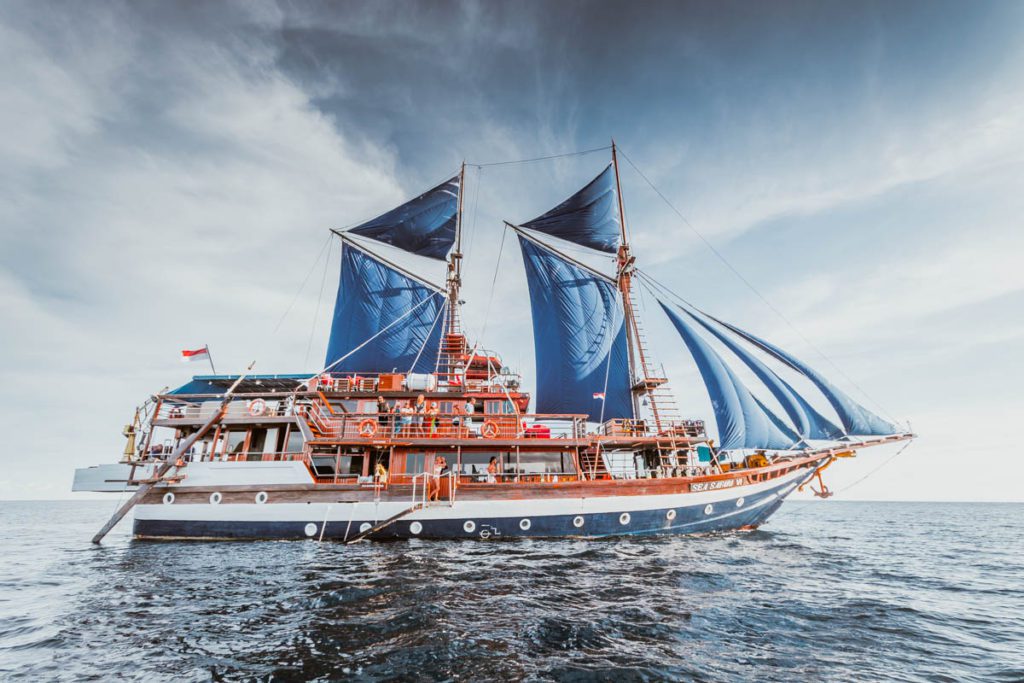
I stayed on the Sea Safari 6, a large traditional wooden boat with ten cabins to host 28 divers. Sea Safari 6 is the company boat that makes the most remote and adventurous trips. They go to the likes of Banda islands, Raja Ampat and Wakatobi.
Sea Safari 6 vs Sea Safari 7 and Sea Safari 8: which boat?
If you are comparing the fleet: the Sea Safari 6 is the smallest of the Sea Safari boats, taking a maximum of 28 divers, while the Sea Safari 7 and Sea Safari 8 carry larger groups. The smaller size makes the Sea Safari 6 feel more personal, and it is the boat the company sends on its most remote itineraries — the Banda Sea, Raja Ampat and the Forgotten Islands. If schooling hammerheads are your goal, the Sea Safari 6 is the one to book, because it runs the Banda hammerhead-season crossings.
Review of the Sea Safari 6 dive boat
The Sea Safari 6 boat was built about 20 years ago, but the wood is strong, and the ship is still operational. It might not be the newest or prettiest boat cruising the Indonesian water, but it is very stable and comfortable. While some boats feel like they have been built by interior designers and are impractical, the Sea Safari 6 has been made by experienced seamen. It is sturdy and practical. The boat is strong, and the motor is relatively silent compared to other diving liveaboards I have been on.
The boat is 35 meters long and 11 meters wide and has four decks.
The lower deck on Sea Safari 6
The lower deck has four cabins and the engine room. I had a look at the below deck cabins, and they are a bit bigger than the upper deck cabins. They also have a small porthole window to get natural light.
The Middle deck on Sea Safari 6
The middle deck is the busiest area of the boat. It has the restaurant and the dive deck.
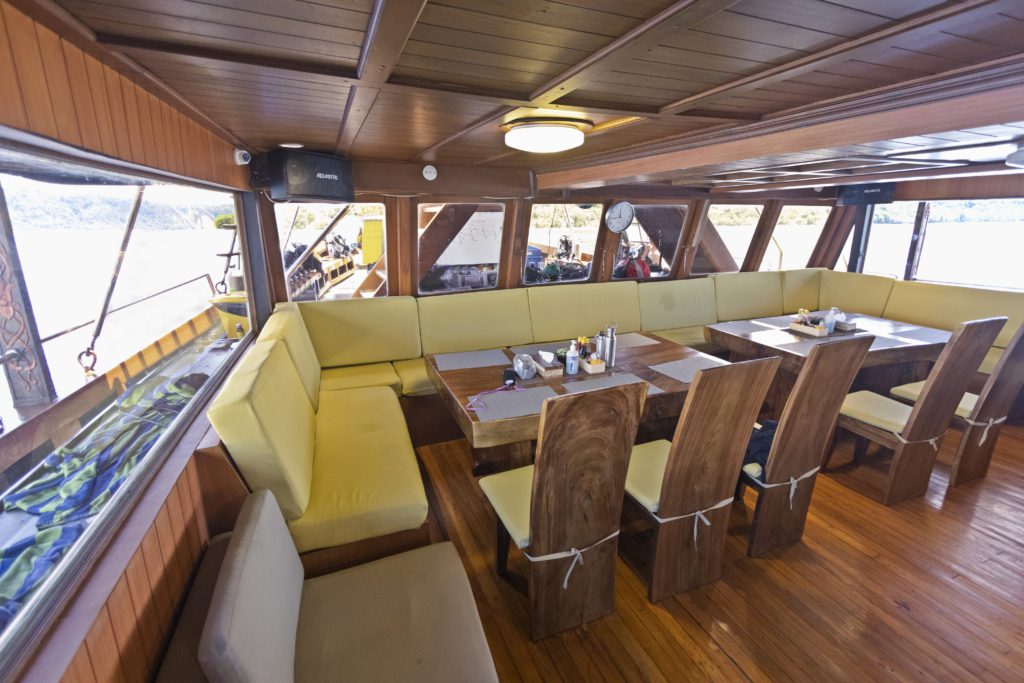
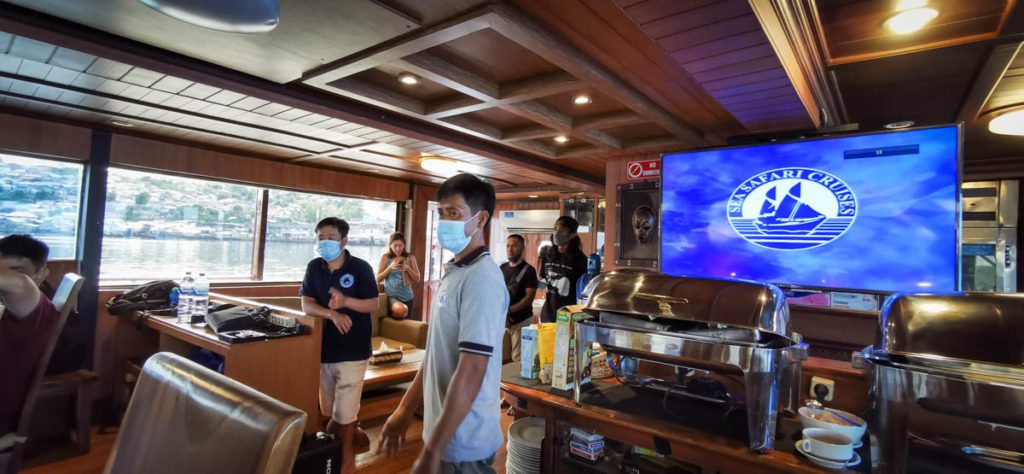
The restaurant area has two large dining tables and a buffet area. This area is airconditioned.
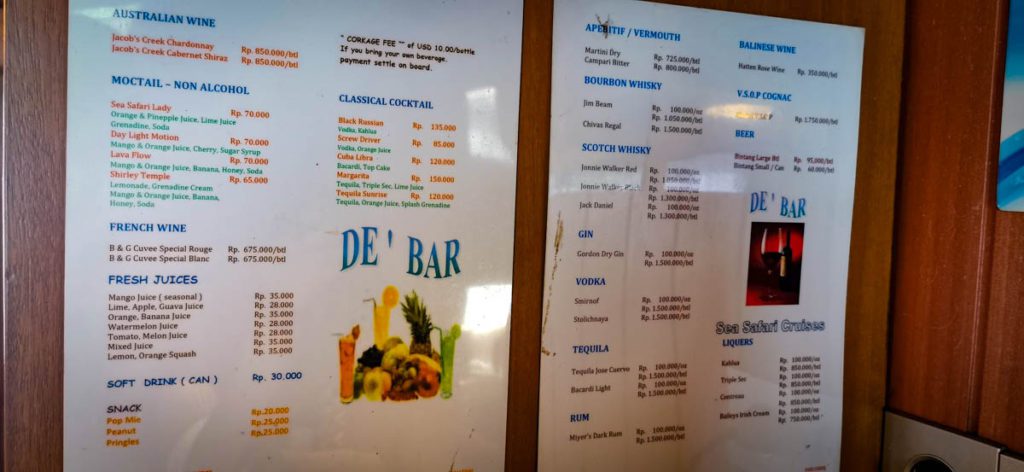
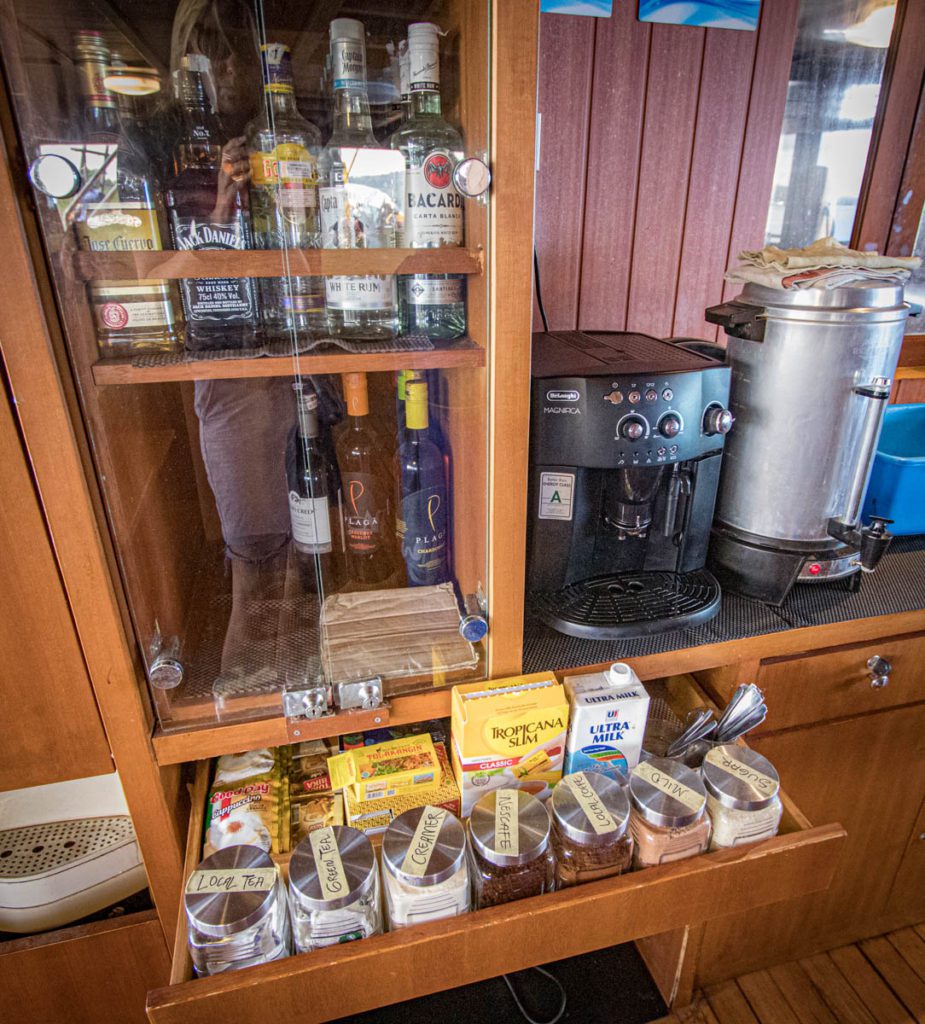
There are fridges with lots of soft drinks and alcoholic drinks for sale and you can see the prices of drinks onboard the Sea Safari 6 liveaboard below.
The tea and coffee are self-service.
In the restaurant, there is also a camera table with chargers. It is pretty small but was sufficient during my trip as many people didn’t have cameras. There is also a dedicated rinsing tank and another shelf on the dive deck to place cameras for photographers. If you are planning to shoot underwater, see my underwater smartphone photography review for the setup I now travel with.
The dive deck is located at the front of the boat. It is very spacious, even with a large group of divers, but a few seating areas are missing. Each diver is assigned a tank with some storage space underneath. There is a large area with clotheslines to dry your things during the trip.
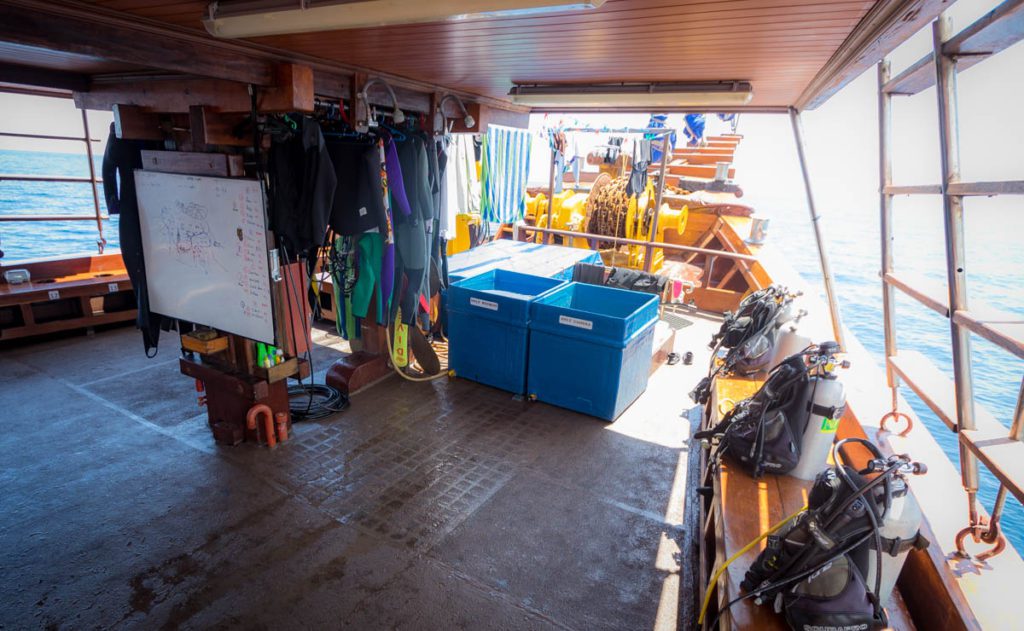
There are two cabins on the middle deck, and I stayed in one of them. See my review of the cabin below.
The upper deck and sun deck on Sea Safari 6
The upper deck has the navigation room, a few sofas, lounge chairs to relax, and more cabins.
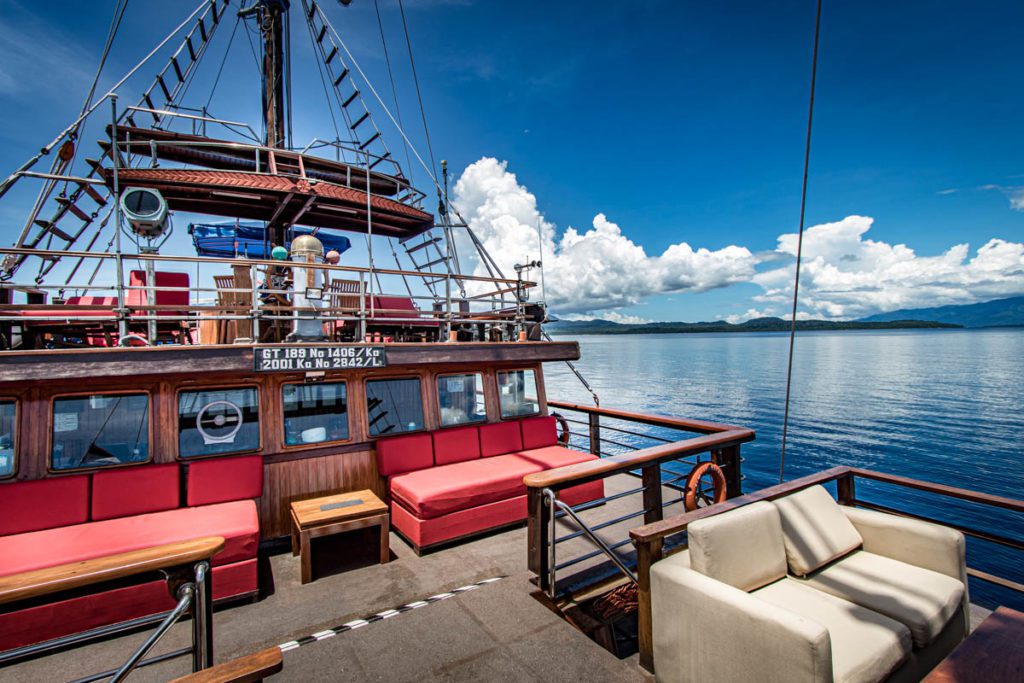
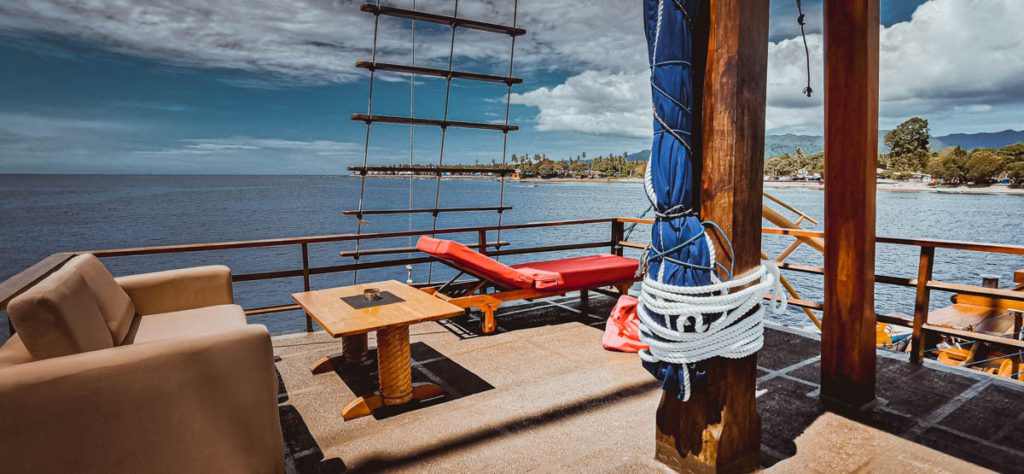
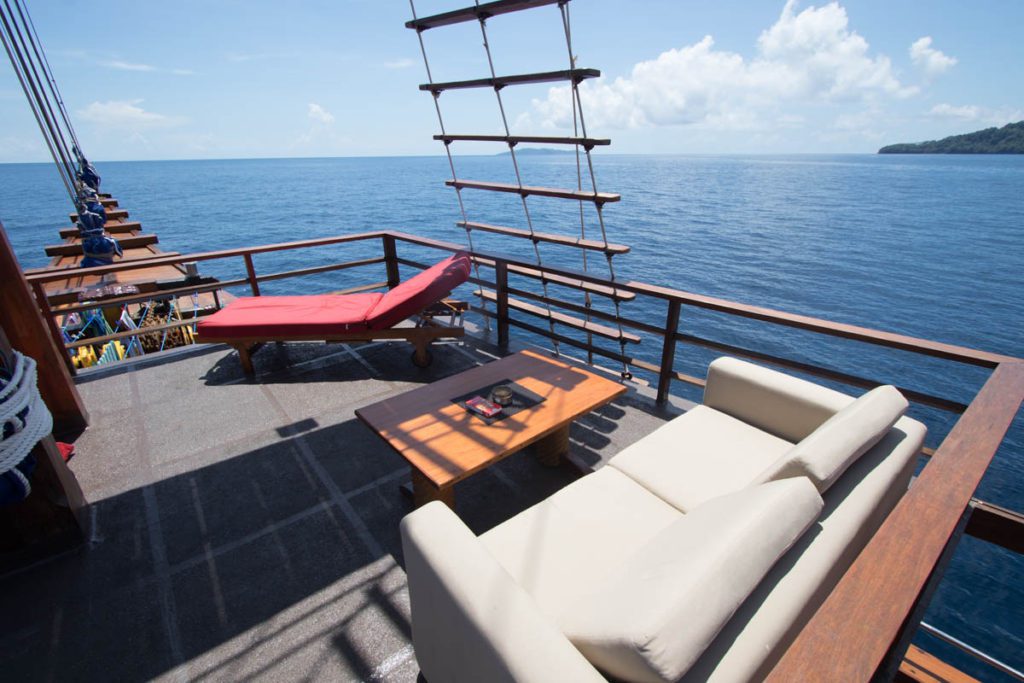
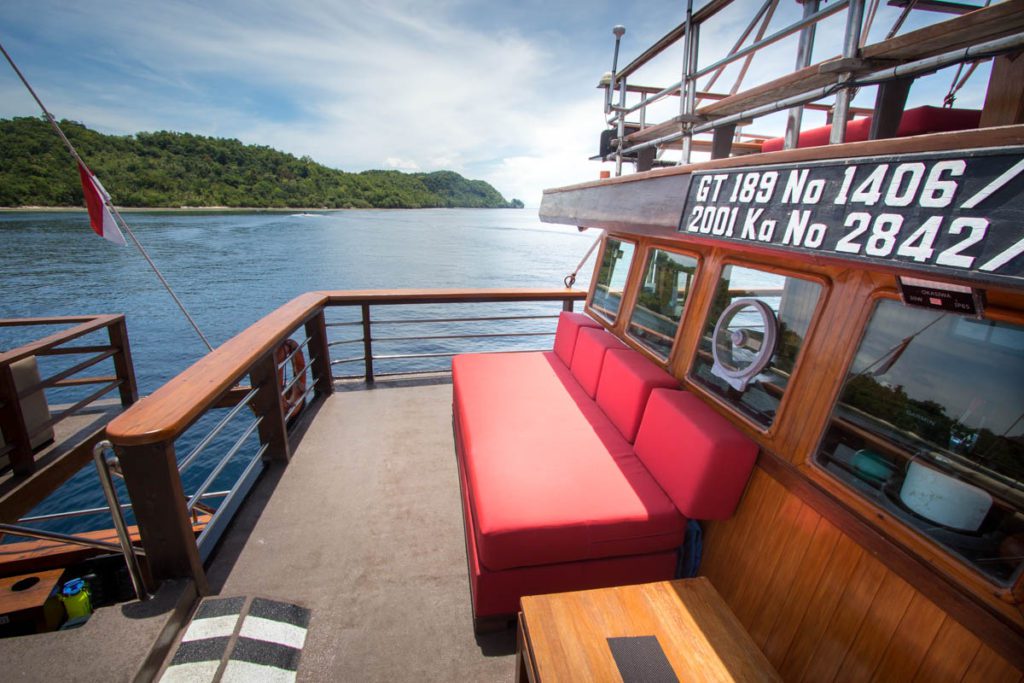
The back of the upper deck has a shaded sofa area. There are four more cabins on this deck.
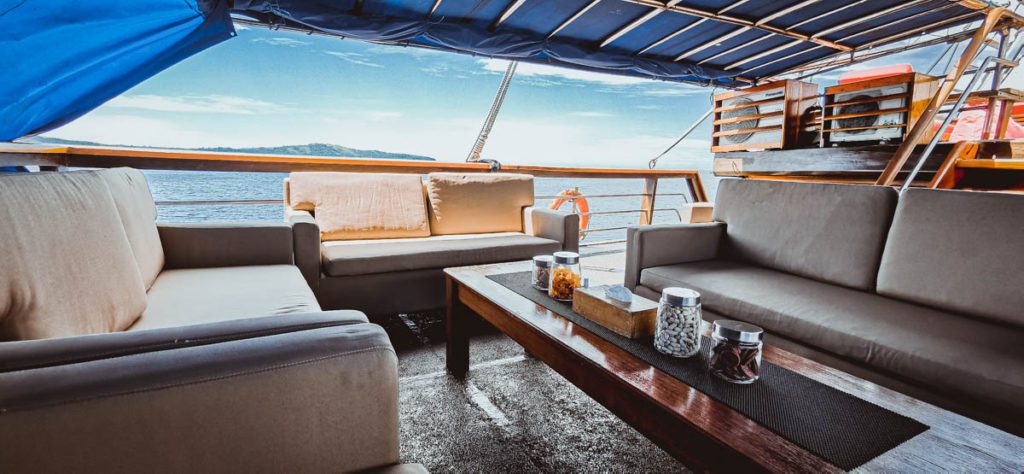
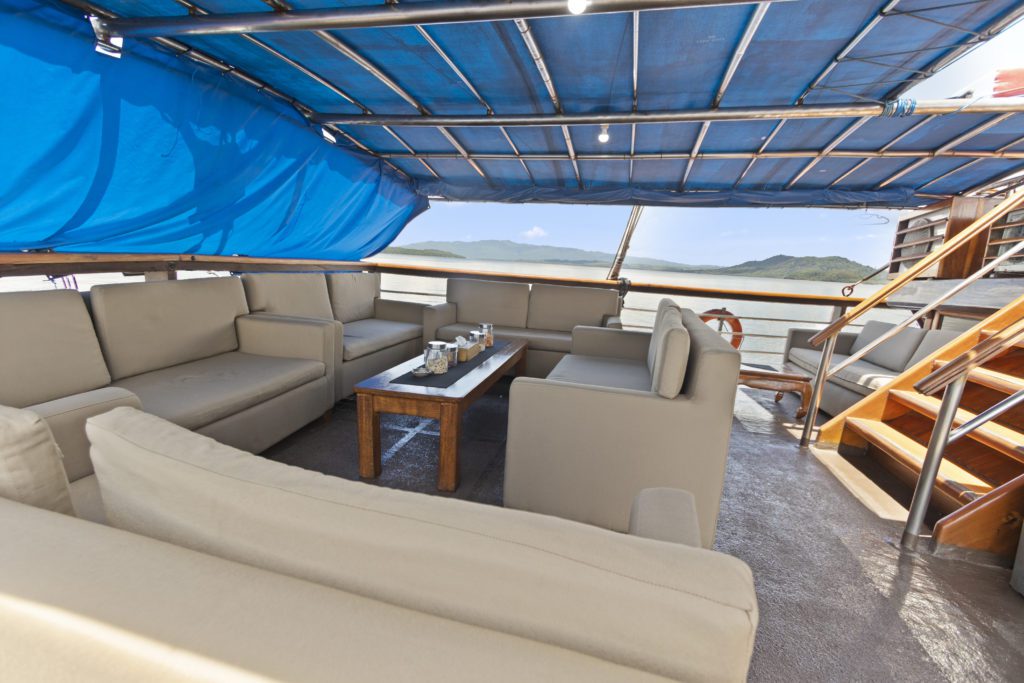
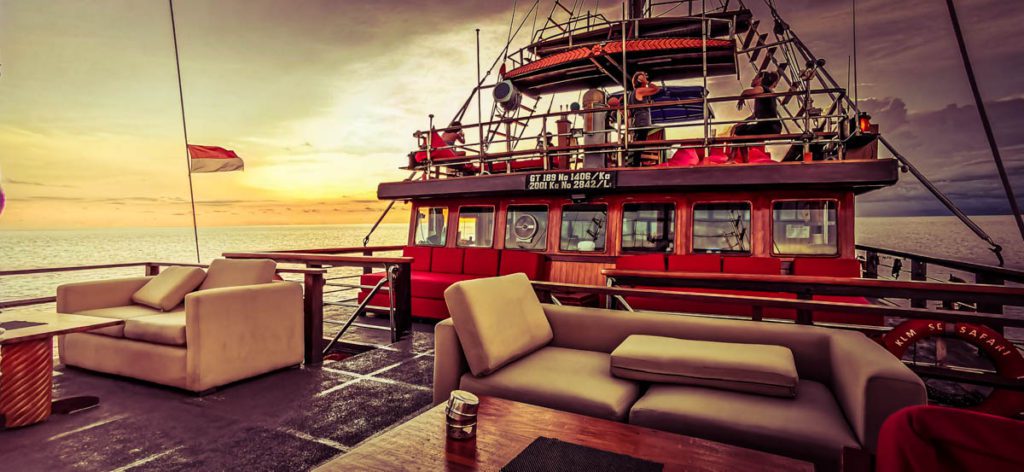
On the sun deck are many lounge chairs and a jacuzzi. The lounge chairs are covered by super thick cushions and were so comfortable.
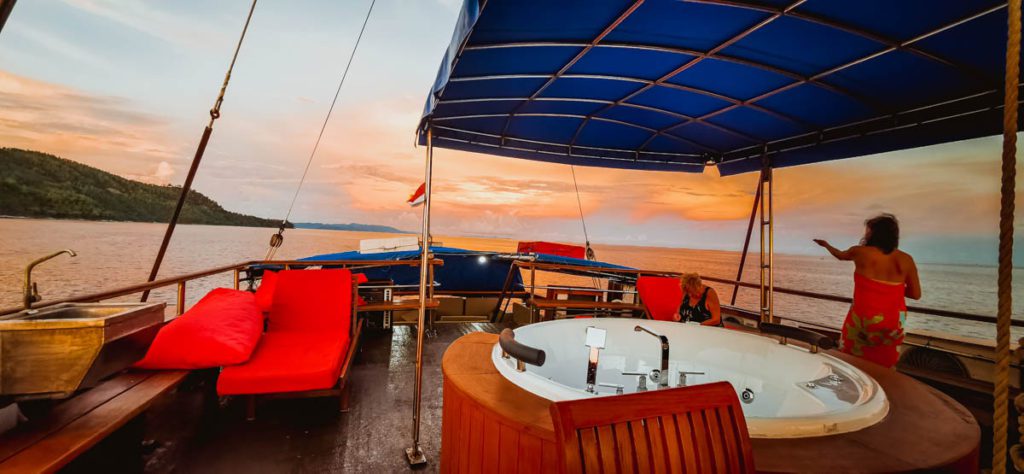
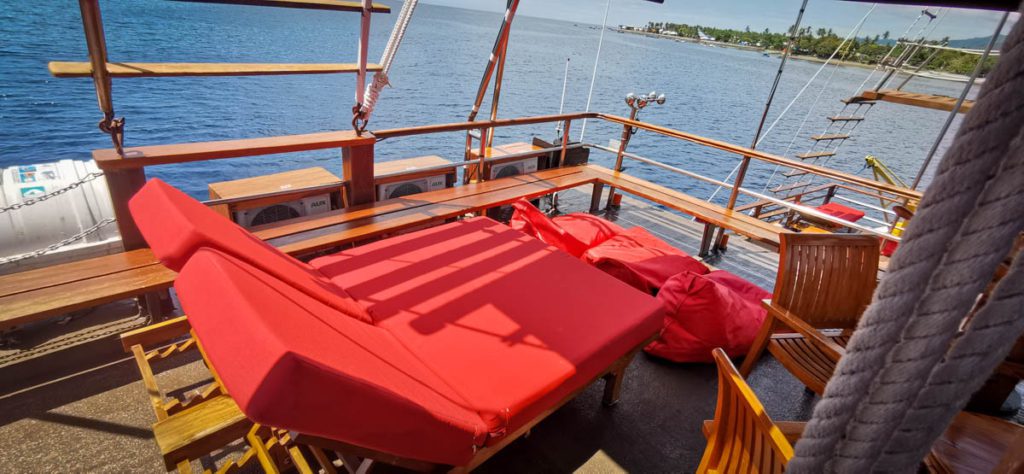
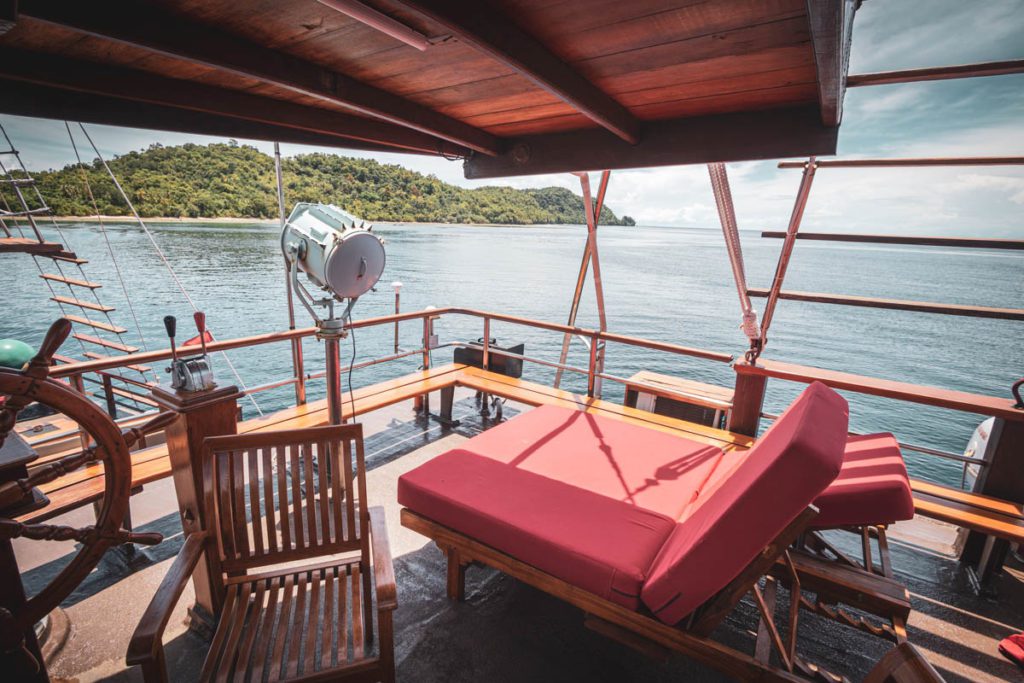
The Sea Safari 6 liveaboard distinguishes itself with its numerous outdoor relaxing areas. Divers can spread amongst these areas so that the boat never feels crowded. It is one of the boats I have experienced that has the most shaded outdoor areas.
The boat is straightforward to navigate with wide stairs. The antislip on the floor is excellent, but it gets scorching hot if you walk barefoot.
Wear shoes if you go to the sundeck in the middle of the day. I went barefoot on the first day and burnt the sole of my feet.
Review of the cabin on the Sea Safari 6 liveaboard
The room
I stayed in cabin 201 at the back of the main deck.
The cabin is relatively small but well laid out. I especially enjoyed the large panoramic windows opening onto the sea.
One of the advantages of the Sea Safari 6 liveaboard is that most of its cabins are above deck and have large panoramic windows. The supplement for an above-deck cabin is small and is well worth it. If you want the closest thing to a private cabin liveaboard experience in the Banda Sea, book one of these above-deck cabins early — they are the first to sell out.
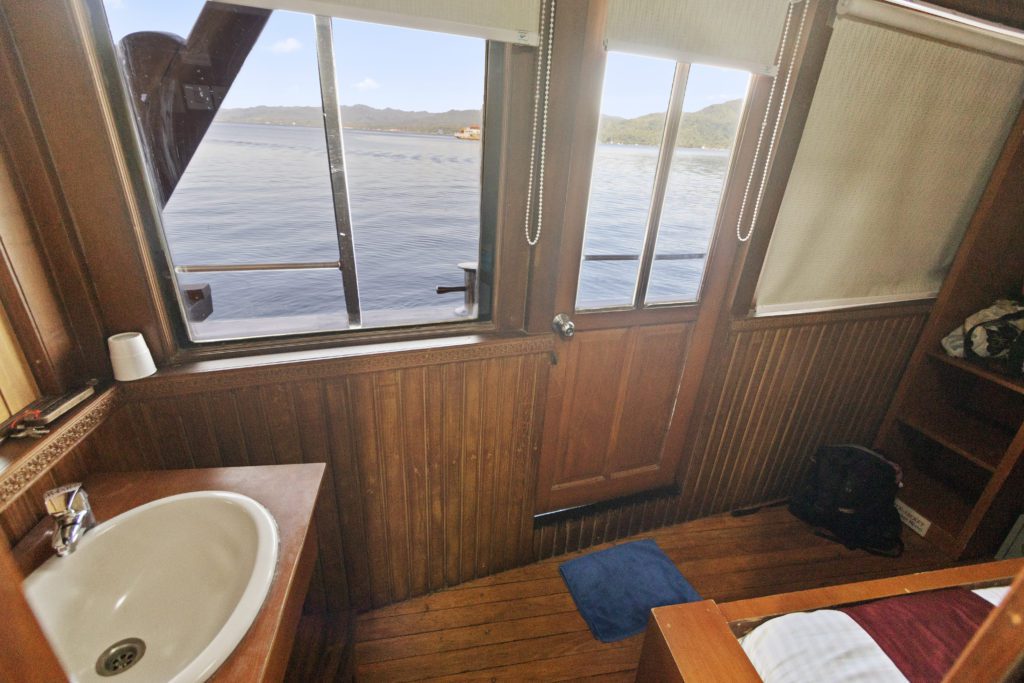
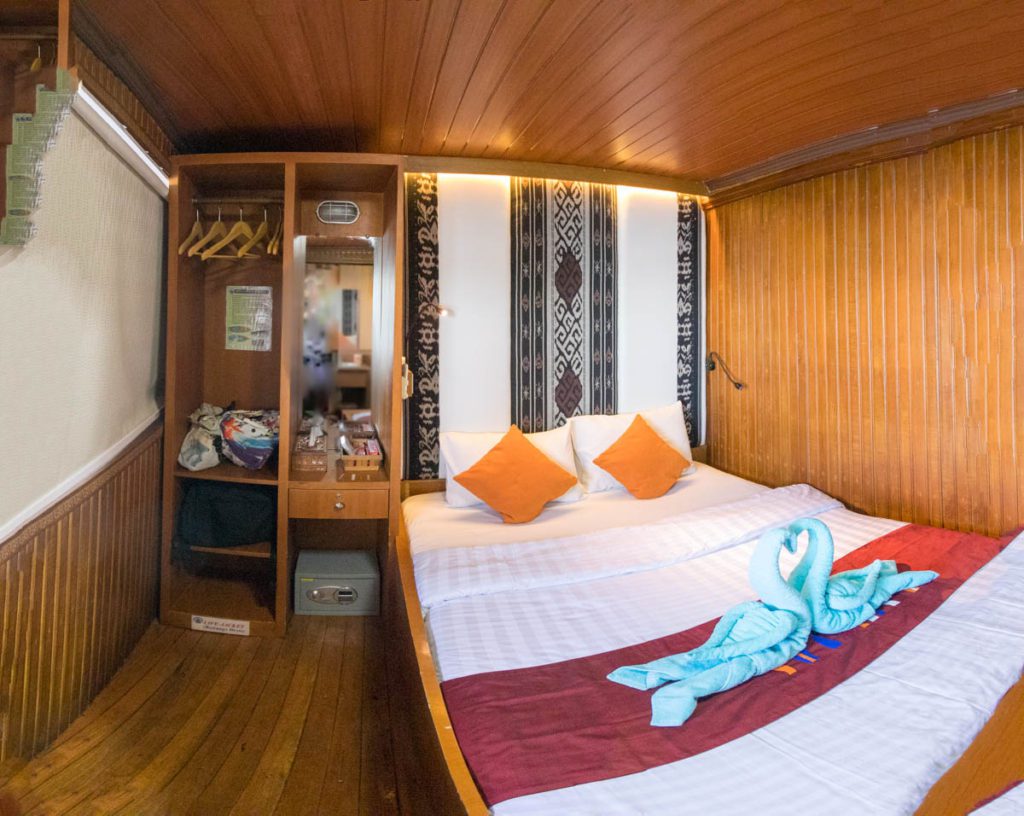
If you get seasick quickly, go for a middle deck cabin instead of an upper deck one as the lower you are on the boat, the less you will move. That being said, the Sea Safari liveaboard is exceedingly stable compared to other wooden vessels.
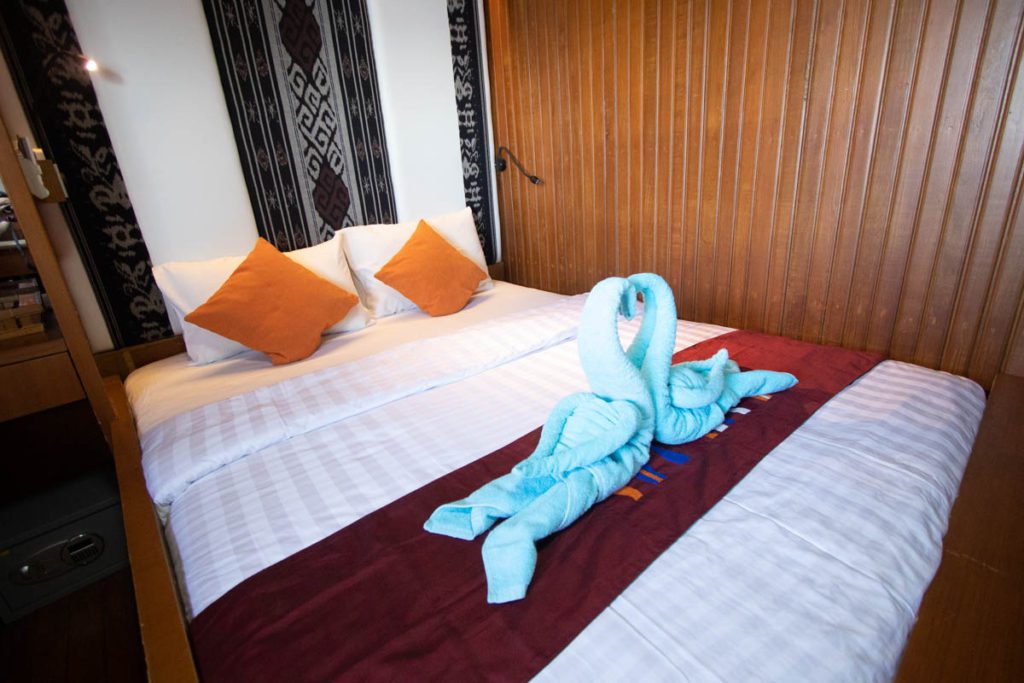
The walls of the bedrooms are made of wood and decorated with Indonesian Ikat.
Storage is limited; therefore, pack light. There is no space to store big suitcases under the bed, so you might be better off with foldable bags.
My room had a large king-size bed that was comfortable. Attention has been paid to lighting with four different lights to choose from, depending on your mood. Air conditioning is individually adjustable.
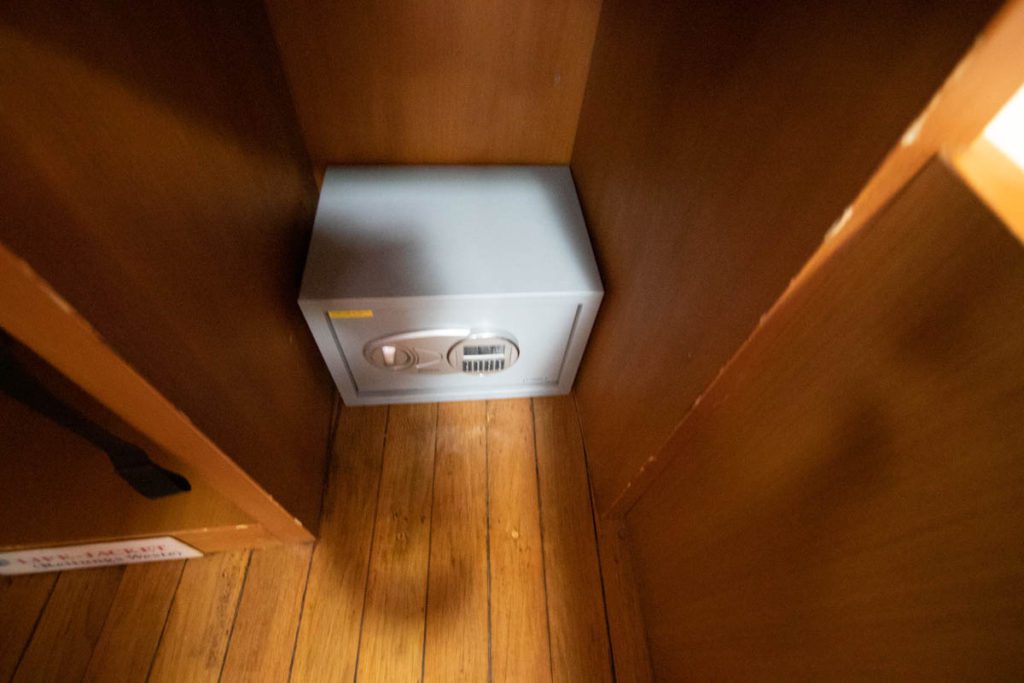
Due to the humidity on boats, most rooms often smell moldy. It was not the case in my room on Sea Safari 6. The large door that opens up outside probably helps keep the room well-ventilated. A safety box is provided.
We spent a few nights navigating, and I could barely hear the motor from my middle deck cabin, which helps me sleep well.
The bathroom
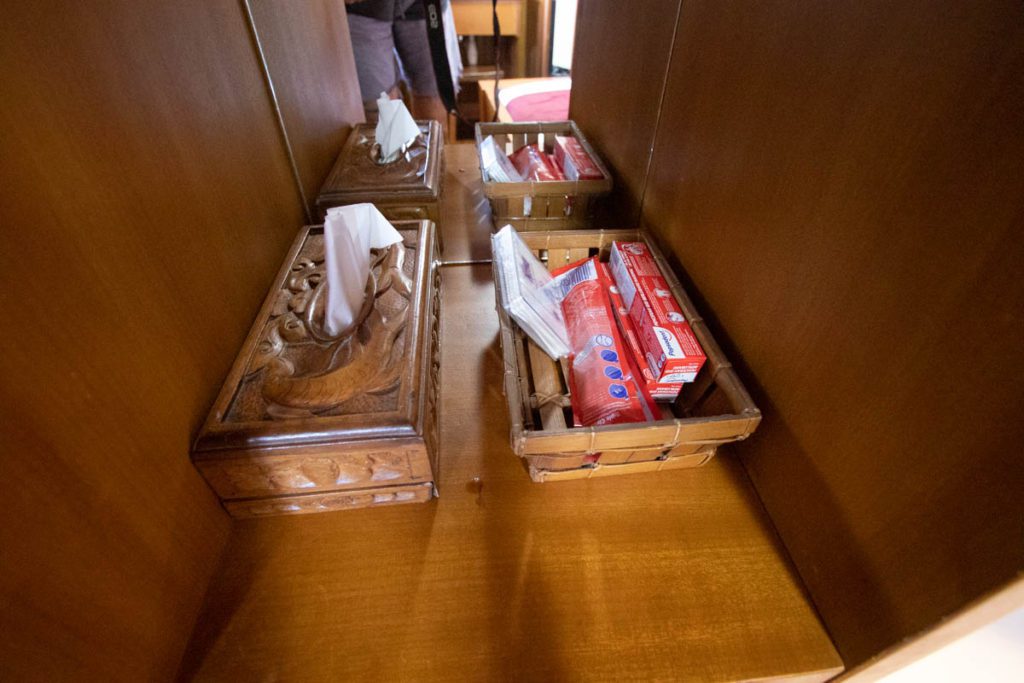
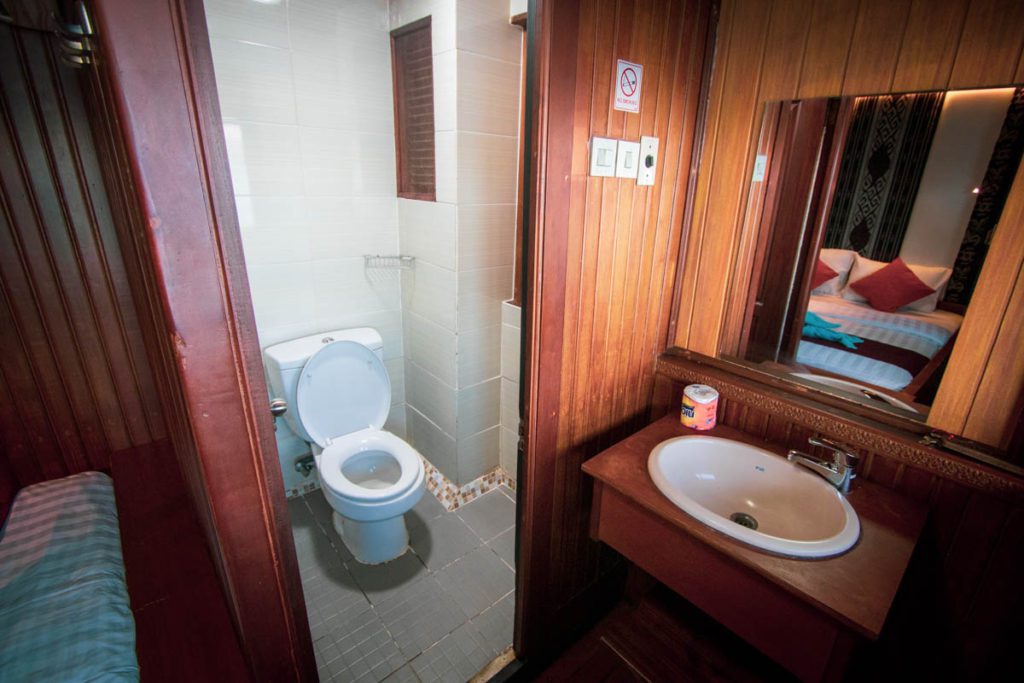
The bathroom is small, with the shower and the toilet in the same area. The sink is outside of the bathroom in the bedroom. Shampoo, shower gel, and toothpaste are available. They also provide q-tips which I have never seen being offered on a liveaboard but is a great idea. There is also a hairdryer in the room.
Bring your hair conditioner as the sea can be harsh on hair.
There is hot water, and the shower water pressure is quite good. Towels are changed every two days or three days, but you can just leave your dirty towels on the floor if you need more. My room was cleaned every morning during the first dive of the day.
The food on the Sea Safari liveaboard
As on most liveaboards in Indonesia, the food is served five times a day between each dive.
A light breakfast at 6 am before the first dive was composed of bread, cereals, yogurt, and fruits.
The big breakfast after the first dive included a few hot dishes like noodles, fried rice, eggs, and bacon,…
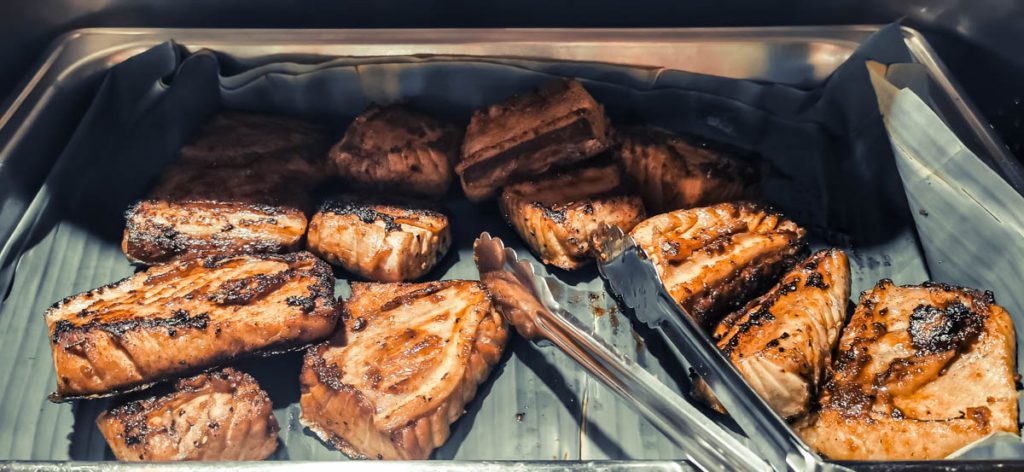
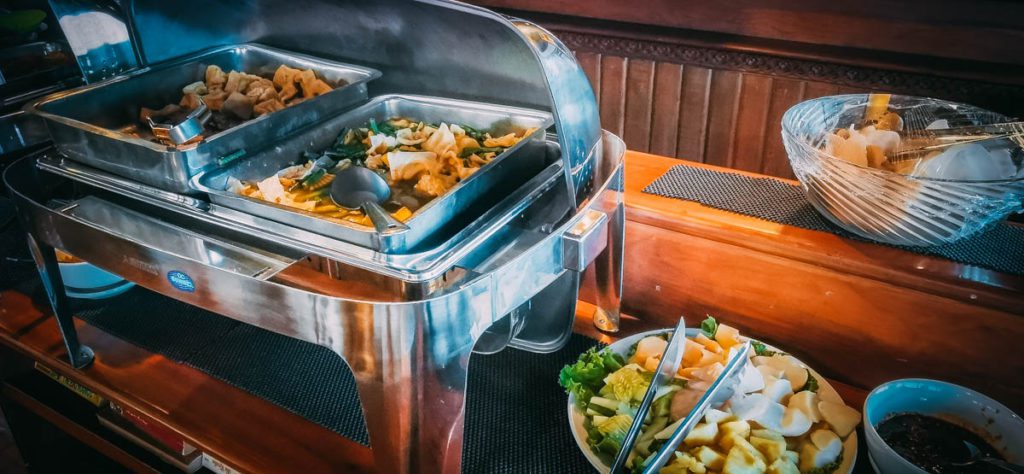
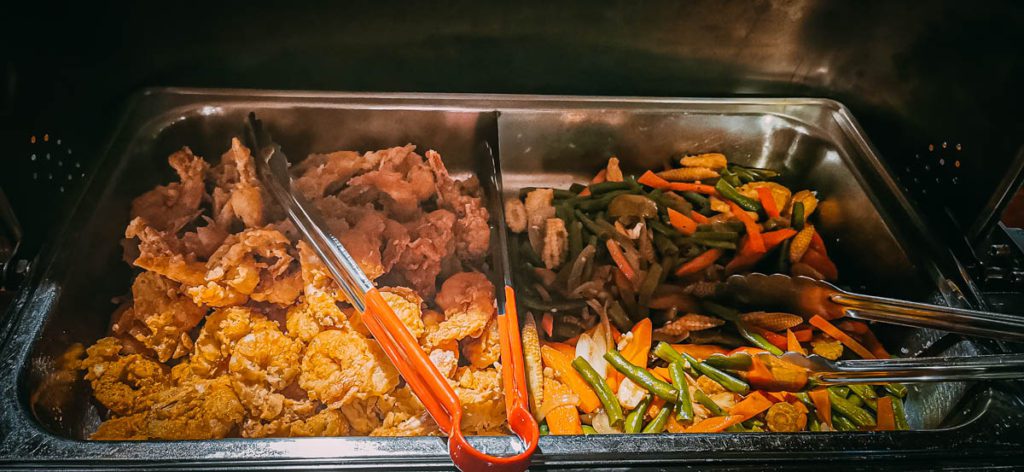
Lunch and dinners offered three or four different options. There would be two or three meat or fish dishes and one or two vegetables. Rice was provided at every meal.
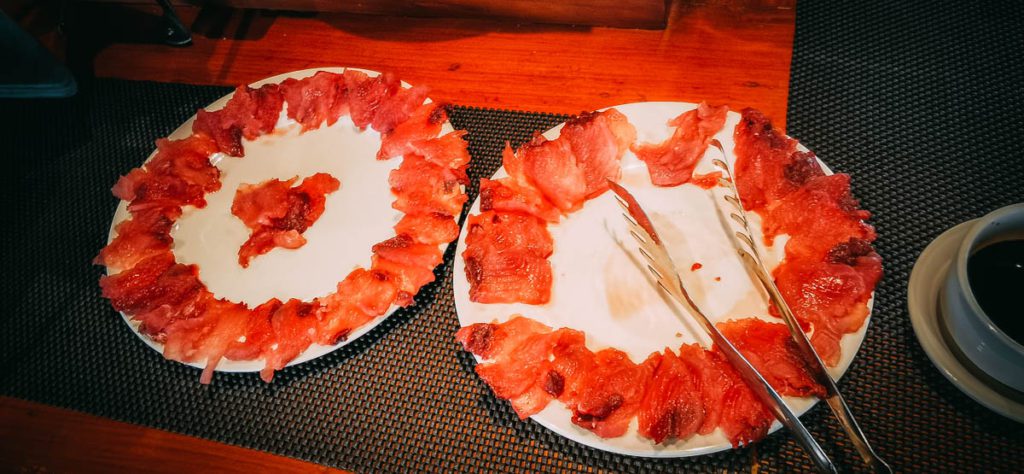
The food was primarily Asian style and was good. They got a lot of fresh fish and seafood from the local fishermen. Other dishes included beef rendang, chicken curry… The tuna sashimi was a favorite. On the last night, they served crabs, and they were delicious.
The cook worked tirelessly in his kitchen and was very accommodating of dietary preferences, from vegetarian to non-spicy or other; all requests were met.
Review of the diving organization on the Sea Safari 6 liveaboard
Safety procedures on the Sea Safari liveaboard
Safety is taken seriously aboard the Sea Safari liveaboard. We were shown where the lifejackets and life rafts are located. They even had a video with a simulation rescue.
Each diver was also given an emergency location device to wear during dives so that they could locate us in case we were taken away by the current.
Diving schedule
The Sea Safari 6 is a boat made for divers, and it typically organizes four dives a day.
The first dive is at 7 am, the second dive at 10:30 am, the third dive at 1:30 pm, and the last dive at 4:30 pm.
There were no night dives during our trip, but I think it might be due to the Banda itinerary that is not conducive to night dives.
Do you need Nitrox on a liveaboard to the Banda islands?
Nitrox is available on the Sea Safari 6 and was consistent. They provided Nitrox at 29 percent, which is the best for the Banda itinerary. Most dives in Banda are deep, and this level of Nitrox gave us a maximum authorized depth of 40 meters.
Some people claim that you need to go below 40 meters to see hammerheads. However, this was not our experience as we observed many hammerheads in the 20-30 meter areas. ( this was my 4th trip to Banda, and I have consistently seen hammerheads in 20-35 meters depth). Therefore, I didn’t feel constrained by the 40-meter limit and enjoyed the extra bottom time at 30 meters.
Consequently, I recommend going with Nitrox to maximize your bottom time. If you are not Nitrox certified, you can do the training on the boat for a fee. A few passengers during our trip did the training, and it was well worth it as everyone was diving with Nitrox.
When is the best time to see hammerheads in the Banda Sea?
October is the best month to see schooling hammerheads in the Banda Sea, with late September through November being the wider window. There is a second, shorter season around March to May when boats make the reverse crossing. Outside these windows the water is warmer, and the hammerheads stay deeper than recreational divers can go.
The reason is temperature: seasonal upwellings bring cooler, nutrient-rich water towards the surface, and the scalloped hammerheads follow it up into diveable depths. On this trip we felt it directly — the moment the water turned noticeably cooler at Suanggi, a school of 30 hammerheads appeared out of the drop in visibility.
Across my four October trips to the Banda islands, I have seen hammerheads on three of them, consistently between 20 and 35 meters. That is a good success rate, but as I explain further down, sightings are never guaranteed — this is wild nature, not an aquarium.
Who is a Banda Sea liveaboard for? Experience requirements
The Banda Sea is best suited to experienced divers. Most operators recommend an Advanced Open Water certification and at least 50 logged dives, because the signature dives are deep (25–40 meters), often in open blue water, and currents can be strong and unpredictable. You should be comfortable with negative entries, drift diving and using a surface marker buoy.
On our trip the groups were split by experience, and the boat handled a wide range well — but if you are newly certified, you will get far more out of an easier destination like Raja Ampat or Komodo first, and come to Banda once deep blue-water diving excites rather than worries you.
Dive briefings and dive guides
Andy, the cruise director, did a very informative briefing before each dive. He would draw a detailed map of the site and explain what current to expect and how to best dive the site. He has years of experience diving in Indonesia, and it shows. He shared some fantastic diving stories with us over dinners.
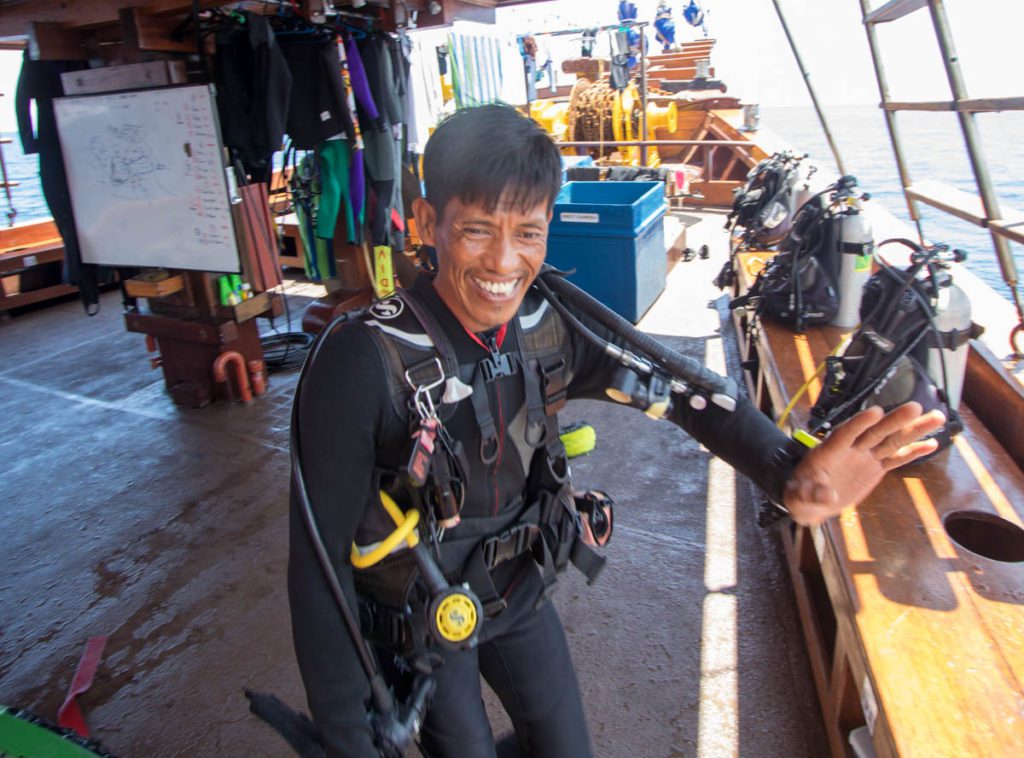
We were 14 divers with four dive masters, so group sizes ranged from 3 to 4. The level of experience varied widely. Some divers were newly certified, while others had a lot of experience. Groups were created according to experience, and I was in a group with advanced divers. Everyone in my group had done 300-1000 dives.
Our guide, Tommy, was great at spotting sharks out in the blue, and he would often be the first to spot the hammerheads sharks! Dive time was usually 60 minutes, but it was pretty flexible. We did over 70 minutes in Ambon and Nusa Laut.
Dives in Banda are deep, so dive time is usually shorter than most other places. On one exhilarating and deep dive, I had to surface after 38 minutes!!
Diving from tender boats
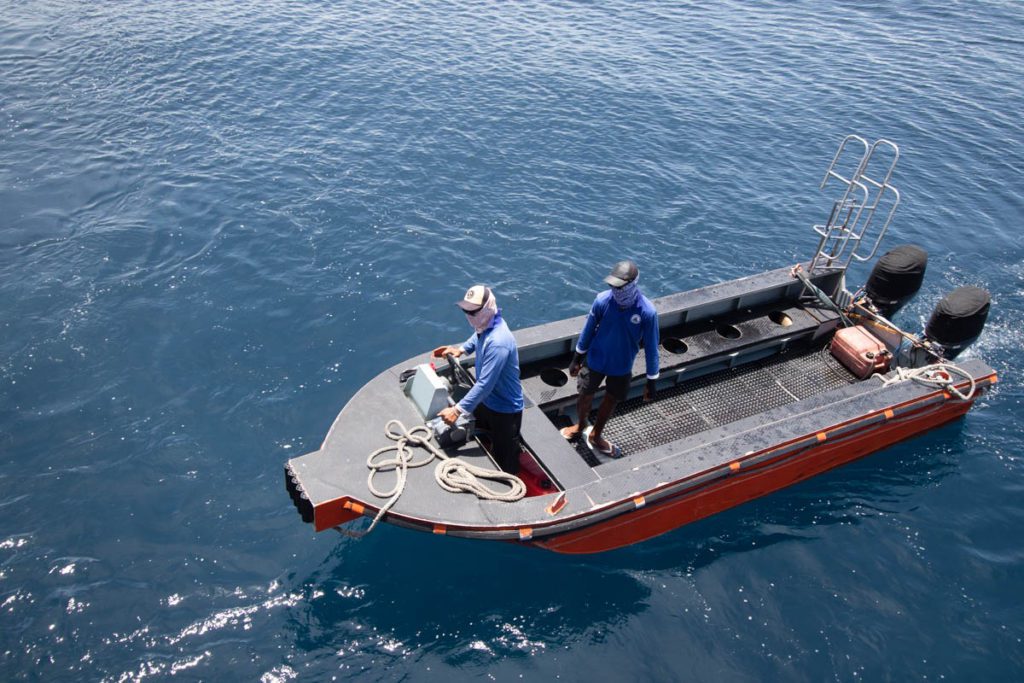
As with all the liveaboards in Indonesia, all the dives are done from tender boats. The Sea Safari liveaboard usually anchors near the dive sites, so the rides are very short.
There are only two tenders, but it was not a problem. As we were four diving groups, two groups would go first, and the other two groups would wait 5 or 10 minutes for the tenders to come back. The Sea Safari tenders are very comfortable. They are made of metal and are easier to get on and off than rubber ones.
The staff would load and unload all our equipment from the boat to the tender. So we just had to board with our mask, fins, and camera. It was easy and comfortable.
Review of the service on the Sea Safari liveaboard
The crew is a great asset to the Sea Safari liveaboard. They are well-organized and competent. You can see that the boat has been running with the same crew for many years. They were very efficient at navigating the boat, getting the tender boats in and out, and generally running the ship.
Andy, the cruise director, gave a great spirit to the boat. He was very attentive to passengers’ needs and could make the ship run like clockwork. He is also a passionate diver and shared great stories with us at dinner.
Don’t expect white-glove service and butlers. The service on the Sea Safari 6 liveaboard is friendly and personable. By day 2, most of the staff greeted me by name and were always smiling and willing to help. They seemed as happy as us when we would come back from a great dive with plenty of hammerheads! The waiter in the restaurant was also ever-friendly and proactive.
Is the Sea Safari 6 a luxury liveaboard?
Honestly: the Sea Safari 6 sits in the comfortable mid-to-upper range rather than the ultra-luxury category. If you are looking for a luxury liveaboard in the Banda Sea, it is important to understand that very few true luxury yachts make this crossing at all — the Banda Sea is remote, and the hammerhead-season window is short. That makes the Sea Safari 6 one of the most comfortable ways to experience a luxury-adjacent Banda Sea cruise: panoramic-window cabins, a jacuzzi on the sun deck, thick-cushioned loungers, free onboard internet, excellent food and a crew that learns your name by day two.
What you give up compared to a high-end boutique liveaboard is designer interiors and butler-style service. What you get in exchange is a genuine, sturdy Phinisi run by seamen, at a significantly lower price — and in the Banda Sea, the diving, not the boat, is the luxury.
The passengers on The Sea Safari liveaboard
The Sea Safari usually attracts many Asian passengers. Andy, the cruise director, even speaks Japanese, which is helpful for Japanese groups.
On my trip, most of the passengers were from Jakarta and Bali, alongside a few international divers. All the dives and trips briefings were done in English.
How to get to Ambon and the Banda islands
The airport for the Banda islands is Ambon (Pattimura Airport, AMQ). You’ll need to connect either in Bali or Jakarta. Ambon is a direct flight away from Jakarta, so it’s relatively easy to get to.
If you are coming from Bali, you might need to connect overnight in Makassar.
The Cordia Hotel (formerly the ibis budget) is located within the airport, so it is a great place to sleep during the few hours between the two flights. It is affordable, and you can check the best rates for the Cordia Hotel here.
Garuda has historically offered a generous free extra-luggage allowance for diving equipment, making it a popular choice of airline for divers in Indonesia — check their current sports-equipment policy when you book.
The Lionair flight might look cheaper, but if you have diving gear and a lot of luggage, it will end up being very expensive. If you are thinking of booking Lionair ( Wing and Batik are also part of Lionair) because it looks cheaper, read my review on why I will not fly Lion air Here.
What time should you book your flight after your liveaboard?
Liveaboards usually do two dives on the morning of the last day, so any flights after 1 pm should work for you and allow you to have your safety 24 hours interval between diving and flights.
If you plan to spend more time in Ambon, read my article about diving in Ambon here. Ambon has the most fantastic muck diving, so it is well worth spending a few days here before or after your cruise on the Sea Safari liveaboard.
Internet and phone signal on the cruise from Ambon to Banda
Sea Safari 6 was one of the few boats in Indonesia providing free internet on board, and it still works the same way: a router connected through the 4G phone network, so you only have a connection where there is a signal. Sea Safari Cruises has started fitting Starlink on some of its other vessels, but the company does not list satellite internet for Sea Safari VI, so ask when you book rather than assuming you will be online in the Banda Sea.
If you want faster or more reliable data of your own, buy a Telekomcel card with a data package on arrival, or set up an eSIM before you fly. Some places now ask for a copy of your passport to register a local card, so bring a photocopy.
Sometimes, the 3G connection works better than 4G, so check the settings on your phone and try them both.
Ambon has excellent 4G coverage, allowing you even to stream video.
There is no internet near the Suanggi seamount or around Run.
Banda Neira had excellent internet, enough for WhatsApp video calls.
Manuk seamount has no internet coverage. The Nusa Laut Area has good 4G internet coverage.
I was also able to catch a bit of signal on the way from Manuk to Suanggi as we passed by Banda Ay very early in the morning.
So, on a diving trip to the Banda islands, you can expect an internet signal most days. The exception is when you are in Suanggi and Manuk.
The signal gets better the higher you get on the boat. It would often not work in my cabin below deck but would work on the top deck.
Review of the diving Itinerary of the six-day “hammerheads cruise” in the Banda Islands, Indonesia
Our itinerary was a six-day cruise from Ambon to Banda via Manuk. It started in late October, three days after the full moon.
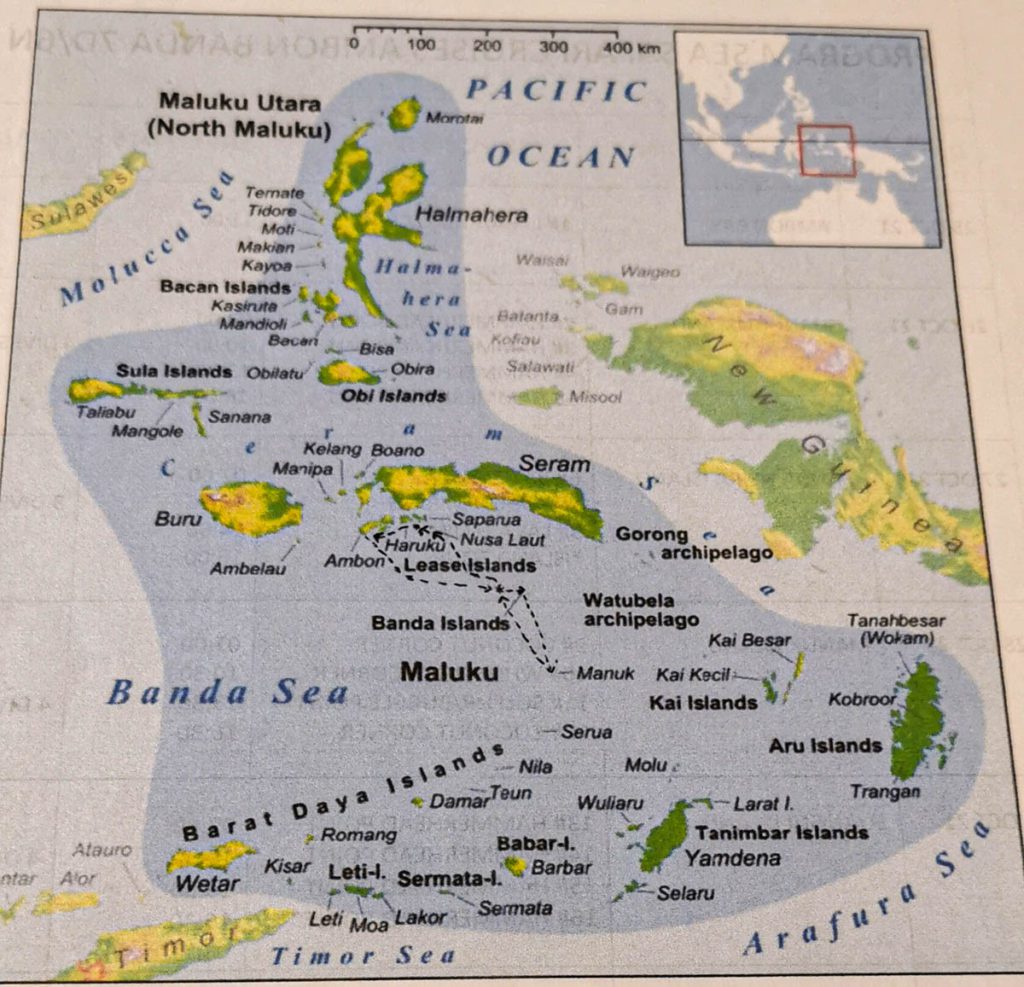
Day 1: Arrival and diving with weird critters in Ambon
We started the trip in Ambon. As everyone arrived early or the night before, we could board at 8 am and depart at 9 am. We made our way towards the Laha dive site for a dive on the first day.
Ambon is slowly becoming known as one of the best places in the world for muck diving.
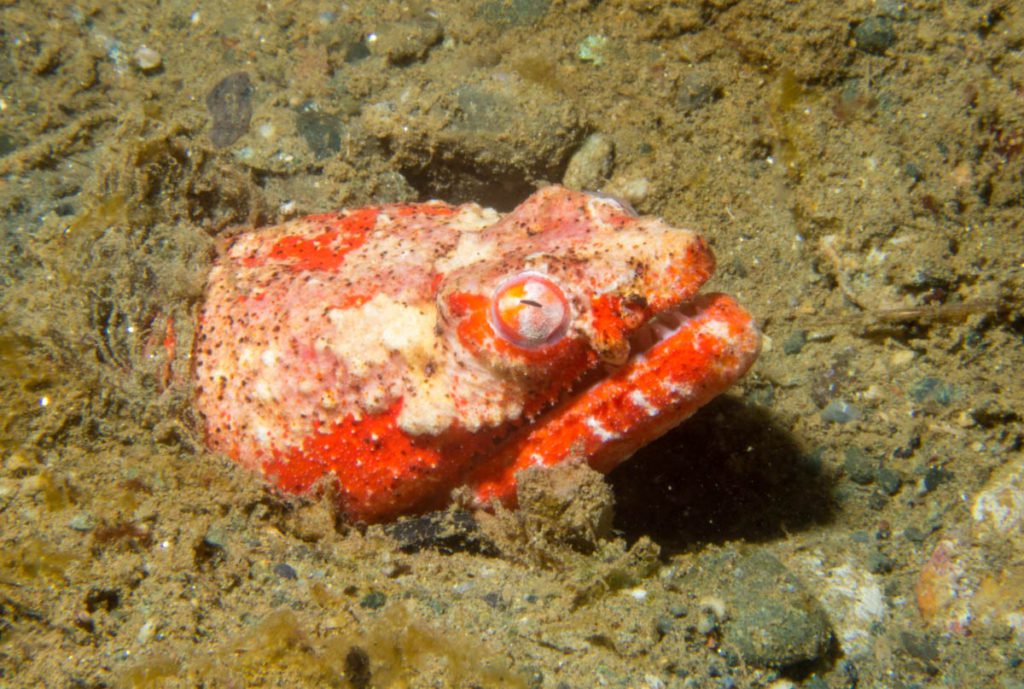
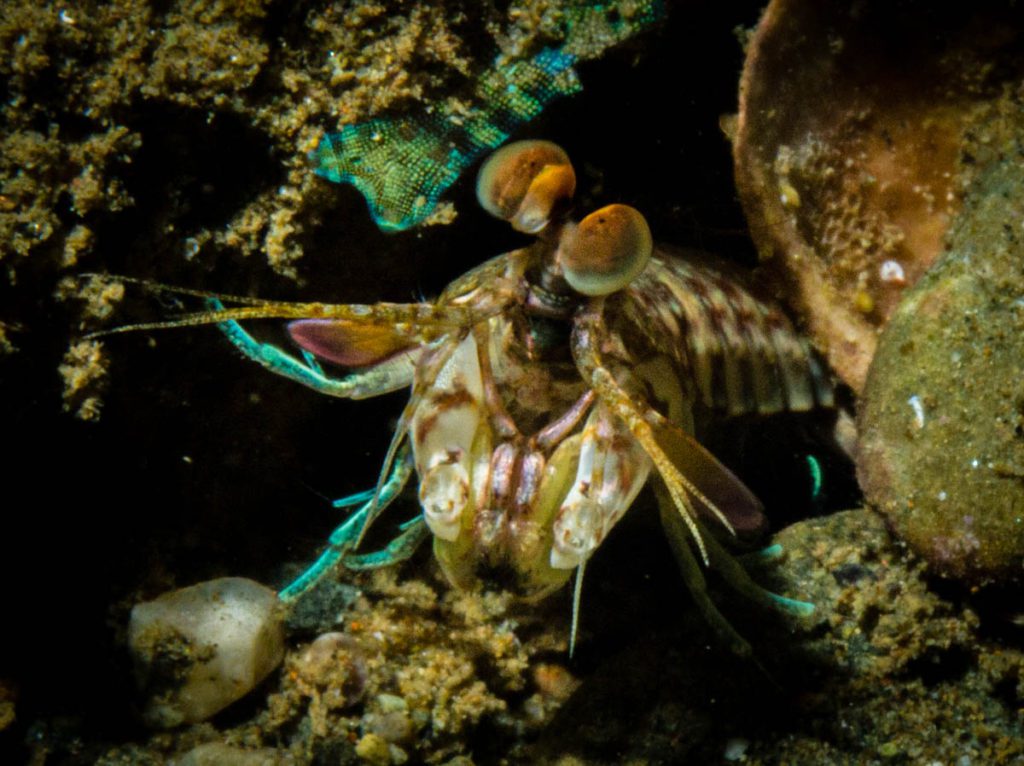
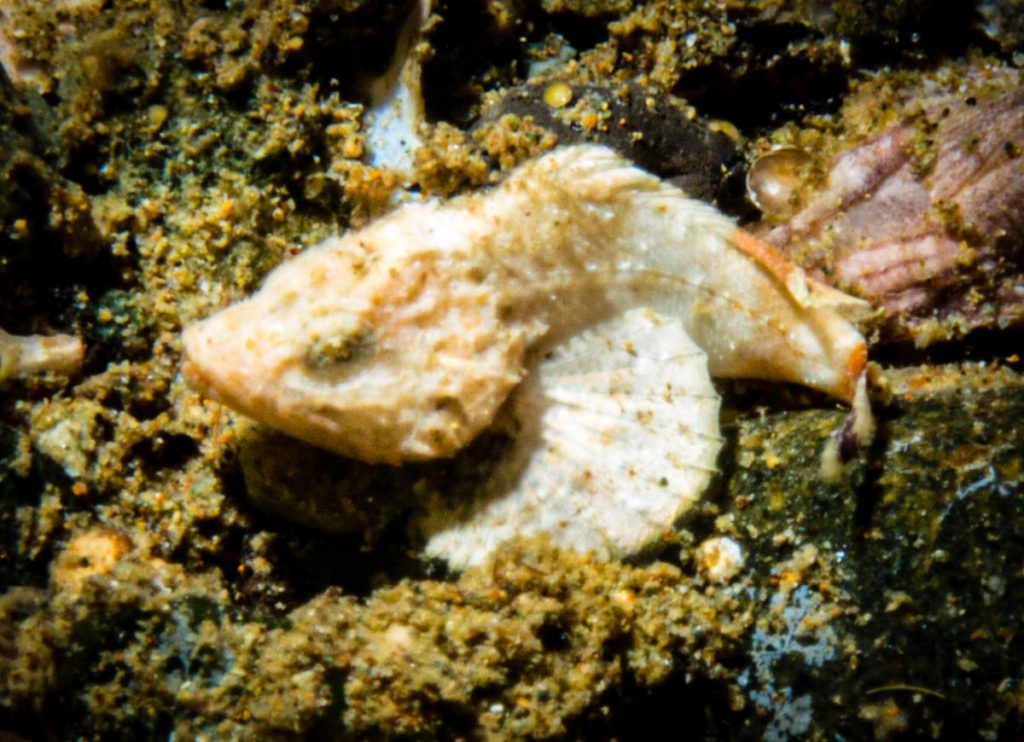
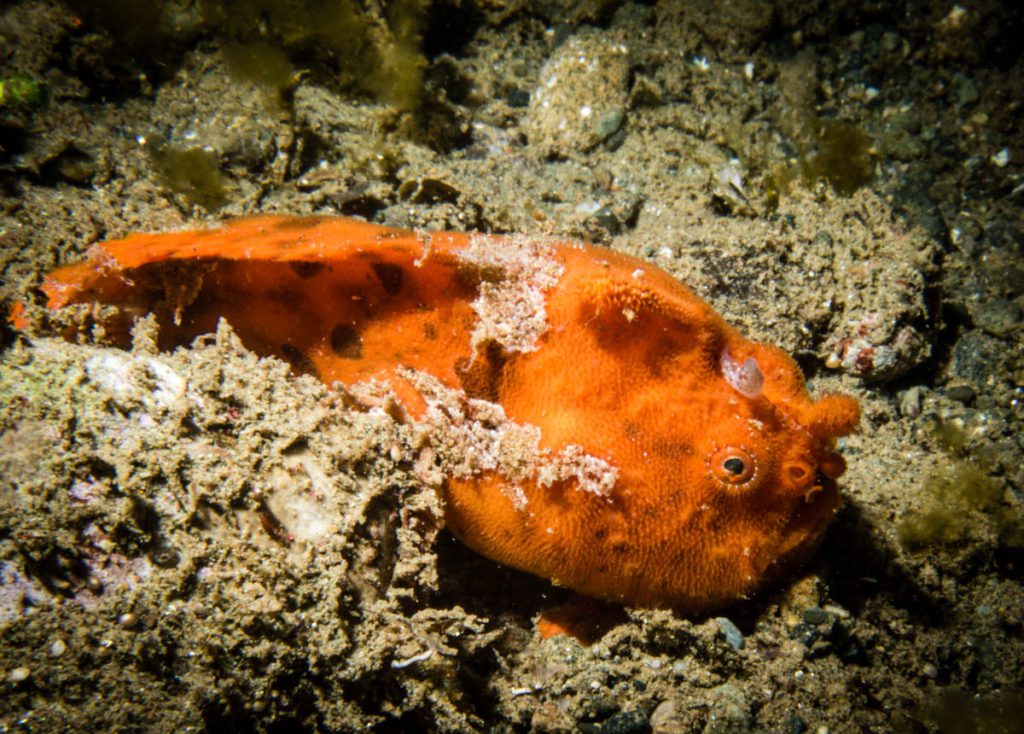
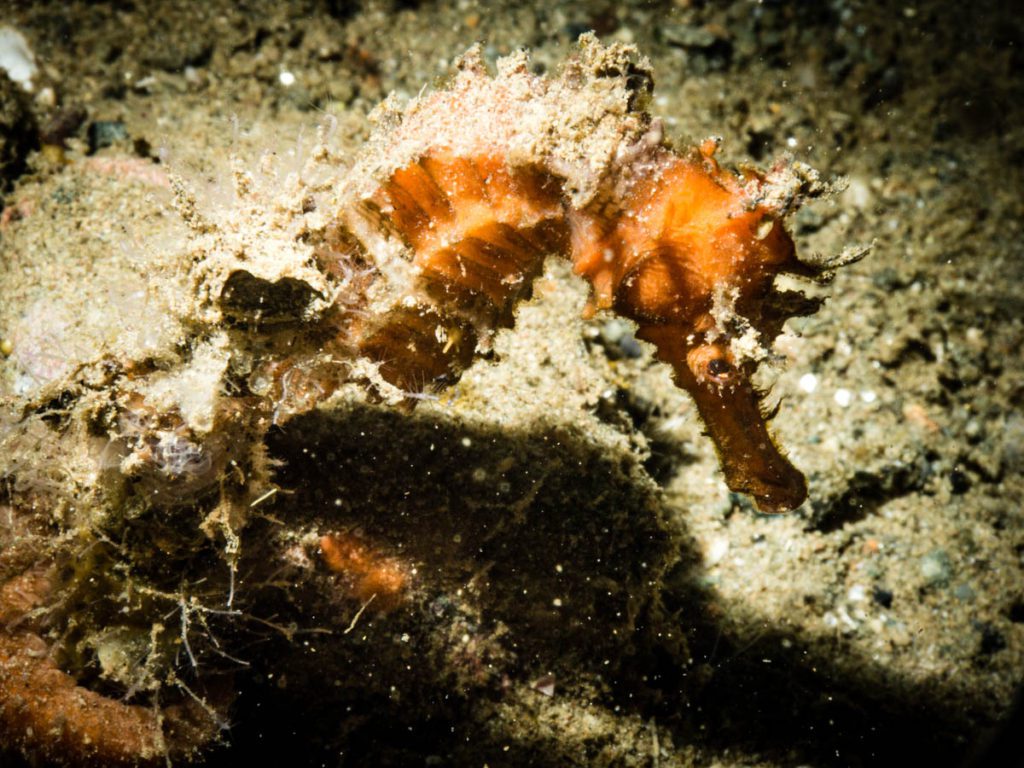
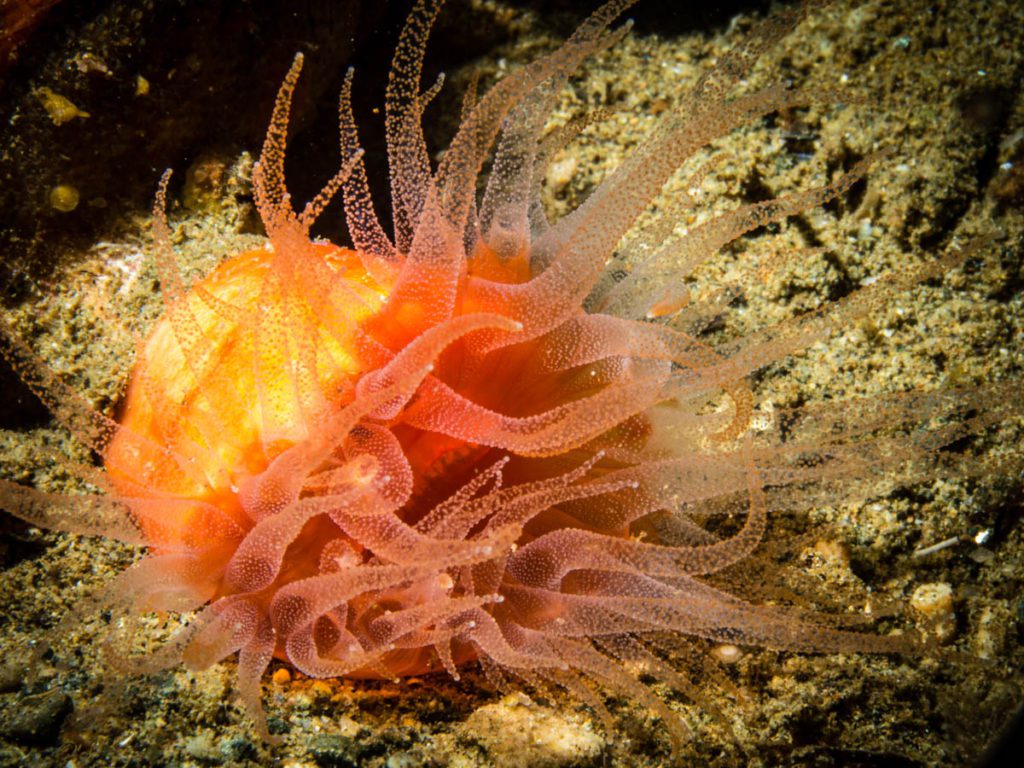
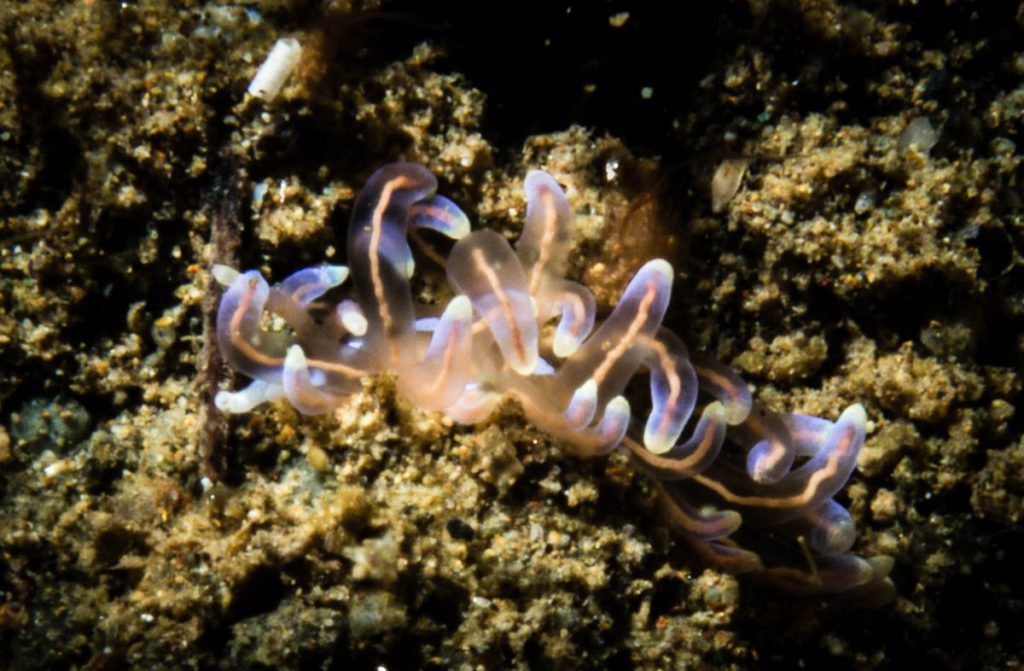
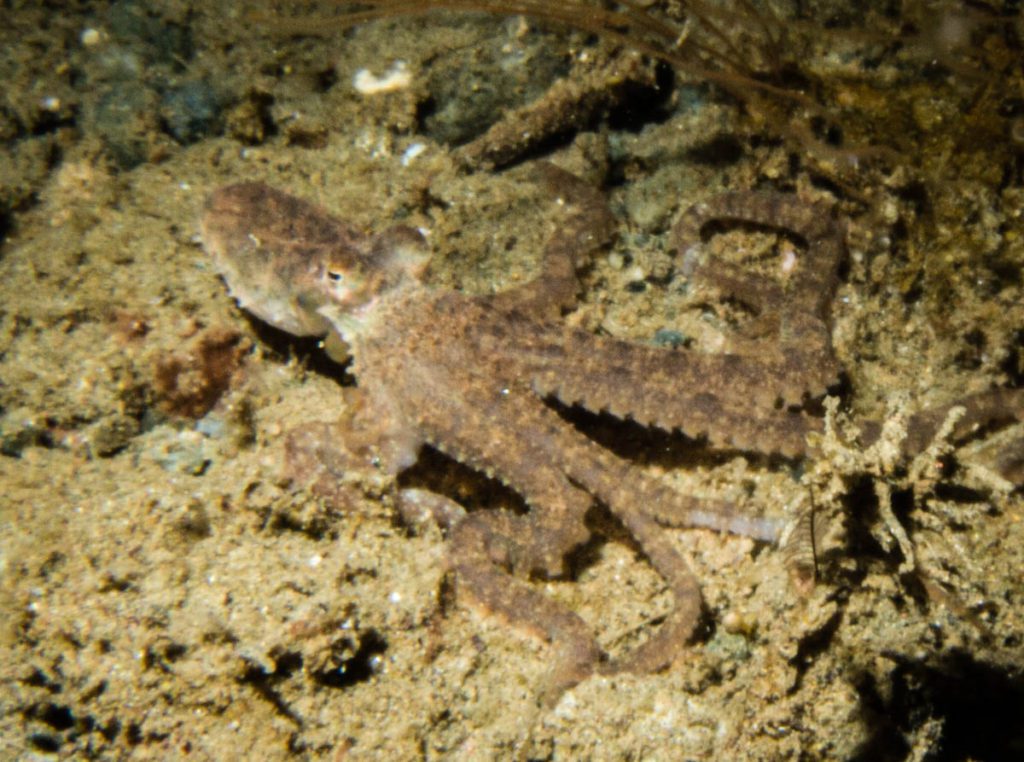
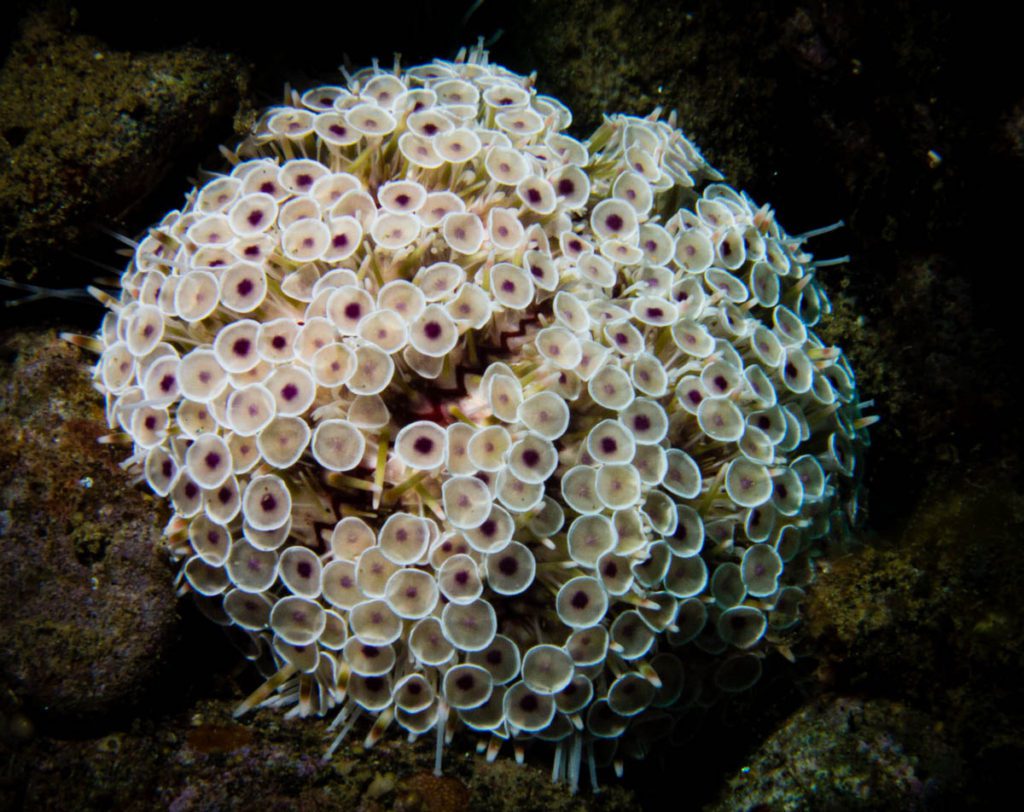
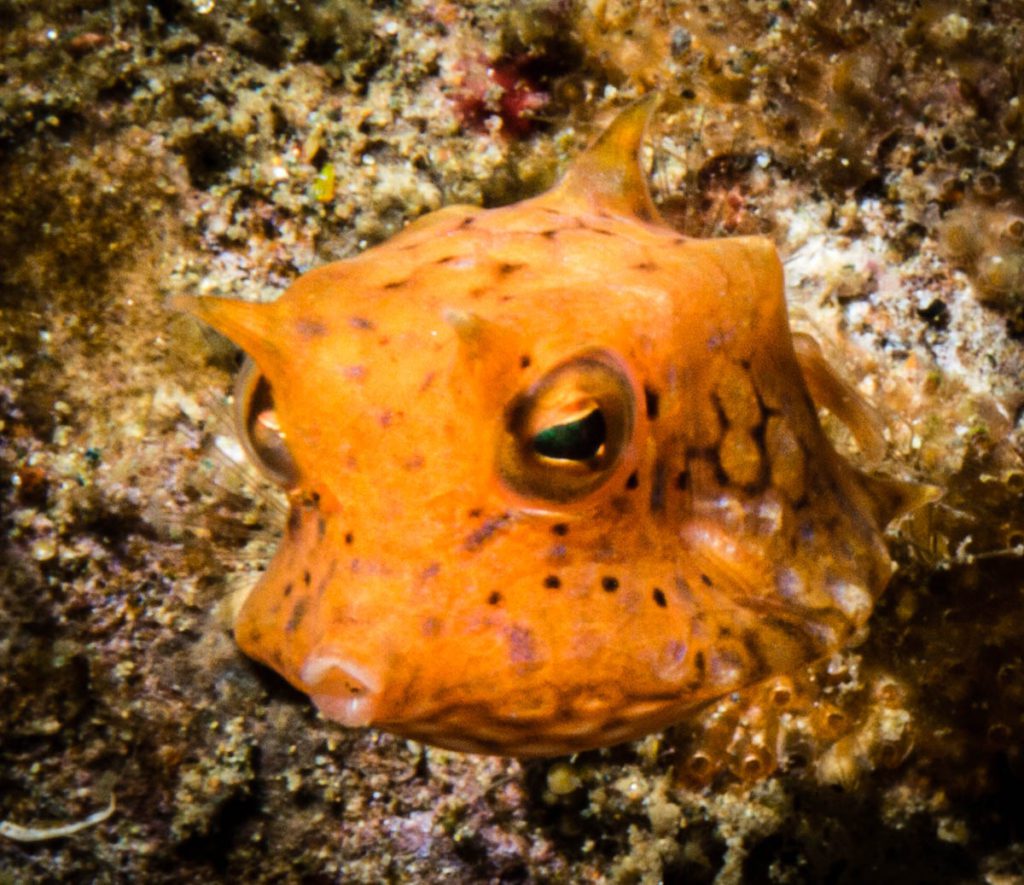
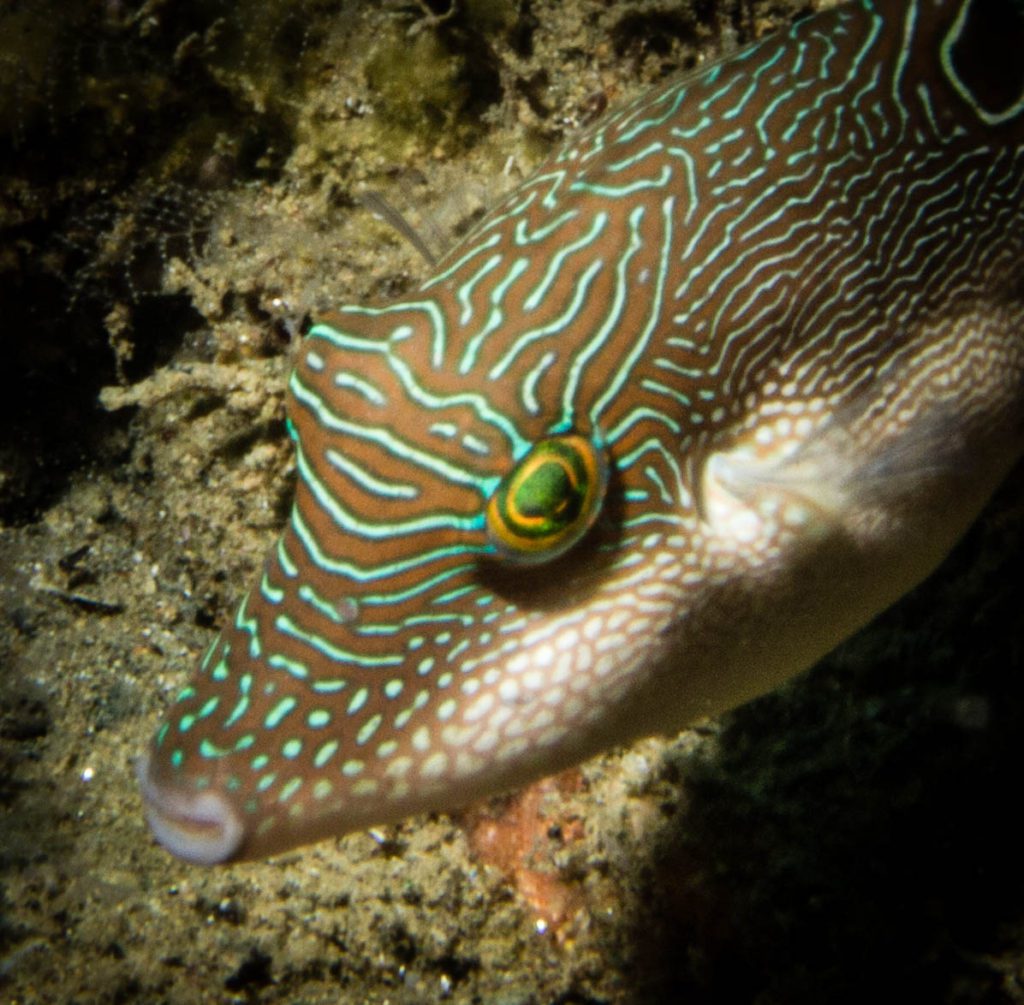
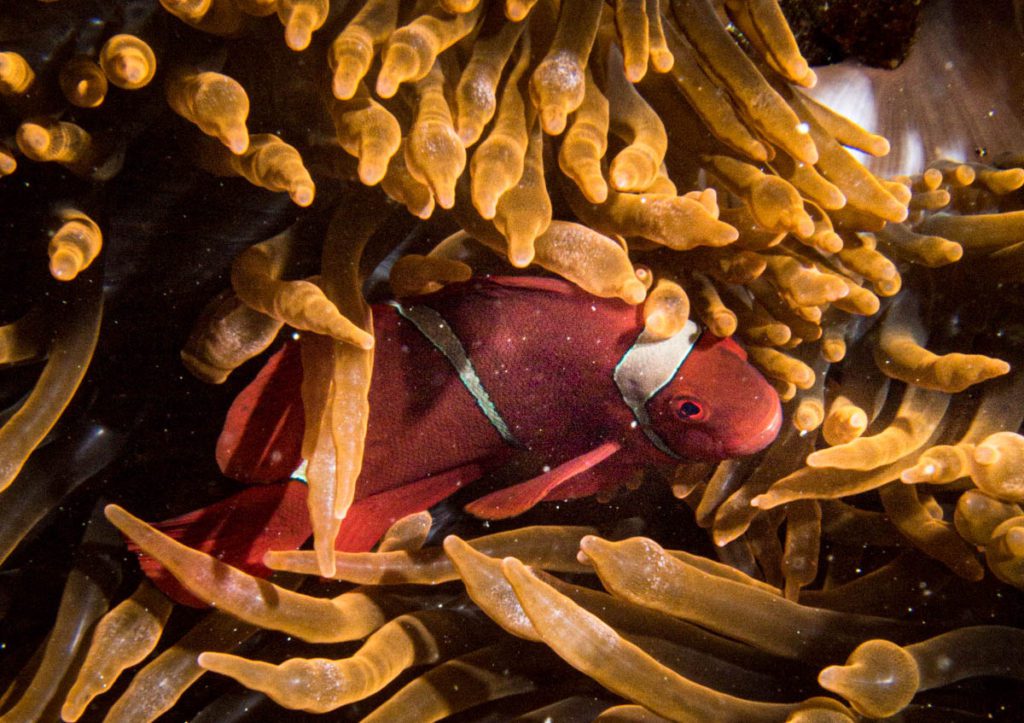
The dive site in Laha bay has a sloping sandy bottom that becomes murkier as you go down. However, most critters are between 5 and 12 meters, so there is no need to go very deep. There are plenty of frogfishes, octopuses, and cuttlefishes. We also viewed cowfishes and many nudibranchs. We observed a moray eel hunting crabs, a gurnard fish, and two super weird-looking Melibe nudibranch. A seahorse was very photogenic. I also saw a red moray eel, which I had never seen before. The baby frogfish and baby scorpionfishes were super cute. They were both less than 2 centimetres!
Once again, Ambon didn’t disappoint.
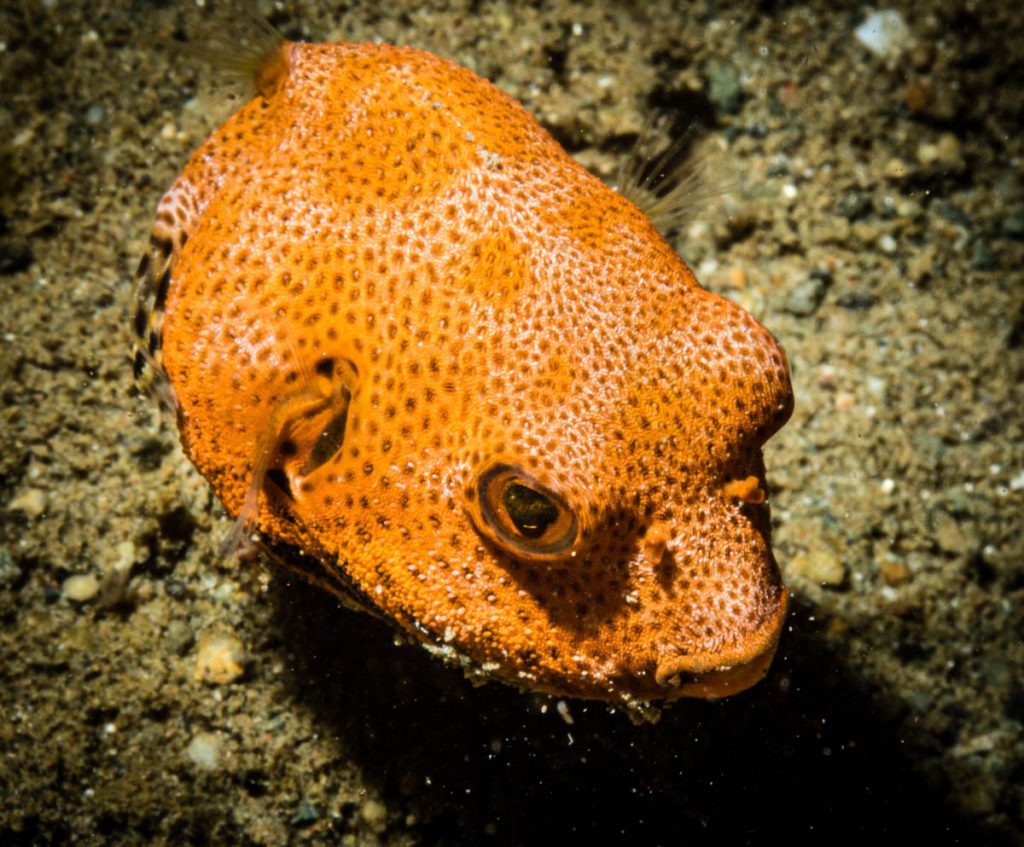
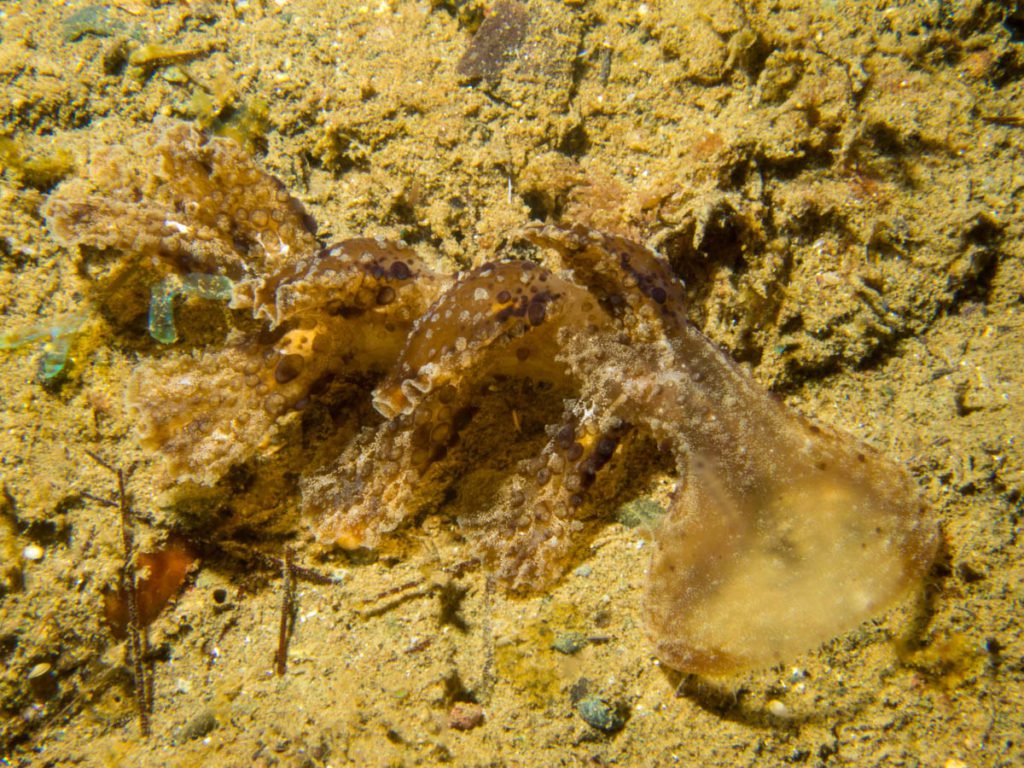
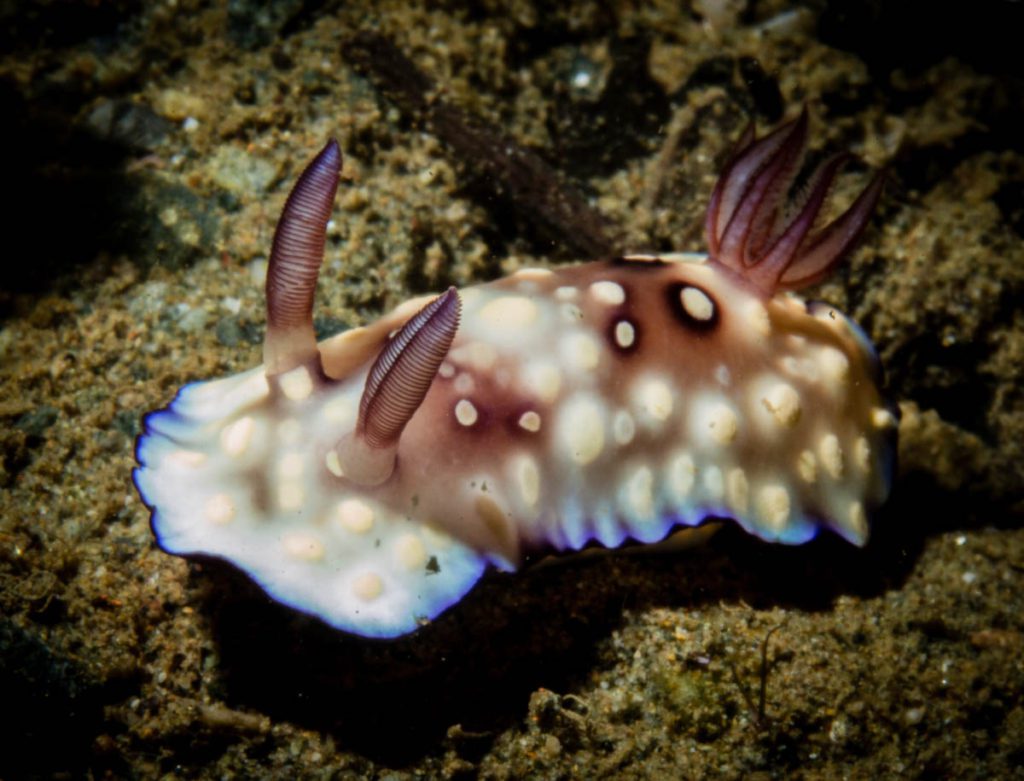
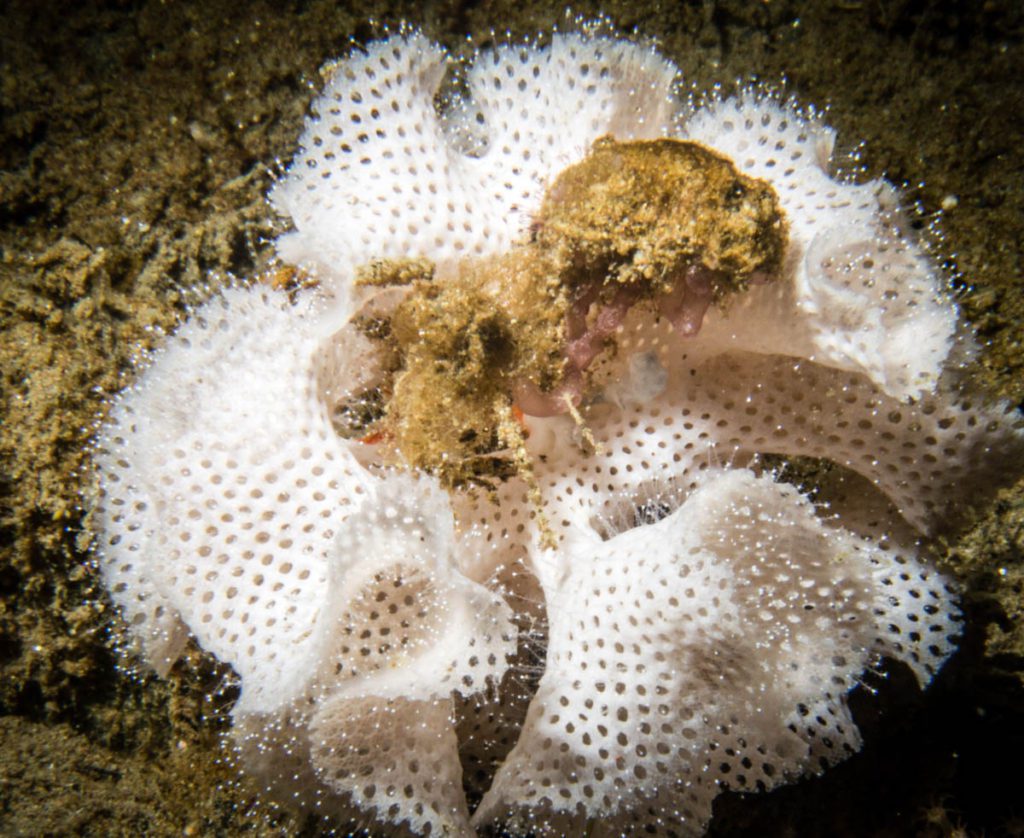
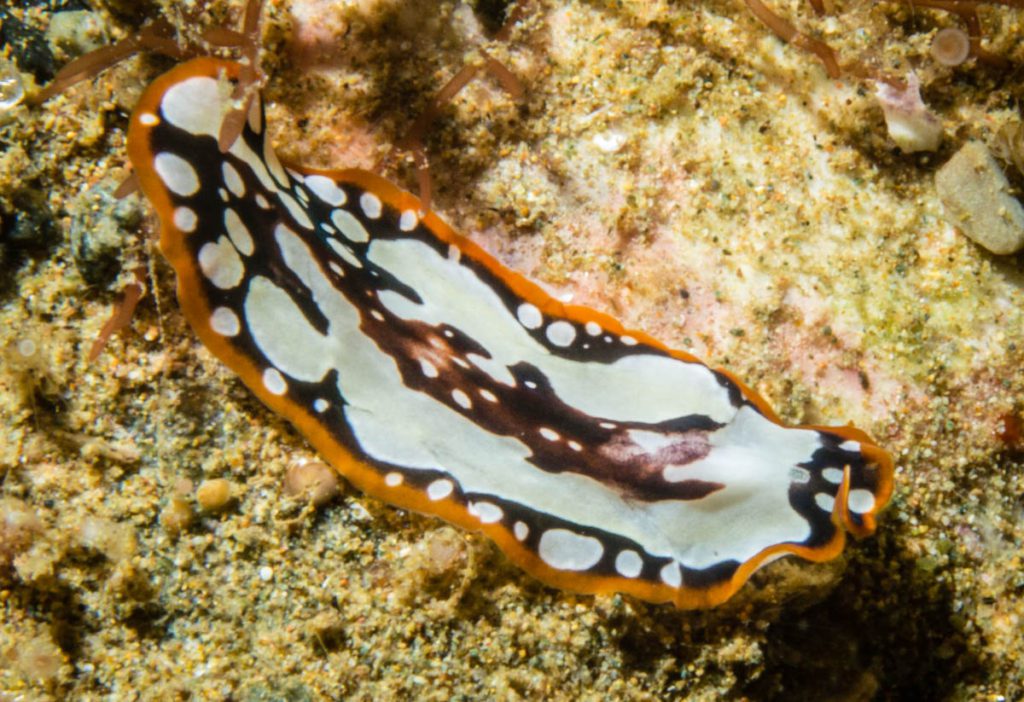
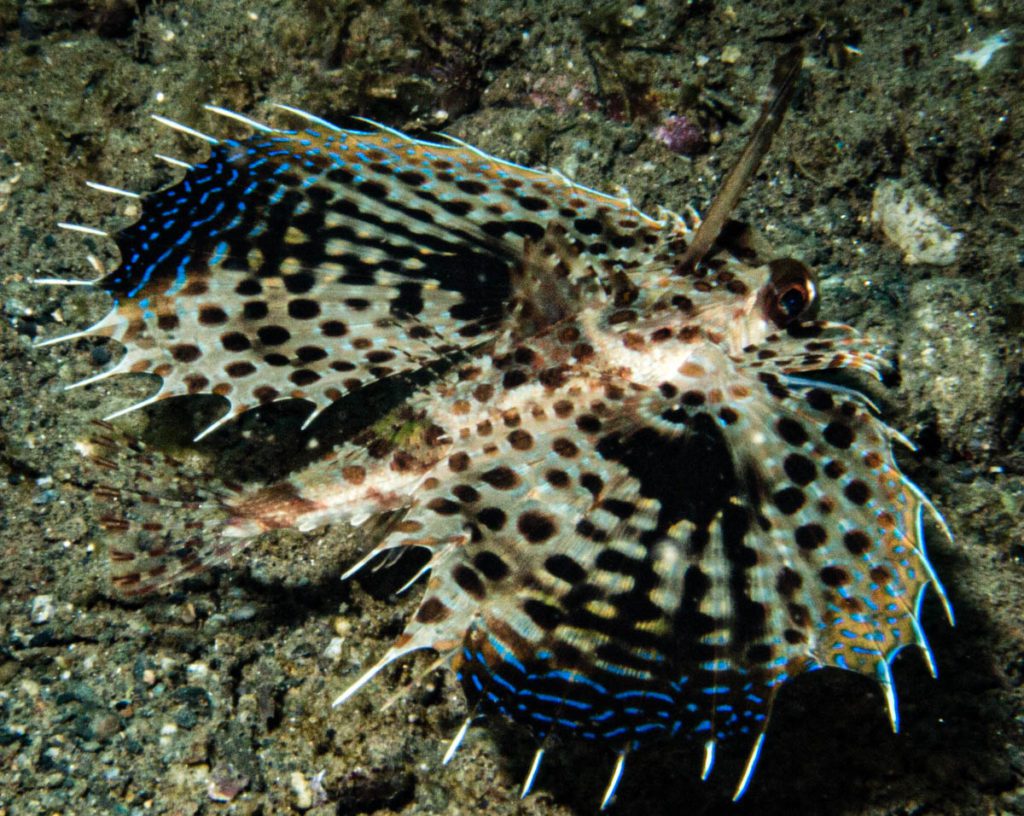
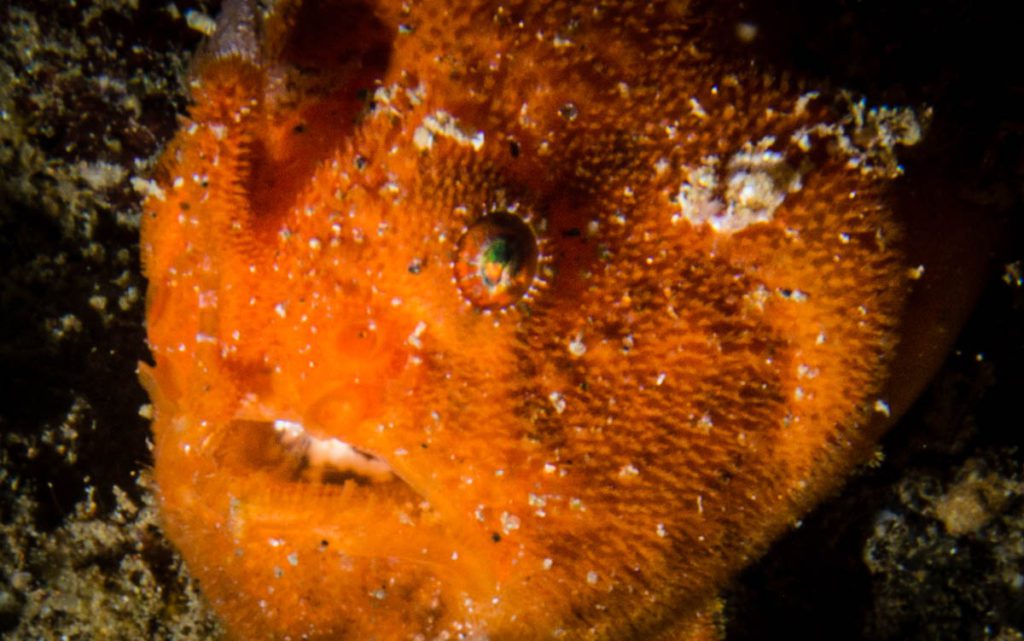
We then moved to Suanggi in the early afternoon. Suanggi is a whopping 18 hours boat ride from Ambon, so we had a long way to go.
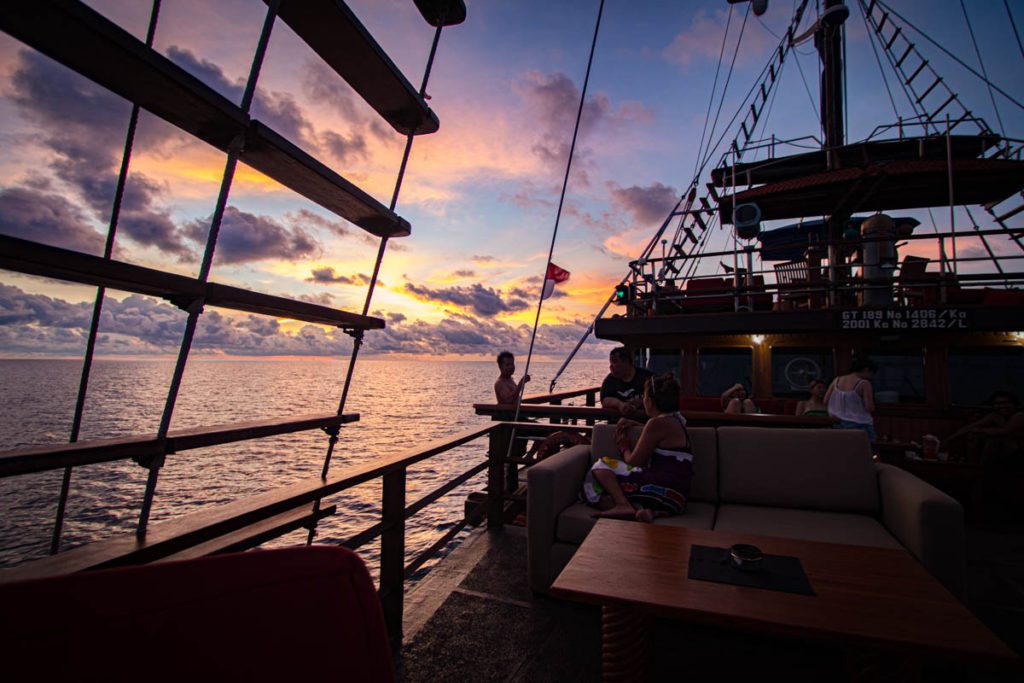
We spent the afternoon getting familiar with the boat and enjoying all the outdoor spaces. I found a lounge chair at the front of the vessel that quickly became my favourite place to hang out with its panoramic view of the sea and the front of the boat. As we were cruising, we observed a few dolphins jumping out of the water.
As you cruise the water around the Banda island, you have a good chance of seeing whales and dolphins, so make sure you keep watching the sea while navigating.
Day 2: Schooling hammerheads in Suanggi
This morning, we arrived at Suanggi around 6 am. Suanggi is the best place to see hammerheads in Indonesia, which is why many divers come here in October and November.
We did four dives at the Suanggi dive site. It is an awesome dive site and didn’t disappoint.
It is called ghost island. The locals believe ghosts are living on the island, so that is why no one lives there.
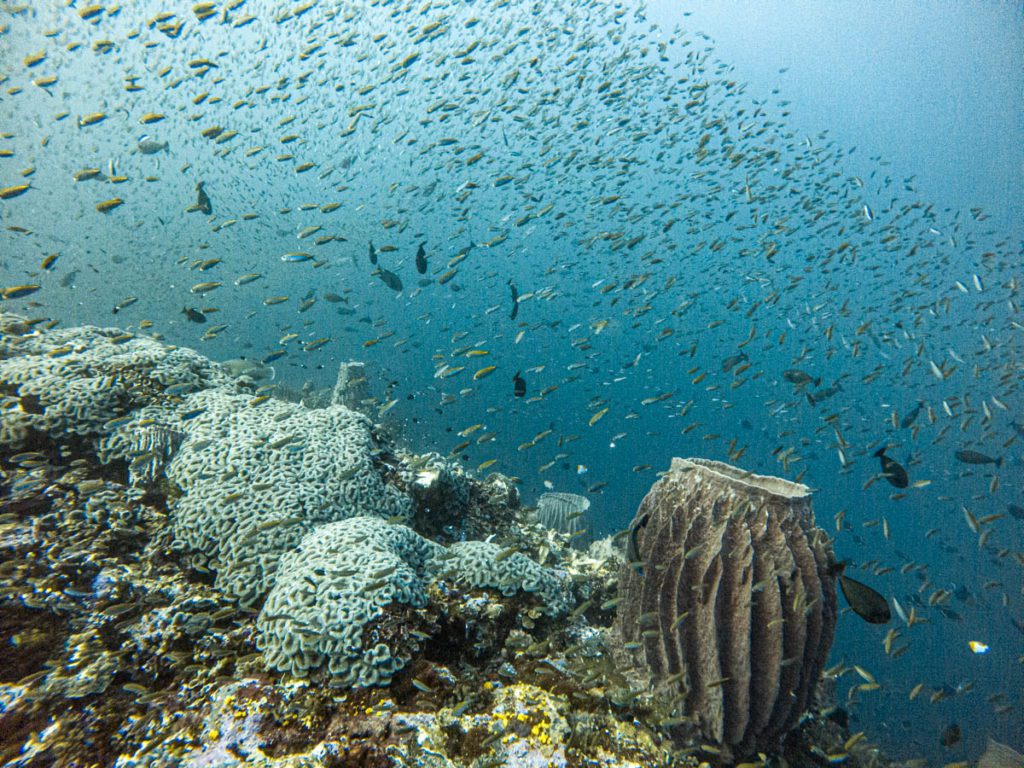
The island is small and in the middle of nowhere. It is surrounded by 5 or 6 underwater peninsulas, starting at about 15 meters. The peninsulas slope gently and become a steep wall. Amazingly, we were the only boat there that day.
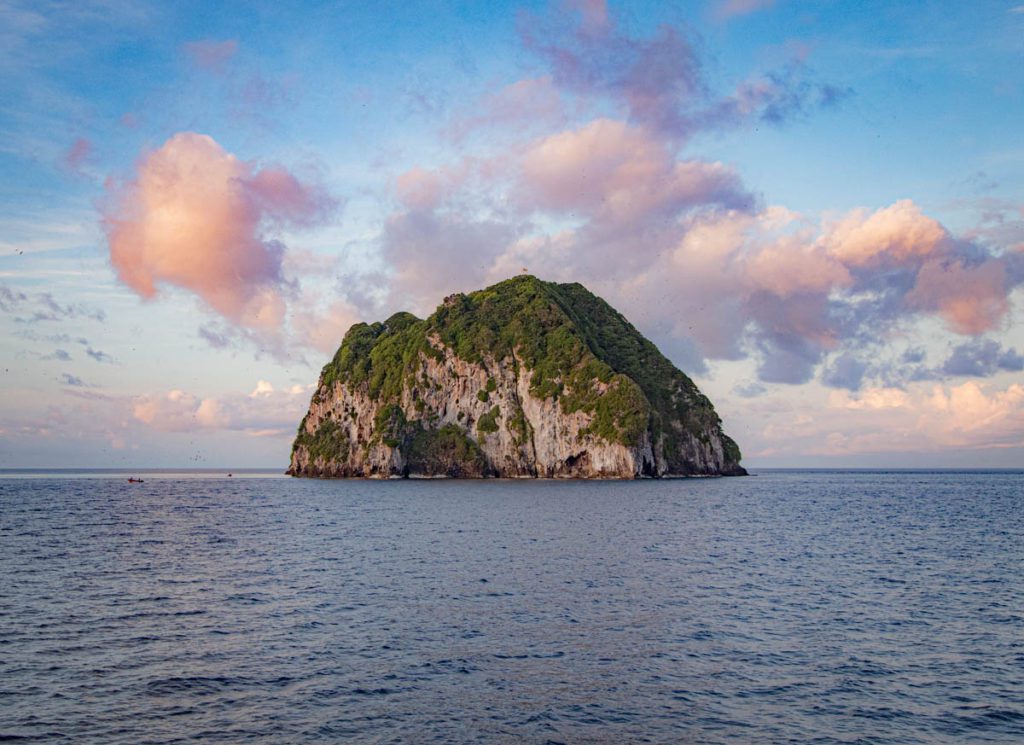
There are two ways to dive here. The first one is the wall around the island; the second one starts at the pinnacles. Most of the hammerhead’s action happens around the pinnacles. Corals are colourful, and you might even find nudibranchs, but this is not the main reason to dive here.
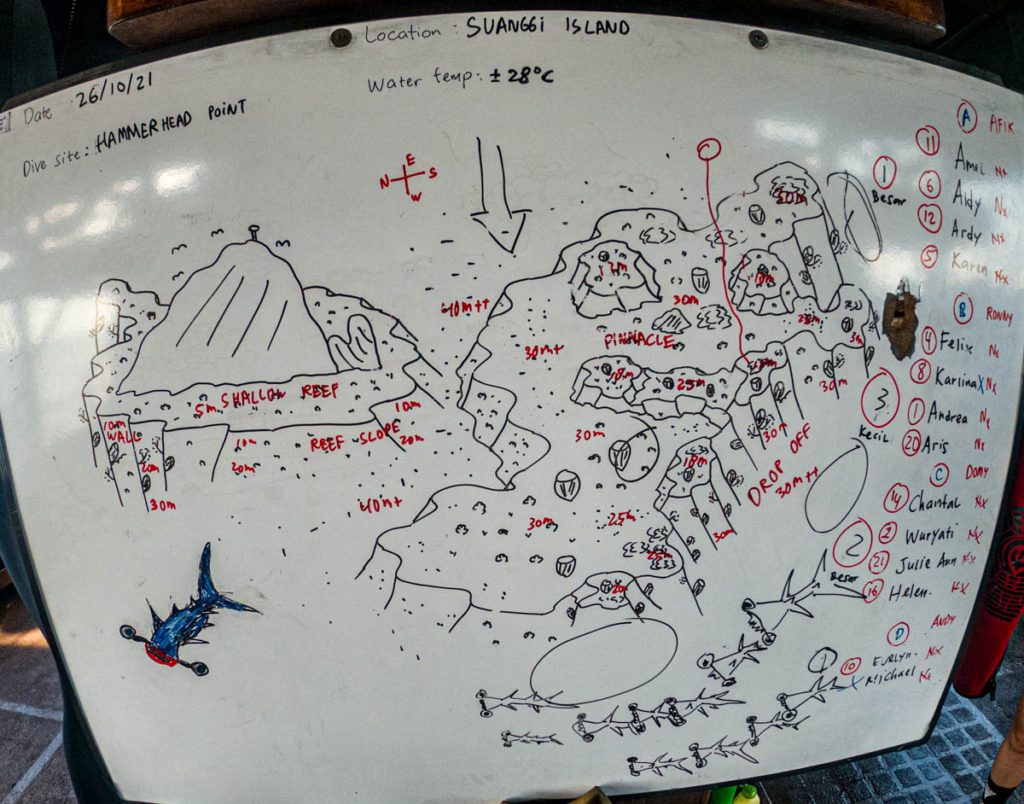
Our first dive was at high tide and had little current. The place is full of schools of fish and attracts big fish like barracudas or giant trevallies.
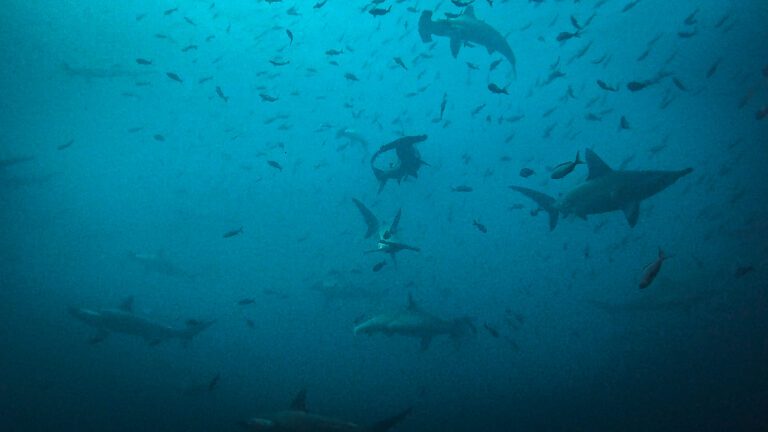
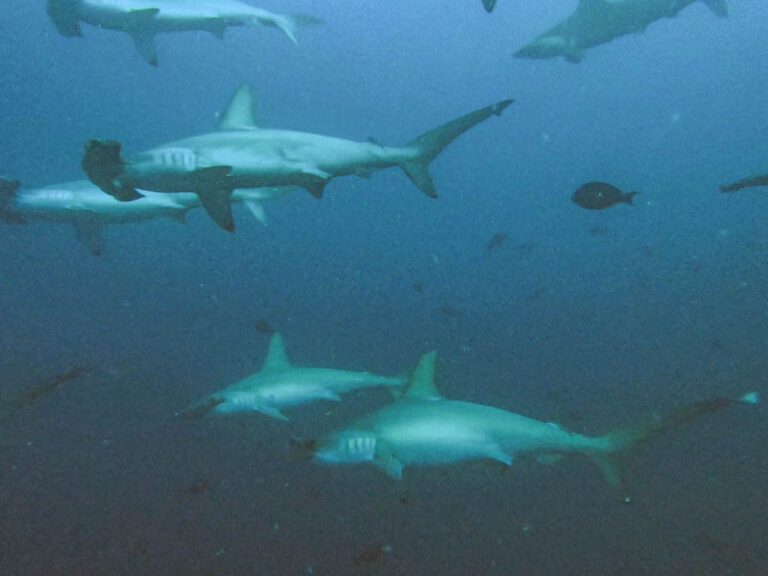
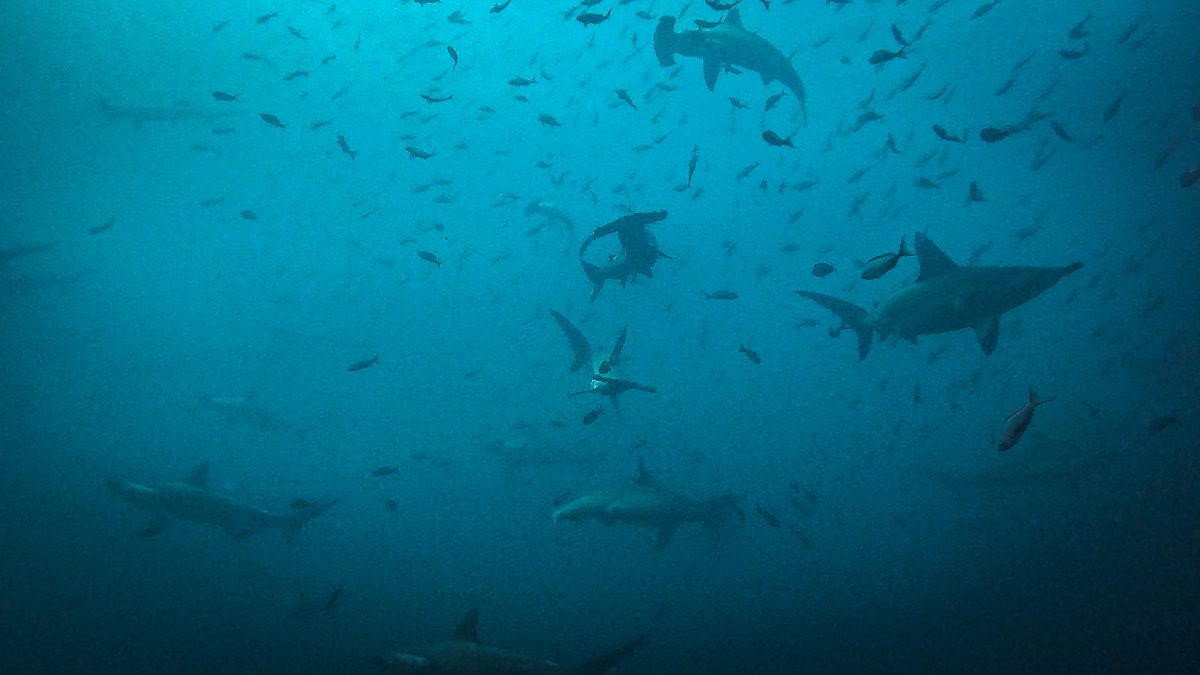
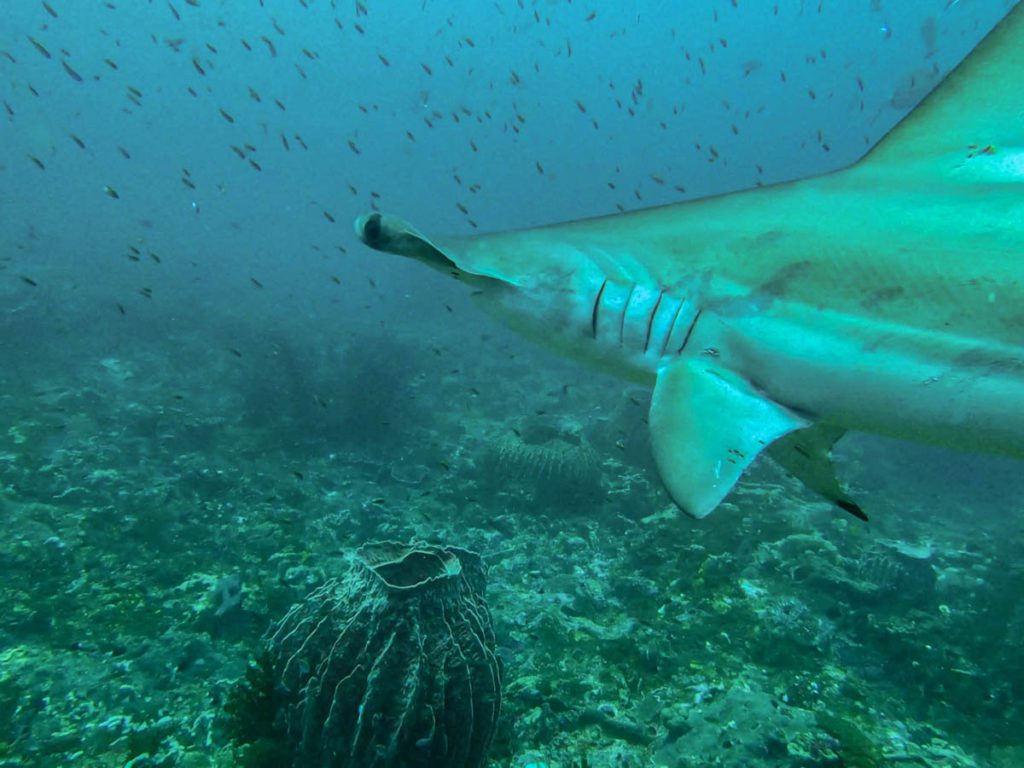
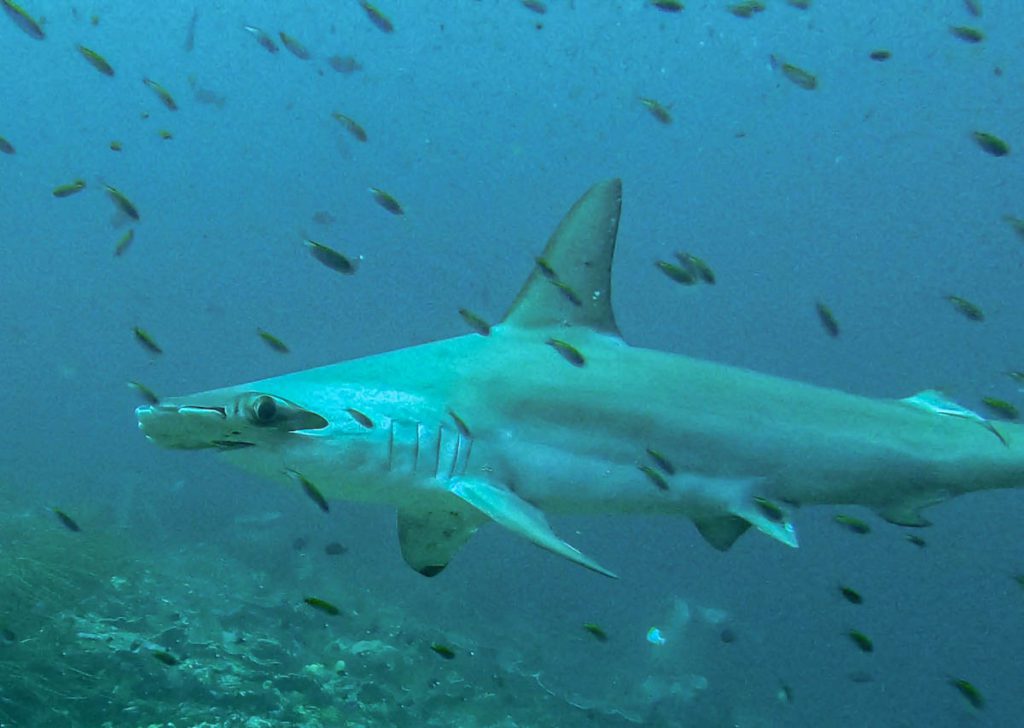
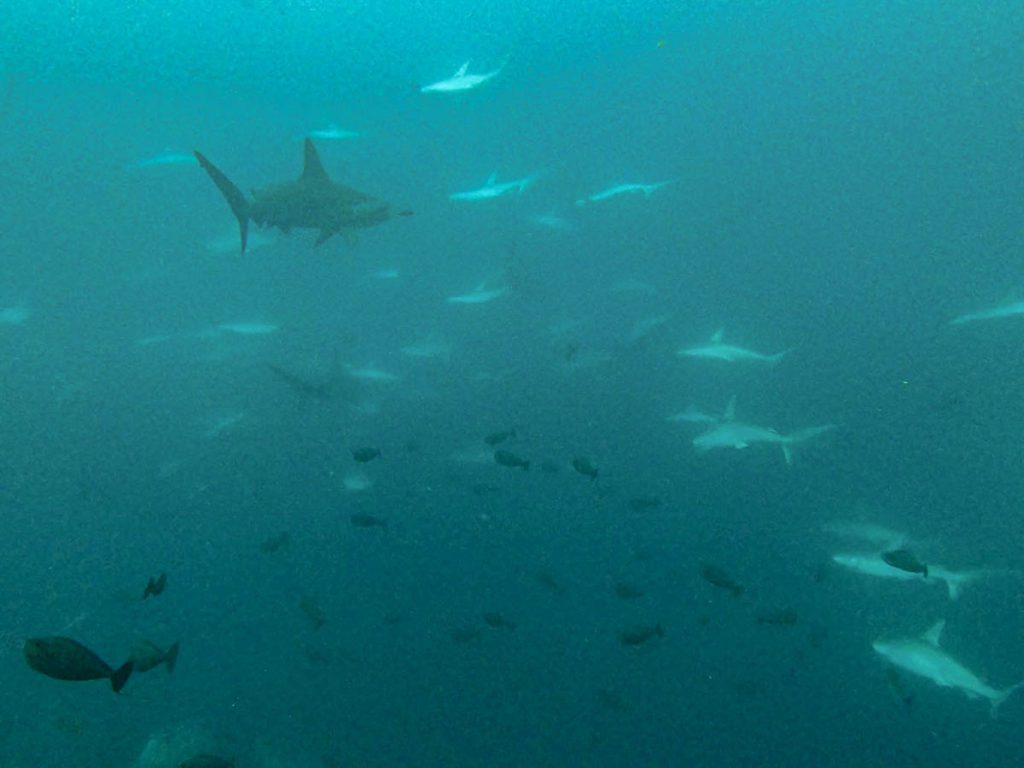
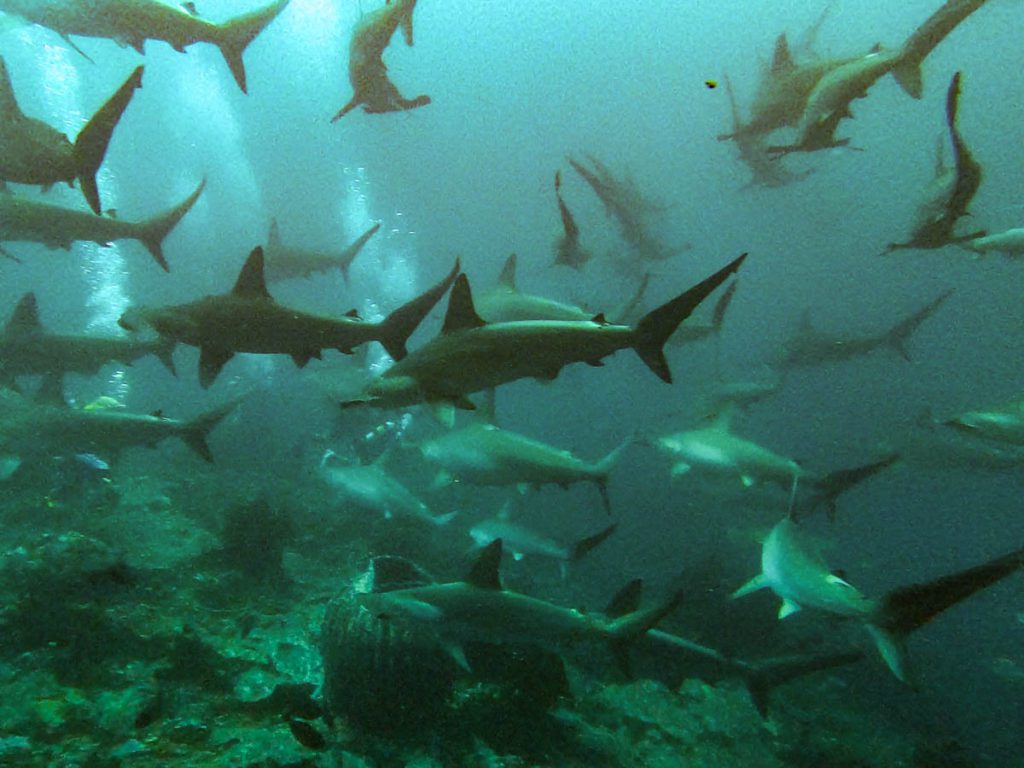
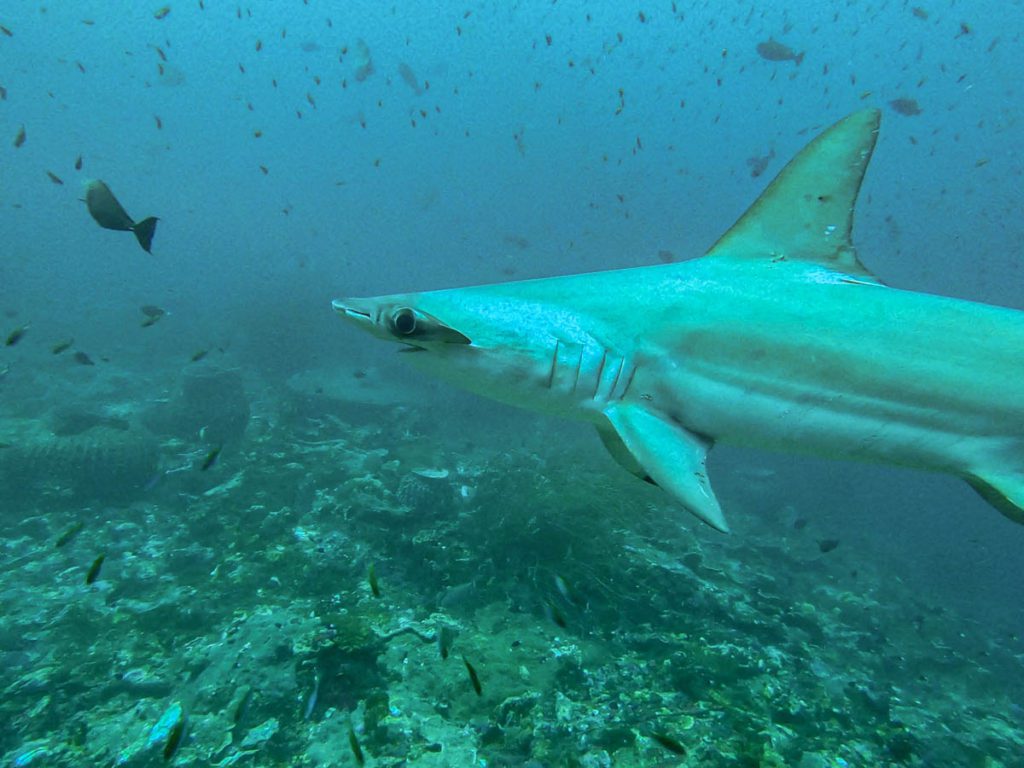
Within 5 minutes of the first dive, we came across a school of 30 hammerheads!!! Welcome to Banda, they said…
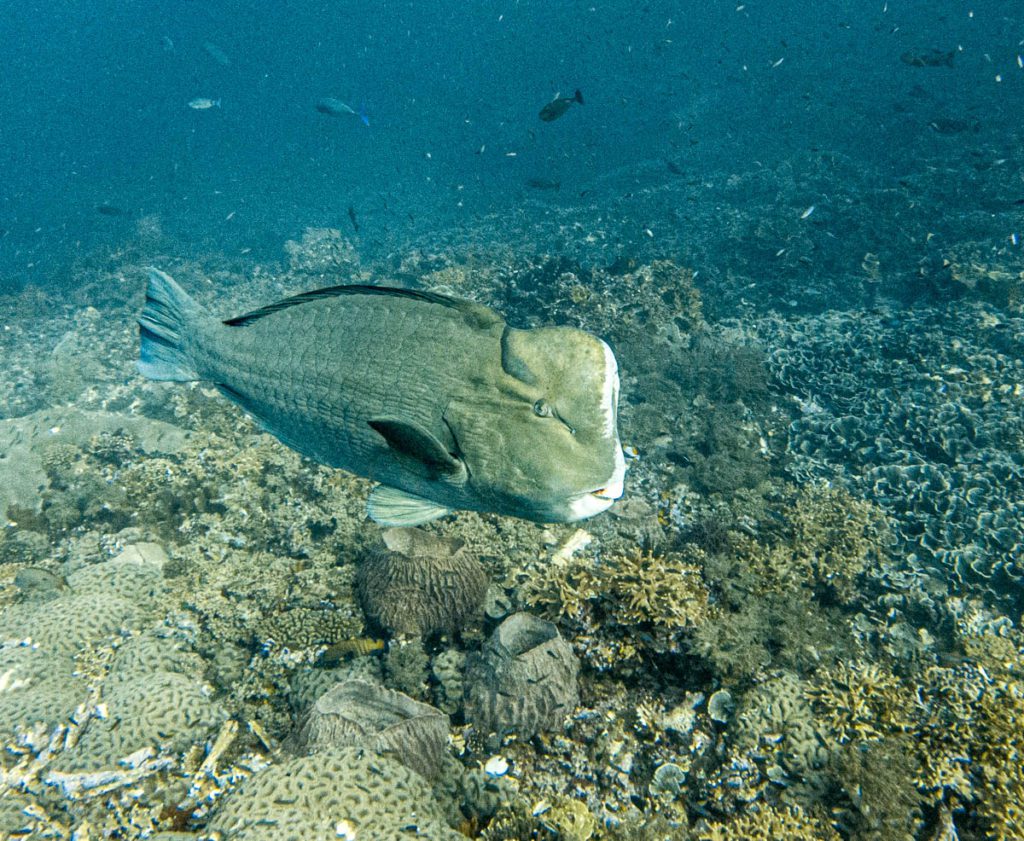
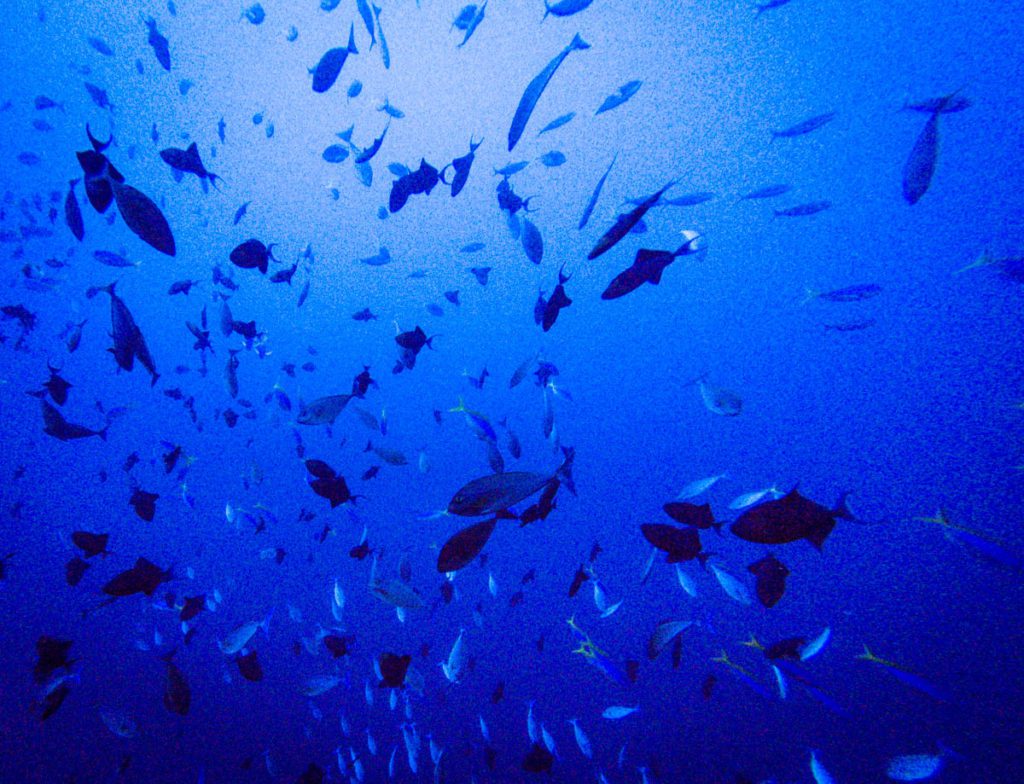
Besides hammerheads, the site was very fishy with schools of great barracudas, giant trevallies hunting hundreds of fusiliers. A few Napoleon patrolled the shallow area. Two snakes came up for air, and a turtle was feeding on the reef.
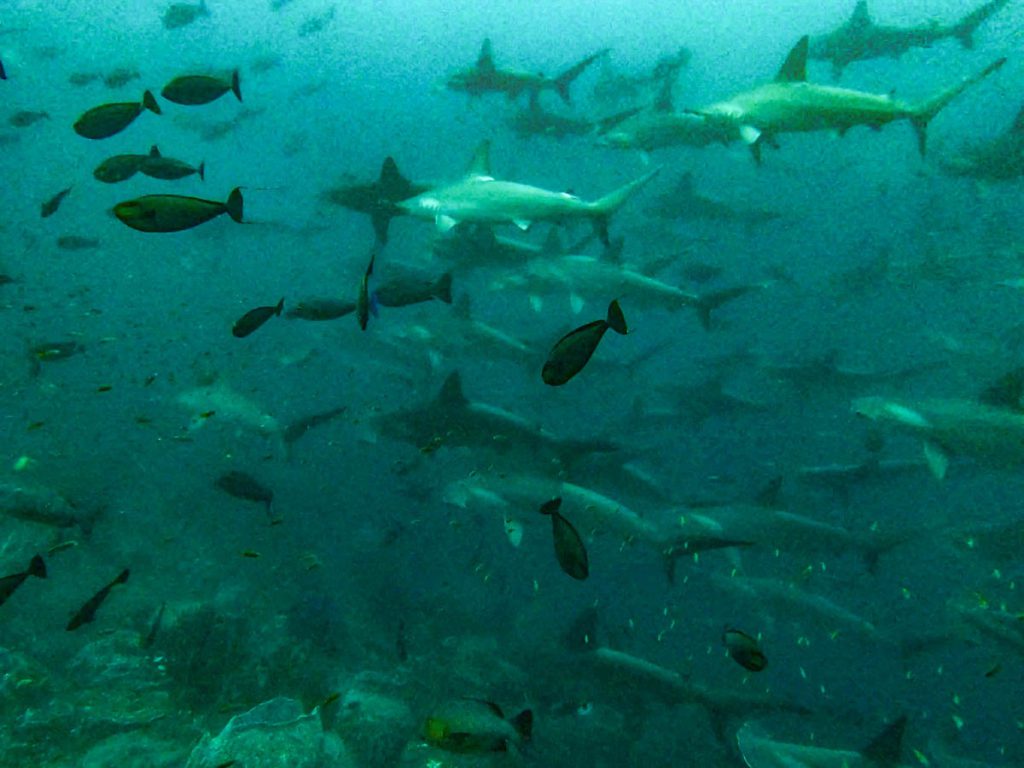
It just got better and better, as, on the second dive, we observed a massive school with about 100 hammerheads. They were everywhere and started to circle us! A few hung around and swam very close to us.
We saw the vast school again later in the dive, feeding in the deep.
Even without hammerheads, Suanggi is one of the best dive sites in the world, and we got to dive it four times today!
Want to be in the water when a school like this comes through? October departures are limited.
Check Sea Safari 6 Availability
We then navigated towards Banda Neira during sunset. To finish the day perfectly, dolphins started to jump around the boat. What a day!
Day 3: Discovering Banda Neira.
The first dive was Batu Kapal dive site near Banda Neira. It is a group of submerged pinnacles that look like a ship. Kapal means ships in Indonesian.
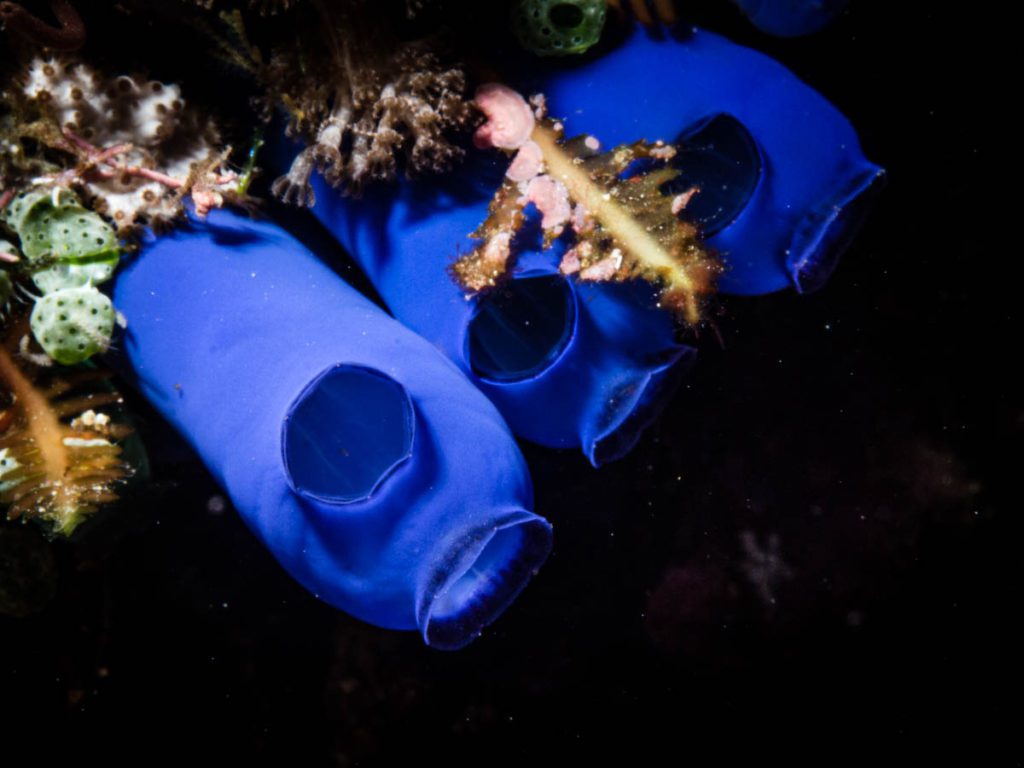
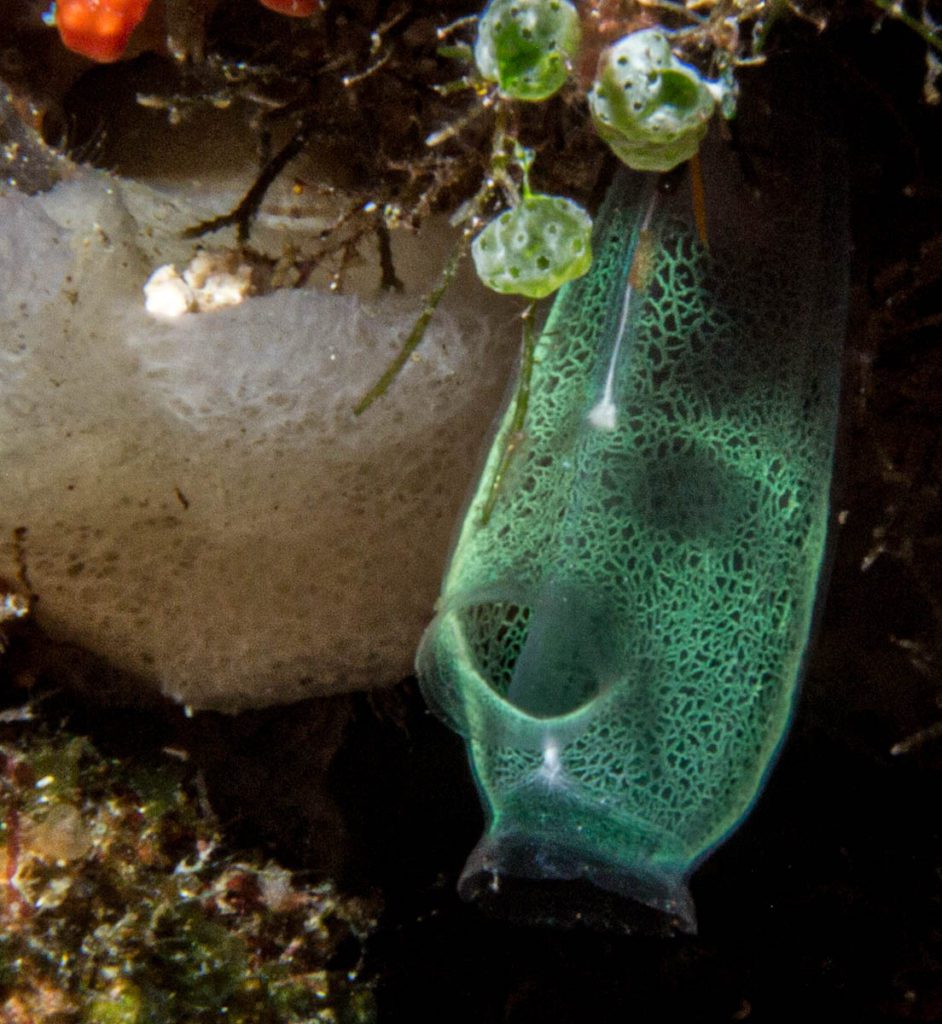
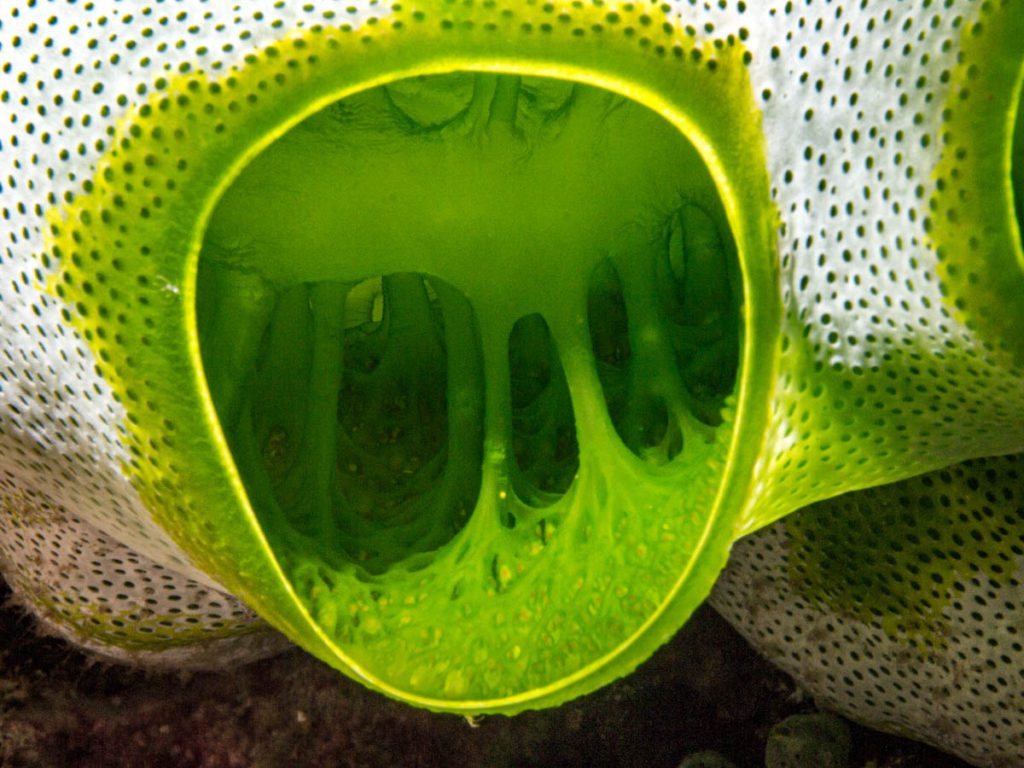
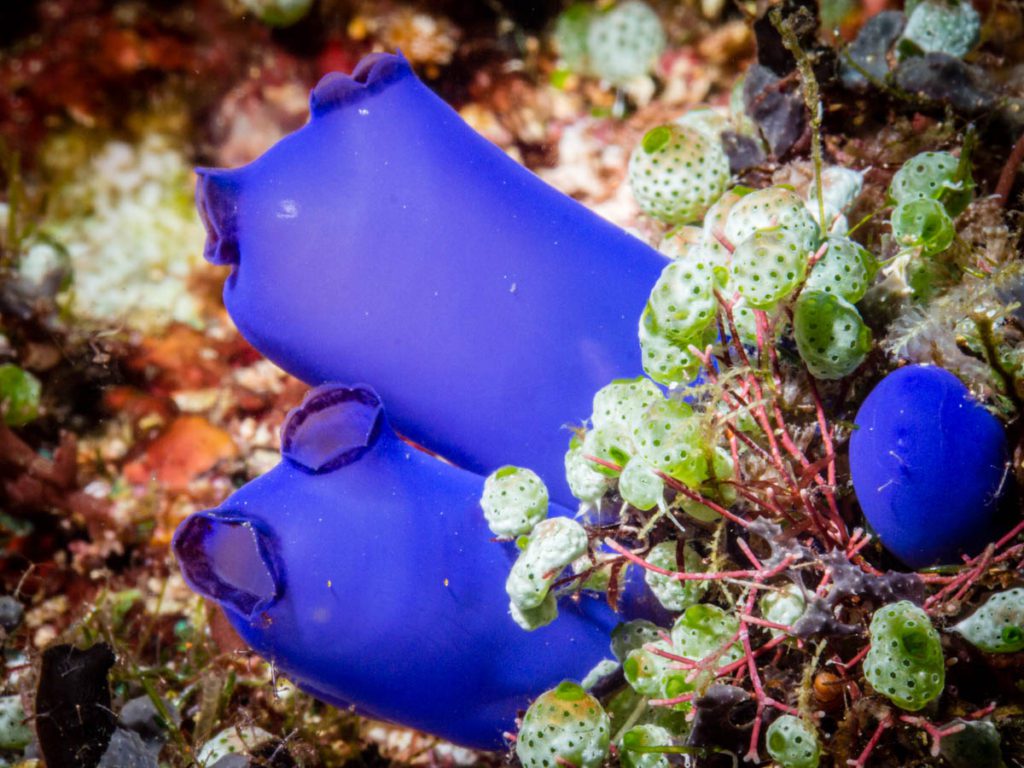
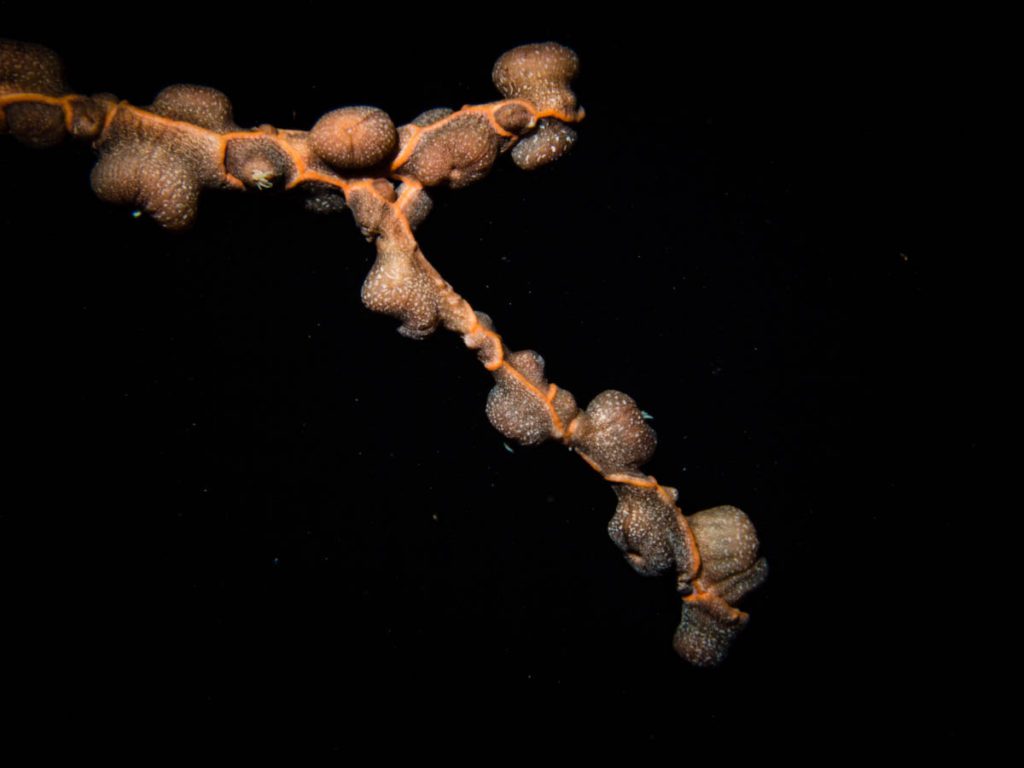
A big rock sticks out above the water. There is a vast plateau at about 5 meters with delicate corals and sea fans and two more pinnacles at 12 and 15 meters. The dive site is mainly created by steep walls that display all the colours of the rainbow! Most of the pelagic hang out in the upside corner. This site has lots of fish but mostly small ones. Depending on where you are in the wall, the coral can look very broken. Other parts of the wall have elegant soft corals and tunicates.
I got mesmerized by the shapes and the beauty of those tunicates. Did you know that tunicates are animals? The first tunicates are over 500 million years old!
The sponges are big but not as big as Suanggi the day before. It was a nice relaxing dive and a good break after all the excitement of the day before.
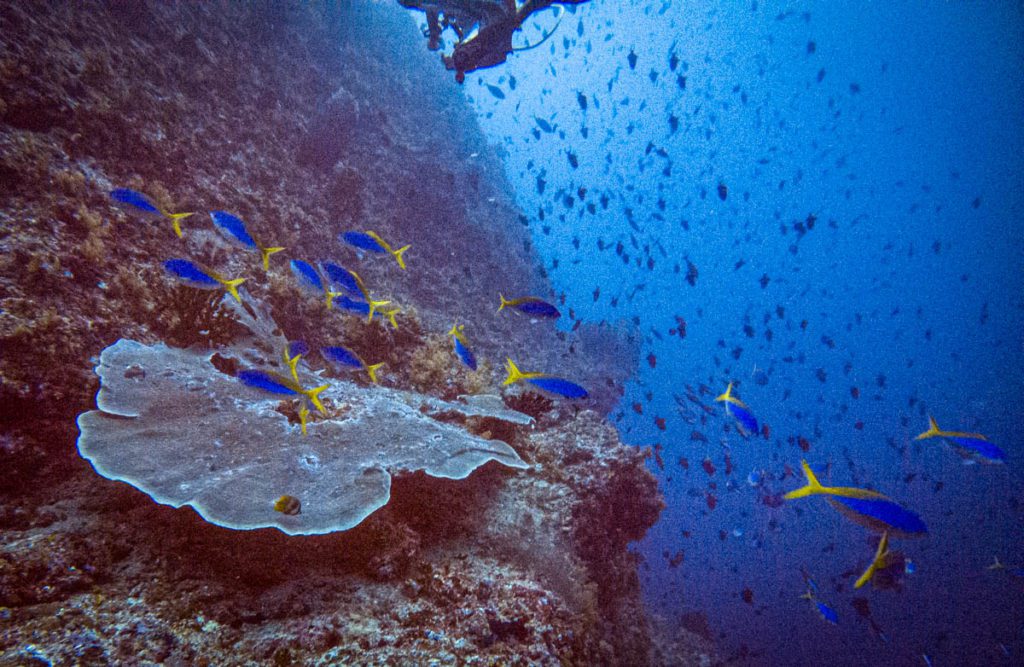
The following dive sites were Pohon Miring and lava flow, but I had to skip them due to ear problems.
After that, we went to visit Banda Neira Island, a special place with lots of history. Banda was the epicentre of the spice islands, producing cloves and nutmeg. The Netherlands and the UK fought over it to control the spice market.
The Netherlands even exchanged Run Island for Manhattan in 1677. You can find out more about that story here.
We visited the historical town with all its pretty colonial houses, visited the museum, and viewed the fort.
Don’t miss the visit to Banda. It is a special place worth seeing. The one thing to buy here is nutmeg. They are locally produced, and you can find them in most shops near the port.
We watched the sunset in the Banda harbour before starting our 10-hour journey to Manuk.
A guest onboard knew someone working in a tuna factory, and they delivered us the most delicious fresh tuna onboard. The dinner was a feast of Sashimi!
Day 4: Diving Manuk, an active volcano with a vast snakes population
We arrived in Manuk island around 6 am. It is a tiny volcanic island located in the middle of nowhere on the ring of fire. It is famous for its large colony of sea snakes. Manuk means bird as the island is full of them.
The first dive of the day is the coconut corner dive site. It is a healthy reef with a grey sandy bottom. There are many barrel sponges and remarkably pretty corals. The end of the ridge is around 30 meters. This is where the barracudas, bumphead parrotfishes, and tunas swim. Mobula rays have also been seen here, but we didn’t see them.
There are plenty of sea snakes. Don’t get too close as they are very poisonous. They were primarily olive sea snakes, but we also witnessed two banded sea krait feeding in the corals.
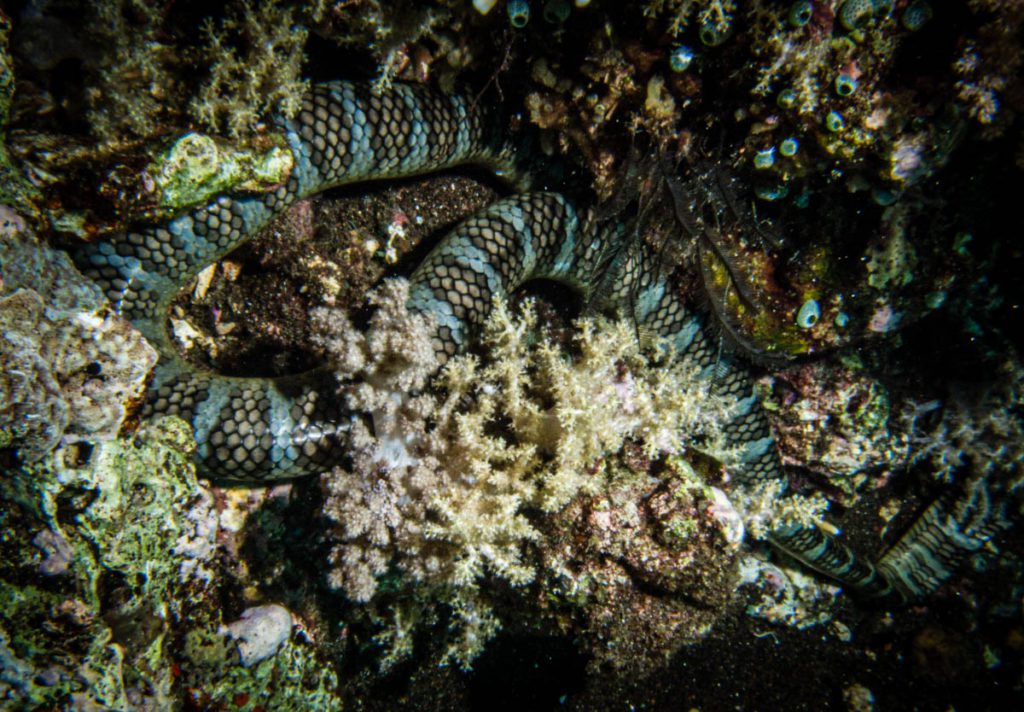
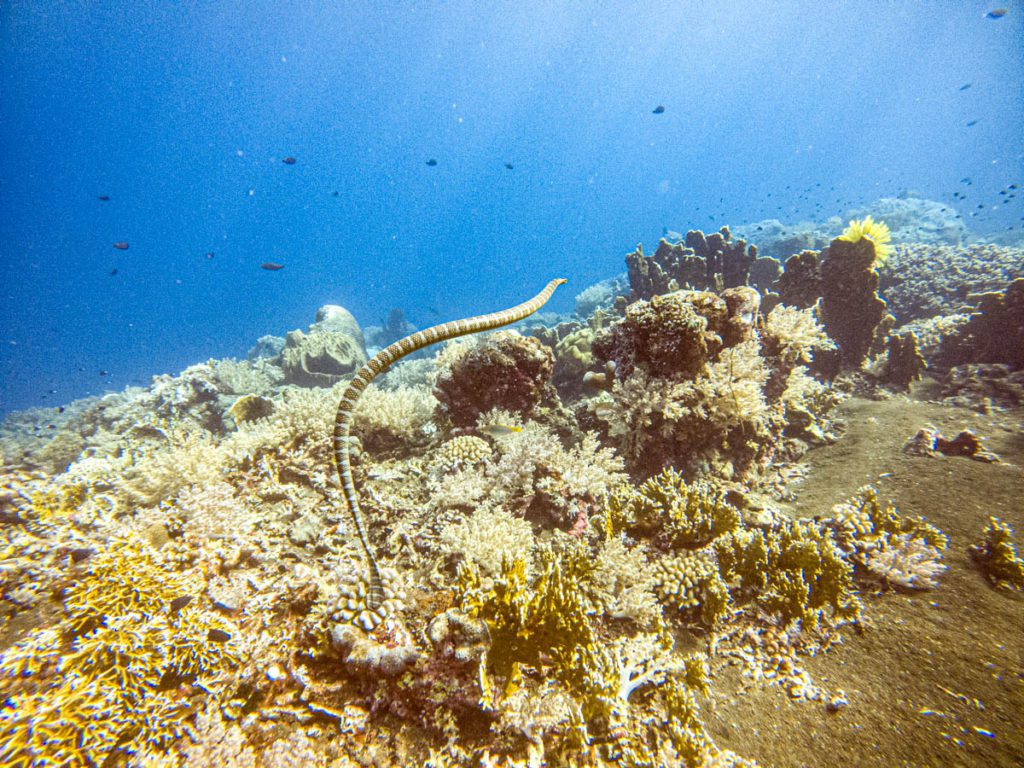
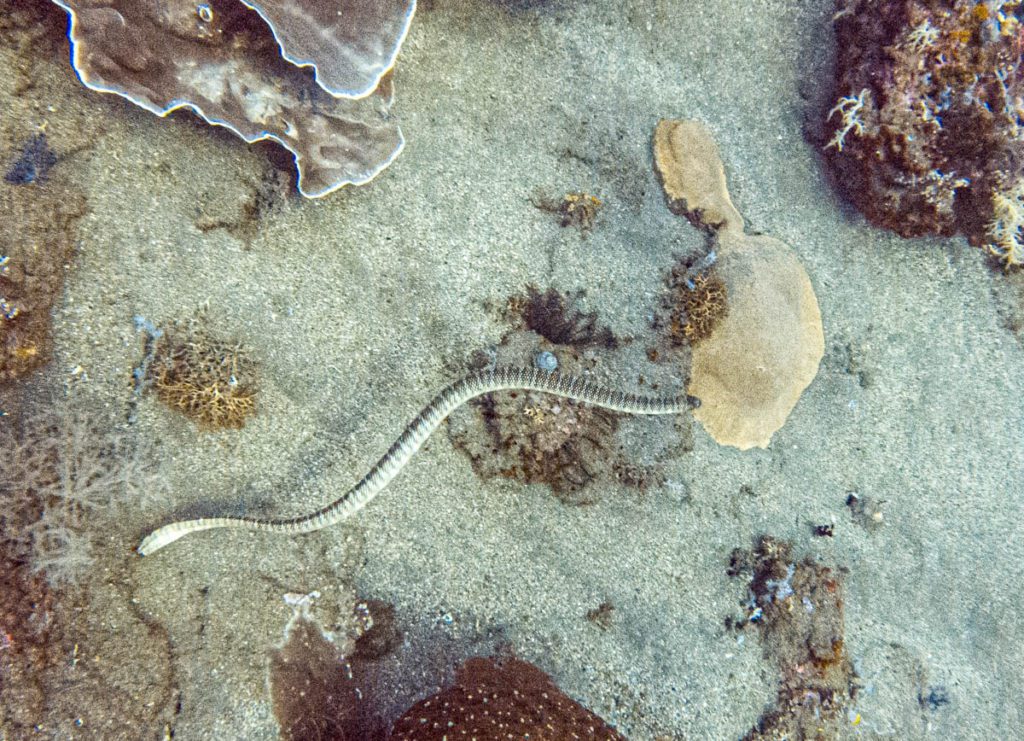
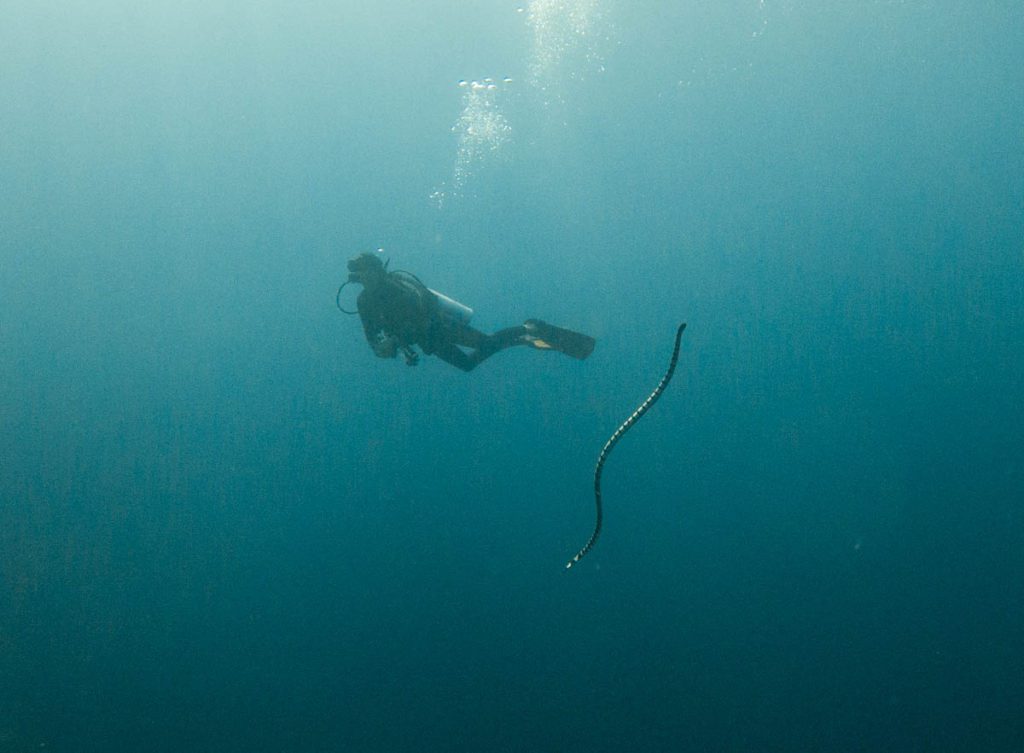
The second dive was the Tanjung Puthih dive site, the white corner. It gets its name because there is a white rock on the island where we start the dive. It is a slopy reef with a few ridges. We saw a large school of barracudas, a turtle, and a massive school of needle fishes. Two hammerheads sharks came by, but they were pretty far and didn’t hang around.
We noticed more fishes in this place but still not as many as I expected from such an isolated place. It is probably because fishermen have gotten here. We viewed two fishing boats, one of them fishing with a net.
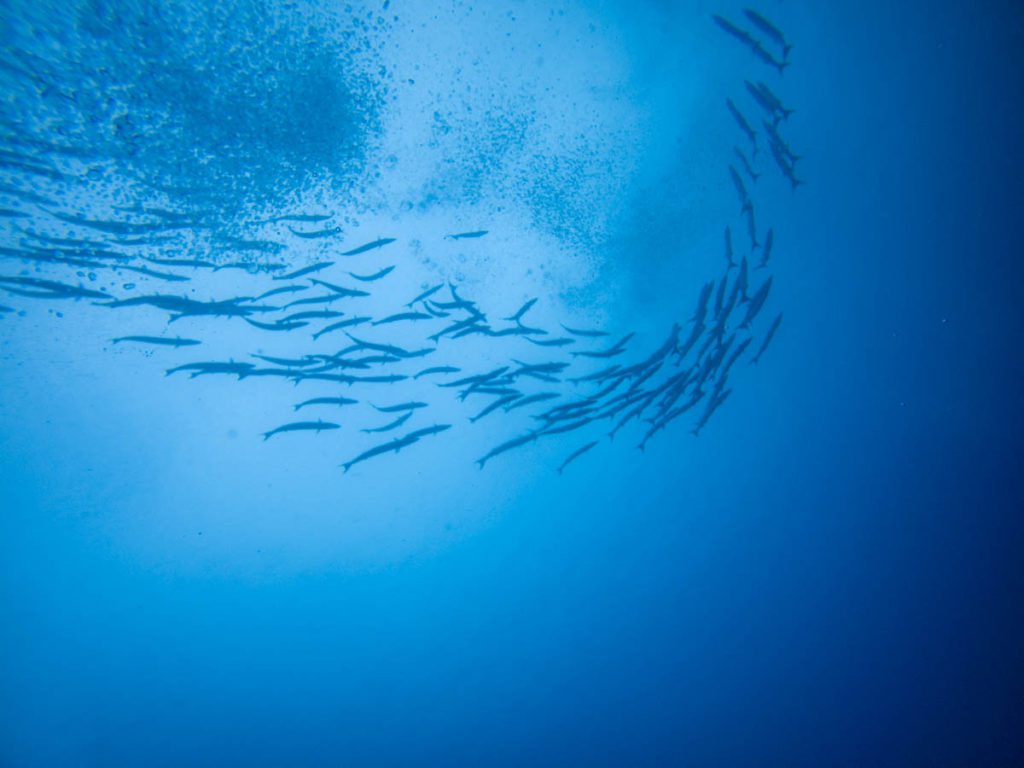
The third dive was on the other side of the island. There were fewer fish. Most of the dive was a deep wall covered in corals and soft corals.
Some areas have volcanic bubbles coming out.
The fourth dive was back at Tanjung coconut. But I skipped the fourth dive to enjoy the sunset on the boat. We could see the hundreds of birds hunting. Sulfur smells sometimes made an appearance. Manuk is a gorgeous island with weird rock formations, and it came out at sunset. It was a lovely moment.
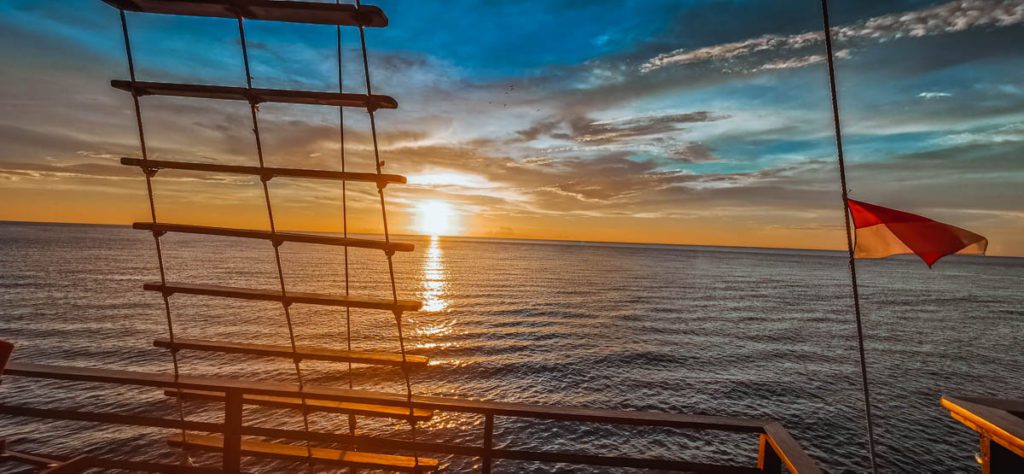
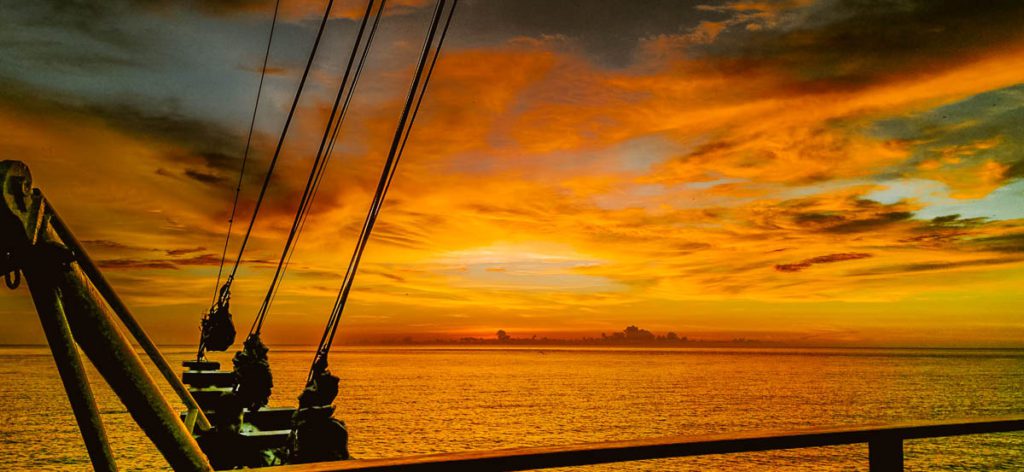
Day 5: Back to Suanggi island for more hammerheads.
We navigated 12 hours from Manuk to Suanggi. It was a peaceful night on board.
I woke up at 5 am to catch the internet signal as we passed Banda and was treated with a mesmerizing view of the stars and the milky way. It then merged into the sunrise and was a special moment.
We did four dives at the Suanggi dive site, looking for more hammerheads sharks. Unfortunately, today, there were two more boats diving. The boats coordinated dive times so that we would dive alone.
On our first dive, we observed a small school of 10 hammerheads.
On the second dive, there were a lot of currents, and we didn’t see any hammerheads. Amazingly, this was the only dive out of 8 dives we did at the Suanggi dive site where we didn’t see hammerheads.
On the third dive, we first saw two giant hammerheads. Then we witnessed a smaller school of five. They had a baby hammerhead with them!
The last dive of the day was the lucky one. All the other boats had already left, and we were left alone. The visibility started quite well. After seeing a few isolated hammerheads, the visibility suddenly dropped, and the water became much cooler. A school of 30 hammerheads came straight at us. Some were at a touching distance from me. Amazing and breathtaking!!! You can’t imagine what it feels like to be so close to those giants underwater until you have experienced it.
Then, as we were doing the safety stop, we saw another school of 10 to 15 hammerheads below, so we went back down!
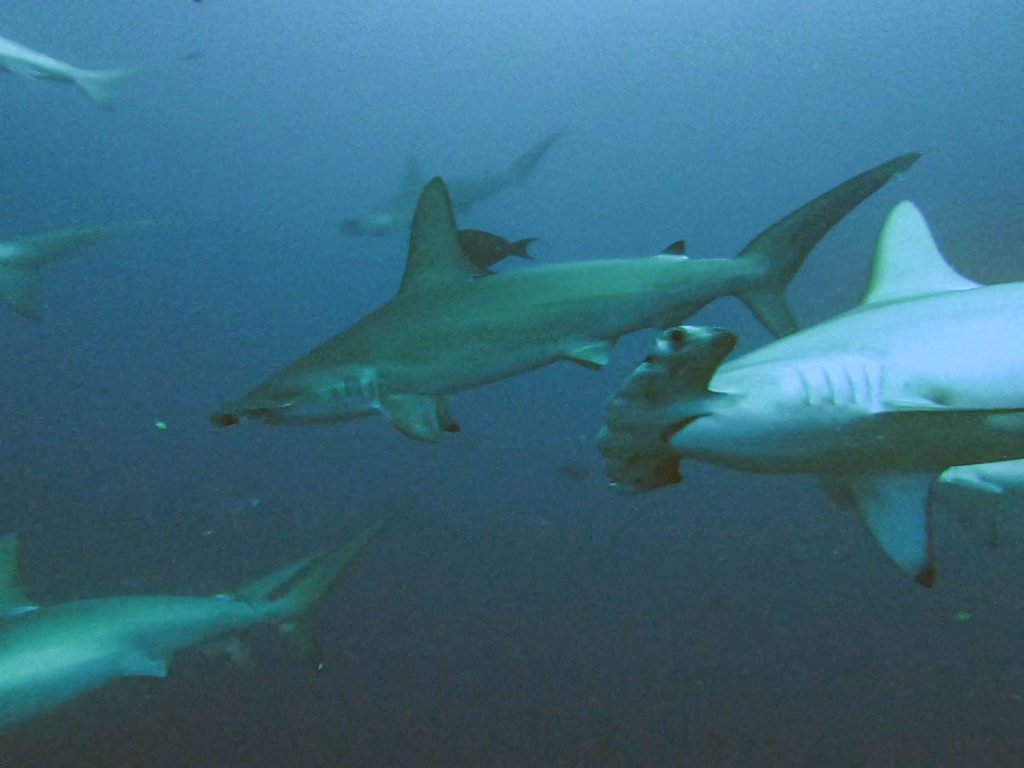
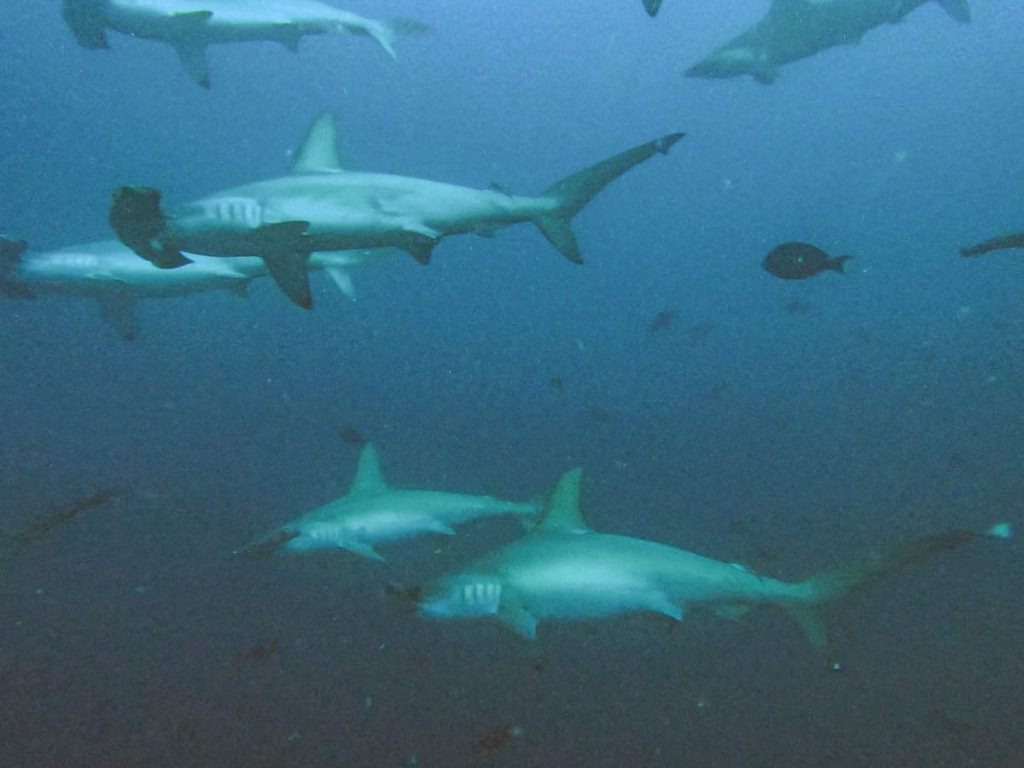
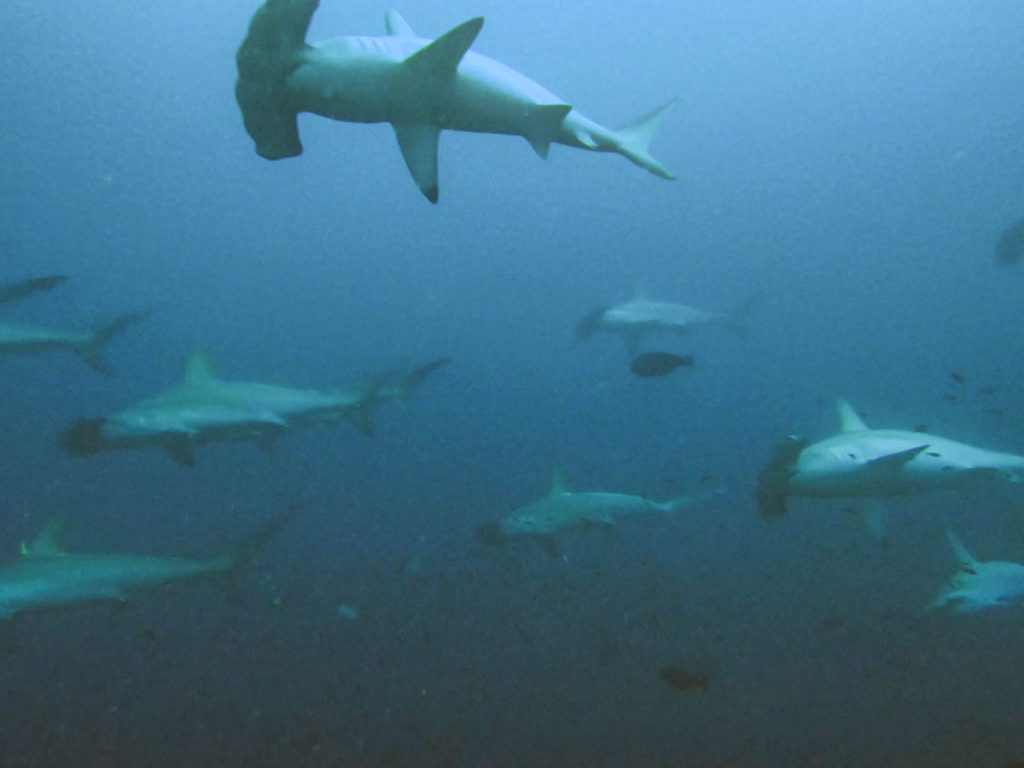
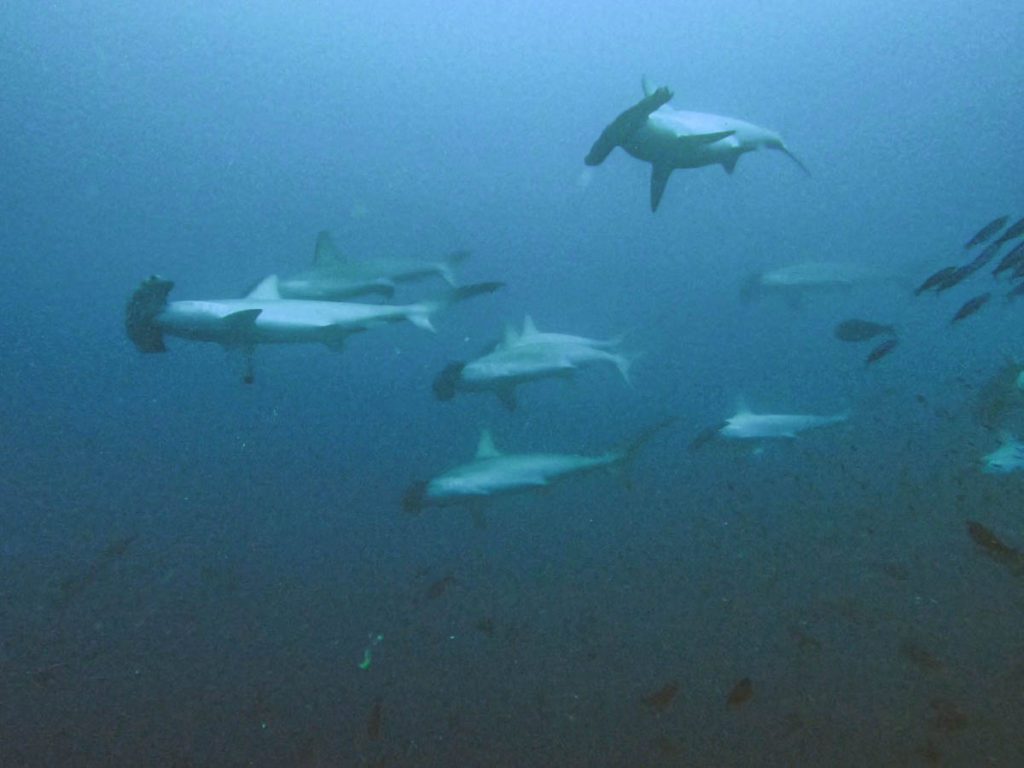
We came up to a stunning sunset and red-footed booby birds fishing.
A sense of joy permeated the boat the whole evening as we felt blessed to have seen so many hammerheads. Banda has been very nice with us, with no fewer than five schools of hammerheads. It kept the best for the end, with a school coming incredibly close to us on our last dive.
Hammerhead-season trips to the Banda islands sell out up to a year in advance — if this is your trip, check dates now.
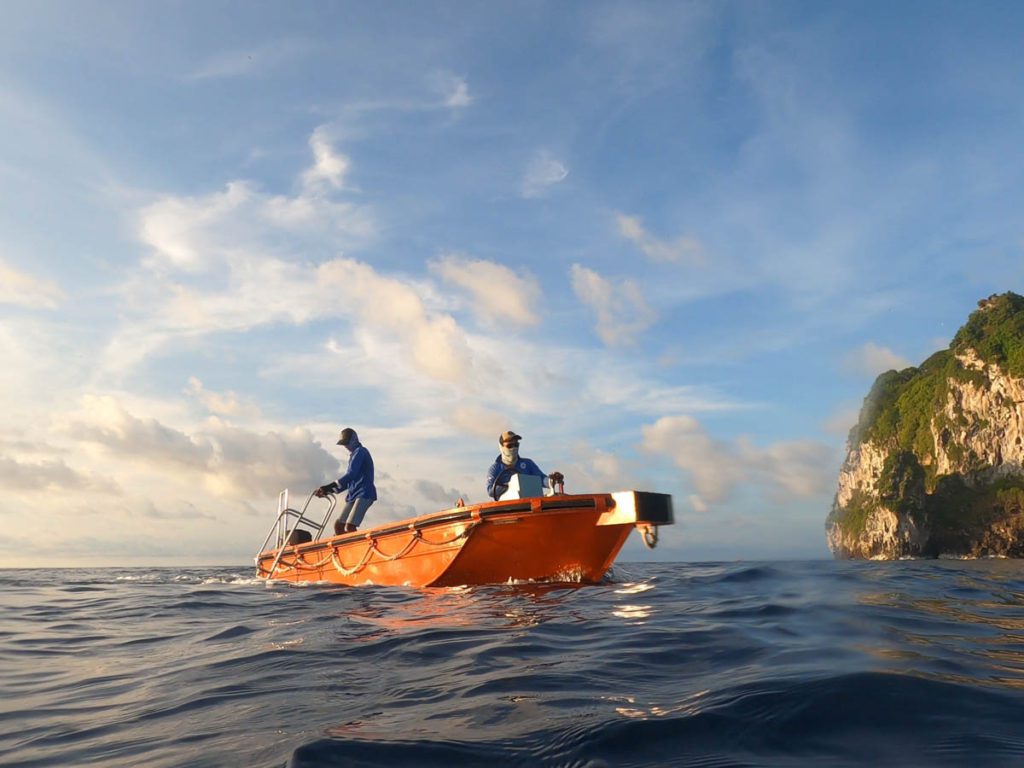
We navigated south towards Nusa Laut for another night of travel. Dolphins made an appearance for sunset and did the most impressive jumps as it was time to leave Banda.
Keep your hammerhead’s expectations low. We have been extremely lucky on this trip and saw over 200 hammerheads, but hammerheads sighting is not guaranteed, even in October. During my first trip to Banda in October 6 years ago, I didn’t see a single hammerhead shark. A friend of mine did a cruise on another liveaboard the week before and saw only one hammerhead over the whole week. It is nature, so be grateful for everything you see.
Day 6: Last day diving the coral garden of Nusa Laut and beach time.
We dove the Ameth reef dive site in Nusa Laut. Ameth is the name of a person from Nusa Laut. It is very different from the dives in Banda with a nice sandy bottom and corals bommies.
There is a slopy reef and a wall. The corner is the best place on the site, as this is where most schools of fish congregate. Unfortunately, we didn’t get there as we dropped at the wrong place and spent the first half of the dive fighting against the current.
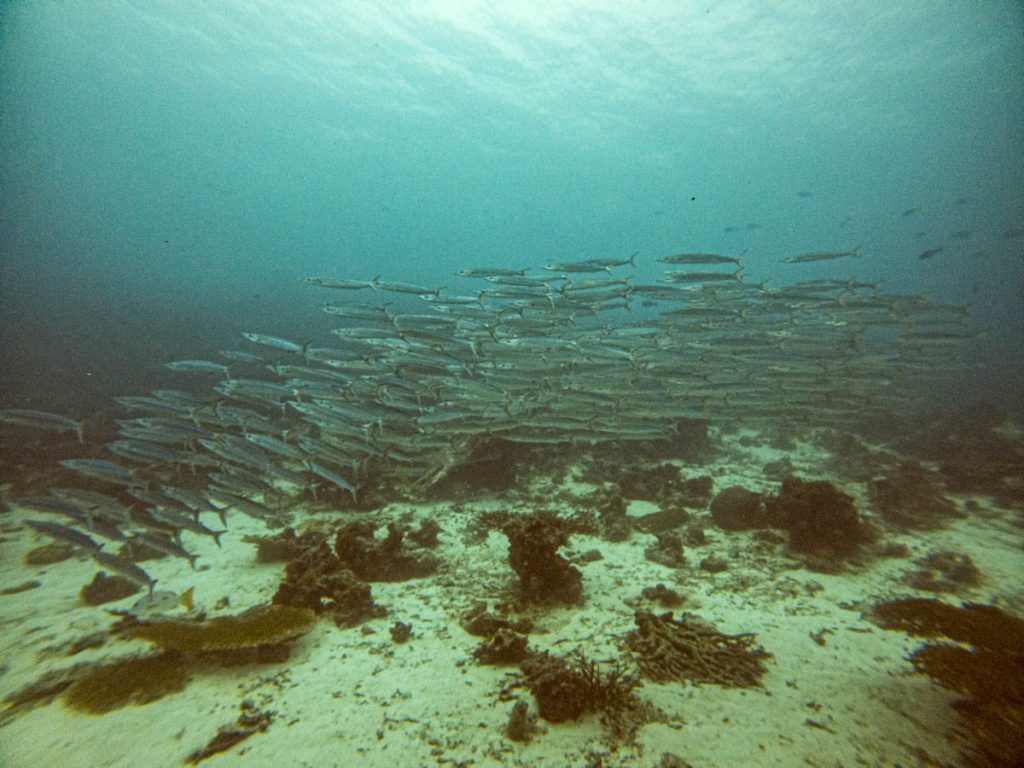
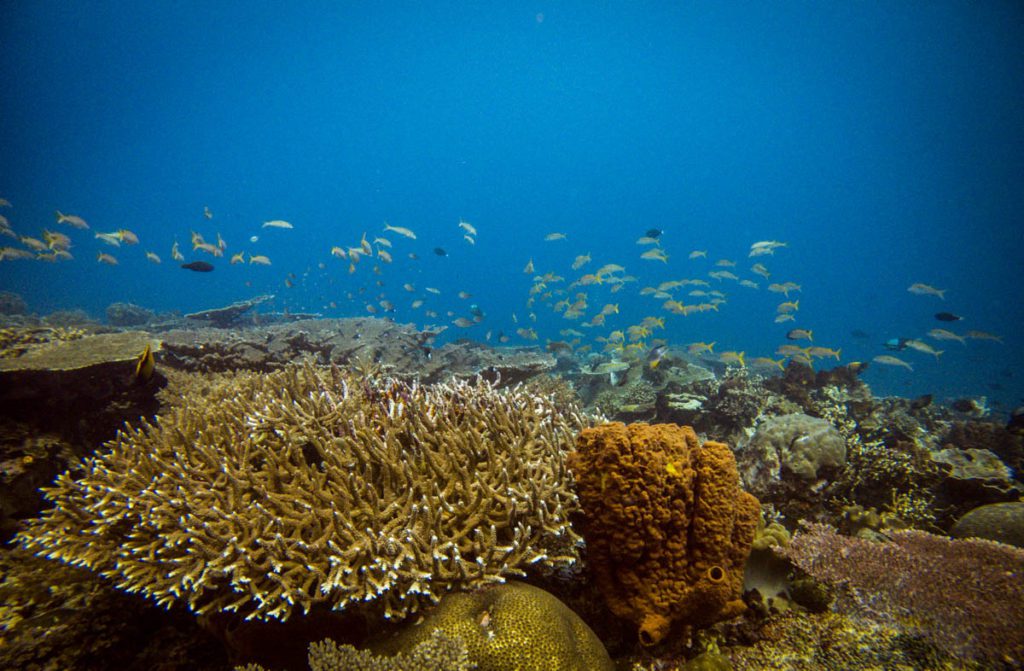
Our dive was, therefore, on a sandy bottom with corals bommies. There were schools of small fish. The yellow snappers are always pretty. Moray eels populated the reef, and I found a few pipefishes in the corals. Eels were sticking their heads out of the sandy bottom.
The hard coral garden at 8-10 meters was lovely, so make sure you spend some time in the shallow depth.
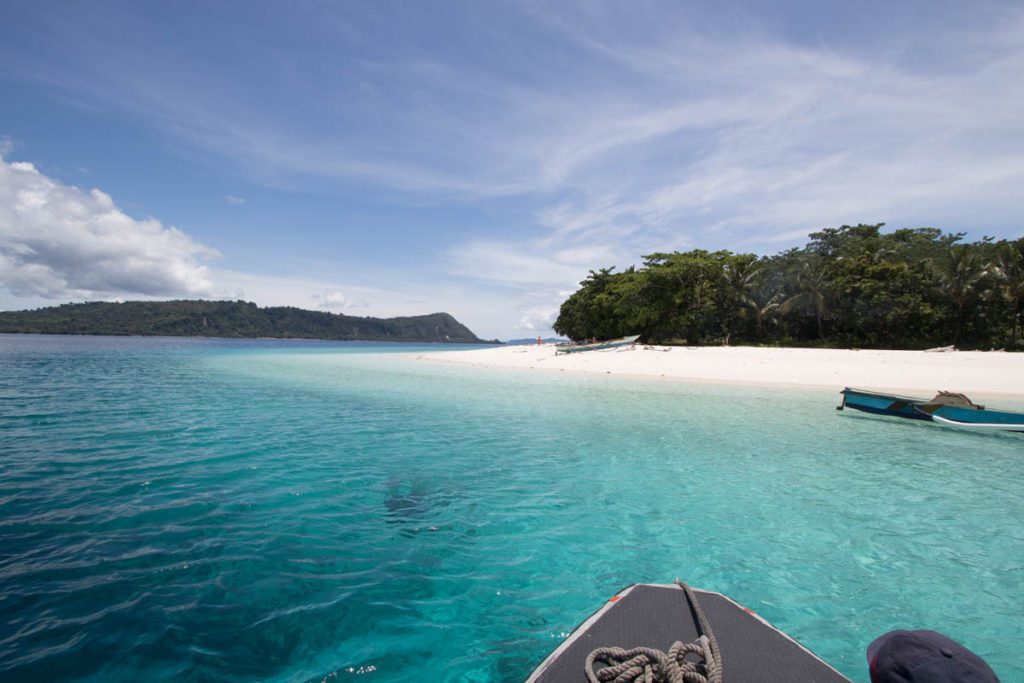
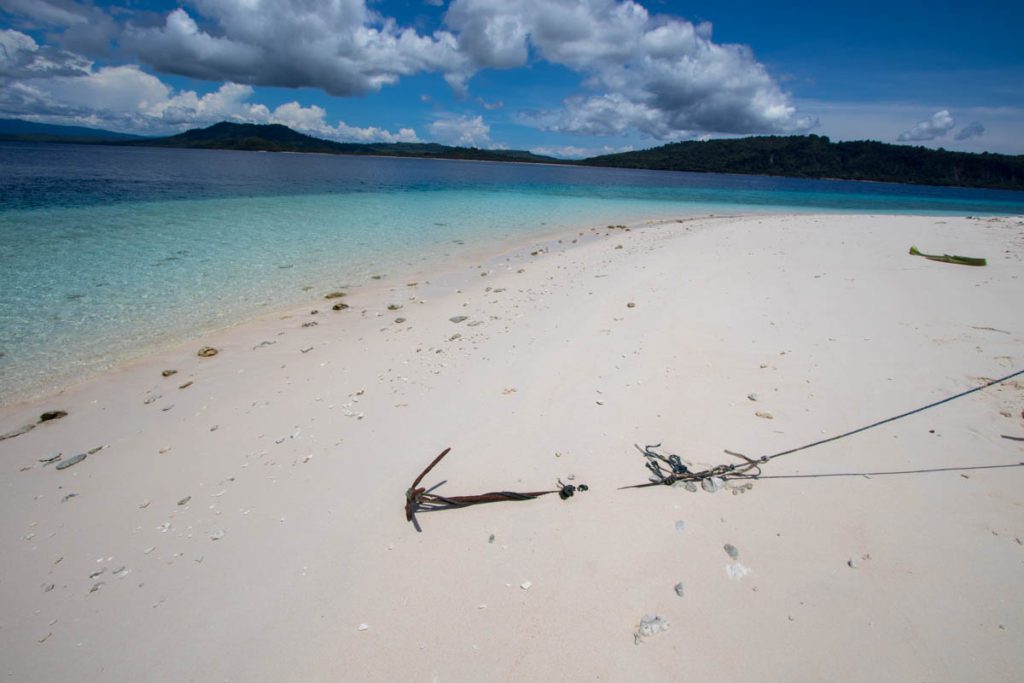
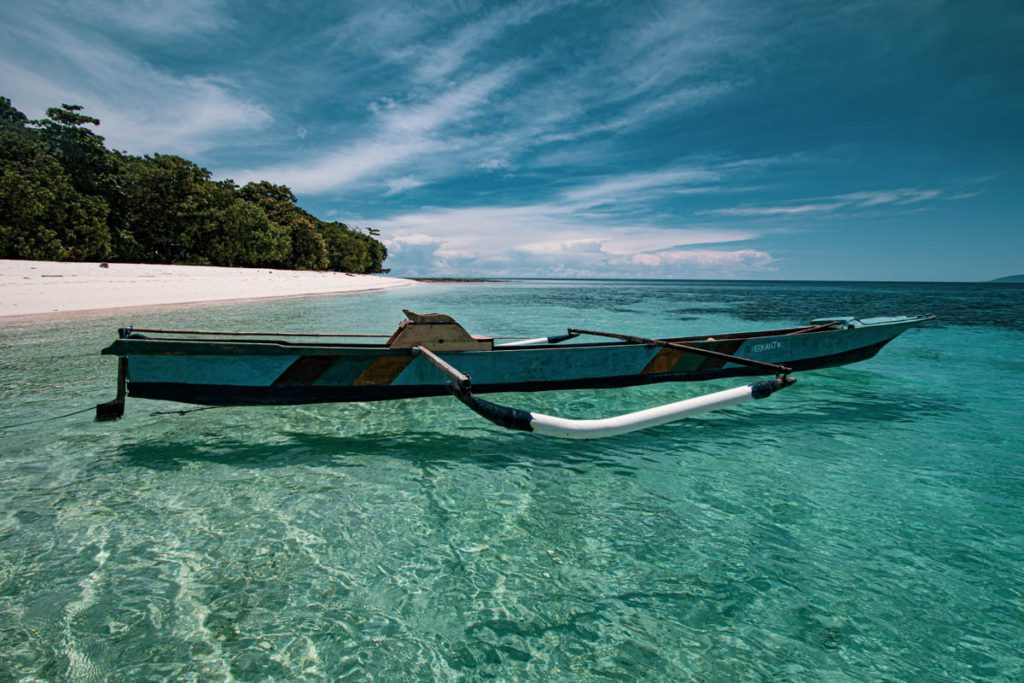
The next dive was by Molana island. I had to skip the dive due to ear problems, so I walked on the beach instead. The Molana beach is utterly stunning with white powdery sand and crystal clear water.
There is a small guest house near the beach. If you are looking for peace, it looks like a nice place for a beach holiday after your diving cruise.
How much does a Banda Sea liveaboard cost?
Expect to pay from around US$2,700 per person for a 6–7 night hammerhead-season itinerary on the Sea Safari 6, with above-deck panoramic cabins carrying a small supplement that is well worth paying. Across the Banda Sea as a whole, liveaboard trips range from roughly US$2,500 on comfortable boats like this one to US$6,000+ on the premium vessels, for itineraries of 6 to 12 nights.
Budget on top of the trip price for: Nitrox (unless included), marine park and port fees, alcoholic drinks, equipment rental if needed, crew tips (typically US$10–15 per day), and a night in Ambon before or after the cruise. Because the hammerhead window is short and boats are small, prices rarely get discounted — booking early gets you cabin choice, not a lower price.
In conclusion of my Sea Safari liveaboard review
While the Sea Safari is not the most Instagramable boat, it is sturdy and hyper-comfortable. Its crew is friendly and helpful, and the boat has a great vibe. The trip to the Banda islands in October is a must-do, as this is the time when hammerheads sharks congregate. Diving with them is an unforgettable moment and should be on every diver’s dream list.
For this reason, trips to the Banda Islands in October and November are usually very popular and sell out a year in advance. So, if you want to go, make sure you book early enough. I had a great time on the Sea Safari liveaboard and hope to travel with them again.
For more information on Sea Safari and to book, check out Sea Safari cruises website here.
FAQ: Sea Safari 6 and Banda Sea liveaboard diving
When is the best time for a hammerhead liveaboard in the Banda Sea?
October, with late September to November as the wider window, and a second shorter season around March to May. Cooler seasonal upwellings bring the scalloped hammerheads into recreational diving depths. Across my four October trips, I have seen hammerheads on three — October is the most reliable month.
Are hammerhead sightings guaranteed in the Banda islands?
No. On this trip we saw over 200 hammerheads in five separate schools, but on my first Banda trip years ago I saw none at all. Even in peak season, sightings depend on currents, temperature and luck. Go for the whole experience — the Banda Sea delivers even without the sharks.
What certification do I need for a Banda Sea liveaboard?
Advanced Open Water with roughly 50 logged dives is the sensible minimum. Dives are deep (25–40 meters), often in open blue water with currents. You should be comfortable with drift dives and carrying a surface marker buoy. Newly certified divers are better served by Raja Ampat or Komodo first.
Do I need Nitrox on the Sea Safari 6?
I strongly recommend it. Banda dives are deep, and Nitrox 29 gives you meaningfully more bottom time at 25–30 meters, where I have consistently seen the hammerheads. Nitrox is available onboard, and if you are not certified you can complete the course during the cruise for a fee.
Is the Sea Safari 6 a luxury liveaboard?
It is a comfortable mid-to-upper range boat rather than an ultra-luxury yacht: panoramic-window cabins, a jacuzzi, free internet and excellent food, but no butler service. Since very few true luxury vessels cross the Banda Sea, it is one of the most comfortable ways to do this trip.
How do I get to the Banda islands?
Fly to Ambon (Pattimura Airport, AMQ) via Jakarta or Bali — Jakarta has direct flights. Liveaboards depart from Ambon harbour, a short transfer from the airport. Plan a buffer night in Ambon before departure, and book any return flight after 1 pm to respect the 24-hour no-fly interval after diving.
Related reading
If this Sea Safari 6 liveaboard review has you dreaming of Indonesian waters, here is where to continue. Start with my guide to diving in Ambon — the muck-diving capital where every Banda cruise begins and ends. For Raja Ampat, read my reviews of the Emperor Harmoni liveaboard and the Seahorse liveaboard, which combines Raja Ampat with Triton Bay. Underwater photographers should see how my smartphone underwater camera setup performed in Raja Ampat. Before booking flights within Indonesia, read why I no longer fly Lion Air. And for decompressing after your cruise, I loved the quiet luxury of Koh Jum Beach Villas in Thailand.
Disclosure: this article contains affiliate links. If you book through them, I earn a small commission at no extra cost to you. Read my full disclosure policy.