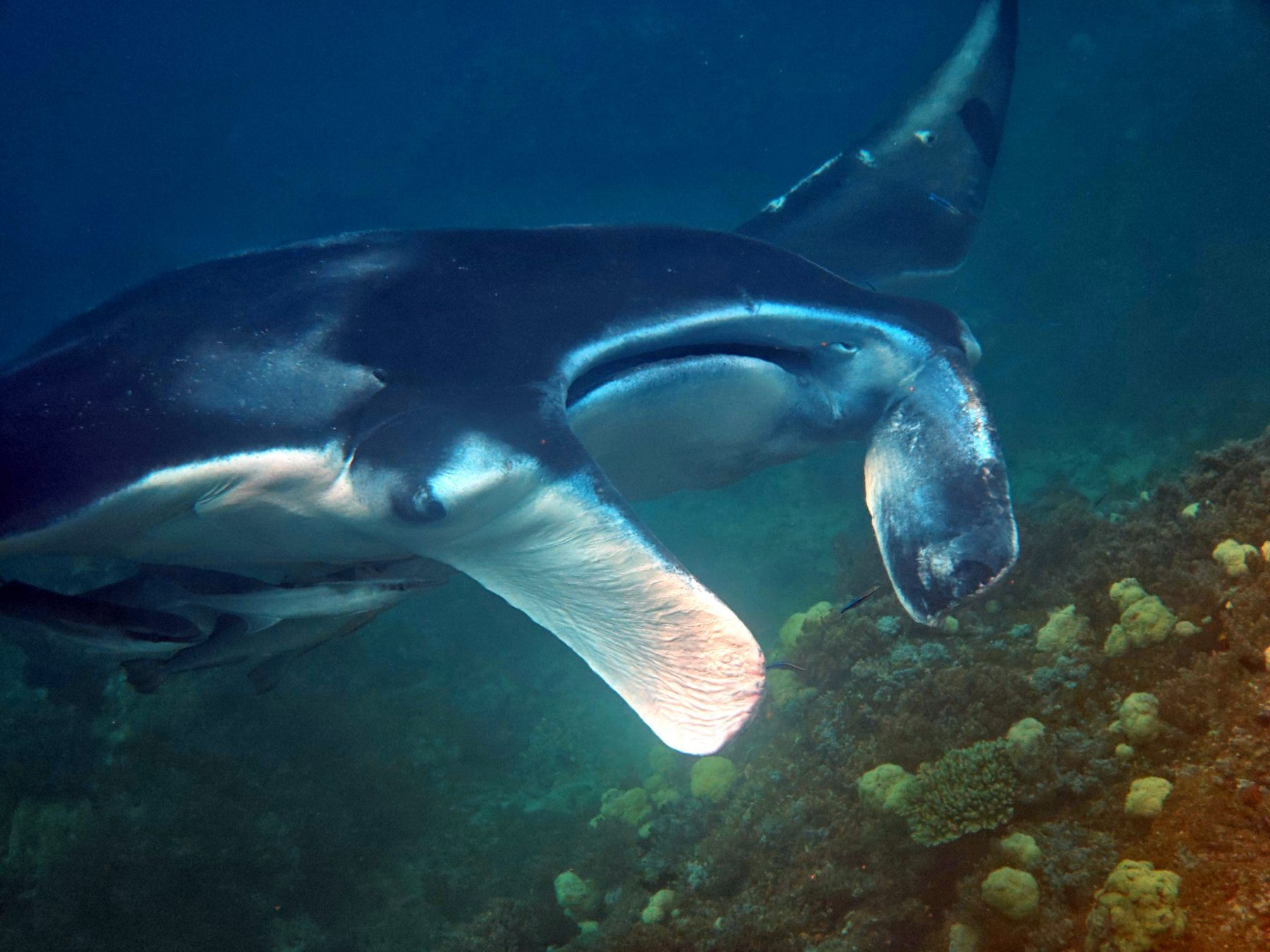
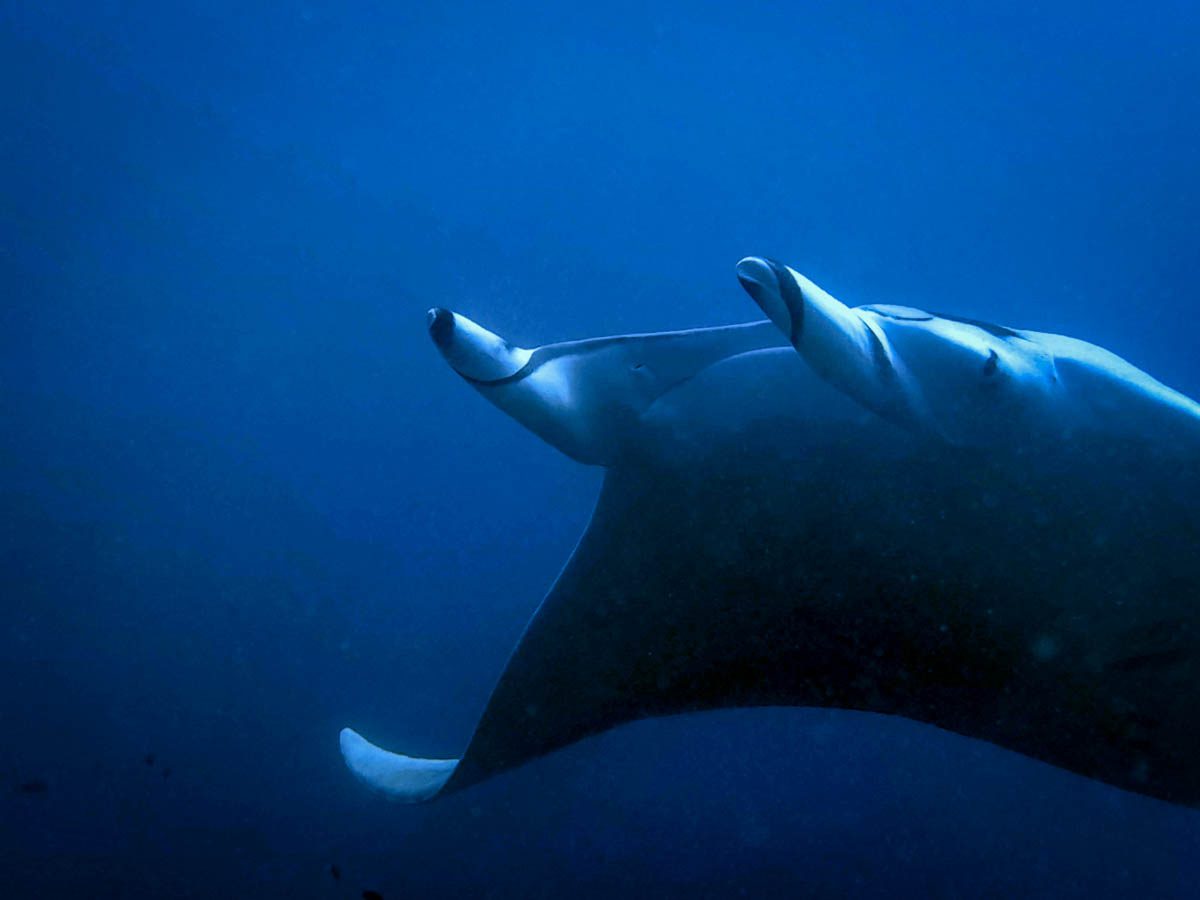
Two minutes into the dive, we found an octopus. I remember thinking: nice start. Then the guide turned toward the blue and pointed, and two oceanic mantas came gliding out of it.
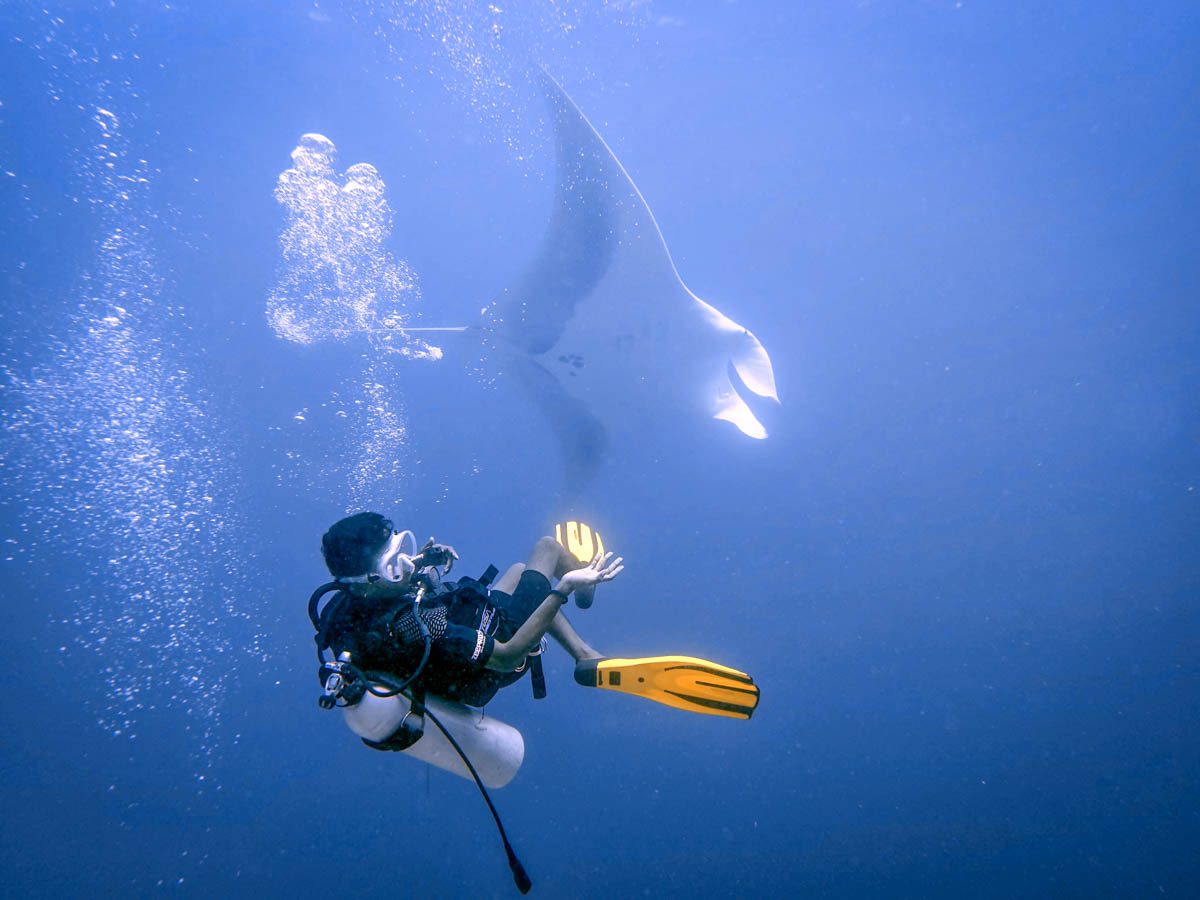
I expected them to do what mantas usually do: one pass, a slow turn, and gone. So we did nothing. We stayed low, kept our distance and let them decide. Because we were respectful, they grew confident with us. Then they grew curious. Through the whole dive they kept coming closer and closer, until one of them glided straight above me, so near that it almost touched me. I held my breath and looked up at a white belly the size of a small car.
When we finally had to go up, I had the strange feeling that they were sad to see us leave. I surfaced grinning into my regulator, with one question in my head. How had I never heard of diving in Rote?
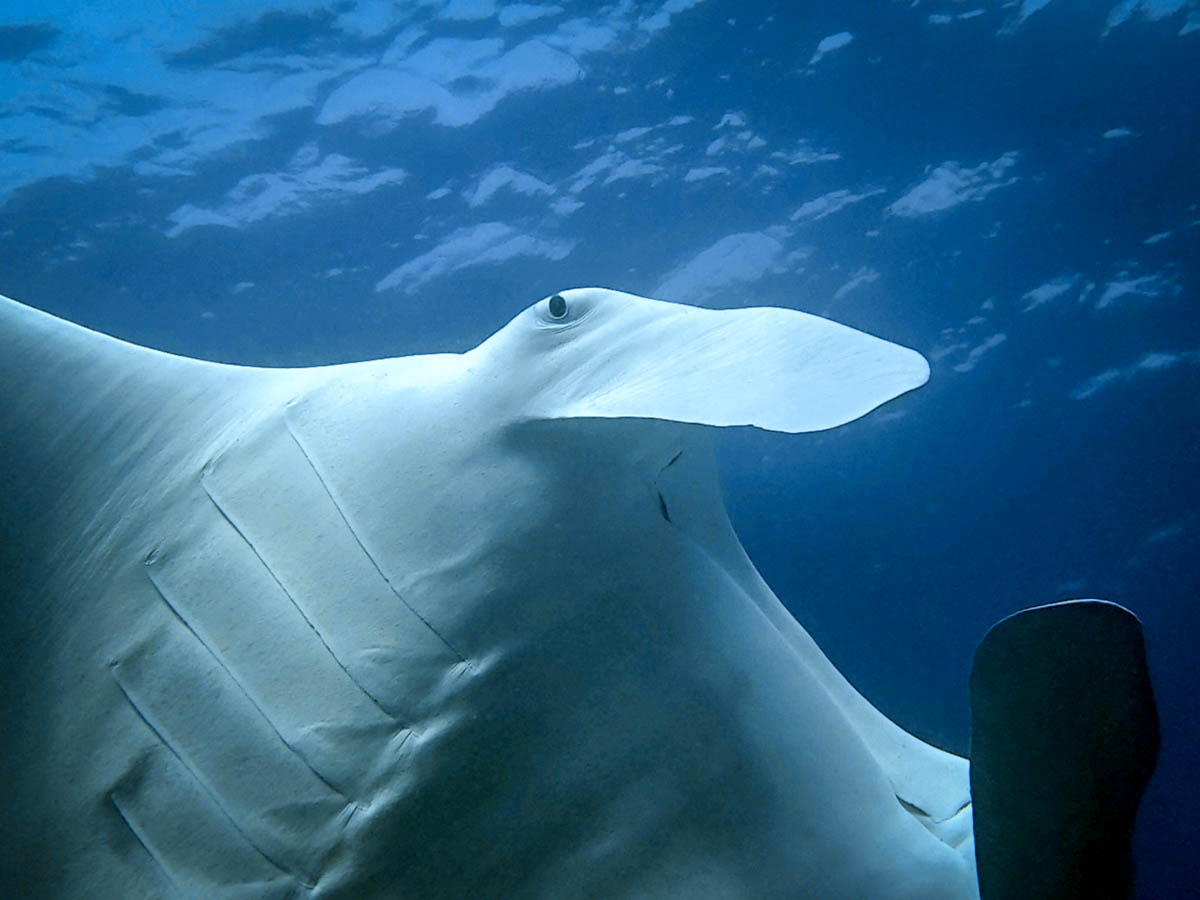
Is diving in Rote worth the trip? Yes. Rote is the southernmost island of Indonesia, known almost only to surfers. Underwater it has oceanic mantas, healthy soft corals, hunting pelagics and no other dive boats. The island’s dive shop sees manta rays all year round. The best months for big pelagics are October and November, and the shop closes from December to February.
How I know this
I have been diving for more than 25 years, with over 1,500 dives and more than 40 liveaboards behind me, and I have written about most of Indonesia’s dive destinations (you will find them all in my diving section). I dived Rote on November 17, 2026, while staying at NIHI Rote: two morning dives, at Jurassic Park and at Downtown Reef.
Why Nobody Talks About Diving in Rote
Rote is a surf island. People have been flying here for decades with boards under their arms, and the conversation at every bar is about swell. Raja Ampat, Komodo and the Banda Sea take all the attention of divers, and Rote sits far to the south, off the tip of Timor, away from every liveaboard route I know.
I will be honest: I was not expecting much. I signed up for two dives out of curiosity, the way you try a restaurant because it is next to your hotel.
I was wrong, and I love being wrong like this.
The Two Dive Sites: Jurassic Park and Downtown Reef
We dived two sites that morning.
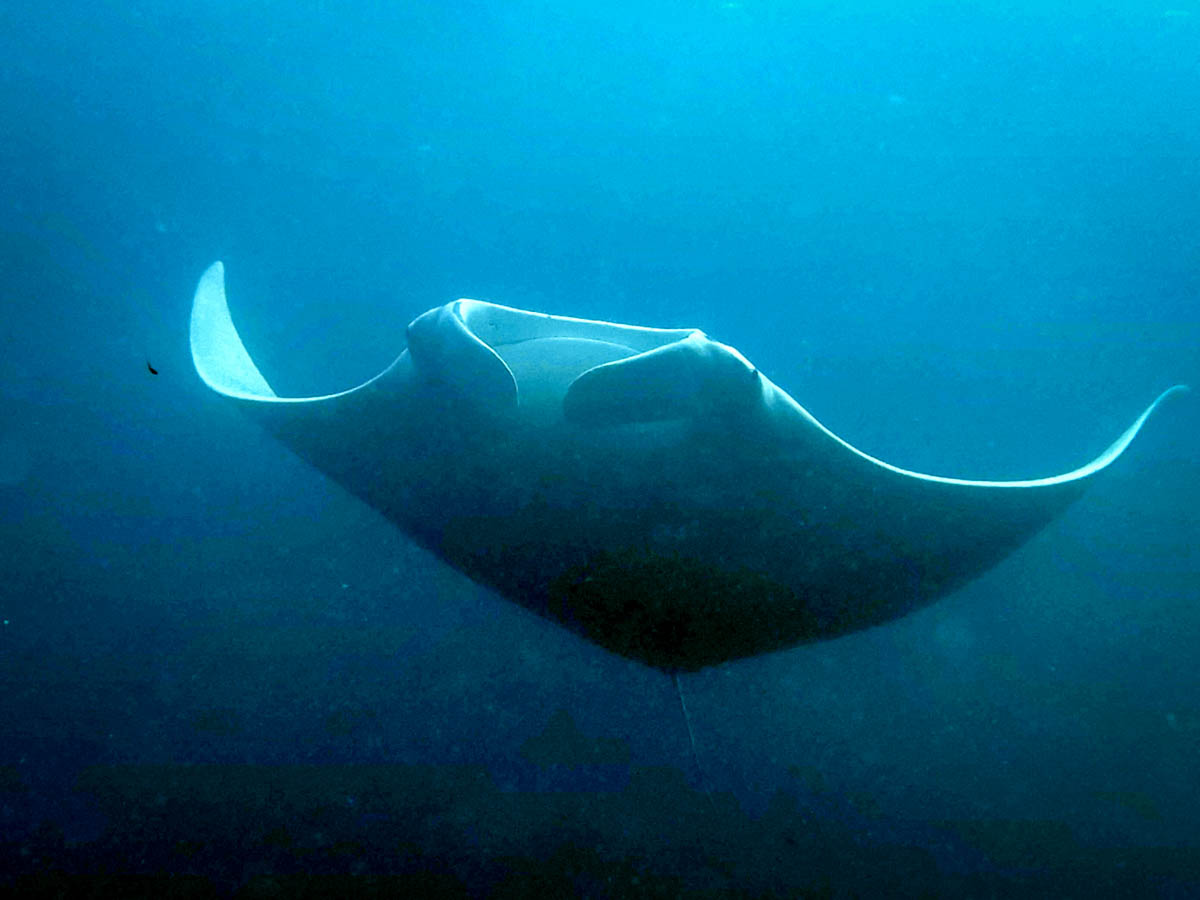
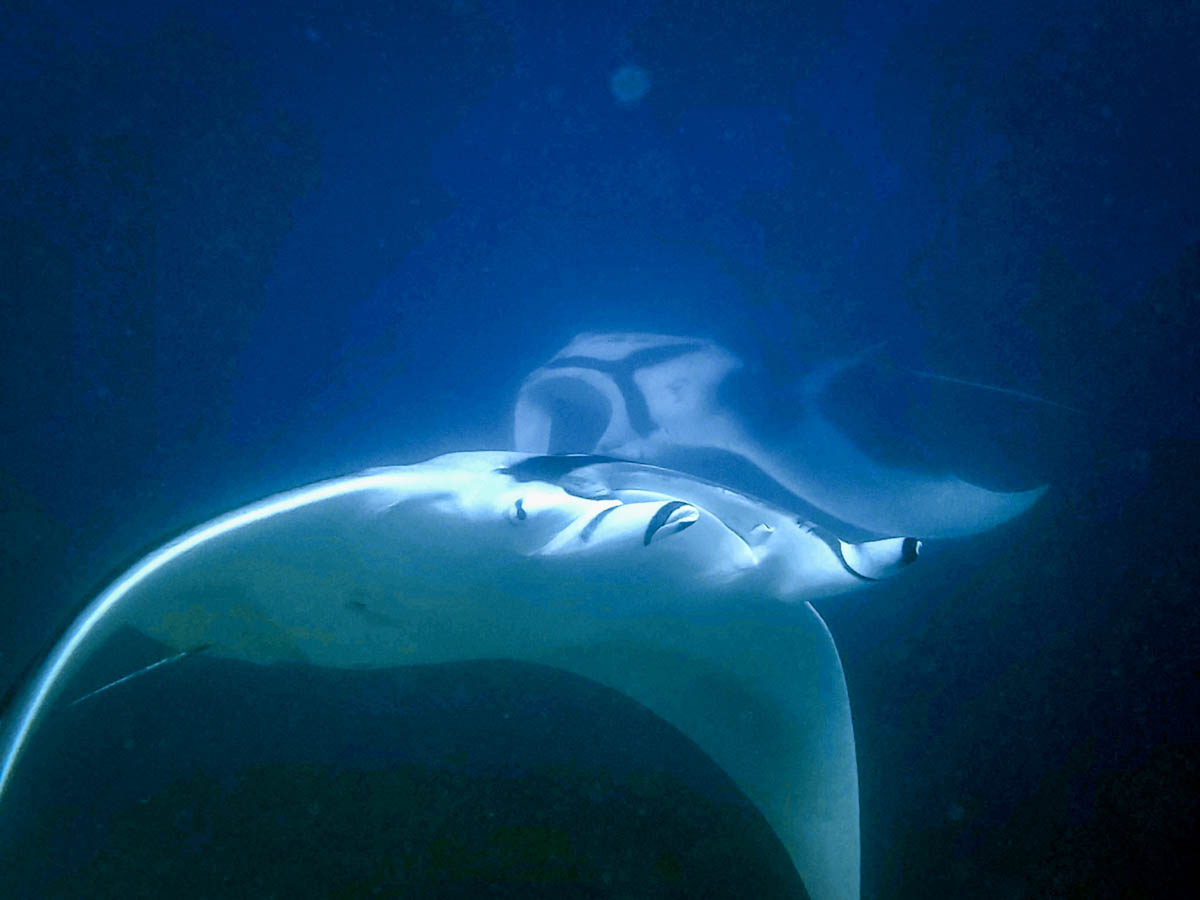
Jurassic Park was the first, and it is where the mantas found us. The site is a pinnacle followed by a few bommies, so you start on the wall of the pinnacle and then hop from one coral head to the next, with blue water all around. With a name like that you expect something big. Rote delivered.
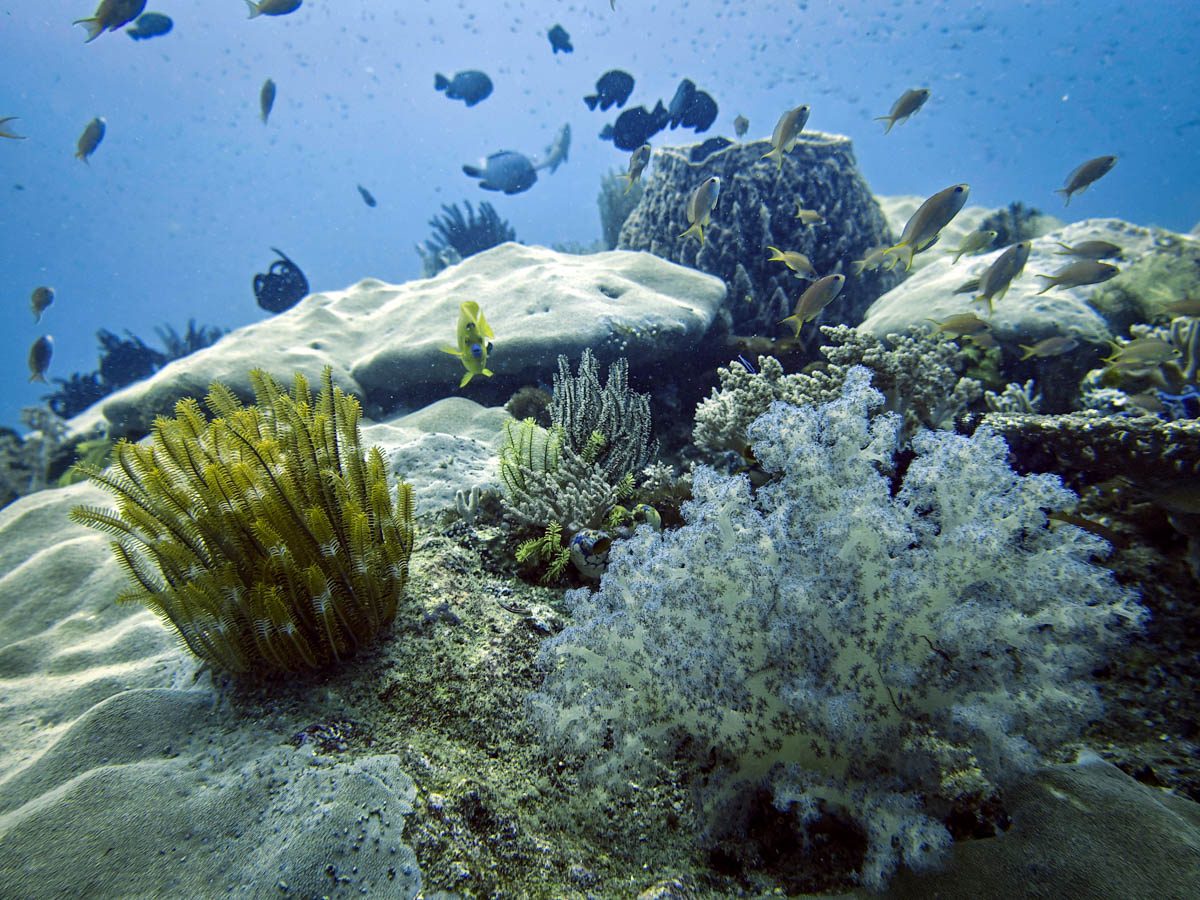
Downtown Reef was the second, and it could not be more different: a coral garden laid out in small ridges, shallow and bright, the kind of dive where you slow right down and look at the detail. It had its own excitement too: this is where the two reef sharks came by.
Oceanic Mantas: Why This Encounter Was So Special
Not all mantas are the same, and it matters here.
Reef mantas are the ones most divers have met. They are usually 3 to 3.5 meters across, they live along the coast, and they come back to the same cleaning stations day after day. That is why you can almost plan to see them in Komodo, Nusa Penida or the Maldives.
Oceanic mantas are another animal. They are the largest rays in the world: typically 4 to 5 meters across, with the biggest passing 7 meters. They roam the open ocean and only visit offshore islands and seamounts, so you cannot plan them. They are also rarer, and listed as Endangered. You can tell them apart from above: an oceanic manta has sharp white shoulder marks that form a T, where a reef manta’s softer marks form a Y.
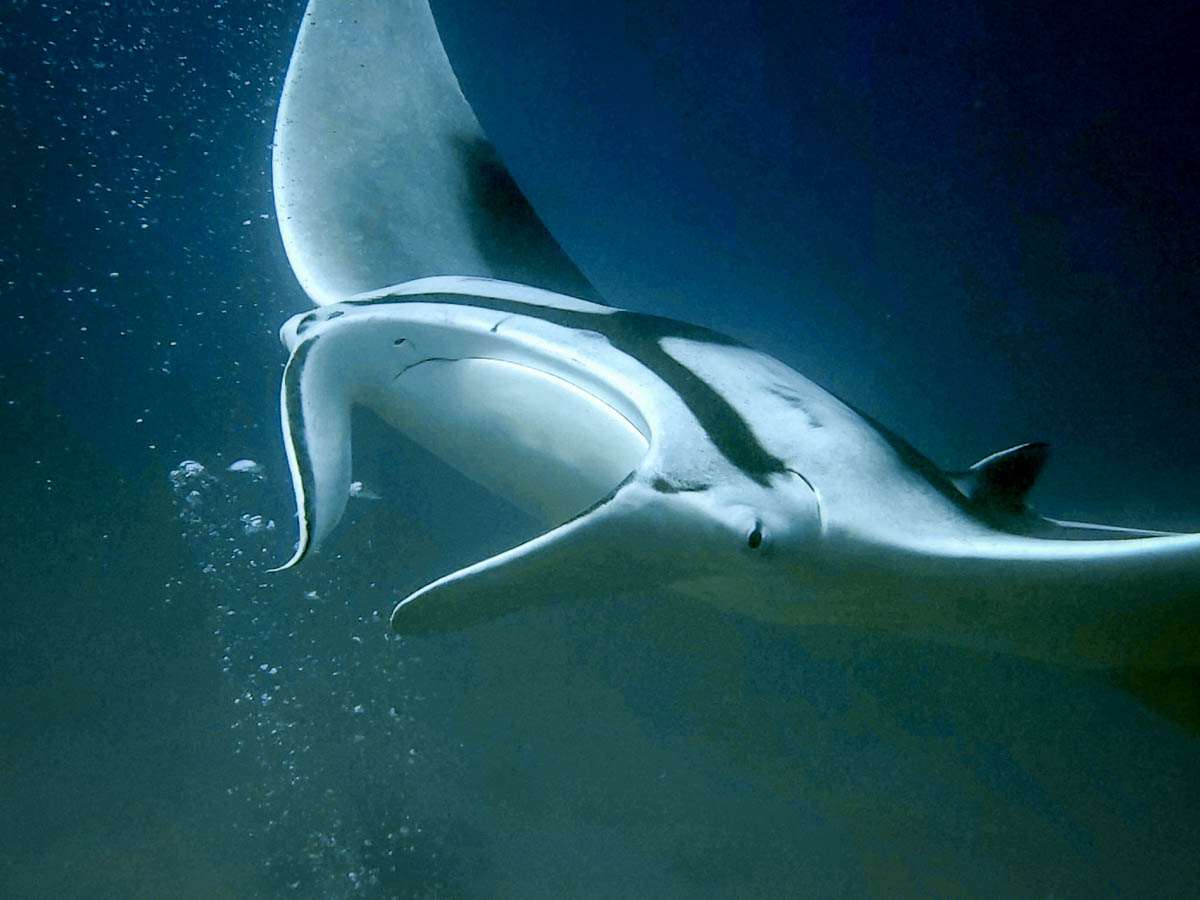
In more than 1,500 dives, I can count my good oceanic manta encounters on one hand: Magic Mountain in Misool, Four Kings in Raja Ampat, Cape Marshall in the Galápagos, and now Rote. To have two of them stay for an entire dive, and choose to come that close, is the kind of luck most divers wait years for. I have written a full guide to the best places to dive with manta rays.
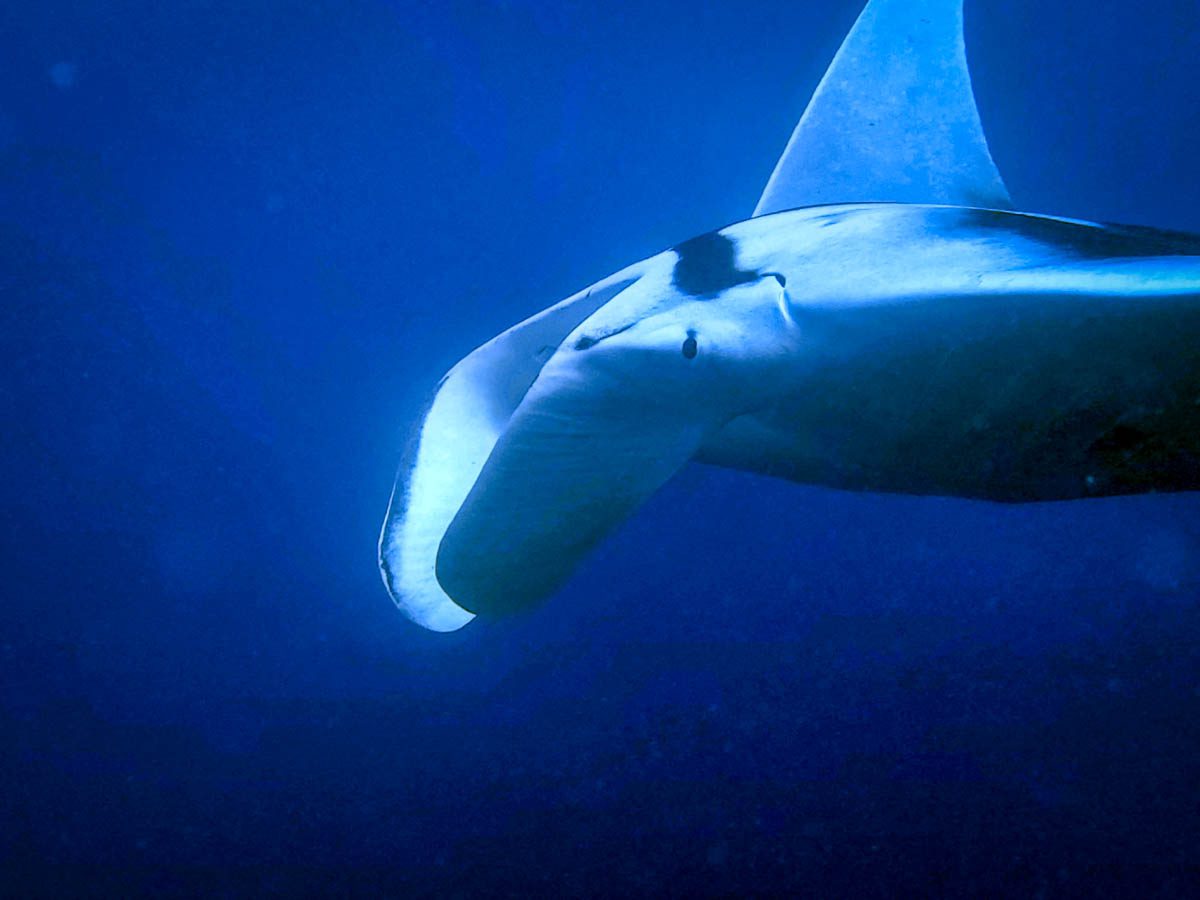
Want mantas to come to you? Stay low, stay still, never chase and never swim above them. The less you do, the closer they come.
The Reef: Soft Corals, Sponges and Tunicates
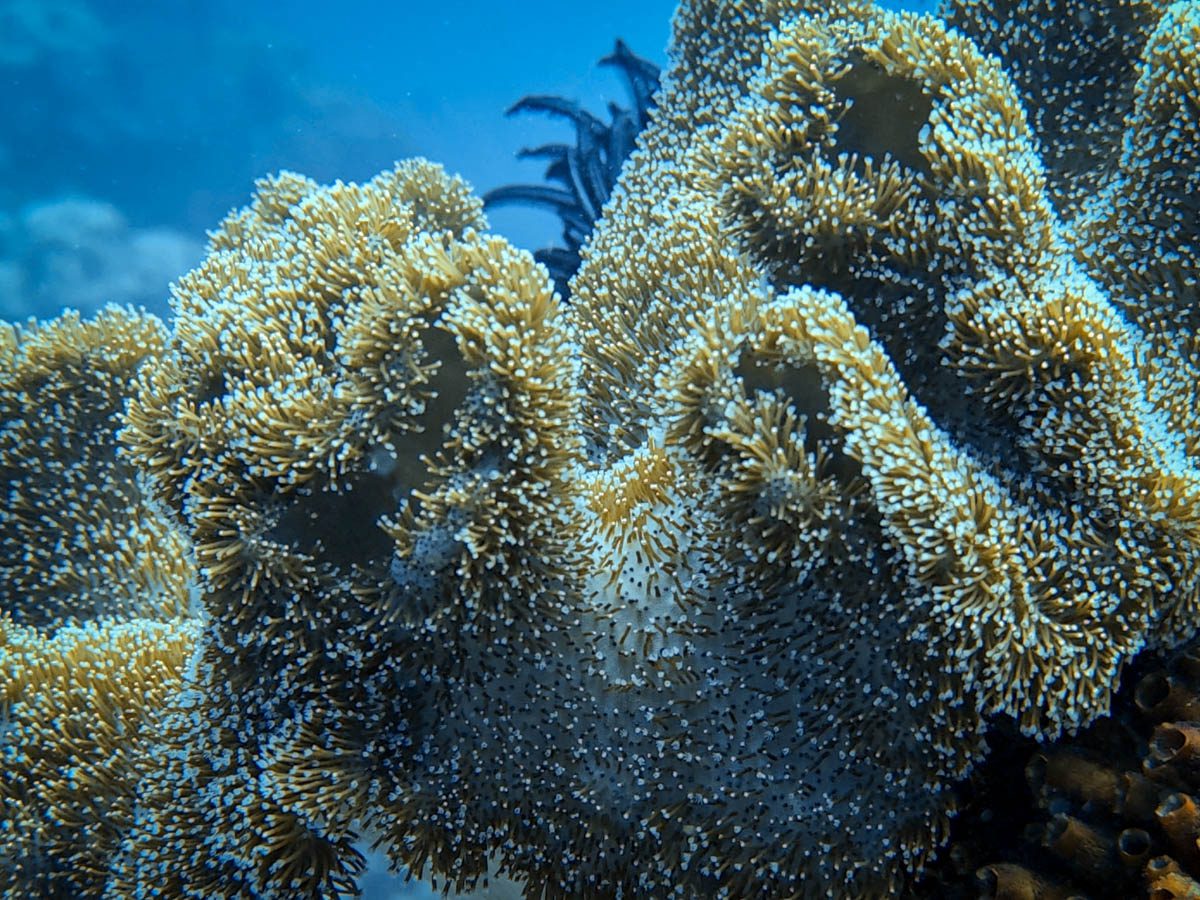
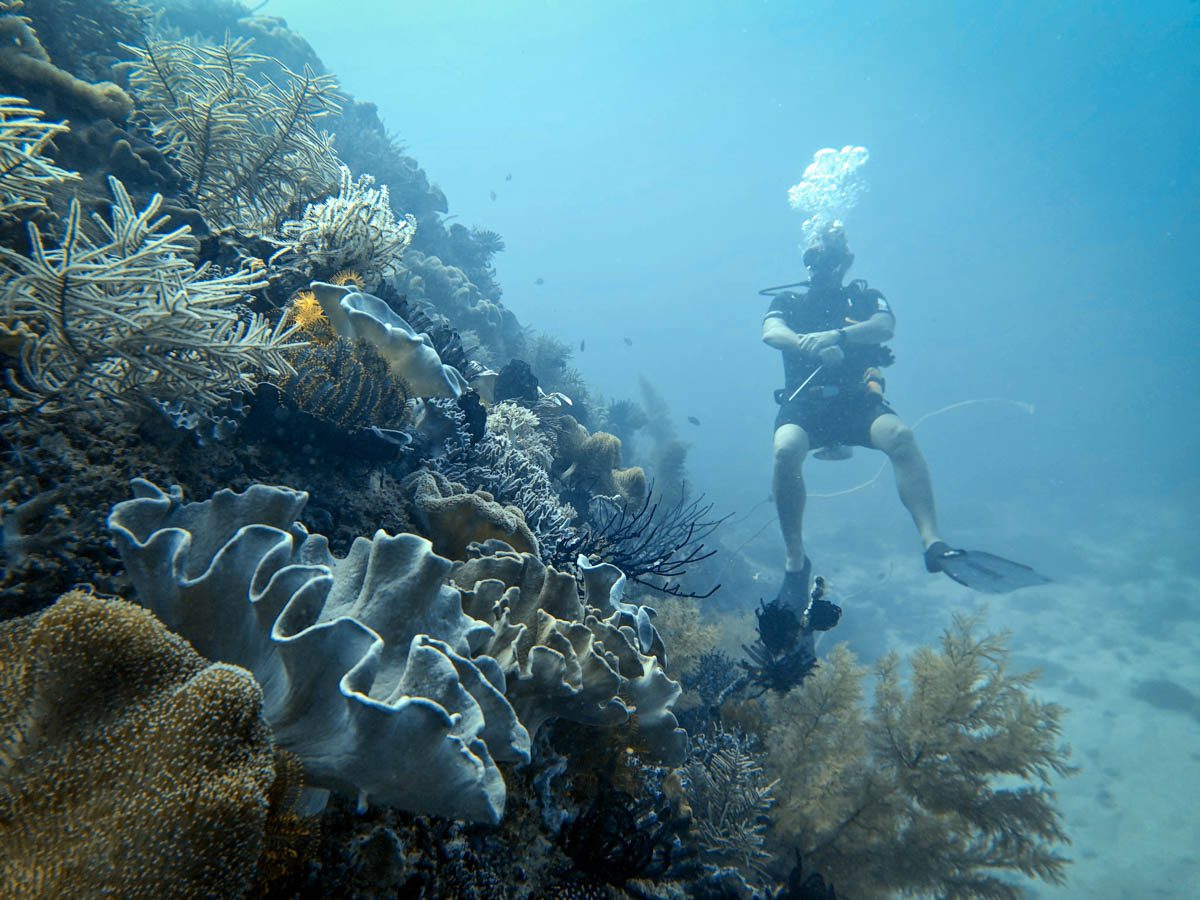
When the mantas let me look away, I found a reef that would be worth the dive on its own.
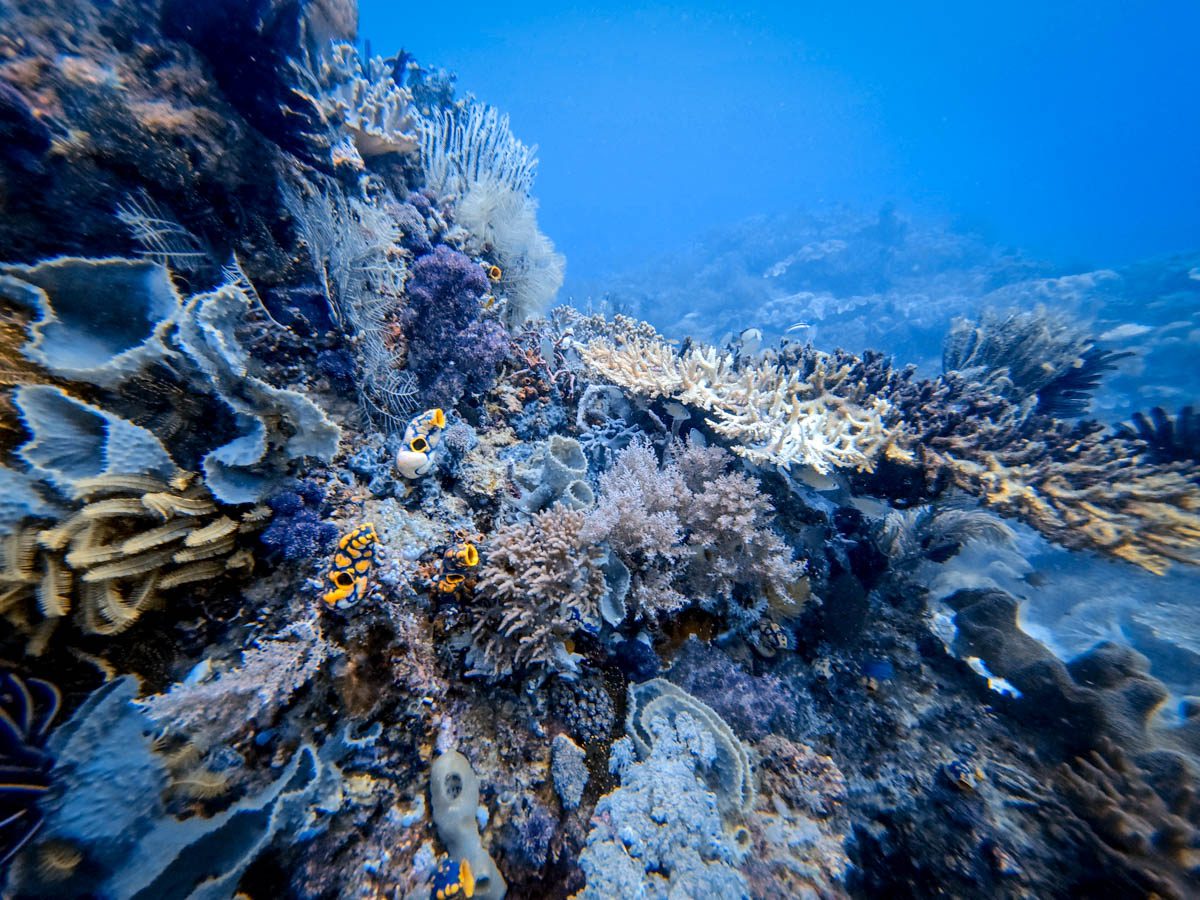
It is covered in soft corals, in shapes and colors that reminded me of Atauro in Timor-Leste, which has some of the best reefs I have ever seen. That makes sense: Timor is the neighbor.
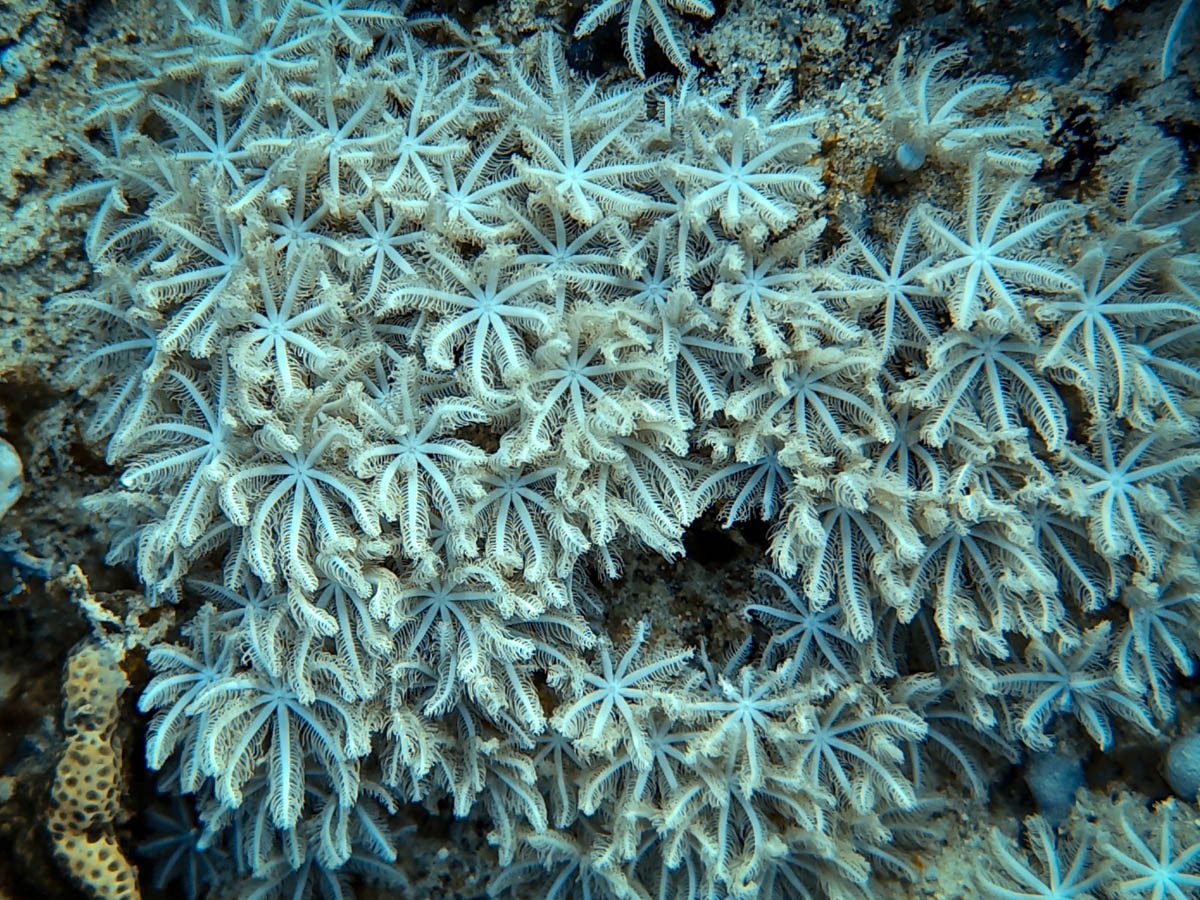
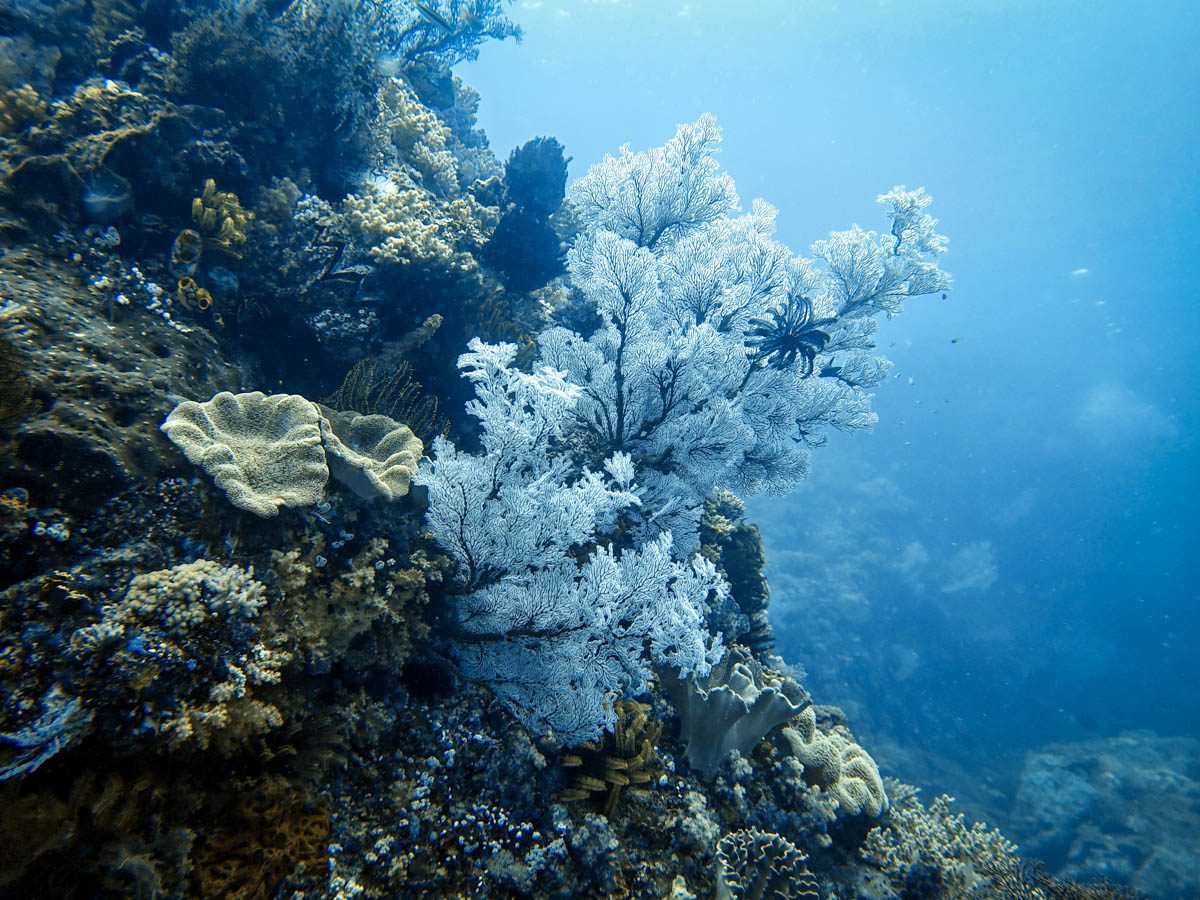
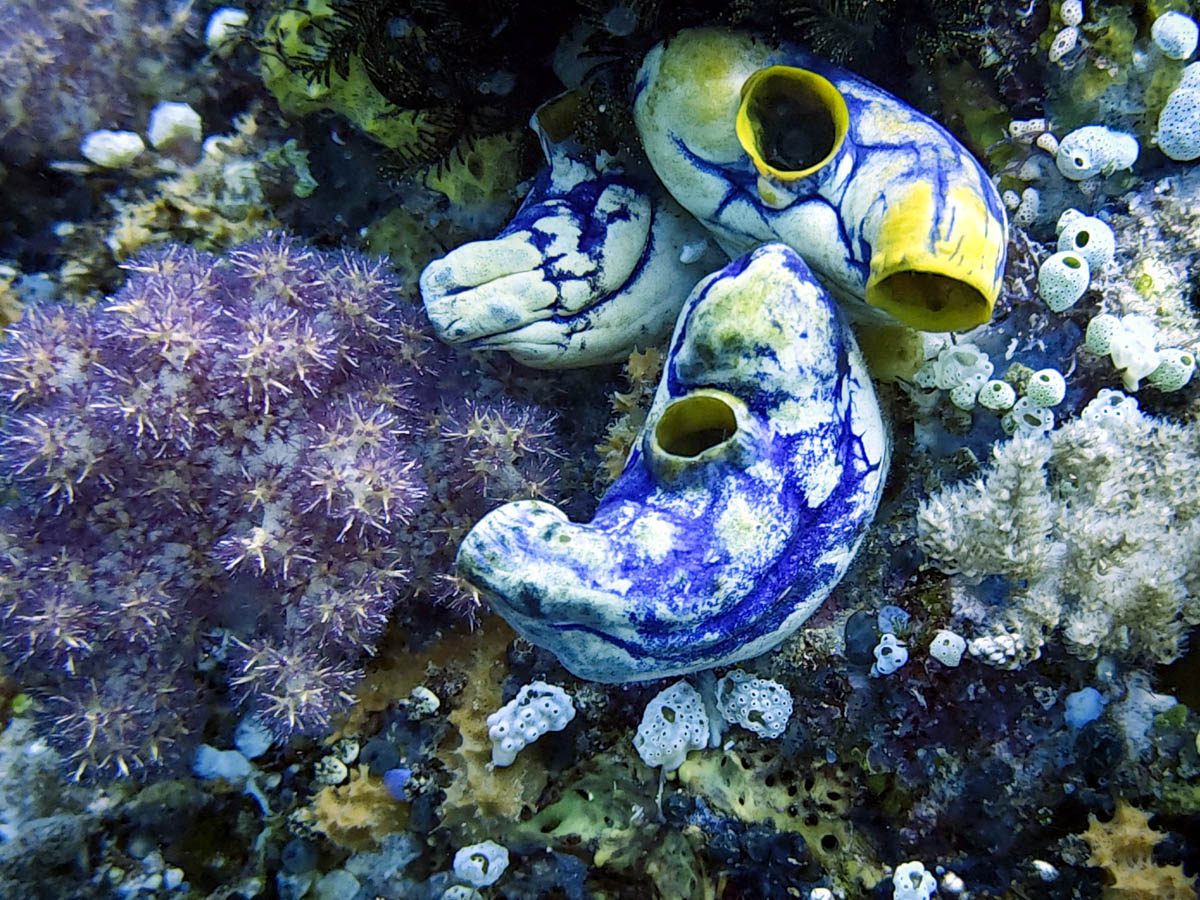
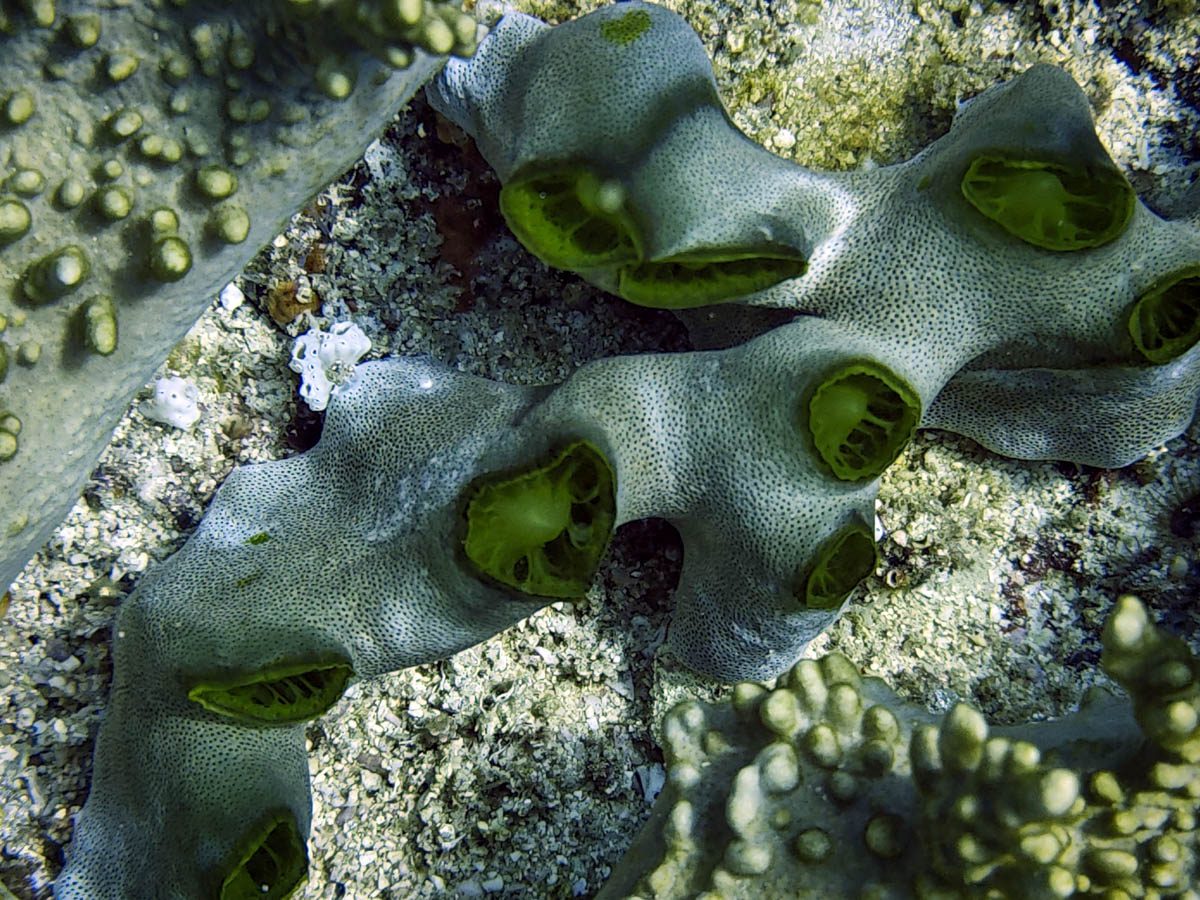
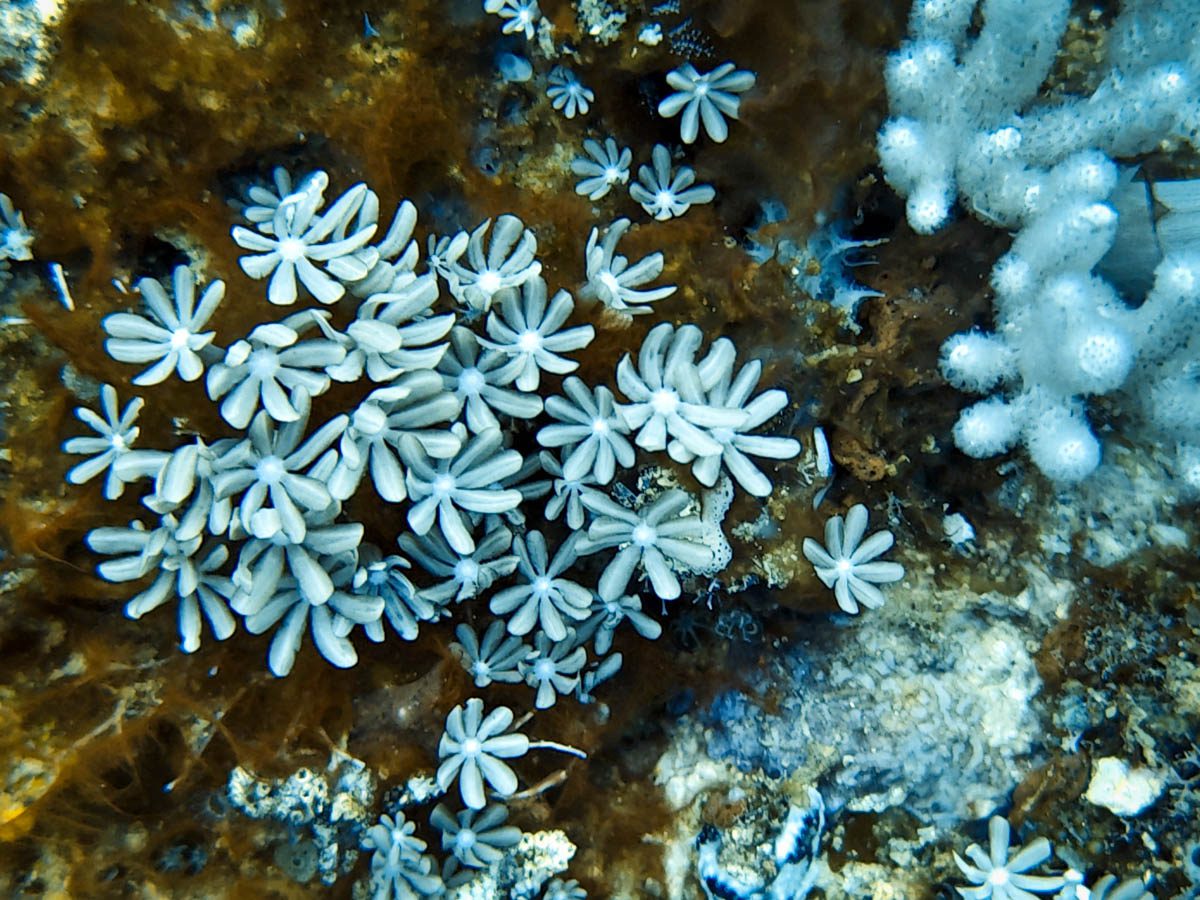
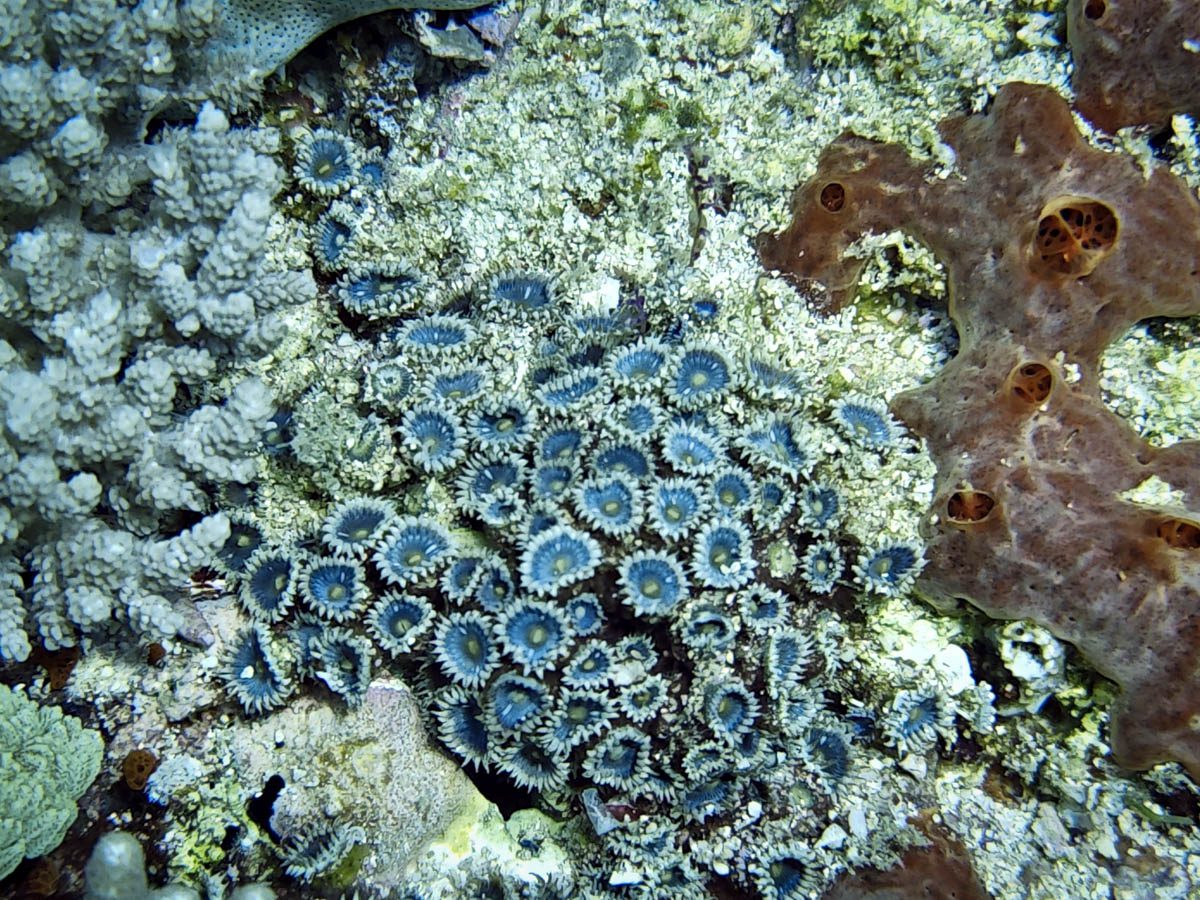
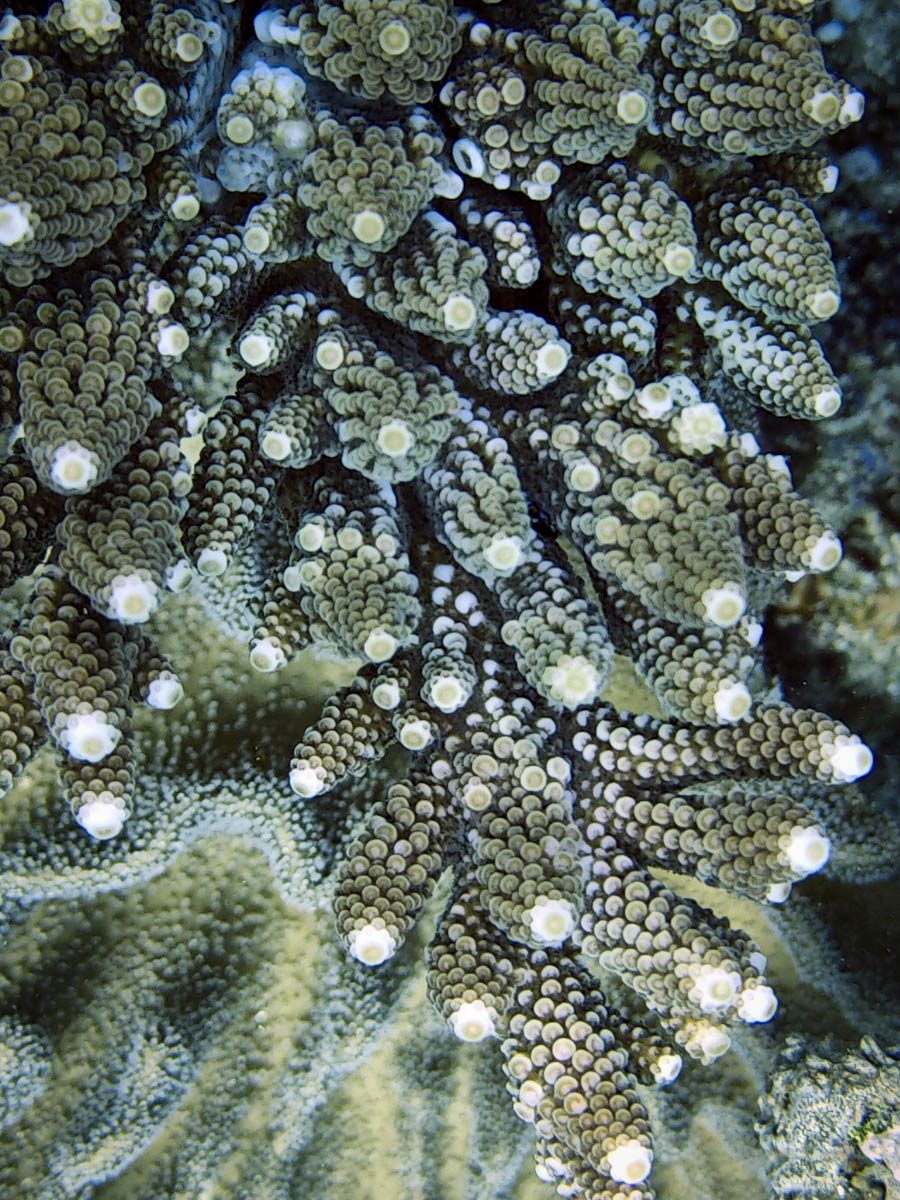
Between the soft corals grow sponges and tunicates. If you have never looked closely at a tunicate, do it here. Tunicates, or sea squirts, are small animals that look like blown-glass vases, often no bigger than a thumb, and they filter the water all day long. Rote has them in every color: white ones veined in blue ink with bright yellow mouths, and gray colonies with openings as green as limes. Together with the sponges they paint a reef: wherever the current brings food, they cover the rock in color. I love them on the walls of the Banda Sea, and I was delighted to find the same richness in Rote. A reef that grows this much life is a healthy reef.
If you care about beauty underwater as much as about big animals, Rote will make you very happy.
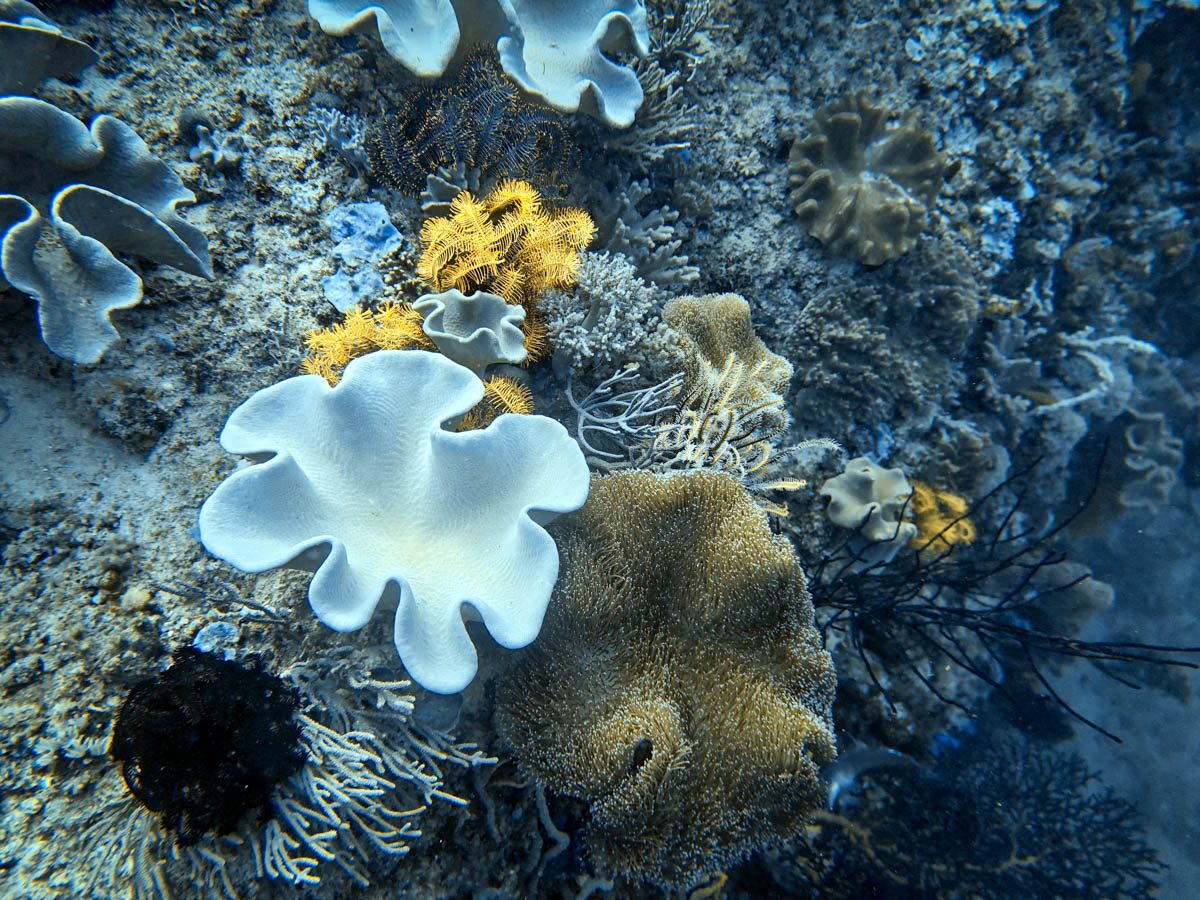
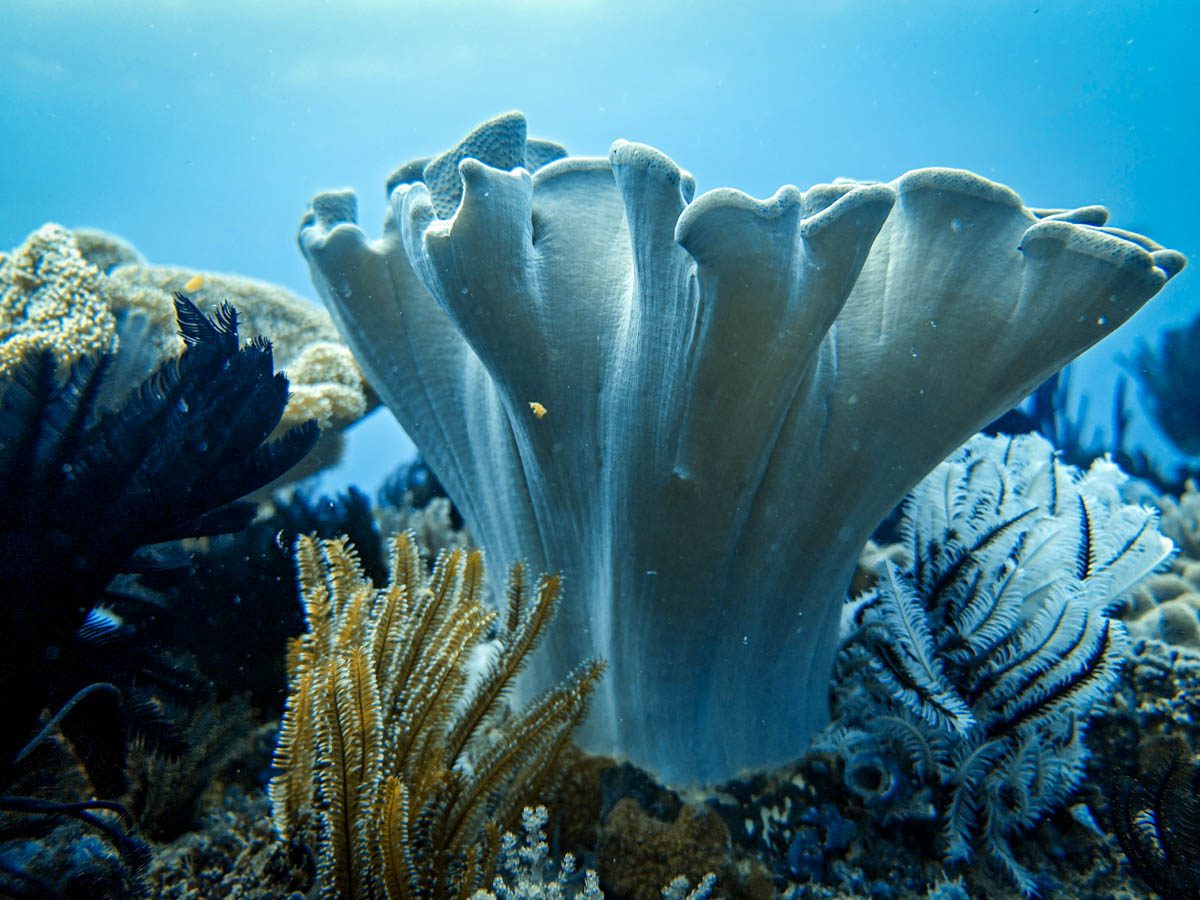
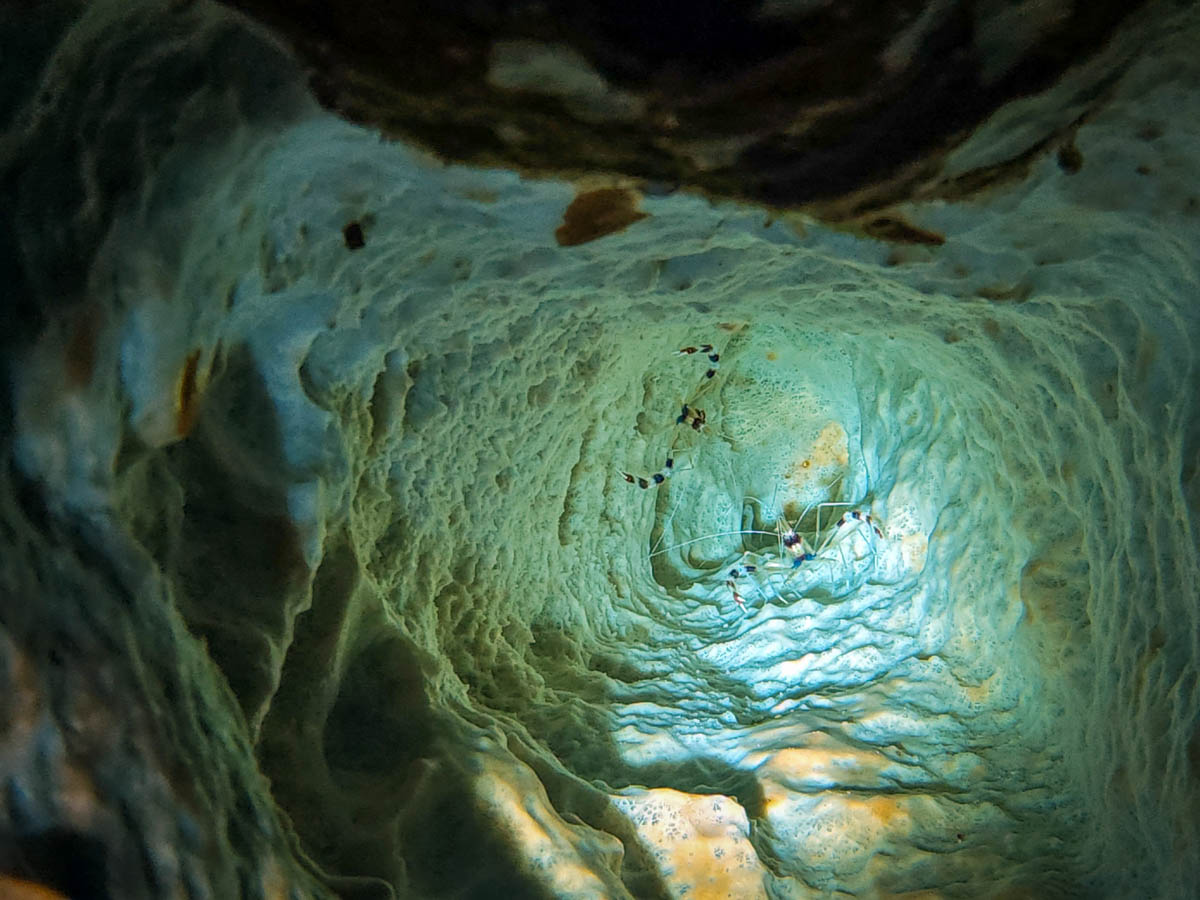
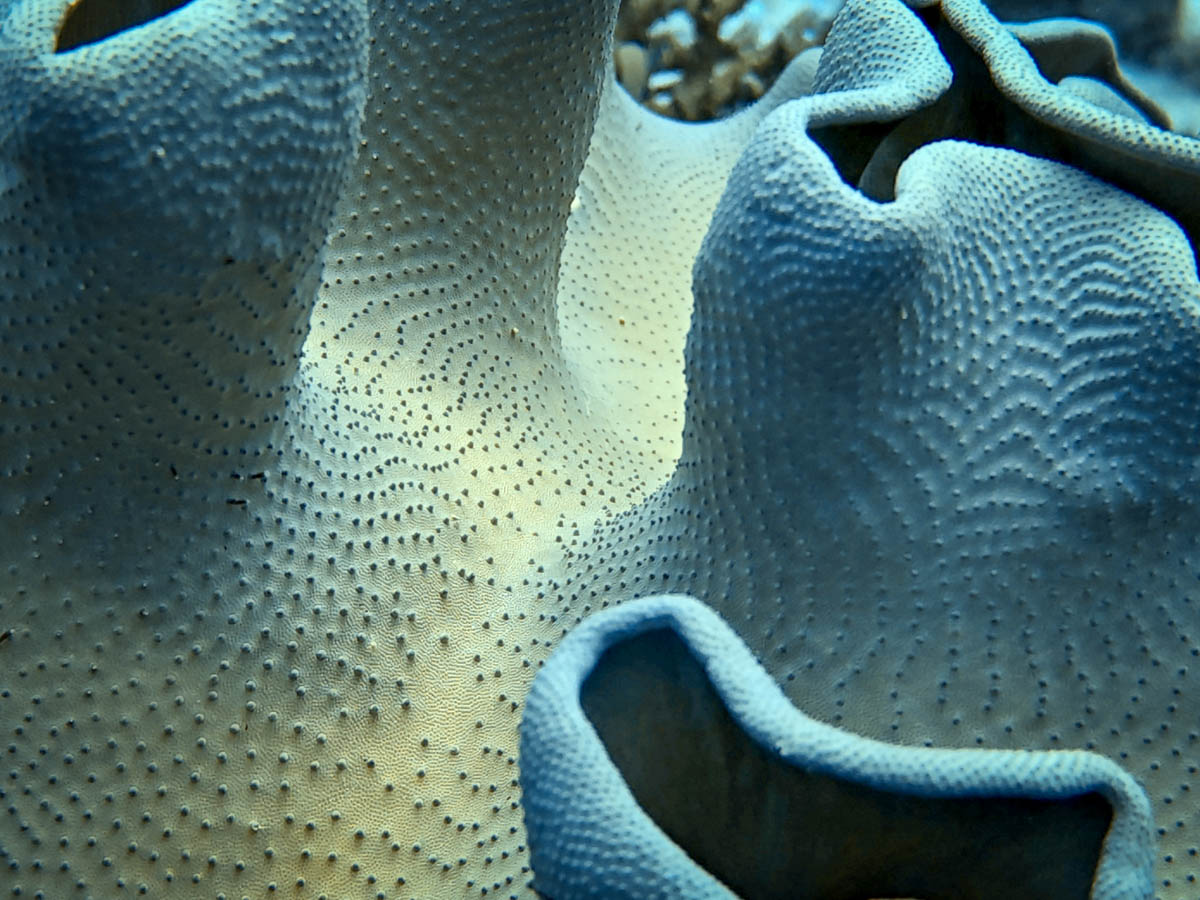
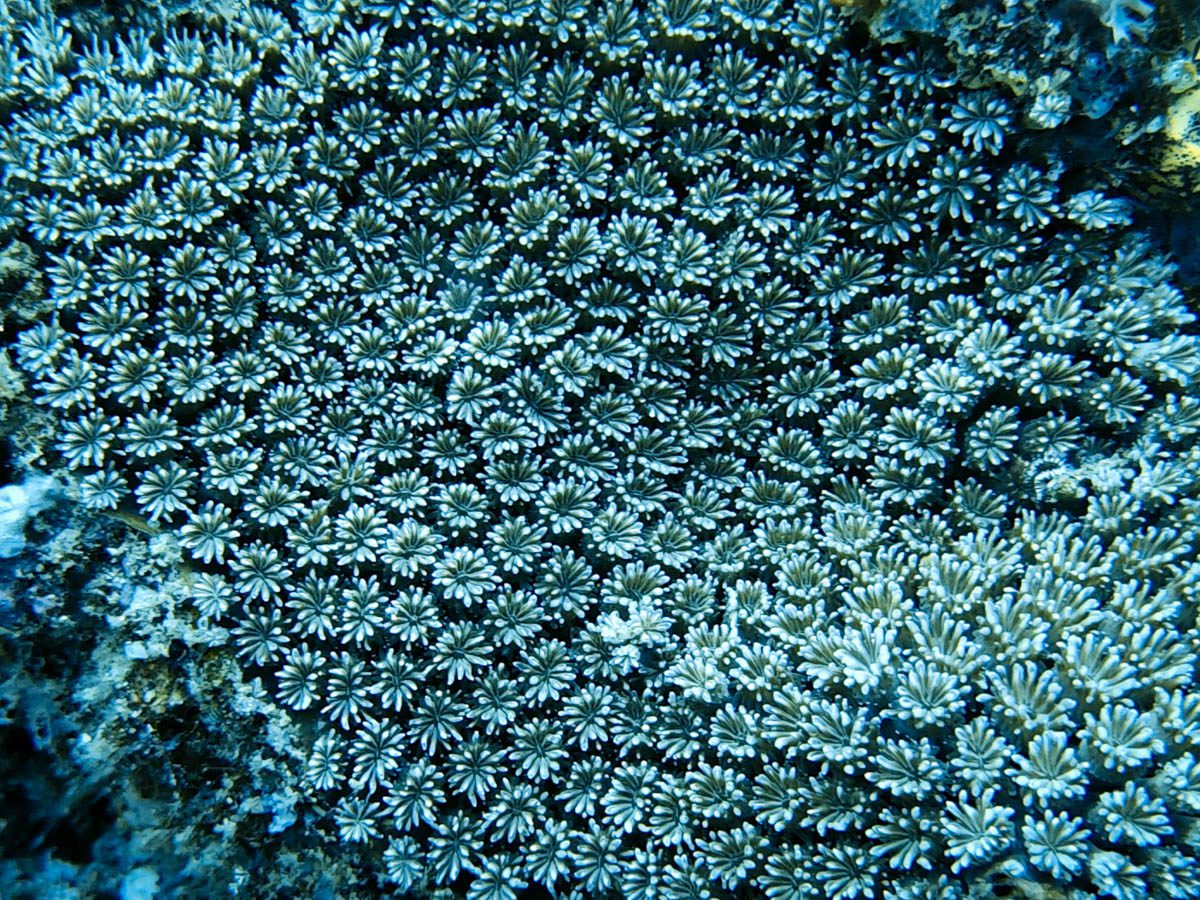
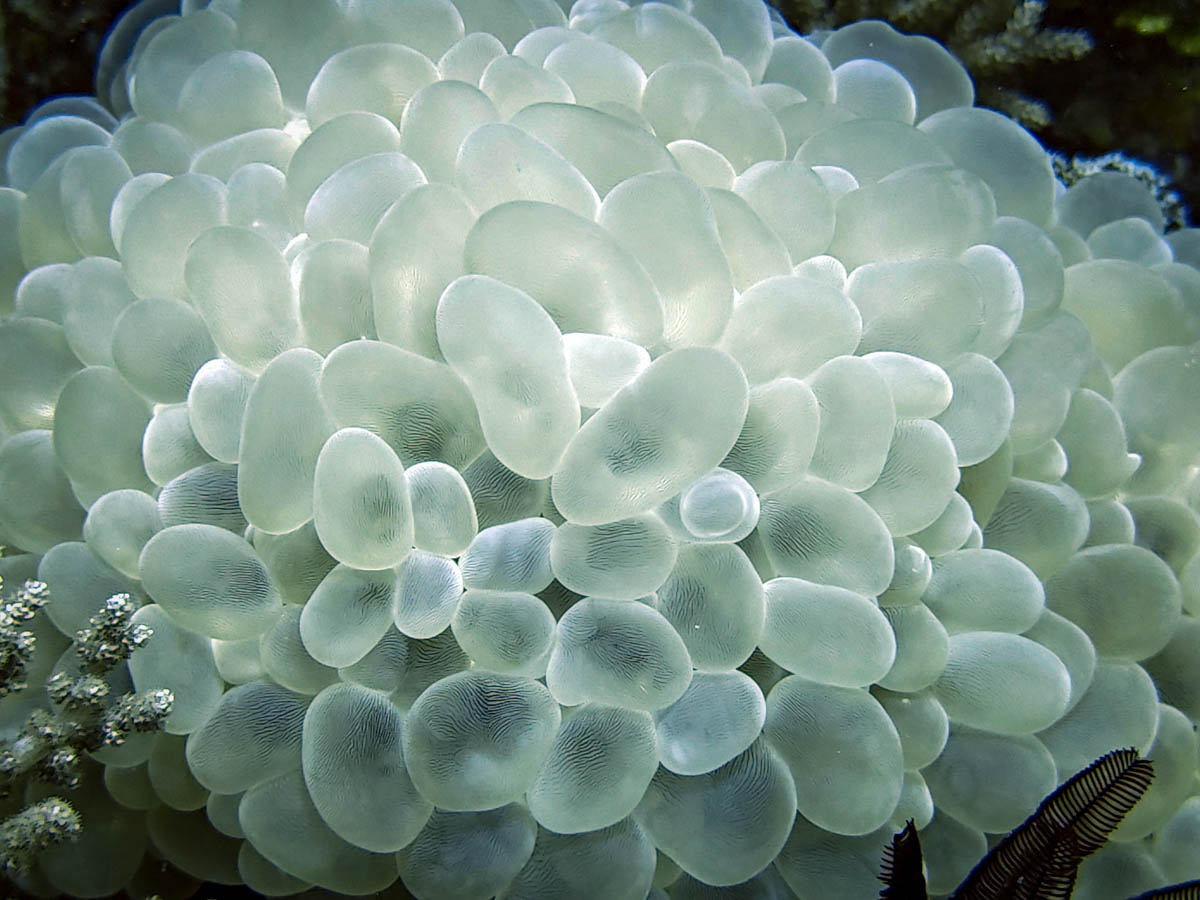
Look closer and there is always more. A pair of banded shrimp living inside a sponge. The skin of a leather coral that looks like draped fabric. Polyps that open like fields of tiny flowers, and a bubble coral that could be a bunch of glass grapes.
The Residents: Clownfish, Sweetlips and a Blue Lobster
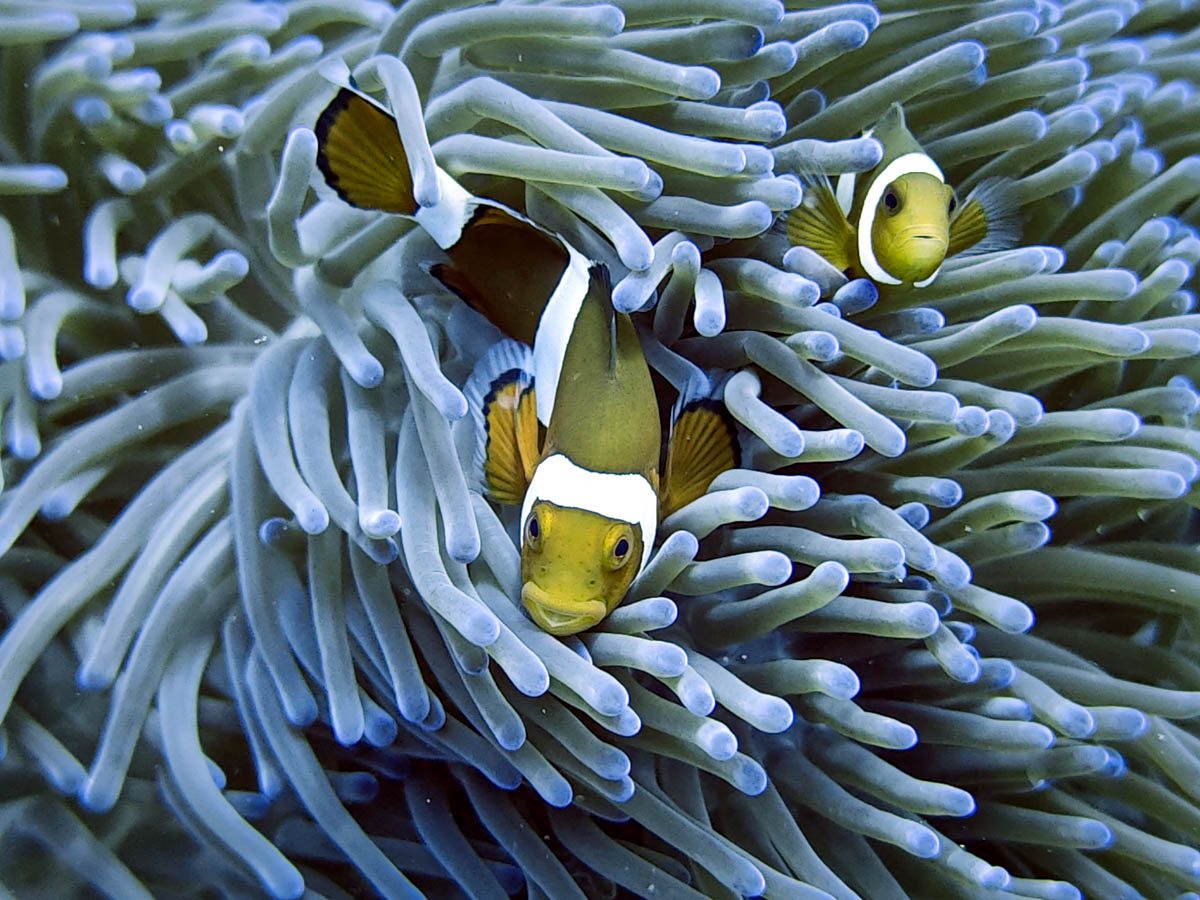
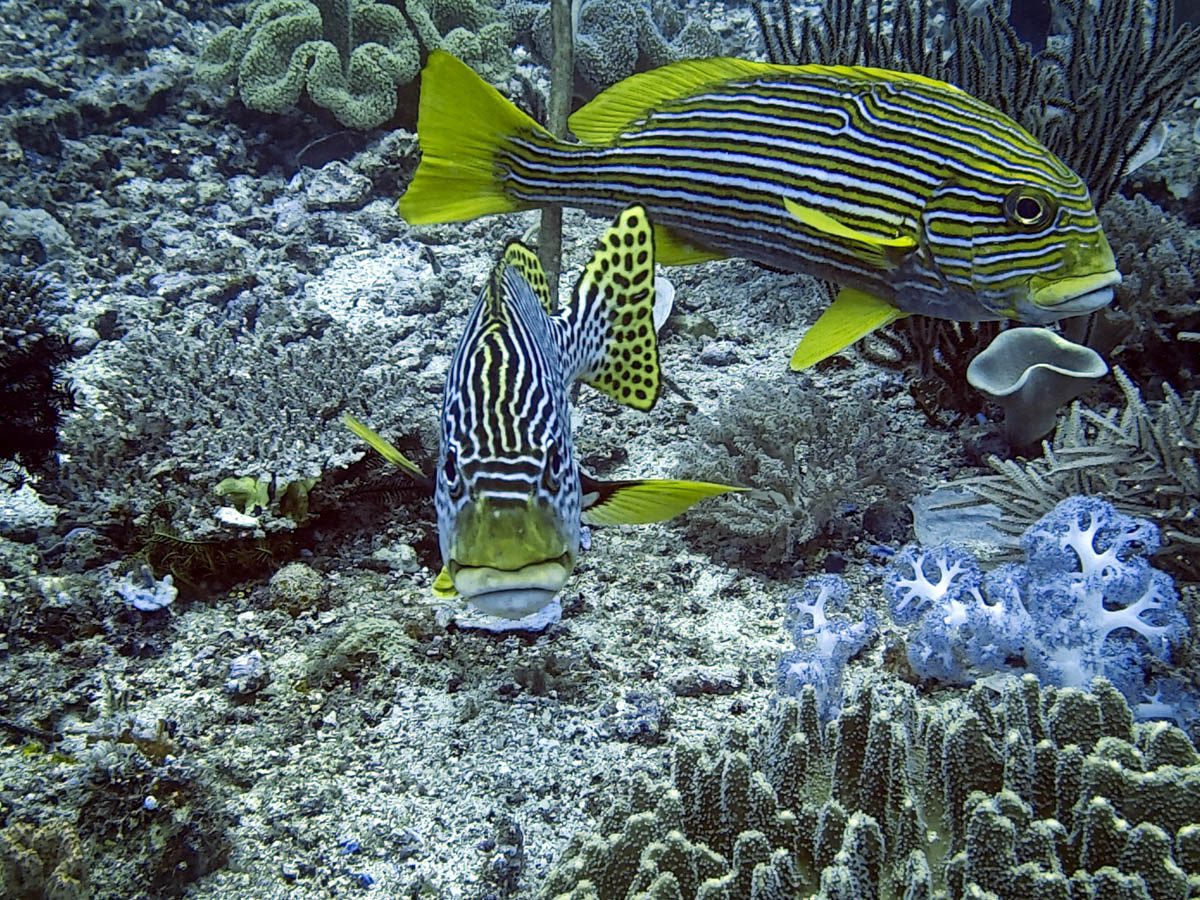
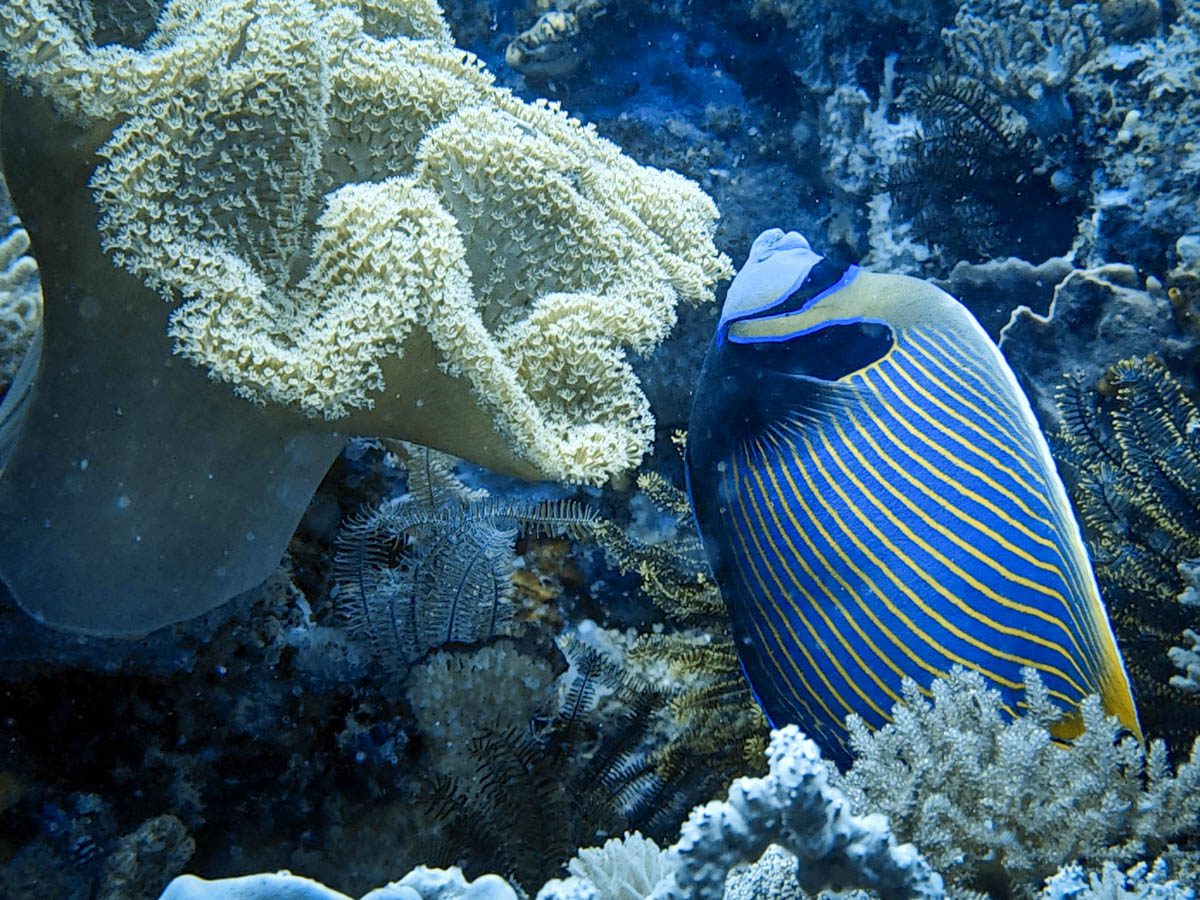
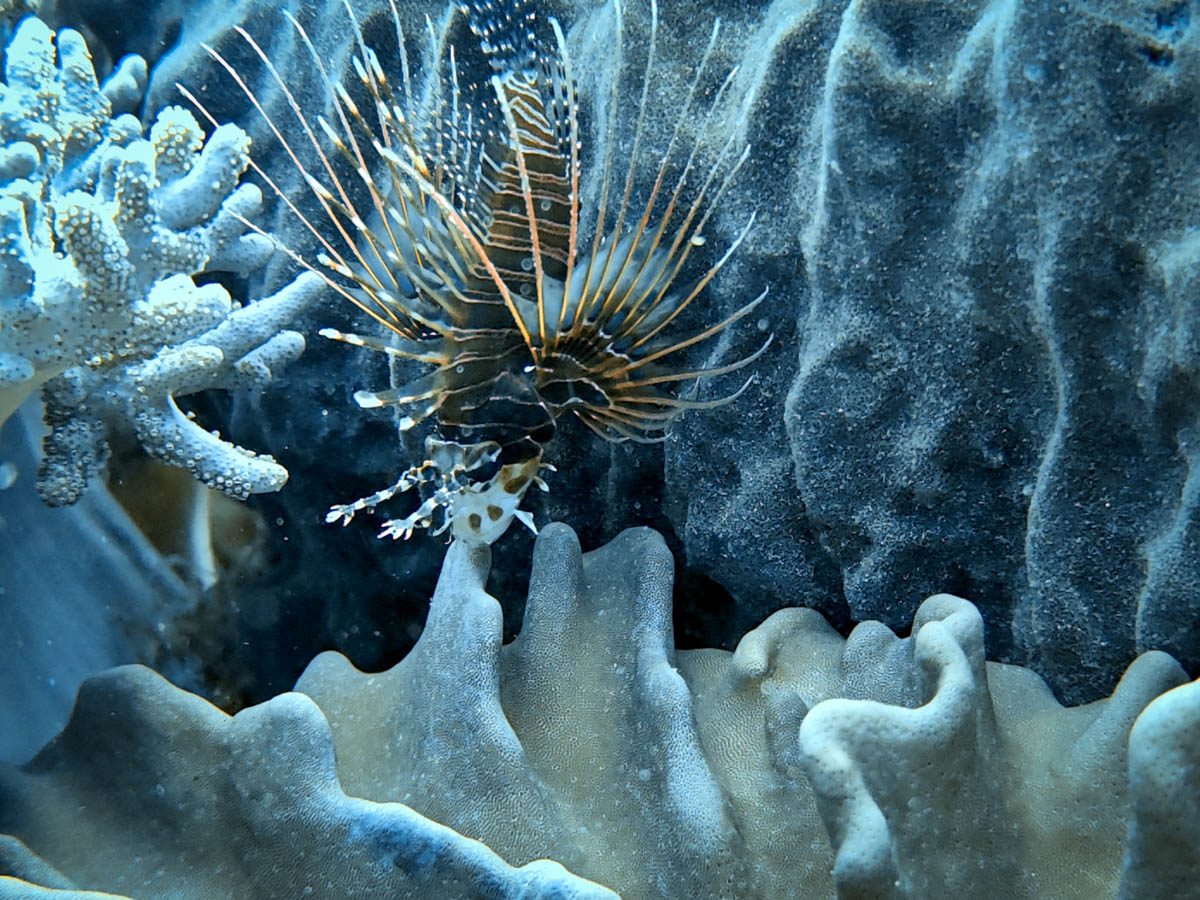
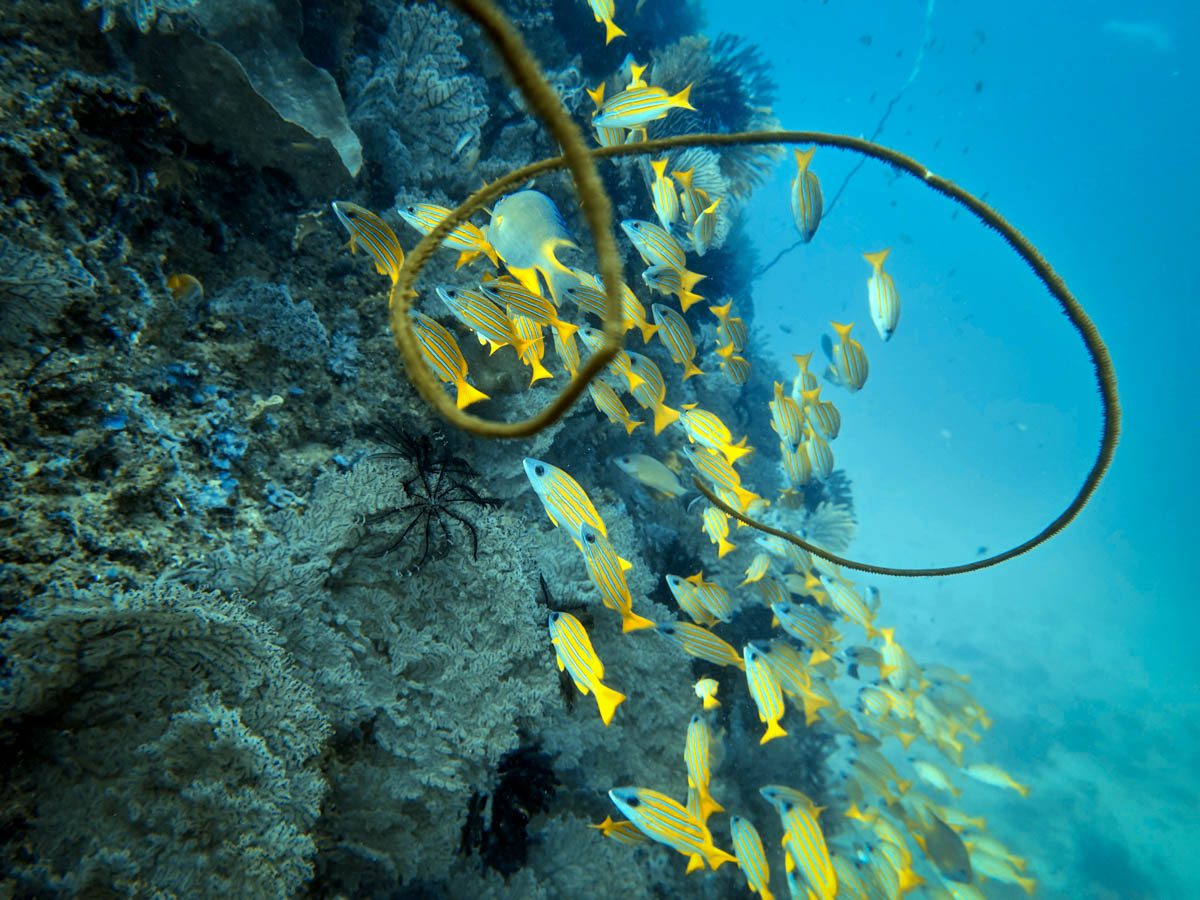
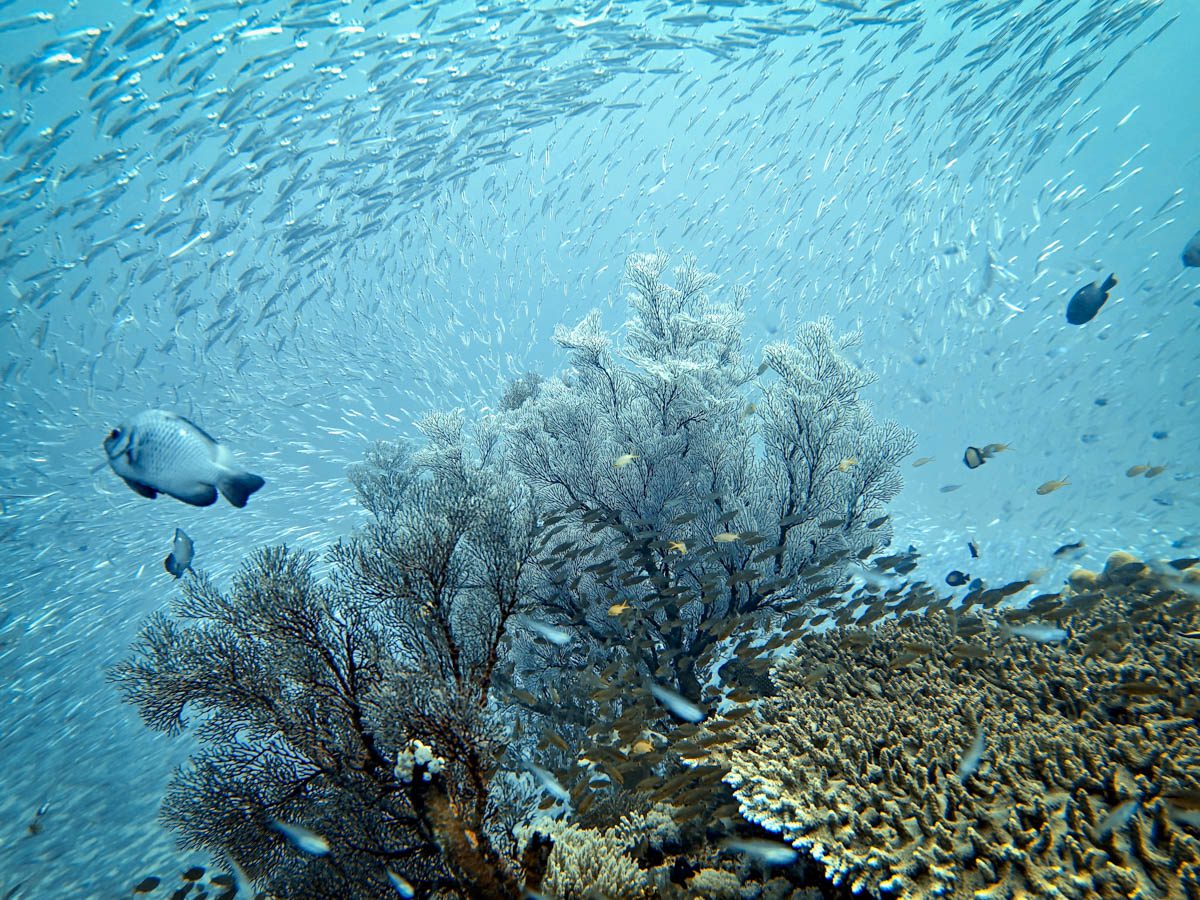
The reef is busy with fish, and they are not shy either. Clownfish guarded their anemone and stared me down. Two sweetlips posed side by side. An emperor angelfish cruised past a leather coral, a lionfish hovered with its fins spread, and a school of yellow snappers hung beside a whip coral as if someone had arranged them.
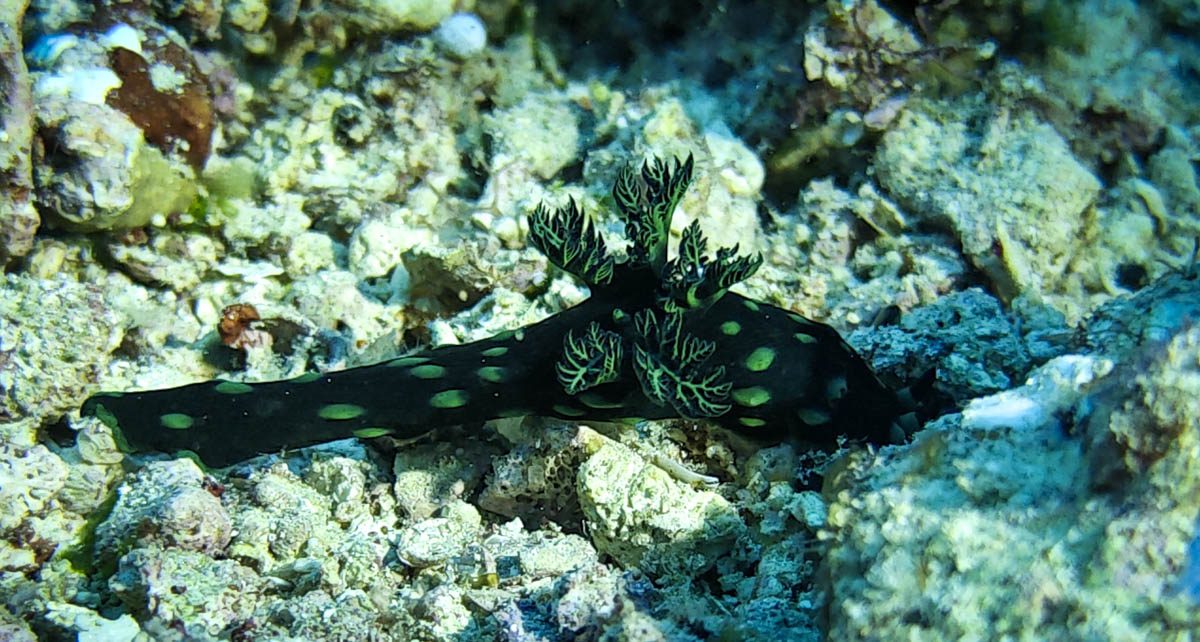
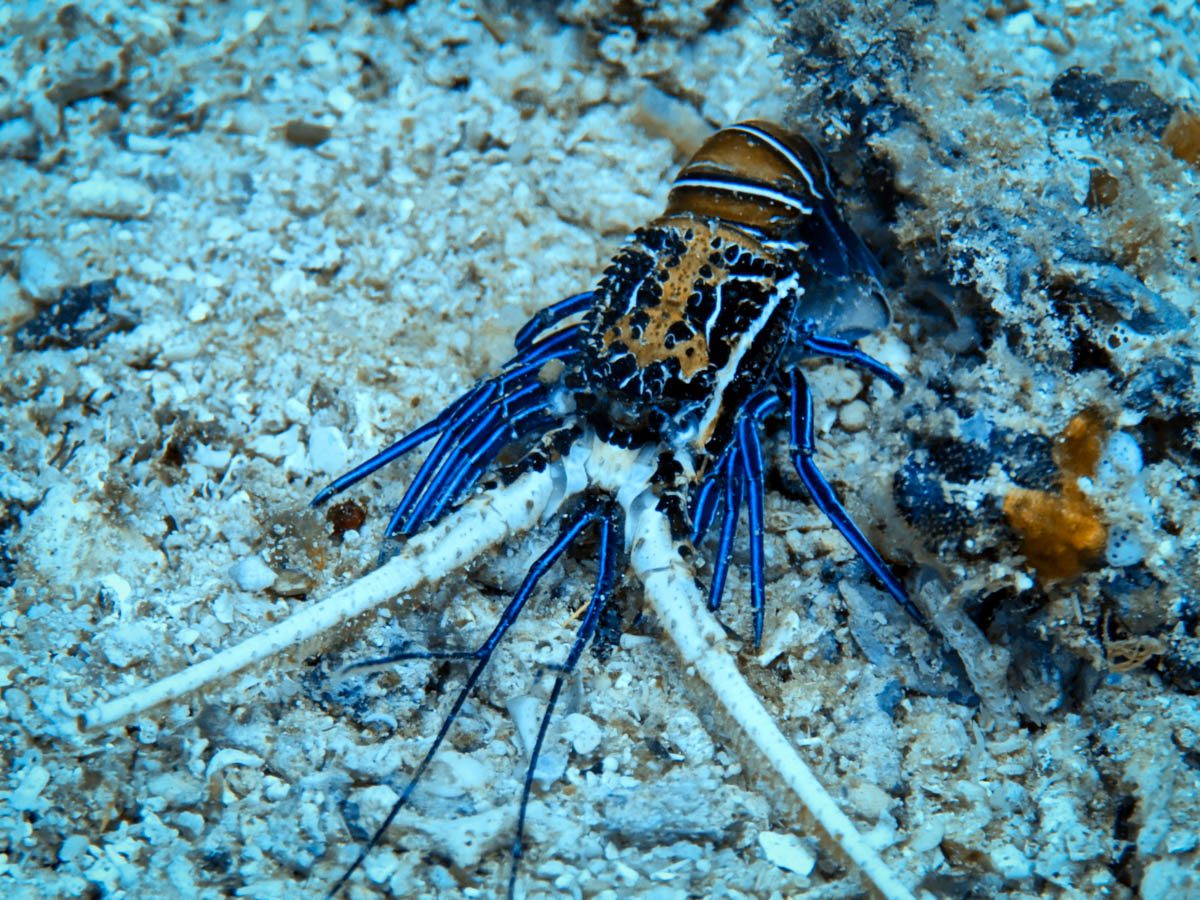
For those who like the small stuff, I found a black and green nudibranch crossing the rubble and a young painted spiny lobster, electric blue, out in the open.
The Toadfish, the Hunt and the Sharks
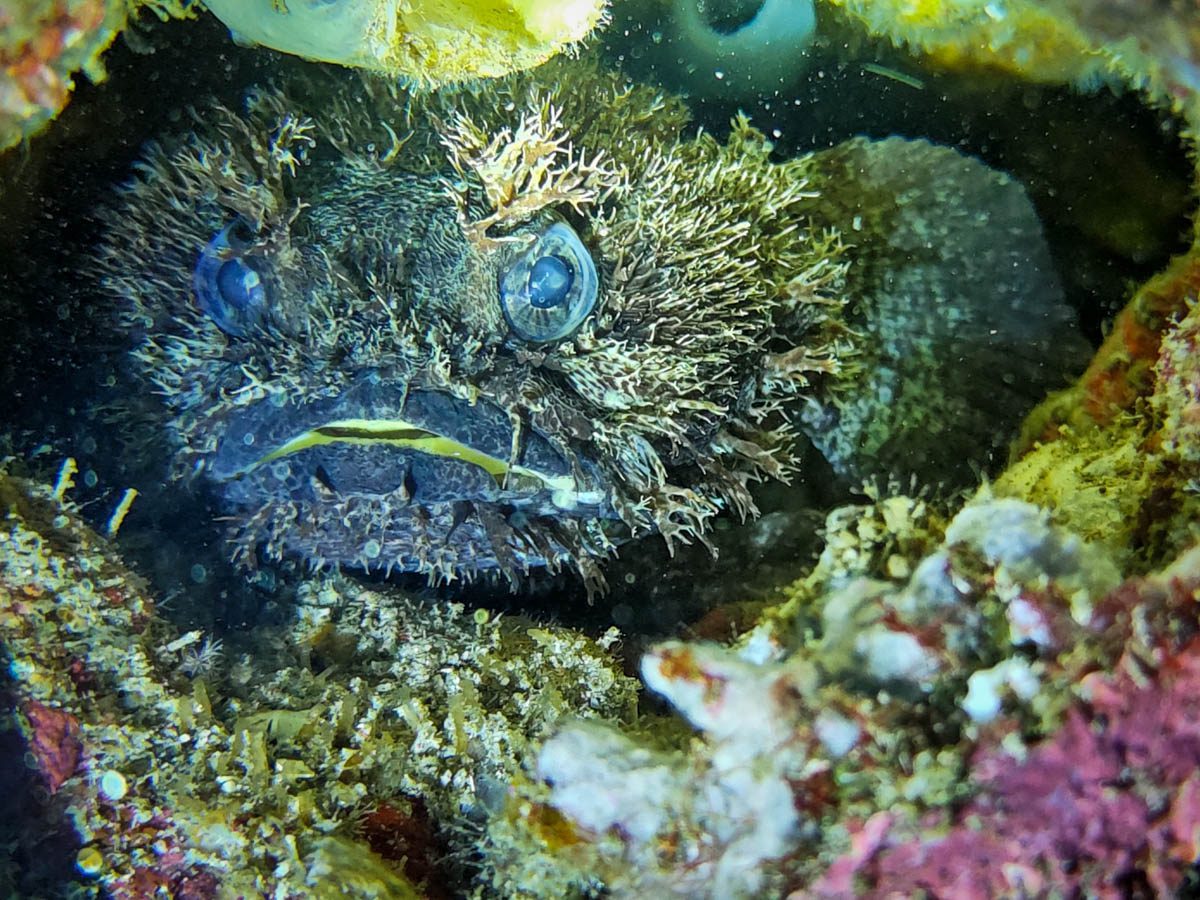
The wall of the Jurassic Park pinnacle is just as beautiful as the reef top, and on that first dive a toadfish was tucked into it, grumpy as toadfish always look.
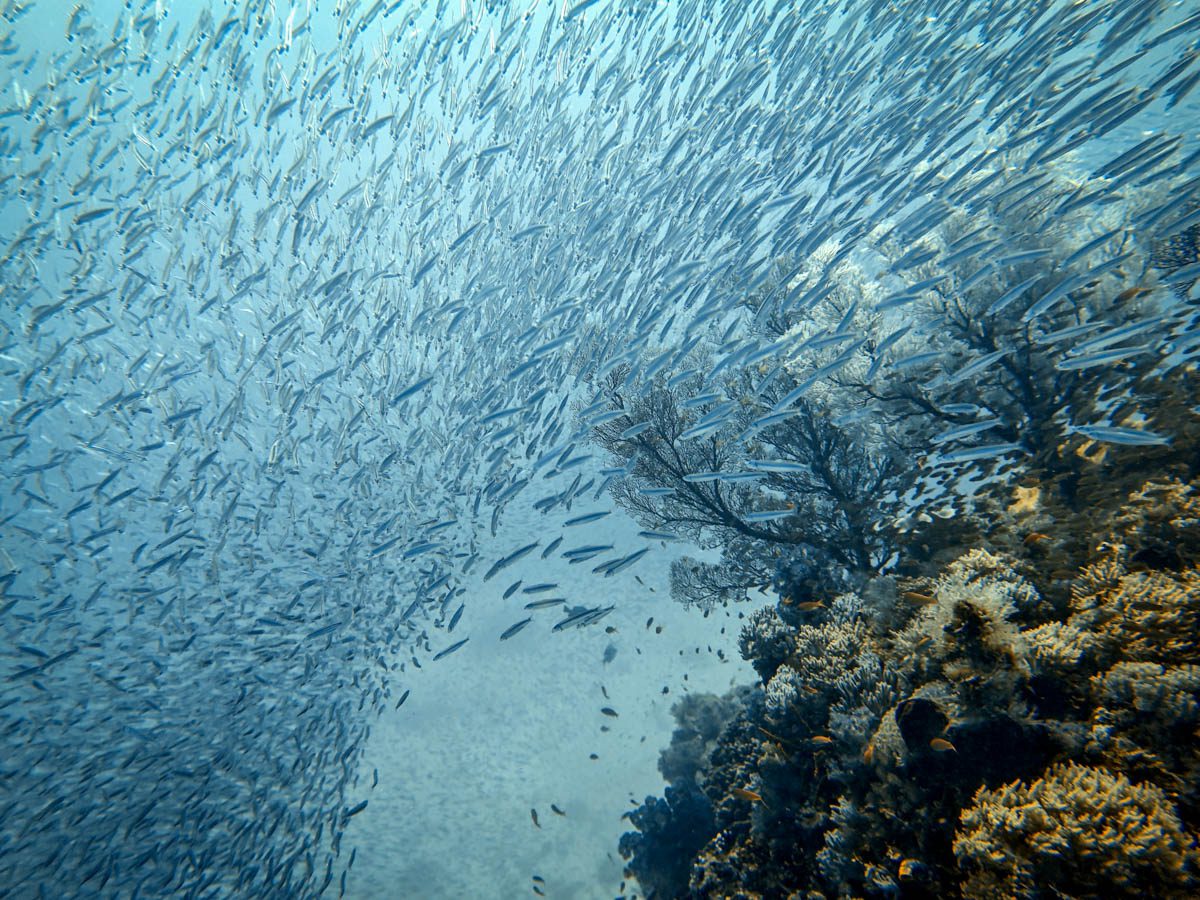
Both sites had the hunt. Clouds of silversides hung over the reef on each dive, chased by jacks and tuna, the whole school flashing and folding each time a hunter cut through it. At Downtown Reef we also met a shiver of two reef sharks. One of them was resting under a ledge, which let me take my time with the camera.
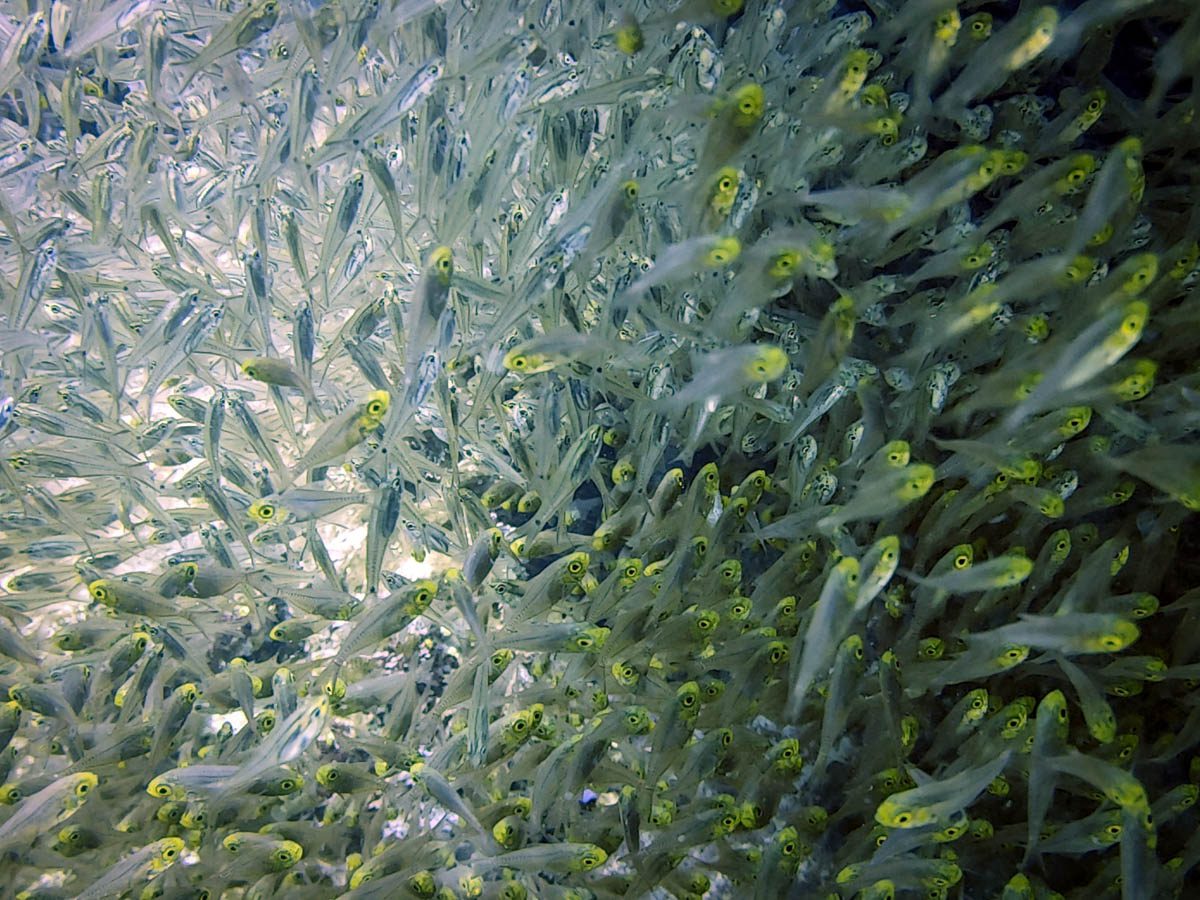
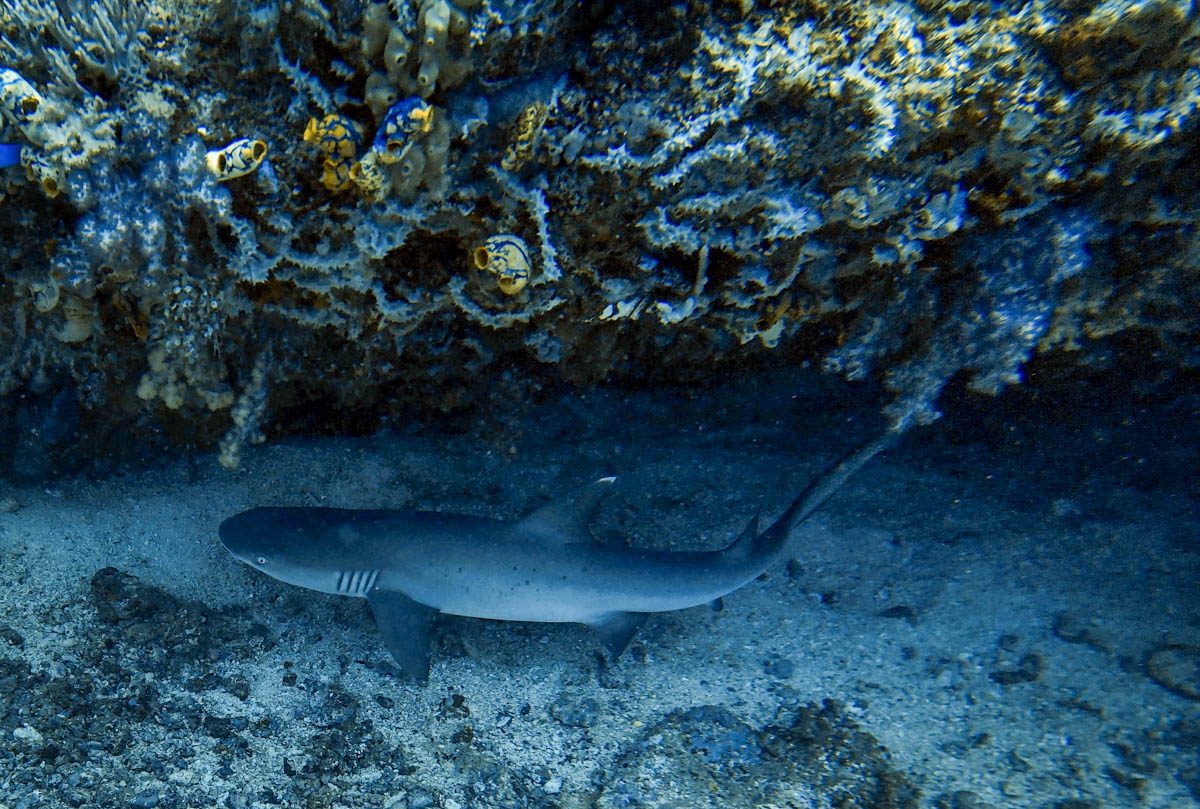
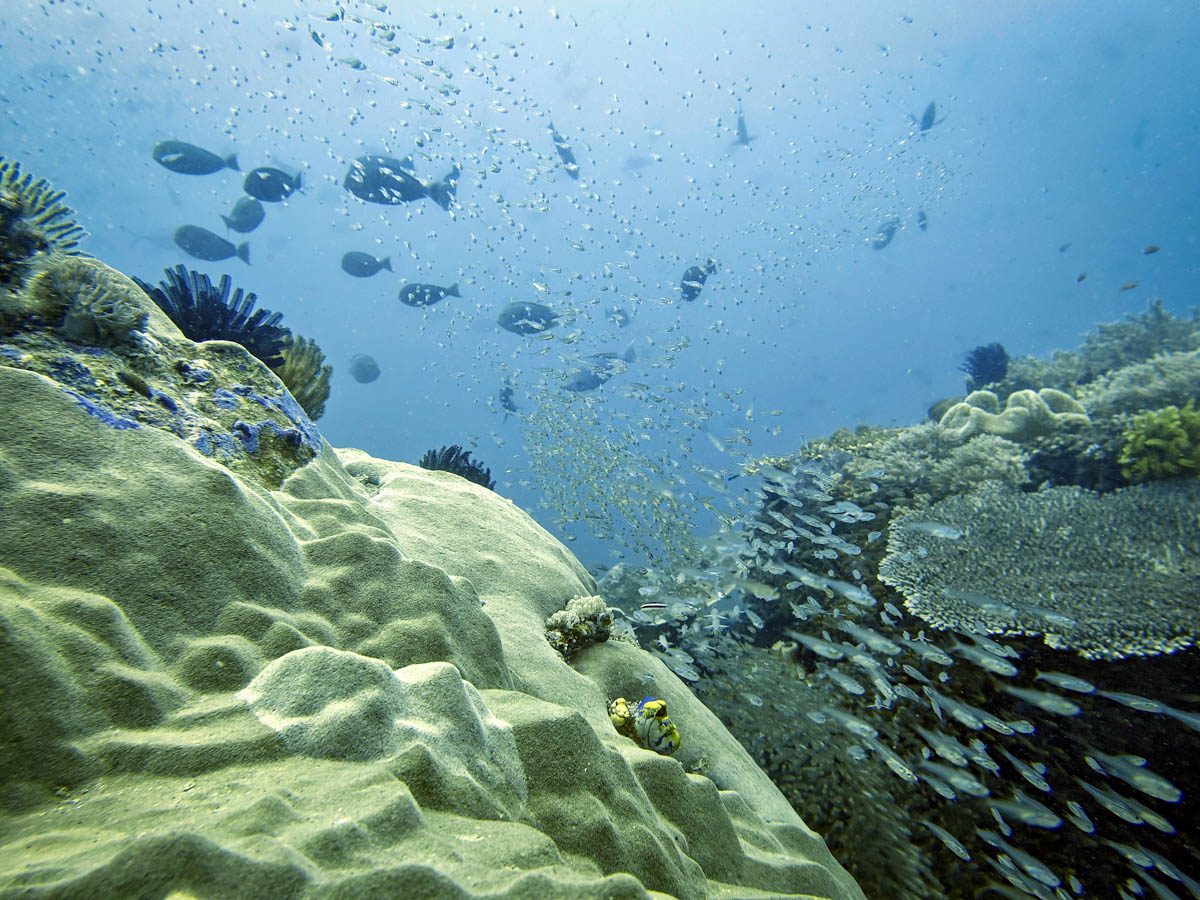
Even without the mantas, these would have been really beautiful dives. With them, they were among my best of the year.
The Best Season for Diving in Rote
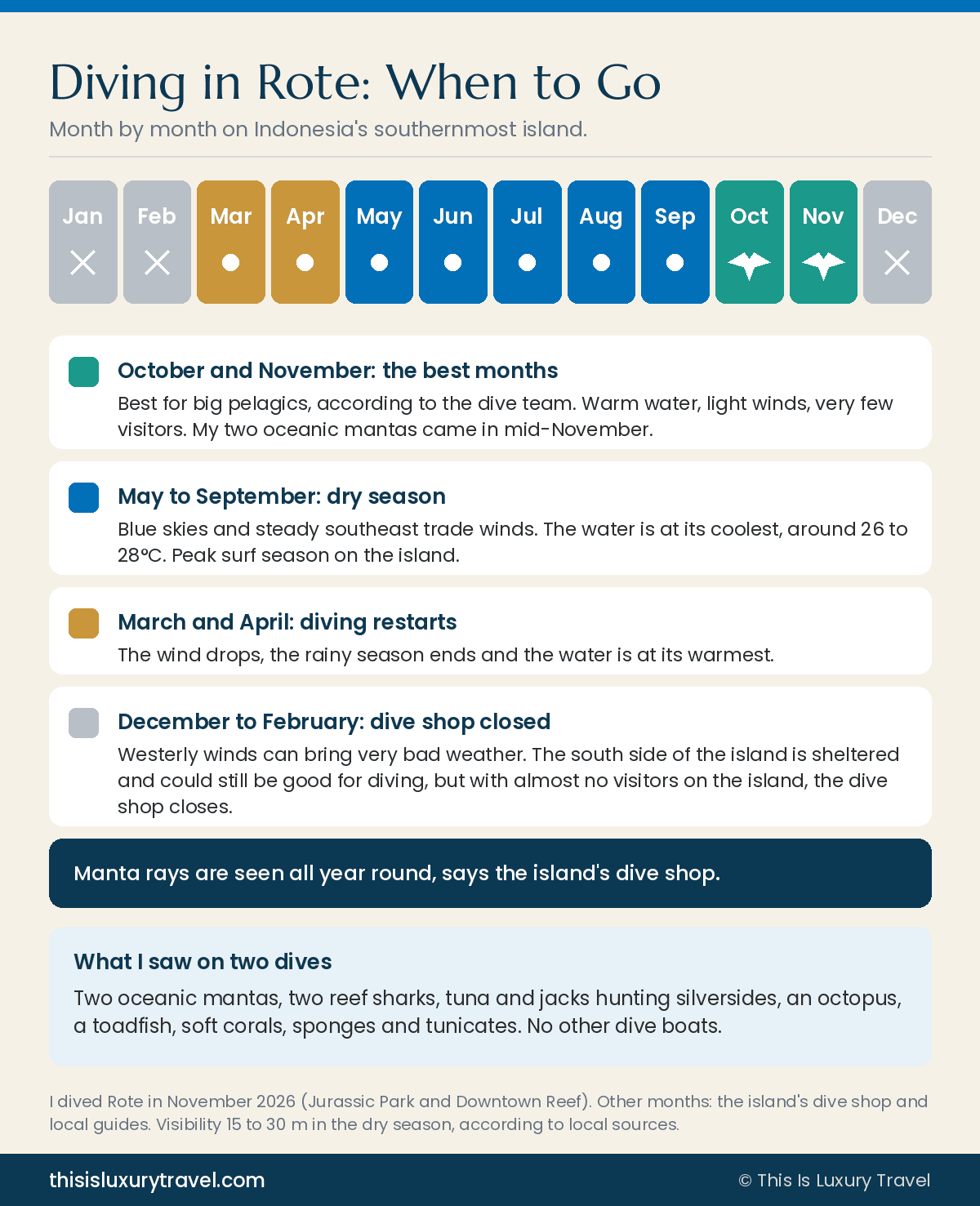
According to the dive team, October and November are the best months for big pelagics. I dived in mid-November and can confirm it. The mantas are not only a November story, though: the island’s dive shop tells me they see manta rays the whole year round.
The dive shop closes from December to February. In those months the wind blows from the west and the weather can turn very bad. The south side of the island is protected from the westerly winds, so the diving there could still be good. The shop closes anyway, for a simple reason: there are almost no guests on the island. Plan your trip outside those months.
Diving in Rote month by month
I have only dived Rote in November, so for the rest of the year I looked at what local operators and guides on the island publish.
| Months | Diving in Rote |
|---|---|
| March and April | Diving starts again as the wind drops. The rainy season is ending and the water is at its warmest. |
| May to September | Dry season: blue skies almost every day and steady southeast trade winds. The water is at its coolest, around 26 to 28°C. This is also peak surf season, so the island is at its liveliest. |
| October and November | The best months for big pelagics, according to the dive team. Warm water, light winds and very few visitors. This is when I had my two oceanic mantas. |
| December to February | The dive shop is closed. Westerly winds can bring very bad weather. The south side of the island is sheltered and could still be good for diving, but there are almost no visitors. |
Local sources give visibility of 15 to 30 meters in the dry season.
How to Dive Rote
The island’s dive center is Rote Dive Adventures, based in Nemberala, on the same west coast as the surf breaks. The team has discovered about 20 dive sites in the area. It runs day trips to reefs, drifts and deeper sites, and teaches PADI courses from Discover Scuba Diving up to Divemaster.
From NIHI Rote it could not be easier, and this matters when you are on vacation. A car picked me up at 6:45 am with a snack box and a cooler. We were in the water from 7 am. After two dives I was back at the resort in time for lunch, with the whole afternoon left for the pool.
Depth, water temperature and wetsuit
My dives were between 10 and 23 meters. Jurassic Park was the deeper of the two, and Downtown Reef was shallower, at around 15 meters. The water was 28°C in mid-November, so a 3 mm wetsuit is enough.
Other dive sites in Rote
I only know two sites first-hand. Local operators list more around the west coast and the nearby islets, including Nemberala Bay, Sakunamon, Coral Garden, Bo’a Corner, Bull Rock and the island of Ndao, with shallow reefs, deeper sites, drifts and muck diving. They also mention turtles, honeycomb moray eels, orangutan crabs, pipefish and, in some seasons, whale sharks. I cannot vouch for those yet, and that is one more reason to go back.
There were no other dive boats. None. After years of sharing Komodo and Raja Ampat with a dozen liveaboards, I had forgotten what an empty sea feels like.
Where to Stay
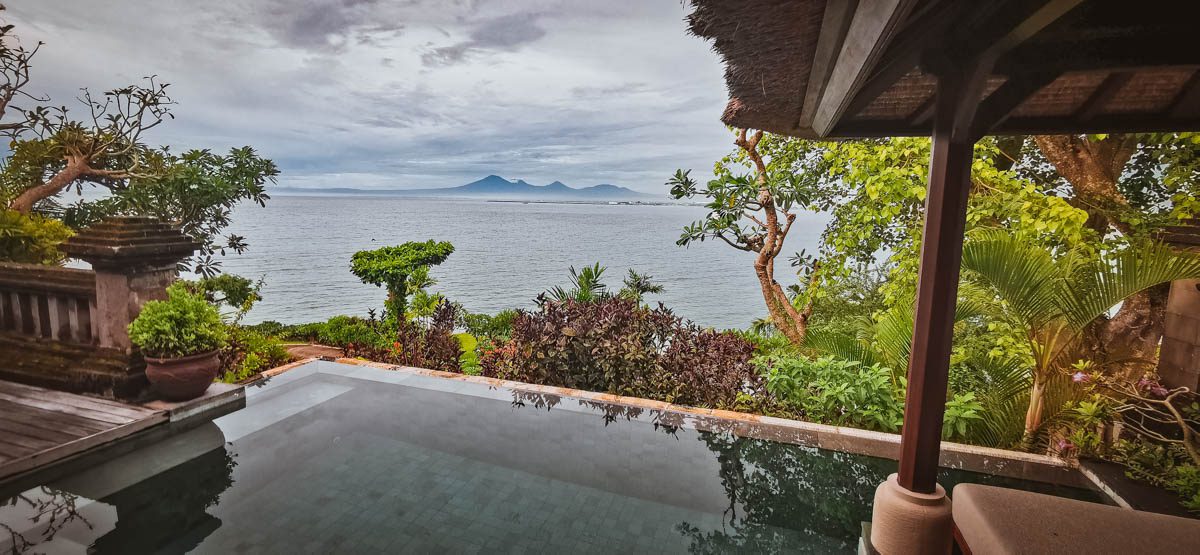
I stayed at NIHI Rote, a 21-villa resort on Bo’a Beach from the team behind NIHI Sumba, and I loved it. Divers who travel with non-divers will find plenty for everyone: rescued ponies, surf, a spa and a private pool in front of the waves. Read my full NIHI Rote review.
NIHI’s original resort is on Sumba, where I have stayed three times. If you are choosing between the two islands, or want to combine them, start with my Nihi Sumba review.
Getting to Rote
Fly from Bali to Kupang, then take a short flight to Rote. Allow almost a full day, with a layover of 3 to 4 hours in Kupang. The flights are with the Lion Air Group (here is why I avoid flying with Lion Air). I book Indonesian domestic flights on Trip.com, because most foreign credit cards do not work on the Lion Air website and Trip.com is easier to deal with when flights change.
Remember your no-fly time. The flight out of Rote leaves at 7 am, so keep your last full day dry and do your diving at the start of your stay.
Break the journey in Kupang for cave diving
Every trip to Rote passes through Kupang, the capital of West Timor, and the city deserves more than a layover. In Bolok, just outside town, freshwater caves such as Crystal Cave (Gua Kristal) hold some of the clearest water I have ever dived. Sunlight falls through the entrance, and deeper in, fresh water meets salt water in a shimmering halocline that feels like another world. I dived it with Donovan Whitford of Dive Kupang Dive, who has explored many of these caves himself. Diving inside the caves on scuba is for trained cave or cavern divers, but anyone can swim and snorkel in the pool at the entrance.
Check before you plan around it: in July 2022, Dive Kupang Dive announced that it was temporarily closed for all diving in Kupang, and I could not find any sign that it has reopened. Read my full guide to diving in Kupang.
Add Alor to the same trip
Kupang is also the gateway to Alor. Wings Air flies from Kupang to Alor every day in about an hour, so Rote and Alor combine easily into one East Nusa Tenggara dive trip: fly from Bali to Kupang, spend a few days in Rote, fly back to Kupang and continue to Alor. The two islands complement each other. Rote gave me oceanic mantas and an empty sea, while Alor is known for steep walls, strong currents, cold upwellings, soft corals and critters. Read my Alor diving guide before you go.
For everything above the water, from the one daily flight to where I slept and what to do on land, read my guide to Alor Island.
Is Diving in Rote Worth It?
Yes. Rote deserves a place on the list of the best dive destinations in Indonesia, and I do not say that lightly.
I only had time for two dives, and I would love to go back for more. There are around a dozen sites I have not seen, and if two dives gave me this, I can only imagine what a week would do.
Go in October or November, go before everybody else finds out, and when the guide points into the blue, stay still and look up.
Diving in Rote FAQ
Is there good diving in Rote?
Yes. On two dives in November 2026 I saw two oceanic mantas, two reef sharks, tuna and jacks hunting silversides, an octopus, a toadfish, a nudibranch, a painted spiny lobster and beautiful soft corals, sponges and tunicates.
What are the best dive sites in Rote?
I dived Jurassic Park, a pinnacle with bommies where I met two oceanic mantas, and Downtown Reef, a coral garden with small ridges. Both were excellent. The island has around a dozen named sites along its coast and nearby islets.
When is the best time to dive in Rote?
October and November are the best months for big pelagics. Manta rays are seen all year round, according to the island’s dive shop.
Can you dive in Rote all year?
Not in practice. The dive shop closes from December to February, when westerly winds can bring very bad weather and there are almost no visitors. The south side of the island is sheltered from those winds, so conditions there could still be good.
Can you see manta rays in Rote?
Yes. I saw two oceanic mantas that stayed with us for a whole dive in mid-November, and one passed just above me. The island’s dive shop says manta rays are seen all year round.
What is the difference between oceanic and reef mantas?
Reef mantas are 3 to 3.5 meters across and stay near the coast, returning to the same cleaning stations. Oceanic mantas are larger, typically 4 to 5 meters, live in the open ocean and are much rarer to see.
Who runs the diving in Rote?
Rote Dive Adventures, based in Nemberala, runs day trips and PADI courses. Guests of NIHI Rote can book diving through the resort.
Can beginners dive in Rote?
Yes. Discover Scuba Diving and PADI Open Water courses are available on the island.
How deep is the diving in Rote, and what wetsuit do you need?
My two dives were between 10 and 23 meters, with Downtown Reef at around 15 meters. The water was 28°C in mid-November, so a 3 mm wetsuit is enough.
Where is Rote?
Rote is the southernmost island of Indonesia, in East Nusa Tenggara, southwest of Timor. You reach it by a short flight from Kupang.
This article contains affiliate links. If you book through them, I may earn a small commission at no extra cost to you.
Disclosure: this article contains affiliate links. If you book through them, I earn a small commission at no extra cost to you. Read my full disclosure policy.