The best budget underwater camera for diving, if you already own a recent flagship phone, is a phone housing: a DiveVolk SeaTouch 4 Max Plus (USD 239, rated to 60 m) under US$300, or the aluminum DiveVolk SeaTouch 4 Max Platinum V2 (USD 499) that I shoot with now. If you mostly want video, the DJI Osmo Action 6 (about USD 436, 20 m without a case) is my action camera. Under US$1,000 including housing, the OM System Tough TG-7 is the macro pick and the SeaLife Micro 3.0 the no-maintenance one. For snorkeling, any of them works, and a Kodak PIXPRO WPZ2 (USD 179.99, 15 m) covers the beach on the smallest budget.
Best budget underwater cameras at a glance
Quick facts
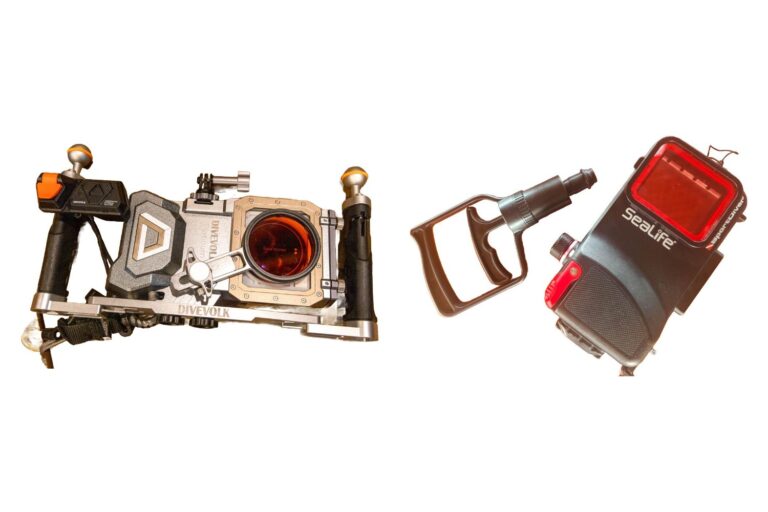
- My current kit: a Xiaomi 17 Ultra phone in a DiveVolk SeaTouch 4 Max Platinum V2 housing, with a DJI Osmo Action 6 on top for video.
- Price bands: under US$300 (DiveVolk Max Plus, Kodak WPZ2); under US$600 (DiveVolk Platinum V2, DJI Osmo Action 6, GoPro HERO13 Black, Insta360 Ace Pro 2, SeaLife RM-4K and SportDiver Ultra); under US$1,000 with housing (TG-7, SeaLife Micro 3.0, GoPro MISSION 1).
- Prices and depth ratings: manufacturer and retailer figures, checked November 14 to 16, 2026.
- Reviewed based on: 1,500+ dives and more than ten cameras; 30 dives with the original DiveVolk Platinum in Raja Ampat and Komodo, then the Platinum V2 in Raja Ampat and the Banda Sea; GoPros from the Hero 8 to the Hero 13; a DJI Osmo Action 6; and a Canon R in a Seafrog housing.
What Kind of Budget Underwater Camera Do You Need?
I have taken more than ten cameras under water: Canon G-series compacts, an Olympus PEN, a Canon R mirrorless rig, GoPros from the Hero 8 to the Hero 13, a DJI action camera and, now, a phone. The most expensive setups gave me the best files, and also the most to lose. I have flooded two camera bodies along the way, and the cheapest setup I own today is the one I take on every dive.
On a budget, the choice comes down to four types of underwater camera, and the right one depends less on the camera than on what you already own:
- Phone plus housing (USD 239 to 499): the best photos per dollar if you already carry a recent flagship phone, because you only buy the box.
- Action camera (about USD 200 to 760 with housing): the best for video, wide scenes and snorkeling, and the easiest to mount on top of something else.
- Tough compact (USD 180 to 980 with housing): waterproof on its own for snorkeling, and the only budget route to real macro.
- Sealed dive camera (USD 350 to 600): a camera and housing sold as one, with nothing to assemble, for beginners who want zero setup.
Then ask yourself three questions. Do you want photos, video or both? Do you care about subjects smaller than your thumb? And how deep do you actually dive? The answers sort the list below in a minute. The rest of what comes with me is in my dive bag gear list.
Best Budget Underwater Cameras Compared
Comparison table: price, depth rating, sensor and my verdict
| Camera | Price | Depth without housing | Depth with housing | Sensor / video | Best for | My verdict | Buy |
|---|---|---|---|---|---|---|---|
| DiveVolk SeaTouch 4 Max Platinum V2 + your phone | USD 499 | Housing only | 60 m (touchscreen 40 m) | Your phone’s camera | Reef scenes, fish portraits, travel | My camera. 5/5 in my review. Not for macro, no leak alarm. | Check price on Amazon |
| DiveVolk SeaTouch 4 Max Plus + your phone | USD 239 | Housing only | 60 m (touchscreen 30 m) | Your phone’s camera | Cheapest serious phone housing | Lighter plastic version of my housing. Phone up to 15 mm thick. | Check price on Amazon |
| SeaLife SportDiver Ultra + your phone | USD 349.95 | Housing only | 40 m | Your phone’s camera | Cold water, gloves, leak alarms | Seen on dive decks: good alarms, less control than DiveVolk. | Check price on Amazon |
| DJI Osmo Action 6 | about USD 436 | 20 m | 60 m in Waterproof Case | 1/1.1-inch, 8K30, 38 MP | Video, wide scenes, snorkeling | My video camera. Better image than my GoPros. Check every seal. | Check price on Amazon |
| GoPro HERO13 Black | USD 429.99 + 54.99 housing | 10 m | 60 m | 1/1.9-inch, 5.3K60 | Simple stabilized video | Used for years. Mine kept breaking and freezing underwater. | Check price on Amazon |
| Insta360 Ace Pro 2 | USD 399.99 at launch | 12 m | 60 m in dive case | 1/1.3-inch, 8K30 | Low-light video, murky water | Strong color in dim water. Front screen useless in a case. | Check price on Amazon |
| SeaLife ReefMaster RM-4K | USD 349.95 | Housing included | 40 m | 14 MP, 4K30 | First dive camera, beginners | Camera and housing in one box. Tighten the cog fully. | Check price on Amazon |
| Kodak PIXPRO WPZ2 | USD 179.99 | 15 m | No dive housing | 16 MP 1/2.3-inch, 1080p | Beach and snorkeling only | The cheapest camera here worth buying. Not for scuba. | Check price on Amazon |
| OM System Tough TG-7 | USD 579.99 + 399.99 PT-059 | 15 m | 45 m (148 ft) | 12 MP 1/2.33-inch, 4K30, RAW | Macro, snorkeling | The one I point readers to for pygmy seahorses. | Check price on Amazon |
| SeaLife Micro 3.0 | USD 599.95 | 60 m, permanently sealed | No housing needed | 16 MP 1/2.3-inch, 4K30 | No maintenance, beginners | Nothing to seal, so nothing to forget. | Check price on Amazon |
| GoPro MISSION 1 / MISSION 1 PRO | USD 599.99 / 699.99 + 59.99 housing | 20 m | 60 m | 1-inch, 50 MP | Best video and stills from an action camera | The step up if your budget stretches. | Check price on Amazon |
Prices are list or retailer prices checked November 14 to 16, 2026, and they move often, so use the links for today’s figure. Depth ratings are the manufacturers’ own.
The real cost of a budget dive camera, housing included
Best Underwater Cameras Under $300
Under US$300 there are two honest routes: put a phone you already own in a proper dive housing, or buy a tough compact for the beach and snorkeling only. Very cheap action cameras sit here too, and I explain below why I would be careful with them for scuba.
DiveVolk SeaTouch 4 Max Plus: best under $300 for divers with a flagship phone
The Max Plus is the polycarbonate version of the housing I use, and on paper it gives up less than you would expect for half the price. DiveVolk rates it to 60 m, the same as my aluminum Platinum, and it uses the same gel membrane over the screen, so the phone’s own touchscreen works underwater; on the Max Plus that touch sensitivity is rated to 30 m rather than 40 m. Backscatter lists the housing alone at USD 239 and weighs it at 375 g on land and about 150 g in the water, which is half the weight of mine in a dive bag.
The catch is phone size. The Max Plus takes phones up to 15 mm thick, while the Platinum V2 accepts up to 17 mm, and DiveVolk itself says thicker camera phones such as the Xiaomi 14 Ultra and Vivo X200 Ultra need the Platinum. Check your exact model against DiveVolk’s compatibility list before you order. If it fits, this is the cheapest way I know to get your phone’s best camera, its lens switching and tap-to-focus at depth.
👉 Check the DiveVolk SeaTouch 4 Max Plus price (6% reader discount applied)
Or check the SeaTouch 4 Max Plus price on Amazon.
Kodak PIXPRO WPZ2: best cheap underwater camera for the beach and snorkeling
If you do not have a phone worth housing and only plan to snorkel, the Kodak PIXPRO WPZ2 is the most sensible camera under US$200. It is waterproof to 15 m with no housing, has a 16 MP 1/2.3-inch sensor and a 4x optical zoom, and listed at USD 179.99 at Abt when I checked on November 16, 2026. The limits are just as clear: video tops out at 1080p, the small sensor struggles in dim water, and there is no dive housing to take it deeper. For a week of reef flats, a lanyard and this camera are enough. Check the Kodak PIXPRO WPZ2 price on Amazon.
What about US$100 to US$200 action cameras?
Budget brands such as AKASO appear on almost every cheap underwater camera list. The AKASO Brave 8 Lite, for example, launched at USD 199.99 with 4K video, a 1/2.3-inch sensor and a 10 m rating without a case. For snorkeling and pool sessions that is fine. For scuba, the whole dive depends on the case that comes in the box, and that is the part I would not economize on after my own floods. If you buy one, use the dive case on every scuba dive, do a test dunk before the first descent, and never take the camera deeper than the case’s stated rating. Check AKASO action camera prices on Amazon.
Best Underwater Cameras Under $600
This is where budget underwater photography gets genuinely good. Every option below goes to 40 to 60 m with its housing, and two of them are what I dive with today.
DiveVolk SeaTouch 4 Max Platinum V2: best overall budget underwater camera
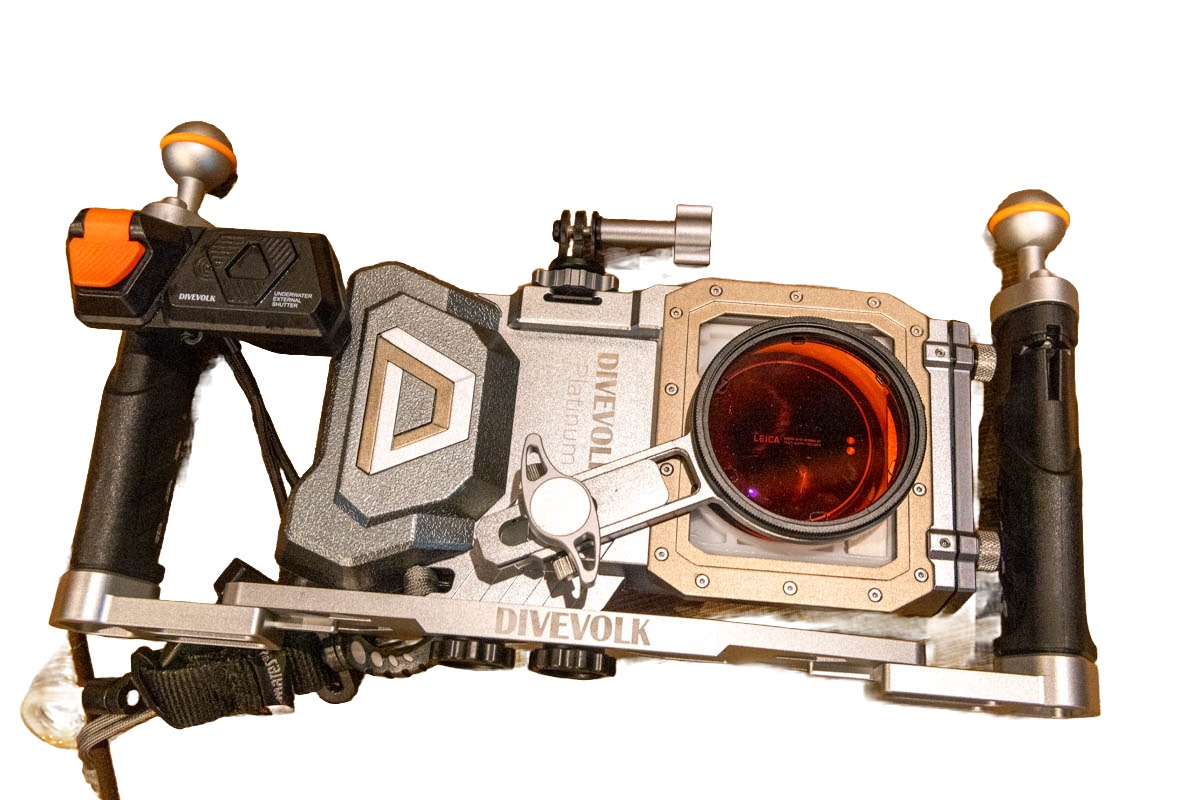
My main camera is my phone, a Xiaomi 17 Ultra, inside a DiveVolk SeaTouch 4 Max Platinum V2. I dove the original Platinum for 30 dives in Raja Ampat and Komodo, then moved to the V2, and I gave it 5/5 in my full DiveVolk review.
The reason is the touchscreen. Most phone housings talk to the phone over Bluetooth and lock you into their own app. The DiveVolk has a gel-filled membrane over the screen, so the phone’s real touchscreen works at depth. I can use the stock camera in Pro mode, switch lenses, tap a fish to focus on it, review a shot and start a 4K video, exactly as on land. DiveVolk rates the aluminum body to 60 m and the touchscreen to 40 m. It weighs 748 g in air and takes phones up to 180 × 82.5 × 11.2 mm on a model-specific tray.
That tray is why I count it as a budget buy. The housing is not tied to one phone. My Xiaomi was too new for a production tray, so DiveVolk sent me the 3D-print file and a local print cost about USD 15. When I change phones, I change the tray and keep the housing, so the money I spent keeps working.
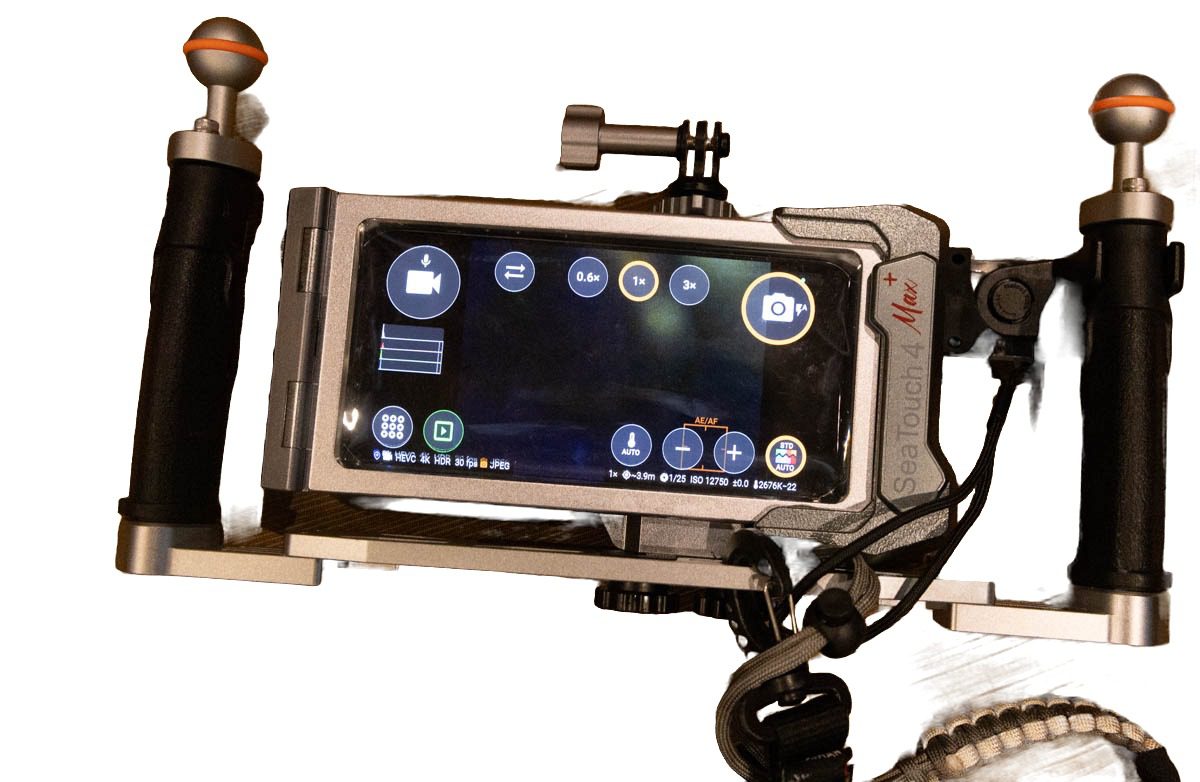
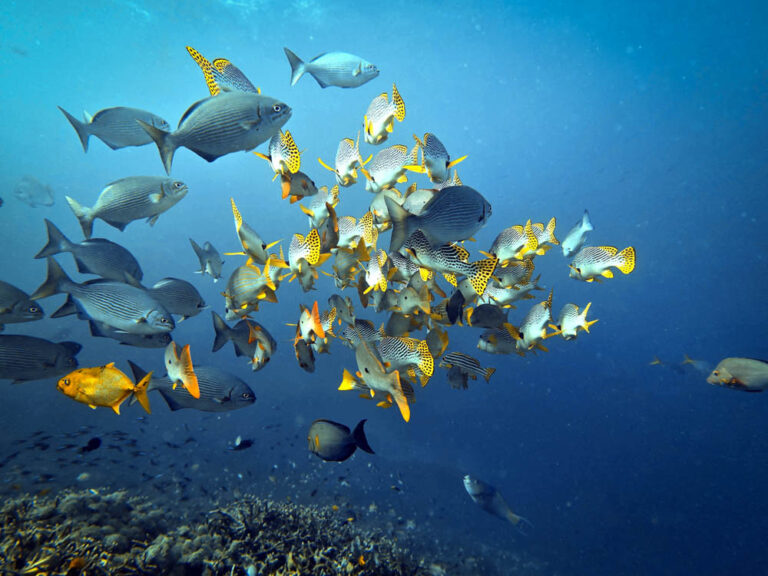
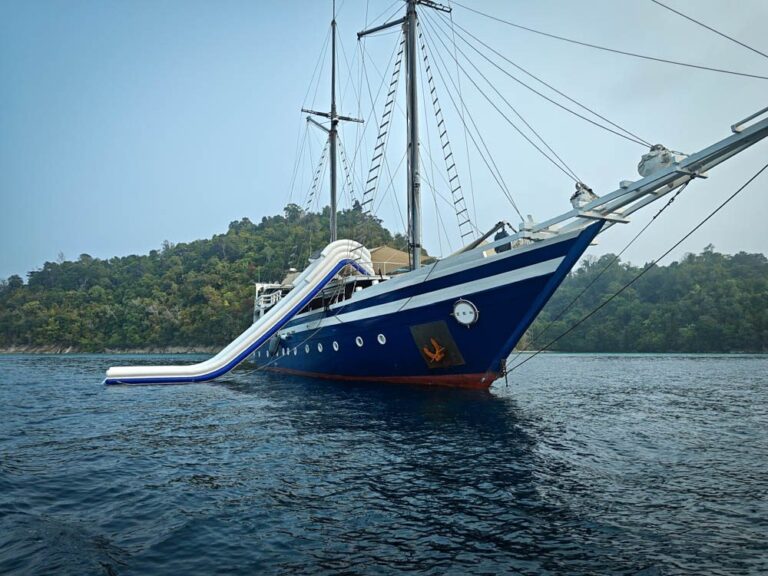
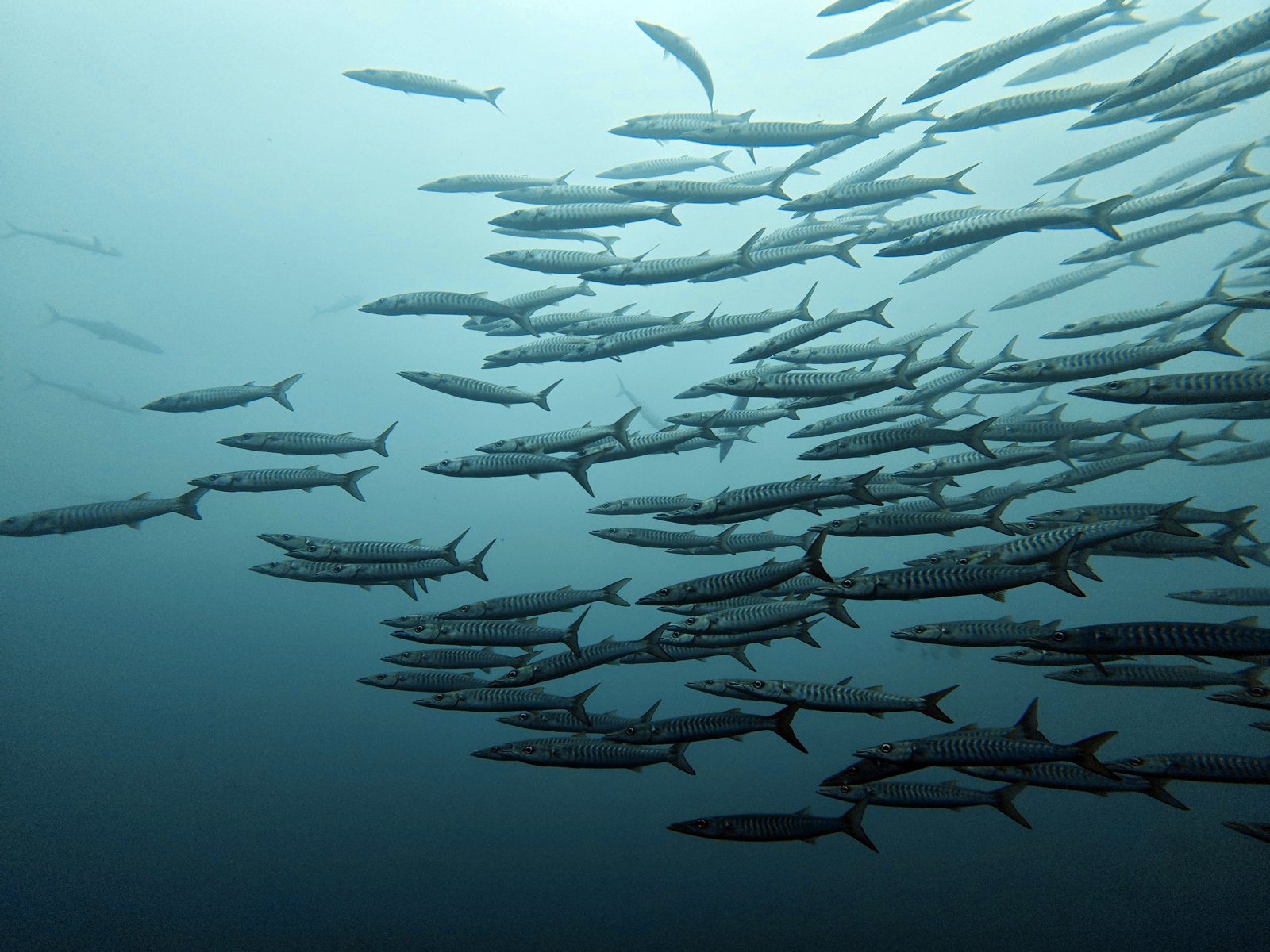
On a nine-day trip in Raja Ampat aboard the Emperor Harmoni liveaboard, which I wrote up in my Xiaomi 17 Ultra underwater photography review, the phone beat every action camera I have owned for stills. The 1-inch main sensor holds color and shadow detail, the native ultra-wide covers reef walls and schooling fish, and the optical zoom of about 4.2x was the feature I used most, because shy fish stay put when you stay back.

Three things I learned the hard way:
- Shoot JPEG, not RAW. In RAW my autofocus hunted and the frames came out soft. High-quality JPEG fixed it.
- Use the UWACAM app. It shows color-corrected images live while you compose, and it costs USD 49.99 a year. It made my red filter redundant.
- Keep the shutter speed at 1/200 s or faster for anything that moves. My frames below that blurred.
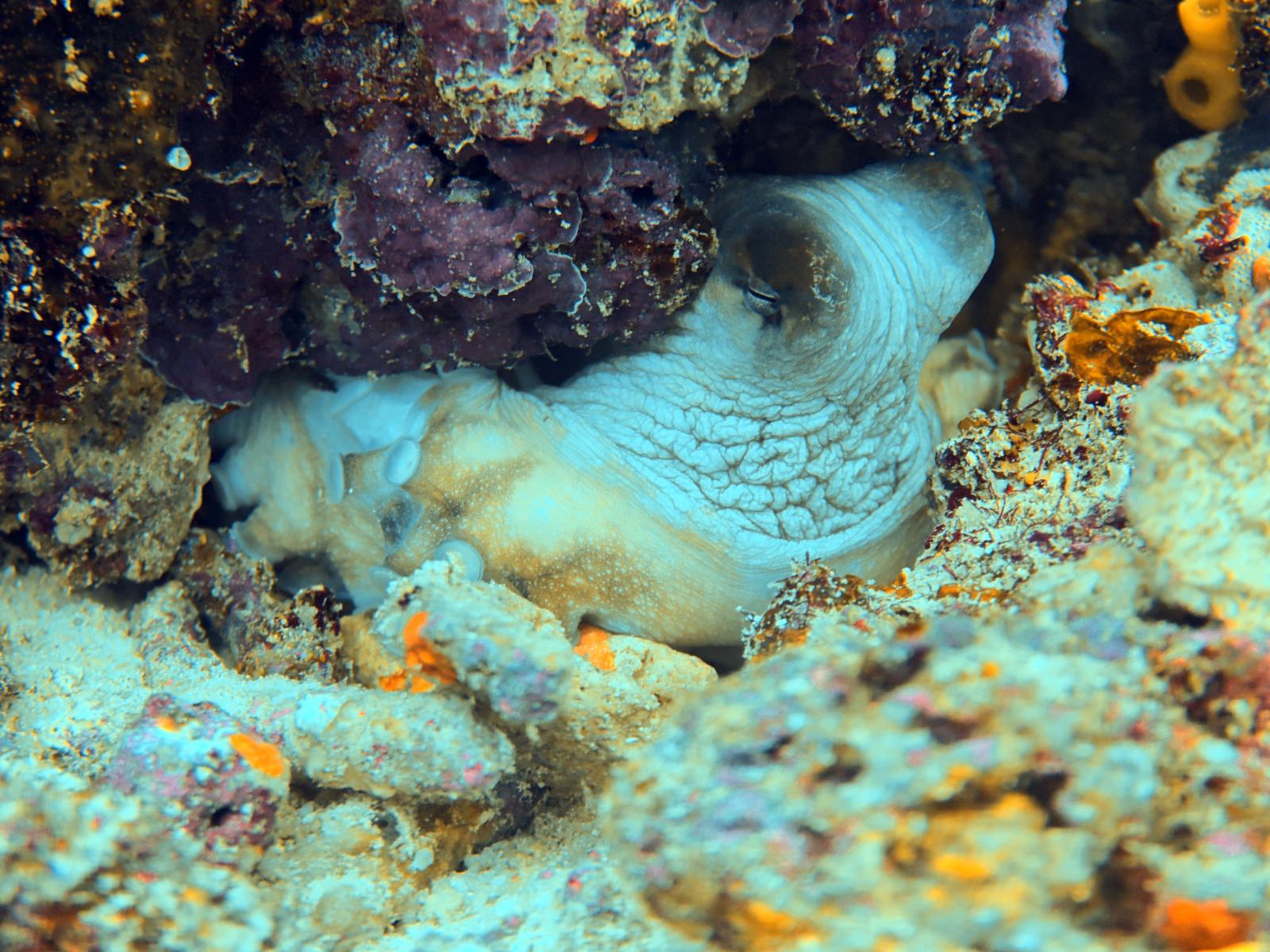
Where it loses: it is not a macro tool. The phone will not focus closer than about 30 cm, the +8 wet lens is hard to line up over an off-center lens module, and I would not buy this setup for pygmy seahorses or anything under 2 cm. There is no leak alarm either: you inspect the O-ring and trust it. I have had no water inside in more than 30 dives on the original housing and further trips on the V2, but the check is yours to do. The Bluetooth external shutter (USD 69) stops working at about 30 m. I found that out at 30 m on a hammerhead shark dive, missed several frames, and now tap the screen below that depth.
What it costs: the Platinum V2 lists at USD 499 on DiveVolk’s own store. The setup I would order first, housing plus dual-handle tray (USD 99) plus shutter, comes to USD 667 at list. My reader link takes 6% off housings, lenses and trays automatically, with no code, which brings that first order to about USD 627.
👉 Check the current DiveVolk Platinum V2 price (6% reader discount applied)
SeaLife SportDiver Ultra: best phone housing with leak alarms
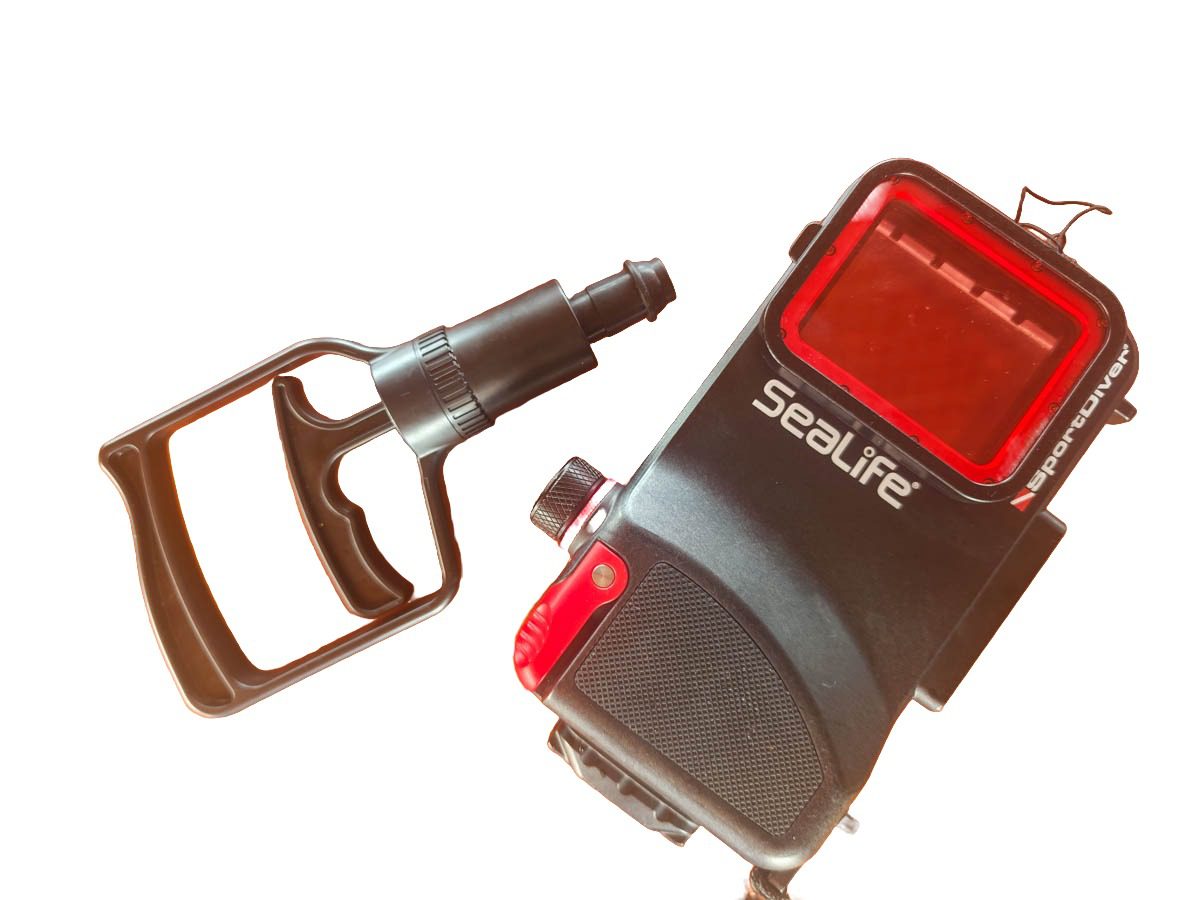
The other serious phone housing is the SeaLife SportDiver Ultra. On my Raja Ampat trip other guests were using them, and we compared results on the dive deck every evening. It is rated to 40 m, costs USD 349.95 on SeaLife’s site (shown out of stock there when I checked on November 16, 2026, so you may need a dive shop or Amazon), runs on two AAA batteries and controls the phone through buttons and SeaLife’s free app over Bluetooth.
It beats the DiveVolk on three points. It has two leak alarms, one for moisture and one for vacuum pressure, with a pre-dive pressure test of about 3.5 minutes. Its buttons and shutter lever work in thick gloves. And it costs about USD 150 less than my Platinum. The price you pay is control: you are limited to SeaLife’s app, you cannot run UWACAM, and the owners I dived with could not tap to choose their focus point. If a call or notification pushes the app to the background mid-dive, you are stuck until you surface, so switch to airplane mode. My verdict from the DiveVolk vs SeaLife SportDiver comparison stands: DiveVolk for warm water and photo quality, SeaLife for cold water in gloves or if you will not dive without an alarm. Check the SeaLife SportDiver Ultra price on Amazon.
DJI Osmo Action 6: best budget action camera for diving
For years my dive camera was a GoPro. I stopped for a plain reason: mine kept breaking and freezing underwater. I moved to a DJI Osmo Action 6, I find the image quality better, and it now sits on top of my DiveVolk housing and handles video while the phone handles photos.
On DJI’s spec sheet the Osmo Action 6 has a 1/1.1-inch sensor, a variable aperture from f/2.0 to f/4.0, 8K video at up to 30 fps and photos of about 38 MP. That sensor is the reason it suits low light at depth better than most action cameras. DJI rates the bare camera to 20 m and to 60 m inside its Waterproof Case, and quotes up to 240 minutes of battery life in its 1080p test. It launched at EUR 379 for the Standard Combo. When I checked on November 16, 2026, REI listed the Standard Combo at USD 436 as a pre-order with the black version sold out, and Drone Nerds showed it in stock at the same USD 436.
Check the DJI Osmo Action 6 price on Amazon, and add the DJI Osmo Action 6 Diving Accessory Kit, which bundles the 60 m case, six pairs of anti-fog inserts, a wrist strap and a floating handle.

My Osmo Action 6 flooded at about 15 m
You should know this before you buy any action camera for scuba. In October 2026 my Osmo Action 6 took in water at about 15 m, while it was inside a dive housing. I am not going to guess at the cause here. The lesson I took from it is not about one brand: a depth rating printed on a box is a test result, not a promise for your camera on your dive. Check the camera’s own doors too: DJI’s instructions for the Osmo Action 6 are to close the battery compartment cover and the USB-C port cover and tighten the glass lens cover before it goes in the water. My full pre-dive checklist is further down this page.
GoPro HERO13 Black: the simple video option
I went through the Hero 8, the Hero 11 and the Hero 13, among others, and for wide video GoPros are hard to fault: small, simple, well stabilized and supported by every dive accessory maker. Their limit is stills: fish portraits lack fine detail and macro is out of reach. GoPro has not released a HERO14 Black; its big 2026 launch was the MISSION 1 series, so the HERO13 Black is still the current HERO. It has a 1/1.9-inch sensor and shoots 5.3K at 60 fps. GoPro rates it to just 10 m out of the box and 60 m in the Protective Housing, so for scuba the housing is not optional. Backscatter listed the camera at USD 429.99 and the housing at USD 54.99. Check the GoPro HERO13 Black price on Amazon · GoPro Protective Housing on Amazon
Insta360 Ace Pro 2: best for video in dim and murky water
The Insta360 Ace Pro 2 shows up on most competitor lists for a good reason. It pairs a 1/1.3-inch sensor with a Leica-branded lens, records 8K at 30 fps and 4K at 60 fps with Active HDR, and launched at USD 399.99. When I checked on November 16, 2026, Backscatter listed a dual-battery bundle at USD 419.99, while its dive bundle (USD 513) and the 60 m dive case (USD 59.99) were out of stock. Divers who review it praise its natural color and the detail it keeps in shadows on wrecks and deeper reefs. Its bare rating is about 12 m, so scuba needs the dive case, rated to 60 m. In that case the small front screen is no help for selfies, and it can overheat in 8K, so 4K is the safer mode underwater. Check the Insta360 Ace Pro 2 price on Amazon · Ace Pro 2 dive case on Amazon
SeaLife ReefMaster RM-4K: best first dive camera for beginners
The ReefMaster RM-4K is a dive camera sold as one package: a small 14 MP camera with 4K video at 30 fps that lives inside its own housing, rated to 40 m, at USD 349.95. The battery is removable and rated for more than two hours of video per charge. The housing closes with a hand-turned cog rather than latches, so the one habit to build is screwing it fully tight before every dive. For a new diver who wants a camera to clip on and forget, with no phone at risk, it is the simplest box on this list. Check the SeaLife ReefMaster RM-4K price on Amazon.
Best Underwater Cameras Under $1,000, Including Housing
Stretch the budget to US$1,000 and you get the two things cheaper setups cannot do well: true macro and a large sensor in a tiny body.
OM System Tough TG-7: best for macro and snorkeling
For pygmy seahorses, nudibranchs and other tiny subjects, I point readers away from phones and action cameras and toward the OM System Tough TG-7. It has a 12 MP 1/2.33-inch sensor, an f/2.0 lens with 4x zoom, RAW files, 4K video and a super macro mode that focuses from 1 cm, with a microscope mode on top. It is waterproof to 15 m on its own, which makes it the best snorkeling camera that needs no housing, and to 148 ft (about 45 m) in the PT-059 housing. Backscatter listed the camera at USD 579.99 on sale (USD 649.99 regular) and the housing at USD 399.99, so a scuba-ready TG-7 costs just under US$1,000.
The trade-off is the small sensor next to the 1-inch sensor in my phone, so I would not pick it for wide reef scenes. For a nudibranch the size of a grain of rice, its 1 cm focus does what my phone, with its 30 cm minimum, cannot.
Check the OM System Tough TG-7 price on Amazon · PT-059 housing on Amazon
SeaLife Micro 3.0: best no-maintenance underwater camera
The SeaLife Micro 3.0’s selling point is that there is nothing to seal. SeaLife describes it as permanently sealed, with no waterproof door and no O-rings to maintain, and rates it to 60 m. It has a 16 MP 1/2.3-inch Sony sensor, 4K video at 30 fps, 64 GB of built-in memory (about 140 minutes of 4K) and two to three hours of battery, at USD 599.95 on SeaLife’s site. Because it is sealed, the battery is built in, so charge it between dives. If the idea of greasing an O-ring is what stops you from buying a camera, this is the one that removes the job. Check the SeaLife Micro 3.0 price on Amazon.
GoPro MISSION 1 and MISSION 1 PRO: best video if your budget stretches
GoPro’s 2026 MISSION 1 series answers my old complaint about action-camera stills. Both models use a 1-inch, 50 MP sensor, are waterproof to 20 m without a housing and to 60 m in the USD 59.99 Protective Housing. Backscatter lists the MISSION 1 at USD 599.99 and the MISSION 1 PRO at USD 699.99, so either goes scuba-ready for under US$760. It is a real step up in sensor size from any HERO, and the choice I would look at for video-first divers with this budget. Check the GoPro MISSION 1 PRO price on Amazon.
What Is the Best Underwater Camera for Snorkeling?
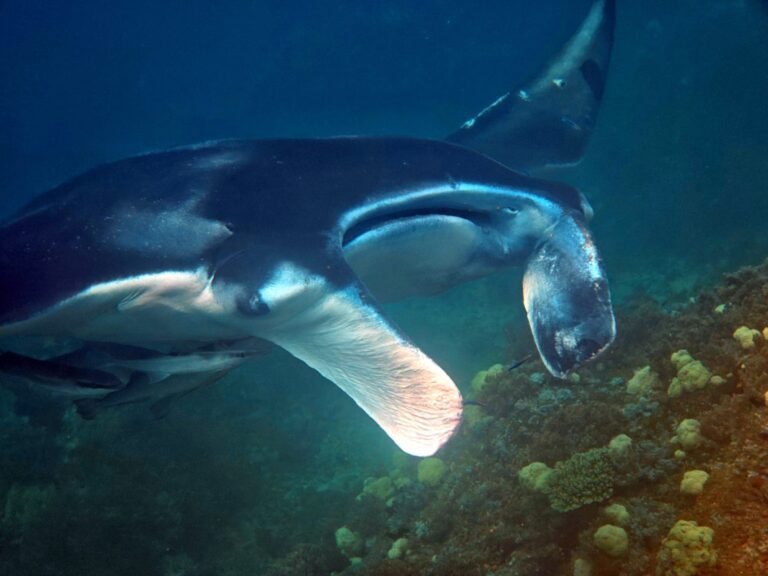
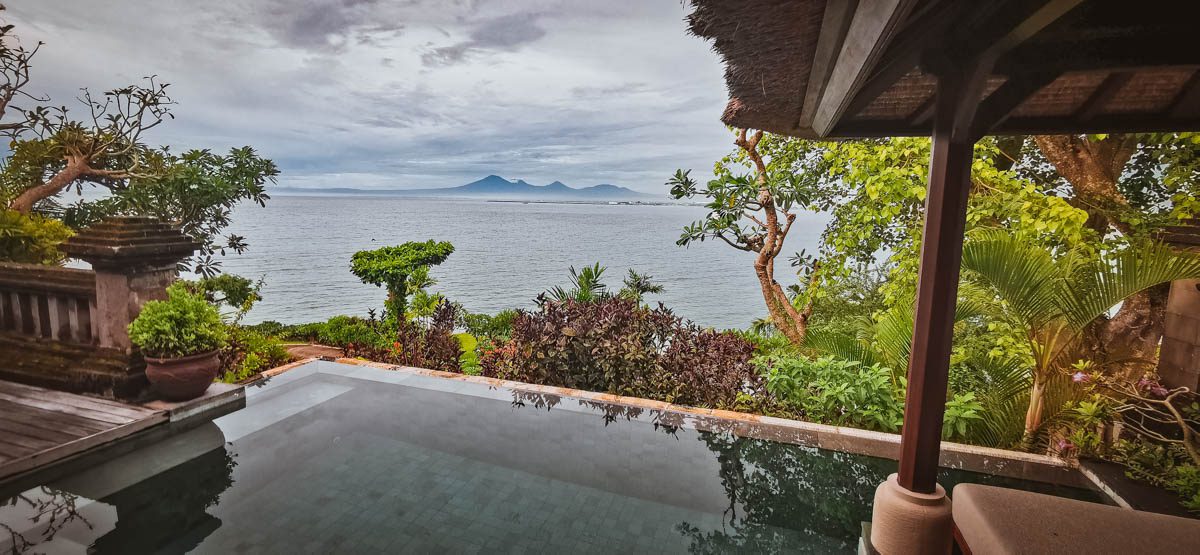
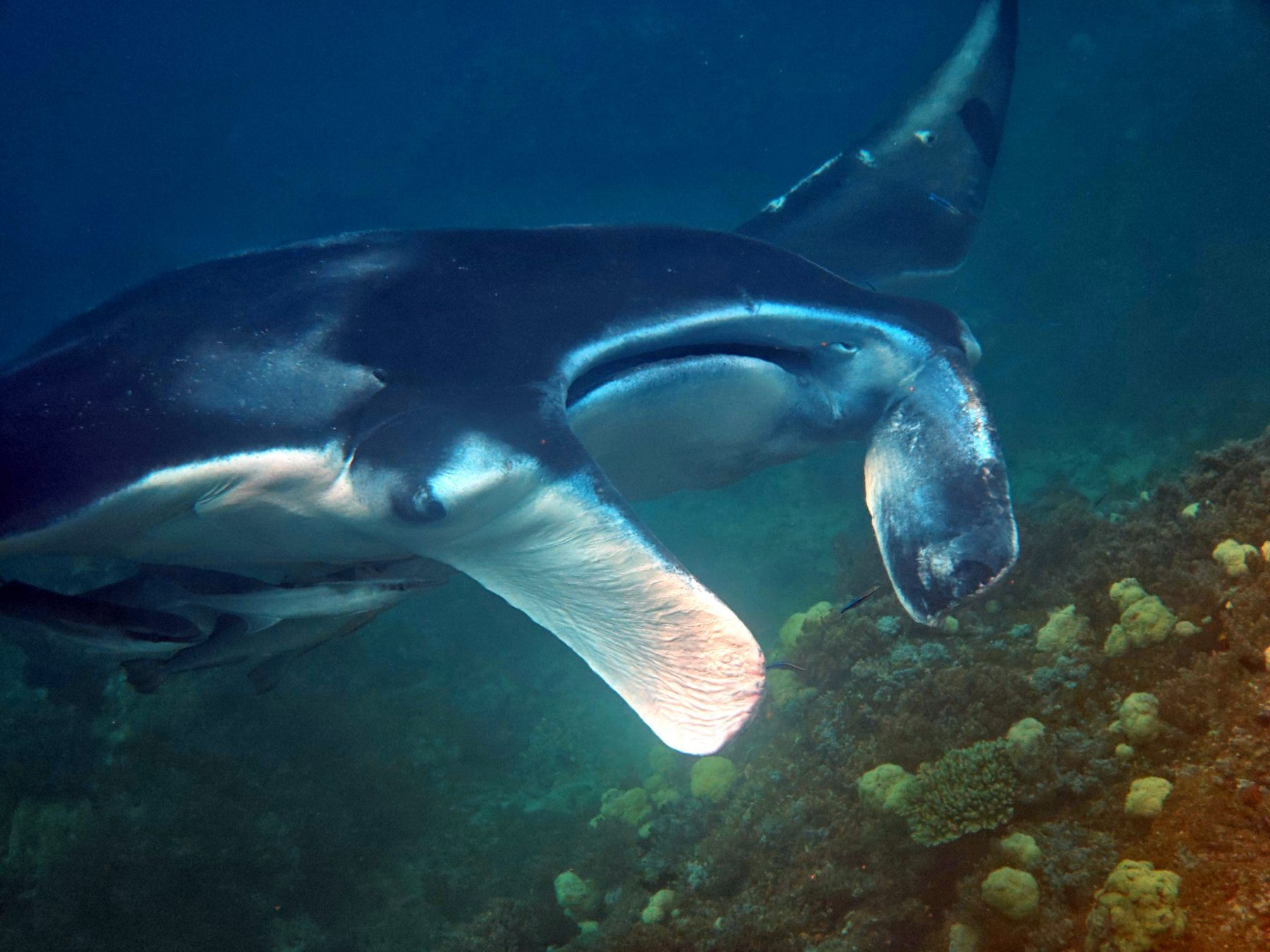
Snorkeling changes the sums. You are in the top few meters, where light and color are at their best, so you need neither a 60 m housing nor a red filter. On my Raja Ampat snorkeling trip on the Scubaspa Zen in October 2026, the reef flats sat at roughly 2 to 6 m and the mantas at Tank Rock fed at about 3 to 7 m, close enough to photograph from the surface. I took those photos on my phone in the DiveVolk housing.
If you are buying a snorkeling camera on a budget, here is how I would choose:
- Cheapest that works: Kodak PIXPRO WPZ2 (USD 179.99), waterproof to 15 m with no housing. Fine photos in good light, 1080p video.
- Best overall for snorkeling: OM System Tough TG-7, 15 m with no housing, with a real zoom and the macro modes. Check price on Amazon.
- Best for snorkeling video: DJI Osmo Action 6, whose 20 m bare rating covers any snorkeling or freediving most of us do. DJI still recommends the Waterproof Case for long underwater sessions.
- Best if you also dive: your phone in a DiveVolk. One camera for both, and tap-to-focus that makes turtles and reef fish sharp.
- GoPro HERO13 Black: fine at the surface, but its bare rating is 10 m, so keep duck-dives shallow or use the housing.
One practical point from that trip: holding position against the current at Tank Rock was hard work, so a steady grip matters more than megapixels. Use a tray or a floating handle, and a wrist lanyard. If your first snorkel or dive with a camera will be in Bali, my guide to the best dive sites in Bali by region says where conditions are easy.
How to Choose a Budget Underwater Camera: What Actually Matters
Most budget camera lists compare megapixels. Underwater, these are the things that decide whether you come home with photos, or with a dead camera.
1. Depth rating, with and without the housing
A bare rating is for snorkeling, not scuba. 10 m (GoPro HERO13 Black, AKASO Brave 8 Lite), 12 m (Insta360 Ace Pro 2), 15 m (TG-7, Kodak WPZ2) and 20 m (DJI Osmo Action 6, GoPro MISSION 1) are all shallower than an ordinary reef dive, or only just deeper. For scuba, buy a housing or case rated to at least 40 m, and know that parts can have shallower limits: my DiveVolk’s touchscreen is rated to 40 m and its Bluetooth shutter stopped working for me at about 30 m.
2. The housing is part of the price
A “cheap” camera can cost twice its sticker price once it is scuba-ready. The TG-7 goes from USD 579.99 to about USD 980 with the PT-059; a HERO13 Black adds USD 54.99. Phone housings flip that sum: you pay only for the housing, but you put a phone worth far more inside it, so check what your travel insurance says about equipment used under water.
3. Sensor size for low light
Water swallows light fast, and small sensors show it first as noise and smeared detail. On this list the 1-inch sensors (MISSION 1, my phone’s main camera) and the 1/1.1-inch DJI lead, the 1/1.3-inch Insta360 follows, and the 1/2.3-inch compacts trail. For bright, shallow reefs that gap barely matters; on a 25 m wall or a wreck it does.
4. Color: red filter, app or light
Red disappears first as you descend, which is why budget underwater photos look blue-green. A red filter helps an action camera in blue water by daylight. On my phone, the UWACAM app’s live color correction made the red filter redundant, and every sample in my DiveVolk review was shot with no external lights. A video light becomes worth the money on night dives, under overhangs and for close subjects at depth.
5. Video specs you will actually use
8K is on several cameras here, but 4K at 30 or 60 fps is what most divers keep, and it is easier on batteries and on heat. Stabilization matters more than resolution when you are finning, and a 4K60 file needs a fast card: buy a V30 card or faster.
6. Batteries, floating straps and grip
On a liveaboard you may do four dives a day. Removable batteries (GoPro, DJI, RM-4K, TG-7) can be swapped between dives; the sealed Micro 3.0 and your phone cannot. Clip every camera to your wrist or BCD, add a floating handle for snorkeling, and pack spare O-rings for whatever housing you choose.
Underwater Camera Accessories on a Budget
None of these is mandatory, and I would buy them in this order:
- Anti-fog inserts. The cheapest fix for the most common problem; they ended my housing fogging for good. Check price on Amazon.
- A floating hand grip or wrist lanyard. Essential for snorkeling, where a dropped camera sinks or drifts. Check floating grips on Amazon.
- A dual-handle tray. Steadier shots and somewhere to mount a light or a second camera; my rig carries the DJI on top of the phone housing. DiveVolk’s costs USD 99. Check camera trays on Amazon.
- A red dive filter for an action camera in blue water by daylight. Check red filters on Amazon.
- A video light once you dive deeper, at night or in caves; SeaLife’s Sea Dragon 3000F, for example, ships with a tray, a grip and a GoPro adapter. Check Sea Dragon lights on Amazon.
- Spare O-rings and grease for your exact housing, plus a fast V30 microSD card.
How to Avoid a Flood on a Budget Camera
My most expensive lesson came from trying to save money on a housing. I bought a Seafrog housing for my Canon R to find out whether a budget housing could stand in for a Nauticam or an Ikelite. It could not. The O-rings felt loose from the start, the replacements felt the same, and I paid about EUR 30 in shipping and customs for each replacement shipment. After only 10 dives it flooded and damaged the camera. Canon declined the warranty repair because of the flood, so I paid for it myself. Seafrog suggested testing the housing empty; I assembled it carefully and it flooded again, with nothing inside. The whole account is in my Seafrog housing review for Canon R cameras.

The lesson for any budget: spend on the seal, not the sensor. A cheap camera in the maker’s own, well-reviewed housing is safer than a better camera in an unknown one, and a camera warranty will not cover a flood. Leak alarms and vacuum checks earn their price, which is why I point out the SportDiver Ultra’s and note that my DiveVolk has none. PADI’s guidance on preventing housing leaks and Backscatter’s housing maintenance guide agree on the essentials, and I built my checklist from them.
Flood-proof your housing: my pre-dive checklist
One more point belongs with the rinse: sunscreen residue in a shared rinse tank ends up on optical glass, which I cover in my guide to reef-safe sunscreen for divers.
If you outgrow a budget camera
A mirrorless camera with a dome port and strobes still produces the best underwater images; I shot a Canon R that way. The housing is where that money goes: an Ikelite 200DL for the Canon EOS R6 and R6 II is USD 1,995 at Backscatter before a port, and a Nauticam NA-R6II is USD 5,300. If you go that way, buy the vacuum valve. For a few warm-water trips a year, I would not.
So Which Budget Underwater Camera Should You Buy?
If you dive in warm water a few weeks a year and already carry a good phone, buy the housing, not another camera. That is what I did after years of heavier and more expensive setups, and it is the choice I would make again for one of the best Raja Ampat liveaboards or a week on one of the best Komodo liveaboards. Under US$300, that means the Max Plus; with a thick camera phone or a bigger budget, the Platinum V2.
👉 See the DiveVolk SeaTouch 4 Max housings with my 6% reader discount
If video is the point, buy the DJI Osmo Action 6 and check the seals yourself every time. If you love small subjects, buy the TG-7. If you want nothing to assemble, buy the SeaLife Micro 3.0 or the ReefMaster RM-4K. And if you only snorkel, a Kodak WPZ2 and a lanyard will do.
FAQ
What is the best budget underwater camera?
For divers who already own a recent flagship phone, the best budget underwater camera is a phone housing: the DiveVolk SeaTouch 4 Max Plus at USD 239, or the aluminum Platinum V2 at USD 499, both rated to 60 m. Without a phone to house, the DJI Osmo Action 6 is my action-camera pick.
What is the best underwater camera for snorkeling?
For snorkeling you do not need a deep-rated housing. The OM System Tough TG-7 is waterproof to 15 m on its own and adds zoom and macro, while the DJI Osmo Action 6 goes to 20 m without a case for video. On the smallest budget, the Kodak PIXPRO WPZ2 is waterproof to 15 m for USD 179.99.
What is the best cheap underwater camera for scuba diving?
The cheapest setups I would take scuba diving are a DiveVolk SeaTouch 4 Max Plus around your own phone (USD 239, 60 m) or the SeaLife ReefMaster RM-4K, a camera and 40 m housing in one box for USD 349.95. A GoPro HERO13 Black in its USD 54.99 housing is the simple video option.
Can I take a GoPro scuba diving without a housing?
No, not on an ordinary dive. GoPro rates the HERO13 Black to 10 m (33 ft) without a housing, which is shallower than most reef dives. In GoPro’s Protective Housing the rating becomes 60 m (196 ft). Use the housing for every scuba dive and keep the bare camera for snorkeling.
Is a phone housing better than an action camera for diving?
For photos, yes, if your phone is a recent flagship. In Raja Ampat my phone in a DiveVolk housing beat every action camera I have owned for stills, thanks to its 1-inch sensor and optical zoom. Action cameras still win for stabilized wide video, which is why I mount a DJI Osmo Action 6 on top.
How deep can a budget underwater camera go?
Without a housing, budget cameras are rated from 10 m (GoPro HERO13 Black) to 20 m (DJI Osmo Action 6, GoPro MISSION 1), except the sealed SeaLife Micro 3.0 at 60 m. With their dive housings, most reach 40 to 60 m. Parts can be shallower: my DiveVolk touchscreen is rated to 40 m.
How do I stop my underwater housing from flooding?
Clean and lightly grease the O-ring, check it and its groove for hair and sand, close the housing in a clean, dry place, and test it before the dive with a vacuum check or a dunk in the rinse tank. Watch for bubbles as you descend. On a new housing, do the first dive with it empty.
Disclosure: this article contains affiliate links. If you book through them, I earn a small commission at no extra cost to you. Read my full disclosure policy.