Villa Argentina Dubrovnik reopened on the city’s seafront in summer 2026 after a multi-year rebuild by the Croatian studio 3LHD: 96 rooms where there were once 131, a tiered private beach, a new Anima Wellbeing & Spa, and the 13-room Villa Orsula returning beside it through the same gardens.
Dubrovnik has a problem its tourist board has stopped pretending about. On a July morning with three ships in, the Stradun moves at the pace of the slowest person on it, and the walls — the one thing everyone came for — become a queue with a view. The city’s answer has been to ration: capped cruise arrivals, a ban on wheeled suitcases on the cobbles, cameras counting heads at the gates. The traveller’s answer is older and simpler. Sleep outside the walls, on the water, and walk in once the ships have sailed.
Villa Argentina has held exactly that position for generations. The original villa dates from 1913, according to the hotel, and it grew into one of the city’s original five-star addresses: a stone house above the sea on Frana Supila, about 700 metres east of the Old Town, with gardens falling to the water and Lokrum island filling the view.
Which is why this reopening is not a refurbishment story. The hotel sat dark for several seasons while 3LHD took it apart behind a façade that was never allowed to change. More than 10,000 square metres were rebuilt, and when guests were let back in this summer, the room count had fallen from 131 to 96.
That last number is the one I keep coming back to. A hotel in a city as oversubscribed as Dubrovnik does not casually give up 35 rooms of July revenue. Adriatic Luxury Hotels did, and most of what follows is an account of what it bought with them.
Villa Argentina Dubrovnik: Key Facts
- Reopened: summer 2026, after a multi-year transformation
- Where: Frana Supila 14, on the seafront about 700 metres from the Old Town
- Rooms: 96 rooms and suites — down from 131 before the rebuild, which tells you where the money went
- Heritage: one of Dubrovnik’s original five-star landmark hotels, and a member of The Leading Hotels of the World
- Architecture: 3LHD, led by the Dubrovnik-born architect Marko Dabrović, with the original villa façade kept whole
- Grounds: 14,000 Mediterranean plants — bitter orange, bougainvillea, lavender, rosemary, sage and myrtle — on terraces that fall to the sea
- The beach: nearly 200 feet of tiered private shoreline, plus an outdoor pool looking across to Lokrum and the Old Town
- Spa: Anima Wellbeing & Spa, around 6,000 sq ft, with a 72 sqm indoor pool and a 140 sqm outdoor pool
- Dining: LIZ, Cala Beach Club and the Copper Bar
- Sister hotel: Villa Orsula, 13 rooms, reopened at the same time through the shared gardens
- Airport: about 20 kilometres from Dubrovnik Airport
- Rates: from €1,200 per room per night in high season at Villa Argentina; from €1,300 at Villa Orsula. Both open and bookable now
What 3LHD Actually Did
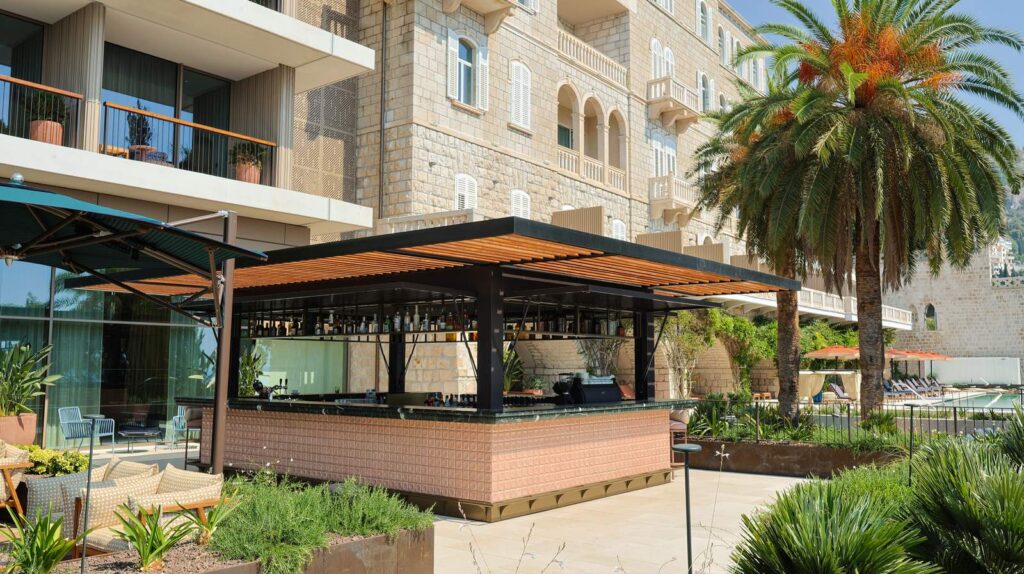
Cutting a hotel from 131 keys to 96 is an expensive sentence. It means walls came down and rooms were joined rather than repainted, and it is the difference between a renovation and a rebuild. The original villa stayed — protected, and in any case the reason the building is loved — while a modern wing went up beside it, joined to the old house by a terraced garden, in local stone and natural materials that step down the slope instead of perching on top of it.
3LHD was the obvious studio to hand it to. The Zagreb practice has spent years showing that a big hotel on the Adriatic does not have to look like one — Hotel Lone and the Grand Park Hotel in Rovinj are both its work — and the partner in charge here, Marko Dabrović, was born in Dubrovnik. He was rebuilding a landmark of his own city, which tends to concentrate the mind.
The new wing follows the slope instead of fighting it. Local stone wraps the lower levels and the outdoor terraces, some of it dug up on site during the works and built back in, so that from the water the hotel reads as a continuation of the rock and of the city walls beyond it. Arrival has been rethought as well. The lobby sits on the sixth floor behind a wide wall of glass, which means the first thing you are given is the whole view at once: Lokrum, the Old Town, the open Adriatic. Rooms, restaurant, spa, pool and beach all lie below, down through the building or the gardens.
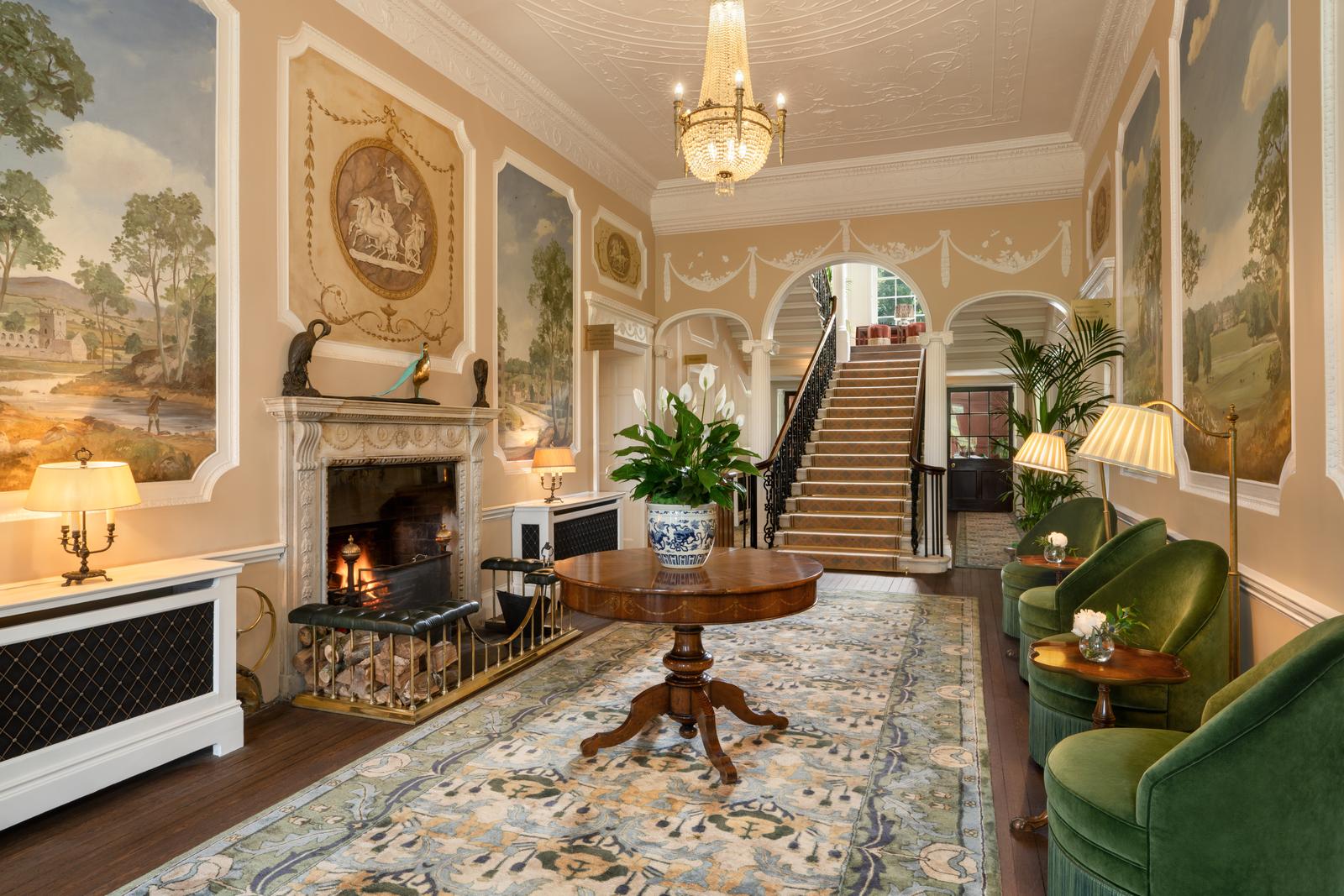
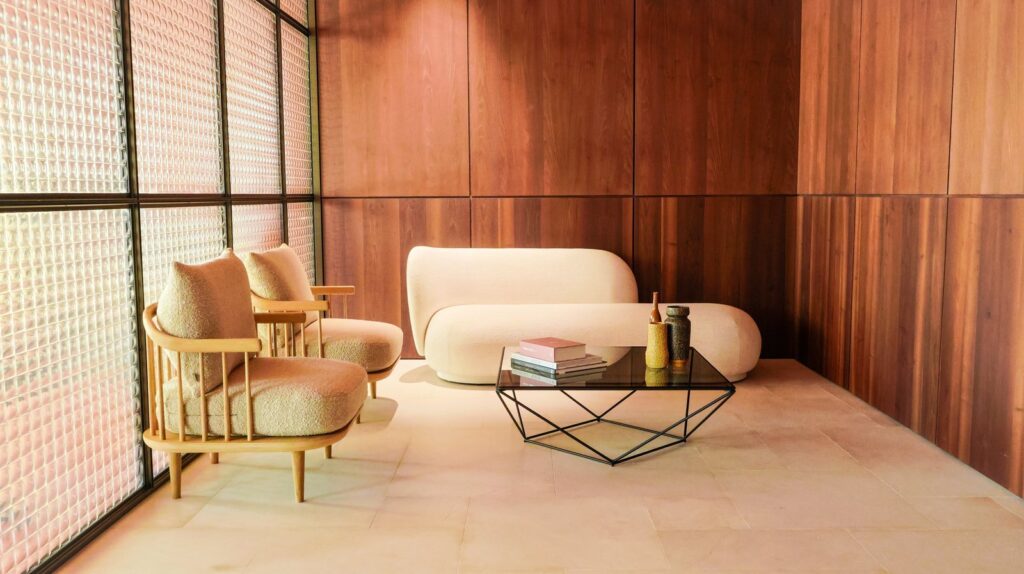
Inside, 3LHD designed the interiors too, with Milan’s Dimore Studio brought in for the soft furnishings and the decorative layer. The palette is borrowed from the coast: stone, wood and linen, pale neutrals, sea blues and warm earth tones. And one piece of the old hotel has come back exactly where it was. Ivo Dulčić’s 1967 mosaic Dubrovačke varijacije — Dubrovnik Variations, by the Dubrovnik-born painter — was restored and returned to its original position, which now happens to be inside the spa.
The planting is not a flourish either. Fourteen thousand Mediterranean plants across a terraced estate is a landscape project in its own right, and in a city where the luxury default is polished marble and a chilled lobby, a garden of bitter orange and myrtle running down to the Adriatic is the braver choice. The historic gardens and the existing trees were kept and planted around, not cleared and replaced.
The least photogenic part of the rebuild may be the most significant. Villa Argentina no longer burns heating oil at all. It runs on a seawater heat-pump system instead — the Adriatic at the bottom of the garden doing the work — behind triple-glazed windows, with smart-room controls, low-energy lighting and managed water use. None of it will appear in a brochure photograph. All of it is the difference between a restored façade and a building that has actually been brought into this century.
The Rooms: Original Villa or New Wing
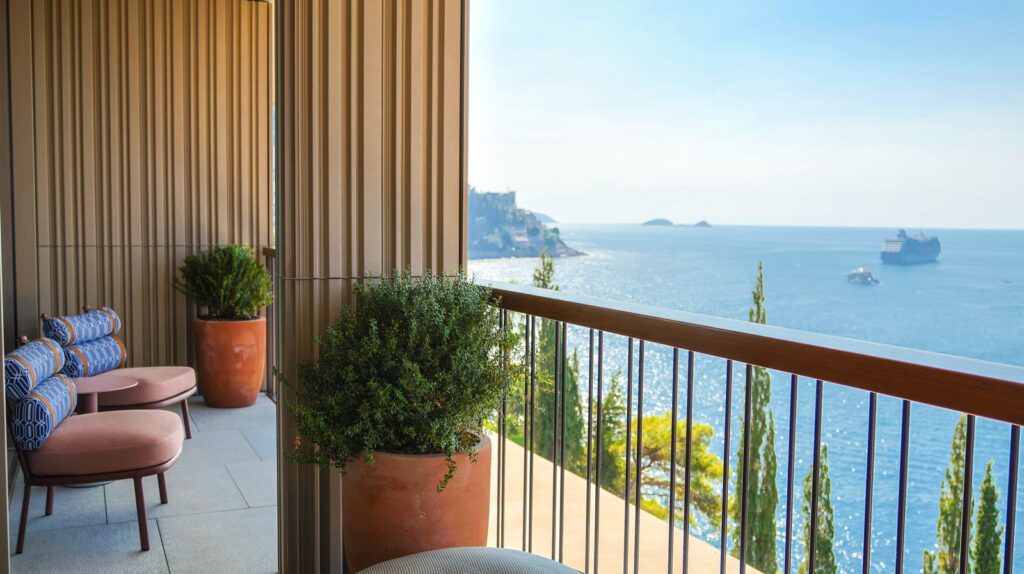
The 96 rooms and suites are split between two buildings, and the choice matters more here than in most hotels.
The original villa holds the Villa Superior and Villa Deluxe rooms and a Villa Suite. All of them face the sea, but only some have a balcony — the category names are otherwise identical, so read the small print before you book. The new building, which the hotel simply calls The Hotel, has the Deluxe Rooms, the Deluxe Suites and the Signature Suite. Here every room has a balcony but not every room has the sea: one Deluxe category looks into the gardens instead, which will suit anyone who prefers green shade to glare.
The point of losing 35 rooms was to make the remaining ones larger, with bigger balconies and more privacy between them. The finishes are natural stone, wood and linen, the suites are open-plan behind floor-to-ceiling glass, and the service list is what the rate implies: 24-hour room service, turndown, a stocked minibar, coffee and tea in the room, a choice of pillows on request.
My reading from the room list: if the heritage is the point, ask for the villa. If you want a guaranteed balcony and the newest rooms, take the new wing.
The Spa and the Beach
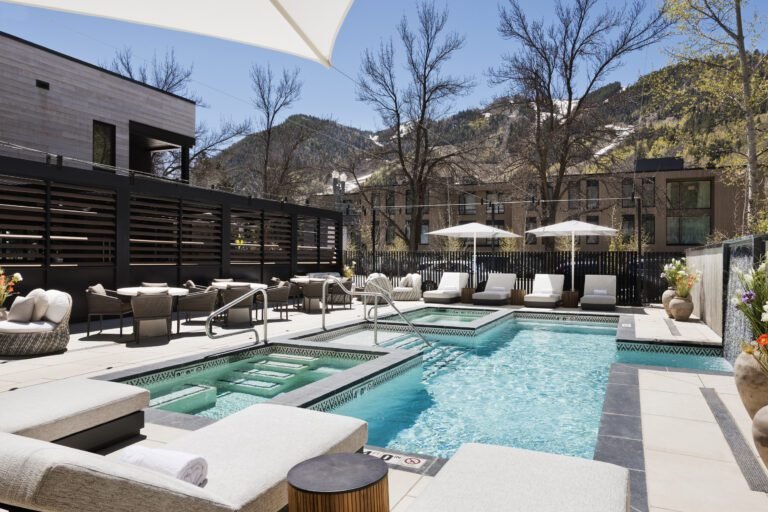
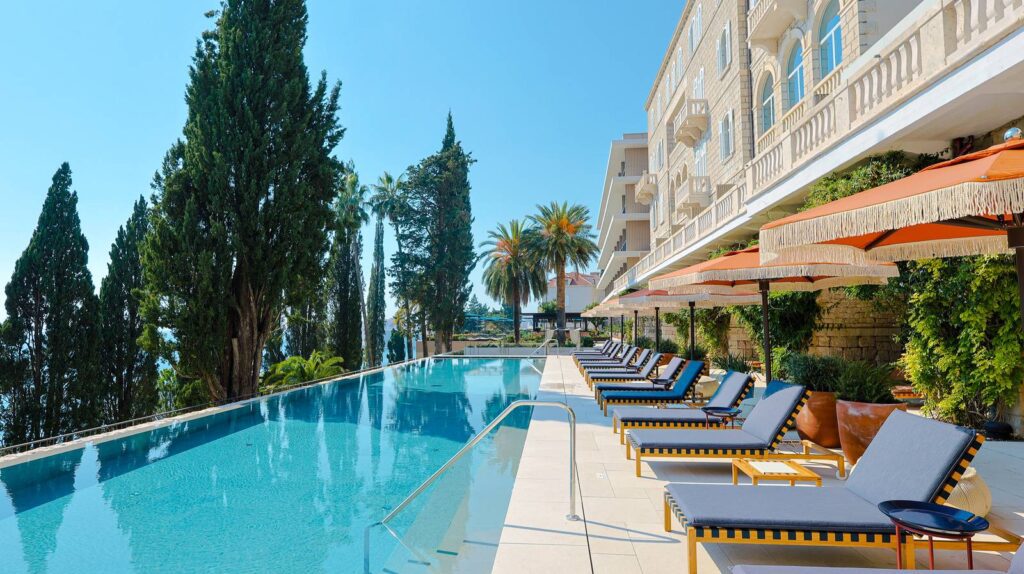
Anima Wellbeing & Spa is the new thing: roughly 6,000 sq ft indoors, with an 18-metre, 72 sqm pool, a Finnish sauna, steam bath, Himalayan salt room, ice fountain, four treatment rooms, a relaxation zone with heated loungers and a gym. Outside, a second pool runs 28 metres along its own garden terrace — 140 sqm of water, long enough for real lengths — with a sundeck and lounge seating around it. The programme adds yoga, Pilates, aqua fitness and sound healing.
The beach is the rarer asset. Dubrovnik’s shoreline is mostly rock and ladder, and water you can reach from your own hotel rather than from the public path is scarce this close to the walls. Nearly 200 feet of terraces stepping into deep, clear sea is, in practice, the reason to choose Villa Argentina Dubrovnik over an equally handsome address inside the Old Town — where there is nowhere to swim at all.
The detail is worth having. The beach runs for about 60 metres and is cut into four terraced levels that follow the slope down to the water, each one facing Lokrum. You reach it through the gardens or by a direct route inside the hotel, and guests of Villa Orsula share it. It is stone, not sand — this is Dubrovnik — so think steps into deep water rather than a gently shelving shore, and plan accordingly if you are travelling with small children.
Eating and Drinking
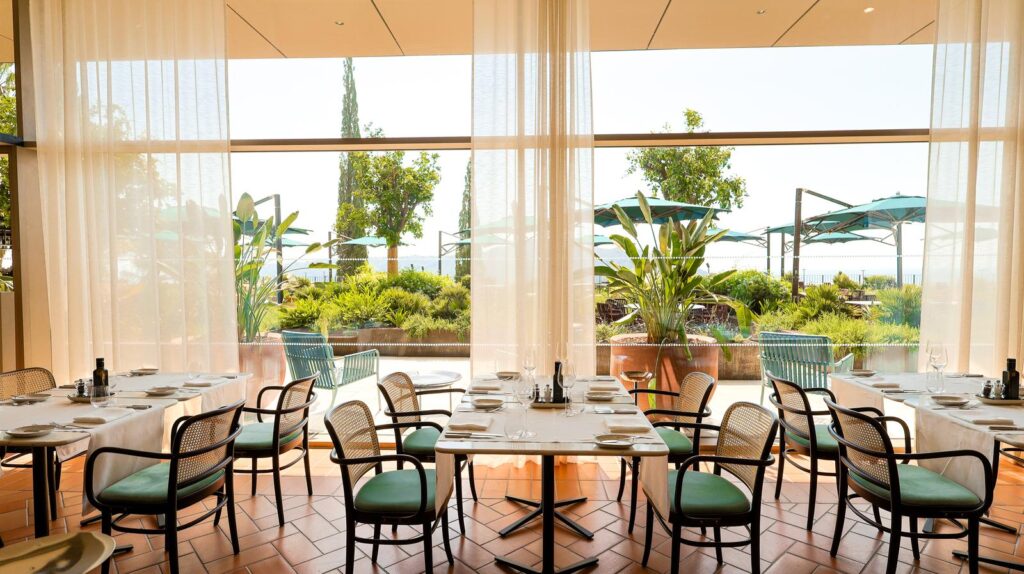
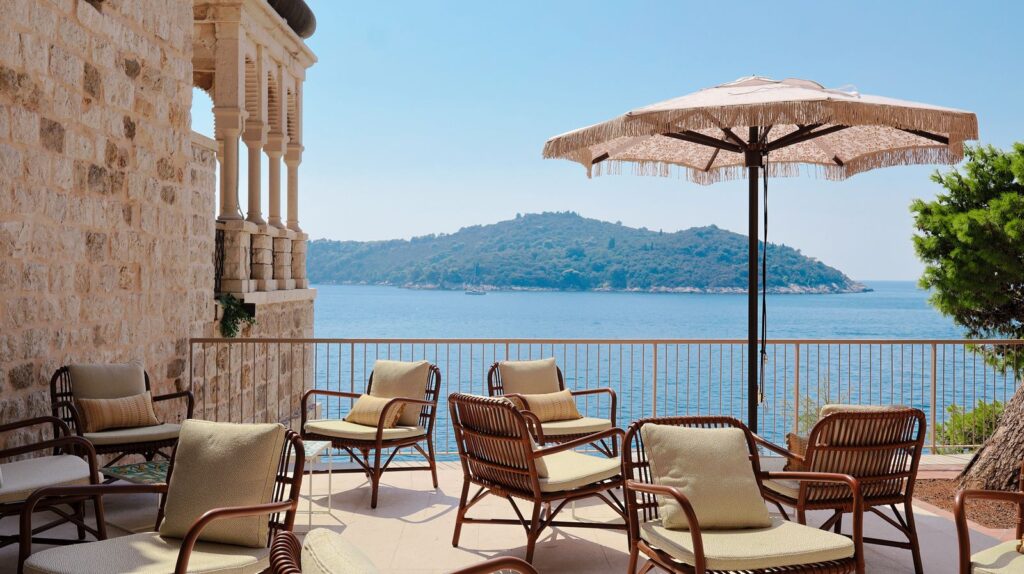
LIZ is the flagship, built on contemporary Croatian cooking — local seafood, wild herbs, whatever is in season — and served on a garden terrace above the sea. It runs all day. Breakfast is freshly baked bread and pastries, regional cheeses and fruit; by lunch and dinner the menu reads like the coast it sits on: cured sea bass with citrus and fennel, grilled octopus with pepper sauce, a lamb ragout pasta, prawn pasta with seasonal herbs.
Down at the water, Cala Beach Club brings a southern Italian hand to Dalmatian ingredients — seafood, things off the grill, plates to share — from noon until early evening. It is the lunch you eat with salt still on your shoulders. The Copper Bar sits on the threshold between inside and out, built around a red limestone monolith indoors and opening onto the garden at sunset, and it pours until after midnight.
The wine list is the part to read closely. It leads on native Croatian grapes, Pošip and Grk among the whites and Plavac Mali in red, including Dingač from the Pelješac peninsula just up the coast. Grk is the one to order: it grows almost nowhere but the sandy soils around Lumbarda on Korčula, and very little of it ever leaves the island. Croatian wine is still underpriced for how good it has become, and a hotel list that leans into it rather than defaulting to Burgundy is doing its guests a quiet favour.
Villa Orsula, Next Door
The reopening is really two hotels. Villa Orsula, a 1930s villa a few steps away through the shared gardens, has come back at the same time with just 13 rooms and suites, each designed individually. The restored façade is formal; the interiors, in the hotel’s own word, are playful, and many of the rooms look at the sea through the garden’s greenery.
It has its own small pool tucked into the gardens and its own restaurant and lounge bar, Marea, where executive chef Roberto Chavez runs Mediterranean cooking with a Peruvian accent — which, on a coast this devoted to grilled fish and olive oil, is the more interesting menu of the two. Orsula guests also get the use of Villa Argentina’s Anima spa and its terraced beach. In other words, the 13-room house buys the privacy of a private villa with a 96-room hotel’s facilities at the bottom of the garden, for about €100 a night more in high season.
How Much Does Villa Argentina Dubrovnik Cost?
Adriatic Luxury Hotels quotes Villa Argentina from €1,200 per room per night in high season, and Villa Orsula from €1,300. Shoulder-season rates fall a long way below that, which is one more argument for June and late September. Both hotels are open and taking bookings now.
Rates for a hotel like this swing 10–20% between platforms and between dates, so five minutes of comparing can save hundreds of euros. One tip: some platforms still list the hotel under its old name, Grand Villa Argentina. I have prefilled the hotel correctly on the links below so you just need to click them.
- Compare rates on Booking.com — free cancellation on most room types, no prepayment
- Check Trip.com — often worth a look for travellers based in Asia
- See Expedia — useful when bundling flights; sometimes beats Booking.com
For the walls themselves, an early-morning or sunset city walls tour gets you up there outside the crush.
The Lens I’m Reading This Through
I judge a seafront hotel on one question: can you get into the water easily, repeatedly, and without arranging anything? It sounds trivial, and it is the thing that most often fails. A beach club that turns out to be a sun-lounger terrace above rocks is not swimming access. Terraced steps into deep water a few metres from your room is, and it rearranges the day — three swims instead of one, early and late, around the heat rather than through it.
The Adriatic rewards that habit. It is clear, cool and clean, and the stretch between Dubrovnik and Lokrum is as good as mainland Croatia gets for simply getting in. For the same coast seen from the water, my look at Windstar’s Star Explorer covers its Dubrovnik call, and my Le Bougainville review follows a Ponant sailing from Venice to Malta through Croatia and Montenegro. What I can’t tell you yet is how the 96 rooms feel, whether LIZ is a destination or a hotel dining room, or what the walk into the Old Town is like at eight on an August morning. Those are judgements for a stay.
What I can say from here is who it should suit. On paper, Villa Argentina Dubrovnik is for the traveller who wants the Old Town within a ten-minute walk but not underfoot, who would rather swim three times a day than tick off a fourth museum, and who notices things like a garden, a wine list and a properly long pool. It suits them less if they want sand, a hotel inside the walls, or a high-season rate under four figures. At €1,200 a night the service has to live up to the architecture, and that is the one thing no press kit can show.
Tip: go in June or late September. The sea is warm from June and stays warm into October, the Old Town is walkable, and the cruise calendar thins at both ends of the season in a way it never does in July and August. Whenever you go, check the day’s ship arrivals before you plan the walls — the gap between a quiet circuit and a crowded one is a few hours.
Disclosure: this article contains affiliate links. If you book through them, I earn a small commission at no extra cost to you. Read my full disclosure policy.
This preview is based on official announcements — I haven’t stayed yet. Read more about how I review or visit my Work With Me page.