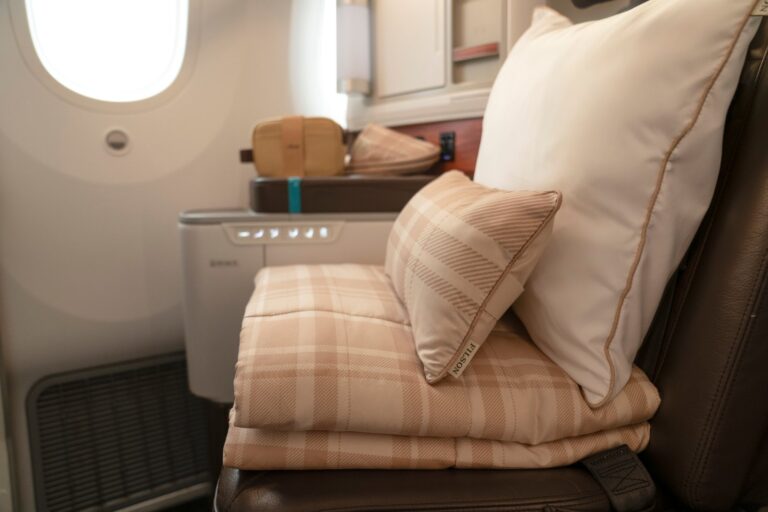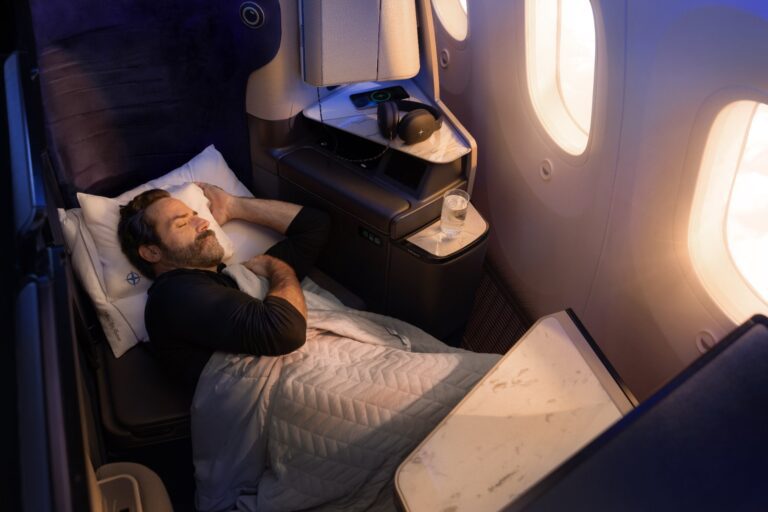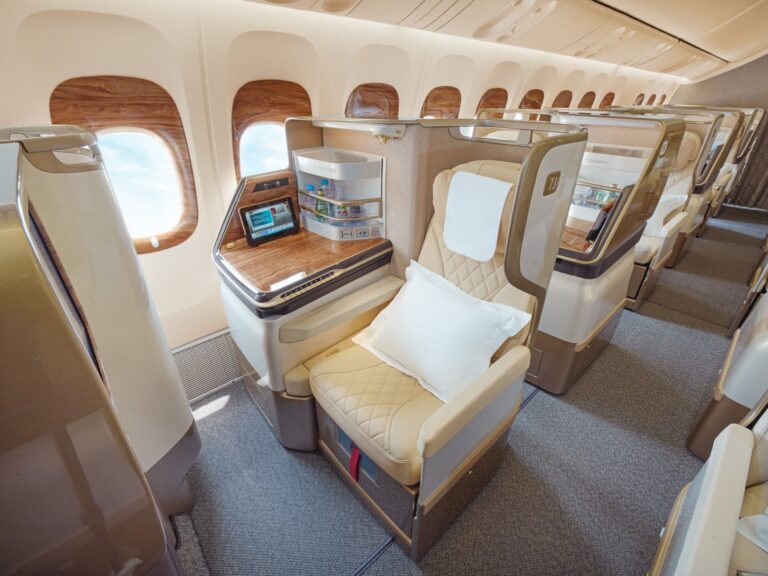
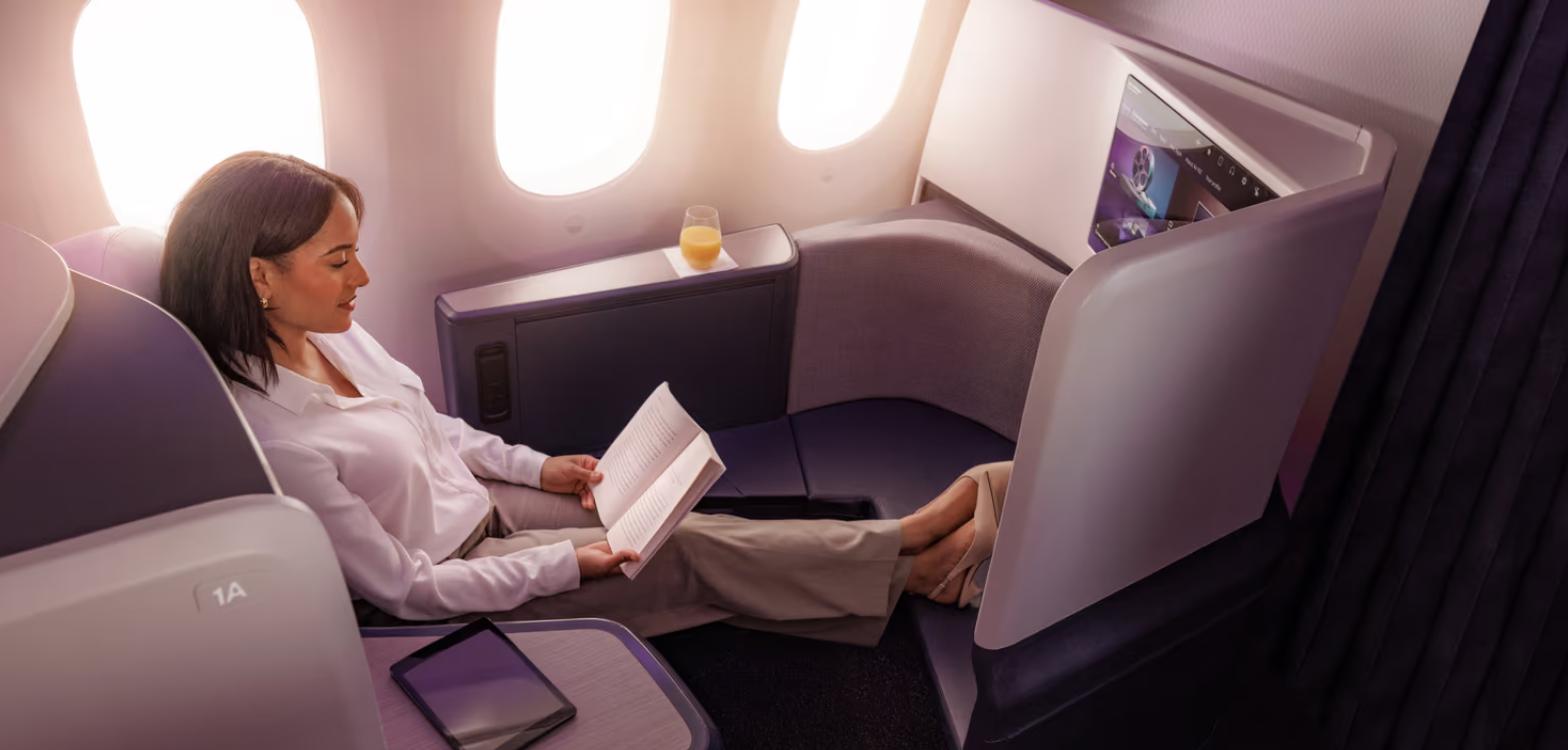
Air New Zealand kept the same open, angled herringbone business seat for 17 years. Its replacement is now flying: the first of 14 Boeing 787-9s came home from a 184-day nose-to-tail retrofit in Singapore in April 2025, and the airline says every Dreamliner will carry the new cabins by the end of 2026. At the front sit four Business Premier Luxe seats — a closing door, a companion ottoman for dining together, an extended bed — ahead of 22 redesigned Business Premier seats without doors.
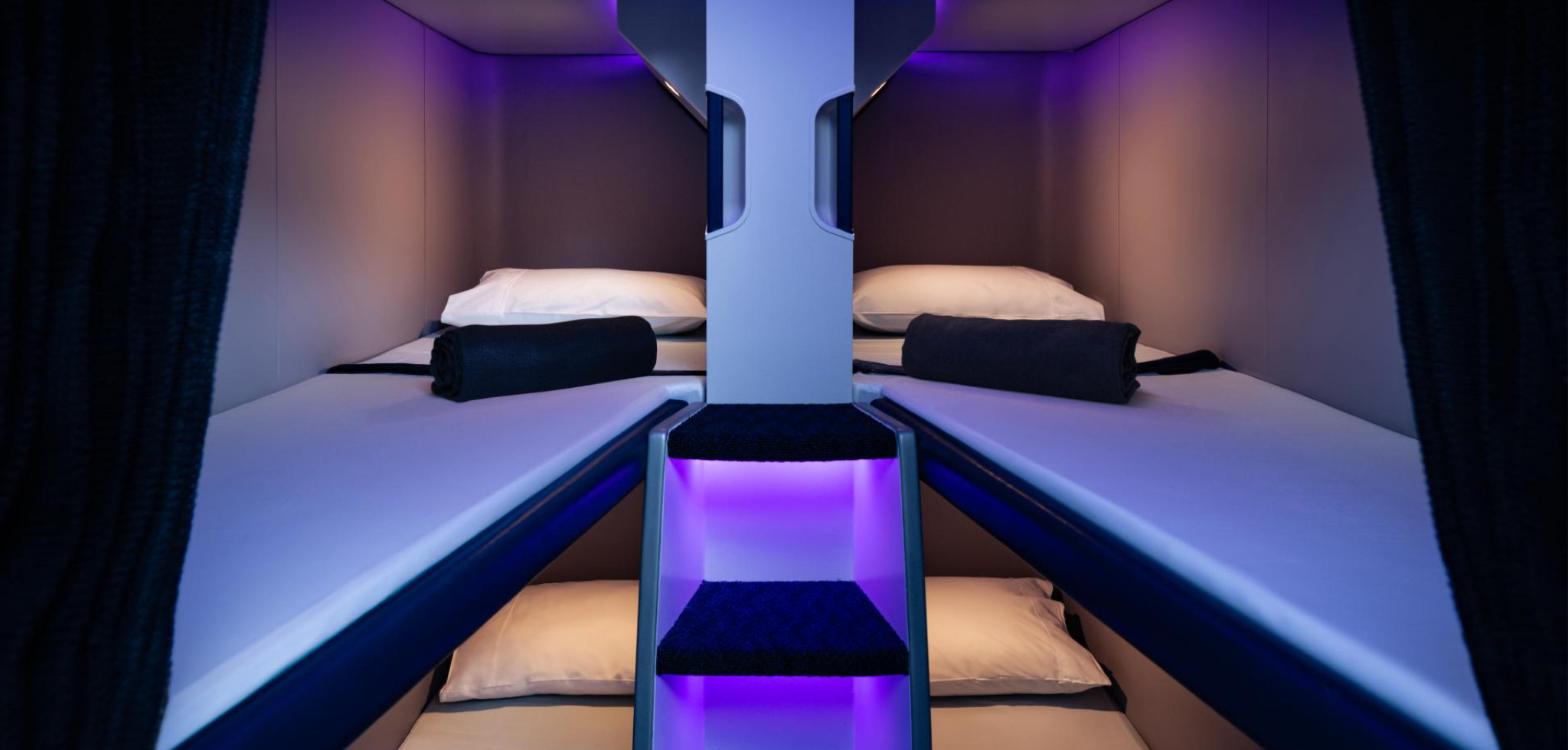
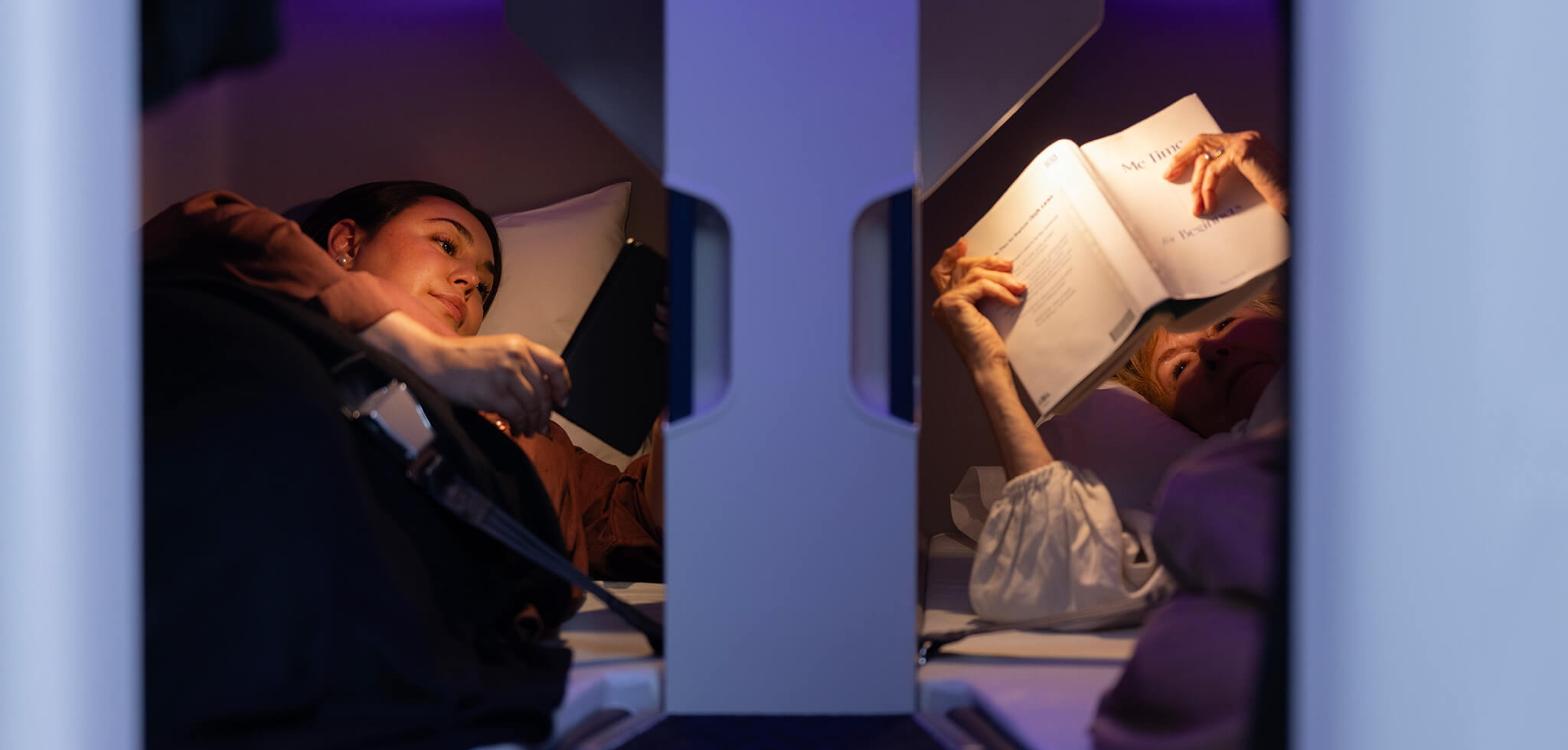
The next milestone is the one that has drawn headlines for years: Skynest, the six-pod sleeping bunk for Economy passengers, enters service on the Auckland–New York JFK configuration from November 2026. Here are the facts, what Luxe actually adds, and why fewer than one business passenger in six gets it.
Air New Zealand 787-9 Retrofit: Key Facts
- Programme: all 14 existing 787-9s retrofitted nose-to-tail, first aircraft (ZK-NZH) delivered April 2025, seven complete by end-2025, all 14 by end-2026; Air New Zealand calls it the world’s first full 787-9 nose-to-tail retrofit
- Standard layout: 272 seats — 4 Business Premier Luxe, 22 Business Premier, 33 Premium Economy, 213 Economy including 13 Economy Skycouch rows
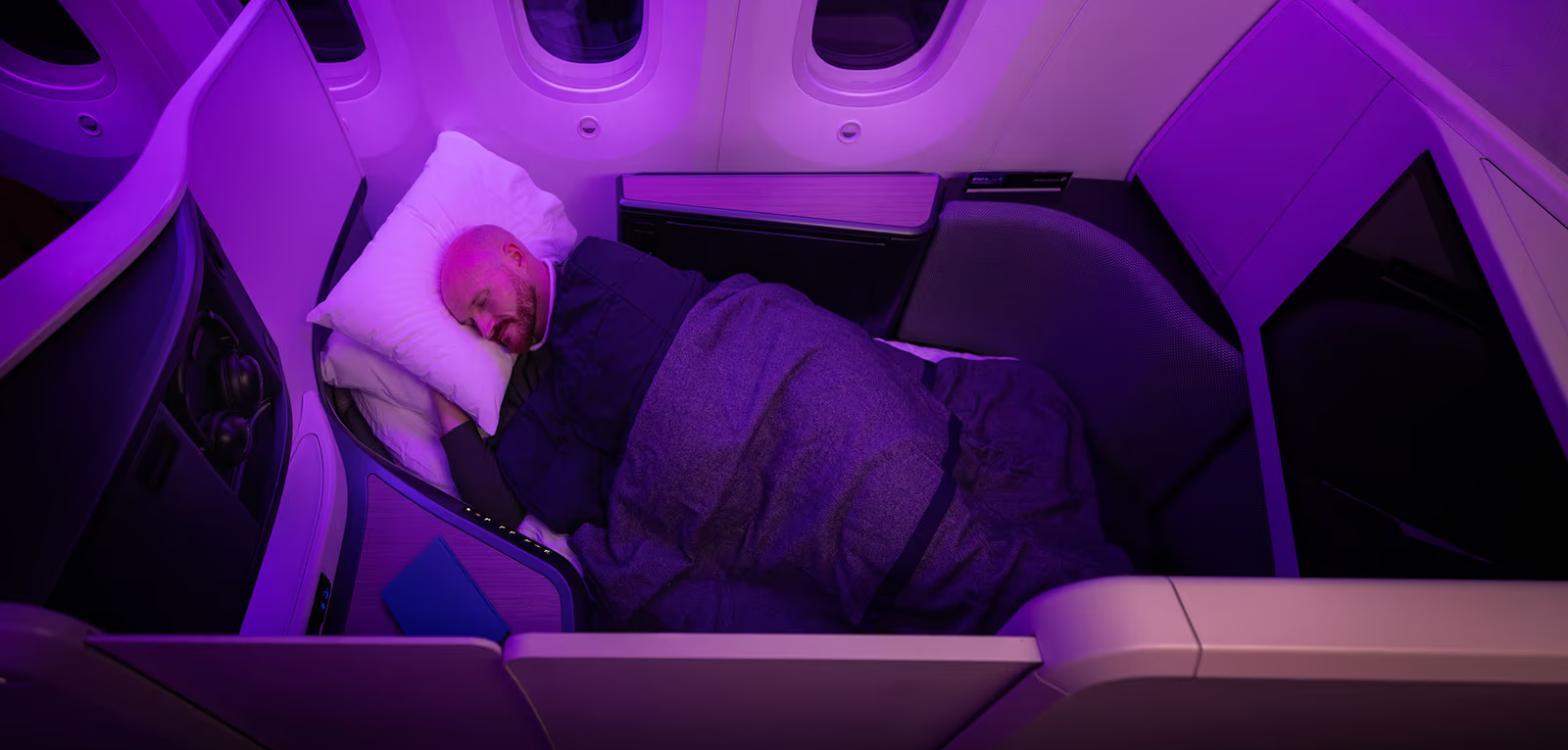
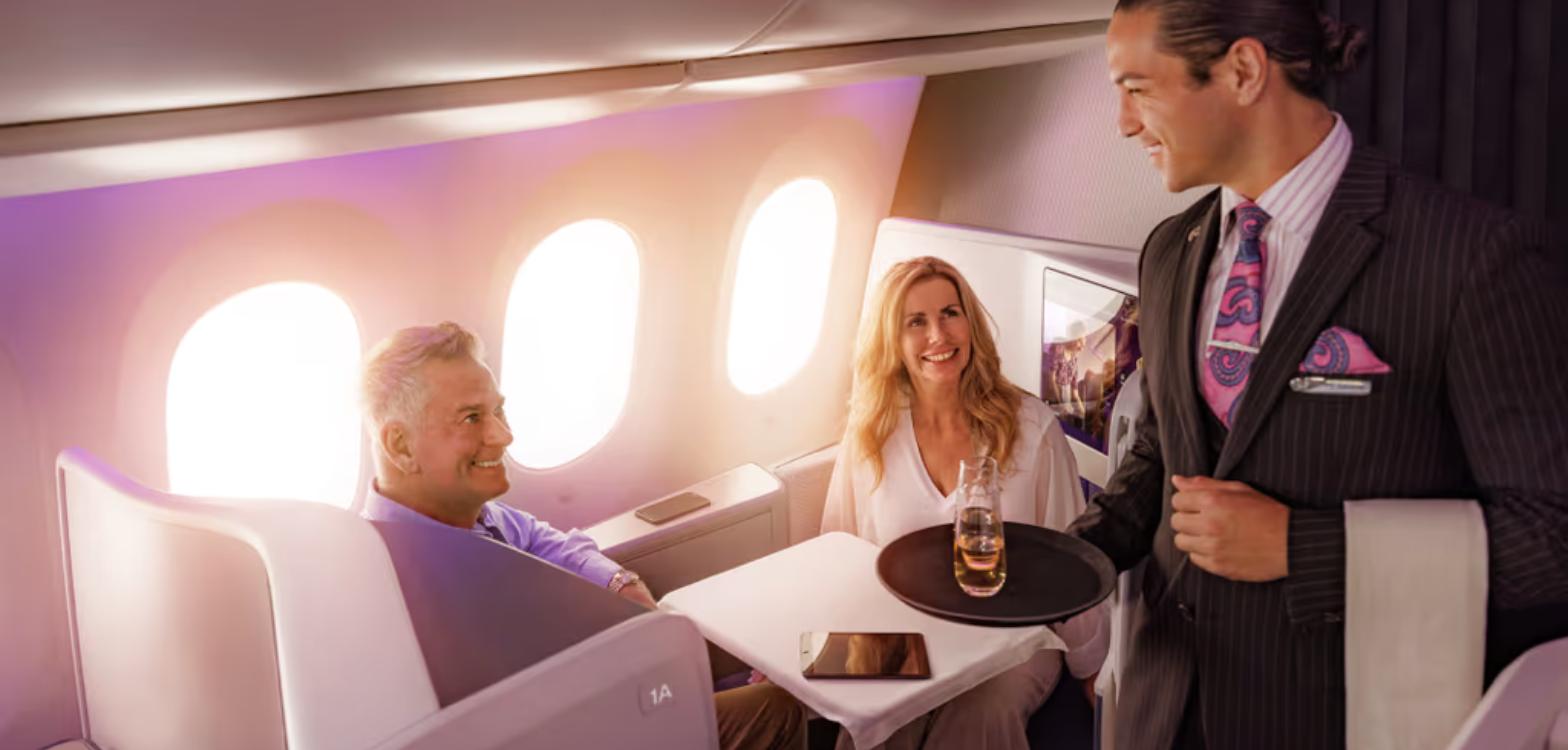
- Luxe: bulkhead-row seats with a closing privacy door, a guest ottoman for companion dining and an extended bed; sold at a route-length surcharge of about NZ$121–475 over Business Premier
- Business Premier: 20.5-inch wide seat converting to an 80.25-inch fully flat bed, no door
- First routes: Auckland–Vancouver and Auckland–Rarotonga, then Auckland–New York, Los Angeles and Houston as aircraft convert
- Skynest: six lie-flat sleep pods for Economy passengers on the JFK-bound layout from November 2026 (219 seats: 4 Luxe, 22 Business Premier, 33 Premium Economy, 154 Economy plus the pods)
- Coming: factory-new 787-9s with 42 Business Premier and 8 Luxe seats
- Fares: not published; Luxe surcharge as above
Luxe Is Deliberately Scarce
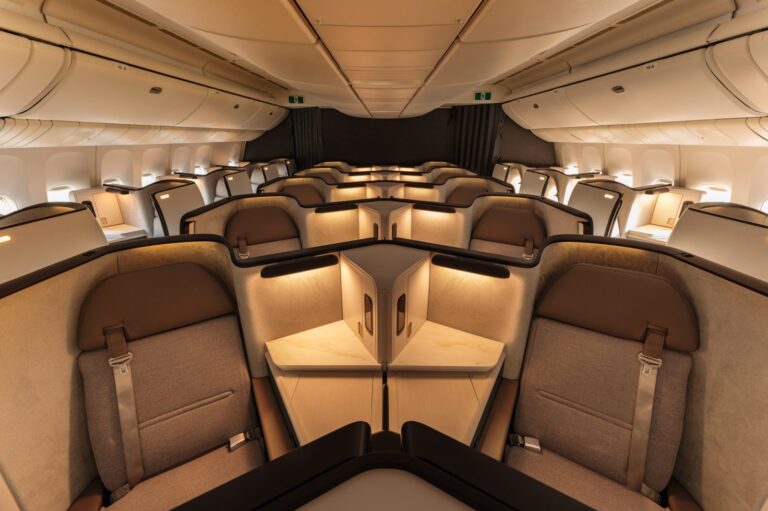
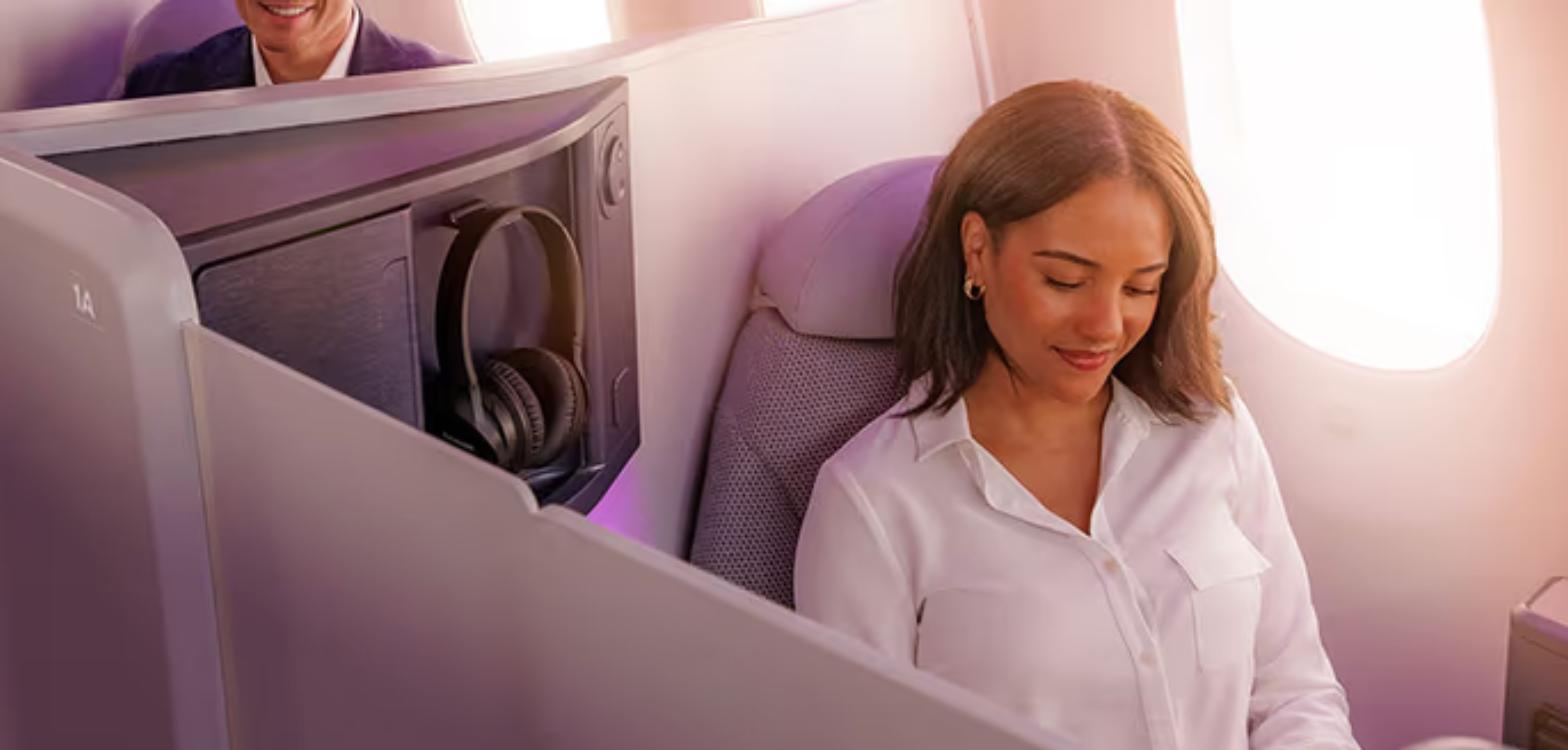
Air New Zealand designed the new cabin as a single 26-seat business section and gave only four of those seats the headline product. Luxe sits in the bulkhead row, the one place with room for a sliding door, an ottoman wide enough for a guest at dinner and the longest bed on the aircraft. The other 22 Business Premier seats are the doorless evolution of the old herringbone, wider and flatter than before but visibly a tier down. Business Class Journal, which flew seat 1A on NZ1 Auckland–New York in March 2026 on the launch aircraft, called Luxe a “best of the best” tier by intent, priced NZ$121 to NZ$475 above Business Premier depending on route length and worth taking on every ultra-long-haul sector where it is available.
That is the honest maths: fewer than 16 per cent of business passengers on a retrofitted 787 get the door. The factory-new Dreamliners on order fix that partly, with 42 Business Premier and eight Luxe.
From Rarotonga to New York — and Then the Bunks
Air New Zealand started the new cabins gently, on Vancouver and Rarotonga, then moved the retrofitted frames to its longest sectors: New York (NZ1/2, up to 17 hours), Los Angeles and Houston. The JFK aircraft gets the unique layout. From November 2026 it carries Skynest — six full-length sleep pods in Economy, bookable in four-hour blocks, the concept the airline first showed in 2020 — inside a 219-seat cabin that drops Economy to 154 seats to make room. No other airline offers a lie-flat option to Economy passengers on a scheduled flight.
The retrofit also enlarges Premium Economy from the old layouts to 33 seats and keeps the Skycouch, the row of three Economy seats that folds into a couch, on 13 rows.
Tip: if Luxe shows as available on Auckland–New York or Los Angeles, pay the surcharge — it is the only seat on the aircraft with a door, and the Skynest pods behind the curtain are for Economy tickets only.
Air New Zealand is joining a race already under way across the Pacific: United’s doored Polaris Studio suite now flies the 17-hour San Francisco–Singapore run, and Alaska’s first long-haul Dreamliner carries 34 business suites on Seattle–London.
What a Door Is Worth, First-Hand
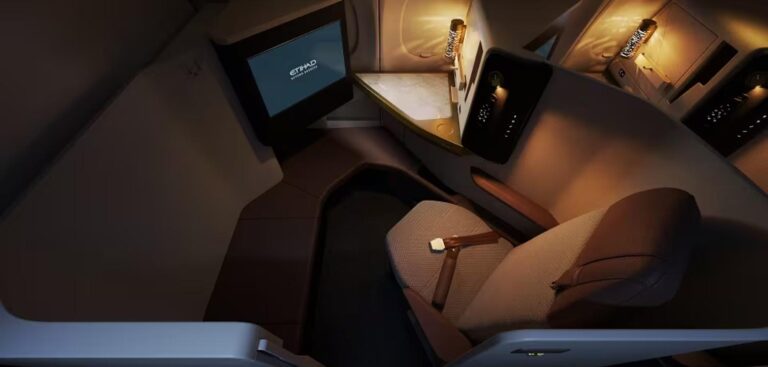
I have not flown Air New Zealand’s new cabin and will not rate it until I have. My yardstick for a doorless 1-2-1 with strong hardware is Etihad’s 787-9 business class, which I rated 3.5 out of 5 for an excellent seat and a foam mattress topper, minus half a point each for the wine and a crowded lounge; and for what a small premium cabin can feel like, beOnd’s all-business flight from Malé to Milan, where the ground handling saved me more time than any seat feature. Air New Zealand is betting that four doors and a bunk room will carry a 17-hour flight; on that length, catering and crew decide it.
How Much Does It Cost?
Air New Zealand does not publish rack fares for Business Premier; Luxe is sold as a route-length-weighted surcharge of roughly NZ$121 to NZ$475 on top of a Business Premier ticket and can only be selected once a business fare is held. Skynest pods, from November 2026 on Auckland–New York, are an add-on for Economy passengers rather than a cabin. Aircraft swaps between retrofitted and older frames still happen — check the seat map for the four bulkhead Luxe seats.
Flight prices do move between platforms. The same business class seat on the same date is not always the same price on the airline’s own site, Trip.com and Expedia: point-of-sale currency, consolidator fares and what is bundled into the ticket can shift the fare by a few percent — and occasionally by much more on premium cabins booked out of Asia. So before I pay I run the same dates through Aviasales, which scans dozens of agencies at once and will tell you if a nearby date is cheaper, then check Trip.com (often the sharpest on Asian routes) and Expedia (strongest when you add a hotel to the same booking). One caveat: a ticket bought through a booking site is changed or refunded through that site, not the airline, so read the fare rules before you buy. I keep the full comparison routine — which platform I check for what — on my travel resources page.
Four doors, 22 open seats and, from November, bunks for economy — Air New Zealand’s long-haul rebuild is finally something you can book.
Photos © Air New Zealand
This preview is based on official announcements — I haven’t flown the new Air New Zealand cabin yet. Read more about how I review or visit my Work With Me page.
Disclosure: this article contains affiliate links. If you book through them, I earn a small commission at no extra cost to you. Read my full disclosure policy.