Quick answer: North Bali is the calmest, cheapest and most reliable place to fish on the island — and the coast most fishing guides to Bali ignore. The Bali Sea is glass most mornings, deep water starts a kilometer or two off the black-sand beaches, and mahi-mahi, yellowfin and skipjack tuna, wahoo, Spanish mackerel, barracuda and giant trevally are all caught within half an hour of Lovina, Bukti and Tejakula. A traditional jukung morning with a village fisherman costs roughly IDR 300,000–700,000 per person. No fishing license is required. Go at dawn. July to November is the peak.
The same stretch of coast holds two of the quietest dive sites on the island, which I cover in my guide to diving in Bali.

This is the full picture: what swims here and when, the different ways to fish it, what it should cost, where to launch, and the local etiquette that keeps you welcome on the water.
Why the North Coast Beats the South for Fishing in Bali
South Bali faces the open Indian Ocean, which means swell, wind chop and a long steam before anyone wets a line. The north faces the Bali Sea, a sheltered basin between Bali and Borneo, and for fishing in Bali it behaves completely differently.
- Calm water. Mornings on the north coast are routinely flat — no groundswell, minimal wind before about 10am. It is the difference between fishing and hanging on.
- Deep water, immediately. The volcanic shelf drops away steeply. In places you are over several hundred meters within a couple of kilometers of the beach, so pelagic fish feed unusually close in.
- Rumpon everywhere. The Bali Sea is dotted with fish aggregating devices — anchored bamboo-and-buoy rafts the local fleets call rumpon. They hold bait, and mahi-mahi and tuna hold under the bait.
- Short runs. Lines are usually in the water ten to twenty minutes after the boat leaves the sand. On a four-hour trip that is three and a half hours of actual fishing.
- Village prices. A morning here costs less than the fuel surcharge on a south-coast charter, and the money goes straight to the family that owns the boat.
- Space. On most mornings you will not see another tourist boat. Just the fleet, going to work.
What You Can Catch in North Bali, and When
The north coast is a pelagic coast. There are reef fish and bottom species close in, but the reason people come fishing in Bali is the blue-water list — and the fact that you can reach it in a six-meter wooden boat.

| Species | Best months | How it is usually caught |
|---|---|---|
| Mahi-mahi (lemadang) | June–November, peak July–October | Trolled skirts and live bait around rumpon and floating debris |
| Yellowfin & skipjack tuna | Year-round, strongest April–October | Dawn surface schools; small trolled lures, casting into feeding fish |
| Wahoo | October–January | Fast trolling along reef drop-offs and current lines |
| Spanish mackerel | May–September | Live bait and trolling over the reef edge |
| Barracuda | November–February | Reef edges, headlands and river mouths |
| Giant trevally (GT) | Year-round | Popping rocky points and reef corners at first light |
| Dogtooth tuna | Year-round | Vertical jigging the deep drop-offs |
| Queenfish, snapper, grouper, emperor | Year-round | Bottom fishing and light jigging close to shore |
| Marlin & sailfish | September–November | Offshore, on proper tackle — uncommon here, but they exist |
| Tilapia, carp, catfish | Year-round | Freshwater, up in the hills at Lakes Buyan, Tamblingan and Batur |

Two honest caveats about fishing in Bali. Seasons move a month either way from year to year, and the wet season (roughly December to March) brings more wind and rain — but even then the fish are there and the mornings are often still calm. Nobody guarantees a catch. Anyone who does is selling something.
The Four Ways to Fish North Bali
1. A jukung morning with a village fisherman
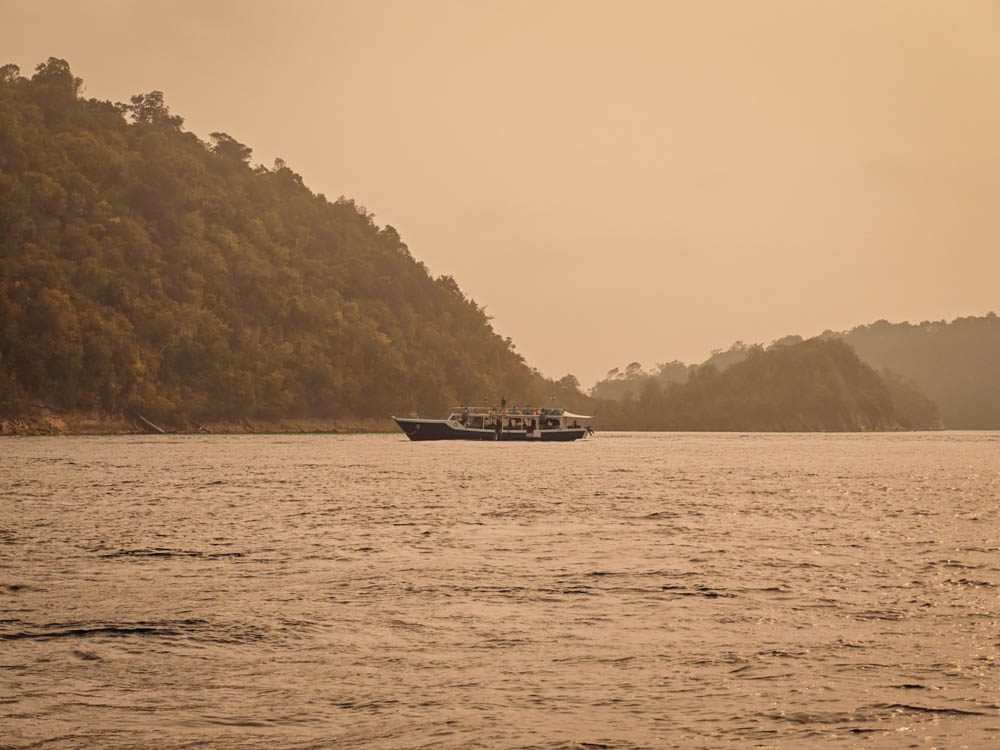
The classic, and the best value way to go fishing in Bali. A jukung is a narrow wooden outrigger, usually with a small outboard, launched straight off the beach. You leave at first light with one or two fishermen, troll handlines and simple rods for tuna and mahi-mahi, and are home for a late breakfast. No experience needed — they do the technique, you do the winding.
2. The rumpon run
A full day, 20–40km offshore, working a string of fish aggregating devices. This is where the numbers are: mahi-mahi stacked under the rafts, tuna underneath them, wahoo cruising the edges. It is the most expensive way of fishing in Bali on this coast, because it needs a boat with range and fuel — and it is worth the difference in a good season.
3. Night fishing
Lamps over the side, squid and bottom fish, and the whole coast lit up with the fleet doing the same thing. It is a completely different side of fishing in Bali, and it is how most of the fish in your warung actually arrive.
4. Shore casting and the mountain lakes
You can fish from the beach for free, which is the cheapest fishing in Bali there is. River mouths and rocky points at dawn or dusk give up trevally, queenfish and needlefish on metals. And an hour up into the hills, Lakes Buyan, Tamblingan and Batur are calm, cool, cheap and beautiful — tilapia and carp from a small boat, with cloud sitting on the crater rim.
Where to Fish, West to East
- Gerokgak and Pemuteran. The far northwest. Quiet water, good bottom fishing, and the launching point for longer offshore runs. Menjangan is nearby but sits inside West Bali National Park — that is a no-fishing zone, and a superb dive instead.
- Celukan Bawang. A working port rather than a resort. Local boats, local prices, and easy access to deep water. Less charming
- Lovina and Kalibukbuk. The most operators and the easiest place to arrange something the night before, from shared sunrise trips to private charters. Also the dolphin-boat capital, for better and worse — see my guide to Lovina.
- Bukti. A real fishing village east of Lovina with almost no tourism infrastructure and, arguably, the best water on the coast: the shelf drops fast and the fleet is serious. This is where you go if you want fishing with real fishermen rather than a boat tour.
- Amed. Technically the east coast, but the same calm-water logic applies, and it is an easy add-on if you are already heading round to Tulamben for the diving.
Getting to the north coast means a three-hour drive from Denpasar airport; if you are coming from another island, domestic flights into Bali are easiest to compare on Trip.com.
What Fishing in North Bali Costs
Guide prices for fishing in Bali in 2026, per trip unless stated. Always confirm what is included before you agree.
- Shared sunrise jukung, 3–4 hours: IDR 300,000–700,000 per person
- Private jukung for two, often combined with dolphins: IDR 600,000–1,200,000 for the boat
- Private speedboat charter with rods and ice, 6–8 hours: IDR 1,200,000–3,000,000
- Freshwater lake trip with gear: IDR 300,000–600,000
Fuel is the variable that moves the price of fishing in Bali — a 40km run offshore costs real money, and a captain who quotes suspiciously low is probably planning to stay close. Check whether rods, bait, ice, water, and life jackets are included, and agree what happens to the catch before you leave the beach. Paying a village captain directly, in cash, is normal and is the cheapest way for you and the best way for them.
What a Morning on the Water Actually Looks Like
You are up at five with a coffee you barely taste. The beach is black sand and warm, and there are already silhouettes pushing outriggers into the shallows. You climb in, someone hands you a handline wrapped around a plastic spool, and the little engine takes you out past the reef while the sky goes orange behind Mount Agung. Dolphins will probably show up; on this coast they are commuters, not an attraction. Then the line starts to tick against your finger, the fisherman smiles, and a mahi-mahi lights up neon under the boat. By nine you are back on the sand, salt-dried and slightly stunned, holding breakfast.

Meet Komang, the Fisherman Who Takes You Out in Bukti
Komang has fished the waters off Bukti for 20 years, and for the last 10 he has been happily taking guests out on his boat. He is the head of the village fishermen’s association and is closely involved in Bukti’s project to protect its coral reef, the same reef you can snorkel straight from the garden at Villa Seaview Bukti. His English is excellent, so you’ll hear the stories behind the village and the sea as you go. Mornings with Komang have brought in tuna, mahi-mahi, wahoo, grouper and snapper, and no two trips are the same.
Back at the villa, his wife, who is also called Komang and is the housekeeper at Villa Seaview Bukti, will help you grill your catch on the outdoor barbecue. Fishing and snorkelling depend on the weather; if the sea is up, Komang will tell you the night before rather than take you out for nothing.

Licenses, Rumpon Etiquette and Fishing Without Wrecking It
- No license. Indonesia does not require a recreational fishing license for visitors fishing in Bali, and there is no bag limit for casual fishing. The responsibility is yours instead of the state’s — keep what you will eat and release the rest.
- Rumpon are private property. Those bamboo rafts belong to families and cooperatives who built and anchored them. Never fish one without your captain clearing it first.
- Know the no-take areas. Menjangan sits inside West Bali National Park. Several north-coast reefs — including the fringing reefs off Bukti, Tejakula and Les — are managed as conservation zones by the fishing communities themselves. Snorkel them, do not fish them.
- Skip the reef species. Parrotfish, humphead wrasse, sharks and rays are worth vastly more alive on this coast than on a plate.
- Take your line home. Monofilament is the worst litter there is out here. So is a single-use water bottle over the side.
- Book the village, not the middleman. Going direct with a local captain when you book fishing in Bali means the money stays in the community that maintains the reef. That is not sentiment; it is why the reef is still there.
What to Bring
- Sun protection you would take to a desert. There is no shade on a jukung: long sleeves, hat, reef-safe sunscreen.
- Seasickness tablets an hour before departure if you are prone. The sea is calm, but an outrigger still rolls.
- Water and something to eat — most village trips include neither.
- Cash in rupiah. There is no card machine on the beach.
- Your own tackle if you are targeting anything serious: a PE4–8 spinning outfit for GT, a jigging stick for doggies, and a small box of skirts, metals and poppers.
- A dry bag for your phone, and a cooler bag if you plan to keep fish.
- Ask about life jackets before you board, especially with children, and confirm the boat carries them in the right sizes.
Catch and Cook
This is the part of fishing in Bali nobody warns you about. Tuna that was swimming at seven, grilled over coconut husk at seven that evening, with sambal matah and rice, is a different food from anything you have eaten with the same name. Most warungs along the coast will cook your fish for a small charge, and any decent villa kitchen will do it as a matter of course.
If the fish do not bite — it happens, that is why it is called fishing — the market at Singaraja or the roadside stalls at Lovina will sell you something that came in an hour ago for the price of a coffee at home.

Where to Stay if You Want to Fish
Singaraja, Bali is worth more than a market run, and I have written up a day there.
Stay on the coast you intend to fish: Lovina gives you the widest choice of operators and the easiest last-minute bookings, while Bukti and Tejakula, half an hour further east, put you closest to the deep water and to captains who fish for a living rather than for tourists.
Villa Seaview Bukti sits directly on the sand in Bukti, where the jukungs launch in front of the house, the same crews run dolphin and snorkelling trips over the village-managed reef, and the kitchen will grill whatever you bring home that evening. In Lovina itself, I have written up the best restaurants in Lovina and North Bali and a beachfront villa in Lovina.
Frequently Asked Questions
Do you need a fishing license in Bali?
No. Indonesia does not require a license for recreational fishing, and visitors fishing from a local boat or off the beach do not need paperwork. Just respect the national park boundary at Menjangan and the village-managed no-take reefs along the north coast.
When is the best time of year to fish in North Bali?
July to October is the sweet spot: calm seas and peak mahi-mahi. Tuna are year-round, wahoo run from October to January, and the wet season from December to March brings wind and rain without emptying the water. Whatever the month, dawn is the bite.
How much does a fishing trip in North Bali cost?
Roughly IDR 300,000–700,000 per person for a three to four hour jukung morning and IDR 1,200,000–3,000,000 for a private boat with rods and ice. Fuel is what moves the price.
Is North Bali better than the south for fishing?
For most people, yes. The Bali Sea is calmer, the deep water is closer, the runs are shorter and the prices are a fraction of a Benoa charter. The south and the Lombok Strait still have the edge for billfish and heavy game fishing.
Do I need experience or my own gear?
Neither, for a village trip — the fishermen handle the technique and are patient teachers. If you want to jig or throw poppers at giant trevally, bring your own outfits, because local boats rarely carry tackle that heavy.
Can children come along?
Yes. The calm morning sea makes short trips genuinely family-friendly; keep them to two or three hours, go at first light, and confirm child-sized life jackets before boarding.
Can you fish from the beach in North Bali?
You can, for free. River mouths and rocky headlands at dawn and dusk produce trevally, queenfish and needlefish on metal lures. Expect modest fish — the good stuff is a few hundred meters further out.
Can we eat what we catch?
That is the point. Most warungs will cook your fish for a small charge and any villa kitchen worth staying in will grill it the same evening.
What if we do not catch anything?
Then you spent a sunrise on a glass-calm sea in a wooden outrigger, probably with dolphins, for less than the cost of a cocktail in Seminyak. No catch is ever guaranteed — that is what makes the catch matter.
How to Book a Fishing Trip in North Bali
In Lovina, ask at your hotel the evening before or book a shared sunrise trip online.
In Bukti, Komang arranges fishing trips through Villa Seaview Bukti. Spend the night, watch the sunset, and go out on the water early the next morning. The boat will pick you up from the beach just in front of the villa at sunrise.
Disclosure: this article contains affiliate links. If you book through them, I earn a small commission at no extra cost to you. Read my full disclosure policy.