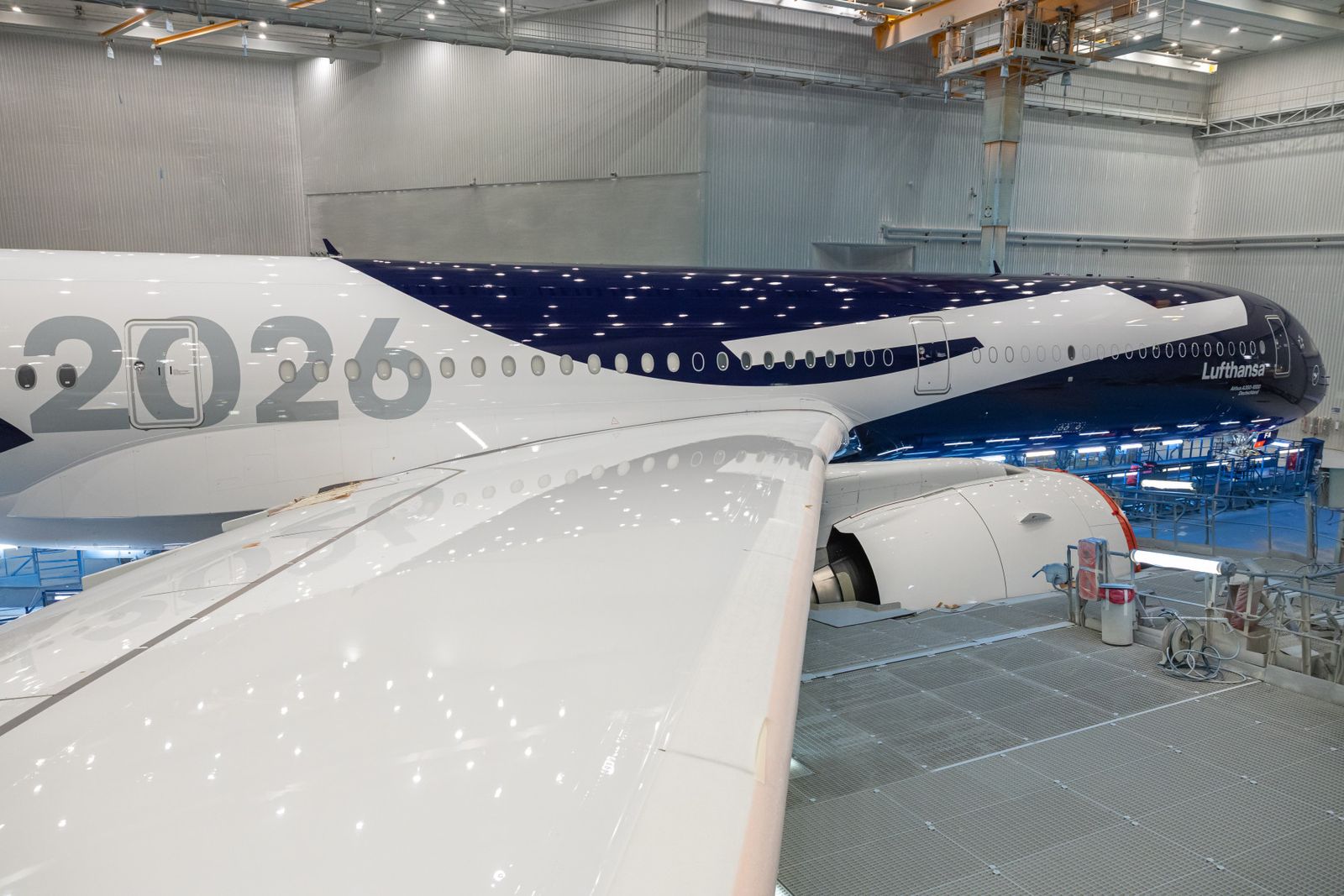
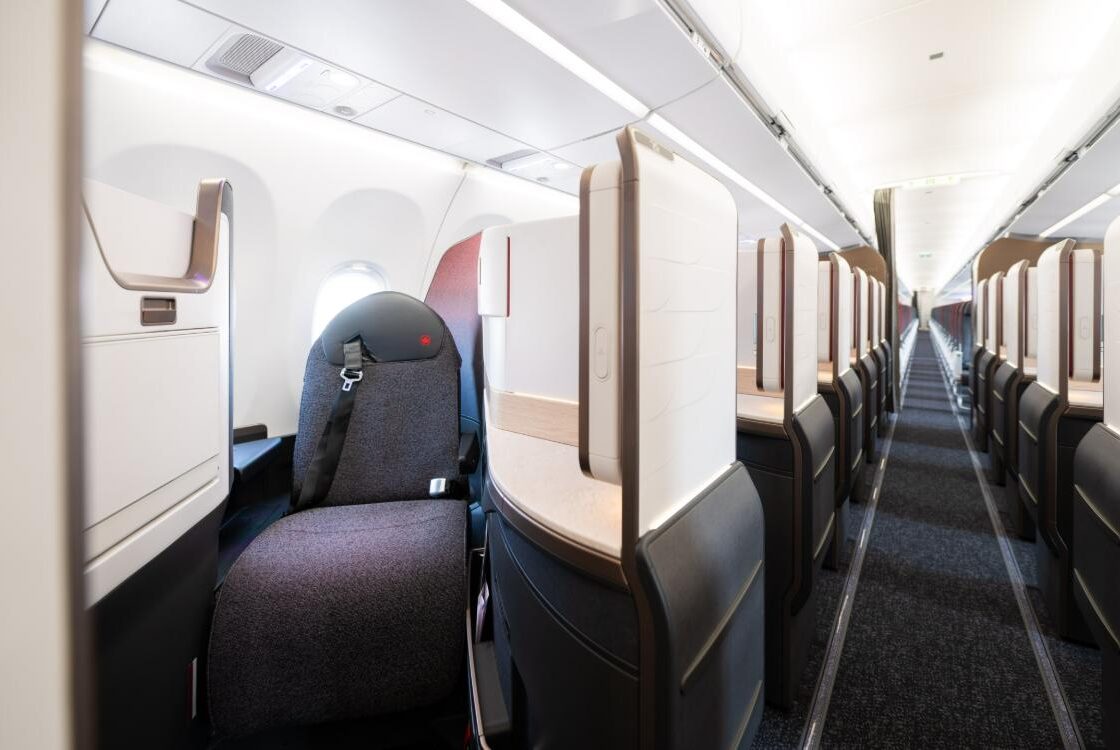
The Air Canada A321XLR is the first narrow-body in the airline’s history with fully flat seats. Air Canada took delivery of its first A321XLR, C-GXLR, in Hamburg on 24 April 2026, and since June the aircraft has been flying the Atlantic, with 14 Signature Class suites in a 1-1 layout at the front, every one a window seat with the aisle, and 168 Economy seats behind. Thirty Air Canada A321XLRs are on order, delivering through 2029.
The plane exists to fly routes a 787 cannot fill and a 737 MAX cannot reach: Montreal–Toulouse, Montreal–Lyon, Toronto–Manchester, Toronto–Copenhagen. Its first summer has produced one headline success and one quick retreat. Here are the facts, what the cabin offers, and the routes to look for this winter.
Air Canada A321XLR: Key Facts
- First delivery: 24 April 2026 (C-GXLR); 30 on order — 15 purchased, 15 leased — delivering through 2029
- Layout: 182 seats — 14 Signature Class lie-flat suites in 1-1, 168 Economy in 3-3 including 36 extra-space Preferred seats
- Cabin standard: “Glowing Hearted”, Air Canada’s new interior design — updated seat-back entertainment, Bluetooth pairing, power at every seat, larger overhead bins, free Wi-Fi for Aeroplan members
- Range: up to 4,700 nautical miles, with about 30 per cent lower emissions per seat than the aircraft it replaces
- Entry into service: domestic first (Montreal–Calgary from May, Montreal–Vancouver later), then transatlantic from June 2026 with Montreal–Toulouse
- Transatlantic routes in 2026 (as scheduled): Montreal–Toulouse, Nantes, Lyon (from 8 September), Porto, Berlin, Edinburgh; Toronto–London Heathrow (from 31 August), Manchester (25 October), Copenhagen (27 October)
- Winter 2026/27: Montreal–Los Angeles four times weekly from 25 October (AC775/776) and a second daily rotation from 15 November; Montreal–San Francisco daily from 15 January; Montreal–Halifax, Ottawa and Toronto rotations from December
- Next: Boeing 787-10s from late 2026 with 42 Signature Class seats including a front-row Signature Plus; eight A350-1000s from 2030
- Fares: not published; see below
A Window Seat With the Aisle, Fourteen Times
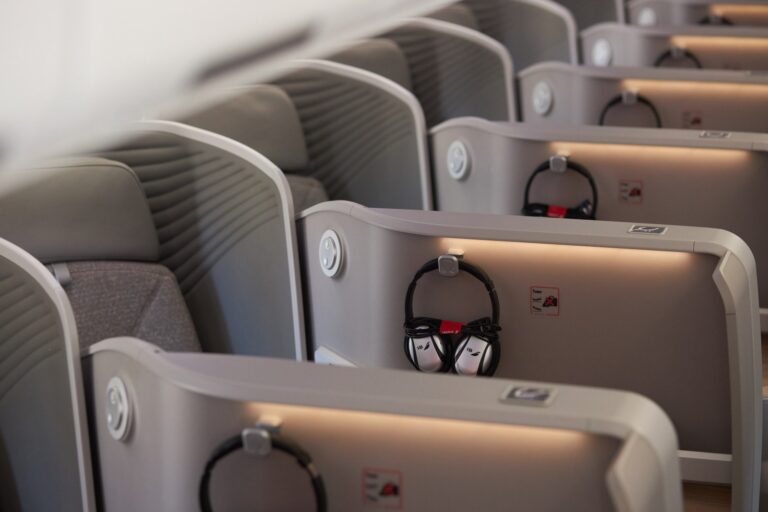
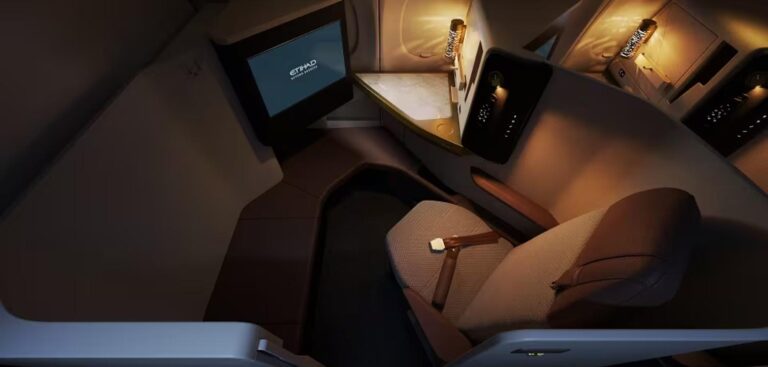
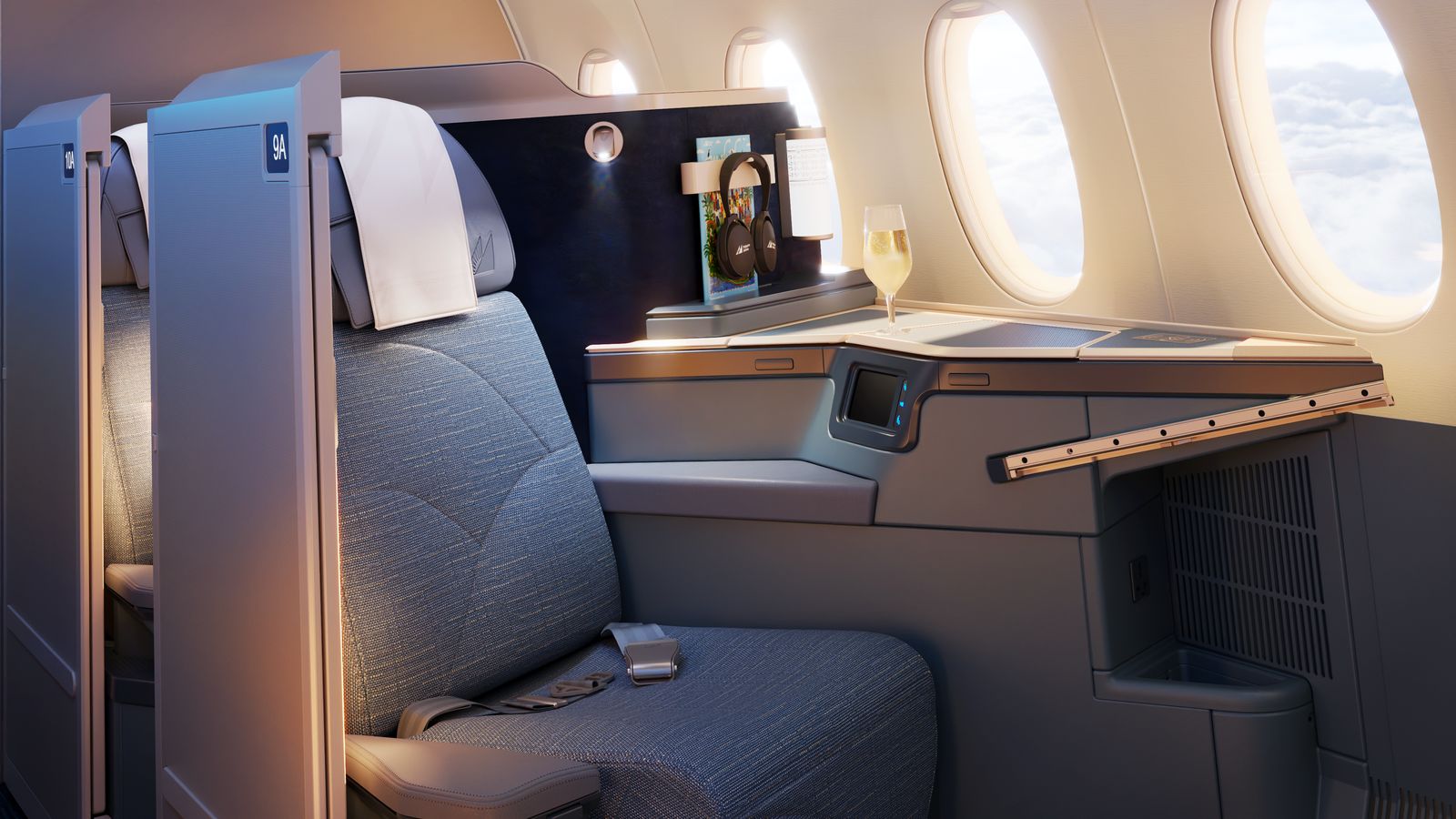
The Signature Class cabin on the XLR is seven rows of two, staggered so that every suite is beside a window and opens onto the aisle — the layout Etihad and JetBlue use on their long-range A321s. The seat goes fully flat, has direct aisle access, Bluetooth audio, wireless and wired charging and the new Glowing Hearted trim that will roll out to the wide-body fleet from the 787-10 onwards. At 14 seats it is a small cabin; on a full Toronto–Heathrow flight, Signature sells out early. Iberia, the A321XLR launch airline, flies the same fourteen-seat idea from Madrid, and I have covered its new route to Toronto too.
The economics are the point. Simple Flying’s analysis of the type frames it as a yield balance: enough premium seats to make a long, thin route pay, enough Economy to fill a 182-seat aircraft on a Tuesday in November. That is why Air Canada has held the layout at 14-plus-168 rather than the premium-heavy split JetBlue or Aer Lingus chose.
Where It Flies — and Where It Didn’t Work
Air Canada’s summer plan put the XLR on a dozen routes, most of them from Montreal to secondary French and European cities that have never had a nonstop from Canada — Toulouse year-round, Nantes, Lyon, Porto — plus Toronto–Heathrow from 31 August, where the aircraft sits alongside 787s and 777s and gives Air Canada a fourth daily frequency with a lie-flat seat. Edinburgh returned seasonally with the new product.
The exception was Palma de Mallorca. Announced in September 2025 as the aircraft’s first brand-new destination, the 6,078-kilometre Montreal–Palma nonstop launched on 17 June and, according to Simple Flying, was withdrawn within weeks — a reminder that long, thin routes are thin for a reason. Winter deployment shifts to North America: Los Angeles and San Francisco from Montreal, and domestic trunk routes where the lie-flat cabin is a bonus rather than the business case.
Tip: on Toronto–Heathrow, the XLR is the aircraft with 14 business seats in a 1-1 layout on the seat map; the 787s show 1-2-1 with 30 or 40. Book the XLR for the window-and-aisle seat, the 787 for the larger cabin and the chance of an upgrade.
Narrow-Body Business Class, First-Hand
I have not flown Air Canada’s XLR and this stays a preview. The closest thing in my reviews to a small, all-window premium cabin is beOnd’s all-business A319 from Malé to Milan, where the intimacy of a 44-seat cabin was the appeal and the ground handling saved me more than an hour; and for the wide-body standard the XLR is imitating, Etihad’s 787-9, rated 3.5 out of 5 for a strong seat and a weak lounge. A 14-seat cabin on a seven-hour Atlantic crossing is a different proposition from a 40-seat one: service is more personal, and a bad galley affects everyone.
How Much Does It Cost?
Air Canada does not publish rack fares for Signature Class on the XLR, and the cabin is sold as standard Signature Class at whatever the route prices on the day — there is no narrow-body discount, and with 14 seats the cheapest business fares go first. Aeroplan award space has been reported on the new routes, and Milesopedia recommends watching Aeroplan searches as more aircraft arrive.
Flight prices do move between platforms. The same business class seat on the same date is not always the same price on the airline’s own site, Trip.com and Expedia: point-of-sale currency, consolidator fares and what is bundled into the ticket can shift the fare by a few percent — and occasionally by much more on premium cabins booked out of Asia. So before I pay I run the same dates through Aviasales, which scans dozens of booking sites at once, then check Trip.com (often the sharpest on Asian routes) and Expedia (strongest when you add a hotel to the same booking). One caveat: a ticket bought through a booking site is changed or refunded through that site, not the airline, so read the fare rules before you buy.
Fourteen window seats with a bed, on routes that never had a nonstop from Canada — the XLR is Air Canada’s most interesting aircraft in a decade, even after Palma.
Photos © Air Canada
This preview is based on official announcements — I haven’t flown Air Canada’s A321XLR yet. Read more about how I review or visit my Work With Me page.
Disclosure: this article contains affiliate links. If you book through them, I earn a small commission at no extra cost to you. Read my full disclosure policy.