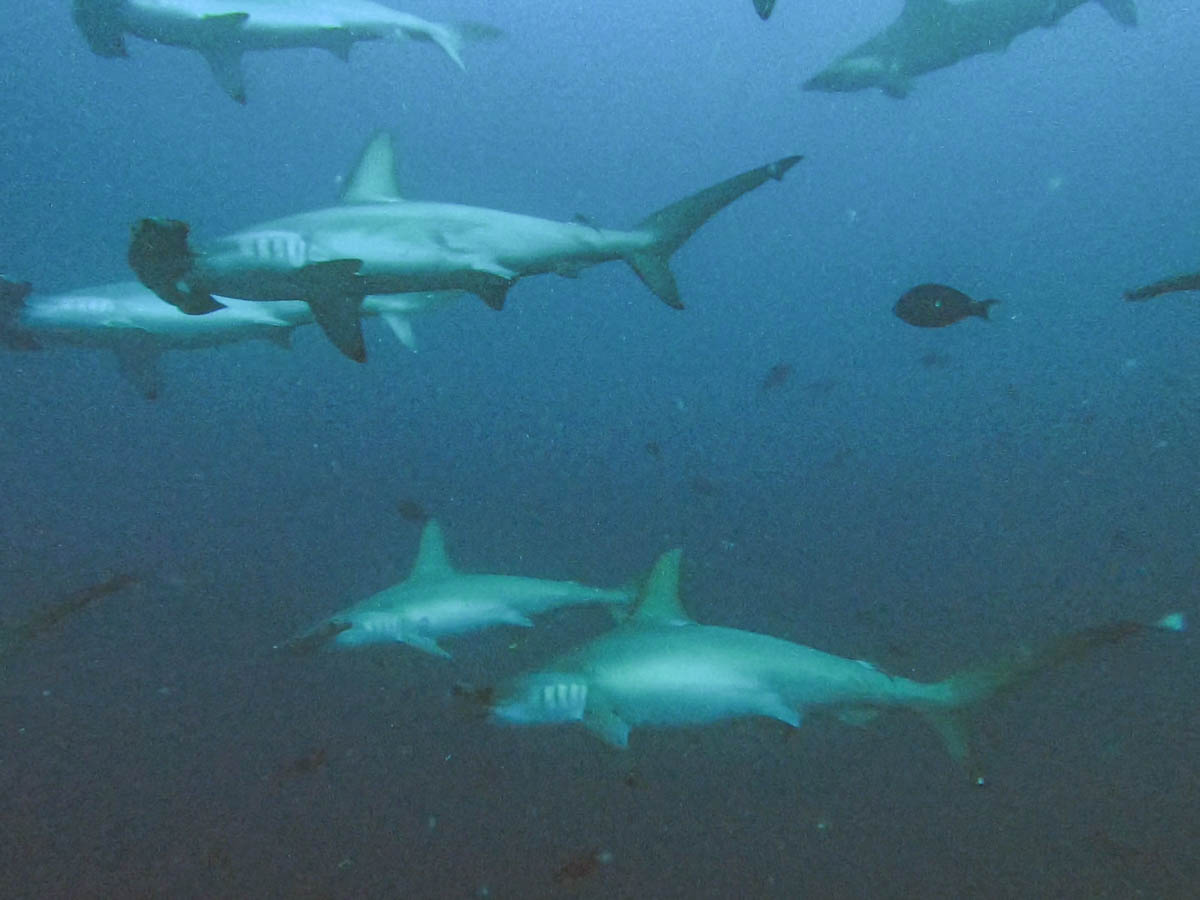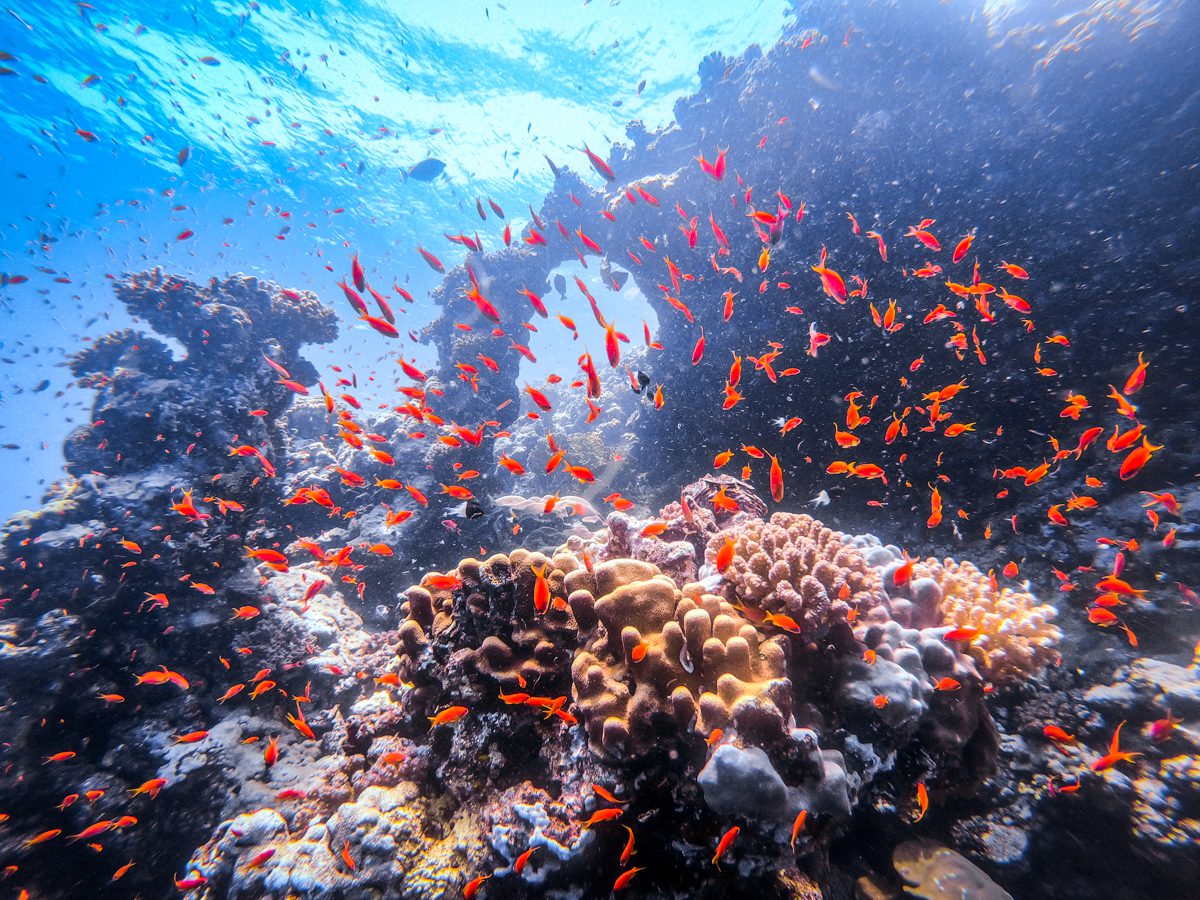
On the last morning of my Duke of York week, we dropped onto Kandooma Thila in South Malé Atoll with nobody else on the site. The incoming tide was running hard. We hooked onto the edge of the pinnacle at 25 metres and, for the next hour, counted more than 70 grey reef sharks and 40 eagle rays sliding past in the current. I have logged over 1,500 dives in 135 countries, and I have never seen that many reef sharks in a single hour anywhere else. That, in one dive, is what diving in the Maldives is for.
The short answer: diving in the Maldives is the easiest place I know to see big animals in big numbers. Grey reef sharks by the hundred in the channels, nurse sharks by the dozen under the boat lights, mantas at cleaning stations and in feeding frenzies, and eagle rays in squadrons. It happens inside a government rule-book that caps every dive at 30 metres and 60 minutes, in 27 to 30°C water. It is not a macro destination, the shallow coral is still recovering from bleaching, and the famous whale sharks are not guaranteed: I found them on one of my four searches. Dive it by liveaboard. Go between December and April for calm seas and the clearest water, or in August and September if the Hanifaru mantas matter more to you than visibility. Budget roughly USD 500 to 700 per person per week in taxes, fees and nitrox on top of the cruise price.
Why Trust This Guide
Diving in the Maldives: my seven weeks in numbers
Between August 2021 and December 2025 I spent seven liveaboard weeks in the Maldives, each one reviewed in full on this site:
- Three cruises on the Scubaspa twins: Scubaspa Yin on the central atolls, Yin again on the Far North route from Baa to Lhaviyani, and her sister ship Scubaspa Yang on the classic central route
- Blueforce One, on the five-atoll classical itinerary
- Duke of York, in August, with six divers and three dive masters
- White Pearl, the biggest diving liveaboard in the country, in one of the worst storms of 2024
- A ten-day EcoPro Seascape itinerary through the central and southern channels in December 2025
I also spent four nights at Maafushivaru in South Ari Atoll, which is where I found my whale sharks. Between them, those trips cover North and South Malé, North and South Ari, Rasdhoo, Vaavu, Meemu, Baa, Raa, Noonu and Lhaviyani. Every site, animal count and price below comes from my own logbook or from a listing I read on a stated date. Where I haven’t dived somewhere, I say so rather than repeat what an operator’s brochure claims.
Diving in the Maldives at a Glance
| Best for | Sharks in three figures, manta cleaning stations, eagle-ray squadrons, channel drifts |
| Not for | Macro photographers, deep or technical diving, pristine shallow coral |
| Water temperature | 27–30°C on all my trips; a 3 mm suit or a rash guard |
| Visibility | Wide open December–April; 4–5 m on the worst days of the south-west monsoon |
| Dive rules | Max 30 m; 60 minutes or 50 bar on most boats (White Pearl: 50 minutes) |
| Experience | About 50 logged dives for channel itineraries; reef hook and SMB essential |
| Dives per day | Three, typically 6:30am, 10:30am and 3pm; night dives are rare |
| Nitrox | Free (Duke of York) to USD 100 per week (Scubaspa) |
| Gateway | Velana International Airport, Malé (MLE) |
| Best way to dive it | Liveaboard, ideally followed by three or four resort nights |
| Atoll | Best for | How to dive it | Level | Gateway |
|---|---|---|---|---|
| South Malé | The most reliable sharks: Kandooma Thila | Central-atoll liveaboard, a day or two | Intermediate; experienced divers only at Kandooma when the current is running | Malé (MLE) |
| North Malé | Arrival-day check dives: rays and sharks at Neru Mati, mantas at Lankan Beyru | The first day of most central itineraries | Easy reef-hook introductions at Fish Factory and Stingray City | Malé (MLE) |
| Vaavu (Felidhu) | Channels, hammerheads and the Alimatha nurse shark night dive | Central and ten-day liveaboard routes | Intermediate and up; reef hook essential at Miyaru Kandu and Fotteyo | Malé (MLE) |
| Meemu and the southern channels | The sharkiest dives: more than 100 sharks at Fushi Kandu and Gaahraa Kandu | Ten-day itineraries only | Experienced, 80-plus dives | Malé (MLE) |
| Ari | Whale sharks in South Ari, the Fesdu manta night dive and the classic thilas | Liveaboard, or a South Ari resort | Intermediate by liveaboard; beginners from a resort house reef | Malé (MLE), then a seaplane for South Ari resorts |
| Baa, Raa, Noonu and Lhaviyani | Mantas: Hanifaru Bay, Dhonfaanu and Amazing Pinnacle | Far North liveaboard route | Hanifaru Bay is snorkel only; reef hook at Kudathuladhoo | Dharavandhoo, a 20-minute domestic flight from Malé |
How a Maldives Dive Works: Kandus, Thilas and the Dhoni
The Maldives is 26 atolls strung north to south across 800 kilometres of the Indian Ocean, and almost every dive falls into one of four shapes. Learn the words and the briefings make sense:
- Kandu: a channel through the atoll rim where the tide pours in and out. This is where the sharks are, and where the current is.
- Thila: a pinnacle inside the atoll that rises to within 10 to 15 metres of the surface. Kandooma Thila, Kudarah Thila and Maaya Thila are the famous ones.
- Giri: a shallower pinnacle that almost breaks the surface, usually a gentler dive.
- Faru: an outer reef or reef wall.
Channel dives are timed to the incoming tide, when clean ocean water floods into the atoll and the grey reef sharks line up at the mouth to face it. The routine is the same on every boat: you roll in negatively buoyant, kick straight down to the corner of the channel at 25 to 30 metres, clip a reef hook onto dead rock, inflate a little and hang in the flow while the sharks patrol in front of you. When the guide signals, you unhook and drift into the atoll over the coral. Get the hook on fast; the current at Miyaru Kandu or Fotteyo will push an unhooked diver off the corner in seconds.
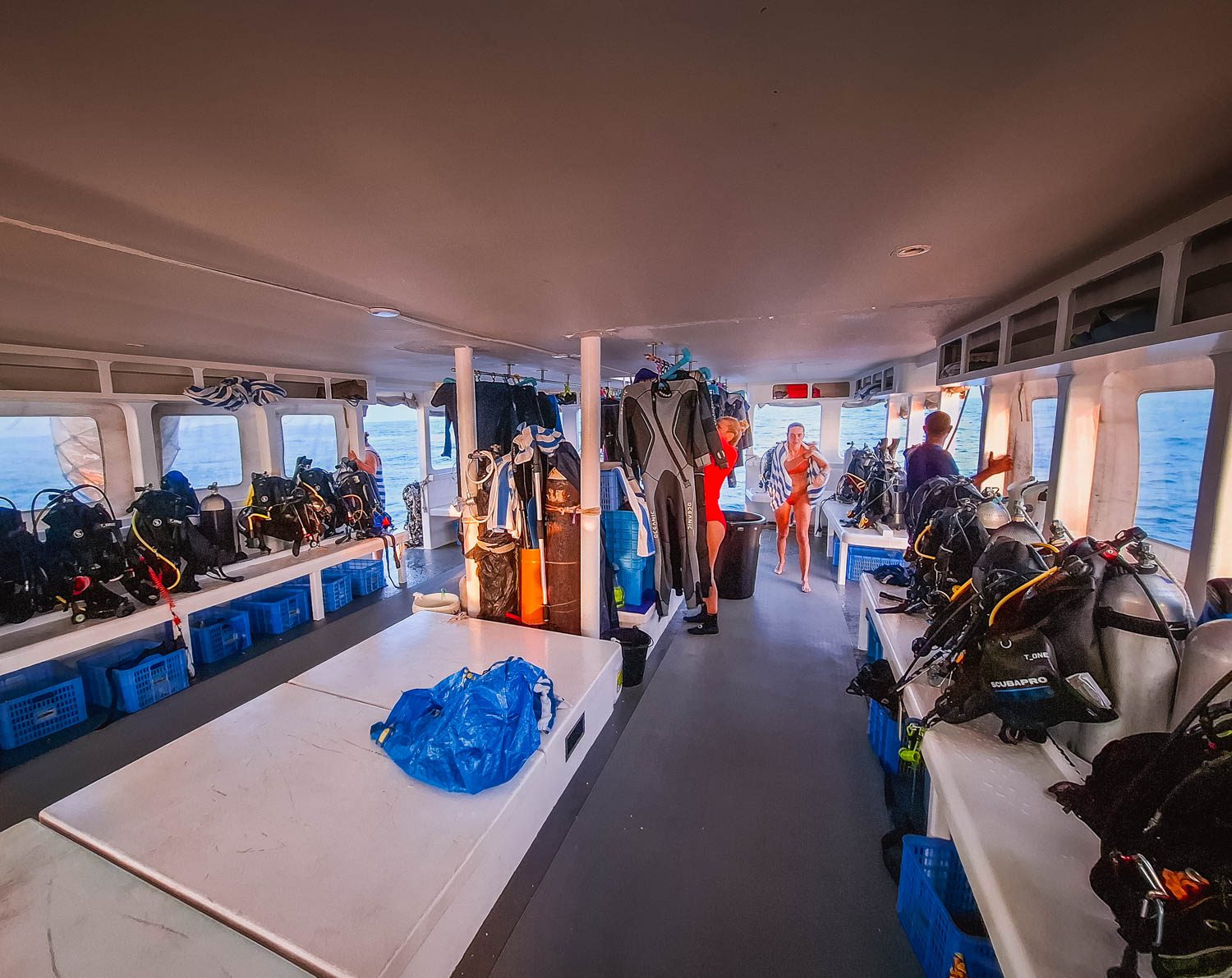
Liveaboards don’t dive from the mother ship. A separate dive boat called a dhoni carries the tanks, the compressor and the guides, and drops you 10 to 15 minutes from the site, then picks you up wherever you surface. On every boat I have sailed, the day ran to three dives, at roughly 6:30am, 10:30am and 3pm. Night dives are rarer than you’d expect: Scubaspa ran none on my Far North week, and EcoPro offered only one, the manta night dive at Fesdu.
My 10 Best Dive Sites in the Maldives, Ranked
Every site here is one I have dived at least once, most of them several times across different boats and seasons. The ranking is by what the site has actually given me, not by reputation.
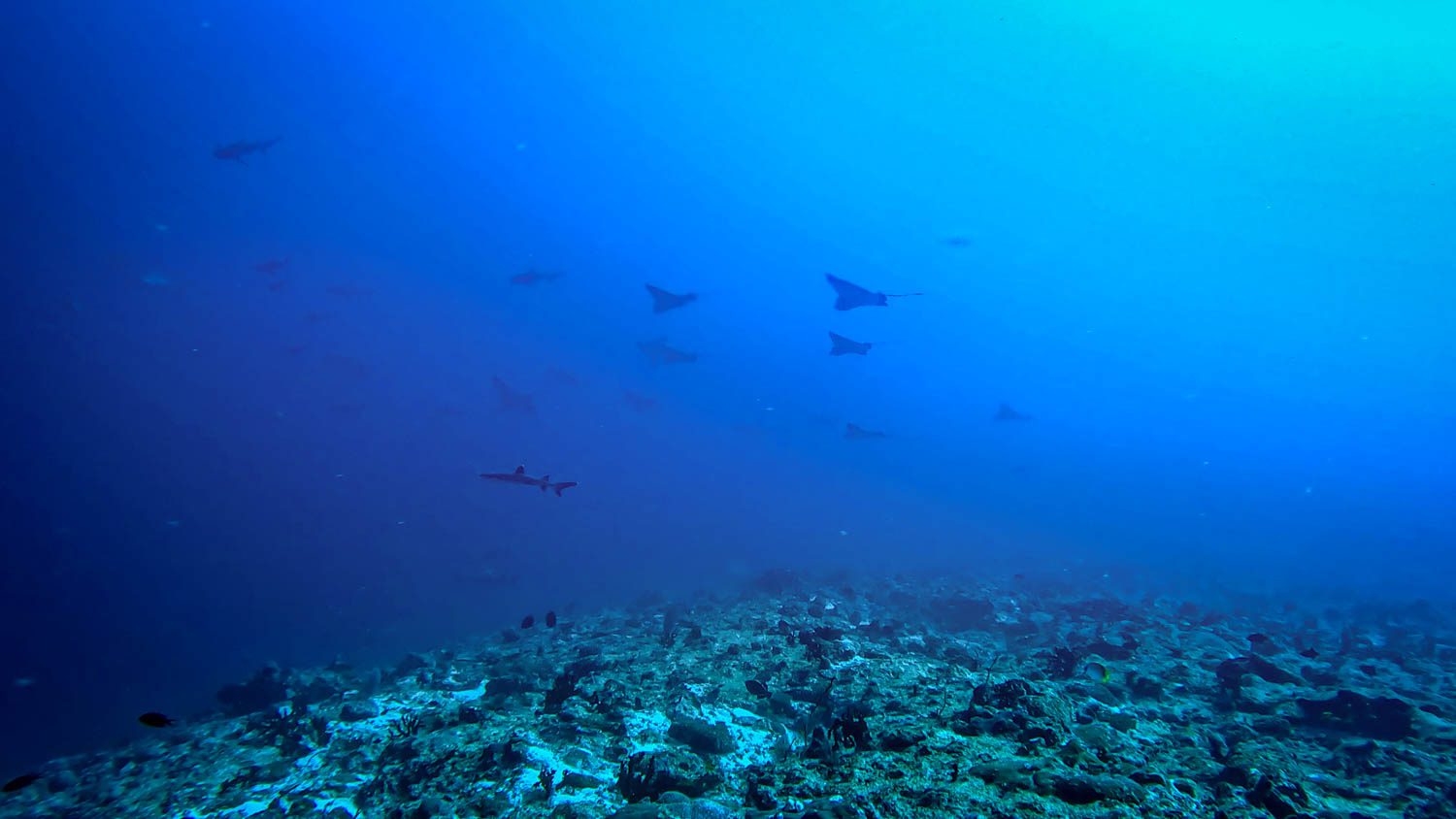
1. Kandooma Thila, South Malé Atoll. The best dive in the country, and the only one I would cross an ocean for on its own. On my first Scubaspa cruise it gave me more than 30 grey reef sharks in the current. On Blueforce One, ten eagle rays stayed with us for over ten minutes. On the last day of my Duke of York week, with no other boat on the site, we logged more than 70 sharks and 40 eagle rays in a single hour. Hook on at the top of the thila around 25 metres and face the incoming tide. For experienced divers only when the current is running.
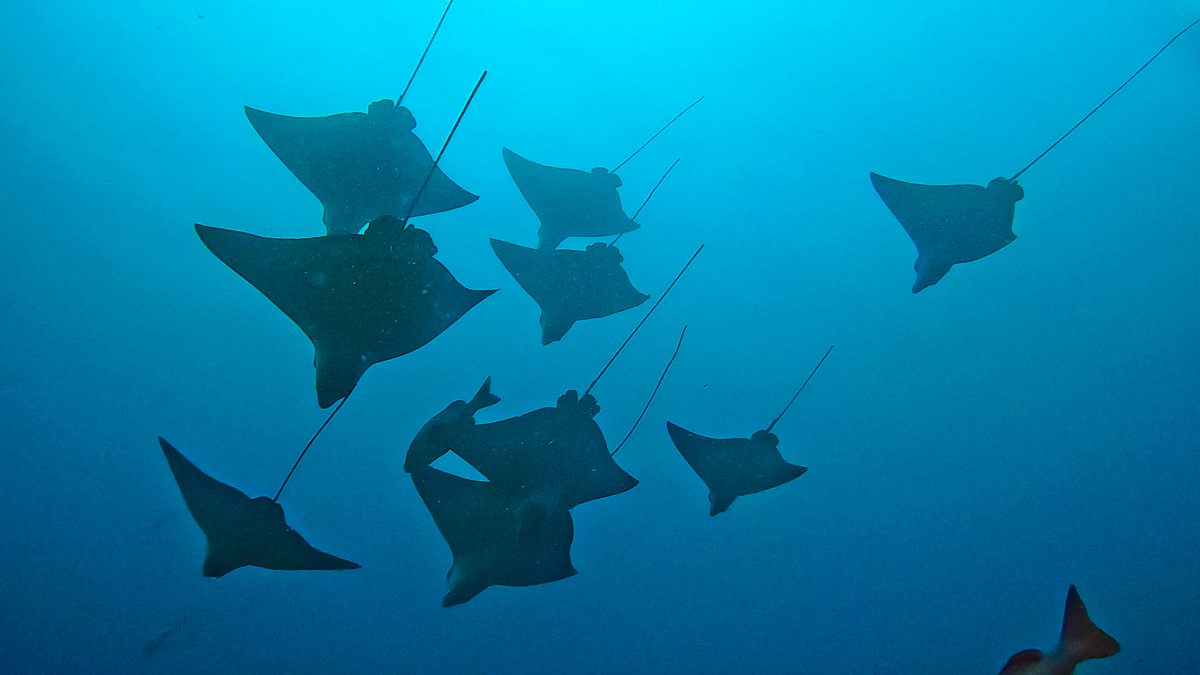
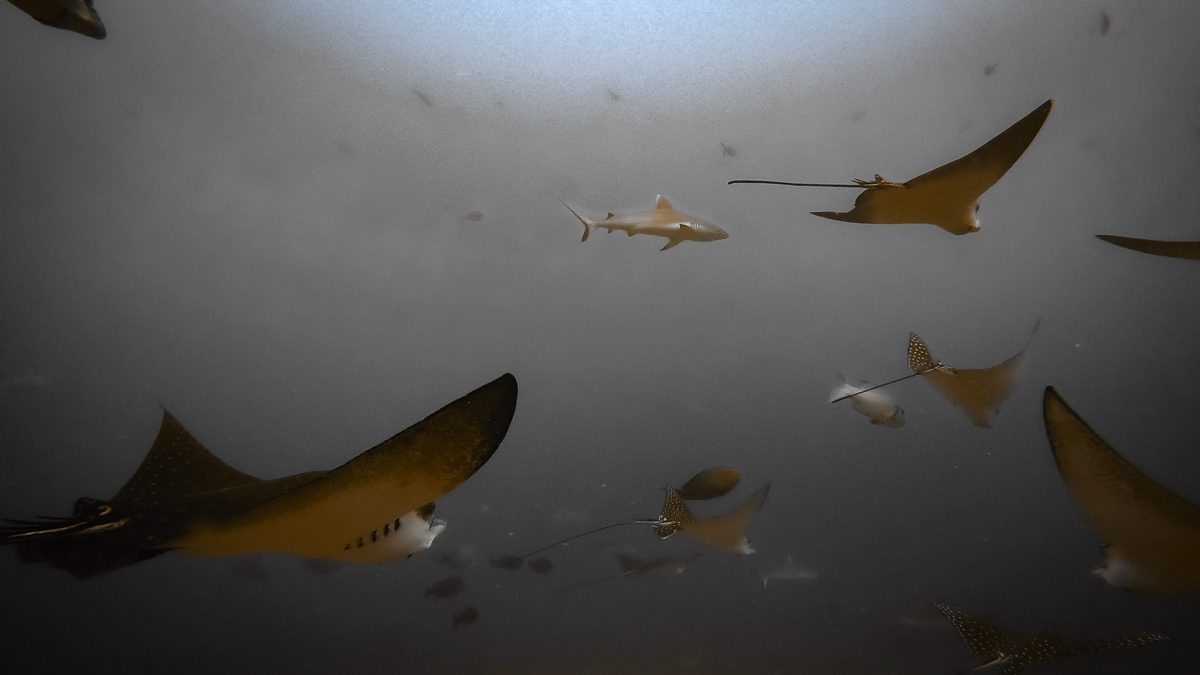
2. Fushi Kandu, the southern channels. More than 100 sharks on one dive on my EcoPro Seascape itinerary in December 2025, in wide-open visibility with the incoming current at full strength. The same route produced over 100 more at Gaahraa Kandu and a ridge dive with well over 100 sharks and around 20 eagle rays. These are the sharkiest dives I have done in the Maldives, and only the longer ten-day itineraries reach them.
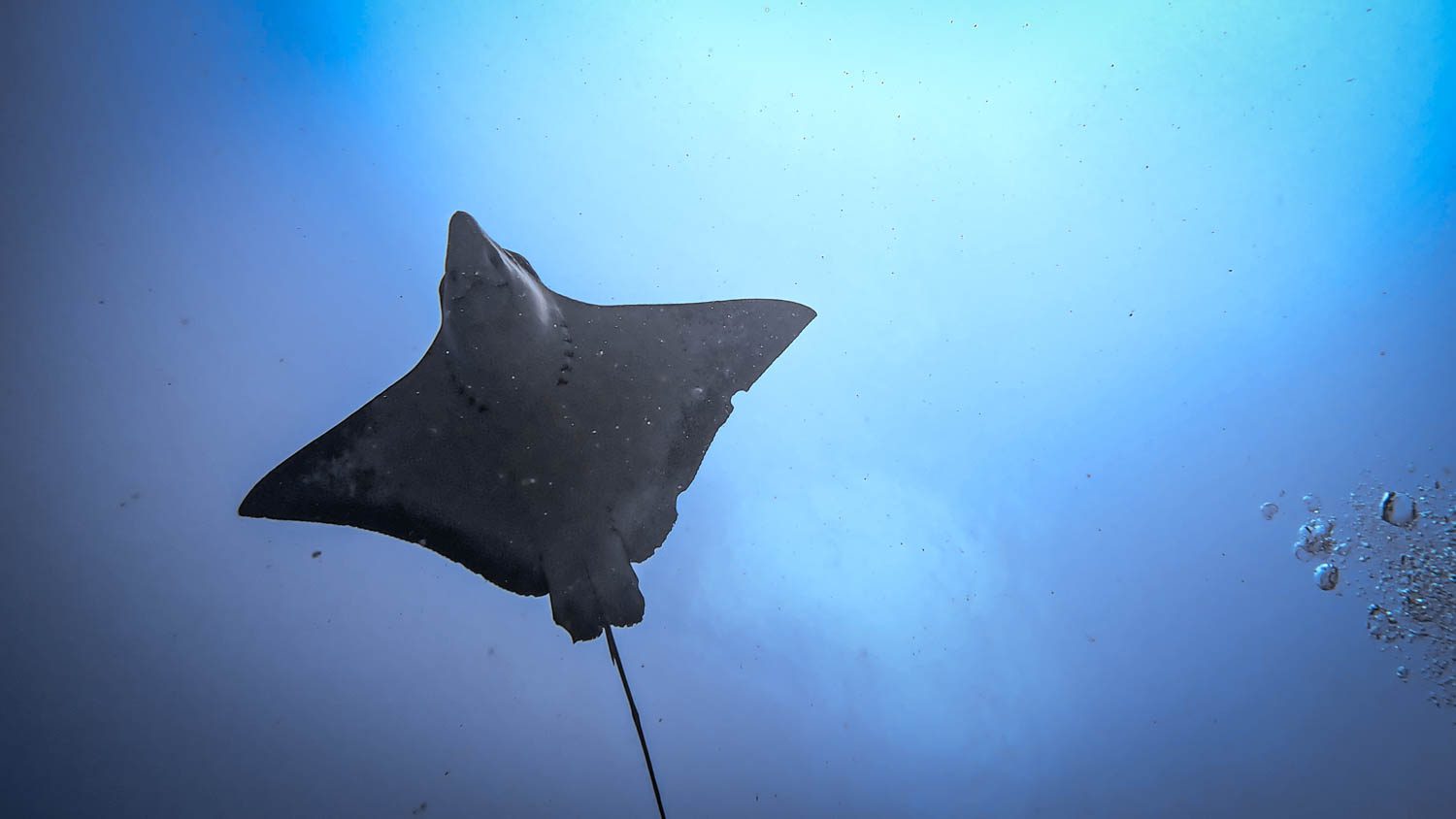
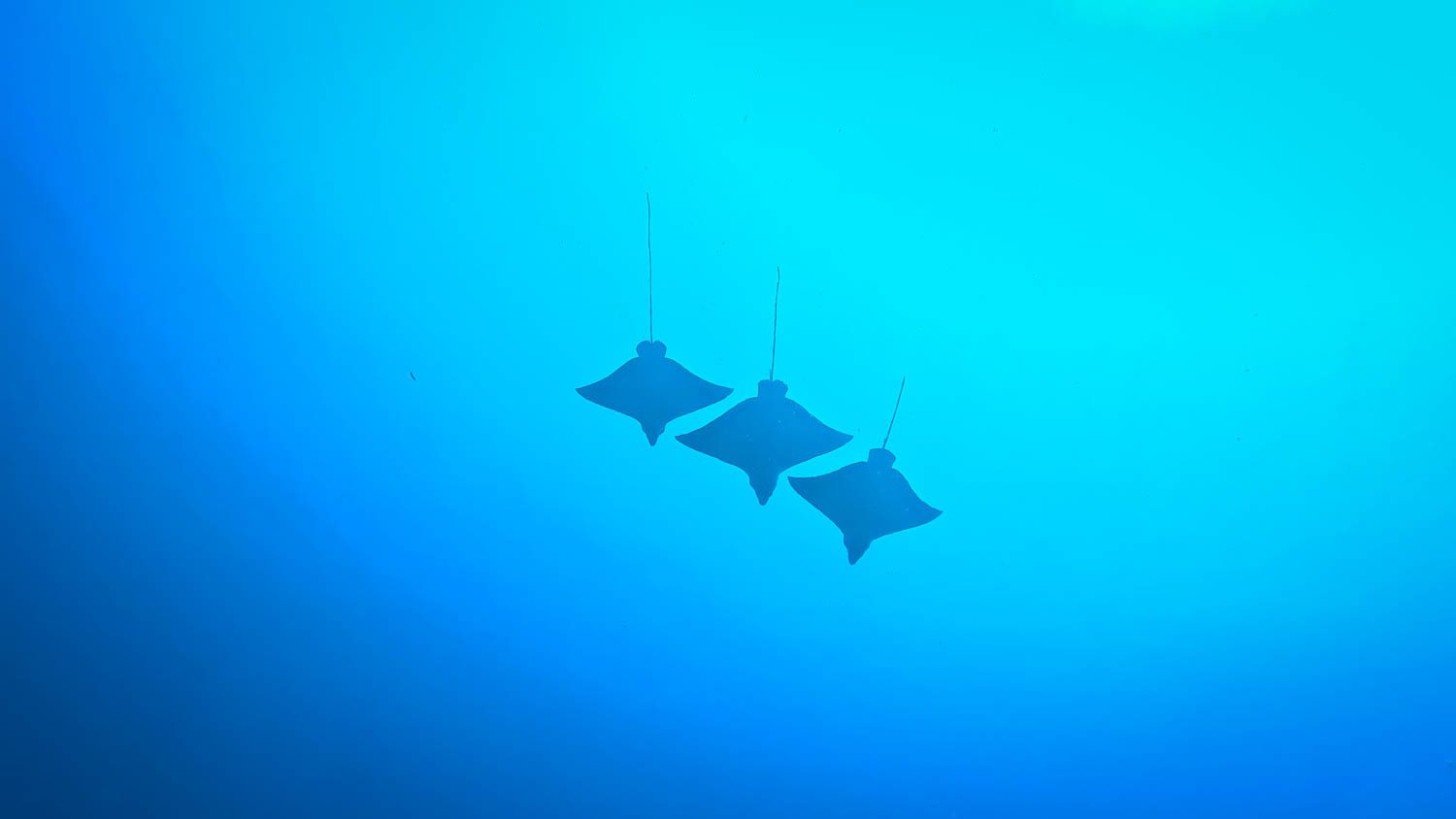
3. Fotteyo Kandu, Vaavu Atoll. The most beautiful channel in the central atolls, with yellow soft corals on the corner and a cave at 26 to 30 metres where whitetips rest. On the Duke of York I found a whitetip in the cave at 30 metres; in December 2025 Fotteyo gave me my first hammerhead in the Maldives, something five earlier cruises had never managed.
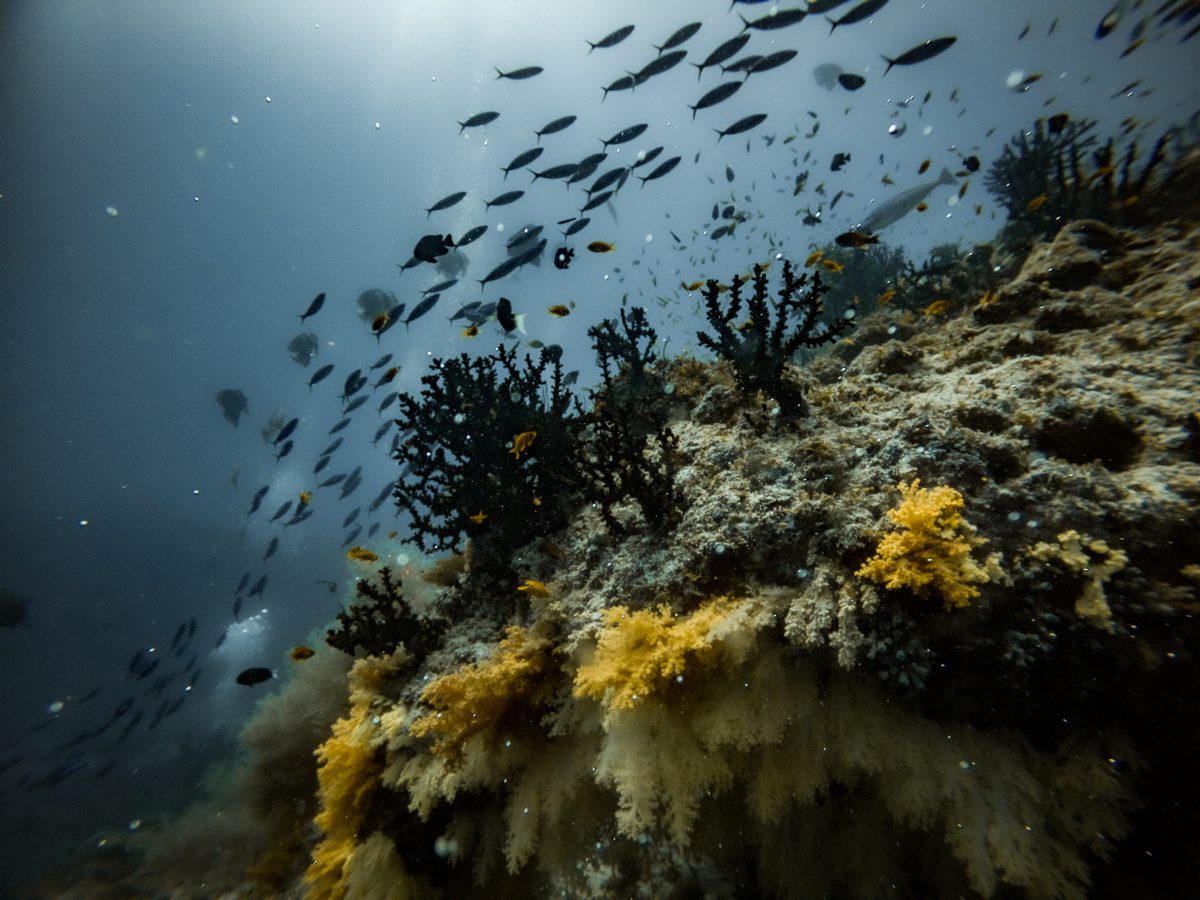
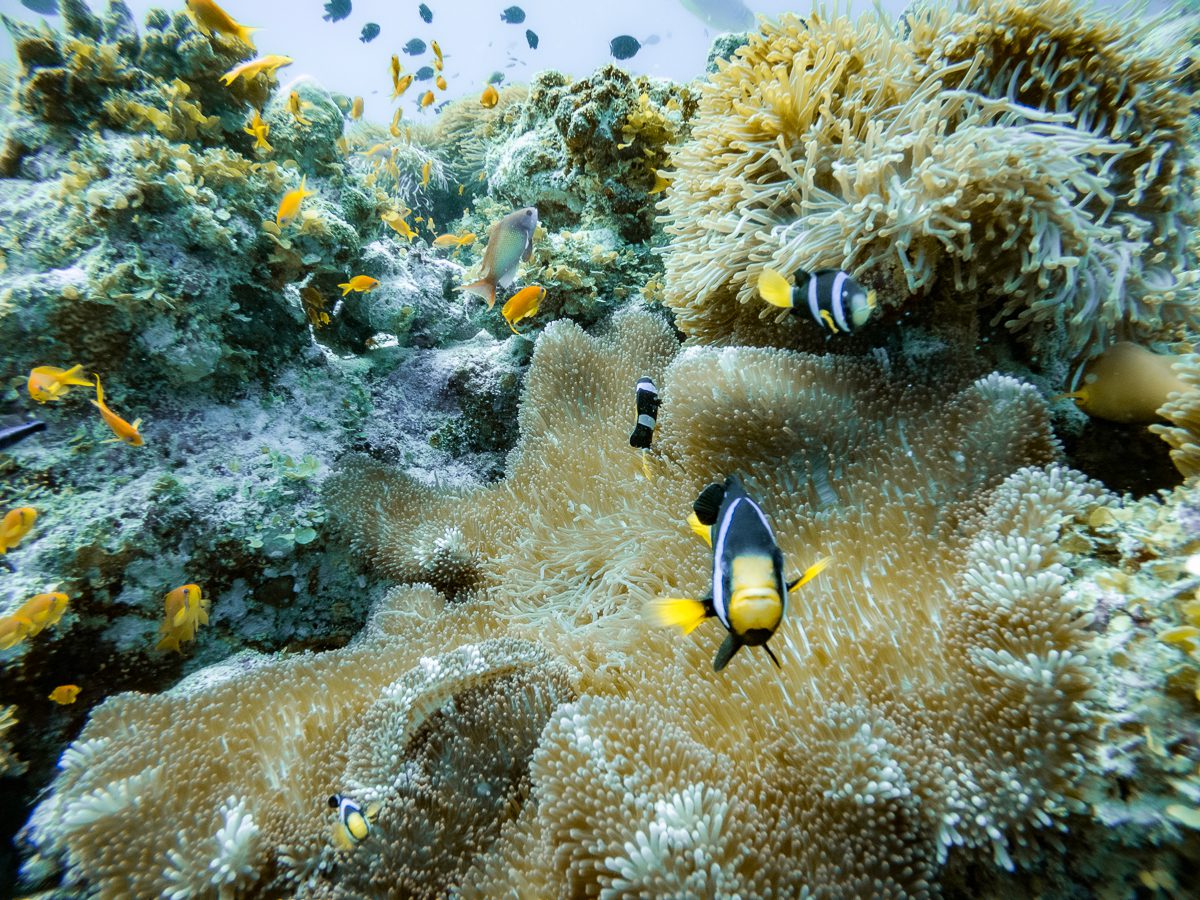
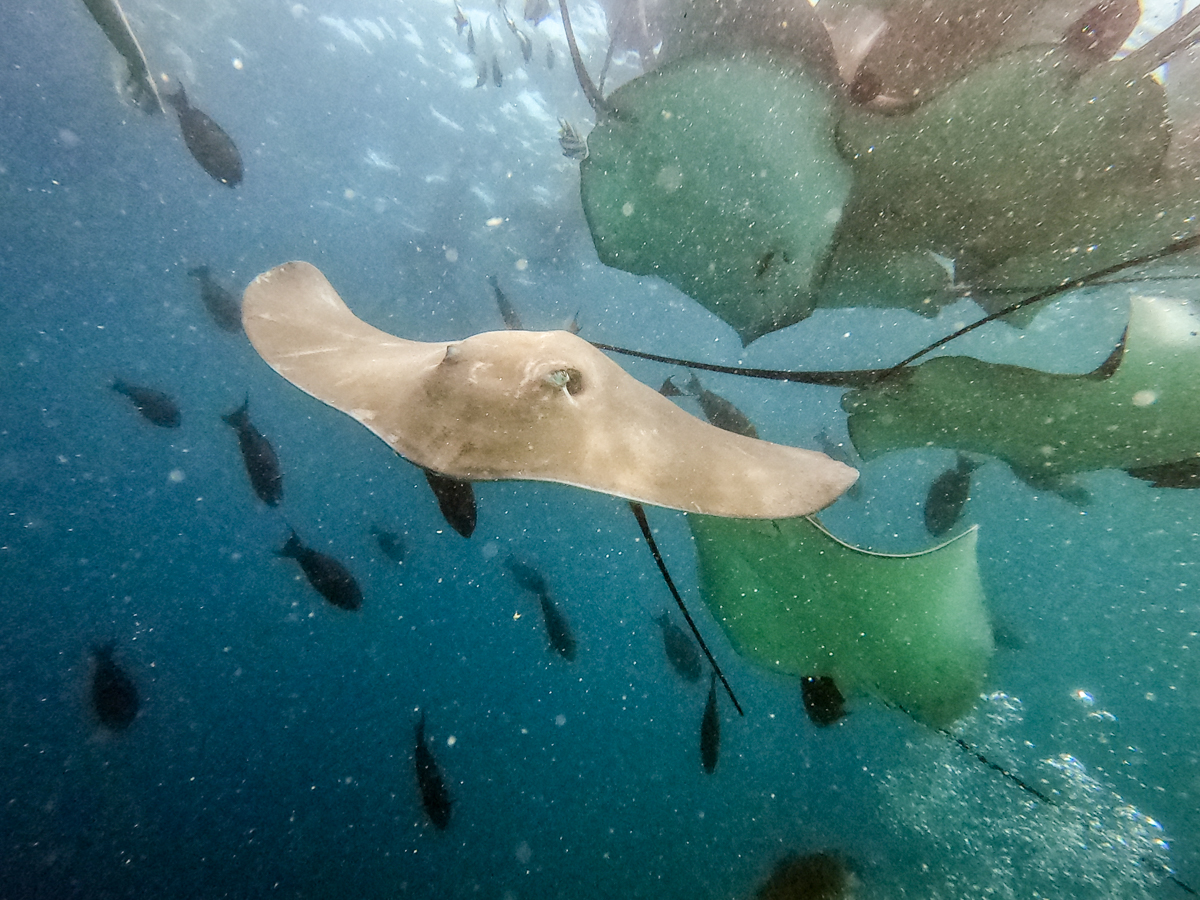
4. Neru Mati, North Malé Atoll. A harbour seawall at 5 to 18 metres where the fishing boats clean their catch, and the strangest check dive I have ever done. On my White Pearl trip in August 2024 it produced nearly 100 stingrays and marble rays, guitar sharks, spinner sharks, around 20 oceanic blacktips, a bull shark and a tiger shark, all in one immersion. We went back on day six. The visibility is poor and the setting is industrial; the animals don’t care.
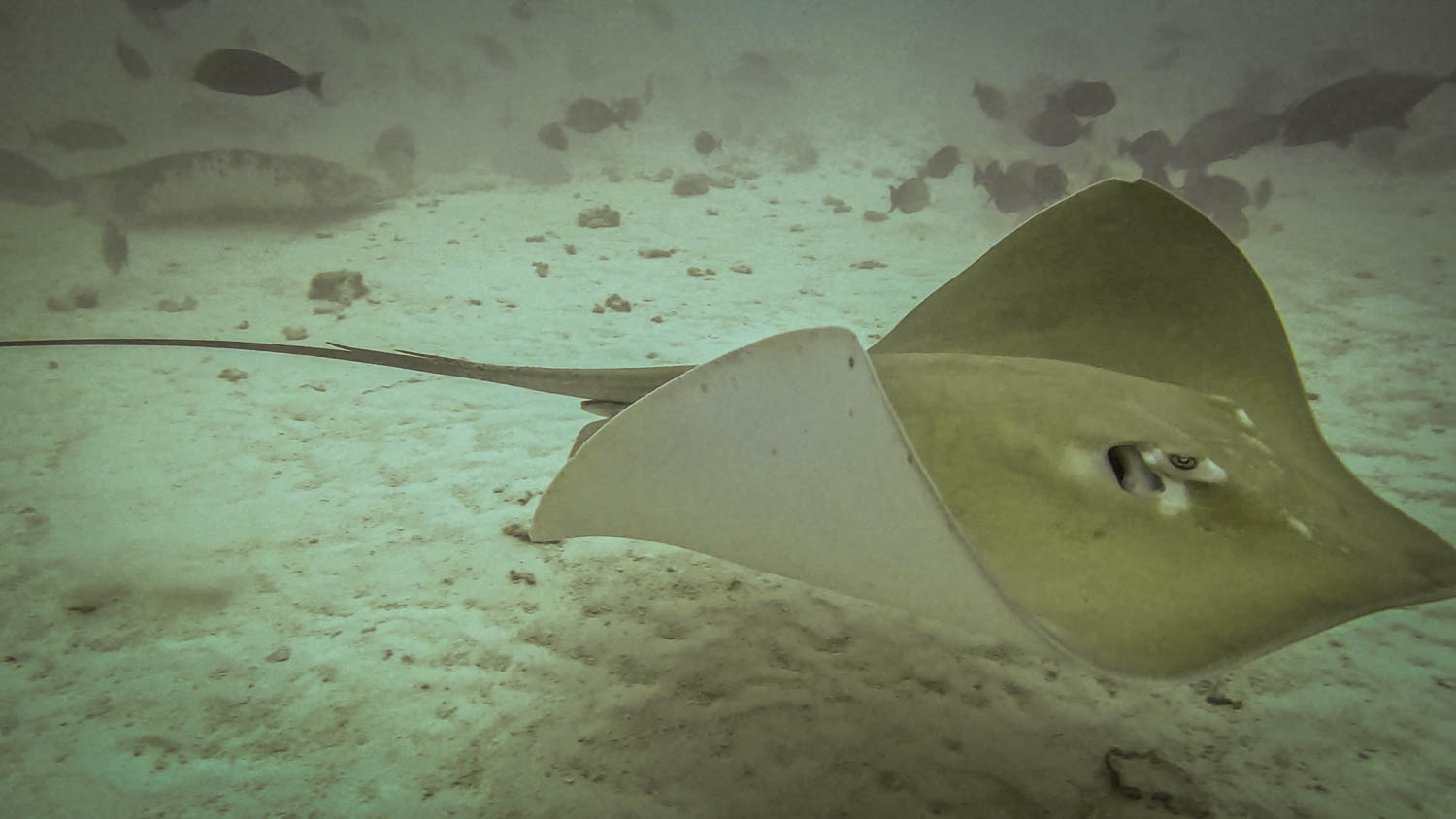
5. Miyaru Kandu, Vaavu Atoll. The name means shark channel, and it earns it. More than 50 grey reefs on the Duke of York, about 30 on the repeat dive, and on EcoPro a strong incoming current with visibility that went on forever. A pure reef-hook dive: get down, clip on, watch.
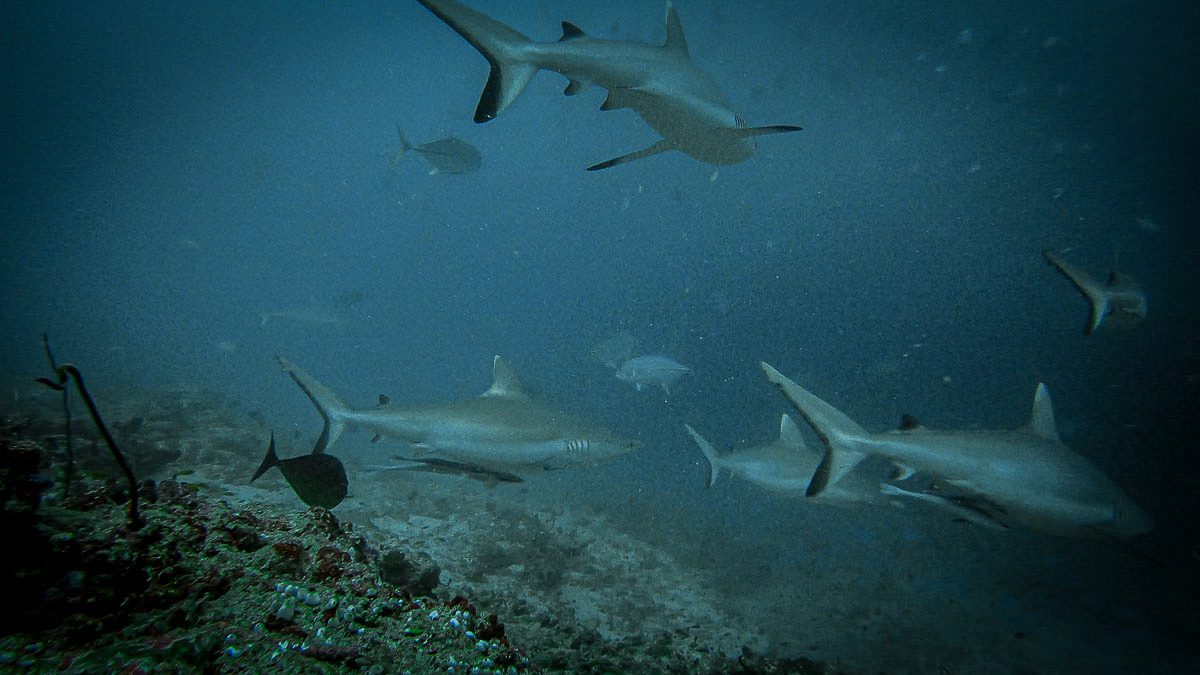
6. Alimatha night dive, Vaavu Atoll. Local guesthouses have fed the nurse sharks off this jetty for years, so the dive is thrilling and, frankly, a little freaky. On the Scubaspa night dive I counted more than 50 nurse sharks circling under the lights with four boats on site; on Blueforce One there were up to 50 divers in the water. By day it is a quiet 14 to 16 metre reef with the same sharks dozing in the sand. On the Duke of York, a sailfish hunted at the back of the boat after dinner. Go once.
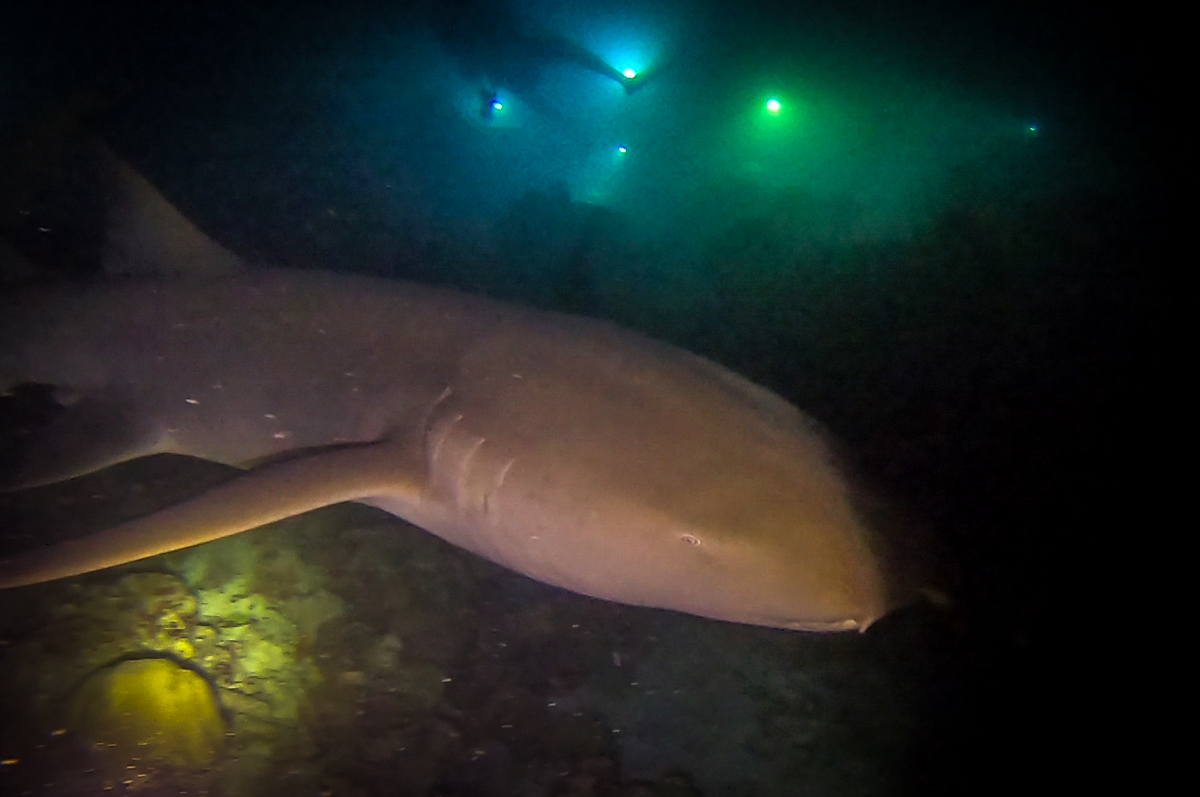
7. Kudarah Thila, South Ari Atoll. My favourite thila in the country. The sea fans at 30 metres have resisted bleaching better than almost anywhere else I have dived in the Maldives, and on three of my visits, including a 5:20am sunrise dive on Blueforce One, we were the only boat there. Visibility can be poor and the manta that visits it is not reliable, but the reef itself is the best in Ari.
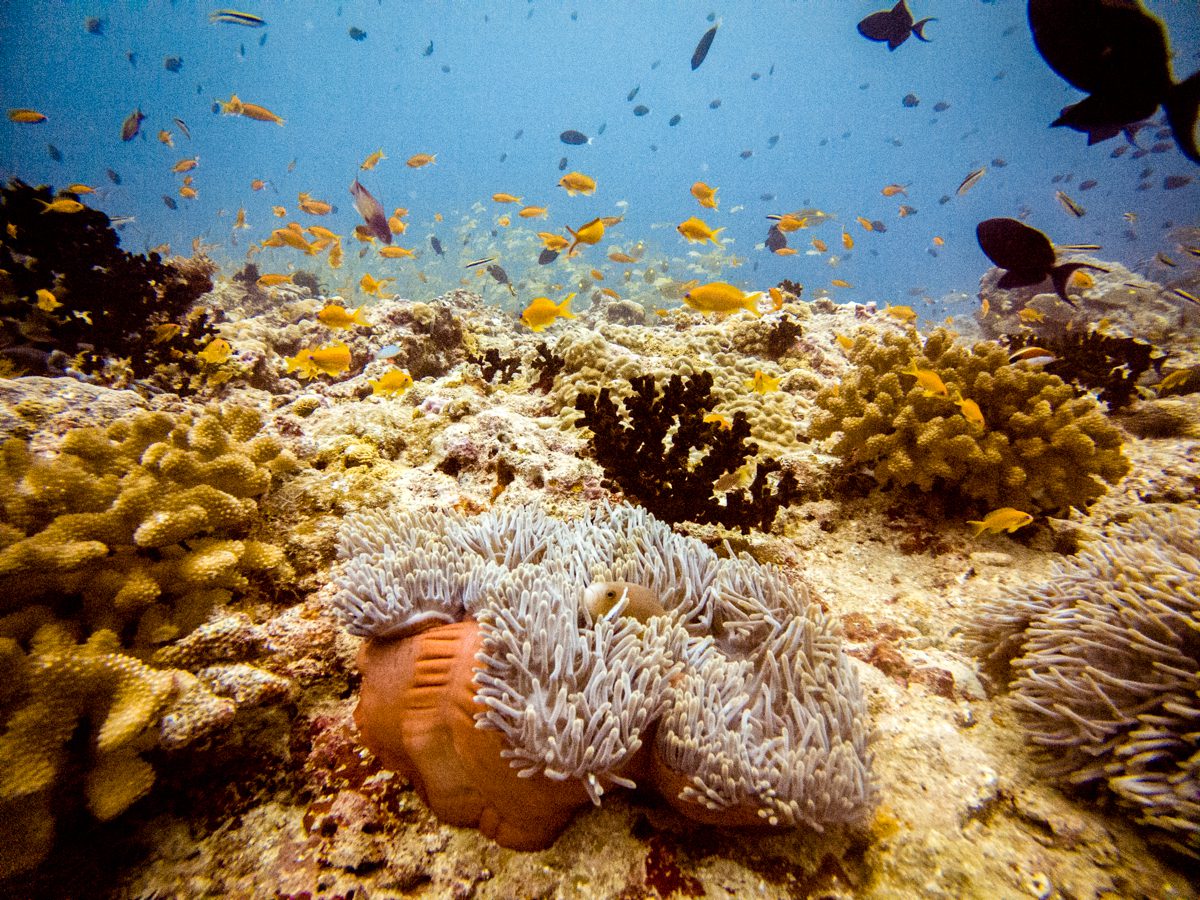
8. Fesdu manta night dive, Ari Atoll. One of the strangest dives anywhere. The boat moors over a sand patch, floods the water with light, the plankton gathers, and the mantas loop through the beam to feed a metre above your head. It worked on Blueforce One. On EcoPro there were more than ten boats on the site and two mantas, which tells you the dive is no secret.
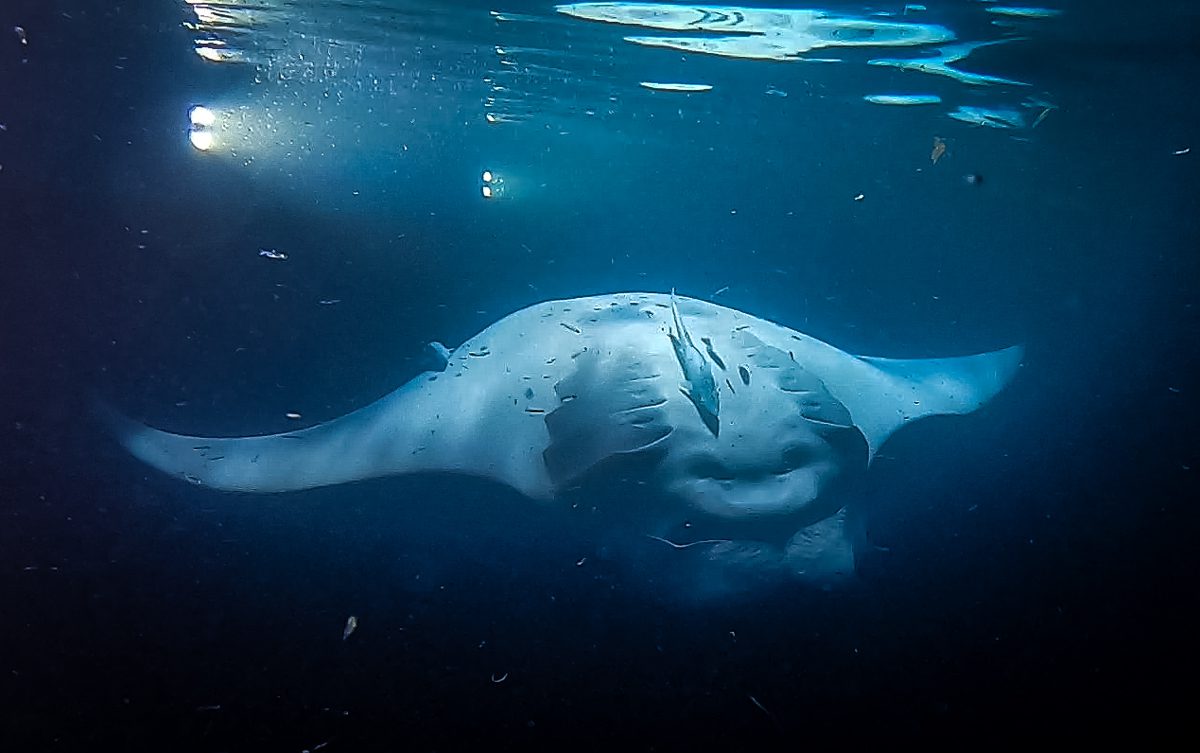
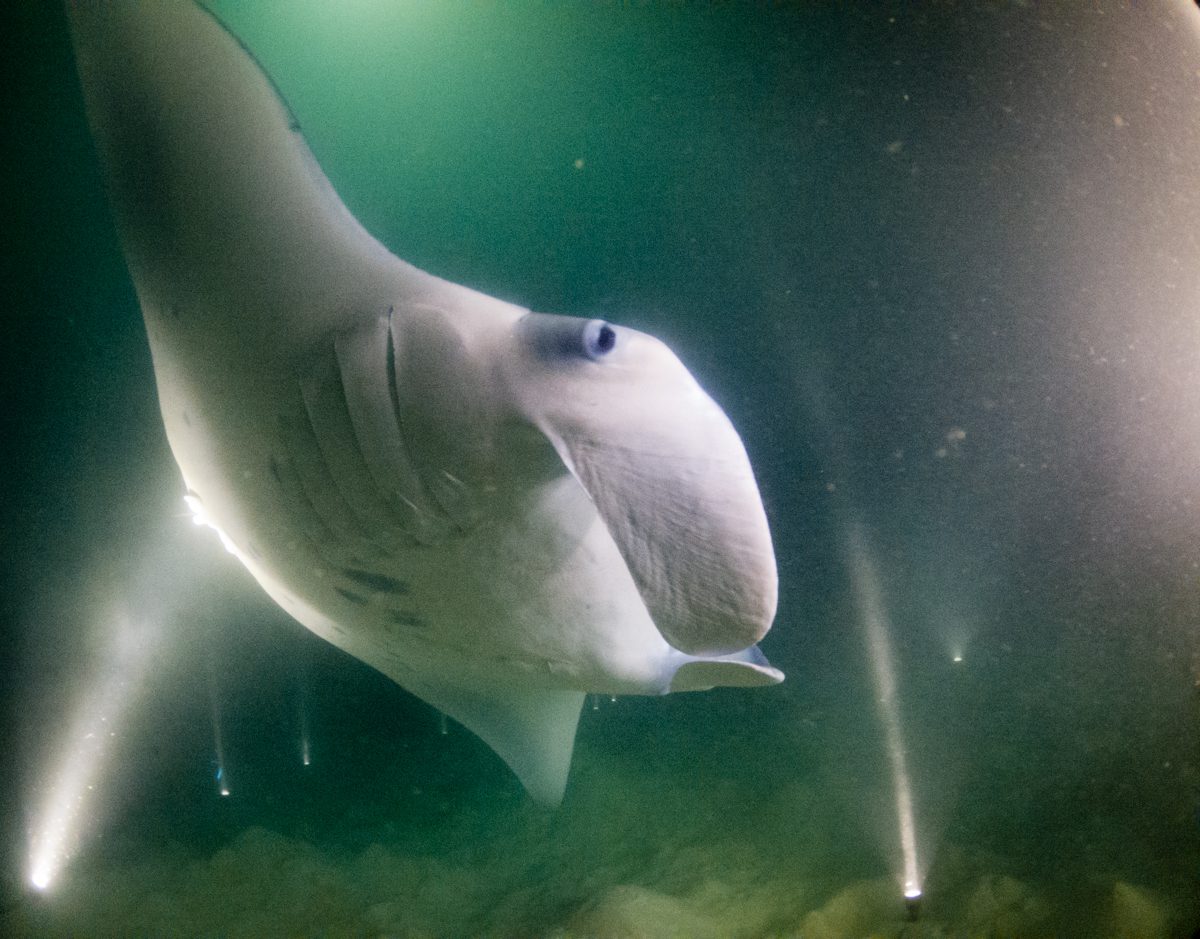
9. Amazing Pinnacle, Baa Atoll. My favourite dive on the Far North route: a pinnacle starting at 14 metres and dropping to 30 in walls and overhangs, with the most colourful coral I have seen in the Maldives, two mantas, barracuda and no other boat.
10. Hanifaru Bay, Baa Atoll. Not a dive, a snorkel, and still one of the great wildlife spectacles in the Indian Ocean. In season, manta trains of more than 20 chain-feed in the bay. Sessions are capped at 45 minutes and the USD 30 permit goes to the Baa Atoll Conservation Fund. With ten boats on the site it was chaotic, and I took several fins to the head. Worth it.
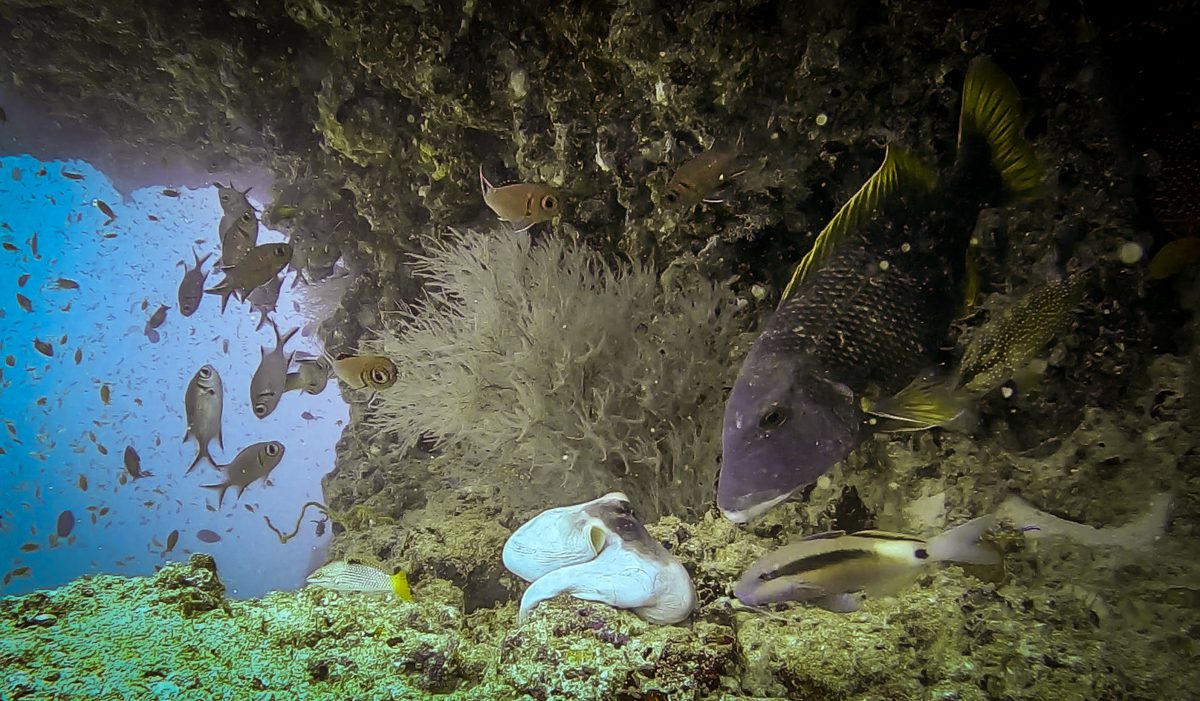
Honourable mentions: Maaya Thila in North Ari (more than 20 sharks and mating cuttlefish on Blueforce One, though the shallow coral is damaged), Fish Head (a classic grey-reef dive where I once cut a fishing line off a shark), the Machafushi wreck from 18 to 30-odd metres, Dhonfaanu house reef in Baa (10 mantas and 10 mobulas on one dive), and the Felivaru shipyard wrecks in Lhaviyani, down to 32 metres.
Atoll by Atoll: Where to Go for What
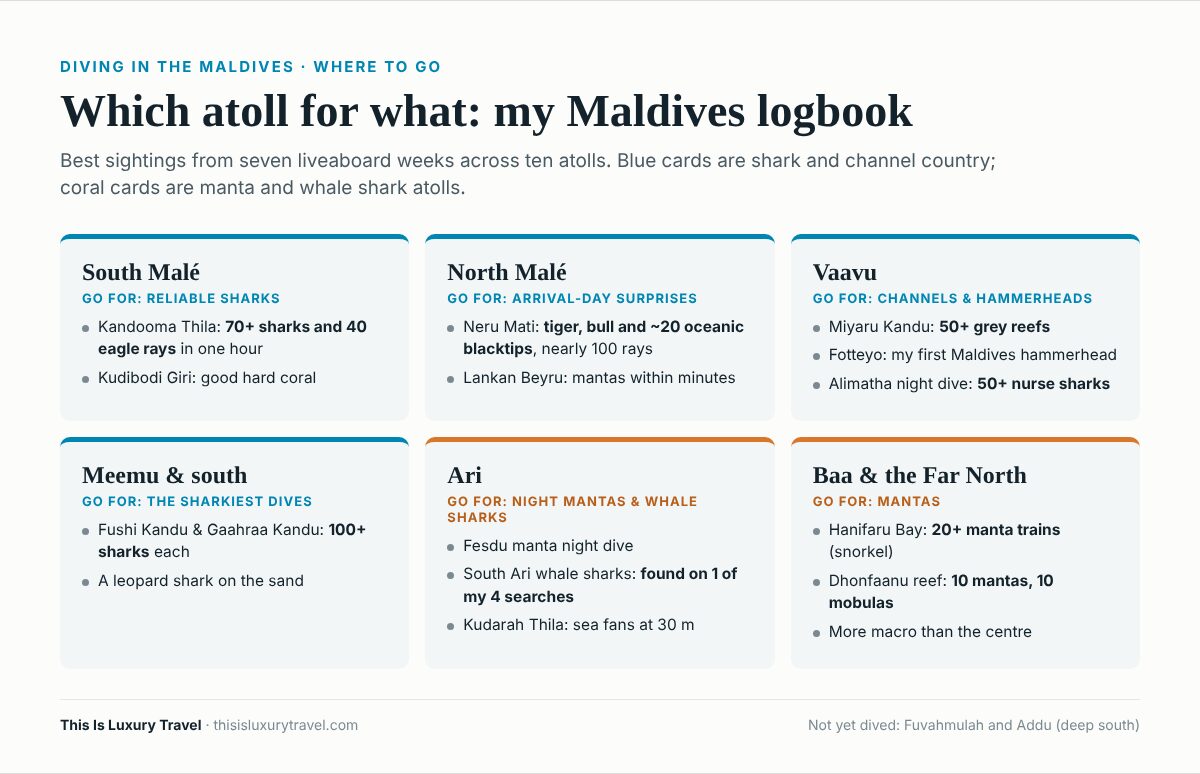
Itineraries are sold by atoll, so this is how the regions I have dived compare.
South Malé: the Most Reliable Sharks
Kandooma Thila alone justifies the atoll. Kudibodi Giri nearby still has good hard coral, though I saw new bleaching there in August. Guraidhoo is a manta point, but on my White Pearl week the visibility was poor and nothing came. Most central itineraries spend a day or two here, which is the right amount.
North Malé: Arrival-Day Surprises
Most central itineraries start here, and the check dives are better than they have any right to be. Beyond Neru Mati, Lankan Beyru Manta Point is a cleaning station where, on White Pearl, the mantas appeared almost as soon as we reached the bottom and stayed. In December 2025 on EcoPro it wasn’t the season and we saw two blacktips. Fish Factory and Stingray City are easy reef-hook introductions on the first day.
Vaavu (Felidhu): Channels, Hammerheads and the Night Dive
Vaavu is where Maldives channel diving gets serious: Miyaru Kandu, Fotteyo and Alimatha in three days. It is also where Aman is building its first Maldives resort, which says something about how the atoll’s reputation among divers has grown.
Meemu and the Southern Channels: the Sharkiest Dives
Only the longer itineraries go this far south. The EcoPro ten-day route gave me Fushi Kandu and Gaahraa Kandu, a leopard shark resting on the sand, and mantas at Kurali Manta Point on the first attempt (then rain and nothing on the second). Muli Corner was flat on both my dives until the current picked up and brought in snappers and eagle rays. If you have the days, this is the stretch to spend them on.

Ari: Whale Sharks, Night Mantas and the Classic Thilas
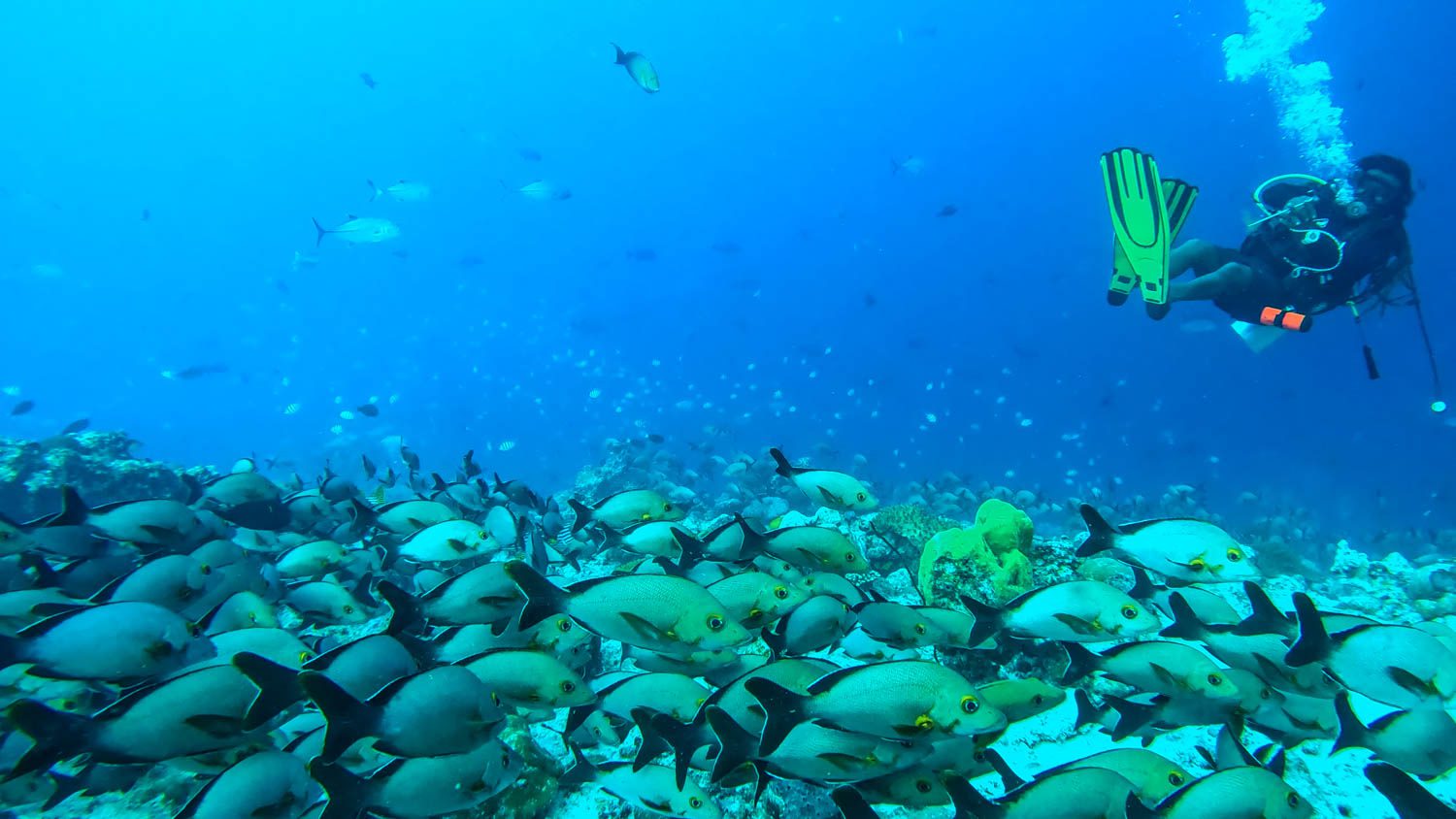
Ari is the atoll most itineraries are built around, with Kudarah, Maaya, Fish Head and the Fesdu night dive. It is also the busiest. Mahivadu Camel Rock had at least 60 divers waiting at a cleaning station for one manta when I dived it from Blueforce One, and Moofushi Manta Point gave me three mantas and a leopard shark in poor visibility. South Ari is the whale shark atoll, which gets its own section below.
Baa, Raa, Noonu and Lhaviyani: the Far North for Mantas
Scubaspa Yin’s Far North route starts from Dharavandhoo in Baa Atoll, a 20-minute domestic flight from Malé, and is built around mantas: Hanifaru, Dhonfaanu, Amazing Pinnacle. Kudathuladhoo in Raa is a reef-hook dive with grey reefs, Labyrinth had more nudibranchs than I have seen anywhere else in the country, and the Kuredhoo turtle caves in Lhaviyani are worth the detour. There were misses too: Kotterafu manta point had no mantas because the current was wrong, and the coral there was dead and broken; the visibility at the Orisma pinnacles in Noonu was horrendous, green and so dark the anemones were still closed. Overall the Far North is less diverse than the central atolls, but if mantas are the reason you are coming, it is the route to book.
What I Haven’t Dived Yet
I haven’t dived the deep south: Fuvahmulah, with its tiger sharks, and Addu, with its manta point and wreck. Several dive operators now rank Fuvahmulah first in the country. I will add it here once I have been, rather than repeat what other people say.
Mantas in the Maldives: Three Different Encounters
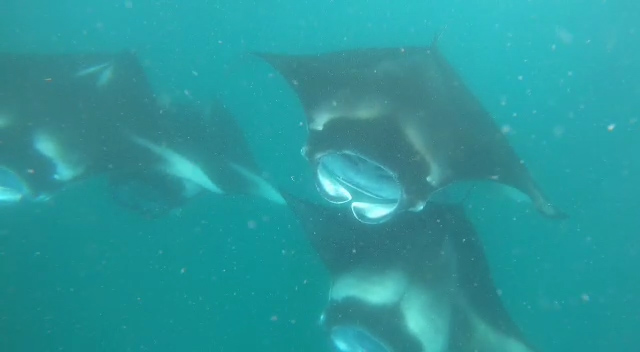
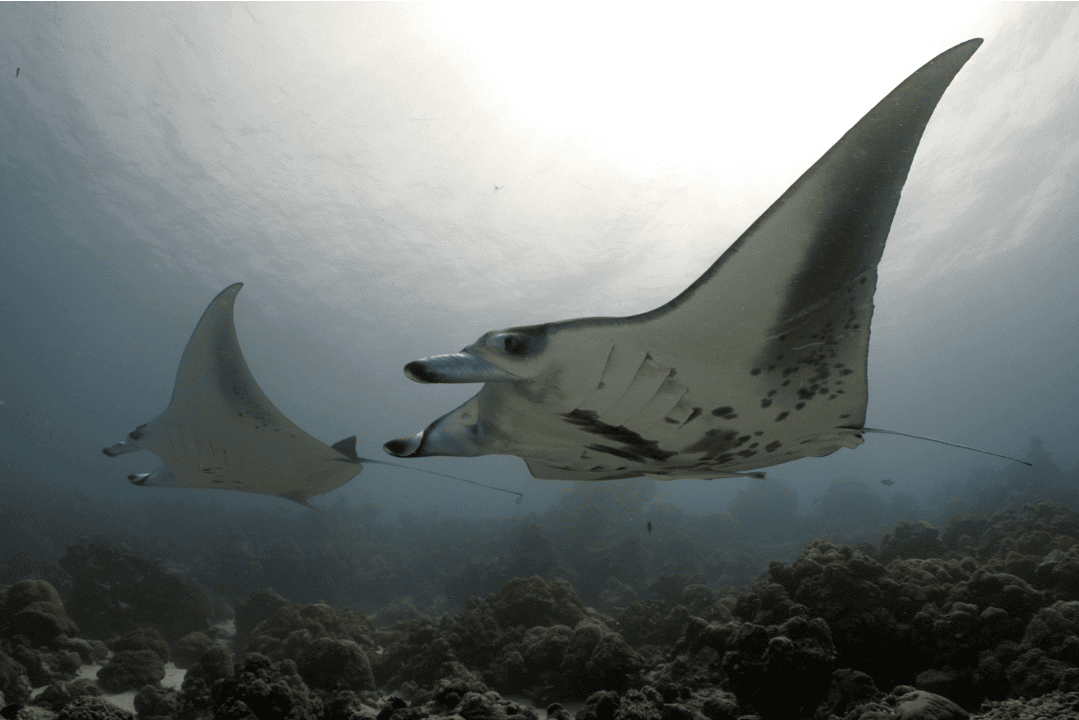
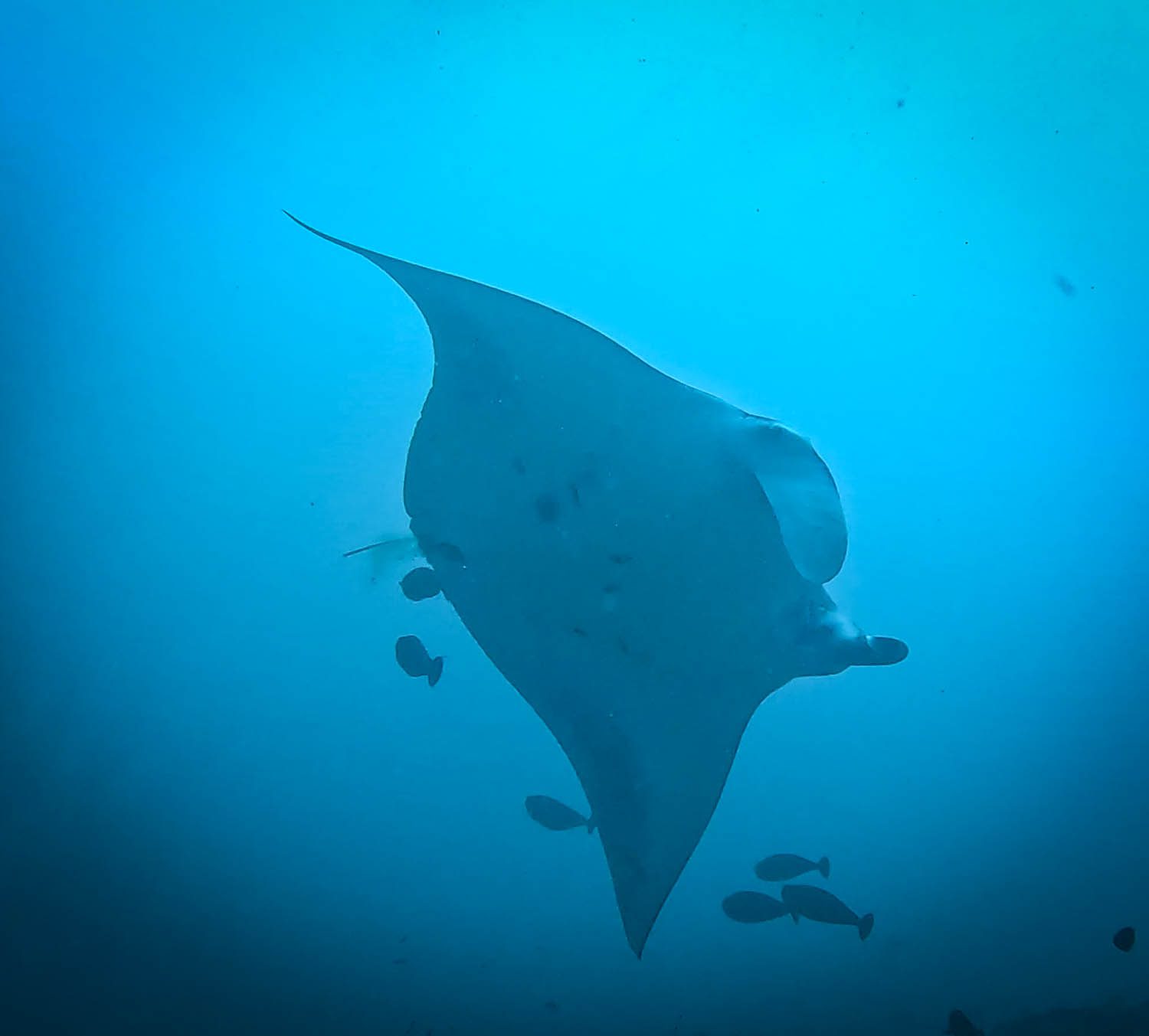
The Maldives has the largest known population of reef mantas in the world, and I have met them three different ways:
- Cleaning stations on scuba. Lankan Beyru, Moofushi, Kurali, Dhonfaanu. You settle on the sand at 12 to 18 metres beside a coral head and wait while the mantas circle in to be cleaned. Lankan on White Pearl was the best: they appeared almost immediately and stayed. Kotterafu with the wrong current was the worst: nothing.
- Feeding frenzies on snorkel. Hanifaru Bay from May to November, peaking in August and September. Trains of more than 20 mantas, mouths open, in plankton so thick the water goes green. Snorkel only, 45 minutes, USD 30 permit, and a crowd.
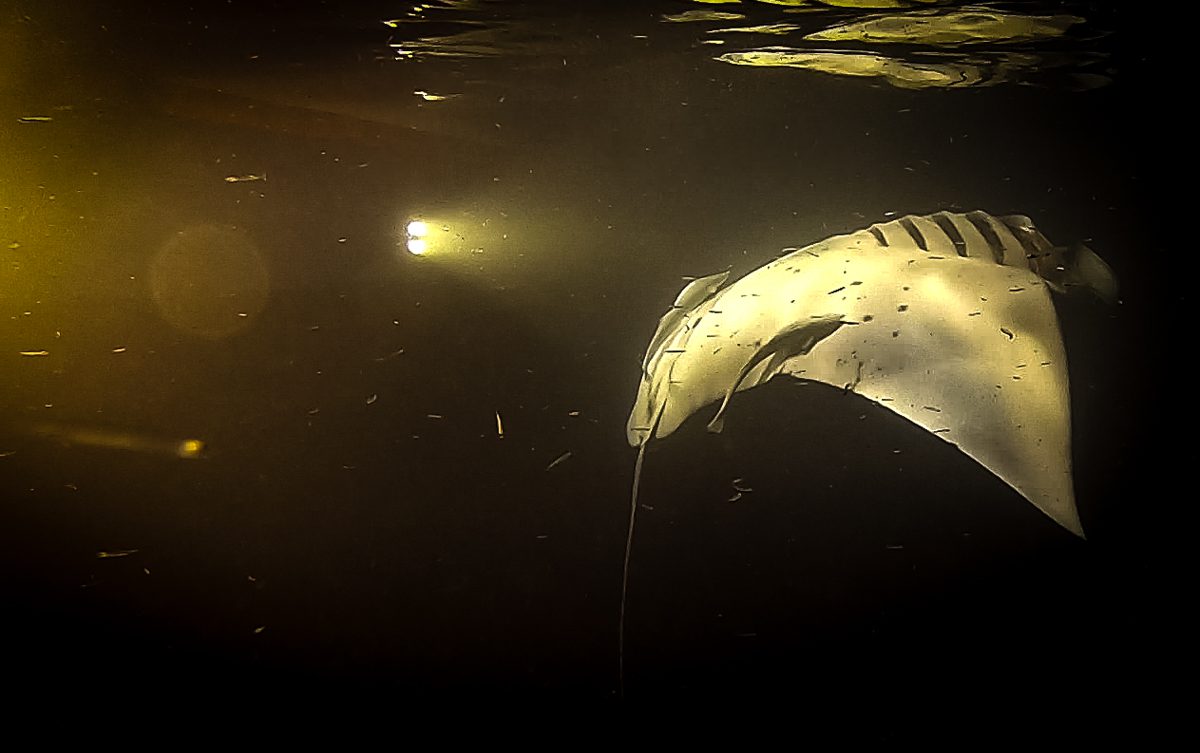
- Night feeding under the boat lights. The Fesdu manta night dive in Ari. The mantas come to the plankton that comes to the light, and they pass close enough to touch. Hands to yourself.
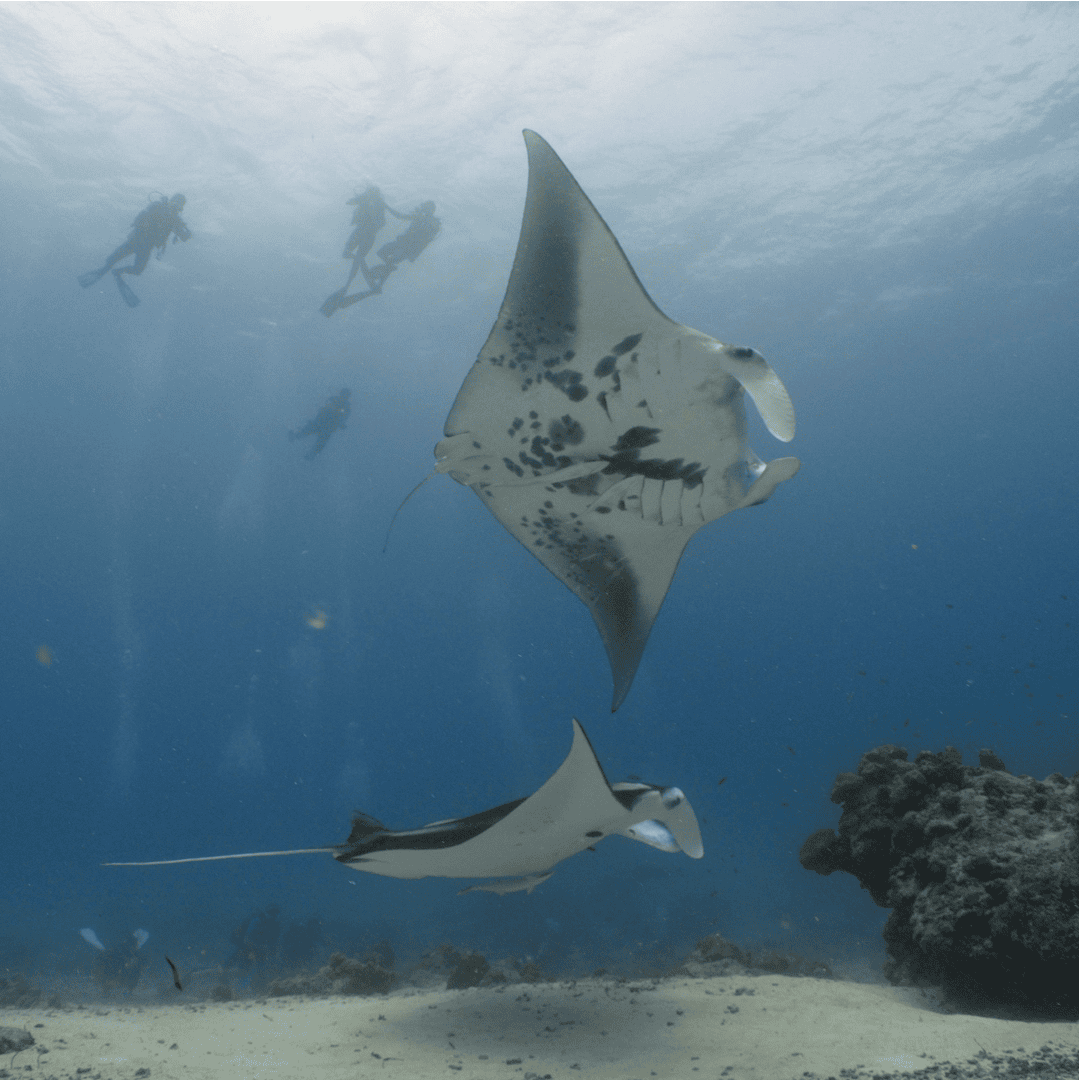
The honest caveat is that none of the three is guaranteed. Guraidhoo, Rangali Madivaru and Lankan in December all gave me nothing. The Far North in August and September is the surest bet I have found.
Whale Sharks in the Maldives: My Honest Odds
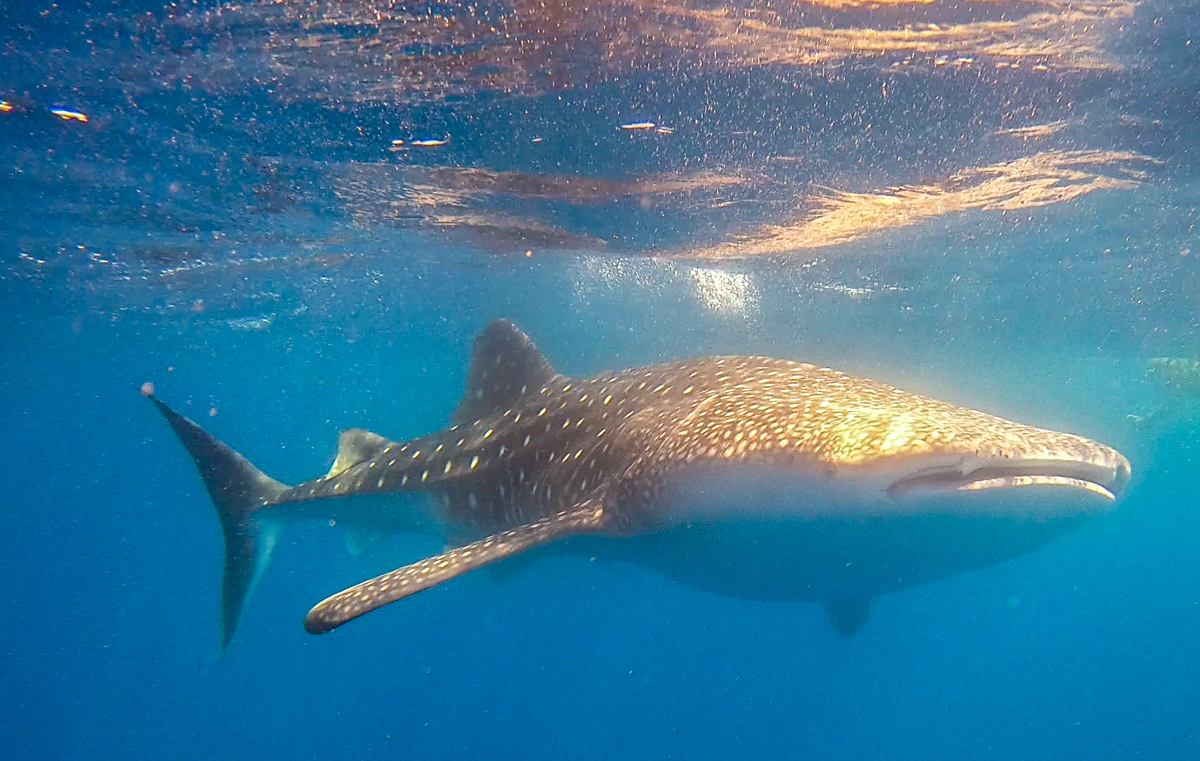
South Ari Atoll has juvenile whale sharks along the outer reef at Maamigili more or less year-round, and the crews quote a 50 percent chance. My record is one in four:
- Scubaspa Yin: a 2.5-hour search along the reef, and no whale shark.
- Blueforce One: at least 20 boats searching the same stretch, and none. The dive that followed gave us ten pygmy devil rays and four turtles instead.
- EcoPro Seascape: none either, but three schools of around 200 barracuda each.
- The Maafushivaru snorkel excursion: two whale sharks, about 4 and 7 metres, at Maamigili Beyru, 50 minutes by boat from the resort. Ten boats and close to 100 people arrived within minutes.
The rules are a 10-metre distance for boats, 3 metres for swimmers, no flash and no touching, and the guides on all four trips enforced them. Go in with the right expectation: the Maldives is a place where you might see a whale shark, not a place where you will. If whale sharks are the point of your trip, read my guide to the best places to dive with whale sharks before you book the Maldives for them.
Best Time to Dive the Maldives
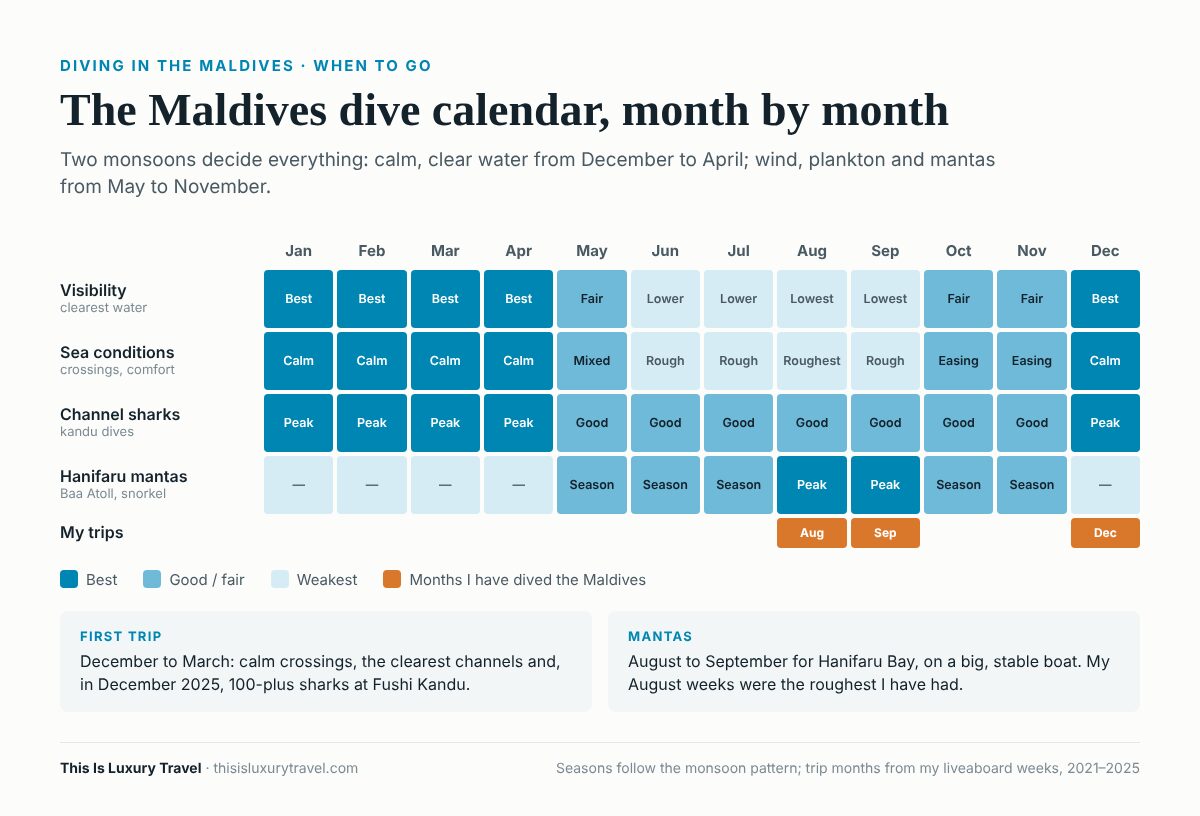
Two monsoons decide everything:
- North-east monsoon, December to April: calm seas, dry days and the clearest water. Peak liveaboard season, and the time to book a first trip.
- South-west monsoon, May to November: wind, rain and plankton. Lower visibility, rougher crossings, and more mantas and whale-shark activity because the plankton is what they eat.
I have dived the Maldives in August, September and December, and the difference was stark. My August weeks were the roughest: White Pearl spent five of seven nights sheltering near Malé in one of the worst storms of 2024, and I still managed 13 dives; bad weather stopped the Duke of York from crossing to Ari, so we stayed in South Malé and Vaavu. September on the Far North gave me Hanifaru at its peak and visibility that was sometimes horrendous. December 2025 on EcoPro was the opposite: open channels, flat seas, and the most sharks I have seen in the country.
| Months | Conditions | Best for | My experience |
|---|---|---|---|
| December–March | Calm, dry, clearest water | Channel sharks, first trips, photography | December 2025: 100-plus sharks at Fushi Kandu and Gaahraa Kandu |
| April | Hot, transition month | Calm seas before the monsoon | Not dived |
| May–July | South-west monsoon begins, rougher crossings | Start of the Hanifaru manta season | Not dived |
| August–September | Wettest, lowest visibility, plankton | Hanifaru mantas, manta cleaning stations | Storm week on White Pearl; 20-plus manta trains at Hanifaru in September |
| October–November | Monsoon easing | Mantas, quieter boats | Not dived |
My pick: December to March for a first trip. August to September only if Hanifaru is the goal, and then on a big, stable boat.
Liveaboard or Resort?
If you dive, choose a liveaboard. The best sites are the channels between atolls, and a boat reaches five or six atolls in a week while a resort dive centre reaches a fraction of that. The money favours the boat too:
- Liveaboard: a week on a good boat costs around USD 2,200 to 3,300 per person for seven nights, 17 to 20 dives and full board, plus roughly USD 300 to 450 in environment tax, fuel and service charges. The luxury boats and the Christmas and New Year departures run from about USD 3,000 to 5,200.
- Resort: 20 dives at about USD 80 each, plus an overwater villa from USD 500 a night before the roughly 23 percent tax and service, comes to well over USD 3,000 per person sharing, and you have dived one atoll.
A resort makes sense when a non-diving partner is coming, or when you want bigger rooms and more choice at dinner. My ideal is a week on the boat followed by three or four nights in a villa before the flight, which is exactly what I did at Maafushivaru. The full argument is in diving the Maldives: liveaboard or resort?
| If you want… | Do this |
|---|---|
| Sharks by the hundred | A ten-day channel itinerary south to Vaavu and Meemu, December to March |
| Manta feeding trains | The Far North route with Hanifaru Bay, August or September |
| Mantas at night on scuba | A central route that includes the Fesdu manta night dive in Ari |
| Whale sharks | South Ari, on a liveaboard search or a resort excursion; not guaranteed |
| Your first Maldives liveaboard | A central-atoll route, December to March |
| A non-diving partner or a bigger room | A resort with a dive centre |
| Fewer than 30 dives | A resort house reef; leave the channel itineraries for later |
| The best of both | A week on the boat, then three or four nights in a villa |
The Liveaboards I Would Book
I rank them in detail in the best luxury Maldives liveaboards. Every boat I have dived in the Maldives was spectacular, and no two were alike: they differ in size, in how they guide, in the food, in the level of luxury and in the kind of diver they suit. Picking the right boat matters more here than almost anywhere else I dive, because the boat decides the route, the pace and who you share the week with. This is how I would choose between them.
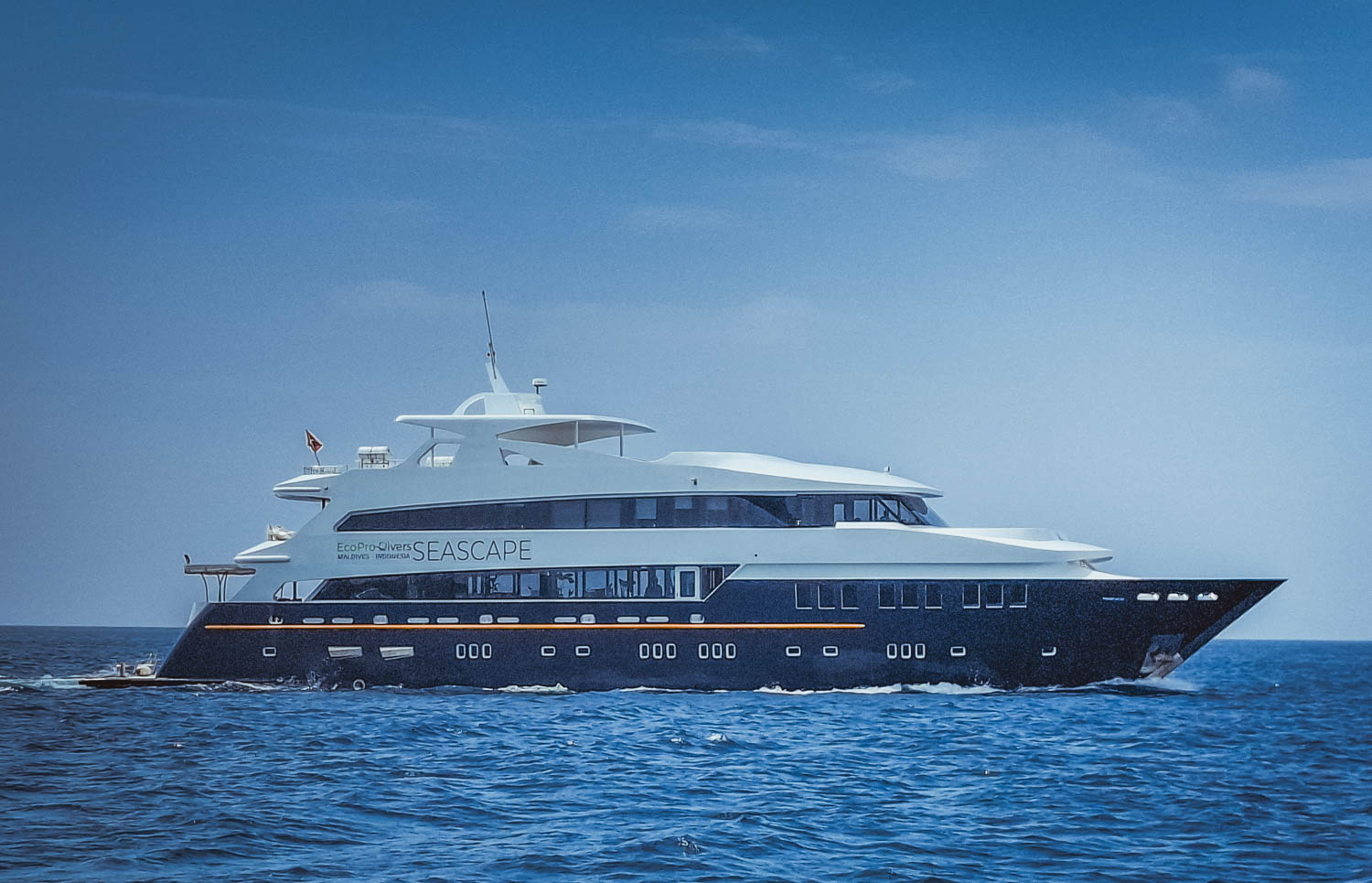
EcoPro Seascape
My pick for divers who want the best mix of comfort, guiding and organisation. The Seascape is a 41-metre phinisi launched in 2024 with 14 cabins, and it still feels brand new: a big air-conditioned lounge lined with panoramic windows, charging points everywhere for cameras, laptops and dive computers, a dedicated camera area with anti-slip mats, and two tea and coffee stations that never stop. It is also one of the very few Maldives boats with dedicated solo cabins and no single supplement, so if you travel alone, book early.
The diving is where it really stands apart. The ten-day routes run south to Vaavu and Meemu, into the channels most boats never reach, and they gave me the sharkiest dives of all my Maldives weeks: three channels with over 100 sharks each, a leopard shark, and my first hammerhead in the country. My guide, Shakko, is one of the most experienced in the Maldives and reads the tide, the current and the conditions of the day better than anyone I have dived with. Briefings are detailed but practical, meals are timed around the diving rather than the other way round, and everything from the dhoni logistics to the dive schedule runs like clockwork. Ask for cabin 8 or 9, not 10 by the engine. My EcoPro Seascape review rates it 5 / 5.
Check EcoPro Seascape prices →
Read my full EcoPro Seascape review
Scubaspa Yin and Yang
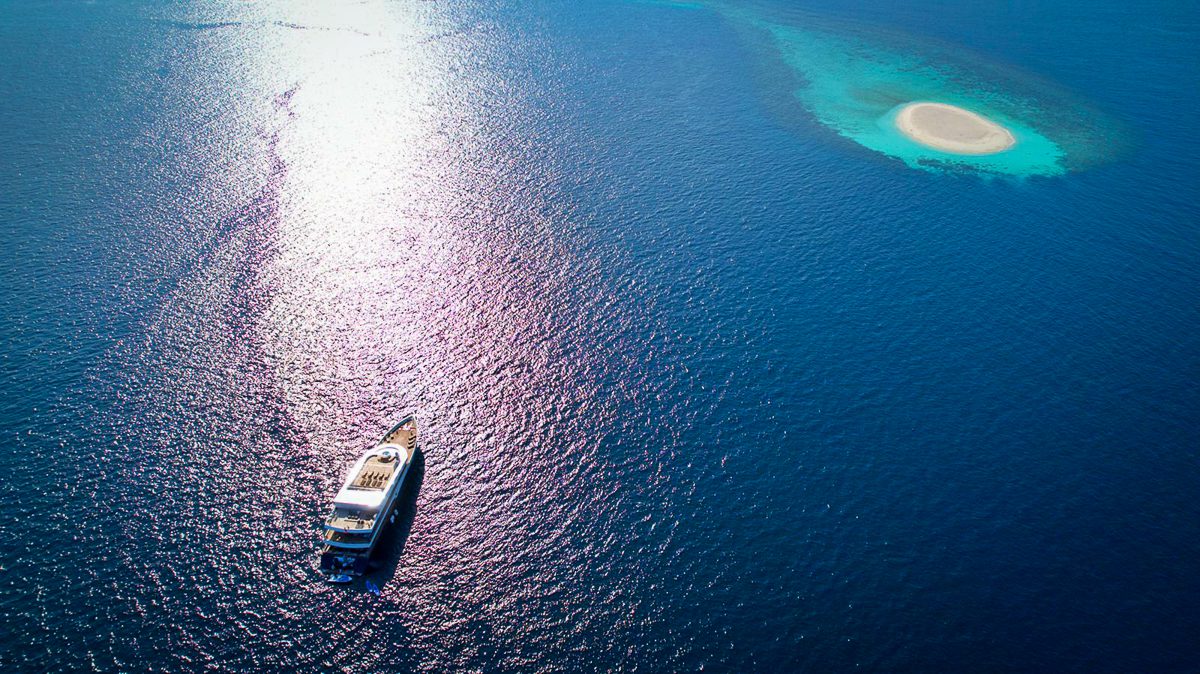
The most luxurious liveaboards in the Maldives, and the boats I recommend to beginners and to anyone who wants a holiday rather than a dive marathon. Scubaspa is half dive boat, half floating spa. The treatment rooms look as good as some of the best spas in the world, the three therapists on my cruise were outstanding, and there is something special about a massage while the boat cruises between atolls. Between dives there is yoga, island visits and sandbanks, a jacuzzi at the front of the boat and four separate lounge areas, so the boat never feels crowded and a partner who dives less than you, or not at all, has as good a week as you do.
The diving is gentler and the guides are patient with newer divers, which makes Scubaspa the easiest introduction to the Maldives I know. The cabins are generous even in the entry Seastar category, and the Manta Suite with its panoramic window is the best cabin I have had on a Maldives boat; book a middle-deck suite if you would rather avoid stairs. Yin is also the boat for the Far North route, with its remote atolls, far fewer boats and the Hanifaru manta season. More than half the guests on my second cruise were repeat customers, which says it all. Nitrox is USD 100 per week. Read my Scubaspa Far North review.
Read my full Scubaspa reviews: Far North route | Central Atolls route
Duke of York
My pick for guiding, for the food and for the atmosphere. The Duke of York takes just 22 guests in 11 cabins, and on my week there were three dive masters for six divers, the best ratio I have found on any boat. Its owner, Dodi, has been diving the Maldives since 1985, and it shows in how the crew plan each day: with a small group, they moved the schedule around the tides to put us on the best sites at exactly the right moment. That is how the last-day Kandooma dive became the best hour I have spent underwater in the country, with no other boat on the site, 70 sharks and 40 eagle rays.
Life on board is just as good. The Italian cooking is the best I have eaten on a Maldives boat, nitrox is free, the tanks are filled on the dhoni so the main boat stays quiet, and the cabins are spacious and spotless, with big showers and, below deck, windows that actually open. Briefings are in Italian and English, and the whole trip runs on a relaxed, happy vibe that comes from a crew who clearly love what they do. My Duke of York review rates it 5 / 5.
Read my full Duke of York review

White Pearl
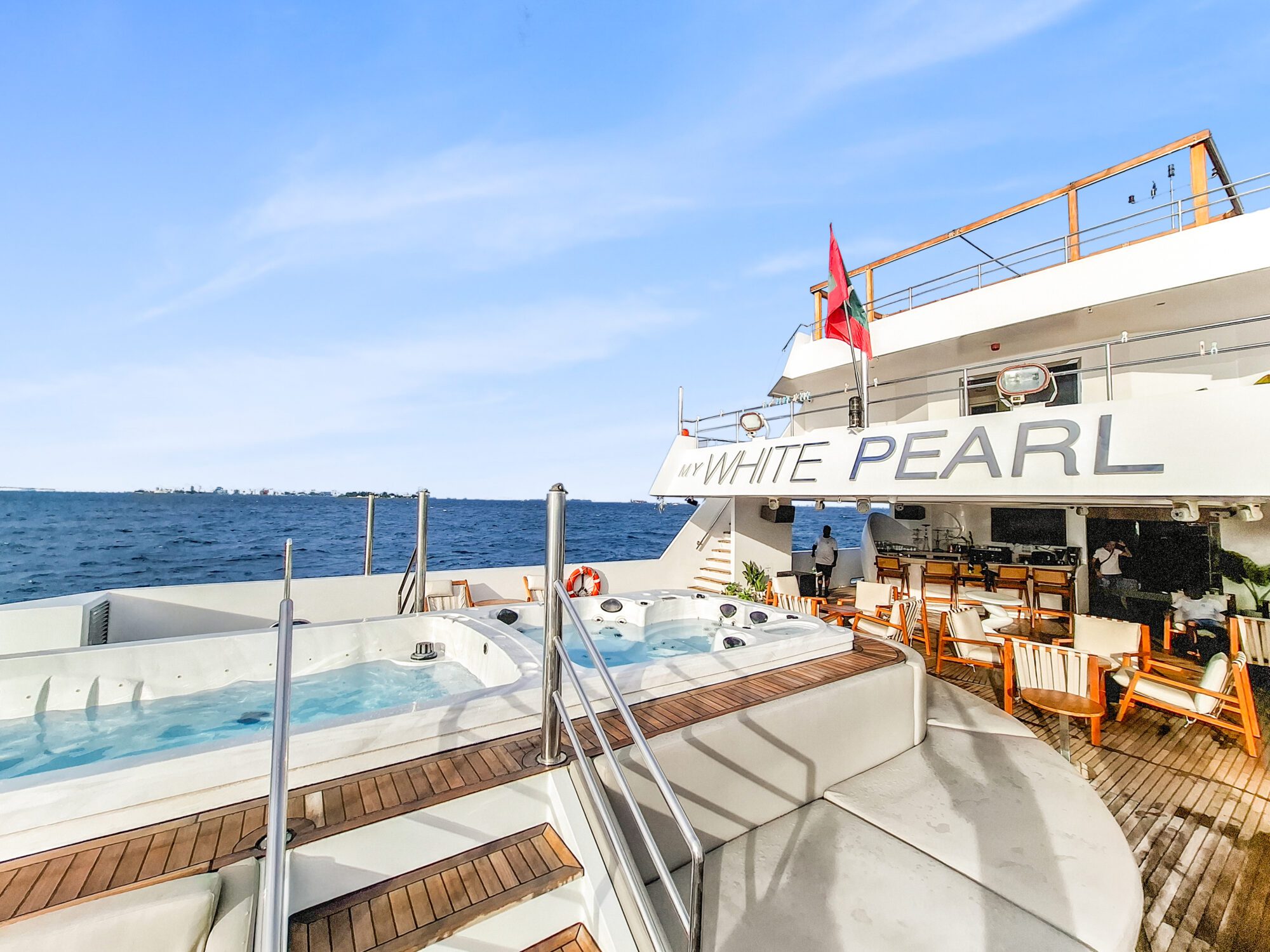
My pick for space and for bad weather. White Pearl is a new boat, large and very modern: at over 50 metres it is the biggest diving liveaboard in the Maldives, with tasteful contemporary interiors, a buffet restaurant, an outdoor bar where everyone gathers after the last dive, jacuzzis on deck and even space to work out between dives. Nitrox and wifi are included, and the crew take your luggage from the airport straight to your cabin.
The size pays off at sea. White Pearl stayed stable through a week-long storm that would have kept a smaller boat in port, and I still logged 13 dives that week, including the extraordinary Neru Mati check dive with nearly 100 stingrays and a tiger shark. If space, comfort and a smooth ride matter as much to you as the itinerary, this is the boat. I rated it 4.5 / 5 in my White Pearl review.
Read my full White Pearl review
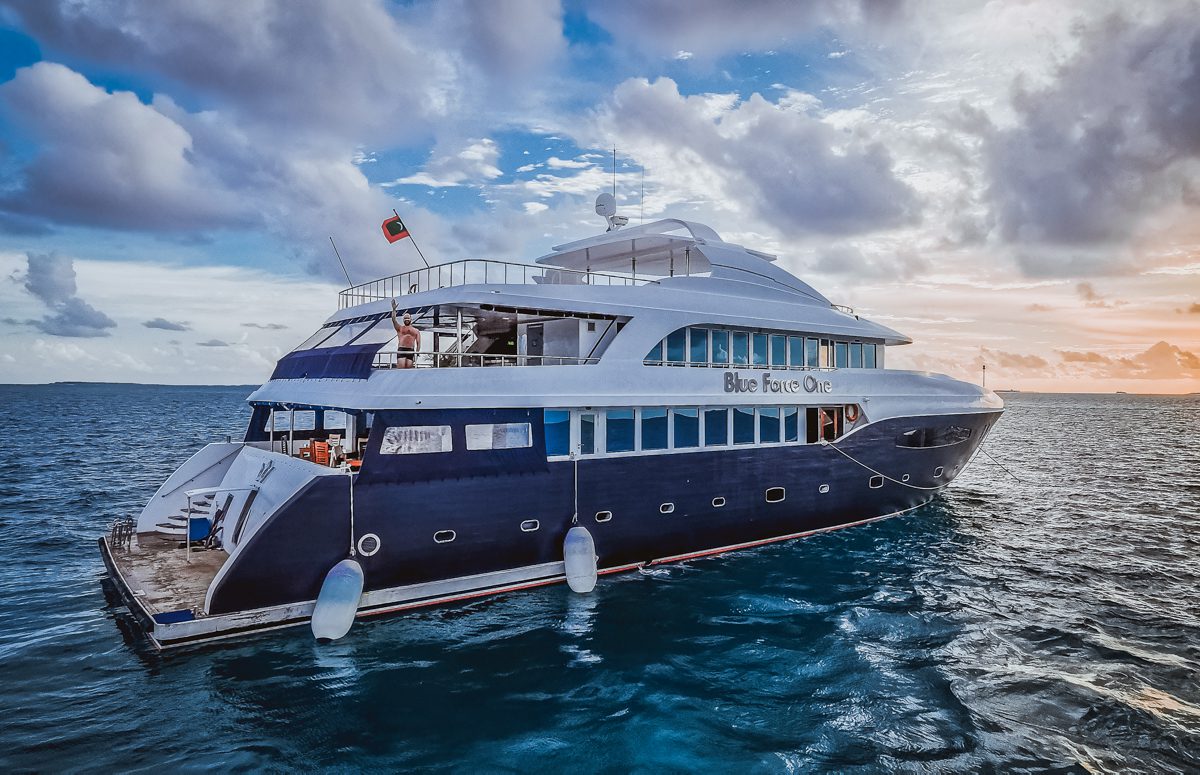
Blueforce One and Blue Force 3
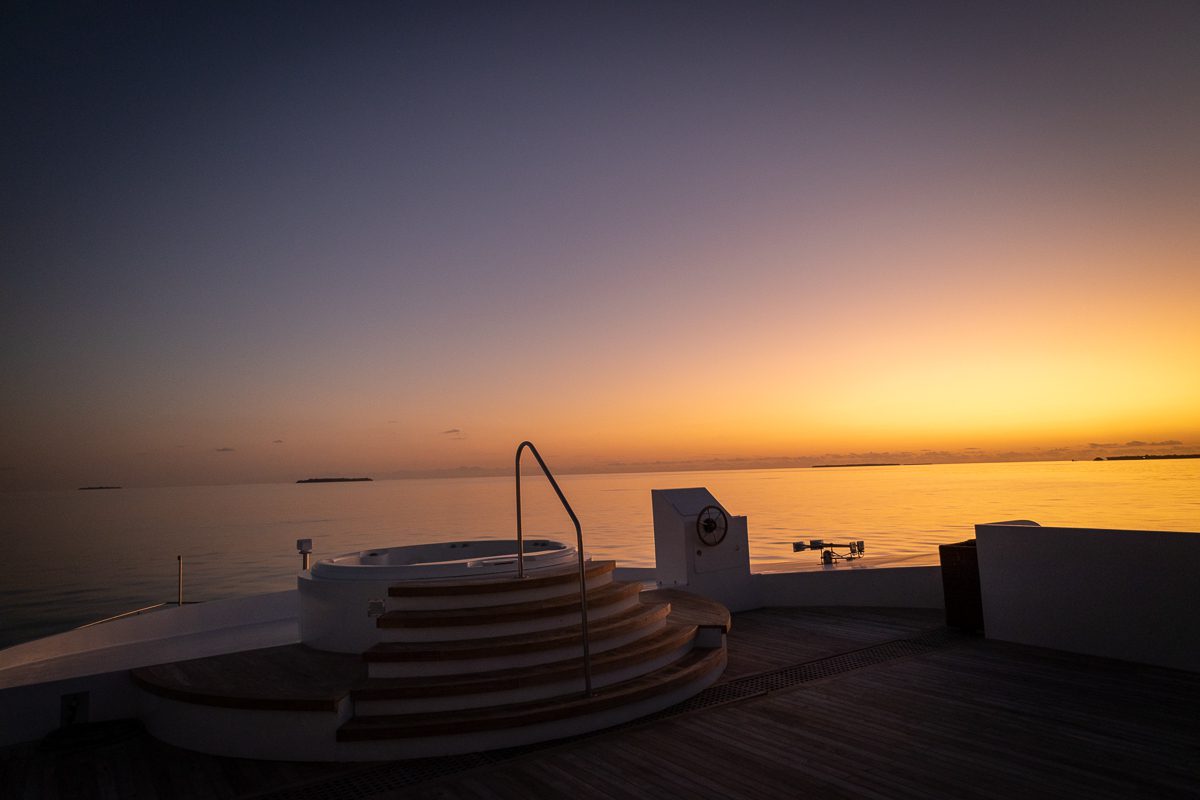
Diver-first boats for people who want the schedule built around the sea. The team plans each day around the tide, the weather and where the other boats are, with a marine biologist guiding, so dive times move to give you the best conditions rather than a fixed timetable. Blueforce One has a bar and lounge on the upper deck and a jacuzzi for stiff muscles after a long day, and the 5:20am sunrise dive on Kudarah Thila was ours alone. Blue Force 3, which I dived in the Red Sea, now sails the Maldives.
Check Blueforce One prices → Check Blue Force 3 prices →
Read my full reviews: Blueforce One | Blue Force 3 in the Red Sea
Which one? If you are new to channel diving, or travelling with someone who wants yoga, spa time and island visits as much as diving, book Scubaspa. If you are an experienced diver who wants the sharkiest dives and the best guiding, book the Duke of York or EcoPro Seascape. If you want space and a smooth ride, book White Pearl.
How Hard Is Diving in the Maldives?
Easier than Komodo, harder than a Red Sea reef. The rules keep the profiles conservative, but the channels demand real skills:
- Beginners (under 30 dives): dive from a resort. House reefs, lagoon thilas and giris are gentle, and the Maafushivaru house reef gave me three longnose devil rays, two blacktips and a barracuda off the end of the pier before breakfast. Skip the channel itineraries for now.
- Intermediate (30 to 80 dives): the central-atoll liveaboard routes are built for you. White Pearl asks for 50 logged dives, and most boats want you comfortable with negative entries, a reef hook and an SMB. If you have never used a hook, practise on the check dive.
- Experienced (80-plus dives): book the ten-day channel itineraries south to Vaavu and Meemu, where the currents are strongest and the shark counts highest. You will find the 30-metre, 60-minute limits frustrating. I do.
Diving in the Maldives: sites by difficulty (from my dives)
Resort house reefs, lagoon thilas and giris · beginner
Fish Factory and Stingray City, North Malé · easy reef-hook introductions
Central-atoll thilas and manta cleaning stations · intermediate: about 50 logged dives, negative entry, reef hook and SMB
Kandooma Thila · experienced divers only when the current is running
Miyaru Kandu, Fotteyo Kandu · advanced: down to 25 to 30 m, hook on fast or the current takes you off the corner
Fushi Kandu, Gaahraa Kandu and the southern channels · experienced, 80-plus dives: the strongest currents
Groups run from two to seven divers per guide depending on the boat. Three dive masters for six divers on the Duke of York was the best ratio I have had; seven in a group on Blueforce One felt crowded at the corner of a channel. For a full comparison of difficulty, cost and diversity against Indonesia, see Maldives vs Komodo.
Getting There, What to Pack and My Tips
Getting in. Everything arrives at Velana International Airport in Malé. I have flown in on Emirates (40 kg allowance, up to four flights a day from Dubai), AirAsia from Vietnam and Batik Air business class from Bali. beOnd is the all-business-class option. On my last arrival, through the new terminal, I was out with my bags in about 30 minutes. Central-atoll boats collect you by tender from the airport jetty; the Far North route starts with a 20-minute Manta Air or Villa Air flight to Dharavandhoo from a domestic terminal five minutes’ walk from international.
- Before you fly. Fill in the IMUGA arrival form online. You can’t bring alcohol into the country.
- Where to sleep. Stay at Hulhumalé, not Malé: it is ten minutes from the airport, and most boats collect from there.
- Getting online. Install an Airalo eSIM before you fly: its Maldives plan runs on the Dhiraagu network and 20 GB for 30 days costs around USD 40, so you land connected instead of queuing for a SIM in arrivals. 4G covers most of the central route. Scubaspa has Starlink with 5 GB per cabin; EcoPro has none.
- Pack: a 3 mm suit or rash guard, your own reef hook and SMB (practise the hook before the first channel), a good torch for Alimatha and Fesdu, and a wide-angle lens. Leave the 105 mm macro at home; the only route where I missed it was the Far North.
- Book the right cabin. Top-deck cabins move more in a swell; on Scubaspa the step from mother ship to dhoni is 50 centimetres to a metre, so middle-deck suites have the shortest path to it.
- Plan the flight home around the no-fly rule. The 24-hour no-fly rule applies to seaplanes and domestic flights too. Malé airport won’t let you check in more than three hours before departure, so book a lunchtime or afternoon flight and don’t plan to wait there all day.
- Hanifaru. If you aren’t a strong snorkeller, wear a life jacket. It keeps you high, visible and out of the mantas’ path.
How Much Does Diving in the Maldives Cost?
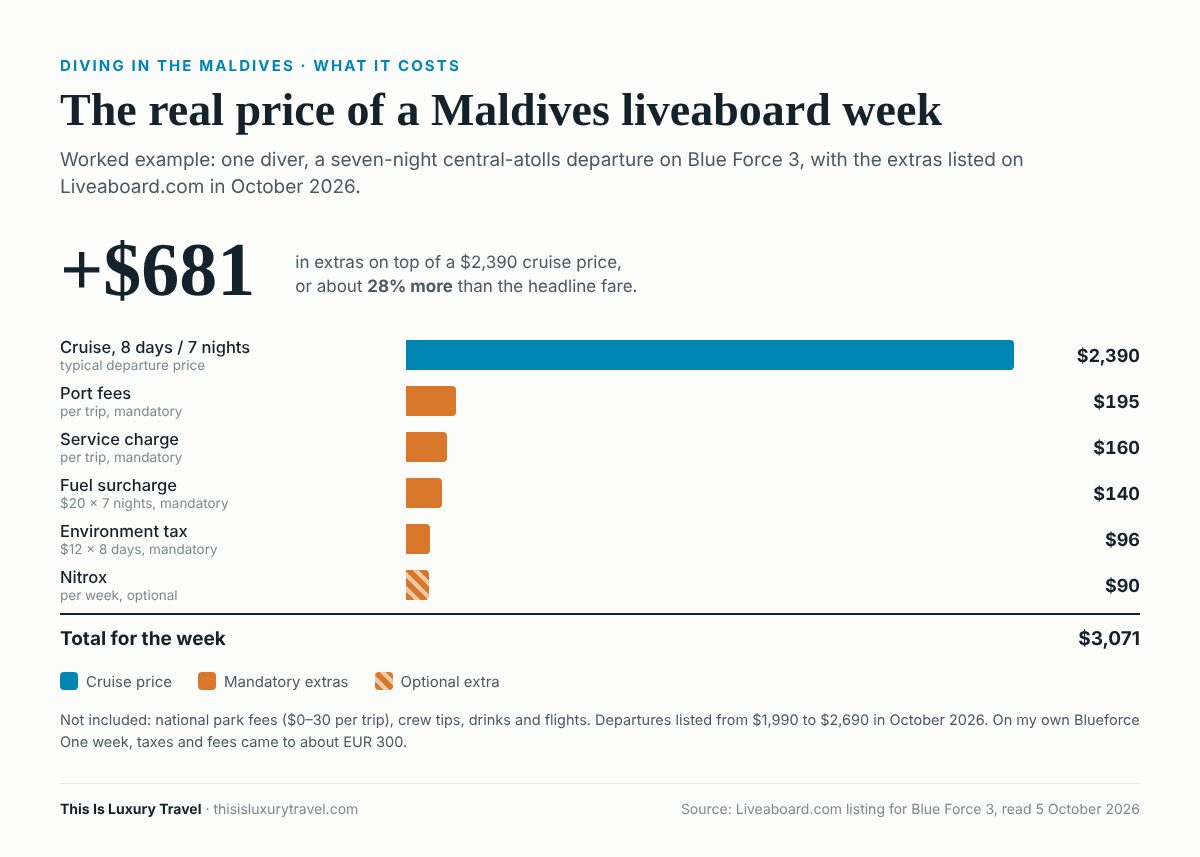
Liveaboard. On the boats I recommend, a seven-night week runs from about USD 2,200 to 3,300 per person on EcoPro Seascape, the Duke of York and White Pearl, and from about USD 3,000 to 5,200 on Scubaspa, with the lowest figures on discounted departures and the highest over Christmas and New Year. The extras are where Maldives prices creep up, and they are not optional:
- Mandatory extras: environment tax of USD 12 a night on every boat, a fuel surcharge (USD 90 a trip on the Duke of York, USD 105 to 210 on EcoPro, USD 30 a night on White Pearl), a service charge of roughly USD 105 to 140 a week, and on Scubaspa 10 percent VAT on top of the fare. Budget around USD 300 to 450 a week.
- Nitrox: free on the Duke of York and included on White Pearl, USD 100 a week on Scubaspa; on EcoPro it depends on the promotion running. A nitrox course on EcoPro costs EUR 150.
- Crew tips, and drinks: about USD 4 to 5 for a soft drink or beer and USD 30 to 45 for a bottle of wine on EcoPro; higher on White Pearl, where about 20 percent tax and service is added to the bar bill.
Use the Check prices links above for live rates: discounts of 10 to 25 percent on selected departures are common outside the peak weeks.
Resort. Overwater villas from around USD 500 a night before the roughly 23 percent tax and service added to every bill; resort dives about USD 80 each; the whale shark excursion from Maafushivaru is USD 195 according to Outrigger.
Getting around. Seaplane to South Ari about EUR 300 return; domestic flight to Dharavandhoo for the Far North USD 100 to 150 one way; Hanifaru permit USD 30; taxi from the airport to Hulhumalé about MVR 85 (USD 6).
For my favourite dive-friendly resort, Outrigger Maldives Maafushivaru in South Ari, room rates often swing 10 to 20 percent between booking platforms for the same dates, depending on cancellation terms and whether the seaplane or breakfast is bundled, so I check at least two before booking.
Outrigger Maldives Maafushivaru: Booking.com | Trip.com | Expedia
How Diving in the Maldives Compares
The Maldives does one thing, big animals in blue water, better than almost anywhere I have dived. The only place that has given me as many fish, and possibly more, is the Galapagos, and the water there is much colder; the Maldives is warm and pleasant all year, and a 3 mm suit or a rash guard is all you need. Komodo gives you sharks and mantas plus healthier hard coral and macro on the same trip, in stronger current and colder water; my Maldives vs Komodo comparison sets the two side by side. For hammerheads, look at the Galapagos, Cocos Island or the Banda Sea in Indonesia instead: the Maldives gave me a single hammerhead in seven weeks, and those three deliver them in numbers.
The Verdict
Diving in the Maldives is a specialist’s pleasure. It does blue-water pelagic action, sharks in the channels, mantas at the cleaning stations and eagle rays in squadrons, as well as anywhere I have dived, and it does very little else. Book a liveaboard on the central and southern channels between December and March, add Hanifaru in a separate August or September trip if mantas are your obsession, and finish with a few nights in a villa. Come for the sharks, not the coral, and you will leave wanting to come back. I have, six more times.
Frequently Asked Questions
Is diving in the Maldives worth it?
Yes, if you want big animals. On a good week you will see grey reef sharks in the hundreds in the channels, nurse sharks at Alimatha, eagle rays and mantas. It is less rewarding for macro or for pristine shallow coral, which is still recovering from bleaching.
When is the best time to dive in the Maldives?
December to March for calm seas and the best visibility. August and September for mantas at Hanifaru Bay, with lower visibility and rougher weather.
Is the Maldives good for beginner divers?
From a resort, yes: house reefs and lagoon thilas are gentle and warm. Liveaboard channel itineraries usually ask for around 50 logged dives and need reef-hook and negative-entry skills, so they suit intermediate divers and up.
Can you dive in the Maldives without being certified?
Yes. Resort dive centres offer Discover Scuba Diving, a supervised try dive with an instructor, usually on the house reef. The channel dives the Maldives is famous for, and every liveaboard itinerary, need a certification and some experience, so treat a try dive as a taster rather than the real thing.
Is the coral in the Maldives still worth seeing?
The coral is still OK, but it is not as good as in Southeast Asia, and it was never the main draw. You don’t go to the Maldives for the coral; you go for the sheer number of fish: grey reef sharks by the dozen, eagle rays in squadrons and mantas at the cleaning stations. If hard coral matters most to you, Southeast Asia is the better choice.
Which atoll is best for diving in the Maldives?
For sharks: South Malé (Kandooma Thila), Vaavu (Miyaru Kandu, Fotteyo) and the southern channels such as Fushi Kandu. For mantas: Baa Atoll and Hanifaru Bay from May to November. For whale sharks: South Ari Atoll.
Can you see whale sharks when diving in the Maldives?
Yes. South Ari Atoll has juvenile whale sharks year-round, but sightings are not guaranteed. Crews quote about a 50 percent chance, and I found them on one of four searches.
How deep can you dive in the Maldives?
The legal limit is 30 metres. Most boats also cap dives at 60 minutes or 50 bar, and some at 50 minutes.
How many dives a day do you get on a Maldives liveaboard?
Three, typically around 6:30am, 10:30am and 3pm, so 17 to 20 dives in a week. Night dives are rare; the Fesdu manta night dive is the usual exception.
Is a liveaboard or a resort better for diving in the Maldives?
A liveaboard. It reaches several atolls and three dives a day, and it cost me less than a resort with the same number of dives. A resort suits non-divers and those who want more space.
How much does a Maldives dive trip cost?
A seven-night week on a good liveaboard costs around USD 2,200 to 3,300 per person, or USD 3,000 to 5,200 on the luxury boats, plus roughly USD 300 to 450 in environment tax, fuel and service charges, up to USD 100 for nitrox, and tips. Resorts start around USD 500 a night plus 23 percent, with dives at about USD 80 each.
Disclosure: this article contains affiliate links. If you book through them, I earn a small commission at no extra cost to you. Read my full disclosure policy.
Every dive in this guide is first-hand. Read more about how I review, or visit my Work With Me page.