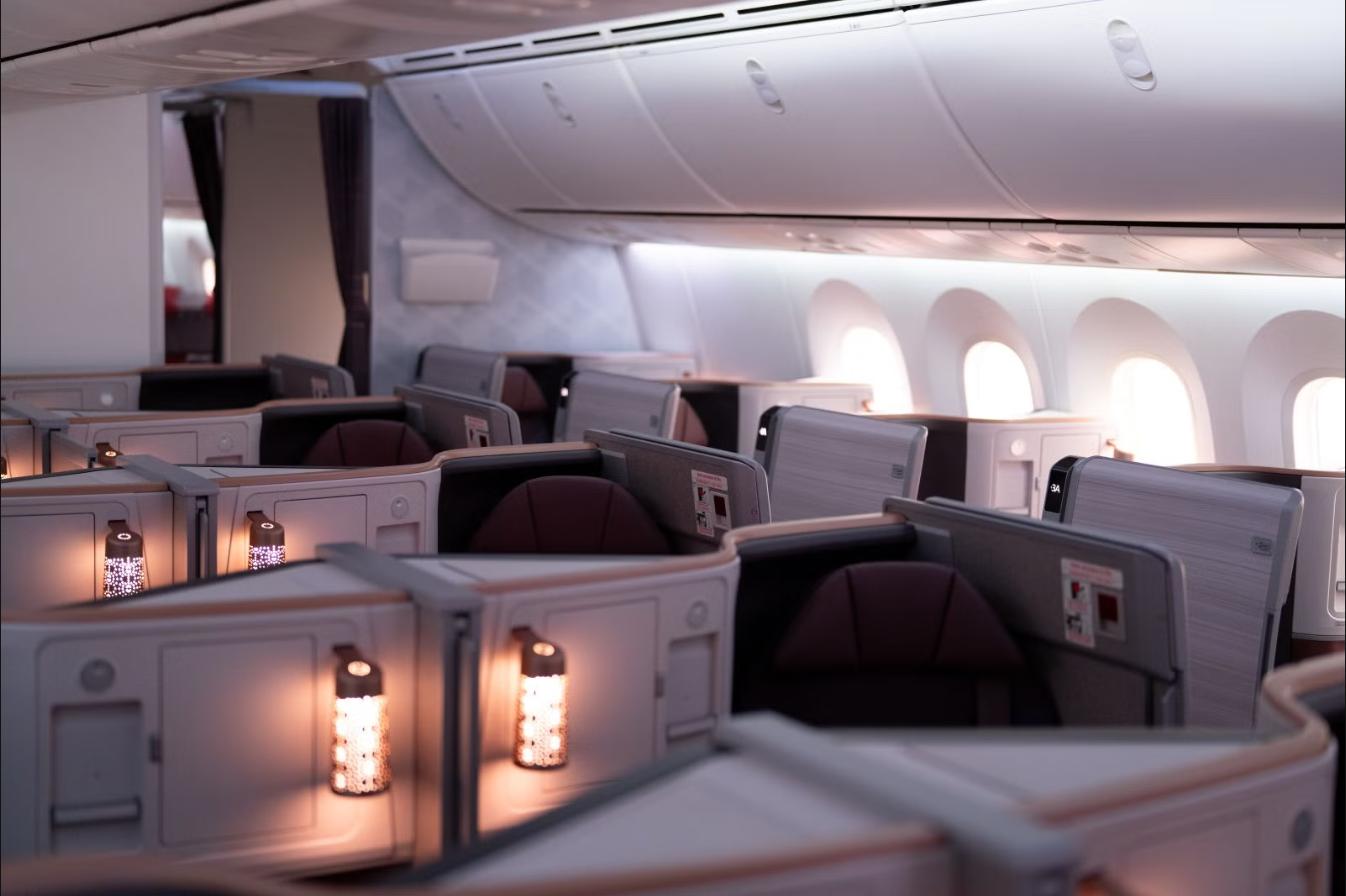
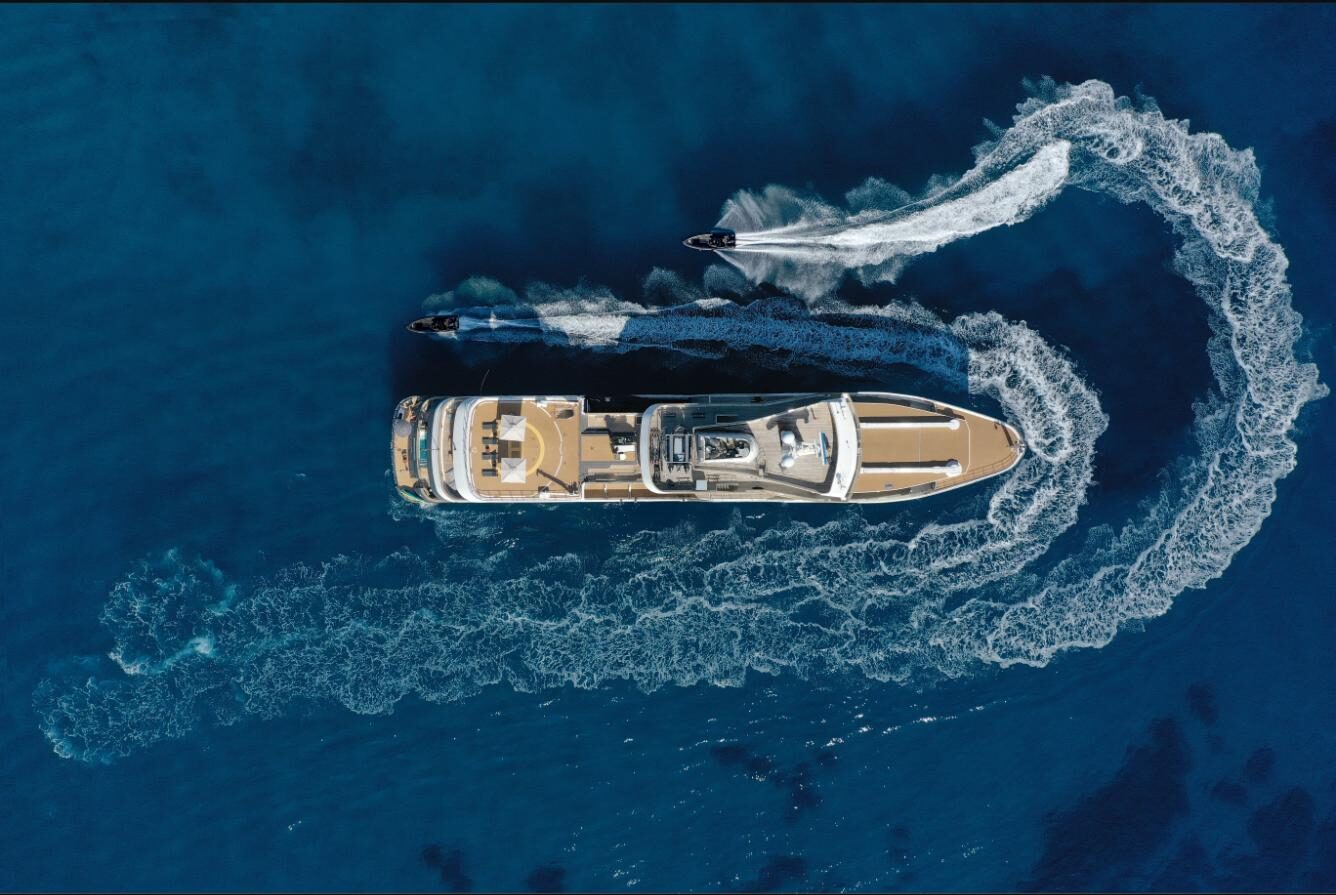
Aqua Lares has one of the best backstories in expedition cruising. She was built for ice in 1974, at IHC Verschure in Amsterdam, as a Soviet icebreaker, and she has been working cold water ever since. By the time Aqua Expeditions took delivery in August 2025 she had already lived two further lives — first as the private yacht Giant 1, then as the 77-metre expedition yacht Legend after a 2016 rebuild at ICON Yachts in Harlingen. A drydocking at Damen Shiprepair Rotterdam and a new interior by Birgit Galli Zugaro with Milan’s Hot Lab turned her into what she is today.
That half-century-old icebreaker hull is a rarer and more capable thing than any new-build expedition yacht, and the conversion is the story. Aqua Lares entered service in February 2026, ran her first Indian Ocean season, went north to Svalbard for the summer, and from November is back in the Seychelles — carrying a maximum of 30 guests to Aldabra Atoll, a place that rations its visitors by permit and admits only a few thousand a year.
Aqua Lares: Key Facts
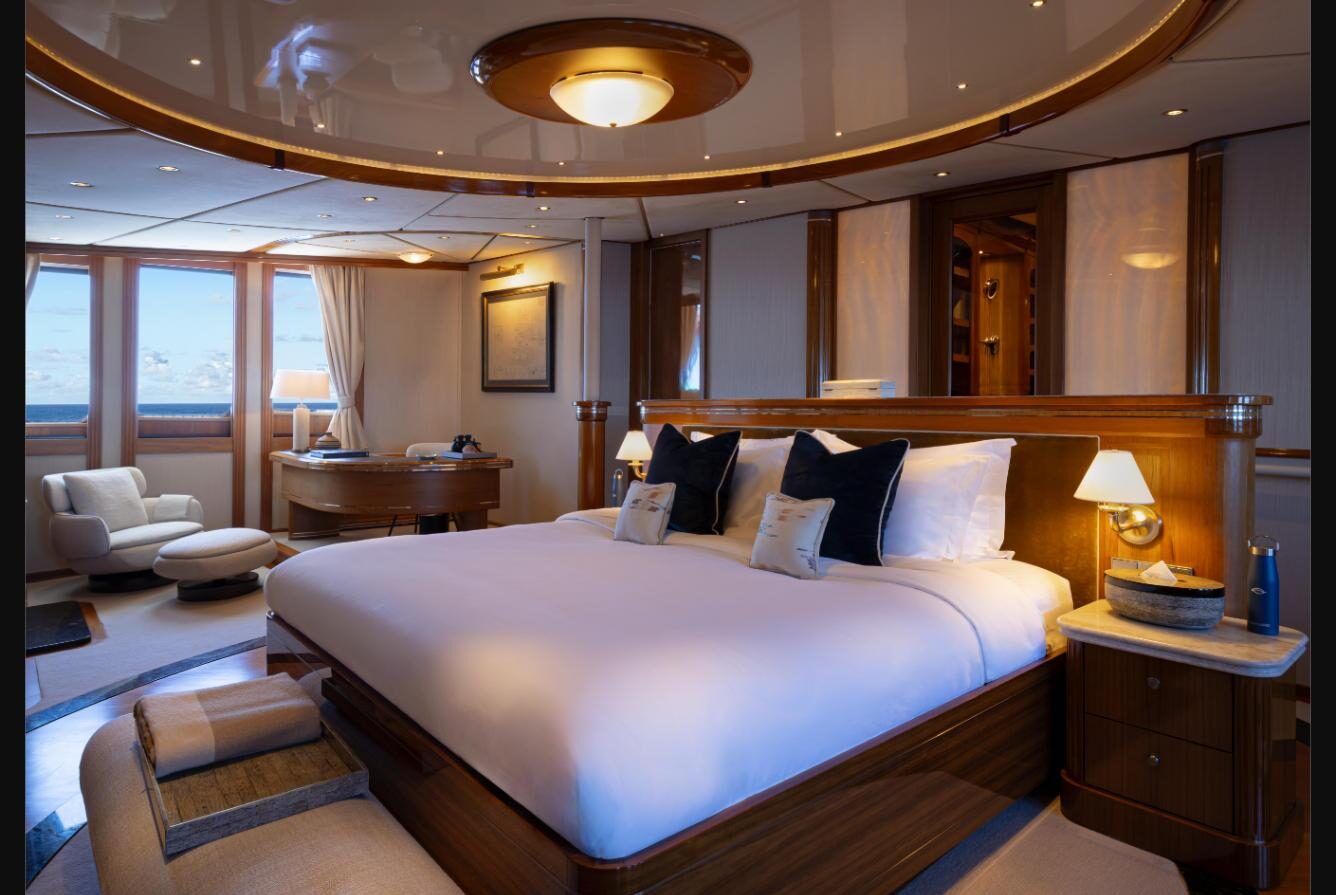
- The yacht: 77.4 metres, six decks, 2,407 gross tons; a maximum of 30 guests in 15 cabins, including three Owner’s Suites of 39 to 66 square metres
- Crew: 32 to 33, including three naturalist guides — Aqua describes the ratio as one-to-one
- Provenance: built 1974 as an icebreaker by IHC Verschure, Amsterdam; rebuilt 2016 by ICON Yachts; acquired by Aqua Expeditions August 2025 and refitted at Damen, Rotterdam
- Ice class: 1B, according to Aqua Expeditions
- Entered service: February 2026, first sailing 8 February from Madagascar
- Seasons: Seychelles, Aldabra and Zanzibar, November to April; Svalbard, the Norwegian Arctic and the Scottish Isles, June to September
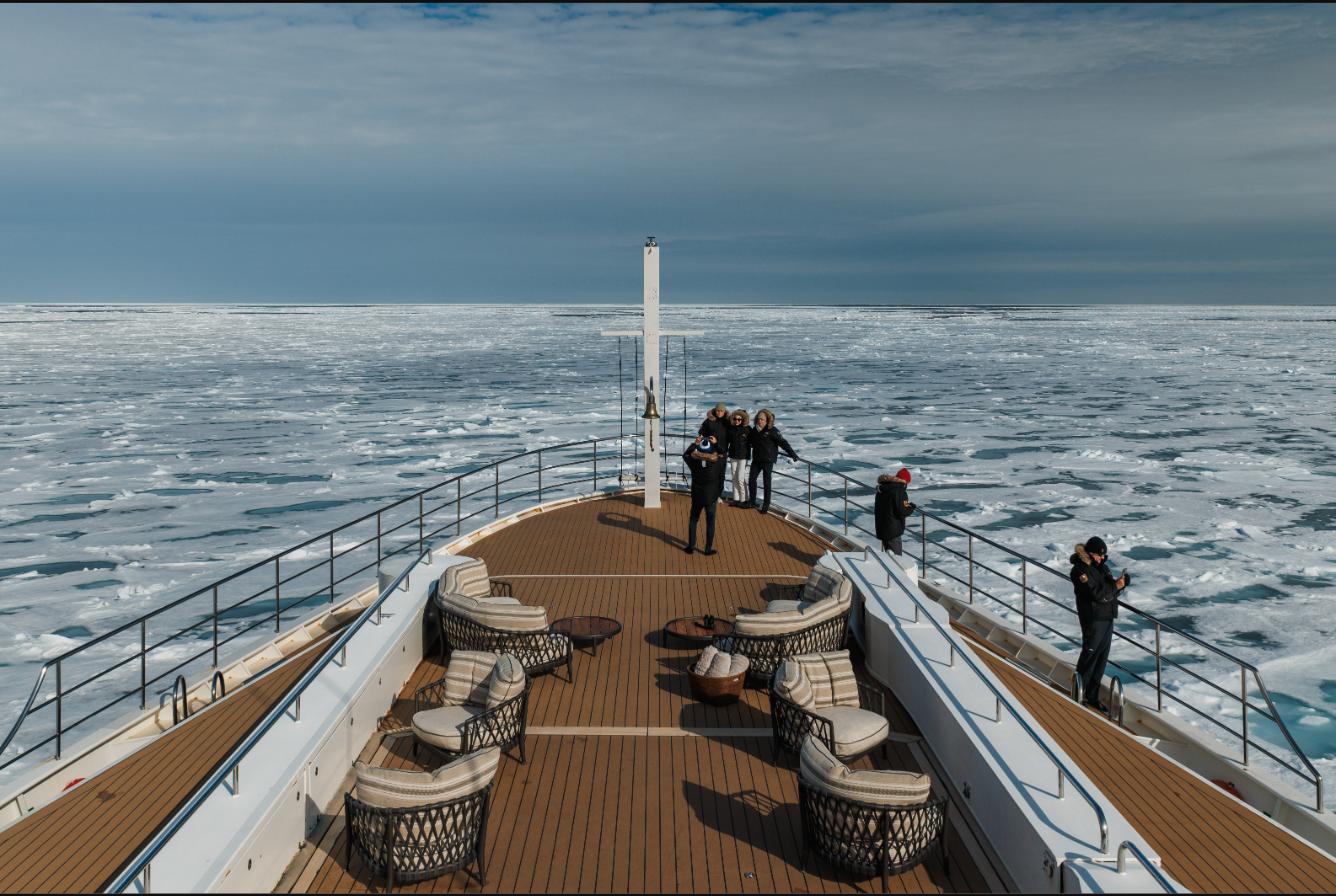
- Onboard: panoramic sun deck with bar, cinema, gym, sauna, massage room, indoor and outdoor Jacuzzis, helideck
- In the water: three 6.5-metre Zodiacs, two 8.5-metre Rafnar tenders, kayaks, paddleboards, mountain bikes, snorkelling and diving equipment
- Food: menus by consulting chef Karime López, who holds a Michelin star at Gucci Osteria da Massimo Bottura in Florence
- Ownership: Aqua Expeditions is majority-owned by Ponant
Why the Hull Matters More Than the Interior
Every expedition-yacht launch of the past five years has led with the interior — the spa, the suite sizes, the chef. Aqua Lares has all of those, and Karime López is a serious name; she was the first Mexican woman to hold a Michelin star. But the interesting number on this yacht is 1974, because it explains what she can do that a new build at this size cannot.
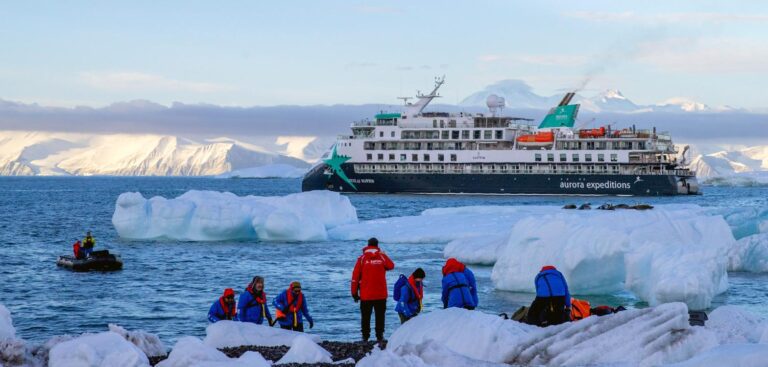
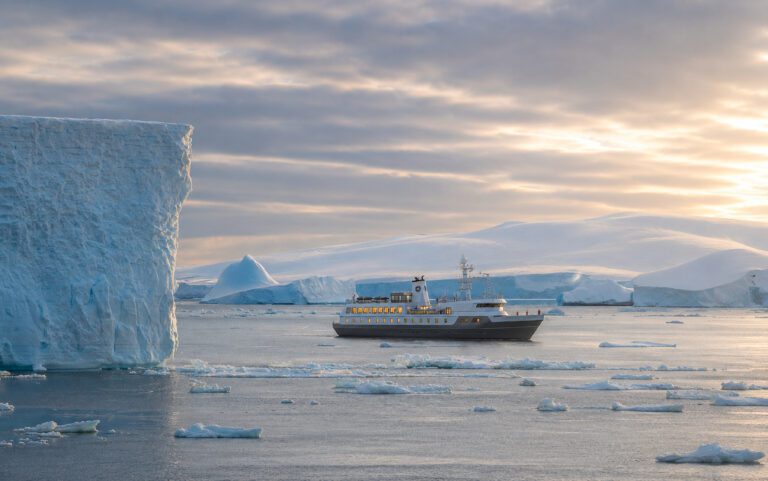
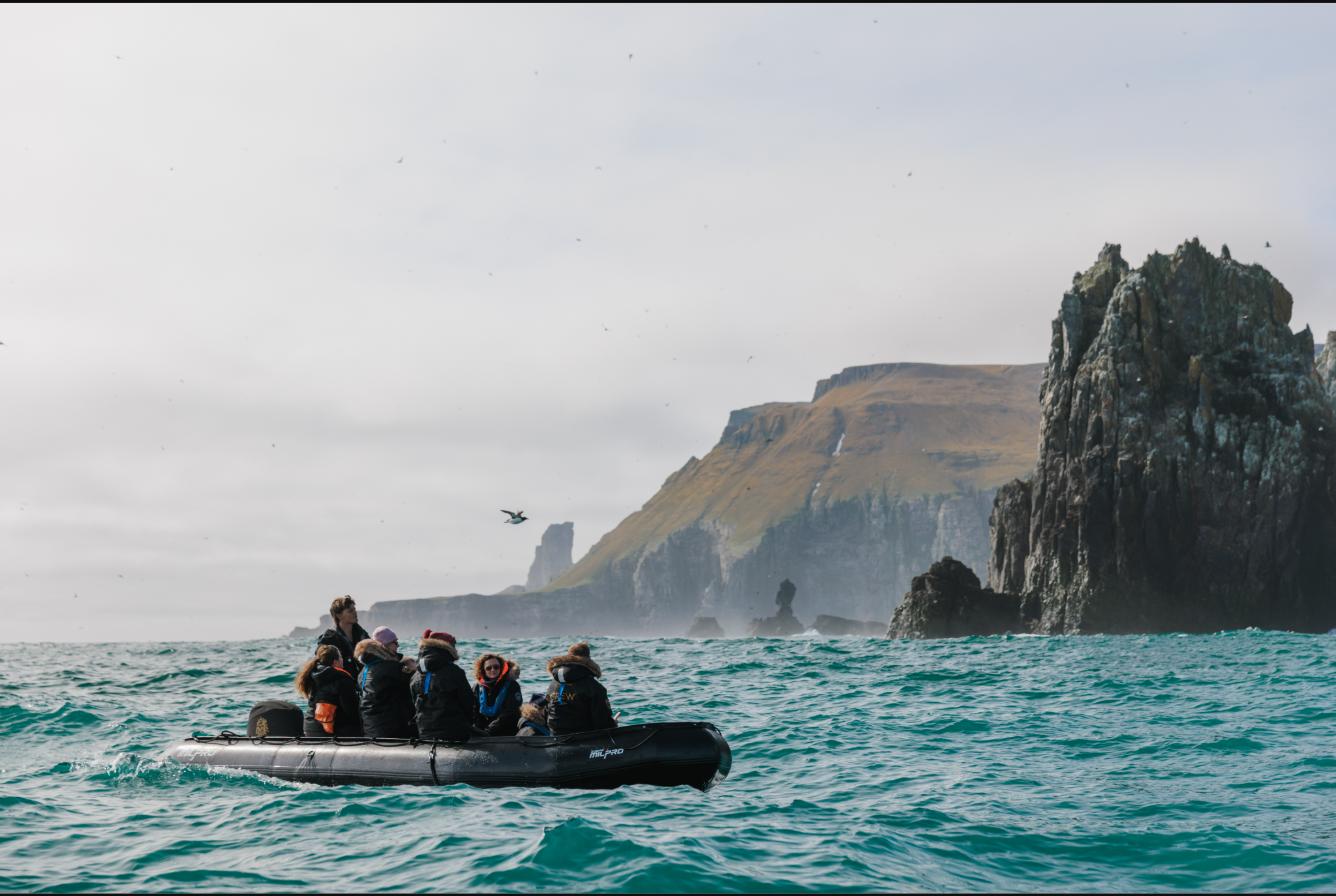
A 30-guest vessel with an icebreaker’s hull form and a 1B ice notation can work Svalbard in June and the outer Seychelles in December without compromise at either end. That is why her calendar looks the way it does: Longyearbyen, Tromsø and Greenock in summer — including the Lofoten Islands, Trollfjorden and the Callanish Stones on the Isle of Lewis, arguably the more unusual leg — then Mahé, Astove, Aldabra and Zanzibar in winter. Ponant, which now owns a majority of Aqua Expeditions, builds new expedition ships for a living. Its subsidiary went out and bought a fifty-year-old icebreaker anyway.
Aldabra, and the 30-Guest Advantage
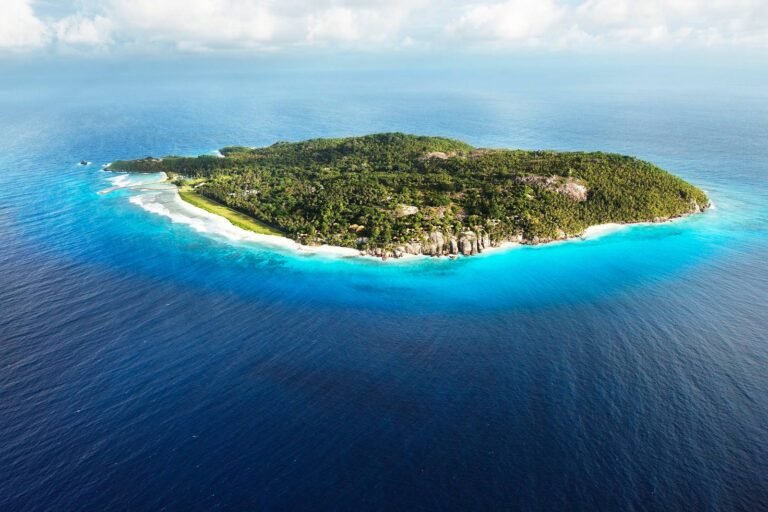
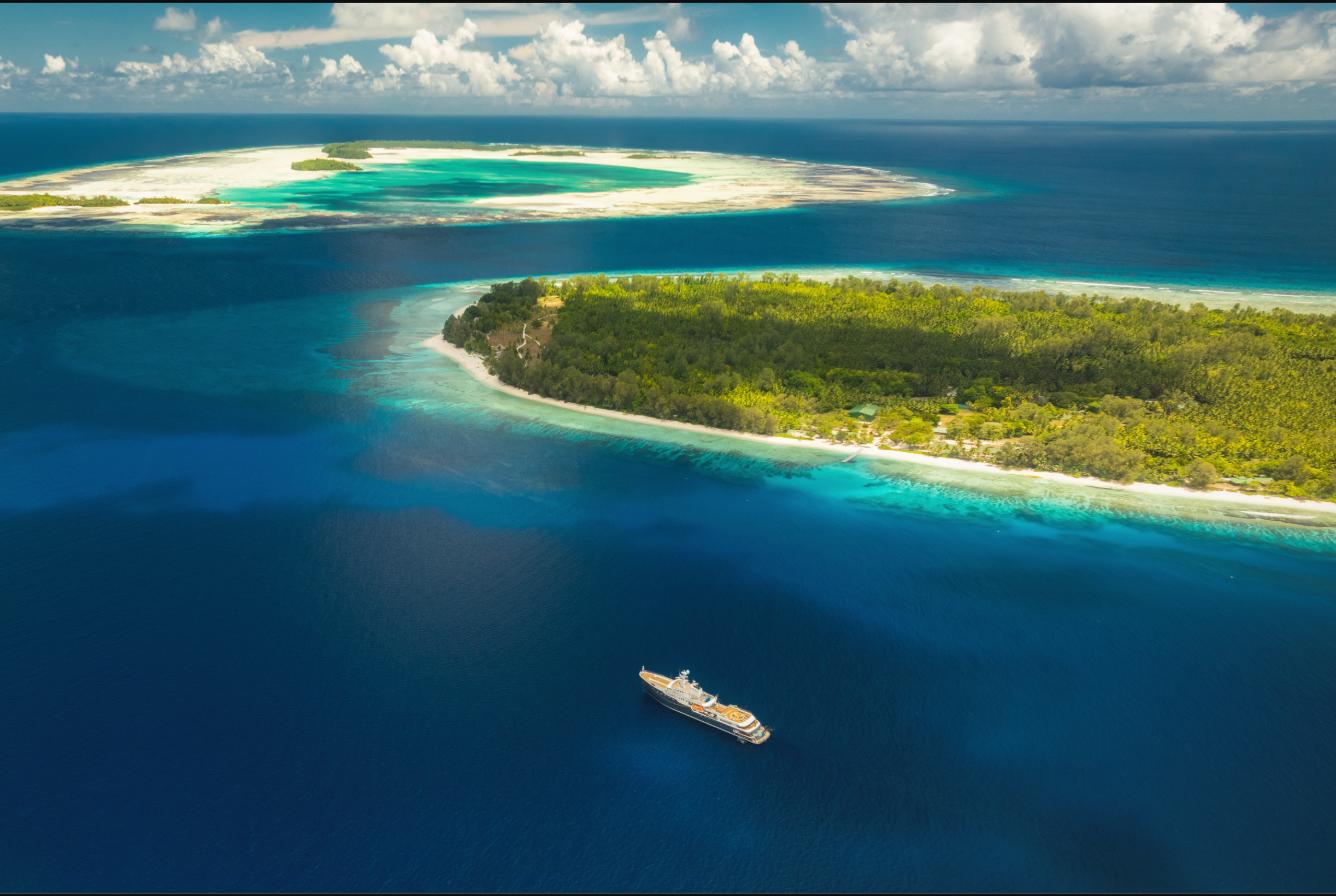
Aldabra is a UNESCO World Heritage Site 1,100 kilometres from Mahé, with a giant tortoise population larger than the Galápagos’ and a permit regime that keeps visitor numbers in the low thousands a year. Landings are ranger-escorted and capped. That is the practical reason a 30-guest yacht has an edge here over a 128-guest one: at Aldabra, the group size is decided by the atoll, not by the ship.
The East Africa programme runs five- to fourteen-night voyages between Mahé and Zanzibar, with Aldabra on the nine- and ten-night itineraries and Astove — where the Astove Wall drops into 40-metre visibility — on the way. Aqua names sea turtles, manta rays and blacktip reef sharks on its own destination pages, and blue whales are billed as an occasional sighting, which they are.
The Diving Question
This is the part that will decide whether Aqua Lares matters to the readers of this magazine, so here is exactly what can and cannot be established. Scuba diving is offered on the East Africa itineraries only — not in the Arctic — and it is restricted to certified divers, which tells you there is no teaching aboard. Diving equipment and wetsuits are included in the fare. Astove, Remire and Aldabra are named as dive sites.
What Aqua has not published is whether a dive guide or divemaster sails, how many tanks are carried, whether there is a compressor aboard, what certification level and logged-dive minimum apply, or how many divers can go in at once. The three named guides are naturalists. As Legend, the yacht carried ten sets of dive gear and a submersible, so the hull has the history. But on the evidence available, this reads as a gear-included, certified-divers-only offering rather than a run dive programme, and anyone booking for the diving should get those answers in writing first.
Why It Matters
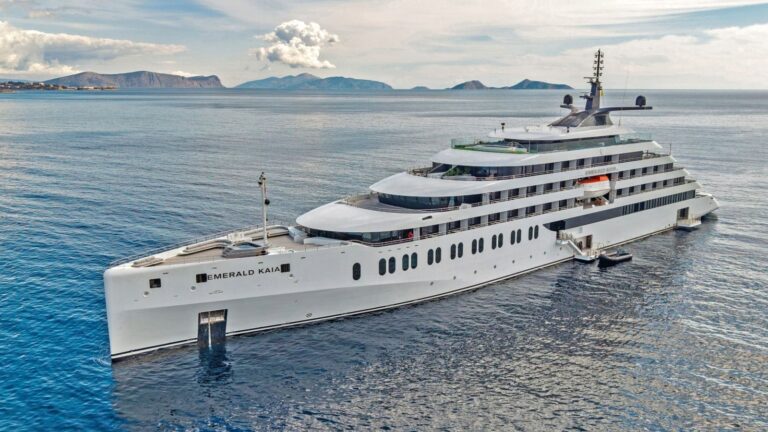
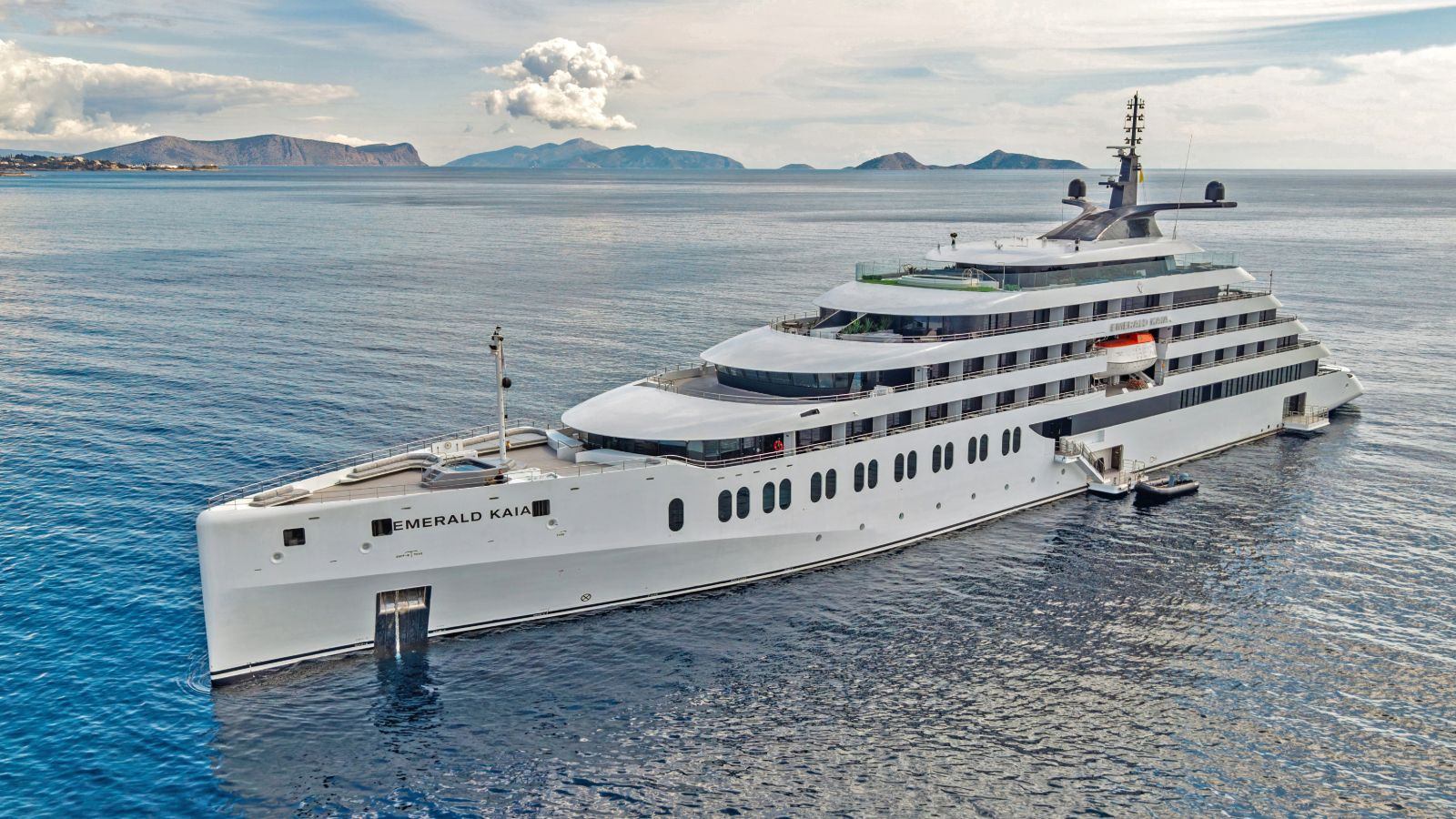
Aqua Lares is not the only ship going to Aldabra this winter. Emerald Cruises is sending the 128-guest Emerald Kaia there on two November sailings, and the two vessels make opposite arguments: a brand-new 120-metre yacht-styled ship at roughly half the per-day price, or a converted icebreaker carrying a quarter of the guests at roughly double. On most coastlines that would be a straightforward value question. At Aldabra, where the permits do the rationing, it is a question about what 30 guests buys you that 128 cannot — and the answer is more time ashore.
Aqua describes Aqua Lares as the first superyacht to sell both individual cabins and full private charters, and elsewhere as “the only one in the Arctic Circle”. Either claim rests on how you define superyacht. What is verifiable is that you can book one cabin on a 77-metre, 30-guest ice-class yacht, and there are very few places to do that.
The Lens I’m Reading This Through
I have sailed the Seychelles on the Silhouette Sea Star, and the lesson from that trip is the one this itinerary is built on: the inner islands are lovely and thoroughly visited, and the further you push toward the outer atolls the more the archipelago starts behaving like the wilderness the brochures describe. Aldabra and Astove are the far end of that line.
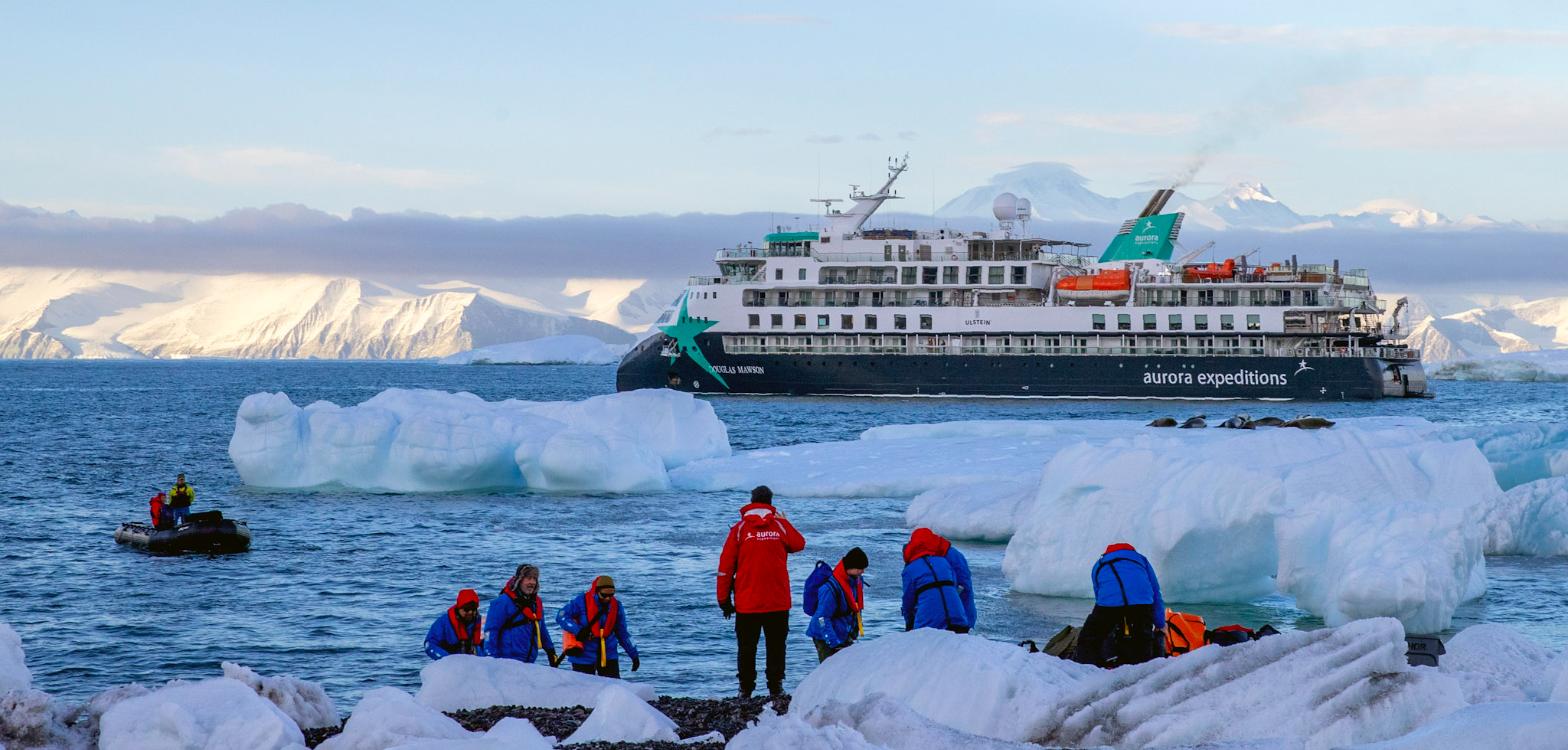
I have also sailed to Antarctica on an ice-strengthened expedition ship and crossed the Drake in 140 km/h winds, which is where I learned to care about hull form rather than brochure adjectives. An icebreaker that has been doing this since 1974 is the kind of pedigree I would take over a new-build’s spa. Whether the diving lives up to the hull is the thing I would want to find out from the water.
Prices and How to Book
East Africa voyages start from about US$9,270 per person for a six-day La Digue and Inner Islands sailing; the ten-day Aldabra and Coralline Seychelles itinerary is from about US$17,520 per person, and the eleven- and twelve-day Seychelles–Zanzibar crossings run from about US$18,540 to US$20,390. Bookable Aldabra departures include 19 to 28 December 2026, 23 January to 1 February 2027, and 3 to 12 and 17 to 26 April 2027.
Arctic voyages start from about US$20,700 per person for six days from Longyearbyen taking in Svalbard, Bear Island and Tromsø; the 2027 Svalbard and Arctic Circle season runs on eight-day Longyearbyen round-trips from 5 June to 21 August 2027, with longer repositioning voyages to Tromsø and the Scottish Isles leaving on 21 and 28 August. Full-yacht private charters are quoted on enquiry. Voyages are sold through Aqua Expeditions.
Fares include all meals, house wines, beer and soft drinks, every excursion, kayaks and paddleboards, national park fees, laundry and Wi-Fi; East Africa adds snorkelling and diving equipment and wetsuits, which the Arctic fares do not. Flights, cocktails, massage services and gratuities are extra.
This article contains affiliate links. If you book through one of them, I may earn a small commission at no extra cost to you.
This preview is based on official information from Aqua Expeditions — I haven’t sailed aboard Aqua Lares. Read more about how I review or visit my Work With Me page.