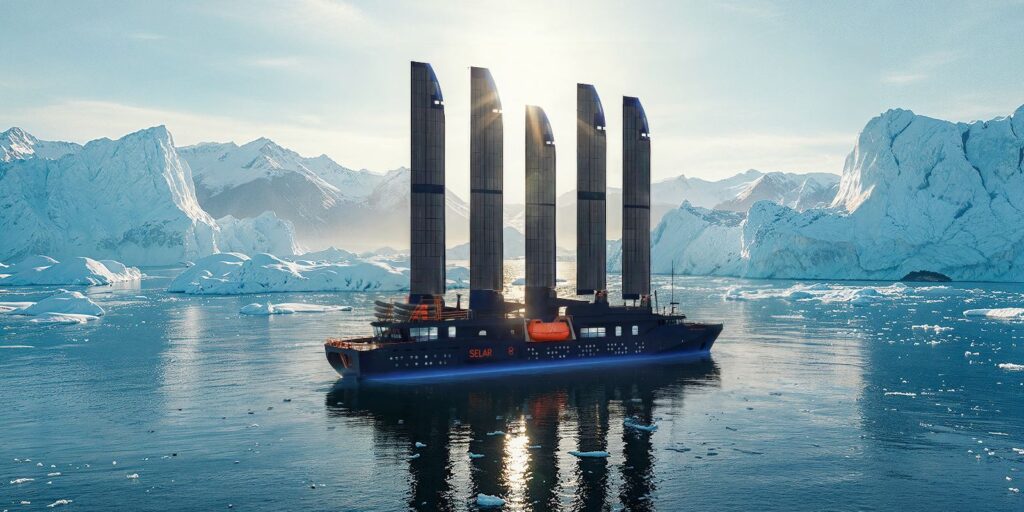
Picture an expedition ship arriving in a Svalbard fjord with almost no engine noise: five rigid sails, each about 35 meters tall, turned to catch the wind and lined with solar panels that charge the batteries below deck. No funnel smoke over the ice, and a crowd small enough for one dinner table. That is the idea behind Captain Arctic, and after years of renderings it is close to being a real ship.
French start-up Selar is due to take delivery of Captain Arctic, a 36-guest, PC7 ice-class polar sailing ship, at the Chantier Naval de l’Ocean Indien (CNOI) shipyard in Port-Louis, Mauritius, on November 10, 2026. She began sea trials off Mauritius in late October and is due to start her Arctic expeditions in Norway, Svalbard and Greenland in 2027. Selar’s own site lists a seven-day “Dancing with Orcas” voyage from Tromsø from €6,780 per person.
Captain Arctic: Key Facts
- Operator: Selar, a French start-up co-founded and led by polar captain and ice pilot Sophie Galvagnon
- Built by: hull by Goltens in Dubai, outfitted and completed at CNOI in Port-Louis, Mauritius
- Length: about 70 meters
- Ice class: PC7 (a reinforced polar hull, not an icebreaker)
- Guests: 36
- Sails: five rigid aluminum sails of about 35 meters each, designed by French firm Cormoran, carrying close to 2,000 square meters of solar modules
- Handover: scheduled for November 10, 2026
- First season: 2027, with Norway, Svalbard and Greenland departures
- Fares from: €6,780 per person for seven days (Selar website, checked November 8, 2026)
- Full-ship charter: reported from €590,000 per week
How a Ship Runs on Wind and Sun
Captain Arctic’s five sails are not cloth. They are rigid aluminum wings that rotate up to 180 degrees and fold down in port, and their surfaces double as a floating solar farm of close to 2,000 square meters. Wind pushes the ship. The sun charges a battery bank. When she sails fast enough, her two propeller shafts turn backwards into hydro-generators and put power back into the batteries.
An auxiliary engine running on HVO biofuel is there for harbor maneuvers and calm days, and Selar says it will be used as little as possible. Heating comes from a biomass boiler fed with pellets made from recycled wood waste, fresh water from reverse osmosis, and wastewater is treated on board.
Selar’s headline claim is around 90% lower CO2 emissions than the conventional expedition ships working the same waters. That is a design target, not a measured result, and I will want to see the first season’s numbers before I repeat it as fact.
What Life on Board Looks Like
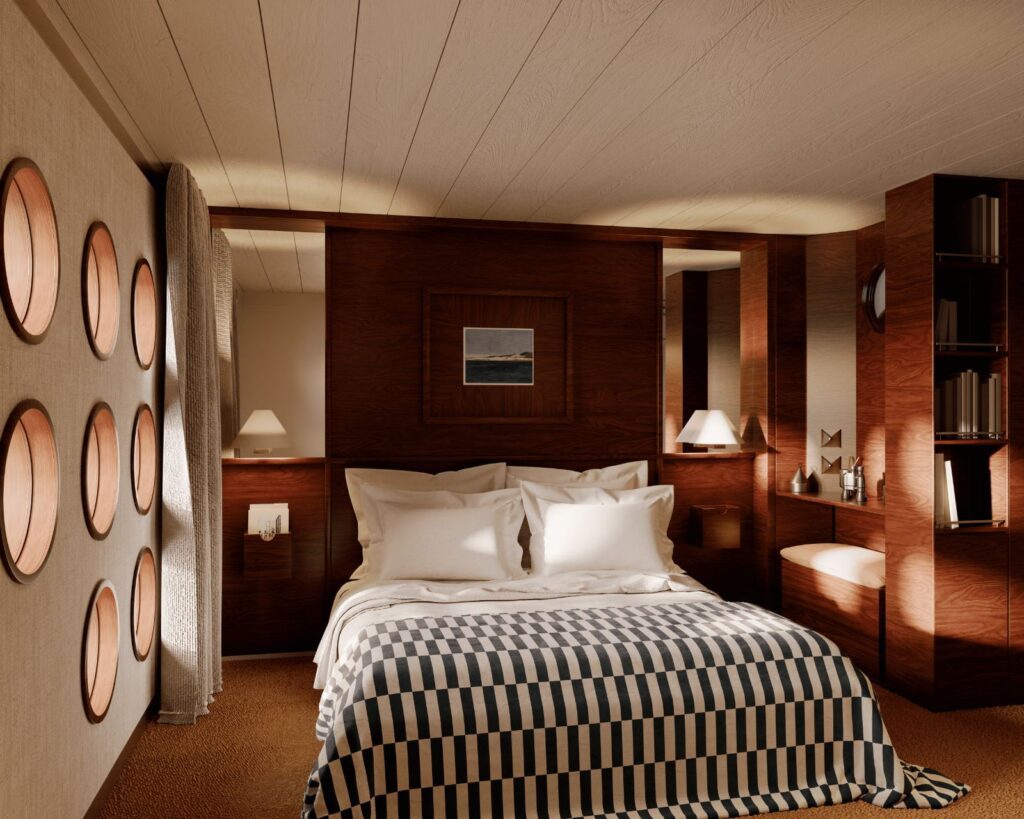
With 36 guests and four expedition guides, the ship works more like a private yacht than a cruise. Selar describes a restaurant, a library, two lounges, a 1920s-style bar, a fitness area, a sauna with an outdoor cold bath, and a 15-square-meter science lab. The bridge is open to guests, and internet is limited to one room on purpose. Cabins are around 15 square meters.
There is no fixed itinerary. Each voyage is planned around weather, ice and wildlife, with landings and hikes of up to six hours. Selar’s published program puts the ship in northern Norway for orcas and the Northern Lights in winter, Svalbard through spring and the midnight sun, and Greenland in autumn. The company has also partnered with Clean Up Svalbard and aims to collect more than five tons of plastic from the archipelago’s beaches each year.
Selar includes dry suits and expedition equipment in the fare, so you don’t need to buy polar gear for the orca trips. Pack thermal base layers and good gloves; the dry suit goes on top.
Why It Matters
In my guide to what a “green” cruise ship actually means, I wrote that rigid sails had not yet reached luxury expedition cruising. Captain Arctic changes that, and on a ship small enough to make the physics work. A 36-guest hull with 2,000 square meters of solar sail has a far better ratio of energy to passengers than any big ship fitted with a rotor or two.
It is also a very different product from the polar ships I usually cover. Even Aqua Lares, the other boutique ship in Svalbard, is a converted 1974 icebreaker with engines doing the work. Captain Arctic is a sailing ship first, and that brings quiet, slow approaches and very small groups.
Who it is not for: anyone who wants a spa menu, a butler and a guaranteed list of ports. A ship that plans each day around the wind will sometimes stay put. It is also a first season on a brand-new design built by a start-up, so expect adjustments.
Prices and How to Book
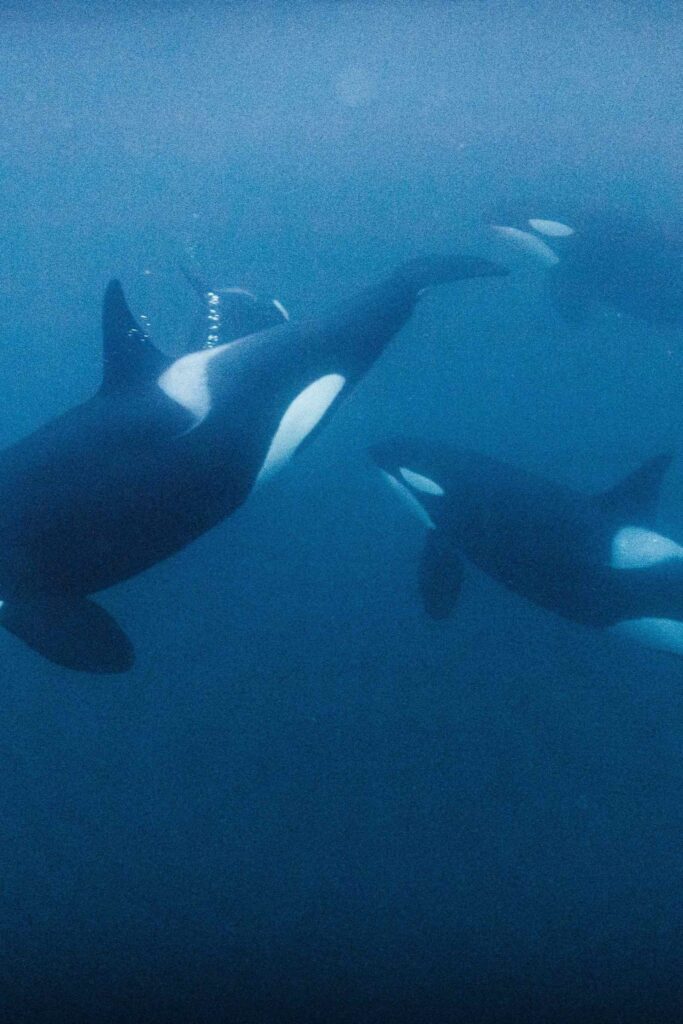
On November 8, 2026, Selar’s website listed the seven-day “Dancing with Orcas” voyage from Tromsø (October 23 to 29, 2027) from €6,780 per person. The fare includes guided daily activities, equipment including dry suits, three meals a day, wine, beer and soft drinks with meals, hot drinks and an airport transfer. Flights to Tromsø are extra. Longer voyages cost more: the 12-day “Svalbard in the Midnight Sun” departure from Longyearbyen (July 28 to August 8, 2027) works out at about €20,350 per person sharing a two-person cabin.
The whole ship can be chartered, with reported rates from €590,000 per week. Trade reports say the first Norway departures are already sold out and the 2027 season is around 80% booked. Captain Arctic is bookable through Selar and expedition specialists.
The Lens I’m Reading This Through
The closest I have come to this is a week in June on Le Ponant in the Greek islands, a three-masted yacht with 1,212 square meters of sail and 32 guests. I rated it 4/5. The best moments were the silent hours under canvas, when the engines stopped and the only sound was the hull in the water. The downsides were real too: motion in rough seas, slow Wi-Fi and a price about twice that of comparable Ponant ships.
So I know the appeal of a ship moved by the wind, and I know its compromises. Captain Arctic goes further than Le Ponant ever could, because her sails also make electricity. What I’ll be watching is whether a start-up can deliver the comfort that justifies these fares in an Arctic winter, not just the technology.
This article contains affiliate links. If you book through one of them, I may earn a small commission at no extra cost to you.
This preview is based on official announcements — I haven’t sailed aboard Captain Arctic yet. Read more about how I review or visit my Work With Me page.