Air India new business class is finally flying. Since Tata Group bought the airline back in 2022 the promise has been the same: new cabins, soon. In 2026 they have started to arrive. The first factory-built Boeing 787-9 made for Air India entered service in January with 30 doored business suites in 1-2-1, the first retrofitted 787-8s are returning from Victorville with all-new interiors, and from 1 July every Air India flight to London Heathrow has been scheduled on aircraft with new cabins. Campbell Wilson, chief executive until August 2026, called 2026 the year customers would notice the most significant change, and the Air India new business class suite is the centrepiece. His successor Tewolde Gebremariam, appointed on 5 August 2026 after more than a decade running Ethiopian Airlines, inherits the rollout.
The catch — and it is a real one — is consistency. Air India still flies 777s with a 2-3-2 angled business class and cabins that One Mile at a Time described as falling apart, and aircraft swaps are common. Here are the facts, where the new product flies, and how to make sure you get it.
Air India New Business Class: Key Facts
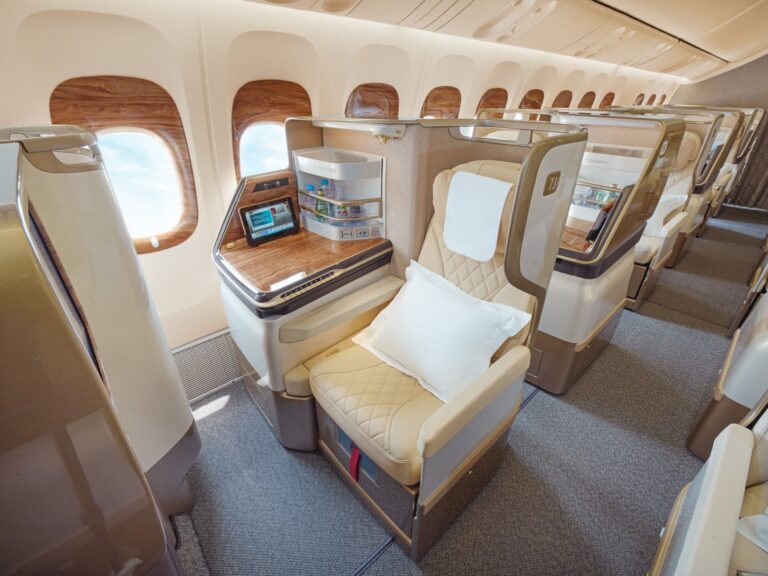
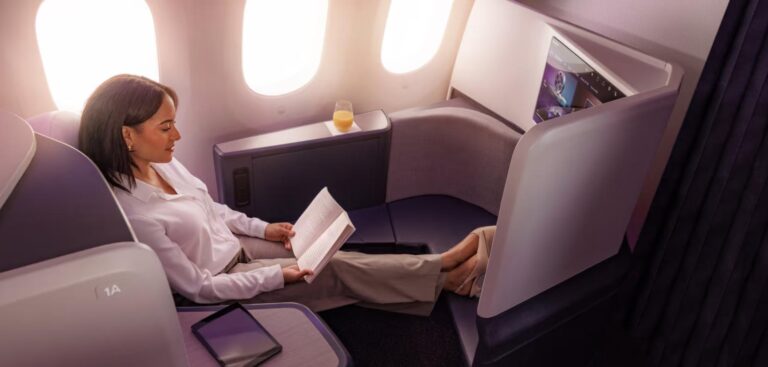
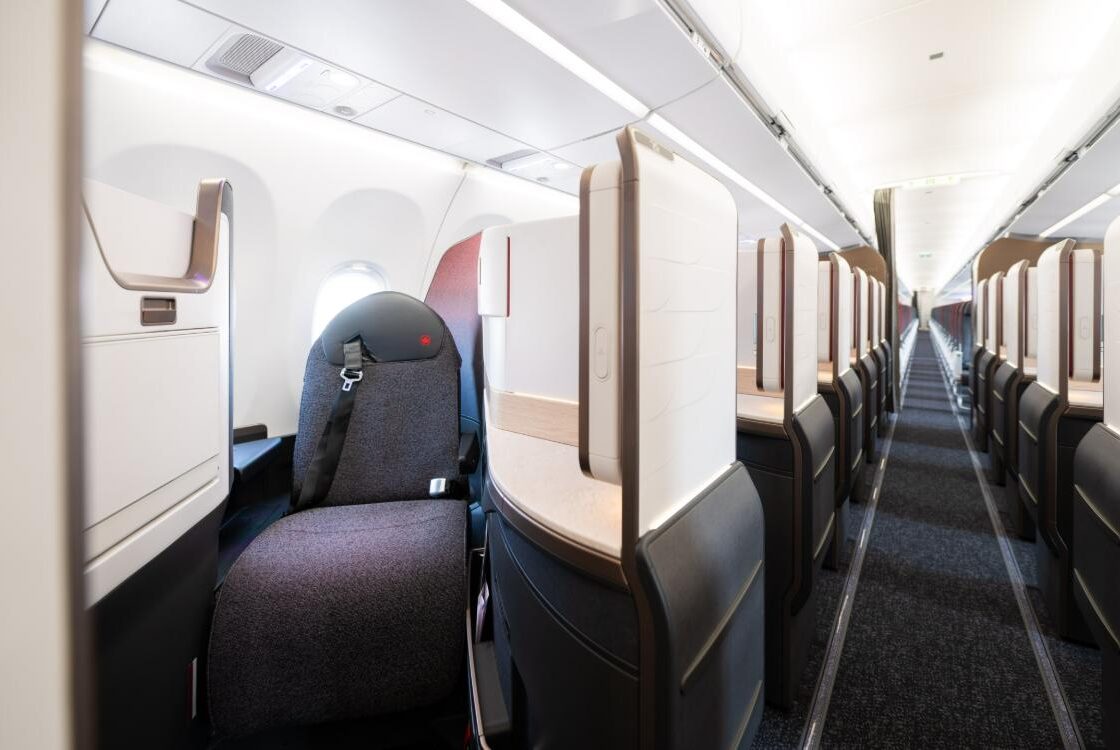
- New 787-9 (line-fit): first delivered January 2026; 30 Business suites in 1-2-1 on the Elevate Ascent platform with sliding doors, 17-inch 4K HDR screens, wireless charging, vanity mirror and storage cubbies; Recaro PL3530 in Premium Economy; three arriving in 2026
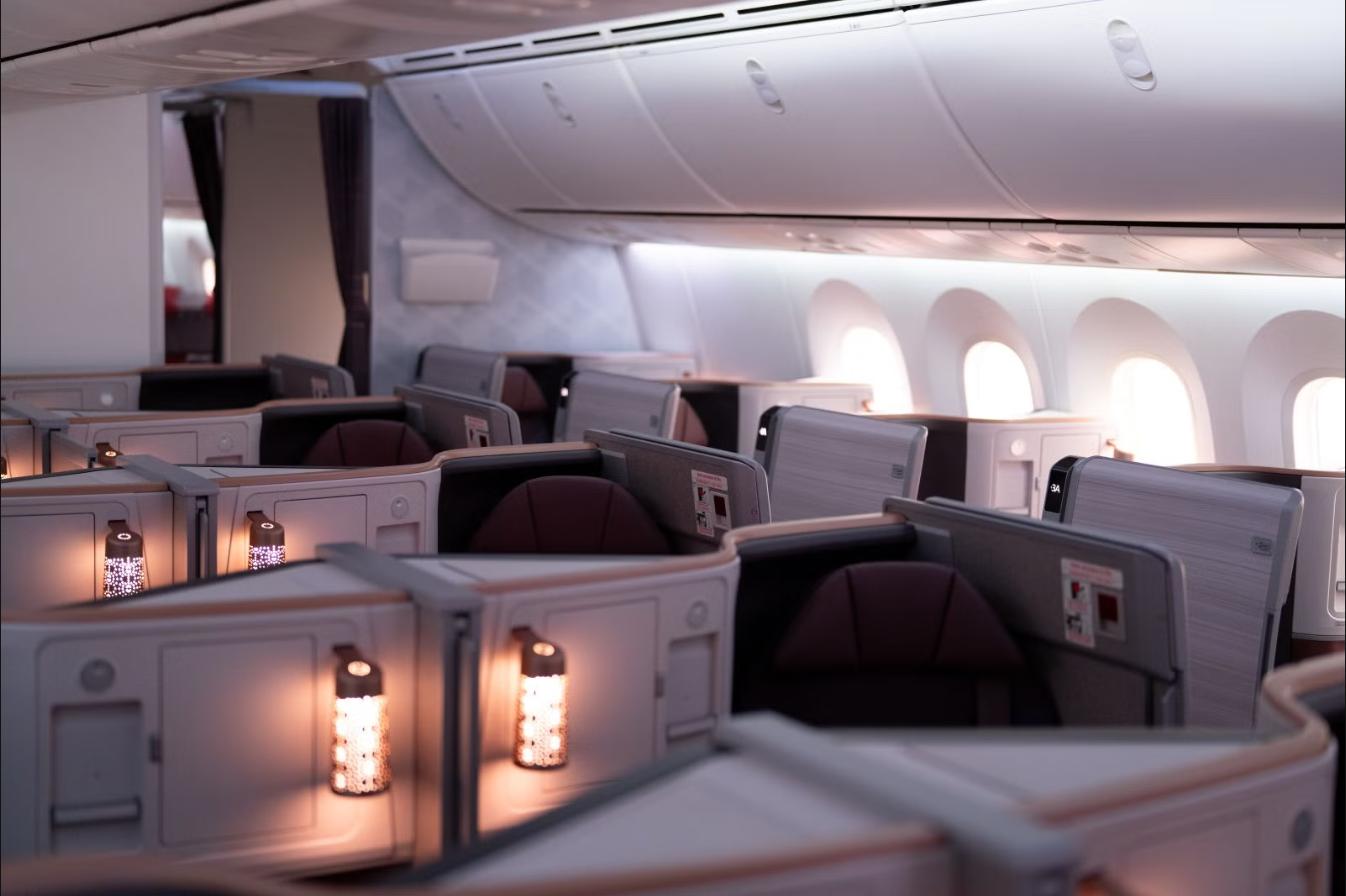
- 787-8 retrofit: 26 legacy Dreamliners receiving all-new cabins at Boeing’s Victorville facility, with exterior repainting by AeroPro in San Bernardino; the first aircraft, VT-ANT, was redelivered in April 2026 after roughly 12,825 work-hours over 45 days, in a new layout of 20 Business suites in 1-2-1 with doors (42-inch pitch, 79-inch bed, 17-inch 4K QLED screens), 25 Premium Economy and 205 Economy seats; Air India says 25 more will follow within the year and the programme will complete by 2027, ahead of 13 legacy 777-300ERs — the airline has not published how many retrofitted 787-8s are in service as of September 2026 or a route-by-route list
- A350-900: six in service, 28 business suites in seven rows — the airline’s best current product, in cabins originally built for another carrier
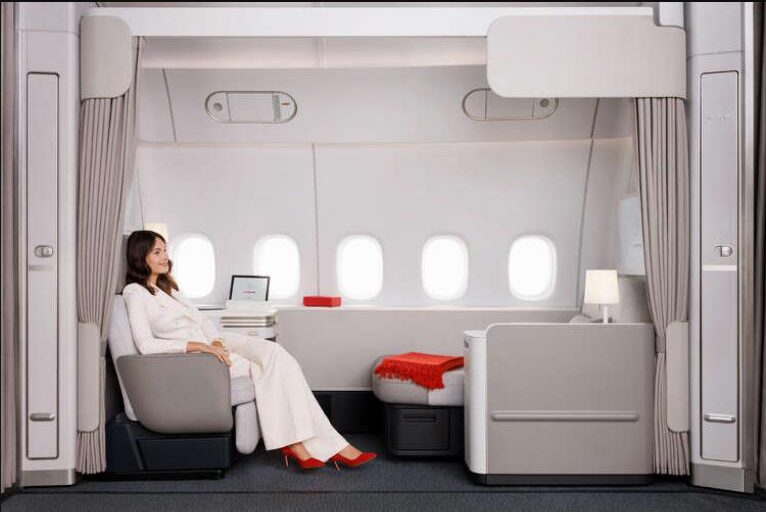
- 777-300ER upgraded cabins: 8 First Class suites, 40 flat-bed Business, 280 Economy; Delhi–Melbourne daily on this aircraft brings First to the route
- Summer 2026 deployments: Mumbai–London Heathrow on new 787-9s and retrofitted 787-8s from 1 July; Bengaluru–London on retrofitted 787-8s (adding Premium Economy); all Heathrow flights on new-cabin aircraft
- Still old: legacy 777-200LR/300ERs with 2-3-2 angled business seats on many Europe and North America routes; 777 retrofits not before early 2027, whole programme not complete before late 2028
- Next: two line-fit A350-1000s in 2026 with Recaro R7 doored business suites and a new First Class based on Airbus’s “First Class Experience” concept (a 1-1-1 layout with a central Master Suite); Safran Unity seats announced in 2023 have been dropped
- Fleet: 524 aircraft on order; 52% of weekly international flights on upgraded aircraft in late 2025, targeted at 81% by end-2026
- Fares: not published; see below
Three Business Classes, One Airline
Air India’s new-generation business class now comes in three versions. The bespoke 787-9, in service since January 2026, carries the Elevate Ascent suite — the same platform as Qatar Airways’ 787-9 and American’s Flagship Suite — with a door, a 17-inch 4K screen and wireless charging, in a 30-seat 1-2-1 cabin. The retrofitted 787-8s get Collins Aerospace seats in a fresh Air India design; the A350-900s fly a 28-suite cabin inherited from an aircraft built for Aeroflot. All three are fully flat with direct aisle access, and all three are a generation ahead of the 2-3-2 angled cabin still flying on the legacy 777s.
What has gone is the flagship: the Safran Unity seat Air India unveiled in 2023 — the seat Japan Airlines uses on its A350-1000 — was quietly dropped. The A350-1000s arriving this year use Recaro’s R7 doored suite instead, with a new First Class developed with Airbus.
Which Flight Gets the New Cabin
Air India’s summer 2026 plan is the most useful document a premium passenger can read. Every Heathrow flight — Delhi, Mumbai, Bengaluru — is scheduled on aircraft with new interiors: new 787-9s and retrofitted 787-8s on Mumbai, retrofitted 787-8s on Bengaluru, upgraded 777-300ERs on Delhi. Delhi–Melbourne gets the upgraded 777 with eight First Class suites. North American routes are more mixed, and Business-Class.com’s July 2026 guide puts it plainly: on Air India, the aircraft matters more than any other factor, and the swap from an A350 or new 787 to an old 777 is the risk to plan around.
The seat-map tell is the business cabin: 1-2-1 with doors means new; 2-3-2 means the 2010 cabin. Air India’s lounges at Delhi and Mumbai have been upgraded alongside, and the international catering was refreshed in late 2025.
Tip: on India–Europe, book the flights scheduled on the 787-9 or A350 and check the seat map again a week out; an aircraft change to a legacy 777 is the one thing worth rebooking around.
The Bar for a Rebuilt Airline, First-Hand
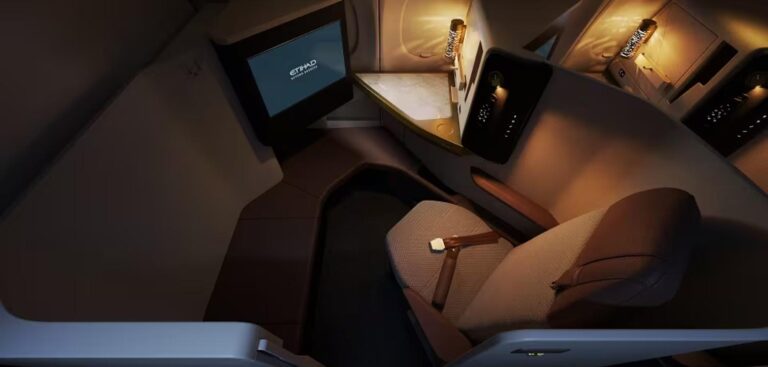
I have not flown Air India’s new cabins, so this stays a preview. The comparison I keep coming back to is Etihad’s 787-9, which I rated 3.5 out of 5 — an excellent 1-2-1 seat with a mattress topper that often undercuts Qatar and Singapore by half, marked down for catering and a crowded lounge — because Air India is pricing its Europe–India business class against exactly that Gulf connection. If the new 787-9 delivers the seat consistently and the lounges hold up, a nonstop from London to Delhi or Mumbai with a door on the seat becomes a real alternative to changing planes in the Gulf.
How Much Does It Cost?
Air India does not publish rack fares, and the same route sells at the same business fare whether it is operated by a new 787-9 or a legacy 777 — the aircraft check above is where the value lies. Business-Class.com reports consolidator discounts of 30–60 per cent on Air India business and first fares through specialist agents, which is unusual among full-service carriers and worth knowing about on India–Europe and India–North America.
Flight prices do move between platforms. The same business class seat on the same date is not always the same price on the airline’s own site, Trip.com and Expedia: point-of-sale currency, consolidator fares and what is bundled into the ticket can shift the fare by a few percent — and occasionally by much more on premium cabins booked out of Asia. So before I pay I run the same dates through Aviasales, which scans dozens of booking sites at once, then check Trip.com (often the sharpest on Asian routes) and Expedia (strongest when you add a hotel to the same booking). One caveat: a ticket bought through a booking site is changed or refunded through that site, not the airline, so read the fare rules before you buy.
A door on the seat, London on new aircraft, and First Class to Melbourne — Air India’s new cabins are real; the aircraft on your booking is what decides whether you get one.
Photos © Air India
This preview is based on official announcements — I haven’t flown Air India’s new cabins yet. Read more about how I review or visit my Work With Me page.
Disclosure: this article contains affiliate links. If you book through them, I earn a small commission at no extra cost to you. Read my full disclosure policy.