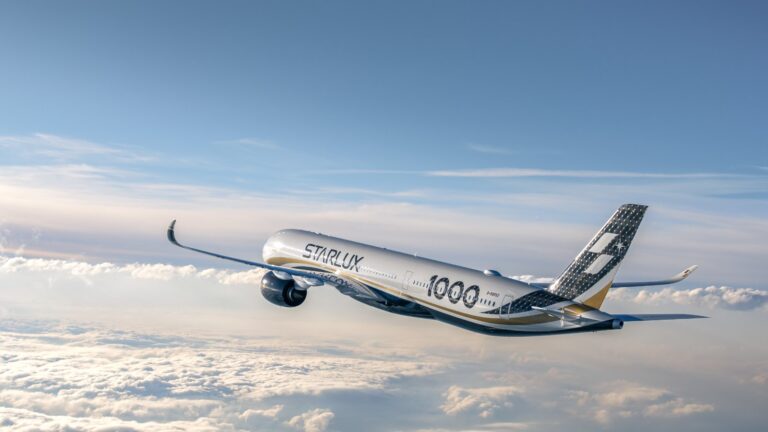
Etihad Airways has done something no other Gulf carrier has: put a fully enclosed First Class on a single-aisle jet. Its Airbus A321LR, in service since August 2025 with Phuket as the first route, seats 160 people in three cabins — two First Class suites in the front row, 14 lie-flat Business seats in a 1-1 layout and 144 in Economy — and Etihad is taking 30 of them, ten by the end of 2025, another ten by the end of 2026, then five a year through 2028.
For travellers around Southeast Asia the aircraft matters more than its size suggests. It is the plane opening Etihad’s thinner Asian routes — Medan on Sumatra, Krabi, Chiang Mai, Phnom Penh, Hanoi — and adding second and third daily flights to Bangkok, Milan, Paris and Zurich. Here are the facts, what a narrow-body First actually gets you, and the layout change that cuts business class on two routes.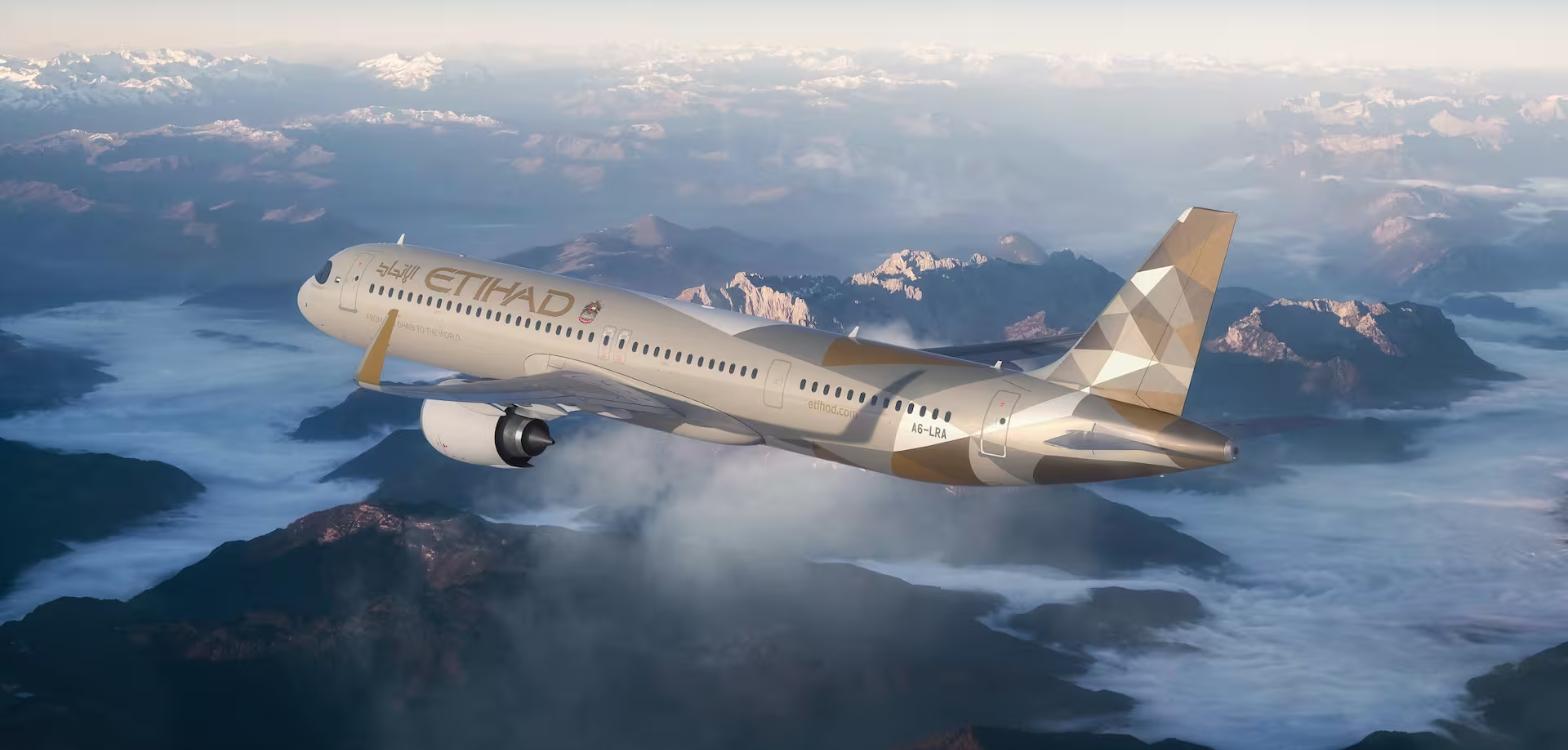
Etihad A321LR: Key Facts
- In service since: August 2025, Abu Dhabi–Phuket first; Abu Dhabi–Medan inaugural 2 October 2025
- Order: 30 Airbus A321LRs, raised from 20; the only factory-fresh narrow-bodies Etihad has on order
- Standard layout: 160 seats — 2 First Class, 14 Business, 144 Economy
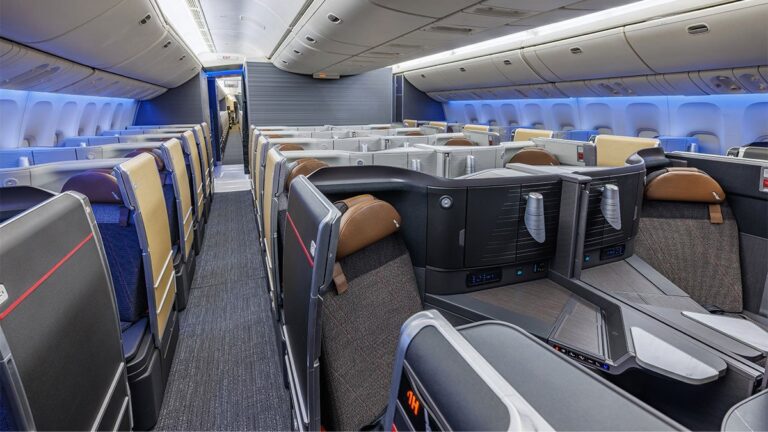
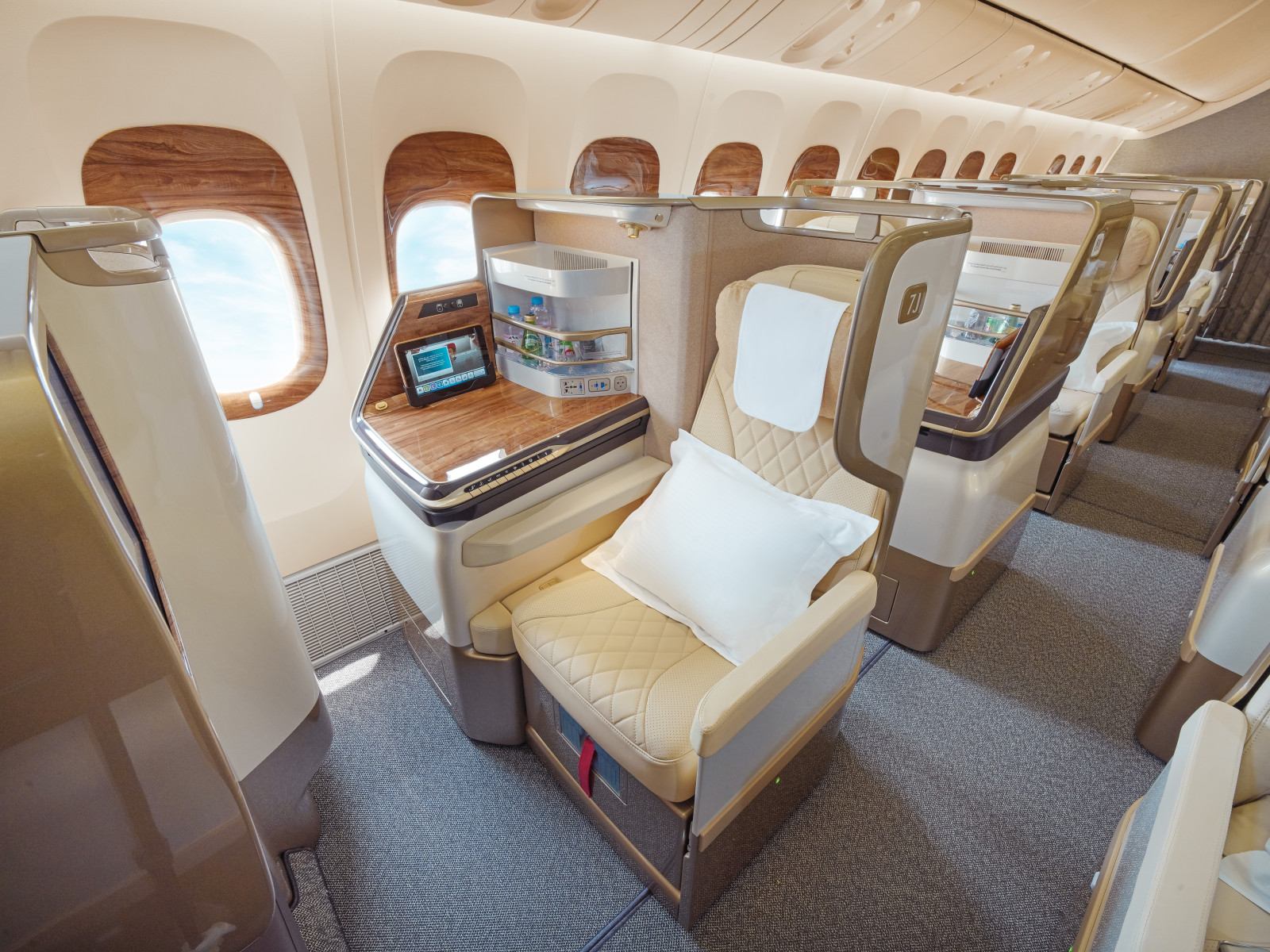
- Seats: 16 Stelia Opera reverse-herringbone lie-flats, all with direct aisle access; the front row has extra space and an ottoman and is sold as First with its own catering and amenity kit
- High-density variant: 194 seats — 2 First, 6 Business, 186 Economy — announced April 2026, initially for Delhi and Mumbai
- Routes: Phuket, Medan, Krabi, Phnom Penh, Chiang Mai, Hanoi, Algiers, Tunis, Copenhagen among the A321LR destinations; extra frequencies to Bangkok, Athens, Milan, Paris and Zurich
- Range: routes of up to about eight hours, covering Europe, Asia and Africa from Abu Dhabi
- Wider network: Charlotte launched 26 March 2026; the A380 returns to Tokyo for summer 2026
- Fares (one-way business, Simple Flying, June 2026): Casablanca about US$2,000–2,800; Amsterdam about US$3,500; Bangkok US$2,000–3,000
Two Suites at the Front of a Single Aisle
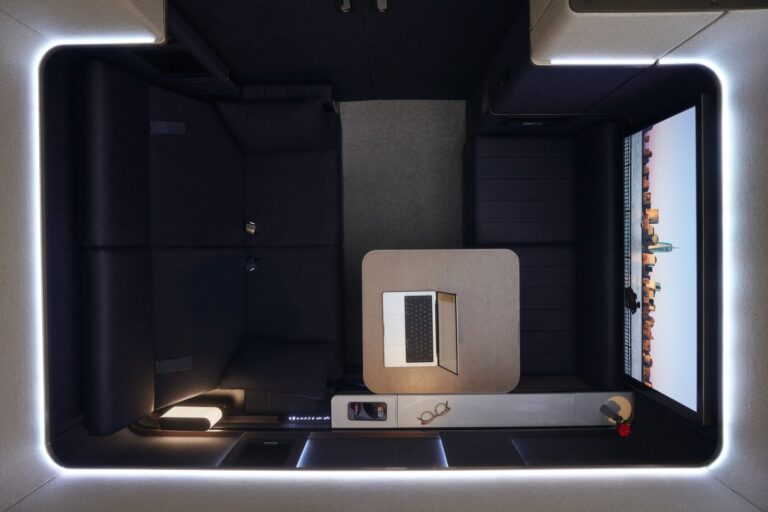
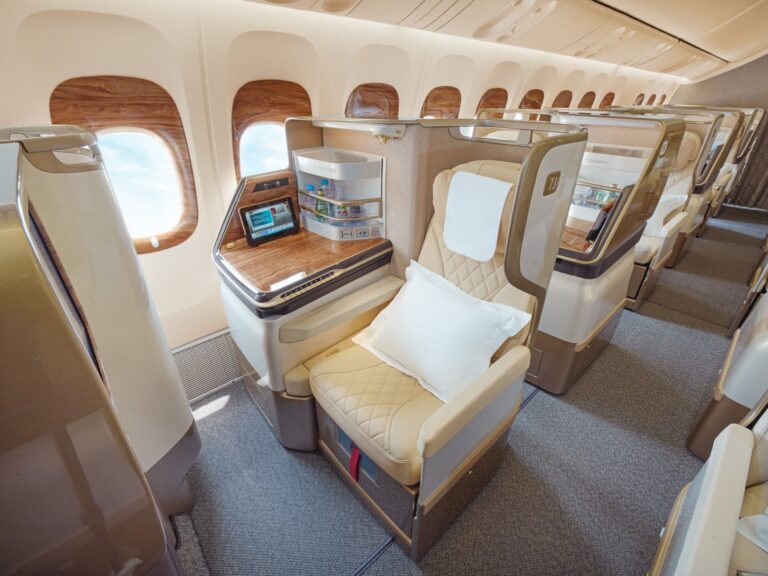
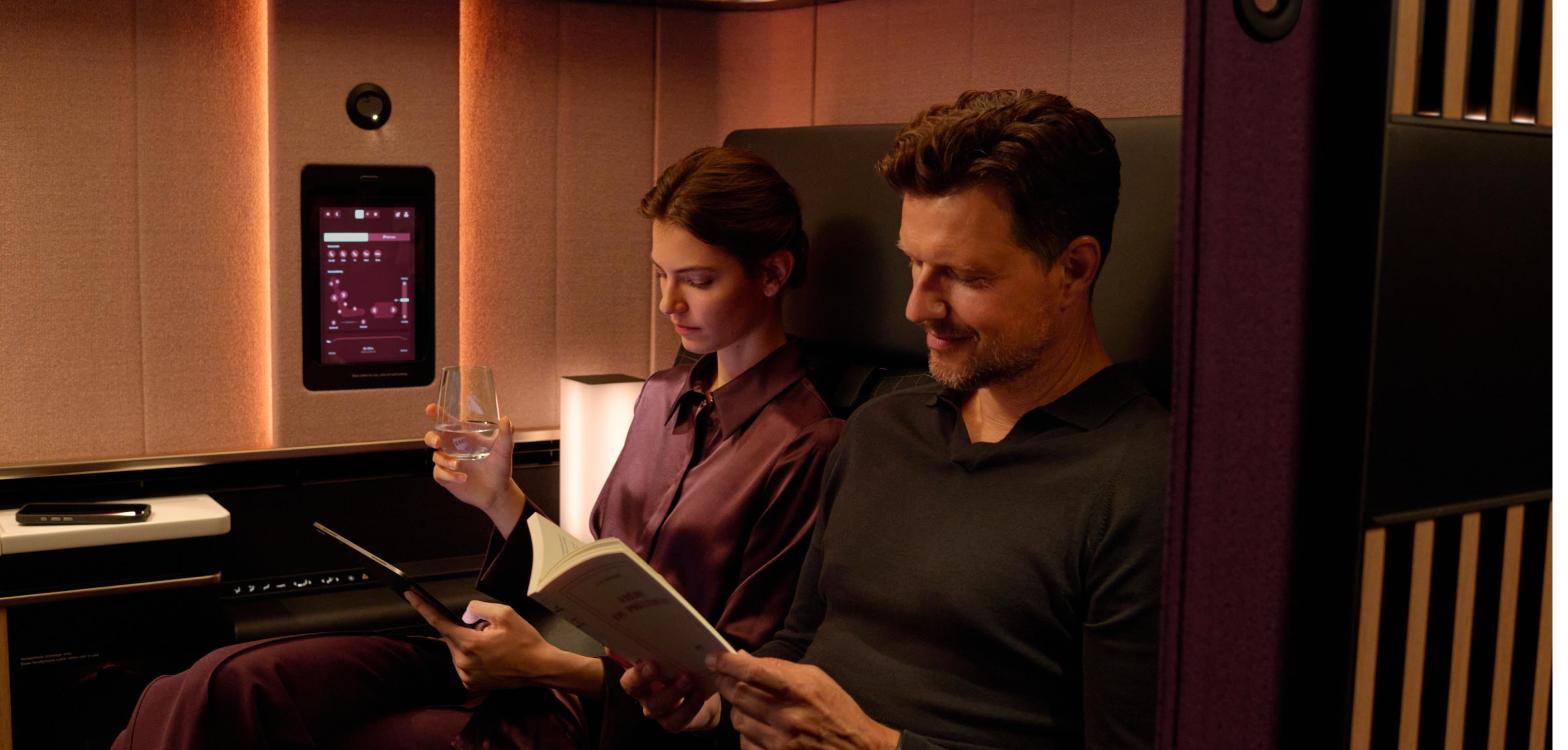
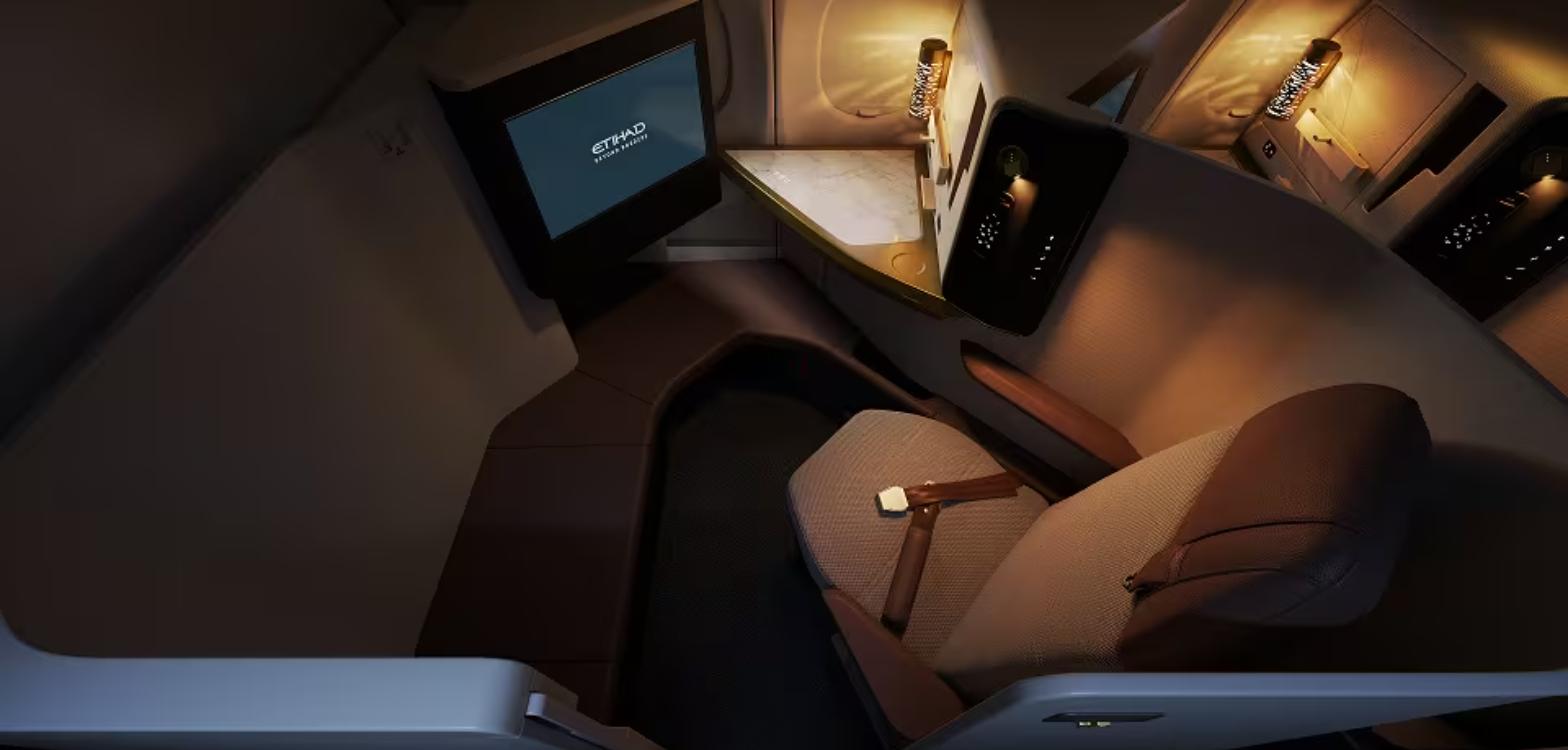
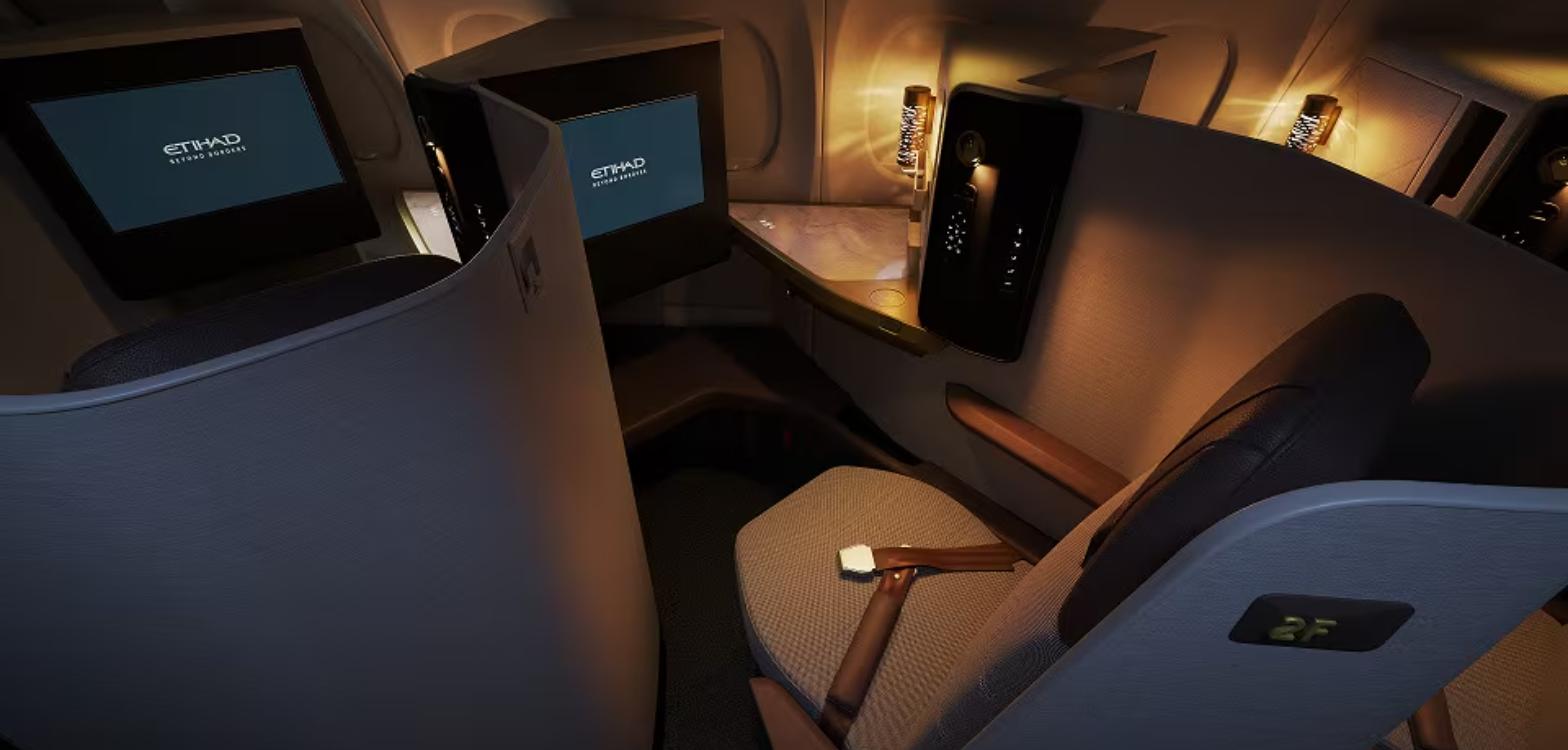
The A321LR’s First is the front row of a 16-seat Stelia Opera cabin, walled off with a closed suite, with extra space and an ottoman that turns it into a two-person dining spot. Etihad differentiates the rest with catering and an amenity kit specific to First, so a Phuket or Medan flight gets a three-cabin experience on a jet that most airlines fly with recliners. Behind it, the 14 Business seats are reverse herringbone in a 1-1 layout — every seat by a window, every seat with the aisle — a genuine step above the 2-2 recliners on Etihad’s older A320s and A321s.
The catch is scarcity: two First seats per flight. Award availability is, as one points analyst put it, brutally tight, and the airline has now announced a 194-seat version with only six Business seats for Delhi and Mumbai, trading eight premium seats for 42 in Economy. First survives on that layout; business shrinks to a single row-and-a-half.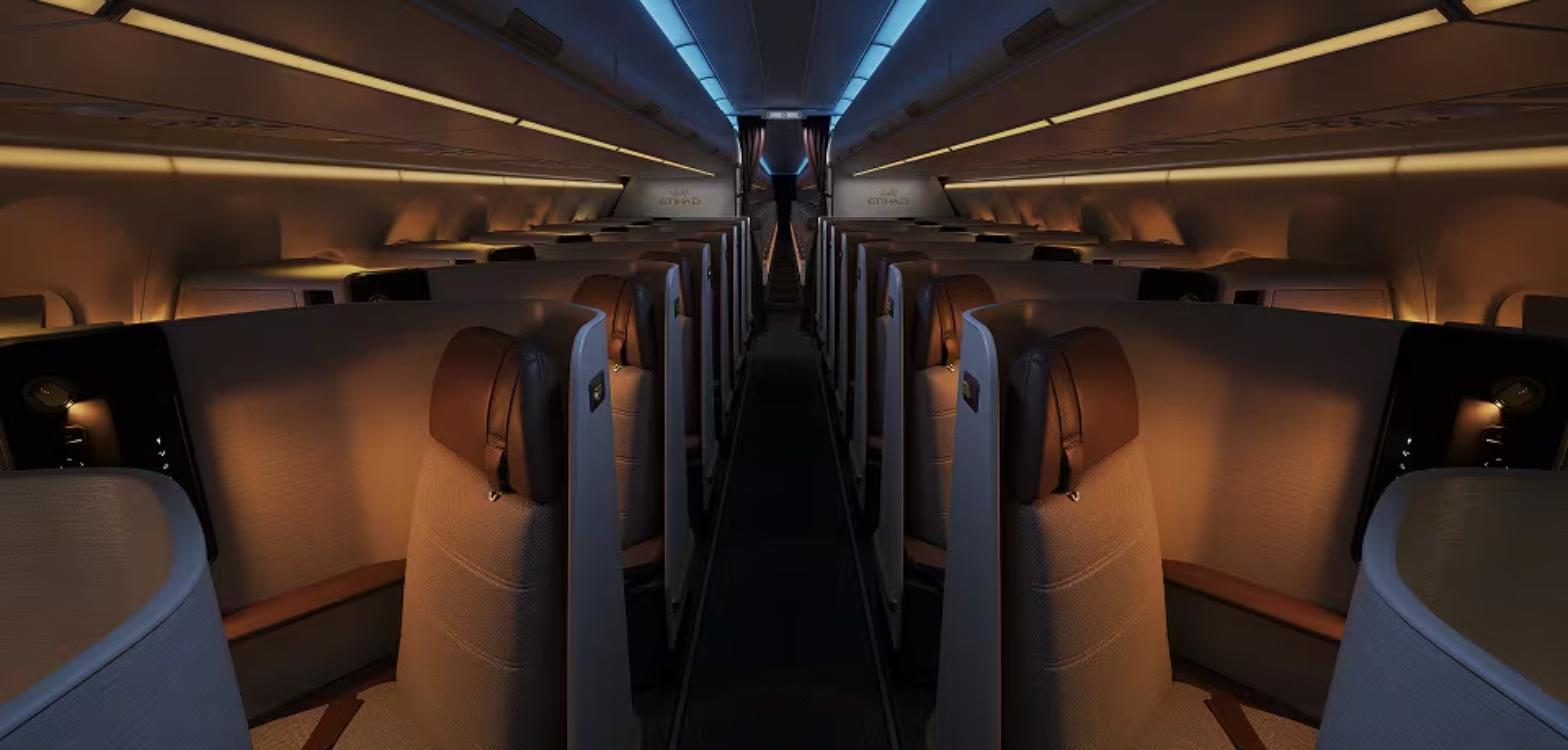
Why It Matters for Asia
Etihad is using the A321LR to fly where a 787 would be half empty and to double up on routes where it is full. That is how Medan — one of two places in the world with wild orangutans, on the doorstep of Bukit Lawang — got an Abu Dhabi nonstop, and how Krabi, Phnom Penh and Chiang Mai are joining the network. For Europe–Asia itineraries via Abu Dhabi it means a lie-flat business seat on the final leg where most connections still end in a recliner. Upgraded Points, on board the Medan inaugural, judged the narrow-body business experience the equal of a wide-body’s.
The high-density variant is the thing to watch. If it spreads beyond India, Business on the A321LR becomes six seats — worth checking the seat map before assuming the 14-seat cabin.
Tip: on the standard A321LR every Business seat is a window seat with the aisle; on the 194-seat version there are only six. Look for a 1-1 business cabin of seven rows on the seat map before booking.
Etihad is not the only Gulf carrier reworking its long-haul cabins this year: Emirates is rebuilding another 111 aircraft, and in Saudi Arabia, Riyadh Air has just put its own business class into service.
Etihad, First-Hand
I have not flown the A321LR, so this is a preview. I have flown Etihad’s 787-9 business class from Abu Dhabi to Brussels and rated it 3.5 out of 5: an excellent 1-2-1 seat with a foam mattress topper and a return Europe–Asia fare of about €2,500 that often undercuts Qatar and Singapore by half, marked down for underwhelming champagne and a lounge too crowded to enjoy. That is the honest frame for the A321LR — Etihad sells hardware and price better than it sells catering, and a two-seat First cabin with dedicated dining is the airline’s chance to fix the second half. The Abu Dhabi stopover programme remains a real bonus on the way to Asia.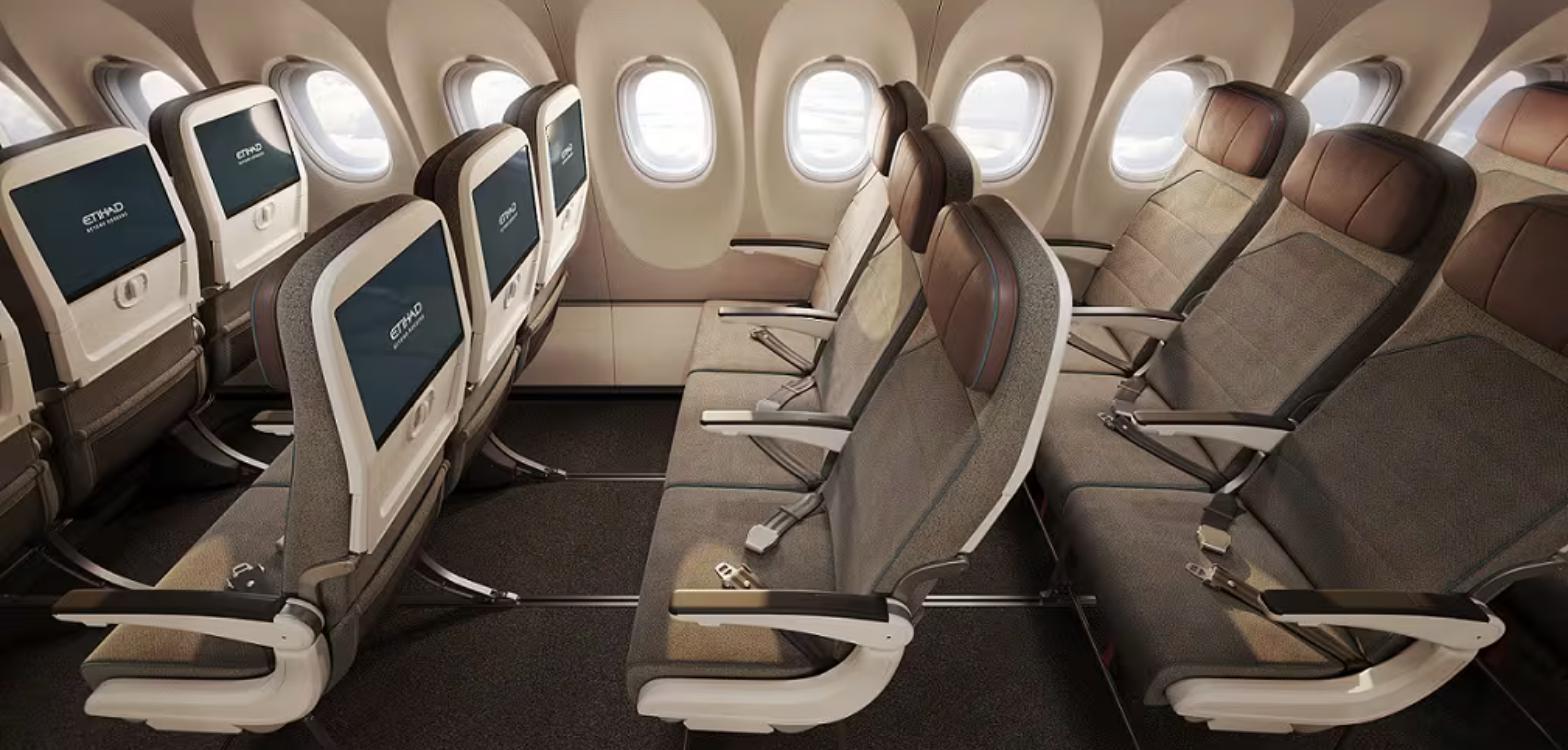
How Much Does It Cost?
Etihad does not publish rack fares for A321LR First; the two seats price dynamically and the cabin sells out early. For business, Simple Flying’s June 2026 survey put one-way fares at roughly US$2,000–2,800 to Casablanca, about US$3,500 to Amsterdam and US$2,000–3,000 to Bangkok, with return legs from Asia frequently far cheaper than the outbound from Abu Dhabi. Fares on Phuket, Medan and Krabi follow the same pattern.
Flight prices do move between platforms. The same business class seat on the same date is not always the same price on the airline’s own site, Trip.com and Expedia: point-of-sale currency, consolidator fares and what is bundled into the ticket can shift the fare by a few percent — and occasionally by much more on premium cabins booked out of Asia. So before I pay I run the same dates through Aviasales, which scans dozens of agencies at once and will tell you if a nearby date is cheaper, then check Trip.com (often the sharpest on Asian routes) and Expedia (strongest when you add a hotel to the same booking). One caveat: a ticket bought through a booking site is changed or refunded through that site, not the airline, so read the fare rules before you buy. I keep the full comparison routine — which platform I check for what — on my travel resources page.
A closed First Class suite to Medan on a single-aisle jet — Etihad has quietly made the last leg to Asia the most interesting one.
Renderings © Etihad Airways
This preview is based on official announcements — I haven’t flown Etihad’s A321LR yet. Read more about how I review or visit my Work With Me page.
Disclosure: this article contains affiliate links. If you book through them, I earn a small commission at no extra cost to you. Read my full disclosure policy.