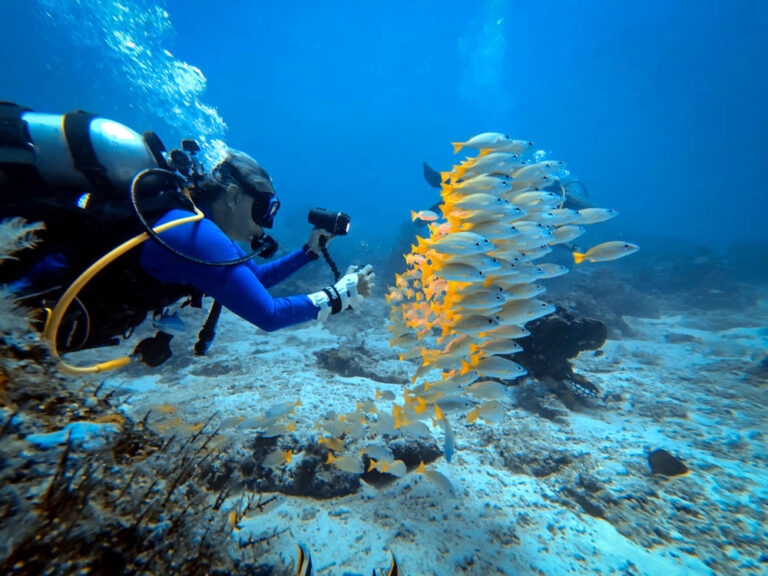
Can the Xiaomi 17 Ultra replace a dedicated underwater camera? After completing nearly 20 dives in Raja Ampat using the DiveVolk SeaTouch 4 Max Platinum housing, I came away genuinely surprised by what modern smartphone photography can achieve deep underwater. Taking advantage of the premium Emperor Harmoni dive liveaboard Raja Ampat routes, I was able to push this innovative mobile imaging platform to its absolute limits across diverse marine environments.
Whether you are considering a weekend dive at home or planning a high-end liveaboard Indonesia itinerary, finding the right scuba diving camera gear that does not compromise your precious luggage capacity is key. This extensive, hands-on Xiaomi 17 Ultra diving review details how this unique setup handles real-world tropical diving environments.
Why Trust This Xiaomi 17 Ultra and DiveVolk Review?
There are hundreds of smartphone camera reviews online, but very few are written by people who have actually used the equipment extensively underwater.
A smartphone housing can seem revolutionary when you have nothing to compare it to. Likewise, a camera phone can appear impressive after a handful of shallow holiday dives. The real test comes when you compare its performance directly against dedicated underwater photography systems and use it intensively over multiple demanding dive trips.
I have logged more than 1,500 dives around the world and have personally photographed marine life using a wide range of gear, including Canon compact cameras, the specialized Olympus PEN system, a high-end Canon R mirrorless setup, and multiple generations of GoPros, running from the Hero 8 through to the Hero 13.
Over the years, I have visited Raja Ampat and Komodo more than 20 times and have sailed on more than 30 luxury liveaboards across Indonesia, the Maldives, the Red Sea, Mexico, Galapagos, and other world-class diving destinations.
As the founder of This Is Luxury Travel, diving and liveaboard reviews have become one of the core focuses of the website. Today, This Is Luxury Travel has reviewed more luxury diving liveaboards than any other luxury travel publication, giving readers the unique opportunity to compare boats, destinations, and equipment based on genuine first-hand field experience rather than marketing copy.
What makes this breakdown different is that I am not comparing the Xiaomi 17 Ultra and DiveVolk housing against other basic smartphone setups alone. I am evaluating them against years of professional experience with dedicated underwater cameras, full-frame mirrorless systems, action cameras, and traditional underwater alloy housings.
This comprehensive review is based entirely on my personal experience during a nine-day Raja Ampat liveaboard, completing nearly 20 dives with the Xiaomi 17 Ultra, the DiveVolk SeaTouch 4 Max Platinum housing, and the specialized UWACAM app. Every single opinion in this article is based on real-world use underwater rather than manufacturer specifications or brief pool-testing sessions.
My goal is not simply to tell you whether this setup is “good” or “bad.” Instead, I want to help you understand who it is best suited for, where it excels, where it falls short, and whether it represents a better fit for your personal diving style than popular alternatives like a GoPro or a dedicated mirrorless camera system.
Why I Started Looking for an Alternative
For many years, high-end underwater photography was one of my major passions. I started out with Canon G-series compacts before upgrading to the modular Olympus PEN system and eventually migrating to a full Canon R mirrorless setup. Each structural upgrade delivered better image quality, improved autofocus speeds, and more creative possibilities. Unfortunately, each upgrade also increased the financial investment exponentially.
And then there was the flooding. Like many underwater photographers, I have experienced that horrible sinking feeling of discovering salt water creeping inside an expensive camera housing. After flooding more than one primary camera body over the years, my enthusiasm for travelling with increasingly expensive (and heavy!) underwater photography equipment began to cool significantly.
Eventually, I simplified everything and switched to an action camera. I went through several generations, moving from the GoPro 8 to the GoPro 11 and eventually the GoPro 13. For wide-angle photography and video clips, the GoPro worked remarkably well. It was compact, reliable, easy to travel with, and virtually stress-free.
But there was a compromise. Fish portraits frequently lacked fine detail. Small subjects rarely looked impressive. True macro photography was functionally impossible. As much as I appreciated the sheer simplicity of the GoPro, I missed having a creative system that could generate more interesting, artistic photographs. Traditional action cameras simply do not provide the dynamic versatility needed for high-quality underwater photography.
That is what led me to explore the capabilities of the Leica-tuned Xiaomi 17 Ultra and the DiveVolk SeaTouch 4 Max Platinum housing during a recent nine-day liveaboard cruise in Raja Ampat. After nearly 20 challenging dives, I can confidently share my thoughts on how this system holds up against heavy, repetitive field use.
Why I Chose the Xiaomi 17 Ultra for Diving
When researching the best camera phones available on the market, the Xiaomi 17 Ultra repeatedly appeared near the top of every global discussion. The Leica-branded multi-camera system is currently considered by experts to be the best camera smartphone in the world. The phone features a massive 1-inch sensor smartphone profile. On paper, it promised image quality much closer to a dedicated compact camera than a typical mobile phone, making it a stellar option for someone searching for the best camera phone for diving.
After spending nine days diving with it in the current-swept waters of Raja Ampat, I can confidently confirm that the larger Leica camera phone sensor makes a noticeable difference. Images displayed:
- Better overall dynamic range in high-contrast water columns
- Improved colour retention at depth
- Cleaner, less noisy shadows in reef overhangs
- More natural edge detail on fine coral structures
- Significantly better low-light performance during deep or overcast dives
Another feature that thoroughly impressed me was the optical zoom module. The Xiaomi offers true optical zoom up to approximately 4.2x. For a smartphone, that is remarkable. Underwater, this proved particularly useful for capturing fish portraits and framing shy marine life that would not allow a close physical approach, proving its utility during dedicated Xiaomi 17 Ultra underwater zoom testing.
Being able to seamlessly switch between ultra-wide-angle fields of view and up to 4.2x optical zoom is invaluable underwater, as it ensures you are ready for almost every situation that passes by in the blue.
While no smartphone can truly replace a dedicated telephoto or macro lens mounted on a mirrorless system, the Xiaomi delivered far more structural flexibility than I expected, establishing itself as a top-tier smartphone for underwater photography enthusiasts.
Why I Chose the DiveVolk SeaTouch 4 Max Platinum
The specialized housing from DiveVolk was just as critical to success as the phone itself. Unlike many competitors on the market, it provides full touchscreen functionality underwater via a patented gel-filled membrane. At first, that sounded like a nice gimmick. After using it extensively in the field, I realized it is the defining feature. The Platinum edition feels exceptionally robust thanks to its premium CNC aluminum construction. It feels more like a professional camera housing than a basic smartphone case. The Platinum version is depth-rated down to 60 meters, which is more than enough for recreational scuba diving.
Please note that the Xiaomi 17 Ultra body is thicker than normal smartphones because of its large circular camera lens module sticking out. Because of this, the more basic versions of the DiveVolk housings will not fit, and you must purchase the specific Platinum housing to accommodate the flagship dimensions.

Throughout the duration of the trip, the housing performed flawlessly. I experienced:
- No leaks or seal weeping
- No internal moisture or flooding
- No mechanical or reliability issues
The only feature I missed was an integrated electronic wet alarm. Many dedicated camera housings include internal moisture detection sensors that immediately warn you with a flashing light if water enters the shell. The DiveVolk does not offer this safety feature. While I never experienced any structural problems, a wet alarm would provide welcome peace of mind when submerging a primary smartphone. Overall, this setup stands out as the best smartphone housing for scuba diving for anyone wanting absolute control over their phone features while underwater.
The housing itself is remarkably easy to seal. You simply pop your phone into the model-specific tray, insert it smoothly into the housing slot, and close the two small locking wheels. The entire assembly process takes about 30 seconds.
Do not forget to power on your phone and open your preferred camera application before sliding it into the housing, as managing screen locks is much easier to handle beforehand.
Preventing Fogging
One structural issue I occasionally encountered during the first few tropical test runs was internal fogging. Fortunately, the solution was simple. I started using standard silica anti-fog inserts, cutting one of the fiber strips into smaller pieces that fit directly inside the camera tray margins. Once I started doing this, the fogging disappeared completely. If you plan to use the DiveVolk system in humid, tropical destinations like Raja Ampat, I strongly recommend carrying anti-fog inserts. It is a tiny investment that can save an entire dive’s worth of imagery.

DiveVolk vs SeaLife Housing
The structural value of the DiveVolk system became particularly obvious when chatting with other underwater photographers onboard the liveaboard. Several guests were using SeaLife smartphone housings. Unlike the DiveVolk, the SeaLife systems rely heavily on a Bluetooth connection and a dedicated proprietary camera app rather than giving the user direct access to the phone’s native interface. Our direct DiveVolk vs SeaLife housing comparison highlighted a massive difference in user interface freedom.
Several divers told me they felt severely constrained by the app interface. Certain custom exposure settings were unavailable. Some advanced camera functions were restricted. The DiveVolk smartphone housing review journey takes a completely different, uninhibited approach. I could seamlessly access:
- Every native camera mode (Pro, Portrait, Night)
- Every independent lens element
- Every custom resolution and frame rate setting
- Every third-party mobile application
- Every core phone function
exactly as I would on dry land. I could switch between photo and video modes, review high-res images, change exposure settings, and select custom focus points directly on the touchscreen underwater. Once you experience that level of interface freedom, it becomes incredibly difficult to imagine returning to an app-restricted housing system.
🔥 Exclusive: Save 6% on DiveVolk Housing
Get the premium SeaTouch 4 Max Platinum and accessories for less. Use our direct partner link to save instantly.
Valid on all housings, lenses, and trays via the official store.
RAW vs JPEG Underwater
Normally, I prefer shooting exclusively in uncompressed RAW format for post-processing flex. However, underwater I repeatedly encountered frustrating autofocus tracking problems when shooting RAW image files. The camera often struggled to lock onto subjects quickly through the water column. This resulted in soft images and missed opportunities, which I document extensively in this Xiaomi 17 Ultra RAW vs JPEG breakdown. After several frustrating dives, I switched to high-quality JPEG mode. Almost immediately, underwater autofocus performance improved dramatically. I never fully understood the internal processing conflict causing this. After hundreds of photographs, my recommendation is simple: shoot JPEG underwater. Image quality remained excellent, and the autofocus became significantly more reliable.
Because the focus issue appeared consistently, I contacted Xiaomi customer support upon returning, hoping to understand whether this was a known firmware limitation or a software bug. Unfortunately, I never received a useful response. My enquiries went completely unanswered. I never obtained any technical explanation for the behavior I was experiencing. While I was extremely impressed by the physical camera’s image quality, Xiaomi’s customer support response was one of the weakest aspects of my overall experience.

There Is a Learning Curve
One common misconception about modern smartphone photography is that it is completely effortless. My experience in the field was quite different. The DiveVolk housing itself was mechanically easy to use from the very first dive. The true creative challenge was learning how to extract the absolute best optical results from the Xiaomi sensor underwater.
Throughout the trip, I experimented extensively with manual white balance settings, custom shooting modes, autofocus behavior, and compression formats to lock down an optimal underwater camera setup.
One learning resource that genuinely helped shorten the learning curve was the specialized online course Mastering Your DiveVolk SeaTouch 4 Max by renowned underwater videographer Matthias Lebo. The digital course covers essential camera settings, underwater shooting techniques, composition adjustments, ambient lighting management, and post-dive workflows.
Looking back, I would strongly recommend watching the course content before setting off on your first major dive trip rather than trying to figure out everything through frustrating trial and error as I did. Even after years of underwater photography with Canon compacts, the Olympus PEN system, full-frame Canon mirrorless systems, and multiple generations of GoPros, I still picked up several useful technical techniques that directly improved my final image results.
The UWACAM Review: The App Every DiveVolk Owner Should Download
One of the biggest software discoveries made during this trip was an app called UWACAM. While the DiveVolk housing allows you to use your phone normally underwater, the UWACAM application makes mobile underwater photography significantly easier and more professional. The app was built from the ground up specifically for scuba diving environments. The most impressive feature is the real-time live underwater color correction algorithm. Instead of imagining what your final edited image might look like after editing, UWACAM displays a color-corrected preview directly on your smartphone screen while shooting.
This completely changes the shooting experience. Framing composition becomes intuitive. Exposure adjustment becomes simple. You immediately see what the final colorful image is going to look like. I also found UWACAM’s built-in blending mode extremely useful. During the first few days of the trip, some of my images appeared slightly softer than expected due to movement in the water. After experimenting with different configurations, enabling blending mode noticeably improved final edge sharpness and reduced the number of blurry photographs I brought back from a dive.
Combined with the DiveVolk’s gel touchscreen functionality, UWACAM underwater photography application integration quickly became my preferred way to shoot underwater. If you are planning to use a smartphone for scuba diving, I would consider UWACAM almost essential. It costs about 45 euros per year and is probably the single best investment you can make to instantly improve the quality of your diving photos. It made a massive difference to the quality of my photos and made the phone much easier to handle underwater.
Unlock Exclusive UWACAM Discounts
Elevate your underwater photography! Choose the offer that best fits your needs:
SUMMER SPECIAL
LUXURYTRAVELS26
30% OFF
Valid until July 31, 2026
REGULAR OFFER
LUXURYTRAVEL
20% OFF
For new yearly subscribers
Download the app and apply code at checkout:


Best Xiaomi 17 Ultra Settings for Underwater Photography
After completing nearly 20 dives in Raja Ampat, these are the proven Xiaomi 17 Ultra underwater settings that worked best for my style:
- Shoot exclusively through the UWACAM application interface
- Enable the dynamic live color correction matrix
- Turn on the built-in software blending mode for stability
- Shoot high-quality JPEG format rather than RAW to ensure focus speeds
- Rely on the main 1-inch type sensor whenever composition allows
- Engage the 4.2x optical telephoto zoom lens for close-up fish portraits
- Tap directly on the physical subject via the gel skin to confirm active focus
- Always carry anti-fog silica inserts inside the tray cavity
- Try to keep your manual shutter speed above 1/200s to freeze motion cleanly
These specialized settings helped me create some truly great underwater images throughout the trip.
Xiaomi 17 Ultra Wide-Angle Photography Review
Wide-angle underwater photography is where this high-end setup truly shines. Raja Ampat is famous across the globe for its stunning coral gardens, schooling fish biomass, giant sea fans, dramatic reef drop-offs, and exceptional water clarity. The Xiaomi and DiveVolk combination consistently delivered beautiful, rich images. Colors were vibrant without appearing over-saturated or artificial, and fine detail remained sharp across the entire frame margins.
The large 1-inch sensor captured deep oceanic scenes with a depth and dynamic richness that I had not previously associated with mobile smartphone photography. Many of my favorite wide-angle photographs required very little editing during post-processing. For wide-angle underwater photography, this combination completely exceeded my expectations.


Xiaomi 17 Ultra Fish Photography Review
One specific area where the Xiaomi camera phone clearly outperformed my action cameras was close-up fish portrait photography. The optical zoom lens combined with the larger native sensor made a significant difference. Our Xiaomi 17 Ultra fish photography review metrics showed that animal portraits displayed markedly better edge detail, accurate color gradients, superior subject separation, and more natural bokeh rendering.
The 4.2x optical zoom module quickly became one of my most-used features during the trip, allowing for spectacular fish photography options without physically approaching too close and spooking skittish marine wildlife.


Xiaomi 17 Ultra Macro Photography Review
Macro underwater photography was a bit more of a mixed narrative. The Xiaomi sensor’s minimum physical focusing distance of approximately 30 centimeters can make framing tiny macro critters somewhat difficult. Even with the DiveVolk touchscreen allowing me to select precise focus zones underwater, the autofocus system occasionally struggled to lock onto tiny subjects, making Xiaomi 17 Ultra macro photography underwater a persistent creative challenge.
When the alignment worked correctly, the raw optical results were quite good. However, unlike wide-angle shooting, macro success seemed more random, with a notable portion of my macro shots coming back slightly soft or out of focus due to slight movements in the water column.
I also experimented with mounting a traditional macro wet lens to the housing frame. Unfortunately, I could not make it operate successfully. The core engineering challenge stems from the Xiaomi’s complex rear camera cluster design. The phone features four independent rear lenses positioned off-center across a large circular element rather than centered on a single axis. Because of this layout, I struggled to align the accessory wet lens precisely with whichever specific camera lens element was currently active in software. This mismatch resulted in inconsistent edge sharpness and frequent vignetting.
If your primary diving interest is dedicated macro photography, a traditional camera system with a manual macro lens (or even the compact Olympus TG7 with its superb microscope mode) will still offer significant operational advantages.
As you can see from the sample images below, some macro attempts turned out beautifully, but a large portion were difficult to stabilize perfectly:


Future-Proofing Your Investment
One major structural advantage of the modular DiveVolk system that is often completely overlooked is its long-term financial flexibility. Traditional underwater alloy camera housings are custom-machined around one specific camera body or smartphone model shape. If you upgrade your device, your expensive housing becomes instantly obsolete, forcing you to purchase a completely new system.
The DiveVolk framework works entirely differently. The primary outer housing shell remains exactly the same; only the cheap internal adapter tray changes to accommodate new phone generations.
In my specific case, because the phone was so new, DiveVolk did not yet have a commercial injection-molded tray available for the Xiaomi 17 Ultra layout. Rather than telling me to wait, their engineering team generously sent me the raw 3D-printing CAD file. I had the adapter tray printed locally using tough resin for less than USD 10. The DIY solution functioned perfectly. More importantly, it gave me immense confidence that I can comfortably upgrade my smartphone in the coming years without ever needing to replace the primary outer housing shell. Considering how quickly modern mobile imaging technology evolves, this modular setup is a massive advantage.

Xiaomi 17 Ultra vs GoPro 13 Underwater
Many scuba divers considering a smartphone housing are weighing a choice between a mobile system like this or a standalone action camera. Having used both extensively across global reefs, I view them as serving entirely different operational purposes. A direct Xiaomi 17 Ultra vs GoPro 13 underwater shootout reveals clear, unique strengths for both platforms.
The GoPro remains unmatched for sheer ease of use, small mounting profiles, simple operations, and ultra-wide stabilization for casual underwater point-and-shoot video. However, for serious still photography—particularly detailed fish portraits and complex reef landscapes—the DiveVolk and Xiaomi combination is the undisputed winner. The massive 1-inch type Leica sensor, multi-element optical zoom capabilities, and sophisticated mobile image processing pipelines combine to create photographs that simply look more professional and refined. For my personal travel style, this hybrid mobile setup finally fills that frustrating product gap between a basic action camera and an incredibly heavy, dedicated mirrorless camera rig.
Is the Xiaomi 17 Ultra the Best Camera Phone for Diving?
After completing nearly 20 dives in Raja Ampat, I believe it is certainly one of the most compelling mobile options currently available to the global diving community. The combination of a large 1-inch sensor, advanced Leica color tuning, true 4.2x optical zoom, full UWACAM software integration, and the flawless DiveVolk touchscreen gel membrane creates a surprisingly capable underwater photography system. It will not entirely replace a professional full-frame mirrorless system for every commercial shooter, but it comes much closer than I ever expected and represents the absolute perfect solution if you want to capture beautiful, high-quality images during your holiday diving trip without the logistical strain.
Quick Verdict
| 👍 Best For | 👎 Not Ideal For |
|---|---|
| • Rich wide-angle landscape reef photography • High-detail close-up fish portraits • Weight-conscious travelling divers • Scuba divers upgrading from basic action cameras | • Dedicated ultra-macro photographers needing wet diopters • Divers who require an integrated vacuum leak alarm system |
| ⚙️ Key Highlights | |
| Best Companion App: UWACAM Mobile Application Best Underwater Setting: JPEG Format + UWACAM Software Blending Mode Biggest Field Surprise: The optical clarity of the Xiaomi 1-inch sensor paired with the 4.2x zoom | |
Final Verdict
No consumer imaging product is entirely perfect. The complete lack of an internal wet leak alarm, the physical focusing distance constraints for macro, the underwater autofocus hunting when restricted to uncompressed RAW format, and Xiaomi’s unhelpful customer support infrastructure are all clear areas that could be significantly improved by the respective manufacturers. However, none of these minor operational frustrations came close to outweighing the profound strengths of the system.
After completing nearly 20 dives across the pristine reefs of Raja Ampat, I returned home with some of my favorite underwater images in years and a completely renewed enthusiasm for the art of underwater photography.
The heavy-duty DiveVolk SeaTouch 4 Max Platinum housing proved itself to be remarkably reliable, structurally sound, and exceptionally flexible thanks to its full touchscreen membrane functionality. Simultaneously, the flagship Xiaomi 17 Ultra thoroughly exceeded my expectations as an underwater camera tool. The combination of the large 1-inch sensor, advanced Leica image processing algorithms, and the responsive optical zoom lenses delivered final image quality that came surprisingly close to what I once expected only from bulky, dedicated camera setups.
Would I replace a full professional mirrorless rig with this mobile configuration for a high-end commercial shoot? Probably not. Would I choose it over carrying a massive, heavy, stress-inducing camera bag on many future personal dive trips? Absolutely, without a second thought. For travelling divers who want to bring home high-quality marine imagery without the prohibitive cost, packaging complexity, and constant travel stress of a traditional dedicated camera system, the Xiaomi 17 Ultra and DiveVolk SeaTouch 4 Max Platinum stand out as one of the most compelling and liberating underwater photography combinations available on the global market today.
If you are currently planning your next remote dive excursion, exploring options like a premium cruise or a curated marine tour can significantly elevate your overall travel experience. For more detailed insights, official advice, and structural updates on planning your next high-end tropical marine getaway, you can check out the official trip planning tools on the Indonesia Tourism Board website.
Other Luxury Diving and Travel Reviews You Might Enjoy
If you love exploring remote marine environments in total comfort, I invite you to explore my collection of detailed luxury dive cruise reviews. Read my comprehensive Coralia Liveaboard Review for a look into ultimate luxury diving in Raja Ampat, or discover another spectacular Indonesian itinerary with our Seahorse Liveaboard Review covering the paths from Sorong to Kaimana. If you would rather dive Raja Ampat from a resort than a boat, my Misool Resort review covers the private-island option in the south. For world-class diving beyond Indonesia, do not miss my deep-dive Scubaspa Yin Maldives Review where spa luxury meets the ocean. You can also compare options via our EcoPro Seascape Maldives Review. If sailing adventures call to you, take a look at The Ultimate Seychelles Sailing Cruise Review onboard the Silhouette Sea Star. Finally, explore pristine island hospitality through my firsthand Kalimaya Dive Resort Sumbawa Review and the ultra-exclusive Nihi Sumba Luxury Resort Review. Dive into these reviews to plan your next incredible vacation in the most comfortable way possible!
Frequently Asked Questions
Is the Xiaomi 17 Ultra waterproof without a housing?
No, the Xiaomi 17 Ultra has a standard IP68 dust and water resistance rating, which means it can handle accidental splashes or brief shallow submersion on land, but it is not built to withstand the pressure of scuba diving. To safely use it underwater, you must place it inside a certified underwater housing such as the DiveVolk SeaTouch 4 Max Platinum.
Can I use standard wet lenses with the DiveVolk housing and Xiaomi 17 Ultra?
While the DiveVolk platinum housing supports wet lens attachments, the Xiaomi 17 Ultra’s off-center four-camera lens arrangement makes precise optical alignment challenging. Standard macro wet lenses often yield inconsistent image quality or vignetting due to the shifting active lenses of the phone.
Why does the Xiaomi 17 Ultra struggle with autofocus in RAW mode underwater?
During our extensive field tests, shooting in RAW caused noticeable autofocus hunting and soft images underwater. While Xiaomi customer support has not provided a definitive technical explanation, switching the camera system to JPEG format instantly restores fast, reliable autofocus tracking when combined with the UWACAM app’s blending mode.
Does the DiveVolk SeaTouch 4 Max Platinum housing have a moisture alarm?
No, the DiveVolk SeaTouch 4 Max Platinum does not feature a built-in electronic wet alarm or vacuum moisture detection system. However, its heavy-duty aluminum construction and unique touchscreen membrane design have proven incredibly reliable across nearly 30 consecutive dives with zero leaks or structural failures.
How do I prevent my smartphone from fogging inside an underwater casing?
Fogging happens when the warm air inside the phone housing condenses against the colder seawater outside. The easiest solution is to place pieces of anti-fog inserts directly inside the DiveVolk camera tray alongside your phone before sealing it. This completely eliminates internal condensation during tropical dives.
Disclosure: this article contains affiliate links. If you book through them, I earn a small commission at no extra cost to you. Read my full disclosure policy.