Mitsui Ocean Sakura entered service from Yokohama on 19 September 2026 — the former Seabourn Sojourn, converted in Nagasaki into an all-suite Japanese ship with 229 suites, five restaurants and up to 458 guests, sailing short voyages around Japan’s coast.
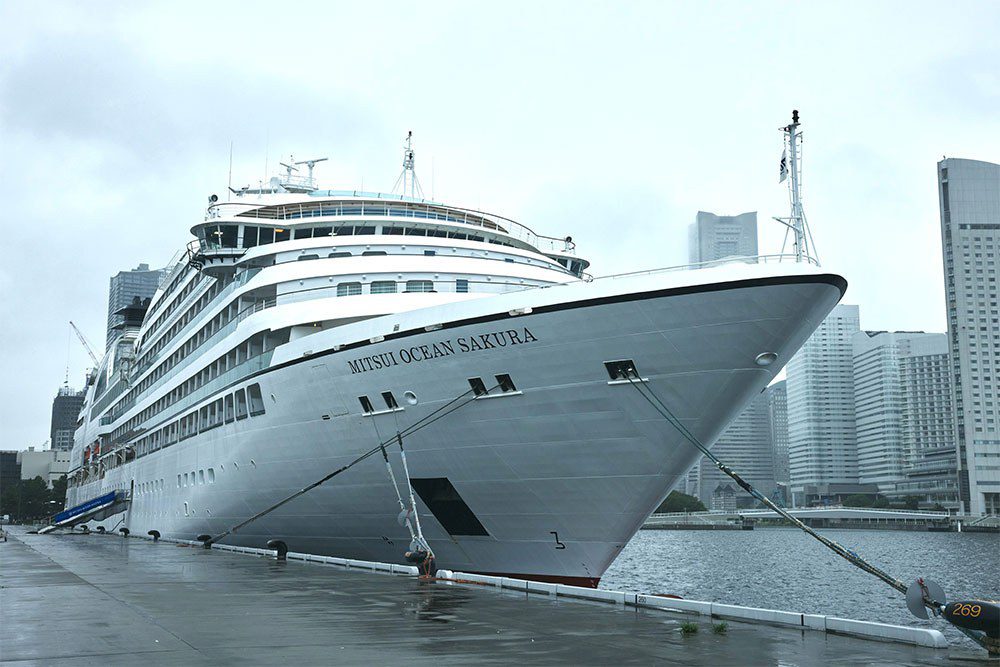
For sixteen years she sailed the world as Seabourn Sojourn, one of the small-ship luxury benchmarks. Now she flies the Japanese flag. Mitsui O.S.K. Lines — one of the world’s largest shipping groups — agreed to buy the ship in 2025, chartered her back to Seabourn until her final world cruise ended in May 2026, then sent her to Mitsubishi Heavy Industries in Nagasaki for conversion. On 19 September she sailed from Yokohama as Mitsui Ocean Sakura, successor to the Nippon Maru, which retired in May after 35 years of service.
Mitsui Ocean Sakura: Key Facts
- Entered service: 19 September 2026, from Yokohama — a four-night maiden voyage calling at Toba (Mie) and Hidaka (Wakayama)
- The ship: built by T. Mariotti in Genoa in 2010 as Seabourn Sojourn; 198 meters and 34,138 gross tons; converted in Nagasaki in 2026
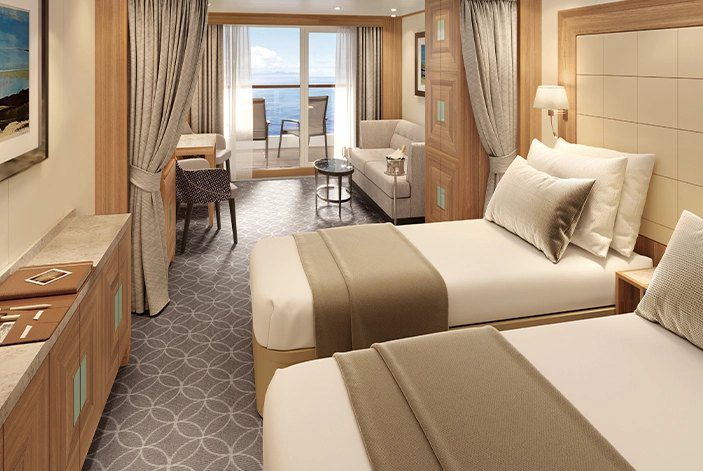
- Suites: 229, all ocean-view, around 90% with balconies — the largest, the 87 sqm Signature Suite, has oversized windows onto the sea
- Guests: up to 458
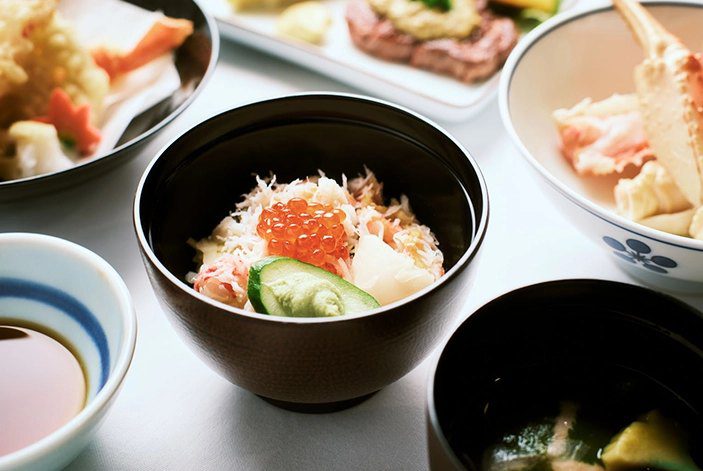
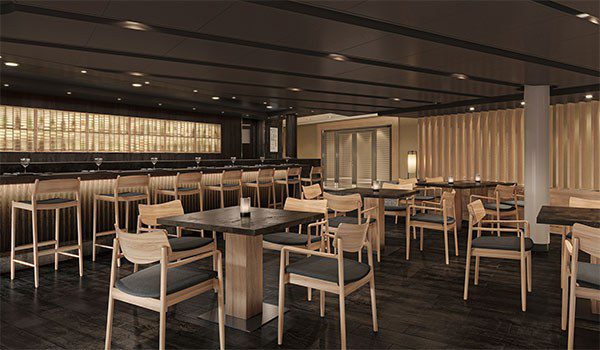
- Dining: five restaurants, with Japanese cuisine built on seasonal ingredients and port-of-call specialties — including Hokusai, a fine-dining room supervised by chef Kiyomi Mikuni, and the new Sushi Bar Shiosai
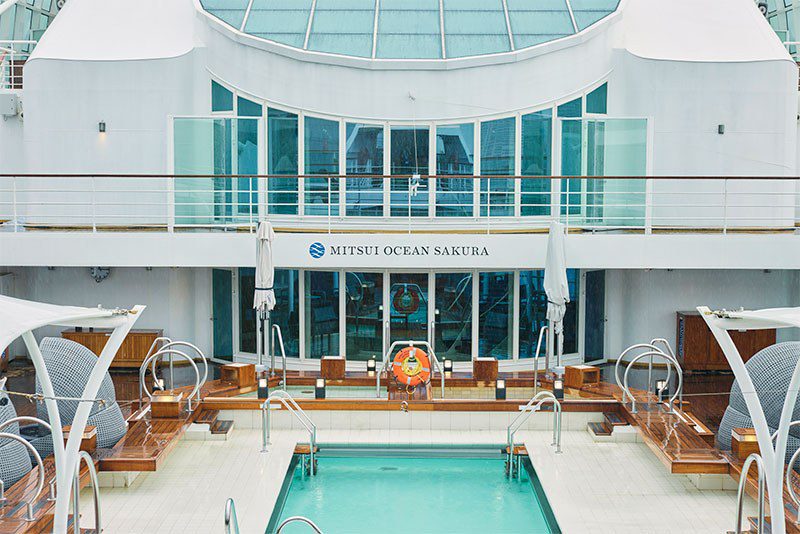
- Signature detail: footbaths at the swimming pool
- Itineraries: 29 debut cruises through December 2026, mostly short round trips of one to three nights from ports across Japan, including Tokyo, Kobe, Hakata, Kanazawa, Niigata, Nagoya and Hiroshima — with 61 more cruises scheduled through September 2027
- The fleet: sister to Mitsui Ocean Fuji, the former Seabourn Odyssey, which joined in December 2024
Seabourn Hardware, Omotenashi Software
The strategy behind Mitsui Ocean Sakura is unusually clear. Instead of building from scratch, MOL bought two proven Seabourn Odyssey-class ships — hardware designed for exactly this kind of intimate, all-suite, small-port cruising — and rebuilt the software around Japanese hospitality: omotenashi service, Japanese cuisine, footbaths on the pool deck. Under 200 meters, the ship reaches small harbors the big international lines skip, which is the entire point of a coastal Japan program. For the MOL Group, cruising is a deliberate hedge — a steady-profit business set against the volatility of container shipping — and with a second ship in service barely 21 months after the first, Mitsui Ocean Cruises is becoming a serious luxury player rather than a domestic curiosity.
Why It Matters for Japan Travellers
Japan’s coast is one of the great underused cruise destinations: Seto Inland Sea islands, Kii Peninsula harbors, fishing towns with some of the best seafood on Earth. Until now, international luxury ships have treated them as occasional calls on longer Asia itineraries. Short one-to-three-night voyages on an all-suite ship change the maths — a Mitsui Ocean Sakura cruise can now slot into a Japan trip the way a ryokan night does, between Tokyo and Kyoto rather than instead of them. Pair a sailing with a few nights on land: Capella’s Kyoto hotel, which comes with its own geisha theater, is a bullet-train ride from the embarkation ports at Kobe and Yokohama. For more ships in this section, see the Douglas Mawson and the Antarctic diving program.
Japan’s coast rewards autumn — October and November bring settled weather, clear views and the start of koyo foliage season. The debut program runs exactly through that window.
How Much Does a Mitsui Ocean Sakura Cruise Cost?
For the four-night maiden voyage, double-occupancy fares ranged from ¥372,000 to ¥1,241,000 per person — roughly US$2,400 to US$7,900 at current exchange rates — depending on suite category. The shorter sailings come in well below that: a three-day round trip from Kobe departing on 3 January 2027 starts at ¥194,000 per person, about US$1,240.
Before embarkation: Yokohama food tour · private transfer to Yokohama
Disclosure: this article contains affiliate links. If you book through them, I earn a small commission at no extra cost to you. Read my full disclosure policy.
This feature is based on official information — I haven’t sailed her yet. Read more about how I review or visit my Work With Me page.