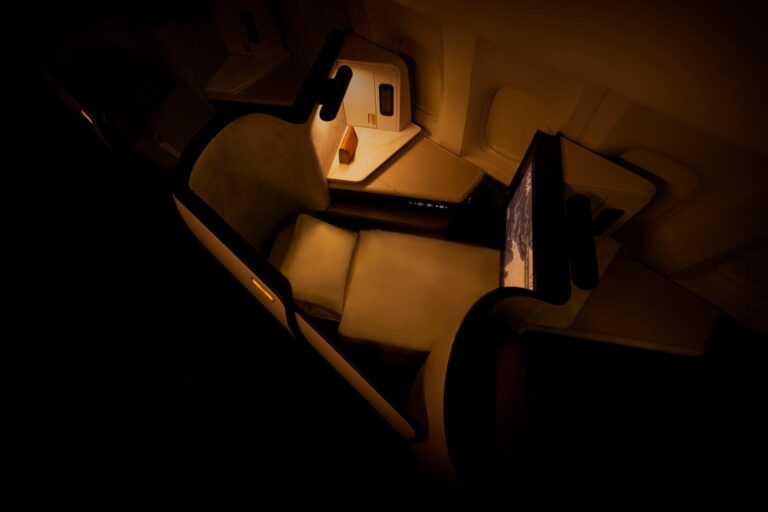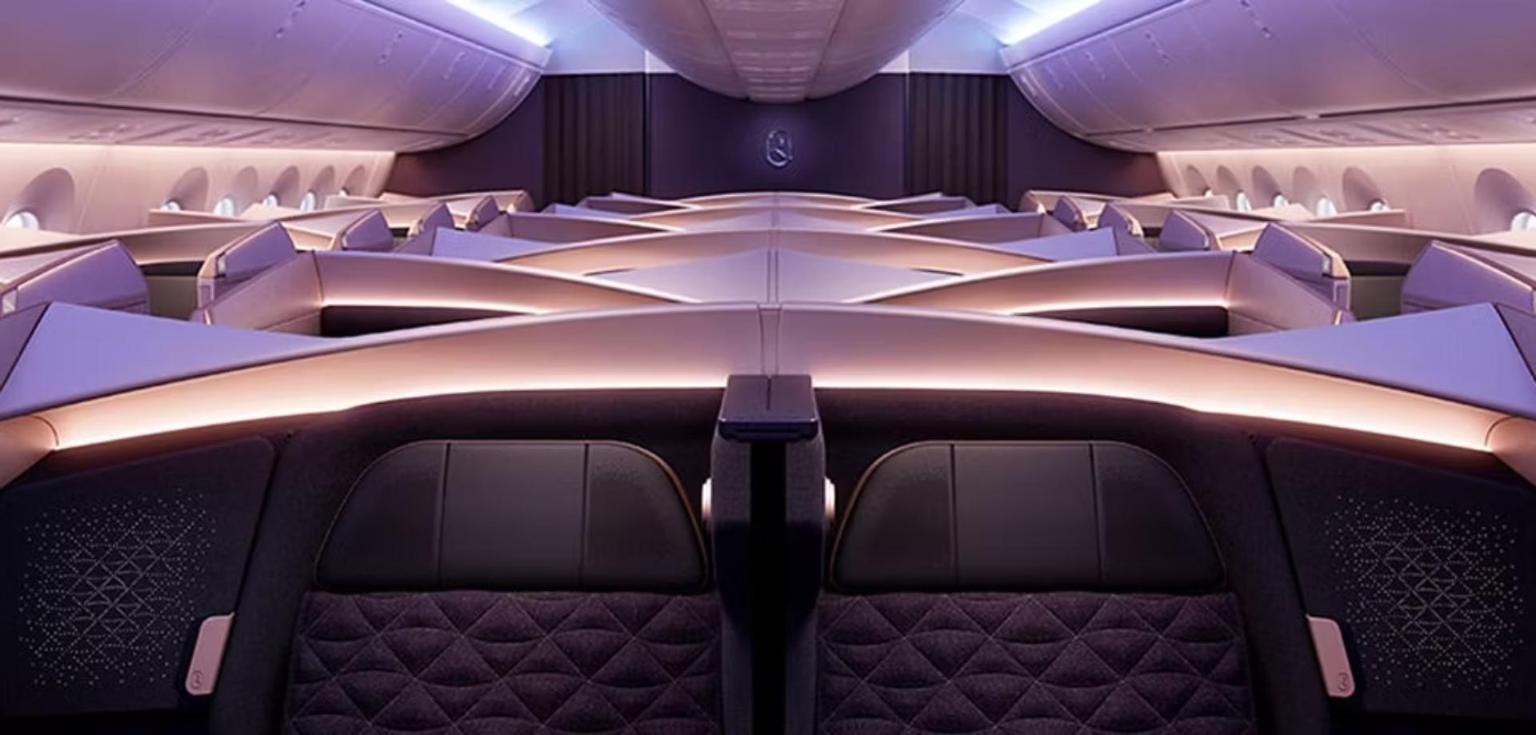
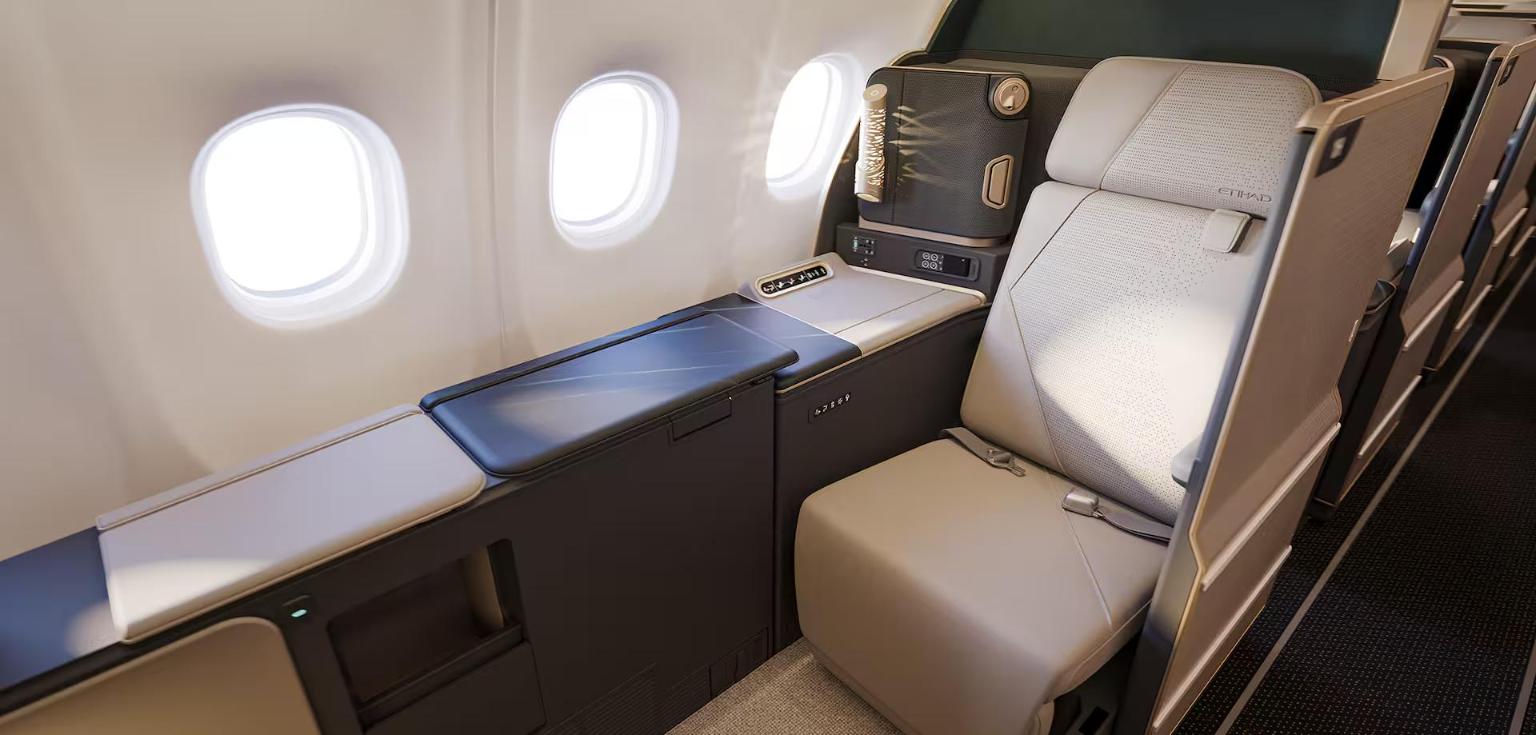
Etihad brought a mock-up of The Residence, its A380 flagship, to Arabian Travel Market, and it still wasn’t the most interesting thing on the stand. That honor goes to the Etihad A330neo, a twin-aisle aircraft the airline will fly on regional and medium-haul routes across Europe, Asia and the Middle East, and on which it is fitting First Class. There will be four suites, each with a closing door, room for a companion to join you for dinner, a 32-inch screen and a personal powder station. Most airlines stop at business class on flights of this length.
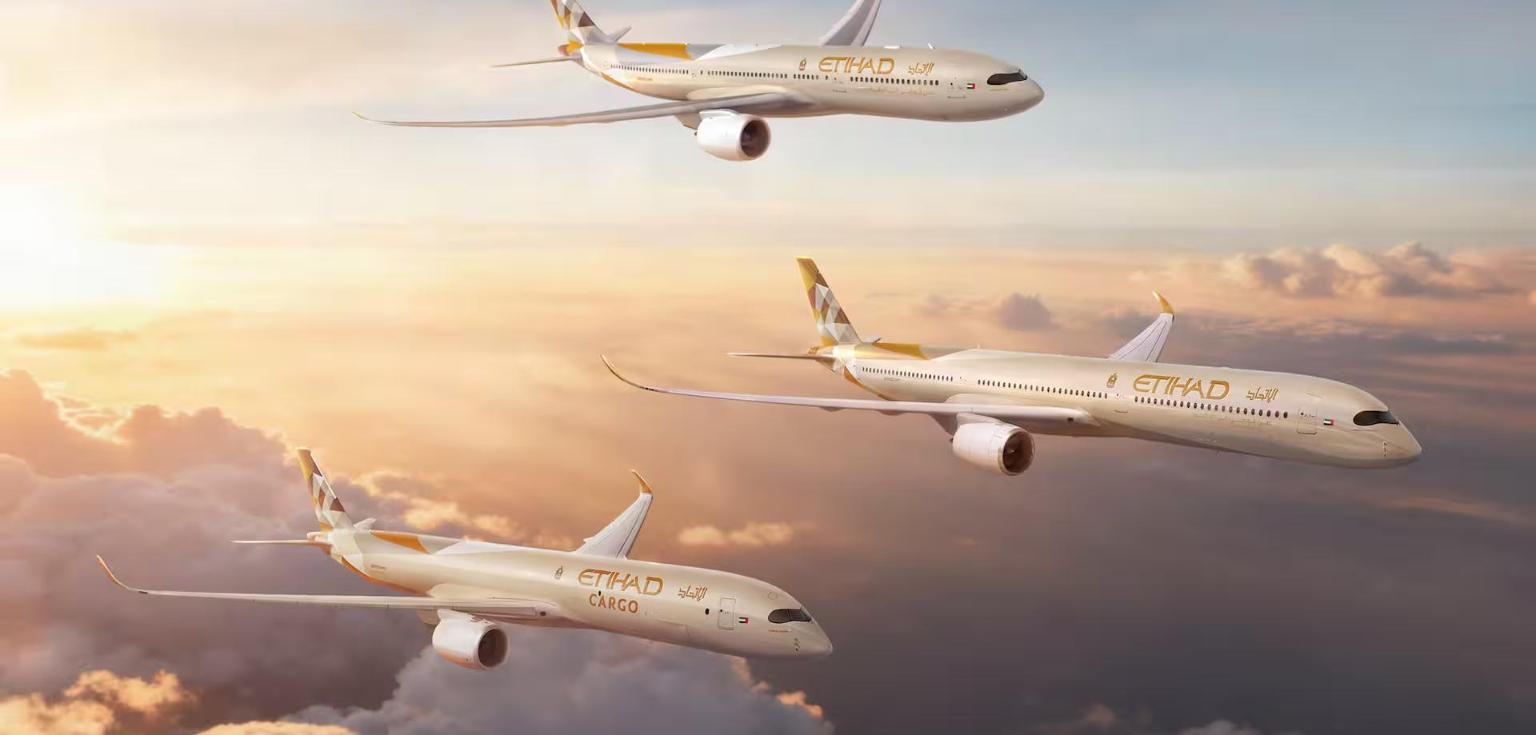
Etihad announced the new cabins on 14 September 2026 as part of Beyond Borders, its name for a product and service program that runs from the lounge to the seat. Behind it sit US$20 billion of investment and a plan to increase the number of First seats across the fleet. Fifteen A330s will join from September 2027, with 24 lie-flat Business seats with sliding doors behind the First cabin. While many airlines have been trimming First or keeping it for their longest flights, Etihad is going the other way.
Etihad A330neo: Key Facts
- Announced: 14 September 2026, Abu Dhabi, Etihad official news release; the cabins made their world debut at Arabian Travel Market (ATM)
- Program: Beyond Borders, to be extended across the fleet through new aircraft and retrofits, and to lounges, dining, amenities, wellbeing and connectivity
- Aircraft: Airbus A330, three cabins (the headline calls it the A330neo; the body of the release says “Airbus A330”)
- Fleet: 15 aircraft joining over five years, entering service from September 2027
- Routes: none named; Etihad says the aircraft will support regional and medium-haul markets on “high-demand routes across Europe, Asia and the Middle East”
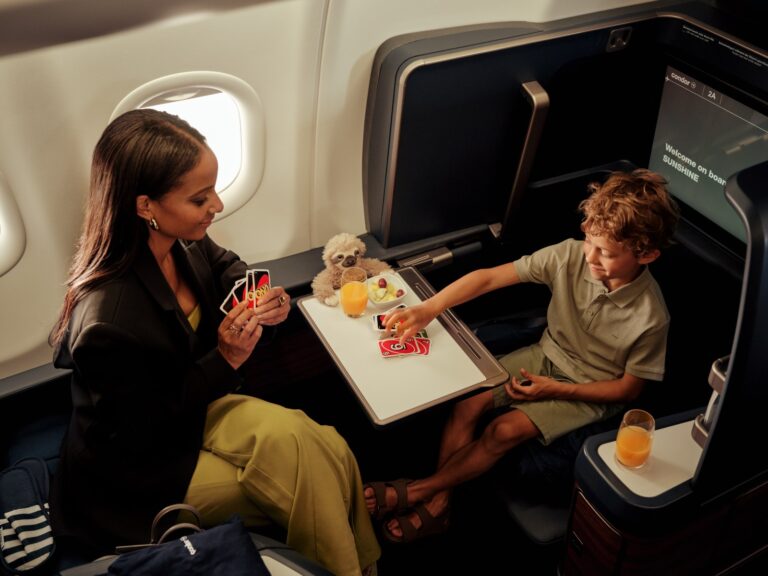
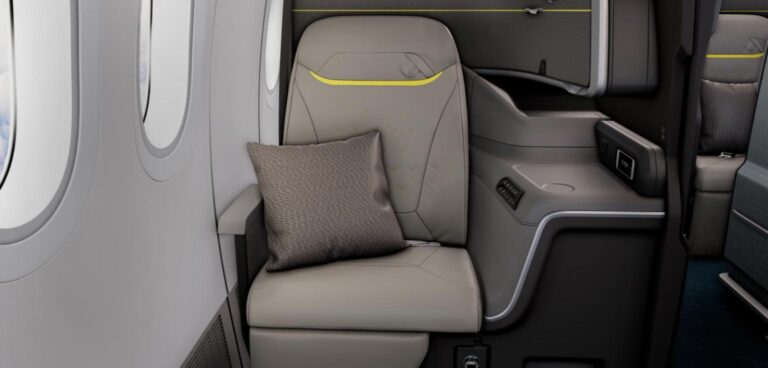
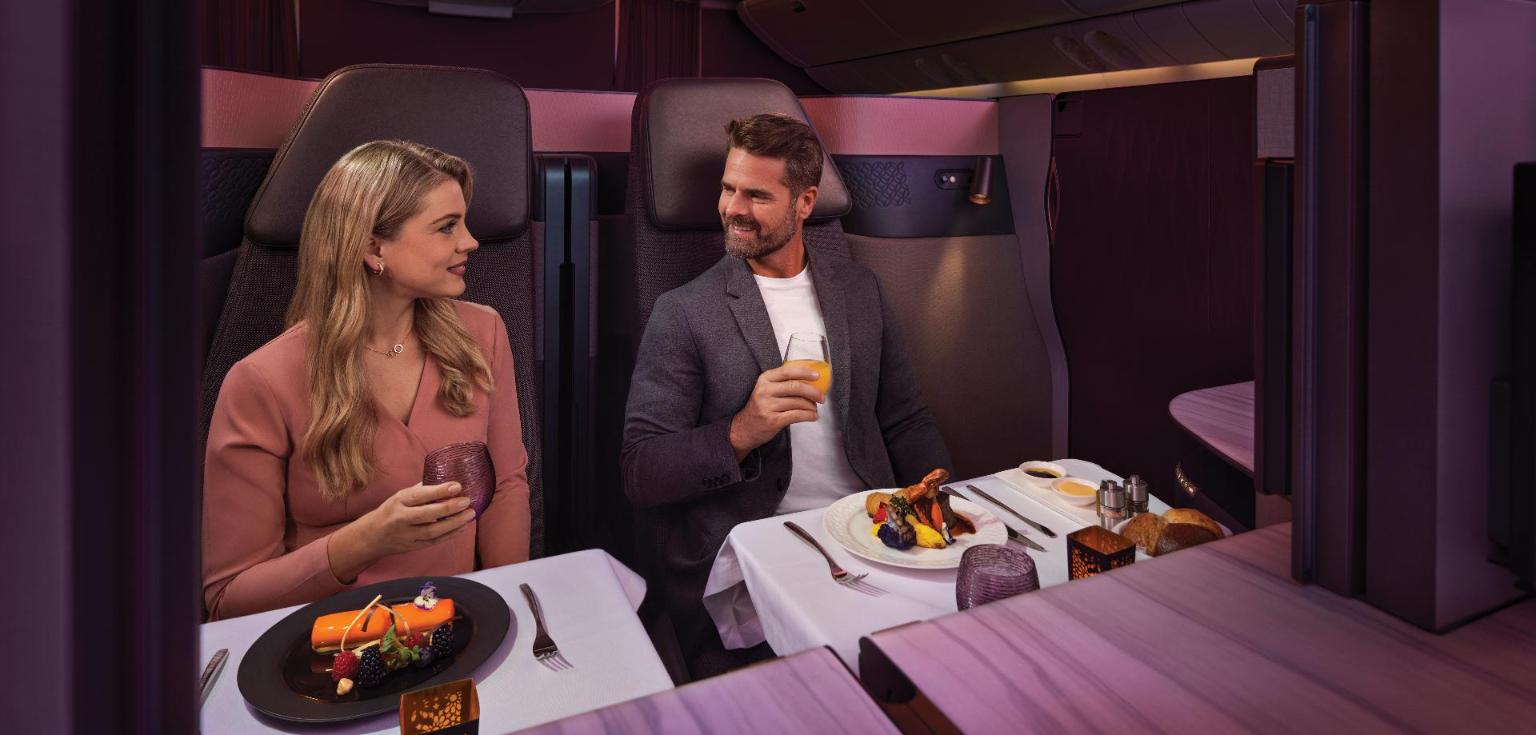
- First: four suites in an intimate cabin, each with a closing door and space for a companion to dine or socialize; 32-inch screen, wireless charging, dedicated compartments and personal stowage, and a personal powder station stocked with premium amenities to take away
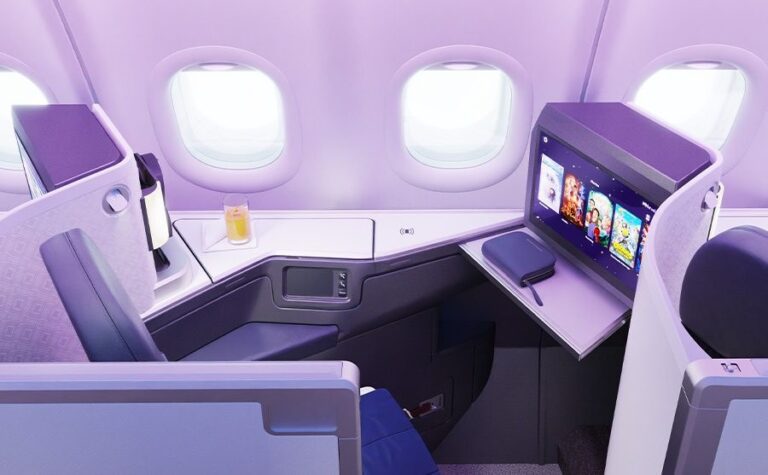
- Business: 24 fully lie-flat seats, all forward-facing, each with direct aisle access and a sliding door; 17.3-inch screen, wireless and wired charging, a large table and dedicated personal stowage
- Economy: 252 seats with 13.3-inch 4K touchscreens; an Extra Legroom section of 32 seats with four inches of extra pitch
- Investment: US$20 billion in new aircraft and customer experience, including a US$1 billion fleet retrofit program; more First seats across the fleet over the next five years
- Quote: Antonoaldo Neves, Chief Executive Officer of Etihad Airways: “We are also doubling down on First, bringing an exceptional First experience to our new A330 and increasing the number of First seats across our fleet over the coming years.”
- Fares: not yet on sale; see below
Why First Class on a Medium-Haul Widebody Matters
First Class has long been a long-haul product. Airlines put it on their flagship widebodies and their longest routes, and on a flight of a few hours the best seat you can usually buy is business class. Etihad has already broken that pattern once. Its A321LR carries First suites and fully lie-flat Business on a single-aisle aircraft, and Antonoaldo Neves, Chief Executive Officer of Etihad Airways, says it worked: “The A321LR showed what is possible when we challenge the expected model of narrowbody flying. We brought First and fully lie-flat Business to a single-aisle aircraft and guests have responded strongly to the experience it offers, actively choosing to fly on the aircraft.”
The A330 takes the idea to a twin-aisle. Four suites make a very small cabin, and that is the appeal: on a medium-haul flight you are awake most of the way, so what matters is privacy, a proper meal and a crew that isn’t stretched. The closing door covers the first. The space for a companion to dine covers the second, and it is the detail I like most: on a daytime flight, being able to share lunch with the person you are traveling with, face to face, turns First into a table for two. The personal powder station suits shorter flights too: when you land after a few hours, you often go straight to a meeting or dinner, and a place to freshen up with amenities you can keep is genuinely useful.
Business Class is where most premium travelers will sit. All 24 seats are fully lie-flat, forward-facing, with direct aisle access and a sliding door. Doors have become the mark of a top-tier business cabin, and Etihad is putting them on medium-haul rather than saving them for long-haul. The design details include sconce lighting based on the Etihad facet pattern, perforated genuine leather and First seat numbers projected onto the floor, and Etihad promises shared touchpoints between its lounges and the aircraft.
What We Still Don’t Know (and When You Can Fly It)
The first caveat is about the name. Etihad’s headline calls the aircraft the A330neo, the newer generation of the A330, but the body of the release only says “Airbus A330”. I use A330neo, as Etihad’s headline does.
The bigger gap is routes. Etihad has said only that the aircraft will serve “high-demand routes across Europe, Asia and the Middle East”. No cities have been named, and no first delivery date has been given. The release also doesn’t name a seat manufacturer or design partner, and it gives no seat layout, bed length, seat width or Wi-Fi details. Neves says more will follow: “Over the coming months, we will continue to reveal how Beyond Borders is shaping the future Etihad experience, both on the ground and in the air.” As of mid-November 2026, Etihad’s newsroom has published nothing new on the A330.
The aircraft enters service from September 2027, and 15 of them will arrive over five years. That is a gradual ramp-up, so in the early months there will likely be only a few aircraft flying and the cabin will appear on a handful of routes at most. Until Etihad schedules it on specific flights, you cannot book it.
If you want Etihad First on a shorter flight before the A330 arrives, look at the A321LR, which already carries First suites and lie-flat Business on routes such as Etihad’s new Luxembourg service. When the A330 routes are published, check the aircraft type in the booking path before you pay, and again before you fly, because airlines swap aircraft, especially while a new type enters service.
How It Compares With the Competition
The first comparison is with Etihad itself. The Etihad A321LR First Class proved the airline could sell First on a single-aisle aircraft, and the A330 takes the same idea to a twin-aisle with doors in Business as well. At the top of the range, the A380 First Apartments and The Residence remain Etihad’s signature products. The A330 isn’t trying to match them; it takes a smaller, private First to routes the A380 doesn’t fly.
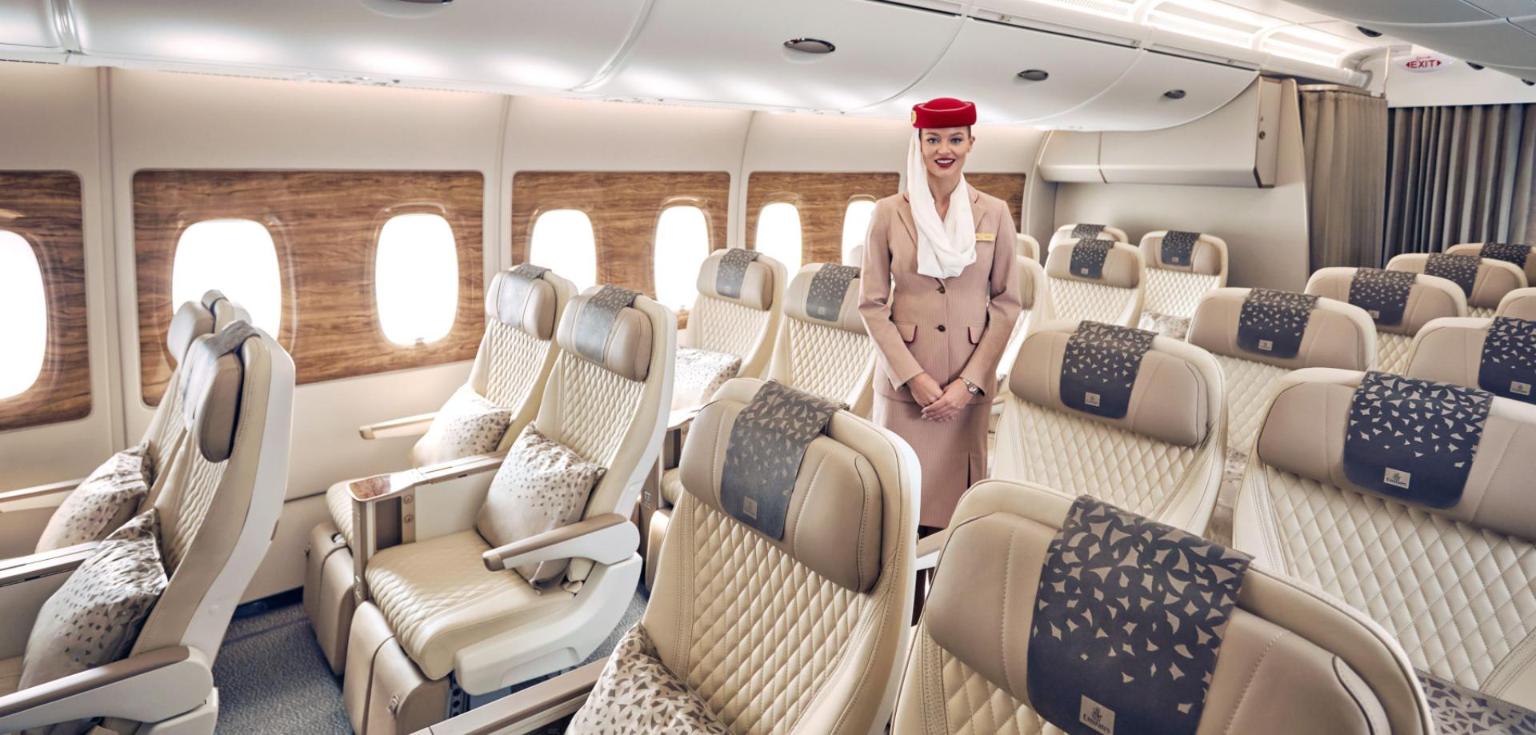
Among the Gulf carriers, Qatar Airways has taken a different approach to shorter flights. Its A321LR business suites have doors, and Qsuite is still the benchmark for Gulf business class. But Qatar’s answer on these routes is a business suite with a door, not First. Etihad’s A330 offers both: a business seat with a sliding door and, ahead of it, four First suites. Emirates, for its part, has put its newest aircraft, the A350, into service with no First Class at all.
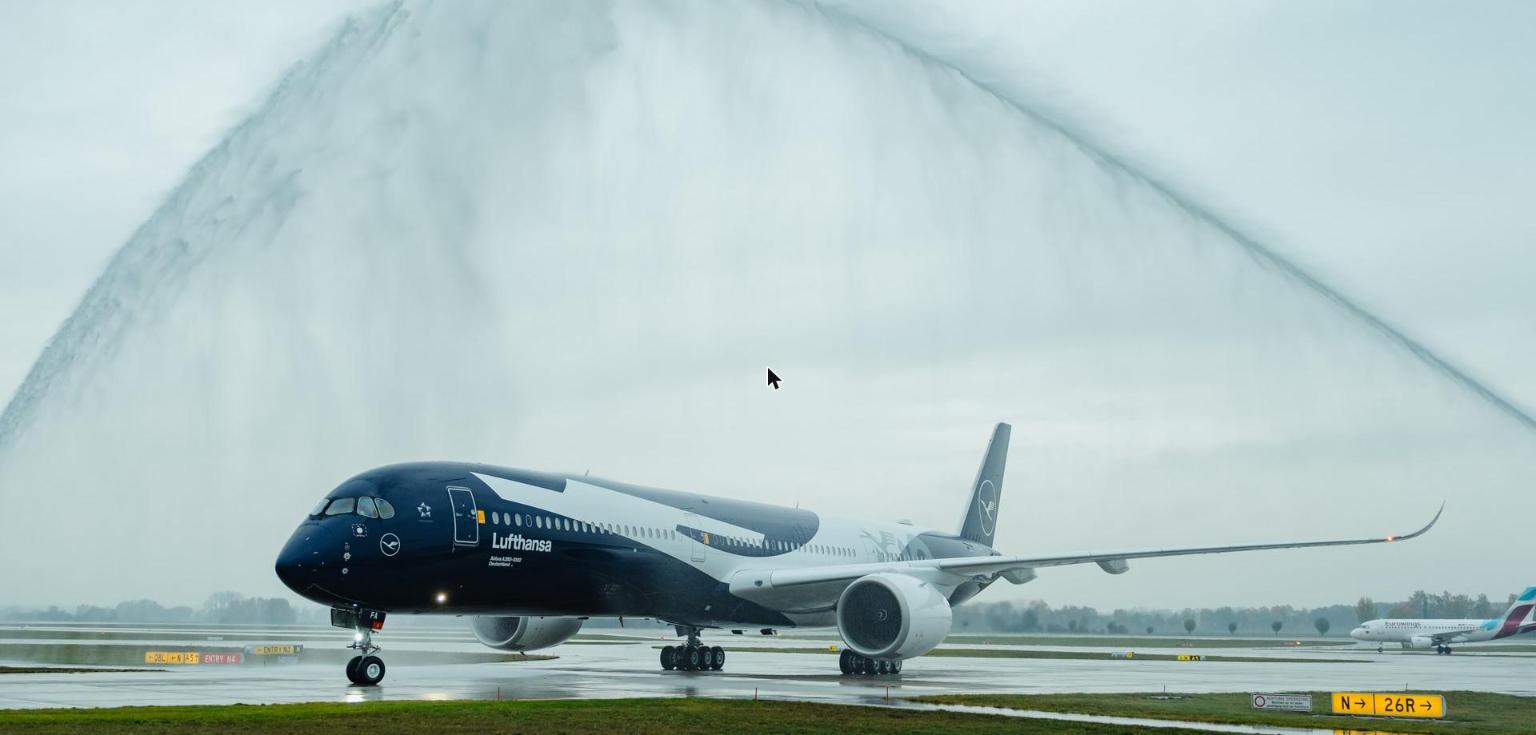
In Europe, Lufthansa’s Allegris First is the closest product in spirit, a small cabin of private suites, but Lufthansa uses it on long-haul routes such as Singapore, not on medium-haul flights.
The most useful comparison is with other A330neo cabins. Virgin Atlantic’s Retreat Suite is the most spacious seat on its A330neo, but it sits within Upper Class, Virgin’s business cabin. Condor’s Prime Seat gives extra space within its A330neo business class, and Malaysia Airlines’ A330neo business class flies regional routes such as Bali, the kind of market Etihad is targeting. All three top out at business class. None of the A330neo cabins I have covered sells First, which is why Etihad’s plan stands out.
Etihad, First-Hand Context
I haven’t flown the new A330 cabins, which won’t enter service until September 2027 at the earliest. This is a preview based on Etihad’s announcement, not a review. My reference point with the airline is Etihad’s 787-9 business class, with a stopover in Abu Dhabi, which I rated 3.5 out of 5. I marked it down for the wine.
That is what I will be watching. Etihad’s release mentions food, wellbeing and service but gives no detail. In a four-suite First cabin built around dining with a companion, the meal and the wine list are as much the product as the seat. In my Emirates vs Etihad business class comparison I looked at how the two airlines’ premium cabins measure up, and a medium-haul First with doors in Business would give Etihad a clear hardware advantage on the routes where it flies. Whether it survives contact with the catering I can only judge from the seat.
How Much Does It Cost?
There are no fares yet. The A330 is not on sale, Etihad hasn’t named its routes, and the earliest it can enter service is September 2027. Once scheduled, it will be sold on Etihad’s own website and through booking sites, priced dynamically by date. To give you a feel for Etihad business class fares now, the links below search Abu Dhabi–Paris in business class. That is an example route only; Etihad has not said Paris will get the A330.
Flight prices do move between platforms. The same business class seat on the same date is not always the same price on the airline’s own site, Trip.com and Expedia: point-of-sale currency, consolidator fares and what is bundled into the ticket can shift the fare by a few percent — and occasionally by much more on premium cabins. So before I pay I run the same dates through Aviasales, which scans dozens of booking sites at once, then check Trip.com (often the sharpest on long-haul fares) and Expedia (strongest when you add a hotel to the same booking). One caveat: a ticket bought through a booking site is changed or refunded through that site, not the airline, so read the fare rules before you buy.
The Etihad A330neo is one of the boldest premium-cabin announcements of the year, but until Etihad names routes and dates it is a cabin to watch, not one to book.
Photos © Etihad Airways
This preview is based on official announcements — I haven’t flown the Etihad A330neo yet. Read more about how I review or visit my Work With Me page.
This article contains affiliate links. If you book through them, I may earn a small commission at no extra cost to you. Read my full disclosure policy.