Short answer: Yes, in most of the country, with two conditions. The Indonesia forest fires of 2026 are the worst since 2015, but the smoke is not spread evenly: because of the wind, some dive regions are barely affected while others are shut. As of mid-October, Bali, Komodo, Lombok, Lembeh, the Togeans and Halmahera are fine to dive; the Banda Sea and Raja Ampat are grey but divable; Kaimana, Triton Bay and Derawan are off the table, with Kaimana’s airport closed.
I was at sea from Ambon to Raja Ampat for ten days in October under that smoke, and the diving was some of the best I have had in years. The conditions are: build one or two buffer days around every regional flight, and check the air quality for your exact dates on IQAir before you go. Below is the region-by-region picture, how I read it, and what the fires did and did not do to a liveaboard trip.
Why Trust This Guide
I have dived Indonesia for more than twenty years and run This Is Luxury Travel, a travel magazine that covers liveaboards and dive resorts across the archipelago. This October I was on a ten-night liveaboard from Ambon across the Banda Sea when the boat was turned around because Kaimana airport had closed; the trip finished in Raja Ampat instead (my full Scubaspa Zen review covers the boat itself). Everything below about the water, the sky and the flights is first-hand from that trip. The air-quality numbers are from IQAir, pulled on the date shown, and I explain their limits.
What Is Happening: El Niño and the 2026 Fire Season
Indonesia burns every dry season, mostly on the peat and forest land of Sumatra and Kalimantan, and in a strong El Niño year the dry season runs long and hot and the fires get out of hand. 2026 is that year. The El Niño that began in June is forecast to be among the strongest on record and to last into early 2027, and by September Indonesia’s fire emissions were on course to match 2015, the worst fire year this century.
This time the burning has also reached the east: Papua has burned more than it ever has, and we saw fires in the Moluccas with our own eyes, including one on the uninhabited island of Suanggi in the Banda Sea.
The smoke goes where the wind takes it. That is the single most useful thing to understand, because it is why Bali can read “moderate” on the same morning that a town in Central Kalimantan reads “hazardous”. In the south-east monsoon the smoke from Sumatra and Kalimantan tends to drift north and west, towards Singapore and Malaysia, while eastern Indonesia’s fires push haze over Papua and the Moluccas. A dive region’s air depends on what is upwind of it that week, not on how far it is from the nearest fire.
Sources: Carbon Brief, “El Niño: Indonesia fire emissions in 2026 on track to match record for this century”, 11 September 2026; Jakarta Post, “Weather agency warns El Niño in Indonesia to last through early 2027”, 30 July 2026; Antara, “Haze delays flights from Jayapura to Papua destinations”, 12 October 2026.
Where You Can Still Dive: Region by Region
The table maps every major Indonesian dive region to the nearest IQAir station, with the reading on the morning of 18 October 2026 (US AQI, satellite-model estimates, 07:00–10:00 local). The verdict is my reading of the numbers plus what I saw at sea. Two cautions. First, there is no monitor at most dive sites; the nearest town is a proxy, and the air over open water is almost always cleaner than the port. Second, readings swing by 50 to 100 points within a day as the wind shifts: Sorong read 178 at ten in the morning while its own forecast for the day was 102. Use the table for the pattern, and IQAir for your dates.
| Dive region | Nearest IQAir station | AQI, 18 Oct 2026 | Verdict |
|---|---|---|---|
| Bali (Tulamben, Nusa Penida, Menjangan) | Denpasar / Ubud | 82 / 86 | Go |
| Komodo | Labuan Bajo | 69 | Go |
| Lombok and the Gilis | Mataram | 62 | Go |
| Lembeh and Bunaken | Manado / Bitung | 61 / 63 | Go |
| Togean Islands | Gorontalo | 60 | Go |
| Halmahera | Ternate | 81 | Go |
| Cenderawasih Bay | Nabire / Manokwari | 83 / 84 | Go |
| Pulau Weh, Sumatra | Banda Aceh | 70 | Go |
| Wakatobi | Kendari | 103 | Caution |
| Selayar and South Sulawesi | Makassar | 106 | Caution |
| Banda Sea and Ambon | Ambon | 141 | Caution: grey, diveable |
| Raja Ampat | Sorong | 178 | Caution: bad in port, fine at sea |
| Triton Bay and Kaimana | Kaimana | 106 | No go: airport closed |
| Derawan and Maratua | Balikpapan | 153 | No go |
| Kalimantan interior | Palangkaraya | 1,190 | Hazardous |
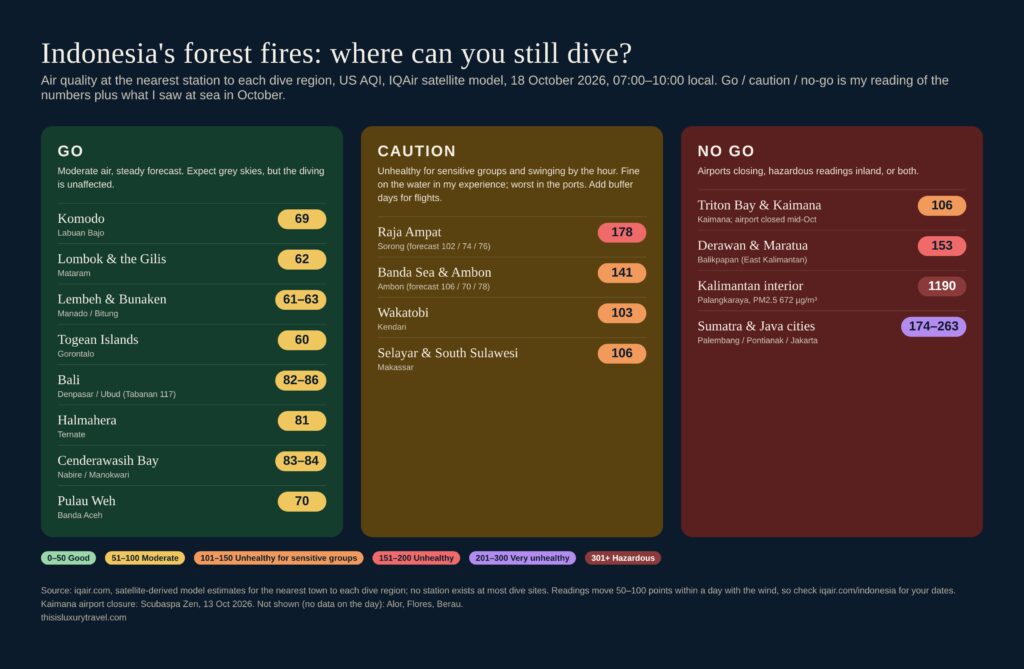
How to read the verdicts. “Go” means moderate air with a steady forecast: expect grey skies and flat light, but the diving is unaffected. “Caution” means unhealthy for sensitive groups and swinging by the hour; in my experience, the water is fine, and the port is the problem, and flights are the real risk. “No go” means an airport is closing or the inland readings are hazardous. Derawan is the one case where the numbers understate it: the nearest station reads “unhealthy”, but reports from Berau describe thick haze, and the interior of Kalimantan, 1,190 on the morning I checked, is the source of it. I would not book Derawan until the rains come.
Not in the table because their pages had no data on the day: Alor, Flores and Berau itself.
What the Fires Did to My Liveaboard Trip, and What They Did Not
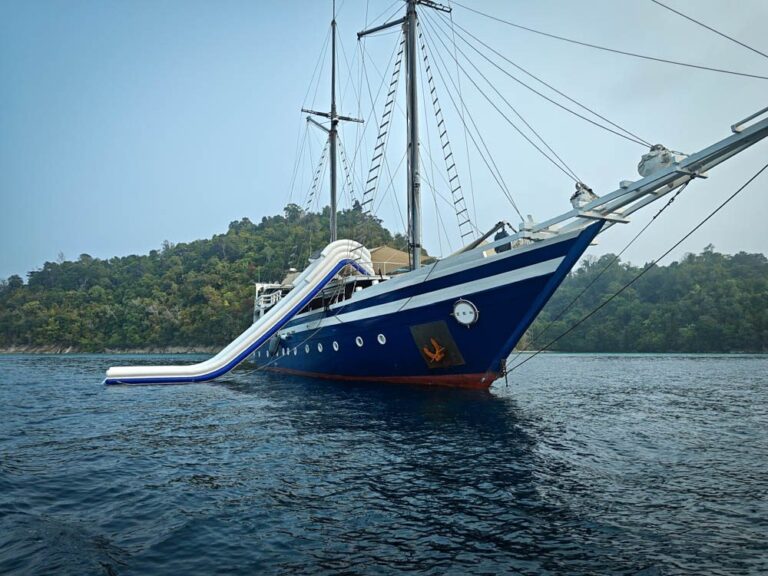
I sailed from Ambon on 8 October on a trip sold as Ambon to Kaimana via the Banda Sea and Triton Bay. From the first morning the sky was grey, every day, and we could smell the smoke at sea. At Pulau Kurkap, the closest we got to Kaimana, the smell was strong enough to notice at dinner. On the fifth day the boat was told that the fires had closed Kaimana airport, our disembarkation port, and that the air around Triton Bay was unhealthy. The cruise director turned the boat north, rebuilt the second half of the trip around Misool and Raja Ampat, and we disembarked in Sorong, where flights were still running. Nobody lost a dive day.
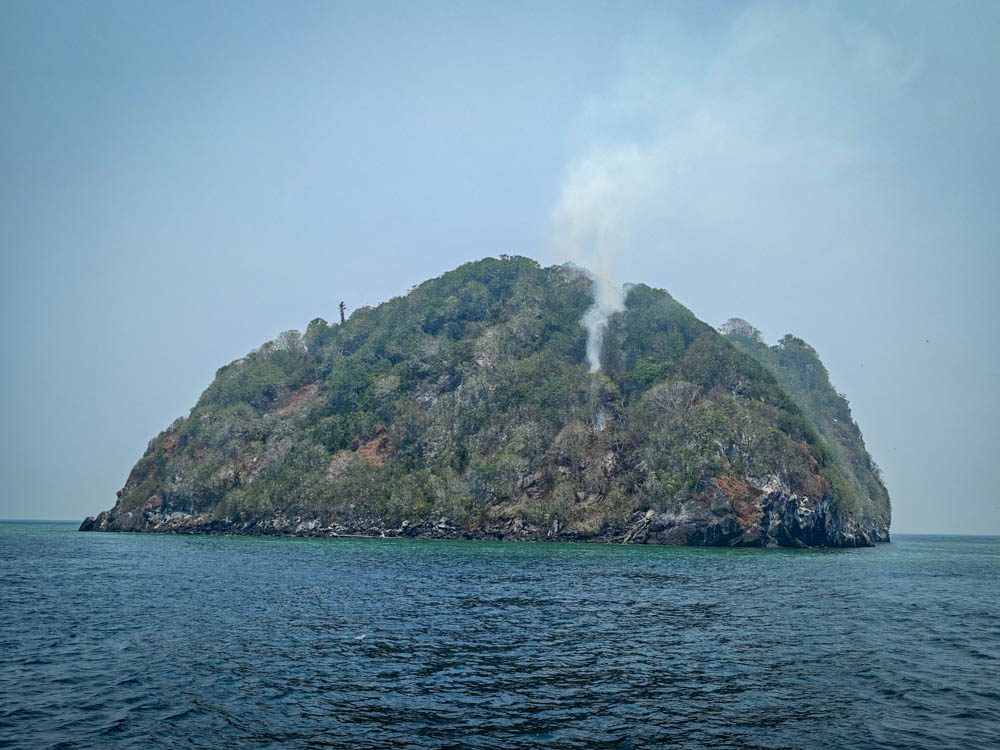
The haze over the Banda Sea and Misool, October 2026
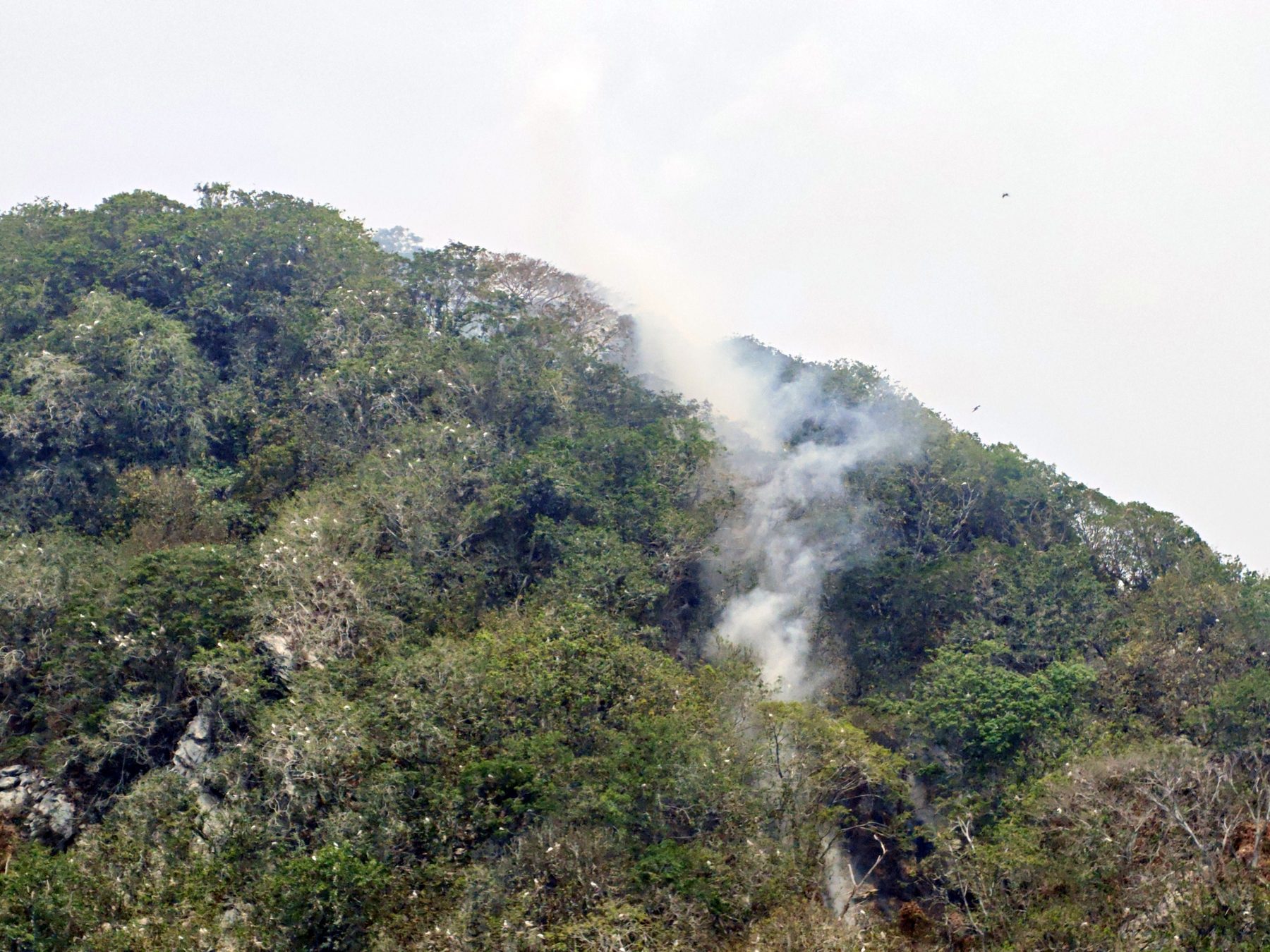
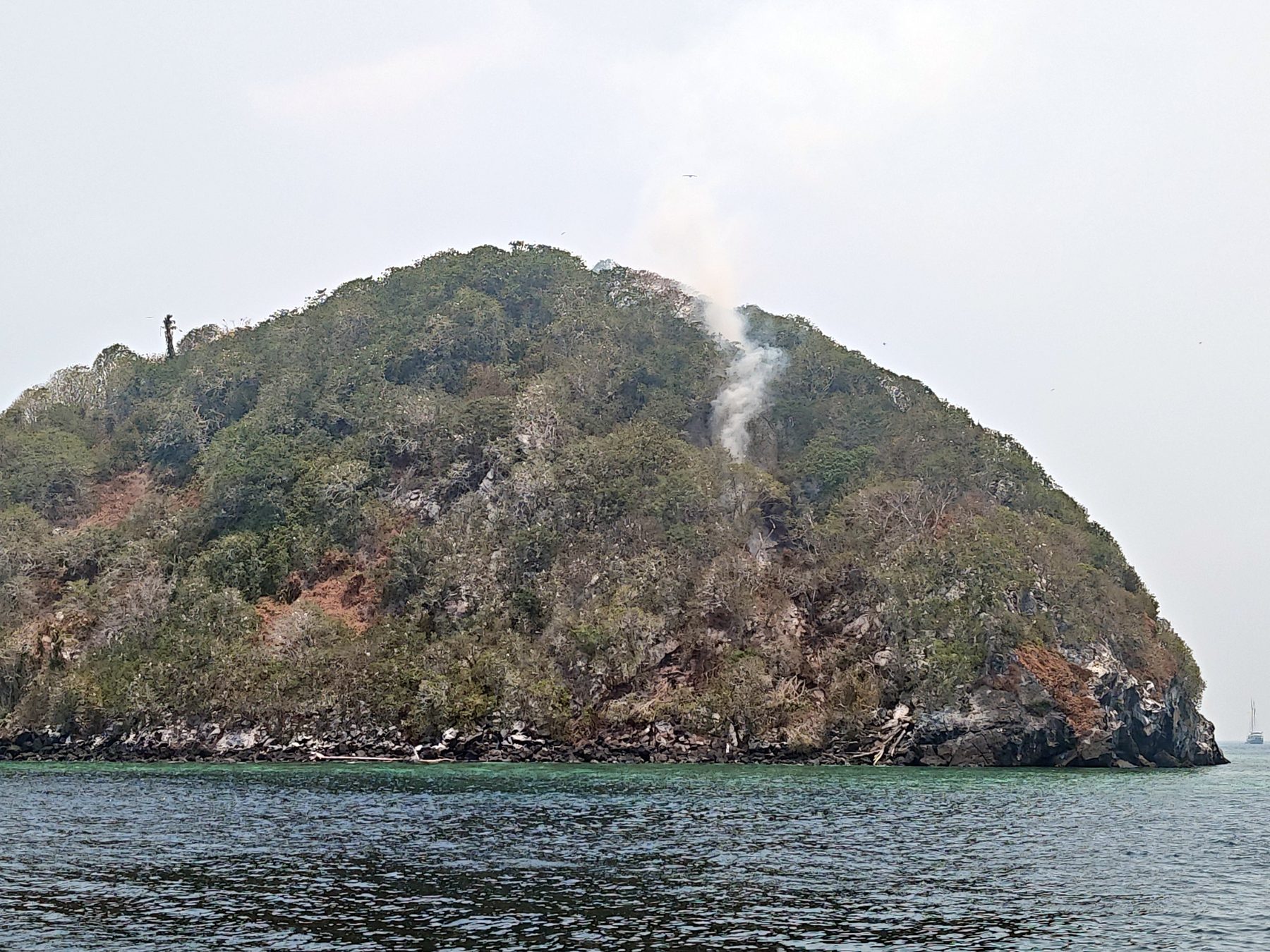
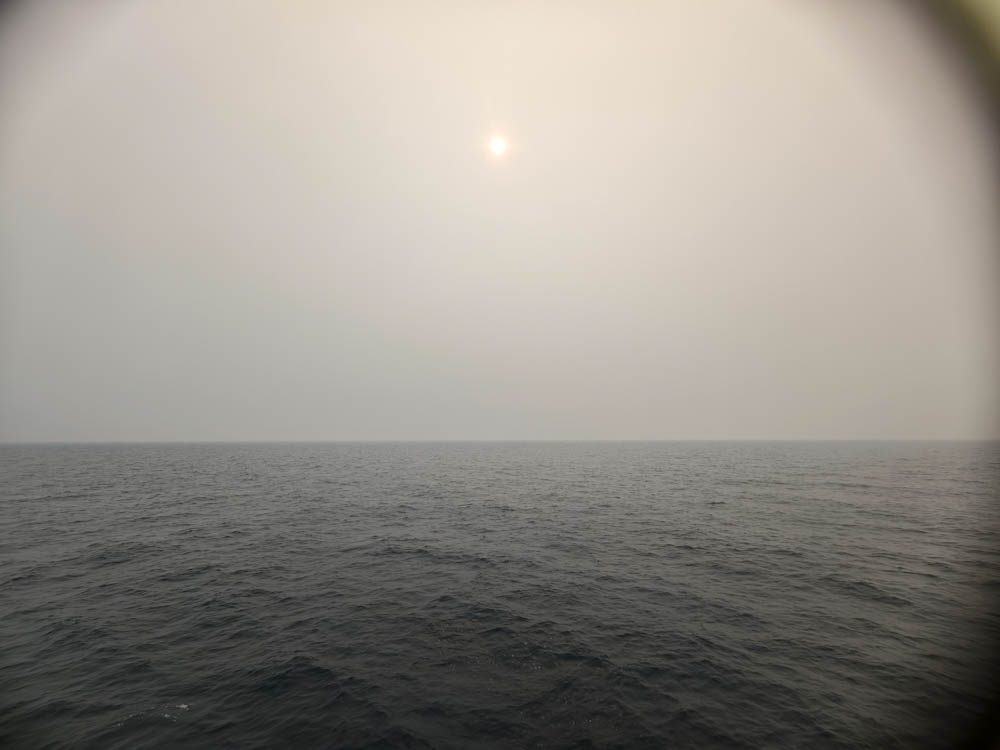
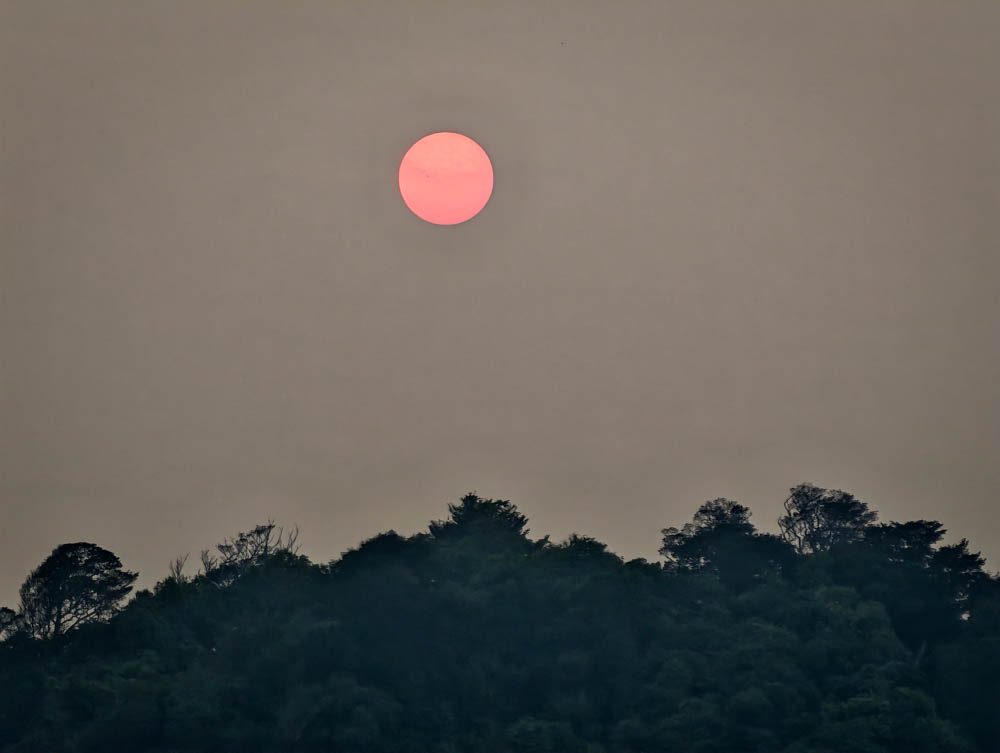
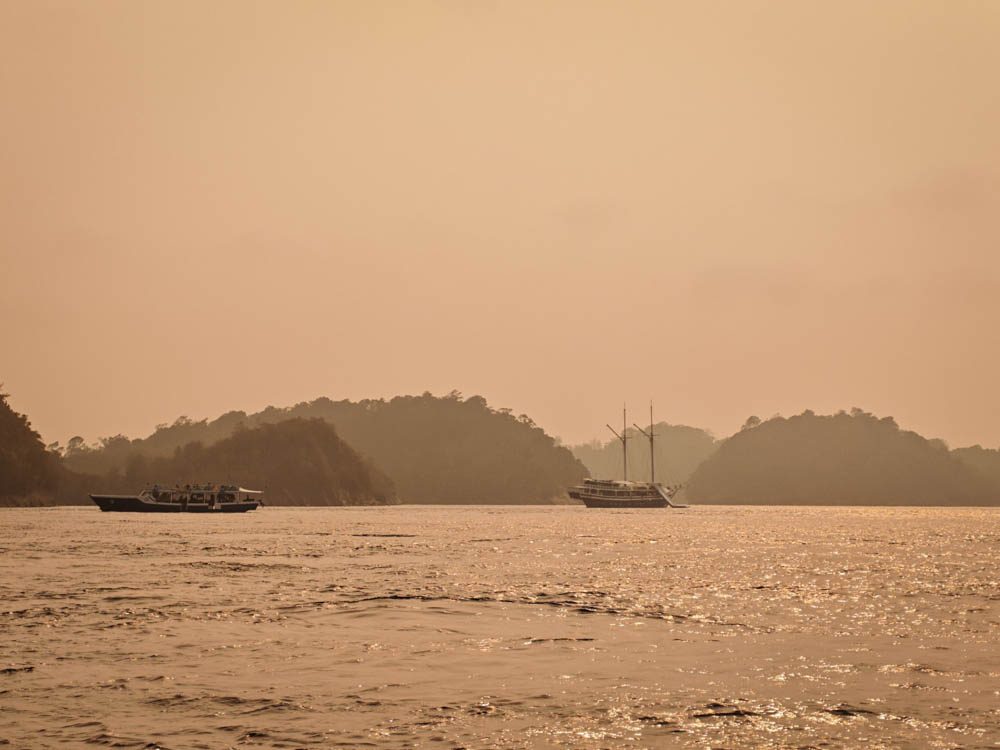
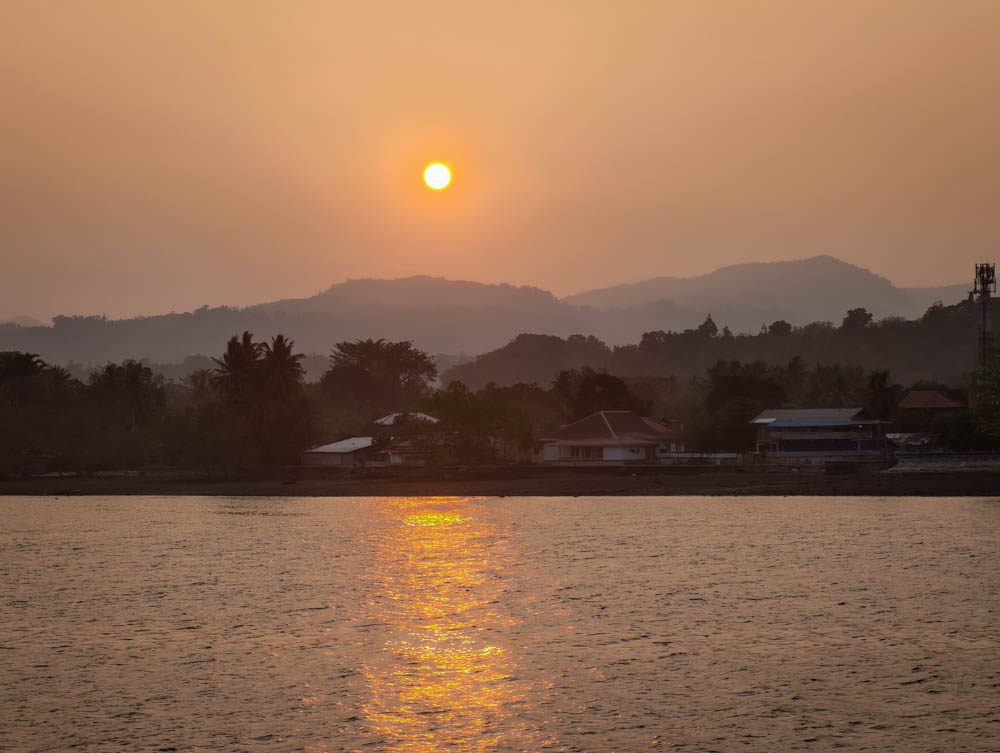
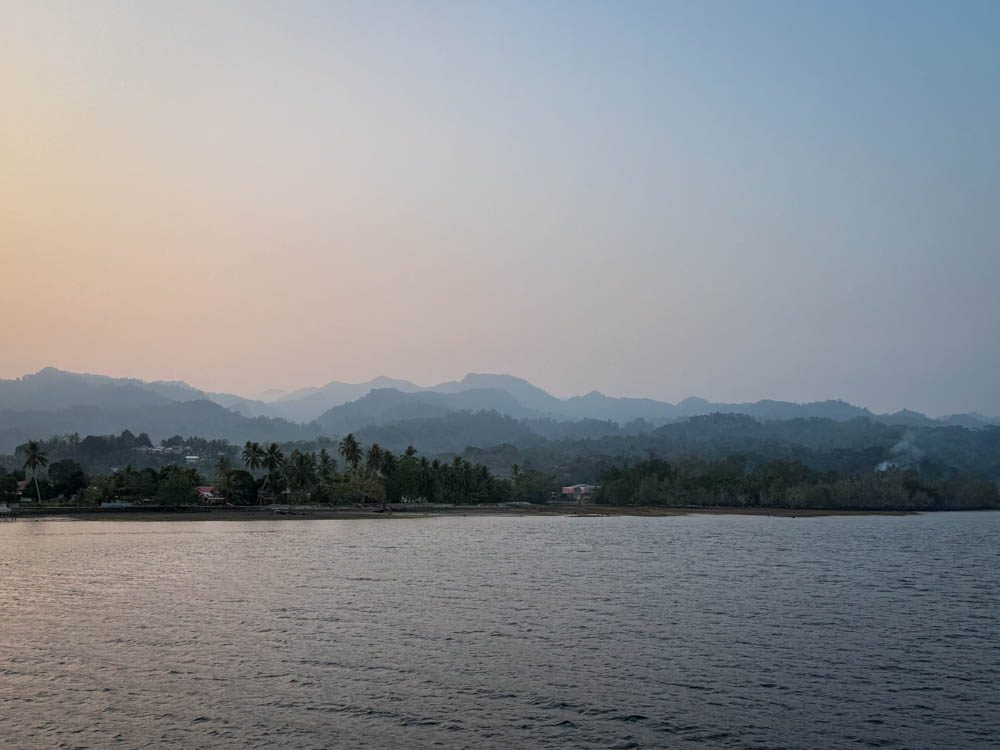
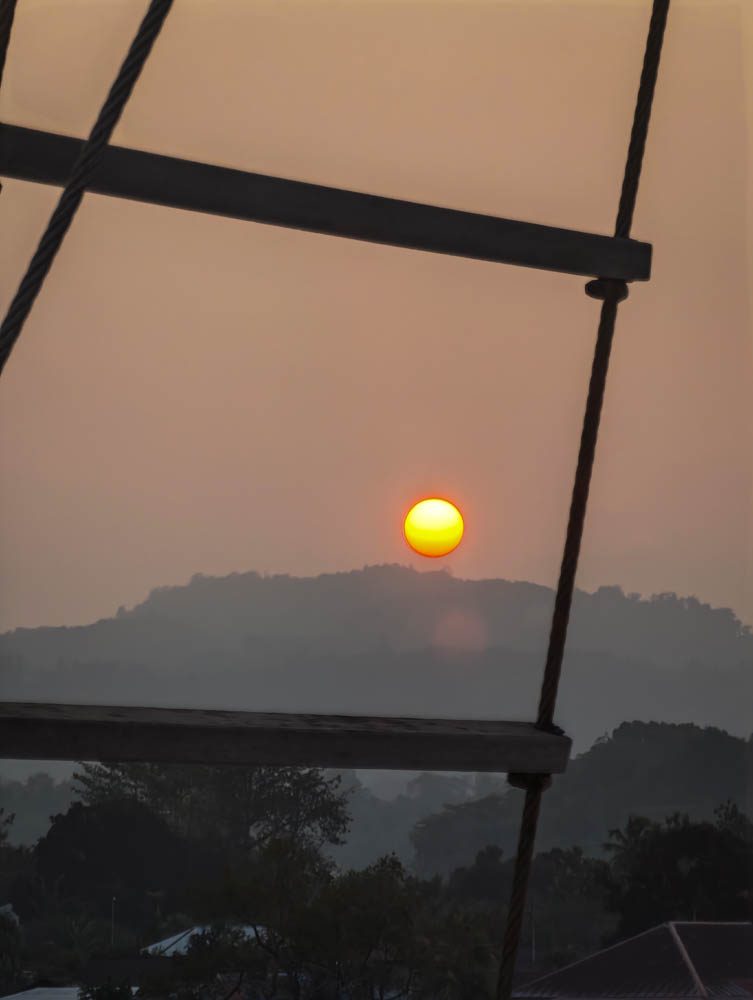
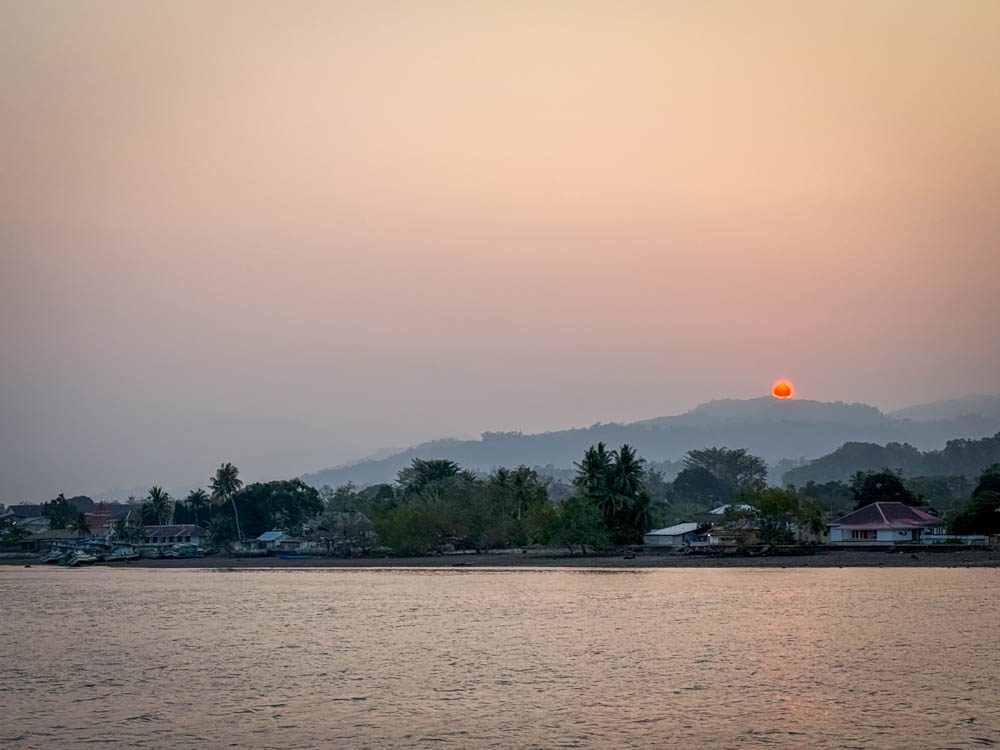
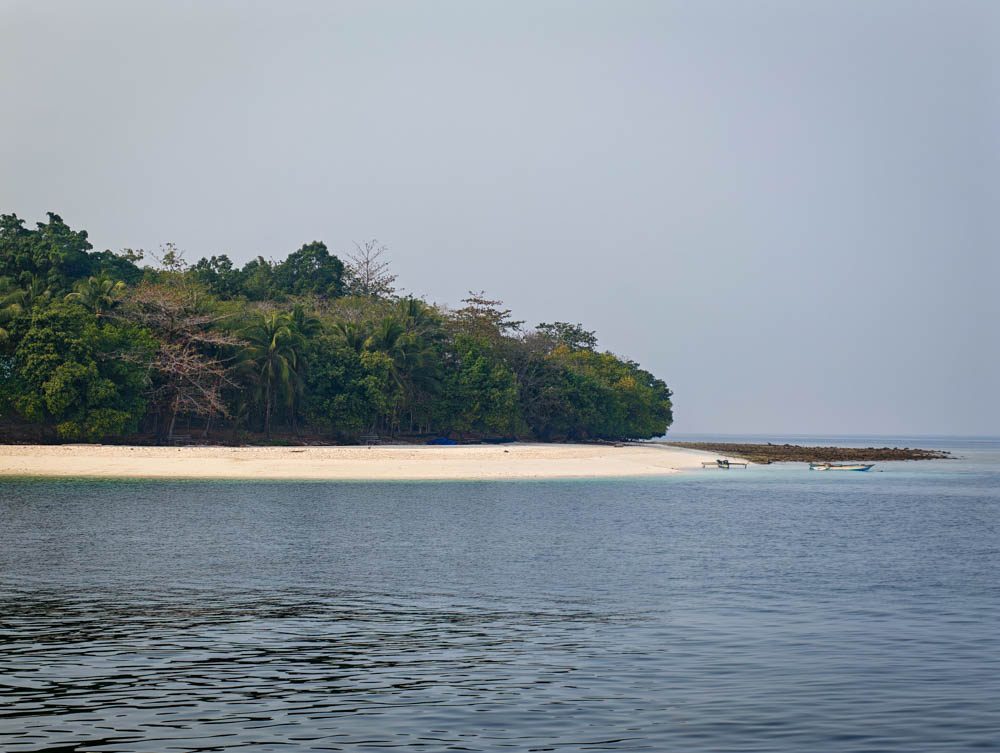
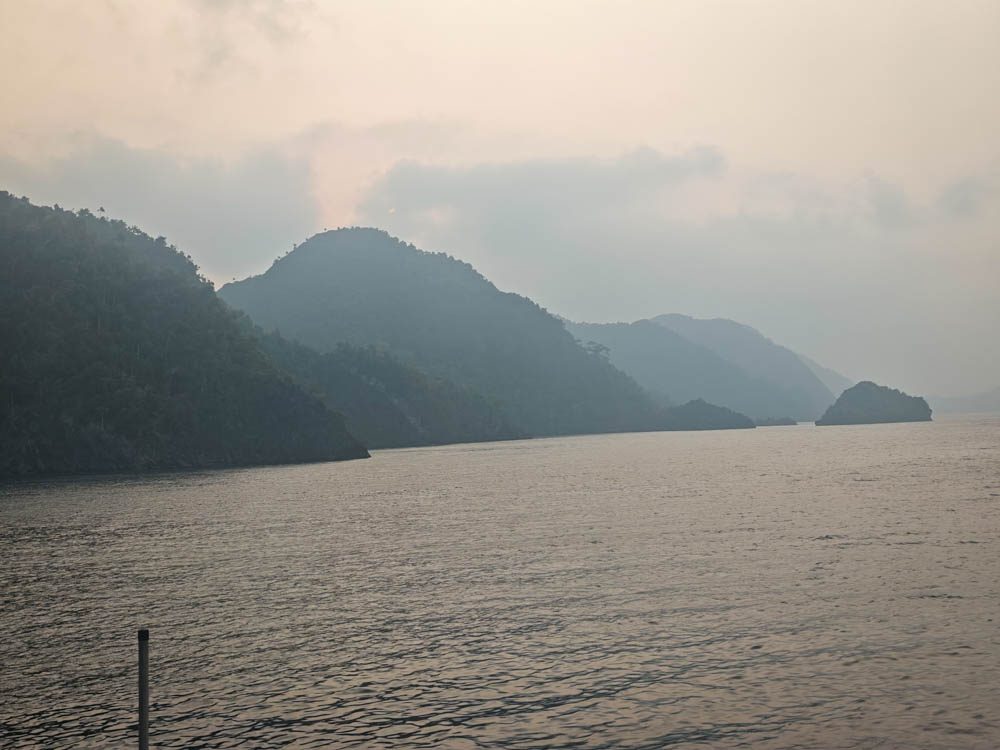
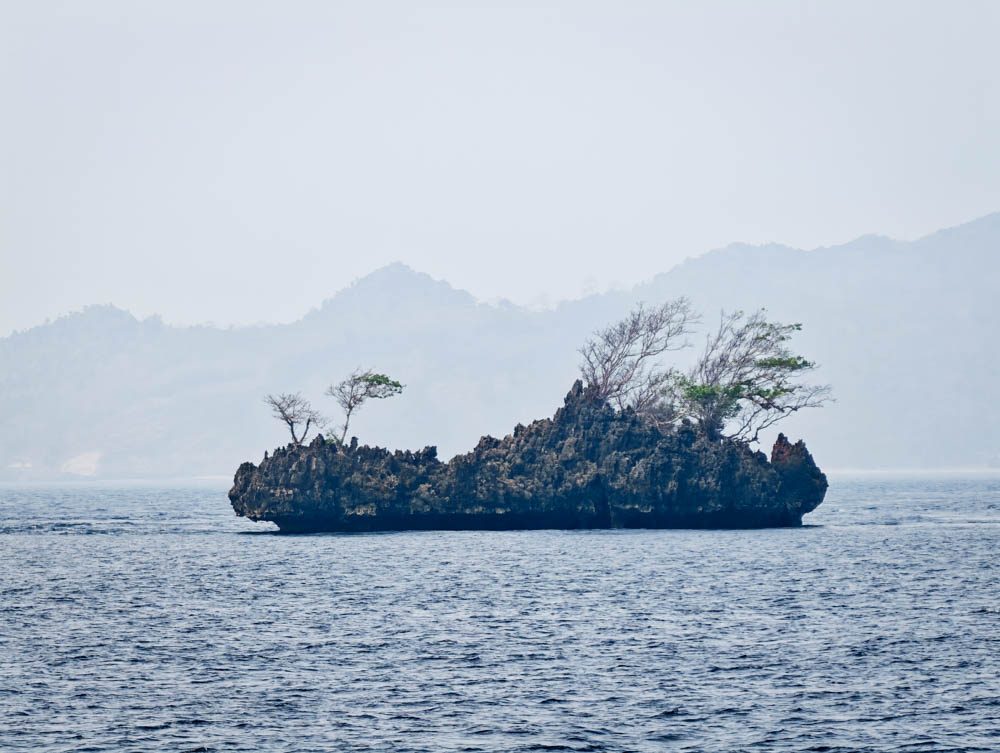
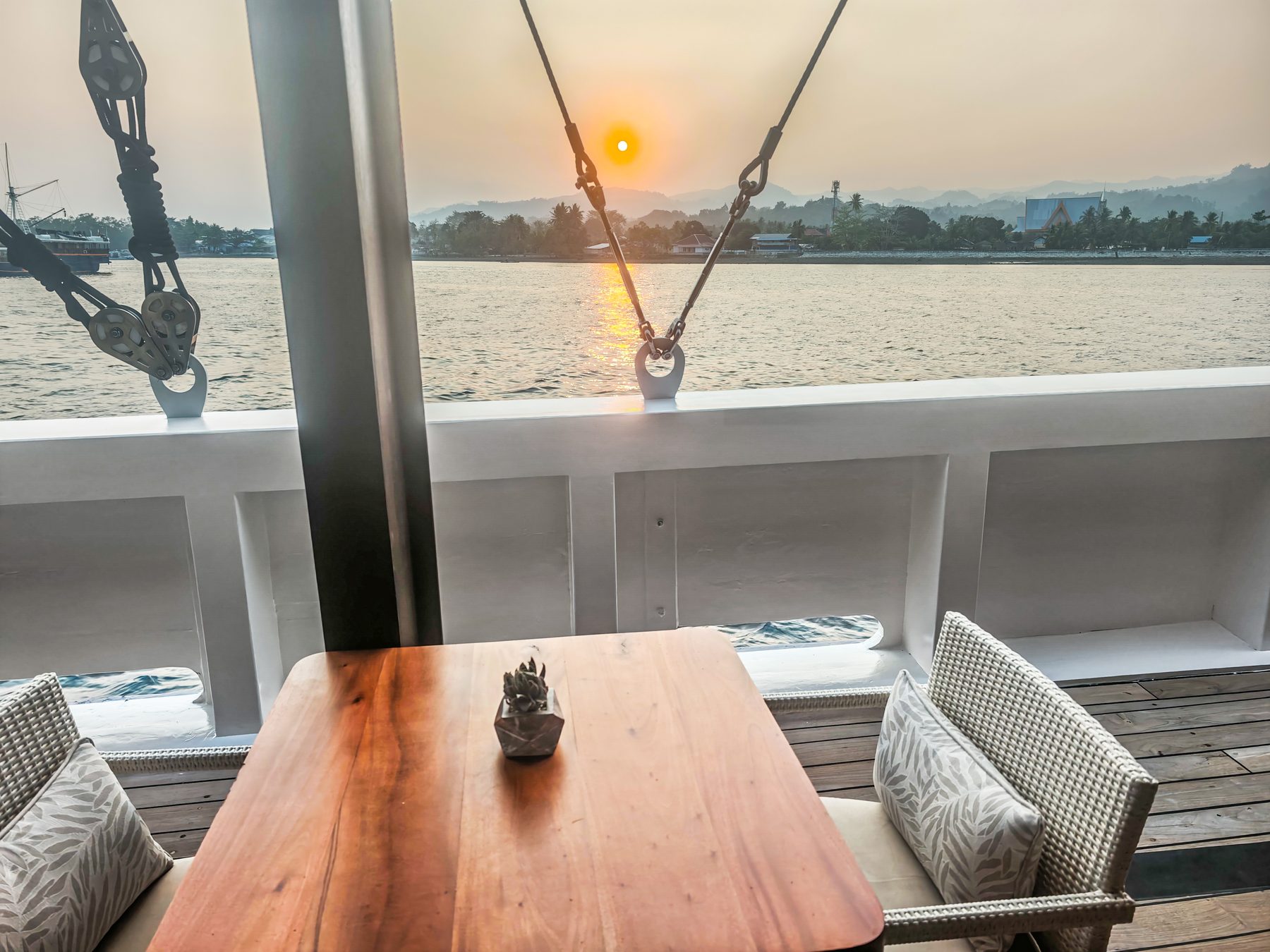
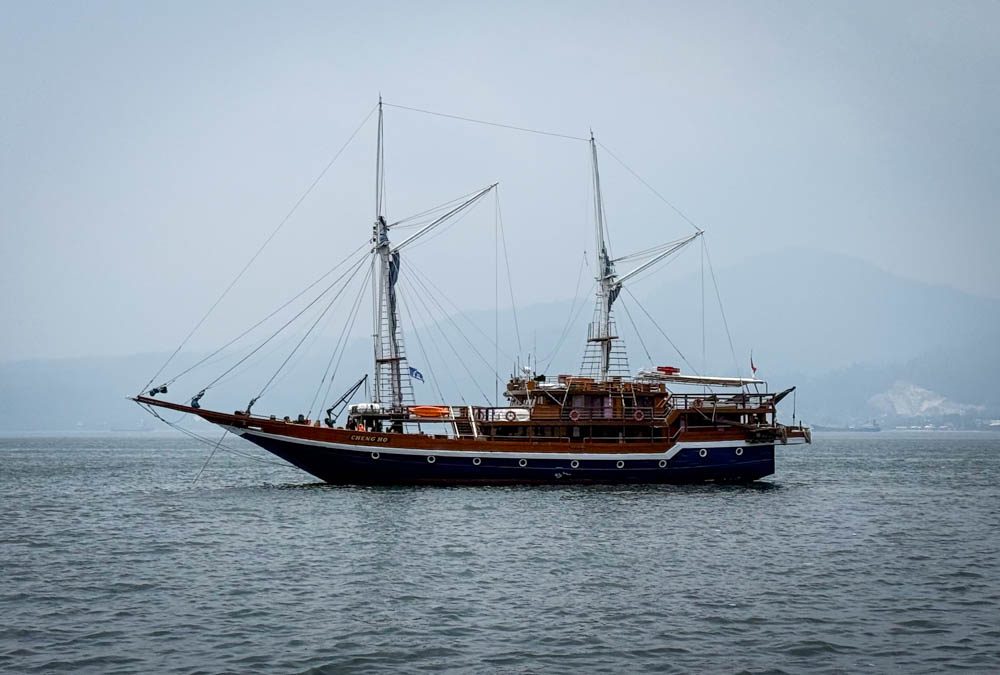
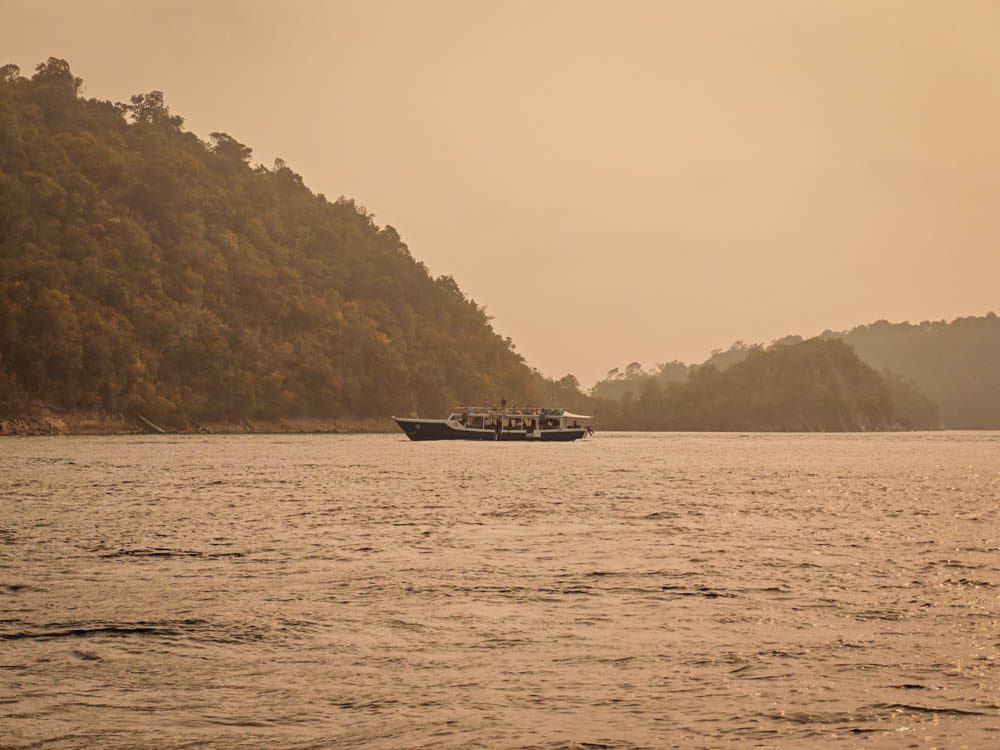
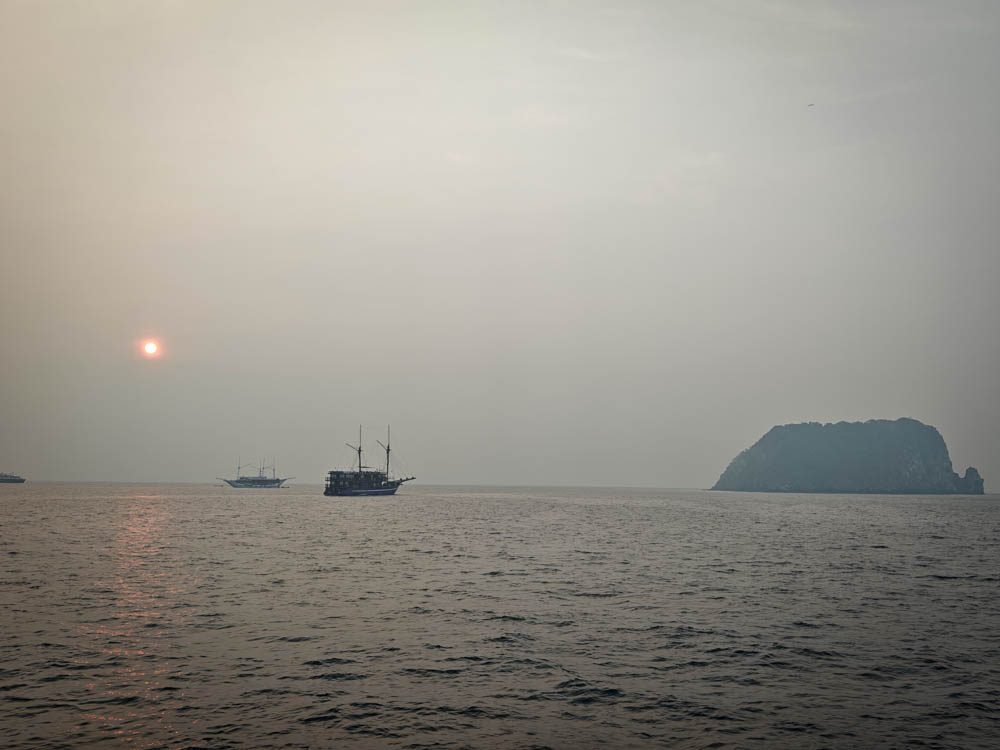
Here is what I want you to take from that. Above the water, the fires took something: the postcard was gone, the karst islands of Misool stood in flat grey light, and if you were there for the turquoise-and-blue photographs you would have been disappointed.
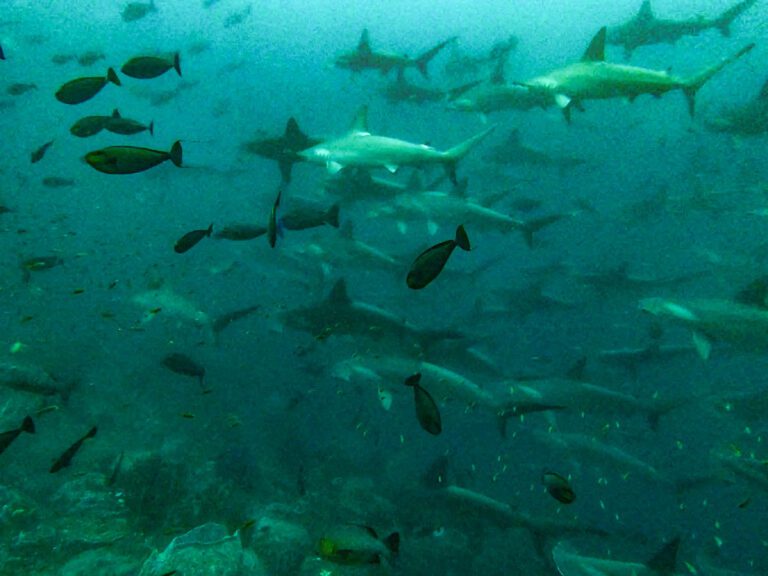
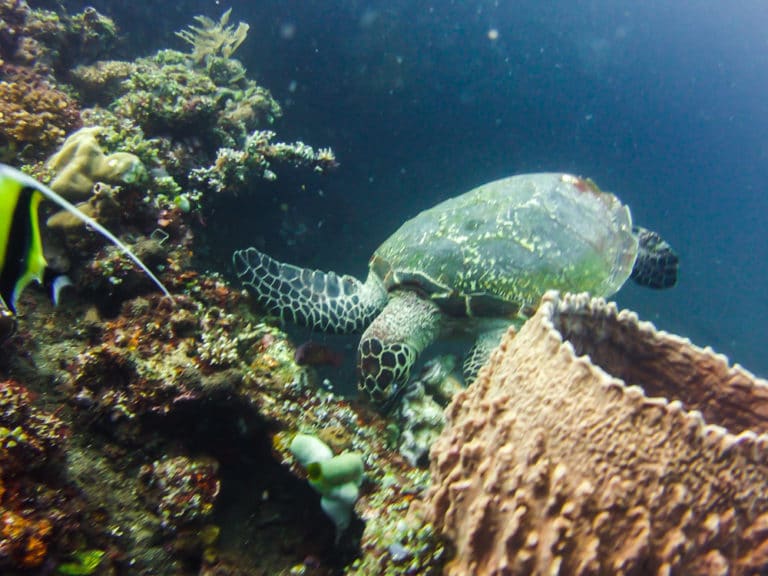
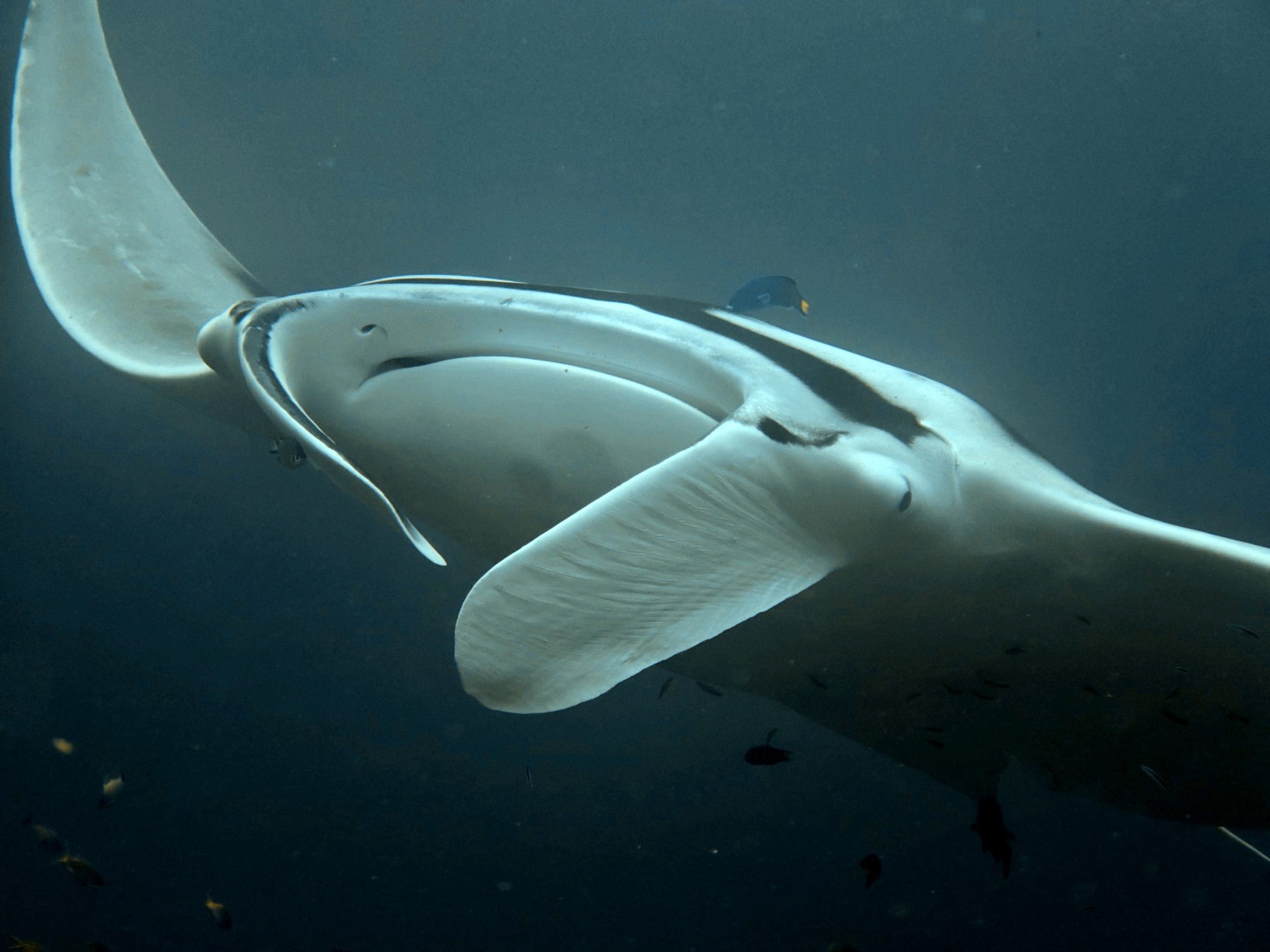
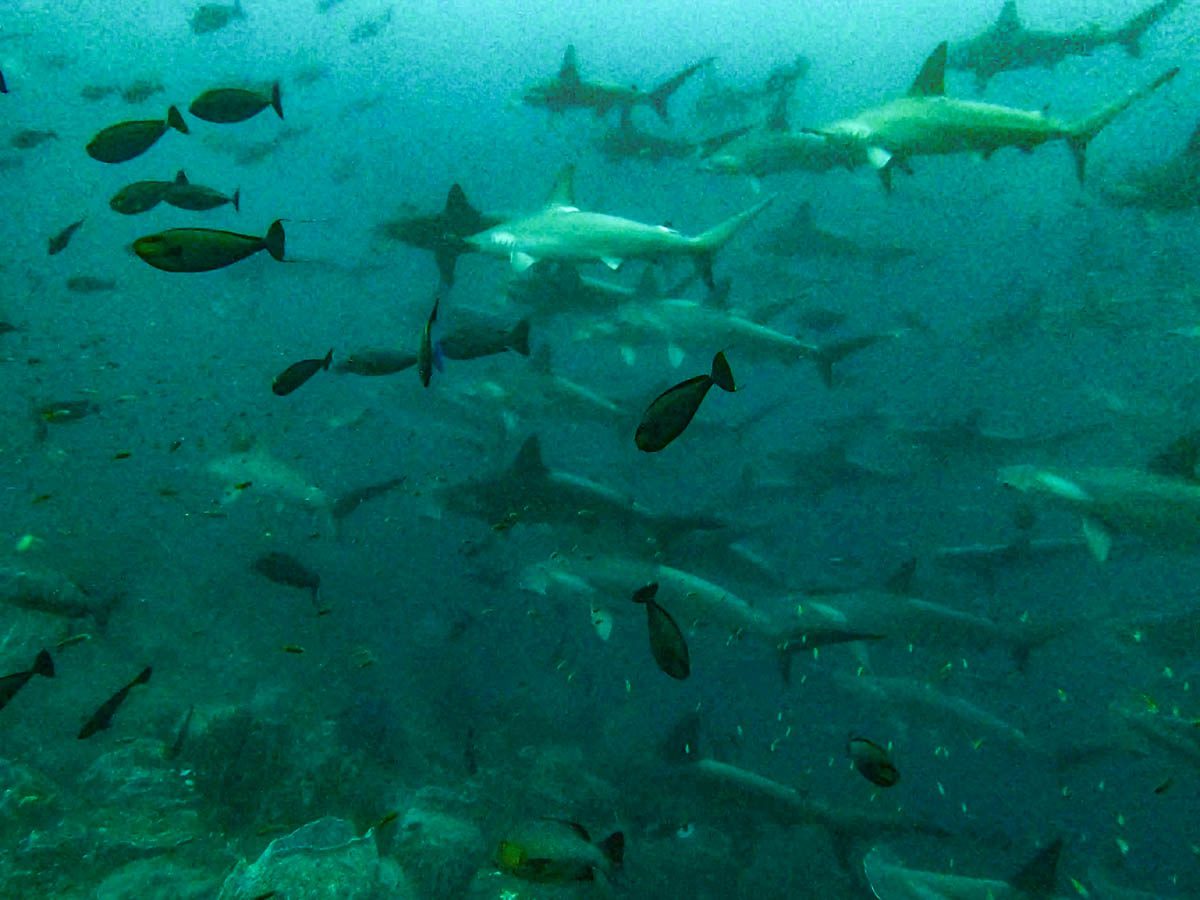
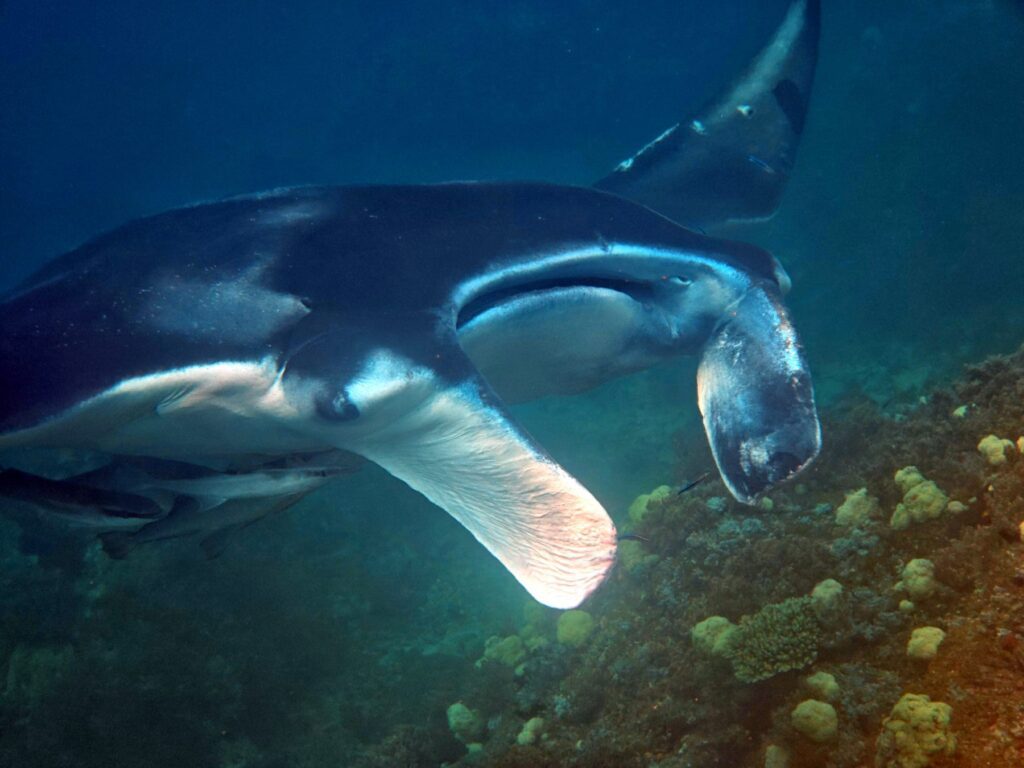
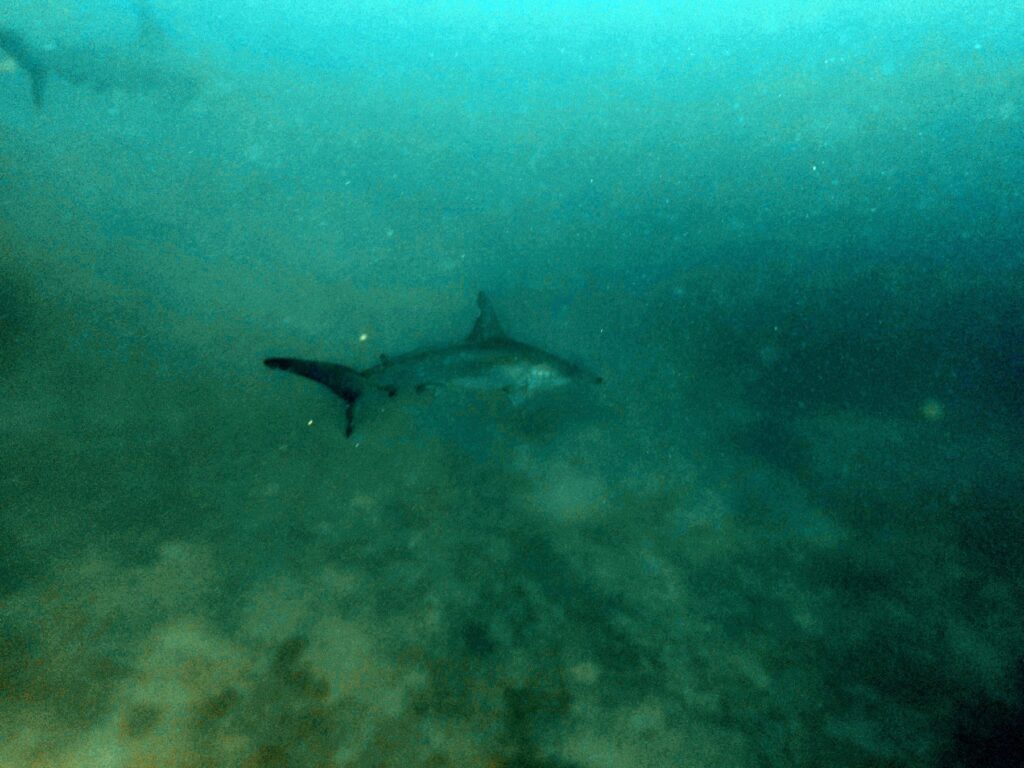
Below the water, they took nothing. There was still plenty of light for the corals, the visibility was better than usual for October, and we did not get a single drop of rain all week, which is unusual for Raja Ampat. Once we moved north into Raja Ampat the air improved a great deal and never felt unhealthy. And the diving was extraordinary: eleven hammerheads in one dive at Suanggi, five mantas feeding at three metres at Tank Rock, fifteen mobulas and four hundred barracuda at Puri Pinnacle, two oceanic mantas for a whole dive at Magic Mountain. Some of the best dives I have had in Raja Ampat in years happened under that grey sky.
The Real Risk: Flights
During the Indonesia forest fires, the smoke’s practical danger to a dive trip is not the air on the boat, it is the airport. When the haze is thick, regional flights are delayed, rerouted or cancelled at short notice, and in October that was happening across Papua: Jayapura’s departures to Timika, Wamena and Sorong were held up, Tanah Merah was suspended for days, Kaimana closed. If your liveaboard leaves from Sorong, Ambon, Labuan Bajo or Manado, a cancelled connection means a missed boat.
So, two rules. Arrive at the departure port one, ideally one or two days before the cruise. And leave one or two days between the end of the cruise and your international flight home. Both are good practice in Indonesia in any year; this year they are not optional. Keep your airline’s app on your phone and a credit card to hand, because when a port closes the rebooking is usually yours to do, as it was for us. Starlink on the boat is what made it possible at all.
A Warning About Lion Air in a Fire Season
With this many cancellations during the Indonesia forest fires, who you book your domestic flights through matters more than it ever has. The usual advice is to book directly with the airline, and in most cases that makes sense. It does not when the airline is Lion Air or its regional arm Wings Air, and this October taught me that the hard way.
When Kaimana closed, my booking out of Kaimana via Sorong and Makassar to Denpasar had to be moved. Lion Air first changed the Sorong departure to 07:00, before my Kaimana flight would have landed, which broke the connection on its own. I then waited about six hours on their live chat to rebook, and the chat disconnected me without a resolution. Three times they rebooked me onto itineraries that were physically impossible, with the second flight departing before the first one arrived. They do not answer the phone or emails.
To avoid being stranded in Sorong I bought a second ticket, which was then cancelled and rebooked onto another impossible connection, so I bought a third. As I write this I still have not heard from Lion Air about the refunds. The staff at the airport were as lost as I was, and they told me something worth knowing: if a Lion Air flight is cancelled for weather, and they count fire smoke as weather, you are refunded only 90 per cent of the fare.
So if you want to avoid that drama, book your Lion Air and Wings Air flights through Trip.com. Their customer service is far better, and in my experience they can usually rebook a flight or process a refund by email within a few hours, which is exactly what you need when the airport you are flying out of closes while you are at sea.
Should You Cancel Your Indonesia Dive Trip?
If the trip is about the diving: no. Go, with buffer days and an open mind about the route. Pick a region in the “go” column if you are booking now, and if you are already booked for the Banda Sea or Raja Ampat, go anyway; the boats are rerouting around the closures and the diving is as good as ever, with fewer boats on the sites.
If the trip is about the scenery above the water, the beaches and the photographs, wait until the rains return, which the forecasters do not expect before early 2027. If anyone in your party is in a sensitive group for air quality, check the readings for your specific dates on IQAir and talk to your doctor, because “moderate” and “unhealthy for sensitive groups” mean different things to different lungs; I am a diver, not a physician.
It also worth knowing that boats like the Scupaspa Zen are installing air purifiers in their cabins so that will help people sensitive to air quality.
Two things that help. You can check the air quality for any Indonesian town, day by day, on IQAir; it is what the boat and I were watching, and the numbers change fast with the wind. And the better operators are adapting: Scubaspa, whose Zen I was on (I have also reviewed it as a snorkelling and spa liveaboard), has bought air purifiers for the boat’s cabins and plans to install them in the coming weeks, and liveaboards generally have the one asset a resort does not, which is the ability to move. Ask any operator you book with what they will do if your port closes.
Checklist Before You Fly
- Check IQAir for your departure port and your dive region the week before you travel, and again the day before.
- Build one to two buffer days before the cruise and before your international flight home, for possible flight delays and cancellations.
- Book Lion Air and Wings Air flights through Trip.com rather than direct, so someone will answer when a flight is cancelled.
- Prefer the “go” regions if you are booking fresh: Komodo, Bali, Lombok, Lembeh, the Togeans, Halmahera.
- If you are booked for the Banda Sea or Raja Ampat, go; expect grey skies, not grey water.
- Avoid Kaimana, Triton Bay and Derawan until the airports reopen and the Kalimantan readings fall.
- Ask your operator what happens if the port closes, and whether the boat has air purifiers in the cabins.
- Bring a few N95 masks for the airports and towns; you will not need them at sea.
- Travel insurance that covers trip interruption for weather and natural events is worth reading the small print on this year.
Conclusion
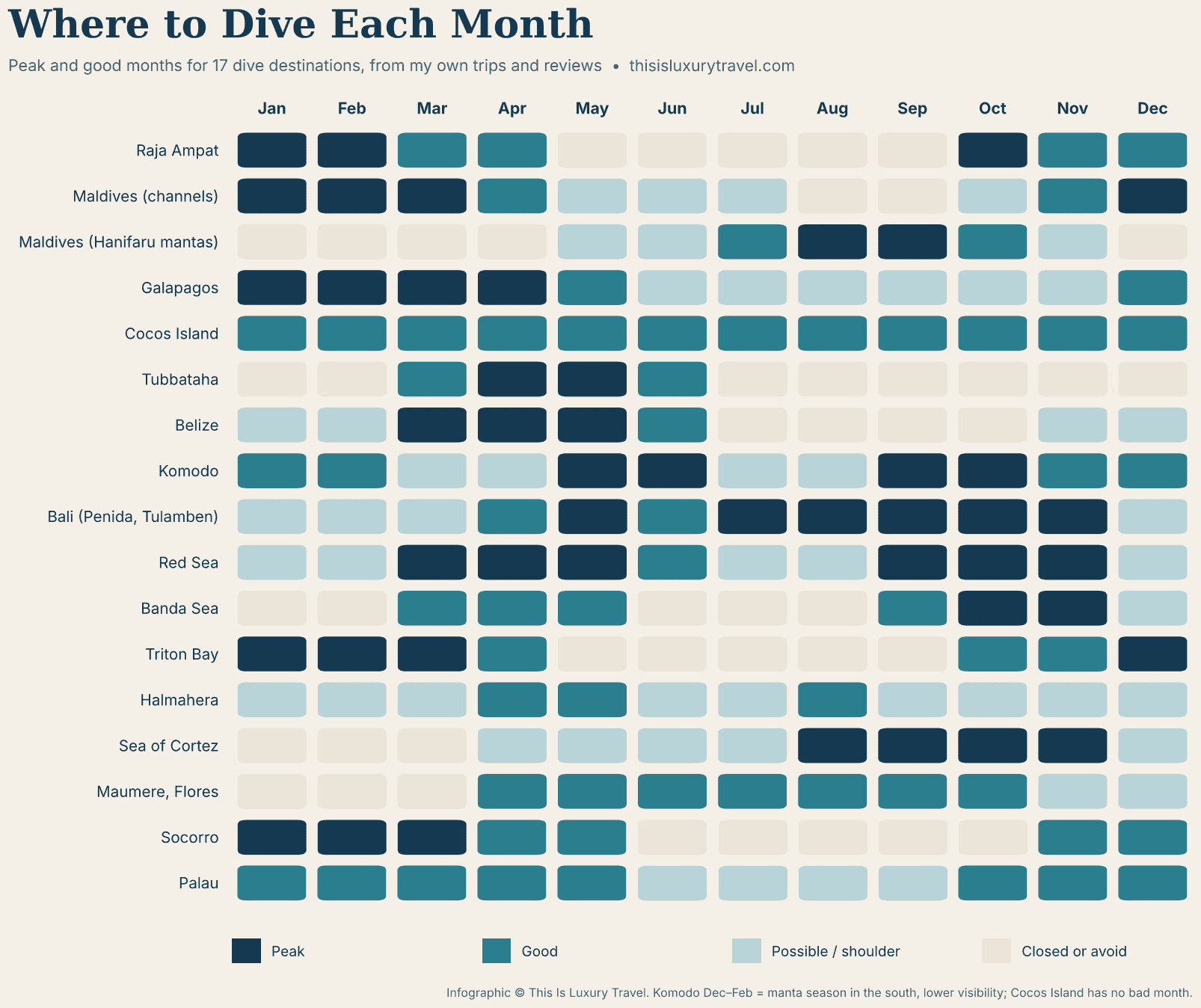
The Indonesia forest fires of 2026 are real, the worst in a decade, and they are closing airports in the east. They are also local, moved by the wind, and the water under the smoke is as alive as it has ever been. Choose your region with the table, give your flights room to go wrong, and go diving. If you are still choosing when to go, my month-by-month dive calendar will help. I will update the table monthly while the fires last.
FAQ
Is it safe to travel to Indonesia right now with the forest fires?
For most of the country, yes. In October 2026 the air in Bali, Komodo, Lombok, North Sulawesi and Halmahera was in the moderate range, while parts of Kalimantan and Papua were unhealthy to hazardous and Kaimana airport was closed. Check your specific destination on IQAir for your dates, and build one or two buffer days around regional flights, which are the part most likely to go wrong.
Is Bali safe to travel to during the Indonesia forest fires?
Yes. Bali’s readings in mid-October 2026 were moderate (Denpasar 82, Ubud 86 on the US AQI), with grey skies but no closures. Diving at Tulamben, Nusa Penida and Menjangan is unaffected.
Which Indonesian dive regions are affected by the 2026 fires?
Worst affected are Kalimantan (Derawan and Maratua), where the interior readings were hazardous, and the south coast of Papua (Kaimana and Triton Bay), where the airport closed in October. The Banda Sea and Raja Ampat were grey and in the “unhealthy for sensitive groups” range in the ports but fine at sea. Bali, Komodo, Lombok, Lembeh, the Togeans, Halmahera and Cenderawasih Bay were moderate.
Does the smoke affect the diving?
In my experience, no. On a ten-day trip across the Banda Sea and Raja Ampat under the October 2026 haze, there was enough light for the corals, visibility was better than usual for the season, and the marine life was exceptional. The smoke affects the views above the water and the flights, not the reef.
Should I cancel my Raja Ampat liveaboard because of the haze?
No. Raja Ampat’s port, Sorong, had unhealthy readings on some mornings in October 2026, but the air improved markedly at sea and the diving was among the best I have had there. Arrive in Sorong a day or two early in case of flight delays, and expect flat grey light rather than blue skies.
Why is Raja Ampat hazy when the fires are in Kalimantan and Sumatra?
Because the wind carries the smoke, and because Papua and the Moluccas have their own fires this year. The haze over eastern Indonesia in October 2026 came from fires in Papua and Maluku as much as from the big peat fires in the west.
Should I book Lion Air flights directly during the fire season?
I would not. When Kaimana airport closed in October 2026, Lion Air’s live chat disconnected me after six hours, they rebooked me three times onto connections that departed before the first flight landed, and they refund only 90 per cent of a fare cancelled for weather, which is how they class fire smoke. Booking the same flights through Trip.com gives you a customer service team that rebooks or refunds by email within hours.
Where can I check Indonesia’s air quality day by day?
On IQAir (iqair.com/indonesia), which gives a US AQI reading and a three-day forecast for every sizeable town. Most dive sites have no monitor, so use the nearest port as a proxy and remember the air at sea is usually cleaner.
Disclosure: this article contains affiliate links. If you book through them, I earn a small commission at no extra cost to you. Read my full disclosure policy.
Read more about how I review, or visit my Work With Me page.