Everyone asks the same thing before booking Antarctica: how bad is the Drake Passage, really? I crossed it twice on one trip and got both versions — a flat-calm run south and six-meter waves coming home. Here is what the passage actually is, what each crossing was like, what genuinely helps with seasickness, and whether flying over it is worth the money. The full trip is in my Atlas World Voyager review.
What is the Drake Passage?
The Drake Passage is the roughly 1,000-kilometer stretch of open water between Cape Horn, at the southern tip of Chile, and the South Shetland Islands off the Antarctic Peninsula. It averages around 3,400 meters deep, and it is the pinch point of the Antarctic Circumpolar Current — the largest ocean current on the planet, moving somewhere between 95 and 150 million cubic meters of water east every second.
That is the whole explanation for its reputation. At this latitude there is no land anywhere on the globe to interrupt the westerly winds or the swell they build, so both run unobstructed the entire way around Antarctica and then get funnelled through the gap. The passage is named after Sir Francis Drake, although the first recorded crossing was made by the Dutch navigator Willem Schouten in 1615–16.
How long does it take to cross the Drake Passage?
About two days in each direction on a classic expedition sailing — roughly 48 hours of open water before the first icebergs appear, and the same again on the way home. On my nine-night itinerary that was days two and three going south, and days eight and nine coming back.
Drake Lake or Drake Shake?
Crews describe the crossing in two modes. The Drake Lake is the glassy version, calm enough that you forget where you are. The Drake Shake is the other one. Nobody knows which you will get until a couple of days beforehand, and it is entirely possible to draw one of each on the same trip — which is exactly what happened to me.
How bad is the Drake Passage really?
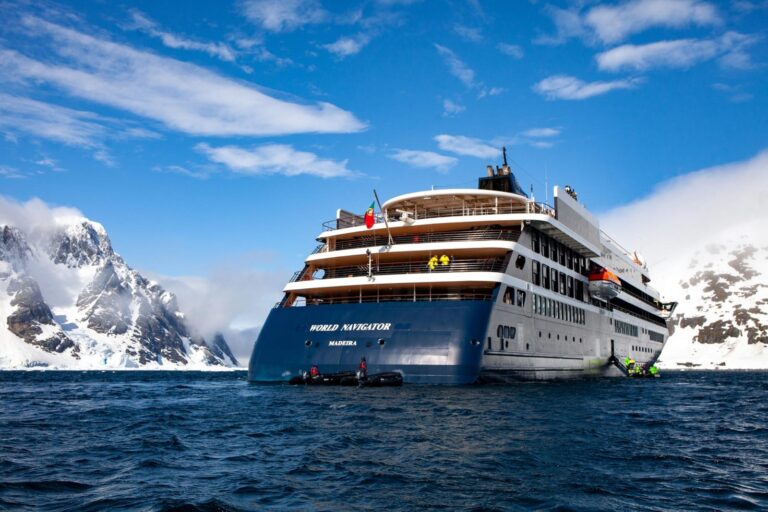
It is a lottery, and I got both versions on one trip: the outbound crossing was surprisingly calm — I had read the horror stories and watched the Windy app nervously for days, then spent two easy sea days in safety and zodiac briefings, wildlife and history lectures, photography workshops and movie nights with the 14-person expedition team — while the return crossing threw up six-meter waves. Plan for the rough version: bring seasickness medication and start it early, choose a midship cabin, and use the onboard doctor’s anti-nausea injections, which helped visibly on my sailing. If you would rather not gamble at all, Atlas also sells the Drake Express fly-over option, which I cover below.
Crossing the Drake Passage southbound
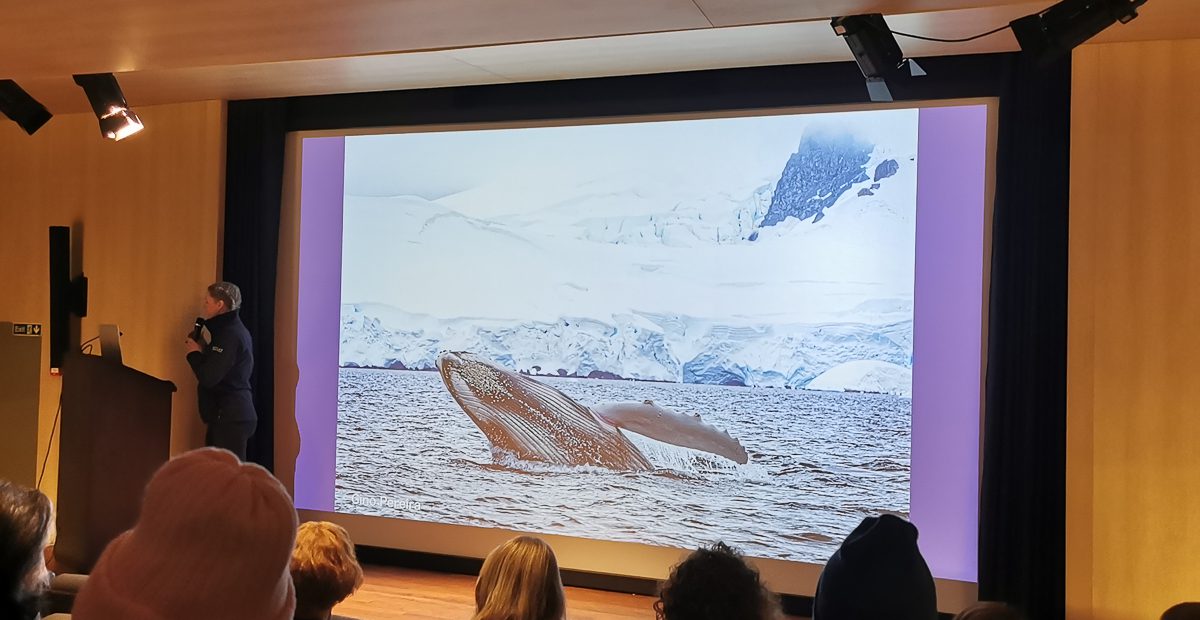
I had read horror stories about crossing the Drake Passage, known as one of the strongest seas in the world. A few days before the cruise, I started checking the Windy app on my phone to get an idea of what to expect. It didn’t look promising. The Drake Passage is known for its unpredictable and treacherous conditions. However, on this particular day, the sea was surprisingly calm.
We spent the first morning of the Drake Passage going through the safety and zodiac briefings. We met the expedition team. They are a fantastic team of 14 people. Many of them are scientists and marine biologists.
To make the most of our time at sea, the Atlas expedition team organized a series of lectures and activities to keep passengers engaged and entertained. From informative talks on Antarctic wildlife and history to photography workshops and movie nights, there was always something to do during the crossing. These activities not only helped pass the time but also deepened our appreciation for Antarctica’s unique ecosystem.
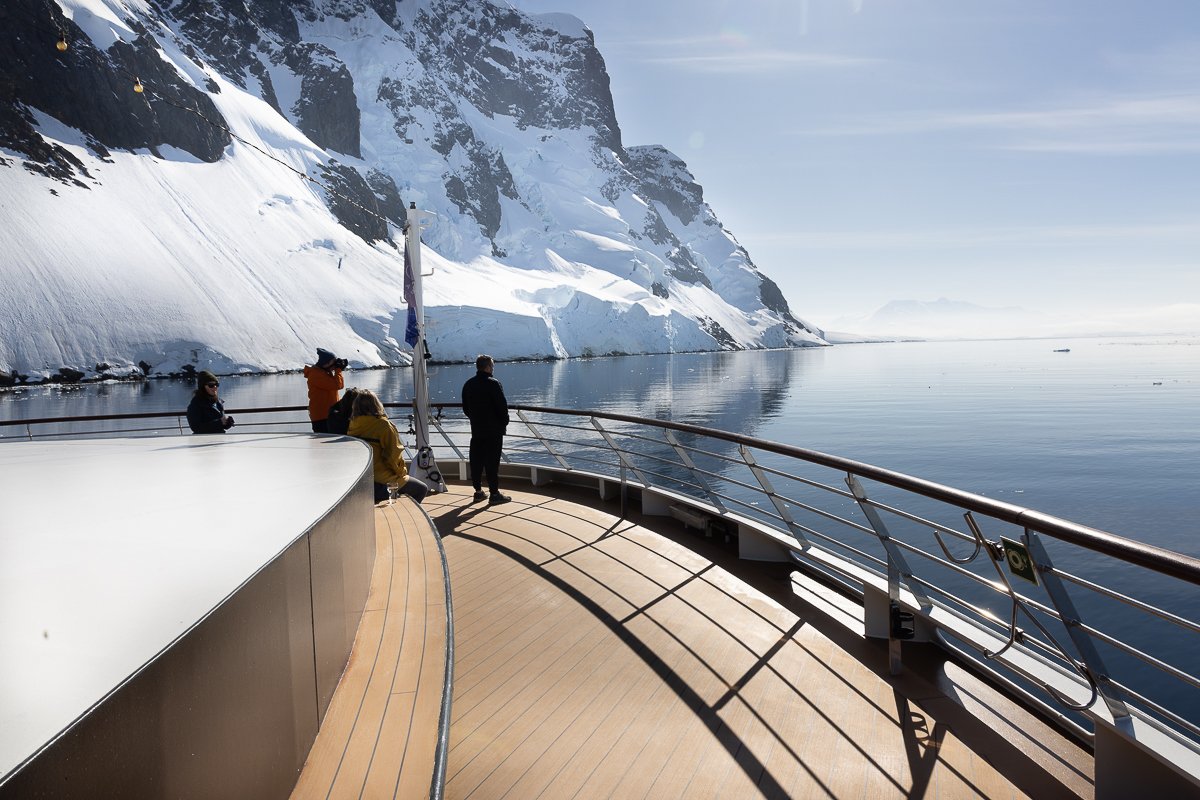
As the ship approached the Antarctic Peninsula, the landscape became more dramatic. Towering icebergs floated serenely in the water, creating a surreal atmosphere.
Crossing the Drake Passage in calm seas was a good experience. Spending two days with little to do was a great way to familiarize yourself with the boat and overcome jet lag.
The crossing back: 6-meter waves and 140 km/h winds
Leaving day was sad because we didn’t want to go! Unfortunately, our passage back was not as smooth. We experienced rough seas and ferocious winds up to 140 km per hour.
Leaving behind the sheltered confines of Antarctica, we entered the Drake Passage during the night. Immediately, the ship was engulfed by a tumultuous expanse of 6-meter waves and strong winds. The ship pitched and rolled, a true battle against the elements.
The following day, the atmosphere onboard was electric, with excitement and apprehension. Passengers clung to handrails, seeking solace in the company of fellow adventurers. The experienced crew, well-versed in navigating these treacherous waters, provided reassurance and guidance throughout the journey, ensuring our safety.
As we progressed through the Drake Passage, the dining room became quieter and quieter as many people were seasick.
If you get seasick, the onboard doctor can administer anti-nausea injections. The passengers who got the injection were noticeably better, so don’t hesitate to see the doctor as soon as you feel seasick.
Despite the challenging conditions, a sense of camaraderie developed among the passengers. The ship’s crew organized activities and lectures, distracting us from the rocking of the boat and providing insights into the region’s history and science.
Finally, the ship emerged from the turbulent waters into the calmer seas near Ushuaia.
Wildlife you can see while crossing
The Drake is not only something to get through — it is also where some of the best wildlife watching happens, and it happens from the ship rather than from a zodiac. On our crossing I saw orcas right by the bow of the boat, close enough to watch from the rail without binoculars. Seabirds shadow the ship for long stretches, and whales surface without warning, so the crossing days are worth spending on deck rather than shut in the cabin.
Keep a warm jacket by the door. The expedition team announces sightings over the PA, and by the time you have dug your layers out of the wardrobe the animals have usually moved on. The bow and the open observation decks are the best vantage points — though in the roughest weather the crew will close the outer decks, and that is not a rule to argue with.
Sightings are never guaranteed on any single crossing, but two full days at sea in each direction gives you far more time at the rail than most people expect before they board.
Will I get seasick crossing the Drake Passage?
Possibly — the Drake can be flat calm or produce six-meter waves, as I experienced on my return. Bring seasickness medication, choose a midship cabin, and don’t hesitate to see the onboard doctor: the anti-nausea injections helped visibly on my sailing.
How to prepare: what actually helps
Some of this I learned the easy way, and some of it on the way home.
- Start the medication before you feel anything. Seasickness tablets work as prevention, not as a cure. Take the first dose before you leave the Beagle Channel.
- Ask for a midship cabin on a low deck. The lower and more central you are, the less you feel the pitch and the roll.
- Use the ship doctor. The anti-nausea injections available on board helped visibly on my sailing, and there is no prize for suffering through it.
- Get out on deck. Fresh air and a fixed point on the horizon beat lying in a dark cabin, as long as you keep one hand on the railing.
- Eat little and often, and skip the alcohol.
- Put a strap on your camera. In a swell you rarely have two hands free.
- Do not count on herbal remedies or acupressure bands. Expedition teams generally do not rate them on their own.
When is the Drake at its worst?
There is no reliably calm month. Conditions are set by whichever low-pressure system happens to be crossing while you are, not by the calendar, which is why crews talk about it as a lottery rather than a season. I checked the Windy app obsessively for days beforehand and it told me almost nothing useful until about 48 hours out.
Can you skip the Drake Passage? (The Drake Express option)
Yes — Atlas now offers a fly-the-Drake option. On select expeditions marketed as the Drake Express, you fly by charter directly to King George Island, just off the Antarctic Peninsula, and board the ship there, skipping the two-day crossing in each direction. It is the option to consider if you are short on time or very prone to seasickness.
Personally, I would still choose the classic sailing. Crossing the Drake is part of the Antarctica experience: the lectures, the seabirds following the ship, and the slow build-up of anticipation as the first icebergs appear. My crossing south was surprisingly calm, and even the rough return (more on that above) is now one of my favorite travel stories. But if the idea of six-meter waves is a deal-breaker, the fly option exists — check which departures offer it before you book.
One thing to weigh before you book it: flying is not the cheaper option. Fly-the-Drake itineraries are shorter, typically 7 to 9 nights, and start in roughly the same US$11,500 to US$16,000 band as a longer classic sailing, sometimes with the charter flights billed on top. Weather at King George Island also grounds those flights often enough that a delay can eat a day of your itinerary. I have broken the whole budget down in how much an Antarctica cruise costs.

The full ship review
For the ship, the cabins, the food, the landings and the day-by-day itinerary, read my complete Atlas World Voyager review.
If you would rather skip one or both crossings, Atlas’s Drake Fly & Sail and Drake Express voyages fly part of the way, and Silversea’s fly cruise from Puerto Williams skips the Drake entirely.