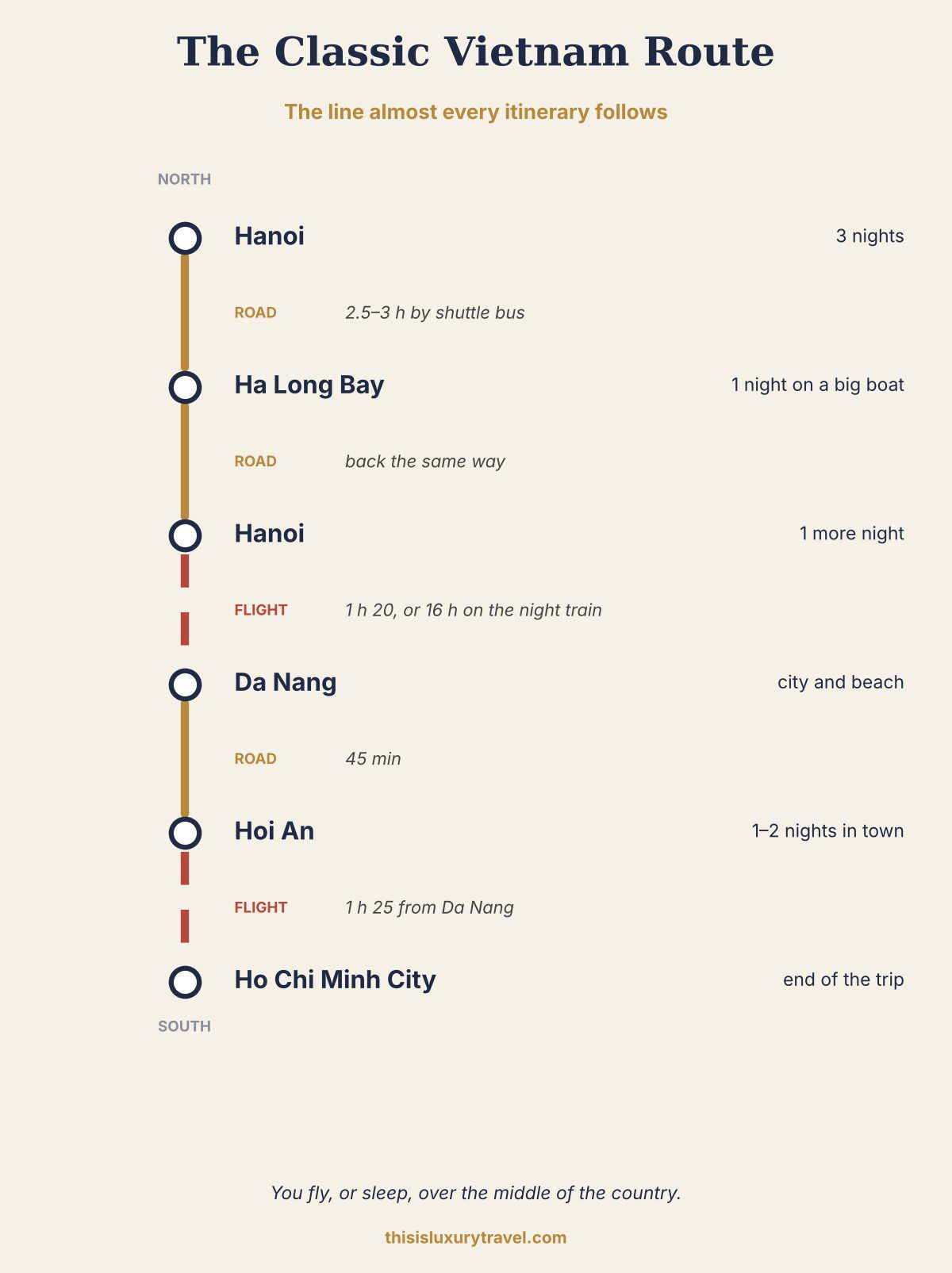
Open any Vietnam itinerary and you’ll see the same map. Hanoi for three nights, a bus to Ha Long Bay for a night on a boat, back to Hanoi, a flight or the overnight train to Da Nang, a night or two in Hoi An for the lanterns, then a flight to Ho Chi Minh City. It’s a good route. That’s the problem: a few million people a year have worked that out at the same time.
Vietnam welcomed 22.8 million international visitors in 2025, is on course for 25 million this year, with 19.5 million already through the door by the end of October, and is planning for 40 to 45 million by 2030. Most of them follow that one line down the coast. Ha Long Bay now has hundreds of boats, and in Hoi An’s old town you shuffle along with the crowd. If you came to Vietnam for the scenery and the slow pace, the classic route is starting to work against you.
This luxury Vietnam itinerary is my answer: the best way to see Vietnam if you want luxury, wellness and a real dose of adventure, without the crowds. I went looking for a way around the classic line, and found one in the middle of the country, in a region most of those itineraries skip. It isn’t a secret: a new wellness lodge opened there in July, a new tourist train in August. But for now, I was one of the only foreigners on the plane.
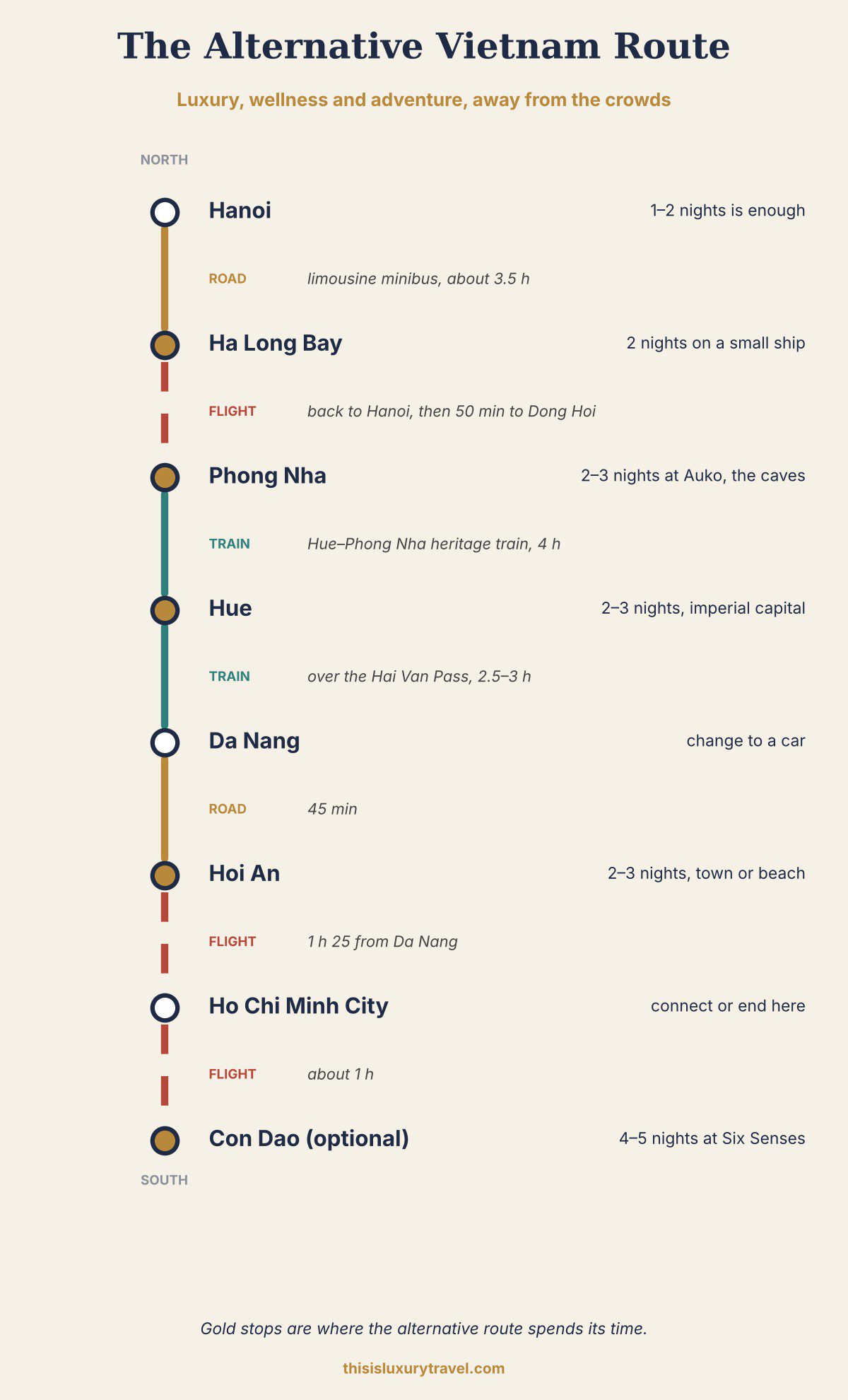
The short version: keep Hanoi short and give Ha Long Bay two nights on a small ship. Then, instead of flying or taking the night train straight to Da Nang, you fly 50 minutes to Dong Hoi, spend two or three nights of wellness in a luxury tent at Auko on the edge of Phong Nha–Ke Bang National Park, see the caves, then take the new Hue–Phong Nha heritage train south to Hue, the old imperial capital, and stay a few nights. From Hue, take the train over the Hai Van Pass to Da Nang, then drive 45 minutes to Hoi An. You lose nothing from the classic route and gain the best caves in Asia, a wellness stay and a scenic daytime train ride, in a part of Vietnam that is still quiet.
Why Trust This Vietnam Itinerary
This was my seventh trip to Vietnam, and over the years I have stayed in some of the best hotels in the country, including the Four Seasons Nam Hai in Hoi An and Six Senses Con Dao. On this trip, in November 2026, I did the route below myself: Hanoi, two nights on the Bhaya Soul in Ha Long Bay, the flight to Dong Hoi, two nights at Auko with a morning at Paradise Cave, the heritage train to Hue in the VIP carriage, three nights at Azerai La Residence in Hue, a private cabin on the train to Da Nang, and two nights at Namia in Hoi An. Everything here is from my own trips; where I recommend something I haven’t done, I say so. For the hotels alone, see my list of the best luxury hotels in Vietnam.
The Classic Vietnam Route, and What It Has Become
The itinerary every agency sells runs north to south: Hanoi, an overnight cruise in Ha Long Bay (or a night in Ninh Binh), a flight or the overnight Reunification Express to Hue or Da Nang, Hoi An, then a flight to Ho Chi Minh City. The flight from Hanoi to Da Nang takes an hour and twenty minutes; the train takes about 16 hours, most of it in the dark. Either way you fly or sleep over the most beautiful part of central Vietnam without seeing it.
It’s a logical route, which is why the numbers are what they are. Vietnam has set a record for international arrivals almost every month of 2026. Hanoi alone passed five million international visitors in July. The strain shows exactly where you’d expect: on the Ha Long Bay piers, in Hoi An’s old town after dark, on the beach road out of Da Nang. None of these places is ruined. But none of them is quiet anymore, and if quiet is part of what you are paying for, it’s time to bend the line.
The Alternative: Bend the Line Through Phong Nha
My route keeps the best of the classic one and swaps the rest for three things the standard itinerary doesn’t have: a wellness lodge at the foot of the karsts, the best caves in Asia, and two scenic train rides in daylight. Here it is on one page.
Hanoi: Don’t Stay Too Long
Most itineraries give Hanoi three nights, plus one or two more between excursions. I wouldn’t. On this trip I found Hanoi loud and crowded, and the Old Quarter has become the capital of cheap tourism: hostels, tour touts, bars and scooters, all in the same few blocks. One or two nights is enough to walk around Hoan Kiem Lake, see the Old Quarter and eat well, and Hanoi does eat well.
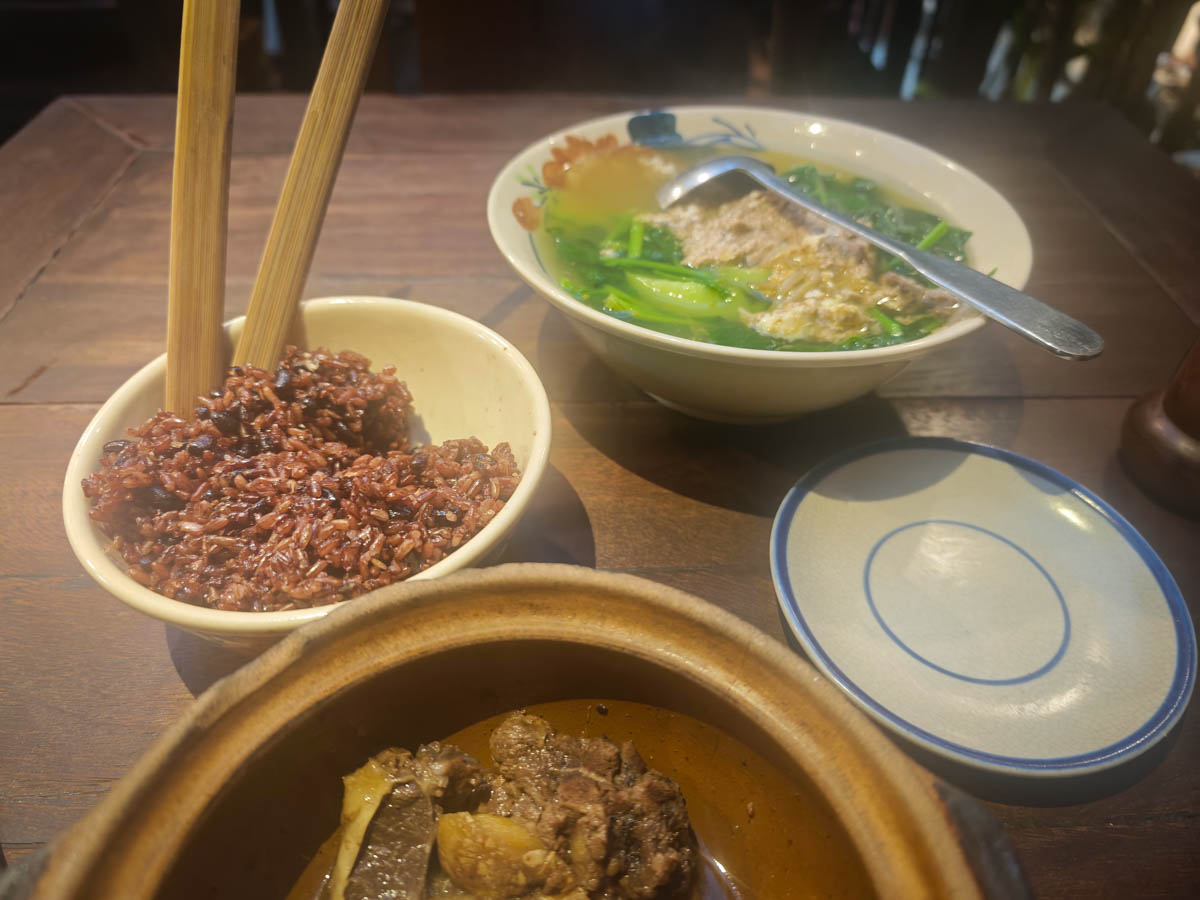
If you are after a traditional Vietnamese city, don’t look for it here. Save those nights for Hue, further down this route, which is calmer, friendlier and far more elegant. If you want a luxury base in Hanoi, I have written about the new Fairmont Hanoi. One practical point: the Ha Long Bay cruise transfers pick up only from hotels in the Old Quarter, so stay there or nearby the night before your cruise.
Give Hanoi one or two nights, not five. Spend the nights you save in Hue.
Ha Long Bay: Two Nights on a Small Ship
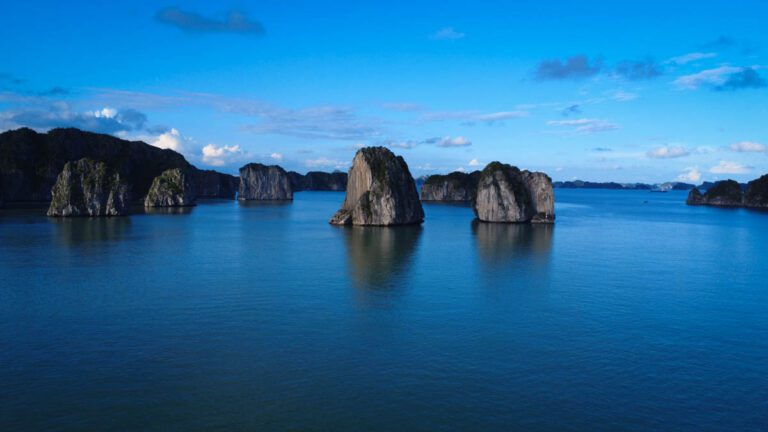
I wouldn’t cut Ha Long Bay. It is one of the most unique places in the world, and cruising between the karsts is a joy for the eyes. But the famous caves have queues, the famous beaches have crowds, and most boats follow the same loop. What you can change is the boat and the number of nights. A one-night cruise barely leaves the busy part of the bay. Two nights on a small ship gets you to the quiet corners.

I sailed three days and two nights on the Bhaya Soul, launched in 2025 as the newest and most luxurious ship of Bhaya Cruises: 61.5 meters long, with just 20 cabins and 40 crew. It is built around wellness and quiet. The route favors the calmer sites, Ba Ham Lake, Tien Ong Cave and the Cua Van floating village, over the busy ones. I kayaked at Ba Ham Lake, joined a walking meditation in Tien Ong Cave at dawn, and had the foot massage that is included for every guest. There is a heated pool on deck, the food is very good, and the ship is so stable that I never felt it move, which matters if you get seasick. I have written about it in detail in my Bhaya Soul review.


For comparison, my sailing made a one-off excursion to Sung Sot Cave and Ti Top Island, the two most visited sites in the bay. The cave is beautiful, but you walk it in a line of other visitors. It confirmed the point: choose the boat for its route.

Practical details. Bhaya’s limousine minibus picks up from hotels in Hanoi’s Old Quarter at 8 a.m., and the trip to Tuan Chau Marina took me about three and a half hours door to boat, including other pickups and a 20-minute stop at a roadside shopping center. Use the toilets, skip the shop, and bring your own water. The ship leaves at noon. Meals, excursions, kayaking and the foot ritual are included; drinks are not. The best months are October and November, with clear skies and little rain, then April. Winter is cool and foggy, and in summer typhoons can close the bay.
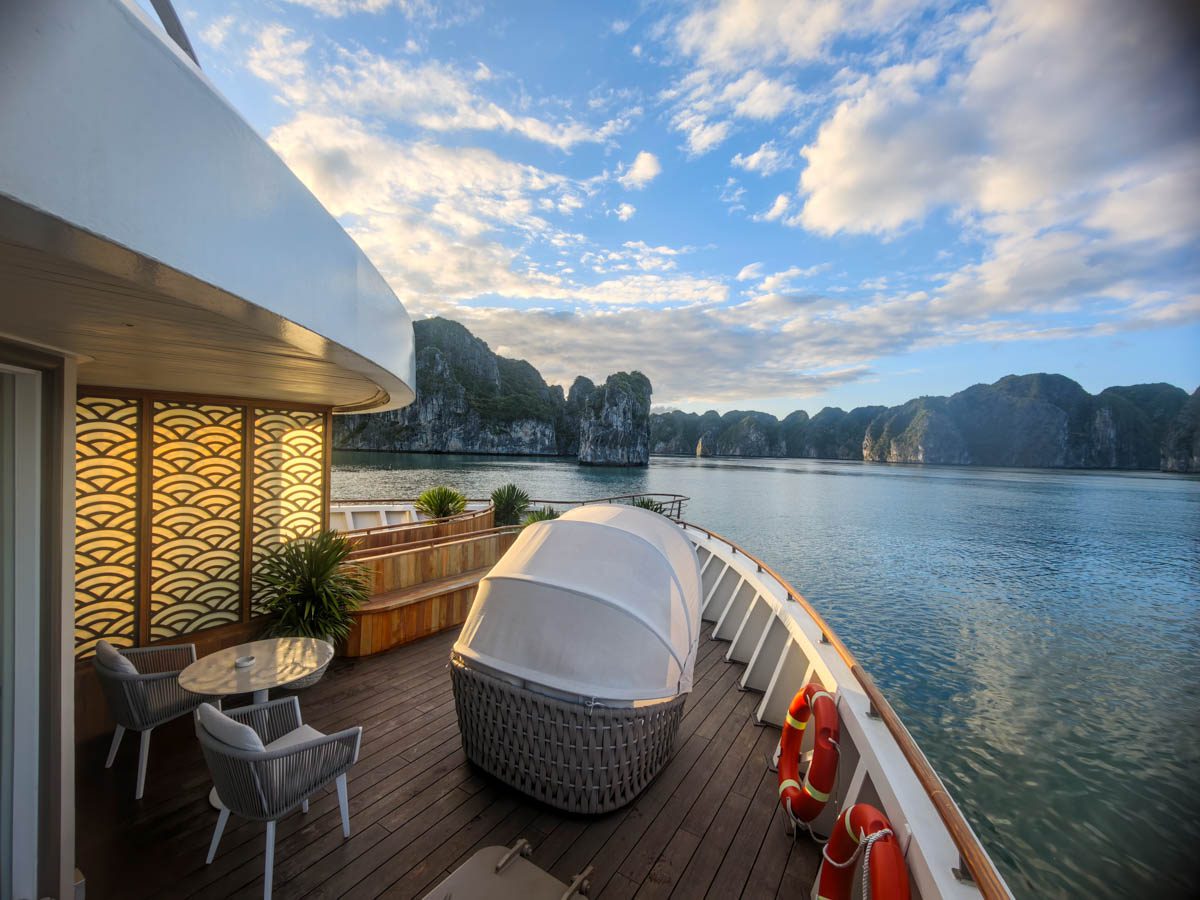

Check availability and prices for Bhaya Soul on Liveaboard.com
Book two nights, not one, and pick the ship for its route. On a one-night cruise you spend most of your time getting in and out of the busy part of the bay.
Fly to Dong Hoi, Not Da Nang
Here is where the routes part. From Hanoi, instead of the flight to Da Nang, take the 50-minute flight to Dong Hoi, the small airport for Quang Binh province and Phong Nha–Ke Bang National Park. I flew with Sun PhuQuoc Airways, Hanoi 10:20, Dong Hoi 11:25. I was one of the only foreigners on the whole plane. From the airport it is a 50-minute drive through villages, rice fields and plantations to Phong Nha, and the closer you get, the prettier it becomes: rolling, tree-covered hills that reminded me of Tuscany with a tropical touch.
Book your lodge’s airport pickup. There are few taxis at Dong Hoi, and bring your own water for the drive.
Auko: Sleep in a Luxury Tent at the Foot of the Karsts
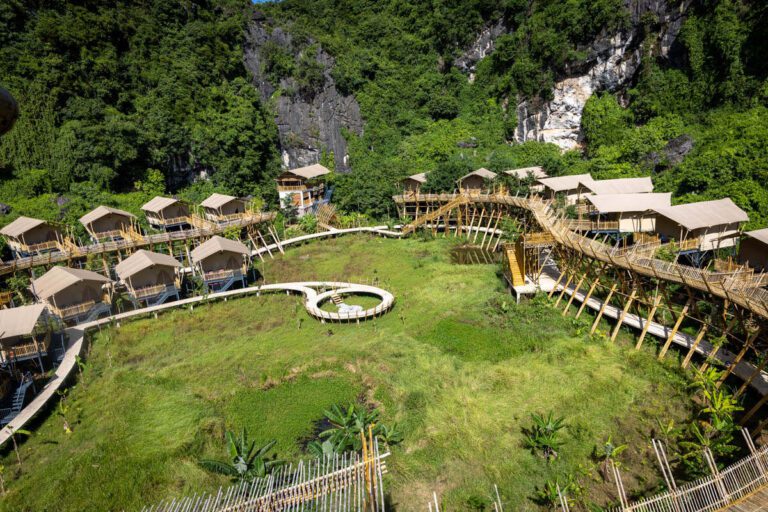
Auko Eco-Wellness Lodges opened in July 2026 on the Son River at the edge of the national park, and it is the reason this route works as a luxury trip rather than a backpacker detour. The 30 lodges are tents on stilts, linked by a bamboo aerial walkway that winds above a meadow at the foot of tall, jungle-draped limestone cliffs. The tents are simple inside, with a large stone bathtub as the splurge, and the view from your deck is all karst and sky. I had never slept in a tent on a luxury trip before; I would do it again tomorrow.
The stay is all-inclusive: three meals a day at Origin Restaurant, juices and kombucha, a 90-minute wellness journey every night, movement and breathwork classes, a sunset boat ride on the river, and a daily program the two hosts build around you. The wellness journey is the signature: you cover yourself in clay, sit in a warm chamber built into the rocks, rinse under a forest shower, plunge into a cliff-top pool at 10 to 15°C, then finish with a foot ritual back in your tent. The yoga and breathwork teacher was one of the best I have come across at a hotel. In November I paid about $230 a night for the lodge, which for everything included is very good value.
Plan at least two nights. One night covers the caves and the train; two lets you slow down, which is the point. Three would not be too many.
Check rates: Booking.com | Trip.com | Expedia | Vio.com
The Drive Into the Park: Stop at the Viewpoints
The road from Auko to Paradise Cave is 30 minutes of the best scenery in the national park, and it should not be driven straight through. It leaves the village along the river, climbs into a steep valley where the water runs clear over boulders and rapids, and opens up on a landscape of jungle-covered karst peaks that rise straight out of the forest, with a bare limestone cliff here and there catching the light. There are pull-offs along the way, and my driver stopped at each without being asked. Give yourself 20 minutes for them: the views over the river valley, with the peaks lined up behind, are the kind you came to this corner of Vietnam for, and I had them to myself. In the whole time I was in the national park, viewpoints and cave included, I did not see another tourist.


Ask the driver to stop at the viewpoints on the way in, while the morning light is on the peaks, and take the ancestral forest road on the way back. Together they turn a transfer into half the day’s sightseeing.
Paradise Cave: The Best Cave I Have Ever Seen
Phong Nha–Ke Bang is the oldest major karst area in Asia, a UNESCO World Heritage Site since 2003, and it hides one of the great cave systems of the world, including Son Doong, the largest cave on the planet. Son Doong sells out years ahead and costs around $3,000, so for most travelers the cave to see is Paradise Cave, 30 scenic minutes from Auko. I have been to the famous caves of Palawan, Thailand, Ha Long Bay and Portugal, and this one beats them all: massive chamber after massive chamber, 31 kilometers long, with formations everywhere you look, seen from a wooden boardwalk that runs about a kilometer inside. It was only discovered in 2005, which may explain why it is not better known.


Getting in takes a little effort: from the visitor center it is a 20-minute walk on a jungle path, or a buggy ride, and then a long winding climb to the cave mouth, with an easier flight of about 400 steps on the right if you spot it. Inside, the boardwalk takes you from one lit chamber to the next, past rimstone terraces, draperies of flowstone and columns the size of buildings.


Entry is 250,000 VND (about $9.50), with a buggy from the visitor center for another 20,000. Auko’s car and driver cost me 900,000 VND (about $35) for the whole car. If you want to go deeper than the boardwalk, see the cave tours below.
On the way back from Paradise Cave, say yes when the driver offers the ancestral forest road. For 200,000 VND more, you get the best views of the whole trip.
The Cave Tours You Have to Book Before You Arrive
The boardwalk at Paradise Cave needs no booking: buy a ticket at the visitor center and walk in. Everything beyond it does, and this is where the classic-route habit of deciding on the day will cost you. Two tours in particular are worth planning the whole stop around.
The Paradise Cave 7-kilometer adventure tour (one day). Run by the cave itself, this takes you past the end of the boardwalk and deep into the dry passages: trekking in the dark, a stream crossing by kayak or swimming, some climbing and crawling, lunch inside the cave and a skylight where the sun pours in. It leaves from the Paradise Cave center at 8:30 a.m. and ends at 4 p.m., costs 2,000,000 VND (about $77) per person including the ticket, guide, porter, lunch, water, equipment and travel insurance, and has to be booked at least a day ahead. Ask Auko to book it when you confirm your stay. I only found out about it at the cave and I wish I had known: it goes into the most secret parts of the cave and looks fantastic.
The multi-day expeditions with Oxalis Adventure. The wild caves of the national park are visited only with a licensed operator, and Oxalis Adventure holds the permits for the big names: Son Doong, Hang En, Hang Va, Hang Tien and the Tu Lan system. Son Doong, the largest cave on the planet, is a six-day, five-night expedition for about 80 million VND (around $3,000), limited to about 1,000 visitors a year in groups of ten, running January to August, and it is sold out for 2026 and 2027. If it’s on your list, book it first and build your Vietnam trip around the dates. The realistic alternative is the two-day, one-night Hang En expedition, which treks through the jungle to camp on a beach inside the third-largest cave in the world, the one from the film Pan: about 9,500,000 VND (around $360) per person, December to mid-September, 16 people per departure, ages 16 to 70. The Tu Lan and Hang Tien tours, two to four days of river caves, swimming and jungle camps, start at around $217 for the two-day Hang Tien–Tu Lan Discovery. Book all of these a few months ahead, directly with Oxalis Adventure, and plan your Auko nights on either side: Oxalis tours start and finish in Phong Nha, 20 minutes from the lodge.
Two nights at Auko covers Paradise Cave and the train. Add a third for the 7-kilometer adventure tour, or two more for Hang En. Whatever you choose, book the cave before you book the lodge: the lodge has 30 tents, the caves have far fewer places.
The Hue–Phong Nha Heritage Train: The Scenic Way South
This is the other half of the detour. Instead of 16 hours in a bunk or a flight you sleep through, you leave Phong Nha after lunch on a new tourist train and arrive in Hue in time for dinner, having watched central Vietnam go past the window for four hours.
The Hue Ancient Capital – Phong Nha: World Heritage Journey launched on August 28, 2026 and runs about 190 kilometers between Tho Loc, the station closest to the national park, and Hue, stopping at Dong Hoi, My Trach and Dong Ha. The line does not follow the road: it cuts through forest and rice fields, past villages and water buffalo, with the limestone hills to the west and the dunes and river mouths of the coast to the east near Dong Hoi. Both sides of the train are good, though heading south in the afternoon the sun comes in on the right, so the left is the more comfortable choice.


| Train | Departs | Arrives | Duration |
|---|---|---|---|
| HQ1, Tho Loc → Hue | Tho Loc 1:15 p.m. | Hue 5:25 p.m. | About 4 h 10 min |
| HQ2, Hue → Tho Loc | Hue 7:15 a.m. | Tho Loc 11:55 a.m. | About 4 h 40 min |
That 1:15 p.m. departure is the detail that makes the route work: Paradise Cave in the morning, lunch at Auko, and still make the train. Tho Loc station is about 20 minutes from the lodge, and the team arranges the transfer. Cars drive right onto the platform and drop you beside your carriage.
Fares. 420,000 VND (about $16) in economy and 760,000 VND (about $29) in the 24-seat VIP carriage, tax and insurance included, with 40% off in low season while that promotion runs, 10% off round trips and 5 to 15% off for booking ten days ahead. Keep the ticket: it gets you 50% off entry to one site of the Hue Monuments for seven days, which is worth using at the Imperial City.
Which class. VIP gets you big leather recliners around marble tables, and a carriage so small that one noisy family fills it; mine was ruined by four hours of screaming children. Book it, bring earplugs, and take economy without regret if it is sold out: the soft seats there rotate a full circle and the noise spreads out.
Booking. Economy is easiest on Klook, in English and with international cards. The VIP carriage is sold only on dsvn.vn, and 24 seats go quickly at weekends, over Tet and in summer.
Full details, carriage by carriage, with the complete timetable, every discount and how to get through the Vietnamese booking site: my guide to the Hue–Phong Nha heritage train.
Hue: Stay Longer in the Imperial Capital
The heritage train arrives in Hue at 5:25 p.m. Most itineraries give Hue one night or skip it. I stayed three, and I would tell you to stay at least two. This is where you find the traditional Vietnamese city that Hanoi no longer is: a walled imperial city, pagodas, a wide slow river, and people who seemed friendlier and smiled more than anywhere else I went in Vietnam.
Where to Stay in Hue: Azerai La Residence
I stayed at Azerai La Residence, a white Art Deco mansion from 1920 on the Perfume River that was once the French governor’s residence, a five-minute walk from the train station. It has 122 rooms, ten of them in the original building: these are the “Colonial” rooms, and they are the ones to book if you love history. The pool is huge and filtered with salt water, the garden runs along the river, and the spa gave me the best massage I have had in Vietnam. Rooms start at about $250 a night with breakfast. The full story is in my Azerai La Residence Hue review.
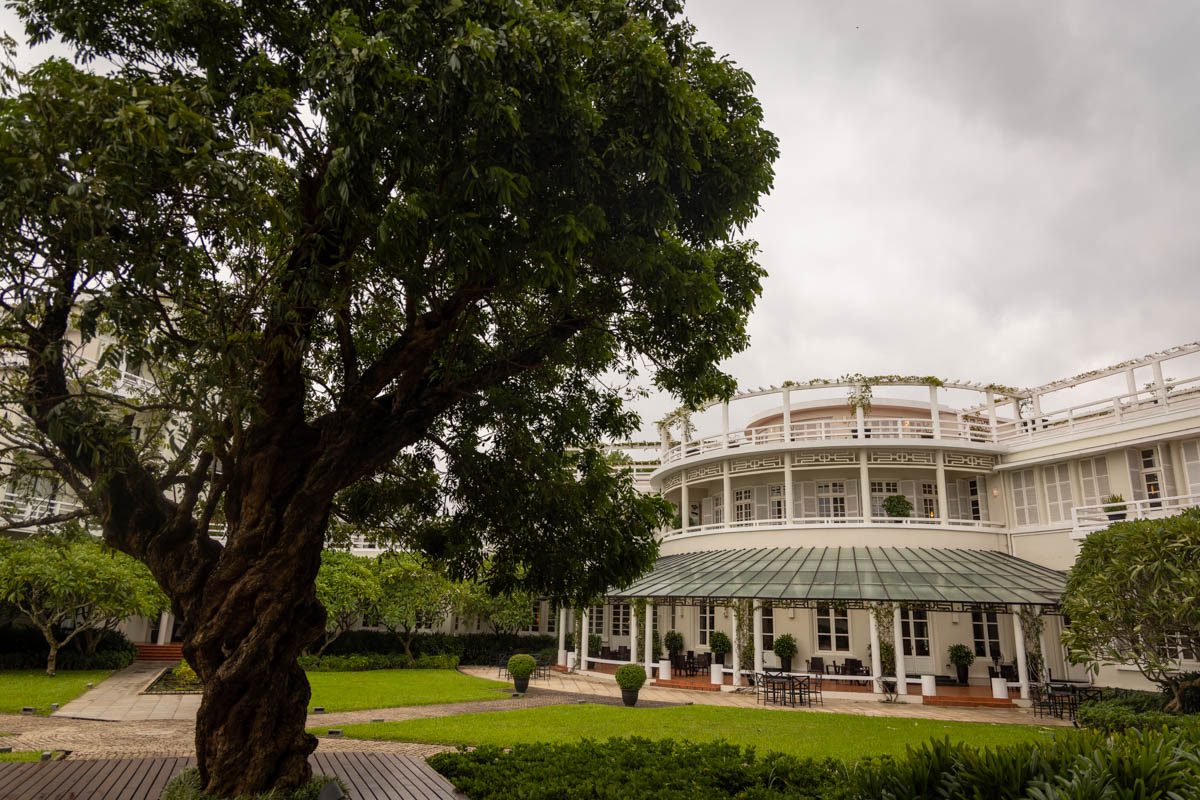
Check rates: Booking.com | Trip.com | Expedia | Vio.com

How to Visit the Imperial City
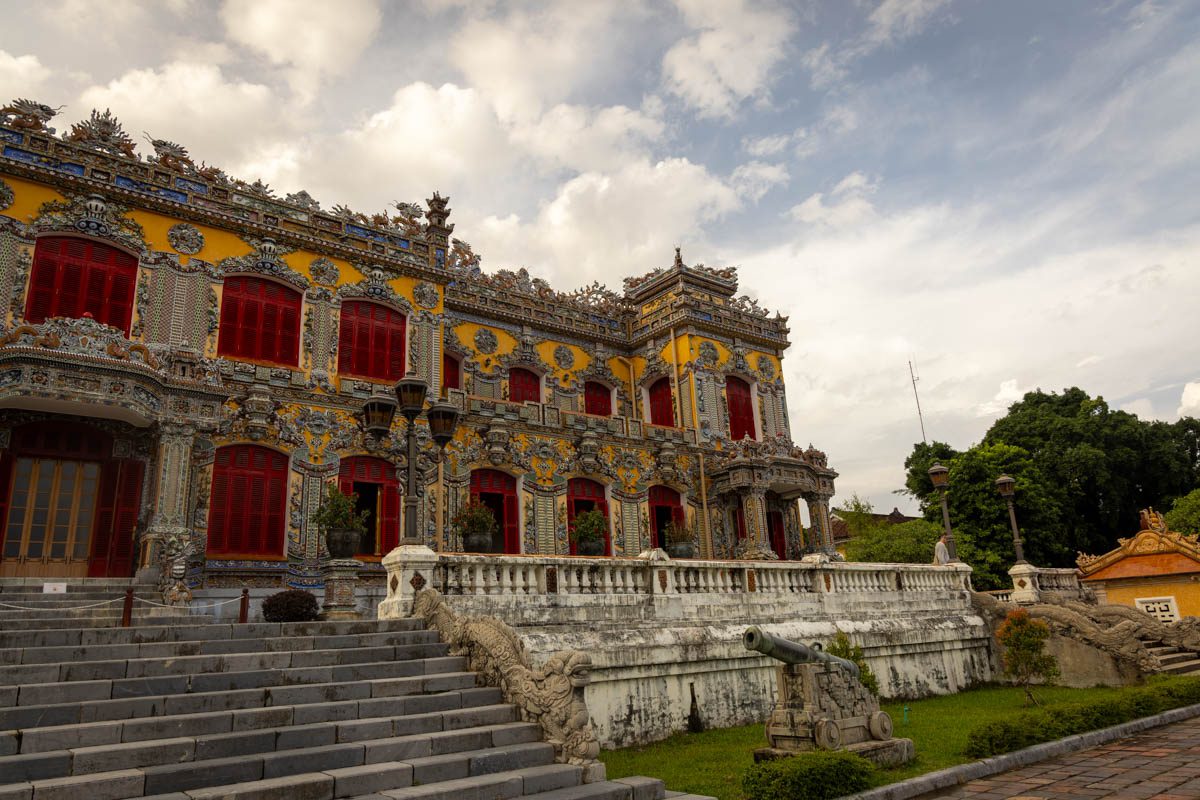
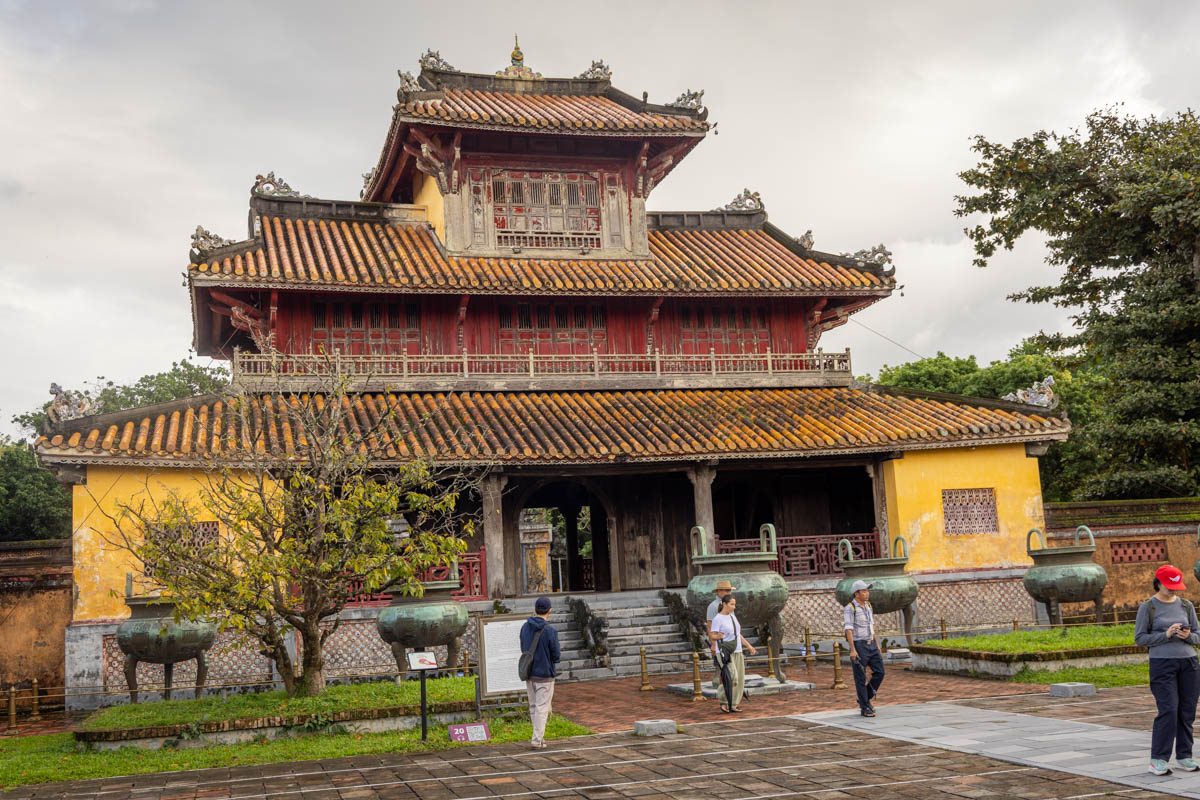
The Imperial City is the reason to come to Hue: the walled palace of the Nguyen emperors, who ruled Vietnam from here from 1802 to 1945. It sits on the north bank of the Perfume River, a short taxi ride from the hotel. You enter through the Ngo Mon Gate, and from there you walk through courtyards, throne halls, red-lacquered galleries, lotus ponds and the temples of the emperors. Much of it was destroyed in the wars, and the restored palaces now stand next to open lawns where others used to be.

- Tickets: 200,000 VND (about $8) for the Imperial City. A combined ticket with two royal tombs costs 420,000 VND, or 530,000 VND with three tombs, and is valid for two days. Bring cash for the ticket office.
- Half price with the train: your Hue–Phong Nha heritage train ticket gives 50% off one site of the Hue Monuments within seven days. Use it here.
- Opening hours: about 6:30 a.m. to 5:30 p.m. in summer and 7 a.m. to 5 p.m. in winter.
- How long: allow three hours. Go at opening time or late in the afternoon, when it is cooler and the tour groups are fewer. Wear good shoes and take water: the grounds are enormous.
- Take a guide: without one, it is a lot of beautiful buildings with no story. The hotel arranged a half-day tour for me with Lan, “the storyteller of Hue,” who has a knack for guessing what you are interested in. Ask Azerai to book her.
What Else to Do in Hue
After the Imperial City, Lan took me to Thien Mu Pagoda, the seven-story tower above the river that is the symbol of Hue; entry is free. In the evening I took a sunset cruise on the Perfume River. It rained, and it was still a great way to see the city. With more time, the royal tombs of Minh Mang, Tu Duc and Khai Dinh are outside the city and take another half day; I didn’t get to them on this trip.

For dinner, go to Le Cercle Sportif, a stylish riverside restaurant that belongs to the hotel and is popular with locals as much as visitors, which is always a good sign. Order the Bun Bo Wagyu. For a drink with a view, the sky bar on the 33rd floor of the Meliá Vinpearl looks over the whole city.
Plan two nights in Hue as a minimum and three if you can: one day for the Imperial City and Thien Mu Pagoda, one for the spa, the river and the tombs.
Hue to Da Nang by Train: Heritage Train or Private Cabin
The 100 kilometers of railway between Hue and Da Nang are the most scenic in Vietnam: the line climbs around the Hai Van Pass above the sea, where the road now goes through a tunnel. You have two ways to ride it, and they follow exactly the same track.
Option 1: The Hue–Da Nang Heritage Train
The “Central Heritage Connection” tourist train has run between Hue and Da Nang since March 2024, twice a day in each direction. It has soft seats, big windows and live Hue folk music in a community carriage, and it makes a ten-minute photo stop at Lang Co, halfway up the pass.
Schedule (daily; check the day’s timetable when you book)
| Train | Departs | Arrives |
|---|---|---|
| HD1, Hue → Da Nang | Hue 7:05 a.m. | Da Nang 10:10 a.m. |
| HD3, Hue → Da Nang | Hue 2:30 p.m. | Da Nang 6:15 p.m. |
| HD2, Da Nang → Hue | Da Nang 7:05 a.m. | Hue 11:03 a.m. |
| HD4, Da Nang → Hue | Da Nang 3:20 p.m. | Hue 6:15 p.m. |
Seats cost from about 180,000 VND (about $7). The catch is the timing: from Hue, the morning train leaves at 7:05 a.m., and the afternoon one reaches Da Nang after dark for much of the year, so you miss part of the views. If you don’t want to leave at 7 a.m., take a normal train. They follow the same route, with the same views, and they leave through the day.
Option 2: A Regular Train, in a Private Sleeper Cabin
That is what I did. After four hours of screaming on the Hue–Phong Nha heritage train, I wasn’t ready to gamble again, so I booked a cabin on a regular Vietnam Railways train. The soft-sleeper cabins have four berths, and if you book all four, the cabin is yours: a door that locks and nobody else’s children. It is also more flexible than the tourist train. There are around ten trains a day between Hue and Da Nang, with morning departures at about 8 a.m., 9 a.m. and 10:30 a.m., so you don’t have to leave at dawn, and the ride takes about two and a half to three hours. A berth in a four-berth soft sleeper starts at about 220,000 VND (about $9), so the whole cabin costs under $40.
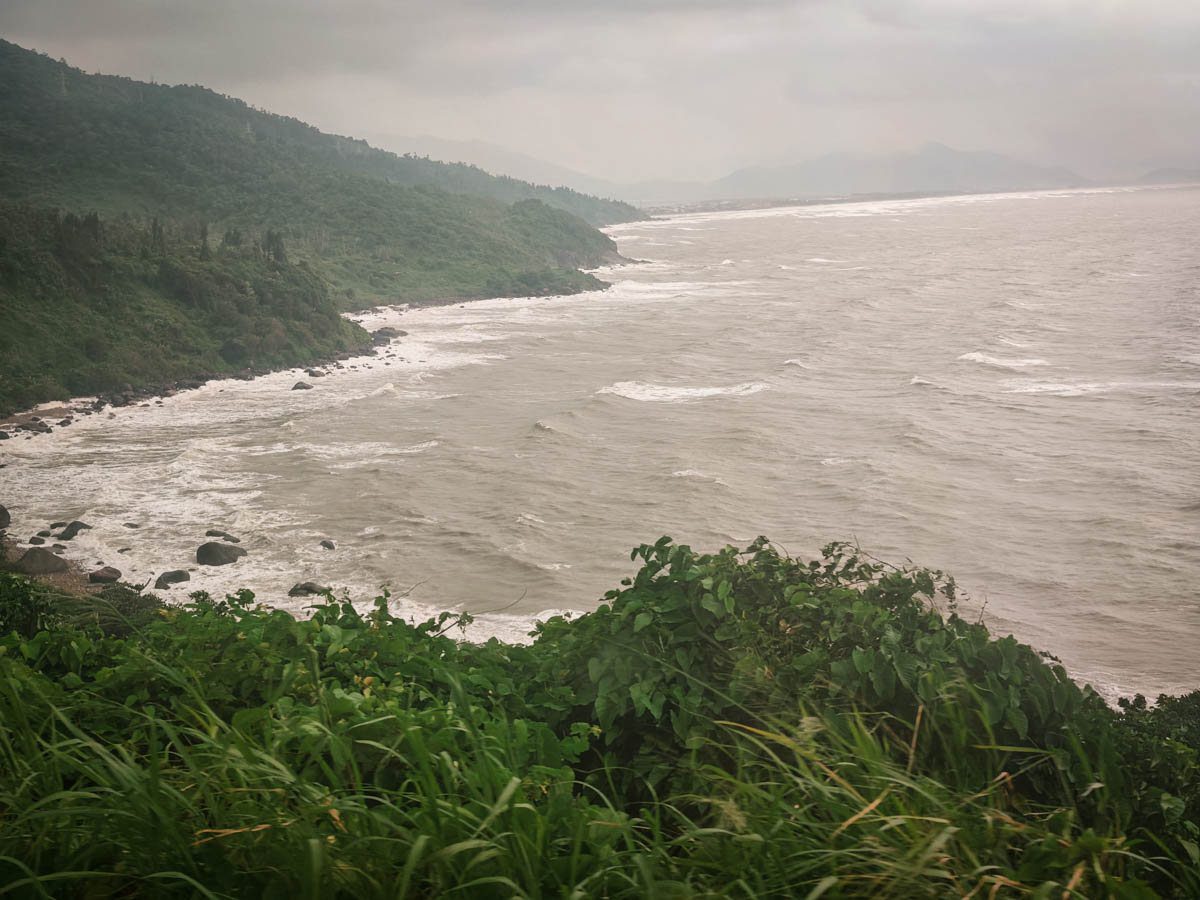
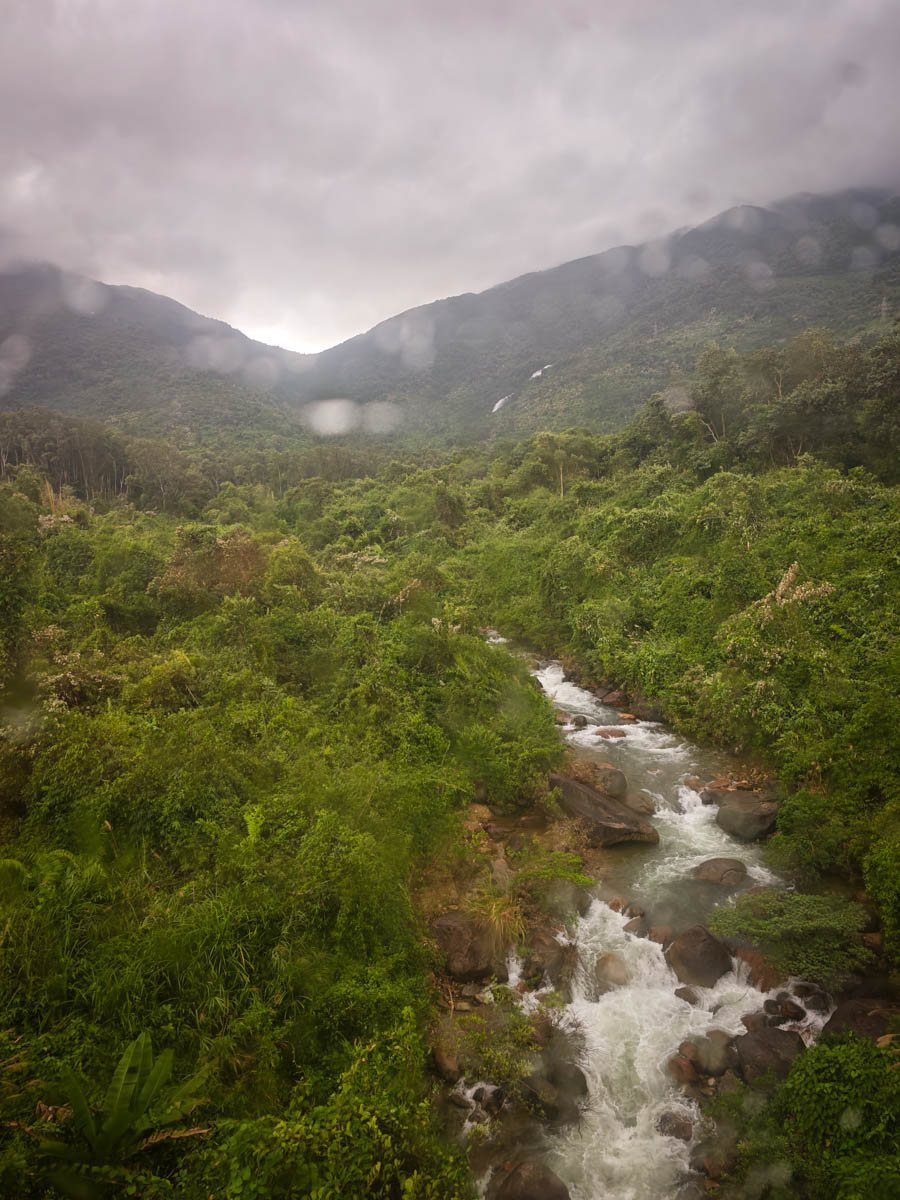
The best part of the line comes just before Da Nang, over the Hai Van Pass. The train follows the edge of the mountain above the sea, through primary forest, with waves crashing on the rocks below and small rivers running down to the shore. The views are stunning, so choose your side: sit on the left going from Hue to Da Nang, and on the right going from Da Nang to Hue.
I booked directly on the Vietnam Railways website, dsvn.vn, but after my battle with it for the heritage train, I’d say the easier way is to book the Hue to Da Nang train on Klook, in English and with an international card. The same Klook page sells the heritage train seats.
Practical details. Hue station is a five-minute walk from Azerai La Residence. Be there 20 to 30 minutes before departure; your ticket is a QR code on your phone. Keep your luggage with you: there is room under the lower berths and above the door. At Da Nang, ask your Hoi An hotel to send a car to the station; the drive takes about 45 minutes.

Don’t expect the heritage train. The cabin has a window on one side only, on the right on my train, so you don’t get the views from both sides. If you book a single berth, take a bottom one: the top bunks have no view at all. The sheets and pillows were quite dirty, so bring your own sheet or pillowcase. People kept coming to my door to sell me snacks and drinks, which got annoying, but you can lock the cabin from the inside. The train is non-smoking, but someone smoked anyway and the smell filled the whole carriage. On the plus side, the power sockets in the cabin work, and you won’t go hungry: there is a restaurant carriage, or you can scan the QR code in your cabin and have food delivered to your door. A steamed bun costs 7,000 VND, a bowl of noodle soup from 40,000 VND, a hot rice meal from 60,000 VND and a 333 beer 23,000 VND, and the menu even offers a herbal foot soak.

When I traveled, two days of heavy rain had flooded the land along the line, with water across the fields and up to the houses. The track runs on a raised embankment, though, and the train went through without a problem.
Pack a pillowcase or a light travel sheet, book a bottom berth (or all four), and lock the door as soon as you sit down.
Hoi An: Namia for the Town, Four Seasons for the Beach
From Da Nang station, Hoi An is about 45 minutes by car. Hoi An is the one stop where the alternative route rejoins the classic one, so choose your hotel to stay out of the crowd. For me, the two best hotels in Hoi An are Namia River Retreat and the Four Seasons Nam Hai, and the right one depends on the trip you want: Namia for a sightseeing city escape, the Four Seasons for a beach holiday. I compare them in detail, with six more options, in my guide to the best luxury hotels in Hoi An. For the head-to-head, read Namia vs Four Seasons Hoi An.
Namia River Retreat, for sightseeing. If you are in Hoi An for the old town, stay at Namia, a wellness-inclusive resort of 60 private-pool villas on its own islet in the Thu Bon River, a ten-minute bicycle ride or a short boat transfer from the Ancient Town. You can be in the lantern-lit streets in minutes and back in your own pool when the crowds arrive. It opened in December 2024 and is run by the same wellness company as Auko, so if you liked the daily therapies and movement classes there, you’ll find the same rhythm here. Read my full Namia River Retreat review.
Check rates: Booking.com | Trip.com | Expedia
Four Seasons Nam Hai, for a beach holiday. If you want a beach holiday, the Four Seasons Nam Hai is the best beach resort in Vietnam, and I have stayed there three times, a week each time. It sits on an empty stretch of Ha My Beach halfway between Da Nang and Hoi An, with none of Da Nang’s high-rise crowding, and villas start from around $1,060 a night in the low season and well past $1,600 in March.
Check rates: Booking.com | Trip.com | Expedia

What to Do in Hoi An Old Town
The old town is small enough to see on foot or by bike in one visit, and cars are mostly banned during the day. My most important advice is to go in the early evening, when the heat drops and the lanterns come on. Vietnamese public holidays bring many local visitors, so ask your concierge and pick a quieter day.
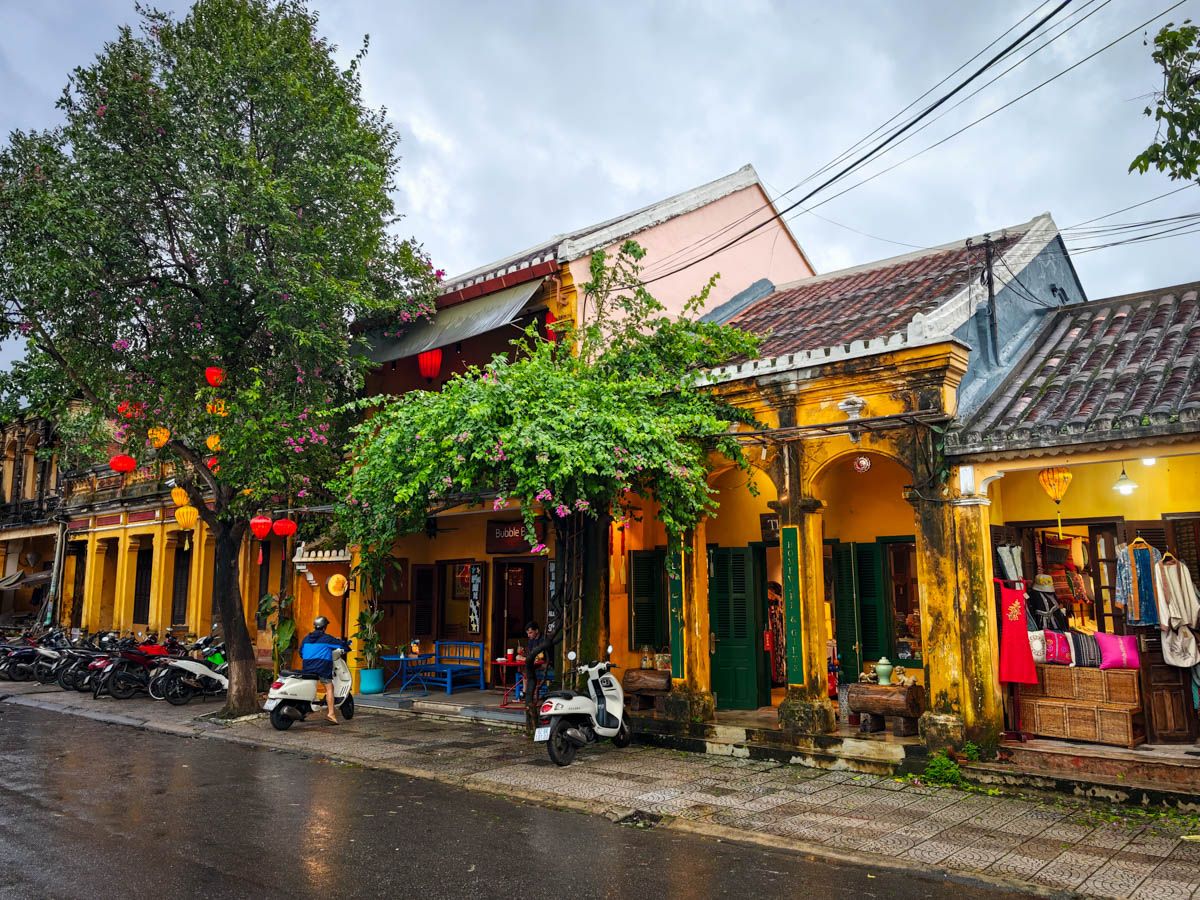
- Take an evening walk. Be in the old town as the streets light up, then walk along the river.
- Float a lantern. Hoi An is the city of lanterns. On full-moon nights the town switches its lights off and people float candle lanterns on the river.
- Photograph the old town. The Japanese Covered Bridge, the Phuc Kien Assembly Hall, the Museum of Sa Huynh Culture and the Museum of Trade Ceramics are the classic stops.
- Eat banh mi. Banh Mi Phuong is the famous one; I prefer Madam Khanh, “the Banh Mi Queen,” at 115 Tran Cao Van Street. Both cost under $2.
- Shop for crafts. Silks, fabrics, ceramics and lanterns.
- Join a cocktail tour. Mine went from a coffee house to a rooftop for sunset, then a bar in a former police station, and ended above the Hoi An market with a pho-infused gin cocktail.
- Have clothes made. Hoi An is known for its tailors. I had shorts copied at Yaly Couture. Allow three or four days, including a fitting.
- Go out, gently. Hoi An is not a party town, but it has a relaxed café and bar culture.


Get out into the countryside. The rice fields start at the edge of town. I cycled through the villages around the Four Seasons, took a basket boat through the Cam Thanh water coconut forest, and learned to cook banh xeo in the Tra Que vegetable village. Both hotels organize these outings.

Da Nang itself has little to see; go straight to your resort.
From Da Nang airport, the classic route resumes with the flight to Ho Chi Minh City, and, if you are adding the island, the short hop on to Con Dao.
Add an island: Six Senses Con Dao. If a beach holiday is the point, you can also add four or five days at Six Senses Con Dao, on the Con Dao islands off Vietnam’s southern coast. There are no flights from Da Nang: the island’s small airport is served from Ho Chi Minh City, with flights taking around an hour, and from Can Tho in the Mekong Delta. That works in your favor on this route, because the classic itinerary ends with the flight from Da Nang to Ho Chi Minh City anyway: connect there for Con Dao and finish the trip on the beach. I compare the two resorts in Six Senses Con Dao vs Four Seasons Nam Hai, and there is more on the island in what to do in Con Dao.


A Suggested 14-Day Vietnam Itinerary
| Days | Where |
|---|---|
| 1–2 | Hanoi: one or two nights in or near the Old Quarter |
| 3–4 | Ha Long Bay: two nights on a small cruise ship |
| 5 | Back to Hanoi in the afternoon, one night |
| 6 | Morning flight to Dong Hoi, drive to Auko |
| 7 | Auko: Paradise Cave in the morning, wellness journey in the afternoon |
| 8 | Auko: a slow morning, then the 1:15 p.m. heritage train to Hue |
| 9–10 | Hue: the Imperial City, Thien Mu Pagoda, the spa and the river |
| 11 | Train over the Hai Van Pass to Da Nang, then 45 minutes by car to Hoi An |
| 12–13 | Hoi An: beach or river villa, old town in the evening |
| 14 | Fly from Da Nang to Ho Chi Minh City, or on to Con Dao |
Want to end on a beach? After Hoi An, fly from Da Nang to Ho Chi Minh City and on to Con Dao for four or five days at Six Senses Con Dao.
If you have the days, add a third night at Auko and book the 7-kilometer Paradise Cave adventure tour for it. It is the one thing on this route I wish I had done.
How Much Does This Luxury Vietnam Itinerary Cost?
This is what the 14 days cost on the hotels I actually used, for two people sharing, with rates as I last checked them in November 2026. Vietnam moves with the seasons, so treat these as the shape of the budget rather than a quote: the same villa can cost half as much again in March as it does in December.
| Stop | Nights | Where | Rate | Check rates |
|---|---|---|---|---|
| Hanoi | 3 | Fairmont Hanoi | About $437 a night | See my Fairmont Hanoi piece above |
| Ha Long Bay | 2 | Bhaya Soul, 3 days 2 nights | From $777 per person for the full cruise | Liveaboard.com |
| Phong Nha | 2 | Auko Eco-Wellness Lodges | About $230 a night, all-inclusive | Booking.com | Trip.com | Expedia |
| Hue | 3 | Azerai La Residence | About $250 a night with breakfast | Booking.com | Trip.com | Expedia |
| Hoi An | 3 | Namia River Retreat | About $545 a night for a pool villa | Booking.com | Trip.com | Expedia |
The total. Thirteen nights for two, on those hotels, comes to roughly $5,700, or about $2,850 each, before flights. Add about $200 each for the two domestic flights and you are at roughly $3,050 a head for thirteen nights, international flights apart. Swap Namia for the Four Seasons Nam Hai and the three nights in Hoi An cost about $1,500 more: villas there run from around $1,060 a night in the low season and well past $1,600 in March (Booking.com | Trip.com | Expedia).
The moving parts are cheap. Everything between the hotels costs less than one night of them. The heritage train is 420,000 VND (about $16) in economy and 760,000 VND (about $29) in the VIP carriage, less the discounts above. A berth on the Hue to Da Nang train starts at about 220,000 VND, so the whole four-berth cabin to yourself is under $40. Paradise Cave is 250,000 VND with a 20,000 VND buggy, and Auko charged 900,000 VND (about $35) for the car and driver. The Imperial City is 200,000 VND, or half that with your train ticket. The caves are where the money goes if you want them: 2,000,000 VND (about $77) for the Paradise Cave 7-kilometer adventure tour, around 9,500,000 VND (about $360) for the two-day Hang En expedition and about 80,000,000 VND (around $3,000) for Son Doong. Your e-visa is $25 single entry, $50 multiple.
What to book first. Book in the order things sell out, not the order you travel: the caves first if you want Son Doong or Hang En, then the cruise, then the VIP carriage on the heritage train, which has only 24 seats. Hotels are the easy part, and the rate links above are where I check them. Budget about $100 each for the two domestic flights, Hanoi to Dong Hoi and Da Nang to Ho Chi Minh City, though both swing with the season and the day of the week.
Low season is not just cheaper, it is a different trip. The same Hoi An villa swings by $500 a night between December and March, and Vietnam Railways was running 40% off the heritage train while I was there.
When to Go: The One Catch With This Route

Northern and central Vietnam do not share a calendar, and this itinerary spends time in both. In Ha Long Bay the best months are October and November, with clear skies, 23 to 28°C and the least rain, with April the second choice; winter is cool and foggy, and the summer typhoon season can close the bay altogether. Central Vietnam runs the other way: dry from roughly February to August, wet from September to January, with October and November the peak of the rain and the months when Hue and low-lying Hoi An flood.
That is the catch. The window that gives you the best Ha Long Bay is the window that gives you the wettest Hue and Hoi An. I traveled in November and got both: flawless light among the karsts, then two days of heavy rain around Hue, with water lying across the fields and up to the houses along the railway line. The train ran through it without a problem and I would go again at that time, but you should know what you are buying.
If you want one month for the whole route, make it late March or April: central Vietnam is dry and warm, the bay is usually clear, and the caves are open. If you would rather have the bay at its best, take October or November and build in slack, keep your Hue and Hoi An days loose, and accept that a day may be spent in the spa rather than the old town. Avoid July and August for the bay, and note the cave calendar: Son Doong runs January to August, the Hang En expedition December to mid-September, and Paradise Cave is open year round.
Getting There: Flights, Visa and the First Day
Fly in to Hanoi and out of Da Nang or Ho Chi Minh City rather than doubling back. Almost every airline sells that as one open-jaw ticket for the price of a return, and this route is built for it: it ends in Hoi An, 45 minutes from Da Nang airport, with Ho Chi Minh City the connection if you are adding Con Dao.
Your visa, or not. Check this before you pay anyone for anything. Vietnam now waives the visa for 45 days for a long list of nationalities, and the list grew in 2025: Belgium and the Netherlands were added on August 15, 2025, Switzerland, Poland and Czechia on March 1, and they join France, Germany, Italy, Spain, the UK, Denmark, Sweden, Norway, Finland, Japan, South Korea, Russia and most of Southeast Asia. If your passport is on that list you fly in with nothing but the passport, which is what I did. If it is not, and American, Australian, Canadian, Indian and Chinese passports are not, you need an e-visa: valid up to 90 days, $25 for single entry and $50 for multiple entries, applied for only on the government portal, evisa.gov.vn. The sites that come up first in a search are agents charging a markup on the same form. Whichever applies to you, the exemption lists move, so check before you book: the current scheme is set out on the Vietnamese government portal, and 45 days is the ceiling, not a rolling allowance.
Be careful with the connection. My own flight in was a lesson. VietJet canceled my direct Denpasar to Hanoi flight two weeks out and only rebooked me, via Ho Chi Minh City, after Trip.com, where I had booked, pushed them; a five-hour journey became more than ten. The whole story is in my VietJet review, and the two lessons are worth repeating here. Book low-cost carriers through a booking platform that will fight the airline for you rather than direct, and do not build a tight self-connection in Vietnam on separate tickets. If you are routing through Tan Son Nhat in Ho Chi Minh City, the fast-track service through immigration is worth it; I use the one included with my Revolut plan, which has to be booked in the app at least 24 hours ahead.
The domestic leg. Hanoi to Dong Hoi takes 50 minutes. I flew Sun PhuQuoc Airways, and after VietJet it was night and day: eight check-in desks open at Noi Bai and no queue, on time, and water and a cookie handed to every passenger on a 50-minute hop. Book your lodge’s airport pickup at the same time as the flight, because there are few taxis at Dong Hoi.
The first day. That first night belongs in the Old Quarter: the Ha Long Bay transfers pick up only from Old Quarter hotels, at 8 a.m. Sort your phone before you land, too. An eSIM is live the moment you switch your phone on at Noi Bai, which saves you the airport counters and means you have maps and Grab from the curb.
Cash, and the ATM trap. You need dong. Cave entry, the station kiosks, the Imperial City ticket office and every good bowl of noodles want cash. But be careful where you take it out: plenty of machines in Hanoi and in the tourist areas overcharge, with their own fee on top of your bank’s and a poor rate hidden in the middle. Two habits protect you. Use ATMs attached to a real bank branch rather than the free-standing ones in hotel lobbies and outside tourist attractions, and when the screen offers to charge you in your own currency, always decline and take the transaction in dong: accepting lets the machine set the exchange rate, and it will not set it in your favor. Take out a larger amount less often, because most machines charge per withdrawal.
What I Skipped, and Why
Fourteen days buys you depth or distance, not both, and this route spends them on the north and the center. Here is what is not in it, and why.
Ninh Binh. The same limestone towers as Ha Long Bay, only in rice fields instead of the sea. Beautiful, and genuinely a good substitute if you would rather not sleep on a boat, but doing both is paying twice for one landscape. Pick one.
Sapa. It is a long way north of Hanoi and needs three nights to be worth the travel. Add it and something else has to go, and the something else would be Phong Nha, which is the whole point of this itinerary.
Ho Chi Minh City and the Mekong. The south is a trip of its own, and this one is about the middle of the country. The route ends with the flight to Ho Chi Minh City anyway, so a couple of nights there before you fly home is easy to add; the Mekong Delta needs three or four days to be more than a bus tour.
Nha Trang, Da Lat and Phu Quoc. All a long way off this line. If you want a beach after Hoi An, Con Dao is the better add-on, and the connection through Ho Chi Minh City makes it the natural end.
The DMZ. You pass straight through the old demilitarized zone on the heritage train, and the stations are themed around it: the Vinh Moc Tunnels and the Quang Tri Citadel are both reachable from Dong Ha. I stayed on the train. If the war history is why you are coming, break the journey there instead of in Hue.
Frequently Asked Questions
Is the Hanoi to Da Nang train worth it?
Only if you want the experience of a Vietnamese sleeper. It takes about 16 hours, mostly at night, so you see little. Vietnam’s luxury train, the SJourney, runs its short Northern Elegance trip from Da Nang to Hanoi, not the other way, at around $1,990 per person. For scenery by day, the Hue–Phong Nha heritage train is the better ride.
How do you get from Hanoi to Phong Nha?
Fly from Hanoi to Dong Hoi, about 50 minutes, then drive about 50 minutes to Phong Nha. Your lodge can arrange the pickup. The overnight trains from Hanoi also stop at Dong Hoi.
How long is the heritage train from Phong Nha to Hue?
About four hours and ten minutes: train HQ1 leaves Tho Loc at 1:15 p.m. and arrives in Hue at 5:25 p.m. The return, HQ2, leaves Hue at 7:15 a.m. and reaches Tho Loc at 11:55 a.m.
Is the VIP carriage on the heritage train worth it?
The seats are much bigger and the carriage holds only 24 people, for about $13 more than economy at list price. But it is small, and if noisy families are on board there is nowhere to go. Book it, and bring earplugs.
How many nights do you need at Auko?
One night is enough to see Paradise Cave and catch the train. Two is the minimum to enjoy the wellness program; three is better.
How many days do you need in Hanoi?
One or two nights. Hanoi is loud and crowded, and the Old Quarter has become very touristy. Spend the nights you save in Hue, which is the better place for a traditional Vietnamese city.
How do you visit the Imperial City in Hue?
Enter through the Ngo Mon Gate. A ticket costs 200,000 VND, or half that with a Hue–Phong Nha heritage train ticket. It opens at about 6:30 a.m. in summer and 7 a.m. in winter. Allow three hours, go early or late in the day, and take a guide.
What is the Hue to Da Nang heritage train schedule?
From Hue, train HD1 leaves at 7:05 a.m. and HD3 at 2:30 p.m. From Da Nang, HD2 leaves at 7:05 a.m. and HD4 at 3:20 p.m. Regular Vietnam Railways trains follow the same route through the day.
What is the best way to get from Hue to Da Nang?
Take a regular Vietnam Railways train and book all four berths of a soft-sleeper cabin, so you have it to yourself. There are around ten trains a day, the ride takes two and a half to three hours, and a berth starts at about 220,000 VND (about $9). Bring your own pillowcase, book a bottom berth, and sit on the left going south for the sea views over the Hai Van Pass.
What are the best hotels in Hoi An?
For me, Namia River Retreat and the Four Seasons Nam Hai. Namia, on a river islet a few minutes from the old town, is the one for a sightseeing city escape. The Four Seasons, on Ha My Beach between Hoi An and Da Nang, is the one for a beach holiday, and you can add four or five days at Six Senses Con Dao, flying via Ho Chi Minh City.
Is Hoi An too crowded now?
The old town is busy, especially on Vietnamese public holidays, but it is still worth it in the early evening. Stay outside it, at Namia on the river for sightseeing or the Four Seasons on the beach, and go in for the lanterns.