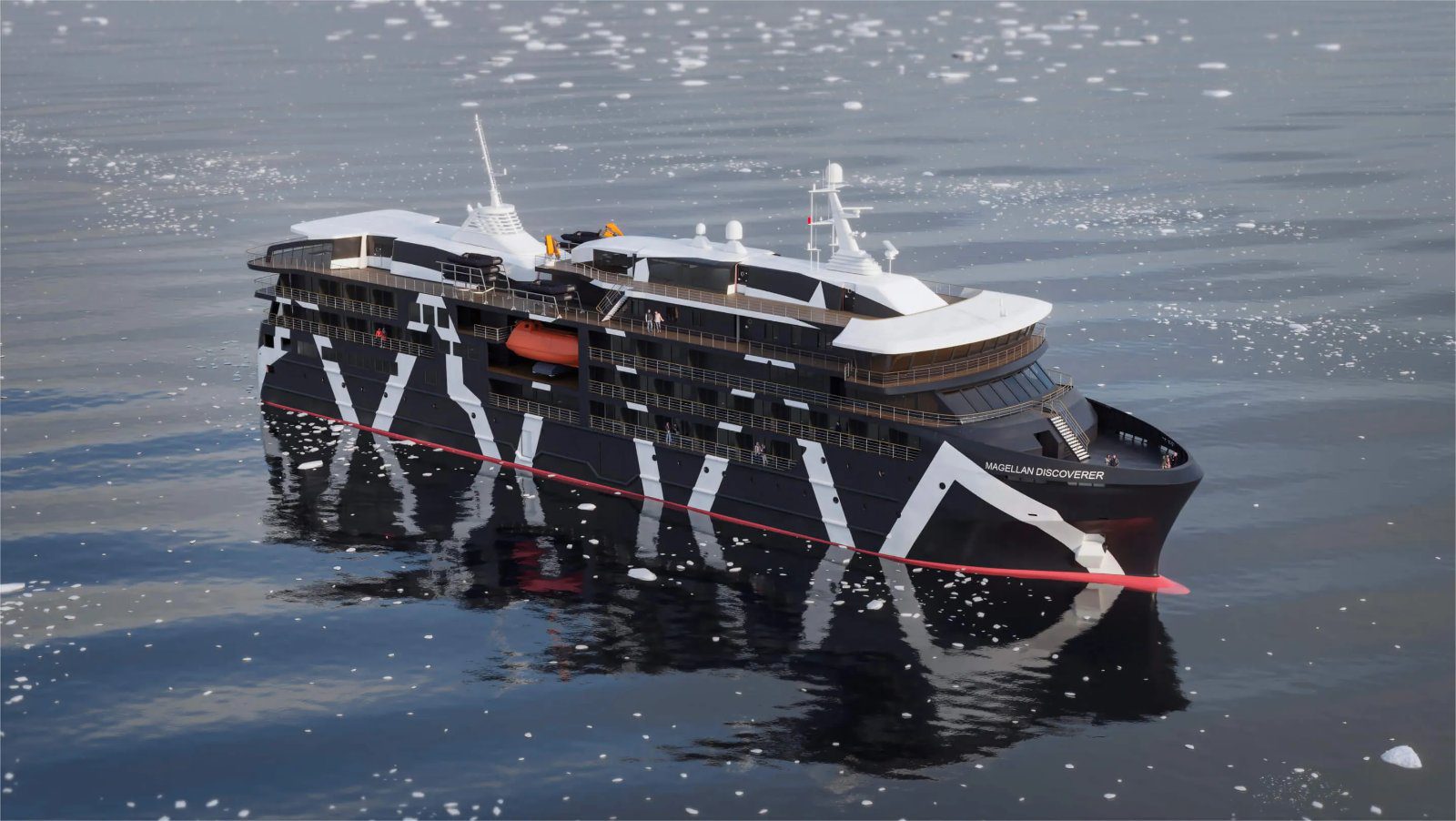
Antarctica21’s Magellan Discoverer, a 94-meter hybrid-electric expedition ship built by ASENAV in Chile, left the Valdivia shipyard on October 26, 2026 for final sea trials off Corral, with her first guests due aboard in December 2026. Her Inaugural Air-Cruise from Punta Arenas, listed by Antarctica21 from US$12,995 per person in triple occupancy, is already sold out. Formal handover had not been reported when I checked on November 2, and the naming ceremony is planned for November, with no date or venue published.
She replaces the chartered Ocean Nova, which left the Antarctica21 fleet on February 28, 2026 after 15 seasons, 321 Antarctic voyages and 14,523 guests. Antarctica21 pioneered the Antarctic air-cruise in 2003 and bills Magellan Discoverer as the first hybrid-electric expedition cruise ship built in the Americas. The surprise is her debut: the inaugural sails south through the Strait of Magellan and across the Drake Passage, and only the trip home is by air.
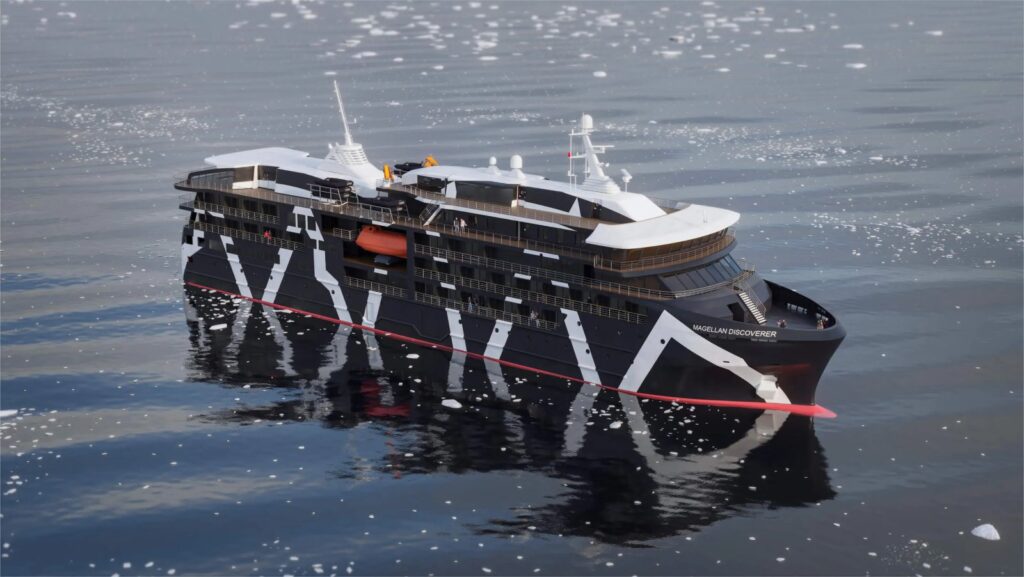
Magellan Discoverer: Key Facts
- Operator: Antarctica21
- Built by: ASENAV, Valdivia/Corral, Chile (builder of Antarctica21’s Magellan Explorer in 2019)
- Guests: 88 on air-cruises, 96 on sea voyages
- Staff and crew: 67
- Cabins: 40, all with balconies, on three passenger decks
- Size: 94 meters long, 17.2-meter beam, 4.3-meter draft
- Ice class: Polar Class 6; 14 knots in open water
- Status: final sea trials; delivery not yet confirmed, naming planned for November
- First guests: December 2026 (December 15, per a company update reported by Cruise Industry News)
- Inaugural fare: from US$12,995 per person, triple occupancy (sold out)
The Inaugural Sails the Drake, Then Flies Home
On a standard Antarctica21 air-cruise, guests fly about two hours from Punta Arenas to Frei Station on King George Island and board the ship there, skipping the Drake one way or both, with at most 88 guests and at least 13 polar guides.
The 10-day, nine-night Inaugural Air-Cruise does it the other way around: ship out, plane home. Day one boards in Punta Arenas and heads into the Strait of Magellan past Cape Froward, day two is Glacier Alley and the Garibaldi Glacier, and day three brings free time in Ushuaia and the Beagle Channel.
Days four and five cross the Drake to the South Shetland Islands, followed by three days of Zodiac landings around the Antarctic Peninsula and the South Shetlands. On day nine, guests fly from King George Island back to Punta Arenas for a night at the Cabo de Hornos Hotel, with an airport transfer on day ten.
A Hybrid Built in Chile
ASENAV floated the hull out on the Calle-Calle river at Valdivia in October 2025. At that launch, Antarctica21 President Jaime Vasquez said the ship lets the company carry on its work “with even greater care, purpose, and pride.”
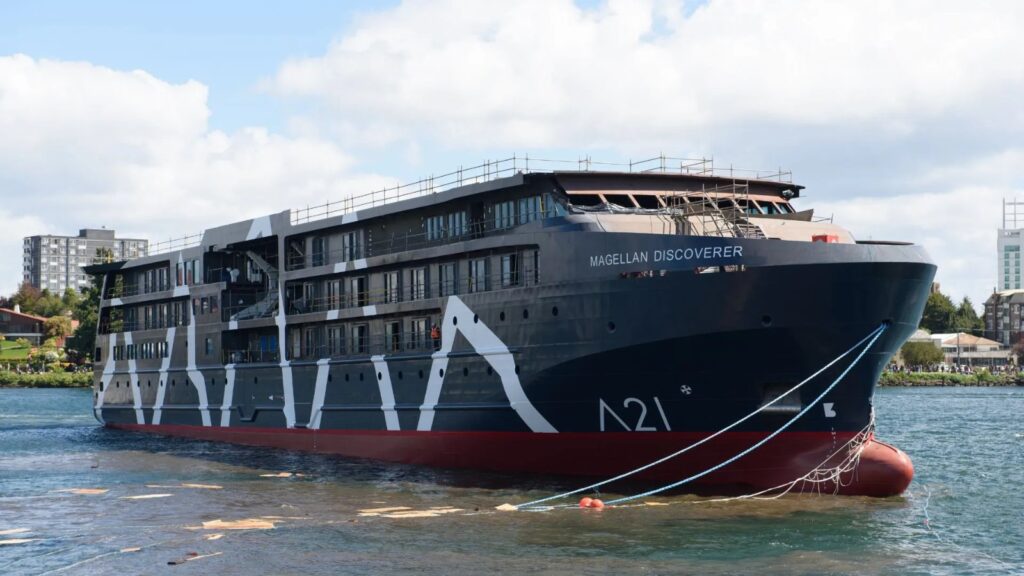
Two 1,800 kW diesel engines work with a Corvus battery bank, an ABB DC grid and ABB Azipods, plus heat recovery, Tier III exhaust treatment with SCR and Fincantieri fin stabilizers. Antarctica21’s official ship page says she can run on batteries alone for low-noise operation in sensitive areas. No independently verified emissions data exists yet, as CruiseMapper notes, so I read “hybrid” as an engineering feature, not a green credential.
Forty Balcony Cabins, a Sauna and a Science Lab
Every one of the 40 cabins has a balcony, according to Antarctica21’s February 2024 announcement, and they break down like this:
| Cabin type | Number | Size (m²) | Size (sq ft) |
|---|---|---|---|
| Grand Veranda Suite | 8 | 38 | 409 |
| Family Suite | 2 | 52 | 560 |
| Triple Veranda | 2 | 52 | 560 |
| Deluxe Veranda | 22 | 26 | 280 |
| Single Veranda | 6 | 26 | 280 |
Beds are kings that convert to twins, every cabin has a sitting area and individual heating, and an elevator serves five decks.

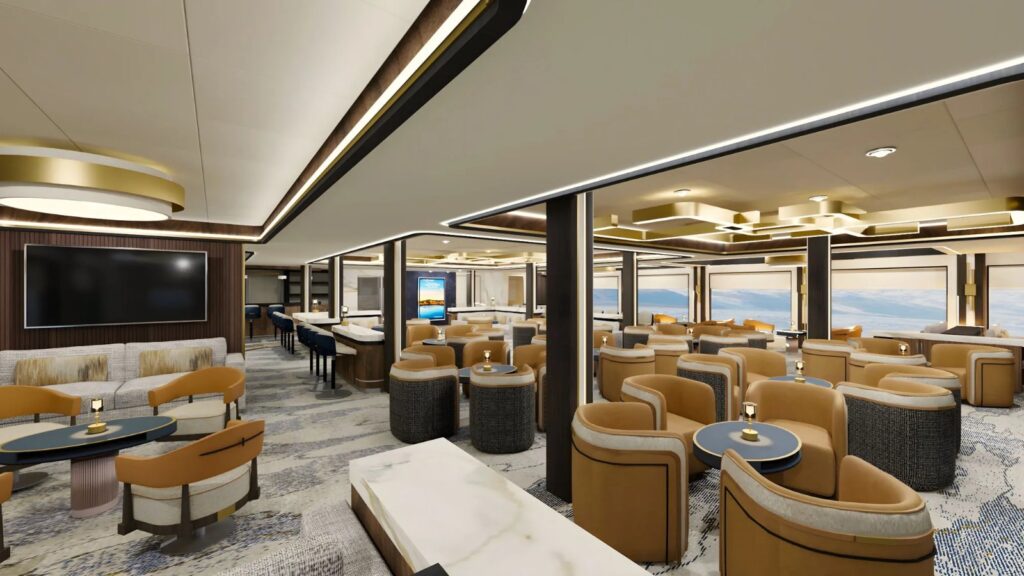
Tomas Tillberg Design did the interiors: a panoramic observation lounge and bar, a dining room, a library, a gym fitted out by Anytime Fitness, a sauna with a panoramic window and a gift shop. Outside there’s a wraparound top deck, an accessible bow and an outdoor barbecue area.
A wet and dry science lab supports citizen-science agreements with Chilean institutions, and onboard sensors log water temperature, salinity and air quality as she sails.
Why It Matters
Flying one leg of the Drake is now a crowded idea. Atlas is doubling its Drake Fly & Sail departures, Silversea has its Fly Cruise hotel, The Cormorant at 55 South, in Puerto Williams, and Secret Atlas’s Aureum takes the small-yacht route.
My position: a 40-cabin, all-balcony, Polar Class 6 ship carrying 88 air-cruise guests is the right scale for the Peninsula, and it comes from the company that invented the air-cruise.
Who it’s not for: travelers wanting a spa or a choice of restaurants (Antarctica21 lists a sauna, a dining room and a barbecue deck), anyone who wants a ship with a proven track record, and anyone booking an air-cruise to avoid the Drake entirely, since the inaugural crosses it southbound.
Prices and How to Book
Antarctica21’s 2026-27 season announcement listed the Inaugural Air-Cruise from US$12,995 per person in triple occupancy, while the inaugural page itself shows US$16,995 per person in a double; I checked both on November 2, 2026. The fare includes buffet breakfast and lunch, à la carte dinner, selected drinks, boots and the IAATO fee. Sea kayaking and hiking or snowshoeing are extras.
The inaugural shows as sold out. Later Antarctica21 air-cruises are bookable through Antarctica21 and polar cruise specialists, with up to US$5,000 off 2028-29 Classic and Polar Circle air-cruises booked by January 31, 2027, and up to US$4,000 off select 2027-28 Classic departures.
Lindblad’s Antarctic plans are in its August release; its October news completes the National Geographic-Lindblad 2028-29 program.
The Lens I’m Reading This Through
I’ve crossed the Drake both ways on Atlas World Voyager, a nine-night sailing from Ushuaia at the end of February that I rated 5/5 in my Atlas World Voyager Antarctica review. Southbound was calm. The return, as I described in my Drake Passage crossing story, brought waves of roughly 6 meters, winds to 140 km/h, an emptied dining room and anti-nausea injections from the ship’s doctor.
That’s the leg Discoverer’s inaugural swaps for a flight, and it’s the trade I’d make, since my forward Deluxe Balcony cabin below the bridge moved noticeably. The US$200 I paid for kayaking on Atlas bought my highlight, four humpbacks circling our kayaks, so budget for Discoverer’s kayaking extra too. The lowest Atlas 2026-27 fare I found in August 2026 was US$13,703 per person; my Antarctica cruise cost guide has the full comparison.
This article contains affiliate links. If you book through one of them, I may earn a small commission at no extra cost to you.
This preview is based on official announcements — I haven’t sailed aboard Magellan Discoverer yet. Read more about how I review or visit my Work With Me page.