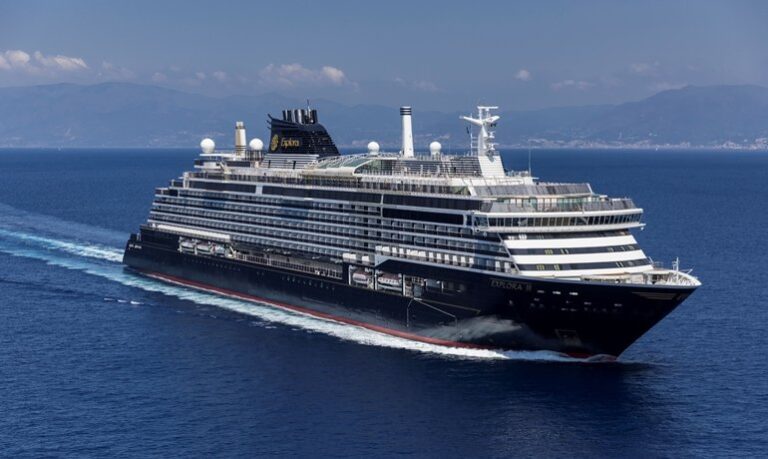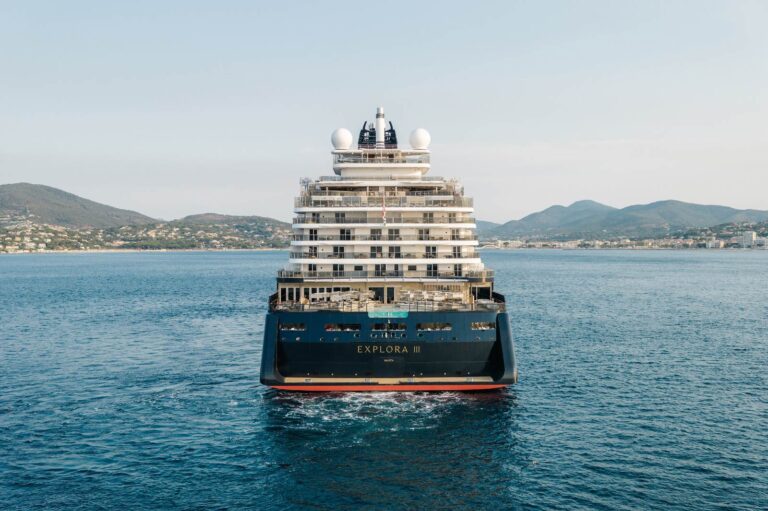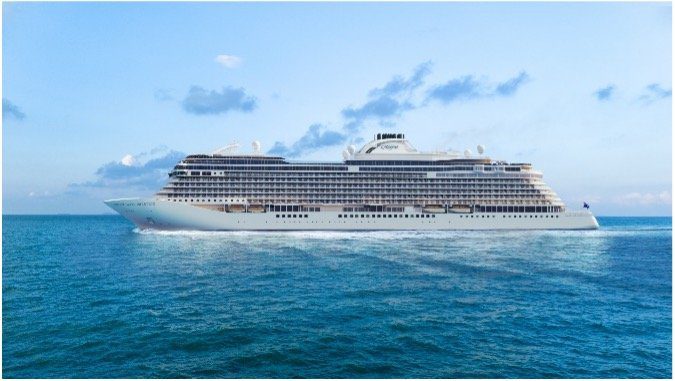
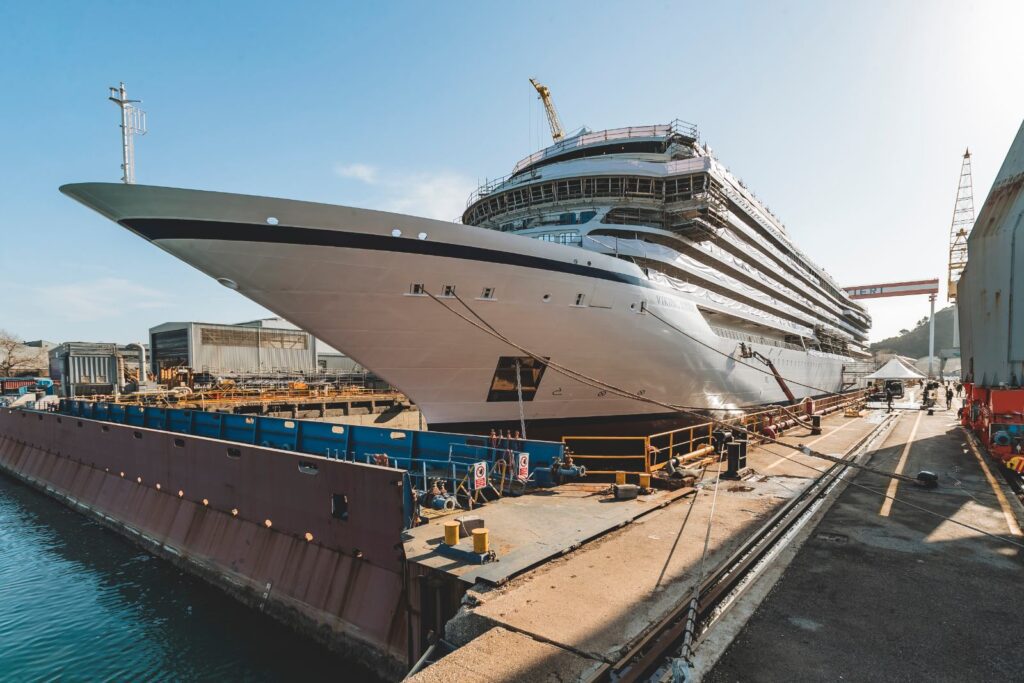
Viking Libra, which Viking bills as the world’s first hydrogen-powered cruise ship, is scheduled for delivery from Fincantieri’s Ancona shipyard in November 2026, with her first sailing, a Greek Odyssey round trip from Piraeus, due on December 3 and listed on viking.com from $3,799 per person for a 2027 departure. The date matters less to me than the claim: what do her fuel cells actually change, where do the emissions go, and what has Viking not said? As of November 2, I could find no Viking announcement that the 998-guest ship has been handed over.
“Hydrogen cruise ship” is doing a lot of work in the headlines. Viking’s own wording, most recently in its September 11 release, is more careful: a hybrid system based partly on liquefied hydrogen and fuel cells, capable of zero-emission operation. My explainer on hybrid and LNG cruise ships set out a test for green claims; Libra is the first hydrogen ship to take it.
Viking Libra: Key Facts
These are the details Viking and Fincantieri have confirmed so far.
- Operator: Viking
- Built by: Fincantieri, Ancona, Italy
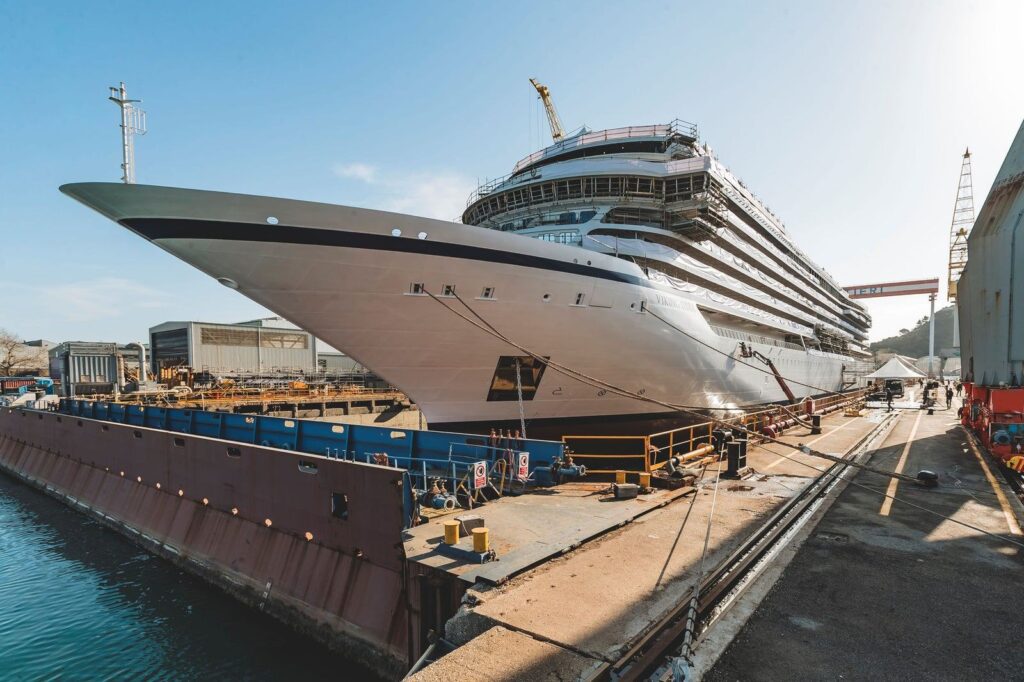
- Size: about 54,300 gross tons; 784 feet long, 101 feet wide
- Guests: 998
- Staterooms: 499, all with a veranda, from 288 sq ft Veranda staterooms to the 1,448 sq ft Owner’s Suite
- Propulsion: hybrid, based partly on liquefied hydrogen and fuel cells from Isotta Fraschini Motori, up to 6 MW; zero-emission capable
- Hydrogen source: green or gray not disclosed; refueling ports not named
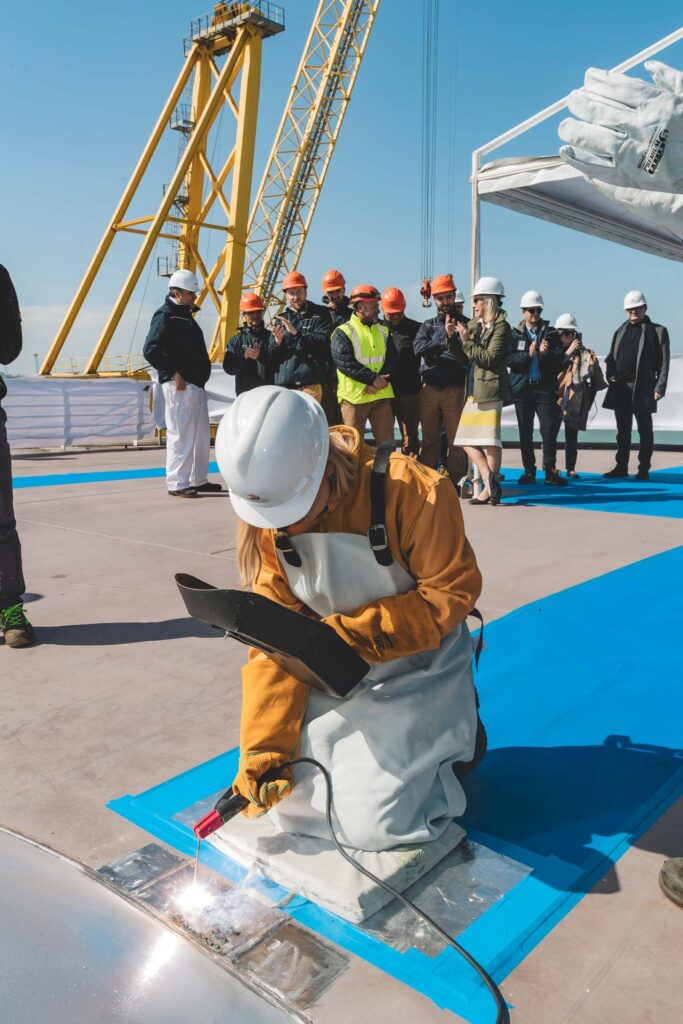
- Milestones: keel laid September 2025; floated out at Ancona on March 19, 2026
- Delivery: scheduled for November 2026 (not yet announced as completed)
- First voyage: Greek Odyssey, round trip from Piraeus (Athens), December 3, 2026
- Fares from: $3,799 per person (Greek Odyssey, 2027 departure, viking.com, checked November 2, 2026)
- Sister ship: Viking Astrea, the second hydrogen ship, floated out September 11, 2026; delivery scheduled May 2027
What the Hydrogen Fuel Cells Actually Change
Officially, Libra’s fuel cells come from Isotta Fraschini Motori, a Fincantieri subsidiary, and deliver up to 6 MW. At the March float-out, Viking chairman Torstein Hagen called her “our most environmentally friendly vessel yet,” and that is the extent of Viking’s technical disclosure.

The engineering detail comes from Fincantieri, in a Fincantieri-led article for Seatrade Cruise News. Two removable liquefied-hydrogen tanks feed two PEM fuel-cell containers of about 3 MW each, backed by a 4.7 MWh battery. In that mode the ship runs on fuel cells and battery instead of engines, which is what “zero-emission capable” means in practice: while the hydrogen lasts, nothing is burned on board.
How long it lasts is the point. Fincantieri describes a 13-hour zero-emission profile, 3 hours sailing at 10 knots plus 10 hours alongside, designed for protected waters such as Norway’s heritage fjords, and its model assumes a refuel every two days for an annual saving of about 20% against a fossil-fuel ship.
Zero Emission in Port, Not Port to Port
Thirteen hours is a port call, not a crossing, so the honest claim is zero-emission operation in harbor and in sensitive waters, not a hydrogen cruise from Piraeus and back. Viking has not published how many hours per voyage Libra will run on hydrogen, and Travelhost reported in August 2026 that she will not run on hydrogen alone for an entire voyage.
That is still worth having. A ship tied up for 10 hours is a ship running its generators in someone’s town, the issue I keep returning to in my explainer. If Libra spends her hours alongside Nafplion, Chania or Rhodes on fuel cells, the people on the quay get the benefit directly.
Green or Gray, and Where She Refuels
The next question decides whether the saving is real or relocated. Hydrogen can be green, made with renewable electricity, or gray, made from natural gas. Viking has not said which Libra will use, and that choice decides whether the emissions disappear or simply move to a production plant ashore.
Refueling is the obstacle Fincantieri has designed around: because the two tanks are removable and can be trucked to the ship, Libra does not depend on a port already having a hydrogen supply. Viking has not named the ports where that will happen, so nobody can yet check which of the Greek Odyssey’s seven calls will be hydrogen hours.
How Libra Compares With LNG and Battery Hybrids
In my explainer I called the roughly 20% fuel saving of a diesel-battery hybrid real but nowhere near zero emissions, and I was skeptical of LNG because of methane slip and because bio and synthetic LNG are not made at scale. Le Ponant’s sails are lovely, I wrote, but a 32-guest yacht is a rounding error for the industry.
Fincantieri’s 20% puts Libra in the same range as a battery hybrid, so over a year she is no greener on paper than ships that already exist. The difference is where the saving lands: at the pier and in protected water, not spread thinly across every sea mile. Methane slip does not arise with fuel cells; the question moves upstream to how the hydrogen was made. And unlike Le Ponant, this is a 998-guest ship, the scale at which any of it counts.
If green credentials are why you are looking at this ship, ask Viking or your cruise specialist these four questions before booking:
- Is the hydrogen green or gray, and who supplies it?
- On my itinerary, which port calls run on fuel cells, and for how many hours?
- Where does the ship take on hydrogen, and what happens when a delivery is missed?
- Has Viking published its own emissions figures, rather than the shipyard’s model?
Where She Sails First
The December 3 Greek Odyssey calls at Volos, Thessaloniki, Kusadasi for Ephesus, Rhodes, Santorini, Chania on Crete and Nafplion, with a sea day on December 7. From December 14 she works west, Piraeus to Rome and to Barcelona, then a 15-night Barcelona round trip from December 27. In January 2027 she heads north for Viking’s “In Search of Northern Lights” voyages between London (Tilbury) and Tromsø, 13 days from $5,999 on viking.com; the Norwegian coast is exactly the protected water the fuel cells were designed for.
On board, Viking lists the Nordic Spa, an infinity pool under a retractable roof, the Wintergarden, the Aquavit Terrace, Manfredi’s, the World Café and the Kitchen Table.
Why It Matters
Libra puts hydrogen fuel cells on a 998-guest ocean ship, with a trucked-tank workaround for ports that have no hydrogen to sell. If the profile works, 10 hours alongside without burning fuel is a measurable change for the towns on her route, and the part of a ship’s day that hybrids and LNG do least to fix. What she is not is a zero-emission cruise, and the gaps are Viking’s to close: the hydrogen’s source, the hours per voyage and the refueling ports.
She arrives in a busy season for Viking, which named seven river ships on October 15, including the Nile pair in my story on Viking Sekhmet and the new Viking river ships.
Who it’s not for: anyone expecting to sail emission-free from port to port, anyone who wants a green claim backed by the operator’s own numbers, and anyone who needs a guaranteed debut date, since delivery was unconfirmed when I checked. December in the Aegean is also a trip for Ephesus, Rhodes and Chania, not for beach days.
Prices and How to Book
On November 2, 2026, viking.com listed Libra’s Greek Odyssey from $3,799 per person for a 2027 departure, while cruise retailer Cruisebound showed the December 3 sailing from $4,349 per person in a veranda stateroom before taxes and fees. Viking lists a $25 deposit; current offers expire November 30, 2026.
Fares include one shore excursion per port, beer, wine and soft drinks with lunch and dinner, Wi-Fi, Nordic Spa access, every restaurant including Manfredi’s, and 24-hour room service; gratuities, a drinks package, the Chef’s Table and spa treatments cost extra. Libra is bookable through Viking and cruise specialists.
The Lens I’m Reading This Through
I sailed the Greek islands aboard Le Ponant, the 32-guest sailing yacht, for a June week from Lavrio, and gave her 4/5 in my Le Ponant review: the wind-powered sailing and five-course dinners were the point, though the fare ran about twice a comparable Ponant Explorer sailing. Sails are the purest green story at sea, and the one that scales least.
Libra is the opposite proposition: 998 guests, the Aegean in December and fuel cells instead of canvas. I’ll be watching what happens in port, where her technology either delivers or doesn’t. If Viking Libra spends her harbor hours at Rhodes and Santorini on hydrogen, and Viking says where that hydrogen came from, she will be worth more than a headline.
This article contains affiliate links. If you book through one of them, I may earn a small commission at no extra cost to you.
This preview is based on official announcements — I haven’t sailed aboard Viking Libra yet. Read more about how I review or visit my Work With Me page.